


Matthew Trueblood
-
Posts
1,964 -
Joined
-
Last visited
-
Days Won
10
Content Type
Profiles
Forums
Blogs
Events
News
2026 Milwaukee Brewers Top Prospects Ranking
Milwaukee Brewers Videos
2022 Milwaukee Brewers Draft Picks
Milwaukee Brewers Free Agent & Trade Rumors, Notes, & Tidbits
Guides & Resources
2023 Milwaukee Brewers Draft Picks
2024 Milwaukee Brewers Draft Picks
The Milwaukee Brewers Players Project
2025 Milwaukee Brewers Draft Pick Tracker
2026 Milwaukee Brewers Draft Tracker: Picks & Bonuses
Store
Downloads
Gallery
Everything posted by Matthew Trueblood
-
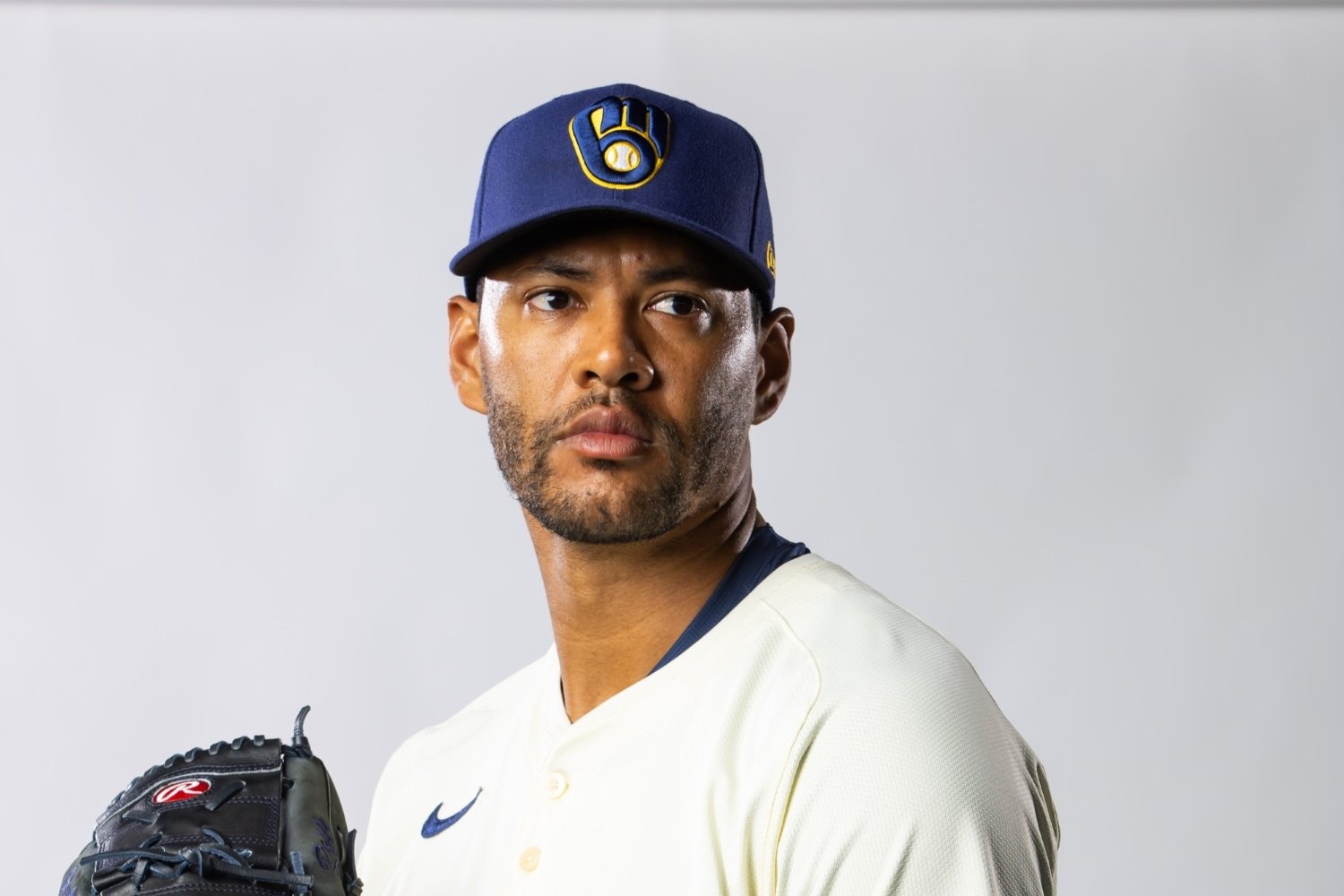 While he's been reluctant to grant the same status to higher-dollar free agent signee Jakob Junis, Pat Murphy has been quick to say that he thinks "the front end" of the game is the best place for Joe Ross in the Milwaukee Brewers' 2024 pitching mix. Part of that, to be sure, is Murphy's willingness--almost his eagerness--to use that staff creatively, meaning that Ross might not pitch deep into most games. Another part, certainly, is that Ross's long and luckless injury history makes it more desirable to use him as a starter, where he can maintain a gameday routine that maximizes his chances for success. The big drawback of doing things that way, though, is that Murphy might find opposing managers employing the very strategy he celebrates the ability to neutralize through nimble use of guys like Junis, Robert Gasser, and Bryse Wilson, among others: loading the lineup with opposite-handed batters. And Ross, unlike Gasser or Wilson, seems not to have any way to effectively combat that tactic. Let's talk about Ross's arsenal, because this spring, he's talked (to Dom Cotroneo of WTMJ, for instance) about a four-pitch mix. The Brewers are treating him as a full-fledged starter on the basis of his having a four-pitch mix. In reality, though, he doesn't have a four-pitch mix--at least not in any traditional sense, where a hurler has at least three pitches that are near or above average for MLB and another he can show opposing hitters in select situations without getting hurt. No, despite Ross's personable nature and Murphy's effusiveness about him, what Ross has is a very good two-pitch mix, and then two offerings that are going to get him tagged in the big leagues. Here's how his stuff is moving and looking this spring. This might be immediately obvious, or it might not be, but that is a gorgeous, tight, devastating slider. It's a pitch that plays right off his sinker and just wrecks a right-handed batter, and in a vacuum, it has an equal potential to overmatch lefties. It's not a sweeping slider; it can tunnel off a four-seamer too. Therein, as the bard would tell us, lies the rub. Ross is, as he alludes to in the video above, trying to throw more four-seamers, but it's not working at all. That pitch is flat, and not in the good, vertical-approach-angle way. It's a pitch without hop or life, and it only comes in at an average of around 92 miles per hour. Nor is this a new problem. It's been exacerbated, but Ross wasn't exactly getting the extra yard on his four-seam heaters even over the previous couple of years. A fastball without plus velocity, a highly unusual release point, or consistent and freakish lateral movement (none of which Ross can boast) needs to have at least 15 inches of induced vertical break (IVB) to get outs in the big leagues. Ross's averaged 12.4 inches last year, and has sagged to 10.9 inches this year. As a pitch in the low to mid-90s, that's just not going to cut it. It doesn't set up the slider well enough, because lefty batters can spot the spin differential between the two pitches earlier than righties can distinguish between his sinker and his slider, and the slider doesn't have enough movement separation from the fastball to miss bats off of it. Ross's changeup is too firm and doesn't have enough depth or run on it, even as he's worked on the pitch, to earn whiffs that way, either. Ross just doesn't have the weapons to do anything effectively against lefty batters right now. Because he's been hurt so much the last few years, it's hard to corroborate that process-based information with results, but let's try. Since the start of 2022, across all levels of competition, he's faced 38 left-handed batters. They've batted .370/.526/.481, with four strikeouts and eight walks. That's a laughably small sample, so let's go all the way back to 2020. That's a sample of 300 lefty batters faced, and Ross has been battered to the tune of .266/.371/.444. I did a quick research study, to figure out whether pitchers sometimes add ride to their fastball after the conclusion of spring training. We hear, all the time, about guys working on things, focusing on mechanics, and modulating their effort. Could that mean that spring training IVBs undersell what we'll see in the regular season? No. I studied 108 pitchers who had at least 50 four-seamers captured by Statcast cameras in spring training and at least 250 of them in the regular season last year, and the correlation between the IVBs (given the small sample I accepted for the spring training data) was very, very strong. Ross's current Cactus League IVB on fastballs would be way, way over on the left side of this graph, where we'd expect the corresponding regular-season mark to be in the 12-13 inch range, on the high end. There are two notable outliers who did gain a bunch of ride on their heat from spring to summer, here, but they don't constitute good news for Ross. They are Bryce Elder, of Atlanta, and Cade Povich, a prospect in the Orioles system, each of whom basically reinvented their fastballs on the fly and gave the pitch a whole new shape. Ross, with his litany of recent maladies and his 31st birthday coming in May, is not a great bet to mimic the changes we saw from two harder throwers in their early 20s last year. The good news, here, is that Ross is still very much a viable sinker-slider out-getter, when you can leverage him against some righty-heavy lineup patches. The bad news is that that's not the role he's still hoping to earn, or one with which Murphy and the Brewers infrastructure seem comfortable for him. Nor is it one that tends to jibe with the kind of arm care a team ought to prioritize for a pitcher with Ross's background. Let's imagine a scenario in which Devin Williams has to open the season on the injured list, thanks to his suddenly suspect back. In that case, Ross might be able to find a home in the bullpen, despite his usage limitations and the inability to option him to the minor leagues. It's not hard to envision him being a good seventh-inning guy in the mold of Elvis Peguero, but with a bit more in the way of whiff potential. The big question would be whether he could comfortably stretch out to two or three innings of relief work within one outing, were he to shift into a reliever's regimen. If so, he could be even more valuable, and come very close to working at the front end of games, but Murphy would probably need to shield him from opponents by starting someone like Gasser, Aaron Ashby, or even Hoby Milner. A numbers game looms for the Brewers pitching staff, whether Williams or Wade Miley are ready to go when the season begins or not. Ross is just one of the boats being tossed around in that brewing storm, and because of some of the weaknesses in his game, it's hard to take seriously the degree of faith Murphy would have us ascribe to his veteran hurler. Instead, this feels like one of those times when (despite signing a big-league deal relatively early in the winter) a player might have only a short stay with the Brewers. In order to stick around longer, Ross will need a new grip on his changeup, a new shape to his fastball, or an emergency cutter implantation from Chris Hook and his cutter-loving bunch. It's hard to justify giving a guy with a 2.29 WHIP across seven spring innings a designated rotation spot to begin the season, but without some concrete reason to believe he's not the guy those numbers and the pitch data say he is, "hard" becomes "impossible".
- 11 comments
-
- 2
-

-
- joe ross
- bryse wilson
- (and 1 more)
-
Put another way, because this is the real crux of it: Do guys throwing bad, flat fastballs in spring training find some shape on it once the season begins? Image courtesy of © Mark J. Rebilas-USA TODAY Sports While he's been reluctant to grant the same status to higher-dollar free agent signee Jakob Junis, Pat Murphy has been quick to say that he thinks "the front end" of the game is the best place for Joe Ross in the Milwaukee Brewers' 2024 pitching mix. Part of that, to be sure, is Murphy's willingness--almost his eagerness--to use that staff creatively, meaning that Ross might not pitch deep into most games. Another part, certainly, is that Ross's long and luckless injury history makes it more desirable to use him as a starter, where he can maintain a gameday routine that maximizes his chances for success. The big drawback of doing things that way, though, is that Murphy might find opposing managers employing the very strategy he celebrates the ability to neutralize through nimble use of guys like Junis, Robert Gasser, and Bryse Wilson, among others: loading the lineup with opposite-handed batters. And Ross, unlike Gasser or Wilson, seems not to have any way to effectively combat that tactic. Let's talk about Ross's arsenal, because this spring, he's talked (to Dom Cotroneo of WTMJ, for instance) about a four-pitch mix. The Brewers are treating him as a full-fledged starter on the basis of his having a four-pitch mix. In reality, though, he doesn't have a four-pitch mix--at least not in any traditional sense, where a hurler has at least three pitches that are near or above average for MLB and another he can show opposing hitters in select situations without getting hurt. No, despite Ross's personable nature and Murphy's effusiveness about him, what Ross has is a very good two-pitch mix, and then two offerings that are going to get him tagged in the big leagues. Here's how his stuff is moving and looking this spring. This might be immediately obvious, or it might not be, but that is a gorgeous, tight, devastating slider. It's a pitch that plays right off his sinker and just wrecks a right-handed batter, and in a vacuum, it has an equal potential to overmatch lefties. It's not a sweeping slider; it can tunnel off a four-seamer too. Therein, as the bard would tell us, lies the rub. Ross is, as he alludes to in the video above, trying to throw more four-seamers, but it's not working at all. That pitch is flat, and not in the good, vertical-approach-angle way. It's a pitch without hop or life, and it only comes in at an average of around 92 miles per hour. Nor is this a new problem. It's been exacerbated, but Ross wasn't exactly getting the extra yard on his four-seam heaters even over the previous couple of years. A fastball without plus velocity, a highly unusual release point, or consistent and freakish lateral movement (none of which Ross can boast) needs to have at least 15 inches of induced vertical break (IVB) to get outs in the big leagues. Ross's averaged 12.4 inches last year, and has sagged to 10.9 inches this year. As a pitch in the low to mid-90s, that's just not going to cut it. It doesn't set up the slider well enough, because lefty batters can spot the spin differential between the two pitches earlier than righties can distinguish between his sinker and his slider, and the slider doesn't have enough movement separation from the fastball to miss bats off of it. Ross's changeup is too firm and doesn't have enough depth or run on it, even as he's worked on the pitch, to earn whiffs that way, either. Ross just doesn't have the weapons to do anything effectively against lefty batters right now. Because he's been hurt so much the last few years, it's hard to corroborate that process-based information with results, but let's try. Since the start of 2022, across all levels of competition, he's faced 38 left-handed batters. They've batted .370/.526/.481, with four strikeouts and eight walks. That's a laughably small sample, so let's go all the way back to 2020. That's a sample of 300 lefty batters faced, and Ross has been battered to the tune of .266/.371/.444. I did a quick research study, to figure out whether pitchers sometimes add ride to their fastball after the conclusion of spring training. We hear, all the time, about guys working on things, focusing on mechanics, and modulating their effort. Could that mean that spring training IVBs undersell what we'll see in the regular season? No. I studied 108 pitchers who had at least 50 four-seamers captured by Statcast cameras in spring training and at least 250 of them in the regular season last year, and the correlation between the IVBs (given the small sample I accepted for the spring training data) was very, very strong. Ross's current Cactus League IVB on fastballs would be way, way over on the left side of this graph, where we'd expect the corresponding regular-season mark to be in the 12-13 inch range, on the high end. There are two notable outliers who did gain a bunch of ride on their heat from spring to summer, here, but they don't constitute good news for Ross. They are Bryce Elder, of Atlanta, and Cade Povich, a prospect in the Orioles system, each of whom basically reinvented their fastballs on the fly and gave the pitch a whole new shape. Ross, with his litany of recent maladies and his 31st birthday coming in May, is not a great bet to mimic the changes we saw from two harder throwers in their early 20s last year. The good news, here, is that Ross is still very much a viable sinker-slider out-getter, when you can leverage him against some righty-heavy lineup patches. The bad news is that that's not the role he's still hoping to earn, or one with which Murphy and the Brewers infrastructure seem comfortable for him. Nor is it one that tends to jibe with the kind of arm care a team ought to prioritize for a pitcher with Ross's background. Let's imagine a scenario in which Devin Williams has to open the season on the injured list, thanks to his suddenly suspect back. In that case, Ross might be able to find a home in the bullpen, despite his usage limitations and the inability to option him to the minor leagues. It's not hard to envision him being a good seventh-inning guy in the mold of Elvis Peguero, but with a bit more in the way of whiff potential. The big question would be whether he could comfortably stretch out to two or three innings of relief work within one outing, were he to shift into a reliever's regimen. If so, he could be even more valuable, and come very close to working at the front end of games, but Murphy would probably need to shield him from opponents by starting someone like Gasser, Aaron Ashby, or even Hoby Milner. A numbers game looms for the Brewers pitching staff, whether Williams or Wade Miley are ready to go when the season begins or not. Ross is just one of the boats being tossed around in that brewing storm, and because of some of the weaknesses in his game, it's hard to take seriously the degree of faith Murphy would have us ascribe to his veteran hurler. Instead, this feels like one of those times when (despite signing a big-league deal relatively early in the winter) a player might have only a short stay with the Brewers. In order to stick around longer, Ross will need a new grip on his changeup, a new shape to his fastball, or an emergency cutter implantation from Chris Hook and his cutter-loving bunch. It's hard to justify giving a guy with a 2.29 WHIP across seven spring innings a designated rotation spot to begin the season, but without some concrete reason to believe he's not the guy those numbers and the pitch data say he is, "hard" becomes "impossible". View full article
- 11 replies
-
- 1
-

-
- joe ross
- bryse wilson
- (and 1 more)
-
Yeah, those were definitely cutters. Savant has even reclassified them as such as of today. Actually, I think *two* of them were cutters, and one was a four-seamer where he was starting to run low on steam, but it's a cutter he's working in. I would guess Hook wants to see him go to that instead of the glove-side sinker, if he can get comfortable doing so, but the sinker is his default fastball at this point. They'll only have him utilize the cutter if he finds a good feel for it in his final couple of spring outings.
-
I didn't spend any time with J.B. the week I was out in Arizona, but I have a couple of interesting notes on him. More importantly, though, I do believe Jack has him in his sights for this week, so check back. We're on the Buka-beat.
-
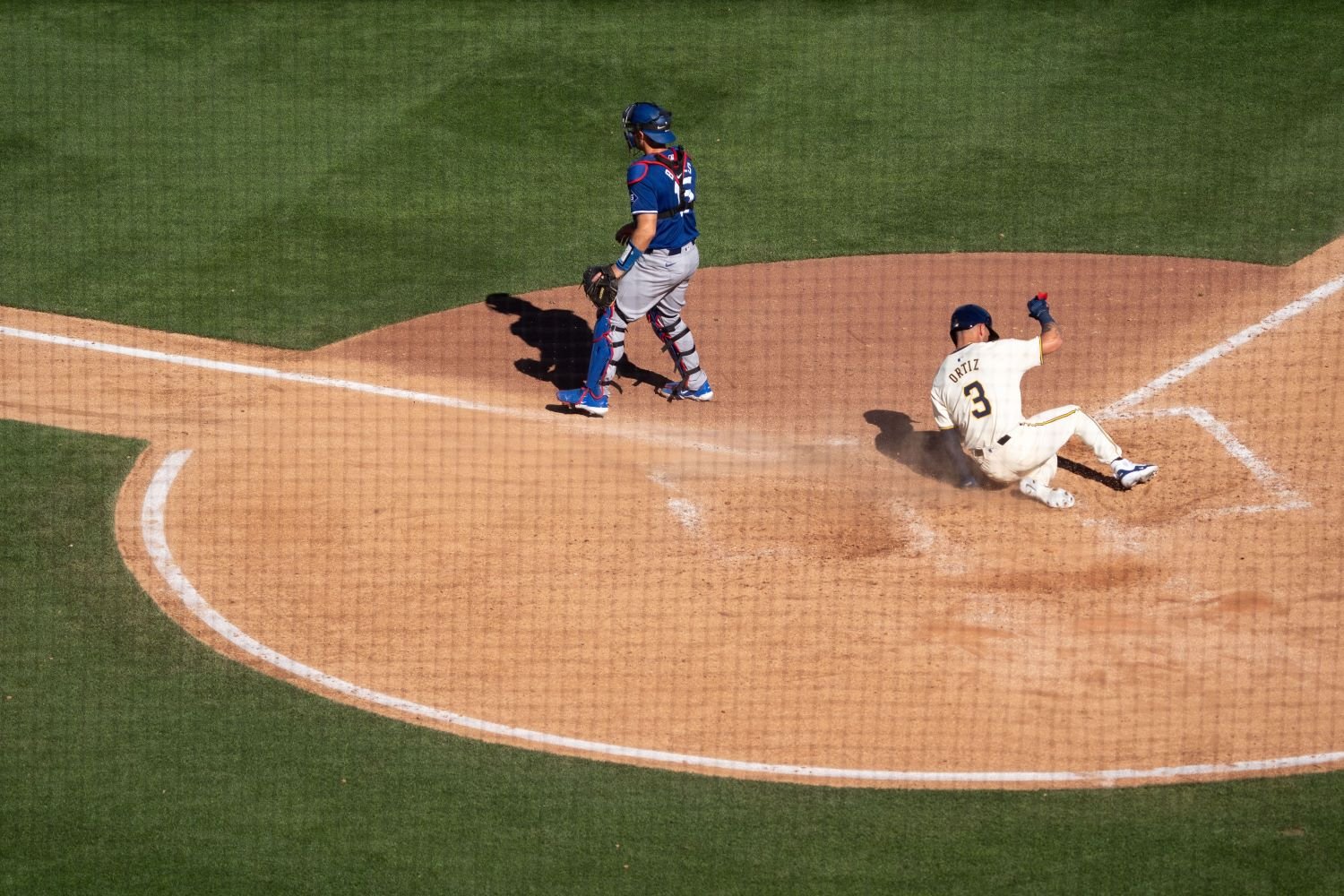 We've already run a couple of Opening Day roster projections for the Brewers on this site. I like doing those. I have scribbled down about 100 lineups for the 2024 Brewers, over the long time desert of this winter--killing time while on hold to pay a bill, or during halftime of a Packers game, or as I tried to shake a half-formed story idea into something more organized and wrinkle-free. Since I was a kid, I've been writing lineups and depth charts in the margins of pages of notes on Central American history, and on bank envelopes, and on takeout menus for places I had long ago tried and decided not to order from again. I think, though, that the roster projection and the scribbled-down dream lineup have become as antiquated as the idea of a bank envelope. The amount of uncertainty around the Brewers this spring is nearly overwhelming, but they're not treating that like an opportunity that desperately needs to be solved. On the contrary, they're leaning into it pretty hard. Fluidity is salubrious for a roster architect, and while the Brewers lack the stability and reliability of a deep lineup full of familiar, established names, they have tons of fluidity. It's become the plan for them, and for many teams throughout MLB, and we fans are going to have to get more accustomed to that. Roster rules still constrain roster moves. Eric Haase and Jake Bauers can't be sent to the minor leagues without being subjected to waivers (and thus, without the risk of another team claiming them for their own), which will inform the team's choices at the fringe of the roster on the positional side. The team won't want to lose either player if they can avoid it, so they might try to squeeze them each onto the roster to begin the season, but beyond that, it doesn't matter that much which players go north with the team. If Joey Ortiz begins the season in Nashville, he could easily be in Milwaukee by mid-April. Ditto for Joey Wiemer and Garrett Mitchell. There are endless ways for the team to recombine the pieces of the supporting cast to their stars. It's the same way on the pitching staff. Of their bullpen guys, only Bryse Wilson, Joel Payamps, and Thyago Vieira are out of options. The Crew's depth means Elvis Peguero will almost surely spend some time in Triple-A this year, but the nature of pitching and the inescapable attrition involved in it mean Peguero will almost surely get some high-leverage bullpen work in, too. This is a hard thing to quantify. I tried going through and counting the out-of-options players on each team's 40-man roster to see whether the Crew has an unusually small number of them, but quickly gave that up. They don't, but that's partially because their entire projected starting rotation (minus DL Hall) is ineligible to be optioned. So are Christian Yelich, Rhys Hoskins, Willy Adames, and Gary Sánchez. With the possible exception of backend starter Joe Ross, the Crew would never want the option of not rostering any of those players when they're healthy, so their option status really doesn't matter. The team also doesn't project to use an extreme number of platoons. Rather, there's just a large number of alternatives and a shocking absence of clear-cut answers at a handful of positions. It's nebulous, but very real. This team is going to need to play the hot hand, mixing and matching until someone asserts themselves in an especially forceful way, but they just don't seem to mind that, at all. I still expect Pat Murphy to use a relatively static top half of the lineup card, because Yelich, Hoskins, Adames, and William Contreras are everyday players with obvious roles. Beyond that, though, everything projects to be fluid. Murphy has already stated his intention to be extremely flexible in the way he deploys starting pitchers, and he's been studiously noncommittal with regard to his bevy of options in the non-Yelich outfield spots, and at second and third base. I count 55 players I expect to see play for the Brewers in 2024. That's more than 16 MLB teams used in 2023, and there are always, always players you don't expect to see who make their way to the roster. Only three of the 14 clubs who used more than 55 players last season made the playoffs: the Rays, the Dodgers... and the Brewers. This is the new normal, for teams run along the lines of these three, and though it makes it harder to sketch a reassuring roster on the empty half-page at the end of the Brewers chapter in the Baseball Prospectus Annual, it's fun, in a different and sometimes richer way.
- 6 comments
-
- 3
-
-
-
- sal frelick
- oliver dunn
- (and 5 more)
-
The more you study the Milwaukee Brewers at the midway point of spring training, the more irresistible the conclusion becomes: this team is still comfortable being uncomfortable, even if you're not. Image courtesy of © Allan Henry-USA TODAY Sports We've already run a couple of Opening Day roster projections for the Brewers on this site. I like doing those. I have scribbled down about 100 lineups for the 2024 Brewers, over the long time desert of this winter--killing time while on hold to pay a bill, or during halftime of a Packers game, or as I tried to shake a half-formed story idea into something more organized and wrinkle-free. Since I was a kid, I've been writing lineups and depth charts in the margins of pages of notes on Central American history, and on bank envelopes, and on takeout menus for places I had long ago tried and decided not to order from again. I think, though, that the roster projection and the scribbled-down dream lineup have become as antiquated as the idea of a bank envelope. The amount of uncertainty around the Brewers this spring is nearly overwhelming, but they're not treating that like an opportunity that desperately needs to be solved. On the contrary, they're leaning into it pretty hard. Fluidity is salubrious for a roster architect, and while the Brewers lack the stability and reliability of a deep lineup full of familiar, established names, they have tons of fluidity. It's become the plan for them, and for many teams throughout MLB, and we fans are going to have to get more accustomed to that. Roster rules still constrain roster moves. Eric Haase and Jake Bauers can't be sent to the minor leagues without being subjected to waivers (and thus, without the risk of another team claiming them for their own), which will inform the team's choices at the fringe of the roster on the positional side. The team won't want to lose either player if they can avoid it, so they might try to squeeze them each onto the roster to begin the season, but beyond that, it doesn't matter that much which players go north with the team. If Joey Ortiz begins the season in Nashville, he could easily be in Milwaukee by mid-April. Ditto for Joey Wiemer and Garrett Mitchell. There are endless ways for the team to recombine the pieces of the supporting cast to their stars. It's the same way on the pitching staff. Of their bullpen guys, only Bryse Wilson, Joel Payamps, and Thyago Vieira are out of options. The Crew's depth means Elvis Peguero will almost surely spend some time in Triple-A this year, but the nature of pitching and the inescapable attrition involved in it mean Peguero will almost surely get some high-leverage bullpen work in, too. This is a hard thing to quantify. I tried going through and counting the out-of-options players on each team's 40-man roster to see whether the Crew has an unusually small number of them, but quickly gave that up. They don't, but that's partially because their entire projected starting rotation (minus DL Hall) is ineligible to be optioned. So are Christian Yelich, Rhys Hoskins, Willy Adames, and Gary Sánchez. With the possible exception of backend starter Joe Ross, the Crew would never want the option of not rostering any of those players when they're healthy, so their option status really doesn't matter. The team also doesn't project to use an extreme number of platoons. Rather, there's just a large number of alternatives and a shocking absence of clear-cut answers at a handful of positions. It's nebulous, but very real. This team is going to need to play the hot hand, mixing and matching until someone asserts themselves in an especially forceful way, but they just don't seem to mind that, at all. I still expect Pat Murphy to use a relatively static top half of the lineup card, because Yelich, Hoskins, Adames, and William Contreras are everyday players with obvious roles. Beyond that, though, everything projects to be fluid. Murphy has already stated his intention to be extremely flexible in the way he deploys starting pitchers, and he's been studiously noncommittal with regard to his bevy of options in the non-Yelich outfield spots, and at second and third base. I count 55 players I expect to see play for the Brewers in 2024. That's more than 16 MLB teams used in 2023, and there are always, always players you don't expect to see who make their way to the roster. Only three of the 14 clubs who used more than 55 players last season made the playoffs: the Rays, the Dodgers... and the Brewers. This is the new normal, for teams run along the lines of these three, and though it makes it harder to sketch a reassuring roster on the empty half-page at the end of the Brewers chapter in the Baseball Prospectus Annual, it's fun, in a different and sometimes richer way. View full article
- 6 replies
-
- 1
-
-
- sal frelick
- oliver dunn
- (and 5 more)
-
If the season began today, the Brewers' No. 2 starter might well be the rookie whom they acquired in exchange for last year's ace. That's thanks to a couple of key adjustments he made last summer, and another that might be just peeking out this spring. Image courtesy of © Mark J. Rebilas-USA TODAY Sports In the first half of 2023, DL Hall was a pretty good pitcher, but he wasn't at full strength. After coming to spring training with an injury to his lower back that required careful maintenance, he was handled with kid gloves early in the Triple-A season, then sent back to the team's complex in Florida for two months. There, he hardly appeared in competitive games at all. He worked, instead, on getting stronger and building his velocity, and he made a couple of adjustments. When he returned to the highest level of the minors (and eventually to the Baltimore Orioles) in the second half, there were some stark differences. Now, the new version of Hall is a Brewer, and whereas he pitched in relief only down the stretch last year, he looks likely to be a starter for the Crew in 2024. Thus, we should take a few minutes to be specific about the transformation he underwent last summer, and about what he might already be doing slightly differently under the tutelage of Chris Hook. First, to lay the groundwork, consider Hall's pitch break chart for the first half of 2023. Here and in the next few images, I've elected to color the data points by velocity, rather than pitch type. You'll see why in a bit, but for now, it should be easy enough to pick out his fastball, changeup, slider, and curveball, based on the shapes of movement suggested by the chart. (The image is from the pitcher's perspective, so a point in the lower right quadrant is a down-breaking offering that is moving away from a lefty batter or in on a righty.) As you can see, there's some wide velocity variation within Hall's slider mix. He was reaching 90 miles per hour with it at times, but at others, he would soften it to the underside of 85 miles per hour to gain more movement. It was, in those cases, almost a sweeper. The rest of the arsenal is pretty standard: fastball with great life but ordinary x-and-y movement, changeup fading off of it, curveball with mirrored spin and a three-quarter shape. While he was down in Sarasota, though, Hall made two major changes. Firstly, he changed the grip on his slider, and it radically altered that pitch's movement profile. The spin he imparted on the pitch out of his hand didn't change from the first half to the second. So we can rule out, with reasonable confidence, the idea that Hall changed his hand position or wrist action on the slider during that interregnum. The change he did make, though, generated a huge change in the actual movement of the pitch. As I alluded to in noting the sweeper-like movement of some of his slower first-half sliders, Hall was getting a bunch of lift on that offering. He got underneath it a bit, as pitchers will occasionally say, resulting in lots of sweep but little depth. In the second half, after whatever subtle change he made, the same spin out of the hand was producing a truer, but heavier actual break. It still has some horizontal movement (especially compared to his fastball), but it's also moving much more, vertically. The above implies that, but here's his second-half pitch break chart, to verify it. That's a nasty pitch, especially when it's routinely thrown 87-89 MPH. Importantly, though, Hall threw it that hard in the context of working as a reliever. We can assume that he'll give back a tick on just about everything if he sticks in the rotation this year. Even so, it's going to be a killer offering, given the action on his fastball and the confidence he's gained in his excellent changeup. Another important change occurred during that time down in Florida, and might be just as important as tweaking the slider. With his back fully healed and some time carved out just to get stronger, Hall moved over toward the first-base side of the rubber, got down the mound better, and improved the consistency of his release extension. Here's where he was releasing the ball in the first half: And here, after the slide across the mound and the mechanical and strength work, is where he did so in the second half. As I wrote for Monday, Hall's fastball is dominant not because of its raw movement or its sheer velocity, but because of the interaction between those elements and his release point. Changing that release point--and especially improving his extension--augmented the dynamism of that offering, and his new place on the mound sets up some different things in his approach to hitters, too. Ok, one last chart before we go. On Sunday, Hall appeared in his first Cactus League game of the spring. Because it was at the only venue in the Cactus League that gives us all access to public Statcast data, it was a treasured opportunity to test something I thought I spotted during Hall's dazzling sim game against a few teammates last Monday. Indeed, among a handful of the same new sliders he showed last year, there was one little outlier worth attending to closely. Early last year, Hall had a sweepy slider, without much depth. Late last season, he threw a slider with plenty of depth, but little sweep. On Sunday (and in that sim game early last week), he showed both, even if he only threw a sweeper-ish one once Sunday. If he can maintain feel for both of those slider looks and establish a fifth pitch, he could take the next step toward ace status this season. Many of these changes are ones he made before being traded to the Brewers, but they fit very nicely with the things the Brewers have done to help other pitchers improve in recent years, up to and including this spring. The match between Hall and Hook seems as good as that between marble and Michelangelo. Hall is the best reason to be excited about the Brewers' starting rotation; he just needs to stay healthy enough to take his place in line behind Freddy Peralta. View full article
-
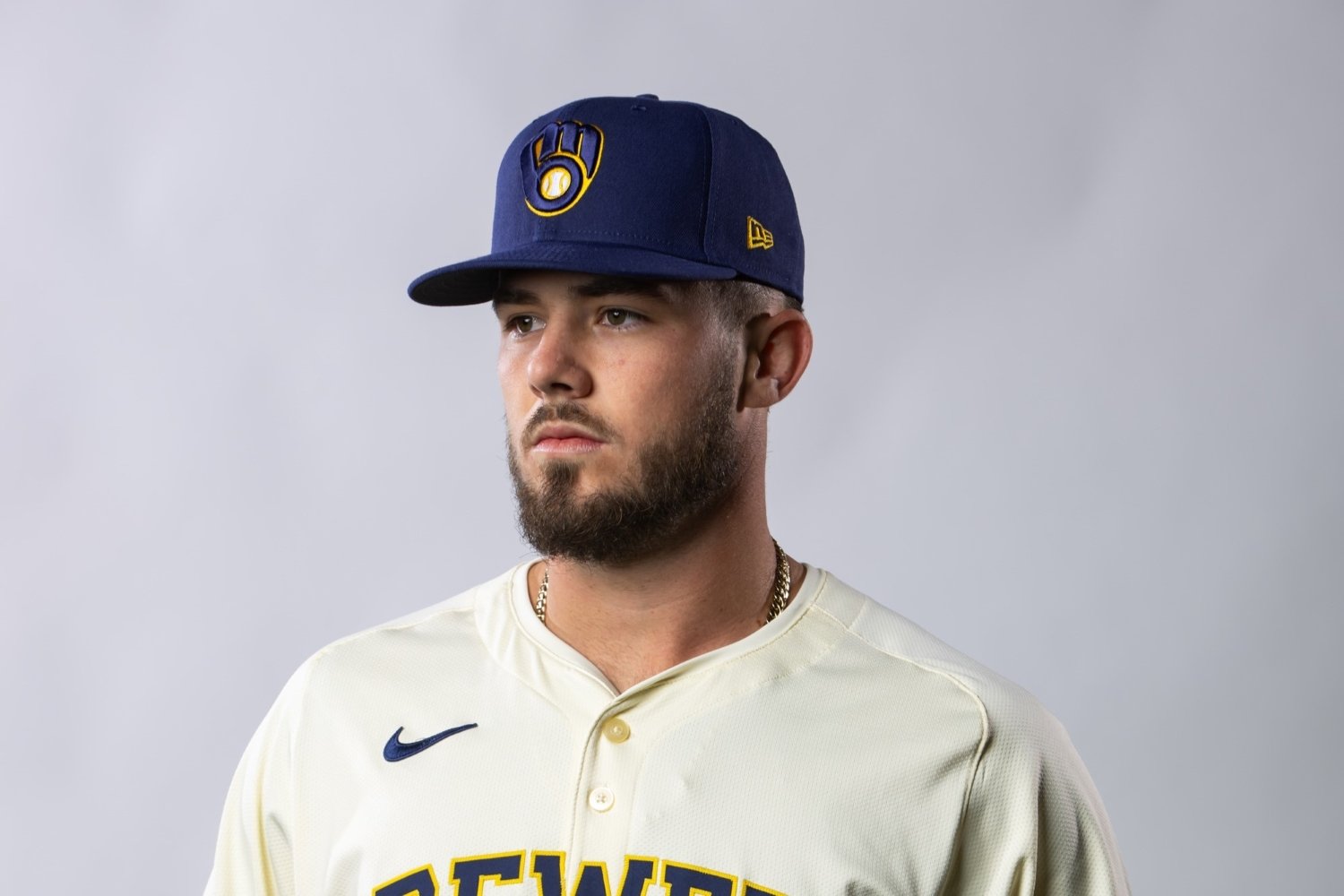 In the first half of 2023, DL Hall was a pretty good pitcher, but he wasn't at full strength. After coming to spring training with an injury to his lower back that required careful maintenance, he was handled with kid gloves early in the Triple-A season, then sent back to the team's complex in Florida for two months. There, he hardly appeared in competitive games at all. He worked, instead, on getting stronger and building his velocity, and he made a couple of adjustments. When he returned to the highest level of the minors (and eventually to the Baltimore Orioles) in the second half, there were some stark differences. Now, the new version of Hall is a Brewer, and whereas he pitched in relief only down the stretch last year, he looks likely to be a starter for the Crew in 2024. Thus, we should take a few minutes to be specific about the transformation he underwent last summer, and about what he might already be doing slightly differently under the tutelage of Chris Hook. First, to lay the groundwork, consider Hall's pitch break chart for the first half of 2023. Here and in the next few images, I've elected to color the data points by velocity, rather than pitch type. You'll see why in a bit, but for now, it should be easy enough to pick out his fastball, changeup, slider, and curveball, based on the shapes of movement suggested by the chart. (The image is from the pitcher's perspective, so a point in the lower right quadrant is a down-breaking offering that is moving away from a lefty batter or in on a righty.) As you can see, there's some wide velocity variation within Hall's slider mix. He was reaching 90 miles per hour with it at times, but at others, he would soften it to the underside of 85 miles per hour to gain more movement. It was, in those cases, almost a sweeper. The rest of the arsenal is pretty standard: fastball with great life but ordinary x-and-y movement, changeup fading off of it, curveball with mirrored spin and a three-quarter shape. While he was down in Sarasota, though, Hall made two major changes. Firstly, he changed the grip on his slider, and it radically altered that pitch's movement profile. The spin he imparted on the pitch out of his hand didn't change from the first half to the second. So we can rule out, with reasonable confidence, the idea that Hall changed his hand position or wrist action on the slider during that interregnum. The change he did make, though, generated a huge change in the actual movement of the pitch. As I alluded to in noting the sweeper-like movement of some of his slower first-half sliders, Hall was getting a bunch of lift on that offering. He got underneath it a bit, as pitchers will occasionally say, resulting in lots of sweep but little depth. In the second half, after whatever subtle change he made, the same spin out of the hand was producing a truer, but heavier actual break. It still has some horizontal movement (especially compared to his fastball), but it's also moving much more, vertically. The above implies that, but here's his second-half pitch break chart, to verify it. That's a nasty pitch, especially when it's routinely thrown 87-89 MPH. Importantly, though, Hall threw it that hard in the context of working as a reliever. We can assume that he'll give back a tick on just about everything if he sticks in the rotation this year. Even so, it's going to be a killer offering, given the action on his fastball and the confidence he's gained in his excellent changeup. Another important change occurred during that time down in Florida, and might be just as important as tweaking the slider. With his back fully healed and some time carved out just to get stronger, Hall moved over toward the first-base side of the rubber, got down the mound better, and improved the consistency of his release extension. Here's where he was releasing the ball in the first half: And here, after the slide across the mound and the mechanical and strength work, is where he did so in the second half. As I wrote for Monday, Hall's fastball is dominant not because of its raw movement or its sheer velocity, but because of the interaction between those elements and his release point. Changing that release point--and especially improving his extension--augmented the dynamism of that offering, and his new place on the mound sets up some different things in his approach to hitters, too. Ok, one last chart before we go. On Sunday, Hall appeared in his first Cactus League game of the spring. Because it was at the only venue in the Cactus League that gives us all access to public Statcast data, it was a treasured opportunity to test something I thought I spotted during Hall's dazzling sim game against a few teammates last Monday. Indeed, among a handful of the same new sliders he showed last year, there was one little outlier worth attending to closely. Early last year, Hall had a sweepy slider, without much depth. Late last season, he threw a slider with plenty of depth, but little sweep. On Sunday (and in that sim game early last week), he showed both, even if he only threw a sweeper-ish one once Sunday. If he can maintain feel for both of those slider looks and establish a fifth pitch, he could take the next step toward ace status this season. Many of these changes are ones he made before being traded to the Brewers, but they fit very nicely with the things the Brewers have done to help other pitchers improve in recent years, up to and including this spring. The match between Hall and Hook seems as good as that between marble and Michelangelo. Hall is the best reason to be excited about the Brewers' starting rotation; he just needs to stay healthy enough to take his place in line behind Freddy Peralta.
 -
Yeah, I think Murph loves this very cluster of traits in both guys, too. Dunn's best defensive position might be 3B, too. I wonder if we could see: -Dunn start at 3B, with Frelick in RF -Someone like Wiemer or Sánchez pinch-hit for Dunn -Frelick come in from RF to 3B, with Wiemer or Blake Perkins going to RF fairly often. Sal did tell me we'd keep seeing him start games in OF and move to IF during Cactus League, and I think that's happened twice already. Seems like something he and Murph want to make sure is comfortable and familiar.
-
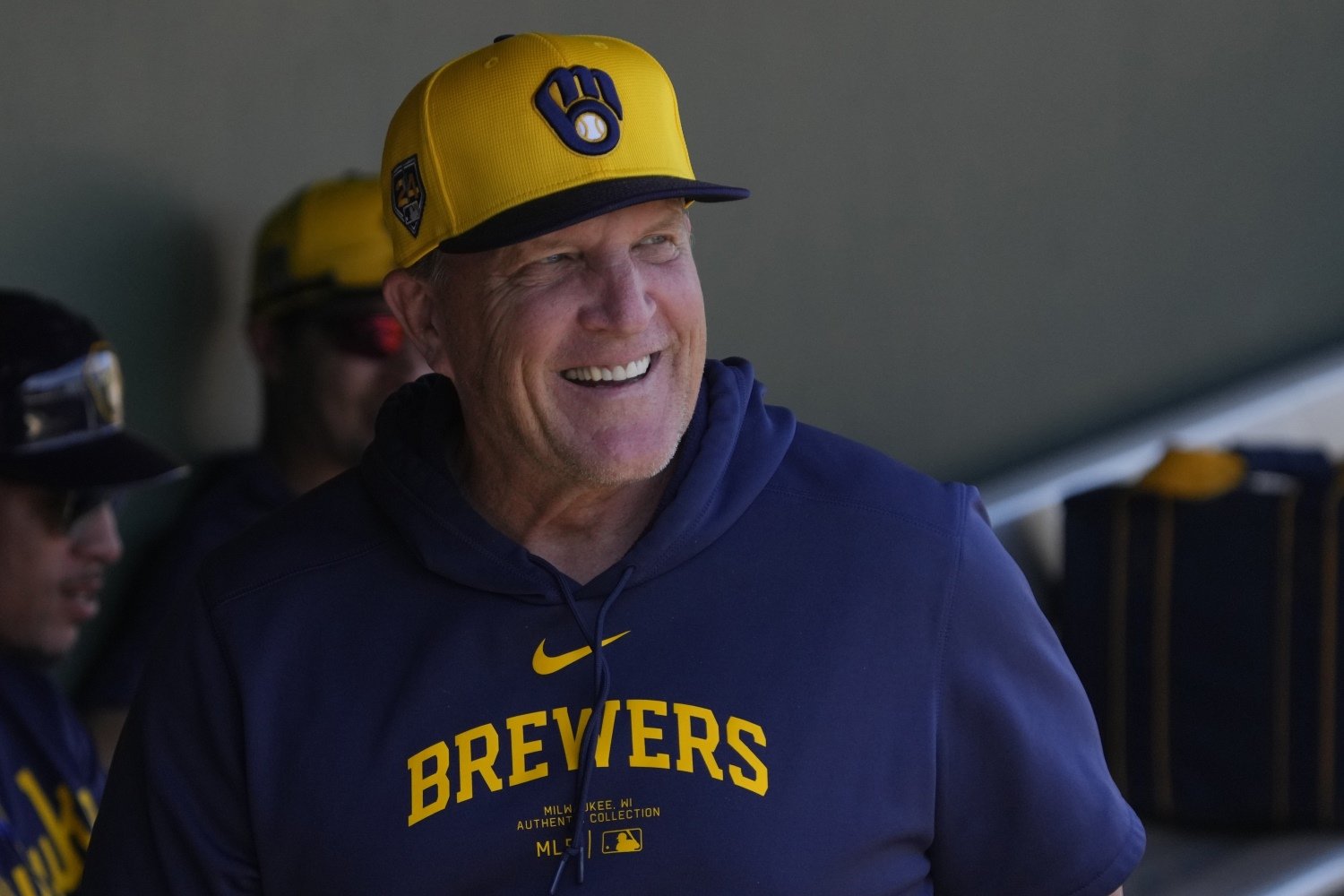 The greatest sin in baseball managing is to be confined to a single plan. If you don't know what you're going to do when the thing you most want to do doesn't work, you're doomed, before the game even begins. Pat Murphy cuts a sometimes comic figure, and his age militates against anyone thinking of him as the next brilliant tactician in the dugout, but his is a multi-track, multidisciplinary baseball mind, and while he's perfectly capable of piercing analysis, he prefers synthesis as his mode of thought. "You get too separated on things," he said last week in Maryvale, of the dangers that come with trying to emphasize or optimize one facet of his team by running out the best possible defense. "You’ll hear me say this a lot, but if you just focus on defense—there’s our defense, and then there’s our offense, and then there’s our pitching, and you can break that into starting and relievers—I like to say, it all affects each other. So if the defense has the potential where we can put three center fielders and three shortstops in the game, that’s not necessarily the recipe. The soup has to taste good, and you just keep stirring it." You could hear a hint of that in his praise (cut with a bit of caution) of Tyler Black later in the week, when he said he sees the non-roster invitee and top prospect as a great part of the team's future but that he's doesn't trust him yet in the field, at either infield corner. Ditto as recently as Tuesday, when he seized upon the Journal-Sentinel's Todd Rosiak's question about a good day at the plate for Jackson Chourio to point out the improvements he still expects on defense. At various points last week, Murphy talked about the challenges of balancing the strengths and weaknesses of his young and highly modular team, rather than leaning into any particular strength at the expense of something else. "A little bit of this, a little bit of this, too much of this can make you really exposed over there," Murphy said, gesturing semi-broadly to indicate the pieces moving around his imaginary chessboard. "So I think that, because the pitching is so inexperienced in their current roles, that there might be reason to be really mindful of more defensive capabilities, but you gotta take care of everything. You can’t be a football team that just runs the option. You’ve gotta be able to be diverse. We might have to give up some defense to get something somewhere else. How much is enough?" Rarely will Murphy be captive to a single moment or matchup. He talked about times when he might eschew removing a given player to optimize one plate appearance's odds, not only because the incumbent might come up later in the game to greater advantage, but because sometimes, he would want certain players to feel empowered and involved--that winning a given game was just one piece of a larger puzzle, and that incrementally increasing the chances of one win would be folly if it incrementally decreased the chances of several by making a player lose confidence or connection within the clubhouse. The team is awash in players (especially infielders) who might play multiple positions, and Murphy is grateful for the flexibility that versatility will lend him, but he was also careful to note the obstacles that kind of nomadism can put in the paths of young players. "Especially young players. It’s hard," he said midweek. "I’d rather just say, ‘Hey Oliver Dunn’---which I might do—'just concentrate on third.' Christian Arroyo, who’s not a younger player, he can handle it. A guy like [Joey] Ortiz, we’ve gotta keep an eye on that. He’s so confident in his defense, although he hasn’t played much third, that I think he’s got a better chance to move and not be affected by it than most young players that aren’t as confident." Dunn has played third almost exclusively since then, as Murphy tries to make a sound evaluation of what's best for both the individual player and the team. I had a question that sat in my notebook for a couple of days, once I realized how Murphy thinks about lineups. I wanted to ask him about the fascinating findings of Tom Tango, last fall, that having one or two left-handed teammates in the lineup makes right-handed batters more effective against left-handed starters. In other words, the whole really is greater than the sum of its parts, in a delightfully tangible way, because the presence of even a couple left-handed batters forces a southpaw starter out of the comfortable rhythm and repertoire with which they assail righties. And then, in response to a totally different question... he just... started talking about it. "I happen to believe that a lot of lefty starters don’t want to face lefties," Murphy said, taking a tangential detour the broader subject of pursuing platoon advantages for his own pitchers. "I know that’s crazy, but I’ve talked to a lot of lefty starters in my years. They don’t like facing righties and lefties, righties and lefties. But when you look at the actual matchup, who’s a better matchup? Usually, it’s the opposite hand over a period of time, if it’s measured. "It’s more of an uncomfortableness. They can’t get into their groove as easily. You can’t ever measure it, because they might get the lefty out. But it screws up your rhythm going forward, because when you’re facing nine righties, you can just get in this pattern that you do. You can feel comfortable, you have space [to the arm side]." That's an excellent example of the way Murphy seems to approach everything. As I wrote in another dispatch from the desert, he's a firm believer that even lived experience and wisdom has to be falsified by good information, and that the gut is to be overruled when good evidence is presented. Yet, he doesn't zero in on any one decision, because to him, they're all concatenated. They don't matter without one another; they barely exist without one another. For a skipper entering his first full season on the top step in MLB, there's a soupcon of peril in this approach. Hard, atomic data specific to a given plate appearance or game can be a valuable life preserver when the seas of the season get rough, and Murphy's desire to consider the thing more molecularly could make him less likely to find a good grip when the water surges over his head. On balance, though, he's the kind of person you want managing a team like this. He'll resist the temptation to make rash choices, or to default to conservatism. He won't run out a player with a .450 OPS for a month straight, and he won't push buttons out of panic or obligation. If he can actualize the building of shared purpose and trust that has been his top priority by the time the team breaks camp, the Crew will have the right mix of talent and mental toughness to not only repeat as NL Central champions, but clear the hurdle that has tripped them early in recent postseasons.
- 7 comments
-
- 3
-
-
-
- jackson chourio
- brice turang
- (and 4 more)
-
While winning remains a priority, this feels like a season of transition for the Milwaukee Brewers. As such, many fans and media members have tried to attach an identity (old or new) to the 2024 squad. Those can be reductive, though, and Pat Murphy won't have that. At various points last week, Murphy talked about the challenges of balancing the strengths and weaknesses of his young and highly modular team, rather than leaning into any particular strength at the expense of something else. "A little bit of this, a little bit of this, too much of this can make you really exposed over there," Murphy said, gesturing semi-broadly to indicate the pieces moving around his imaginary chessboard. "So I think that, because the pitching is so inexperienced in their current roles, that there might be reason to be really mindful of more defensive capabilities, but you gotta take care of everything. You can’t be a football team that just runs the option. You’ve gotta be able to be diverse. We might have to give up some defense to get something somewhere else. How much is enough?" Rarely will Murphy be captive to a single moment or matchup. He talked about times when he might eschew removing a given player to optimize one plate appearance's odds, not only because the incumbent might come up later in the game to greater advantage, but because sometimes, he would want certain players to feel empowered and involved--that winning a given game was just one piece of a larger puzzle, and that incrementally increasing the chances of one win would be folly if it incrementally decreased the chances of several by making a player lose confidence or connection within the clubhouse. The team is awash in players (especially infielders) who might play multiple positions, and Murphy is grateful for the flexibility that versatility will lend him, but he was also careful to note the obstacles that kind of nomadism can put in the paths of young players. "Especially young players. It’s hard," he said midweek. "I’d rather just say, ‘Hey Oliver Dunn’---which I might do—'just concentrate on third.' Christian Arroyo, who’s not a younger player, he can handle it. A guy like [Joey] Ortiz, we’ve gotta keep an eye on that. He’s so confident in his defense, although he hasn’t played much third, that I think he’s got a better chance to move and not be affected by it than most young players that aren’t as confident." Dunn has played third almost exclusively since then, as Murphy tries to make a sound evaluation of what's best for both the individual player and the team. I had a question that sat in my notebook for a couple of days, once I realized how Murphy thinks about lineups. I wanted to ask him about the fascinating findings of Tom Tango, last fall, that having one or two left-handed teammates in the lineup makes right-handed batters more effective against left-handed starters. In other words, the whole really is greater than the sum of its parts, in a delightfully tangible way, because the presence of even a couple left-handed batters forces a southpaw starter out of the comfortable rhythm and repertoire with which they assail righties. And then, in response to a totally different question... he just... started talking about it. "I happen to believe that a lot of lefty starters don’t want to face lefties," Murphy said, taking a tangential detour the broader subject of pursuing platoon advantages for his own pitchers. "I know that’s crazy, but I’ve talked to a lot of lefty starters in my years. They don’t like facing righties and lefties, righties and lefties. But when you look at the actual matchup, who’s a better matchup? Usually, it’s the opposite hand over a period of time, if it’s measured. "It’s more of an uncomfortableness. They can’t get into their groove as easily. You can’t ever measure it, because they might get the lefty out. But it screws up your rhythm going forward, because when you’re facing nine righties, you can just get in this pattern that you do. You can feel comfortable, you have space [to the arm side]." That's an excellent example of the way Murphy seems to approach everything. As I wrote in another dispatch from the desert, he's a firm believer that even lived experience and wisdom has to be falsified by good information, and that the gut is to be overruled when good evidence is presented. Yet, he doesn't zero in on any one decision, because to him, they're all concatenated. They don't matter without one another; they barely exist without one another. For a skipper entering his first full season on the top step in MLB, there's a soupcon of peril in this approach. Hard, atomic data specific to a given plate appearance or game can be a valuable life preserver when the seas of the season get rough, and Murphy's desire to consider the thing more molecularly could make him less likely to find a good grip when the water surges over his head. On balance, though, he's the kind of person you want managing a team like this. He'll resist the temptation to make rash choices, or to default to conservatism. He won't run out a player with a .450 OPS for a month straight, and he won't push buttons out of panic or obligation. If he can actualize the building of shared purpose and trust that has been his top priority by the time the team breaks camp, the Crew will have the right mix of talent and mental toughness to not only repeat as NL Central champions, but clear the hurdle that has tripped them early in recent postseasons. View full article
- 7 replies
-
- 1
-
-
- jackson chourio
- brice turang
- (and 4 more)
-
Mm. That's probably poor rendering of the quote on my part, but it is verbatim. He was sort of thinking aloud about the numbers he's targeting, saying, "anywhere from eight to... if I can get to", if that makes more sense.
-
Though he spent much of 2023 in a frustrating sojourn in the minor leagues, Janson Junk is back this spring to assert himself as a valuable piece of the major-league Milwaukee Brewers pitching staff. Image courtesy of © Allan Henry-USA TODAY Sports There's one surprising commonality among just about every pitcher in the Brewers clubhouse this spring: they're all pitching nerds. Ok, that's a tad strong. They're a pretty representative sample of big-league ballplayers, in many respects. They give each other guff about the way they do simple things. They gossip about the rest of the league. They talk golf. They're jocks, after all. Still, they all also share a fluency with advanced mechanical and quantitative jargon around pitching that would have been a foreign tongue within an actual clubhouse a decade ago. Chris Hook, it's clear, is not just telling them what to do and to trust him that it will work. They all have a fairly firm grasp of their own stuff, and of how they can improve. They've learned the underpinnings of their own performances, and they talk about them freely. Janson Junk stands out even in that crowd, though. He's not just willing to talk about how he's evolved over the last two seasons, or about why he believes he'll be good in 2024. He's downright eager to. "After the season, I train up in Seattle--that’s where I’m from--and I went to Driveline, and the biggest thing was I got my biomechanic report, and noticed that I was getting too quad-dominant last year," Junk said Saturday in Maryvale. "Meaning that I’m not utilizing my back half the way I should be to generate power. Junk in April 2023 Janson Junk April 23.mp4 "I was losing that power when I would leg lift and sink into that quad. I would start to work over my body, I would drift toward the third-base line and then work back toward home, and then I’m just fighting against myself. So the biggest thing that I worked on was hinge at my back hip, trying to get into my glute, and just think about sitting back in my mechanics, rather than falling forward a little bit." That's a funny coincidence, because the name Driveline--so much a buzzword it barely has any definition beyond the academy itself, anymore, to the modern baseball fan--actually comes from the principle that an efficient delivery means staying on an imaginary line from mound to plate. With greater engagement of the big muscles in his lower half, Junk gained both power and consistency. You can see a bit of what it "should" look like even in his final appearance of the season, Oct. 1 against the Cubs. Junk in Oct. 2023 Janson Junk Oct 23.mp4 Junk rotates his trunk later and is a little less meandering down the mound here, but there remained more cleanup to do. He now believes he's done it. "It’s about getting the most out of my body," he said. "I think this time last year, in spring, I was sitting 91-93, 94. My first live [BP] and my first game, I was 94-96. It’s very similar, but it’s just coming out better, feeling more efficient in my mechanics. I’ve always had the command where I can throw around the zone and put the ball where I want, but it’s more about getting the power out of my body that reflects on my strike numbers." Through plyo drills and a change in the set of his hips when he comes set, Junk said he now feels more precision and benefits that flow out to his arm path and to his use of his front side, as well. Whereas Bryan Hudson felt that a cleanup of his front side brought other aspects of his delivery into alignment, Junk has seen the improvements flow in the opposite direction. Beyond those mechanical cues and the increased velocity that comes with them, though, Junk also takes some optimism from what he thinks is a better pitch mix. He believes he chased a red herring last year, and will be better able to do what he does best in 2024. "Last year, coming into spring training, I really worked on my splitter, and lost focus on what I was really strong at, which is my curveball and my slider," Junk said. "Throughout last year, I was trying to force the splitter too much, and wasn’t having the results I wanted. So I went, 'Why am I doing this? I need to lean on my strengths.' "Midseason, I started doing that. So this offseason, I emphasized my slider: getting it where I wanted to, because last year I was going through a few grip changes, a few shape changes, and that’s really hard during the season—to nail that down when you’re only throwing one side a week, and you have to prepare for a game, and competing, and getting guys out. So this offseason, I really focused on the slider development, and how comfortable I was." Junk is far from the first pitcher to name the vicious difficulty of trying to make big changes to a pitch's shape or its usage within a season. It can be done, but it comes with an array of challenges. He found some things that worked during the campaign, but didn't feel able to lock them in. "Last year, my slider grip, I couldn’t execute it the way I wanted. The numbers would be good, but the execution of it wasn’t how I would like it," Junk said. "I have smaller hands, so I was trying to go with this two-seam, seam-shifted-wake slider, and then I banged that halfway through the season, because I wanted to throw a shorter, harder slider. During the offseason, I went to my trainers back home, and they were like, 'You can still sweep it good, let’s just play around with some grips, see what’s comfortable with you.'" You can see the changes he attempted to make throughout the season by isolating the sweepers and sliders from his pitch movement chart, and breaking it out by month. The consistency and manipulability he sought was elusive, though, even as he evolved. After his winter work, he feels like it's much more of a sure thing. "The big thing was keeping sweep while throwing it hard. I went to more of a spike slider, similar to what Colin Rea has. It’s still a seam-shifted slider, so I’m able to get on the side of the ball the way I want to and create the sidespin, while mimicking the hand position of my curveball, Junk said. "So it’s two very different movements, but similar hand positions. "That comfortability, where I’m like, ‘Ok, this is my fastball, and then I’m going neutral wrist with my breaking stuff, but one is more 12-to-6 and one’s sweepy. That simplified it, and allowed me to be comfortable with that grip and execute it the way I wanted." In the spring complex clubhouse, there's a line of lockers along one wall that includes: Wade Miley, Brandon Woodruff, Colin Rea, Jacob Misiorowski, Devin Williams, Bryse Wilson, Robert Gasser, Aaron Ashby, DL Hall, Jakob Junis, Hoby Milner, Junk, and Trevor Megill. It's hard not to hear what Junk says about his stuff and think about how it relates to things I heard recently from Milner (on having the same hand positions on both of his fastballs, making it easier to throw each in equal mixture) or Rea (on the feel for shaping the sweeper differently based on how he wants to use it, without losing the feel for either version of the pitch). Junk, who lockers right next to Milner, does seem to share that philosophy about setting a hand position, albeit for a breaking ball instead of heat. Just as he's all the way down the lane from Rea physically, though, he differs from his veteran teammate in the mental cue he wants when throwing the sweeper. "I don’t like the thought process of getting around the ball, because when I do that, I usually drop my wrist position and create lift to it. It’ll still have sweep, but it will have lift," Junk said. "If I have too much lift, I’ve seen it before, where I can’t get the swing and miss with it. I can still get the sweep, but it’s more about changing planes with that pitch. If I’m on top of it more, I can get more downward tilt to it and have that change of planes and get that swing and miss. And then if I want to get more depth, I can get over it like my curveball and have a little bit more depth. So it’s more about having a stiff wrist through release with my slider, and then my curveball, it’s about stiff wrist, and then coming through." One more similarity between him and those inline teammates, though: Junk, like Ashby and Wilson, believes fervently in using the slider against opposite-handed batters. "I love throwing sliders to lefties," he said. "Last year and the year before, I really started to lock that in. Going backdoor, I’ve seen that backdoor slider be amazing for anybody who throws that sweeping slider. You get a lot of takes from lefties seeing it as a ball out of the hand. And then utilizing the backfoot slider, as well, helps a lot." This level of thoughtful, exuberant openness pairs well with the concrete changes Junk has made, and manager Pat Murphy is suitably impressed. "Credit to the kid. The kid’s a worker," Murphy said in one media session. "You never have to wonder if he’s prepared." On another occasion, Murphy said he thinks Junk could help both in relief and in the rotation, which is in keeping with the very flexible approach he's taking to his pitching staff this year. "He looks fantastic. He really does," Murphy said. "The heater’s better. He’s confident." That, obviously, is not all that's different. It's plenty to get excited about, though, and Junk has the right outlook on the season. He understands that he won't be first in line for the team, but now that he has (physically and mentally) put himself on the right line, it's just a matter of time before success finds him. View full article
-
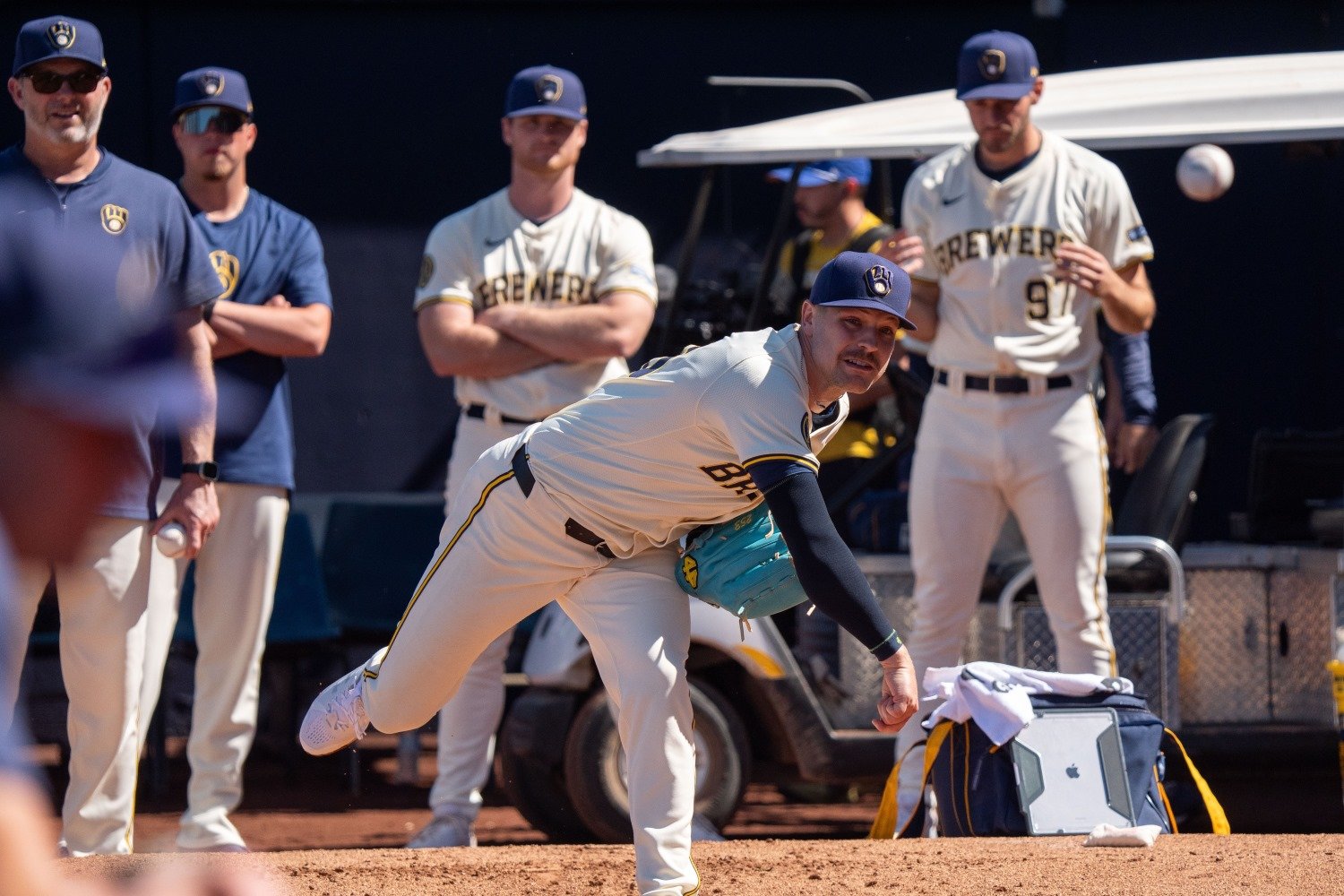 There's one surprising commonality among just about every pitcher in the Brewers clubhouse this spring: they're all pitching nerds. Ok, that's a tad strong. They're a pretty representative sample of big-league ballplayers, in many respects. They give each other guff about the way they do simple things. They gossip about the rest of the league. They talk golf. They're jocks, after all. Still, they all also share a fluency with advanced mechanical and quantitative jargon around pitching that would have been a foreign tongue within an actual clubhouse a decade ago. Chris Hook, it's clear, is not just telling them what to do and to trust him that it will work. They all have a fairly firm grasp of their own stuff, and of how they can improve. They've learned the underpinnings of their own performances, and they talk about them freely. Janson Junk stands out even in that crowd, though. He's not just willing to talk about how he's evolved over the last two seasons, or about why he believes he'll be good in 2024. He's downright eager to. "After the season, I train up in Seattle--that’s where I’m from--and I went to Driveline, and the biggest thing was I got my biomechanic report, and noticed that I was getting too quad-dominant last year," Junk said Saturday in Maryvale. "Meaning that I’m not utilizing my back half the way I should be to generate power. Junk in April 2023 Janson Junk April 23.mp4 "I was losing that power when I would leg lift and sink into that quad. I would start to work over my body, I would drift toward the third-base line and then work back toward home, and then I’m just fighting against myself. So the biggest thing that I worked on was hinge at my back hip, trying to get into my glute, and just think about sitting back in my mechanics, rather than falling forward a little bit." That's a funny coincidence, because the name Driveline--so much a buzzword it barely has any definition beyond the academy itself, anymore, to the modern baseball fan--actually comes from the principle that an efficient delivery means staying on an imaginary line from mound to plate. With greater engagement of the big muscles in his lower half, Junk gained both power and consistency. You can see a bit of what it "should" look like even in his final appearance of the season, Oct. 1 against the Cubs. Junk in Oct. 2023 Janson Junk Oct 23.mp4 Junk rotates his trunk later and is a little less meandering down the mound here, but there remained more cleanup to do. He now believes he's done it. "It’s about getting the most out of my body," he said. "I think this time last year, in spring, I was sitting 91-93, 94. My first live [BP] and my first game, I was 94-96. It’s very similar, but it’s just coming out better, feeling more efficient in my mechanics. I’ve always had the command where I can throw around the zone and put the ball where I want, but it’s more about getting the power out of my body that reflects on my strike numbers." Through plyo drills and a change in the set of his hips when he comes set, Junk said he now feels more precision and benefits that flow out to his arm path and to his use of his front side, as well. Whereas Bryan Hudson felt that a cleanup of his front side brought other aspects of his delivery into alignment, Junk has seen the improvements flow in the opposite direction. Beyond those mechanical cues and the increased velocity that comes with them, though, Junk also takes some optimism from what he thinks is a better pitch mix. He believes he chased a red herring last year, and will be better able to do what he does best in 2024. "Last year, coming into spring training, I really worked on my splitter, and lost focus on what I was really strong at, which is my curveball and my slider," Junk said. "Throughout last year, I was trying to force the splitter too much, and wasn’t having the results I wanted. So I went, 'Why am I doing this? I need to lean on my strengths.' "Midseason, I started doing that. So this offseason, I emphasized my slider: getting it where I wanted to, because last year I was going through a few grip changes, a few shape changes, and that’s really hard during the season—to nail that down when you’re only throwing one side a week, and you have to prepare for a game, and competing, and getting guys out. So this offseason, I really focused on the slider development, and how comfortable I was." Junk is far from the first pitcher to name the vicious difficulty of trying to make big changes to a pitch's shape or its usage within a season. It can be done, but it comes with an array of challenges. He found some things that worked during the campaign, but didn't feel able to lock them in. "Last year, my slider grip, I couldn’t execute it the way I wanted. The numbers would be good, but the execution of it wasn’t how I would like it," Junk said. "I have smaller hands, so I was trying to go with this two-seam, seam-shifted-wake slider, and then I banged that halfway through the season, because I wanted to throw a shorter, harder slider. During the offseason, I went to my trainers back home, and they were like, 'You can still sweep it good, let’s just play around with some grips, see what’s comfortable with you.'" You can see the changes he attempted to make throughout the season by isolating the sweepers and sliders from his pitch movement chart, and breaking it out by month. The consistency and manipulability he sought was elusive, though, even as he evolved. After his winter work, he feels like it's much more of a sure thing. "The big thing was keeping sweep while throwing it hard. I went to more of a spike slider, similar to what Colin Rea has. It’s still a seam-shifted slider, so I’m able to get on the side of the ball the way I want to and create the sidespin, while mimicking the hand position of my curveball, Junk said. "So it’s two very different movements, but similar hand positions. "That comfortability, where I’m like, ‘Ok, this is my fastball, and then I’m going neutral wrist with my breaking stuff, but one is more 12-to-6 and one’s sweepy. That simplified it, and allowed me to be comfortable with that grip and execute it the way I wanted." In the spring complex clubhouse, there's a line of lockers along one wall that includes: Wade Miley, Brandon Woodruff, Colin Rea, Jacob Misiorowski, Devin Williams, Bryse Wilson, Robert Gasser, Aaron Ashby, DL Hall, Jakob Junis, Hoby Milner, Junk, and Trevor Megill. It's hard not to hear what Junk says about his stuff and think about how it relates to things I heard recently from Milner (on having the same hand positions on both of his fastballs, making it easier to throw each in equal mixture) or Rea (on the feel for shaping the sweeper differently based on how he wants to use it, without losing the feel for either version of the pitch). Junk, who lockers right next to Milner, does seem to share that philosophy about setting a hand position, albeit for a breaking ball instead of heat. Just as he's all the way down the lane from Rea physically, though, he differs from his veteran teammate in the mental cue he wants when throwing the sweeper. "I don’t like the thought process of getting around the ball, because when I do that, I usually drop my wrist position and create lift to it. It’ll still have sweep, but it will have lift," Junk said. "If I have too much lift, I’ve seen it before, where I can’t get the swing and miss with it. I can still get the sweep, but it’s more about changing planes with that pitch. If I’m on top of it more, I can get more downward tilt to it and have that change of planes and get that swing and miss. And then if I want to get more depth, I can get over it like my curveball and have a little bit more depth. So it’s more about having a stiff wrist through release with my slider, and then my curveball, it’s about stiff wrist, and then coming through." One more similarity between him and those inline teammates, though: Junk, like Ashby and Wilson, believes fervently in using the slider against opposite-handed batters. "I love throwing sliders to lefties," he said. "Last year and the year before, I really started to lock that in. Going backdoor, I’ve seen that backdoor slider be amazing for anybody who throws that sweeping slider. You get a lot of takes from lefties seeing it as a ball out of the hand. And then utilizing the backfoot slider, as well, helps a lot." This level of thoughtful, exuberant openness pairs well with the concrete changes Junk has made, and manager Pat Murphy is suitably impressed. "Credit to the kid. The kid’s a worker," Murphy said in one media session. "You never have to wonder if he’s prepared." On another occasion, Murphy said he thinks Junk could help both in relief and in the rotation, which is in keeping with the very flexible approach he's taking to his pitching staff this year. "He looks fantastic. He really does," Murphy said. "The heater’s better. He’s confident." That, obviously, is not all that's different. It's plenty to get excited about, though, and Junk has the right outlook on the season. He understands that he won't be first in line for the team, but now that he has (physically and mentally) put himself on the right line, it's just a matter of time before success finds him.
 -
To be a non-roster invite to Milwaukee Brewers spring training is to play with your back to the wall. It means having your locker in an out-of-the-way corner of the clubhouse in Maryvale. For one low-profile bullpen candidate, that's ok. Being out of the way suits him. Image courtesy of © Mark J. Rebilas-USA TODAY Sports "I like being tucked away over here," Jared Koenig swears, and once you get to know his story, it's not hard to believe. Koenig, 30, was born in San Jose, but when he talks about his training facility "back home," he means Scotts Valley, Cal., a city of 12,000 or so nestled just inland from Santa Cruz and about half an hour south of Palo Alto, Cupertino, and yes, San Jose. Koenig works out at Rossy's Training, run by local product and ex-pro Matt Rossignol, who pitched sparingly for a couple of independent league teams after graduating from Scotts Valley's Bethany University (since closed) and then got certification to work as a trainer. Rossy's is on Technology Cir. in Scotts Valley, but like the city itself, that mostly means the less glamorous kind of technology--the stuff without which Silicon Valley would sputter and stop, but not much like Silicon Valley itself. Next to Rossy's is a machine shop, and there are two electronics fabricators on the same block, just off Route 17. It's a good place to get things done, but not a great place to get noticed. The same can probably be said for Koenig's locker in Maryvale, and he's pleased about both. For the moment, Koenig is the most famous client of his little training spot, and he's trying to put both it and himself on the map. To date, his big-league career consists of a 39-inning stint with the moribund 2022 Oakland Athletics, and even that came only after a seemingly impossibe baseball journey. Hold on for this ride; it's bumpy. After finishing high school, Koenig went to Central Arizona College, which is really a junior college, and was drafted in the 35th round by the White Sox. Chicago never even made him an offer, though, so Koenig opted instead for a transfer opportunity to Old Dominion University, in Virginia. That stop was short and brutal, as Koenig pitched sparingly and had an ERA of 7.63. He next transferred to Cal. State-Monterey Bay, less than an hour down the coast from home, but things went only fractionally better. After that flier from the White Sox, Koenig was never drafted again. From 2017 through 2019, Koenig pitched in a staggering five different independent leagues: the Pecos League, the American Association, the Pacific Association, the United Shore Baseball League, and the Frontier League. In the winter after 2019, he went to Australia and pitched there, too. and somewhere in there, seemingly right around 2018, a funny thing happened: Koenig got better. He had impressive numbers in Australia and had the same in his last couple of stops in indy ball. The A's spotted him in Australia and signed him in Jan. 2020, but because of the pandemic, his affiliated pro career had to wait a year to begin. When it did, he put up good enough numbers in Double- and Triple-A to earn a reasonably long look with the parent club in 2022--even if it was for a team who lost 102 games. After finishing the season in the minors, however, he became a minor-league free agent. Throughout all this time--even for half of his stint with Oakland--Koenig was a starter. After signing with the Padres in late February, he tried his hand as a reliever in 2023. He had a 3.81 ERA in 48 appearances at the two highest levels of the minors for San Diego, but he was never especially close to cracking the big-league roster. After the season, he again became a free agent. This time, his free agency only lasted two weeks. The Brewers offered him the spot he now occupies, as a non-roster player but in big-league camp, on Nov. 20. In his work for the Padres in the minors, Koenig's stuff ticked up. Moving to the pen certainly helped, but so did a lot of work at Rossy's Training. "Everything with my trainer has been to help me see an increase in velo and consistency," Koenig said Friday. "But the last couple of years, we really focused on speed down the mound and pace—everything directed toward trying to create more velo from the body." It worked, in a big way, but even beyond what he worked on between seasons, some of the work he got in while with the Padres helped him find another gear near the end of the season, too. However you distribute credit, he's now frequently throwing about four miles per hour faster than he was in 2022, and two miles per hour faster than in early 2023. Late in the season, he touched 98. Another change he made after joining San Diego and moving to the bullpen was in his pitch mix. He has a very different fastball profile than he showed in 2022. "I throw a four-seamer, but very seldom," Koenig said. That was his bread-and-butter fastball prior to 2023. Now, it's a sinker, and the weapon now nearly in parity with it is his cutter. "The induced vert is pretty high for a cutter. I do throw a four-seamer, but usually the four-seamer is a little more distinct. It’ll have a little bit of perceived cut, but nothing compared to the true cutter I’m throwing. And then I have a sweeper and a changeup." The southpaw will see many more lefties, as a share of all opponents, now that he's made the move to relief work, so he's more comfortable using the sinker as his main fastball. That was the pitch everything else worked off of last year. Against righties, though, it was the cutter (once he found conviction in it) that became his primary offering. He gained much better feel (and applied better shape) to the changeup in 2023, as he alluded to above, and the pairing of the cutter and that change might just be the key for him to find greater success against right-handed batters. Check out the movement changes in his profile from 2022 to 2023, but keep in mind that almost all of the pitches coded by Statcast as four-seamers in the righthand image are actually the cutter, as Koenig moved away from the four-seamer. A starter needs three pitches they can throw to each type of batter, but a reliever only needs two. For Koenig, the cutter and changeup should work to righties, especially if he can keep the cutter above 90 miles per hour, as it was last year. The sinker and sweeper, meanwhile, will be very tough on lefties. The four-seamer can be reserved as a mere changer of eye levels at the top of the zone, on occasion. "This offseason with my trainer, the goal was to create more of a sweeper-like curveball—a little sharper, a little more left to right instead of north to south," Koenig said. That fits, if he'll primarily be throwing that pitch against fellow lefties. "And so with that, the goal is to have it be 15-20 [inches of sweep] and anywhere from 8 to, if I can get down to like 3 for [induced vertical break] then that’d be great. Then it’s just making sure the sinker is staying under 10 inches of vert. That’s the goal for that aspect." The sinker already meets that standard, and the magnitude of his movement on the sweeper (labeled a curveball, in the images above) is already right. With the tilt adjustments he's describing, he should be able to run the sinker in on lefties, then get them chasing fairly helplessly away on the sweeper. It's momentarily startling to hear a pitcher with Koenig's rural NorCal accent rattle off numbers like these so fluently, but then you remember: he's from the place where Silicon Valley's innovations become tangible things. Just like the machine shop next door, Rossy's is receiving specs and going about the process of manufacturing. In Koenig's case, that could mean manufacturing a big-league career as a lefty reliever, long after most people would have given up the game. He's not doing something radical and new, though a decade ago, all of this would have been. He's just one of the latest highly unexpected beneficiaries of this kind of pitch design. Don't expect Koenig to make the roster out of camp. Do keep an eye on him, though, because he's not a junkballer with little to offer. In his first two outings of the spring, he racked up five strikeouts in two innings. The stuff is legitimate, and the journeyman wielding it is clearly no quitter. View full article
-
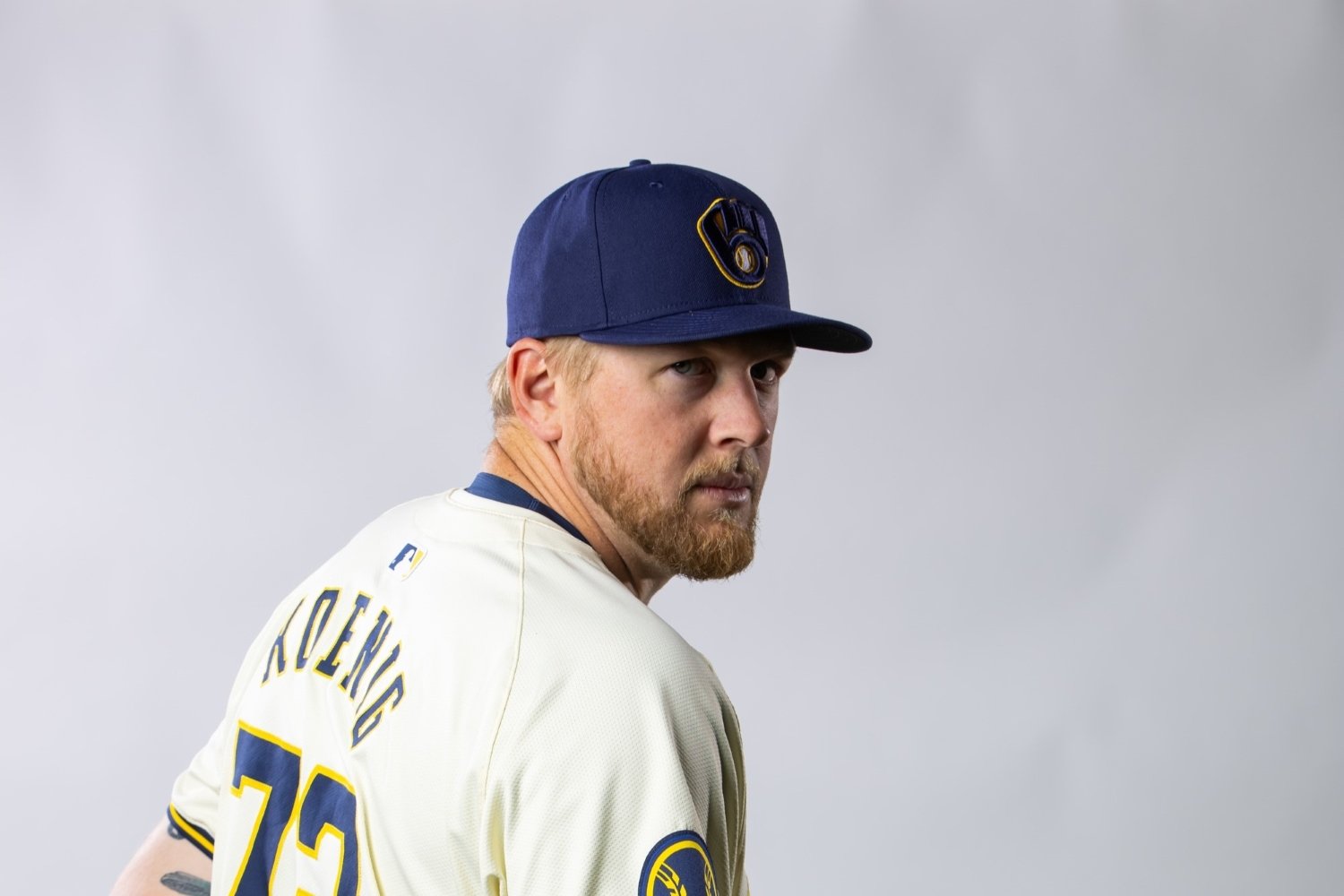 "I like being tucked away over here," Jared Koenig swears, and once you get to know his story, it's not hard to believe. Koenig, 30, was born in San Jose, but when he talks about his training facility "back home," he means Scotts Valley, Cal., a city of 12,000 or so nestled just inland from Santa Cruz and about half an hour south of Palo Alto, Cupertino, and yes, San Jose. Koenig works out at Rossy's Training, run by local product and ex-pro Matt Rossignol, who pitched sparingly for a couple of independent league teams after graduating from Scotts Valley's Bethany University (since closed) and then got certification to work as a trainer. Rossy's is on Technology Cir. in Scotts Valley, but like the city itself, that mostly means the less glamorous kind of technology--the stuff without which Silicon Valley would sputter and stop, but not much like Silicon Valley itself. Next to Rossy's is a machine shop, and there are two electronics fabricators on the same block, just off Route 17. It's a good place to get things done, but not a great place to get noticed. The same can probably be said for Koenig's locker in Maryvale, and he's pleased about both. For the moment, Koenig is the most famous client of his little training spot, and he's trying to put both it and himself on the map. To date, his big-league career consists of a 39-inning stint with the moribund 2022 Oakland Athletics, and even that came only after a seemingly impossibe baseball journey. Hold on for this ride; it's bumpy. After finishing high school, Koenig went to Central Arizona College, which is really a junior college, and was drafted in the 35th round by the White Sox. Chicago never even made him an offer, though, so Koenig opted instead for a transfer opportunity to Old Dominion University, in Virginia. That stop was short and brutal, as Koenig pitched sparingly and had an ERA of 7.63. He next transferred to Cal. State-Monterey Bay, less than an hour down the coast from home, but things went only fractionally better. After that flier from the White Sox, Koenig was never drafted again. From 2017 through 2019, Koenig pitched in a staggering five different independent leagues: the Pecos League, the American Association, the Pacific Association, the United Shore Baseball League, and the Frontier League. In the winter after 2019, he went to Australia and pitched there, too. and somewhere in there, seemingly right around 2018, a funny thing happened: Koenig got better. He had impressive numbers in Australia and had the same in his last couple of stops in indy ball. The A's spotted him in Australia and signed him in Jan. 2020, but because of the pandemic, his affiliated pro career had to wait a year to begin. When it did, he put up good enough numbers in Double- and Triple-A to earn a reasonably long look with the parent club in 2022--even if it was for a team who lost 102 games. After finishing the season in the minors, however, he became a minor-league free agent. Throughout all this time--even for half of his stint with Oakland--Koenig was a starter. After signing with the Padres in late February, he tried his hand as a reliever in 2023. He had a 3.81 ERA in 48 appearances at the two highest levels of the minors for San Diego, but he was never especially close to cracking the big-league roster. After the season, he again became a free agent. This time, his free agency only lasted two weeks. The Brewers offered him the spot he now occupies, as a non-roster player but in big-league camp, on Nov. 20. In his work for the Padres in the minors, Koenig's stuff ticked up. Moving to the pen certainly helped, but so did a lot of work at Rossy's Training. "Everything with my trainer has been to help me see an increase in velo and consistency," Koenig said Friday. "But the last couple of years, we really focused on speed down the mound and pace—everything directed toward trying to create more velo from the body." It worked, in a big way, but even beyond what he worked on between seasons, some of the work he got in while with the Padres helped him find another gear near the end of the season, too. However you distribute credit, he's now frequently throwing about four miles per hour faster than he was in 2022, and two miles per hour faster than in early 2023. Late in the season, he touched 98. Another change he made after joining San Diego and moving to the bullpen was in his pitch mix. He has a very different fastball profile than he showed in 2022. "I throw a four-seamer, but very seldom," Koenig said. That was his bread-and-butter fastball prior to 2023. Now, it's a sinker, and the weapon now nearly in parity with it is his cutter. "The induced vert is pretty high for a cutter. I do throw a four-seamer, but usually the four-seamer is a little more distinct. It’ll have a little bit of perceived cut, but nothing compared to the true cutter I’m throwing. And then I have a sweeper and a changeup." The southpaw will see many more lefties, as a share of all opponents, now that he's made the move to relief work, so he's more comfortable using the sinker as his main fastball. That was the pitch everything else worked off of last year. Against righties, though, it was the cutter (once he found conviction in it) that became his primary offering. He gained much better feel (and applied better shape) to the changeup in 2023, as he alluded to above, and the pairing of the cutter and that change might just be the key for him to find greater success against right-handed batters. Check out the movement changes in his profile from 2022 to 2023, but keep in mind that almost all of the pitches coded by Statcast as four-seamers in the righthand image are actually the cutter, as Koenig moved away from the four-seamer. A starter needs three pitches they can throw to each type of batter, but a reliever only needs two. For Koenig, the cutter and changeup should work to righties, especially if he can keep the cutter above 90 miles per hour, as it was last year. The sinker and sweeper, meanwhile, will be very tough on lefties. The four-seamer can be reserved as a mere changer of eye levels at the top of the zone, on occasion. "This offseason with my trainer, the goal was to create more of a sweeper-like curveball—a little sharper, a little more left to right instead of north to south," Koenig said. That fits, if he'll primarily be throwing that pitch against fellow lefties. "And so with that, the goal is to have it be 15-20 [inches of sweep] and anywhere from 8 to, if I can get down to like 3 for [induced vertical break] then that’d be great. Then it’s just making sure the sinker is staying under 10 inches of vert. That’s the goal for that aspect." The sinker already meets that standard, and the magnitude of his movement on the sweeper (labeled a curveball, in the images above) is already right. With the tilt adjustments he's describing, he should be able to run the sinker in on lefties, then get them chasing fairly helplessly away on the sweeper. It's momentarily startling to hear a pitcher with Koenig's rural NorCal accent rattle off numbers like these so fluently, but then you remember: he's from the place where Silicon Valley's innovations become tangible things. Just like the machine shop next door, Rossy's is receiving specs and going about the process of manufacturing. In Koenig's case, that could mean manufacturing a big-league career as a lefty reliever, long after most people would have given up the game. He's not doing something radical and new, though a decade ago, all of this would have been. He's just one of the latest highly unexpected beneficiaries of this kind of pitch design. Don't expect Koenig to make the roster out of camp. Do keep an eye on him, though, because he's not a junkballer with little to offer. In his first two outings of the spring, he racked up five strikeouts in two innings. The stuff is legitimate, and the journeyman wielding it is clearly no quitter.
 -
Thanks! I like doing these, too. I've got an even better one (imo) for you tomorrow, in the same vein.
-
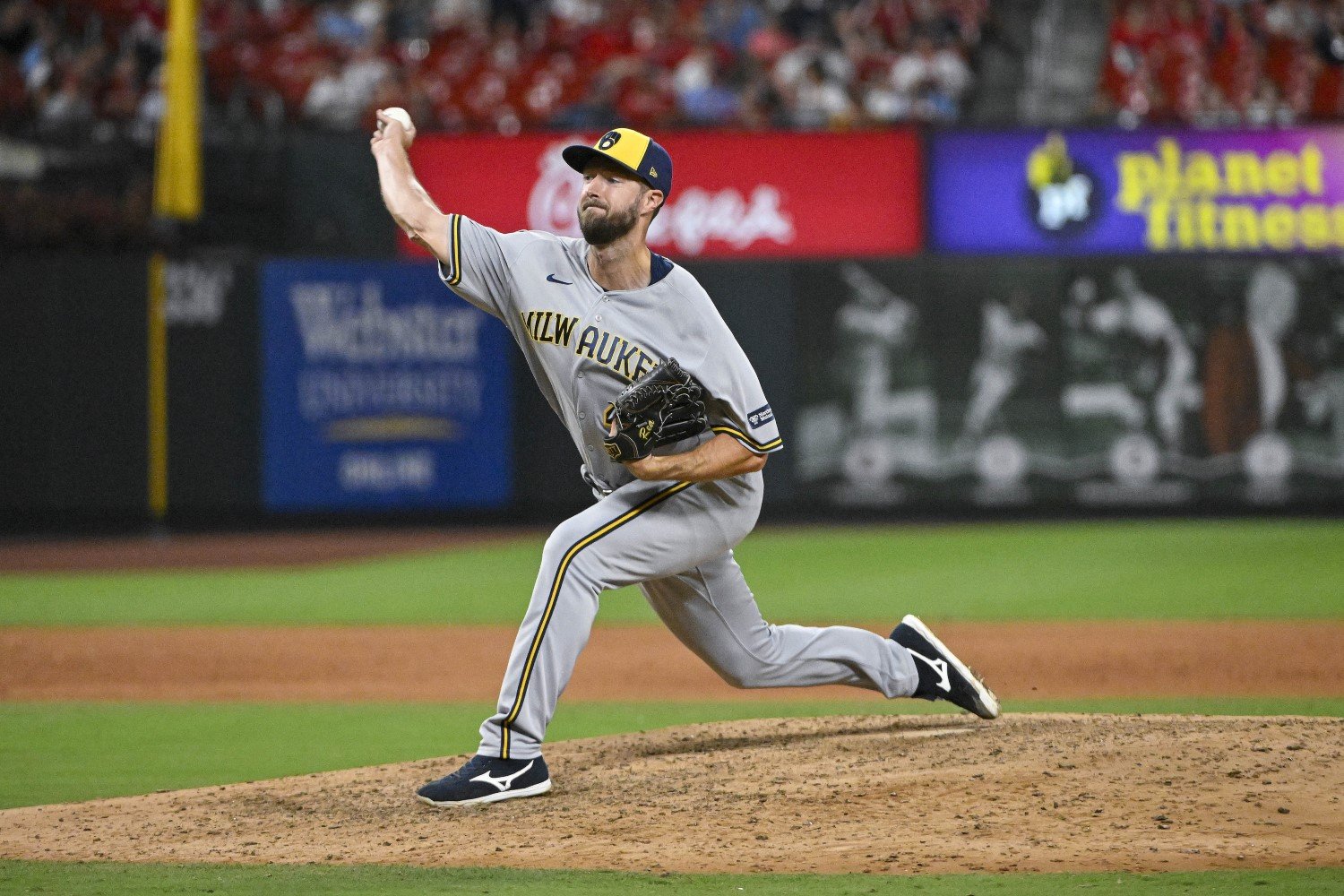 Last season was a mixed bag for Colin Rea, but his value far exceeded that suggested by his raw numbers. Despite a 4.55 ERA and unimpressive rates of strikeouts and home runs allowed, Rea had 13 Game Scores of 50 or higher in his 22 starts, and three of his four relief outings were successful, too. Still, there were those pesky problems. Rea's inflated ERA came from far too many long balls, and he didn't get lefties out with nearly the requisite consistency. Rea developed a nice sweeper, and he came into some better velocity. As he hurtles toward his 34th birthday, though, he needs a more balanced and deeper repertoire to achieve better results against opposite-handed hitters. As has already been reported this spring, he's hoping that a new grip on his splitter can be the key. "It’s kind of in the middle of a true fork and a split; somewhere in the middle," Rea said Friday in Maryvale. "The biggest thing I’m looking for is just a speed differential from my fastball. If I can get some run and some vertical drop to it, that’d be good, but I just need a more consistent change of pace." That looked to be working well for Rea in his simulated game this week, and would, indeed, be pivotal for him. Last year, batters whiffed on just 20 percent of their swings against the splitter. When they hit it, they hit it fairly hard, and it didn't have a great ground-ball rate. Worse, Rea struggled to throw it in competitive locations, and it didn't earn a sufficient chase rate. Already, he's looking better in these areas this spring. "A changeup was always a tough pitch for me to feel, but the games last year when it was good, it made everything else better," Rea said. "So it was one of those things where I needed to figure out a consistent grip, and so far this has been pretty good." As you can discern in reading those quotes, Rea isn't planning to rebuild his varied repertoire around the splitter. It's just a tweak designed to help him become more unpredictable. He knows that he'll also need better execution of his existing, largely unaltered offerings, in order to better neutralize lefties. One key will be greater depth on his sweeper, a pitch that became a crucial part of his attack last year. "It’s more of a thought," Rea said of manipulating that pitch for more depth. "If I want to throw it backfoot to lefties, I just try to get on top of it a little bit more. If I’m throwing it to righties, away, I’m more on the side of it—almost underneath it, so it comes across. I want that ride and sweep to righties. I think that plays a little bit better, depending on the swing." That's all pretty similar to what Bryse Wilson said earlier this week about his cutter. For Wilson, the cutter is a breaking ball, so it makes sense that he and Rea conceptualize that subtle but essential manipulation to change shape in the same way. Also like Wilson, Rea has a cutter that behaves more like a breaking ball than like his heat, but it was the sweeper that yielded the best results for him last year. Of course, everything about Rea's stuff will play better if he sustains the increase in velocity he enjoyed in 2023. Entering his mid-30s, he threw harder than ever. That's a recipe for success, and one Rea says came from finding balance between the many possible objectives a pitcher can elect to pursue during offseason conditioning. "I think the training I started to do a couple years ago in the offseason helped my mobility get back a little bit.," Rea said. "There were some years in there where I just wanted to get as strong as possible, and I kind of lost the mobility, so I went backwards. I didn’t lift as heavy, but gained range of motion." As you might expect of a journeyman who has found such a secure opportunity so late in his pro career, Rea can often be spotted carefully maintaining the feel of what works in the clubhouse. It's not unusual to see players practicing some aspect of their swing or their throwing motion near their lockers, but Rea does it more than anyone. He's often spinning a ball in his hands, and conversations with teammates frequently involve exaggerated examples of the mechanical cues he's talking about or searching for. Some of his improved power comes simply from better physical efficiency, "It’s also just constantly working with my mechanics here," Rea said. "And then I went to Driveline and did some stuff with them, got on a routine with the weighted balls. It’s just a combination of things." Last season, Rea was a semi-emergency fill-in and a bit of a bonus find. This year, he's an integral part of their pitching plan. Thus, they need to hope that his combination of new skills and his boosted power will have the desired effects, immediately. Research assistance provided by TruMedia.
 -
Opportunity is everywhere in the Milwaukee Brewers rotation this spring. For one hurler, though, claiming a place in that group is just about building upon the success he found last year--and the weapon he needs to do that is already in his arsenal. "A changeup was always a tough pitch for me to feel, but the games last year when it was good, it made everything else better," Rea said. "So it was one of those things where I needed to figure out a consistent grip, and so far this has been pretty good." As you can discern in reading those quotes, Rea isn't planning to rebuild his varied repertoire around the splitter. It's just a tweak designed to help him become more unpredictable. He knows that he'll also need better execution of his existing, largely unaltered offerings, in order to better neutralize lefties. One key will be greater depth on his sweeper, a pitch that became a crucial part of his attack last year. "It’s more of a thought," Rea said of manipulating that pitch for more depth. "If I want to throw it backfoot to lefties, I just try to get on top of it a little bit more. If I’m throwing it to righties, away, I’m more on the side of it—almost underneath it, so it comes across. I want that ride and sweep to righties. I think that plays a little bit better, depending on the swing." That's all pretty similar to what Bryse Wilson said earlier this week about his cutter. For Wilson, the cutter is a breaking ball, so it makes sense that he and Rea conceptualize that subtle but essential manipulation to change shape in the same way. Also like Wilson, Rea has a cutter that behaves more like a breaking ball than like his heat, but it was the sweeper that yielded the best results for him last year. Of course, everything about Rea's stuff will play better if he sustains the increase in velocity he enjoyed in 2023. Entering his mid-30s, he threw harder than ever. That's a recipe for success, and one Rea says came from finding balance between the many possible objectives a pitcher can elect to pursue during offseason conditioning. "I think the training I started to do a couple years ago in the offseason helped my mobility get back a little bit.," Rea said. "There were some years in there where I just wanted to get as strong as possible, and I kind of lost the mobility, so I went backwards. I didn’t lift as heavy, but gained range of motion." As you might expect of a journeyman who has found such a secure opportunity so late in his pro career, Rea can often be spotted carefully maintaining the feel of what works in the clubhouse. It's not unusual to see players practicing some aspect of their swing or their throwing motion near their lockers, but Rea does it more than anyone. He's often spinning a ball in his hands, and conversations with teammates frequently involve exaggerated examples of the mechanical cues he's talking about or searching for. Some of his improved power comes simply from better physical efficiency, "It’s also just constantly working with my mechanics here," Rea said. "And then I went to Driveline and did some stuff with them, got on a routine with the weighted balls. It’s just a combination of things." Last season, Rea was a semi-emergency fill-in and a bit of a bonus find. This year, he's an integral part of their pitching plan. Thus, they need to hope that his combination of new skills and his boosted power will have the desired effects, immediately. Research assistance provided by TruMedia. View full article
-
Brewers Statcast Takeaways from Sunday's Cactus League Contest
Matthew Trueblood posted an article in Brewers
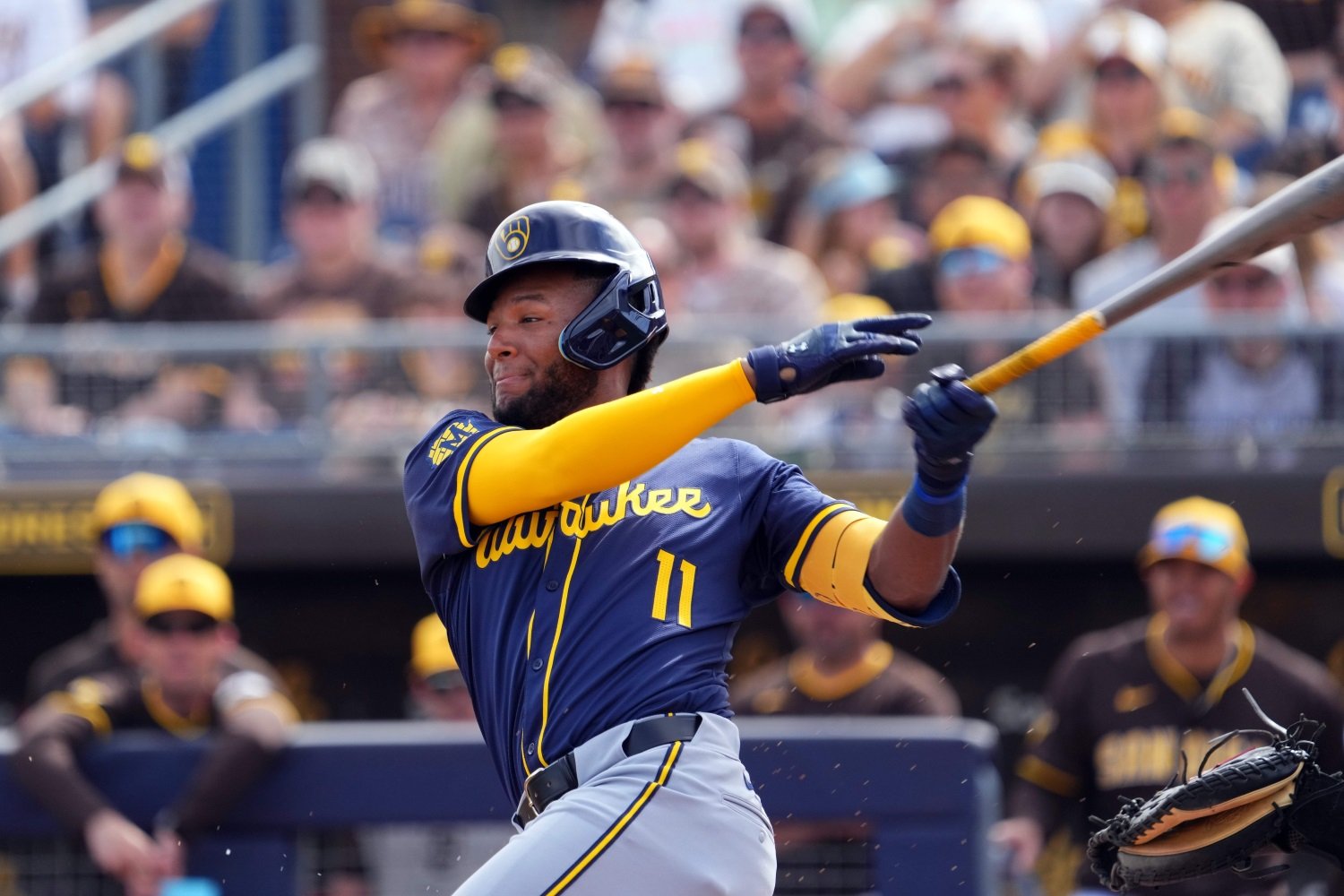 In what has been a less than stellar first week of the spring, Jackson Chourio busted out a bit on Sunday, with a double that showcased both his hit tool and his terrific speed and a walk in four plate appearances. Chourio looked overmatched on Saturday in Maryvale, against the Dodgers' second-tier traveling roster pitchers, so we shouldn't massively overreact to either sample, but it was great to see him hitting the ball hard. Thanks to Statcast, we can say precisely how hard. On a 2-1 changeup in his first trip to the plate, Chourio lobbed a line drive over the head of the third baseman and into left field, and got to second thanks to good placement and even better speed. The ball left his bat at 99.6 miles per hour, which is very strong for a hitter who was geared up for the fastball but still found a way to deliver the barrel to the ball and keep it fair. Chourio's other two batted balls on the day were grounders hit basically right into the ground, but one nearly had enough pace to get into center field for a second hit. That one was hit at 102.6 miles per hour, so we're seeing the easy jolt the 19-year-old already puts into the baseball. As he makes his case for a place in the Opening Day outfield, this was a great game, and a possible turning point. Let's take a quick look at five other small takeaways from the data mine that each contest yields, since it's March 3 and we're all thirsty for it. A Great Sign for Willy Adames The Brewers' slugging shortstop didn't slug enough to make up for some of his other shortcomings at times in 2023, leading to long slumps and a brief demotion to the bottom half of the batting order. Pat Murphy hopes to be able to rely on Adames in the heart of his lineup this season, so he had to be pleased to see Adames thwack a first-inning, 92-MPH fastball from Eduardo Rodríguez 108.2 miles per hour for a home run. In all of 2023, Adames only hit four balls that hard. He hasn't sent a pitch coming in at 92 back out at 108 or better since 2022. It's just spring training, and Rodríguez belongs to the class of veteran pitchers who are happy to get knocked around a bit in March to ensure that they're fully ready for April and beyond, but this was exciting. Abner Uribe, New Cutter Guy? The Brewers still love cutters, even if trading away Corbin Burnes makes them a bit less readily identifiable as the team who throws cutters the most. The latest evidence that that affection lingers even after the departure of their very cutter-y ace showed up in Uribe's pitch data for the day. Mapping out the movement on all his stuff, there were a few pitches that didn't behave like anything he threw last year. This is far from definitive, and maybe Uribe just didn't have the usual feel for his four-seamer today. It also looked like a slightly different pitch in live action, though. This will bear watching, because if Uribe can start firing in a 95-MPH cutter without cannibalizing his other offerings, it gets downright unfair to opposing hitters in a hurry. DL Hall's Delightfully Dominant, Slightly Inexplicable Fastball I don't like to default to Stuff+ or PitchingBot, a pair of models designed to boil down the quality of a given offering to a single number using data about release point and movement. I think pitching is much more nuanced and interesting than that. I do find it fascinating, though, that those two models disagree sharply about Hall's fastball. Somewhat famously, multiple outlets who put scouting (non-quantitative) grades on players gave Hall an 80 (the very top of the scale) to the lefty's heater. PitchingBot, which is on the scouting scale (20-80), comes fairly close to affirming that, at 68. It ranked Hall's as the 20th-best fastball in baseball last year, of 727 qualifying pitchers. Stuff+, though, is much less impressed. That number is scaled to 100, where that figure is average and higher is better. Hall comes in at just 101, above average but far below any standard for excellence. He ranks 232nd in fastball Stuff+. I bring this up because, when you watch Hall, it's not hard to see what the scouts saw when they slapped that high grade on him. The fastball explodes on the hitter. It's just not easy to put a finger on why that is. I looked up Hall's percentile ranks in many categories, among lefties who threw at least 200 four-seamers, for 2023. As it turns out, while he doesn't excel in terms of sheer movement or sheer velocity, he's extraordinary in many other regards. We're certainly used to elite fastballs grades being given to fastballs with elite velocity, and failing that, we at least expect something weird to be going on in terms of horizontal or vertical movement. Hall is more subtle than that. It's a weird horizontal angle, but also a low release point, which gives him an extreme vertical approach angle, too. His very good extension lets the raw velocity play up, and he changes speeds on the heat much more than most pitchers do. That's an especially intriguing tidbit, for such a young pitcher. In the context of a short Cactus League outing, it's impossible to distinguish adding and subtracting on the fastball from tiring in a second inning of work, but I thought he seemed to be doing the former, not the latter, on Sunday. Changing speeds and giving hitters such a tricky look makes up for a lot of other things, and with Hall's good (though not dominant) power, it becomes a deadly cocktail in a hurry. In a short outing Sunday, he showed everything from 93.7 MPH to 96.9 on the fastball, with accompanying changes in spin rate. That touch might be what sets the pitch apart. Joey Wiemer Has Not Looked Good So Far We can discuss this more in a separate post later this week, but WIemer was one of the players I watched most closely this week. I wish I felt more encouraged by what I saw. He has talked at length about the benefits of a quieter swing since arriving at camp, but in games, he looks (if anything) less comfortable. He did manage a single Sunday, but his exit velocities on three batted balls were 69.5 miles per hour, 76.3, and 66.3, and the contact was no more impressive than that makes it sound. "Everything is just a little more quiet," Wiemer told me this week. "That’s been one of my focuses right now, is that my takes are a lot better. I’m not feeling like I’m falling forward as much." He did draw a walk Sunday, and a little more plate discipline is one highly plausible and valuable potential benefit of the changes he's made this offseason. I wrote as much last week. Throughout the early games of spring ball, though, he's looked as imbalanced as ever. Wiemer's the kind of player you assiduously avoid giving up on too soon, but barring a fast turn of the corner from here, I'd be surprised to see him break camp with the Brewers. He isn't doing enough to assert himself as a more valuable option than defensive specialist Blake Perkins or more versatile bench piece Owen Miller. If it comes down to Wiemer against either of the team's out-of-options position players (Eric Haase and Jake Bauers), I think the Crew should keep them and let Wiemer get more plate appearances in Nashville. Four More Whiffs on the Slider for J.B. Bukauskas No player is harder to evaluate in early spring training games than the reliever who comes on to finish games. They're hardly ever facing big league-caliber hitters, and those who do stick around that long could be forgiven for having mentally checked out. By and large, the fans have done so by that stage. Still, Bukauskas has impressed Murphy already this spring, and his nasty breaking ball catches both the human and the digital eye, too. The devastating thing about him is that his slider doesn't have crazy movement, in and of itself. It's his sinker that has exceptional run, and from his setup way over on the first-base side of the rubber, he can find the zone with that pitch. Then, when the slider does come, it's much too long before most hitters can see it for what it is, and they end up flailing foolishly. The Diamondbacks did plenty of that in a single inning Sunday. Again, it's silly to assume that these results will port right to real MLB games--the kind that count, where minor leaguers don't enter in a shift change at the seventh-inning stretch and pitchers who got knocked out of the box in one inning can't come back the next inning to finish their daily work, as the Diamondbacks did at one point Sunday. Nonetheless, as Murphy rightly notes, Bukauskas will pitch in the majors at some point this year. He's on the 40-man roster and can still be optioned for one more season. The next step should be to get him in while the bigger bats are still swinging, and see whether they cast a colder eye on his go-fish offerings. Research assistance provided by TruMedia.
-
- 2
-
-
- willy adames
- abner uribe
- (and 5 more)
-
The Milwaukee Brewers collected their third win of the Cactus League season Sunday, beating up on the Diamondbacks at Salt River Fields in Scottsdale. That park is the only one in the Arizona spring training circuit that features public Statcast data, so let's dig in on our glimpse of the goods. This is far from definitive, and maybe Uribe just didn't have the usual feel for his four-seamer today. It also looked like a slightly different pitch in live action, though. This will bear watching, because if Uribe can start firing in a 95-MPH cutter without cannibalizing his other offerings, it gets downright unfair to opposing hitters in a hurry. DL Hall's Delightfully Dominant, Slightly Inexplicable Fastball I don't like to default to Stuff+ or PitchingBot, a pair of models designed to boil down the quality of a given offering to a single number using data about release point and movement. I think pitching is much more nuanced and interesting than that. I do find it fascinating, though, that those two models disagree sharply about Hall's fastball. Somewhat famously, multiple outlets who put scouting (non-quantitative) grades on players gave Hall an 80 (the very top of the scale) to the lefty's heater. PitchingBot, which is on the scouting scale (20-80), comes fairly close to affirming that, at 68. It ranked Hall's as the 20th-best fastball in baseball last year, of 727 qualifying pitchers. Stuff+, though, is much less impressed. That number is scaled to 100, where that figure is average and higher is better. Hall comes in at just 101, above average but far below any standard for excellence. He ranks 232nd in fastball Stuff+. I bring this up because, when you watch Hall, it's not hard to see what the scouts saw when they slapped that high grade on him. The fastball explodes on the hitter. It's just not easy to put a finger on why that is. I looked up Hall's percentile ranks in many categories, among lefties who threw at least 200 four-seamers, for 2023. As it turns out, while he doesn't excel in terms of sheer movement or sheer velocity, he's extraordinary in many other regards. We're certainly used to elite fastballs grades being given to fastballs with elite velocity, and failing that, we at least expect something weird to be going on in terms of horizontal or vertical movement. Hall is more subtle than that. It's a weird horizontal angle, but also a low release point, which gives him an extreme vertical approach angle, too. His very good extension lets the raw velocity play up, and he changes speeds on the heat much more than most pitchers do. That's an especially intriguing tidbit, for such a young pitcher. In the context of a short Cactus League outing, it's impossible to distinguish adding and subtracting on the fastball from tiring in a second inning of work, but I thought he seemed to be doing the former, not the latter, on Sunday. Changing speeds and giving hitters such a tricky look makes up for a lot of other things, and with Hall's good (though not dominant) power, it becomes a deadly cocktail in a hurry. In a short outing Sunday, he showed everything from 93.7 MPH to 96.9 on the fastball, with accompanying changes in spin rate. That touch might be what sets the pitch apart. Joey Wiemer Has Not Looked Good So Far We can discuss this more in a separate post later this week, but WIemer was one of the players I watched most closely this week. I wish I felt more encouraged by what I saw. He has talked at length about the benefits of a quieter swing since arriving at camp, but in games, he looks (if anything) less comfortable. He did manage a single Sunday, but his exit velocities on three batted balls were 69.5 miles per hour, 76.3, and 66.3, and the contact was no more impressive than that makes it sound. "Everything is just a little more quiet," Wiemer told me this week. "That’s been one of my focuses right now, is that my takes are a lot better. I’m not feeling like I’m falling forward as much." He did draw a walk Sunday, and a little more plate discipline is one highly plausible and valuable potential benefit of the changes he's made this offseason. I wrote as much last week. Throughout the early games of spring ball, though, he's looked as imbalanced as ever. Wiemer's the kind of player you assiduously avoid giving up on too soon, but barring a fast turn of the corner from here, I'd be surprised to see him break camp with the Brewers. He isn't doing enough to assert himself as a more valuable option than defensive specialist Blake Perkins or more versatile bench piece Owen Miller. If it comes down to Wiemer against either of the team's out-of-options position players (Eric Haase and Jake Bauers), I think the Crew should keep them and let Wiemer get more plate appearances in Nashville. Four More Whiffs on the Slider for J.B. Bukauskas No player is harder to evaluate in early spring training games than the reliever who comes on to finish games. They're hardly ever facing big league-caliber hitters, and those who do stick around that long could be forgiven for having mentally checked out. By and large, the fans have done so by that stage. Still, Bukauskas has impressed Murphy already this spring, and his nasty breaking ball catches both the human and the digital eye, too. The devastating thing about him is that his slider doesn't have crazy movement, in and of itself. It's his sinker that has exceptional run, and from his setup way over on the first-base side of the rubber, he can find the zone with that pitch. Then, when the slider does come, it's much too long before most hitters can see it for what it is, and they end up flailing foolishly. The Diamondbacks did plenty of that in a single inning Sunday. Again, it's silly to assume that these results will port right to real MLB games--the kind that count, where minor leaguers don't enter in a shift change at the seventh-inning stretch and pitchers who got knocked out of the box in one inning can't come back the next inning to finish their daily work, as the Diamondbacks did at one point Sunday. Nonetheless, as Murphy rightly notes, Bukauskas will pitch in the majors at some point this year. He's on the 40-man roster and can still be optioned for one more season. The next step should be to get him in while the bigger bats are still swinging, and see whether they cast a colder eye on his go-fish offerings. Research assistance provided by TruMedia. View full article
-
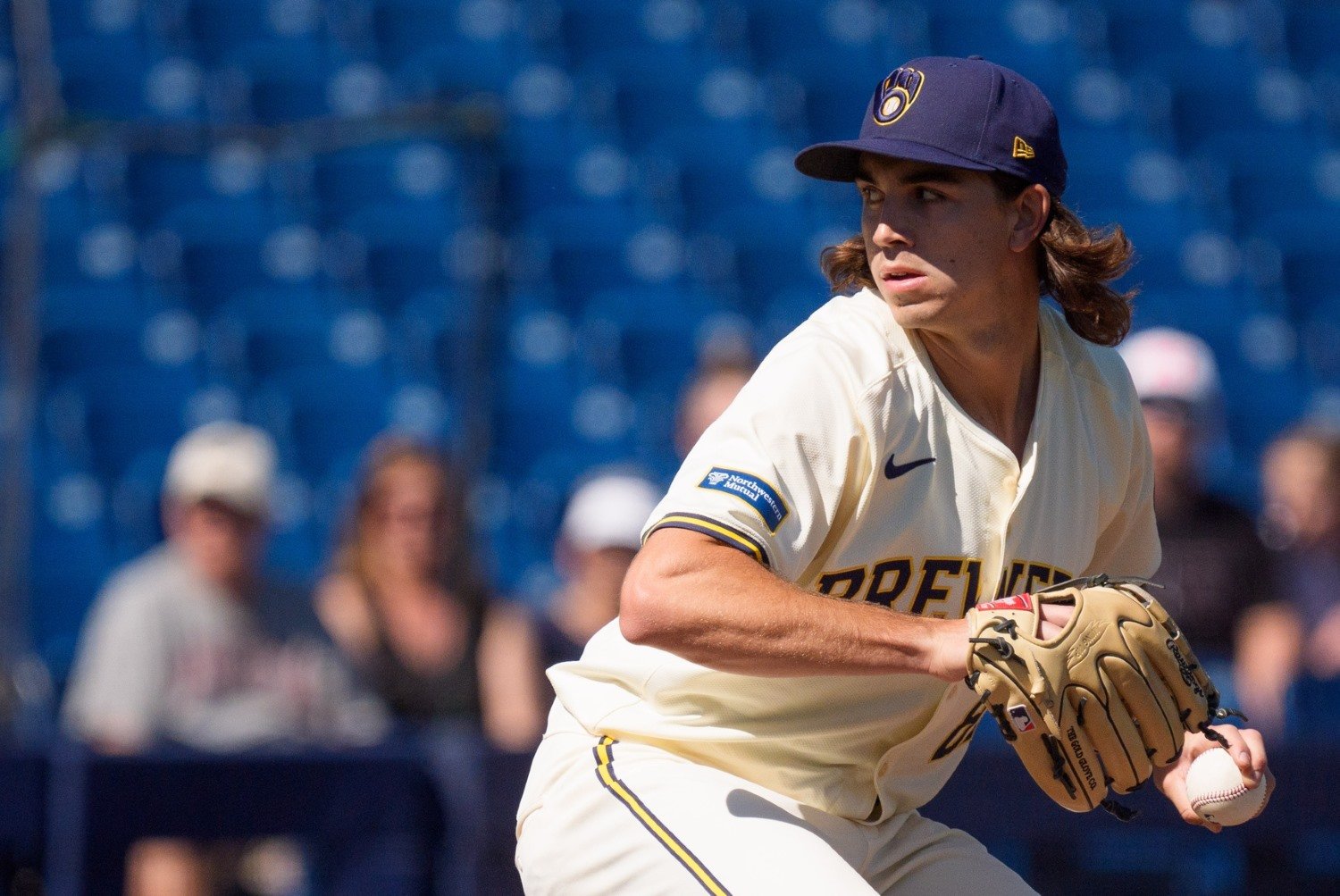 His backstory and his persona invite some to try to fit Pat Murphy into a stereotype. He's 65, with three decades of coaching (much of it at the college level). He's a target for baseball players' favorite way to show affection, which is gentle ridicule. Yet, when you ask him questions about the game, he reveals a very multilevel, thoughtful approach to the game. He thinks holistically, he doesn't overcommit himself to any particular strategy. That will show up most, perhaps, in his deployment of an exceptionally deep and uniquely versatile pitching staff, but one now led only by the low-volume ace Freddy Peralta atop the rotation, after the injury that made Brandon Woodruff a non-factor for 2024 and the trade that made Corbin Burnes an Oriole. Beyond Peralta (and beyond Devin Williams, in the bullpen), Murphy will have to do a lot of problem-solving, and no rigid structure suits that situation, in his way of thinking. Early last week, Murphy asked a visiting writer how many pitchers they could name in his starting rotation. Told that the newcomer could name two (Peralta and Wade Miley), Murphy cracked wise. "That's one more than I can," he said, smirking in a way he reserves for his favorite pastime: poking at Miley, even when not present. "No, obviously, [if] Wade is healthy, Wade pitches." He did go on to list a few names, led by Colin Rea, but it's clear that there really is no certainty beyond Peralta at this point. Miley's shoulder soreness entering camp could mean that the team has to plug his place early in the season, but regardless of whether that's true or not, a whole lot of fluidity looms for the back half of the staff. Murphy didn't equivocate about his and the organization's hope that DL Hall will win a rotation spot. He directly said that they want that to happen. Hall faces likely innings limitations, though, and pitched in relief of Peralta on Sunday, which serves as some hint about how confident they are of that outcome. If we think of Peralta and Rea as starters, Miley as one whenever available, and Hall as a "hopefully", we're left with several flavors of "maybe" for the balance of the staff--which could mean filling upward of 400 innings. Here's a brief taxonomy of those guys, based on Murphy's words about them in media sessions this week. Wade Miley, But More Extreme: Joe Ross The Brewers signed Ross to a big-league deal this winter, and he doesn't have options. Shuttling him to the bullpen has seemed like one viable option, but when asked about the righthander after his first outing in the Cactus League midweek, Murphy was surprisingly convicted about him as a starter. "I think that’s the best role for Joe," Murphy said of him as a starter. "I think it’s the best role for him, to be on the front end [of a game]. He’s only pitched so many innings in the last two years, so hopefully he goes out and makes 30 starts, but we’re planning for everything. I like him in that role." Obviously, as Murphy alludes to, Ross just isn't going to make that many starts. If getting 140 innings from Miley would be a welcome surprise, getting even 120 from Ross would be somewhat shocking. He'll turn 31 in May, and neither his stats nor his sinker-slider mix have been especially compelling even when he's been on the mound the last few years. To work as a starter, he probably needs a third pitch that works better than any he's had in the past, and even then, durability is a relative term here. The Bait-and-Switch Maneuver: Jakob Junis and Robert Gasser When the Brewers signed Junis back in January, the consensus was that they'd done so with the idea of having him work as a starter. Ken Rosenthal of The Athletic reported as much at the time. When asked about Junis as one of those clear candidates for the rotation in a midweek session, though, Murphy was more circumspect. "Maybe," he said. "Or maybe he'll be in the same role he was in with the Giants." That was a surprise, because Junis is rumored to have been offered more money for 2024 on a deal to pitch in relief for at least one other contender. He came to the Crew because he wanted to start, and foresaw that opportunity. He's excited about his changeup, after finding a good feel for it late in 2023 and still having it when he got to camp. Junis certainly wasn't a starter, or even anything starter-adjacent, in 2023. He was, much more often, a multi-inning piece of a piggyback or bullpen game. It sounds like he could be in the same position in 2024. Meanwhile, in a last-minute switcheroo Friday, Murphy had Gasser start instead of Bryse Wilson. He said that was to make sure Gasser saw more lefty hitters, but since only about 20 percent of a southpaw starter's batters faced end up being lefties, he was asked on Saturday whether that change represented a shift in his thinking, toward making Gasser a second lefty in the bullpen. "No," he said. "What I’m envisioning is that a lot of these guys might be in a little bit of a hybrid role, having to come in to face a left-handed lineup. Junis starts the game, they pack it with lefties, we announce Junis, we bring in Gasser after him. He’s gonna have to navigate through some lefties. Normally, when Gasser’s pitching, he’s not going to have to navigate lefties, because they’ll stack it with righties. So that gives him an opportunity to do that. I wanted that experience for Gasser." In other words, yes, Gasser might technically become a bullpen fixture, but he could be pitching as many actual innings as Junis, or even more. Fluidity is one thing. Circumstances have forced fluidity on the Brewers--or at least, their budget has done so. This is something better: genuine flexibility. Murphy is ready to put opponents into tough positions, even if it be in creative and occasionally tricky ways. "They’re left with a choice," Murphy said. "Knowing that Junis may not go five, and we can cut that start short, maybe get Gasser in there, but he’s gotta see some lefties." Great Depth, As Long As They're Depth: Aaron Ashby, Janson Junk If you count Gasser and Junis as filling a spot together, you get to something like five spoken-for rotation pieces: Freddy Peralta Wade Miley + Joe Ross Colin Rea DL Hall (they hope) Robert Gasser and Jakob Junis Obviously, though, that's not a group that will account for anywhere near all of the team's starts or innings from the rotation this year. When Ross and Miley are both healthy, they can take two of these spots instead of one, but there will also be some times when neither are healthy, or when Miley isn't healthy and Ross is no longer in the mix due to ineffectiveness. In Murphy's way of thinking about it, that's not going to be a problem; it's just another challenge to manage. "You have only 13 pitchers, so the guys with options become crucial—and being able to bounce back, and be in the type of shape that you want to be in," he said. "There’s all sorts of stuff at stake here." That's the right pair of attributes--one entirely external, one intrinsic to the players' bodies--to use as a framework for discussing Ashby and Junk. The former is clearly not fully up to speed yet this spring, and had a rough outing Saturday against the Dodgers. That appearance wasn't as bad as it looked; there were a couple of infield plays that could have changed a lot for him. Still, he's not going to be ready to work as a starter to open the season, and he's one of those pitchers with options. I think he's most likely to gear up in Nashville, to be called up when a need arises. There's still plenty of upside with him, but he's not at his best at the moment. Junk is a different story, except in that he, too, had a bad game against the Dodgers that could have been a good one with some better defensive support--including fielding his position better himself. I'll have a separate piece with insight from Junk shortly, but suffice to say, he's a legitimate candidate to get multiple starts in 2024. He might be more like Junis than like Rea or Peralta, but he's made some concrete improvements. The Second Half Supplements: Carlos Rodriguez, Jacob Misiorowski, Evan McKendry While Gasser isn't on the 40-man roster, he's pitched enough in Triple A (and has a clear enough path to succeeding against big-leaguers) to be a candidate for significant use right away. These three, by contrast, have more boxes to check. However, all three could easily slot into the rotation before the season is over. Murphy is excited about each, and McKendry, in particular, has looked good in his early live work and in the Cactus League. That doesn't mean the team wants to be reliant on any of them any time this season. On the contrary, I think they're hoping to utilize each in relatively limited relief roles throughout 2024, with an eye toward installing them on a larger scale in 2025. Still, they're available, and Murphy's concept of the pitching staff as an amalgam of roles and skills makes them more viable in the short term. So there you have it. This is more fluidity than you'd like to have, in a perfect world, but no team's pitching situation is perfect. The Brewers are leaning into the flexibility their number of good options provides, and Murphy is the right skipper to maximize the value of that flexibility.
 -
With two of their three aces of the last three seasons gone (at least for 2024), the Milwaukee Brewers will have a very different look in their starting rotation this year. Here's where I think things stand, based on a week of Pat Murphy's discursions on the subject. Image courtesy of © Allan Henry-USA TODAY Sports His backstory and his persona invite some to try to fit Pat Murphy into a stereotype. He's 65, with three decades of coaching (much of it at the college level). He's a target for baseball players' favorite way to show affection, which is gentle ridicule. Yet, when you ask him questions about the game, he reveals a very multilevel, thoughtful approach to the game. He thinks holistically, he doesn't overcommit himself to any particular strategy. That will show up most, perhaps, in his deployment of an exceptionally deep and uniquely versatile pitching staff, but one now led only by the low-volume ace Freddy Peralta atop the rotation, after the injury that made Brandon Woodruff a non-factor for 2024 and the trade that made Corbin Burnes an Oriole. Beyond Peralta (and beyond Devin Williams, in the bullpen), Murphy will have to do a lot of problem-solving, and no rigid structure suits that situation, in his way of thinking. Early last week, Murphy asked a visiting writer how many pitchers they could name in his starting rotation. Told that the newcomer could name two (Peralta and Wade Miley), Murphy cracked wise. "That's one more than I can," he said, smirking in a way he reserves for his favorite pastime: poking at Miley, even when not present. "No, obviously, [if] Wade is healthy, Wade pitches." He did go on to list a few names, led by Colin Rea, but it's clear that there really is no certainty beyond Peralta at this point. Miley's shoulder soreness entering camp could mean that the team has to plug his place early in the season, but regardless of whether that's true or not, a whole lot of fluidity looms for the back half of the staff. Murphy didn't equivocate about his and the organization's hope that DL Hall will win a rotation spot. He directly said that they want that to happen. Hall faces likely innings limitations, though, and pitched in relief of Peralta on Sunday, which serves as some hint about how confident they are of that outcome. If we think of Peralta and Rea as starters, Miley as one whenever available, and Hall as a "hopefully", we're left with several flavors of "maybe" for the balance of the staff--which could mean filling upward of 400 innings. Here's a brief taxonomy of those guys, based on Murphy's words about them in media sessions this week. Wade Miley, But More Extreme: Joe Ross The Brewers signed Ross to a big-league deal this winter, and he doesn't have options. Shuttling him to the bullpen has seemed like one viable option, but when asked about the righthander after his first outing in the Cactus League midweek, Murphy was surprisingly convicted about him as a starter. "I think that’s the best role for Joe," Murphy said of him as a starter. "I think it’s the best role for him, to be on the front end [of a game]. He’s only pitched so many innings in the last two years, so hopefully he goes out and makes 30 starts, but we’re planning for everything. I like him in that role." Obviously, as Murphy alludes to, Ross just isn't going to make that many starts. If getting 140 innings from Miley would be a welcome surprise, getting even 120 from Ross would be somewhat shocking. He'll turn 31 in May, and neither his stats nor his sinker-slider mix have been especially compelling even when he's been on the mound the last few years. To work as a starter, he probably needs a third pitch that works better than any he's had in the past, and even then, durability is a relative term here. The Bait-and-Switch Maneuver: Jakob Junis and Robert Gasser When the Brewers signed Junis back in January, the consensus was that they'd done so with the idea of having him work as a starter. Ken Rosenthal of The Athletic reported as much at the time. When asked about Junis as one of those clear candidates for the rotation in a midweek session, though, Murphy was more circumspect. "Maybe," he said. "Or maybe he'll be in the same role he was in with the Giants." That was a surprise, because Junis is rumored to have been offered more money for 2024 on a deal to pitch in relief for at least one other contender. He came to the Crew because he wanted to start, and foresaw that opportunity. He's excited about his changeup, after finding a good feel for it late in 2023 and still having it when he got to camp. Junis certainly wasn't a starter, or even anything starter-adjacent, in 2023. He was, much more often, a multi-inning piece of a piggyback or bullpen game. It sounds like he could be in the same position in 2024. Meanwhile, in a last-minute switcheroo Friday, Murphy had Gasser start instead of Bryse Wilson. He said that was to make sure Gasser saw more lefty hitters, but since only about 20 percent of a southpaw starter's batters faced end up being lefties, he was asked on Saturday whether that change represented a shift in his thinking, toward making Gasser a second lefty in the bullpen. "No," he said. "What I’m envisioning is that a lot of these guys might be in a little bit of a hybrid role, having to come in to face a left-handed lineup. Junis starts the game, they pack it with lefties, we announce Junis, we bring in Gasser after him. He’s gonna have to navigate through some lefties. Normally, when Gasser’s pitching, he’s not going to have to navigate lefties, because they’ll stack it with righties. So that gives him an opportunity to do that. I wanted that experience for Gasser." In other words, yes, Gasser might technically become a bullpen fixture, but he could be pitching as many actual innings as Junis, or even more. Fluidity is one thing. Circumstances have forced fluidity on the Brewers--or at least, their budget has done so. This is something better: genuine flexibility. Murphy is ready to put opponents into tough positions, even if it be in creative and occasionally tricky ways. "They’re left with a choice," Murphy said. "Knowing that Junis may not go five, and we can cut that start short, maybe get Gasser in there, but he’s gotta see some lefties." Great Depth, As Long As They're Depth: Aaron Ashby, Janson Junk If you count Gasser and Junis as filling a spot together, you get to something like five spoken-for rotation pieces: Freddy Peralta Wade Miley + Joe Ross Colin Rea DL Hall (they hope) Robert Gasser and Jakob Junis Obviously, though, that's not a group that will account for anywhere near all of the team's starts or innings from the rotation this year. When Ross and Miley are both healthy, they can take two of these spots instead of one, but there will also be some times when neither are healthy, or when Miley isn't healthy and Ross is no longer in the mix due to ineffectiveness. In Murphy's way of thinking about it, that's not going to be a problem; it's just another challenge to manage. "You have only 13 pitchers, so the guys with options become crucial—and being able to bounce back, and be in the type of shape that you want to be in," he said. "There’s all sorts of stuff at stake here." That's the right pair of attributes--one entirely external, one intrinsic to the players' bodies--to use as a framework for discussing Ashby and Junk. The former is clearly not fully up to speed yet this spring, and had a rough outing Saturday against the Dodgers. That appearance wasn't as bad as it looked; there were a couple of infield plays that could have changed a lot for him. Still, he's not going to be ready to work as a starter to open the season, and he's one of those pitchers with options. I think he's most likely to gear up in Nashville, to be called up when a need arises. There's still plenty of upside with him, but he's not at his best at the moment. Junk is a different story, except in that he, too, had a bad game against the Dodgers that could have been a good one with some better defensive support--including fielding his position better himself. I'll have a separate piece with insight from Junk shortly, but suffice to say, he's a legitimate candidate to get multiple starts in 2024. He might be more like Junis than like Rea or Peralta, but he's made some concrete improvements. The Second Half Supplements: Carlos Rodriguez, Jacob Misiorowski, Evan McKendry While Gasser isn't on the 40-man roster, he's pitched enough in Triple A (and has a clear enough path to succeeding against big-leaguers) to be a candidate for significant use right away. These three, by contrast, have more boxes to check. However, all three could easily slot into the rotation before the season is over. Murphy is excited about each, and McKendry, in particular, has looked good in his early live work and in the Cactus League. That doesn't mean the team wants to be reliant on any of them any time this season. On the contrary, I think they're hoping to utilize each in relatively limited relief roles throughout 2024, with an eye toward installing them on a larger scale in 2025. Still, they're available, and Murphy's concept of the pitching staff as an amalgam of roles and skills makes them more viable in the short term. So there you have it. This is more fluidity than you'd like to have, in a perfect world, but no team's pitching situation is perfect. The Brewers are leaning into the flexibility their number of good options provides, and Murphy is the right skipper to maximize the value of that flexibility. View full article
-
 It hasn't been an easy journey through professional baseball for Bryan Hudson. Drafted in the third round out of high school in 2015, Hudson was reasonably highly thought of. The problem was, he was as huge (6-foot-8) then as he is now, and ganglier, and he wasn't yet the sturdy, more coordinated version of himself the Brewers acquired this winter. "I’m a bigger guy. It took me a little bit of time to grow into my body, and also learn to use it the correct way," Hudson said Friday in Maryvale. "I think now that all those things are circling together, I’m able to be a more consistent pitcher in the zone." That size and his raw stuff refused to coalesce into something effective for a long time. Hudson was the property of the Chicago Cubs, for a half-decade and change during which they were behind the curve in terms of pitching development, and he never found his footing there. A fracture in his back that required surgery and the COVID-19 disruption played a major role, too. He did begin to emerge, after all that, but too late for Chicago. At the end of 2022, he was released by the Cubs, and a month later, he signed with the Dodgers. Hudson found much more success in his new system, but only got a bitter cup of coffee (an ERA north of 7.00 in six mostly mop-up appearances) for Los Angeles. He couldn't fit on the 40-man roster after the Dodgers made their big winter additions, and the Brewers snapped him up in trade. Thereafter, he and the team went right to work. "We are working on some front-side stuff, keeping it close to my body," Hudson said. "I tend to kind of bring my front side out and swing out away from my arm. So we’re working on that right now, and it’s helped with my extension. I think it’s also cleaned up my extension a little bit, and will help me be a little more consistent." Hudson already had exceptional extension on his stuff, really. Last year, he released the ball an average of 7.2 feet along the path from the pitching rubber to the plate, which would be comfortably among the top 5 percent of the league last year. With his cleaner mechanics, though, he's breaking the scale. "After working on some of this stuff, the last few times I’ve thrown, I’m up to 7.8, 7.6 [feet]," Hudson said. "So I’m getting a little bit further out there, and I think that helps me be a little bit more deceptive, so that also helps." That extension would be the very best in baseball, and it would make his fastball pretty sizzling. He's right about the deception part, too, because look at how far wide of the mound he's been releasing the ball. That creates some vicious angles, and not just for lefties. Last year, Hudson only averaged 92.3 miles per hour on his fastball, but his Effective Velocity (adjusted for extension) was 93.9. Now, consider that Hudson routinely touched 94 and topped out at 96 last year, and recall the above notes about the mechanical cleanup making him more consistent. Finally, factor in the slight increase even from his already-elite previous extension numbers. Taken together, all of that puts Hudson on the high side of 95 MPH in terms of what the hitter sees, and coming from a lefty with such an extreme horizontal angle, that, alone, can be overwhelming. However, Hudson's heater doesn't have much in the way of riding, rising action, so he needed more than just improved power and extension to go to a new level in 2024. The critical development that let Hudson find lots of success in 2023, though, was that orange cluster of pitches in the middle of the plot: a cutter. "Last year, I developed a cutter that I think gets righties and lefties off my fastball pretty well," Hudson said. "So if I can throw the cutter early, use the changeup, and get them off my fastball, that’ll be good." Note well the mention of a changeup, too. That's barely represented above, but Hudson said he worked on one this winter and feels good about it, in conjunction with the improved mechanical efficiency. If this is all ringing a couple bells for you, it's not a false memory. Bryse Wilson--another big reliever for whom getting way over on the arm side of the rubber and throwing a cutter with greater conviction was a pivotal development--is a perfect model for that. Hudson himself has noticed the resemblance. "Yeah, I think that’s very similar," Hudson said. "I think the cutter gets them off my fastball just enough, and then I’m able to throw my fastball up in the zone and get some swings and misses off of that." In two innings against his previous employers Saturday, all of that was working like a charm. Hudson mowed down five Dodgers via strikeout, in two scoreless innings. He issued a leadoff walk in the appearance, but then got back to the exceptional strike-throwing that was his hallmark in the minors last year, and hitters had no answer for him. Without a doubt, Hudson is a longshot for the Opening Day mix. Because he's on the 40-man roster anyway, though, the logistical hurdle that blocks the matriculation of many players on the bubble is cleared in his case. The Brewers seem to excel at improving hurlers' extension, as Chris Hook and company tinker with their mechanics and get them down the mound better. They also love to work with guys who have theoretically uninspiring fastball movement profiles, but interesting cutters and workable breaking balls to go with them. Sooner or later, Hudson will have an appearance similar to the one he had Saturday in Phoenix, but under regular-season pressure. He's just about made it out of the wilderness. Research assistance provided by TruMedia.
 -
There are no guarantees that the Milwaukee Brewers will carry two left-handed relievers in 2024, and ample bigger-name candidates for the gig if it comes open. Yet, no actual player is bigger than a towering southpaw fresh off a winter trade and looking great in early action. Image courtesy of © Mark J. Rebilas-USA TODAY Sports It hasn't been an easy journey through professional baseball for Bryan Hudson. Drafted in the third round out of high school in 2015, Hudson was reasonably highly thought of. The problem was, he was as huge (6-foot-8) then as he is now, and ganglier, and he wasn't yet the sturdy, more coordinated version of himself the Brewers acquired this winter. "I’m a bigger guy. It took me a little bit of time to grow into my body, and also learn to use it the correct way," Hudson said Friday in Maryvale. "I think now that all those things are circling together, I’m able to be a more consistent pitcher in the zone." That size and his raw stuff refused to coalesce into something effective for a long time. Hudson was the property of the Chicago Cubs, for a half-decade and change during which they were behind the curve in terms of pitching development, and he never found his footing there. A fracture in his back that required surgery and the COVID-19 disruption played a major role, too. He did begin to emerge, after all that, but too late for Chicago. At the end of 2022, he was released by the Cubs, and a month later, he signed with the Dodgers. Hudson found much more success in his new system, but only got a bitter cup of coffee (an ERA north of 7.00 in six mostly mop-up appearances) for Los Angeles. He couldn't fit on the 40-man roster after the Dodgers made their big winter additions, and the Brewers snapped him up in trade. Thereafter, he and the team went right to work. "We are working on some front-side stuff, keeping it close to my body," Hudson said. "I tend to kind of bring my front side out and swing out away from my arm. So we’re working on that right now, and it’s helped with my extension. I think it’s also cleaned up my extension a little bit, and will help me be a little more consistent." Hudson already had exceptional extension on his stuff, really. Last year, he released the ball an average of 7.2 feet along the path from the pitching rubber to the plate, which would be comfortably among the top 5 percent of the league last year. With his cleaner mechanics, though, he's breaking the scale. "After working on some of this stuff, the last few times I’ve thrown, I’m up to 7.8, 7.6 [feet]," Hudson said. "So I’m getting a little bit further out there, and I think that helps me be a little bit more deceptive, so that also helps." That extension would be the very best in baseball, and it would make his fastball pretty sizzling. He's right about the deception part, too, because look at how far wide of the mound he's been releasing the ball. That creates some vicious angles, and not just for lefties. Last year, Hudson only averaged 92.3 miles per hour on his fastball, but his Effective Velocity (adjusted for extension) was 93.9. Now, consider that Hudson routinely touched 94 and topped out at 96 last year, and recall the above notes about the mechanical cleanup making him more consistent. Finally, factor in the slight increase even from his already-elite previous extension numbers. Taken together, all of that puts Hudson on the high side of 95 MPH in terms of what the hitter sees, and coming from a lefty with such an extreme horizontal angle, that, alone, can be overwhelming. However, Hudson's heater doesn't have much in the way of riding, rising action, so he needed more than just improved power and extension to go to a new level in 2024. The critical development that let Hudson find lots of success in 2023, though, was that orange cluster of pitches in the middle of the plot: a cutter. "Last year, I developed a cutter that I think gets righties and lefties off my fastball pretty well," Hudson said. "So if I can throw the cutter early, use the changeup, and get them off my fastball, that’ll be good." Note well the mention of a changeup, too. That's barely represented above, but Hudson said he worked on one this winter and feels good about it, in conjunction with the improved mechanical efficiency. If this is all ringing a couple bells for you, it's not a false memory. Bryse Wilson--another big reliever for whom getting way over on the arm side of the rubber and throwing a cutter with greater conviction was a pivotal development--is a perfect model for that. Hudson himself has noticed the resemblance. "Yeah, I think that’s very similar," Hudson said. "I think the cutter gets them off my fastball just enough, and then I’m able to throw my fastball up in the zone and get some swings and misses off of that." In two innings against his previous employers Saturday, all of that was working like a charm. Hudson mowed down five Dodgers via strikeout, in two scoreless innings. He issued a leadoff walk in the appearance, but then got back to the exceptional strike-throwing that was his hallmark in the minors last year, and hitters had no answer for him. Without a doubt, Hudson is a longshot for the Opening Day mix. Because he's on the 40-man roster anyway, though, the logistical hurdle that blocks the matriculation of many players on the bubble is cleared in his case. The Brewers seem to excel at improving hurlers' extension, as Chris Hook and company tinker with their mechanics and get them down the mound better. They also love to work with guys who have theoretically uninspiring fastball movement profiles, but interesting cutters and workable breaking balls to go with them. Sooner or later, Hudson will have an appearance similar to the one he had Saturday in Phoenix, but under regular-season pressure. He's just about made it out of the wilderness. Research assistance provided by TruMedia. View full article

