



Jack Stern
-
Posts
764 -
Joined
-
Last visited
-
Days Won
2
Content Type
Profiles
Forums
Blogs
Events
News
2026 Milwaukee Brewers Top Prospects Ranking
Milwaukee Brewers Videos
2022 Milwaukee Brewers Draft Picks
Milwaukee Brewers Free Agent & Trade Rumors, Notes, & Tidbits
Guides & Resources
2023 Milwaukee Brewers Draft Picks
2024 Milwaukee Brewers Draft Picks
The Milwaukee Brewers Players Project
2025 Milwaukee Brewers Draft Pick Tracker
2026 Milwaukee Brewers Draft Tracker: Picks & Bonuses
Store
Downloads
Gallery
Everything posted by Jack Stern
-
 Image courtesy of © Patrick Gorski-Imagn Images After delivering his best outing of the season in a comeback victory to sweep the Los Angeles Dodgers, Trevor Megill received more good news minutes later in the clubhouse. The Brewers' closer has been named to the National League All-Star team, as a replacement for teammate Freddy Peralta, who will start on Sunday and (thus) be inactive for the exhibition game. In 36 games, Megill has pitched to a 2.41 ERA and 2.64 FIP, while converting 21 of 24 save opportunities. His triple-digit fastball hasn’t been as dominant as it once was, but he has still posted a strong 30.9% strikeout rate by leaning more on his hard curveball. “Very excited for him,” said Jackson Chourio. “He’s deserved it. The work that he’s done, and what he’s gone out there and put out for us, it’s been incredible.” “He’s given to the team,” Murphy said. “If you don’t know him, he’s a tremendous giver. He gives a lot of himself.” Making it to the Midsummer Classic was a personal goal from last offseason for Megill, who said he planned his All-Star break as if he would be in Atlanta. “This was the goal in the offseason,” he said. “Just worked my butt off for it, and here we are.” Megill joins a long line of Brewers closers to make All-Star rosters within the last decade. Devin Williams, Josh Hader, Jeremy Jeffress, Corey Knebel, and Francisco Rodriguez have all received the honor while occupying the ninth-inning role in Milwaukee. Most of those relievers blossomed into elite arms with the guidance of the club’s pitching development brass—including Megill, who owned a career 6.03 ERA in 67 appearances when the Brewers acquired him from the Minnesota Twins in April 2023. “It’s just trust in [Chris] Hook, Jim [Henderson], Murphy, and [Matt] Arnold, everybody involved,” he said. “It’s just a very mature organization. You put a game plan together with them, and they trust you to go out there and execute it. They don’t get lost too much in the analytics and whatnot, it’s just go out there and get the zeros.” There’s still a chance more Brewers could join the NL roster as more players opt out of participating. For now, the club will have two representatives from a pitching staff that ranks sixth in baseball with 12.7 RA/9-WAR. View full article
 -
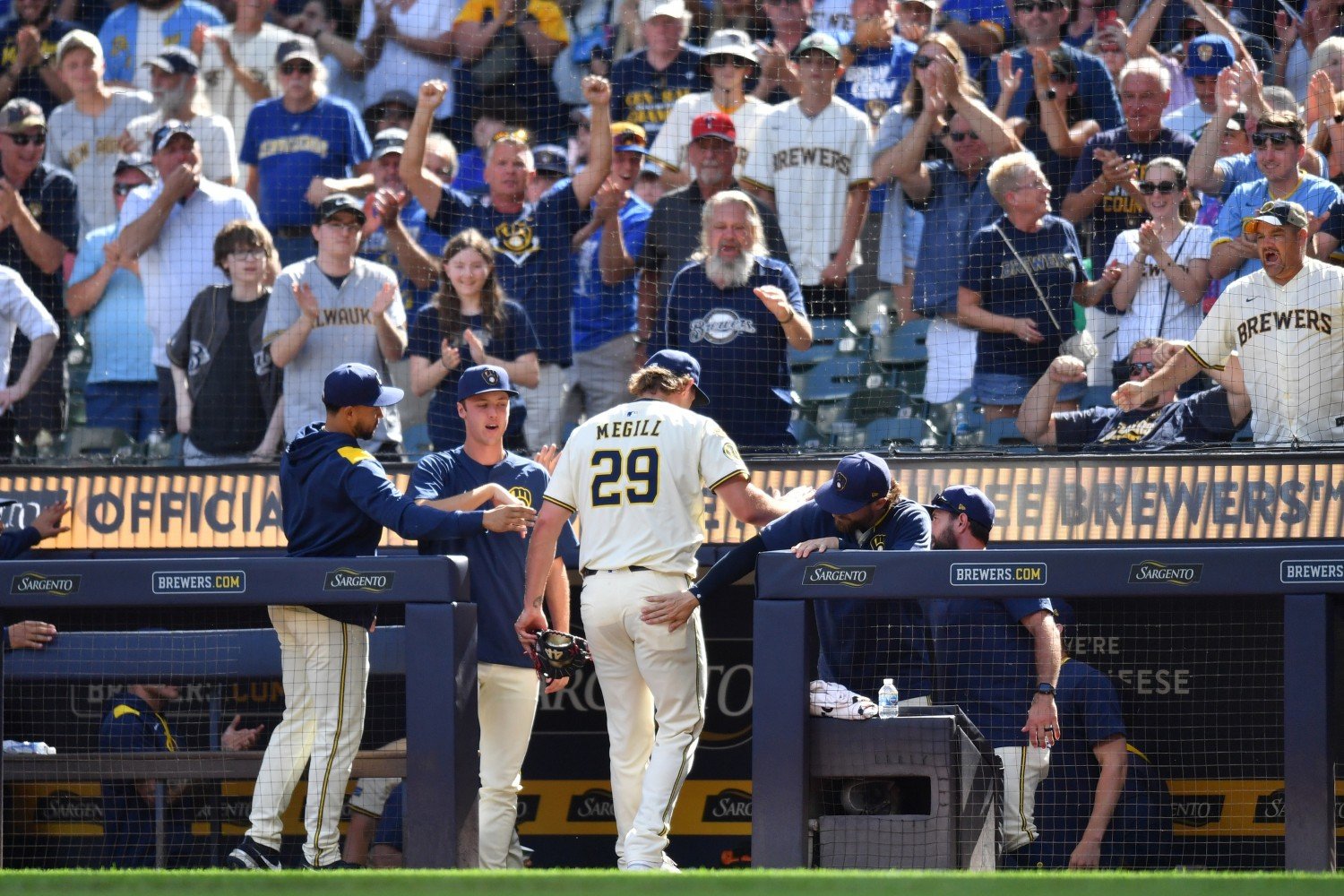 After delivering his best outing of the season in a comeback victory to sweep the Los Angeles Dodgers, Trevor Megill received more good news minutes later in the clubhouse. The Brewers' closer has been named to the National League All-Star team, as a replacement for teammate Freddy Peralta, who will start on Sunday and (thus) be inactive for the exhibition game. In 36 games, Megill has pitched to a 2.41 ERA and 2.64 FIP, while converting 21 of 24 save opportunities. His triple-digit fastball hasn’t been as dominant as it once was, but he has still posted a strong 30.9% strikeout rate by leaning more on his hard curveball. “Very excited for him,” said Jackson Chourio. “He’s deserved it. The work that he’s done, and what he’s gone out there and put out for us, it’s been incredible.” “He’s given to the team,” Murphy said. “If you don’t know him, he’s a tremendous giver. He gives a lot of himself.” Making it to the Midsummer Classic was a personal goal from last offseason for Megill, who said he planned his All-Star break as if he would be in Atlanta. “This was the goal in the offseason,” he said. “Just worked my butt off for it, and here we are.” Megill joins a long line of Brewers closers to make All-Star rosters within the last decade. Devin Williams, Josh Hader, Jeremy Jeffress, Corey Knebel, and Francisco Rodriguez have all received the honor while occupying the ninth-inning role in Milwaukee. Most of those relievers blossomed into elite arms with the guidance of the club’s pitching development brass—including Megill, who owned a career 6.03 ERA in 67 appearances when the Brewers acquired him from the Minnesota Twins in April 2023. “It’s just trust in [Chris] Hook, Jim [Henderson], Murphy, and [Matt] Arnold, everybody involved,” he said. “It’s just a very mature organization. You put a game plan together with them, and they trust you to go out there and execute it. They don’t get lost too much in the analytics and whatnot, it’s just go out there and get the zeros.” There’s still a chance more Brewers could join the NL roster as more players opt out of participating. For now, the club will have two representatives from a pitching staff that ranks sixth in baseball with 12.7 RA/9-WAR.
 -
Image courtesy of © Jeff Hanisch-Imagn Images Tuesday night was among the Brewers' most dominant pitching performances this season, as four arms combined to hold a depleted Los Angeles Dodgers lineup to a Shohei Ohtani leadoff home run and little else in a 3-1 victory, leaving Milwaukee on the doorstep of a commanding sweep of the top team in the National League. Jacob Misiorowski set the tone with a career-high 12 strikeouts, flashing stuff that left future Hall of Famer and opposing starter Clayton Kershaw impressed. Things didn't get much easier for the Dodgers after Misiorowski's departure, as the hard-throwing trio of Jared Koenig, Abner Uribe, and Trevor Megill combined for three perfect innings of relief with three more strikeouts. Overall, Brewers pitchers averaged 99.3 mph with their four-seamers and sinkers, tying the single-game record for a team in the pitch-tracking era, according to Baseball Savant. "That's something special," Megill said postgame. "Miz is throwing 101, and the curveball's almost at 90, or even at 90. Great stuff from him today." It was fitting that Misiorowski was at the center of the show. He's been at the heart of an in-season staff makeover that has vaulted the Brewers from the bottom third of baseball's velocity leaderboard to near the top. Through May, they were not blowing hitters away with much velocity on the whole. Since the start of June, they've boasted one of the sport's hardest-throwing staffs. Month 4FB + SI Velocity (MPH) Rank March/April 93.2 28 May 93.9 21 June 95.0 6 July 95.3 5 Misiorowski (average fastball velocity of 99 mph), who assumed the rotation spot of Aaron Civale (92 mph) on June 12, bears the most responsibility for the jump. He's not the only contributor, though. At the start of last month, the Brewers designated Tyler Alexander (90 mph) for assignment, and Aaron Ashby (97 mph) and DL Hall (94 mph) have since pitched most of what were once his innings. Not every pitcher will blow hitters away. Quinn Priester and Jose Quintana continue to occupy rotation spots, for now; Hall still profiles as a mix-and-match guy without his once-explosive fastball; and Brandon Woodruff's new cruising speed might settle in below the 93.3 mph he averaged in his season debut over the weekend. Still, Freddy Peralta's heater is averaging a career-best 94.9 mph, and Priester has flashed an extra tick when he needs it. It's not just raw velocity, either. More nuanced pitch modeling metrics agree that this iteration of the staff has more dominant stuff. At the end of May, the Brewers ranked 18th with an exactly average 100 Stuff+. Since then, their 106 Stuff+ leads baseball. The Brewers have excelled at maximizing pitchers with underwhelming stuff, and it will still be part of their larger pitching puzzle. But by and large, the current unit has a vastly different makeup than last year's, and it's much better than what the club took to New York on Opening Day. There are fewer gimmicks and more overpowering velocity and movement. Pitching has long been this club's specialty, and it's only growing stronger, with their new co-ace as both the face of that change and its biggest individual driver. View full article
-
The Miz Effect: Brewers Are Now One of Baseball's Best Stuff Staffs
Jack Stern posted an article in Brewers
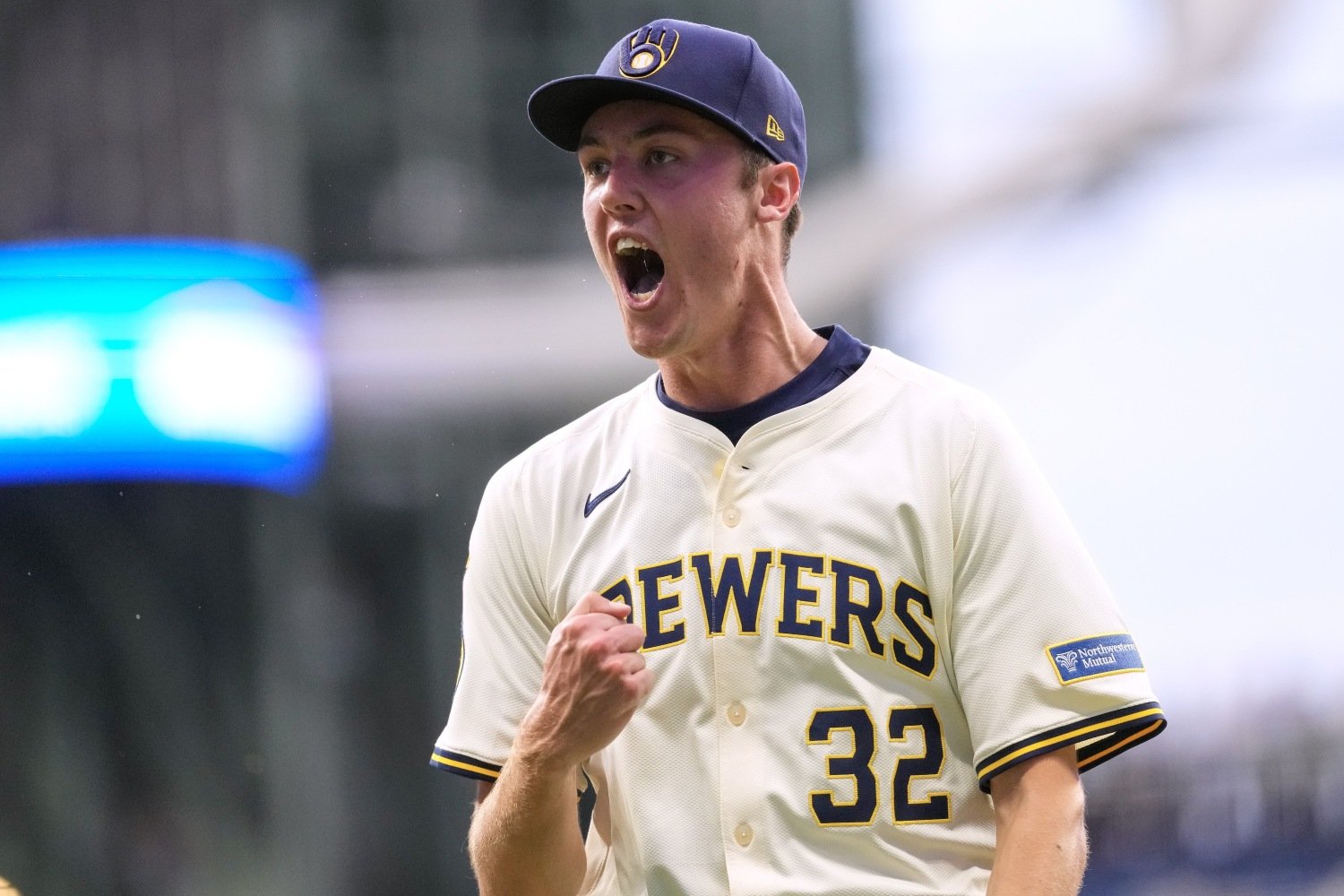 Tuesday night was among the Brewers' most dominant pitching performances this season, as four arms combined to hold a depleted Los Angeles Dodgers lineup to a Shohei Ohtani leadoff home run and little else in a 3-1 victory, leaving Milwaukee on the doorstep of a commanding sweep of the top team in the National League. Jacob Misiorowski set the tone with a career-high 12 strikeouts, flashing stuff that left future Hall of Famer and opposing starter Clayton Kershaw impressed. Things didn't get much easier for the Dodgers after Misiorowski's departure, as the hard-throwing trio of Jared Koenig, Abner Uribe, and Trevor Megill combined for three perfect innings of relief with three more strikeouts. Overall, Brewers pitchers averaged 99.3 mph with their four-seamers and sinkers, tying the single-game record for a team in the pitch-tracking era, according to Baseball Savant. "That's something special," Megill said postgame. "Miz is throwing 101, and the curveball's almost at 90, or even at 90. Great stuff from him today." It was fitting that Misiorowski was at the center of the show. He's been at the heart of an in-season staff makeover that has vaulted the Brewers from the bottom third of baseball's velocity leaderboard to near the top. Through May, they were not blowing hitters away with much velocity on the whole. Since the start of June, they've boasted one of the sport's hardest-throwing staffs. Month 4FB + SI Velocity (MPH) Rank March/April 93.2 28 May 93.9 21 June 95.0 6 July 95.3 5 Misiorowski (average fastball velocity of 99 mph), who assumed the rotation spot of Aaron Civale (92 mph) on June 12, bears the most responsibility for the jump. He's not the only contributor, though. At the start of last month, the Brewers designated Tyler Alexander (90 mph) for assignment, and Aaron Ashby (97 mph) and DL Hall (94 mph) have since pitched most of what were once his innings. Not every pitcher will blow hitters away. Quinn Priester and Jose Quintana continue to occupy rotation spots, for now; Hall still profiles as a mix-and-match guy without his once-explosive fastball; and Brandon Woodruff's new cruising speed might settle in below the 93.3 mph he averaged in his season debut over the weekend. Still, Freddy Peralta's heater is averaging a career-best 94.9 mph, and Priester has flashed an extra tick when he needs it. It's not just raw velocity, either. More nuanced pitch modeling metrics agree that this iteration of the staff has more dominant stuff. At the end of May, the Brewers ranked 18th with an exactly average 100 Stuff+. Since then, their 106 Stuff+ leads baseball. The Brewers have excelled at maximizing pitchers with underwhelming stuff, and it will still be part of their larger pitching puzzle. But by and large, the current unit has a vastly different makeup than last year's, and it's much better than what the club took to New York on Opening Day. There are fewer gimmicks and more overpowering velocity and movement. Pitching has long been this club's specialty, and it's only growing stronger, with their new co-ace as both the face of that change and its biggest individual driver.
 -
Image courtesy of © Charles LeClaire-Imagn Images From a results standpoint, things have been trending in the right direction for Joey Ortiz. After limping to a .185/.254/.250 line (45 wRC+) with just two home runs through June 14, the Brewers shortstop has since hit .290/.323/.500 (130 wRC+) with four homers in his last 65 plate appearances. Despite that substantial uptick in production, Ortiz has found himself in the crosshairs of his manager’s ire. Pat Murphy pinch hit for Ortiz in his final at-bat on Saturday in Miami against the Marlins. He hasn’t played since, remaining on the bench due to Murphy’s displeasure with his recent swing decisions. “Yeah, the manager’s pissed,” Murphy said when asked on Monday afternoon about Andruw Monasterio starting in Ortiz’s place at shortstop for a second straight night. “I want him to give me his best approach at the plate. And, you know, we’ve given him a lot. We play him every day, and we need him, and he can’t just have lapses at the plate like that.” Passivity in the batter’s box has been a long-running issue for Ortiz. Last season, his 53.5% swing rate against in-zone pitches was the lowest among qualified hitters, rendering him a net negative hitter on hittable pitches over the heart of the plate despite a decent overall line. Ortiz has upped his in-zone swing rate to 59% this year, but that remains well below the league average. He fell back into the worst version of himself on Milwaukee’s last road trip, swinging at just 52.3% of in-zone pitches while chasing 37.5% of pitches outside the zone. “The swing decisions have been the worst [they’ve] been,” Murphy said. “And he’s swinging the bat way better, but [it’s] his swing decisions now. So all that mental stuff, he’ll sit and think about it.” Ortiz had a rough at-bat in New York in the first game of that road trip, rolling over a first-pitch sinker for an inning-ending double play after three straight walks to load the bases, but his last two at-bats in Miami were apparently the final straw before Murphy imposed a reset. First was a sequence against Cal Quantrill in which he watched three fastballs right down the middle and chased a fastball at his eyes. His next at-bat was a similar story, as Ortiz watched two fastballs and a hanging sweeper for strikes and offered only at another sweeper well off the plate. Perhaps Murphy was trying to motivate his shortstop to respond by publicly calling out his at-bats, or maybe it truly was a moment of authentic exasperation signaling that Ortiz’s leash is thinning. Either way, it’s clear that he still views Ortiz’s extreme passivity as a problem. “I want to see conviction when he gets back in there,” Murphy said. “Like, ‘I’m not letting this happen. I have a responsibility. I don’t have to get results, but I have to be convicted, I have to be ready, I have to be clear-headed, and I have to be able to fire.” View full article
-
Joey Ortiz's Passivity Remains an Issue, and Pat Murphy Has Taken Action
Jack Stern posted an article in Brewers
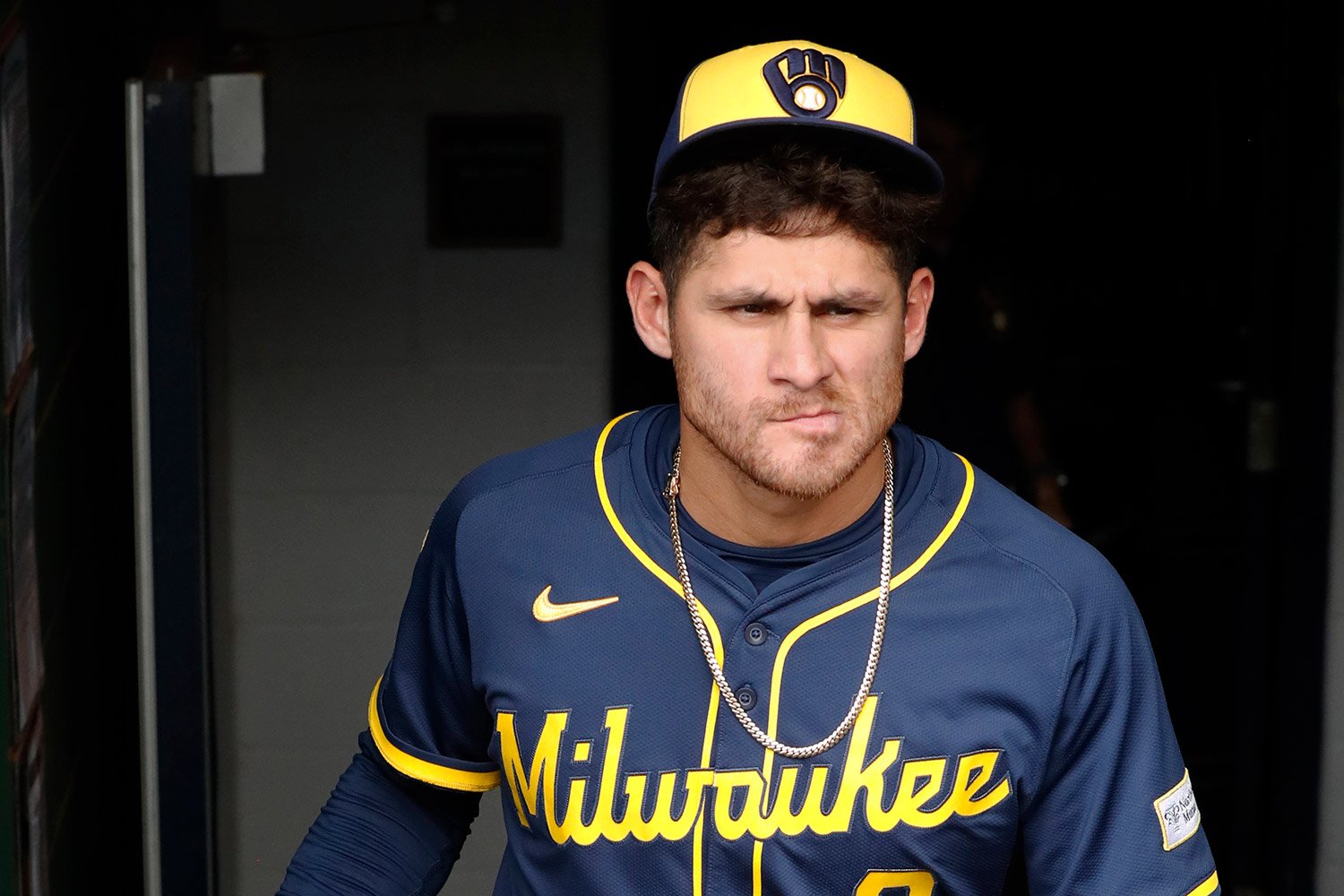 From a results standpoint, things have been trending in the right direction for Joey Ortiz. After limping to a .185/.254/.250 line (45 wRC+) with just two home runs through June 14, the Brewers shortstop has since hit .290/.323/.500 (130 wRC+) with four homers in his last 65 plate appearances. Despite that substantial uptick in production, Ortiz has found himself in the crosshairs of his manager’s ire. Pat Murphy pinch hit for Ortiz in his final at-bat on Saturday in Miami against the Marlins. He hasn’t played since, remaining on the bench due to Murphy’s displeasure with his recent swing decisions. “Yeah, the manager’s pissed,” Murphy said when asked on Monday afternoon about Andruw Monasterio starting in Ortiz’s place at shortstop for a second straight night. “I want him to give me his best approach at the plate. And, you know, we’ve given him a lot. We play him every day, and we need him, and he can’t just have lapses at the plate like that.” Passivity in the batter’s box has been a long-running issue for Ortiz. Last season, his 53.5% swing rate against in-zone pitches was the lowest among qualified hitters, rendering him a net negative hitter on hittable pitches over the heart of the plate despite a decent overall line. Ortiz has upped his in-zone swing rate to 59% this year, but that remains well below the league average. He fell back into the worst version of himself on Milwaukee’s last road trip, swinging at just 52.3% of in-zone pitches while chasing 37.5% of pitches outside the zone. “The swing decisions have been the worst [they’ve] been,” Murphy said. “And he’s swinging the bat way better, but [it’s] his swing decisions now. So all that mental stuff, he’ll sit and think about it.” Ortiz had a rough at-bat in New York in the first game of that road trip, rolling over a first-pitch sinker for an inning-ending double play after three straight walks to load the bases, but his last two at-bats in Miami were apparently the final straw before Murphy imposed a reset. First was a sequence against Cal Quantrill in which he watched three fastballs right down the middle and chased a fastball at his eyes. His next at-bat was a similar story, as Ortiz watched two fastballs and a hanging sweeper for strikes and offered only at another sweeper well off the plate. Perhaps Murphy was trying to motivate his shortstop to respond by publicly calling out his at-bats, or maybe it truly was a moment of authentic exasperation signaling that Ortiz’s leash is thinning. Either way, it’s clear that he still views Ortiz’s extreme passivity as a problem. “I want to see conviction when he gets back in there,” Murphy said. “Like, ‘I’m not letting this happen. I have a responsibility. I don’t have to get results, but I have to be convicted, I have to be ready, I have to be clear-headed, and I have to be able to fire.”
 -
Image courtesy of © Jim Rassol-Imagn Images Brandon Woodruff's first big-league start in 652 days could not have gone much better. In his long-awaited return from shoulder surgery, the longest-tenured Brewer tossed six innings of one-run ball, allowing just two hits and striking out eight. Without context, that line could've passed for a typical Woodruff start anywhere between 2019 and 2023. But this was the new Woodruff, and a sharp one at that. Yes, he faced a below-average Miami Marlins lineup, and he won't look as good in every future start, but Woodruff offered the first real taste of how he can (and will) go after hitters moving forward. Unsurprisingly, Woodruff's velocity was not quite back to pre-surgery levels. It's unlikely to get there consistently this year. Still, both his four-seamer and two-seamer averaged north of 93 mph, starting in the low 90s but bumping up a tick as his outing progressed. He topped 95 mph four times. The real takeaways, though, were Woodruff's new and improved movement profile and how he used it. A higher arm slot has slashed a couple of inches of arm-side movement from each of his two main fastballs, but those preexisting staples of his arsenal otherwise have largely the same shapes. Woodruff is complementing those offerings differently, though, with the new cutter and sweeping slider he first teased back in spring training. Notice how the movement plot on the right is more balanced than the one on the left. Woodruff can still pitch hitters north-south with his four-seamer and curveball, as he has always done, but he now features more shapes for working east-west, which he did in many of his most impressive sequences on Sunday. After using a steady diet of four-seamers his first time through the order, Woodruff masterfully mixed his new cutter and two-seamer to work both sides of the plate. In the third inning, he got ahead of Dane Myers with two cutters over the outer third, before punching him out with a boring two-seamer up and in. screen-20250706-213430~2.mp4 The following inning, after getting a call on an inside two-seamer to put Agustín Ramírez behind 0-2, Woodruff deliberately threw a cutter away to set up a perfect back-door two-seamer that froze Miami's cleanup hitter for strike three. screen-20250706-212851~2.mp4 Woodruff consistently executed to all four quadrants of the zone all afternoon, helping him rack up those eight strikeouts. The sweeper on which Heriberto Hernandez homered for the Marlins' lone run was one of his few true mistake pitches. Woodruff threw 53 of his 70 pitches for strikes. Statistically, it was the highest strike rate by a Brewers starter in any outing this year (excluding openers), and his command was arguably the best, as well. Hitting spots also allowed that four-seamer to continue playing up for whiffs with less velocity. Most of the swinging strikes against it came just above the top of the zone. This is not the same Woodruff who last pitched in a regular-season game on the same Miami mound nearly two years ago. He's diminished in some facets, the same in others, and arguably better in one. This iteration still has a seasoned feel for pitching, with more weapons to get hitters out. That doesn't mean it will always be smooth sailing; tempering expectations is still wiser than overinflating them. However, Sunday put to rest any lingering doubts over whether a healthy Woodruff could help the Brewers in the second half. View full article
-
Re-Tooled Brandon Woodruff Showed His Stuff in Long-Awaited Return
Jack Stern posted an article in Brewers
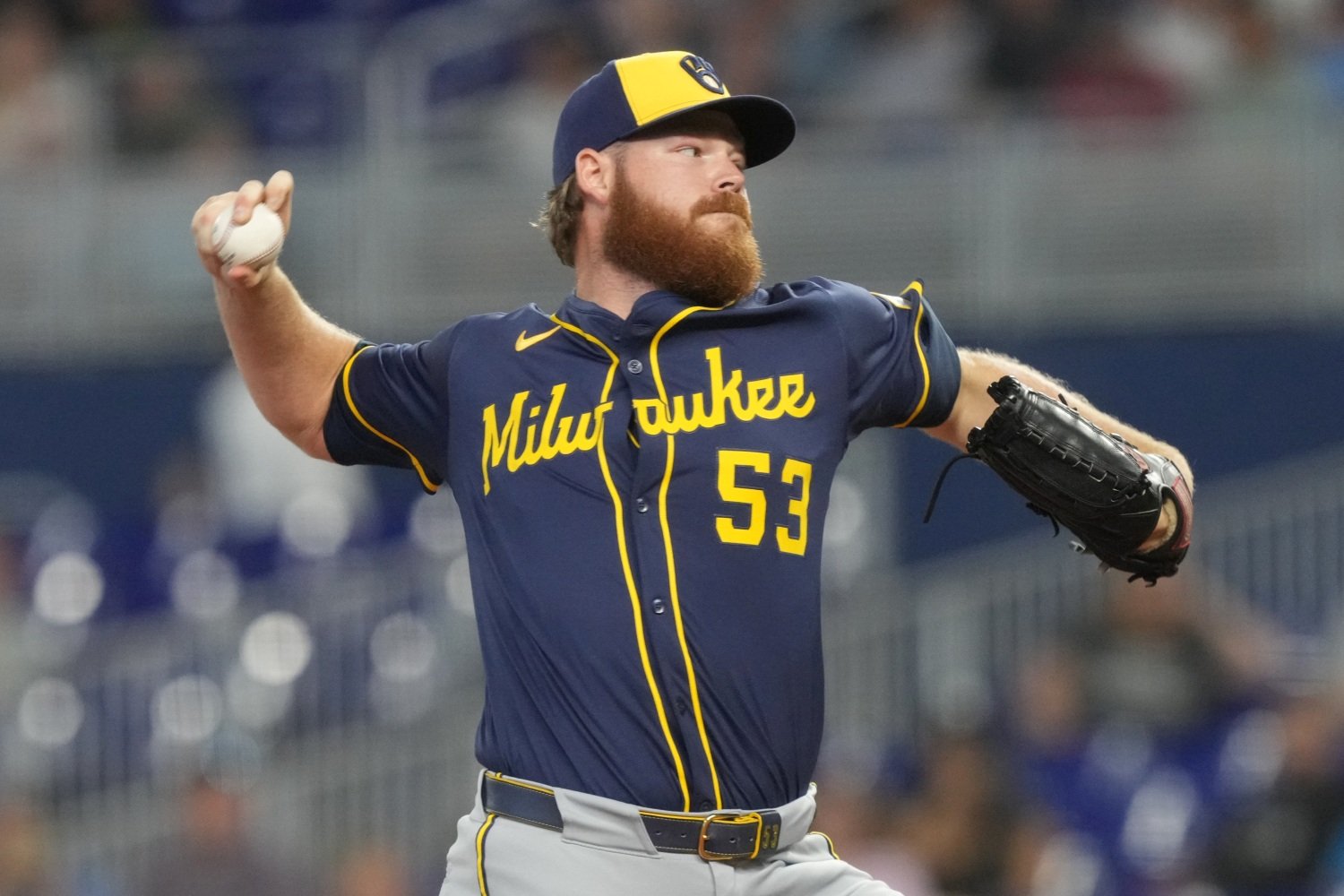 Brandon Woodruff's first big-league start in 652 days could not have gone much better. In his long-awaited return from shoulder surgery, the longest-tenured Brewer tossed six innings of one-run ball, allowing just two hits and striking out eight. Without context, that line could've passed for a typical Woodruff start anywhere between 2019 and 2023. But this was the new Woodruff, and a sharp one at that. Yes, he faced a below-average Miami Marlins lineup, and he won't look as good in every future start, but Woodruff offered the first real taste of how he can (and will) go after hitters moving forward. Unsurprisingly, Woodruff's velocity was not quite back to pre-surgery levels. It's unlikely to get there consistently this year. Still, both his four-seamer and two-seamer averaged north of 93 mph, starting in the low 90s but bumping up a tick as his outing progressed. He topped 95 mph four times. The real takeaways, though, were Woodruff's new and improved movement profile and how he used it. A higher arm slot has slashed a couple of inches of arm-side movement from each of his two main fastballs, but those preexisting staples of his arsenal otherwise have largely the same shapes. Woodruff is complementing those offerings differently, though, with the new cutter and sweeping slider he first teased back in spring training. Notice how the movement plot on the right is more balanced than the one on the left. Woodruff can still pitch hitters north-south with his four-seamer and curveball, as he has always done, but he now features more shapes for working east-west, which he did in many of his most impressive sequences on Sunday. After using a steady diet of four-seamers his first time through the order, Woodruff masterfully mixed his new cutter and two-seamer to work both sides of the plate. In the third inning, he got ahead of Dane Myers with two cutters over the outer third, before punching him out with a boring two-seamer up and in. screen-20250706-213430~2.mp4 The following inning, after getting a call on an inside two-seamer to put Agustín Ramírez behind 0-2, Woodruff deliberately threw a cutter away to set up a perfect back-door two-seamer that froze Miami's cleanup hitter for strike three. screen-20250706-212851~2.mp4 Woodruff consistently executed to all four quadrants of the zone all afternoon, helping him rack up those eight strikeouts. The sweeper on which Heriberto Hernandez homered for the Marlins' lone run was one of his few true mistake pitches. Woodruff threw 53 of his 70 pitches for strikes. Statistically, it was the highest strike rate by a Brewers starter in any outing this year (excluding openers), and his command was arguably the best, as well. Hitting spots also allowed that four-seamer to continue playing up for whiffs with less velocity. Most of the swinging strikes against it came just above the top of the zone. This is not the same Woodruff who last pitched in a regular-season game on the same Miami mound nearly two years ago. He's diminished in some facets, the same in others, and arguably better in one. This iteration still has a seasoned feel for pitching, with more weapons to get hitters out. That doesn't mean it will always be smooth sailing; tempering expectations is still wiser than overinflating them. However, Sunday put to rest any lingering doubts over whether a healthy Woodruff could help the Brewers in the second half.
 -
Image courtesy of © Jeff Hanisch-Imagn Images On Sunday, ESPN announced the rosters for the 2025 MLB All-Star Game, set to take place at Truist Park in the suburbs of Atlanta. Freddy Peralta will make his second trip to the Midsummer Classic as the Brewers’ lone representative—at least for now. It’s an unsurprising revelation. Milwaukee’s position player group consists primarily of solid contributors, rather than All-Star-caliber ones. Among hitters with at least 200 plate appearances, William Contreras is the club’s only regular within the top three in fWAR at his position in the National League, and most of his value has stemmed from his defense. Peralta, meanwhile, is in the midst of a career year, at least according to the surface-level results. The 29-year-old has posted a 2.91 ERA in 18 starts and ranks ninth in the NL in WAR. He’s also among the longest-tenured Brewers, affording him greater name recognition with the Commissioner’s Office and on player ballots, the two main vehicles for selecting pitchers and reserve position players. The right-hander has leaned on his fastball 57.6% of the time this year, the most he’s thrown it since 2020. However, he’s also continued to rely increasingly on his changeup, which has evolved into (perhaps) his best secondary pitch against both right-handed and left-handed opponents since his last All-Star selection in 2021. He's keeping the ball in the park better than he has since 2022, and his worst Game Score in any start this year is 45; that immunity to the true implosion is a new skill for him. He pitched a spotless inning of relief in the 2021 All-Star Game, striking out the side in order. Peralta is slated to start Monday night in Milwaukee, against the Dodgers. Thereafter, the team will have to decide whether to use their starting pitching depth to rest him until the other side of the break (allowing him to actually pitch in Georgia) or to have him come back on Sunday. There was no immediate indication as to which way they'll go, but given the meaning of this achievement for Peralta and their depth in the rotation, they could well choose to stretch the rotation and let him accept the honor. While Peralta will most likely be the only Brewer in Atlanta, more could join him in the coming days. A handful of players typically decline to participate in the game for workload management or other reasons, at which point replacement players further down on the player ballot are added to the roster. Brice Turang and Sal Frelick could be among those candidates, and although he himself might opt out, Christian Yelich shares Peralta's combination of stout production this year and a high Q-score. The game will be held on Tuesday, July 15, with the first pitch scheduled for 7 p.m. CT on FOX. View full article
-
 On Sunday, ESPN announced the rosters for the 2025 MLB All-Star Game, set to take place at Truist Park in the suburbs of Atlanta. Freddy Peralta will make his second trip to the Midsummer Classic as the Brewers’ lone representative—at least for now. It’s an unsurprising revelation. Milwaukee’s position player group consists primarily of solid contributors, rather than All-Star-caliber ones. Among hitters with at least 200 plate appearances, William Contreras is the club’s only regular within the top three in fWAR at his position in the National League, and most of his value has stemmed from his defense. Peralta, meanwhile, is in the midst of a career year, at least according to the surface-level results. The 29-year-old has posted a 2.91 ERA in 18 starts and ranks ninth in the NL in WAR. He’s also among the longest-tenured Brewers, affording him greater name recognition with the Commissioner’s Office and on player ballots, the two main vehicles for selecting pitchers and reserve position players. The right-hander has leaned on his fastball 57.6% of the time this year, the most he’s thrown it since 2020. However, he’s also continued to rely increasingly on his changeup, which has evolved into (perhaps) his best secondary pitch against both right-handed and left-handed opponents since his last All-Star selection in 2021. He's keeping the ball in the park better than he has since 2022, and his worst Game Score in any start this year is 45; that immunity to the true implosion is a new skill for him. He pitched a spotless inning of relief in the 2021 All-Star Game, striking out the side in order. Peralta is slated to start Monday night in Milwaukee, against the Dodgers. Thereafter, the team will have to decide whether to use their starting pitching depth to rest him until the other side of the break (allowing him to actually pitch in Georgia) or to have him come back on Sunday. There was no immediate indication as to which way they'll go, but given the meaning of this achievement for Peralta and their depth in the rotation, they could well choose to stretch the rotation and let him accept the honor. While Peralta will most likely be the only Brewer in Atlanta, more could join him in the coming days. A handful of players typically decline to participate in the game for workload management or other reasons, at which point replacement players further down on the player ballot are added to the roster. Brice Turang and Sal Frelick could be among those candidates, and although he himself might opt out, Christian Yelich shares Peralta's combination of stout production this year and a high Q-score. The game will be held on Tuesday, July 15, with the first pitch scheduled for 7 p.m. CT on FOX.
 -
Image courtesy of © Bruce Kluckhohn-Imagn Images When the Brewers activated Aaron Ashby from the injured list in late May, Pat Murphy said the club planned to use him and DL Hall as “leverage long relievers.” The pair could alternate pitching multiple innings in meaningful situations, sometimes as a bridge between a short start and the back end of the bullpen, and other times to fill in for some of those late-inning arms to ease their workloads. In Ashby’s six weeks on the roster, such outings have been few and far between—sometimes due to game circumstances, and other times due to Murphy’s apparent hesitancy to trust him in bigger spots. He was finally back in that high-leverage, multi-inning role against the Miami Marlins on Friday night, and the southpaw was pivotal in a 6-5 win. With Quinn Priester unable to complete the fifth inning, Murphy summoned Ashby with two outs and the go-ahead run on second base. He struck out Connor Norby to end the threat and worked through the seventh inning, striking out three in 2 1/3 perfect innings. Meanwhile, the Brewers scraped across a run in the top of the eighth to take the lead, positioning Abner Uribe and Trevor Megill to finish things off. The outing showcased how pivotal Ashby can be in that unique role and why more opportunities in similar situations should follow. The left-hander has been dominant as a multi-inning reliever, both this year and dating back to his final call-up last season. After Friday’s showing, Ashby now owns a 0.93 ERA and 2.42 FIP in 19 ⅓ innings this year. Since August 25, 2024, he’s pitched to a 1.15 ERA and 1.59 FIP with a 29.1% K-BB% in 39 innings. Sixteen of his 23 appearances have spanned more than three outs. Beyond setting up the eventual win by keeping the score tied, his multi-inning effort also allowed Murphy to avoid using Nick Mears for a third straight day and Jared Koenig for the second time in three days. They would pitch unsuccessfully the following afternoon behind Hall, who worked two perfect innings in a similar multi-inning role and arguably could have pitched another in what was then a tie game. Properly pacing Mears, Koenig, and Uribe will be crucial in a heavily-worked bullpen that ranks fourth in baseball in innings pitched. With a rotation of starters best limited to two turns through the order in most outings, Murphy will continue to lean heavily on his relief corps in the second half. Ashby ought to be a cog in keeping that group effective, pitching in precisely the role he filled on Friday night. View full article
-
 When the Brewers activated Aaron Ashby from the injured list in late May, Pat Murphy said the club planned to use him and DL Hall as “leverage long relievers.” The pair could alternate pitching multiple innings in meaningful situations, sometimes as a bridge between a short start and the back end of the bullpen, and other times to fill in for some of those late-inning arms to ease their workloads. In Ashby’s six weeks on the roster, such outings have been few and far between—sometimes due to game circumstances, and other times due to Murphy’s apparent hesitancy to trust him in bigger spots. He was finally back in that high-leverage, multi-inning role against the Miami Marlins on Friday night, and the southpaw was pivotal in a 6-5 win. With Quinn Priester unable to complete the fifth inning, Murphy summoned Ashby with two outs and the go-ahead run on second base. He struck out Connor Norby to end the threat and worked through the seventh inning, striking out three in 2 1/3 perfect innings. Meanwhile, the Brewers scraped across a run in the top of the eighth to take the lead, positioning Abner Uribe and Trevor Megill to finish things off. The outing showcased how pivotal Ashby can be in that unique role and why more opportunities in similar situations should follow. The left-hander has been dominant as a multi-inning reliever, both this year and dating back to his final call-up last season. After Friday’s showing, Ashby now owns a 0.93 ERA and 2.42 FIP in 19 ⅓ innings this year. Since August 25, 2024, he’s pitched to a 1.15 ERA and 1.59 FIP with a 29.1% K-BB% in 39 innings. Sixteen of his 23 appearances have spanned more than three outs. Beyond setting up the eventual win by keeping the score tied, his multi-inning effort also allowed Murphy to avoid using Nick Mears for a third straight day and Jared Koenig for the second time in three days. They would pitch unsuccessfully the following afternoon behind Hall, who worked two perfect innings in a similar multi-inning role and arguably could have pitched another in what was then a tie game. Properly pacing Mears, Koenig, and Uribe will be crucial in a heavily-worked bullpen that ranks fourth in baseball in innings pitched. With a rotation of starters best limited to two turns through the order in most outings, Murphy will continue to lean heavily on his relief corps in the second half. Ashby ought to be a cog in keeping that group effective, pitching in precisely the role he filled on Friday night.
-
- 1
-

-
- aaron ashby
- abner uribe
- (and 2 more)
-
 It may not have seemed that way based on the run column, but from a process standpoint, José Quintana’s start on Friday night was one of his best since returning from the injured list at the beginning of June. “At the end of the day, I feel like I had things way better today,” he said. “Less walks, hitting my spots way better. It was a good game.” It didn’t end how he wanted it to — the veteran bemoaned a one-out walk and RBI double that prompted his removal in the sixth inning — but despite allowing four earned runs in 5 ⅔ innings, Quintana was in many ways better than he has been in some of his more successful starts. He allowed only a 31.3% hard-hit rate, struck out five, and only walked two, the fewest free passes he’s issued in his five outings since that IL stint. “Today, my mechanics were better. I attacked the hitters in a good way. The plan was really good. A lot of weak contact.” Regression in the luck department had been looming for Quintana, who entered Friday with a 2.98 ERA but a more pedestrian 4.62 FIP thanks to a poor 1.44 K/BB ratio. His latest start shrunk that gap to a 3.30 ERA and a 4.41 FIP. Were it not for Rhys Hoskins dropping Joey Ortiz’s throw to first on a would-be double-play turn, Quintana’s three-run fifth inning might have been scoreless. “If we make a play or another play or we do something a little different, he probably doesn’t give up a run,” Pat Murphy said. “Or maybe he gives up one, and we’re looking at a quality start.” The bottom line is that Quintana looked sharper than he did in his last handful of starts. He also attacked hitters differently. Since the start of his second act in 2022, he showed right-handers an even balance of sinkers, changeups, and curveballs low and away and four-seamer fastballs up and in. That’s changed in his first season with the sinker-heavy Brewers, as the southpaw has eschewed his four-seamer for more of those down-and-out sinkers. On Friday night, 22 of Quintana’s 105 pitches were four-seamers, comparable to last year’s usage and by far the most he’s thrown the pitch in an outing this year. He used it to change eye levels at the top of the zone and establish the inside corner against a slew of right-handed Colorado Rockies hitters. “These guys, they are way better away,” he explained. “I think the way I've been pitching this year is staying more down and away, so today we changed that a little bit to go hard in and soft away. I think it worked really good, and the second time through the lineup, we started [throwing] more away and we got more ground balls. It was really good.” Quintana’s four-seamer generated five whiffs out of 14 swings (36%) and was responsible for two of his five strikeouts, but it also allowed his sinker to play up. Showing those inside four-seamers had Rockies hitters rolling over sinkers and changeups away, but it also left them giving up on some comeback sinkers and taking them for strikes. Quintana’s sinker only produced one whiff but yielded 14 called strikes. Even if the results weren’t optimal, Quintana’s command was tighter, and he was getting the right responses from hitters. He also dusted off a pitch that was recently a cog in his arsenal and perhaps should be again moving forward.
 -
Image courtesy of © Jeff Curry-Imagn Images It may not have seemed that way based on the run column, but from a process standpoint, José Quintana’s start on Friday night was one of his best since returning from the injured list at the beginning of June. “At the end of the day, I feel like I had things way better today,” he said. “Less walks, hitting my spots way better. It was a good game.” It didn’t end how he wanted it to — the veteran bemoaned a one-out walk and RBI double that prompted his removal in the sixth inning — but despite allowing four earned runs in 5 ⅔ innings, Quintana was in many ways better than he has been in some of his more successful starts. He allowed only a 31.3% hard-hit rate, struck out five, and only walked two, the fewest free passes he’s issued in his five outings since that IL stint. “Today, my mechanics were better. I attacked the hitters in a good way. The plan was really good. A lot of weak contact.” Regression in the luck department had been looming for Quintana, who entered Friday with a 2.98 ERA but a more pedestrian 4.62 FIP thanks to a poor 1.44 K/BB ratio. His latest start shrunk that gap to a 3.30 ERA and a 4.41 FIP. Were it not for Rhys Hoskins dropping Joey Ortiz’s throw to first on a would-be double-play turn, Quintana’s three-run fifth inning might have been scoreless. “If we make a play or another play or we do something a little different, he probably doesn’t give up a run,” Pat Murphy said. “Or maybe he gives up one, and we’re looking at a quality start.” The bottom line is that Quintana looked sharper than he did in his last handful of starts. He also attacked hitters differently. Since the start of his second act in 2022, he showed right-handers an even balance of sinkers, changeups, and curveballs low and away and four-seamer fastballs up and in. That’s changed in his first season with the sinker-heavy Brewers, as the southpaw has eschewed his four-seamer for more of those down-and-out sinkers. On Friday night, 22 of Quintana’s 105 pitches were four-seamers, comparable to last year’s usage and by far the most he’s thrown the pitch in an outing this year. He used it to change eye levels at the top of the zone and establish the inside corner against a slew of right-handed Colorado Rockies hitters. “These guys, they are way better away,” he explained. “I think the way I've been pitching this year is staying more down and away, so today we changed that a little bit to go hard in and soft away. I think it worked really good, and the second time through the lineup, we started [throwing] more away and we got more ground balls. It was really good.” Quintana’s four-seamer generated five whiffs out of 14 swings (36%) and was responsible for two of his five strikeouts, but it also allowed his sinker to play up. Showing those inside four-seamers had Rockies hitters rolling over sinkers and changeups away, but it also left them giving up on some comeback sinkers and taking them for strikes. Quintana’s sinker only produced one whiff but yielded 14 called strikes. Even if the results weren’t optimal, Quintana’s command was tighter, and he was getting the right responses from hitters. He also dusted off a pitch that was recently a cog in his arsenal and perhaps should be again moving forward. View full article
-
 It was evident throughout his time in the minor leagues, and a wider audience learned it in his big-league debut: Jacob Misiorowski’s fastball is an outlier pitch. Its velocity, movement, and release point (in three dimensions, with an unusually low release height and enormous extension toward the plate) make it unlike any heater most hitters are accustomed to facing. “He’s standing right next to you, you know?” said Eric Haase, who caught Misiorowski in his third start on Wednesday against the Pittsburgh Pirates. “The extension is a real thing.” “I feel like his [fastball] is a lot harder than mine, just because he's like eight feet out towards home plate,” said fellow flamethrower Trevor Megill. The early results were already exceptional. Misiorowski’s four-seamer did not allow a hit through his first two starts and induced plenty of uncomfortable swings. However, the helpless swings and misses it's capable of generating were more fleeting. After it notched a 33.1% whiff rate against Triple-A hitters this year, MLB opponents whiffed on 19.2% of swings through those first two outings. Misiorowski outdueled Pirates ace Paul Skenes by unleashing that fastball’s full potential for the first time in a big-league start. After he and William Contreras used a more balanced mix his first two times out, the right-hander and Eric Haase let the heater eat. It carved through Pittsburgh hitters, inducing 10 swings and misses. Date 4FB% 4FB Whiff% 6/12 53.1% 29.2% 6/20 47.7% 8.7% 6/25 63.5% 38.4% “Just kind of seeing how they’re handling the heaters,” Haase said. “I feel like if he does get hurt, it’s going to be guys just so much on the heater that they kind of run into a breaking ball out in front. So just trying to pick our spots when it looks good and stay on the heater.” Location was the greatest difference. Misiorowski commanded his fastball more consistently at the top of the zone, where its velocity and gravity-fighting backspin from his low slot work best to yield late swings. “His high fastball is something to be watching,” Megill said. “That thing’s really nice.” It also helped that Misiorowski had an extra notch of that backspin-induced carry. In his first two starts, his four-seamer averaged 16 inches of induced vertical break. On Wednesday, it averaged 17 inches. That's no surprise. Movement and location are linked, and when a pitcher elevates the way Misiorowski did Wednesday, they usually get a bit of extra ride. “I think I was staying pretty true on my delivery and really getting a lot of vert on it,” he said, “so I think that helped a lot.” Misiorowski has teased how high his ceiling can be every time he has taken a big-league mound. His latest effort was enough to outpitch Skenes. It was the first glimpse at how untouchable he can look when that fastball is fully clicking.
 -
Image courtesy of © Benny Sieu-Imagn Images It was evident throughout his time in the minor leagues, and a wider audience learned it in his big-league debut: Jacob Misiorowski’s fastball is an outlier pitch. Its velocity, movement, and release point (in three dimensions, with an unusually low release height and enormous extension toward the plate) make it unlike any heater most hitters are accustomed to facing. “He’s standing right next to you, you know?” said Eric Haase, who caught Misiorowski in his third start on Wednesday against the Pittsburgh Pirates. “The extension is a real thing.” “I feel like his [fastball] is a lot harder than mine, just because he's like eight feet out towards home plate,” said fellow flamethrower Trevor Megill. The early results were already exceptional. Misiorowski’s four-seamer did not allow a hit through his first two starts and induced plenty of uncomfortable swings. However, the helpless swings and misses it's capable of generating were more fleeting. After it notched a 33.1% whiff rate against Triple-A hitters this year, MLB opponents whiffed on 19.2% of swings through those first two outings. Misiorowski outdueled Pirates ace Paul Skenes by unleashing that fastball’s full potential for the first time in a big-league start. After he and William Contreras used a more balanced mix his first two times out, the right-hander and Eric Haase let the heater eat. It carved through Pittsburgh hitters, inducing 10 swings and misses. Date 4FB% 4FB Whiff% 6/12 53.1% 29.2% 6/20 47.7% 8.7% 6/25 63.5% 38.4% “Just kind of seeing how they’re handling the heaters,” Haase said. “I feel like if he does get hurt, it’s going to be guys just so much on the heater that they kind of run into a breaking ball out in front. So just trying to pick our spots when it looks good and stay on the heater.” Location was the greatest difference. Misiorowski commanded his fastball more consistently at the top of the zone, where its velocity and gravity-fighting backspin from his low slot work best to yield late swings. “His high fastball is something to be watching,” Megill said. “That thing’s really nice.” It also helped that Misiorowski had an extra notch of that backspin-induced carry. In his first two starts, his four-seamer averaged 16 inches of induced vertical break. On Wednesday, it averaged 17 inches. That's no surprise. Movement and location are linked, and when a pitcher elevates the way Misiorowski did Wednesday, they usually get a bit of extra ride. “I think I was staying pretty true on my delivery and really getting a lot of vert on it,” he said, “so I think that helped a lot.” Misiorowski has teased how high his ceiling can be every time he has taken a big-league mound. His latest effort was enough to outpitch Skenes. It was the first glimpse at how untouchable he can look when that fastball is fully clicking. View full article
-
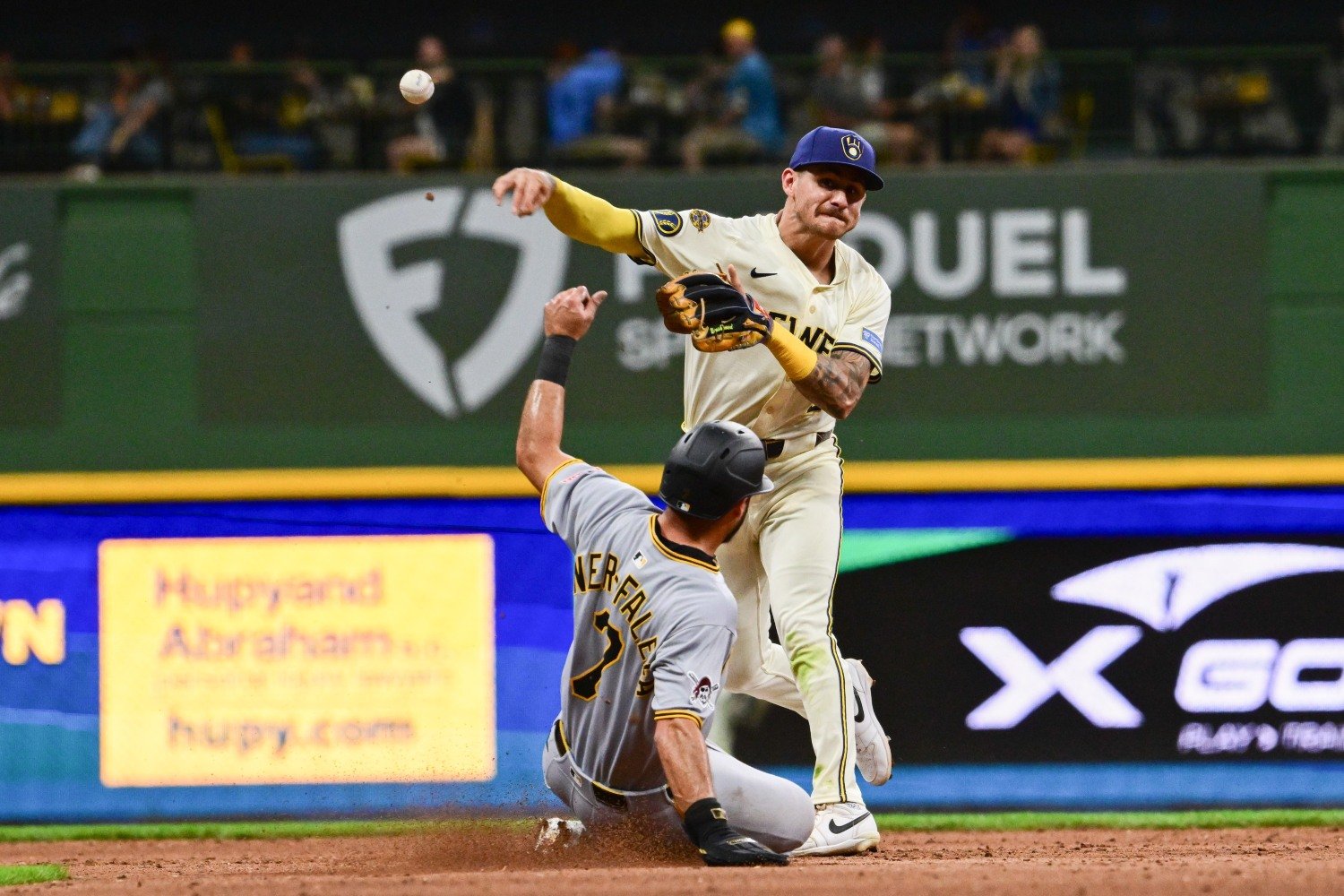 Baseball is a game of inches, a truism that takes on added significance in close games. When the Brewers dropped a seesaw series opener to the Pirates by a 6-5 score, Pat Murphy bemoaned that the little things did not go his team’s way, sometimes by their own doing. There were several plays to circle in a one-run loss. In the fifth inning, Jackson Chourio chased two up-and-in fastballs from Chase Shugart, who was struggling to find the strike zone. He hit a soft liner to the mound that Joey Ortiz read poorly, resulting in a double play that quashed a potential rally. In the eighth, Brice Turang was initially ruled safe on an infield single that moved the tying run into scoring position and placed the go-ahead run on base with one out. Replay showed that catcher Joey Bart’s throw beat Turang, who lunged toward the base with his final stride, by a hair. The call was overturned. In the ninth, Jake Bauers rapped a hard line drive around the wrong side of the foul pole, just missing a walk-off home run. Two pitches later, Caleb Durbin had second base stolen, but overslid the base and was tagged out. The Pirates, meanwhile, outhit the Brewers 15 to 9, even though Milwaukee finished with a .290 expected batting average compared to Pittsburgh’s .214. Isiah Kiner-Falefa tucked a triple down the line with a .280 xBA—one that Sal Frelick bobbled as it skipped off the wall—to drive in the game-winning run in the sixth. “Every little [thing],” Murphy said. “Balls foul by an inch, Durbin steals the base and overslides, Turang at first, a perfectly-placed triple in the corner by Kiner-Falefa. One of those days.” One night later, Milwaukee evened the series to set up the Jacob Misiorowski-Paul Skenes tilt as a rubber match. While increased hard contact and more extra-base hits were the main catalysts of the 9-3 victory, as they have been throughout much of the team’s current run, it was the inches favoring the Brewers in a tense second inning that positioned the offense to pull away. After a soft one-hopper got past Caleb Durbin for the first of three singles that loaded the bases against Freddy Peralta with no outs, he was quick enough on a slow bouncer to record the force at home for the first out. After Peralta struck out Kiner-Falefa, Isaac Collins, who leads all outfielders in feet covered within the first three seconds of a ball’s flight, ended the inning with a sliding catch by getting another great jump. “Underrated,” Murphy said of the sequence. “People who came to the game, they might have forgotten that. I think that’s obviously the difference in the game.” The Brewers won’t win on the margins every night, but for the better part of a month, they’ve exhibited more of the traits that served them well last year. They’re covering the extra inches in the field to make plays, and they’re responding quickly when things go against them. And they're closing the gap in the NL Central, enough that it feels more like a game of inches than it did a month ago.
 -
Image courtesy of © Benny Sieu-Imagn Images Baseball is a game of inches, a truism that takes on added significance in close games. When the Brewers dropped a seesaw series opener to the Pirates by a 6-5 score, Pat Murphy bemoaned that the little things did not go his team’s way, sometimes by their own doing. There were several plays to circle in a one-run loss. In the fifth inning, Jackson Chourio chased two up-and-in fastballs from Chase Shugart, who was struggling to find the strike zone. He hit a soft liner to the mound that Joey Ortiz read poorly, resulting in a double play that quashed a potential rally. In the eighth, Brice Turang was initially ruled safe on an infield single that moved the tying run into scoring position and placed the go-ahead run on base with one out. Replay showed that catcher Joey Bart’s throw beat Turang, who lunged toward the base with his final stride, by a hair. The call was overturned. In the ninth, Jake Bauers rapped a hard line drive around the wrong side of the foul pole, just missing a walk-off home run. Two pitches later, Caleb Durbin had second base stolen, but overslid the base and was tagged out. The Pirates, meanwhile, outhit the Brewers 15 to 9, even though Milwaukee finished with a .290 expected batting average compared to Pittsburgh’s .214. Isiah Kiner-Falefa tucked a triple down the line with a .280 xBA—one that Sal Frelick bobbled as it skipped off the wall—to drive in the game-winning run in the sixth. “Every little [thing],” Murphy said. “Balls foul by an inch, Durbin steals the base and overslides, Turang at first, a perfectly-placed triple in the corner by Kiner-Falefa. One of those days.” One night later, Milwaukee evened the series to set up the Jacob Misiorowski-Paul Skenes tilt as a rubber match. While increased hard contact and more extra-base hits were the main catalysts of the 9-3 victory, as they have been throughout much of the team’s current run, it was the inches favoring the Brewers in a tense second inning that positioned the offense to pull away. After a soft one-hopper got past Caleb Durbin for the first of three singles that loaded the bases against Freddy Peralta with no outs, he was quick enough on a slow bouncer to record the force at home for the first out. After Peralta struck out Kiner-Falefa, Isaac Collins, who leads all outfielders in feet covered within the first three seconds of a ball’s flight, ended the inning with a sliding catch by getting another great jump. “Underrated,” Murphy said of the sequence. “People who came to the game, they might have forgotten that. I think that’s obviously the difference in the game.” The Brewers won’t win on the margins every night, but for the better part of a month, they’ve exhibited more of the traits that served them well last year. They’re covering the extra inches in the field to make plays, and they’re responding quickly when things go against them. And they're closing the gap in the NL Central, enough that it feels more like a game of inches than it did a month ago. View full article
-
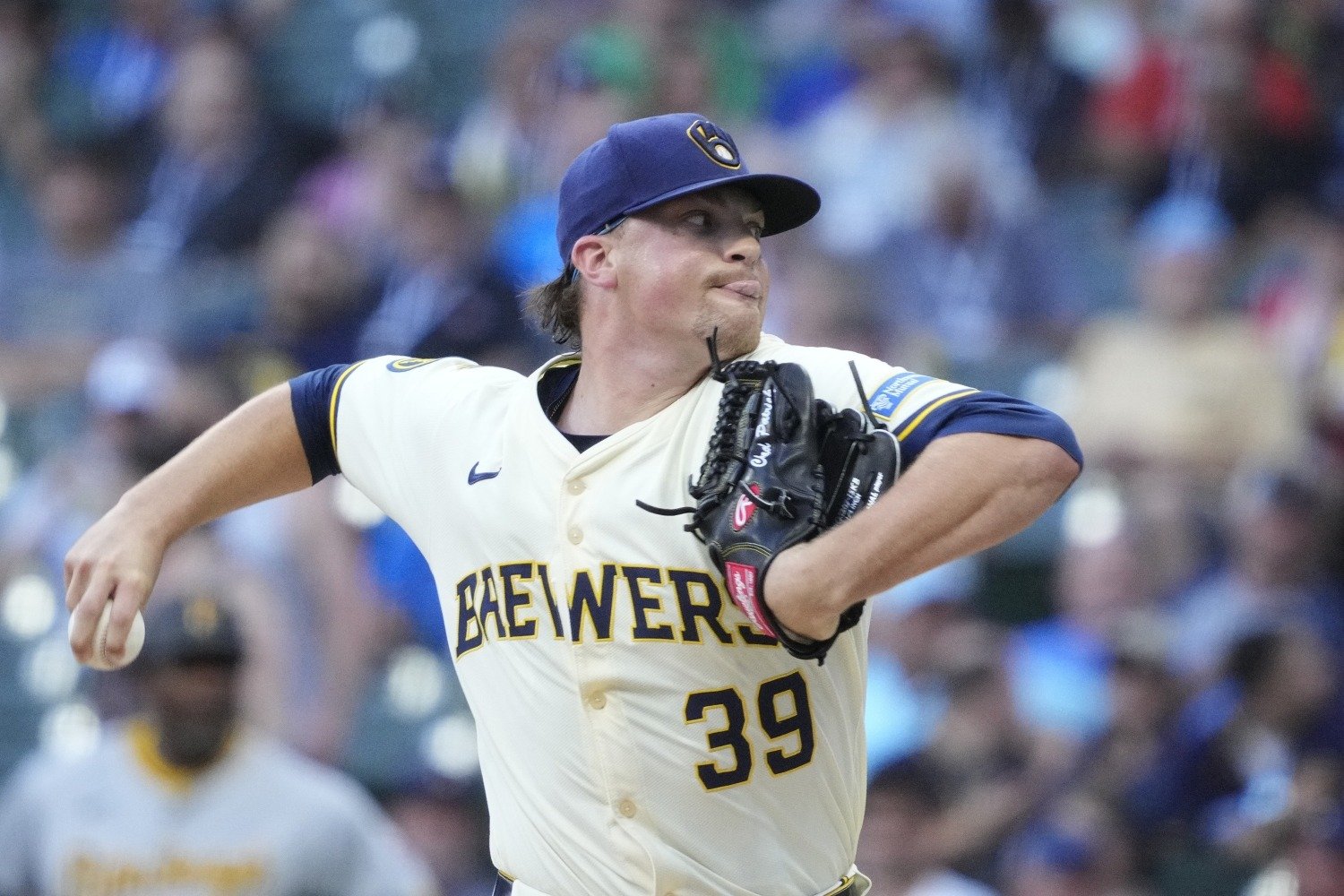 When a line drive struck Brandon Woodruff's right elbow three weeks ago, it delayed what was shaping up to be a controversial roster decision. While Woodruff's stuff was down a few more ticks in his recent rehab starts, the Brewers appeared intent on activating him soon. Pat Murphy implied that Chad Patrick, who owned a 2.97 ERA at the time but has three minor-league option years remaining, could head to Triple-A as part of the roster math. A few weeks later, that decision is drawing near again, and this time, it could be less controversial. Woodruff is slated for a final rehab outing, after a 60-pitch simulated game on Monday in which he said his stuff and command were the "crispest" they've been up to this point in his rehab. He feels that the hiatus was, indeed, a blessing in disguise, as it gave him time to refine his mechanics and put himself in a better position to perform. "My body is starting to move without having to think about it, if that makes sense," he said. "I've been trying to do stuff and feel certain stuff, and now I've used these two weeks here, and I really cleaned a lot of stuff up." Of course, Woodruff must demonstrate in his next rehab start that his stuff has indeed improved and can play against big-league hitters. However, Patrick's performance is also a key piece in the puzzle. He struggled for a third straight start on Monday night, a stretch during which he has allowed 13 earned runs in 15 innings. "He hasn't been quite as sharp with his stuff," Murphy said. "The command hasn't been as good. The cutter has been a little more inconsistent, still really good at times. And people know about him." The rookie has struck out 30.1% of batters in those three outings, and his average fastball velocity has increased, but a 55.6% hard-hit rate and his continued inability to work through an order a third time (.996 OPS) could give the Brewers what they see as fitting justification to demote him when they need to clear a rotation spot. Part of the equation may also be whether Patrick can refine his secondary pitches to create more velocity and movement separation from his three fastballs. He has proven that his cutter can play against big-league hitters, but his changeup lacks run, and his slider has been inconsistent. So far, 88% of his pitches have been some variant of the fastball, which may be contributing to his struggles a third time through the order. "When you're just a (three-pitch) guy, it's going to get vulnerable if you've seen a guy a bunch," Murphy said. With Woodruff on the mend, will Patrick's recent speed bump be a determining factor in upcoming conversations about the rotation? "We'll have those discussions," Murphy said. "But we believe Chad is a major-league pitcher." Patrick still sits on a 3.72 ERA and 3.54 FIP through 17 games (16 starts). His recent performance notwithstanding, he isn't deserving of a demotion. But if he and Woodruff are trending in opposite directions, it could make what looked like a challenging decision last month far more straightforward this time around. The Brewers could shift him to the big-league bullpen and demote DL Hall instead, but optioning Patrick to continue starting in Nashville may soon prove best for maintaining rotation depth and furthering his development.
- 6 comments
-
- 1
-
-
- chad patrick
- quinn priester
- (and 1 more)
-
Image courtesy of © Michael McLoone-Imagn Images When a line drive struck Brandon Woodruff's right elbow three weeks ago, it delayed what was shaping up to be a controversial roster decision. While Woodruff's stuff was down a few more ticks in his recent rehab starts, the Brewers appeared intent on activating him soon. Pat Murphy implied that Chad Patrick, who owned a 2.97 ERA at the time but has three minor-league option years remaining, could head to Triple-A as part of the roster math. A few weeks later, that decision is drawing near again, and this time, it could be less controversial. Woodruff is slated for a final rehab outing, after a 60-pitch simulated game on Monday in which he said his stuff and command were the "crispest" they've been up to this point in his rehab. He feels that the hiatus was, indeed, a blessing in disguise, as it gave him time to refine his mechanics and put himself in a better position to perform. "My body is starting to move without having to think about it, if that makes sense," he said. "I've been trying to do stuff and feel certain stuff, and now I've used these two weeks here, and I really cleaned a lot of stuff up." Of course, Woodruff must demonstrate in his next rehab start that his stuff has indeed improved and can play against big-league hitters. However, Patrick's performance is also a key piece in the puzzle. He struggled for a third straight start on Monday night, a stretch during which he has allowed 13 earned runs in 15 innings. "He hasn't been quite as sharp with his stuff," Murphy said. "The command hasn't been as good. The cutter has been a little more inconsistent, still really good at times. And people know about him." The rookie has struck out 30.1% of batters in those three outings, and his average fastball velocity has increased, but a 55.6% hard-hit rate and his continued inability to work through an order a third time (.996 OPS) could give the Brewers what they see as fitting justification to demote him when they need to clear a rotation spot. Part of the equation may also be whether Patrick can refine his secondary pitches to create more velocity and movement separation from his three fastballs. He has proven that his cutter can play against big-league hitters, but his changeup lacks run, and his slider has been inconsistent. So far, 88% of his pitches have been some variant of the fastball, which may be contributing to his struggles a third time through the order. "When you're just a (three-pitch) guy, it's going to get vulnerable if you've seen a guy a bunch," Murphy said. With Woodruff on the mend, will Patrick's recent speed bump be a determining factor in upcoming conversations about the rotation? "We'll have those discussions," Murphy said. "But we believe Chad is a major-league pitcher." Patrick still sits on a 3.72 ERA and 3.54 FIP through 17 games (16 starts). His recent performance notwithstanding, he isn't deserving of a demotion. But if he and Woodruff are trending in opposite directions, it could make what looked like a challenging decision last month far more straightforward this time around. The Brewers could shift him to the big-league bullpen and demote DL Hall instead, but optioning Patrick to continue starting in Nashville may soon prove best for maintaining rotation depth and furthering his development. View full article
-
The Brewers' Offense, Jameson Taillon, and the Nuance of Attacking Strikes
Jack Stern posted an article in Brewers
 Throughout baseball, hitting development is still trying to catch up to pitching development, and new bat-tracking technology could emerge as a tool that helps close the gap once front offices, coaches, and players discover how to best interpret and apply it. For now, the Brewers emphasize swing decisions, preaching it throughout all levels of the organization and tracking it with their own internal metric. What constitutes a wise swing decision is more nuanced than swinging at strikes and laying off balls. In non-two-strike counts, the Brewers would prefer their hitters to watch a strike in a location they struggle to hit, rather than take a non-productive swing. It’s why Garrett Mitchell is passive against fastballs in the top third of the zone and why Pat Murphy wants Brice Turang to follow suit. As a result, the Brewers have baseball’s third-lowest chase rate since the start of 2023, but they’ve also taken more strikes (18.1% called strike rate) than any other team in that span. Their 63.1% in-zone swing rate is the lowest for the second consecutive season. On the whole, the Brewers were not more aggressive than usual in Thursday’s series finale at Wrigley Field, swinging at 62.9% of in-zone pitches. However, they offered at 68% of in-zone pitches from starter Jameson Taillon, scoring five of their eight runs within the first three innings against him. Milwaukee’s offense tallied eight hits against Taillon, while posting an average exit velocity of 95 mph. That increased aggression looked more like a response to Taillon’s form than a sudden, concerted effort to take more swings. The right-hander struggled to land his curveball and left plenty of his harder pitches over the heart of the plate. The Brewers capitalized on those mistakes. After Taillon departed, the Brewers were noticeably less aggressive against relievers Genesis Cabrera, Chris Flexen, and Drew Pomeranz, and the latter two held Milwaukee scoreless over its final four innings. It wasn’t that the offense spontaneously abandoned a successful approach, but that Flexen and Pomeranz made more quality pitches around the edges of the strike zone. Perhaps the Brewers could still benefit from attacking more pitches in the zone overall—their 68.2% swing rate on pitches tagged by Statcast as within the heart of the strike zone is also baseball’s lowest—but Thursday served as a reminder that commanding hitters to swing at more strikes can be overly simplistic. There’s more to swing decisions than offering at strikes and laying off balls. A hitter’s hot and cold zones and the pitcher’s ability to locate to the latter are big parts of the equation.
 -
Image courtesy of © Matt Marton-Imagn Images Throughout baseball, hitting development is still trying to catch up to pitching development, and new bat-tracking technology could emerge as a tool that helps close the gap once front offices, coaches, and players discover how to best interpret and apply it. For now, the Brewers emphasize swing decisions, preaching it throughout all levels of the organization and tracking it with their own internal metric. What constitutes a wise swing decision is more nuanced than swinging at strikes and laying off balls. In non-two-strike counts, the Brewers would prefer their hitters to watch a strike in a location they struggle to hit, rather than take a non-productive swing. It’s why Garrett Mitchell is passive against fastballs in the top third of the zone and why Pat Murphy wants Brice Turang to follow suit. As a result, the Brewers have baseball’s third-lowest chase rate since the start of 2023, but they’ve also taken more strikes (18.1% called strike rate) than any other team in that span. Their 63.1% in-zone swing rate is the lowest for the second consecutive season. On the whole, the Brewers were not more aggressive than usual in Thursday’s series finale at Wrigley Field, swinging at 62.9% of in-zone pitches. However, they offered at 68% of in-zone pitches from starter Jameson Taillon, scoring five of their eight runs within the first three innings against him. Milwaukee’s offense tallied eight hits against Taillon, while posting an average exit velocity of 95 mph. That increased aggression looked more like a response to Taillon’s form than a sudden, concerted effort to take more swings. The right-hander struggled to land his curveball and left plenty of his harder pitches over the heart of the plate. The Brewers capitalized on those mistakes. After Taillon departed, the Brewers were noticeably less aggressive against relievers Genesis Cabrera, Chris Flexen, and Drew Pomeranz, and the latter two held Milwaukee scoreless over its final four innings. It wasn’t that the offense spontaneously abandoned a successful approach, but that Flexen and Pomeranz made more quality pitches around the edges of the strike zone. Perhaps the Brewers could still benefit from attacking more pitches in the zone overall—their 68.2% swing rate on pitches tagged by Statcast as within the heart of the strike zone is also baseball’s lowest—but Thursday served as a reminder that commanding hitters to swing at more strikes can be overly simplistic. There’s more to swing decisions than offering at strikes and laying off balls. A hitter’s hot and cold zones and the pitcher’s ability to locate to the latter are big parts of the equation. View full article
-
What Will it Take for Tobias Myers to Return to the Brewers?
Jack Stern posted an article in Brewers
 Tobias Myers was more likely to regress somewhat than to take another leap forward in his second big-league season. In contrast to his 3.00 ERA last year, his 4.22 xERA, 3.99 SIERA, and 105 DRA- indicated he pitched like a capable back-of-the-rotation starter. Still, the 26-year-old was returning to the same run-prevention system that enabled him to maximize his stuff, and he seemed positioned for at least a serviceable sophomore season. An oblique injury sidelined Myers in spring training and delayed his season debut to late April. When he did return to the mound, the results did not resemble last year’s valuable mid-rotation production. In six appearances (five starts), he pitched to a 4.95 ERA, 4.53 FIP, and 126 DRA-, with a 1.50 strikeout-to-walk ratio. Spraying pitches outside the strike zone was an issue in Myers's first three starts, but he spent plenty of time in the zone on May 17 against the Minnesota Twins—who smacked him around for 11 hits. The following day, the Brewers optioned him to Triple-A Nashville for the second time this year; he has remained there for a month. The big-league rotation is occupied by five high-performing starters, and Myers finds himself behind Logan Henderson (and, in a few weeks, possibly Brandon Woodruff and Nestor Cortes) on the second tier of the depth chart. He hasn’t done much in Nashville to improve his standing, pitching to a 4.18 ERA and 4.16 FIP without making the process-based changes necessary to turn his performance around. Pat Murphy said after multiple Myers outings that he wanted him to make fuller use of his five-pitch arsenal—particularly a changeup that held opponents to a .163 wOBA last year and induced whiffs on 42.9% of swings. The right-hander, whose changeup usage against lefties had dried up almost entirely from 19.2% last year to 3.4% before his demotion, had a similar assessment after that Twins outing. “I think just mix speeds a little bit better,” Myers said when asked how he can reduce loud contact. “Throw the changeup more, throw the curveball a little bit more. I think that'll open up a little bit more opportunity for the fastball to play. I feel like I was kind of just sitting in one speed zone tonight, fastball-cutter-slider, and just not enough to get them off the barrel.” That fastball-cutter-slider triad worked wonders for Myers a year ago, accounting for 84.4% of his pitches. He often tunneled those pitches off one another down the middle or off the outer third of the strike zone. This year, he’s leaned on those three offerings even more, throwing them a combined 95.6% of the time in the big leagues. The tunneling hasn’t been quite as precise, including too many sliders catching too much plate. Fluctuating velocity hasn’t helped, either. While the observed shapes of his cutter and slider remain distinct far more than they overlap, their speeds are closer since the former has lost a couple of ticks. That decreased the difference between their observed vertical drop from 12.1 inches last year to 10.9 this season. With where his stuff and execution were, his usual method of attack was less successful. Opponents hit Myers’s fastball a bit harder, but most notably, they made much more contact with his slider. Its out-of-zone whiff rate plummeted from 44.7% of swings to 17.6%. While Myers’s curveball has a place as a mix-in pitch for an occasional different look, he must limit its usage because it doesn’t tunnel well with the rest of his arsenal. In the visual below from last year, notice how the curveball’s blue track immediately separates from those of his remaining pitches. That leaves throwing more changeups as Myers’s best bet for disrupting timing without sacrificing deception. He’s flashed the pitch more in certain outings since his demotion, but not consistently. If Myers can’t trust a fourth pitch as a true separator from his harder stuff, his best path back to the big leagues may be as a reliever. His velocity could play up in shorter stints, and he could eschew his cutter in favor of a largely fastball-slider pairing. Role notwithstanding, he has a few boxes to check off to merit a return to the majors. At this moment, that day does not appear especially imminent.
 -
Image courtesy of © Benny Sieu-Imagn Images Tobias Myers was more likely to regress somewhat than to take another leap forward in his second big-league season. In contrast to his 3.00 ERA last year, his 4.22 xERA, 3.99 SIERA, and 105 DRA- indicated he pitched like a capable back-of-the-rotation starter. Still, the 26-year-old was returning to the same run-prevention system that enabled him to maximize his stuff, and he seemed positioned for at least a serviceable sophomore season. An oblique injury sidelined Myers in spring training and delayed his season debut to late April. When he did return to the mound, the results did not resemble last year’s valuable mid-rotation production. In six appearances (five starts), he pitched to a 4.95 ERA, 4.53 FIP, and 126 DRA-, with a 1.50 strikeout-to-walk ratio. Spraying pitches outside the strike zone was an issue in Myers's first three starts, but he spent plenty of time in the zone on May 17 against the Minnesota Twins—who smacked him around for 11 hits. The following day, the Brewers optioned him to Triple-A Nashville for the second time this year; he has remained there for a month. The big-league rotation is occupied by five high-performing starters, and Myers finds himself behind Logan Henderson (and, in a few weeks, possibly Brandon Woodruff and Nestor Cortes) on the second tier of the depth chart. He hasn’t done much in Nashville to improve his standing, pitching to a 4.18 ERA and 4.16 FIP without making the process-based changes necessary to turn his performance around. Pat Murphy said after multiple Myers outings that he wanted him to make fuller use of his five-pitch arsenal—particularly a changeup that held opponents to a .163 wOBA last year and induced whiffs on 42.9% of swings. The right-hander, whose changeup usage against lefties had dried up almost entirely from 19.2% last year to 3.4% before his demotion, had a similar assessment after that Twins outing. “I think just mix speeds a little bit better,” Myers said when asked how he can reduce loud contact. “Throw the changeup more, throw the curveball a little bit more. I think that'll open up a little bit more opportunity for the fastball to play. I feel like I was kind of just sitting in one speed zone tonight, fastball-cutter-slider, and just not enough to get them off the barrel.” That fastball-cutter-slider triad worked wonders for Myers a year ago, accounting for 84.4% of his pitches. He often tunneled those pitches off one another down the middle or off the outer third of the strike zone. This year, he’s leaned on those three offerings even more, throwing them a combined 95.6% of the time in the big leagues. The tunneling hasn’t been quite as precise, including too many sliders catching too much plate. Fluctuating velocity hasn’t helped, either. While the observed shapes of his cutter and slider remain distinct far more than they overlap, their speeds are closer since the former has lost a couple of ticks. That decreased the difference between their observed vertical drop from 12.1 inches last year to 10.9 this season. With where his stuff and execution were, his usual method of attack was less successful. Opponents hit Myers’s fastball a bit harder, but most notably, they made much more contact with his slider. Its out-of-zone whiff rate plummeted from 44.7% of swings to 17.6%. While Myers’s curveball has a place as a mix-in pitch for an occasional different look, he must limit its usage because it doesn’t tunnel well with the rest of his arsenal. In the visual below from last year, notice how the curveball’s blue track immediately separates from those of his remaining pitches. That leaves throwing more changeups as Myers’s best bet for disrupting timing without sacrificing deception. He’s flashed the pitch more in certain outings since his demotion, but not consistently. If Myers can’t trust a fourth pitch as a true separator from his harder stuff, his best path back to the big leagues may be as a reliever. His velocity could play up in shorter stints, and he could eschew his cutter in favor of a largely fastball-slider pairing. Role notwithstanding, he has a few boxes to check off to merit a return to the majors. At this moment, that day does not appear especially imminent. View full article
-
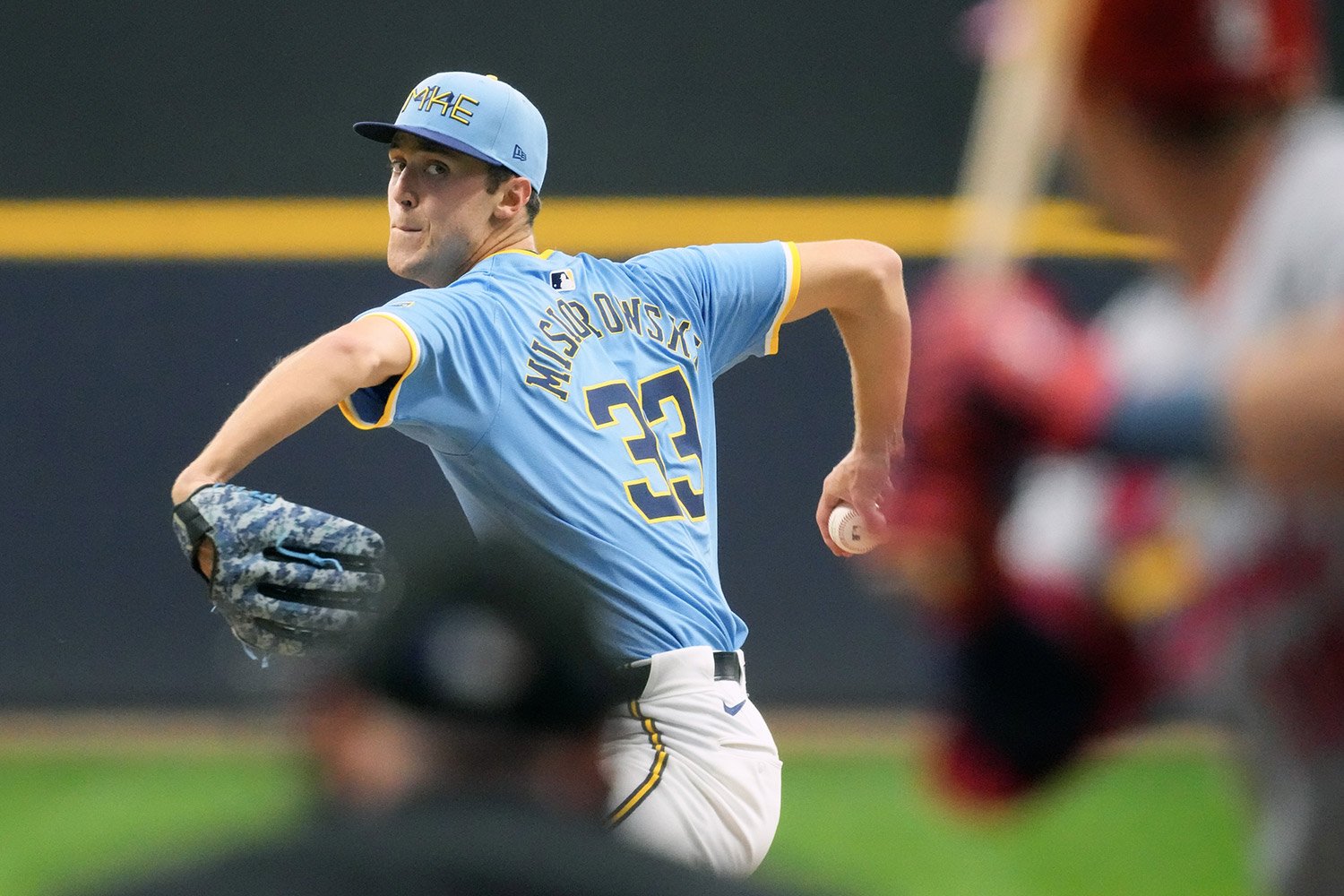 After Triple-A opponents struggled to hit Jacob Misiorowski this year, big-league hitters have started 0-for-14 against him. The right-hander held the St. Louis Cardinals hitless over five innings on Thursday night before departing with right leg cramping that appears unlikely to impact his availability for his next start. He struck out five, but that may undersell the extent of swing-and-miss he flashed – 13 of 37 swings (35.1%) against Misiorowski were whiffs. "It was impressive," Pat Murphy said. "He was impressive every way you look at it." Misiorowski's electric stuff was hardly a secret in the prospect world as he ascended the minor-league ranks, but in his debut, he announced to his new opponents that his outlier arsenal is already unlike anything they are accustomed to seeing. "His pitches are incredible," said Misiorowski's battery mate William Contreras, who guided him through a game plan that mixed those pitches a bit differently than he had in many of his minor-league starts. His trademark velocity was there from the get-go, starting with a first-pitch fastball that clocked in at 100.5 mph. Misiorowski's four-seamer averaged 101.2 mph in his first inning and reached 102.2. That velocity gradually inched downward as his start progressed, but he reached back for triple digits again with his final pitch of the fifth inning. "Me and (José) Quintana, we were sitting together trying to guess how fast the first pitch was going to be," Freddy Peralta said. "When we looked at it, we were like, 'Oh my God, it's going to be a long night for the hitters.'" It's not just raw velocity that makes Misiorowski's heater elite. He slings it from a low-three-quarters slot but generates more backspin carry than most pitchers do from his 21-degree arm angle, averaging 16.7 inches of induced vertical break on Thursday. He also kept it up in the zone, which only adds to its rising effect. The result is a flavor of perceived movement unlike any other four-seamer at the MLB level. Finally, Misiorowski's average extension of 7.5 feet down the mound also shortens the hitter's reaction time, with Statcast estimating that it adds 2 mph of perceived velocity to his pitches. Even when his fastball is "down" to 98 mph, it's still effectively a 100-mph heater. The combination of velocity, movement, entry angle, and extension creates a near-unprecedented pitch that multiple prospect publications scouted as an 80-grade fastball. That fastball is good enough that Misiorowski will be able to dominate with his best pitch alone in some outings. However, he only threw it 52.6% of the time in his debut, the lowest rate of any of his starts this year. Meanwhile, 30.1% of his pitches were sliders, his other outlier pitch. It dismantled the Cardinals, generating whiffs on four of eight swings against it. "Maybe a few more sliders than I usually (throw)," he said postgame. "It was working, so we rolled with it." Misiorowski's slider averaged 94.5 mph and touched 96.4 on Thursday, which would make it far and away the fastest qualified slider in baseball. However, the way it spins and breaks out of his hand more closely resembles a cutter than a slider. Even if it's best classified as such, its velocity would still rank third overall and first among starters. The dominance of multiple pitches stood out to those observing in the dugout and on the field. "It wasn't just maintaining the velocity, it was his mix," Murphy said. "His (slider) was good. Breaking ball was good. Even threw a really good changeup to (Nolan) Gorman at one point." "On my end, what I liked to see out of him was the different pitches he was able to throw and combine them together," said Contreras. It was just one outing, and Misiorowski's four walks were a necessary reminder that inconsistent control will likely lead to peaks and valleys throughout his rookie season. Still, his inaugural showing confirmed that he can execute his unique stuff well enough to overpower big-league hitters right now. That's why he's here. "It certainly bodes well," Murphy said. "We saw (Brandon Woodruff) debut, we've seen (Freddy) Peralta debut – he had a great one. We've seen Corbin Burnes debut, go up and down, and then really get on it. I think we probably have somebody in the same mold."


