



Spencer Michaelis
-
Posts
1,119 -
Joined
-
Last visited
-
Days Won
17
Content Type
Profiles
Forums
Blogs
Events
News
2026 Milwaukee Brewers Top Prospects Ranking
Milwaukee Brewers Videos
2022 Milwaukee Brewers Draft Picks
Milwaukee Brewers Free Agent & Trade Rumors, Notes, & Tidbits
Guides & Resources
2023 Milwaukee Brewers Draft Picks
2024 Milwaukee Brewers Draft Picks
The Milwaukee Brewers Players Project
2025 Milwaukee Brewers Draft Pick Tracker
2026 Milwaukee Brewers Draft Tracker: Picks & Bonuses
Store
Downloads
Gallery
Everything posted by Spencer Michaelis
-
 I get where you're coming from on "selling low" on a lot of them, but I'm not sure they would be, honestly. Teams aren't going to strictly judge them off their first taste of the majors. Esteury Ruiz, Lewis Brinson, Brett Phillips are all pretty recent examples of players who struggled (Brinson and Ruiz pretty mightily) in their first taste of MLB and were then turned into headliners in deals for William Contreras, Christian Yelich and Mike Moustakas. The Brewers would certainly have to trust their internal evaluations of each of them to decide which one to move, but I bet they'll be fielding quite a few calls on all three this offseason. To be clear, they shouldn't just trade them to do it, but I would be surprised if they don't get some pretty tempting offers.
 -
That is all very fair. I have gone back and forth on the subject 4 or 5 times now, so I can certainly be convinced either way haha. Honestly though, I would say that I expect them to trade at least one of the Mitchell/Frelick/Wiemer trio.
-
Welcome to the final edition of Brewer Fanatic's 2023 top 20 prospect rundown! In this article, we will take a deep dive look at Jackson Chourio. To the surprise of nobody, Chourio slots in as the number one prospect in the system, as voted on and compiled by the Brewer Fanatic community. Image courtesy of Biloxi Shuckers #1 OF Jackson Chourio (Biloxi Shuckers, Nashville Sounds) Perhaps the most well-known prospect the Brewers have had in their system since The mid-2000s, Chourio received the Brewers' largest bonus in the 2020-21 International class, signing for $1.8 million. Beginning his career in the DSL in 2021, nobody in baseball had Chourio's helium in 2022. He began the season in Extended Spring Training, and after dominating Low-A and doing well at High-A, he eventually finished it with a week in Double-A. He spent most of 2023 in Double-A before receiving a cup of coffee in Triple-A to close the season. Chourio was awarded the Brewers Co-Player of the Year along with Tyler Black. What to Like: Chourio doesn’t get cheated on his swings at the plate but still looks to be in total control of his bat. He does a great job of being direct to the ball with his swing with a very flat vertical bat approach, but he is still getting the loft needed to elevate the ball and allowing him to get to his plus raw power in games. Twenty-two home runs as a teenager in the upper levels is an impressive feat. His elite bat speed, above-average or better bat-to-ball skills, and raw power form a rare combination for any prospect, let alone one who played the entire season in the upper minors at 19 years old. On the defensive side, he covers a lot of ground in center field and saw quite a bit of improvement in the quality of his reads and jumps in 2023. Having signed as an infielder only a couple of years ago, he was understandably a little raw out there in 2022, but there was a lot of improvement in 2023. He is firmly an above-average defender, and there is still room to grow, with the potential to be a plus. His plus speed helps him in center field, and it also showed quite a bit on the bases this year, going 44/53 on stolen base attempts. In the Future’s Game, Chourio ran over 30 ft/second, considered elite if he can maintain it regularly. He posted home-to-first times around four seconds flat as well, which is elite for anyone, especially a right-handed hitter with an aggressive swing. He’s a plus/plus athlete overall. Chourio’s season was a tale of two halves in 2023. A variety of things likely caused this. He was the youngest hitter in the league most of the year; he also had some bad luck on batted balls. Most likely, the biggest reason was due to the Southern League baseball that was being tested. In the first half, they used a “pre-tacked” baseball that caused issues for hitters and pitchers alike. For hitters, the ball was spinning and moving more than a regular baseball, and it showed in Chourio’s numbers. Chourio posted a .737 OPS in the first half, good for a 91 wRC+, and also struck out at a 22.6% rate. His second-half numbers were much more in line with what is expected out of a consensus top 5 prospect in baseball, putting up a .884 OPS (132 wRC+) with a 12.9% strikeout rate. For a player who had never really struggled in his pro career before this season, it was important to see how he would handle that, especially as more and more people were paying attention to him. His second half showed that he wouldn’t let it deter him. His ability to battle through struggles and adversity this season is a positive sign for Chourio’s future. What to Work On: While Chourio does a great job of getting the bat to the ball, he has some issues with swing decisions. He can get swing-happy at times, and his plate discipline was well below average in 2023, though his plate discipline did improve a bit when the Southern League went away from the pre-tacked baseball. His chase rate of 32% with the tacked ball went down to 27% for the remainder of the season. Carrying a strikeout rate of under 18% with a high chase rate illustrates his bat-to-ball ability. On the bases, his base stealing is largely done with his plus speed and not as much with his jumps. Like many other young players, getting more reps against elite pitcher/catcher combinations will only help him improve the jumps he gets. Defensively, Chourio has made big strides, as noted earlier, though he could still use some refinement in terms of the routes he takes. That’s the difference right now between him being above average and being plus out there. His arm is probably his worst tool at the moment, though it’s still around average in terms of strength, and he throws the ball pretty accurately. What’s next: Chourio has played games at Triple-A, which means he is on the verge of impacting the Major League ball club. MLB’s new CBA may be the biggest reason he will have a chance to make the team out of spring training. If a top 100 prospect is on the roster on Opening Day and wins the Rookie of the Year, the team he plays for receives a first-round pick in the next draft. Chourio has the talent that could win the award, and the stipulation that he must be on the Opening Day roster to be eligible will give the Brewers a lot to consider. Barring a poor spring, it seems likely that they will take that chance and give him an everyday role in 2024 from day one. What are your thoughts on Chourio? What are you hoping to see from him in 2024? Let us know in the comments! View full article
-
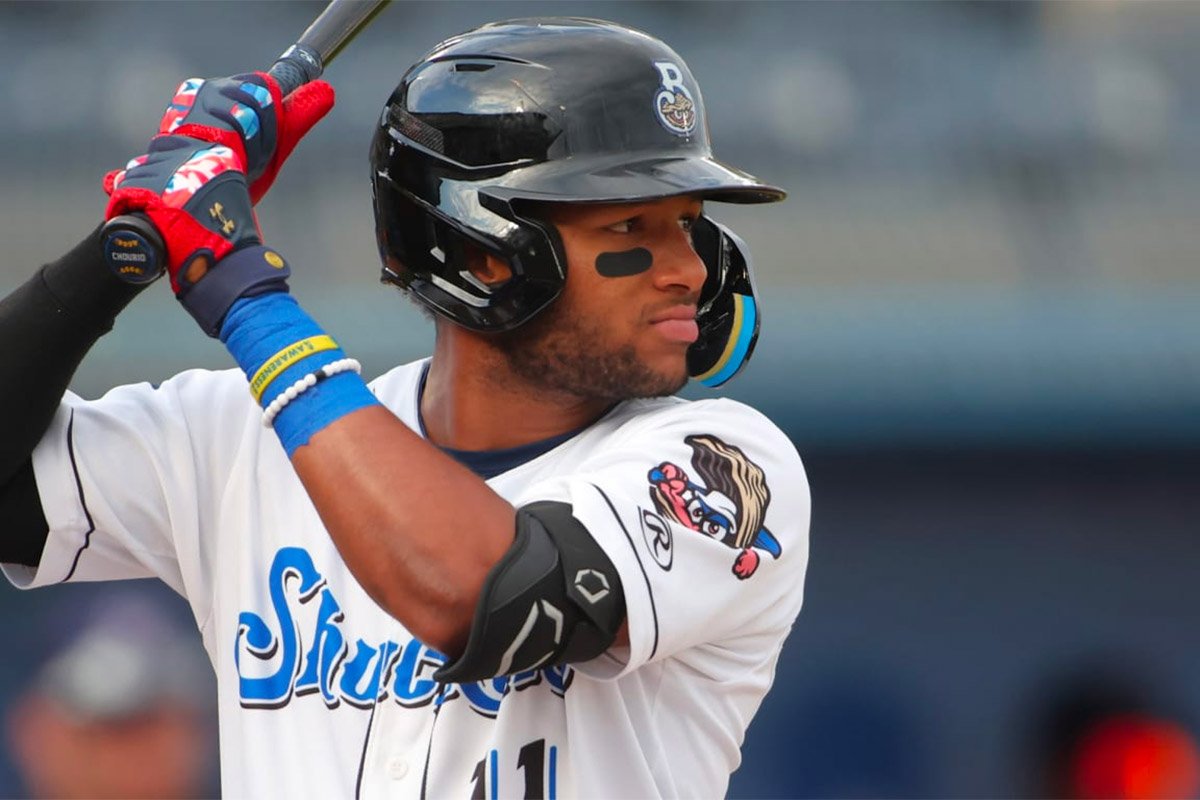 #1 OF Jackson Chourio (Biloxi Shuckers, Nashville Sounds) Perhaps the most well-known prospect the Brewers have had in their system since The mid-2000s, Chourio received the Brewers' largest bonus in the 2020-21 International class, signing for $1.8 million. Beginning his career in the DSL in 2021, nobody in baseball had Chourio's helium in 2022. He began the season in Extended Spring Training, and after dominating Low-A and doing well at High-A, he eventually finished it with a week in Double-A. He spent most of 2023 in Double-A before receiving a cup of coffee in Triple-A to close the season. Chourio was awarded the Brewers Co-Player of the Year along with Tyler Black. What to Like: Chourio doesn’t get cheated on his swings at the plate but still looks to be in total control of his bat. He does a great job of being direct to the ball with his swing with a very flat vertical bat approach, but he is still getting the loft needed to elevate the ball and allowing him to get to his plus raw power in games. Twenty-two home runs as a teenager in the upper levels is an impressive feat. His elite bat speed, above-average or better bat-to-ball skills, and raw power form a rare combination for any prospect, let alone one who played the entire season in the upper minors at 19 years old. On the defensive side, he covers a lot of ground in center field and saw quite a bit of improvement in the quality of his reads and jumps in 2023. Having signed as an infielder only a couple of years ago, he was understandably a little raw out there in 2022, but there was a lot of improvement in 2023. He is firmly an above-average defender, and there is still room to grow, with the potential to be a plus. His plus speed helps him in center field, and it also showed quite a bit on the bases this year, going 44/53 on stolen base attempts. In the Future’s Game, Chourio ran over 30 ft/second, considered elite if he can maintain it regularly. He posted home-to-first times around four seconds flat as well, which is elite for anyone, especially a right-handed hitter with an aggressive swing. He’s a plus/plus athlete overall. Chourio’s season was a tale of two halves in 2023. A variety of things likely caused this. He was the youngest hitter in the league most of the year; he also had some bad luck on batted balls. Most likely, the biggest reason was due to the Southern League baseball that was being tested. In the first half, they used a “pre-tacked” baseball that caused issues for hitters and pitchers alike. For hitters, the ball was spinning and moving more than a regular baseball, and it showed in Chourio’s numbers. Chourio posted a .737 OPS in the first half, good for a 91 wRC+, and also struck out at a 22.6% rate. His second-half numbers were much more in line with what is expected out of a consensus top 5 prospect in baseball, putting up a .884 OPS (132 wRC+) with a 12.9% strikeout rate. For a player who had never really struggled in his pro career before this season, it was important to see how he would handle that, especially as more and more people were paying attention to him. His second half showed that he wouldn’t let it deter him. His ability to battle through struggles and adversity this season is a positive sign for Chourio’s future. What to Work On: While Chourio does a great job of getting the bat to the ball, he has some issues with swing decisions. He can get swing-happy at times, and his plate discipline was well below average in 2023, though his plate discipline did improve a bit when the Southern League went away from the pre-tacked baseball. His chase rate of 32% with the tacked ball went down to 27% for the remainder of the season. Carrying a strikeout rate of under 18% with a high chase rate illustrates his bat-to-ball ability. On the bases, his base stealing is largely done with his plus speed and not as much with his jumps. Like many other young players, getting more reps against elite pitcher/catcher combinations will only help him improve the jumps he gets. Defensively, Chourio has made big strides, as noted earlier, though he could still use some refinement in terms of the routes he takes. That’s the difference right now between him being above average and being plus out there. His arm is probably his worst tool at the moment, though it’s still around average in terms of strength, and he throws the ball pretty accurately. What’s next: Chourio has played games at Triple-A, which means he is on the verge of impacting the Major League ball club. MLB’s new CBA may be the biggest reason he will have a chance to make the team out of spring training. If a top 100 prospect is on the roster on Opening Day and wins the Rookie of the Year, the team he plays for receives a first-round pick in the next draft. Chourio has the talent that could win the award, and the stipulation that he must be on the Opening Day roster to be eligible will give the Brewers a lot to consider. Barring a poor spring, it seems likely that they will take that chance and give him an everyday role in 2024 from day one. What are your thoughts on Chourio? What are you hoping to see from him in 2024? Let us know in the comments!
 -
First thing that pops out to me is you might want to do the same thing you did with Miley's option for Canha's, by putting his $2 Mil buyout in the dead money and taking it off of his 11.5 mil. I'd probably include Tyrone Taylor in the initial list as well.
-
I think the DH could make it possible for both to play pretty regularly and stay fresh while doing it. But yeah, I don't think they'd ever want him to be a straight backup. That doesn't help him, or the team very much.
-
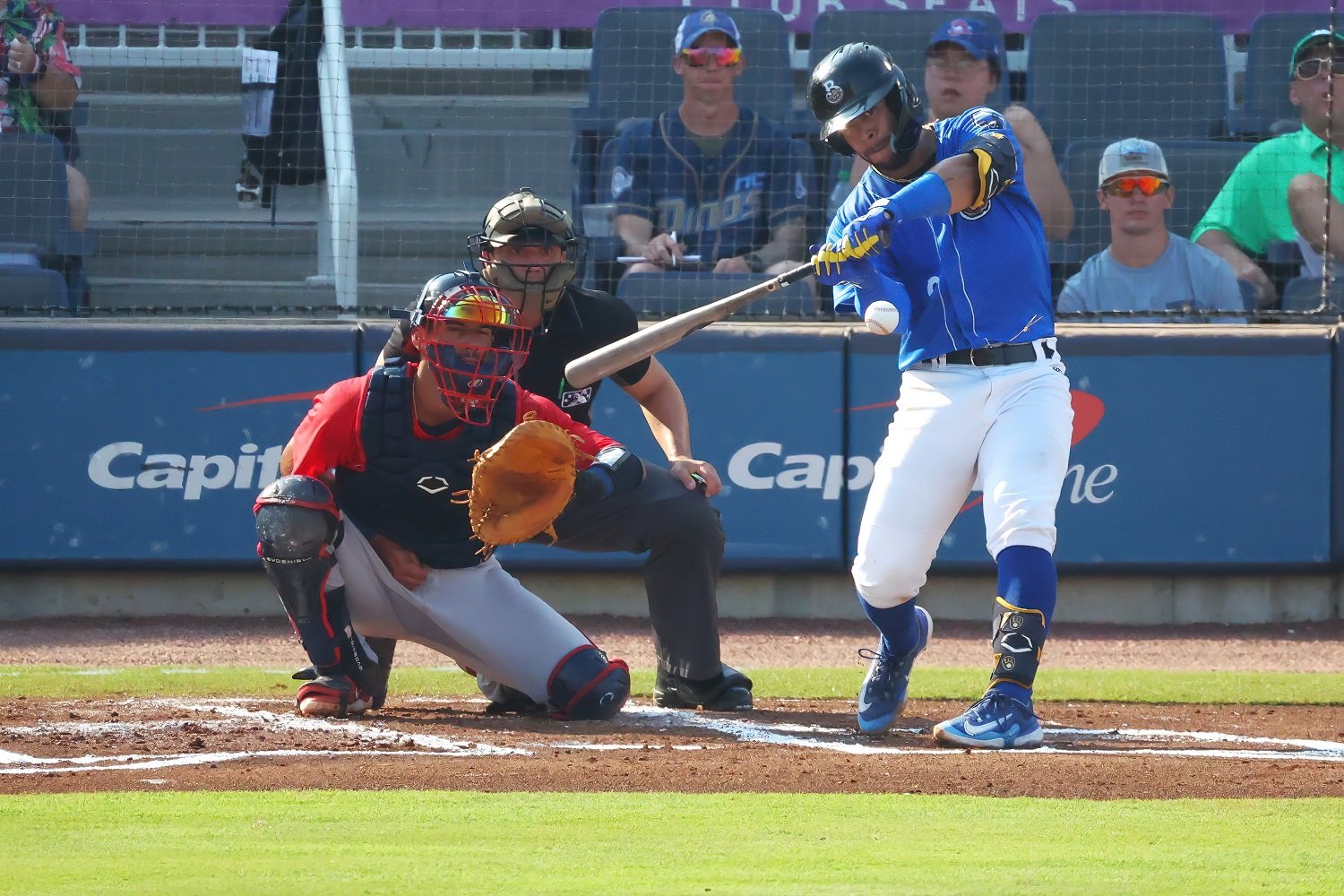 #2 C Jeferson Quero (Biloxi Shuckers) The Brewers signed Quero out of Venezuela in the 2019 international class. He was given the 6th highest bonus in the Brewers class at $200,000. While the Brewers did not hit like they would have liked on their biggest bonus players, like Luis Medina and Hedbert Perez, Quero has been a revelation since signing. From the moment he was signed, Quero has been heralded for his makeup and his ability to handle a pitching staff, both within the organization and externally. What to Like: As mentioned above, Quero has been lauded for his moxie behind the plate and having only turned 21 in early October, is considered to be extremely mature for his age. He has the respect of his pitchers and coaches as a game caller and a vocal and energetic competitor. He’s more than just a smart defensive catcher though, he’s an extremely talented one as well. His arm grades out as plus, posting pop times as low as 1.86 and averaging around 1.9, which would have placed him in the top 10 in MLB last year. He also does a good job as a receiver, stealing his pitchers strikes and fighting for every close pitch. Defense is definitely his biggest calling card and it gives him a pretty high floor as an MLB level backup. The reason his prospect status has grown so much over the last year and a half is the improvements he has made on the other side of the ball. At the plate, Quero has consistently had above average bat to ball skills and has always shown some pop in his bat, to all fields. That continued in 2023 as the pop turned into more in-game power than he had shown in the past, hitting 16 home runs. Those 16 home runs surpassed his previous career high of 10 in 2022, in fewer plate appearances. His batted ball profile is one that points to continued improvement in the power department as well. He hits the ball in the air quite a bit, and he hits the ball with authority, posting exit velocities of up to 110 MPH this year. Quero has the potential to hit for a relatively high average and also to hit for power at a premium defensive position. What to Work On: While Quero has very good bat to ball skills, he would do well to exercise a bit more patience at the dish. His walk numbers aren’t bad, but they are a bit misleading in terms of his plate discipline. He’s a very aggressive hitter, and he swings out of the zone at an above average rate. We aren’t talking about a Javier Baez level of chase, so it’s not something that should ever hamper him completely, but improving his swing decisions would go a very long way toward helping him reach his full potential offensively. Speed is the least important tool for a catcher, so it’s not a big deal, but Quero is below average in that regard. He appears to be a heady base runner though and was able to go five for five on stolen bases in 2023. Despite that, his legs are more likely to be a negative than a positive at the MLB level. On the defensive side, Quero is just very well rounded. He did at times struggle with receiving lower fastballs, but even that improved as the season progressed. He had a few more passed balls than you would hope for, something that is not uncommon amongst younger catchers, for a multitude of reasons. Losing concentration from time to time, or simply being too focused on attempting to frame a pitch rather than making sure the ball is actually caught, are often the culprits. At times Quero can also have a bit too much faith in his arm, which caused a few different errors when he didn't have a chance of getting an out. The good news is that the majority of these “concerns” appear to simply be youthful mistakes and simply trying to do too much. What’s next: Quero is Rule 5 eligible in the 2023 offseason, which means he will certainly be added to the Brewers 40 man roster over the next few weeks. Depending on how the rest of the offseason goes, Quero could potentially enter spring training with a chance at the backup catcher position in 2024. The more likely scenario though is that he will begin next season in Triple-A Nashville and get the chance to play every day. Even if it does lean that direction, he will be on the doorstep to the majors in 2024, where he could have a chance to make an immediate impact. What are your thoughts on Jeferson Quero? What are you hoping to see from him in 2024? Let us know in the comments!
 -
Welcome back to Brewer Fanatic's 2023 top 20 prospect rundown! In this edition, we will be taking a deep dive look at Jeferson Quero. Quero slots in as the number two prospect in the system, as voted on and compiled by the Brewer Fanatic community. Image courtesy of Mike Krebs, Biloxi Shuckers #2 C Jeferson Quero (Biloxi Shuckers) The Brewers signed Quero out of Venezuela in the 2019 international class. He was given the 6th highest bonus in the Brewers class at $200,000. While the Brewers did not hit like they would have liked on their biggest bonus players, like Luis Medina and Hedbert Perez, Quero has been a revelation since signing. From the moment he was signed, Quero has been heralded for his makeup and his ability to handle a pitching staff, both within the organization and externally. What to Like: As mentioned above, Quero has been lauded for his moxie behind the plate and having only turned 21 in early October, is considered to be extremely mature for his age. He has the respect of his pitchers and coaches as a game caller and a vocal and energetic competitor. He’s more than just a smart defensive catcher though, he’s an extremely talented one as well. His arm grades out as plus, posting pop times as low as 1.86 and averaging around 1.9, which would have placed him in the top 10 in MLB last year. He also does a good job as a receiver, stealing his pitchers strikes and fighting for every close pitch. Defense is definitely his biggest calling card and it gives him a pretty high floor as an MLB level backup. The reason his prospect status has grown so much over the last year and a half is the improvements he has made on the other side of the ball. At the plate, Quero has consistently had above average bat to ball skills and has always shown some pop in his bat, to all fields. That continued in 2023 as the pop turned into more in-game power than he had shown in the past, hitting 16 home runs. Those 16 home runs surpassed his previous career high of 10 in 2022, in fewer plate appearances. His batted ball profile is one that points to continued improvement in the power department as well. He hits the ball in the air quite a bit, and he hits the ball with authority, posting exit velocities of up to 110 MPH this year. Quero has the potential to hit for a relatively high average and also to hit for power at a premium defensive position. What to Work On: While Quero has very good bat to ball skills, he would do well to exercise a bit more patience at the dish. His walk numbers aren’t bad, but they are a bit misleading in terms of his plate discipline. He’s a very aggressive hitter, and he swings out of the zone at an above average rate. We aren’t talking about a Javier Baez level of chase, so it’s not something that should ever hamper him completely, but improving his swing decisions would go a very long way toward helping him reach his full potential offensively. Speed is the least important tool for a catcher, so it’s not a big deal, but Quero is below average in that regard. He appears to be a heady base runner though and was able to go five for five on stolen bases in 2023. Despite that, his legs are more likely to be a negative than a positive at the MLB level. On the defensive side, Quero is just very well rounded. He did at times struggle with receiving lower fastballs, but even that improved as the season progressed. He had a few more passed balls than you would hope for, something that is not uncommon amongst younger catchers, for a multitude of reasons. Losing concentration from time to time, or simply being too focused on attempting to frame a pitch rather than making sure the ball is actually caught, are often the culprits. At times Quero can also have a bit too much faith in his arm, which caused a few different errors when he didn't have a chance of getting an out. The good news is that the majority of these “concerns” appear to simply be youthful mistakes and simply trying to do too much. What’s next: Quero is Rule 5 eligible in the 2023 offseason, which means he will certainly be added to the Brewers 40 man roster over the next few weeks. Depending on how the rest of the offseason goes, Quero could potentially enter spring training with a chance at the backup catcher position in 2024. The more likely scenario though is that he will begin next season in Triple-A Nashville and get the chance to play every day. Even if it does lean that direction, he will be on the doorstep to the majors in 2024, where he could have a chance to make an immediate impact. What are your thoughts on Jeferson Quero? What are you hoping to see from him in 2024? Let us know in the comments! View full article
-
Agree with everything here. I think there's a very good chance he's in the MLB bullpen by August or so.
-
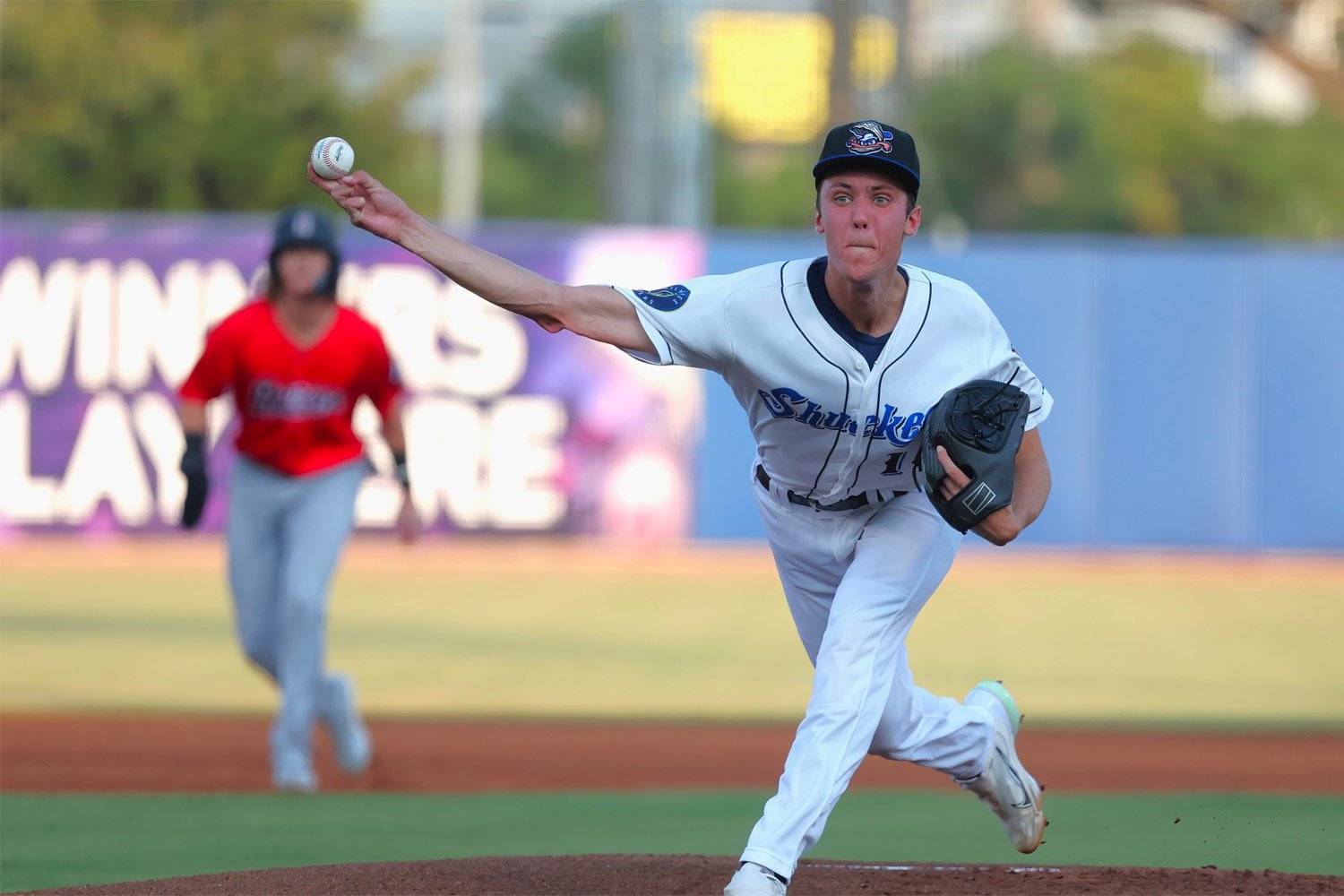 #3 RHP Jacob Misiorowski (Carolina Mudcats, Wisconsin Timber Rattlers, Biloxi Shuckers) In terms of pure ceiling, the Brewers' second-round selection in the 2022 draft has one of the highest in baseball. A junior college standout from Crowder College in Missouri, Misiorowski is a freak athlete on the mound, with long levers and a blazing fastball. His first full season of pro ball showed all the exciting traits Misiorowski brings and showcased the areas he will need to improve. Since selecting Misiorowski, the Brewers have been extremely cautious in managing his workload. He only appeared in two games in 2022 and was built up very slowly in 2023 as well. What to Like: Misiorowski has, arguably, the most electric fastball in the minor leagues. Sitting in the 96-99 range most of the time, he has proven capable of running it up all the way to 102 in shorter stints. Not only does his fastball have 80-grade velocity, but it also has excellent movement characteristics, generating a lot of carry and life. He also gets an insane 7.5 feet of extension, which would have finished 100th percentile in MLB this past season and would have finished third behind only Alexis Diaz and Jackson Wolf. The consensus is that somebody with around 6.5 feet of extension will have essentially the same perceived velocity as their actual velocity. Each foot of extension beyond that adds about two MPH from the hitter's point of view. That means that a 98 MPH fastball from Misiorowski looks like 100, and when he runs it up to 102, it looks like 104. Factoring in his long limbs and that he hides the ball pretty well, it gets on hitters even faster than that at times. His fastball is his best pitch, but his secondaries aren’t lagging too far behind. His slider has been seen as his best secondary offering, and it is a very good pitch, sitting in the low 90s and misses a lot of bats. His mid-80s curveball made a massive leap in 2023. It has a quick drop, with an above-average sweep, and hitters take it for many strikes because of how tough it is to pick up. It probably surpassed the slider as the best secondary. Both of them are plus pitches. In terms of performance, Misiorowski began the year in Low-A Carolina and ended it in Double-A Biloxi despite getting his season started about a month later than everyone else. He led the Brewers organization in strikeouts per nine innings and was second only to Logan Henderson in K% (minimum of five starts). He posted a respectable 3.41 ERA, which his 3.40 FIP backed up. Misiorowski was missing barrels all season long, only allowing two home runs. Both of which came during his first three starts at the Double-A level. Overall, he performed very well in his first real taste of pro ball. What to Work On: It’s not a secret that Misiorowski has command concerns. It was the main knock on him during the draft and has followed him early in his career. Over five walks per nine innings is not something he will be able to get away with at the upper levels, especially if he wants to continue down the path of being a starting pitcher. Along those lines, there is some concern over whether Misiorowski will be forced into a relief role at some point. His delivery involves a ton of effort and has many moving parts. From the time he was drafted to the end of the 2023 season, there has already been quite a bit of improvement in terms of repeating his mechanics and staying within himself more often, so he will look to continue to build upon that. While his fastball, slider, and curveball combination have done most of the work for Misiorowski, he also throws a changeup. The changeup is a distant fourth offering at the moment. He has minimal command over it and is almost entirely unable to throw it for strikes. The pitch shows signs of having good, late depth on it, but if he can’t learn to command it better, he will likely need to scrap it. Left-handed hitters have struggled against him so far, but the home runs he gave up were to lefties. The upper levels may start to unearth some platoon issues, and one way Misiorowski could try to combat that is by adding a second fastball, such as a sinker. What’s next: Misiorowski moved very quickly in 2023. He will almost certainly begin 2024 back in Biloxi, where he will attempt to build upon his final three starts, especially his final start of the 2023 season, when he went six innings of shutout ball while striking out 12 and only allowing one hit. His stuff is good enough to pitch in MLB right now. He could make his MLB debut during the 2024 season if he shows improvement in his command. Perhaps out of the bullpen early on. What are your thoughts on Misiorowski? What are you hoping to see from him in 2024? Let us know in the comments!
 -
Welcome back to Brewer Fanatic's 2023 top 20 prospect rundown! In this edition, we will take a deep dive look at Jacob Misiorowski. Misiorowski slots in as the number three prospect in the system, as voted on and compiled by the Brewer Fanatic community. Image courtesy of Biloxi Shuckers #3 RHP Jacob Misiorowski (Carolina Mudcats, Wisconsin Timber Rattlers, Biloxi Shuckers) In terms of pure ceiling, the Brewers' second-round selection in the 2022 draft has one of the highest in baseball. A junior college standout from Crowder College in Missouri, Misiorowski is a freak athlete on the mound, with long levers and a blazing fastball. His first full season of pro ball showed all the exciting traits Misiorowski brings and showcased the areas he will need to improve. Since selecting Misiorowski, the Brewers have been extremely cautious in managing his workload. He only appeared in two games in 2022 and was built up very slowly in 2023 as well. What to Like: Misiorowski has, arguably, the most electric fastball in the minor leagues. Sitting in the 96-99 range most of the time, he has proven capable of running it up all the way to 102 in shorter stints. Not only does his fastball have 80-grade velocity, but it also has excellent movement characteristics, generating a lot of carry and life. He also gets an insane 7.5 feet of extension, which would have finished 100th percentile in MLB this past season and would have finished third behind only Alexis Diaz and Jackson Wolf. The consensus is that somebody with around 6.5 feet of extension will have essentially the same perceived velocity as their actual velocity. Each foot of extension beyond that adds about two MPH from the hitter's point of view. That means that a 98 MPH fastball from Misiorowski looks like 100, and when he runs it up to 102, it looks like 104. Factoring in his long limbs and that he hides the ball pretty well, it gets on hitters even faster than that at times. His fastball is his best pitch, but his secondaries aren’t lagging too far behind. His slider has been seen as his best secondary offering, and it is a very good pitch, sitting in the low 90s and misses a lot of bats. His mid-80s curveball made a massive leap in 2023. It has a quick drop, with an above-average sweep, and hitters take it for many strikes because of how tough it is to pick up. It probably surpassed the slider as the best secondary. Both of them are plus pitches. In terms of performance, Misiorowski began the year in Low-A Carolina and ended it in Double-A Biloxi despite getting his season started about a month later than everyone else. He led the Brewers organization in strikeouts per nine innings and was second only to Logan Henderson in K% (minimum of five starts). He posted a respectable 3.41 ERA, which his 3.40 FIP backed up. Misiorowski was missing barrels all season long, only allowing two home runs. Both of which came during his first three starts at the Double-A level. Overall, he performed very well in his first real taste of pro ball. What to Work On: It’s not a secret that Misiorowski has command concerns. It was the main knock on him during the draft and has followed him early in his career. Over five walks per nine innings is not something he will be able to get away with at the upper levels, especially if he wants to continue down the path of being a starting pitcher. Along those lines, there is some concern over whether Misiorowski will be forced into a relief role at some point. His delivery involves a ton of effort and has many moving parts. From the time he was drafted to the end of the 2023 season, there has already been quite a bit of improvement in terms of repeating his mechanics and staying within himself more often, so he will look to continue to build upon that. While his fastball, slider, and curveball combination have done most of the work for Misiorowski, he also throws a changeup. The changeup is a distant fourth offering at the moment. He has minimal command over it and is almost entirely unable to throw it for strikes. The pitch shows signs of having good, late depth on it, but if he can’t learn to command it better, he will likely need to scrap it. Left-handed hitters have struggled against him so far, but the home runs he gave up were to lefties. The upper levels may start to unearth some platoon issues, and one way Misiorowski could try to combat that is by adding a second fastball, such as a sinker. What’s next: Misiorowski moved very quickly in 2023. He will almost certainly begin 2024 back in Biloxi, where he will attempt to build upon his final three starts, especially his final start of the 2023 season, when he went six innings of shutout ball while striking out 12 and only allowing one hit. His stuff is good enough to pitch in MLB right now. He could make his MLB debut during the 2024 season if he shows improvement in his command. Perhaps out of the bullpen early on. What are your thoughts on Misiorowski? What are you hoping to see from him in 2024? Let us know in the comments! View full article
-
Welcome back to Brewer Fanatic's 2023 top 20 prospect rundown! In this edition, we will take a deep dive into Tyler Black. Black slots in as the number four prospect in the system, as voted on and compiled by the Brewer Fanatic community. Image courtesy of Mike Krebs, Biloxi Shuckers #4 IF Tyler Black (Biloxi Shuckers, Nashville Sounds) The Brewers took Black with their Competitive Balance Round A pick in 2021. Coming out of Wright State, Black was a small school, model-based type of pick. After battling some tough injury luck in his first full season in 2022, Black stayed on the field in 2023 and broke out in a major way at the plate and on the bases. What to Like: Black’s profile is going to be carried by his bat. At Wright State, he showed some in-game power, hitting 13 home runs in his final season. However, his batted ball profile didn’t point to a ton of power in his future. He had a max exit velocity of 102.2 while in college. Jacob Wilson and Black are the only two first-round picks in the last three seasons with a 90th percentile exit velocity under 100 MPH. In his first 400 plate appearances of his career, that batted ball data appeared to be a more accurate sign of his power than the 13 home runs, as he only hit five home runs in that period. In 2023, that changed, and it changed pretty dramatically as Black hit 18 home runs. It doesn’t appear to have been a fluke either, as his batted ball data has improved significantly since he entered pro ball. From 2022 to 2023, his 90th percentile exit velocity improved by four MPH, and his max exit velocity in Triple-A was up to 109.6 MPH. He cut his ground ball rate by over 11% to prove that his power jump is sustainable. The two main ingredients for sudden power upgrades are to hit the ball hard more often and to hit it in the air more often. Black did both in 2023. Even if the power isn’t there for Black, he does a fantastic job controlling the zone and has the ability to spray the ball to all fields. His walk-to-strikeout ratio of 0.88 was sixth highest amongst the qualified hitters in the Brewers organization and second highest if you remove the short-season qualifiers. He has the tools to be a very good, all-around hitter at the major league level. On the bases, Black stole 55 bases in 2023, the most in the Brewers system. Unlike most minor leaguers who stole bases at a clip similar to him, Black stole that many bases largely due to his instincts and his feel. Those paired well with above-average speed, but a step below being plus speed to make him a threat all season long. What to Work On: Defense is the question mark for Black. If he were an above-average defender, he would have a case for being a top-25 prospect in baseball. Coming into 2023, there were questions on whether he could handle the infield at all. He spent time in center field in 2022, and the outfield looked like a legitimate possibility for him. However, considering the amount of outfield depth the Brewers have, the organization knew that keeping him on the infield would be the best outcome for him and the team if he could handle it. To Black’s credit, there was a definite improvement from him on the infield dirt this year. His actions improved from 2022 to 2023, looking more comfortable with his footwork and showing more range than in the past. While his arm isn’t the strongest, it does appear that, at least glove-wise, third base would be a better fit for him than second base. Another possibility for Black moving forward would be seeing time at first base. He saw his first in-game action there this season, and it looks like a spot he could handle. It would lessen the importance of his arm, and he should be able to handle it with his athleticism. What’s next: A Ben Zobrist role is not out of the question for Black when he first reaches MLB. He’d be playing an everyday role but doing it by constantly moving around to give other players the day off. Black made a case to be called up at the end of 2023, and given he plays three positions that are pretty big question marks for the organization as they head into the offseason, Black will likely have a good chance of making the team out of camp. The fact that he is now making Top 100 lists around the league won’t hurt him either, as he will most likely be one of the players eligible for the possible draft pick that comes with Rookie of the Year voting. What are your thoughts on Tyler Black? Should he be on the Opening Day roster in 2024? Let us know in the comments! View full article
-
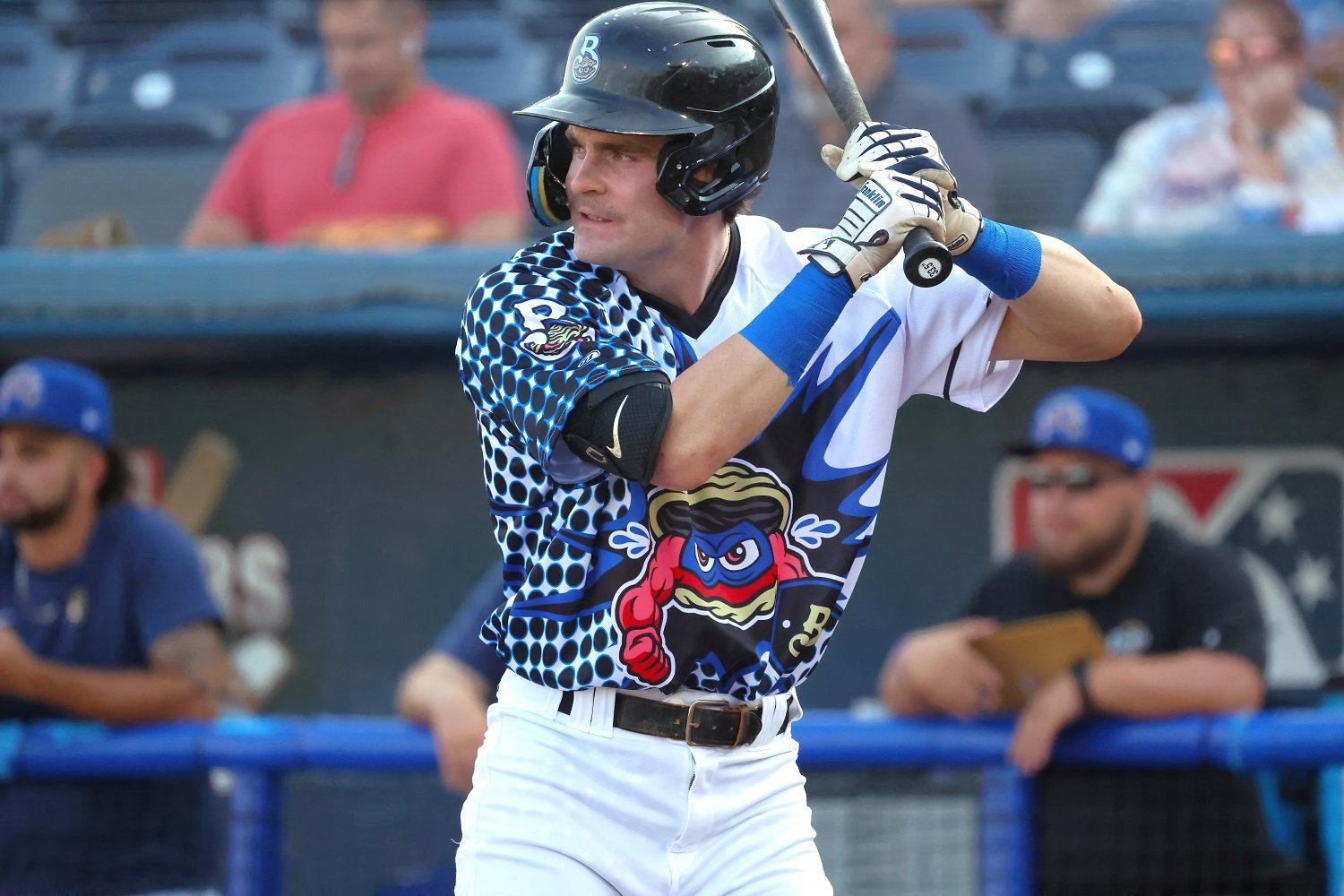 #4 IF Tyler Black (Biloxi Shuckers, Nashville Sounds) The Brewers took Black with their Competitive Balance Round A pick in 2021. Coming out of Wright State, Black was a small school, model-based type of pick. After battling some tough injury luck in his first full season in 2022, Black stayed on the field in 2023 and broke out in a major way at the plate and on the bases. What to Like: Black’s profile is going to be carried by his bat. At Wright State, he showed some in-game power, hitting 13 home runs in his final season. However, his batted ball profile didn’t point to a ton of power in his future. He had a max exit velocity of 102.2 while in college. Jacob Wilson and Black are the only two first-round picks in the last three seasons with a 90th percentile exit velocity under 100 MPH. In his first 400 plate appearances of his career, that batted ball data appeared to be a more accurate sign of his power than the 13 home runs, as he only hit five home runs in that period. In 2023, that changed, and it changed pretty dramatically as Black hit 18 home runs. It doesn’t appear to have been a fluke either, as his batted ball data has improved significantly since he entered pro ball. From 2022 to 2023, his 90th percentile exit velocity improved by four MPH, and his max exit velocity in Triple-A was up to 109.6 MPH. He cut his ground ball rate by over 11% to prove that his power jump is sustainable. The two main ingredients for sudden power upgrades are to hit the ball hard more often and to hit it in the air more often. Black did both in 2023. Even if the power isn’t there for Black, he does a fantastic job controlling the zone and has the ability to spray the ball to all fields. His walk-to-strikeout ratio of 0.88 was sixth highest amongst the qualified hitters in the Brewers organization and second highest if you remove the short-season qualifiers. He has the tools to be a very good, all-around hitter at the major league level. On the bases, Black stole 55 bases in 2023, the most in the Brewers system. Unlike most minor leaguers who stole bases at a clip similar to him, Black stole that many bases largely due to his instincts and his feel. Those paired well with above-average speed, but a step below being plus speed to make him a threat all season long. What to Work On: Defense is the question mark for Black. If he were an above-average defender, he would have a case for being a top-25 prospect in baseball. Coming into 2023, there were questions on whether he could handle the infield at all. He spent time in center field in 2022, and the outfield looked like a legitimate possibility for him. However, considering the amount of outfield depth the Brewers have, the organization knew that keeping him on the infield would be the best outcome for him and the team if he could handle it. To Black’s credit, there was a definite improvement from him on the infield dirt this year. His actions improved from 2022 to 2023, looking more comfortable with his footwork and showing more range than in the past. While his arm isn’t the strongest, it does appear that, at least glove-wise, third base would be a better fit for him than second base. Another possibility for Black moving forward would be seeing time at first base. He saw his first in-game action there this season, and it looks like a spot he could handle. It would lessen the importance of his arm, and he should be able to handle it with his athleticism. What’s next: A Ben Zobrist role is not out of the question for Black when he first reaches MLB. He’d be playing an everyday role but doing it by constantly moving around to give other players the day off. Black made a case to be called up at the end of 2023, and given he plays three positions that are pretty big question marks for the organization as they head into the offseason, Black will likely have a good chance of making the team out of camp. The fact that he is now making Top 100 lists around the league won’t hurt him either, as he will most likely be one of the players eligible for the possible draft pick that comes with Rookie of the Year voting. What are your thoughts on Tyler Black? Should he be on the Opening Day roster in 2024? Let us know in the comments!
 -
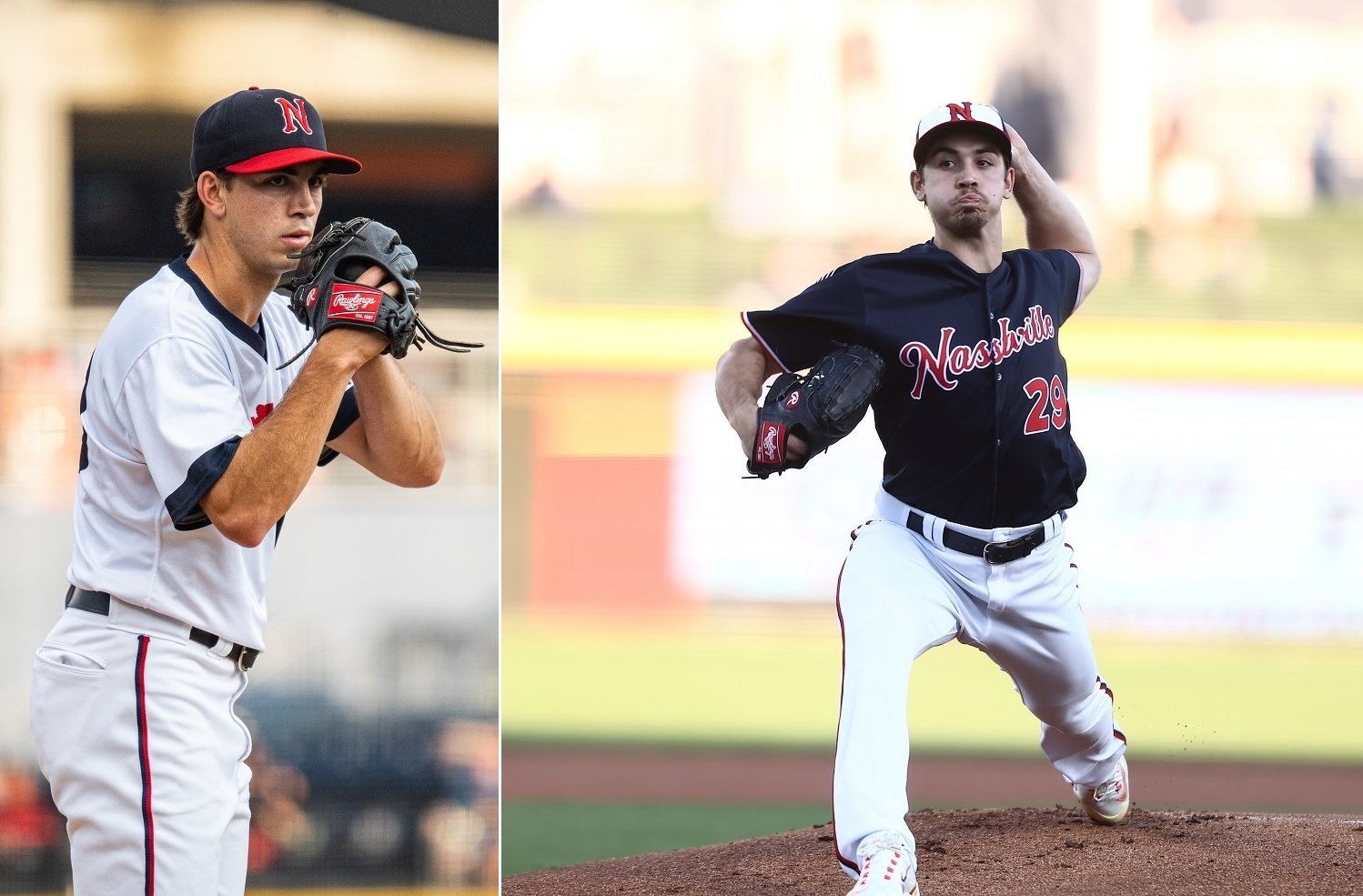 #5 LHP Robert Gasser (Nashville Sounds) A second-round draft pick by the Padres in the 2021 draft, Gasser was in the midst of his first full season when the infamous Josh Hader trade went down at the trade deadline in 2022. He finished his Padres career at the High-A level, having thrown 90.1 innings for the Fort Wayne TinCaps. The Brewers decided that was plenty of experience at that level and assigned him to Double-A Biloxi to begin his Brewers career. Four starts later, Gasser and his 2.21 ERA and 11.5 strikeouts per nine were headed to Triple-A Nashville. This is where he would finish the 2022 campaign and where he spent all of 2023. What to Like: Gasser throws five pitches total, and three of those are above-average or better pitches in his four-seam fastball, slider, and cutter. He generates a lot of ride with the fastball, and because of that, it works best at the top of the zone or above. He usually sits in the 91-93 range and can get up to 94 or 95. His slider is best described as a sweeper and is a pitch he will throw in any count or situation. The sweeper sits in the low 80s and was his biggest swing-and-miss pitch in 2023. He does a decent job of landing it for strikes when the situation calls for it, as well. Since coming to the Brewers organization, Gasser has been mixing in his upper 80s cutter more often than with the Padres. It was the pitch that he was able to show the most improvement with during the 2023 season, landing it in the zone more often than any of his other offerings and consistently keeping it off of barrels. Regarding production, Gasser’s final season line may not look special compared to what we expect from an MLB starting pitcher. When the numbers are looked at in the hitter-friendly Triple-A environment, however, Gasser stacks up extremely well. Among the 38 pitchers who threw at least 100 innings in Triple-A, Gasser finished first in total strikeouts and strikeouts per nine innings; he finished second in ERA and FIP while also having the second-highest K: BB ratio. Gasser got off to a slow start in the walk department, walking 5.5 per nine innings in April. From May forward, though, he only walked 2.88 per nine, which brought his total for the season to a more reasonable 3.33 per nine. What to Work On: As mentioned, Gasser has a total of five pitches, and while the four-seam fastball, slider, and cutter all show signs of being plus pitches, his other two pitches still need to catch up a bit. His changeup is an average offering that comes in a bit firmer than you would hope, usually sitting in the upper-80’s. While he would benefit from being able to take a bit more velocity off of it, he does get some good late action on it, and it could act as a counter to right-handed hitters. He also mixes in a sinker that is in a similar velocity range to his four-seam, though he does not use it all that often. Gasser will also mix in a lower arm angle on some of his four-seamers, which have been classified as sinkers at times. In reality, he’s dropping his arm angle, causing the pitch to generate less vertical break than his regular four-seamers. Improvement in those two would go a long way toward rounding out his repertoire. Right now, his best pitches all move toward a right-handed hitter; the sinker and changeup go the other way. That could help him improve his platoon splits. While Gasser did get the previously mentioned walk number down to a more reasonable number over the course of the season, he will likely be aiming to drop it even further and be under three per nine moving forward. One other thing that will need to be monitored is Gasser’s line drive rate. His 28.6% line drive rate was the highest among Triple-A pitchers with at least 100 innings pitched, and as Freddy Peralta has demonstrated at times, a four-seamer like Gasser’s can have a propensity to get barreled. Continuing to locate the fastball at the top of the zone or higher will help keep it above barrels. When it leaks down into the zone, then hitters can get a pretty good look at it. Improvement to the sinker and/or changeup could be another way to keep the ball out of the air more often. What’s next: Gasser appears to be ready for the MLB rotation, and during most times in Brewers history, he likely would have already debuted during the 2023 season. Pitching depth has been a strong suit for the organization during the Stearns and Arnold era, but they will enter this offseason with perhaps the most questions since the offseason going into 2018. That should help Gasser’s chances. The unfortunate recent news of Brandon Woodruff being out for the 2024 season probably raises his chances of making the rotation directly out of spring training even further. What are your thoughts on Robert Gasser? What are you hoping to see from him in 2024? Let us know in the comments!
 -
Welcome back to Brewer Fanatic's 2023 top 20 prospect rundown! In this edition, we will be taking a deep dive look at Robert Gasser. Gasser slots in as the number five prospect in the system, as voted on and compiled by the Brewer Fanatic community. Image courtesy of Rob Thompson, St. Paul Saints #5 LHP Robert Gasser (Nashville Sounds) A second-round draft pick by the Padres in the 2021 draft, Gasser was in the midst of his first full season when the infamous Josh Hader trade went down at the trade deadline in 2022. He finished his Padres career at the High-A level, having thrown 90.1 innings for the Fort Wayne TinCaps. The Brewers decided that was plenty of experience at that level and assigned him to Double-A Biloxi to begin his Brewers career. Four starts later, Gasser and his 2.21 ERA and 11.5 strikeouts per nine were headed to Triple-A Nashville. This is where he would finish the 2022 campaign and where he spent all of 2023. What to Like: Gasser throws five pitches total, and three of those are above-average or better pitches in his four-seam fastball, slider, and cutter. He generates a lot of ride with the fastball, and because of that, it works best at the top of the zone or above. He usually sits in the 91-93 range and can get up to 94 or 95. His slider is best described as a sweeper and is a pitch he will throw in any count or situation. The sweeper sits in the low 80s and was his biggest swing-and-miss pitch in 2023. He does a decent job of landing it for strikes when the situation calls for it, as well. Since coming to the Brewers organization, Gasser has been mixing in his upper 80s cutter more often than with the Padres. It was the pitch that he was able to show the most improvement with during the 2023 season, landing it in the zone more often than any of his other offerings and consistently keeping it off of barrels. Regarding production, Gasser’s final season line may not look special compared to what we expect from an MLB starting pitcher. When the numbers are looked at in the hitter-friendly Triple-A environment, however, Gasser stacks up extremely well. Among the 38 pitchers who threw at least 100 innings in Triple-A, Gasser finished first in total strikeouts and strikeouts per nine innings; he finished second in ERA and FIP while also having the second-highest K: BB ratio. Gasser got off to a slow start in the walk department, walking 5.5 per nine innings in April. From May forward, though, he only walked 2.88 per nine, which brought his total for the season to a more reasonable 3.33 per nine. What to Work On: As mentioned, Gasser has a total of five pitches, and while the four-seam fastball, slider, and cutter all show signs of being plus pitches, his other two pitches still need to catch up a bit. His changeup is an average offering that comes in a bit firmer than you would hope, usually sitting in the upper-80’s. While he would benefit from being able to take a bit more velocity off of it, he does get some good late action on it, and it could act as a counter to right-handed hitters. He also mixes in a sinker that is in a similar velocity range to his four-seam, though he does not use it all that often. Gasser will also mix in a lower arm angle on some of his four-seamers, which have been classified as sinkers at times. In reality, he’s dropping his arm angle, causing the pitch to generate less vertical break than his regular four-seamers. Improvement in those two would go a long way toward rounding out his repertoire. Right now, his best pitches all move toward a right-handed hitter; the sinker and changeup go the other way. That could help him improve his platoon splits. While Gasser did get the previously mentioned walk number down to a more reasonable number over the course of the season, he will likely be aiming to drop it even further and be under three per nine moving forward. One other thing that will need to be monitored is Gasser’s line drive rate. His 28.6% line drive rate was the highest among Triple-A pitchers with at least 100 innings pitched, and as Freddy Peralta has demonstrated at times, a four-seamer like Gasser’s can have a propensity to get barreled. Continuing to locate the fastball at the top of the zone or higher will help keep it above barrels. When it leaks down into the zone, then hitters can get a pretty good look at it. Improvement to the sinker and/or changeup could be another way to keep the ball out of the air more often. What’s next: Gasser appears to be ready for the MLB rotation, and during most times in Brewers history, he likely would have already debuted during the 2023 season. Pitching depth has been a strong suit for the organization during the Stearns and Arnold era, but they will enter this offseason with perhaps the most questions since the offseason going into 2018. That should help Gasser’s chances. The unfortunate recent news of Brandon Woodruff being out for the 2024 season probably raises his chances of making the rotation directly out of spring training even further. What are your thoughts on Robert Gasser? What are you hoping to see from him in 2024? Let us know in the comments! View full article
-
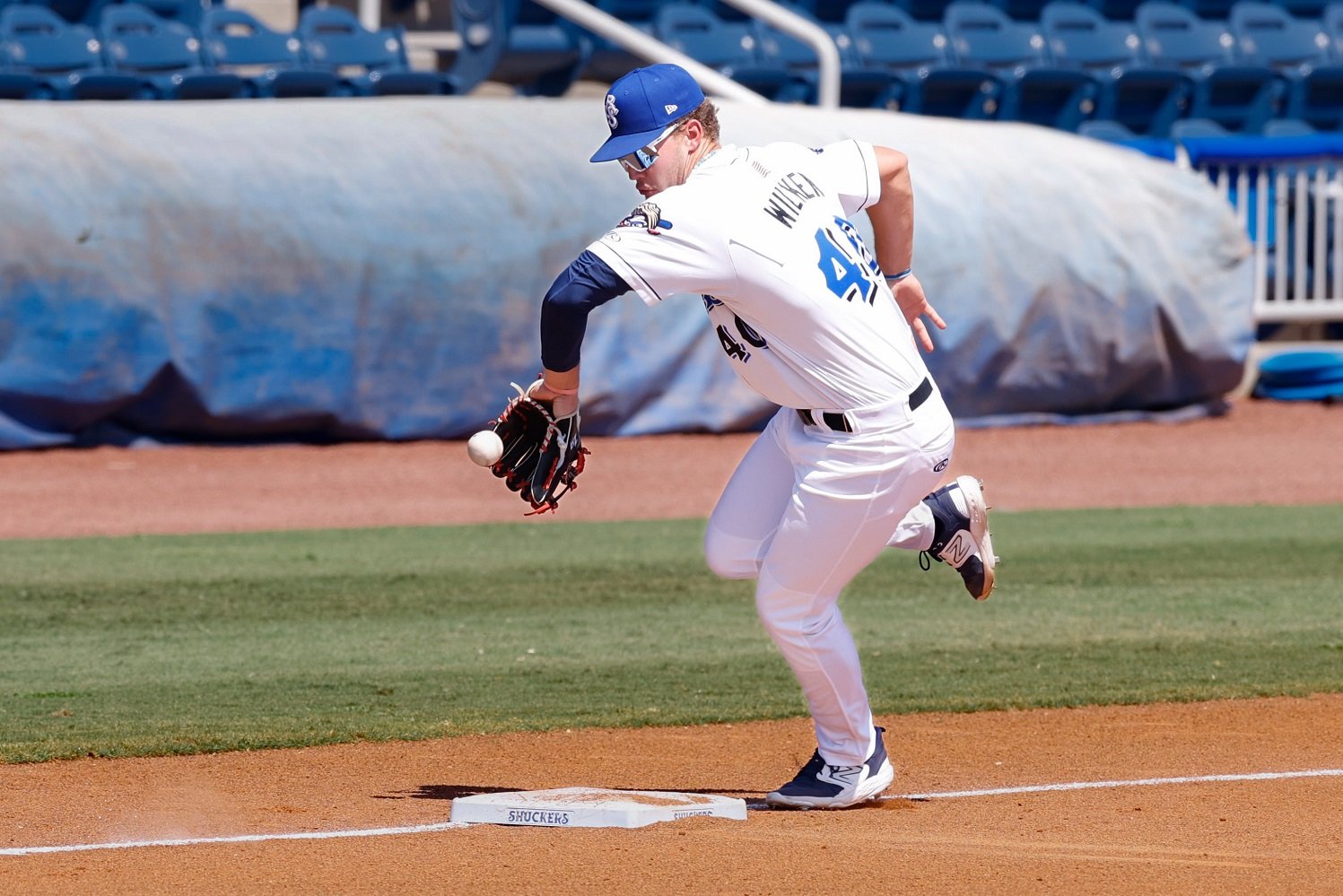 #6 3B Brock Wilken (ACL Brewers, Wisconsin Timber Rattlers, Biloxi Shuckers) Wilken, the Brewer's first-round selection in the most recent 2023 draft, had an extremely successful career at Wake Forest. The career home run leader for the Atlantic Coast Conference (ACC) with 71, Wilken set that record over the course of only three seasons as a Demon Deacon. What to Like: As one might gather, based on the home run record mentioned above, Wilken possesses a ton of raw power. At Wake Forest, he posted multiple exit velocities over 115 MPH and carried a 90th percentile exit velocity of over 108 in his final season. His 71 career home runs were topped off with 31 in his draft year, which was second in the country behind potential top-five pick in 2024, Jac Caglionne of Florida. Power carries the profile in many evaluators’ eyes, but the hit tool also looks like it could be at least average. He makes fantastic swing decisions, and while it’s only an average contact rate, he has been posting plus exit velocities and barrel rates in his first 203 professional plate appearances. On the defensive side, Wilken has a plus throwing arm and decent enough hands to handle third base. He had some issues with errors during his time in Appleton and Biloxi, but they were largely the product of fixable mistakes with his footwork. Wilken has below-average speed overall, but he shows signs of being a smart baserunner. He had a couple of good dirt ball reads in Appleton, where he could advance a base on a ball most players with his speed wouldn’t have been able to. He also took advantage of pitchers being predictable with their timing when the opportunity would arise, going four for four on stolen base attempts. What to Work On: When it comes to the offensive side of the ball, there aren’t many concerns. One that may pop up the higher he climbs is a propensity for taking hittable pitches early in counts. During his time at Wake Forest, Wilken became much more patient. Patience is good, to be sure, but at times, that patience would turn to passivity and cause himself to get buried in pitcher counts. When he does that, he puts himself in a situation where he will see the pitcher’s best secondary offerings and already has his back up against the wall. We will need to keep an eye on the strikeout numbers, as they did climb during his short stint at Double-A. It was far too small a sample to jump to any conclusions because of, but it will be something to monitor in 2024. On defense, while he has the arm and the hands for third base, there is a definite lack of range. In particular, he struggled to go to his backhand in his pro debut. He appears to get better reads on balls hit to his left. Perhaps the Brewers will have him play closer to the third baseline to counteract that. What’s next: Wilken is well developed already, being drafted out of a school with as many, if not more, resources as some MLB organizations. He will likely begin 2024 back in Biloxi, but the bat could push him to Triple-A quickly, and it would be hard to rule out an MLB debut during the 2024 season. Wilken has middle-of-the-order potential at one of the two corner infield spots. It’s something the Brewers have been struggling to find at first base since Prince Fielder and at third base since Aramis Ramirez. Wilken could be the guy to hold down one of those spots for the next 6-7 years. What are your thoughts on Brock Wilken? What are you hoping to see from him in 2024? Let us know in the comments!
 -
Welcome back to Brewer Fanatic's 2023 top 20 prospect rundown! In this edition, we will be taking a deep dive look at Brock Wilken. Wilken slots in as the number six prospect in the system, as voted on and compiled by the Brewer Fanatic community. Image courtesy of Carlos Hurtado, Biloxi Shuckers #6 3B Brock Wilken (ACL Brewers, Wisconsin Timber Rattlers, Biloxi Shuckers) Wilken, the Brewer's first-round selection in the most recent 2023 draft, had an extremely successful career at Wake Forest. The career home run leader for the Atlantic Coast Conference (ACC) with 71, Wilken set that record over the course of only three seasons as a Demon Deacon. What to Like: As one might gather, based on the home run record mentioned above, Wilken possesses a ton of raw power. At Wake Forest, he posted multiple exit velocities over 115 MPH and carried a 90th percentile exit velocity of over 108 in his final season. His 71 career home runs were topped off with 31 in his draft year, which was second in the country behind potential top-five pick in 2024, Jac Caglionne of Florida. Power carries the profile in many evaluators’ eyes, but the hit tool also looks like it could be at least average. He makes fantastic swing decisions, and while it’s only an average contact rate, he has been posting plus exit velocities and barrel rates in his first 203 professional plate appearances. On the defensive side, Wilken has a plus throwing arm and decent enough hands to handle third base. He had some issues with errors during his time in Appleton and Biloxi, but they were largely the product of fixable mistakes with his footwork. Wilken has below-average speed overall, but he shows signs of being a smart baserunner. He had a couple of good dirt ball reads in Appleton, where he could advance a base on a ball most players with his speed wouldn’t have been able to. He also took advantage of pitchers being predictable with their timing when the opportunity would arise, going four for four on stolen base attempts. What to Work On: When it comes to the offensive side of the ball, there aren’t many concerns. One that may pop up the higher he climbs is a propensity for taking hittable pitches early in counts. During his time at Wake Forest, Wilken became much more patient. Patience is good, to be sure, but at times, that patience would turn to passivity and cause himself to get buried in pitcher counts. When he does that, he puts himself in a situation where he will see the pitcher’s best secondary offerings and already has his back up against the wall. We will need to keep an eye on the strikeout numbers, as they did climb during his short stint at Double-A. It was far too small a sample to jump to any conclusions because of, but it will be something to monitor in 2024. On defense, while he has the arm and the hands for third base, there is a definite lack of range. In particular, he struggled to go to his backhand in his pro debut. He appears to get better reads on balls hit to his left. Perhaps the Brewers will have him play closer to the third baseline to counteract that. What’s next: Wilken is well developed already, being drafted out of a school with as many, if not more, resources as some MLB organizations. He will likely begin 2024 back in Biloxi, but the bat could push him to Triple-A quickly, and it would be hard to rule out an MLB debut during the 2024 season. Wilken has middle-of-the-order potential at one of the two corner infield spots. It’s something the Brewers have been struggling to find at first base since Prince Fielder and at third base since Aramis Ramirez. Wilken could be the guy to hold down one of those spots for the next 6-7 years. What are your thoughts on Brock Wilken? What are you hoping to see from him in 2024? Let us know in the comments! View full article
-
That's definitely not a bad comp. A couple extra pitches for Rodriguez and Chacin used the changeup pretty sparingly, but I can 100% see that one.
-
I would definitely agree with that. I do worry that the strikeout numbers will come down a bit at the MLB level and walks are less likely to naturally decline at higher levels than strikeouts, so I think it will take genuine improvement in that regard to keep the K/BB ratio looking as good as it did this year.
-
To be clear, I'm not including players who debuted or are in MLB! Among the actual prospects still out there, I would put him first. If I included, Mitchell, Wiemer, Perkins, etc, then he would not be first.
-
Welcome back to Brewer Fanatic's 2023 top 20 prospect rundown! In this edition, we will be taking a deep dive look at Carlos F Rodriguez. Rodriguez comes in as the number seven prospect in the system, as voted on and compiled by the Brewer Fanatic community. Image courtesy of Biloxi Shuckers #7 RHP Carlos F Rodriguez (Biloxi Shuckers, Nashville Sounds) The Brewers selected Rodriguez in the sixth round of the 2021 MLB Draft. They took him out of Florida Southwestern State Junior College, adding him to a growing list of Junior College pitchers that have succeeded, or are on their way to success, in the Brewers system. Rodriguez is a six-pitch pitcher who throws the kitchen sink at hitters and keeps them off balance, but he is more than a “junkballer.” A number of his pitches come in as above-average offerings. What to Like: Rodriguez throws three different “fastballs.” He throws a four-seam fastball, a sinker, and a cutter. The four-seamer is a riding fastball with which he can throw up in the zone and miss bats. He throws the four-seamer in the 90-93 range and can get up to 96 on occasion. His sinker moves quite a bit, and it is the pitch he gets most of his ground balls. The sinker sits in a similar velocity band to the four-seam. His cutter is a bit slower, usually in the upper 80s, around 86-88 most days. He uses it to keep the ball off the barrel. It isn’t a big swing-and-miss offering for him now, but he can get soft contact with it, especially against left-handed hitters. He also throws three different offspeed pitches along with the three fastballs. His offspeed offerings include a changeup, two different breaking balls, a slider, and a curveball. The changeup is probably his best pitch out of any of the six. Usually thrown in the 82-85 MPH range, it’s his go-to swing-and-miss pitch, and he can generate ground balls with it. It pairs well with his sinker. The slider is his second-best offspeed pitch. With a velocity usually hovering around 80 MPH, it shows flashes of being another big-time swing-and-miss pitch, but with some inconsistencies in the command of the pitch, the results he gets have a lot of variance. His curveball is mainly used to “steal a strike” by landing a slow one in the zone. When he’s throwing it as a swing-and-miss pitch, the velocity is usually around 73-75 MPH. When he wants to land it for a strike, he has dropped into the 60s at times. It isn’t a great pitch on its own, but he can use it to help all his other offerings and to give a hitter more velocity bands to think about. What to Work On: As mentioned earlier, Rodriguez’s slider is on the precipice of being a really good pitch. Continuing to build consistency with that pitch will be very important for him, as it can be his best put-away offering against right-handed hitters. Cutters and curveballs are two pitches the Brewers have done a great job developing during the Stearns/Arnold Era, and for Rodriguez, there is room to grow with both of those pitches. Sharpening up the curveball, in particular, would go a long way toward adding another swing-and-miss offering to his repertoire. With his feel to spin the ball, that type of improvement isn’t out of the question. Rodriguez’s walk numbers improved dramatically after the Southern League went away from the pre-tacked baseball and back to the MLB baseballs. However, his season total walks per nine number of four is probably too high for a player who doesn’t throw in the upper 90s with his velocity. His number of 2.9 per nine, after they changed the baseballs, would be much more in line with where he will likely need to be at the MLB level. What’s Next: Sans the pitch-timing theatrics, Rodriguez shows some traits similar to Johnny Cueto on the mound. He received some invaluable experience by pitching for Nicaragua in the World Baseball Classic this past spring and doing quite well against an MLB-laden Puerto Rico lineup. Rodriguez made one start in Triple-A to finish the 2023 season, and it seems likely he will find himself back there to start 2024. He will almost certainly be in Major League camp this spring, and it will be a great opportunity for him to get continued reps against MLB level hitters and to work with the MLB catchers. Assuming he does return to Triple-A to begin the season, Rodriguez’s fastest path to an MLB roster spot is likely by proving that the walk numbers, after the change in baseballs, are more indicative of what he truly is as a pitcher than the ones he had shown with the pre-tacked balls. What are your thoughts on Carlos F Rodriguez? What are you hoping to see from him in 2024? Let us know in the comments! View full article
-
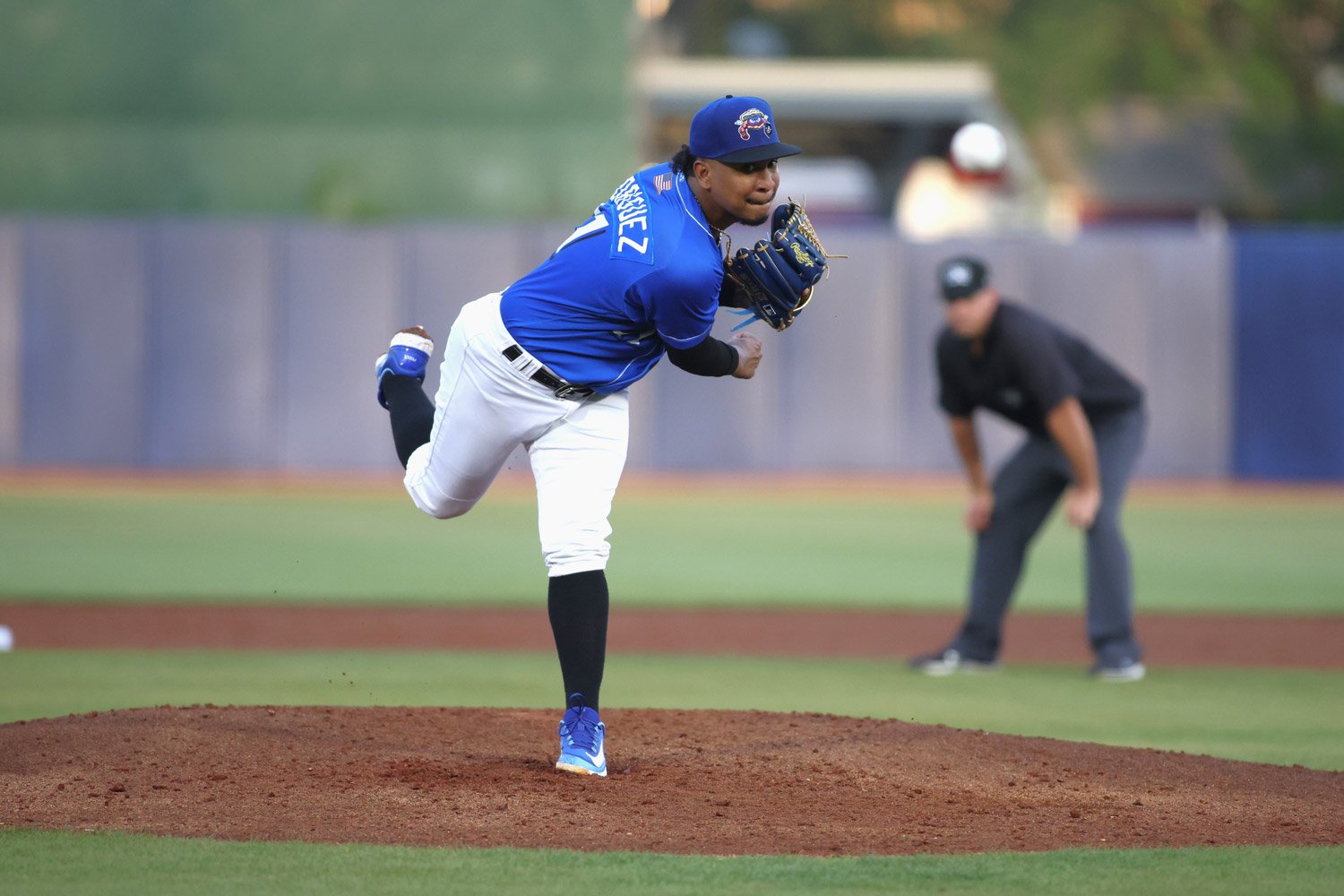 #7 RHP Carlos F Rodriguez (Biloxi Shuckers, Nashville Sounds) The Brewers selected Rodriguez in the sixth round of the 2021 MLB Draft. They took him out of Florida Southwestern State Junior College, adding him to a growing list of Junior College pitchers that have succeeded, or are on their way to success, in the Brewers system. Rodriguez is a six-pitch pitcher who throws the kitchen sink at hitters and keeps them off balance, but he is more than a “junkballer.” A number of his pitches come in as above-average offerings. What to Like: Rodriguez throws three different “fastballs.” He throws a four-seam fastball, a sinker, and a cutter. The four-seamer is a riding fastball with which he can throw up in the zone and miss bats. He throws the four-seamer in the 90-93 range and can get up to 96 on occasion. His sinker moves quite a bit, and it is the pitch he gets most of his ground balls. The sinker sits in a similar velocity band to the four-seam. His cutter is a bit slower, usually in the upper 80s, around 86-88 most days. He uses it to keep the ball off the barrel. It isn’t a big swing-and-miss offering for him now, but he can get soft contact with it, especially against left-handed hitters. He also throws three different offspeed pitches along with the three fastballs. His offspeed offerings include a changeup, two different breaking balls, a slider, and a curveball. The changeup is probably his best pitch out of any of the six. Usually thrown in the 82-85 MPH range, it’s his go-to swing-and-miss pitch, and he can generate ground balls with it. It pairs well with his sinker. The slider is his second-best offspeed pitch. With a velocity usually hovering around 80 MPH, it shows flashes of being another big-time swing-and-miss pitch, but with some inconsistencies in the command of the pitch, the results he gets have a lot of variance. His curveball is mainly used to “steal a strike” by landing a slow one in the zone. When he’s throwing it as a swing-and-miss pitch, the velocity is usually around 73-75 MPH. When he wants to land it for a strike, he has dropped into the 60s at times. It isn’t a great pitch on its own, but he can use it to help all his other offerings and to give a hitter more velocity bands to think about. What to Work On: As mentioned earlier, Rodriguez’s slider is on the precipice of being a really good pitch. Continuing to build consistency with that pitch will be very important for him, as it can be his best put-away offering against right-handed hitters. Cutters and curveballs are two pitches the Brewers have done a great job developing during the Stearns/Arnold Era, and for Rodriguez, there is room to grow with both of those pitches. Sharpening up the curveball, in particular, would go a long way toward adding another swing-and-miss offering to his repertoire. With his feel to spin the ball, that type of improvement isn’t out of the question. Rodriguez’s walk numbers improved dramatically after the Southern League went away from the pre-tacked baseball and back to the MLB baseballs. However, his season total walks per nine number of four is probably too high for a player who doesn’t throw in the upper 90s with his velocity. His number of 2.9 per nine, after they changed the baseballs, would be much more in line with where he will likely need to be at the MLB level. What’s Next: Sans the pitch-timing theatrics, Rodriguez shows some traits similar to Johnny Cueto on the mound. He received some invaluable experience by pitching for Nicaragua in the World Baseball Classic this past spring and doing quite well against an MLB-laden Puerto Rico lineup. Rodriguez made one start in Triple-A to finish the 2023 season, and it seems likely he will find himself back there to start 2024. He will almost certainly be in Major League camp this spring, and it will be a great opportunity for him to get continued reps against MLB level hitters and to work with the MLB catchers. Assuming he does return to Triple-A to begin the season, Rodriguez’s fastest path to an MLB roster spot is likely by proving that the walk numbers, after the change in baseballs, are more indicative of what he truly is as a pitcher than the ones he had shown with the pre-tacked balls. What are your thoughts on Carlos F Rodriguez? What are you hoping to see from him in 2024? Let us know in the comments!
 -
Oh this is definitely nit-picky and partially to list something to work on, for the defensive side of the ball haha. I did notice it a couple of times though, and also like I said, it's the type of ball a lot of fielders can struggle on at times. Even the best in baseball. I would personally call Lara the best defensive outfielder in the system, and that is definitely saying something, given there's a lot of defensive talent at every level.
-
I think he's a future 70 grade glove, and that he gets absolutely great reads. But the only slight concern (which has been backed up by a couple in person looks) is really the reads he gets on balls hit right in front and right over his head. I'm not sure the first video that cuts to Lara 2 seconds after it's hit is able to show that he got a good read. The last one he definitely got a good read on. But highlights will tend to be showing the good ones haha.
-
Brewer Fanatic 2023 Offseason Top 20 Prospect #8 - Luis Lara
Spencer Michaelis posted an article in Minor Leagues
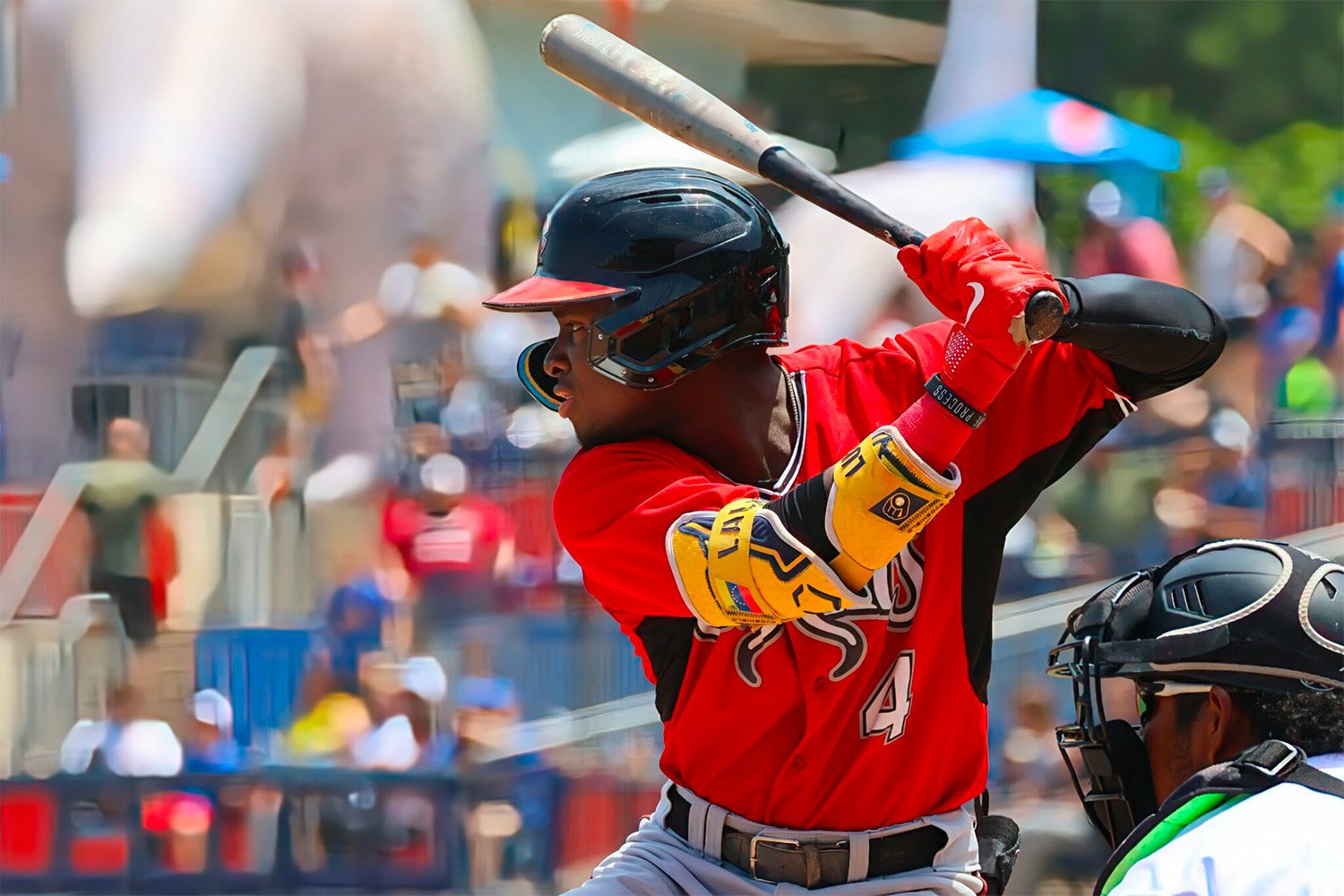 #8 OF Luis Lara (Carolina Mudcats, Wisconsin Timber Rattlers) The Brewers signed Lara in their 2022 International signing class, and he was one of the bigger signings for the Brewers in that class. He received the third-highest bonus in the class at $1.1 Million, behind only shortstops Jhonny Severino and Johan Barrios. After getting off to a scalding hot start in the DSL, Lara slowed down dramatically for a few weeks before a strong finish. While his 2022 stats didn’t look all that special, a 12% K-Rate and 9% BB-Rate were great signs for a player his age. He began 2023 in Extended Spring Training but soon proved too talented to be sent to the Arizona Complex League and was promoted to Low-A Carolina a month into the season. What to Like: Lara has the potential for a plus hit tool, potentially even elite. A switch hitter from the left side, he has a very compact swing. He appears to have very good rotational mobility, and that mobility helps him swing his bat at an elite rate of speed. That bat speed, combined with his hand-eye coordination, gives Lara tremendous bat-to-ball skills. He posted a 90% contact rate on pitches in the zone in 2023, which would have been a top 25 number among qualified MLB hitters. His swing can look Ronald Acuna-esque from the right side at times, though the results were not very good against left-handed pitchers this year. As for the defensive side of the ball, Lara combines his plus speed with good reads and routes. At his peak, he could be an elite defender in center field. His arm is borderline plus as well, and because of that, if he needs to, he could also handle right field with no issue. The aforementioned speed also comes in handy on the offensive side of the ball. It especially shows when he puts a ball in the gap or goes first to third on a hit. He did have a pretty successful season stealing bases, with 30 overall. However, while certainly not bad, a 75% success rate for a guy with plus speed isn’t exactly what you’re looking for. What to Work On: Power is the biggest question mark for Lara moving forward. Despite his diminutive stature, Lara has shown flashes of raw power in a batting practice setting and even some in-game power from both sides of the plate. However, both of his home runs in 2023 were from the right side, and he possesses more of his in-game power from that side. His swing from the right side is much more aggressive and has more moving parts than the left. It allows him to get to his power more, but as mentioned earlier, his results from that side could have been better in 2023. His OPS of .593 from the right side was nearly .200 points lower than the .770 OPS he posted from the left. The one thing Lara will be looking to improve upon defensively is on batted balls that are hit straight at Lara. He sometimes struggles to get good reads on a ball hit directly over his head or in front of him. Many consider that particular part of playing the outfield the most difficult part of the position, so this isn't abnormal, but he will need to get better at it if he wants to stick in center field full-time. Lara's other “weakness” is the lack of baserunning instincts, which results in being caught stealing 25% of the time. As a younger player, pitchers often struggle with the concept of holding runners, allowing a baserunner to build some bad or lazy habits. Catchers also don’t possess the same type of arms they see in full-season ball. There’s a very real chance that Lara will improve greatly in that regard simply by getting more and more reps on the bases against professional pitchers and catchers. What’s next: Lara was 18 years old for the entirety of the 2023 season, and after his birthday in November, he will spend all of 2024’s season at 19. The Brewers have generally been extremely aggressive with their prospects the last couple of years, and Lara was no exception. Being pushed to High-A at 18 shows how much they believe in him. However, a Double-A assignment would seem over the top to start 2024. It seems likely that Lara will begin back in Appleton, WI, next spring. Barring a power breakout, he probably won’t ever be a top 10-20 prospect in baseball. However, Lara could find himself in the Sal Frelick territory of the top 50 if he continues to perform as one of the youngest players at each level. What are your thoughts on Luis Lara? What are you hoping to see from him in 2024? Let us know in the comments!


