



Jake McKibbin
-
Posts
2,395 -
Joined
-
Last visited
-
Days Won
6
Content Type
Profiles
Forums
Blogs
Events
News
2026 Milwaukee Brewers Top Prospects Ranking
Milwaukee Brewers Videos
2022 Milwaukee Brewers Draft Picks
Milwaukee Brewers Free Agent & Trade Rumors, Notes, & Tidbits
Guides & Resources
2023 Milwaukee Brewers Draft Picks
2024 Milwaukee Brewers Draft Picks
The Milwaukee Brewers Players Project
2025 Milwaukee Brewers Draft Pick Tracker
2026 Milwaukee Brewers Draft Tracker: Picks & Bonuses
Store
Downloads
Gallery
Everything posted by Jake McKibbin
-
As the Brewers continue to seek more consistent production from their lineup, it's hard not to view the guys who were most responsible for their success in 2021 and 2022 as the biggest culprits in their struggles. Today, we turn our attention to the not-so-slugging first baseman. Image courtesy of © Benny Sieu-USA TODAY Sports After taking a look into Willy Adames’s contact profile in the early part of this season (and how it’s contributed to a middle of the order that can’t seem to generate runs), let’s have a look at the other black hole: Rowdy Tellez. Tellez started the season off swinging at far fewer pitches than usual, being more patient at the plate, which led to an increase in strikeout rates and a struggle to access power once the league attacked him more in the zone. Coming into the year, it was expected he could be an .800+ OPS bat, given (as mentioned before) his dreadful, career-low BABIP in 2022 and how that affected his overall line. This hasn’t been the case, however. Tellez has just a .390 OPS in the month of June so far, and he’s been struggling to access his power since the middle of May. He is striking out at a 25-percent clip, another high since the start of 2020, and his expected slugging numbers have dropped by over 100 points. So what’s going on? He still has the ability to hit the ball hard, and he’s pulling the ball less than he used to while increasing the number of line drives. This all sounds good, but he has been less consistent in his quality of contact, with average exit velocities notably dropping to 88.4 mph this season, compared with 91.1 mph in 2022 and 92.2 mph in 2021. He is still hitting fastballs quite well, although with a significantly higher launch angle (13 degrees last year up to 19 this season), but his biggest weakness so far has been breaking pitches. One of Tellez’s big damage areas was around his knees, either inside or over the heart of the plate. Particularly inside this season, he has really struggled to make quality contact, with his average exit velocity on pitches down and in dropping from 94 mph to 83 mph. He has an xBA of .140 and xSlg of .268 against breaking pitches this year, and that needs to improve for him to become that middle-of-the-order force he has the potential to be. He’s getting under these far too often, and it’s causing a lot of weak fly balls to the outfield. On top of that, he’s whiffing more often at the breaking balls that drop below the zone–significantly more, in fact, going from a 34% whiff rate to a 53% whiff rate in 2023. He was quite adept at fouling off these pitches last season, but can’t seem to hang in the at-bat for long at all so far this year. The other issue Tellez is having is that when he does hit the ball hard, he used to get prime launch angles, turning those hard-hit balls into big home runs. As of late, a lot of those have been line drives that have hit the outfield when he does make prime contact, resulting in a lower barrel rate (12.9% down to 9.3%) than we are used to seeing. Interesting, too, is how he has struggled against the sinker, with a line of .135/.135 against it so far this year (against 190 pitches). He has a 50-percent hard-hit rate against it, but he’s pounding it into the ground–almost a guaranteed out with his complete lack of speed. In short, the middle of the order needs to perform better for the Brewers to regularly put up runs, particularly with Christian Yelich performing as he has in recent months. He deserves to be driven in a lot more, and Counsell is already tweaking the lineup to try and help, moving Contreras behind Yelich on Tuesday night. You can’t rely on a hot streak from Wiemer or Anderson to be your only hopes of offense. The big names need to start playing better, and they need to do it now. View full article
-
Black had a really strong start hitting wise, but he did definitely cool off a little and it seems the bat, not just the eye at the plate, is really heating up again, which can only be a good thing Unsure if he's been working on anything specific but just so impressive what he's doing
- 2 replies
-
- 1
-

-
- tyler black
- logan henderson
- (and 3 more)
-
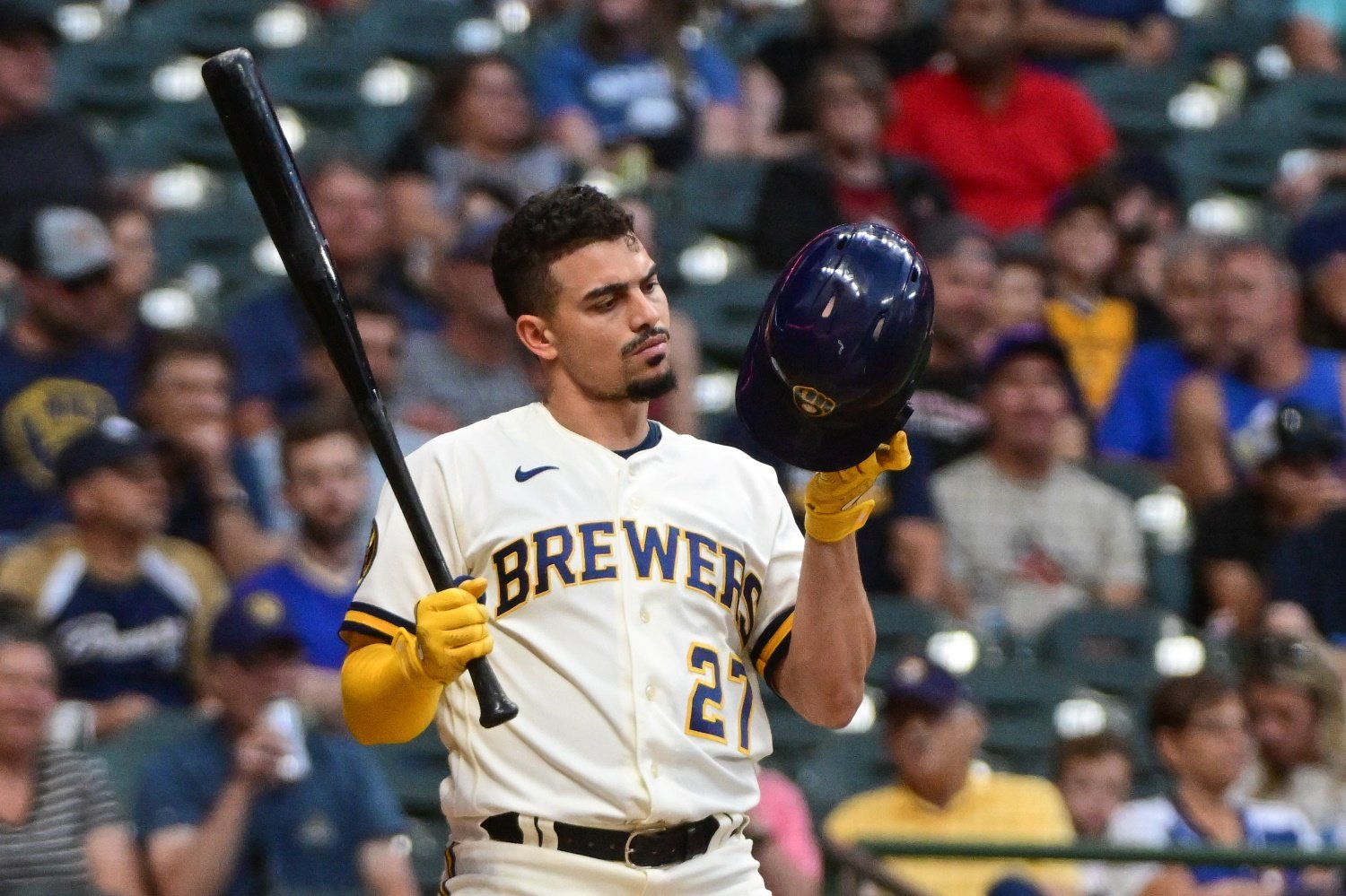 Coming into the season, the Brewers knew that both Willy Adames (as he did in 2021) and Rowdy Tellez (with an awful BABIP last season) have the potential to be .800+ OPS hitters who drive in runs with regularity. Adames, in particular, has always shown additional quality with men on base, a fingerspitzengefühl so often missing for the Milwaukee offense. The team also boasts an improved Christian Yelich (.405 OBP in his last 30 games, and currently on a hot streak) and Jesse Winker, who has recently started hitting the ball harder and has a great eye at the plate to set the platform. This should have been a big boost, yet Adames and Tellez haven’t held up their end of the bargain, with the mostly average Brian Anderson leading the team with 34 RBIs. Coming into yesterday's game, all of the two- to four-hole hitters averaged under .200 over their last 10 games, and it’s letting Yelich’s production go to waste. So what’s going wrong? Willy Adames Adames’s walk and strikeout numbers are eerily similar to his big season when he came to the Brewers in 2021, but results-wise, it just hasn’t been there, largely due to a lack of quality contact and attacking approach at the plate. However, this has always been the case, looking at his swing percentages compared to his prime season. Pitchers are attacking him almost exactly the same way, but his contact ability has disappeared, particularly against the fastball. In 2021, he had an xBA of .309 against fastballs, which has gone down to .227 in 2023. All over the zone, his average exit velocities have dropped by at least a couple of miles per hour, particularly on middle-away pitches where he used to do a ton of damage. Now, he averages just 87-mph contact speeds. Brian Anderson and Bill Schroeder (among others) have noted the pull-heavy approach Adames has employed so far, rather than staying with the pitch and going to straightaway center or using the opposite field, and that’s borne out by his 50.3% pull rate so far this season, far and away a career high for a full season. He pulled just 42% of his batted balls in 2021, and 37% in 2022. You can also see that he has increased the number of ground balls from pulling on the outer half of the plate, and for Adames, it’s crucial that he can elevate the ball. He doesn’t have massive bat speed, but his ability to find the sweet spot is his strength, similar to Nolan Arenado.] The other thing he used to do well with, despite his swing-and-miss when it was well-located, was to hammer breaking balls when they were left up in the zone. He has an xSlg of just .249 against sliders so far this season. If he stayed with the pitch, he may find superior results in all facets of his game, in a similar way to what we see from William Contreras. It seems like a simple fix, but he just needs to trust himself and his hands more, and I feel like his belief is lacking. That being said, his eighth-inning at-bat Sunday against Dauri Moreta, who has been exceptional for the Pirates, was his most selective of the day, and far and away the best. He swung at the right pitches, fouling off tough ones and working a long walk. The grinding approach suits Adames, and hopefully more can come if he can sustain that mentality.
- 10 comments
-
- 1
-

-
- willy adames
- rowdy tellez
- (and 1 more)
-
It's easy to point to some of the truly empty places in the Brewers' lineup this season. To be sure, inconsistent production from the bottom of the order has been a problem for the team at times. However, the inconsistency of two key contributors in the middle of the lineup might be even more troublesome. Image courtesy of © Benny Sieu-USA TODAY Sports Coming into the season, the Brewers knew that both Willy Adames (as he did in 2021) and Rowdy Tellez (with an awful BABIP last season) have the potential to be .800+ OPS hitters who drive in runs with regularity. Adames, in particular, has always shown additional quality with men on base, a fingerspitzengefühl so often missing for the Milwaukee offense. The team also boasts an improved Christian Yelich (.405 OBP in his last 30 games, and currently on a hot streak) and Jesse Winker, who has recently started hitting the ball harder and has a great eye at the plate to set the platform. This should have been a big boost, yet Adames and Tellez haven’t held up their end of the bargain, with the mostly average Brian Anderson leading the team with 34 RBIs. Coming into yesterday's game, all of the two- to four-hole hitters averaged under .200 over their last 10 games, and it’s letting Yelich’s production go to waste. So what’s going wrong? Willy Adames Adames’s walk and strikeout numbers are eerily similar to his big season when he came to the Brewers in 2021, but results-wise, it just hasn’t been there, largely due to a lack of quality contact and attacking approach at the plate. However, this has always been the case, looking at his swing percentages compared to his prime season. Pitchers are attacking him almost exactly the same way, but his contact ability has disappeared, particularly against the fastball. In 2021, he had an xBA of .309 against fastballs, which has gone down to .227 in 2023. All over the zone, his average exit velocities have dropped by at least a couple of miles per hour, particularly on middle-away pitches where he used to do a ton of damage. Now, he averages just 87-mph contact speeds. Brian Anderson and Bill Schroeder (among others) have noted the pull-heavy approach Adames has employed so far, rather than staying with the pitch and going to straightaway center or using the opposite field, and that’s borne out by his 50.3% pull rate so far this season, far and away a career high for a full season. He pulled just 42% of his batted balls in 2021, and 37% in 2022. You can also see that he has increased the number of ground balls from pulling on the outer half of the plate, and for Adames, it’s crucial that he can elevate the ball. He doesn’t have massive bat speed, but his ability to find the sweet spot is his strength, similar to Nolan Arenado.] The other thing he used to do well with, despite his swing-and-miss when it was well-located, was to hammer breaking balls when they were left up in the zone. He has an xSlg of just .249 against sliders so far this season. If he stayed with the pitch, he may find superior results in all facets of his game, in a similar way to what we see from William Contreras. It seems like a simple fix, but he just needs to trust himself and his hands more, and I feel like his belief is lacking. That being said, his eighth-inning at-bat Sunday against Dauri Moreta, who has been exceptional for the Pirates, was his most selective of the day, and far and away the best. He swung at the right pitches, fouling off tough ones and working a long walk. The grinding approach suits Adames, and hopefully more can come if he can sustain that mentality. View full article
-
The Rays aren't trading Peralta for Manzardo alone I dont think, never mind for extra parts too, especially not the way his secondary stuff has been this season for a real quality hitter who is MLB ready I think Frasso from Dodgers would be intriguing And yeah Williams is another intriguing one, a lot of potential value there
-
I would agree, and they'd be much more amenable should they lose another starter, but the temptation of a playoff rotation of McLanaghan, Burnes and Glasnow would be immense, and also they'll likely get prime Burnes too given their history with pitchers Also Manzardo is blocked by Diaz, and Williams by Franco so that may improve their tradability somewhat Could also throw in Rowdy and let Manzardo come to the big leagues this season
-
If Adames was traded, and you got pitching back, i wonder would the Brewers go for a high ceiling guy like Carson Williams, and Kyle Manzardo from the Rays for Burnes. Both positions they have covered for a while with Franco and Diaz Manzardo is fairly similar profile wise to Vinne Pasquantino, and may be ready for big leagues. Tellez could be added in to even the trade up a little Williams is high power, a minor league gold glover but a high strikeout rate. He's young and if he can improve his swing decisions (no real contact issues) then he could be massive. Also a cannon of an arm I think the Dodgers would still be interested in Adames, and I wonder whether Pepiot and someone with big upside like Nick Frasso could even out the trade
-
I feel like this has happened to the Brewers a lot so far this season, playing teams with their tails up
-
Article: Is Julio Teheran Really This Good?
Jake McKibbin replied to Jake McKibbin's topic in Brewer Fanatic Front Page News
I think you're right, though again the next few starts are important for both. Also Rea has been pitching for longer, and that seems to be a negative when hoping for out of the blue pitcher performances Clearly the Brewers are very good at creating game plans for their pitchers to enable them to play above their ability levels, which is a serious boost the last couple of months -
I get the chance to see the odd game, and I'm really grateful. Amazing to hear Gasser doing so well Also fun to see @wiguy94's statcast info in the game threads, very much appreciated!
- 2 replies
-
- 2
-
-
- jevon ward
- noah campbell
- (and 3 more)
-
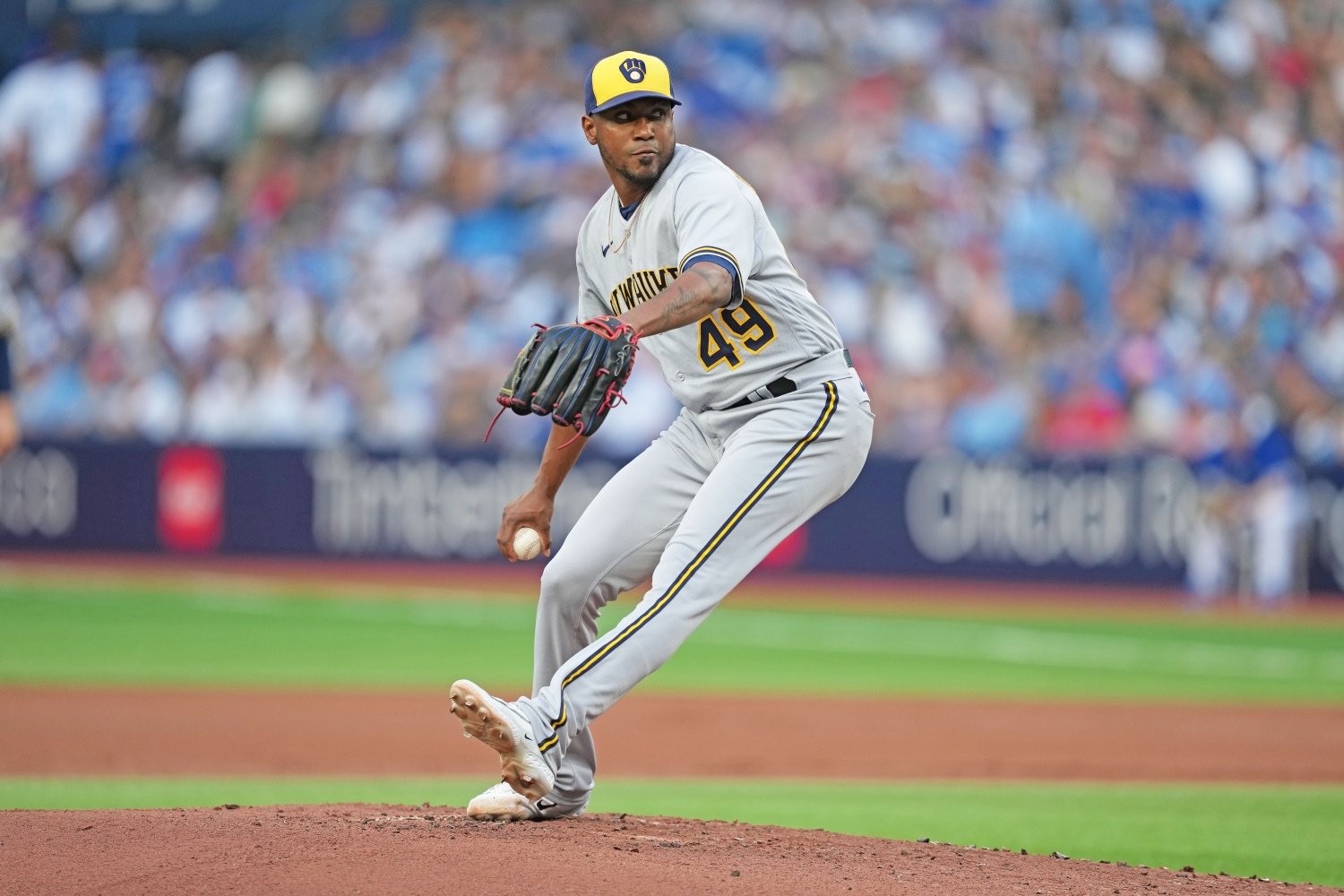 Julio Teheran came through his start on Monday evening having allowed just three runs in his first three Brewers outings, combined. When Wade Miley was put on the 15-day injured list, and the team expected him to be out for eight weeks, it looked as though the Brewers had finally gotten one injury too many. Where could they go? Robert Gasser wasn’t ready yet, regularly losing command for a big inning, and no other arms were really there to get big-league outs. Teheran was picked up after posting a 5.63 ERA with the Padres’ Triple-A affiliate–not a burgeoning indicator. He had struggled to a 10.05 ERA in 30 innings for the Los Angeles Angels in 2020, given just five innings for the Detroit Tigers in 2021 and had no recent history of anything of substance to suggest this would go well. On the surface so far this season, he has a 90.6-mph average exit velocity, and an average launch angle of 17.8 degrees, which spells trouble. However, hitters are finding the “sweet spot” (launch angles between 8 and 32 degrees) just 32% of the time, compared to 42% in his fallow years. He is also forcing hitters to beat him, giving up just two walks in 17 1/3 innings pitched, leading to a very manageable expected ERA of 3.34. So while he’s barely striking guys out, he’s performing very respectably indeed, making a case that he should be retained (over Colin Rea) when Miley, Lauer and Woodruff all return. Teheran’s swing-and-miss stuff is almost non-existent. He has 153% (yep, you read that right) less horizontal break on his slider than the average major-league version, and below average vertical movement too. His curveball and four-seamer are both poor pitches in terms of movement as well. However, his sinker has 4.4 inches of extra vertical drop compared to the MLB average, and his changeup is slightly on the plus side too. What this has resulted in is a very high ground ball rate with the changeup, one of his better swing-and-miss pitches. Most interesting is the four-seamer, which (despite its poor movement profile) has been a weapon for him so far this season. He keeps it up in the zone well, using it especially against left-handers and to good effect with a .228 expected slugging percentage and 23% whiff rate, inducing a lot of pop-ups and lazy fly balls. Opponents’ average launch angle against the pitch is 31 degrees, too high to be productive. The biggest plus for him is the location; he keeps it in the zone, but most interesting is how it pairs with his sinker, staying just slightly higher, but tunneling very well off each other. He uses the above-average sinker movement to avoid barrels, and the four-seamer’s tunneling to generate whiffs and popups. The slider, however, seems to be getting used as a backdoor breaking pitch, rather than attempting to get chases down and away, and it’s being hit fairly hard with regularity at the moment (xBA .365, xSlg .603). His best offspeed pitch is, as mentioned, the changeup, and look at the accuracy around its location: In terms of pitch mix, during his last full season in MLB (2019) Teheran based almost everything off his four-seam fastball, rather than the sinker we see him use today. He was, however, having his offspeed pitches getting hit hard (all three of his changeup, curveball and slider), which continued into 2020 with his changeup having a .467 batting average and 1.200 slugging percentage against it. In short, when he left his offspeed offerings over the plate, they got absolutely hammered. The curveball has been used almost exclusively out of the zone so far this season, but the most interesting usage thus far is his slider, with which he has mostly tried to slip in the front door to right handers, and the back door to left handers equally. For a pitcher that likes to pitch on the outer edges of the plate, especially with the sinker inside to right handers, it can fool the occasional hitter and allow him to get ahead early in the count. Due to its subpar movement, it potentially blends much better with his fastballs, almost as an opposite-handed changeup in some ways, making it more difficult to pick up for hitters than the slow, early-breaking, sweeping sliders that are all over the league. Is it likely that he can sustain this indefinitely? Probably not, but the plus defense the Brewers have employed behind him and Adrian Houser has definitely helped thus far. Teheran’s unique style will likely get picked apart sooner rather than later. That being said, he’s an experienced pitcher and should have the nous for a few more solid starts before the league catches up. If he can show an ability to adapt after that, then he may even stick around.
 -
In dire straits in the latter part of May, the Brewers reached out and grabbed a veteran starting pitcher. The scrap heap gave him up easy; no one expected much. Two weeks later, though, it's time to ask whether their emergency starter can blossom into a viable medium-term back-end starter. Image courtesy of © Nick Turchiaro-USA TODAY Sports Julio Teheran came through his start on Monday evening having allowed just three runs in his first three Brewers outings, combined. When Wade Miley was put on the 15-day injured list, and the team expected him to be out for eight weeks, it looked as though the Brewers had finally gotten one injury too many. Where could they go? Robert Gasser wasn’t ready yet, regularly losing command for a big inning, and no other arms were really there to get big-league outs. Teheran was picked up after posting a 5.63 ERA with the Padres’ Triple-A affiliate–not a burgeoning indicator. He had struggled to a 10.05 ERA in 30 innings for the Los Angeles Angels in 2020, given just five innings for the Detroit Tigers in 2021 and had no recent history of anything of substance to suggest this would go well. On the surface so far this season, he has a 90.6-mph average exit velocity, and an average launch angle of 17.8 degrees, which spells trouble. However, hitters are finding the “sweet spot” (launch angles between 8 and 32 degrees) just 32% of the time, compared to 42% in his fallow years. He is also forcing hitters to beat him, giving up just two walks in 17 1/3 innings pitched, leading to a very manageable expected ERA of 3.34. So while he’s barely striking guys out, he’s performing very respectably indeed, making a case that he should be retained (over Colin Rea) when Miley, Lauer and Woodruff all return. Teheran’s swing-and-miss stuff is almost non-existent. He has 153% (yep, you read that right) less horizontal break on his slider than the average major-league version, and below average vertical movement too. His curveball and four-seamer are both poor pitches in terms of movement as well. However, his sinker has 4.4 inches of extra vertical drop compared to the MLB average, and his changeup is slightly on the plus side too. What this has resulted in is a very high ground ball rate with the changeup, one of his better swing-and-miss pitches. Most interesting is the four-seamer, which (despite its poor movement profile) has been a weapon for him so far this season. He keeps it up in the zone well, using it especially against left-handers and to good effect with a .228 expected slugging percentage and 23% whiff rate, inducing a lot of pop-ups and lazy fly balls. Opponents’ average launch angle against the pitch is 31 degrees, too high to be productive. The biggest plus for him is the location; he keeps it in the zone, but most interesting is how it pairs with his sinker, staying just slightly higher, but tunneling very well off each other. He uses the above-average sinker movement to avoid barrels, and the four-seamer’s tunneling to generate whiffs and popups. The slider, however, seems to be getting used as a backdoor breaking pitch, rather than attempting to get chases down and away, and it’s being hit fairly hard with regularity at the moment (xBA .365, xSlg .603). His best offspeed pitch is, as mentioned, the changeup, and look at the accuracy around its location: In terms of pitch mix, during his last full season in MLB (2019) Teheran based almost everything off his four-seam fastball, rather than the sinker we see him use today. He was, however, having his offspeed pitches getting hit hard (all three of his changeup, curveball and slider), which continued into 2020 with his changeup having a .467 batting average and 1.200 slugging percentage against it. In short, when he left his offspeed offerings over the plate, they got absolutely hammered. The curveball has been used almost exclusively out of the zone so far this season, but the most interesting usage thus far is his slider, with which he has mostly tried to slip in the front door to right handers, and the back door to left handers equally. For a pitcher that likes to pitch on the outer edges of the plate, especially with the sinker inside to right handers, it can fool the occasional hitter and allow him to get ahead early in the count. Due to its subpar movement, it potentially blends much better with his fastballs, almost as an opposite-handed changeup in some ways, making it more difficult to pick up for hitters than the slow, early-breaking, sweeping sliders that are all over the league. Is it likely that he can sustain this indefinitely? Probably not, but the plus defense the Brewers have employed behind him and Adrian Houser has definitely helped thus far. Teheran’s unique style will likely get picked apart sooner rather than later. That being said, he’s an experienced pitcher and should have the nous for a few more solid starts before the league catches up. If he can show an ability to adapt after that, then he may even stick around. View full article
-
He strikes me as a kind of quirky guy whose recently been taught how to do an interview, and inside his head he's just going "don't say anything stupid" over and over again But what a game! My god
-
The flow of that mullet... Hot DAMN It's based more on the quality of the at bats and quality of his contact, which was awful the first two months and has been considerably more consistent and repeated since late May. But absolutely! Here's hoping by the end of the season he's solidified it more
-
The A's are unloading right now Five runs, seven base runners no outs in the first inning against the pirates
-
In all sports they usually sack the manager as if he's the driving force, but sometimes players just aren't performing. the cardinals need to go on a run soon, is that them 12 games below a .500 record? Anything can happen in sports, and thing didn't start well for Marmol with the O'Neill incident, but they've not been good enough and that's the long and short of it
-
They do say timing is everything..
-
Peralta seems like he's almost there, this was maybe his best performance of the year, back to his strikeout self I do notice a change where he used to give up very few hits but walk a ton, he's now doing the opposite which is curious But he's getting there! Also Weimer republic forever babyyyy
-
Just checked the Savant page, and at least one plus is that Lauer had 14 swings and misses (more than anyone else in Triple A) across the short number of innings. SO control might be a little off, it usually is for him after any sort of a break, but the stuff being there is big. He's really missed that
-
I don't think he will be, but that's likely less to do with him, and more to do with Contreras at the plate, Arenado not being MVP calibre again, the young guys like Donovan, Burleson, etc not being .300 hitters, Walker not being EDLC level of talent, and a rotation that to be fair has righted the ship recently but did get them into this mess i the first place by being god awful.
-
I actually thought their approach was decent at the start, wearing him down, making okay contact that just didnt find the gaps. Especially when you've got no idea really on his stuff and how it plays coming in. Then after 53 pitches in two innings, they went into full swing mode and really helped him out I'm beginning to get excited by Joey Wiemer's AB's though
-
With a Simple Timing Adjustment, Joey Wiemer is Breaking Out
Jake McKibbin posted an article in Brewers
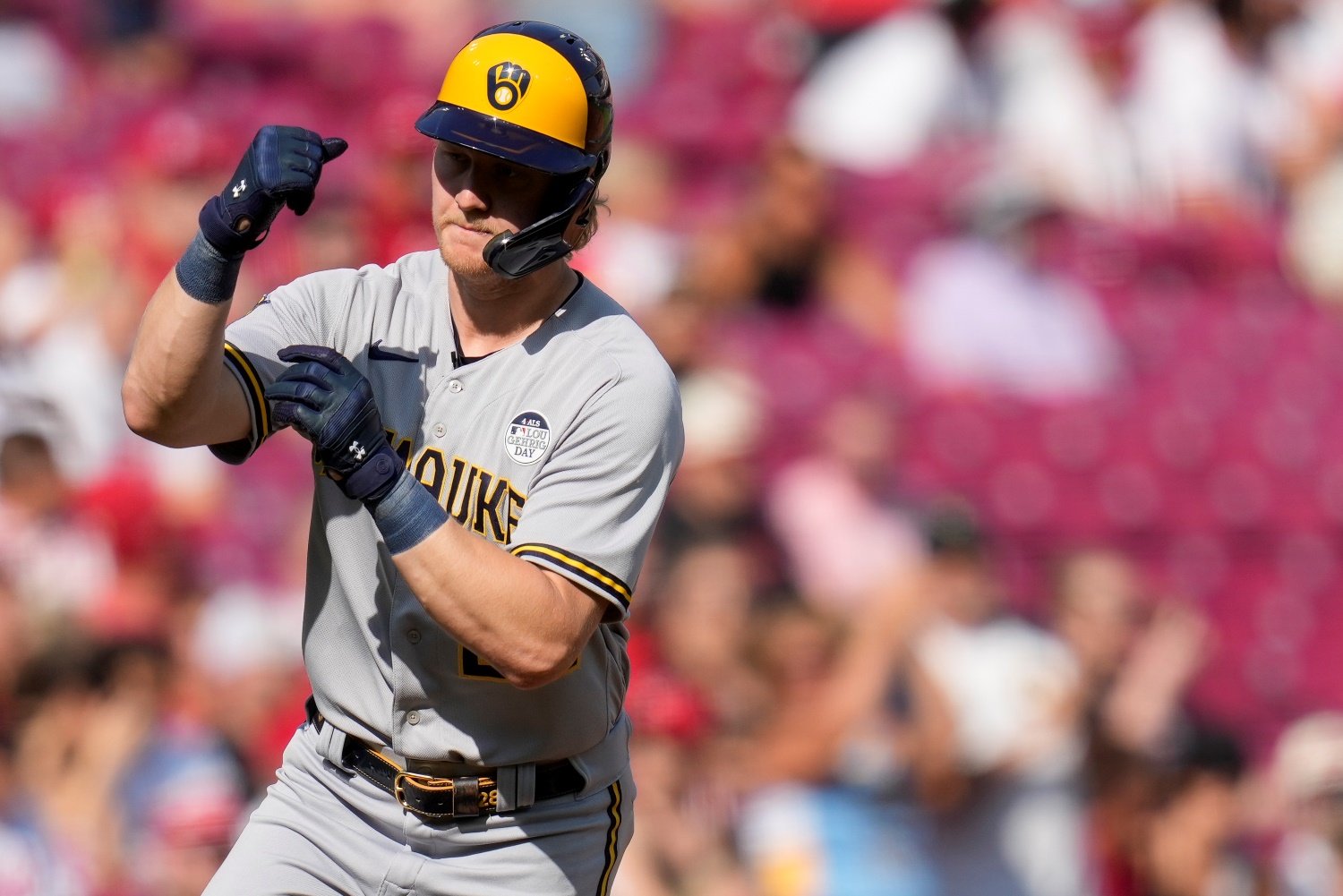 In May, Joey Wiemer had a slash line of .188/.274/.306 for a .580 OPS. At times, it looked like, even despite his defense, he needed to be sent down to work on some adjustments that could allow his power to come through at the major-league level. He had some early-season BABIP luck, beating out infield dribblers, but hasn’t produced solid, consistent contact at any point. He has an expected batting average (xBA) of .195, has an expected weighted on-base average (xwOBA) of .284, and a hard-hit rate in the 28th percentile for the league. Not the power-hitting right fielder we expected, and his swing-and-miss tendencies have had him looking almost blind at the plate through May. So why the optimism? Everything with Wiemer, since joining the Brewers in the fourth round in 2020, has been centered on simplifying his swing, which looks wild to say the least. When things go wrong at the plate, the Brewers usually go to their default answer: “Let’s eliminate his leg kick.” That (non-)movement is catching the league by storm, with the likes of Jeremy Pena adopting the approach, as well as Keston Hiura. In this case, it seems to have worked. Before Wednesday, Wiemer had just 13 out of 108 batted balls hit 102 mph or harder. Since Thursday, though, he has hit six out of 12 batted balls over that mark, producing much more regular, solid contact and more professional at-bats. On Sunday, he had a 103-mph groundout, a 106-mph single, and 104-mph ground ball that (alas) became a double play. On Monday, he hit two doubles, one of which was over 110 mph, and his only out came after hitting a ball just foul into the upper decks in the Great American Ball Park. In his most recent home run, look how much less stressful the swing is: It’s resulted in him being able to attack pitchers, as well as take his walks, with five walks in the last week and a slash line of .318/.444/.545. That’s to go along with some BABIP misfortune, with some balls rifled at fielders. If we’re seeing the Joey Wiemer breakout, then the Brewers will be going a long way towards fixing their impotent May offense. Joey has arrived.
 -
The Freshmen have been asked to integrate into the broader student population a bit more quickly and completely than the Brewers imagined when this season began, and there have been some growing pains. One of the youngsters, though, is starting to look as though he's ready for the advanced coursework at this level. Image courtesy of © Sam Greene-USA TODAY Sports In May, Joey Wiemer had a slash line of .188/.274/.306 for a .580 OPS. At times, it looked like, even despite his defense, he needed to be sent down to work on some adjustments that could allow his power to come through at the major-league level. He had some early-season BABIP luck, beating out infield dribblers, but hasn’t produced solid, consistent contact at any point. He has an expected batting average (xBA) of .195, has an expected weighted on-base average (xwOBA) of .284, and a hard-hit rate in the 28th percentile for the league. Not the power-hitting right fielder we expected, and his swing-and-miss tendencies have had him looking almost blind at the plate through May. So why the optimism? Everything with Wiemer, since joining the Brewers in the fourth round in 2020, has been centered on simplifying his swing, which looks wild to say the least. When things go wrong at the plate, the Brewers usually go to their default answer: “Let’s eliminate his leg kick.” That (non-)movement is catching the league by storm, with the likes of Jeremy Pena adopting the approach, as well as Keston Hiura. In this case, it seems to have worked. Before Wednesday, Wiemer had just 13 out of 108 batted balls hit 102 mph or harder. Since Thursday, though, he has hit six out of 12 batted balls over that mark, producing much more regular, solid contact and more professional at-bats. On Sunday, he had a 103-mph groundout, a 106-mph single, and 104-mph ground ball that (alas) became a double play. On Monday, he hit two doubles, one of which was over 110 mph, and his only out came after hitting a ball just foul into the upper decks in the Great American Ball Park. In his most recent home run, look how much less stressful the swing is: It’s resulted in him being able to attack pitchers, as well as take his walks, with five walks in the last week and a slash line of .318/.444/.545. That’s to go along with some BABIP misfortune, with some balls rifled at fielders. If we’re seeing the Joey Wiemer breakout, then the Brewers will be going a long way towards fixing their impotent May offense. Joey has arrived. View full article
-
Abbott looks good but he has given up eight home runs in 38 innings at AAA so far this season, but he's striking out a ton of batters with his slider especially. Should be an interesting one
-
 This will likely come as no surprise to those watching the sluggish offense provided by the Brewers in May, but there has been one standout amidst the team’s struggles to get on base and pressure opposing pitchers with regularity. They have had too many black holes in the line-up, but this player has hit day in, day out for them. Before we get to the May Hitter of the month, here are a few players who were under considerations after putting together a solid May. Honorable Mentions Christian Yelich Yelich hit .284 in the month of May with four home runs, four doubles, and 11 walks to just 15 strikeouts (a 15% strikeout rate), a vast improvement of the 34 he tallied in April. On top of a week-long power binge, after which he was sidelined with a back injury sliding into three consecutive bases, he has provided a consistent on base presence with a .376 OBP and .842 OPS overall, teasing many fans at the notion that he isn’t far away from rekindling his best form. The biggest sign is when he pulls the ball more in the air, but it should be noted that he currently has a .285 xBA and .488 xSlg, so he has hit into a reasonable amount of misfortune so far this season. Could June be the month Yelich awakens from his slumber? Rowdy Tellez Our April hitter of the month produced another solid effort at the plate, going .240/.329/.427 for a .756 OPS, including four home runs. He hasn’t had one of his hot streaks this month, but it’s only a matter of time before he runs into one and carries the Brewers for a week or so. Perhaps more concerning is that he’s only tallied six RBI in 81 plate appearances, the Brewers need to give him more of a platform with men on base, and he needs to do a better job at getting the ball in the air to avoid the double plays that can plague him. William Contreras His bat was slightly stagnant to begin the month, but it started to heat up late in the month, with six RBI across his last five games, including three home runs. Sporting a .194/.301/.444 line, he was hitting far too many grounders straight into the dirt, but has begun to come out of his funk, and his .756 OPS has gone a long way to helping the Brewers through this tough stretch of games. Interestingly, his return has coincided with an uptick in games at which Victor Caratini has started as catcher, perhaps a great balance behind the plate is needed for him given this is his first season as primary catcher. Hitter of the Month Owen Miller Owen Miller has been, quite simply, outstanding for the Brewers. He has shown an aggressiveness early in counts. He is regularly making solid, aerial contact on targeted pitches. The hometown kid also added the ability to turn on inside pitches for some big home runs this last month. All expectations of Miller were of him being a bit, role player with an average to subpar bat, but ever since spring training, he has raked. He’s hit .363 with seven doubles and four home runs in May with a 15.6% strikeout rate, and has greatly deserved the increased playing time and move up the batting order. Miller’s short, compact stroke is complimented by his understanding of the pitches he can do damage on. While he struggles more in the outer third of the zone, he waits patiently for pitches on the middle and inside that he can pull, with over 80% of his batted balls going to straightaway center or the pull side. He is in the 91st percentile for whiff rate, only missing four balls in the upper third of the zone all year long, while creating regular line drives from most areas of the strike zone, a big reason for his high level of productivity so far this season. Without his run of form, the Brewers would likely be sitting below .500 by now, now it’s up to the rest of the line-up to start bringing him in more often. Aside from his bat, he has also shown solid range in defense across almost every position on the infield, as well as causing some havoc in the bases when required, such as when he scored on a steal of second base, taking an aggressive send to reach home plate in a tight encounter. What are your thoughts of the month Owen Miller had in May? How would you rank these candidates? Leave a comment below.

