



Jake McKibbin
-
Posts
2,394 -
Joined
-
Last visited
-
Days Won
6
Content Type
Profiles
Forums
Blogs
Events
News
2026 Milwaukee Brewers Top Prospects Ranking
Milwaukee Brewers Videos
2022 Milwaukee Brewers Draft Picks
Milwaukee Brewers Free Agent & Trade Rumors, Notes, & Tidbits
Guides & Resources
2023 Milwaukee Brewers Draft Picks
2024 Milwaukee Brewers Draft Picks
The Milwaukee Brewers Players Project
2025 Milwaukee Brewers Draft Pick Tracker
2026 Milwaukee Brewers Draft Tracker: Picks & Bonuses
Store
Downloads
Gallery
Everything posted by Jake McKibbin
-
Brewers Head Into Elimination Game Against Cubs With Several Advantages
Jake McKibbin posted an article in Brewers
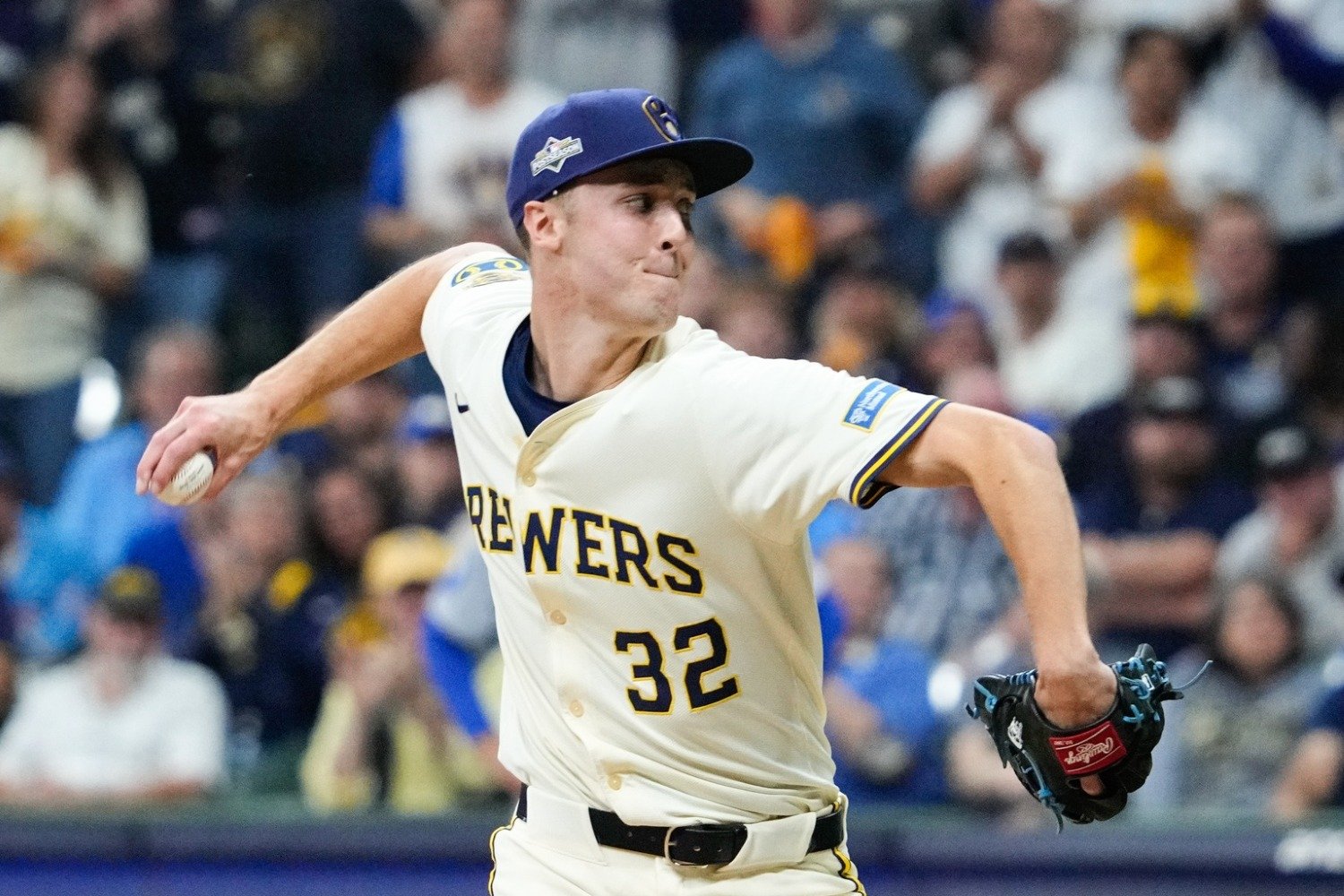 With a 2-0 series lead heading to Wrigley Field, there was a real hope that the Brewers could put the Cubs to bed in ruthless fashion. That hasn't happened, with the Cubs slugging the Brewers to death in Game 4 while the Milwaukee team couldn't get the big hits to drop. In some ways, this portion of the series encapsulated what many thought could be the difference between the sides. The Chicago Cubs have hit eight home runs in four games. They've struck out a lot, but they've slugged, and that's been the difference in Chicago. They've had Nico Hoerner playing like an MVP, hitting .471 in the series so far with almost a 50% line drive rate. In all likelihood, this final game is a crapshoot, knowing that any team in baseball can win any game on any given day. The Cubs have momentum, but momentum isn't statistically a big thing in baseball. That being said, the Brewers are going to have a few advantages going into Saturday's elimination game. First of those is the way the game is likely to begin, with a bullpen game for the Brewers against Shota Imanaga (or perhaps Colin Rea) for the Cubs. The Cubs are going to want some length from someone to cover at least three innings, before turning the ball over to their five main men: Caleb Thielbar, Andrew Kittredge, Drew Pomeranz, Daniel Palencia and Brad Keller. They'll want to avoid Ben Brown or Aaron Civale in a game such as this. That gives the Brewers (probably) one time through the order against the home run-prone Imanaga. To finish the regular season, Imanaga averaged over two home runs per nine innings, while also struggling to generate the strikeouts that have been so prominent for him through his first season and a half with the Cubs. In Game 2, the Brewers had a definitive attack plan for Imanaga (discussed thoroughly by Matthew Trueblood here), and they didn't miss on the pitches they wanted. The key question is whether they stick or twist—stay the course, or alter their approach against the Cubs' number-two starter, who is likely to adjust accordingly. He's also unlikely to see the Brewers a second time through, with a quicker pull should he find trouble. Then we come to the bullpen, where the Brewers have managed to use a wider variety of arms than the Cubs; that brings some distinct advantages: We noted this penalty last season, in particular, when teams saw Emmanuel Clase for a third time in a series, as well as Devin Williams facing the same part of the order two days running against the Mets. (Sigh.) Relievers were often dominant early in a series, before regressing later as teams saw them multiple times in a short span. So far in the division series, the Brewers have faced the Cubs' 'A' bullpen multiple times, and without a lot of fortune with their contact quality: Games Innings SIERA Earned Runs Drew Pomeranz 3 3 0.23 0 Daniel Palencia 3 3.1 5.13 3 Caleb Thielbar 2 1.2 3.09 0 Brad Keller 2 2.1 6.21 0 Andrew Kittredge 1 1 3.29 1 Of these, only Pomeranz has been truly dominan. Both Palencia and Keller have been fortunate not to give up more than they have, while Kittredge and Thielbar have been good but not exceptional. Still, only two home runs have created any sort of offense against the Cubs bullpen, making it imperative the Brewers either find a way to take advantage of their burgeoning familiarity or jump on Imanaga to begin the game. For your reference, here are the key Brewers batters and the number of times they've already faced each of Chicago's Big Five during this set. Pitcher/Batter Yelich Chourio Turang Contreras Vaughn Frelick Durbin Perkins Bauers Ortiz Collins Keller XX X X X X X X Palencia XX X XX XX XX XXX X X Pomeranz XX X XX X X X X Thielbar XX X X X X Kittredge X X X X X Finally, 'TBD' may be the Brewers' best starter in this postseason. It's highly likely they go with a bullpen game, with either a lefty to counteract some of the threat from Michael Busch to start the game or even an arm like Chad Patrick, whose new slurve has been causing fits. He has a 1.14 FIP in his three appearances so far, and yes, the times seen in a series penalty could apply to him as well here, but he's one of the relievers who has really risen to the challenge of postseason baseball. Regardless, it's more likely they open with Aaron Ashby once more. The beauty of this for the Brewers is that they have enough length available (between Quinn Priester and Jacob Misiorowski) that they can afford quick pulls where and when they need them. If Ashby has one out and two on in the first while struggling to command his breaking ball again, you can pull him. If Misiorowski can't find the zone, pull him. They can mix and match depending on the situation, with no regard for any future following Saturday's game. That suits the all-around strength of the Brewers. Their bullpen has thrown 22 innings of 1.23 ERA ball so far in this Division Series. It's win-or-go-home time. The Milwaukee Brewers have the advantage of home field, their home crowd, and the relentless approach that's served them so well this season. They can plan for what's to come intensely, know who will pitch (and probably when) for the Chicago Cubs, who have been far more predictable than the Brewers thus far. That being said, this is a shootout in which an umpire's call, some BABIP fortune or a timely home run can make all the difference. This is what baseball is all about—those moments where everything is on the line, emotions high for all involved. Can the Brewers finally have their moment? Do you think they even have the advantage coming back to Uecker Field? Let us know your thoughts in the comments below!
- 2 comments
-
- 3
-

-
- jacob misiorowski
- 2025 postseason
- (and 1 more)
-
Image courtesy of © Michael McLoone-Imagn Images With a 2-0 series lead heading to Wrigley Field, there was a real hope that the Brewers could put the Cubs to bed in ruthless fashion. That hasn't happened, with the Cubs slugging the Brewers to death in Game 4 while the Milwaukee team couldn't get the big hits to drop. In some ways, this portion of the series encapsulated what many thought could be the difference between the sides. The Chicago Cubs have hit eight home runs in four games. They've struck out a lot, but they've slugged, and that's been the difference in Chicago. They've had Nico Hoerner playing like an MVP, hitting .471 in the series so far with almost a 50% line drive rate. In all likelihood, this final game is a crapshoot, knowing that any team in baseball can win any game on any given day. The Cubs have momentum, but momentum isn't statistically a big thing in baseball. That being said, the Brewers are going to have a few advantages going into Saturday's elimination game. First of those is the way the game is likely to begin, with a bullpen game for the Brewers against Shota Imanaga (or perhaps Colin Rea) for the Cubs. The Cubs are going to want some length from someone to cover at least three innings, before turning the ball over to their five main men: Caleb Thielbar, Andrew Kittredge, Drew Pomeranz, Daniel Palencia and Brad Keller. They'll want to avoid Ben Brown or Aaron Civale in a game such as this. That gives the Brewers (probably) one time through the order against the home run-prone Imanaga. To finish the regular season, Imanaga averaged over two home runs per nine innings, while also struggling to generate the strikeouts that have been so prominent for him through his first season and a half with the Cubs. In Game 2, the Brewers had a definitive attack plan for Imanaga (discussed thoroughly by Matthew Trueblood here), and they didn't miss on the pitches they wanted. The key question is whether they stick or twist—stay the course, or alter their approach against the Cubs' number-two starter, who is likely to adjust accordingly. He's also unlikely to see the Brewers a second time through, with a quicker pull should he find trouble. Then we come to the bullpen, where the Brewers have managed to use a wider variety of arms than the Cubs; that brings some distinct advantages: We noted this penalty last season, in particular, when teams saw Emmanuel Clase for a third time in a series, as well as Devin Williams facing the same part of the order two days running against the Mets. (Sigh.) Relievers were often dominant early in a series, before regressing later as teams saw them multiple times in a short span. So far in the division series, the Brewers have faced the Cubs' 'A' bullpen multiple times, and without a lot of fortune with their contact quality: Games Innings SIERA Earned Runs Drew Pomeranz 3 3 0.23 0 Daniel Palencia 3 3.1 5.13 3 Caleb Thielbar 2 1.2 3.09 0 Brad Keller 2 2.1 6.21 0 Andrew Kittredge 1 1 3.29 1 Of these, only Pomeranz has been truly dominan. Both Palencia and Keller have been fortunate not to give up more than they have, while Kittredge and Thielbar have been good but not exceptional. Still, only two home runs have created any sort of offense against the Cubs bullpen, making it imperative the Brewers either find a way to take advantage of their burgeoning familiarity or jump on Imanaga to begin the game. For your reference, here are the key Brewers batters and the number of times they've already faced each of Chicago's Big Five during this set. Pitcher/Batter Yelich Chourio Turang Contreras Vaughn Frelick Durbin Perkins Bauers Ortiz Collins Keller XX X X X X X X Palencia XX X XX XX XX XXX X X Pomeranz XX X XX X X X X Thielbar XX X X X X Kittredge X X X X X Finally, 'TBD' may be the Brewers' best starter in this postseason. It's highly likely they go with a bullpen game, with either a lefty to counteract some of the threat from Michael Busch to start the game or even an arm like Chad Patrick, whose new slurve has been causing fits. He has a 1.14 FIP in his three appearances so far, and yes, the times seen in a series penalty could apply to him as well here, but he's one of the relievers who has really risen to the challenge of postseason baseball. Regardless, it's more likely they open with Aaron Ashby once more. The beauty of this for the Brewers is that they have enough length available (between Quinn Priester and Jacob Misiorowski) that they can afford quick pulls where and when they need them. If Ashby has one out and two on in the first while struggling to command his breaking ball again, you can pull him. If Misiorowski can't find the zone, pull him. They can mix and match depending on the situation, with no regard for any future following Saturday's game. That suits the all-around strength of the Brewers. Their bullpen has thrown 22 innings of 1.23 ERA ball so far in this Division Series. It's win-or-go-home time. The Milwaukee Brewers have the advantage of home field, their home crowd, and the relentless approach that's served them so well this season. They can plan for what's to come intensely, know who will pitch (and probably when) for the Chicago Cubs, who have been far more predictable than the Brewers thus far. That being said, this is a shootout in which an umpire's call, some BABIP fortune or a timely home run can make all the difference. This is what baseball is all about—those moments where everything is on the line, emotions high for all involved. Can the Brewers finally have their moment? Do you think they even have the advantage coming back to Uecker Field? Let us know your thoughts in the comments below! View full article
-
Beating the Cubbies in three games doesn't hurt enough. Give them a taste, then blow em away
- 405 replies
-
- 1
-
-
- optimism
- world series
- (and 2 more)
-
Wind blowing in today and out tomorrow is a fascinating one, ideally the Brewers may have preferred things the other way around with Priester today and Taillon's 13th percentile ground ball rate on show, but we'll see what happens. A small detail on what could be a defining day! Nerves tingling yet for anyone?
-
Brewers-Cubs NLDS Game One Thread, By The Numbers
Jake McKibbin replied to Brock Beauchamp's topic in Archived Game Threads
When Boyd faltered during his first start against the Brewers, it was more his command than anything that caused them to run riot. Uncompetitive misses and some meatball fodder, and with him tiring towards the end of the season combined with a three day rest period, I'm not sure this is the right call from the Cubs. That being said, this is playoffs. Anyone could get 12 outs from balls smoked right to a fielder -
Interesting on the strike rate being average, in guessing that means he's getting quite a bit of chase as those zone rates, especially on the fastballs, aren't really screaming control too much to me Leading with the sweeper to RHH is also pretty interesting, and may explain some of the lower K numbers. The sweeper, while it moves a lot, has been more of a soft contact pitch across MLB this season. Not sure I'm a fan of a starter leaning on his breaking pitch quite so often as that, but he's certainly getting results (All of this based purely on the data provided by Terry above, love it dude!)
-
2026 International Free Agent Market
Jake McKibbin replied to Jake McKibbin's topic in MLB Draft & International Signings
I thought I was being incredibly efficient checking off each of the names you mentioned with that list, but never looked above #30 as I thought "nah, too much scrolling". Chanced it, and lost EDIT: The Pipeline review seems incredibly strong on him. Wow -
2026 International Free Agent Market
Jake McKibbin replied to Jake McKibbin's topic in MLB Draft & International Signings
The Top 50 international prospects in the 2026 class Top Baseball International Prospects Draft class rankings are up on pipeline with a blurb on Frontado (#24) and Rodriguez (#50) -
Image courtesy of © Charles LeClaire-Imagn Images The Milwaukee Brewers bumped Brandon Woodruff's planned Saturday start back to this coming Wednesday, briefly stirring some fears about the veteran hurler's health in September. Apparently, though, Woodruff is uninjured. Instead, it seems like the Brewers have used their two off days within a week to align their rotation, while keeping everyone else working on regular rest. They have now lined up the triumvirate of Freddy Peralta, Woodruff and Quinn Priester to pitch against the Los Angeles Angels, in that order. In keeping their pitchers on four days' rest and use (with an abbreviated start for the final three games of the regular season), that would see: Freddy Peralta Brandon Woodruff Quinn Priester 1st Start 16th Sept - LAA 17th Sept - LAA 18th Sept - LAA 2nd Start 21st Sept - STL 22nd Sept - SDP 23rd Sept - SDP 3rd Start 26th Sept - CIN 27th Sept - CIN 28th Sept - CIN That would feature a four-man rotation with a skipped start on September 25, but with plenty of arms around, that shouldn't be much of a concern. It should allow them to stay on some regular pitching schedule (without too much time between starts) entering the NLDS. Keeping to a regular schedule is vital for the Brewers down the stretch. They'll want their playoff starters pitching as closely as possible to the end of the season, as too much rest can be as damaging as too little. Should Peralta pitch on September 26, his next start would be the following Saturday, in Game 1 of the NLDS, with seven days between starts. They could also choose to use the abbreviated starts that are likely to come in the final series to pitch all three of their playoff horses in the final two games, shortening that time between starts even further. What Does That Mean For Jacob Misiorowski? With Jacob Misiorowski still learning and adapting to wrinkles in the big leagues, Quinn Priester's reliability looks awfully tempting, so to see the Brewers lean this way is no real surprise. That being said, should they reach the NLCS, they would need a fourth starter, and the young phenom is in pole position to be used there. Jose Quintana's calf strain may make the discussion moot, but he may also have a role here. Depending on whom the Brewers face should they survive the NLDS, the left-handed matchup may be advantageous, despite his recent struggles. Quintana's postseason pedigree means that the Brewers are comfortable throwing him in for four or five innings against a Phillies lineup that hasn't been quite as successful against left-handers this year. If we assume Misiorowski is the favorite to slide into the rotation should the team reach the NLCS, how they manage his workload to finish the season is fascinating. Both in his start to 2025, and in his return from his shin contusion in August, Misiorowski has struggled to find his rhythm from the get-go after prolonged absences from the mound. Will they use him out of the bullpen in the NLDS? Will his last outing before the playoffs be a start on September 24 against the Padres? He'll need to stay both stretched out, and available from the bullpen. Adjustments to his schedule and rhythm haven't come easily to the young hurler this season, and it could be a steep learning curve. Live BP sessions during the lull between the team's regular-season finale and the NLDS might help bridge the gap. Do you think the Brewers' playoff rotation is set in stone? Or could Jacob Misiorowski still wriggle back into the thick of it? Let us know your thoughts in the comments below! View full article
-
With a Subtle Move, Milwaukee Brewers Line Up Their NLDS Rotation
Jake McKibbin posted an article in Brewers
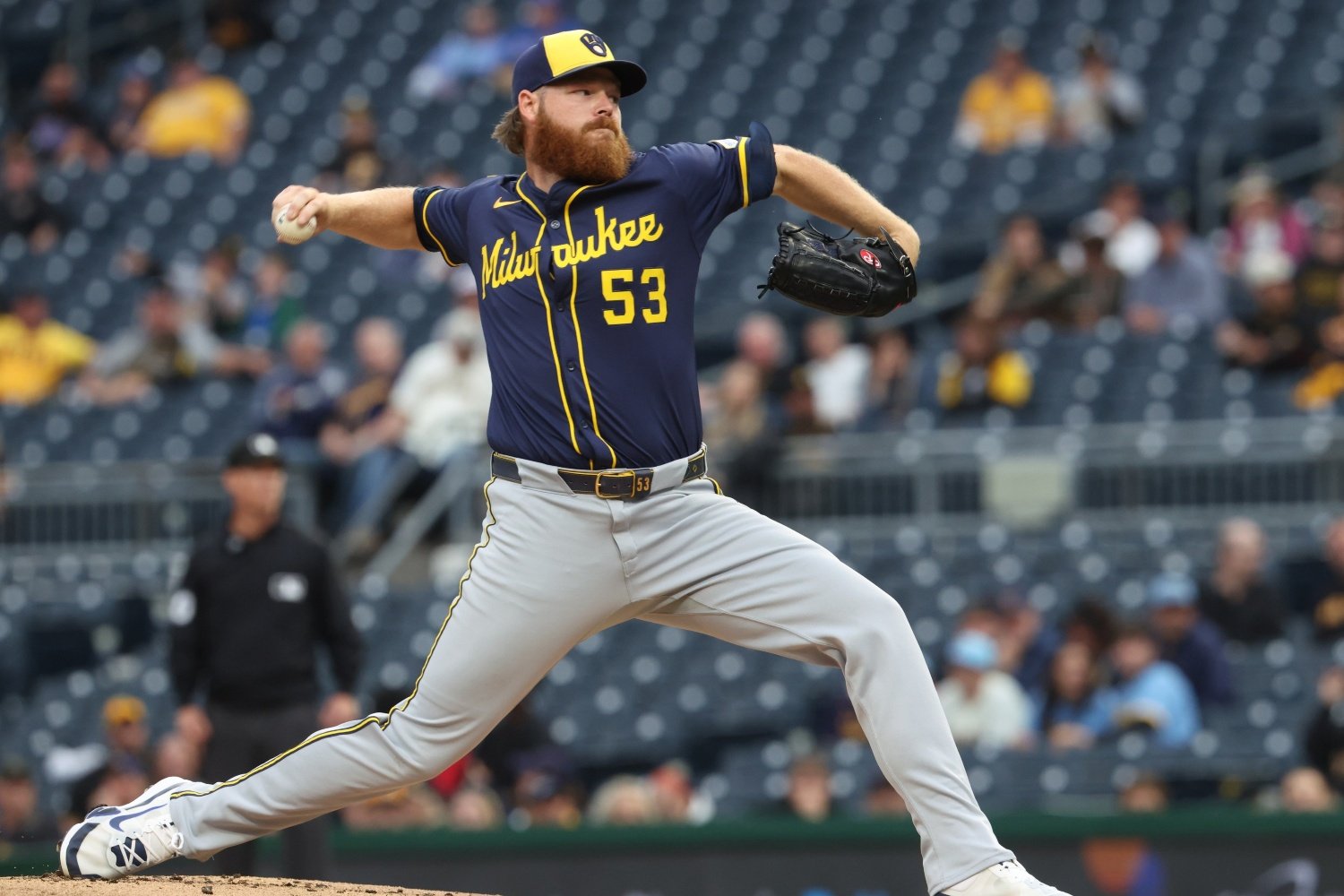 The Milwaukee Brewers bumped Brandon Woodruff's planned Saturday start back to this coming Wednesday, briefly stirring some fears about the veteran hurler's health in September. Apparently, though, Woodruff is uninjured. Instead, it seems like the Brewers have used their two off days within a week to align their rotation, while keeping everyone else working on regular rest. They have now lined up the triumvirate of Freddy Peralta, Woodruff and Quinn Priester to pitch against the Los Angeles Angels, in that order. In keeping their pitchers on four days' rest and use (with an abbreviated start for the final three games of the regular season), that would see: Freddy Peralta Brandon Woodruff Quinn Priester 1st Start 16th Sept - LAA 17th Sept - LAA 18th Sept - LAA 2nd Start 21st Sept - STL 22nd Sept - SDP 23rd Sept - SDP 3rd Start 26th Sept - CIN 27th Sept - CIN 28th Sept - CIN That would feature a four-man rotation with a skipped start on September 25, but with plenty of arms around, that shouldn't be much of a concern. It should allow them to stay on some regular pitching schedule (without too much time between starts) entering the NLDS. Keeping to a regular schedule is vital for the Brewers down the stretch. They'll want their playoff starters pitching as closely as possible to the end of the season, as too much rest can be as damaging as too little. Should Peralta pitch on September 26, his next start would be the following Saturday, in Game 1 of the NLDS, with seven days between starts. They could also choose to use the abbreviated starts that are likely to come in the final series to pitch all three of their playoff horses in the final two games, shortening that time between starts even further. What Does That Mean For Jacob Misiorowski? With Jacob Misiorowski still learning and adapting to wrinkles in the big leagues, Quinn Priester's reliability looks awfully tempting, so to see the Brewers lean this way is no real surprise. That being said, should they reach the NLCS, they would need a fourth starter, and the young phenom is in pole position to be used there. Jose Quintana's calf strain may make the discussion moot, but he may also have a role here. Depending on whom the Brewers face should they survive the NLDS, the left-handed matchup may be advantageous, despite his recent struggles. Quintana's postseason pedigree means that the Brewers are comfortable throwing him in for four or five innings against a Phillies lineup that hasn't been quite as successful against left-handers this year. If we assume Misiorowski is the favorite to slide into the rotation should the team reach the NLCS, how they manage his workload to finish the season is fascinating. Both in his start to 2025, and in his return from his shin contusion in August, Misiorowski has struggled to find his rhythm from the get-go after prolonged absences from the mound. Will they use him out of the bullpen in the NLDS? Will his last outing before the playoffs be a start on September 24 against the Padres? He'll need to stay both stretched out, and available from the bullpen. Adjustments to his schedule and rhythm haven't come easily to the young hurler this season, and it could be a steep learning curve. Live BP sessions during the lull between the team's regular-season finale and the NLDS might help bridge the gap. Do you think the Brewers' playoff rotation is set in stone? Or could Jacob Misiorowski still wriggle back into the thick of it? Let us know your thoughts in the comments below!
- 6 comments
-
- 2
-
-
- freddy peralta
- brandon woodruff
- (and 2 more)
-
Trade deadline day thread
Jake McKibbin replied to Brock Beauchamp's topic in Milwaukee Brewers Talk
The Cubs expended actual capital to get Mike Soroka, who I don't think survived even a game with them? It could have been worse! -
Sun. 9/7: It Was Our Pleasure, Mudcats
Jake McKibbin replied to Jim Goulart's topic in Brewers Minor League Talk
It's interesting with the Made promotion given how the organization approaches technical tweaks. I remember Brenton Del Chiaro talking about Made with @Aram Leightonearlier in the season and referencing something about his swing that would likely need refined. This isn't a direct quote but he said something along the lines of "We don't have anyone in the Major Leagues who's been successful with that" which Aram agreed with. If I had the time to go back and re-listen I could say more, though it's well worth a listen for any and all on this site, but the consensus was that the swing had a propensity to result in too many ground balls and prevent Made from elevating enough to access his power. That's something we certainly saw in Low A and, although results have been better in Wisconsin under the Timber rattlers uniform, the expectation is that Made might struggle more facing a higher caliber of pitcher and raw stuff. That being said, the Brewers won't intervene in any way unless Made approaches them to do so, and that might require some struggle. Why fix what isn't broken, especially when baseball is filled with unique swings. They may be wondering if this is where he'll face some problems catching up to big velocities, its a huge step from High A to Double A and especially in the midst of a playoff chase. If he succeeds, great, if he struggles, they have a plan ready and waiting to work on through the off season with the young phenom. Either way, its pretty much a win-win -
Sun. 9/7: It Was Our Pleasure, Mudcats
Jake McKibbin replied to Jim Goulart's topic in Brewers Minor League Talk
🔮 -
Sun. 9/7: It Was Our Pleasure, Mudcats
Jake McKibbin replied to Jim Goulart's topic in Brewers Minor League Talk
Made absent in Wisconsin's last game this year is interesting. Not sure it makes it any more or less likely he'll have a trip to Biloxi to at least see that level before next year, but I still think it's notable -
2025 Minor League Transaction Thread
Jake McKibbin replied to Jim Goulart's topic in Brewers Minor League Talk
If this is wrong, I'll be heavily discussing Thomas's model with him 😅 signs suggest he has been unlucky with that ERA, if he can't just keep that confidence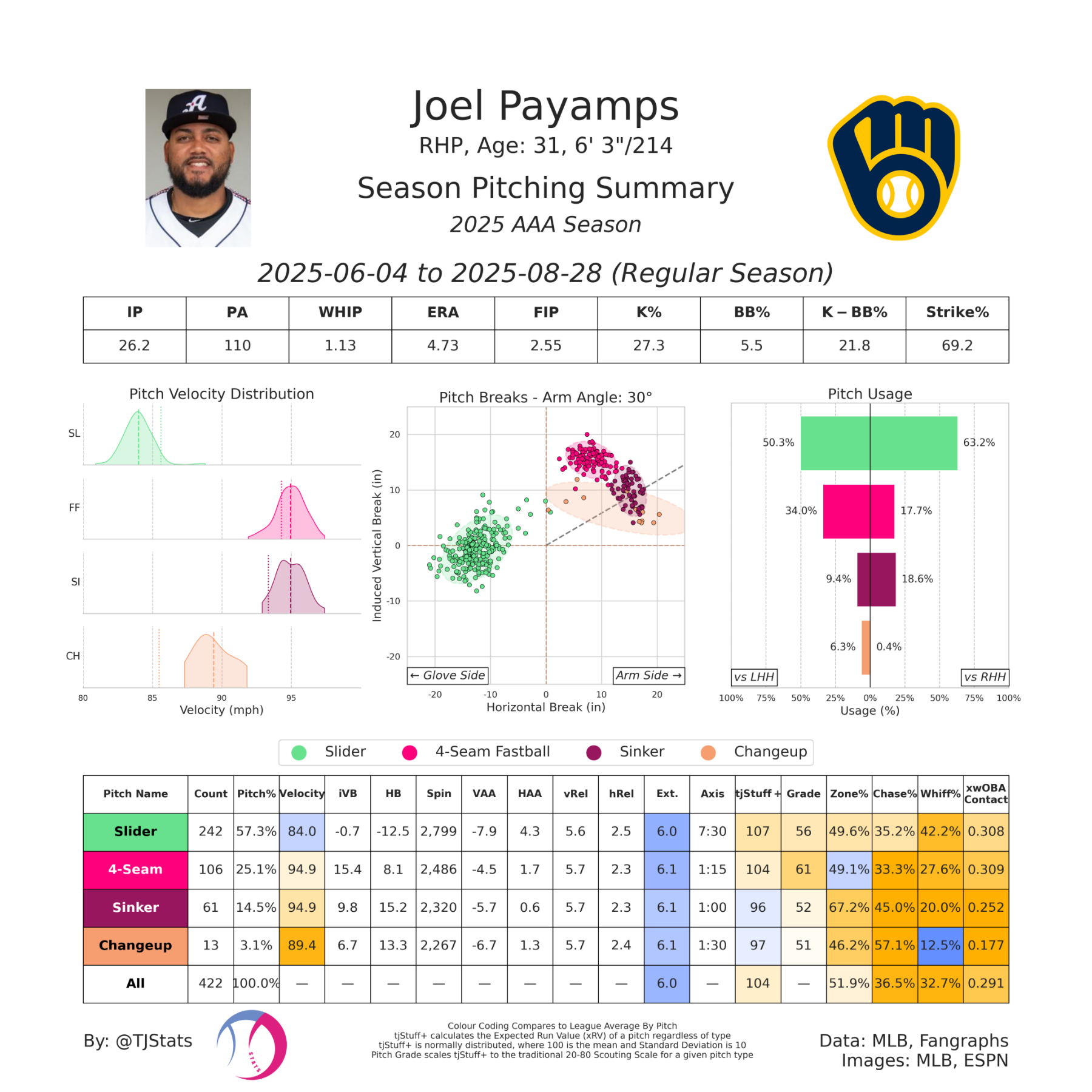
-
Ethan Dorchies throwing 98 pitches at this stage of the season is one heck of an effort. Lots of contact, but he did a great job keeping it on the ground when he faced traffic and a varied arsenal had the Nats in tatters
-
And then some slightly odd baserunning, didn't cut the bases well and took a wide turn at third base on an Ebel single before being thrown out very comfortably at the plate. By 5 yards or so
-
Payne singled and a slightly fortunate stolen base. If the shortstop holds that, Payne's out fairly comfortably
-
Dorchies finishes off the frame with a misplaced high curveball to strike out Eli Willits. Nice scalp there
-
In some twist of fate, it would be fascinating to see the Mudcats, who were swept as the possessors in the final week of the first half, come back and do the same as the chasers in the second half for a playoff push.
-
And Jose Anderson with a deep drive to left! That marginal caught stealing on Bitonti hurts a little more now
-
There's a dude in the Mudcats game, a spectator in a red shirt, who epitomises "chill". That's total relaxation right there
-
Absolutely! My point is that Misiorowski missed time on the IL since the All Star break, so using that span to see what innings he covered isn't a fair statistical representation (though he hasn't eaten a ton of innings obviously)
-
Rhys Hoskins has zero MLB at bats in that time.. It's an interesting debate to go down, but the injury break, a subsequent ramp up, does negate the value of this statistic
-
Thread Title: On Point

