Jason Wang
-
Posts
955 -
Joined
-
Last visited
-
Days Won
1
Content Type
Profiles
Forums
Blogs
Events
News
2026 Milwaukee Brewers Top Prospects Ranking
Milwaukee Brewers Videos
2022 Milwaukee Brewers Draft Picks
Milwaukee Brewers Free Agent & Trade Rumors, Notes, & Tidbits
Guides & Resources
2023 Milwaukee Brewers Draft Picks
2024 Milwaukee Brewers Draft Picks
The Milwaukee Brewers Players Project
2025 Milwaukee Brewers Draft Pick Tracker
2026 Milwaukee Brewers Draft Tracker: Picks & Bonuses
Store
Downloads
Gallery
Everything posted by Jason Wang
-

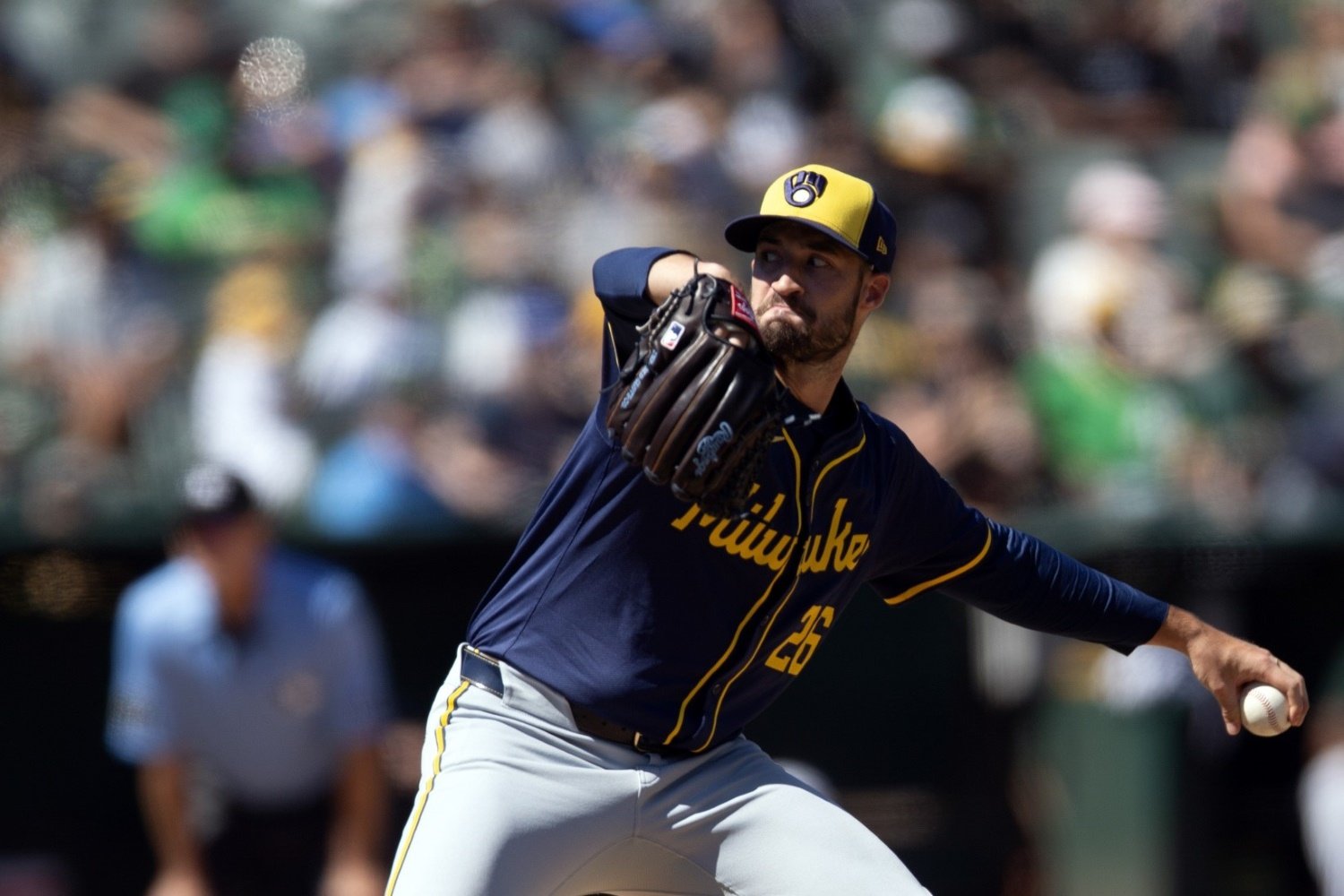 Aaron Ashby has had a less-than-ideal past two years. After missing all of 2023 due to serious issues with his left shoulder, he came back this season as a diminished version of his former self. His velocity was down across the board, an understandable side effect of an extended layoff and rehabilitation process, and aside from two shaky starts, he has spent his 2024 with Triple-A Nashville. He was even less consistent in the minors, and across 84 total innings with the Sounds, he posted an 8.04 ERA and 2.00 WHIP. Those are eye-popping numbers, but not in the good way. To be fair, his time with the Sounds became more of a long-term rehabilitation assignment than anything. In late May, he had already pitched nearly 40 innings to an 8.10 ERA, but Nashville manager Rick Sweet noted that he was steadily improving, gradually refining his previously nonexistent command and working back up to his pre-injury velocity. Sweet also noted that shoulder injuries are notoriously tricky and hard to come back from, so this rough patch wasn’t totally unexpected. In August, Ashby finally started to resemble the top prospect he was before injury struck. In his final six games with the Sounds, he pitched eight innings in relief and gave up just two earned runs. His strikeout rate spiked to 48.3% and his K/BB was sitting at 5.0. The biggest reason for this improvement seems to be big steps forward on his sinker. Before his August renaissance, the pitch was sitting right in that lovely “meatball” part of the zone where opposing hitters have the most success and make the best contact. Since regaining his feel, it’s now closer to the edges of the strike zone, limiting batted-ball quality. Furthermore, his velocity is back up. Prior to Aug. 6, his sinker averaged 93.9 MPH and topped out at 96.7. Since then, it’s averaging 95.5 and topping out at 98.4, numbers more in line with what he was doing pre-injury. His slider and curveball are also on an upward trend, especially as out pitches. Of the 15 total strikeouts he had in the aforementioned span, eight came against his slider and five came against his curveball. All of this was on display in his first major-league outing since Jun. 5. In a two-inning relief appearance against the Oakland Athletics, he threw 31 total pitches, 18 of which were strikes. He gave up no hits, no earned runs, and a lone walk, and he struck out two batters. His sinker remained his primary pitch, comfortably sitting around 96 MPH and topping out at 98.2. More importantly, the command had clearly improved, peppering the outside of the zone and earning him five called strikes. He only threw three sliders, but was deploying the curveball to great effect, earning three called strikes and a whiff. Ashby’s enticing upside as a pitcher is why the Brewers extended him into 2027, with two more team options. He’s a lefty with significant potential, and while it may be difficult to discern that fact from quick glances at his numbers on Baseball Reference, the deeper details point to him being a potential powerhouse arm. The larger question about his exact role on the pitching staff still remains unclear, however. Is he at his best in short bursts coming out of the bullpen? Will he ever be able to replicate the success he’s having when having to stretch out to five or six innings of work? It’s hard to make that call right now, but at just over 26 years old, Ashby is having enough success to keep himself in the big-league mix into October.
 -
After bouncing back and forth between Triple-A and the majors this year, his return to the big leagues might be for good--and so might his transition to a new role. Image courtesy of © D. Ross Cameron-USA TODAY Sports After bouncing back and forth between Triple-A and the majors this year, his return to the big leagues might be for good--and so might his transition to a new role. Aaron Ashby has had a less-than-ideal past two years. After missing all of 2023 due to serious issues with his left shoulder, he came back this season as a diminished version of his former self. His velocity was down across the board, an understandable side effect of an extended layoff and rehabilitation process, and aside from two shaky starts, he has spent his 2024 with Triple-A Nashville. He was even less consistent in the minors, and across 84 total innings with the Sounds, he posted an 8.04 ERA and 2.00 WHIP. Those are eye-popping numbers, but not in the good way. To be fair, his time with the Sounds became more of a long-term rehabilitation assignment than anything. In late May, he had already pitched nearly 40 innings to an 8.10 ERA, but Nashville manager Rick Sweet noted that he was steadily improving, gradually refining his previously nonexistent command and working back up to his pre-injury velocity. Sweet also noted that shoulder injuries are notoriously tricky and hard to come back from, so this rough patch wasn’t totally unexpected. In August, Ashby finally started to resemble the top prospect he was before injury struck. In his final six games with the Sounds, he pitched eight innings in relief and gave up just two earned runs. His strikeout rate spiked to 48.3% and his K/BB was sitting at 5.0. The biggest reason for this improvement seems to be big steps forward on his sinker. Before his August renaissance, the pitch was sitting right in that lovely “meatball” part of the zone where opposing hitters have the most success and make the best contact. Since regaining his feel, it’s now closer to the edges of the strike zone, limiting batted-ball quality. Furthermore, his velocity is back up. Prior to Aug. 6, his sinker averaged 93.9 MPH and topped out at 96.7. Since then, it’s averaging 95.5 and topping out at 98.4, numbers more in line with what he was doing pre-injury. His slider and curveball are also on an upward trend, especially as out pitches. Of the 15 total strikeouts he had in the aforementioned span, eight came against his slider and five came against his curveball. All of this was on display in his first major-league outing since Jun. 5. In a two-inning relief appearance against the Oakland Athletics, he threw 31 total pitches, 18 of which were strikes. He gave up no hits, no earned runs, and a lone walk, and he struck out two batters. His sinker remained his primary pitch, comfortably sitting around 96 MPH and topping out at 98.2. More importantly, the command had clearly improved, peppering the outside of the zone and earning him five called strikes. He only threw three sliders, but was deploying the curveball to great effect, earning three called strikes and a whiff. Ashby’s enticing upside as a pitcher is why the Brewers extended him into 2027, with two more team options. He’s a lefty with significant potential, and while it may be difficult to discern that fact from quick glances at his numbers on Baseball Reference, the deeper details point to him being a potential powerhouse arm. The larger question about his exact role on the pitching staff still remains unclear, however. Is he at his best in short bursts coming out of the bullpen? Will he ever be able to replicate the success he’s having when having to stretch out to five or six innings of work? It’s hard to make that call right now, but at just over 26 years old, Ashby is having enough success to keep himself in the big-league mix into October. View full article
-
Anatomy of an At-Bat: Jared Koenig Halted Athletics by Beating JJ Bleday
Jason Wang posted an article in Brewers
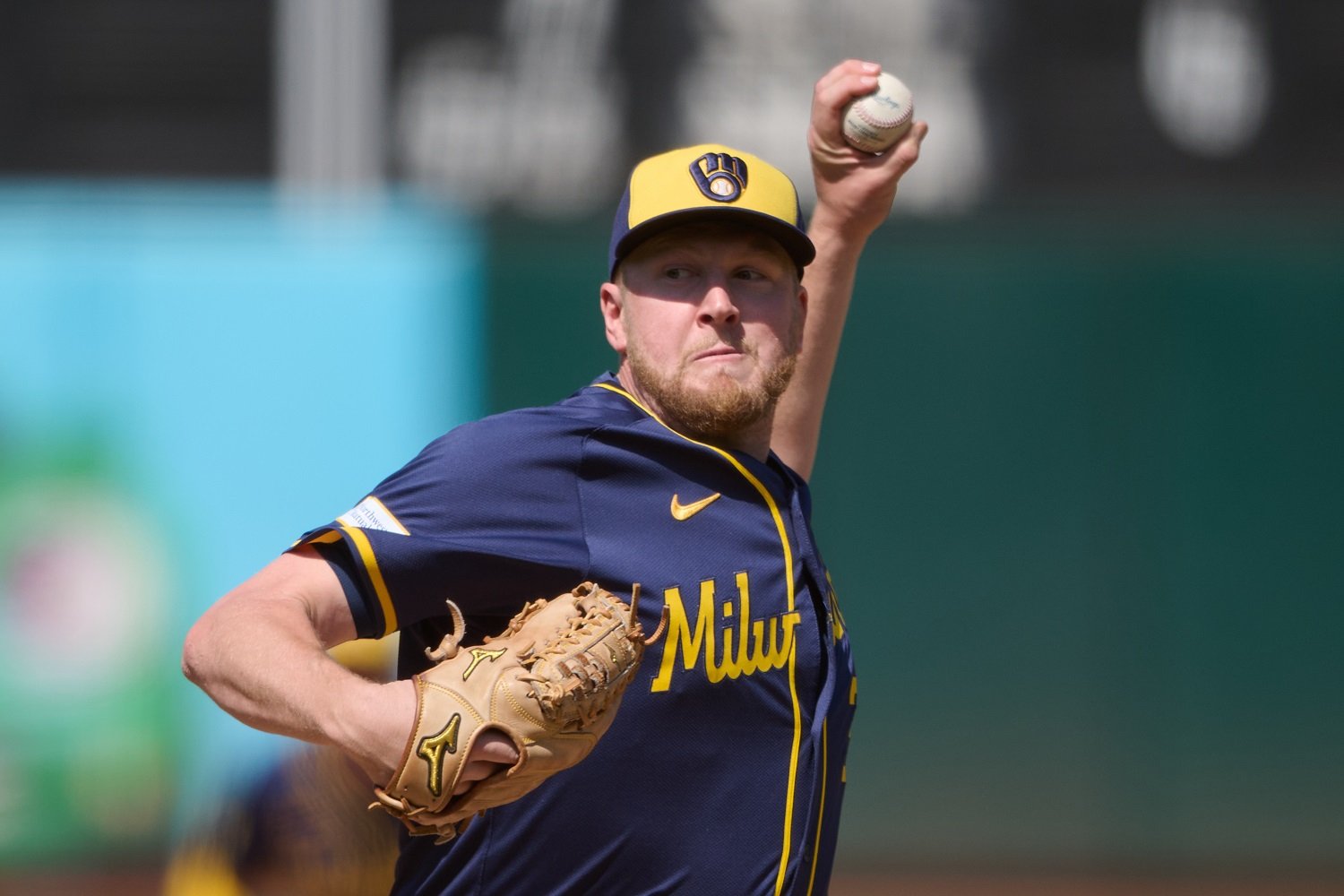 The Brewers headed into the seventh inning with a 5-3 lead over Oakland. After a single and stolen base by Zack Gelof, lefty Jared Koenig was tasked with getting the final out of the inning. His sixth pitch to Daz Cameron, a sinker in the heart of the strike zone, was battered into right field for an RBI double. Brent Rooker, who had already hit a double and a homer, was intentionally walked, so JJ Bleday entered the batter’s box. Koenig has been great against lefties all year, posting a 0.83 ERA and 0.88 WHIP over 84 batters faced. Not only did walking Rooker reduce the threat of an admittedly hot bat, it gave Koenig an important handedness advantage. On the other hand, Bleday has been hitting lefties well this year, posting a .537 slugging percentage and an .821 OPS over 89 plate appearances. Despite his power against left-handed pitching, his strikeout (21.3%) and walk rates (6.7%) still left him vulnerable. The matchup started with some drama before the first pitch was thrown as Bleday was charged with a pitch-clock violation after taking too long to enter the box. Athletics manager Mark Kotsay came out to argue that Bleday had simply been waiting for Rooker to make it to first base but his words fell on deaf ears, giving Koenig an 0-1 head start. In fresh 0-0 counts, Koenig throws a sinker more than half the time. In 0-1 counts, he prefers to mix in his cutter and changeup more, likely to slow down the hitter after seeing a mid-90s sinker. In this case, he threw a sinker that ended up down and in on Bleday, causing him to whiff his way to an 0-2 count. With three balls to work with, Koenig likely wanted to expand the zone and avoid giving Bleday anything too juicy to hit. So he deployed a cutter that ended up in the right-handed batter box to bring the count to 1-2. He tried it again, instead placing the cutter beautifully on the outside edge of the zone but Bleday managed to foul it off to stay alive. Now at 1-2 with Bleday starting to time up his cutter, Koenig needed to stir the pot once again. 1-2 counts are when he throws his curveball most often and it typically follows a string of higher velocity pitches. With proper tunneling and the hitter’s timing sped up, Koenig’s curveballs have a whiff rate of 48.7% and a put-away percentage of 22.8%. Unfortunately in this case, Bleday took his curveball beneath the zone to bring the count to 2-2. With Bleday starting to work his way back in the count, it was time to get back to the bread and butter. With the last pitch down and in, Koenig’s fifth pitch was a sinker to the outer portion of the zone. It even had some extra juice, clocking in a 2.3 mph faster than the first sinker he threw in the at-bat, but Bleday fouled it off once again. The one part of the zone Koenig hadn’t yet attacked was the upper portion. As with most hitters in today’s game, Bleday struggles to be productive against high pitches but more importantly, he’s been terrible against pitches up and away. A quick peek at his wOBA heat map illustrates this as clear as day. With the game on the line and protecting a narrow lead, Koenig’s best bet would be the cutter. The location of that pitch has been up and away from lefties all year and while it’s actually been most effective against righties, it seemed like the right weapon in this case. And so against a 90.2 mph cutter just past the outside corner, Bleday failed to check his swing and punched out, allowing Milwaukee to preserve their 5-4 lead heading into the eighth inning. The events of this matchup seemed ultimately inconsequential as the Brewers would tack on four more insurance runs and finish the game with a 9-5 score, but this helped stop a potential downward slide for the team. Of the 27 outs earned by Milwaukee, this one had the highest win probability added at 9.5%. It was an outstanding performance by Koenig in a high-pressure situation and was a good example of what makes this pitching staff so great.
 -
In the late innings of a one-run game, one of the best Brewers bullpen arms stopped an Oakland outburst dead in its tracks. Image courtesy of © Robert Edwards-USA TODAY Sports In the late innings of a one-run game, one of the best Brewers bullpen arms stopped an Oakland outburst dead in its tracks. The Brewers headed into the seventh inning with a 5-3 lead over Oakland. After a single and stolen base by Zack Gelof, lefty Jared Koenig was tasked with getting the final out of the inning. His sixth pitch to Daz Cameron, a sinker in the heart of the strike zone, was battered into right field for an RBI double. Brent Rooker, who had already hit a double and a homer, was intentionally walked, so JJ Bleday entered the batter’s box. Koenig has been great against lefties all year, posting a 0.83 ERA and 0.88 WHIP over 84 batters faced. Not only did walking Rooker reduce the threat of an admittedly hot bat, it gave Koenig an important handedness advantage. On the other hand, Bleday has been hitting lefties well this year, posting a .537 slugging percentage and an .821 OPS over 89 plate appearances. Despite his power against left-handed pitching, his strikeout (21.3%) and walk rates (6.7%) still left him vulnerable. The matchup started with some drama before the first pitch was thrown as Bleday was charged with a pitch-clock violation after taking too long to enter the box. Athletics manager Mark Kotsay came out to argue that Bleday had simply been waiting for Rooker to make it to first base but his words fell on deaf ears, giving Koenig an 0-1 head start. In fresh 0-0 counts, Koenig throws a sinker more than half the time. In 0-1 counts, he prefers to mix in his cutter and changeup more, likely to slow down the hitter after seeing a mid-90s sinker. In this case, he threw a sinker that ended up down and in on Bleday, causing him to whiff his way to an 0-2 count. With three balls to work with, Koenig likely wanted to expand the zone and avoid giving Bleday anything too juicy to hit. So he deployed a cutter that ended up in the right-handed batter box to bring the count to 1-2. He tried it again, instead placing the cutter beautifully on the outside edge of the zone but Bleday managed to foul it off to stay alive. Now at 1-2 with Bleday starting to time up his cutter, Koenig needed to stir the pot once again. 1-2 counts are when he throws his curveball most often and it typically follows a string of higher velocity pitches. With proper tunneling and the hitter’s timing sped up, Koenig’s curveballs have a whiff rate of 48.7% and a put-away percentage of 22.8%. Unfortunately in this case, Bleday took his curveball beneath the zone to bring the count to 2-2. With Bleday starting to work his way back in the count, it was time to get back to the bread and butter. With the last pitch down and in, Koenig’s fifth pitch was a sinker to the outer portion of the zone. It even had some extra juice, clocking in a 2.3 mph faster than the first sinker he threw in the at-bat, but Bleday fouled it off once again. The one part of the zone Koenig hadn’t yet attacked was the upper portion. As with most hitters in today’s game, Bleday struggles to be productive against high pitches but more importantly, he’s been terrible against pitches up and away. A quick peek at his wOBA heat map illustrates this as clear as day. With the game on the line and protecting a narrow lead, Koenig’s best bet would be the cutter. The location of that pitch has been up and away from lefties all year and while it’s actually been most effective against righties, it seemed like the right weapon in this case. And so against a 90.2 mph cutter just past the outside corner, Bleday failed to check his swing and punched out, allowing Milwaukee to preserve their 5-4 lead heading into the eighth inning. The events of this matchup seemed ultimately inconsequential as the Brewers would tack on four more insurance runs and finish the game with a 9-5 score, but this helped stop a potential downward slide for the team. Of the 27 outs earned by Milwaukee, this one had the highest win probability added at 9.5%. It was an outstanding performance by Koenig in a high-pressure situation and was a good example of what makes this pitching staff so great. View full article
-
The Crew's star shortstop has been swinging a hot bat, but still seems to struggle against southpaws. Why? Image courtesy of © Benny Sieu-USA TODAY Sports The Crew's star shortstop has been swinging a hot bat, but still seems to struggle against southpaws. Why? Since the All-Star break, Willy Adames has been excellent at the plate. His .883 OPS across 108 plate appearances is the third-best among qualified Brewers hitters, behind Jackson Chourio (.972 OPS) and William Contreras (.883 OPS). With a season OPS+ of 116 so far, it’s a big step forward after a disappointing 93 OPS+ in 2023. But alas, everything has a price. Throughout his career, Adames has been slightly better against righties than he has against lefties. The OPS difference is .087, so while meaningful, it's not totally off-putting, and he’s still able to hold his own. In fact, he actually hit lefties better (.763 OPS) than he hit righties (.701) last year, an interesting change of pace. This year, he’s gone in the other direction and has produced very lopsided splits. BA OBP SLG K% BB% vs. RHP .271 .338 .500 25.9% 9.1% vs. LHP .191 .318 .300 21.2% 15.9% At first glance, the difference in his slash line is clear. It seems like he’s able to hit for greater power against righties, but is being more conservative against lefties, striking out less and walking much more. But a closer look at the exit data actually shows that the opposite is true, sort of. Exit Velocity Launch Angle >95mph EV Barrel Rate Flyball Distance vs. RHP 88.3 mph 17.8 38.5% 22.2% 336.8 vs. LHP 90.6 mph 24.1 47.0% 22.9% 358.8 Interestingly enough, Adames has a higher average exit velocity against lefties, and almost half of his batted balls against lefties are hit harder than 95 mph. That's what we'd expect from a right-handed hitter, but the results aren't. So what gives? Are we being deceived? The culprit is the term “average,” an imperfect and incomplete metric measure of center. A quick peek at a vertical launch angle heat map helps add clarity to this predicament. vs. LHP (left) & vs. RHP (right) Adames tends to get a lot more batted balls with steep launch angles against southpaws. The “average” launch angle of 24.1 degrees would be cool if he could hit it every time, but realistically, the figure is a result of a more bimodal distribution of high fly balls and low ground balls. The launch angle distribution against righties is much more even, and his most frequent 10-degree launch angle band against them is 20-30 degrees. Against lefties, the band in which he's hit the ball most often is 40-50 degrees. Southpaws have induced a whole lot of high, catchable fly balls from Adames. On the bright side, he’s had nearly three times more plate appearances against righties (400, vs. 132 against lefties), so his overall production hasn’t been dragged down by much. On the other hand, it seems to be getting even worse. In the 26 plate appearances against lefties since the All-Star break, he has a .364 OPS. It’s a small sample, but it’s part of a larger pattern that has gone on all season. One can only hope that he doesn’t see too much southpaw opposition come the playoffs--or that he makes a dramatic adjustment by then. View full article
-
Left-Handed Pitchers Keep Giving Brewers' Willy Adames Trouble
Jason Wang posted an article in Brewers
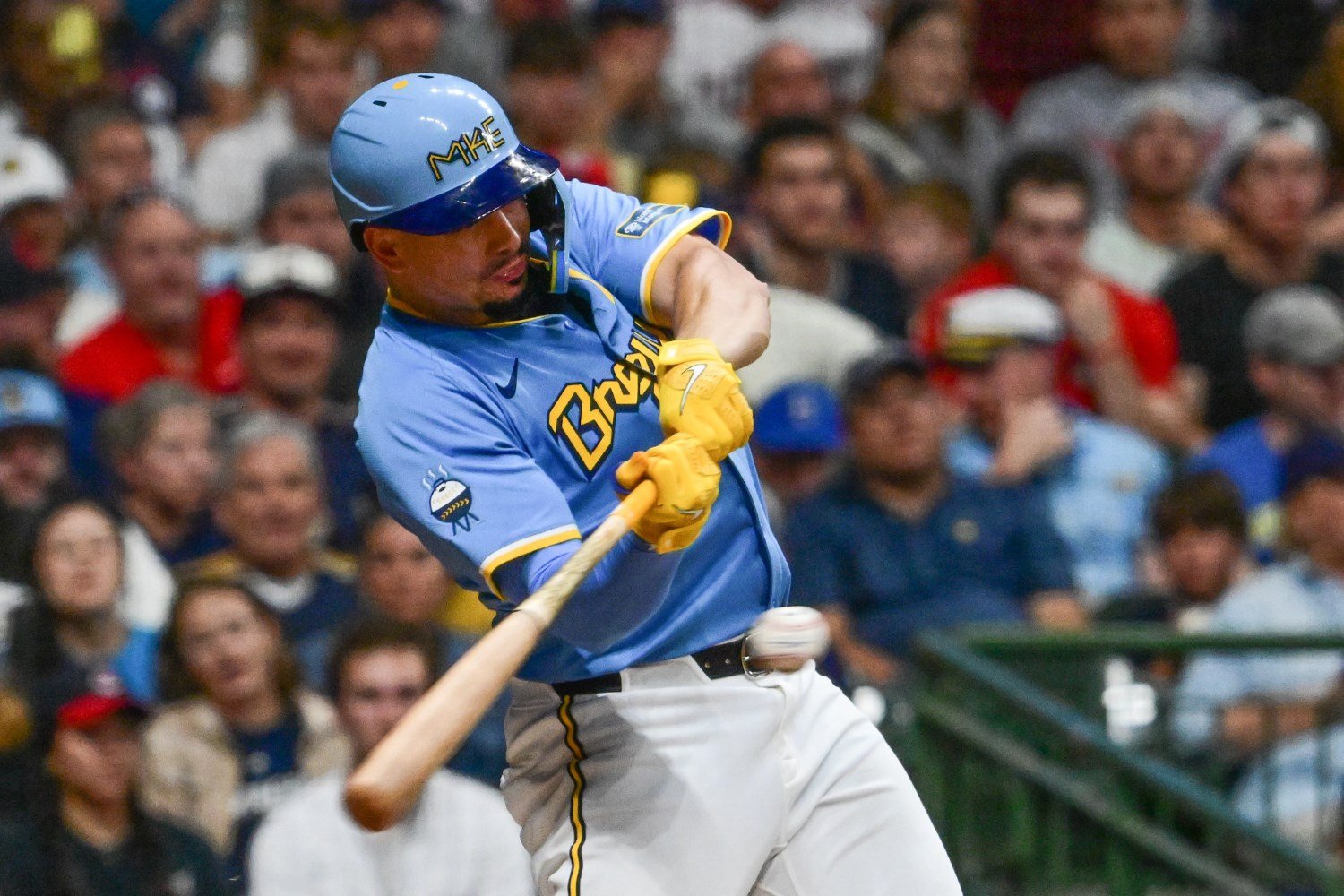 Since the All-Star break, Willy Adames has been excellent at the plate. His .883 OPS across 108 plate appearances is the third-best among qualified Brewers hitters, behind Jackson Chourio (.972 OPS) and William Contreras (.883 OPS). With a season OPS+ of 116 so far, it’s a big step forward after a disappointing 93 OPS+ in 2023. But alas, everything has a price. Throughout his career, Adames has been slightly better against righties than he has against lefties. The OPS difference is .087, so while meaningful, it's not totally off-putting, and he’s still able to hold his own. In fact, he actually hit lefties better (.763 OPS) than he hit righties (.701) last year, an interesting change of pace. This year, he’s gone in the other direction and has produced very lopsided splits. BA OBP SLG K% BB% vs. RHP .271 .338 .500 25.9% 9.1% vs. LHP .191 .318 .300 21.2% 15.9% At first glance, the difference in his slash line is clear. It seems like he’s able to hit for greater power against righties, but is being more conservative against lefties, striking out less and walking much more. But a closer look at the exit data actually shows that the opposite is true, sort of. Exit Velocity Launch Angle >95mph EV Barrel Rate Flyball Distance vs. RHP 88.3 mph 17.8 38.5% 22.2% 336.8 vs. LHP 90.6 mph 24.1 47.0% 22.9% 358.8 Interestingly enough, Adames has a higher average exit velocity against lefties, and almost half of his batted balls against lefties are hit harder than 95 mph. That's what we'd expect from a right-handed hitter, but the results aren't. So what gives? Are we being deceived? The culprit is the term “average,” an imperfect and incomplete metric measure of center. A quick peek at a vertical launch angle heat map helps add clarity to this predicament. vs. LHP (left) & vs. RHP (right) Adames tends to get a lot more batted balls with steep launch angles against southpaws. The “average” launch angle of 24.1 degrees would be cool if he could hit it every time, but realistically, the figure is a result of a more bimodal distribution of high fly balls and low ground balls. The launch angle distribution against righties is much more even, and his most frequent 10-degree launch angle band against them is 20-30 degrees. Against lefties, the band in which he's hit the ball most often is 40-50 degrees. Southpaws have induced a whole lot of high, catchable fly balls from Adames. On the bright side, he’s had nearly three times more plate appearances against righties (400, vs. 132 against lefties), so his overall production hasn’t been dragged down by much. On the other hand, it seems to be getting even worse. In the 26 plate appearances against lefties since the All-Star break, he has a .364 OPS. It’s a small sample, but it’s part of a larger pattern that has gone on all season. One can only hope that he doesn’t see too much southpaw opposition come the playoffs--or that he makes a dramatic adjustment by then.
 -
Just came here to note that in the 26 games since the ASB, Jackson Chourio leads all qualified Brewers with a .982 OPS.
-
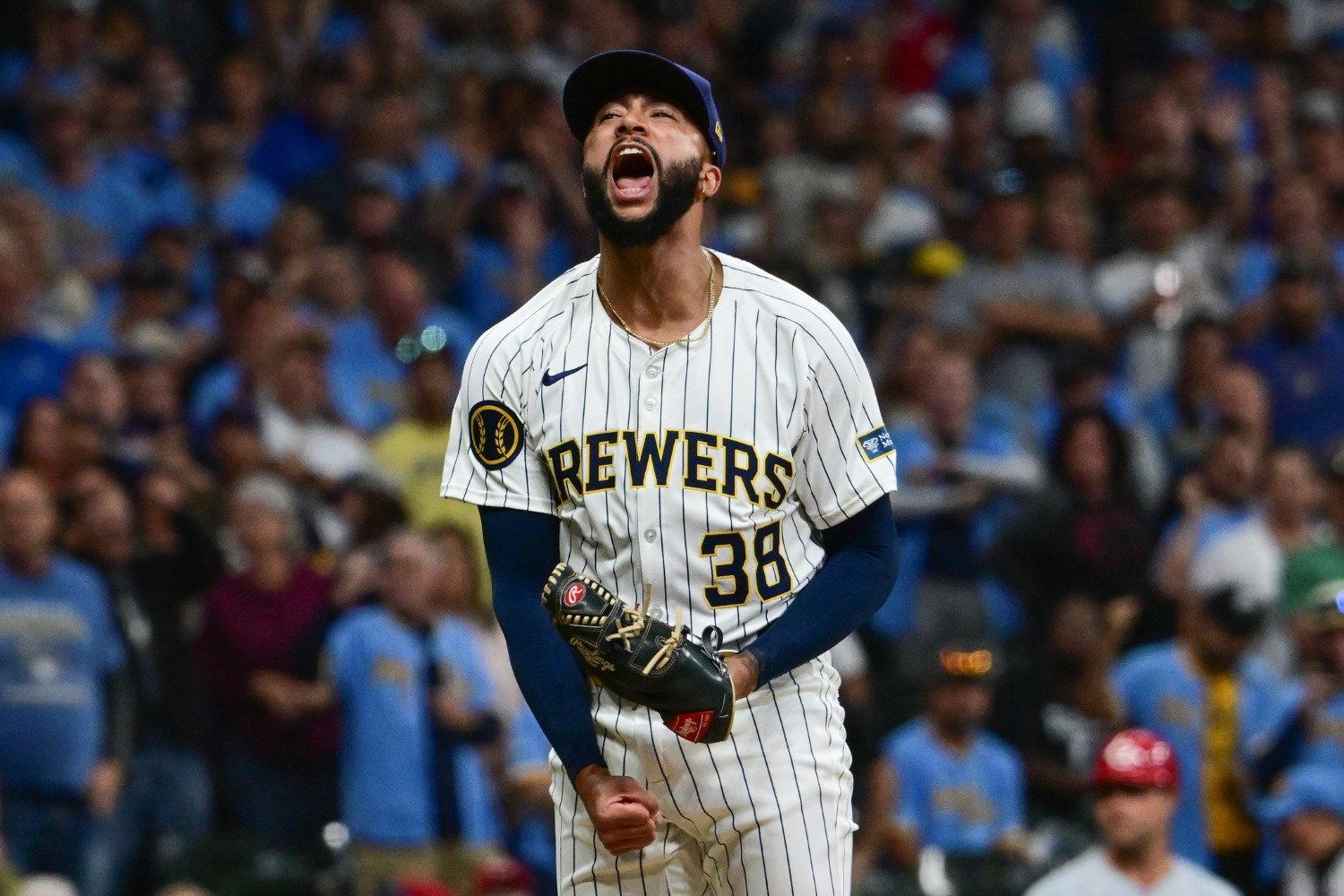 When Devin Williams took the mound on Jul. 28, it had been 318 days since his last competitive major-league appearance, a shaky outing in the first game of the 2023 Wild Card Series. So far, he’s back to business as usual, posting a 1.80 ERA across the five innings he has pitched, with nine strikeouts. On Wednesday night, in recording his second save of the campaign, Williams retired Shohei Ohtani, Mookie Betts, and Freddie Freeman in order, all with a one-run lead. The only instances in the last half-century of that exhilarating a baseball moment--one of the game's best closers getting out an elite trio of hitters at the top of the lineup in the ninth inning, to close out a one-run win--prior to Wednesday were: May 24, 2006: Billy Wagner gets out Jimmy Rollins, Chase Utley, and Bobby Abreu, Mets beat Phillies Jun. 11, 2009: Jonathan Papelbon sets down Derek Jeter, Johnny Damon, and Mark Teixeira, Red Sox beat Yankees Jun. 29, 2023: David Bednar retires Fernando Tatis Jr, Juan Soto, and Manny Machado, Pirates beat Padres Despite the magnitude of some of his matchups, the sample size of innings and batters faced is too small to draw any major conclusions on Williams yet. Still, I wanted to take a closer look at the plentiful data from his 79 pitches thrown so far, to see whether his stuff is still up to snuff or if he’s yet to reach his final form. The first order of business is to check on his velocity and spin rates. These surface-level metrics should give us a broad idea of what he’s working with, and pitchers returning from long layoffs are often affected. Although it’s usually shoulder and arm injuries that have truly adverse effects on these characteristics, let’s compare and contrast his numbers year-over-year, for the sake of being thorough. Average Velocity (MPH) Spin Rate (RPM) 2024 Four-Seam Fastball 95.2 2322 2023 Four-Seam Fastball 94.2 2322 2024 Changeup 84.8 2713 2023 Changeup 83.8 2683 As expected, things are pretty much the same. He’s throwing a little harder, in fact, and the spin rate hasn’t changed at all since last year (kooky!). It makes sense that he’s carrying an extra tick on the heat, since he hasn’t had the workload of an entire season and is fresh. Because of the similar velocities and spin rates, it makes sense that the amount of movement on his pitches is also virtually identical compared to last year. So he’s still chuckin’ the ball real nice, but how has he commanded it thus far? Let’s start with his fastball. Last year, Williams loved going up and away with it, helping to compensate for his relatively average velocity. It had a whiff rate of 41.8% and a strikeout rate of 41.1%, excellent numbers for a pitch that’s usually thrown in the upper-90s by other elite relievers. This year, he has been great on the edges of the strike zone, barring a few misses here and there. He’s been slightly better with command against lefties, as there are a good amount of pitches to righties that are a little farther outside than you'd want. The changeup, his patented “airbender,” is a little different. It has been both his best and most frequently thrown pitch since 2020. Against the 2,152 changeups that he has thrown in his career, opposing batters are averaging just .140, a ridiculous number. Only 27 of those changeups are from 2024, but the command on them still seems pretty good. To batters at the plate, the pitch simply drops off the table and tumbles more than 40 inches, understandably leading to a lot of balls ending up below the zone. Against lefty hitters, it has the added effect of breaking nearly 20 inches to his arm side, going down and away for a frustrating hitting experience overall. He has given up two hits this year, both to lefties, but one of those was iffy to say the least. At least it gave Xavier Edwards his first major-league cycle! Here’s what it looks like when it’s working. All in all, the verdict is: it seems like he’s going to be just fine. As mentioned earlier, while a back stress fracture isn’t your average playground boo-boo, it’s much less concerning than an arm or shoulder injury. Furthermore, it seems that both he and the Brewers had a thorough rehabilitation and recovery process to ensure that he hit the ground running when coming back to the big-league level. To cap it all off, he faced the biggest test of his season last night. Not only did he cruise past three of the greatest hitters in the league, he did so in just seven pitches. He’ll undoubtedly face some hiccups later on, since that’s sort of how baseball works, but for now, it seems that he’s already picked up where he left off. If anything, it might mean that he’s even fresher for high-leverage, career-defining, postseason save opportunities.
 -
He hasn’t thrown many innings since coming back, but the one he pitched to close out Wednesday night's nailbiter was thrilling. What does pitch-by-pitch data say about his current status? Image courtesy of © Benny Sieu-USA TODAY Sports He hasn’t thrown many innings since coming back, but the one he pitched to close out Wednesday night's nailbiter was thrilling. What does pitch-by-pitch data say about his current status? When Devin Williams took the mound on Jul. 28, it had been 318 days since his last competitive major-league appearance, a shaky outing in the first game of the 2023 Wild Card Series. So far, he’s back to business as usual, posting a 1.80 ERA across the five innings he has pitched, with nine strikeouts. On Wednesday night, in recording his second save of the campaign, Williams retired Shohei Ohtani, Mookie Betts, and Freddie Freeman in order, all with a one-run lead. The only instances in the last half-century of that exhilarating a baseball moment--one of the game's best closers getting out an elite trio of hitters at the top of the lineup in the ninth inning, to close out a one-run win--prior to Wednesday were: May 24, 2006: Billy Wagner gets out Jimmy Rollins, Chase Utley, and Bobby Abreu, Mets beat Phillies Jun. 11, 2009: Jonathan Papelbon sets down Derek Jeter, Johnny Damon, and Mark Teixeira, Red Sox beat Yankees Jun. 29, 2023: David Bednar retires Fernando Tatis Jr, Juan Soto, and Manny Machado, Pirates beat Padres Despite the magnitude of some of his matchups, the sample size of innings and batters faced is too small to draw any major conclusions on Williams yet. Still, I wanted to take a closer look at the plentiful data from his 79 pitches thrown so far, to see whether his stuff is still up to snuff or if he’s yet to reach his final form. The first order of business is to check on his velocity and spin rates. These surface-level metrics should give us a broad idea of what he’s working with, and pitchers returning from long layoffs are often affected. Although it’s usually shoulder and arm injuries that have truly adverse effects on these characteristics, let’s compare and contrast his numbers year-over-year, for the sake of being thorough. Average Velocity (MPH) Spin Rate (RPM) 2024 Four-Seam Fastball 95.2 2322 2023 Four-Seam Fastball 94.2 2322 2024 Changeup 84.8 2713 2023 Changeup 83.8 2683 As expected, things are pretty much the same. He’s throwing a little harder, in fact, and the spin rate hasn’t changed at all since last year (kooky!). It makes sense that he’s carrying an extra tick on the heat, since he hasn’t had the workload of an entire season and is fresh. Because of the similar velocities and spin rates, it makes sense that the amount of movement on his pitches is also virtually identical compared to last year. So he’s still chuckin’ the ball real nice, but how has he commanded it thus far? Let’s start with his fastball. Last year, Williams loved going up and away with it, helping to compensate for his relatively average velocity. It had a whiff rate of 41.8% and a strikeout rate of 41.1%, excellent numbers for a pitch that’s usually thrown in the upper-90s by other elite relievers. This year, he has been great on the edges of the strike zone, barring a few misses here and there. He’s been slightly better with command against lefties, as there are a good amount of pitches to righties that are a little farther outside than you'd want. The changeup, his patented “airbender,” is a little different. It has been both his best and most frequently thrown pitch since 2020. Against the 2,152 changeups that he has thrown in his career, opposing batters are averaging just .140, a ridiculous number. Only 27 of those changeups are from 2024, but the command on them still seems pretty good. To batters at the plate, the pitch simply drops off the table and tumbles more than 40 inches, understandably leading to a lot of balls ending up below the zone. Against lefty hitters, it has the added effect of breaking nearly 20 inches to his arm side, going down and away for a frustrating hitting experience overall. He has given up two hits this year, both to lefties, but one of those was iffy to say the least. At least it gave Xavier Edwards his first major-league cycle! Here’s what it looks like when it’s working. All in all, the verdict is: it seems like he’s going to be just fine. As mentioned earlier, while a back stress fracture isn’t your average playground boo-boo, it’s much less concerning than an arm or shoulder injury. Furthermore, it seems that both he and the Brewers had a thorough rehabilitation and recovery process to ensure that he hit the ground running when coming back to the big-league level. To cap it all off, he faced the biggest test of his season last night. Not only did he cruise past three of the greatest hitters in the league, he did so in just seven pitches. He’ll undoubtedly face some hiccups later on, since that’s sort of how baseball works, but for now, it seems that he’s already picked up where he left off. If anything, it might mean that he’s even fresher for high-leverage, career-defining, postseason save opportunities. View full article
-
Do The Brewers Have a FIP Problem?
Jason Wang replied to Jason Wang's topic in Brewer Fanatic Front Page News
-
Do The Brewers Have a FIP Problem?
Jason Wang replied to Jason Wang's topic in Brewer Fanatic Front Page News
nl central teams after seeing the brewers once again have a big ERA/FIP gap
-
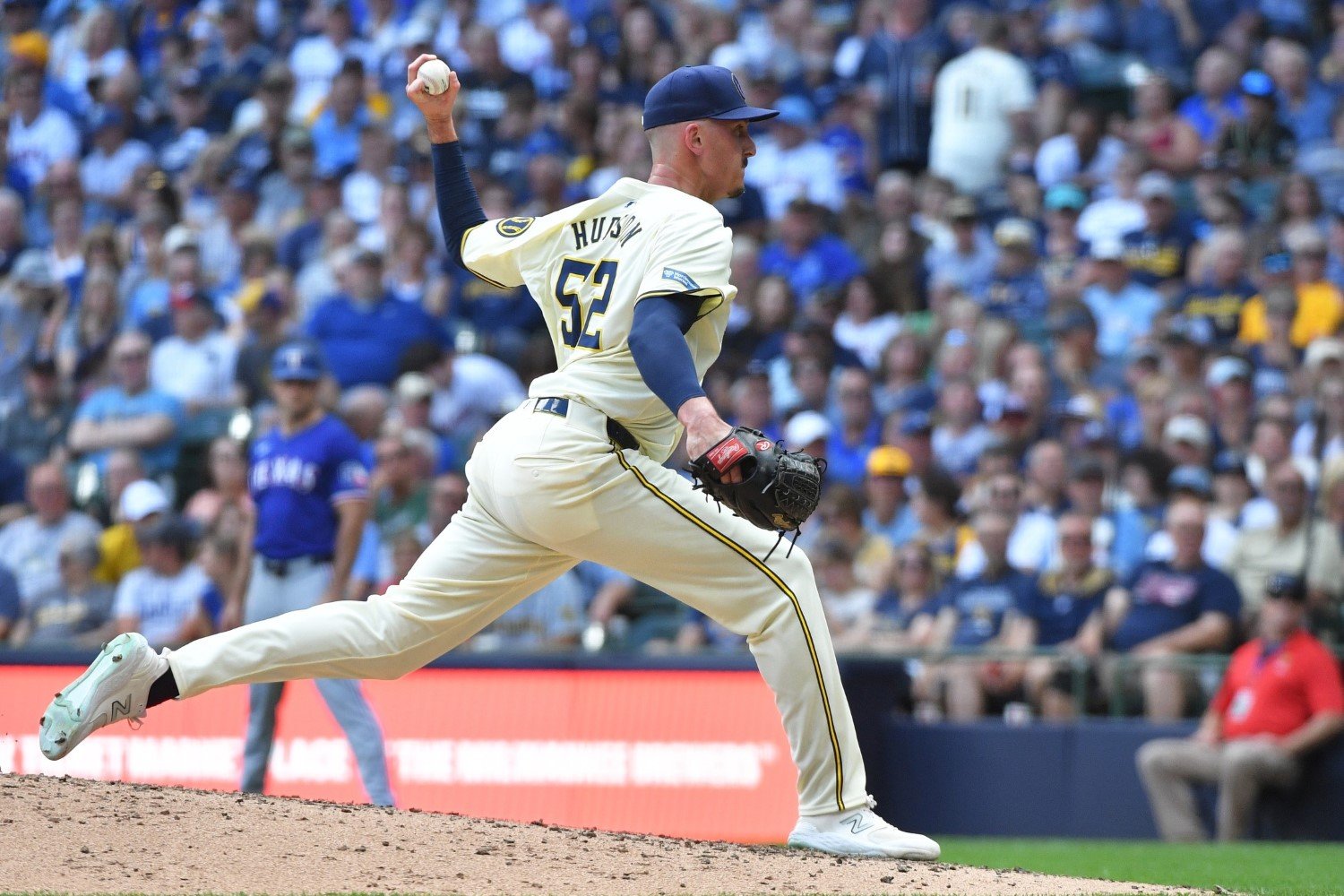 After more than 1,000 innings of baseball, the Brewers have a team ERA of 3.74, the fourth-best in baseball and just 0.02 higher than the second-place Phillies. It has been an area of strength for the past few years, and has helped make up for a relatively weak lineup during long stretches of the last two seasons. However, a closer look at some peripheral numbers indicates that things may not be as rosy as one might think. While they are fourth in ERA, here is where they rank for other key pitching statistics. FIP 4.41 (25th) WHIP 1.25 (15th) K/9 8.29 (22nd) BB/9 3.12 (17th) HR/9 1.26 (25th) For pretty much every other rate statistic, the Brewers are average or worse. Why is this important? Well, FIP (or Fielding Independent Pitching) primarily measures the abilities of a pitcher to minimize home runs, walks, and hit by pitches, while maximizing strikeouts. Essentially, it gauges how well a pitcher does the things over which pitchers have a greater measure of control. Strikeout-heavy pitchers like Chris Sale and Tarik Skubal usually excel at this metric, while other pitchers like Cristopher Sanchez and Logan Webb make up for fewer strikeouts with fewer home runs conceded. Milwaukee has quite a few players with a meaningful difference between their ERA and FIP. There are a few unlucky fellows whose FIP is actually better, but for the most part, things shape up to be the other way around. Player ERA FIP Difference Bryan Hudson 1.60 3.61 -2.01 Jared Koenig 2.01 3.41 -1.4 Tobias Myers 2.79 4.19 -1.4 Bryse Wilson 4.02 5.17 -1.15 Elvis Peguero 3.15 4.24 -1.09 Colin Rea 3.38 4.34 -0.96 Hoby Milner 4.92 3.31 1.61 Bryan Hudson having the biggest negative difference is fascinating. His 28.4% strikeout rate is excellent, but his walk rate of 6.8% and home run rate of 3.2% are both closer to average. Because home runs are weighted so heavily (by a coefficient of 13 in the formula), the six that he has given up drag down his numbers, even though all except one have been solo shots. On the other end of things, poor Hoby Milner has gotten the short end of the stick this season. He has gotten torched on batted balls this summer, but has only given up five home runs over 53 innings. His walk rate of 6.3% is right around the top quartile of the league, even if he’s not the greatest strikeout accumulator the world has ever seen. So what does this mean? Are Brewers pitchers overrated? Is their success solely the result of eating a dozen grapes at midnight before each outing? Should you take the over on earned runs for every Milwaukee game from here on out? As with everything in baseball and quantum mechanics, the answer is "sort of...?" We’ve already talked about what FIP is, so let’s talk about what it is not. Some people like to think FIP is a more accurate representation of a pitcher’s abilities because it’s isolated to things they can control, but there are several flaws with this thesis. First of all, there is far more to pitching than the three true outcomes. Second, the somewhat arbitrary weighting of the outcomes punishes pitchers more than others for unfair reasons. Giving up a three-run homer and one-run homer should not count the same, some argue, because they are very different results in a game. Furthermore, a hypothetical pitcher with a penchant for giving up tons of runs on line drives while conceding no home runs or free passes would theoretically have a better FIP than someone who gives up a solo home run every so often, and nothing else. Finally, while Statcast has made intangible numbers like expected batting average more accessible, ultimately what happens on the field is what decides a game. Even if Bryan Hudson is "supposed to" give up twice as many runs as he has, he hasn’t. To broaden that to the Brewers as a whole, even if they were "supposed to" give up more runs, they haven't. All that said, one upside of paying attention to FIP is that it has been a more accurate predictor of future ERA than ERA itself. It’s an imperfect stat, like everything in baseball, but it's not totally useless. In fact, FanGraphs deliberately uses FIP instead of ERA to calculate WAR for pitchers. The broader takeaway from this should be that Milwaukee’s arms may be overperforming, and these results likely won’t last--at least not with the roster as is. Luckily, the return of guys with great FIPs like Trevor Megill (in the short term) and Brandon Woodruff (in the long term) should help offset some of the anticipated backslide. For now, we can only hope that what they have is enough to get the team through a few more months of postseason-quality baseball.
 -
Does Milwaukee really have one of the best pitching staffs in baseball again, or are they due for a statistical regression? Image courtesy of © Michael McLoone-USA TODAY Sports Does Milwaukee really have one of the best pitching staffs in baseball again, or are they due for a statistical regression? After more than 1,000 innings of baseball, the Brewers have a team ERA of 3.74, the fourth-best in baseball and just 0.02 higher than the second-place Phillies. It has been an area of strength for the past few years, and has helped make up for a relatively weak lineup during long stretches of the last two seasons. However, a closer look at some peripheral numbers indicates that things may not be as rosy as one might think. While they are fourth in ERA, here is where they rank for other key pitching statistics. FIP 4.41 (25th) WHIP 1.25 (15th) K/9 8.29 (22nd) BB/9 3.12 (17th) HR/9 1.26 (25th) For pretty much every other rate statistic, the Brewers are average or worse. Why is this important? Well, FIP (or Fielding Independent Pitching) primarily measures the abilities of a pitcher to minimize home runs, walks, and hit by pitches, while maximizing strikeouts. Essentially, it gauges how well a pitcher does the things over which pitchers have a greater measure of control. Strikeout-heavy pitchers like Chris Sale and Tarik Skubal usually excel at this metric, while other pitchers like Cristopher Sanchez and Logan Webb make up for fewer strikeouts with fewer home runs conceded. Milwaukee has quite a few players with a meaningful difference between their ERA and FIP. There are a few unlucky fellows whose FIP is actually better, but for the most part, things shape up to be the other way around. Player ERA FIP Difference Bryan Hudson 1.60 3.61 -2.01 Jared Koenig 2.01 3.41 -1.4 Tobias Myers 2.79 4.19 -1.4 Bryse Wilson 4.02 5.17 -1.15 Elvis Peguero 3.15 4.24 -1.09 Colin Rea 3.38 4.34 -0.96 Hoby Milner 4.92 3.31 1.61 Bryan Hudson having the biggest negative difference is fascinating. His 28.4% strikeout rate is excellent, but his walk rate of 6.8% and home run rate of 3.2% are both closer to average. Because home runs are weighted so heavily (by a coefficient of 13 in the formula), the six that he has given up drag down his numbers, even though all except one have been solo shots. On the other end of things, poor Hoby Milner has gotten the short end of the stick this season. He has gotten torched on batted balls this summer, but has only given up five home runs over 53 innings. His walk rate of 6.3% is right around the top quartile of the league, even if he’s not the greatest strikeout accumulator the world has ever seen. So what does this mean? Are Brewers pitchers overrated? Is their success solely the result of eating a dozen grapes at midnight before each outing? Should you take the over on earned runs for every Milwaukee game from here on out? As with everything in baseball and quantum mechanics, the answer is "sort of...?" We’ve already talked about what FIP is, so let’s talk about what it is not. Some people like to think FIP is a more accurate representation of a pitcher’s abilities because it’s isolated to things they can control, but there are several flaws with this thesis. First of all, there is far more to pitching than the three true outcomes. Second, the somewhat arbitrary weighting of the outcomes punishes pitchers more than others for unfair reasons. Giving up a three-run homer and one-run homer should not count the same, some argue, because they are very different results in a game. Furthermore, a hypothetical pitcher with a penchant for giving up tons of runs on line drives while conceding no home runs or free passes would theoretically have a better FIP than someone who gives up a solo home run every so often, and nothing else. Finally, while Statcast has made intangible numbers like expected batting average more accessible, ultimately what happens on the field is what decides a game. Even if Bryan Hudson is "supposed to" give up twice as many runs as he has, he hasn’t. To broaden that to the Brewers as a whole, even if they were "supposed to" give up more runs, they haven't. All that said, one upside of paying attention to FIP is that it has been a more accurate predictor of future ERA than ERA itself. It’s an imperfect stat, like everything in baseball, but it's not totally useless. In fact, FanGraphs deliberately uses FIP instead of ERA to calculate WAR for pitchers. The broader takeaway from this should be that Milwaukee’s arms may be overperforming, and these results likely won’t last--at least not with the roster as is. Luckily, the return of guys with great FIPs like Trevor Megill (in the short term) and Brandon Woodruff (in the long term) should help offset some of the anticipated backslide. For now, we can only hope that what they have is enough to get the team through a few more months of postseason-quality baseball. View full article
-
Through continued issues with the health of their starting rotation, Milwaukee still managed to pitch to a combined 3.85 ERA over 24 games. Image courtesy of Thieres Rabelo Through continued issues with the health of their starting rotation, Milwaukee still managed to pitch to a combined 3.85 ERA over 24 games. Honorable Mentions Jakob Junis 15.0 IP, 12 H, 4 ER, 2 BB, 9 K Unfortunately for Brewers fans, Junis was hitting a real post-IL stride before being sent off to the division rival Reds. His 2.40 ERA for the month was one of the best in the bullpen, and quite a few people had hoped he would be kept around. He had a rocky first outing with his new team, giving up three earned runs in 1 ⅓ innings, so maybe Milwaukee knew he was reaching the end of a good stretch. Rob Zastryzny 7 2/3 IP, 4 H, 1 ER, 1 BB, 5 K Another tragic victim of the arm epidemic, Zastryzny, was pitching excellently before hitting the 15-day IL with left elbow tendinitis in the final week of July. He signed a minor-league contract with the Brewers after being designated for assignment last September by the Pirates. He was a good late-inning reliever with the Nashville Sounds in Triple-A. His 1.17 ERA over his nine appearances last month may be the best stretch he has had since his rookie campaign with the Cubs in 2016. Hoby Milner 12 2/3 IP, 12 H, 4 ER, 3 BB, 12 K Master Milner found his footing again after a rough June, which saw him post a 9.64 ERA against a 3.25 FIP over 9 ⅓ innings. Trusting in his stuff again, his numbers became a more accurate reflection of his skill as a reliever, and he had his best month by ERA since April. His numbers aren’t great, and his season WHIP of 1.22 is particularly high, but he should be able to cruise through the remainder of the year. Colin Rea 28.0 IP, 24 H, 11 ER, 7 BB, 28 K Rea continued the momentum he found in June with yet another quality month of starts in July. He put up a 3.54 ERA while reaching a K/9 rate of 9.0, the highest for a single month this year. Quite a few people assumed that he would eventually fall back to an ERA in the 4.50 ballpark, closer to his career averages, but he has refused to do so. He leads the rotation in rWAR and has been of excellent value to the team thus far. Pitcher of the Month - Tobias Myers 23 1/3 IP, 21 H, 7 ER, 5 BB, 22 K He is one of the best rookie pitching talents in the game today. Myers doesn’t get the same attention as other National League rookies, probably because he isn’t dating an LSU gymnast. Nonetheless, his 3.10 ERA over 15 starts is outstanding, and he leads all Milwaukee starters in WHIP at 1.14. July was the second month he rose to the top, following a 1.44 ERA in June. View full article
-
 Honorable Mentions Jakob Junis 15.0 IP, 12 H, 4 ER, 2 BB, 9 K Unfortunately for Brewers fans, Junis was hitting a real post-IL stride before being sent off to the division rival Reds. His 2.40 ERA for the month was one of the best in the bullpen, and quite a few people had hoped he would be kept around. He had a rocky first outing with his new team, giving up three earned runs in 1 ⅓ innings, so maybe Milwaukee knew he was reaching the end of a good stretch. Rob Zastryzny 7 2/3 IP, 4 H, 1 ER, 1 BB, 5 K Another tragic victim of the arm epidemic, Zastryzny, was pitching excellently before hitting the 15-day IL with left elbow tendinitis in the final week of July. He signed a minor-league contract with the Brewers after being designated for assignment last September by the Pirates. He was a good late-inning reliever with the Nashville Sounds in Triple-A. His 1.17 ERA over his nine appearances last month may be the best stretch he has had since his rookie campaign with the Cubs in 2016. Hoby Milner 12 2/3 IP, 12 H, 4 ER, 3 BB, 12 K Master Milner found his footing again after a rough June, which saw him post a 9.64 ERA against a 3.25 FIP over 9 ⅓ innings. Trusting in his stuff again, his numbers became a more accurate reflection of his skill as a reliever, and he had his best month by ERA since April. His numbers aren’t great, and his season WHIP of 1.22 is particularly high, but he should be able to cruise through the remainder of the year. Colin Rea 28.0 IP, 24 H, 11 ER, 7 BB, 28 K Rea continued the momentum he found in June with yet another quality month of starts in July. He put up a 3.54 ERA while reaching a K/9 rate of 9.0, the highest for a single month this year. Quite a few people assumed that he would eventually fall back to an ERA in the 4.50 ballpark, closer to his career averages, but he has refused to do so. He leads the rotation in rWAR and has been of excellent value to the team thus far. Pitcher of the Month - Tobias Myers 23 1/3 IP, 21 H, 7 ER, 5 BB, 22 K He is one of the best rookie pitching talents in the game today. Myers doesn’t get the same attention as other National League rookies, probably because he isn’t dating an LSU gymnast. Nonetheless, his 3.10 ERA over 15 starts is outstanding, and he leads all Milwaukee starters in WHIP at 1.14. July was the second month he rose to the top, following a 1.44 ERA in June.
 -
Milwaukee had their first month with fewer wins than losses in July, going 11-13, but still managed to post a modest yet positive run differential of +2 and a respectable combined .730 OPS. Image courtesy of Thieres Rabelo Milwaukee had their first month with fewer wins than losses in July, going 11-13, but still managed to post a modest yet positive run differential of +2 and a respectable combined .730 OPS. Honorable Mentions Eric Haase 31 PA, .345/.387/.655, 10 H, 3 HR, 4 R, 8 RBI, 2 BB, 13 K Haase had a small sample size of plate appearances but I felt that his performance was worth a brief mention. July was the first month he got major league at-bats with Milwaukee, and he made the most out of this opportunity, posting a team-leading 1.042 OPS. Rhys Hoskins 84 PA, .192/.262/.507, 14 H, 2 2B, 7 HR, 11 R, 19 RBI, 6 BB, 26 K, 2 HBP To many, a .192 batting average may automatically disqualify a hitter from receiving any sort of praise. Still, Hoskins was an integral part of the Brewers’ run-scoring in July, leading the team in RBI for the month. Over half of his hits were for extra bases, and his power has been as advertised. His overall production is still on the lower end with an OPS+ of just 104, and especially for a first baseman, the Brewers were likely hoping for more. Jackson Chourio 88 PA, .317/.364/.512, 26 H, 7 2B, 3 HR, 14 R, 12 RBI, 6 BB, 12 K, 4 SB With a .876 total OPS for July, Chourio continued the momentum he started last month. His strikeout rate of 13.6% was the lowest of any month in his career so far, and he’s clearly made big adjustments to compete at the big league level. After being one of the worst hitters on the team at the end of May, he has managed to claw his way back to having an OPS+ of 101 while playing elite defense. Long story short, Jackson Chourio is really good. Who knew? Willy Adames 103 PA, .312/.369/.516, 29 H, 7 2B, 4 HR, 14 R, 17 RBI, 9 BB, 33 K, 2 SB Adames had an intriguing month. Despite a wicked strikeout rate of 32.0%, he still managed to hit for an excellent average and great power, leading the team in total bases with 48. It was a big bounce back, going from a .592 OPS in June to a .885 OPS in July, the best month he’s had this season. He now has the team's third-highest OPS+ among qualified hitters at 110. In the days leading up to this year’s trade deadline, general manager Matt Arnold mentioned how important Adames was to the team, stating that they probably weren’t going to trade him. Do the Brewers have plans to re-sign him when he becomes a free agent this year? Only time will tell. Hitter of the Month - Christian Yelich 66 PA, .288/.431/.577, 15 H, 4 2B, 1 3B, 3 HR, 10 R, 6 RBI, 12 BB, 9 K, 1 HBP, 3 SB Yelich has been battling the same perennial back issues he’s had throughout his career, but even in the face of such adversity, he has played the best baseball of his life since 2019. July saw him recover from a slight slump he encountered in June, bringing his walk rate to an astounding 18.2% and his home run rate to 4.5%. It’s still unclear when he’ll return to the lineup. He’s stated that he’d like to delay surgery as long as possible to avoid missing the remainder of the season, but manager Pat Murphy has gone on to say that surgery is “inevitable.” Losing Yelich for the last 50 games of the year and the postseason would be devastating, especially given his output thus far, but he’s not out of the picture just yet. View full article
-
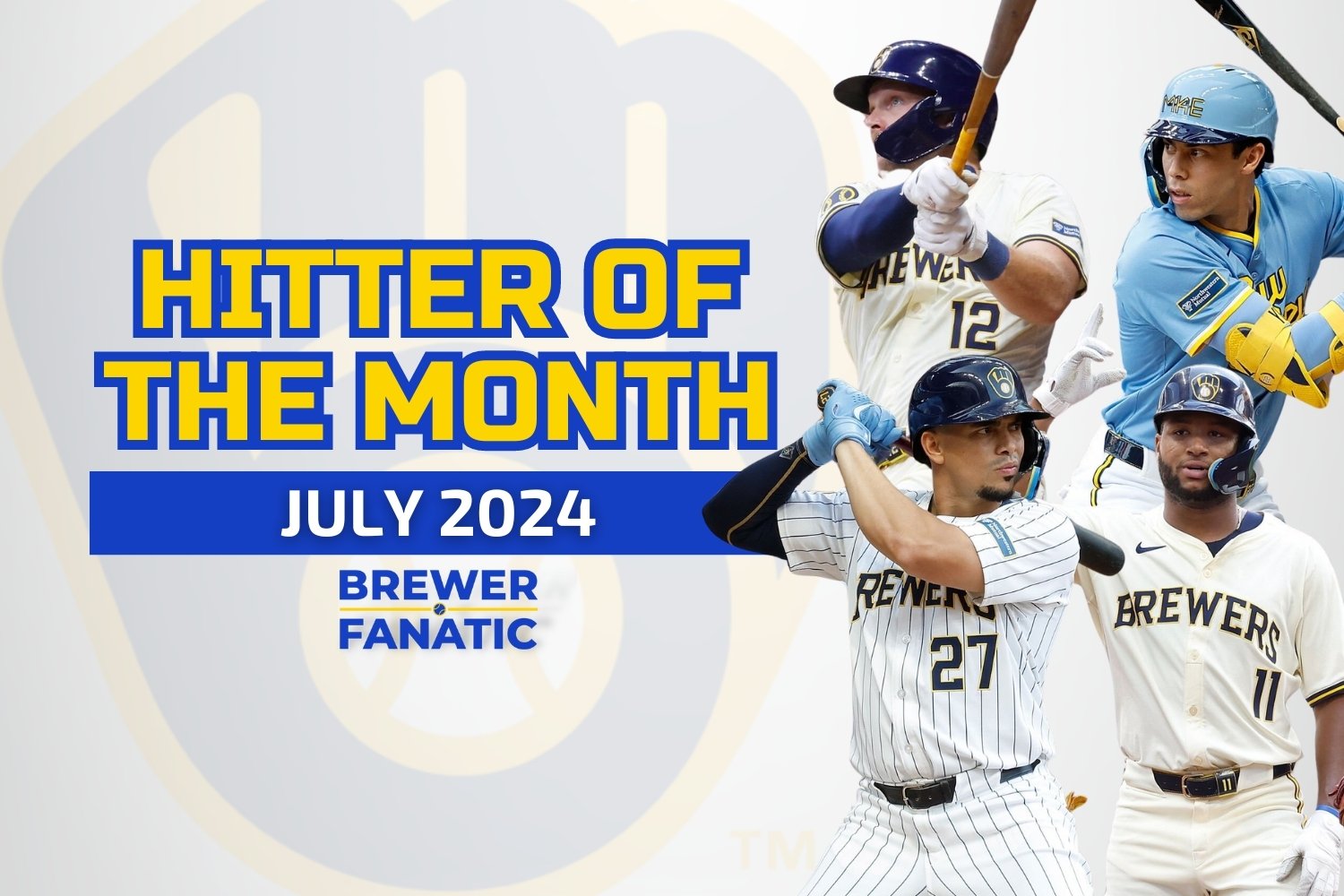 Honorable Mentions Eric Haase 31 PA, .345/.387/.655, 10 H, 3 HR, 4 R, 8 RBI, 2 BB, 13 K Haase had a small sample size of plate appearances but I felt that his performance was worth a brief mention. July was the first month he got major league at-bats with Milwaukee, and he made the most out of this opportunity, posting a team-leading 1.042 OPS. Rhys Hoskins 84 PA, .192/.262/.507, 14 H, 2 2B, 7 HR, 11 R, 19 RBI, 6 BB, 26 K, 2 HBP To many, a .192 batting average may automatically disqualify a hitter from receiving any sort of praise. Still, Hoskins was an integral part of the Brewers’ run-scoring in July, leading the team in RBI for the month. Over half of his hits were for extra bases, and his power has been as advertised. His overall production is still on the lower end with an OPS+ of just 104, and especially for a first baseman, the Brewers were likely hoping for more. Jackson Chourio 88 PA, .317/.364/.512, 26 H, 7 2B, 3 HR, 14 R, 12 RBI, 6 BB, 12 K, 4 SB With a .876 total OPS for July, Chourio continued the momentum he started last month. His strikeout rate of 13.6% was the lowest of any month in his career so far, and he’s clearly made big adjustments to compete at the big league level. After being one of the worst hitters on the team at the end of May, he has managed to claw his way back to having an OPS+ of 101 while playing elite defense. Long story short, Jackson Chourio is really good. Who knew? Willy Adames 103 PA, .312/.369/.516, 29 H, 7 2B, 4 HR, 14 R, 17 RBI, 9 BB, 33 K, 2 SB Adames had an intriguing month. Despite a wicked strikeout rate of 32.0%, he still managed to hit for an excellent average and great power, leading the team in total bases with 48. It was a big bounce back, going from a .592 OPS in June to a .885 OPS in July, the best month he’s had this season. He now has the team's third-highest OPS+ among qualified hitters at 110. In the days leading up to this year’s trade deadline, general manager Matt Arnold mentioned how important Adames was to the team, stating that they probably weren’t going to trade him. Do the Brewers have plans to re-sign him when he becomes a free agent this year? Only time will tell. Hitter of the Month - Christian Yelich 66 PA, .288/.431/.577, 15 H, 4 2B, 1 3B, 3 HR, 10 R, 6 RBI, 12 BB, 9 K, 1 HBP, 3 SB Yelich has been battling the same perennial back issues he’s had throughout his career, but even in the face of such adversity, he has played the best baseball of his life since 2019. July saw him recover from a slight slump he encountered in June, bringing his walk rate to an astounding 18.2% and his home run rate to 4.5%. It’s still unclear when he’ll return to the lineup. He’s stated that he’d like to delay surgery as long as possible to avoid missing the remainder of the season, but manager Pat Murphy has gone on to say that surgery is “inevitable.” Losing Yelich for the last 50 games of the year and the postseason would be devastating, especially given his output thus far, but he’s not out of the picture just yet.
 -
With an underwhelming haul this year, does Milwaukee have the manpower to hold onto their divisional lead and succeed in October? Image courtesy of © Michael McLoone-USA TODAY Sports With an underwhelming haul this year, does Milwaukee have the manpower to hold onto their divisional lead and succeed in October? While other teams scrambled to find new bats and arms in July, the Brewers were like a Prius at a muscle car meet: relatively quiet. They added no new position players, and instead picked up two project starters, an intriguing reliever, and a 30-year-old rookie. Here is the list of all of the deals they made: July 3: Acquired RHP Aaron Civale from Rays in exchange for SS Gregory Barrios (#19 ranked prospect in Brewers system) July 21: Acquired LHP Tyler Jay from Mets in exchange for RHP TJ Shook July 27: Acquired RHP Nick Mears from Rockies in exchange for RHP Bradley Blalock (#17 ranked prospect in Brewers system) and RHP Yujanyer Herrera July 30: Acquired RHP Frankie Montas from Reds in exchange for OF Joey Wiemer, RHP Jakob Junis, and cash It was well understood that Milwaukee would be vying for starting pitching, but Civale and Montas don’t seem like the difference-makers fans were hoping for. Both have clear weaknesses and are pitching to ERAs around 5.00 this year. They may be serviceable back-of-the-rotation guys, at least, but neither one will likely end up being 2008 CC Sabathia. Even more concerning is how dormant the team was compared to its closest rivals. The Cardinals are six games behind the Brewers in the NL Central and were a participant in this year’s sole three-team trade, involving the White Sox and the Dodgers. They added Erick Fedde to improve their rotation and reunited with Tommy Pham to help stabilize their outfield and bring a platoon advantage against lefties. The Pirates, also six games behind, also had a slight retooling by adding Bryan De La Cruz and Jalen Beeks while getting rid of a struggling Martín Pérez and a similarly below-replacement pitcher in Quinn Priester. Their roster still doesn’t seem to be as concerning as that of St. Louis, but with one more head-to-head series in September, they could take a few crucial wins away from the Brewers at the 11th hour. Looking at the broader competitive set of the National League as a whole, the Phillies and Dodgers did their best to make moves that would secure their postseason byes. The Phillies snagged lefty reliever Tanner Banks, Angels closer Carlos Estévez, and veteran outfielder Austin Hays. The Dodgers were arguably the most active, acquiring Jack Flaherty, Kevin Kiermaier, Amed Rosario, Tommy Edman, and Michael Kopech. Even the Padres managed to win the services of the highly sought-after Tanner Scott. All of these teams are potential postseason opponents for the Crew. Even if the Brewers hang onto the top spot in the NL Central, will their roster be enough to get past the Wild Card or Division Series? On one hand, it may not be entirely their fault. This is the organization’s typical MO, and it’s not like there were a ton of great rental arms up for sale. The Astros, neck-and-neck with the Mariners for the lead in the AL West, gave up a whole bunch just for Yusei Kikuchi, a guy with a 4.75 ERA and 1.34 WHIP. Other starters that got sold off include Paul Blackburn (4.41 ERA), Zach Eflin (4.11 ERA), and Trevor Rogers (4.53), players with numbers in line with the pieces that Milwaukee did manage to add. They were in on Flaherty, though more so a day or two before the deadline than as the final hours ticked away. They checked in on Fedde, but those talks didn't progress. Were they simply unwilling to compete with the Dodgers and Cardinals on price, or were they outmaneuvered in trade talks? Do they know something about Montas and Civale (or about Flaherty) that we don’t? Will they somehow find a way to sign the 1986 version of Teddy Higuera? Who knows. But with no new bats, no flashy arms, and the same crushing injury problems, things seem a little less rosy after watching playoff-bound rivals improve a bit more than the Crew did. View full article
-
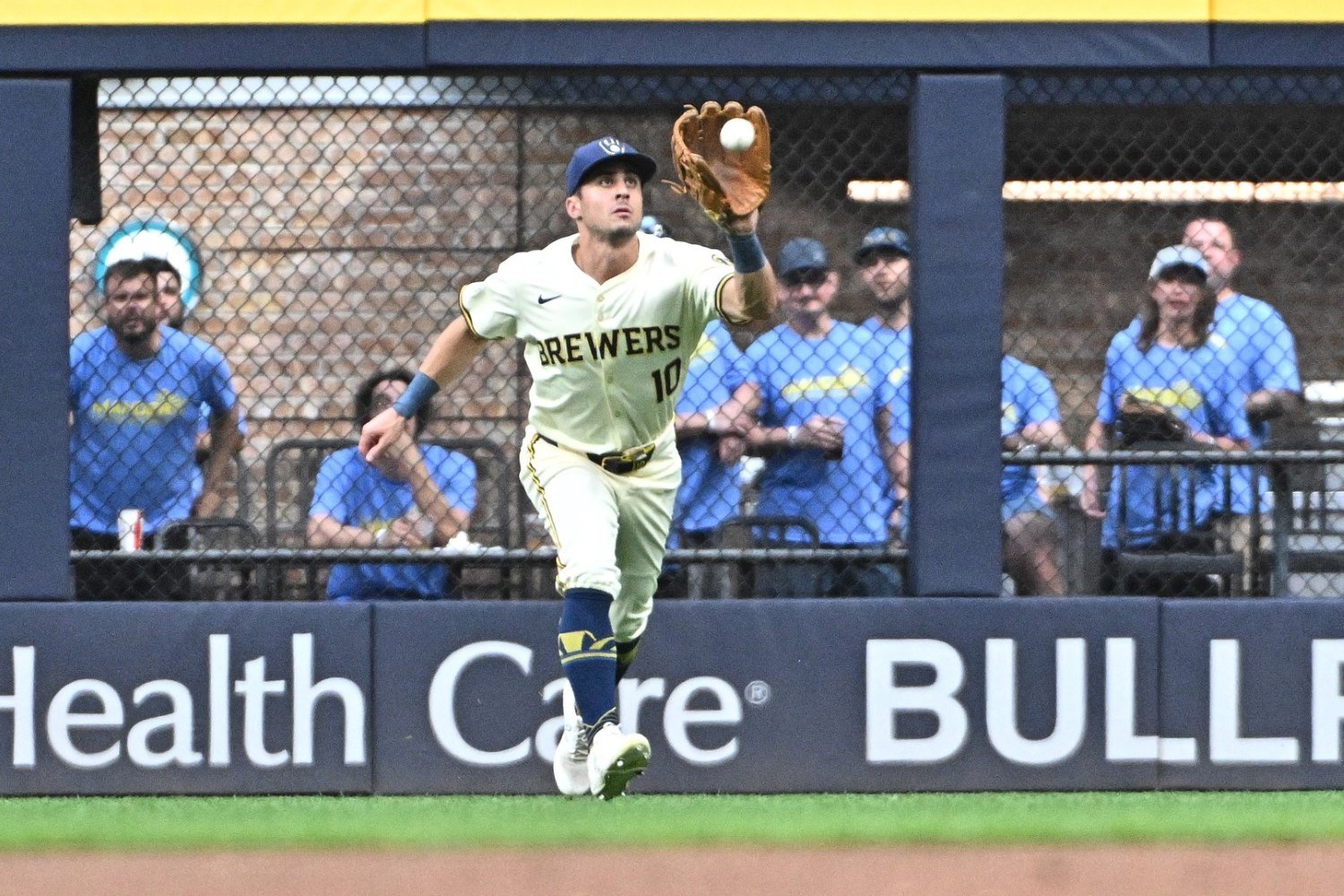 While other teams scrambled to find new bats and arms in July, the Brewers were like a Prius at a muscle car meet: relatively quiet. They added no new position players, and instead picked up two project starters, an intriguing reliever, and a 30-year-old rookie. Here is the list of all of the deals they made: July 3: Acquired RHP Aaron Civale from Rays in exchange for SS Gregory Barrios (#19 ranked prospect in Brewers system) July 21: Acquired LHP Tyler Jay from Mets in exchange for RHP TJ Shook July 27: Acquired RHP Nick Mears from Rockies in exchange for RHP Bradley Blalock (#17 ranked prospect in Brewers system) and RHP Yujanyer Herrera July 30: Acquired RHP Frankie Montas from Reds in exchange for OF Joey Wiemer, RHP Jakob Junis, and cash It was well understood that Milwaukee would be vying for starting pitching, but Civale and Montas don’t seem like the difference-makers fans were hoping for. Both have clear weaknesses and are pitching to ERAs around 5.00 this year. They may be serviceable back-of-the-rotation guys, at least, but neither one will likely end up being 2008 CC Sabathia. Even more concerning is how dormant the team was compared to its closest rivals. The Cardinals are six games behind the Brewers in the NL Central and were a participant in this year’s sole three-team trade, involving the White Sox and the Dodgers. They added Erick Fedde to improve their rotation and reunited with Tommy Pham to help stabilize their outfield and bring a platoon advantage against lefties. The Pirates, also six games behind, also had a slight retooling by adding Bryan De La Cruz and Jalen Beeks while getting rid of a struggling Martín Pérez and a similarly below-replacement pitcher in Quinn Priester. Their roster still doesn’t seem to be as concerning as that of St. Louis, but with one more head-to-head series in September, they could take a few crucial wins away from the Brewers at the 11th hour. Looking at the broader competitive set of the National League as a whole, the Phillies and Dodgers did their best to make moves that would secure their postseason byes. The Phillies snagged lefty reliever Tanner Banks, Angels closer Carlos Estévez, and veteran outfielder Austin Hays. The Dodgers were arguably the most active, acquiring Jack Flaherty, Kevin Kiermaier, Amed Rosario, Tommy Edman, and Michael Kopech. Even the Padres managed to win the services of the highly sought-after Tanner Scott. All of these teams are potential postseason opponents for the Crew. Even if the Brewers hang onto the top spot in the NL Central, will their roster be enough to get past the Wild Card or Division Series? On one hand, it may not be entirely their fault. This is the organization’s typical MO, and it’s not like there were a ton of great rental arms up for sale. The Astros, neck-and-neck with the Mariners for the lead in the AL West, gave up a whole bunch just for Yusei Kikuchi, a guy with a 4.75 ERA and 1.34 WHIP. Other starters that got sold off include Paul Blackburn (4.41 ERA), Zach Eflin (4.11 ERA), and Trevor Rogers (4.53), players with numbers in line with the pieces that Milwaukee did manage to add. They were in on Flaherty, though more so a day or two before the deadline than as the final hours ticked away. They checked in on Fedde, but those talks didn't progress. Were they simply unwilling to compete with the Dodgers and Cardinals on price, or were they outmaneuvered in trade talks? Do they know something about Montas and Civale (or about Flaherty) that we don’t? Will they somehow find a way to sign the 1986 version of Teddy Higuera? Who knows. But with no new bats, no flashy arms, and the same crushing injury problems, things seem a little less rosy after watching playoff-bound rivals improve a bit more than the Crew did.
 -
Colin Rea: 3.60 ERA - best season of his life in the major leagues. Bryse Wilson: 3.99 ERA - had a combined 5.46 ERA across 36 starts in 2021 and 2022. Aaron Civale: 4.29 ERA - too soon to see any major improvements. Another pitching project for Milwaukee. I feel like going to the Yankees destroyed his mental (as it tends to do with a ton of players to be honest) but hopefully he can get it back with the right guidance. Excited to see where this goes in the final ~50 games of the season.
-
With less than 24 hours to go until the trade deadline and yet another arm hitting the injured list, Milwaukee might have to rethink its strategy. Image courtesy of © Matt Marton-USA TODAY Sports With less than 24 hours to go until the trade deadline and yet another arm hitting the injured list, Milwaukee might have to rethink its strategy. It was recently announced that Trevor Megill, the team’s closer in Devin Williams’ absence, has hit the 15-day injured list due to back issues. At this point, Brewers fans are all too familiar with pitching injuries, but this is part of a bigger concern outside of another hurt pitcher. Heading into trade season, the Brewers' clear point of strength was their bullpen. Despite an immense workload of 435 combined innings, they’ve posted a 3.31 ERA, which is third-best in MLB. Megill was having a standout year, posting a 2.41 ERA and 1.04 WHIP with 20 saves in his first year as a closer. Following the return of their All-Star Airbender, the Brewers had a clear surplus of relievers. Names like Joel Payamps and Hoby Milner were among those rumored to be potentially packaged away. Alas, nothing in Milwaukee can ever be that easy. Just a few days before Megill was sidelined, Bryan Hudson also hit the 15-day IL with an oblique strain. He had a rough few outings in July but was still pitching to a cumulative ERA of 1.60 and WHIP of 0.75 over his 50 ⅔ innings. So what does this mean for the next 24 hours? Well, the Brewers front office will have to figure out what they feel comfortable parting with. While Payamps and Milner may have been expendable before, they might now become integral, at least for the next few weeks. The Brewers have a somewhat comfortable six-game lead over the second-place St. Louis Cardinals, but recovery timelines have rarely gone the team’s way this year. Hudson and Megill could be out for a while, and Williams is coming off a long layoff. Luckily, the Brewers may have some position players who are reportedly drawing interest from suitors, namely Garrett Mitchell, so they still have some names to swap. Furthermore, it doesn’t seem likely that the team will continue to prioritize pursuing relievers. However, this may make acquiring a real impact starter or bat more difficult without making real sacrifices at the major or minor league level. As with most things in baseball, it’s hard to say exactly how things will pan out at this time. Milwaukee has been relatively quiet thus far, especially with the Cardinals making a splash and acquiring Erick Fedde and Tommy Pham in a three-team trade with the White Sox and Dodgers. For now, we can at least hope that both Megill and Hudson have speedy recoveries and continue their stellar seasons through October. View full article
-
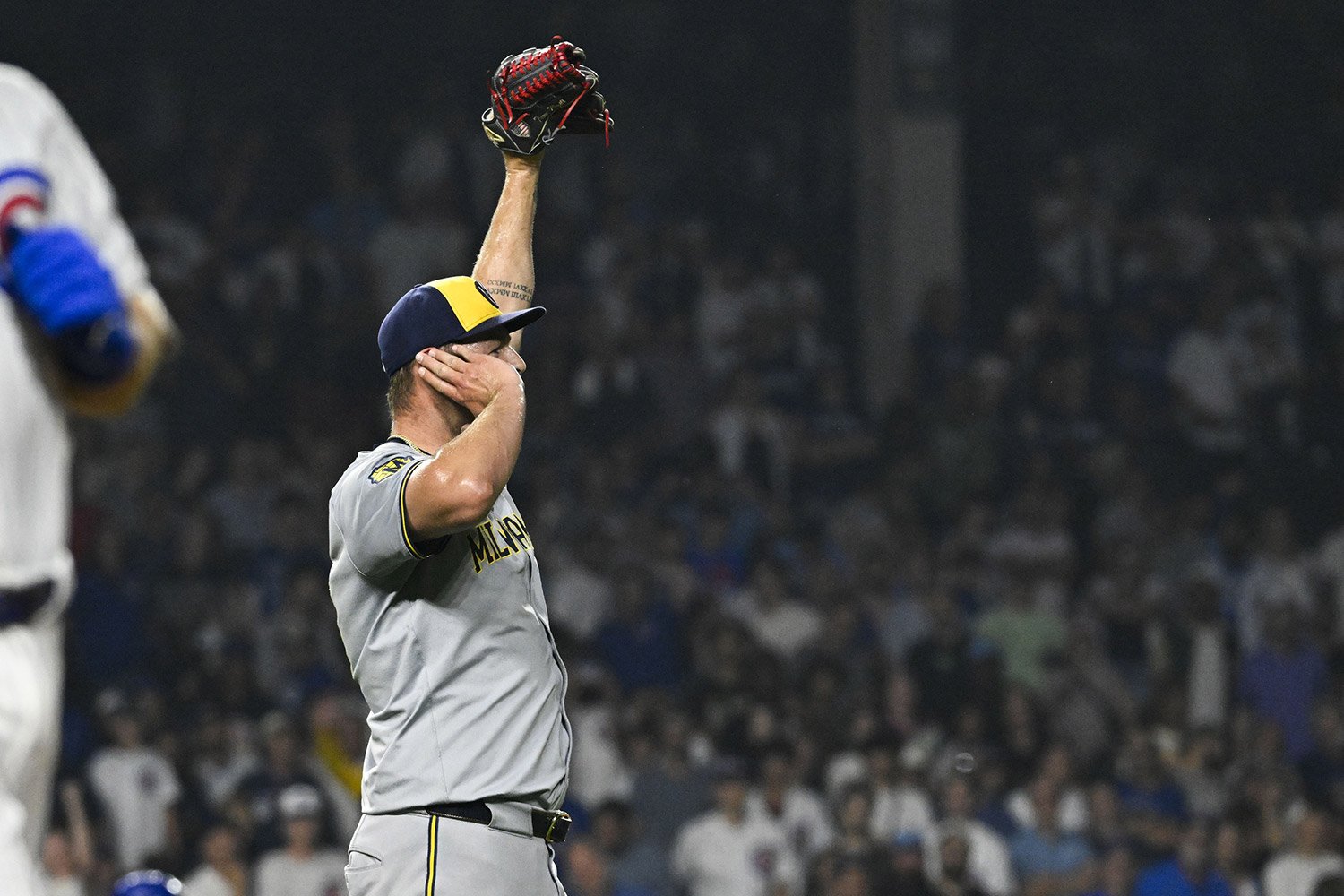 It was recently announced that Trevor Megill, the team’s closer in Devin Williams’ absence, has hit the 15-day injured list due to back issues. At this point, Brewers fans are all too familiar with pitching injuries, but this is part of a bigger concern outside of another hurt pitcher. Heading into trade season, the Brewers' clear point of strength was their bullpen. Despite an immense workload of 435 combined innings, they’ve posted a 3.31 ERA, which is third-best in MLB. Megill was having a standout year, posting a 2.41 ERA and 1.04 WHIP with 20 saves in his first year as a closer. Following the return of their All-Star Airbender, the Brewers had a clear surplus of relievers. Names like Joel Payamps and Hoby Milner were among those rumored to be potentially packaged away. Alas, nothing in Milwaukee can ever be that easy. Just a few days before Megill was sidelined, Bryan Hudson also hit the 15-day IL with an oblique strain. He had a rough few outings in July but was still pitching to a cumulative ERA of 1.60 and WHIP of 0.75 over his 50 ⅔ innings. So what does this mean for the next 24 hours? Well, the Brewers front office will have to figure out what they feel comfortable parting with. While Payamps and Milner may have been expendable before, they might now become integral, at least for the next few weeks. The Brewers have a somewhat comfortable six-game lead over the second-place St. Louis Cardinals, but recovery timelines have rarely gone the team’s way this year. Hudson and Megill could be out for a while, and Williams is coming off a long layoff. Luckily, the Brewers may have some position players who are reportedly drawing interest from suitors, namely Garrett Mitchell, so they still have some names to swap. Furthermore, it doesn’t seem likely that the team will continue to prioritize pursuing relievers. However, this may make acquiring a real impact starter or bat more difficult without making real sacrifices at the major or minor league level. As with most things in baseball, it’s hard to say exactly how things will pan out at this time. Milwaukee has been relatively quiet thus far, especially with the Cardinals making a splash and acquiring Erick Fedde and Tommy Pham in a three-team trade with the White Sox and Dodgers. For now, we can at least hope that both Megill and Hudson have speedy recoveries and continue their stellar seasons through October.
 -
A rental starter who’s having a great year sounds like the perfect fit for a Milwaukee team in need of a healthy, high-end arm. Image courtesy of © Junfu Han - USA TODAY NETWORK A rental starter who’s having a great year sounds like the perfect fit for a Milwaukee team in need of a healthy, high-end arm. For the tenth year in a row, the Detroit Tigers are going to miss the playoffs. With the vultures already circling, waiting for their chance to acquire the team’s lefty ace, Tarik Skubal, teammate Jack Flaherty might be an undervalued short-term starter. That is exactly what the Brewers should be pursuing for the final portion of the 2024 regular season. What He Does Well When he’s at his best, Flaherty attacks the strike zone with extreme prejudice. His whiff, strikeout, and walk rates are all in the top decile of qualified pitchers. The tradeoff is that he gives up more barrels and gets fewer ground balls than he would like, but his 2.95 ERA and 0.96 WHIP over 100 ⅔ innings have shown that he’s winning more battles than he's losing. The years since his breakout 2019 campaign have been rocky. He’s only managed to pitch more than 80 innings once, and from 2020-2023, he averaged a 4.42 ERA. His strikeout rate remained high, at 24.1%, but he was giving up far too many baserunners, with a WHIP of 1.40 in that span. What’s he doing differently this year? His knuckle-curve has posted pretty consistent results since he's arrived in the big leagues, even when times were the toughest. However, 2024 seems to be the first time in a while that both his four-seam fastball and slider have been competitive pitches. His fastball doesn’t blow up the radar gun and averages just under 94 mph, but he’s commanding it much better this year, attacking the outside edges of the strike zone against lefties and righties. It has a 25.0% whiff rate and a 31.0% strikeout rate. His slider saw massive regression in 2023 and was a big reason for many of his rough outings. In 2024, he’s placing the pitch closer to the bottom of the zone, getting a whiff rate of 39.1% and a strikeout rate of 31.0%--massive improvements over his 26,5% and 15.0% numbers last year. Better command of the offering has made it a weapon against lefties, whereas it was a huge source of vulnerability against them in 2023. What He Doesn’t Do As Well Despite this year’s improvements, Flaherty still suffers from the same drawback of giving up hard contact, even on his best pitches. Even with high strikeout rates on both his fastball and slider, opposing batters still have ISO numbers of .151 and .221, respectively, against them. Because he lacks the velocity that creates margin for error, poor command can lead to the ball leaking into a hitter's nitro zone and getting crushed. Contract Status Flaherty is on a one-year, $14 million contract, and will be a free agent in 2025. It has been a great walk year for the young righty, and he's raised his stock considerably. He’ll probably sign a sizable contract with a team other than the Brewers, but Milwaukee really only needs him for the remainder of this season. With the Tigers still very much in a rebuild and having almost no use for the second-best starter on the team, he’s a great trade piece. He may not be as valuable or dazzling as Skubal, but he’d be a heck of a lot cheaper. Come October, he might be the second starter the Crew needs to make a deeper run into the playoffs. View full article
-
Landing Jack Flaherty Would Transform the Brewers' Playoff Rotation
Jason Wang posted an article in Brewers
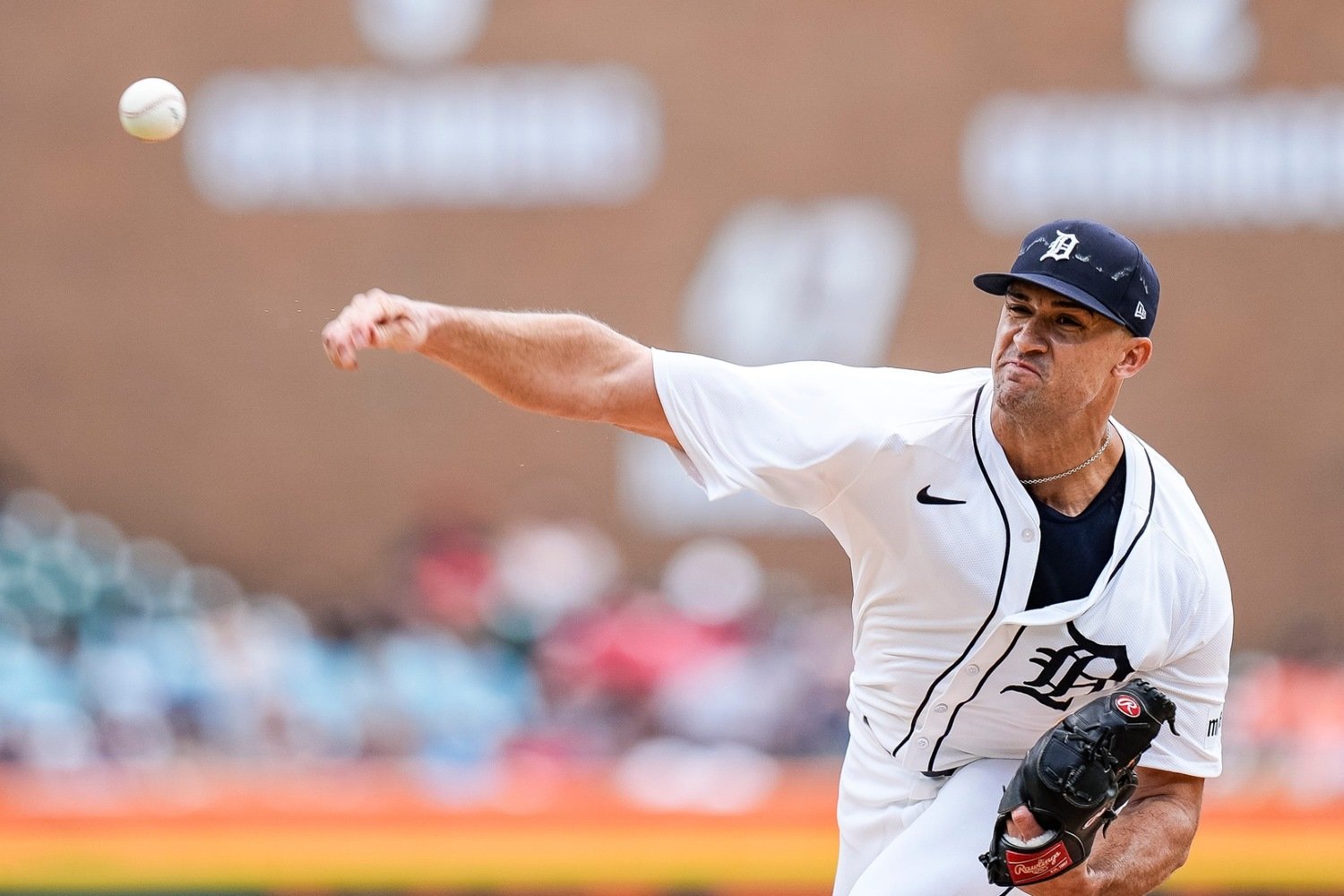 For the tenth year in a row, the Detroit Tigers are going to miss the playoffs. With the vultures already circling, waiting for their chance to acquire the team’s lefty ace, Tarik Skubal, teammate Jack Flaherty might be an undervalued short-term starter. That is exactly what the Brewers should be pursuing for the final portion of the 2024 regular season. What He Does Well When he’s at his best, Flaherty attacks the strike zone with extreme prejudice. His whiff, strikeout, and walk rates are all in the top decile of qualified pitchers. The tradeoff is that he gives up more barrels and gets fewer ground balls than he would like, but his 2.95 ERA and 0.96 WHIP over 100 ⅔ innings have shown that he’s winning more battles than he's losing. The years since his breakout 2019 campaign have been rocky. He’s only managed to pitch more than 80 innings once, and from 2020-2023, he averaged a 4.42 ERA. His strikeout rate remained high, at 24.1%, but he was giving up far too many baserunners, with a WHIP of 1.40 in that span. What’s he doing differently this year? His knuckle-curve has posted pretty consistent results since he's arrived in the big leagues, even when times were the toughest. However, 2024 seems to be the first time in a while that both his four-seam fastball and slider have been competitive pitches. His fastball doesn’t blow up the radar gun and averages just under 94 mph, but he’s commanding it much better this year, attacking the outside edges of the strike zone against lefties and righties. It has a 25.0% whiff rate and a 31.0% strikeout rate. His slider saw massive regression in 2023 and was a big reason for many of his rough outings. In 2024, he’s placing the pitch closer to the bottom of the zone, getting a whiff rate of 39.1% and a strikeout rate of 31.0%--massive improvements over his 26,5% and 15.0% numbers last year. Better command of the offering has made it a weapon against lefties, whereas it was a huge source of vulnerability against them in 2023. What He Doesn’t Do As Well Despite this year’s improvements, Flaherty still suffers from the same drawback of giving up hard contact, even on his best pitches. Even with high strikeout rates on both his fastball and slider, opposing batters still have ISO numbers of .151 and .221, respectively, against them. Because he lacks the velocity that creates margin for error, poor command can lead to the ball leaking into a hitter's nitro zone and getting crushed. Contract Status Flaherty is on a one-year, $14 million contract, and will be a free agent in 2025. It has been a great walk year for the young righty, and he's raised his stock considerably. He’ll probably sign a sizable contract with a team other than the Brewers, but Milwaukee really only needs him for the remainder of this season. With the Tigers still very much in a rebuild and having almost no use for the second-best starter on the team, he’s a great trade piece. He may not be as valuable or dazzling as Skubal, but he’d be a heck of a lot cheaper. Come October, he might be the second starter the Crew needs to make a deeper run into the playoffs.