



Jason Wang
-
Posts
955 -
Joined
-
Last visited
-
Days Won
1
Content Type
Profiles
Forums
Blogs
Events
News
2026 Milwaukee Brewers Top Prospects Ranking
Milwaukee Brewers Videos
2022 Milwaukee Brewers Draft Picks
Milwaukee Brewers Free Agent & Trade Rumors, Notes, & Tidbits
Guides & Resources
2023 Milwaukee Brewers Draft Picks
2024 Milwaukee Brewers Draft Picks
The Milwaukee Brewers Players Project
2025 Milwaukee Brewers Draft Pick Tracker
2026 Milwaukee Brewers Draft Tracker: Picks & Bonuses
Store
Downloads
Gallery
Everything posted by Jason Wang
-
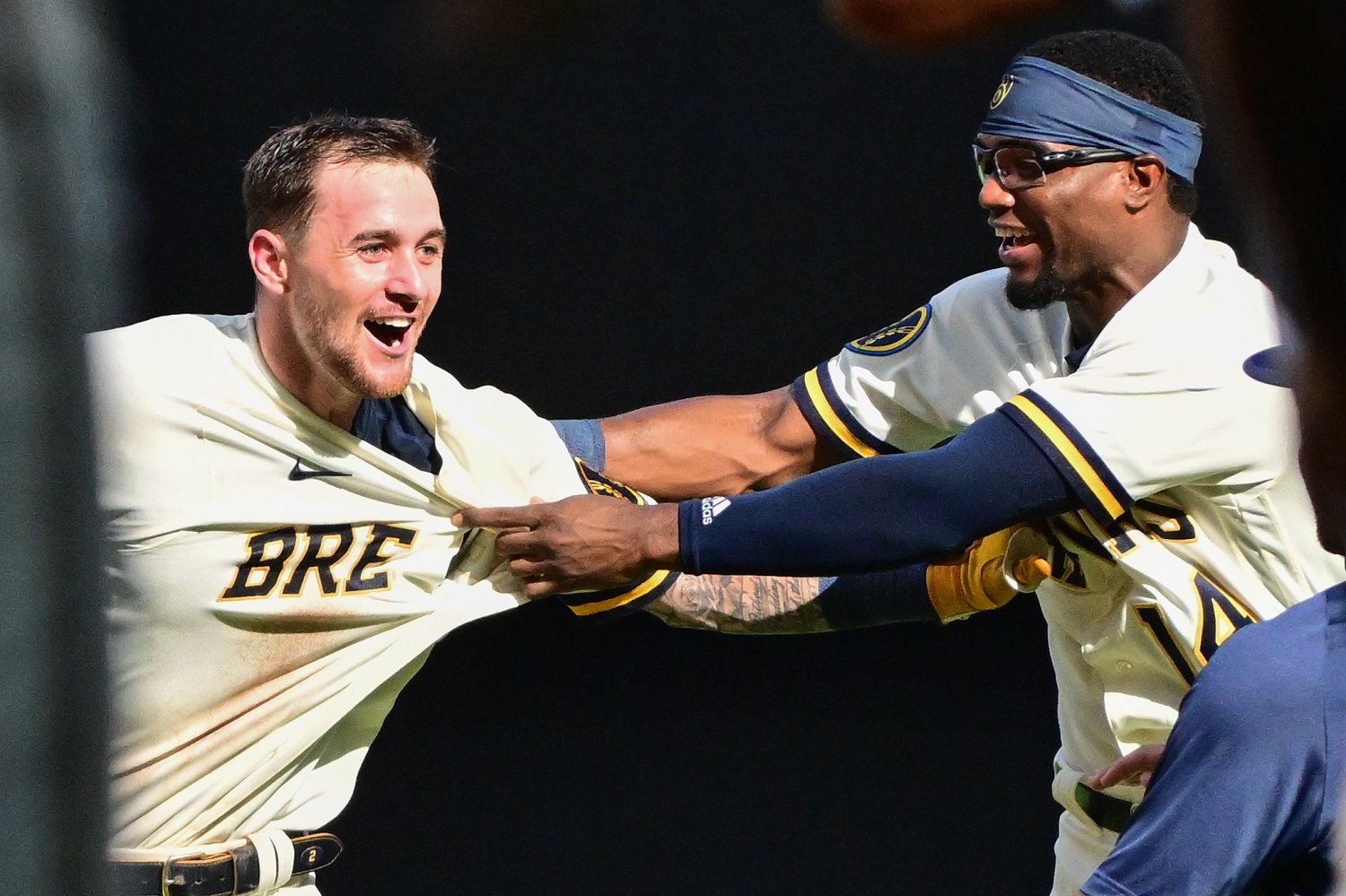 Box Score Starting Pitcher: Corbin Burnes - 6.0 IP, 8 H, 6 ER, 1 BB, 5 K, 99 pitches, 59 strikes (59.6%) Home Runs: William Contreras (13), Willy Adames (21), Tyrone Taylor (5) Top 3 WPA: Willy Adames, (.572), Brice Turang (.337), Tyrone Taylor (.168) Bottom 3 WPA: Corbin Burnes (-.392), Elvis Peguero (-.299), Victor Caratini (-.126) Win Probability Chart (via FanGraphs) Corbin Gets Crushed In one of his rougher outings of the season, Burnes gave up runs in four different innings. He started the game by giving up three singles and a sacrifice fly, allowing the Twins to take a 1-0 lead. In the third inning, he gave up a two-run home run to Royce Lewis, his fifth of the season. The damage continued in the fifth inning when a double by Ryan Jeffers and a home run by Michael A. Taylor gave the Twins a 5-3 lead. To end his outing, Kyle Farmer hit a solo home run to score Minnesota’s sixth run of the game. So what happened? The main culprit was Burnes getting behind in counts. Often down 2-0, Burnes was forced to alter his pitch sequence to be more hitter-friendly, allowing a lot of hard contact and long balls. Corbin Burnes currently has a 3.65 ERA and 1.08 WHIP over 158.0 innings pitched. Homer For Homer While the first game was decided by putting balls in play and hitting for contact, this game was a little different. To match Minnesota’s mashing tendencies, the Brewers hit three home runs of their own. William Contreras got the party started with a solo home run to center field that just kept carrying until it hit the seats. In the sixth inning, Willy Adames hit a two-run homer to center field and continued his recent offensive onslaught. He’s slashed .379/.419/.724 over his last seven games. Finally, to tie the game at six runs a piece, Tyrone Taylor hit a solo home run to left center field. Bullpen (Almost) Blows It After two lockdown innings by Abner Uribe and Joel Payamps that saw them combine for one hit and three strikeouts, Devin Williams toed the slab in the ninth inning to give the Brewers a chance to walk it off. Things started off shaky, with Williams issuing a walk to Jorge Polanco and hitting Matt Wallner with a pitch to put two runners on base before recording a single out. Fortunately, Williams got two strikeouts and a flyout to escape the inning unscathed. In the tenth inning, Elvis Peguero conceded a go-ahead single that put the Twins on top, 7-6. With the game on the line, all eyes fell on the Brewers offense. Willy Adames led things off with a game-tying single. After two outs, it seemed like the game would go into the eleventh until Brice Turang’s walk off one-run single allowed the Brewers to complete the sweep. Just barely beating out the throw to first, his speed was on full display. What’s Next? The Brewers will get an off-day before hosting the San Diego Padres in a three-game series. Brandon Woodruff will make the first start and the Brewers will aim to maintain their lead in the division. They are currently 3.0 games ahead of the Chicago Cubs. Postgame Interviews Bullpen Usage Spreadsheet SAT SUN MON TUE WED TOT Megill 13 24 0 9 0 46 B Wilson 0 18 0 25 0 43 Milner 22 0 0 12 0 34 Peguero 0 29 0 0 0 29 Payamps 13 0 0 0 15 28 Uribe 4 0 0 0 10 14 Williams 0 3 0 0 0 3 Chafin 0 0 0 0 0 0 Tweet Highlight
 -
A great team hitting effort and remarkable relief pitching allows the Brewers to take the first game against a Midwest rival. Image courtesy of Jeff Hanisch-USA TODAY Sports A great team hitting effort and remarkable relief pitching allows the Brewers to take the first game against a Midwest rival. Box Score Starting Pitcher: Wade Miley - 5.0 IP, 5 H, 3 ER, 1 BB, 4 K, 89 pitches, 58 strikes (65.2%) Home Runs: Willy Adames (20) Top 3 WPA: Mark Canha (.221), William Contreras (.122), Bryse Wilson (.084) Bottom 3 WPA: Wade Miley (-.067), Carlos Santana (-.050), Joey Wiemer (-.039) Win Probability Chart (via FanGraphs) Miley Gives Up Three In Five Despite being one of the few teams that are worse than the Brewers at hitting lefties, the Twins did some damage to Wade Miley in the second and fourth innings of his start. In the second inning, Christian Vazquez hit just his fourth home run of the season to score himself and Kyle Farmer. After giving up a double to Jordan Luplow and a walk to Carlos Correa, Miley allowed Minnesota to pull ahead in the fourth inning after a one-run single by Kyle Farmer. As per usual, Wade Miley didn’t rely on blazing fast velocity (he topped out at 92.8 mph on his four-seam fastball) and earned just seven swinging strikes, but his command was excellent, walking just one while getting 17 called strikes. His ERA and WHIP currently stand at 3.18 and 1.17 over 87.2 innings pitched. Some Things Are Worth The Wait The Brewers offense started off quite slow but needed just one inning to seal the deal. They took the lead in the first following a home run to left center field by Willy Adames, putting the score at 2-0. Despite this early slip-up, Twins starter Bailey Ober kept Milwaukee scoreless through the remainder of his start, giving up just two hits and three walks in total. At a relatively low pitch count of 78, fans were surprised when the decision was made to go to the Minnesota bullpen. Unfortunately for Rocco Baldelli, this would be the wrong decision. The Brewers went on a hitting onslaught, tagging Dylan Floro for six hits and a stolen base. In what seemed like a revolving door at the plate, Milwaukee simply couldn’t stop putting balls in play. By the time the dust cleared, Floro had given up five earned runs and the score was now 7-3 in favor of the Brewers. It was a great offensive day for the Brewers and while the score wasn’t anything out of the ordinary, everyone in the lineup was able to get on base at least once, a rare sight for the team. Bullpen Gets It Done, Royce Slips Up To close out the final four innings of the game, Bryse Wilson pitched two innings while Hoby Milner and Trevor Megill pitched in the eighth and ninth innings respectively. The Twins didn’t put up much of a fight and perhaps the greatest highlight was Royce Lewis’s epic baserunning gaffe that crushed what little morale remained in the away dugout. After hitting a ball just past Carlos Santana at first base, it seemed like your usual single. However, after taking a hard turn towards second base, changing his mind, and slipping on his way back to first base, it was too late. Want to know how it was from the other side? Take a look at the game through a Twins lens with a recap from Twins Daily. What’s Next? In the second and final game of the series, Corbin Burnes will face Kenta Maeda. After losing both games against the Twins earlier in the year, the Brewers are seeking to even the score. Following this victory, the Brewers are 3.5 games ahead of the Chicago Cubs and 4.5 games ahead of the Cincinnati Reds. Postgame Interviews Bullpen Usage Spreadsheet FRI SAT SUN MON TUE TOT Peguero 17 0 29 0 0 46 Megill 0 13 24 0 9 46 Milner 9 22 0 0 12 43 B Wilson 0 0 18 0 25 43 Chafin 19 0 0 0 0 19 Uribe 9 4 0 0 0 13 Payamps 0 13 0 0 0 13 Williams 9 0 3 0 0 12 Tweet Highlight View full article
-
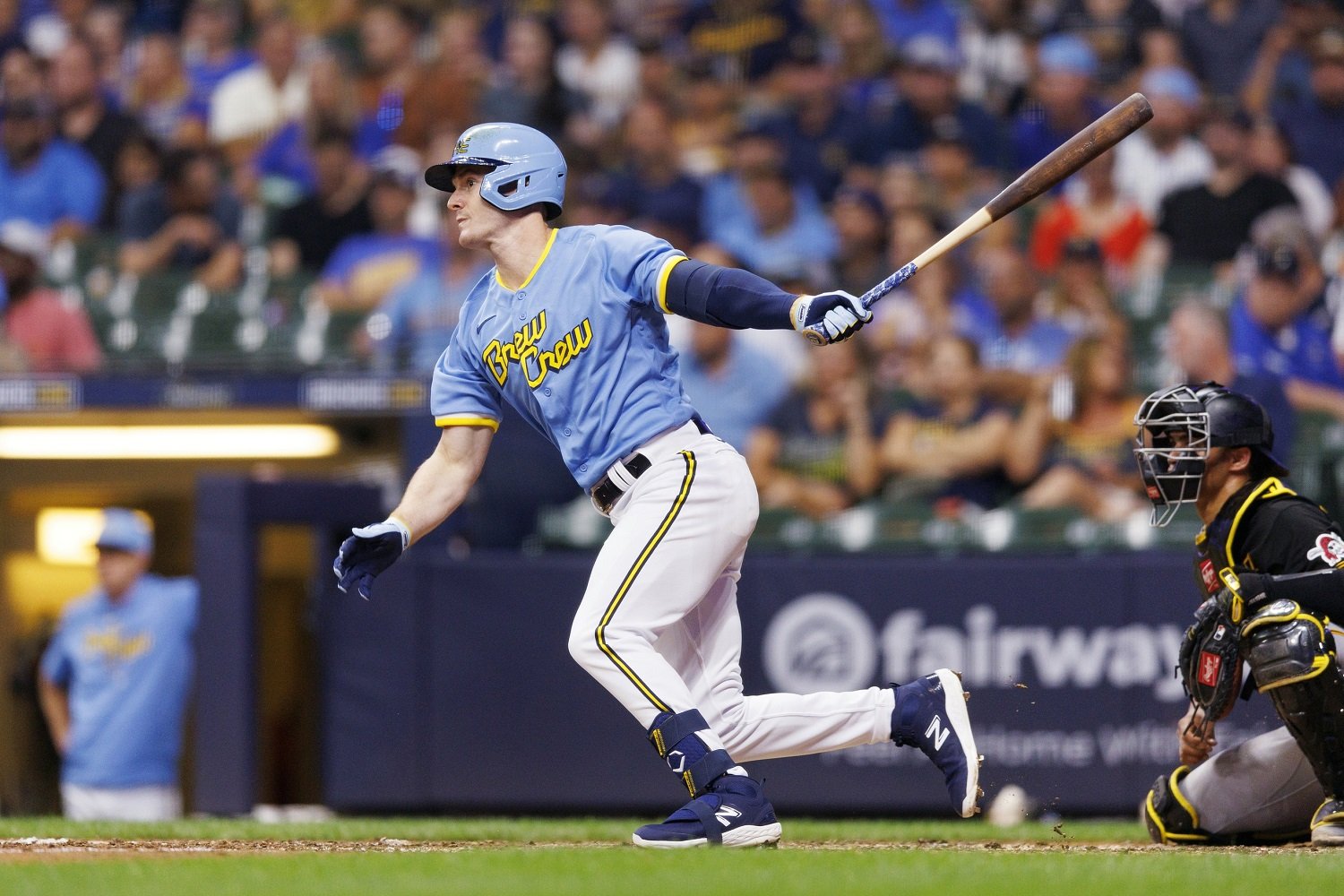 Box Score Starting Pitcher: Wade Miley - 5.0 IP, 5 H, 3 ER, 1 BB, 4 K, 89 pitches, 58 strikes (65.2%) Home Runs: Willy Adames (20) Top 3 WPA: Mark Canha (.221), William Contreras (.122), Bryse Wilson (.084) Bottom 3 WPA: Wade Miley (-.067), Carlos Santana (-.050), Joey Wiemer (-.039) Win Probability Chart (via FanGraphs) Miley Gives Up Three In Five Despite being one of the few teams that are worse than the Brewers at hitting lefties, the Twins did some damage to Wade Miley in the second and fourth innings of his start. In the second inning, Christian Vazquez hit just his fourth home run of the season to score himself and Kyle Farmer. After giving up a double to Jordan Luplow and a walk to Carlos Correa, Miley allowed Minnesota to pull ahead in the fourth inning after a one-run single by Kyle Farmer. As per usual, Wade Miley didn’t rely on blazing fast velocity (he topped out at 92.8 mph on his four-seam fastball) and earned just seven swinging strikes, but his command was excellent, walking just one while getting 17 called strikes. His ERA and WHIP currently stand at 3.18 and 1.17 over 87.2 innings pitched. Some Things Are Worth The Wait The Brewers offense started off quite slow but needed just one inning to seal the deal. They took the lead in the first following a home run to left center field by Willy Adames, putting the score at 2-0. Despite this early slip-up, Twins starter Bailey Ober kept Milwaukee scoreless through the remainder of his start, giving up just two hits and three walks in total. At a relatively low pitch count of 78, fans were surprised when the decision was made to go to the Minnesota bullpen. Unfortunately for Rocco Baldelli, this would be the wrong decision. The Brewers went on a hitting onslaught, tagging Dylan Floro for six hits and a stolen base. In what seemed like a revolving door at the plate, Milwaukee simply couldn’t stop putting balls in play. By the time the dust cleared, Floro had given up five earned runs and the score was now 7-3 in favor of the Brewers. It was a great offensive day for the Brewers and while the score wasn’t anything out of the ordinary, everyone in the lineup was able to get on base at least once, a rare sight for the team. Bullpen Gets It Done, Royce Slips Up To close out the final four innings of the game, Bryse Wilson pitched two innings while Hoby Milner and Trevor Megill pitched in the eighth and ninth innings respectively. The Twins didn’t put up much of a fight and perhaps the greatest highlight was Royce Lewis’s epic baserunning gaffe that crushed what little morale remained in the away dugout. After hitting a ball just past Carlos Santana at first base, it seemed like your usual single. However, after taking a hard turn towards second base, changing his mind, and slipping on his way back to first base, it was too late. Want to know how it was from the other side? Take a look at the game through a Twins lens with a recap from Twins Daily. What’s Next? In the second and final game of the series, Corbin Burnes will face Kenta Maeda. After losing both games against the Twins earlier in the year, the Brewers are seeking to even the score. Following this victory, the Brewers are 3.5 games ahead of the Chicago Cubs and 4.5 games ahead of the Cincinnati Reds. Postgame Interviews Bullpen Usage Spreadsheet FRI SAT SUN MON TUE TOT Peguero 17 0 29 0 0 46 Megill 0 13 24 0 9 46 Milner 9 22 0 0 12 43 B Wilson 0 0 18 0 25 43 Chafin 19 0 0 0 0 19 Uribe 9 4 0 0 0 13 Payamps 0 13 0 0 0 13 Williams 9 0 3 0 0 12 Tweet Highlight
 -
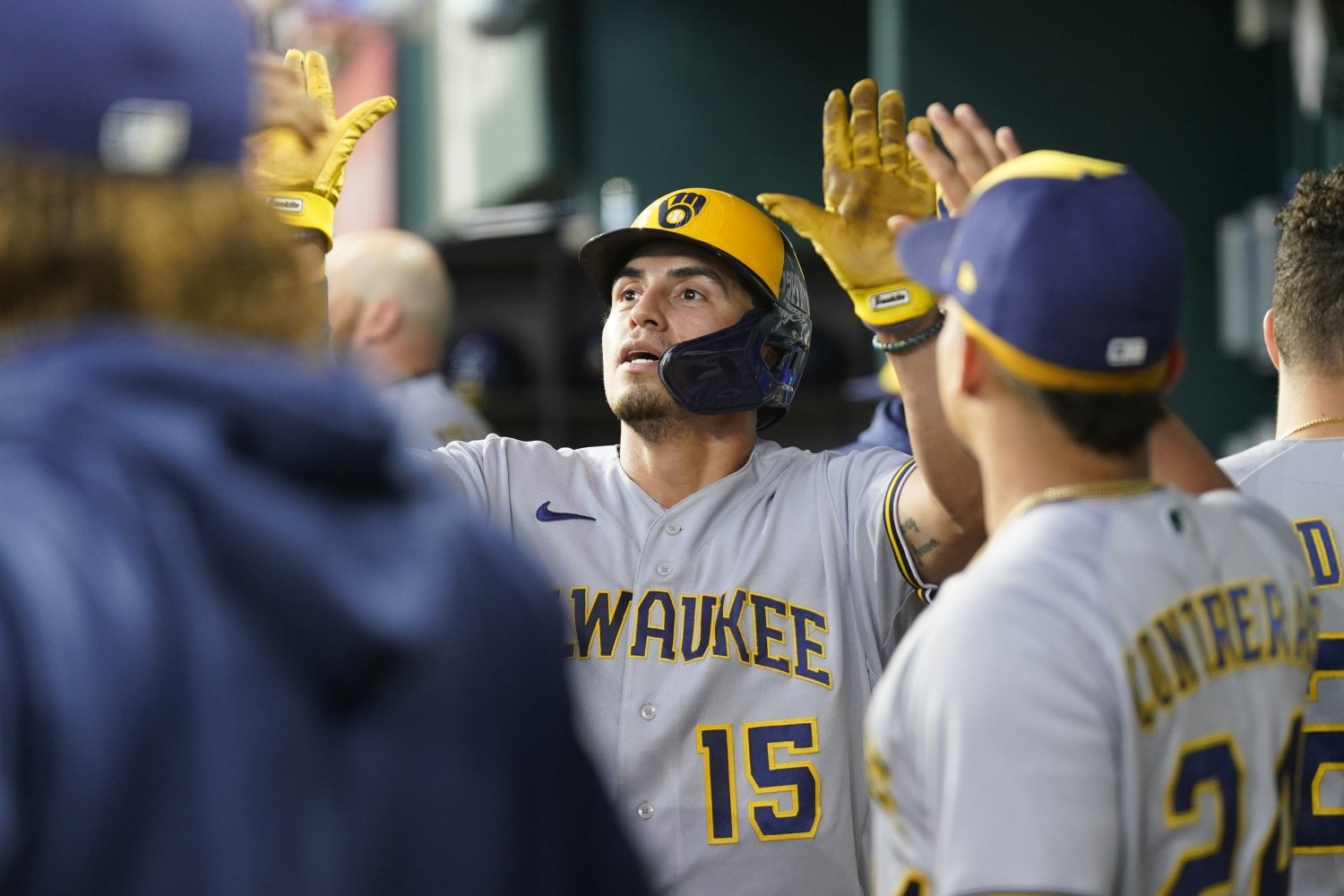 Box Score Starting Pitcher: Adrian Houser - 5.0 IP, 6 H, 1 ER, 1 BB, 7 K, 82 pitches, 53 strikes (64.6%) Home Runs: None Top 3 WPA: Adrian Houser (.172), Christian Yelich (.107), Rowdy Tellez (.104) Bottom 3 WPA: Andruw Monasterio (-.132), Carlos Santana (-.115), Brice Turang (-.029) Win Probability Chart (via FanGraphs) Houser Tosses Terrifically While by no means flawless, Adrian Houser’s five-inning start was an integral part of this victory. It seemed like he was starting to wobble in the third inning, but he was able to recover and avoid further damage after giving up a home run to Corey Seager and a double to Nathaniel Lowe. In addition to limiting runs, Houser was also able to strike out seven batters, earning seven swings and misses and 17 called strikes. His slider and sinker were particularly effective, relying more on exceptional command and placement than pure stuff and velocity. This continues a second-half upsweep in strikeout rate that bears watching. Houser currently has a 4.28 ERA and a 1.46 WHIP across 88.1 innings pitched. Brewers Beat Up On Scherzer and Smith Milwaukee started to get to work in the third inning, loading the bases with two walks and a single. Willy Adames sent the first runner home after getting hit by a pitch, and a Rowdy Tellez walk extended the Brewers' lead to 2-0. The scoring continued in the fourth, thanks to back-to-back doubles by Tyrone Taylor and Christian Yelich. Finally, the team made a statement in the eighth, plating three runners and putting the nail in the coffin for the Rangers against their usual closer, Will Smith. After a two-run triple by Tyrone Taylor, Carlos Santana hit a single and recorded his 10th RBI of the road trip. Big Bullpen Effort Trevor Megill, Elvis Peguero, Bryse Wilson, and Devin Williams combined for four innings of relief and gave up two hits and two walks. The origin plan seemed to involve Wilson wrapping things up, but after Marcus Semien and Corey Seager made it to first and third respectively, Williams came in for the final out. He recorded his 30th save of the season on just three pitches, as Nathaniel Lowe lined out to left field. What’s Next? The Brewers will get a day off to travel home to Milwaukee, before hosting the Minnesota Twins in a brief two-game series where Wade Miley will take the mound opposite Bailey Ober. Milwaukee maintains a three-game lead over the Chicago Cubs, and they stretched their advantage to four games over the Cincinnati Reds in the NL Central. Postgame Interviews Bullpen Usage Spreadsheet WED THU FRI SAT SUN TOT Megill 17 0 0 13 24 54 Peguero 0 0 17 0 29 46 Chafin 22 0 19 0 0 41 Uribe 20 0 9 4 0 33 Payamps 0 19 0 13 0 32 Milner 0 0 9 22 0 31 B Wilson 0 0 0 0 18 18 Williams 0 0 9 0 3 12 Tweet Highlight
 -
 In the biggest and most impressive statement of the season to date, the Brewers completed a three-game sweep of the Rangers and showed that they can dominate in all facets. Image courtesy of © Jim Cowsert-USA TODAY Sports In the biggest and most impressive statement of the season to date, the Brewers completed a three-game sweep of the Rangers and showed that they can dominate in all facets. Box Score Starting Pitcher: Adrian Houser - 5.0 IP, 6 H, 1 ER, 1 BB, 7 K, 82 pitches, 53 strikes (64.6%) Home Runs: None Top 3 WPA: Adrian Houser (.172), Christian Yelich (.107), Rowdy Tellez (.104) Bottom 3 WPA: Andruw Monasterio (-.132), Carlos Santana (-.115), Brice Turang (-.029) Win Probability Chart (via FanGraphs) Houser Tosses Terrifically While by no means flawless, Adrian Houser’s five-inning start was an integral part of this victory. It seemed like he was starting to wobble in the third inning, but he was able to recover and avoid further damage after giving up a home run to Corey Seager and a double to Nathaniel Lowe. In addition to limiting runs, Houser was also able to strike out seven batters, earning seven swings and misses and 17 called strikes. His slider and sinker were particularly effective, relying more on exceptional command and placement than pure stuff and velocity. This continues a second-half upsweep in strikeout rate that bears watching. Houser currently has a 4.28 ERA and a 1.46 WHIP across 88.1 innings pitched. Brewers Beat Up On Scherzer and Smith Milwaukee started to get to work in the third inning, loading the bases with two walks and a single. Willy Adames sent the first runner home after getting hit by a pitch, and a Rowdy Tellez walk extended the Brewers' lead to 2-0. The scoring continued in the fourth, thanks to back-to-back doubles by Tyrone Taylor and Christian Yelich. Finally, the team made a statement in the eighth, plating three runners and putting the nail in the coffin for the Rangers against their usual closer, Will Smith. After a two-run triple by Tyrone Taylor, Carlos Santana hit a single and recorded his 10th RBI of the road trip. Big Bullpen Effort Trevor Megill, Elvis Peguero, Bryse Wilson, and Devin Williams combined for four innings of relief and gave up two hits and two walks. The origin plan seemed to involve Wilson wrapping things up, but after Marcus Semien and Corey Seager made it to first and third respectively, Williams came in for the final out. He recorded his 30th save of the season on just three pitches, as Nathaniel Lowe lined out to left field. What’s Next? The Brewers will get a day off to travel home to Milwaukee, before hosting the Minnesota Twins in a brief two-game series where Wade Miley will take the mound opposite Bailey Ober. Milwaukee maintains a three-game lead over the Chicago Cubs, and they stretched their advantage to four games over the Cincinnati Reds in the NL Central. Postgame Interviews Bullpen Usage Spreadsheet WED THU FRI SAT SUN TOT Megill 17 0 0 13 24 54 Peguero 0 0 17 0 29 46 Chafin 22 0 19 0 0 41 Uribe 20 0 9 4 0 33 Payamps 0 19 0 13 0 32 Milner 0 0 9 22 0 31 B Wilson 0 0 0 0 18 18 Williams 0 0 9 0 3 12 Tweet Highlight View full article
 -
Milwaukee narrowly avoids blowing a significant lead but do just enough to escape with the win against a tough competitor. Image courtesy of © Jerome Miron-USA TODAY Sports Milwaukee narrowly avoids blowing a significant lead but do just enough to escape with the win against a tough competitor. Box Score Starting Pitcher: Brandon Woodruff - 5.1 IP, 3 H, 4 ER, 2 BB, 4 K, 92 pitches, 63 strikes (68.5%) Home Runs: Carlos Santana (17) Top 3 WPA: Carlos Santana (.276), William Contreras (.237), Christian Yelich (.161) Bottom 3 WPA: Andruw Monasterio (-.120), Brandon Woodruff (-.112), Elvis Peguero (-.093) Win Probability Chart (via FanGraphs) Woodruff Cruises Until Fourth Despite facing a fearsome offense, Brandon Woodruff pitched well for the first three innings. The only baserunner he gave up was Marcus Semien who was able to draw a leadoff walk. The first time through the order he was, in every sense of the word, grooving. Things immediately went south in the fourth inning. A two-run home run by Nathaniel Lowe was followed by another home run by Mitch Garver to score the Rangers’ first three runs of the game. Although he retired the next five batters in a row and made it to the sixth inning, a double by Corey Seager, a pitch count approaching 100, and Adolis Garcia coming to the plate meant that it was time for the bullpen to step in. Hitting Heats Up While it may have seemed like an offensive mismatch heading into the game, the Brewers held their own when it came to scoring runs. Milwaukee hit three doubles in the third inning and a single to take a 3-0 lead. After the Rangers pulled ahead to a 4-3 lead heading into the seventh inning, Carlos Santana sent a ball into the right field seats to score three runs and retake the lead at 6-4. The Brewers kept it going in the eighth inning, loading the bases on two hits and an intentional walk of Christian Yelich. Contreras hit a two-run single to continue the onslaught and a Mark Canha groundout would allow another to score, bringing the Brewers lead to a dominant 9-4. At this point, the Brewers had a win probability of 98.4% and it seemed like a surefire win against a highly competitive opponent, but the Rangers were saving their best for last. Nail-Biter Of A Ninth Down by five runs, there didn’t seem to be much of a chance for Texas to comeback in front of their home crowd. Andrew Chafin took the mound and just needed to get three outs without taking too much damage. After a walk and a double placed two runners in scoring position, J.P. Martinez grounded out to score the first run of the inning. Ezequiel Duran slapped a pinch-hit double to score another run and the score was now 9-6. Not wanting to take more risks with Chafin, Devin Williams was brought in to get the last two outs. Travis Jankowski hit a double to score Duran and bring the lead to 9-7 before a wild pitch by Williams allowed him to advance to third. With just one out, Williams would have to face the top of the order, namely Marcus Semien and Corey Seager. Semien was relegated to a ground out but one that scored Jankowski and brought the tying runner to the plate. Seager hit a ball that threatened to tie the game but an incredible leap from Sal Frelick finally put an end to the comeback and gave Milwaukee the win. What’s Next? Freddy Peralta will duel Dane Dunning on the mound in the second game of the series. How Milwaukee performs against Texas could be a preview of how the team will stack up against playoff-caliber competition. The Brewers are currently 2.0 games ahead of the Cincinnati Reds and 3.0 games ahead of the Chicago Cubs in the NL Central. Postgame Interviews Bullpen Usage Spreadsheet MON TUE WED THU FRI TOT Chafin 0 0 22 0 19 41 Milner 0 22 0 0 9 31 Uribe 0 0 20 0 9 29 B Wilson 0 29 0 0 0 29 Payamps 0 0 0 19 0 19 Megill 0 0 17 0 0 17 Peguero 0 0 0 0 17 17 Williams 0 0 0 0 9 9 Tweet Highlight View full article
-
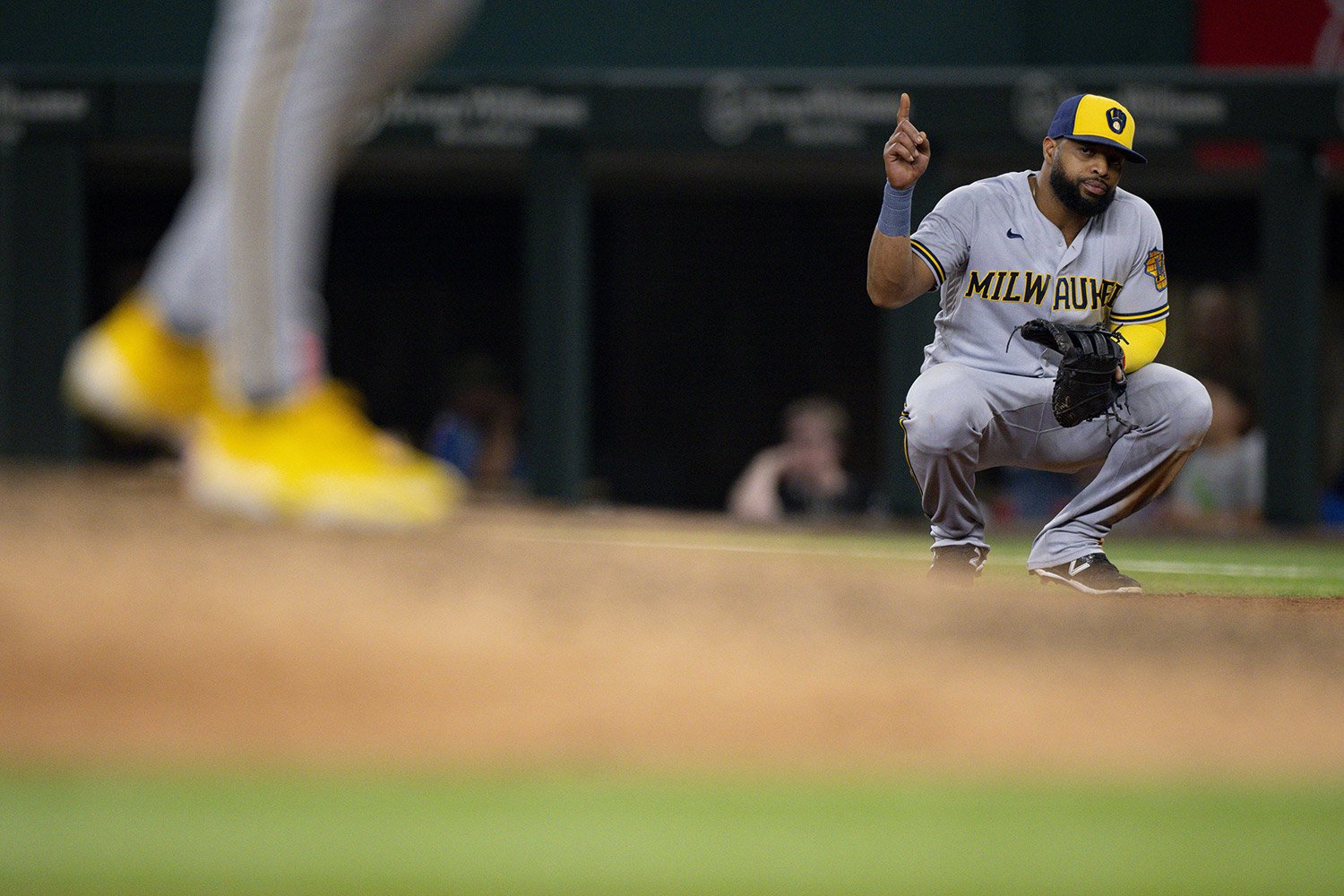 Box Score Starting Pitcher: Brandon Woodruff - 5.1 IP, 3 H, 4 ER, 2 BB, 4 K, 92 pitches, 63 strikes (68.5%) Home Runs: Carlos Santana (17) Top 3 WPA: Carlos Santana (.276), William Contreras (.237), Christian Yelich (.161) Bottom 3 WPA: Andruw Monasterio (-.120), Brandon Woodruff (-.112), Elvis Peguero (-.093) Win Probability Chart (via FanGraphs) Woodruff Cruises Until Fourth Despite facing a fearsome offense, Brandon Woodruff pitched well for the first three innings. The only baserunner he gave up was Marcus Semien who was able to draw a leadoff walk. The first time through the order he was, in every sense of the word, grooving. Things immediately went south in the fourth inning. A two-run home run by Nathaniel Lowe was followed by another home run by Mitch Garver to score the Rangers’ first three runs of the game. Although he retired the next five batters in a row and made it to the sixth inning, a double by Corey Seager, a pitch count approaching 100, and Adolis Garcia coming to the plate meant that it was time for the bullpen to step in. Hitting Heats Up While it may have seemed like an offensive mismatch heading into the game, the Brewers held their own when it came to scoring runs. Milwaukee hit three doubles in the third inning and a single to take a 3-0 lead. After the Rangers pulled ahead to a 4-3 lead heading into the seventh inning, Carlos Santana sent a ball into the right field seats to score three runs and retake the lead at 6-4. The Brewers kept it going in the eighth inning, loading the bases on two hits and an intentional walk of Christian Yelich. Contreras hit a two-run single to continue the onslaught and a Mark Canha groundout would allow another to score, bringing the Brewers lead to a dominant 9-4. At this point, the Brewers had a win probability of 98.4% and it seemed like a surefire win against a highly competitive opponent, but the Rangers were saving their best for last. Nail-Biter Of A Ninth Down by five runs, there didn’t seem to be much of a chance for Texas to comeback in front of their home crowd. Andrew Chafin took the mound and just needed to get three outs without taking too much damage. After a walk and a double placed two runners in scoring position, J.P. Martinez grounded out to score the first run of the inning. Ezequiel Duran slapped a pinch-hit double to score another run and the score was now 9-6. Not wanting to take more risks with Chafin, Devin Williams was brought in to get the last two outs. Travis Jankowski hit a double to score Duran and bring the lead to 9-7 before a wild pitch by Williams allowed him to advance to third. With just one out, Williams would have to face the top of the order, namely Marcus Semien and Corey Seager. Semien was relegated to a ground out but one that scored Jankowski and brought the tying runner to the plate. Seager hit a ball that threatened to tie the game but an incredible leap from Sal Frelick finally put an end to the comeback and gave Milwaukee the win. What’s Next? Freddy Peralta will duel Dane Dunning on the mound in the second game of the series. How Milwaukee performs against Texas could be a preview of how the team will stack up against playoff-caliber competition. The Brewers are currently 2.0 games ahead of the Cincinnati Reds and 3.0 games ahead of the Chicago Cubs in the NL Central. Postgame Interviews Bullpen Usage Spreadsheet MON TUE WED THU FRI TOT Chafin 0 0 22 0 19 41 Milner 0 22 0 0 9 31 Uribe 0 0 20 0 9 29 B Wilson 0 29 0 0 0 29 Payamps 0 0 0 19 0 19 Megill 0 0 17 0 0 17 Peguero 0 0 0 0 17 17 Williams 0 0 0 0 9 9 Tweet Highlight
 -
It’s been a few weeks since the 2023 MLB trade deadline. The Brewers were buyers, but have their new pickups been worthwhile additions? Image courtesy of © Kamil Krzaczynski-USA TODAY Sports It’s been a few weeks since the 2023 MLB trade deadline. The Brewers were buyers, but have their new pickups been worthwhile additions? The prices Matt Arnold paid for the players he acquired three weeks ago were reasonable. It's unlikely the Crew will regret the guys they allowed to get away very much, The bigger question is whether the new guys have actively made the team better. To discern the answer, let's take them one at a time. Santana’s Sad Slump What was supposed to be a power bat and valuable veteran presence hasn’t quite panned out the way the front office likely envisioned. While on the Pittsburgh Pirates, Carlos Santana was the team’s RBI leader and a serviceable first baseman. While nothing to write home about, he played strong defense and was about a league-average hitter. Since joining the Brewers, his offense has regressed significantly. The sample size of 68 plate appearances isn’t the most robust dataset, but it’s enough to start a discussion. For Milwaukee, he’s currently slashing .167/.191/.348. He isn’t hitting for average, and he sure as heck isn’t walking a ton, but interestingly, he's hitting with a decent amount of power. His ISO of .182 is above the league average, and is skewed by four of his 11 total hits with the team ending up in the seats. Nonetheless, his OPS of .540 is painfully poor, especially for a first baseman. Based on Win Probability Added, he’s hurt slightly more than he’s helped, posting a figure of -0.8, meaning he has cumulatively cost the team almost a full win. Currently on a rehab assignment in Triple A, erstwhile regular Rowdy Tellez hasn’t been much better, especially given the dip in competition. Across 34 plate appearances with the Nashville Sounds, he’s slashing .226/.294/.387 for an OPS of .681. He's heated up considerably over the last couple of days, though, so if his timing and his health are now back, maybe that's the solution to this problem. Considering they have no top-level first base prospects and that this continues to be a major hole in the team’s lineup, expect some offseason moves to bolster the position. In the meantime, whenever Tellez returns, he and Santana could need to share the first base playing time to some extent, rather than each being a full-timer with Tellez at DH. Canha Can Get On Base… And Not Much Else At the very least, Mark Canha is somewhat fulfilling his expected role of getting on base. He’s also seen a regression in every part of his slash line since arriving from the Mets, posting figures of .213/.283/.340, but it hasn’t been quite as bad as Santana’s performance. Furthermore, given some clutch moments like his go-ahead double in extra innings against the Chicago White Sox, his win probability added is 0.5, higher than his figure of 0.1 with the Mets. It’s a small sample of 53 plate appearances, but there are things to be optimistic about. He’s struck out only four times, and in his last seven games, he’s posted an .865 OPS with five RBI. His defensive shortcomings are more than compensated for by the Brewers’ excellent fielding depth. His food blog claims he’s loving the food in Milwaukee so far. I think there are positive vibes only for Canha, and his performance should see an uptick in the near future. Failed Starter to Failed Reliever? To call Andrew Chafin’s time in the Milwaukee bullpen a failure is an exaggeration, given that he’s pitched just five innings, the same length as your average Wade Miley start. Unfortunately, his 7.20 ERA and 1.40 WHIP leave much to be desired. His ugly outing on Aug. 8 against the Colorado Rockies saw him give up three earned runs in extra innings to allow the Rockies to pull away with a 7-3 lead. In these five innings, he’s only given up two hits, but one of them was a home run, and he has also recorded the same number of walks as he has strikeouts (five). It’s clear there are some control issues that weren’t as prevalent in Arizona, as his strikeout-to-walk ratio has gone from 2.72 to 1.00, but again, this is a sample size of minute proportions. We’ll probably need more data to pass proper educated judgment on Chafin’s value to the team, but if he’s able to fix his problems, he might be a dangerous lefty weapon to help record key outs late into games. View full article
-
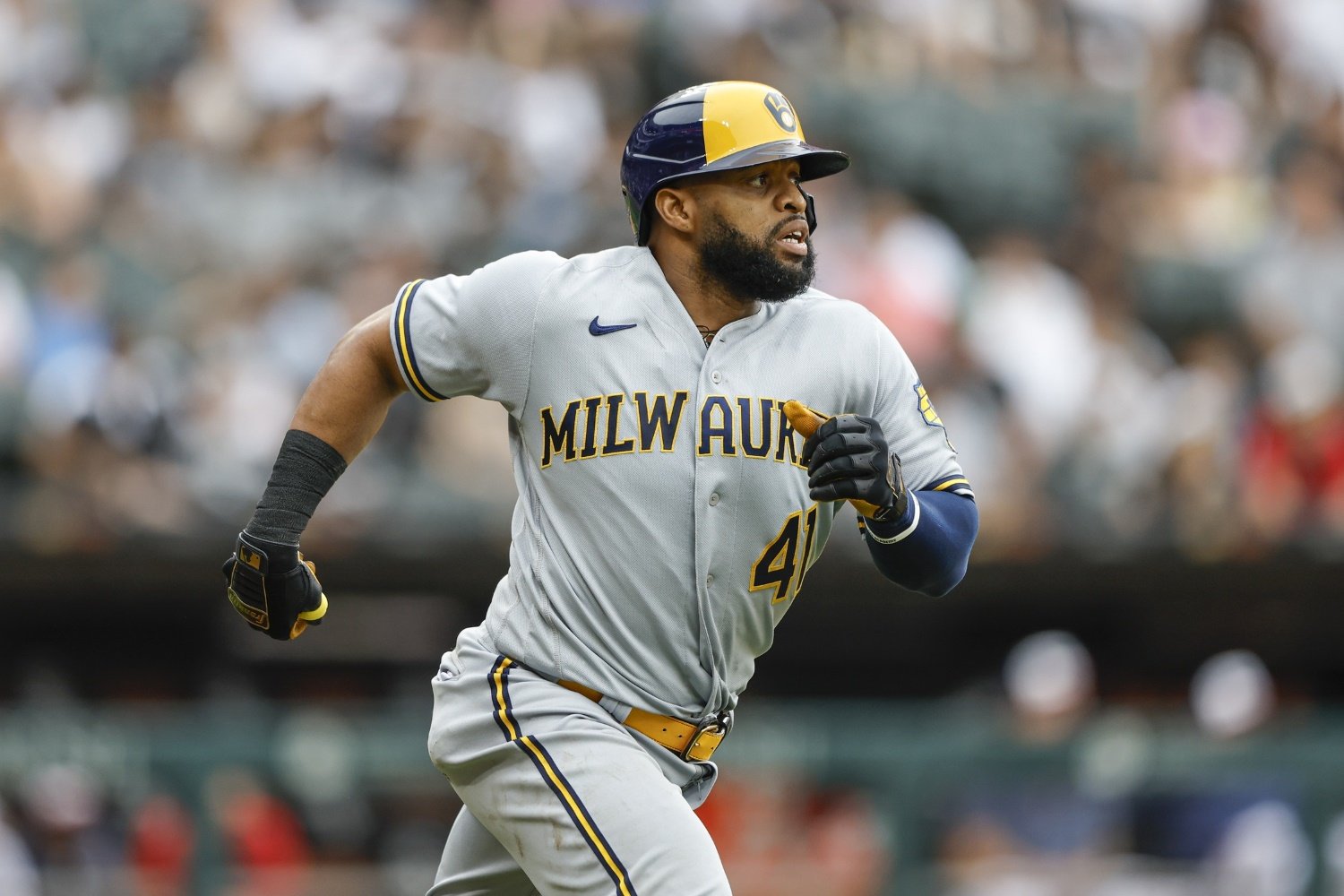 The prices Matt Arnold paid for the players he acquired three weeks ago were reasonable. It's unlikely the Crew will regret the guys they allowed to get away very much, The bigger question is whether the new guys have actively made the team better. To discern the answer, let's take them one at a time. Santana’s Sad Slump What was supposed to be a power bat and valuable veteran presence hasn’t quite panned out the way the front office likely envisioned. While on the Pittsburgh Pirates, Carlos Santana was the team’s RBI leader and a serviceable first baseman. While nothing to write home about, he played strong defense and was about a league-average hitter. Since joining the Brewers, his offense has regressed significantly. The sample size of 68 plate appearances isn’t the most robust dataset, but it’s enough to start a discussion. For Milwaukee, he’s currently slashing .167/.191/.348. He isn’t hitting for average, and he sure as heck isn’t walking a ton, but interestingly, he's hitting with a decent amount of power. His ISO of .182 is above the league average, and is skewed by four of his 11 total hits with the team ending up in the seats. Nonetheless, his OPS of .540 is painfully poor, especially for a first baseman. Based on Win Probability Added, he’s hurt slightly more than he’s helped, posting a figure of -0.8, meaning he has cumulatively cost the team almost a full win. Currently on a rehab assignment in Triple A, erstwhile regular Rowdy Tellez hasn’t been much better, especially given the dip in competition. Across 34 plate appearances with the Nashville Sounds, he’s slashing .226/.294/.387 for an OPS of .681. He's heated up considerably over the last couple of days, though, so if his timing and his health are now back, maybe that's the solution to this problem. Considering they have no top-level first base prospects and that this continues to be a major hole in the team’s lineup, expect some offseason moves to bolster the position. In the meantime, whenever Tellez returns, he and Santana could need to share the first base playing time to some extent, rather than each being a full-timer with Tellez at DH. Canha Can Get On Base… And Not Much Else At the very least, Mark Canha is somewhat fulfilling his expected role of getting on base. He’s also seen a regression in every part of his slash line since arriving from the Mets, posting figures of .213/.283/.340, but it hasn’t been quite as bad as Santana’s performance. Furthermore, given some clutch moments like his go-ahead double in extra innings against the Chicago White Sox, his win probability added is 0.5, higher than his figure of 0.1 with the Mets. It’s a small sample of 53 plate appearances, but there are things to be optimistic about. He’s struck out only four times, and in his last seven games, he’s posted an .865 OPS with five RBI. His defensive shortcomings are more than compensated for by the Brewers’ excellent fielding depth. His food blog claims he’s loving the food in Milwaukee so far. I think there are positive vibes only for Canha, and his performance should see an uptick in the near future. Failed Starter to Failed Reliever? To call Andrew Chafin’s time in the Milwaukee bullpen a failure is an exaggeration, given that he’s pitched just five innings, the same length as your average Wade Miley start. Unfortunately, his 7.20 ERA and 1.40 WHIP leave much to be desired. His ugly outing on Aug. 8 against the Colorado Rockies saw him give up three earned runs in extra innings to allow the Rockies to pull away with a 7-3 lead. In these five innings, he’s only given up two hits, but one of them was a home run, and he has also recorded the same number of walks as he has strikeouts (five). It’s clear there are some control issues that weren’t as prevalent in Arizona, as his strikeout-to-walk ratio has gone from 2.72 to 1.00, but again, this is a sample size of minute proportions. We’ll probably need more data to pass proper educated judgment on Chafin’s value to the team, but if he’s able to fix his problems, he might be a dangerous lefty weapon to help record key outs late into games.
 -
Unable to face the pressure of 40,000 fans munching on Dodger Dogs, the Brewers seemed to roll over against the Dodgers Wednesday night. If the real game is the friends we met along the way, though, then at least they bumped into an old one. Image courtesy of © Jayne Kamin-Oncea-USA TODAY Sports Unable to face the pressure of 40,000 fans munching on Dodger Dogs, the Brewers seemed to roll over against the Dodgers Wednesday night. If the real game is the friends we met along the way, though, then at least they bumped into an old one. Box Score Starting Pitcher: Wade Miley - 5.0 IP, 7 H, 3 ER, 2 BB, 2 K, 82 pitches, 54 strikes (65.9%) Home Runs: Mark Canha (7) Top 3 WPA: Mark Canha (.073), Andruw Monasterio (.049), William Contreras (.046) Bottom 3 WPA: Wade Miley (-.230), Sal Frelick (-.135), Carlos Santana (-.122) Win Probability Chart (via FanGraphs) Miley Gets Hit Around, Contreras Keeps Interfering In his first start at Dodger Stadium since game 5 of the 2018 NLCS, Wade Miley made it through five innings while taking a little bit of damage on the way. In the first inning, after a walk and a single, a catcher interference call on Contreras loaded the bases with just one out. A groundout by Amed Rosario was enough to put the Dodgers on the board, but Miley was able to get Max Muncy to ground out for the third out. In the second inning, he gave up a solo home run to Miguel Rojas, and Los Angeles scored again after yet another instance of catcher’s interference in a bases-loaded situation brought the score to 3-1. The final run we conceded came by way of a Will Smith sacrifice fly in the fourth. Despite taking the loss, Miley’s outing was satisfactory, and he continues to be remarkably consistent given his relatively old age and low velocity. He’s currently at a 3.05 ERA and a 1.17 WHIP over 82 ⅔ innings pitched this season. Mark Mashes a Homer But Not Much Else Like the first game in the series, things started off pretty well for Milwaukee. To lead off the second inning, Mark Canha hammered a home run into left field to tie the game at 1-1. It was his first homer since joining the Brewers, and a pleasant surprise, given his relative lack of power throughout this season. Also like the first game of the series, there wasn’t much else that the Brewers could muster. Totaling just three hits and three walks in nine innings, the offense simply couldn’t get started. The Return Of Gus Varland One interesting thing that did happen in this game was the lineup facing off against Gus Varland for two innings. After making the Brewers' Opening Day roster this season, Varland performed well in his first seven appearances, totaling eight innings and posting a cumulative 2.25 ERA. After an outing on May 15 against the St. Louis Cardinals that saw him give up nine earned runs in just two-thirds of an inning, his ERA inflated to 11.42, leading to him being designated for assignment the next day. After clearing waivers, he returned to the Dodgers organization, where he has spent most of the season in Triple A. This game was his first major-league appearance for them, and he pitched two innings, giving up just one walk and striking out three of his old teammates. What’s Next? In the final game of the series, Corbin Burnes will face off against Lance Lynn. The Brewers have struggled to pose a significant threat to the Dodgers throughout this whole series, but they might have a chance against Lynn. He’s currently got the second-worst ERA of all qualified pitchers (5.88). Milwaukee is 2.5 games ahead of the Chicago Cubs and the Cincinnati Reds for the lead in the NL Central. Postgame Interviews Bullpen Usage Spreadsheet SAT SUN MON TUE WED TOT Milner 17 0 0 22 0 39 Chafin 0 15 0 0 22 37 Uribe 0 10 0 0 20 30 B Wilson 0 0 0 29 0 29 Megill 0 0 0 0 17 17 Williams 15 0 0 0 0 15 Peguero 4 0 0 0 0 4 Payamps 0 0 0 0 0 0 Tweet Highlight View full article
-
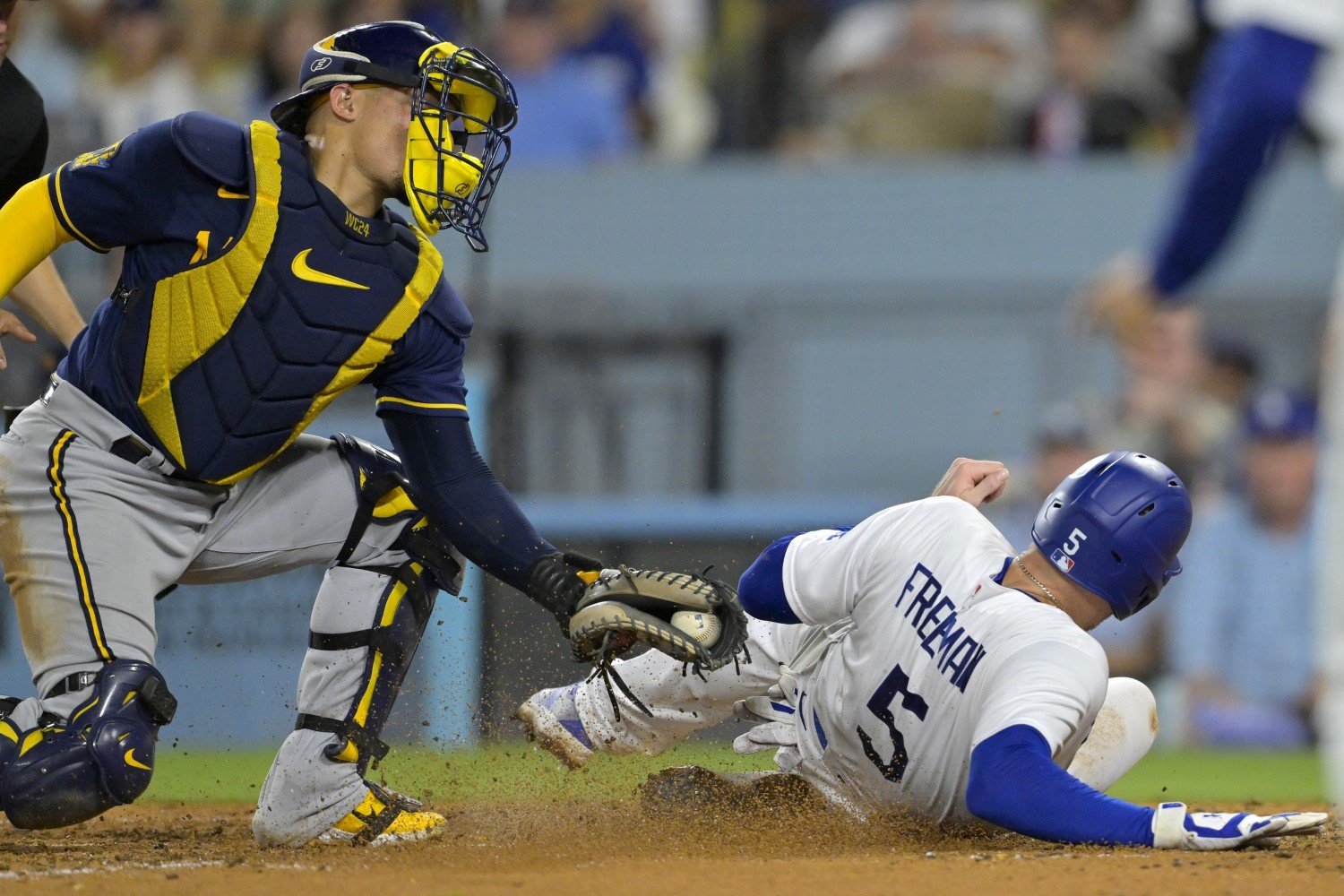 Box Score Starting Pitcher: Wade Miley - 5.0 IP, 7 H, 3 ER, 2 BB, 2 K, 82 pitches, 54 strikes (65.9%) Home Runs: Mark Canha (7) Top 3 WPA: Mark Canha (.073), Andruw Monasterio (.049), William Contreras (.046) Bottom 3 WPA: Wade Miley (-.230), Sal Frelick (-.135), Carlos Santana (-.122) Win Probability Chart (via FanGraphs) Miley Gets Hit Around, Contreras Keeps Interfering In his first start at Dodger Stadium since game 5 of the 2018 NLCS, Wade Miley made it through five innings while taking a little bit of damage on the way. In the first inning, after a walk and a single, a catcher interference call on Contreras loaded the bases with just one out. A groundout by Amed Rosario was enough to put the Dodgers on the board, but Miley was able to get Max Muncy to ground out for the third out. In the second inning, he gave up a solo home run to Miguel Rojas, and Los Angeles scored again after yet another instance of catcher’s interference in a bases-loaded situation brought the score to 3-1. The final run we conceded came by way of a Will Smith sacrifice fly in the fourth. Despite taking the loss, Miley’s outing was satisfactory, and he continues to be remarkably consistent given his relatively old age and low velocity. He’s currently at a 3.05 ERA and a 1.17 WHIP over 82 ⅔ innings pitched this season. Mark Mashes a Homer But Not Much Else Like the first game in the series, things started off pretty well for Milwaukee. To lead off the second inning, Mark Canha hammered a home run into left field to tie the game at 1-1. It was his first homer since joining the Brewers, and a pleasant surprise, given his relative lack of power throughout this season. Also like the first game of the series, there wasn’t much else that the Brewers could muster. Totaling just three hits and three walks in nine innings, the offense simply couldn’t get started. The Return Of Gus Varland One interesting thing that did happen in this game was the lineup facing off against Gus Varland for two innings. After making the Brewers' Opening Day roster this season, Varland performed well in his first seven appearances, totaling eight innings and posting a cumulative 2.25 ERA. After an outing on May 15 against the St. Louis Cardinals that saw him give up nine earned runs in just two-thirds of an inning, his ERA inflated to 11.42, leading to him being designated for assignment the next day. After clearing waivers, he returned to the Dodgers organization, where he has spent most of the season in Triple A. This game was his first major-league appearance for them, and he pitched two innings, giving up just one walk and striking out three of his old teammates. What’s Next? In the final game of the series, Corbin Burnes will face off against Lance Lynn. The Brewers have struggled to pose a significant threat to the Dodgers throughout this whole series, but they might have a chance against Lynn. He’s currently got the second-worst ERA of all qualified pitchers (5.88). Milwaukee is 2.5 games ahead of the Chicago Cubs and the Cincinnati Reds for the lead in the NL Central. Postgame Interviews Bullpen Usage Spreadsheet SAT SUN MON TUE WED TOT Milner 17 0 0 22 0 39 Chafin 0 15 0 0 22 37 Uribe 0 10 0 0 20 30 B Wilson 0 0 0 29 0 29 Megill 0 0 0 0 17 17 Williams 15 0 0 0 0 15 Peguero 4 0 0 0 0 4 Payamps 0 0 0 0 0 0 Tweet Highlight
 -
Like a retired MMA fighter now relegated to YouTube boxing, the Brewers put up an anemic offensive performance to kick off their three-game series against the surging Los Angeles Dodgers. Image courtesy of © Gary A. Vasquez-USA TODAY Sports Like a retired MMA fighter now relegated to YouTube boxing, the Brewers put up an anemic offensive performance to kick off their three-game series against the surging Los Angeles Dodgers. Box Score Starting Pitcher: Adrian Houser - 5.1 IP, 5 H, 3 ER, 0 BB, 6 K, 75 pitches, 57 strikes (76.0%) Home Runs: Carlos Santana (16) Top 3 WPA: William Contreras (.024), Brian Anderson (-.007), Bryse Wilson (-.009) Bottom 3 WPA: Hoby Milner (-.128), Adrian Houser (-.117), Tyrone Taylor (-.058) Win Probability Chart (via FanGraphs) Houser Just Can’t Get Through Six One Thing Adrian Houser has struggled to do this season is make quality starts. It hasn’t been an issue of giving up too many runs in his outings but rather one of not pitching enough to be eligible for the accolade. Of his 15 starts this season, only five have lasted six or more innings. Tuesday was no different. After retiring the Dodgers lineup in order the first time through, he finally allowed his first two baserunners in the fourth inning before sitting down the heart of the order in Will Smith, Max Muncy, and J.D. Martinez. He gave up a single and a double in the fifth inning, with a weak groundout finally plating the first Dodger, but heading into the sixth inning, his pitch count was reasonable. Unfortunately, he just couldn’t keep it up. With Houser facing the heart of the order for the third time, Smith reached on an error, Muncy hit a single, and Martinez hit a run-scoring double. With the game still close, Craig Counsell pulled Houser and replaced him with Hoby Milner. O Bullpen, Where Art Thou? Following Houser’s departure, the Brewers needed two more outs, and Milner was tasked with facing the bottom of the order. Alas, an Enrique Hernandez single scored another two runs, and two more singles by James Outman and Miguel Rojas scored Hernandez. Having given up three hits and three runs while recording just a single out, Milner was replaced by Bryse Wilson who inherited runners on first and second. He gave up a single to Mookie Betts, but kept the Dodgers from scoring in the seventh and eighth innings, taking on a lengthier relief appearance to spare the rest of the bullpen. Bobby Outduels The Brew Crew Milwaukee got off to a strong start, with a Christian Yelich single and a William Contreras walk putting the leadoff man in scoring position. A flyout by Carlos Santana and a groundout by Sal Frelick allowed Yelich to score the team’s first run, but it was all downhill after that. In a monumental performance, Dodgers starter Bobby Miller retired the next 18 batters in a row. While he only struck out four, the Brewers lineup couldn’t manage more than weak grounders and shallow flyouts. In the final three innings, Ryan Yarbrough was brought in to close out the game after the Dodgers had taken a commanding 6-1 lead. Carlos Santana did his best to close the gap by hitting a leadoff home run in the seventh, but even this 442-foot solo shot wasn’t nearly enough to make up for lost time. It would be the second and final Brewers’ hit. What’s Next? Trusty lefty Wade Miley will toe the slab opposite familiar foe Clayton Kershaw. When it comes to facing lefties, the Dodgers and the Brewers are worlds apart. While LA has posted an .807 OPS against left-handed pitching this season (third in MLB), the Brewers have a .694 OPS (23rd in MLB). While this is an improvement from earlier in the season (when they were even closer to the bottom), it’s still a ways away from being enough to beat one of the best lefties of this generation. Despite the loss, the Brewers are still 3.5 games ahead of the Chicago Cubs and the Cincinnati Reds for the lead in the NL Central. FanGraphs reports the team as having a 69.5% chance to win the division and an 83.5% chance to make the playoffs. Postgame Interviews Bullpen Usage Spreadsheet FRI SAT SUN MON TUE TOT Milner 0 17 0 0 22 39 Mejia 0 0 30 0 0 30 Williams 14 15 0 0 0 29 B Wilson 0 0 0 0 29 29 Peguero 21 4 0 0 0 25 Uribe 10 0 10 0 0 20 Payamps 18 0 0 0 0 18 Chafin 0 0 15 0 0 15 Tweet Highlight View full article
-
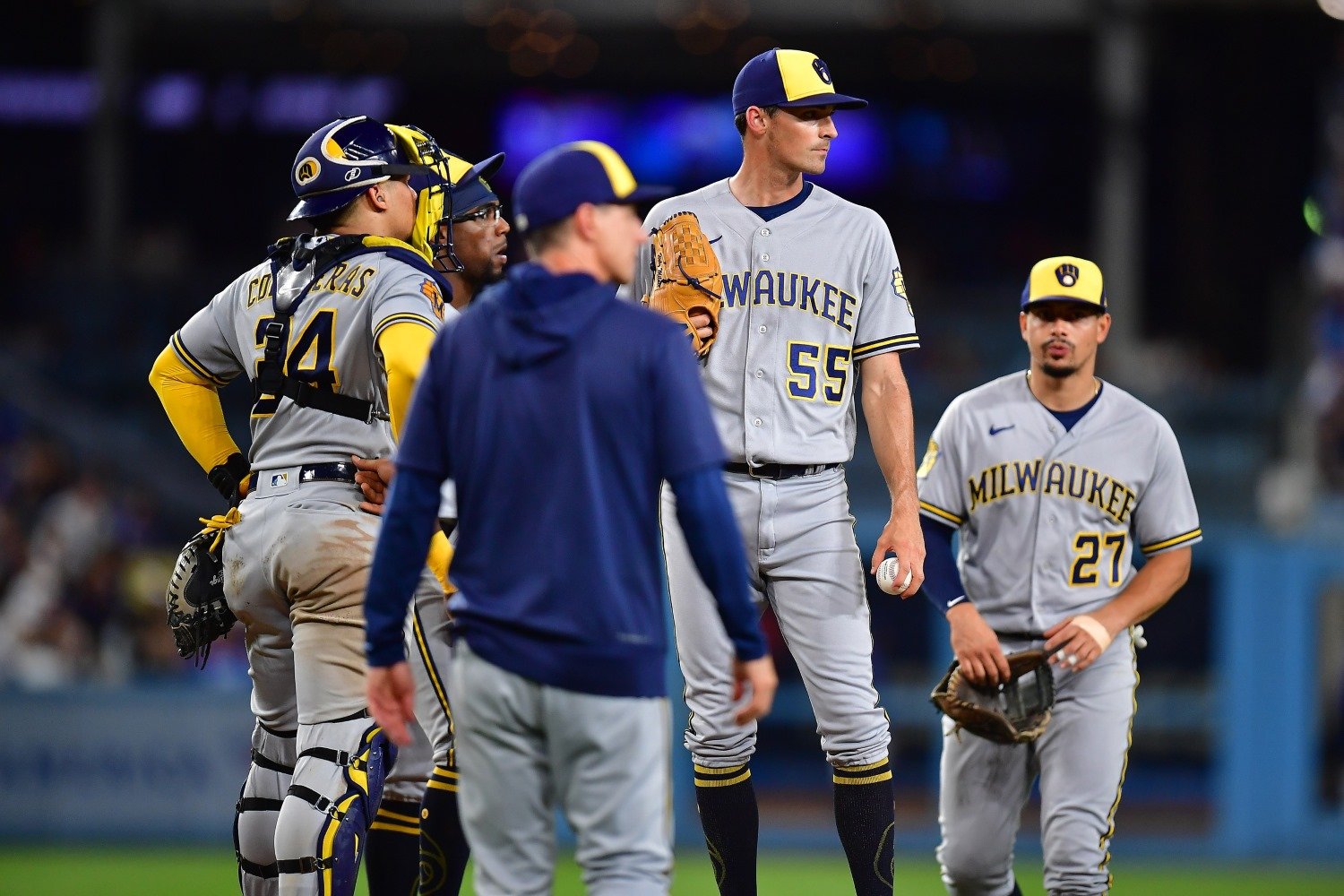 Box Score Starting Pitcher: Adrian Houser - 5.1 IP, 5 H, 3 ER, 0 BB, 6 K, 75 pitches, 57 strikes (76.0%) Home Runs: Carlos Santana (16) Top 3 WPA: William Contreras (.024), Brian Anderson (-.007), Bryse Wilson (-.009) Bottom 3 WPA: Hoby Milner (-.128), Adrian Houser (-.117), Tyrone Taylor (-.058) Win Probability Chart (via FanGraphs) Houser Just Can’t Get Through Six One Thing Adrian Houser has struggled to do this season is make quality starts. It hasn’t been an issue of giving up too many runs in his outings but rather one of not pitching enough to be eligible for the accolade. Of his 15 starts this season, only five have lasted six or more innings. Tuesday was no different. After retiring the Dodgers lineup in order the first time through, he finally allowed his first two baserunners in the fourth inning before sitting down the heart of the order in Will Smith, Max Muncy, and J.D. Martinez. He gave up a single and a double in the fifth inning, with a weak groundout finally plating the first Dodger, but heading into the sixth inning, his pitch count was reasonable. Unfortunately, he just couldn’t keep it up. With Houser facing the heart of the order for the third time, Smith reached on an error, Muncy hit a single, and Martinez hit a run-scoring double. With the game still close, Craig Counsell pulled Houser and replaced him with Hoby Milner. O Bullpen, Where Art Thou? Following Houser’s departure, the Brewers needed two more outs, and Milner was tasked with facing the bottom of the order. Alas, an Enrique Hernandez single scored another two runs, and two more singles by James Outman and Miguel Rojas scored Hernandez. Having given up three hits and three runs while recording just a single out, Milner was replaced by Bryse Wilson who inherited runners on first and second. He gave up a single to Mookie Betts, but kept the Dodgers from scoring in the seventh and eighth innings, taking on a lengthier relief appearance to spare the rest of the bullpen. Bobby Outduels The Brew Crew Milwaukee got off to a strong start, with a Christian Yelich single and a William Contreras walk putting the leadoff man in scoring position. A flyout by Carlos Santana and a groundout by Sal Frelick allowed Yelich to score the team’s first run, but it was all downhill after that. In a monumental performance, Dodgers starter Bobby Miller retired the next 18 batters in a row. While he only struck out four, the Brewers lineup couldn’t manage more than weak grounders and shallow flyouts. In the final three innings, Ryan Yarbrough was brought in to close out the game after the Dodgers had taken a commanding 6-1 lead. Carlos Santana did his best to close the gap by hitting a leadoff home run in the seventh, but even this 442-foot solo shot wasn’t nearly enough to make up for lost time. It would be the second and final Brewers’ hit. What’s Next? Trusty lefty Wade Miley will toe the slab opposite familiar foe Clayton Kershaw. When it comes to facing lefties, the Dodgers and the Brewers are worlds apart. While LA has posted an .807 OPS against left-handed pitching this season (third in MLB), the Brewers have a .694 OPS (23rd in MLB). While this is an improvement from earlier in the season (when they were even closer to the bottom), it’s still a ways away from being enough to beat one of the best lefties of this generation. Despite the loss, the Brewers are still 3.5 games ahead of the Chicago Cubs and the Cincinnati Reds for the lead in the NL Central. FanGraphs reports the team as having a 69.5% chance to win the division and an 83.5% chance to make the playoffs. Postgame Interviews Bullpen Usage Spreadsheet FRI SAT SUN MON TUE TOT Milner 0 17 0 0 22 39 Mejia 0 0 30 0 0 30 Williams 14 15 0 0 0 29 B Wilson 0 0 0 0 29 29 Peguero 21 4 0 0 0 25 Uribe 10 0 10 0 0 20 Payamps 18 0 0 0 0 18 Chafin 0 0 15 0 0 15 Tweet Highlight
 -
What about Albert Pujols? The most recent recipient of the NL award was just plain lackluster for several years before having a monstrous 2022 and a wonderful sendoff.
-
they obviously sold their souls to the same guy
-
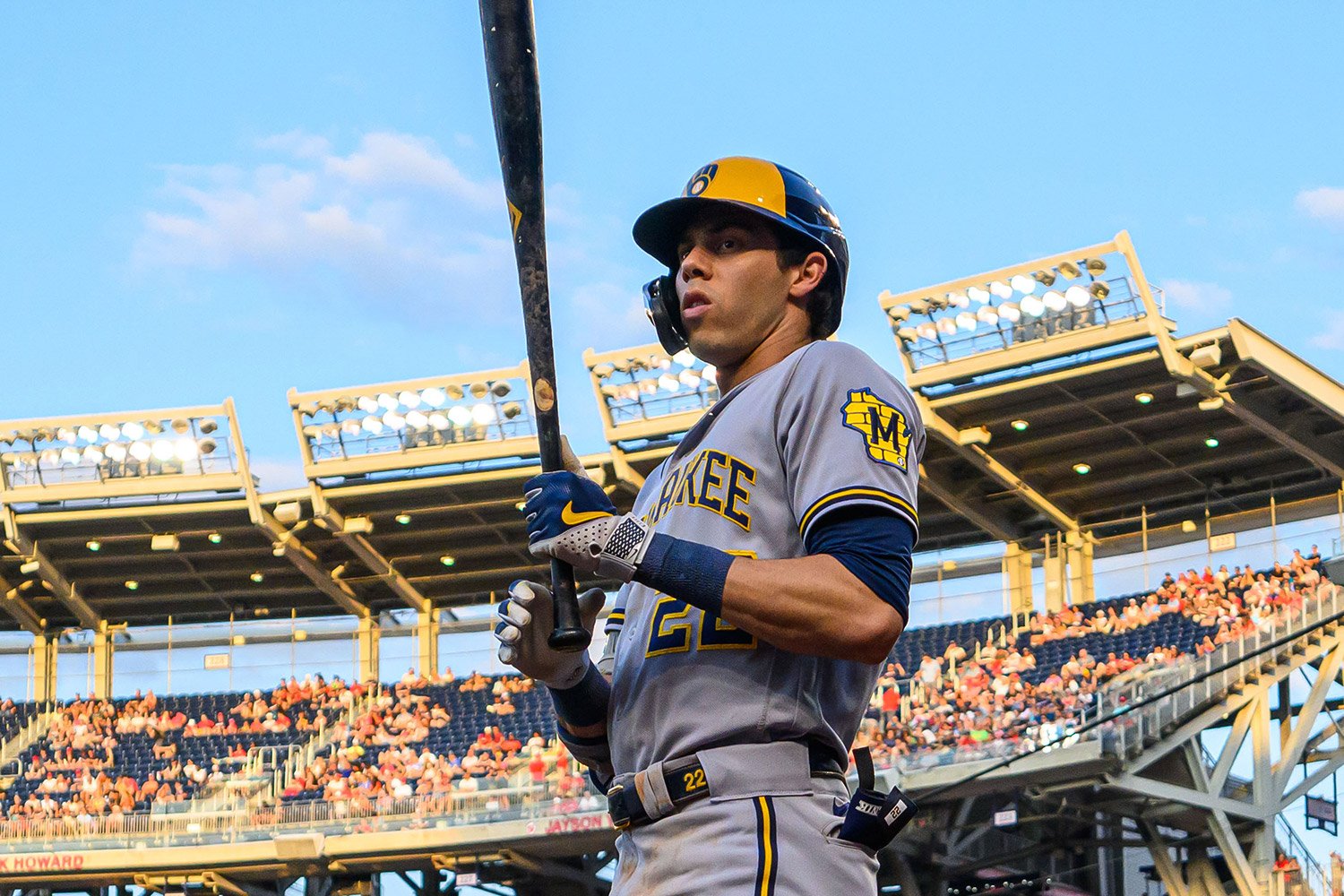 The Dark Ages After posting an OPS over 1.000 for the second season in a row in 2019, something tragic happened. Yes, there was some sort of pandemic that swept through the world, but more importantly, it seemed that Christian Yelich forgot what had made him great. Over 247 plate appearances in 2020, he slashed just .205/.356/.430 for a measly OPS of .786, only slightly above league average. Perhaps this was due to the shortened season or jitters over the public health emergency, but the scary scenes continued through the following two seasons. His hitting slipped even further in 2021 and 2022, posting consistent yet disappointing OPS figures of .736 and .738. His ability to hit cutters and breaking balls seemed to be lost in time, and since his defense wasn’t nearly good enough to justify his $215 million contract, it was an unfortunate time to be a Brewers fan. Counterpoint: Why Cody Bellinger is the Comeback Player of the Year The beginning of this season was shaping up to be more of the same, with Yelich posting a somewhat dismal .656 OPS through April. Then he had a great May, posting a .842 OPS. Then he had an even better June, posting a .912 OPS. Then he fully turned back the clock in July, slashing .333/.389/.626 for an OPS of 1.015. It was too late to be an all-star but timely enough to keep the Brewers’ playoffs alive in a tight division race. So what changed? Adjustments to his Approach One of the primary culprits for his regression was the devastating knee injury he suffered in September 2019. After fouling a slider straight into his knee, it was revealed that Yelich had fully fractured his kneecap and would miss the remainder of the season. Despite returning to competition the following season, it was clear his approach had changed. While subtle, he seemed to take a slightly longer windup, loading more into his back leg. Prior to the injury, Yelich had a relatively neutral load, whereas his most recent load is more intense, akin to Bryce Harper's approach. 4A04F430-D2A1-4926-BABA-697017018A14 (1).mp4 Parker Hageman (@HagemanParker), cofounder of Twins Daily and overall pretty smart guy, helped me break down why this new swing could have had such negative effects. The two main downsides are a more delayed reaction and a potential reduction in vision as he rotates his center line further away from the pitching mound. Both could be to blame for his increase in swinging strikes and decline in pull rate as a result of being late to pitches more often. The more general numbers back up this hypothesis, as he never saw a significant decrease in exit velocity, and balls that he did hit were some of the hardest hit in the league. From 2019 to 2021, he took the biggest steps back in xISO (97th percentile in 2019, 27th percentile in 2021), Barrel % (97th percentile in 2019, 42nd percentile in 2021), and Strikeout % (60th percentile in 2019, 32nd percentile in 2021). This year, those figures are above league average, with his xISO moving to the 61st percentile, his Barrel % to the 57th percentile, and his Strikeout % to the 56th percentile. This year, he seems to be starting his load earlier to compensate for the more drastic coil, allowing him to generate positive run value on all pitches except the sweeper. The Other Man Unfortunately for Yelich, there’s some stiff competition for this award. One name, in particular, is a familiar foe who happened to beat out Yelich for the NL MVP award in 2019: Cody Bellinger. While Yelich regressed to post average hitting statistics, Bellinger skidded below replacement level in 2021, slashing .165/.240/.302 for an OPS of .542. Two years after his monstrous 2019 season, this saw him post a 1.035 OPS while leading the National League in total bases. 2022 saw a slight recovery, but Bellinger was still at a .654 OPS, a far cry from his peak. Hoping a change of scenery would revitalize his career, he took his talents to the Chicago Cubs and has found his groove again, slashing .331/.380/.561 and serving as the team’s best-qualified hitter. Unfortunately, he’s still suffering from injuries and missed a month of action due to a left knee contusion. Furthermore, he missed a few days for the birth of his second child, proving his lack of commitment to the team and the sport. His devotion to his family can only have a detrimental effect on his baseball career in the medium to long term. While Yelich has a slightly lower OPS, this can be explained by his more pitcher-friendly home ballpark and a larger sample size of ABs. As he is currently childless, his lack of engagements off the field will also allow him to focus purely on baseball and may make a more compelling case for this comeback being more permanent. Future Outlook His current slash line of .290/.374/.469 doesn’t present the most outstanding figures in the National League, and his August is off to a relatively slow start (.714 OPS over 38 ABs). Still, his red-hot June and July and his overall positive trajectory lead me to think that Yelich might have one of the most compelling quantitative and qualitative cases for being the NL Comeback Player of the Year. He's competing against his old friend Bellinger to make things even more interesting. Could we ask for a more perfect comeback storyline?
 -
For the past four years, Brewers fans have been awaiting the return of their king, Christian Yelich. After what has seemed like an eternity, the numbers seem to point to a potential re-attainment of glory for the face of the franchise. Image courtesy of © Reggie Hildred-USA TODAY Sports For the past four years, Brewers fans have been awaiting the return of their king, Christian Yelich. After what has seemed like an eternity, the numbers seem to point to a potential re-attainment of glory for the face of the franchise. The Dark Ages After posting an OPS over 1.000 for the second season in a row in 2019, something tragic happened. Yes, there was some sort of pandemic that swept through the world, but more importantly, it seemed that Christian Yelich forgot what had made him great. Over 247 plate appearances in 2020, he slashed just .205/.356/.430 for a measly OPS of .786, only slightly above league average. Perhaps this was due to the shortened season or jitters over the public health emergency, but the scary scenes continued through the following two seasons. His hitting slipped even further in 2021 and 2022, posting consistent yet disappointing OPS figures of .736 and .738. His ability to hit cutters and breaking balls seemed to be lost in time, and since his defense wasn’t nearly good enough to justify his $215 million contract, it was an unfortunate time to be a Brewers fan. Counterpoint: Why Cody Bellinger is the Comeback Player of the Year The beginning of this season was shaping up to be more of the same, with Yelich posting a somewhat dismal .656 OPS through April. Then he had a great May, posting a .842 OPS. Then he had an even better June, posting a .912 OPS. Then he fully turned back the clock in July, slashing .333/.389/.626 for an OPS of 1.015. It was too late to be an all-star but timely enough to keep the Brewers’ playoffs alive in a tight division race. So what changed? Adjustments to his Approach One of the primary culprits for his regression was the devastating knee injury he suffered in September 2019. After fouling a slider straight into his knee, it was revealed that Yelich had fully fractured his kneecap and would miss the remainder of the season. Despite returning to competition the following season, it was clear his approach had changed. While subtle, he seemed to take a slightly longer windup, loading more into his back leg. Prior to the injury, Yelich had a relatively neutral load, whereas his most recent load is more intense, akin to Bryce Harper's approach. 4A04F430-D2A1-4926-BABA-697017018A14 (1).mp4 Parker Hageman (@HagemanParker), cofounder of Twins Daily and overall pretty smart guy, helped me break down why this new swing could have had such negative effects. The two main downsides are a more delayed reaction and a potential reduction in vision as he rotates his center line further away from the pitching mound. Both could be to blame for his increase in swinging strikes and decline in pull rate as a result of being late to pitches more often. The more general numbers back up this hypothesis, as he never saw a significant decrease in exit velocity, and balls that he did hit were some of the hardest hit in the league. From 2019 to 2021, he took the biggest steps back in xISO (97th percentile in 2019, 27th percentile in 2021), Barrel % (97th percentile in 2019, 42nd percentile in 2021), and Strikeout % (60th percentile in 2019, 32nd percentile in 2021). This year, those figures are above league average, with his xISO moving to the 61st percentile, his Barrel % to the 57th percentile, and his Strikeout % to the 56th percentile. This year, he seems to be starting his load earlier to compensate for the more drastic coil, allowing him to generate positive run value on all pitches except the sweeper. The Other Man Unfortunately for Yelich, there’s some stiff competition for this award. One name, in particular, is a familiar foe who happened to beat out Yelich for the NL MVP award in 2019: Cody Bellinger. While Yelich regressed to post average hitting statistics, Bellinger skidded below replacement level in 2021, slashing .165/.240/.302 for an OPS of .542. Two years after his monstrous 2019 season, this saw him post a 1.035 OPS while leading the National League in total bases. 2022 saw a slight recovery, but Bellinger was still at a .654 OPS, a far cry from his peak. Hoping a change of scenery would revitalize his career, he took his talents to the Chicago Cubs and has found his groove again, slashing .331/.380/.561 and serving as the team’s best-qualified hitter. Unfortunately, he’s still suffering from injuries and missed a month of action due to a left knee contusion. Furthermore, he missed a few days for the birth of his second child, proving his lack of commitment to the team and the sport. His devotion to his family can only have a detrimental effect on his baseball career in the medium to long term. While Yelich has a slightly lower OPS, this can be explained by his more pitcher-friendly home ballpark and a larger sample size of ABs. As he is currently childless, his lack of engagements off the field will also allow him to focus purely on baseball and may make a more compelling case for this comeback being more permanent. Future Outlook His current slash line of .290/.374/.469 doesn’t present the most outstanding figures in the National League, and his August is off to a relatively slow start (.714 OPS over 38 ABs). Still, his red-hot June and July and his overall positive trajectory lead me to think that Yelich might have one of the most compelling quantitative and qualitative cases for being the NL Comeback Player of the Year. He's competing against his old friend Bellinger to make things even more interesting. Could we ask for a more perfect comeback storyline? View full article
-
A productive offense and a scoreless quality start by Freddy Peralta allowed the Brewers to do something that they hadn't accomplished in 37 years. Image courtesy of © Kamil Krzaczynski-USA TODAY Sports A productive offense and a scoreless quality start by Freddy Peralta allowed the Brewers to do something that they hadn't accomplished in 37 years. Box Score Starting Pitcher: Freddy Peralta - 6.0 IP, 4 H, 0 ER, 3 BB, 6 K, 103 pitches, 65 strikes (63.1%) Home Runs: Carlos Santana (15) Top 3 WPA: Freddy Peralta (.366), Willy Adames (.122), Abner Uribe (.080) Bottom 3 WPA: Tyrone Taylor (-.090), William Contreras (-.083), Brice Turang (-.076) Win Probability Chart (via FanGraphs) Peralta Pitches Six Shutout Innings In another quality start, Freddy Peralta gave up a total of seven baserunners but no runs, as he blew the ball past the White Sox lineup. He earned 18 swings and misses, 10 of which were from his four-seam fastball and seven of which were from his slider. He was utilizing the high fastball particularly well. Perhaps more impressive, he was never truly in trouble. The only innings in which he allowed more than one baserunner were the fourth and fifth. Through intelligent pitching and a display of his brilliant stuff, Peralta prevented the White Sox from having any sort of offensive rally through six frames. Crew Can’t Stop, Won’t Stop Hitting The Brewers were able to bring home runners in four separate innings. Mark Canha broke the seal in the second inning with a sacrifice fly, after back-to-back singles by Sal Frelick and Willy Adames. In the fifth, Andruw Monasterio slapped an RBI double to left field to give the Brewers a 2-0 lead. While Milwaukee maintained a 2-0 lead heading into the eighth inning, they tacked on three insurance runs thanks to a massive home run by Carlos Santana to center field to widen the lead to a comfortable 5-0. Finally, Christian Yelich hit a totally unnecessary (but still very impressive) two-run single in the ninth inning to crush any remaining comeback hopes for the White Sox. Mejia (Almost) Mucks It Up After another routine day for one of the best bullpens in baseball, J.C. Mejia dusted off his glove and entered the game for the first time since August 6. With a 7-0 lead and just three outs left to secure a series sweep, Mejia took the mound. A single by Andrew Vaughn and a subsequent wild pitch put a runner in scoring position right away. Mejia got two quick outs, but a double by Carlos Perez brought Vaughn home to score the first White Sox run. Zach Remillard then hit a single to place runners on the corners, and advanced to second base on defensive indifference. After a two-run single by Elvis Andrus, things seemed to be falling apart at the seams. Luckily, Andrew Benintendi lined out to end the game, allowing the Brewers to sweep the White Sox for the first time since April of 1986. What’s Next? The Brewers will have a day off, before facing off against the Los Angeles Dodgers behind enemy lines. To kick things off, we’ll see a pitching matchup of Adrian Houser against Bobby Miller. With this win, the Brewers extended their division lead to 3.5 games over the Chicago Cubs and 4.0 games ahead of the Cincinnati Reds. Postgame Interviews Bullpen Usage Spreadsheet WED THU FRI SAT SUN TOT Williams 9 0 14 15 0 38 Payamps 18 0 18 0 0 36 Milner 18 0 0 17 0 35 Mejia 0 0 0 0 30 30 Uribe 8 0 10 0 10 28 Peguero 0 0 21 4 0 25 Chafin 0 0 0 0 15 15 B Wilson 14 0 0 0 0 14 Tweet Highlight View full article
-
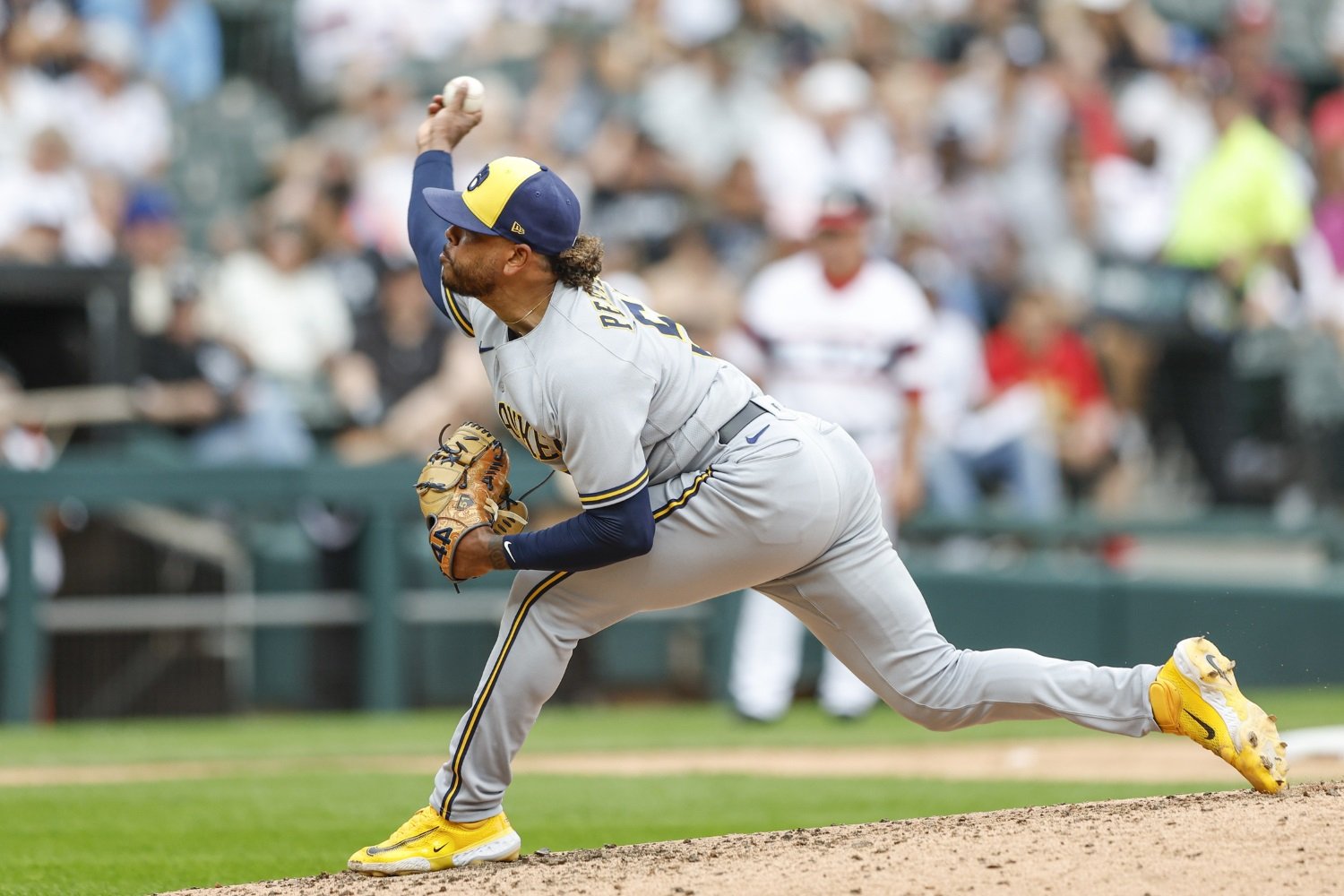 Box Score Starting Pitcher: Freddy Peralta - 6.0 IP, 4 H, 0 ER, 3 BB, 6 K, 103 pitches, 65 strikes (63.1%) Home Runs: Carlos Santana (15) Top 3 WPA: Freddy Peralta (.366), Willy Adames (.122), Abner Uribe (.080) Bottom 3 WPA: Tyrone Taylor (-.090), William Contreras (-.083), Brice Turang (-.076) Win Probability Chart (via FanGraphs) Peralta Pitches Six Shutout Innings In another quality start, Freddy Peralta gave up a total of seven baserunners but no runs, as he blew the ball past the White Sox lineup. He earned 18 swings and misses, 10 of which were from his four-seam fastball and seven of which were from his slider. He was utilizing the high fastball particularly well. Perhaps more impressive, he was never truly in trouble. The only innings in which he allowed more than one baserunner were the fourth and fifth. Through intelligent pitching and a display of his brilliant stuff, Peralta prevented the White Sox from having any sort of offensive rally through six frames. Crew Can’t Stop, Won’t Stop Hitting The Brewers were able to bring home runners in four separate innings. Mark Canha broke the seal in the second inning with a sacrifice fly, after back-to-back singles by Sal Frelick and Willy Adames. In the fifth, Andruw Monasterio slapped an RBI double to left field to give the Brewers a 2-0 lead. While Milwaukee maintained a 2-0 lead heading into the eighth inning, they tacked on three insurance runs thanks to a massive home run by Carlos Santana to center field to widen the lead to a comfortable 5-0. Finally, Christian Yelich hit a totally unnecessary (but still very impressive) two-run single in the ninth inning to crush any remaining comeback hopes for the White Sox. Mejia (Almost) Mucks It Up After another routine day for one of the best bullpens in baseball, J.C. Mejia dusted off his glove and entered the game for the first time since August 6. With a 7-0 lead and just three outs left to secure a series sweep, Mejia took the mound. A single by Andrew Vaughn and a subsequent wild pitch put a runner in scoring position right away. Mejia got two quick outs, but a double by Carlos Perez brought Vaughn home to score the first White Sox run. Zach Remillard then hit a single to place runners on the corners, and advanced to second base on defensive indifference. After a two-run single by Elvis Andrus, things seemed to be falling apart at the seams. Luckily, Andrew Benintendi lined out to end the game, allowing the Brewers to sweep the White Sox for the first time since April of 1986. What’s Next? The Brewers will have a day off, before facing off against the Los Angeles Dodgers behind enemy lines. To kick things off, we’ll see a pitching matchup of Adrian Houser against Bobby Miller. With this win, the Brewers extended their division lead to 3.5 games over the Chicago Cubs and 4.0 games ahead of the Cincinnati Reds. Postgame Interviews Bullpen Usage Spreadsheet WED THU FRI SAT SUN TOT Williams 9 0 14 15 0 38 Payamps 18 0 18 0 0 36 Milner 18 0 0 17 0 35 Mejia 0 0 0 0 30 30 Uribe 8 0 10 0 10 28 Peguero 0 0 21 4 0 25 Chafin 0 0 0 0 15 15 B Wilson 14 0 0 0 0 14 Tweet Highlight
 -
In another close game, the Brewers break out in the seventh inning to score just enough runs to steal the win away from the White Sox in the penultimate game of the series. Image courtesy of © Kamil Krzaczynski-USA TODAY Sports In another close game, the Brewers break out in the seventh inning to score just enough runs to steal the win away from the White Sox in the penultimate game of the series. Box Score Starting Pitcher: Brandon Woodruff - 6.1 IP, 4 H, 2 ER, 1 BB, 5 K, 86 pitches, 53 strikes (61.6%) Home Runs: None Top 3 WPA: Hoby Milner (.221), William Contreras (.206), Devin Williams (.198) Bottom 3 WPA: Carlos Santana (-.184), Brice Turang (-.107), Christian Yelich (-.069) Win Probability Chart (via FanGraphs) Woodruff Pitches An Efficient Six In his second start since his IL stint, Brandon Woodruff was able to put up a quality start. While the Brewers have been vocal about being careful while ramping him up back to a big league workload, his efficient pitching allowed him to cruise through six innings in under 90 pitches. In comparison, he threw one fewer pitch in his last start against the Pirates but went just five innings. His first earned run came in the third inning after conceding a double, a single, and then a groundout. His second earned run came by way of a Yoan Moncada home run to center field. In the sixth inning, he struck out Yasmani Grandal and walked Gavin Sheets before finally being pulled. His four-seam fastball peaked at 97.0 mph in the fifth inning and he garnered 11 swings and misses. His work was enough to earn his first win since April 7th. Several Runs Come In The Seventh After being held scoreless for the first six innings of the game by White Sox starter Jesse Scholtens, the Brewers seemed to wake up in the seventh as they started to string together a nice offensive rally. It started off with a walk by Mark Canha and a single by Andruw Monasterio. Following a quick flyout by Brice Turang, Tyrone Taylor’s 2-RBI double tied the game at 2-2 and led the White Sox to make a call to their bullpen. With Taylor in scoring position, William Contreras officially took the lead with an RBI single. Relievers Stay Unhittable Following Woodruff’s extended effort, Hoby Milner followed things up with 1.1 innings of work, allowing no baserunners and striking out one. Elvis Peguero was brought into to deal with Eloy Jimenez and Devin Williams handled the ninth inning, recording his 28th save of the season. His changeup reached almost 3,000 rpm and warped space time, as per usual. What’s Next? Freddy Peralta will face off against Dylan Cease in the final game of the series before the Brewers travel to Los Angeles to start a series against the Dodgers on Tuesday. While the Brewers are still leading the NL Central by 2.5 games, the Chicago Cubs have officially surpassed the Reds for second place as Cincinnati is now behind by 3.0 games. Postgame Interviews Bullpen Usage Spreadsheet TUE WED THU FRI SAT TOT Williams 15 9 0 14 15 53 Payamps 9 18 0 18 0 45 Peguero 18 0 0 21 4 43 Uribe 20 8 0 10 0 38 Milner 0 18 0 0 17 35 B Wilson 0 14 0 0 0 14 Chafin 11 0 0 0 0 11 Mejia 0 0 0 0 0 0 Tweet Highlight View full article
-
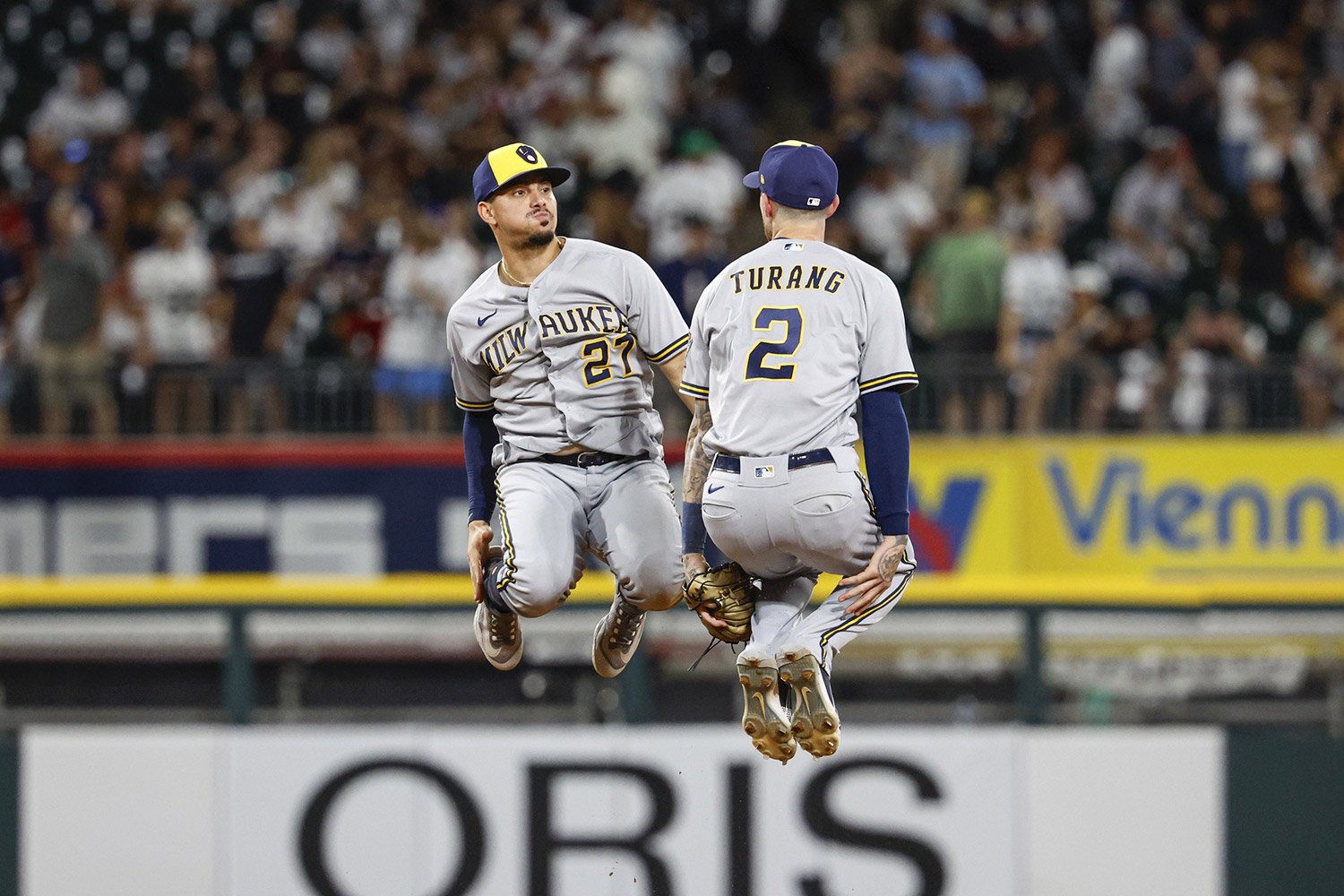 Box Score Starting Pitcher: Brandon Woodruff - 6.1 IP, 4 H, 2 ER, 1 BB, 5 K, 86 pitches, 53 strikes (61.6%) Home Runs: None Top 3 WPA: Hoby Milner (.221), William Contreras (.206), Devin Williams (.198) Bottom 3 WPA: Carlos Santana (-.184), Brice Turang (-.107), Christian Yelich (-.069) Win Probability Chart (via FanGraphs) Woodruff Pitches An Efficient Six In his second start since his IL stint, Brandon Woodruff was able to put up a quality start. While the Brewers have been vocal about being careful while ramping him up back to a big league workload, his efficient pitching allowed him to cruise through six innings in under 90 pitches. In comparison, he threw one fewer pitch in his last start against the Pirates but went just five innings. His first earned run came in the third inning after conceding a double, a single, and then a groundout. His second earned run came by way of a Yoan Moncada home run to center field. In the sixth inning, he struck out Yasmani Grandal and walked Gavin Sheets before finally being pulled. His four-seam fastball peaked at 97.0 mph in the fifth inning and he garnered 11 swings and misses. His work was enough to earn his first win since April 7th. Several Runs Come In The Seventh After being held scoreless for the first six innings of the game by White Sox starter Jesse Scholtens, the Brewers seemed to wake up in the seventh as they started to string together a nice offensive rally. It started off with a walk by Mark Canha and a single by Andruw Monasterio. Following a quick flyout by Brice Turang, Tyrone Taylor’s 2-RBI double tied the game at 2-2 and led the White Sox to make a call to their bullpen. With Taylor in scoring position, William Contreras officially took the lead with an RBI single. Relievers Stay Unhittable Following Woodruff’s extended effort, Hoby Milner followed things up with 1.1 innings of work, allowing no baserunners and striking out one. Elvis Peguero was brought into to deal with Eloy Jimenez and Devin Williams handled the ninth inning, recording his 28th save of the season. His changeup reached almost 3,000 rpm and warped space time, as per usual. What’s Next? Freddy Peralta will face off against Dylan Cease in the final game of the series before the Brewers travel to Los Angeles to start a series against the Dodgers on Tuesday. While the Brewers are still leading the NL Central by 2.5 games, the Chicago Cubs have officially surpassed the Reds for second place as Cincinnati is now behind by 3.0 games. Postgame Interviews Bullpen Usage Spreadsheet TUE WED THU FRI SAT TOT Williams 15 9 0 14 15 53 Payamps 9 18 0 18 0 45 Peguero 18 0 0 21 4 43 Uribe 20 8 0 10 0 38 Milner 0 18 0 0 17 35 B Wilson 0 14 0 0 0 14 Chafin 11 0 0 0 0 11 Mejia 0 0 0 0 0 0 Tweet Highlight
 -
In a back-and-forth game against a competitive Chicago White Sox squad, the Brewers ultimately earn the last laugh with a turbo sinker and a timely double. Image courtesy of © Kamil Krzaczynski-USA TODAY Sports In a back-and-forth game against a competitive Chicago White Sox squad, the Brewers ultimately earn the last laugh with a turbo sinker and a timely double. Box Score Starting Pitcher: Corbin Burnes - 5.2 IP, 8 H, 5 ER, 3 BB, 5 K, 107 pitches, 62 strikes (57.9%) Home Runs: Victor Caratini (6) Top 3 WPA: Abner Uribe (.441), Mark Canha (.281), William Contreras (.179) Bottom 3 WPA: Corbin Burnes (-.251), Brice Turang (-.194), Andruw Monasterio (-.186) Win Probability Chart (via FanGraphs) Burnes Tosses A Wild One Prior to this game, Burnes had been having a spectacular second half, posting a 1.69 ERA over 32.0 innings pitched. It seemed like he had finally gotten over his early season struggles and managed to find his old self. The White Sox derailed the hype train a little bit, scoring runs in three of his 5.2 innings pitched. Things started to get out of hand almost immediately with Burnes conceding a walk, three consecutive singles, and a sacrifice fly to give the White Sox two early runs. A subsequent wild pitch moved two more runners into scoring position but he was able to strike out Trayce Thompson to escape the inning. The damage continued in the third inning where a 2-RBI home run by Eloy Jimenez gave Chicago a 4-2 lead. After a single by Andrew Vaughn, Burnes had yet another wild pitch and walked Yasmani Grandal before getting a much needed double play to end the third. His final earned run would come by way of an RBI single by Tim Anderson in the fourth inning. Burnes clearly had some control issues, failing to find his spots in the strike zone and allowing runners to advance on poorly placed pitches. Have No Fear, The Offense Is Here Despite a rough pitching start, Milwaukee was able to fight back with some strong offense of their own. The Brewers actually struck first off of an RBI single by William Contreras that scored Christian Yelich. Heading into the second inning with a 2-1 deficit, Victor Caratini led off with a home run to center field to tie the game. In the fifth inning, the Brewers hit three consecutive singles to score their third and fourth runs of the game and knocked out White Sox starter Michael Kopech. Still down 5-4 in the sixth inning, the Brewers strung together another four consecutive singles to score two runs and take a 6-5 lead. There was also a little help from a bad throw by pitcher Aaron Bummer. While there weren’t many extra base hits, the Brewers were able to string together a total of 11 hits and seven walks, a significant improvement over their usually lackadaisical offense. Bullpen Takes It To Extras Elvis Peguero was the first name out of the bullpen, taking on 1.1 innings of relief. He would allow the White Sox to tie the game at 6-6 following a groundout by Andrew Vaughn that allowed Eloy Jimenez to score from third. Joel Payamps and Devin Williams would lock down the eighth and ninth innings without allowing any runs. Payamps would walk two batters and notch just one strikeout but he’d get some fielding help from Sal Frelick who made this outstanding play in foul territory. Williams was dominant as per usual, striking out all three of his batters faced. In the tenth inning, the Brewers needed just one hit off the bat of Mark Canha, an RBI double, to take a one-run lead. It was his only plate appearance of the game as he was pinch-hitting for Joey Wiemer. To close the show, Abner Uribe recorded his first career save, getting a flyout and two groundouts to seal the deal for Milwaukee. What’s Next? The Brewers continue their series against the White Sox with Brandon Woodruff facing off against righty Jesse Scholtens. The Brewers currently maintain a divisional lead of 2.5 games over the Chicago Cubs and the Cincinnati Reds. Postgame Interviews Bullpen Usage Spreadsheet MON TUE WED THU FRI TOT Uribe 0 20 8 0 10 38 Peguero 10 18 0 0 21 49 Payamps 0 9 18 0 18 45 Mejia 0 0 0 0 0 0 Williams 0 15 9 0 14 38 Milner 0 0 18 0 0 18 Chafin 11 11 0 0 0 22 B Wilson 0 0 14 0 0 14 Tweet Highlight View full article
-
Brewers 7, White Sox 6: Uribe’s First Save Allows Canha To Come Up Clutch
Jason Wang posted an article in Brewers
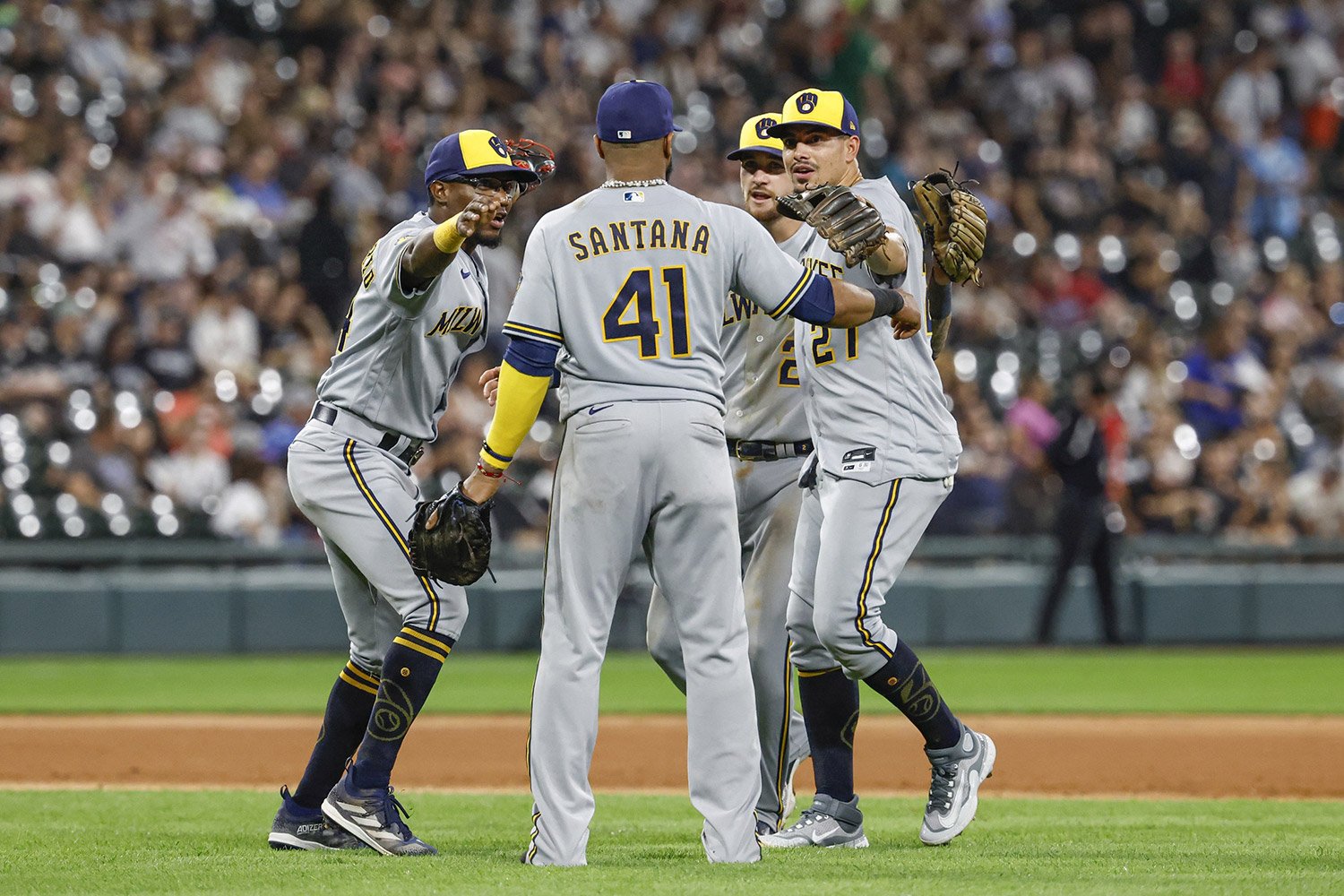 Box Score Starting Pitcher: Corbin Burnes - 5.2 IP, 8 H, 5 ER, 3 BB, 5 K, 107 pitches, 62 strikes (57.9%) Home Runs: Victor Caratini (6) Top 3 WPA: Abner Uribe (.441), Mark Canha (.281), William Contreras (.179) Bottom 3 WPA: Corbin Burnes (-.251), Brice Turang (-.194), Andruw Monasterio (-.186) Win Probability Chart (via FanGraphs) Burnes Tosses A Wild One Prior to this game, Burnes had been having a spectacular second half, posting a 1.69 ERA over 32.0 innings pitched. It seemed like he had finally gotten over his early season struggles and managed to find his old self. The White Sox derailed the hype train a little bit, scoring runs in three of his 5.2 innings pitched. Things started to get out of hand almost immediately with Burnes conceding a walk, three consecutive singles, and a sacrifice fly to give the White Sox two early runs. A subsequent wild pitch moved two more runners into scoring position but he was able to strike out Trayce Thompson to escape the inning. The damage continued in the third inning where a 2-RBI home run by Eloy Jimenez gave Chicago a 4-2 lead. After a single by Andrew Vaughn, Burnes had yet another wild pitch and walked Yasmani Grandal before getting a much needed double play to end the third. His final earned run would come by way of an RBI single by Tim Anderson in the fourth inning. Burnes clearly had some control issues, failing to find his spots in the strike zone and allowing runners to advance on poorly placed pitches. Have No Fear, The Offense Is Here Despite a rough pitching start, Milwaukee was able to fight back with some strong offense of their own. The Brewers actually struck first off of an RBI single by William Contreras that scored Christian Yelich. Heading into the second inning with a 2-1 deficit, Victor Caratini led off with a home run to center field to tie the game. In the fifth inning, the Brewers hit three consecutive singles to score their third and fourth runs of the game and knocked out White Sox starter Michael Kopech. Still down 5-4 in the sixth inning, the Brewers strung together another four consecutive singles to score two runs and take a 6-5 lead. There was also a little help from a bad throw by pitcher Aaron Bummer. While there weren’t many extra base hits, the Brewers were able to string together a total of 11 hits and seven walks, a significant improvement over their usually lackadaisical offense. Bullpen Takes It To Extras Elvis Peguero was the first name out of the bullpen, taking on 1.1 innings of relief. He would allow the White Sox to tie the game at 6-6 following a groundout by Andrew Vaughn that allowed Eloy Jimenez to score from third. Joel Payamps and Devin Williams would lock down the eighth and ninth innings without allowing any runs. Payamps would walk two batters and notch just one strikeout but he’d get some fielding help from Sal Frelick who made this outstanding play in foul territory. Williams was dominant as per usual, striking out all three of his batters faced. In the tenth inning, the Brewers needed just one hit off the bat of Mark Canha, an RBI double, to take a one-run lead. It was his only plate appearance of the game as he was pinch-hitting for Joey Wiemer. To close the show, Abner Uribe recorded his first career save, getting a flyout and two groundouts to seal the deal for Milwaukee. What’s Next? The Brewers continue their series against the White Sox with Brandon Woodruff facing off against righty Jesse Scholtens. The Brewers currently maintain a divisional lead of 2.5 games over the Chicago Cubs and the Cincinnati Reds. Postgame Interviews Bullpen Usage Spreadsheet MON TUE WED THU FRI TOT Uribe 0 20 8 0 10 38 Peguero 10 18 0 0 21 49 Payamps 0 9 18 0 18 45 Mejia 0 0 0 0 0 0 Williams 0 15 9 0 14 38 Milner 0 0 18 0 0 18 Chafin 11 11 0 0 0 22 B Wilson 0 0 14 0 0 14 Tweet Highlight
 -
The Brewers rode their rotation to October in previous years and they hope to do it again in 2023. With more than enough starting pitchers to go around, who has been standing out and who will get to keep their spot in the rotation? Image courtesy of © Benny Sieu-USA TODAY Sports The Brewers rode their rotation to October in previous years and they hope to do it again in 2023. With more than enough starting pitchers to go around, who has been standing out and who will get to keep their spot in the rotation? The One-Two Punch After an inconsistent first half that saw him finish with an uncharacteristically high 3.94 ERA across 107.1 innings pitched, Corbin Burnes’ second half has been exceptional thus far, posting a 1.69 ERA over 32.0 innings pitched. July was his best month, making six starts and showing off the Burnes we all know and love by notching 10.8 K/9 and a 0.718 WHIP. Whatever struggles he faced before the All-Star break are hopefully behind him now. We may see a resurgence in ability just in time for October baseball. While the jury is still out on Brandon Woodruff, who’s pitched just 16.1 innings this season following a lengthy stint on the 60-day IL, the data in his major league return start painted a positive picture. Velocity and spin rates were consistent with recent career numbers, and other than him needing to rebuild his stamina to his former levels; there hasn’t been any cause for concern just yet. The Middle of the Pack Freddy Peralta and Wade Miley have been backing up the third and fourth spots of the rotation but could not have more different styles. Other than Miley being the only lefty starter on the Brewers, he’s earned his 2.90 ERA through crafty pitching and soft contact, logging a measly K% of 17.5% (14th percentile). His primary pitch, the cutter, averages just 87.2 mph, and his four-seam fastball is a blazing 90.3 mph. In comparison, Freddy Peralta has a K% of 29.7% (88th percentile) and has an average four-seam fastball velocity of 94.6 mph. His ERA of 4.28 isn’t quite as appealing as Miley’s, but he’s got a much higher ceiling and is nine years younger. The Fifth Spot As of now, Adrian Houser occupies the final spot of the rotation. After missing the first month of the season, he’s hovered around his current 4.19 ERA without much deviation up or down. He’s exactly what one might think of as a great back-of-the-rotation guy. He’s solid, consistent, and doesn’t fall painfully short in any particular area, but he likely won’t be winning any Cy Young votes any time soon. Assuming he returns to the roster fully healthy, Julio Teheran proves an interesting competitor for Houser’s spot. Originally brought on to be an innings-eater, he had an outstanding first two months with the team, posting a 2.85 ERA over 41.0 innings pitched through the end of June. However, after a disastrous July that saw him concede 20 earned runs in 21.2 innings, his stats began to regress to more realistic expectations. His strong suits are his elite command (4.3% BB%, 96th percentile) and his curveball, which has an xwOBA of .179. Because his skid was so sharp and sudden without a real chance at retribution, we’ve yet to see if he can return to his first-half form. His somewhat poor/average peripherals would suggest that he likely won’t, but there is the possibility he can recover enough to be a serviceable fifth starter. What About A Six Man Rotation? With more and more pitchers getting injured every year, discussion surrounding the implementation of a six-man starting rotation has been suggested as a possible solution, providing more rest for each starter. One common criticism of the six-man rotation is that it’s hard to find six good starting pitchers, but the Brewers do indeed have seven serviceable starters (assuming Teheran recovers). Colin Rea would likely be left out either way since instead of keeping him, he was optioned in exchange for Clayton Andrews (who was then promptly optioned to create room for Brandon Woodruff), leaving six on the current depth chart. Ultimately, it depends on how Teheran will be treated on his return from the IL, but a six-man rotation could be a novel way to utilize the Brewers' pitching wealth to its fullest. In the worst-case scenario, the rotation is kept as is. It’s the tenth-best rotation in MLB by ERA (4.14) and definitely not as much of a problem as the team’s continued offensive struggles. View full article
-
Can The Brewers Rotation Be Exceptional (Again) Down The Stretch?
Jason Wang posted an article in Brewers
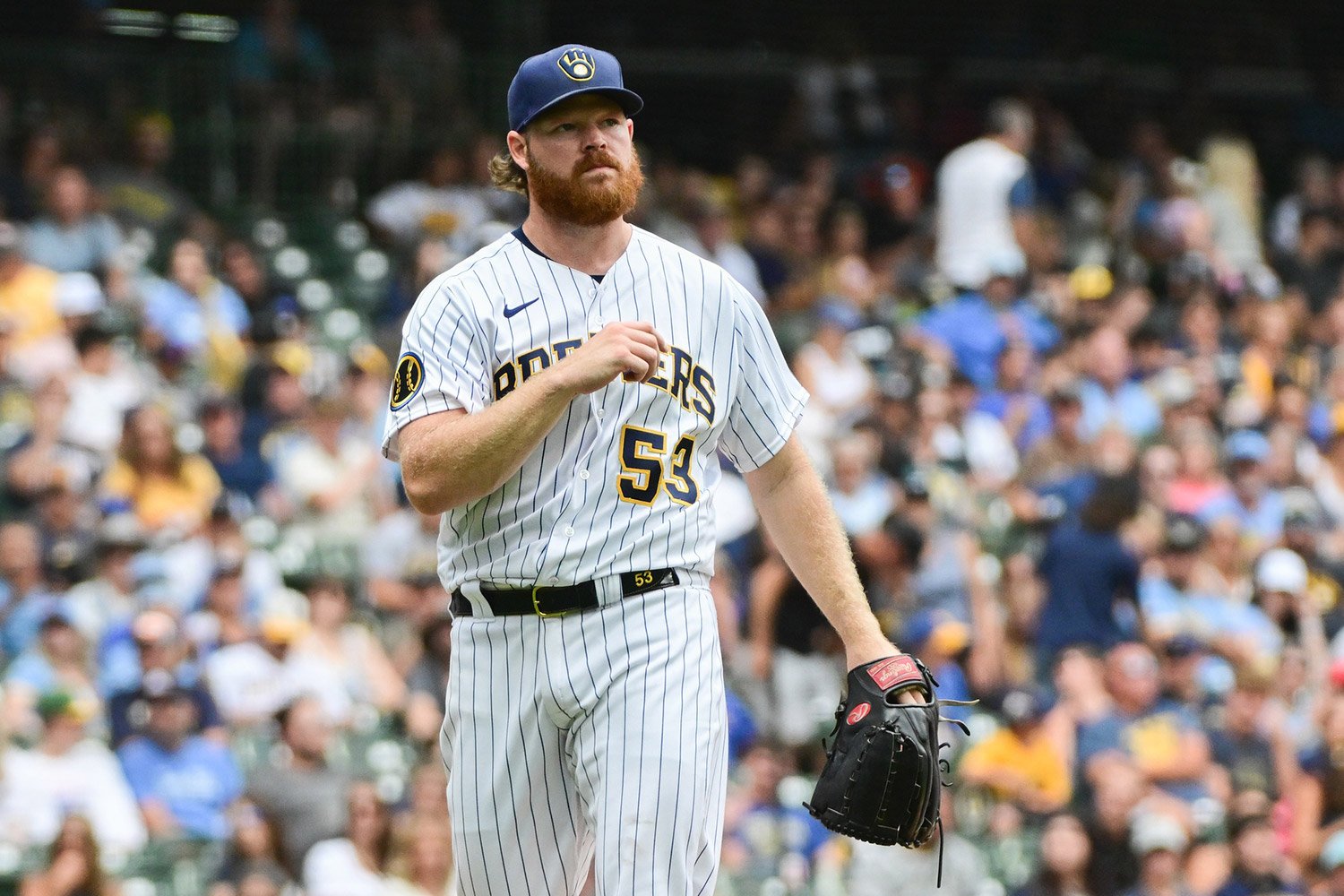 The One-Two Punch After an inconsistent first half that saw him finish with an uncharacteristically high 3.94 ERA across 107.1 innings pitched, Corbin Burnes’ second half has been exceptional thus far, posting a 1.69 ERA over 32.0 innings pitched. July was his best month, making six starts and showing off the Burnes we all know and love by notching 10.8 K/9 and a 0.718 WHIP. Whatever struggles he faced before the All-Star break are hopefully behind him now. We may see a resurgence in ability just in time for October baseball. While the jury is still out on Brandon Woodruff, who’s pitched just 16.1 innings this season following a lengthy stint on the 60-day IL, the data in his major league return start painted a positive picture. Velocity and spin rates were consistent with recent career numbers, and other than him needing to rebuild his stamina to his former levels; there hasn’t been any cause for concern just yet. The Middle of the Pack Freddy Peralta and Wade Miley have been backing up the third and fourth spots of the rotation but could not have more different styles. Other than Miley being the only lefty starter on the Brewers, he’s earned his 2.90 ERA through crafty pitching and soft contact, logging a measly K% of 17.5% (14th percentile). His primary pitch, the cutter, averages just 87.2 mph, and his four-seam fastball is a blazing 90.3 mph. In comparison, Freddy Peralta has a K% of 29.7% (88th percentile) and has an average four-seam fastball velocity of 94.6 mph. His ERA of 4.28 isn’t quite as appealing as Miley’s, but he’s got a much higher ceiling and is nine years younger. The Fifth Spot As of now, Adrian Houser occupies the final spot of the rotation. After missing the first month of the season, he’s hovered around his current 4.19 ERA without much deviation up or down. He’s exactly what one might think of as a great back-of-the-rotation guy. He’s solid, consistent, and doesn’t fall painfully short in any particular area, but he likely won’t be winning any Cy Young votes any time soon. Assuming he returns to the roster fully healthy, Julio Teheran proves an interesting competitor for Houser’s spot. Originally brought on to be an innings-eater, he had an outstanding first two months with the team, posting a 2.85 ERA over 41.0 innings pitched through the end of June. However, after a disastrous July that saw him concede 20 earned runs in 21.2 innings, his stats began to regress to more realistic expectations. His strong suits are his elite command (4.3% BB%, 96th percentile) and his curveball, which has an xwOBA of .179. Because his skid was so sharp and sudden without a real chance at retribution, we’ve yet to see if he can return to his first-half form. His somewhat poor/average peripherals would suggest that he likely won’t, but there is the possibility he can recover enough to be a serviceable fifth starter. What About A Six Man Rotation? With more and more pitchers getting injured every year, discussion surrounding the implementation of a six-man starting rotation has been suggested as a possible solution, providing more rest for each starter. One common criticism of the six-man rotation is that it’s hard to find six good starting pitchers, but the Brewers do indeed have seven serviceable starters (assuming Teheran recovers). Colin Rea would likely be left out either way since instead of keeping him, he was optioned in exchange for Clayton Andrews (who was then promptly optioned to create room for Brandon Woodruff), leaving six on the current depth chart. Ultimately, it depends on how Teheran will be treated on his return from the IL, but a six-man rotation could be a novel way to utilize the Brewers' pitching wealth to its fullest. In the worst-case scenario, the rotation is kept as is. It’s the tenth-best rotation in MLB by ERA (4.14) and definitely not as much of a problem as the team’s continued offensive struggles.


