


Matthew Trueblood
-
Posts
1,964 -
Joined
-
Last visited
-
Days Won
10
Content Type
Profiles
Forums
Blogs
Events
News
2026 Milwaukee Brewers Top Prospects Ranking
Milwaukee Brewers Videos
2022 Milwaukee Brewers Draft Picks
Milwaukee Brewers Free Agent & Trade Rumors, Notes, & Tidbits
Guides & Resources
2023 Milwaukee Brewers Draft Picks
2024 Milwaukee Brewers Draft Picks
The Milwaukee Brewers Players Project
2025 Milwaukee Brewers Draft Pick Tracker
2026 Milwaukee Brewers Draft Tracker: Picks & Bonuses
Store
Downloads
Gallery
Everything posted by Matthew Trueblood
-
.png.46b63fb18c5dbd09483d2d3da05c9135.png) In matters of personality, DL Hall and Shane Drohan couldn't be much more different. Drohan is the player most likely to be found, during each morning's open clubhouse period, sitting quietly at his locker with his phone. He's happy to talk, but volunteers little to the team's ongoing patter. Assigned to the bank of three lockers set apart from any others (with an empty stall next to him and equally quiet prospect Luke Adams on the other side of that gap), Drohan is easy to see but hard to hear—sometimes, even when you talk to him. Hall, who has lockered next to Brandon Woodruff since his first spring with the Crew, could be found on his knees at one point this week, reenacting his inglorious role in some past baseball brawl for laughing teammates. His South Georgia drawl erupts from him, whereas Drohan's words seem to come only with effort and thought. Hall is the Brewers' resident sneakerhead; Drohan professes to love history documentaries. ("Amazon Prime; that's the spot for documentaries that I've found, so far." But: "You do have to kind of filter out, because there are some crazy documentaries that I'm like, 'I don't know how much truth there was to that one.'") Yet, in the context of this team and beyond, the two have a great deal in common, too. They were born just four months apart: Hall in September 1998, and Drohan in January 1999. Though it says '6-foot-3' on Drohan's Baseball Reference page, the Brewers measured him at 6-foot-2 this spring; he weighs 202 pounds. Hall is 6-foot-1, 209 pounds. The cultural distance between Hall's native Valdosta and Drohan's birthplace in Fort Lauderdale is large, but they're really only about 400 miles apart. Each has spent some time on the prospect radar, but both are now optionable arms entering their age-27 season, sidetracked by injuries and not yet having established themselves in the majors. Each has an arsenal too wide and too promising to make you feel good at collapsing their value down to that of a left-handed short reliever, but each has had enough trouble with durability and/or control to make you wary of trusting them with a starting gig. This spring, these equal opposites are in a quiet competition for priority position in the Brewers' pitching plans. For Hall, the big spring project is trying to get his velocity back. He still believes he can tap back into the upper-90s heat he showed before injuries shook him loose and dropped him out of the top prospect firmament. However, he knows much better than to sit and wait for that to happen. Instead, he spent the winter adding a sweeper to his arsenal, giving him up to seven pitches to which he can turn when the situation calls for it. Since the four-seamer still isn't doing what he needs it to do in order to dominate with it, he's also favoring his sinker more—especially to lefty batters. "It's just been a progressive thing over the last eight months," Hall said. "After coming off the injury last year, things change, your body starts moving differently and the four-seamer wasn't riding as much as I want it to, so let's try the sinker." So far, that pitch grades out well. Utilizing it against right-handed batters is more difficult, of course, but manager Pat Murphy chose Hall to pitch for Team Great Britain against a lefty-loaded Brewers lineup on Tuesday specifically to get him work in left-on-left matchups. While Murphy insists that any reliever in his bullpen have some way to get out both lefties and righties, that's not a huge problem for Hall. For one thing, his changeup flashes plus, and has enough separation to be useful even in tandem with the sinker, rather than the four-seamer. For another, Hall also has a cutter he can use to get in on the hands of righty batters. The cutter isn't as distinct from his four-seamer as Hall would prefer, but that's more because the four-seamer isn't showing the good carry it once did than because of the cutter's deficiencies. He has enough pitches he's comfortable with to gut his way through showdowns with righty batters, and the new sweeper (along with the newly prioritized sinker) can stand him in good stead against lefties. Drohan bears some similarities to Hall, but his stuff is much more oriented toward glove-side movement and manipulating the ball with spin. His four-seamer has the carry missing from Hall's, and his cutter has more separation from it. He has a true, tight, vertical slider and a curveball, such that he can focus on a simple set of what the Brewers call "start lines": the visual targets he uses for each pitch, letting the movement carry them to a different destination but ensuring consistent execution. The flip side of being so good at those glove-side offerings and having the carry on the heater is that Drohan's changeup is not as good as Hall's. To get righties out in the majors, he'll need to execute well with his other four offerings. Both pitchers are stretching out and trying to keep themselves available for starting roles. Hall worked the first three innings of the game on Tuesday; Drohan took the final three on Wednesday. Both hurlers said they'll adjust to relief work if needed, but that the team has kept them on plans consistent with starting. "I just wanna pitch in the big leagues," Hall said. He's ready to do whatever the team believes will help them win, but is "trying to win a spot in the rotation." Now, tell me if this sounds familiar. "I don't really have a mindset on it," Drohan said. "I wanna pitch in the big leagues, so whether that's starting or in the bullpen, I'm willing to do either." Drohan said he doesn't want to concede the chance to eventually start by turning away from it, and that there's probably no benefit for him or the team in his switching lanes mentally before the time comes. For now, he and the team are working not on the installation of any new offerings or on rediscovering velocity—Drohan throws a couple ticks harder than Hall right now, anyway—but on matters of pitch mix. The lefty said most of the suggestions he's gotten from Chris Hook and company have been along the lines of introducing pitches he would normally eschew in given situations, within an at-bat or an inning, rather than doing anything truly novel. That's in keeping with the Brewers' preference to let players who are new to the organization come in and familiarize themselves with the environment, before pushing any more significant changes. To open the season, both pitchers are likely to be on the outside of the rotation battle, looking in. One might make the team as a reliever, but it's also possible that both find themselves in Nashville, starting and awaiting an opening in Milwaukee. They're different in appearance and sensibility, but so similar in skill set and circumstance that they could be on the same track for much of this season. The Brewers have an almost redundant pair of southpaws with very different personalities—as good an illustration of their superb depth as any.
In matters of personality, DL Hall and Shane Drohan couldn't be much more different. Drohan is the player most likely to be found, during each morning's open clubhouse period, sitting quietly at his locker with his phone. He's happy to talk, but volunteers little to the team's ongoing patter. Assigned to the bank of three lockers set apart from any others (with an empty stall next to him and equally quiet prospect Luke Adams on the other side of that gap), Drohan is easy to see but hard to hear—sometimes, even when you talk to him. Hall, who has lockered next to Brandon Woodruff since his first spring with the Crew, could be found on his knees at one point this week, reenacting his inglorious role in some past baseball brawl for laughing teammates. His South Georgia drawl erupts from him, whereas Drohan's words seem to come only with effort and thought. Hall is the Brewers' resident sneakerhead; Drohan professes to love history documentaries. ("Amazon Prime; that's the spot for documentaries that I've found, so far." But: "You do have to kind of filter out, because there are some crazy documentaries that I'm like, 'I don't know how much truth there was to that one.'") Yet, in the context of this team and beyond, the two have a great deal in common, too. They were born just four months apart: Hall in September 1998, and Drohan in January 1999. Though it says '6-foot-3' on Drohan's Baseball Reference page, the Brewers measured him at 6-foot-2 this spring; he weighs 202 pounds. Hall is 6-foot-1, 209 pounds. The cultural distance between Hall's native Valdosta and Drohan's birthplace in Fort Lauderdale is large, but they're really only about 400 miles apart. Each has spent some time on the prospect radar, but both are now optionable arms entering their age-27 season, sidetracked by injuries and not yet having established themselves in the majors. Each has an arsenal too wide and too promising to make you feel good at collapsing their value down to that of a left-handed short reliever, but each has had enough trouble with durability and/or control to make you wary of trusting them with a starting gig. This spring, these equal opposites are in a quiet competition for priority position in the Brewers' pitching plans. For Hall, the big spring project is trying to get his velocity back. He still believes he can tap back into the upper-90s heat he showed before injuries shook him loose and dropped him out of the top prospect firmament. However, he knows much better than to sit and wait for that to happen. Instead, he spent the winter adding a sweeper to his arsenal, giving him up to seven pitches to which he can turn when the situation calls for it. Since the four-seamer still isn't doing what he needs it to do in order to dominate with it, he's also favoring his sinker more—especially to lefty batters. "It's just been a progressive thing over the last eight months," Hall said. "After coming off the injury last year, things change, your body starts moving differently and the four-seamer wasn't riding as much as I want it to, so let's try the sinker." So far, that pitch grades out well. Utilizing it against right-handed batters is more difficult, of course, but manager Pat Murphy chose Hall to pitch for Team Great Britain against a lefty-loaded Brewers lineup on Tuesday specifically to get him work in left-on-left matchups. While Murphy insists that any reliever in his bullpen have some way to get out both lefties and righties, that's not a huge problem for Hall. For one thing, his changeup flashes plus, and has enough separation to be useful even in tandem with the sinker, rather than the four-seamer. For another, Hall also has a cutter he can use to get in on the hands of righty batters. The cutter isn't as distinct from his four-seamer as Hall would prefer, but that's more because the four-seamer isn't showing the good carry it once did than because of the cutter's deficiencies. He has enough pitches he's comfortable with to gut his way through showdowns with righty batters, and the new sweeper (along with the newly prioritized sinker) can stand him in good stead against lefties. Drohan bears some similarities to Hall, but his stuff is much more oriented toward glove-side movement and manipulating the ball with spin. His four-seamer has the carry missing from Hall's, and his cutter has more separation from it. He has a true, tight, vertical slider and a curveball, such that he can focus on a simple set of what the Brewers call "start lines": the visual targets he uses for each pitch, letting the movement carry them to a different destination but ensuring consistent execution. The flip side of being so good at those glove-side offerings and having the carry on the heater is that Drohan's changeup is not as good as Hall's. To get righties out in the majors, he'll need to execute well with his other four offerings. Both pitchers are stretching out and trying to keep themselves available for starting roles. Hall worked the first three innings of the game on Tuesday; Drohan took the final three on Wednesday. Both hurlers said they'll adjust to relief work if needed, but that the team has kept them on plans consistent with starting. "I just wanna pitch in the big leagues," Hall said. He's ready to do whatever the team believes will help them win, but is "trying to win a spot in the rotation." Now, tell me if this sounds familiar. "I don't really have a mindset on it," Drohan said. "I wanna pitch in the big leagues, so whether that's starting or in the bullpen, I'm willing to do either." Drohan said he doesn't want to concede the chance to eventually start by turning away from it, and that there's probably no benefit for him or the team in his switching lanes mentally before the time comes. For now, he and the team are working not on the installation of any new offerings or on rediscovering velocity—Drohan throws a couple ticks harder than Hall right now, anyway—but on matters of pitch mix. The lefty said most of the suggestions he's gotten from Chris Hook and company have been along the lines of introducing pitches he would normally eschew in given situations, within an at-bat or an inning, rather than doing anything truly novel. That's in keeping with the Brewers' preference to let players who are new to the organization come in and familiarize themselves with the environment, before pushing any more significant changes. To open the season, both pitchers are likely to be on the outside of the rotation battle, looking in. One might make the team as a reliever, but it's also possible that both find themselves in Nashville, starting and awaiting an opening in Milwaukee. They're different in appearance and sensibility, but so similar in skill set and circumstance that they could be on the same track for much of this season. The Brewers have an almost redundant pair of southpaws with very different personalities—as good an illustration of their superb depth as any. -
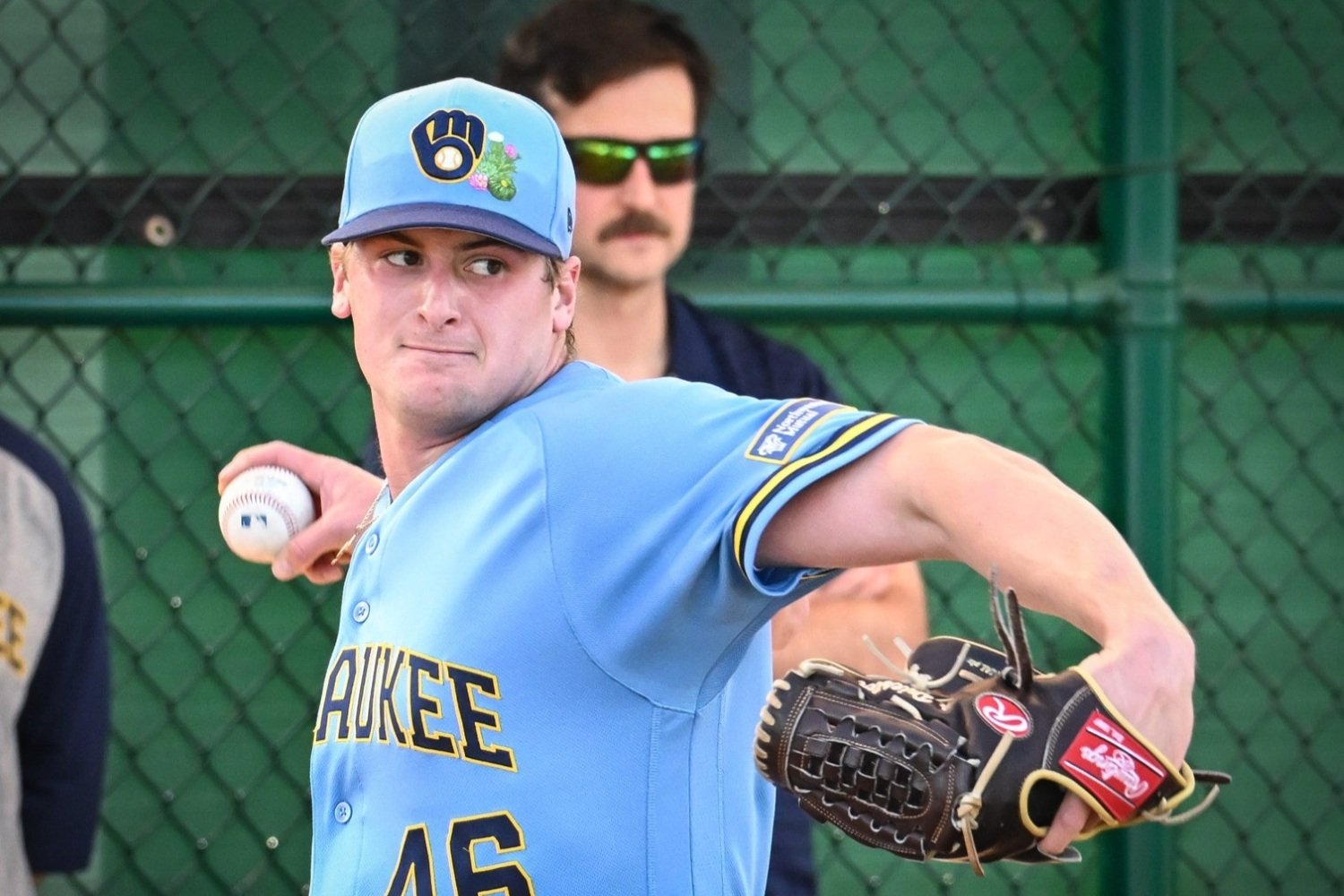 The Milwaukee Brewers are considering sending Quinn Priester to see a wrist specialist, manager Pat Murphy admitted Thursday. Priester, 25, is still feeling discomfort in his wrist, and Murphy acknowledged that some of that irritation is "moving up his arm." Already, the right-handed starter has undergone an MRI, which showed only inflammation in his wrist and no damage in his elbow. However, despite some good days, he has yet to successefully stack healthy days to the point where he and the team are ready to put him on a mound in a competitive setting. "Just not responding as quickly as we'd like it to," Priester said, though he tried to strike an optimistic tone overall in meeting with reporters about the delay in his preparation. He threw a live batting practice session early in camp, but hasn't been able to throw another one since—a layoff of roughly two weeks, so far. However, he's continued to play catch during that time, and said the most difficult part to navigate has been inconsistency. "I guess that's the part that's difficult, is some throws, I'll be able to feel it, and then some throws I don't," he said, admitting that the inability to ascertain exactly what's wrong has been a source of frustration. Because he's now likely to need another week or more to get back into competitive work, Priester is virtually guaranteed to start the season on the injured list. If his wrist responds better to treatment or the team gets an easily remediable diagnosis for the problem after a visit to a specialist, he could be back on a big-league mound by mid-April, but there's too much uncertainty around the situation to pin down that timeline right now. Priester said he first felt a similar issue last summer, during the Brewers' five-game series at Wrigley Field. That time, it responded relatively well to treatment, and he was able to pitch through it. When it recurred last month, though, the same interventions no longer seemed to work. "It kind of sucks, just taking it day by day trying to get past this, but, you know, [I'm] confident that it's nothing big, that it's just something that the body is probably reacting to after a really intense season last year," he said. He pitched an even 162 innings between the regular season and the playoffs, and noted that in addition to that being his heaviest sheer workload, there was added intensity (and thus, added stress) associated with pitching all of those innings in the majors. With Priester almost certain to be shelved, the door opens wider to Brandon Sproat, Kyle Harrison and Logan Henderson, (probably) in that order. After Jacob Misiorowski and Chad Patrick, those three are the top arms in line for starting rotation spots to begin the season, though Brandon Woodruff and Priester could return relatively quickly. Koenig, Murphy Unconcerned About Spring Struggles Jared Koenig lost 6-8 pounds this offseason, as part of a shift in the focus of his conditioning work. He stressed that it was not a plan to overhaul his body in any sense, and that it traced more to a long 2025 season and the changes it wrought in his offseason strength work. As someone who easily adds weight during the season (a rarity in the majors, but less so with relievers), he expects not to have any trouble getting back the bulk missing from his frame right now. He'll need, at some point, to put that restored weight behind his fastball, which has dipped from its usual home in the mid-90s to 92-93 MPH in his first two Cactus League outings of the year. That diminished velocity has led to ugly numbers, but Koenig was unconcerned about them—and even less fazed by the velocity, which he expects will rebound. In a camp that has featured several Brewers pitchers ramping up slowly outside the quasi-competitive arenas of the Cactus League, Koenig pushed the coaching staff to let him do his preparatory work in that very space—even if it came with some lumps. "I told them I just wanted to pitch in more games," he said. "I don't like sim games. I just don't like facing teammates. It's hard for me, especially, to want to throw what I want to throw [against fellow Brewers]." It's early enough that Koenig isn't sweating velocity at all, but he's especially unconcerned because he feels that he gets stronger—better able to push himself without danger—in June and July, rather than the spring. For now, he's focused on continuing to get into games and test himself against real opponents, even if it be with lower stakes than in the regular season. Koenig is working on a sweeper, but said he's only gotten to throw one in a competitive setting so far. After struggling with right-handed batters last year, he also dedicated himself to shoring up his cutter over the winter, with his longtime trainer Matt Rossignol, near Koenig's home in the Santa Cruz, Calif. area. Using Trackman data for feedback and lots of video work, he feels he's honed that pitch anew, leaning on his nearly decade-long relationship with Rossignol, who has become so close that he officiated Koenig's wedding. For his part, Murphy has lost no faith in Koenig at all. On the contrary, he continues to see him as a linchpin of the bullpen plan. Asked whether the combination of a left-leaning bullpen and better overall depth could push Koenig back into consideration to be optioned to Triple-A Nashville, Murphy said he thinks of the big southpaw as an unsung hero of the last two seasons, and that he views him as an indispensable high-leverage arm, right along with Abner Uribe, Trevor Megill and Aaron Ashby. It might not be full-throttle come Opening Day, but expect Koenig to be in the thick of the team's bullpen plan all year. Despite a slow start to the spring, neither Koenig nor the team is worried.
 -
Image courtesy of © Dave Kallmann / Milwaukee Journal Sentinel / USA TODAY NETWORK via Imagn Images The Milwaukee Brewers are considering sending Quinn Priester to see a wrist specialist, manager Pat Murphy admitted Thursday. Priester, 25, is still feeling discomfort in his wrist, and Murphy acknowledged that some of that irritation is "moving up his arm." Already, the right-handed starter has undergone an MRI, which showed only inflammation in his wrist and no damage in his elbow. However, despite some good days, he has yet to successefully stack healthy days to the point where he and the team are ready to put him on a mound in a competitive setting. "Just not responding as quickly as we'd like it to," Priester said, though he tried to strike an optimistic tone overall in meeting with reporters about the delay in his preparation. He threw a live batting practice session early in camp, but hasn't been able to throw another one since—a layoff of roughly two weeks, so far. However, he's continued to play catch during that time, and said the most difficult part to navigate has been inconsistency. "I guess that's the part that's difficult, is some throws, I'll be able to feel it, and then some throws I don't," he said, admitting that the inability to ascertain exactly what's wrong has been a source of frustration. Because he's now likely to need another week or more to get back into competitive work, Priester is virtually guaranteed to start the season on the injured list. If his wrist responds better to treatment or the team gets an easily remediable diagnosis for the problem after a visit to a specialist, he could be back on a big-league mound by mid-April, but there's too much uncertainty around the situation to pin down that timeline right now. Priester said he first felt a similar issue last summer, during the Brewers' five-game series at Wrigley Field. That time, it responded relatively well to treatment, and he was able to pitch through it. When it recurred last month, though, the same interventions no longer seemed to work. "It kind of sucks, just taking it day by day trying to get past this, but, you know, [I'm] confident that it's nothing big, that it's just something that the body is probably reacting to after a really intense season last year," he said. He pitched an even 162 innings between the regular season and the playoffs, and noted that in addition to that being his heaviest sheer workload, there was added intensity (and thus, added stress) associated with pitching all of those innings in the majors. With Priester almost certain to be shelved, the door opens wider to Brandon Sproat, Kyle Harrison and Logan Henderson, (probably) in that order. After Jacob Misiorowski and Chad Patrick, those three are the top arms in line for starting rotation spots to begin the season, though Brandon Woodruff and Priester could return relatively quickly. Koenig, Murphy Unconcerned About Spring Struggles Jared Koenig lost 6-8 pounds this offseason, as part of a shift in the focus of his conditioning work. He stressed that it was not a plan to overhaul his body in any sense, and that it traced more to a long 2025 season and the changes it wrought in his offseason strength work. As someone who easily adds weight during the season (a rarity in the majors, but less so with relievers), he expects not to have any trouble getting back the bulk missing from his frame right now. He'll need, at some point, to put that restored weight behind his fastball, which has dipped from its usual home in the mid-90s to 92-93 MPH in his first two Cactus League outings of the year. That diminished velocity has led to ugly numbers, but Koenig was unconcerned about them—and even less fazed by the velocity, which he expects will rebound. In a camp that has featured several Brewers pitchers ramping up slowly outside the quasi-competitive arenas of the Cactus League, Koenig pushed the coaching staff to let him do his preparatory work in that very space—even if it came with some lumps. "I told them I just wanted to pitch in more games," he said. "I don't like sim games. I just don't like facing teammates. It's hard for me, especially, to want to throw what I want to throw [against fellow Brewers]." It's early enough that Koenig isn't sweating velocity at all, but he's especially unconcerned because he feels that he gets stronger—better able to push himself without danger—in June and July, rather than the spring. For now, he's focused on continuing to get into games and test himself against real opponents, even if it be with lower stakes than in the regular season. Koenig is working on a sweeper, but said he's only gotten to throw one in a competitive setting so far. After struggling with right-handed batters last year, he also dedicated himself to shoring up his cutter over the winter, with his longtime trainer Matt Rossignol, near Koenig's home in the Santa Cruz, Calif. area. Using Trackman data for feedback and lots of video work, he feels he's honed that pitch anew, leaning on his nearly decade-long relationship with Rossignol, who has become so close that he officiated Koenig's wedding. For his part, Murphy has lost no faith in Koenig at all. On the contrary, he continues to see him as a linchpin of the bullpen plan. Asked whether the combination of a left-leaning bullpen and better overall depth could push Koenig back into consideration to be optioned to Triple-A Nashville, Murphy said he thinks of the big southpaw as an unsung hero of the last two seasons, and that he views him as an indispensable high-leverage arm, right along with Abner Uribe, Trevor Megill and Aaron Ashby. It might not be full-throttle come Opening Day, but expect Koenig to be in the thick of the team's bullpen plan all year. Despite a slow start to the spring, neither Koenig nor the team is worried. View full article
-
Image courtesy of © Dave Kallmann / Milwaukee Journal Sentinel / USA TODAY NETWORK via Imagn Images The 2025 Brewers entered September in an unusual place: the lap of luxury. Having won 14 straight games (and 29 of 33) to race far ahead in the NL Central by mid-August, they were in position to coast to a division title. It was a good thing, too, because by that point, they were dragging. Even in the second half of August, one could detect their edges fraying slightly, but in the first half of September, they looked positively worn out by winning in such intense, detail-oriented fashion every day. Right fielder and team leader Sal Frelick showed the wear and tear most of all. In July and August, his bat speed had averaged just a hair under 69 miles per hour. In September, it was 66.8. He batted just .237/.302/.368 for the month, after batting .296/.359/.412 through the end of August. As he prepares for his third full season in the majors, though, Frelick isn't focused on managing his effort differently over the season's 162-game grind. "Listen, you shouldn't be fresh in September, honestly," Frelick said Wednesday in the Brewers' spring training clubhouse in Maryvale. "You should play hard enough so you're tired in September, and I mean, yeah, you're gonna be dragging—you're [even] dragging in July—but that's never an excuse. Everyone's tired." Frelick said October offers a second wind at the end of the relentless regular campaign, but that he's learned not to wait for that. His preparation for his fourth big-league season has been focused not on being "130 percent" come September, he explained, but on being as mentally strong as possible. Last spring, he reported to camp heavier and stronger than in the past, but it didn't insulate him from the gravity of the schedule, and he's learning not to try to force his body to feel better than is realistic. Pat Murphy concurs with that approach. "I don't think we're the only team that goes through that, but I think young players go through that [more than veterans]," Murphy said. "And I think it's not pacing yourself, either. It's just being in better condition mentally, more than physically." Both Murphy and Frelick fight to keep the focus on the things that are within their control, which often excludes the results of at-bats but always includes things like attention to detail and swing decisions. Those things deteriorate even more than bat speed or jumps on fly balls, in the heat and the accumulated fatigue of the late summer. "Yeah that's the hardest part, right?" Frelick said. "I think the mental part is just the hardest part of the game, in general. You can go out and have four barrels and get out four times, and how do you—even though you were 0-for-4 and you might've lost the game—how do you wake up the next morning and go into it saying, 'I'm confident'? "It's a hard thing to deal with, especially when those 0-for-4s are 0-for-20s. But I think you just have, again, the experience, the understanding of how long a season is, how many games you're gonna play, how many at-bats you're gonna get, how many plate appearances you're gonna get. That only helps the mental game." Frelick carries himself, a month shy of his 26th birthday, with a much greater air of security than he had when he first arrived in the majors. Experience is already benefiting him, in ways that should carry all the way from March to October. "I remember early on, I would get more upset or have more of a freakout when I wasn't playing well. But now, in retrospect, I don't even remember any of those freakouts, because the season's so long, it's not even worth worrying about it," the sudden veteran explained. "This is the stuff Murph talks about. It's such a long season. You're gonna have a month or two where you play really bad. You're gonna have, hopefully, more months where you play really good. It's just how you go through it." Frelick's maturity manifested itself in a better ability to balance selectivity with aggressiveness at the plate last year. Notably, he hit 12 home runs, but all of them came against right-handed pitchers. Frelick said that was because of a conscious difference between his approaches against righties and lefties. To generate power, he picks his spots and turns on the ball, driving it to his pull field. Against southpaws, though, that's not his approach—and he doesn't plan to make it so. "I try to really hit the ball the other way more, just stay closed," Frelick said of his approach to left-on-left matchups. "You just can't really get pull-happy." To ensure that he didn't do so, Frelick set up slightly deeper in the batter's box against lefties than against righties, and slightly farther off the plate. He fought the urge to open up too soon on pitches from lefties by knowing he needed to stay in just to cover the outer edge of the plate, and he caught the ball slightly farther in front of himself against righties, giving himself a better chance to pull and lift those pitches. Here, on the left, is his stance and stride against lefties last year. On the right are his stance and setup against righties. Frelick didn't sell out for power in 2025, but he tapped into much more of it, which he credited to his evolving approach. That power might continue to be isolated in matchups against right-handed pitchers, but if he continues to make contact and reach base at a strong rate against southpaws, he's happy to keep making the same tradeoffs. On a perpetually young team who turned over its roster yet again this winter, Frelick (like Brice Turang, William Contreras, Aaron Ashby and others) has a much greater leadership role in this clubhouse than he would in most such rooms throughout the league. He's increasingly well-suited to that job, and his message—about everything from approaching disadvantageous matchups to sustaining excellence across the long season—is in lockstep with that of his manager. View full article
-
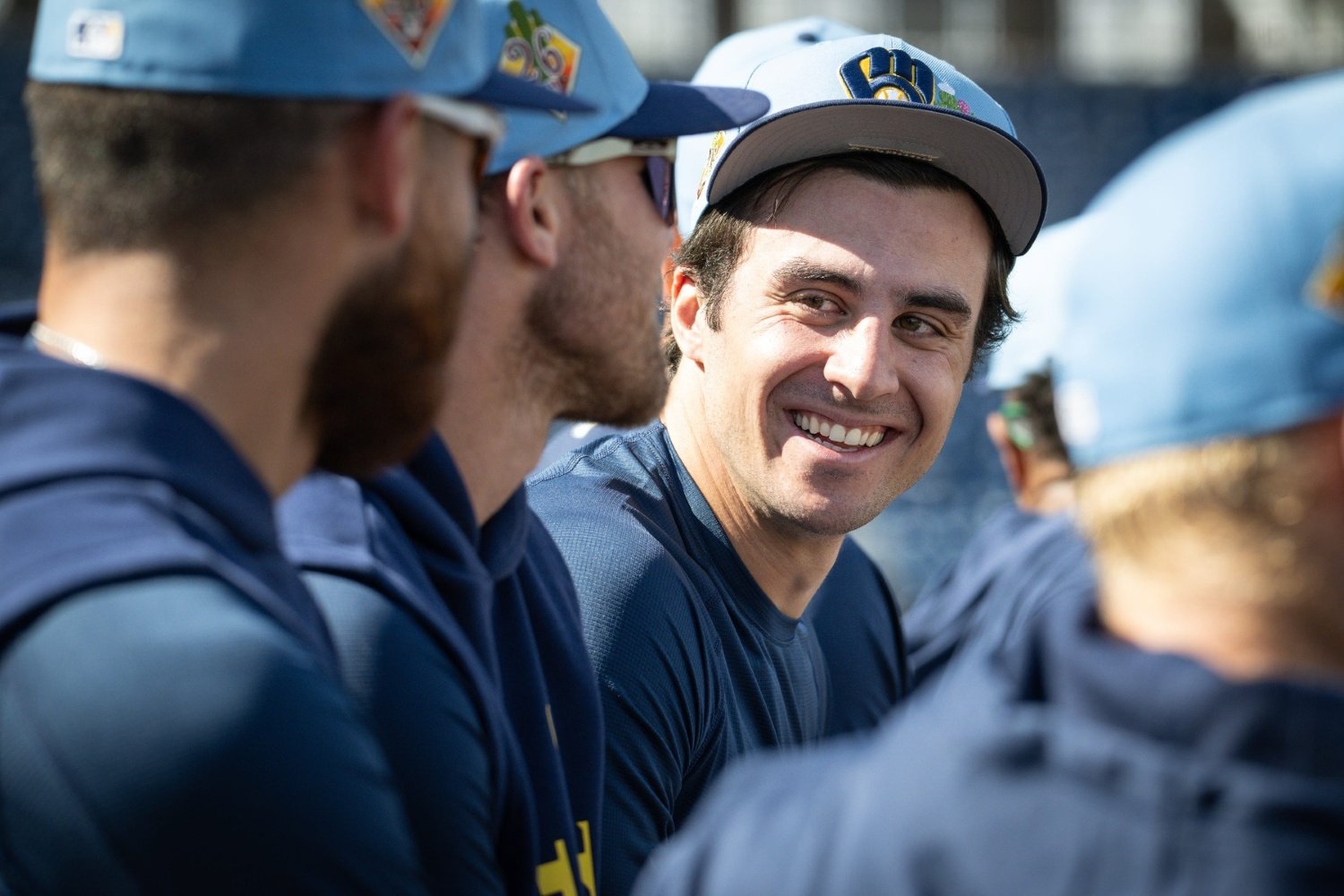 The 2025 Brewers entered September in an unusual place: the lap of luxury. Having won 14 straight games (and 29 of 33) to race far ahead in the NL Central by mid-August, they were in position to coast to a division title. It was a good thing, too, because by that point, they were dragging. Even in the second half of August, one could detect their edges fraying slightly, but in the first half of September, they looked positively worn out by winning in such intense, detail-oriented fashion every day. Right fielder and team leader Sal Frelick showed the wear and tear most of all. In July and August, his bat speed had averaged just a hair under 69 miles per hour. In September, it was 66.8. He batted just .237/.302/.368 for the month, after batting .296/.359/.412 through the end of August. As he prepares for his third full season in the majors, though, Frelick isn't focused on managing his effort differently over the season's 162-game grind. "Listen, you shouldn't be fresh in September, honestly," Frelick said Wednesday in the Brewers' spring training clubhouse in Maryvale. "You should play hard enough so you're tired in September, and I mean, yeah, you're gonna be dragging—you're [even] dragging in July—but that's never an excuse. Everyone's tired." Frelick said October offers a second wind at the end of the relentless regular campaign, but that he's learned not to wait for that. His preparation for his fourth big-league season has been focused not on being "130 percent" come September, he explained, but on being as mentally strong as possible. Last spring, he reported to camp heavier and stronger than in the past, but it didn't insulate him from the gravity of the schedule, and he's learning not to try to force his body to feel better than is realistic. Pat Murphy concurs with that approach. "I don't think we're the only team that goes through that, but I think young players go through that [more than veterans]," Murphy said. "And I think it's not pacing yourself, either. It's just being in better condition mentally, more than physically." Both Murphy and Frelick fight to keep the focus on the things that are within their control, which often excludes the results of at-bats but always includes things like attention to detail and swing decisions. Those things deteriorate even more than bat speed or jumps on fly balls, in the heat and the accumulated fatigue of the late summer. "Yeah that's the hardest part, right?" Frelick said. "I think the mental part is just the hardest part of the game, in general. You can go out and have four barrels and get out four times, and how do you—even though you were 0-for-4 and you might've lost the game—how do you wake up the next morning and go into it saying, 'I'm confident'? "It's a hard thing to deal with, especially when those 0-for-4s are 0-for-20s. But I think you just have, again, the experience, the understanding of how long a season is, how many games you're gonna play, how many at-bats you're gonna get, how many plate appearances you're gonna get. That only helps the mental game." Frelick carries himself, a month shy of his 26th birthday, with a much greater air of security than he had when he first arrived in the majors. Experience is already benefiting him, in ways that should carry all the way from March to October. "I remember early on, I would get more upset or have more of a freakout when I wasn't playing well. But now, in retrospect, I don't even remember any of those freakouts, because the season's so long, it's not even worth worrying about it," the sudden veteran explained. "This is the stuff Murph talks about. It's such a long season. You're gonna have a month or two where you play really bad. You're gonna have, hopefully, more months where you play really good. It's just how you go through it." Frelick's maturity manifested itself in a better ability to balance selectivity with aggressiveness at the plate last year. Notably, he hit 12 home runs, but all of them came against right-handed pitchers. Frelick said that was because of a conscious difference between his approaches against righties and lefties. To generate power, he picks his spots and turns on the ball, driving it to his pull field. Against southpaws, though, that's not his approach—and he doesn't plan to make it so. "I try to really hit the ball the other way more, just stay closed," Frelick said of his approach to left-on-left matchups. "You just can't really get pull-happy." To ensure that he didn't do so, Frelick set up slightly deeper in the batter's box against lefties than against righties, and slightly farther off the plate. He fought the urge to open up too soon on pitches from lefties by knowing he needed to stay in just to cover the outer edge of the plate, and he caught the ball slightly farther in front of himself against righties, giving himself a better chance to pull and lift those pitches. Here, on the left, is his stance and stride against lefties last year. On the right are his stance and setup against righties. Frelick didn't sell out for power in 2025, but he tapped into much more of it, which he credited to his evolving approach. That power might continue to be isolated in matchups against right-handed pitchers, but if he continues to make contact and reach base at a strong rate against southpaws, he's happy to keep making the same tradeoffs. On a perpetually young team who turned over its roster yet again this winter, Frelick (like Brice Turang, William Contreras, Aaron Ashby and others) has a much greater leadership role in this clubhouse than he would in most such rooms throughout the league. He's increasingly well-suited to that job, and his message—about everything from approaching disadvantageous matchups to sustaining excellence across the long season—is in lockstep with that of his manager.
 -
Image courtesy of © Dave Kallmann / Milwaukee Journal Sentinel / USA TODAY NETWORK via Imagn Images After a rough 2024 season, Jake Bauers was non-tendered by the Brewers, and limped back into camp last year as a non-roster invitee. He earned a place with the team, though, and went on to have a strong season—especially down the stretch. He missed five weeks with a shoulder impingement, but after returning in late August, he batted .321/.433/.500 in 67 regular-season plate appearances to close the campaign. In the playoffs, he was 4-for-13 with a double, a home run and a walk. This time around, he and the team agreed to a deal ahead of the non-tender deadline, guaranteeing him $2.7 million. Bauers said that his time on the injured list in the latter part of the summer afforded him a chance to shift the focus of his conditioning work, which led to his late-season success and inspired a change to his offseason routine. "I think there was a real emphasis on mobility toward the end of last year, and just making sure I was controlling my body as well as I could, so that was kind of the main focus," Bauers said. Entering the winter, that informed how he worked out. "A lot more focus on functional training, as opposed to just throwing weight on a bar and squatting. A lot of single-leg stuff, stability work, mobility, stuff like that." Although a California native, Bauers now lives outside Dallas, in the same area as new teammate Jett Williams. He turned to a new trainer, Nick Daley, who helped him develop a plan focused on specialized movements and maximizing the utility of his movements. He's always been an athletic specimen, and a much better mover than most first basemen and corner outfielders. Now, he hopes, he's tapped into a way to better convert that athleticism into consistent on-field value. The Brewers have bought in. Though Andrew Vaughn and Bauers won't play in a platoon—that would marginalize the righty-batting Vaughn too much—Pat Murphy is enthusiastic about Bauers's value and expects him to play more in 2026 than he did last season. Despite the team's apparent logjam in the outfield, Murphy emphasized the versatility Bauers brings as a left fielder, in addition to first base. That could come into play especially prominently if (as seems increasingly plausible) Jackson Chourio ends up spending significant time in center field again this year. Bauers is preparing to play both positions. "I think the second you assume something—assume you might not get out there—I've found that to be exactly the moment you do end up in the outfield," he said. "So I'm trying to stay ready for whatever it is." Both Bauers and Murphy said the lefty slugger will play some outfield in the coming days, which works just fine for the Brewers. With Chourio away for the World Baseball Classic and both Brandon Lockridge and Jett Williams slowed by injuries, there's playing time available out there. Of course, Bauers's main job is to hit. That's where his improved body control will be most important, because he already has ample explosiveness. He owns the best bat speed on the team, and his average swing speed increased substantially last season. At the same time, as part of a more patient approach, he let the ball travel a bit deeper into the hitting zone before contact, reducing his likelihood of whiffing. It was a major change, although a subtle one, and his hope is that a winter of work focused on the aspects of his movement that are most essential to it will result in similar results to what he managed late last year. If so, the Brewers will find a lot of plate appearances for him. His could be the unexpected slugging that infuses this year's seemingly underpowered with its missing ingredient. View full article
-
 After a rough 2024 season, Jake Bauers was non-tendered by the Brewers, and limped back into camp last year as a non-roster invitee. He earned a place with the team, though, and went on to have a strong season—especially down the stretch. He missed five weeks with a shoulder impingement, but after returning in late August, he batted .321/.433/.500 in 67 regular-season plate appearances to close the campaign. In the playoffs, he was 4-for-13 with a double, a home run and a walk. This time around, he and the team agreed to a deal ahead of the non-tender deadline, guaranteeing him $2.7 million. Bauers said that his time on the injured list in the latter part of the summer afforded him a chance to shift the focus of his conditioning work, which led to his late-season success and inspired a change to his offseason routine. "I think there was a real emphasis on mobility toward the end of last year, and just making sure I was controlling my body as well as I could, so that was kind of the main focus," Bauers said. Entering the winter, that informed how he worked out. "A lot more focus on functional training, as opposed to just throwing weight on a bar and squatting. A lot of single-leg stuff, stability work, mobility, stuff like that." Although a California native, Bauers now lives outside Dallas, in the same area as new teammate Jett Williams. He turned to a new trainer, Nick Daley, who helped him develop a plan focused on specialized movements and maximizing the utility of his movements. He's always been an athletic specimen, and a much better mover than most first basemen and corner outfielders. Now, he hopes, he's tapped into a way to better convert that athleticism into consistent on-field value. The Brewers have bought in. Though Andrew Vaughn and Bauers won't play in a platoon—that would marginalize the righty-batting Vaughn too much—Pat Murphy is enthusiastic about Bauers's value and expects him to play more in 2026 than he did last season. Despite the team's apparent logjam in the outfield, Murphy emphasized the versatility Bauers brings as a left fielder, in addition to first base. That could come into play especially prominently if (as seems increasingly plausible) Jackson Chourio ends up spending significant time in center field again this year. Bauers is preparing to play both positions. "I think the second you assume something—assume you might not get out there—I've found that to be exactly the moment you do end up in the outfield," he said. "So I'm trying to stay ready for whatever it is." Both Bauers and Murphy said the lefty slugger will play some outfield in the coming days, which works just fine for the Brewers. With Chourio away for the World Baseball Classic and both Brandon Lockridge and Jett Williams slowed by injuries, there's playing time available out there. Of course, Bauers's main job is to hit. That's where his improved body control will be most important, because he already has ample explosiveness. He owns the best bat speed on the team, and his average swing speed increased substantially last season. At the same time, as part of a more patient approach, he let the ball travel a bit deeper into the hitting zone before contact, reducing his likelihood of whiffing. It was a major change, although a subtle one, and his hope is that a winter of work focused on the aspects of his movement that are most essential to it will result in similar results to what he managed late last year. If so, the Brewers will find a lot of plate appearances for him. His could be the unexpected slugging that infuses this year's seemingly underpowered with its missing ingredient.
 -
Image courtesy of © Dave Kallmann / Milwaukee Journal Sentinel / USA TODAY NETWORK via Imagn Images You can count the days and (kind of) the spring starts, or you can just listen to Pat Murphy talk about the progress of veterans Brandon Woodruff and Quinn Priester. Either approach will lead you to the same guess: Jacob Misiorowski is increasingly likely to be the Brewers' Opening Day starter. Although he hasn't yet appeared in a Cactus League game—and still won't this week, as the team opted to have him start Tuesday's exhibition against Great Britain instead—he's becoming a choice so obvious it feels nigh inevitable. Brandon Woodruff pitched a simulated game Sunday on the stadium mound at American Family Fields of Phoenix. He pitched two innings—the team originally planned for three, but the change came before the actual session, and wasn't prompted by any injury concern—and threw 34 pitches. He got knocked around by teammates in the first inning, seemingly focusing solely on rhythm and comfort. In the second frame, however, he got down the mound with much greater intensity, and his stuff ticked up. He struck out one and retired all four batters he faced in the second frame, artificially stretching it to reach the pitch count the team had scheduled. However, Woodruff's progression remains notably deliberate. The Brewers reported Tuesday that he's on track to begin the season in the rotation, but that could mean at the end of the first week, rather than on Opening Day. Meanwhile, Quinn Priester has been handled even more cautiously. Murphy said there were "a lot of flashing red lights" around Priester entering camp, due to his relatively heavy workload in 2025 and the wrist issue that nagged him at the end of the season. Though he's officially 100% healthy (as reported both by the manager and by the organization), he won't appear in the first turn through the rotation, either. That leaves Misiorowski in competition with a series of even less experienced and/or less tenured starters, led by Chad Patrick, Brandon Sproat, Logan Henderson and Kyle Harrison—not for a rotation spot (he's easily secured that much) but for the honor of toeing the rubber on Opening Day. If he gets that chance, he's ready—and eager. "Yeah, it'd be really cool," Misiorowski said. "It'd be really fun to start off the season like that—you know, first Opening Day in the big leagues and I get to start it, that'd be crazy." His first highly visible step toward that honor will come Tuesday, and although it won't officially be as a representative of the United States, it's a taste of something he hopes he gets a chance to do down the road. "Of course," he said, when asked if he's thought about pitching for Team USA in the next WBC. "I think it's a career goal for anyone. I think, representing your country, and if that could be at the WBC or if that's in the Olympics [in 2028] or whatever, I think that's always a goal for an athlete." Misiorowski didn't hear from Team USA at all this time around, but it probably wouldn't have been the right time, anyway. Instead, he gets to keep his full attention on the season ahead, and the chance that he'll be the ace of the staff—not by midseason or by October, but from Day 1. Williams, Lockridge Out with Minor Injuries Brandon Lockridge had a chance to win a spot on the Opening Day roster, but those hopes dimmed last week, when he suffered a rotator cuff contusion on a dive into a base. He's 3-5 days from returning to game action, but there will still be time for the 2025 trade deadline acquisition to impress the team between the end of this week and Milwaukee breaking camp. Losing reps during the absence of Jackson Chourio, when playing time will be available in abundance, is a tough break, though. Similarly, Jett Williams will be unable to fully avail himself of the absences of Brice Turang and Joey Ortiz. He was diagnosed with a mild quad strain in his left leg Tuesday, after the team had initially believed he was dealing only with a contusion. Williams's target for return to play in the Cactus League is mid-March, by which time he might miss the chance to play in the places of the Crew's starting double-play combination. In all likelihood, Williams would have begun the season at Triple-A Nashville anyway, as Murphy said multiple times over the last week-plus. However, the skipper acknowledged that reading his MRI led the team to back off from a more aggressive initial plan to get him back on the field. "Yeah, I think it did," Murphy said, when asked whether imaging changed the plan for the young utility man. However, he also said Williams reported being "ready to go" and that the quad felt "80 percent good" just two days after he injured it on Feb. 23. The length of time for which he'll be sidelined reflects the team's desire to play it safe, rather than the severity of the injury. View full article
-
Is Jacob Misiorowski in Line to Be Brewers' Opening Day Starter?
Matthew Trueblood posted an article in Brewers
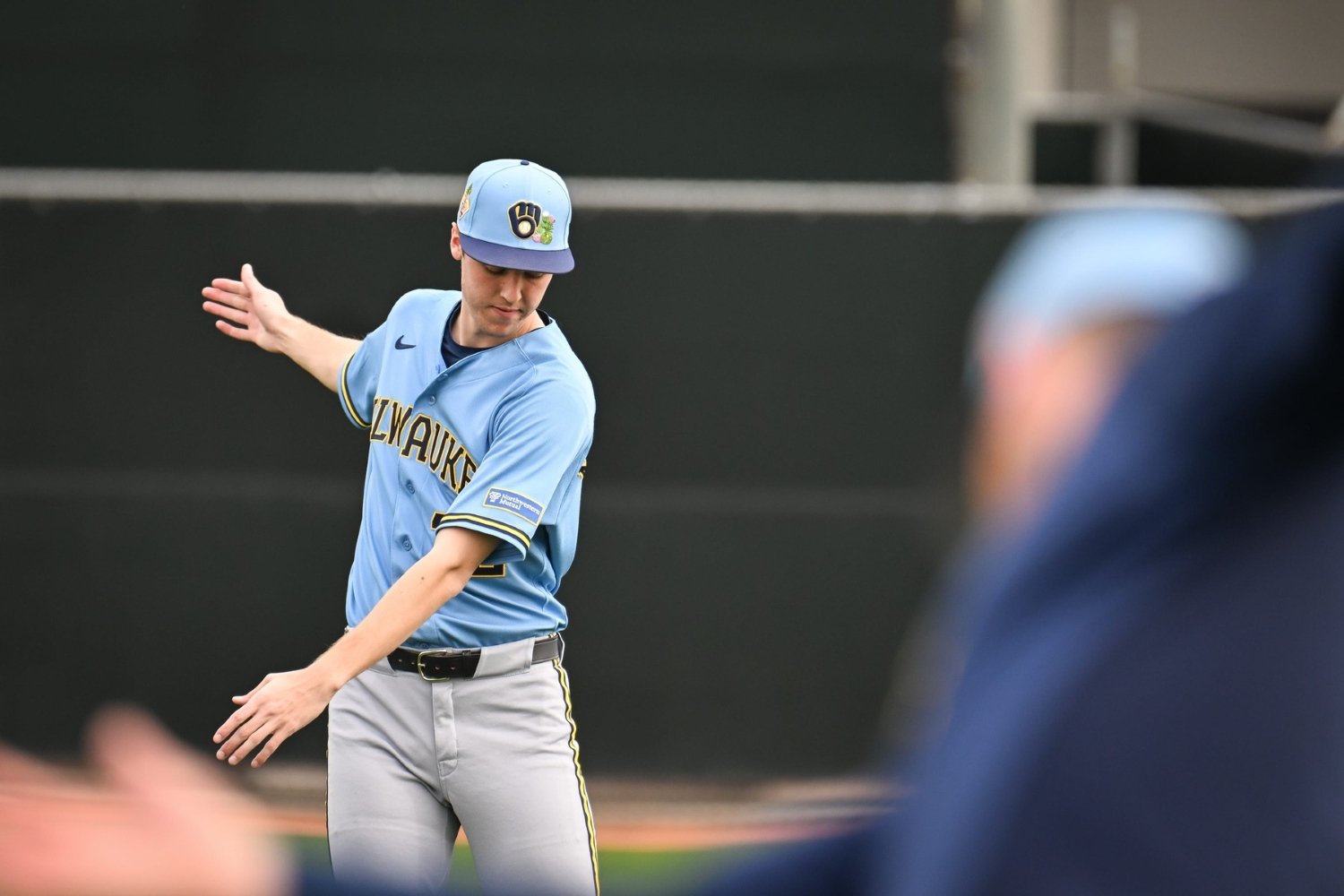 You can count the days and (kind of) the spring starts, or you can just listen to Pat Murphy talk about the progress of veterans Brandon Woodruff and Quinn Priester. Either approach will lead you to the same guess: Jacob Misiorowski is increasingly likely to be the Brewers' Opening Day starter. Although he hasn't yet appeared in a Cactus League game—and still won't this week, as the team opted to have him start Tuesday's exhibition against Great Britain instead—he's becoming a choice so obvious it feels nigh inevitable. Brandon Woodruff pitched a simulated game Sunday on the stadium mound at American Family Fields of Phoenix. He pitched two innings—the team originally planned for three, but the change came before the actual session, and wasn't prompted by any injury concern—and threw 34 pitches. He got knocked around by teammates in the first inning, seemingly focusing solely on rhythm and comfort. In the second frame, however, he got down the mound with much greater intensity, and his stuff ticked up. He struck out one and retired all four batters he faced in the second frame, artificially stretching it to reach the pitch count the team had scheduled. However, Woodruff's progression remains notably deliberate. The Brewers reported Tuesday that he's on track to begin the season in the rotation, but that could mean at the end of the first week, rather than on Opening Day. Meanwhile, Quinn Priester has been handled even more cautiously. Murphy said there were "a lot of flashing red lights" around Priester entering camp, due to his relatively heavy workload in 2025 and the wrist issue that nagged him at the end of the season. Though he's officially 100% healthy (as reported both by the manager and by the organization), he won't appear in the first turn through the rotation, either. That leaves Misiorowski in competition with a series of even less experienced and/or less tenured starters, led by Chad Patrick, Brandon Sproat, Logan Henderson and Kyle Harrison—not for a rotation spot (he's easily secured that much) but for the honor of toeing the rubber on Opening Day. If he gets that chance, he's ready—and eager. "Yeah, it'd be really cool," Misiorowski said. "It'd be really fun to start off the season like that—you know, first Opening Day in the big leagues and I get to start it, that'd be crazy." His first highly visible step toward that honor will come Tuesday, and although it won't officially be as a representative of the United States, it's a taste of something he hopes he gets a chance to do down the road. "Of course," he said, when asked if he's thought about pitching for Team USA in the next WBC. "I think it's a career goal for anyone. I think, representing your country, and if that could be at the WBC or if that's in the Olympics [in 2028] or whatever, I think that's always a goal for an athlete." Misiorowski didn't hear from Team USA at all this time around, but it probably wouldn't have been the right time, anyway. Instead, he gets to keep his full attention on the season ahead, and the chance that he'll be the ace of the staff—not by midseason or by October, but from Day 1. Williams, Lockridge Out with Minor Injuries Brandon Lockridge had a chance to win a spot on the Opening Day roster, but those hopes dimmed last week, when he suffered a rotator cuff contusion on a dive into a base. He's 3-5 days from returning to game action, but there will still be time for the 2025 trade deadline acquisition to impress the team between the end of this week and Milwaukee breaking camp. Losing reps during the absence of Jackson Chourio, when playing time will be available in abundance, is a tough break, though. Similarly, Jett Williams will be unable to fully avail himself of the absences of Brice Turang and Joey Ortiz. He was diagnosed with a mild quad strain in his left leg Tuesday, after the team had initially believed he was dealing only with a contusion. Williams's target for return to play in the Cactus League is mid-March, by which time he might miss the chance to play in the places of the Crew's starting double-play combination. In all likelihood, Williams would have begun the season at Triple-A Nashville anyway, as Murphy said multiple times over the last week-plus. However, the skipper acknowledged that reading his MRI led the team to back off from a more aggressive initial plan to get him back on the field. "Yeah, I think it did," Murphy said, when asked whether imaging changed the plan for the young utility man. However, he also said Williams reported being "ready to go" and that the quad felt "80 percent good" just two days after he injured it on Feb. 23. The length of time for which he'll be sidelined reflects the team's desire to play it safe, rather than the severity of the injury.
-
- 1
-

-
- jacob misiorowski
- brandon woodruff
- (and 1 more)
-
Image courtesy of © Jayne Kamin-Oncea-Imagn Images Last season, Reese McGuire saved the Chicago Cubs from what felt like onrushing disaster. In a game in Cincinnati in late May, Miguel Amaya suffered an oblique strain that would sideline him for almost three months, leaving the team completely dependent on co-starter Carson Kelly. McGuire had been stashed at Triple-A Iowa, whence he was rushed to the banks of the Ohio River to fill in for Amaya. He responded with two homers in his first game with Chicago, and stuck around for the balance of the season. McGuire, who turns 31 on Monday, went on to hit nine home runs in 44 games and 140 plate appearances for the Cubs, and was excellent at throwing out runners trying to advance on errant pitches or steal bases. His pitch framing graded well, too. The Cubs non-tendered him in November, which was to be expected. After that, though, McGuire expected to field at least a couple of big-league offers from other teams. None came. With spring training looming (and knowing that any catcher hoping to make a team needs to be in camp as early as possible), McGuire agreed to a minor-league deal with Milwaukee on Jan. 28. At least, he figured, he would have a decent chance to claim the backup role to William Contreras, with the optionable and inexperienced Jeferson Quero as the only obstacle in his path. Two weeks later, Milwaukee signed veteran catcher Gary Sánchez to a big-league deal. McGuire is now in camp with a team that has two roster-locked big-leaguers at catcher and a top prospect who will be the top priority at Triple-A Nashville. It's not a great spot to be in, for a guy who felt that he took such a step forward last year. You could forgive McGuire for feeling pretty put out about it all, and he admitted to feeling upset—but his attitude about the circumstance in which he finds himself could hardly be better. "I was absolutely hoping, you know, for a guaranteed deal, and I felt like, coming off one of my better years at the plate and being on a successful, winning team with the Cubs and producing when the moments mattered, I was actually pretty shocked that I didn't have a guarantee," he said. "It's upsetting, you know, you work hard and—but at the same time, you've gotta be able to just turn the page, and just realize that it's a 162-game season and things happen, and just be ready for that opportunity like I was last year." Admittedly, even McGuire's ostensible breakout—his nine home runs were a career high, and the only time he's posted an OPS+ higher than last year's 94 was in 2019, when he had even fewer plate appearances and played only 30 games—was not a tour de force at the plate. He did generate good power, but he walked a platry 2.9% of the time and had an appalling .245 on-base percentage. Still, he did what was asked of him, and more, and if the league had taken a bit more note of his defensive improvements, he might have gotten that guaranteed deal. As it is, teams rarely pay for the defensive chops of backup catchers, even though that's the trait for which they select players to fill that role. Guys like McGuire thus end up in a (forgive the pun) Catch-22. "When you're on that catching train and you're the backup catcher—you're in that realm—whether you're in Double A and you're destined to do that or whether you're [used to starting], it's a survival position," manager Pat Murphy philosophized. "Whatever breaking balls are thrown at you, you spit at them and you say, 'Hey, I'm still here.' You don't bite for that, you know? I think that's where [McGuire]'s at. He sees a real possibility here, and we're happy to have him." So far, he's not only had to find time between starts by Contreras and Sánchez, but sometimes had to be the guy who comes in along with the shock troops from the minor-league side in the sixth or seventh inning of Cactus League contests. With Contreras departing to play for Team Venezuela in the World Baseball Classic, McGuire will get more meaningful looks in games over the next fortnight, but he knows that his real opportunity in Milwaukee depends on an injury, so he's trying to focus on locking in the improvements he made as a thrower and a receiver last year. When the subject is the craft of catching itself, he's animated by a passion that will be good for the organization even if it's relegated to working with Quero in Nashville. "Last year was kind of the second full year of the right-knee-down method that we've seen across the league," McGuire said, referring to the newly prevailing catcher stance league-wide, "so last year, I was definitely more confident in starting in that position, but also modifying it and being able to pop up quicker and get my right knee off the ground and be able to use it." McGuire learned not to be "stagnant" on the ground, even in a stance designed for the stability that engenders optimal pitch-framing. He felt that better timing of his weight-shift in preparation for a throw, especially on steal attempts, led to better throws. "But also, you do have to just credit the pitching staff as well, for being quicker to the plate," he added. "The Cubs were very in tune with runners and times to the plate, and there was some opportunity for me to be up on two feet, instead of having a right knee down. When I'm up on two feet, I definitely feel at my best, so there were times where that was the case. "And then, up the middle, honestly, Dansby Swanson and Nico Hoerner are two of the best taggers in the game, so when I would just put it anywhere near second base, they would pick it up off the ground, at times, and help me out a lot." Although he deeply appreciated his time in Chicago, McGuire also watched with admiration when they played the Brewers. That helped him decide between the minor-league offers he got in January, and it goes beyond the tagging skills of Brice Turang and Joey Ortiz. "Being in this clubhouse around these guys, it's a great group. It's a hungry group," he said. "It's very much my style of baseball, very grind-it-out, one-run games, move a guy over, get him in. Sometimes it's not flashy, but at the end of the game you look up and you're like, 'Man, they beat the crap out of us.'" Nor is he missing the opportunity to work with Charlie Greene, Nestor Corredor and a deservingly vaunted Brewers catching instruction group. "Yeah, we've been working on a ton of defensive stuff, receiving," McGuire said. "Every day, I feel like I'm getting better at something. I mentioned that when I first came here: It's fun to think that I've been in the game for over 13 professional years now, and I'm still learning, still finding ways to increase, whatever it is. It's been a great camp so far." Make no mistake: this isn't the circumstance McGuire wants to be in. However, he's learned not to let that make him ungrateful for the place he's in, or the chances that still lie ahead of him. It's a long season, and although no Brewers fan is likely to find themselves rooting for McGuire to make the roster (which would mean an injury having befallen at least one of Contreras, Sánchez and Quero), if he does end up being part of the club, he's well-positioned to contribute. View full article
-
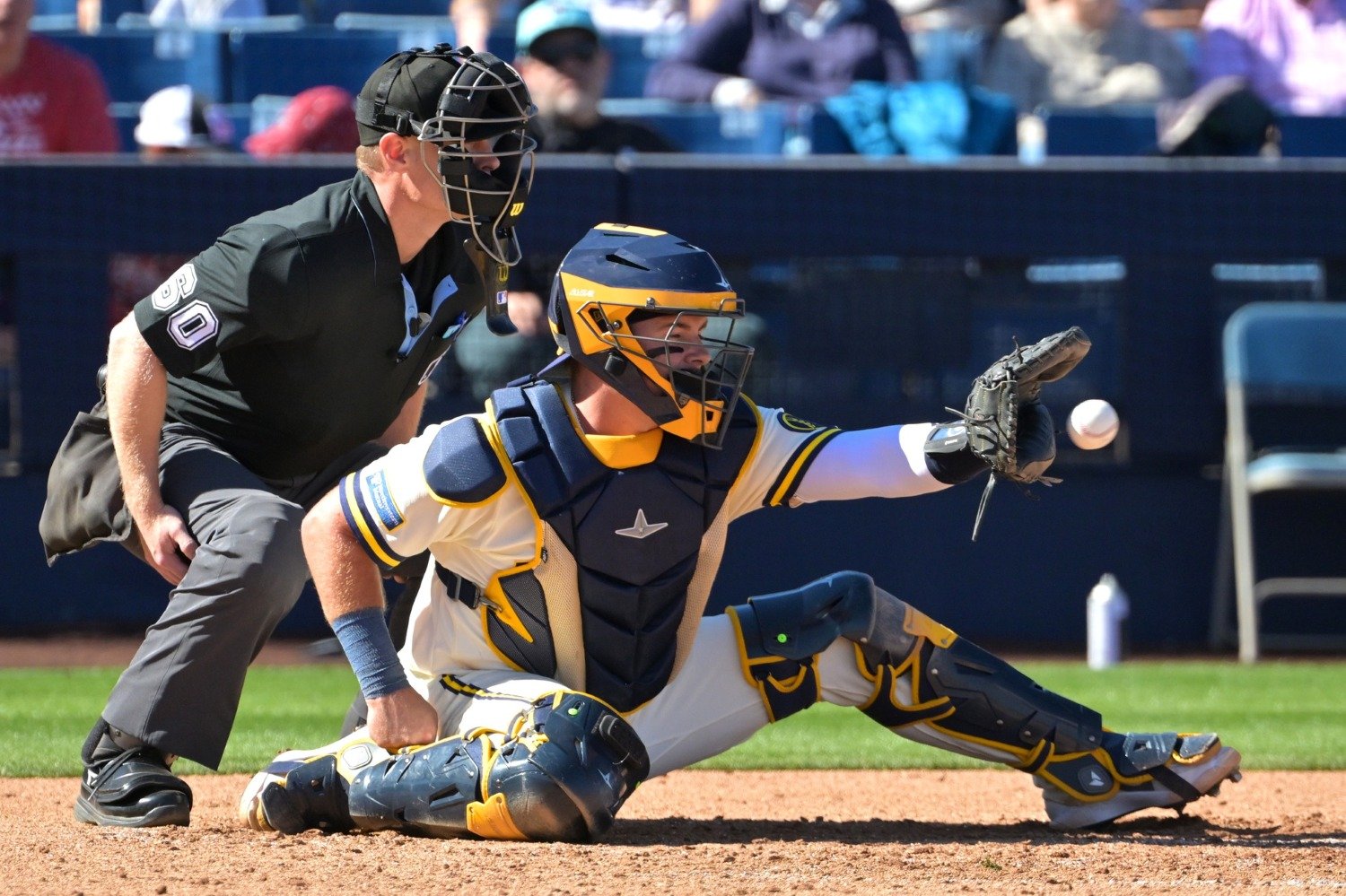 Last season, Reese McGuire saved the Chicago Cubs from what felt like onrushing disaster. In a game in Cincinnati in late May, Miguel Amaya suffered an oblique strain that would sideline him for almost three months, leaving the team completely dependent on co-starter Carson Kelly. McGuire had been stashed at Triple-A Iowa, whence he was rushed to the banks of the Ohio River to fill in for Amaya. He responded with two homers in his first game with Chicago, and stuck around for the balance of the season. McGuire, who turns 31 on Monday, went on to hit nine home runs in 44 games and 140 plate appearances for the Cubs, and was excellent at throwing out runners trying to advance on errant pitches or steal bases. His pitch framing graded well, too. The Cubs non-tendered him in November, which was to be expected. After that, though, McGuire expected to field at least a couple of big-league offers from other teams. None came. With spring training looming (and knowing that any catcher hoping to make a team needs to be in camp as early as possible), McGuire agreed to a minor-league deal with Milwaukee on Jan. 28. At least, he figured, he would have a decent chance to claim the backup role to William Contreras, with the optionable and inexperienced Jeferson Quero as the only obstacle in his path. Two weeks later, Milwaukee signed veteran catcher Gary Sánchez to a big-league deal. McGuire is now in camp with a team that has two roster-locked big-leaguers at catcher and a top prospect who will be the top priority at Triple-A Nashville. It's not a great spot to be in, for a guy who felt that he took such a step forward last year. You could forgive McGuire for feeling pretty put out about it all, and he admitted to feeling upset—but his attitude about the circumstance in which he finds himself could hardly be better. "I was absolutely hoping, you know, for a guaranteed deal, and I felt like, coming off one of my better years at the plate and being on a successful, winning team with the Cubs and producing when the moments mattered, I was actually pretty shocked that I didn't have a guarantee," he said. "It's upsetting, you know, you work hard and—but at the same time, you've gotta be able to just turn the page, and just realize that it's a 162-game season and things happen, and just be ready for that opportunity like I was last year." Admittedly, even McGuire's ostensible breakout—his nine home runs were a career high, and the only time he's posted an OPS+ higher than last year's 94 was in 2019, when he had even fewer plate appearances and played only 30 games—was not a tour de force at the plate. He did generate good power, but he walked a platry 2.9% of the time and had an appalling .245 on-base percentage. Still, he did what was asked of him, and more, and if the league had taken a bit more note of his defensive improvements, he might have gotten that guaranteed deal. As it is, teams rarely pay for the defensive chops of backup catchers, even though that's the trait for which they select players to fill that role. Guys like McGuire thus end up in a (forgive the pun) Catch-22. "When you're on that catching train and you're the backup catcher—you're in that realm—whether you're in Double A and you're destined to do that or whether you're [used to starting], it's a survival position," manager Pat Murphy philosophized. "Whatever breaking balls are thrown at you, you spit at them and you say, 'Hey, I'm still here.' You don't bite for that, you know? I think that's where [McGuire]'s at. He sees a real possibility here, and we're happy to have him." So far, he's not only had to find time between starts by Contreras and Sánchez, but sometimes had to be the guy who comes in along with the shock troops from the minor-league side in the sixth or seventh inning of Cactus League contests. With Contreras departing to play for Team Venezuela in the World Baseball Classic, McGuire will get more meaningful looks in games over the next fortnight, but he knows that his real opportunity in Milwaukee depends on an injury, so he's trying to focus on locking in the improvements he made as a thrower and a receiver last year. When the subject is the craft of catching itself, he's animated by a passion that will be good for the organization even if it's relegated to working with Quero in Nashville. "Last year was kind of the second full year of the right-knee-down method that we've seen across the league," McGuire said, referring to the newly prevailing catcher stance league-wide, "so last year, I was definitely more confident in starting in that position, but also modifying it and being able to pop up quicker and get my right knee off the ground and be able to use it." McGuire learned not to be "stagnant" on the ground, even in a stance designed for the stability that engenders optimal pitch-framing. He felt that better timing of his weight-shift in preparation for a throw, especially on steal attempts, led to better throws. "But also, you do have to just credit the pitching staff as well, for being quicker to the plate," he added. "The Cubs were very in tune with runners and times to the plate, and there was some opportunity for me to be up on two feet, instead of having a right knee down. When I'm up on two feet, I definitely feel at my best, so there were times where that was the case. "And then, up the middle, honestly, Dansby Swanson and Nico Hoerner are two of the best taggers in the game, so when I would just put it anywhere near second base, they would pick it up off the ground, at times, and help me out a lot." Although he deeply appreciated his time in Chicago, McGuire also watched with admiration when they played the Brewers. That helped him decide between the minor-league offers he got in January, and it goes beyond the tagging skills of Brice Turang and Joey Ortiz. "Being in this clubhouse around these guys, it's a great group. It's a hungry group," he said. "It's very much my style of baseball, very grind-it-out, one-run games, move a guy over, get him in. Sometimes it's not flashy, but at the end of the game you look up and you're like, 'Man, they beat the crap out of us.'" Nor is he missing the opportunity to work with Charlie Greene, Nestor Corredor and a deservingly vaunted Brewers catching instruction group. "Yeah, we've been working on a ton of defensive stuff, receiving," McGuire said. "Every day, I feel like I'm getting better at something. I mentioned that when I first came here: It's fun to think that I've been in the game for over 13 professional years now, and I'm still learning, still finding ways to increase, whatever it is. It's been a great camp so far." Make no mistake: this isn't the circumstance McGuire wants to be in. However, he's learned not to let that make him ungrateful for the place he's in, or the chances that still lie ahead of him. It's a long season, and although no Brewers fan is likely to find themselves rooting for McGuire to make the roster (which would mean an injury having befallen at least one of Contreras, Sánchez and Quero), if he does end up being part of the club, he's well-positioned to contribute.
 -
Image courtesy of © Dave Kallmann / Milwaukee Journal Sentinel / USA TODAY NETWORK via Imagn Images Because he'll (probably) take up the spot on the Opening Day roster vacated by Andruw Monasterio, and because he was traded (in part) for Monasterio, David Hamilton risks being viewed much the way Monasterio was during his time with the Brewers. If you had to describe his role in a couple of words, you would say, "utility infielder," and that's also how you might encapsulate what Monasterio was for the 2023-25 teams. However, there are some crucial differences between the two, as well, and manager Pat Murphy sees Hamilton not only as having a much larger version of Monasterio's role, but as the guy most likely to take what Murphy likes to call "a quantum leap" this season. "I think he can take his offensive game to a whole other level," Murphy said. "There's so much in there offensively. We gotta get it out of there, and it's not going to be easy, You can't just change habits [in the snap of a finger], but man, is it something." Hamilton will open the season as the backup shortstop, and also figures to find playing time at third base and (as needed) at second or in the outfield. Nominally, that's similar to what Monasterio brought to the table, but expect Hamilton to play more—much more. For one thing, he bats left-handed, whereas Monasterio is a righty hitter. For another, he's a more adept defender, with all the tools to be a plus shortstop. "I can see Hamilton playing against right-handers," Murphy said. "All the time. That much—so he's not a Mona." Monasterio, indeed, often wouldn't start for two weeks at a time, making only occasional appearances as a defensive substitute or pinch-hitter. He only had 135 plate appearances, despite spending the vast majority of the season with the Crew. The role Murphy outlined for Hamilton could easily involve three times that many trips to the plate. That leaves two important questions hanging in the air: Why? And how? Let's tackle them in that order. Murphy emphasized the offensive upside he and the staff see in the lefty-batting infielder. That upside lies in a couple of different areas. Firstly, he brings elite speed, and a track record of deploying it aggressively. He's stolen 57 bases in his short big-league career, and taken the extra base on teammates' hits over 60% of the time; the league averages under 50%. When Hamilton gets on base, he scores 37% of the time, another mark about 10 percentage points higher than the league's. Though he got just 317 plate appearances in 2024 and 194 in 2025, he ranks ninth for those two seasons in Net Bases Gained, according to Statcast, which apportions responsibility for steals and times caught stealing among runners, pitchers and catchers and turns it into a counting stat that also functions as a de facto value metric for runners. Of the 521 players who had at least 200 stolen-base opportunities over the last two seasons, Hamilton had the fourth-highest attempt rate. His legs make a difference once he's on base. Of course, the hurdle he has to clear is getting on base, to begin with. On that front, 2025 was a grim step back, as he ran a .257 OBP that cost him the larger role the Red Sox envisioned for him when the season began. Thus, as is true of so many exceptional athletes trying to cross the bridge to become exceptional ballplayers, Hamilton's fate hinges on hitting. The good news is that, as Murphy noted, there's some upside to tap into. Under the influence of a Red Sox development infrastructure focused on adding bat speed, Hamilton showed that he could do that, but he's also learned that his fastest swing is not automatically his best. This winter, his work was focused on a simple objective. "I worked on, pretty much, just hitting line drives," Hamilton said. "That really plays into what [the Brewers] see for me, what they want to do, so it worked out." That's what every hitter is trying to do, of course, but Hamilton is a good candidate for a rededication to it. His line-drive rate dipped substantially in 2025, as his bat path flattened out. He hit more grounders, made less hard contact and didn't generate any more contact in 2024—an easy explanation for the fact that his numbers cratered. Fixing that doesn't need to mean overhauling his swing, though. Murphy talked about changing what Hamilton is looking for at the plate; so did the man himself. "You want to have a good approach when you're at the plate, but it also comes down to the path you're swinging on," he said. "I'm just really focusing on hitting the top of the baseball, and hopefully good things will happen." That might sound like a recipe for a deleterious number of ground balls, but for big-league hitters, looking for the top of the ball is often a way to ensure that they don't go too far the other way, popping it up or whiffing on it. Hamilton has been hard at work with (among others) hitting coach Dan Vogelbach this spring, with bat path at the center of the discussions. He's only had 13 balls in play this spring, but his average exit velocity is over 89 MPH, up from a career average of 87 MPH, and he's whiffed on just two of his 25 swings. Meanwhile, hitting the top of the ball hasn't led to wanton worm-burning; he's hit just three of those 13 batted balls at launch angles below 7°. A player with this much speed, a reasonably patient approach and even a modicum of juice in his bat can be a big help on offense, especially from the left side. That's plenty on the question of why the manager is excited about him, then. Let's tackle the thornier query: How—or, rather, at whose expense? In short (no pun intended), it might be Hamilton who first threatens the playing time of incumbent shortstop Joey Ortiz, rather than Jett Williams or Cooper Pratt. Murphy has seen some of what he hoped for from Ortiz this spring, and he'll now get a chance to pick the brains of other good players on Novena México in the World Baseball Classic. However, while the organization remains broadly high on Ortiz, Hamilton's left-handedness and his strong defensive chops make him a candidate to play in Ortiz's stead at times. He'll get most of his playing time at third base, splitting those duties with Luis Rengifo, but to match Murphy's lofty vision, he'll have to take some time from Ortiz, too. Murphy dislikes straightforward platoons, except in unusual and specific situations. Unless he sees no real utility for a right-handed batter except against lefties (and trusts that player to succeed in a very difficult role), he prefers modified platoons wherein he can use the right player for a given matchup every day, balancing the playing time. For instance, if he were to give Hamilton the long side of a platoon at third base, it would marginalize Rengifo—whom the team likes best from the right side, but not exclusively there. The team will use inputs far beyond handedness to make playing-time decisions, setting it day to day based on things like swing path against the opposing starter and defensive alignment behind their own. "That's where, I have a lot of information coming at me before a series, saying, 'Hey, when this guy starts, this might be the better guy'," Murphy said. "But the other thing to think about is, the way the game's evolving, the starting pitcher is not going three times around very often. So it's kind of futile to just say, 'This is how we're gonna play it,' because you gotta also plan for the last five innings. The last five innings become crucial that you're set up right." Hamilton's playing time has to come from somewhere, and it's likely to be mostly on the left side of the infield. That's bad news for Ortiz and Rengifo, but Murphy's philosophy about platoons and playing time could be good news for all three players. Hamilton will have to do more to earn his at-bats than the others, but he's already done some of that work this spring. The imperfect platoon plan, by the way, might also be the team's answer to the question of how to divvy up time between Andrew Vaughn and Jake Bauers this year. Their depth is more obvious on the pitching side, but if you see Bauers, Hamilton and Brandon Lockridge the way Murphy and the Brewers do, it becomes just as impressive with the hitters. View full article
-
 Because he'll (probably) take up the spot on the Opening Day roster vacated by Andruw Monasterio, and because he was traded (in part) for Monasterio, David Hamilton risks being viewed much the way Monasterio was during his time with the Brewers. If you had to describe his role in a couple of words, you would say, "utility infielder," and that's also how you might encapsulate what Monasterio was for the 2023-25 teams. However, there are some crucial differences between the two, as well, and manager Pat Murphy sees Hamilton not only as having a much larger version of Monasterio's role, but as the guy most likely to take what Murphy likes to call "a quantum leap" this season. "I think he can take his offensive game to a whole other level," Murphy said. "There's so much in there offensively. We gotta get it out of there, and it's not going to be easy, You can't just change habits [in the snap of a finger], but man, is it something." Hamilton will open the season as the backup shortstop, and also figures to find playing time at third base and (as needed) at second or in the outfield. Nominally, that's similar to what Monasterio brought to the table, but expect Hamilton to play more—much more. For one thing, he bats left-handed, whereas Monasterio is a righty hitter. For another, he's a more adept defender, with all the tools to be a plus shortstop. "I can see Hamilton playing against right-handers," Murphy said. "All the time. That much—so he's not a Mona." Monasterio, indeed, often wouldn't start for two weeks at a time, making only occasional appearances as a defensive substitute or pinch-hitter. He only had 135 plate appearances, despite spending the vast majority of the season with the Crew. The role Murphy outlined for Hamilton could easily involve three times that many trips to the plate. That leaves two important questions hanging in the air: Why? And how? Let's tackle them in that order. Murphy emphasized the offensive upside he and the staff see in the lefty-batting infielder. That upside lies in a couple of different areas. Firstly, he brings elite speed, and a track record of deploying it aggressively. He's stolen 57 bases in his short big-league career, and taken the extra base on teammates' hits over 60% of the time; the league averages under 50%. When Hamilton gets on base, he scores 37% of the time, another mark about 10 percentage points higher than the league's. Though he got just 317 plate appearances in 2024 and 194 in 2025, he ranks ninth for those two seasons in Net Bases Gained, according to Statcast, which apportions responsibility for steals and times caught stealing among runners, pitchers and catchers and turns it into a counting stat that also functions as a de facto value metric for runners. Of the 521 players who had at least 200 stolen-base opportunities over the last two seasons, Hamilton had the fourth-highest attempt rate. His legs make a difference once he's on base. Of course, the hurdle he has to clear is getting on base, to begin with. On that front, 2025 was a grim step back, as he ran a .257 OBP that cost him the larger role the Red Sox envisioned for him when the season began. Thus, as is true of so many exceptional athletes trying to cross the bridge to become exceptional ballplayers, Hamilton's fate hinges on hitting. The good news is that, as Murphy noted, there's some upside to tap into. Under the influence of a Red Sox development infrastructure focused on adding bat speed, Hamilton showed that he could do that, but he's also learned that his fastest swing is not automatically his best. This winter, his work was focused on a simple objective. "I worked on, pretty much, just hitting line drives," Hamilton said. "That really plays into what [the Brewers] see for me, what they want to do, so it worked out." That's what every hitter is trying to do, of course, but Hamilton is a good candidate for a rededication to it. His line-drive rate dipped substantially in 2025, as his bat path flattened out. He hit more grounders, made less hard contact and didn't generate any more contact in 2024—an easy explanation for the fact that his numbers cratered. Fixing that doesn't need to mean overhauling his swing, though. Murphy talked about changing what Hamilton is looking for at the plate; so did the man himself. "You want to have a good approach when you're at the plate, but it also comes down to the path you're swinging on," he said. "I'm just really focusing on hitting the top of the baseball, and hopefully good things will happen." That might sound like a recipe for a deleterious number of ground balls, but for big-league hitters, looking for the top of the ball is often a way to ensure that they don't go too far the other way, popping it up or whiffing on it. Hamilton has been hard at work with (among others) hitting coach Dan Vogelbach this spring, with bat path at the center of the discussions. He's only had 13 balls in play this spring, but his average exit velocity is over 89 MPH, up from a career average of 87 MPH, and he's whiffed on just two of his 25 swings. Meanwhile, hitting the top of the ball hasn't led to wanton worm-burning; he's hit just three of those 13 batted balls at launch angles below 7°. A player with this much speed, a reasonably patient approach and even a modicum of juice in his bat can be a big help on offense, especially from the left side. That's plenty on the question of why the manager is excited about him, then. Let's tackle the thornier query: How—or, rather, at whose expense? In short (no pun intended), it might be Hamilton who first threatens the playing time of incumbent shortstop Joey Ortiz, rather than Jett Williams or Cooper Pratt. Murphy has seen some of what he hoped for from Ortiz this spring, and he'll now get a chance to pick the brains of other good players on Novena México in the World Baseball Classic. However, while the organization remains broadly high on Ortiz, Hamilton's left-handedness and his strong defensive chops make him a candidate to play in Ortiz's stead at times. He'll get most of his playing time at third base, splitting those duties with Luis Rengifo, but to match Murphy's lofty vision, he'll have to take some time from Ortiz, too. Murphy dislikes straightforward platoons, except in unusual and specific situations. Unless he sees no real utility for a right-handed batter except against lefties (and trusts that player to succeed in a very difficult role), he prefers modified platoons wherein he can use the right player for a given matchup every day, balancing the playing time. For instance, if he were to give Hamilton the long side of a platoon at third base, it would marginalize Rengifo—whom the team likes best from the right side, but not exclusively there. The team will use inputs far beyond handedness to make playing-time decisions, setting it day to day based on things like swing path against the opposing starter and defensive alignment behind their own. "That's where, I have a lot of information coming at me before a series, saying, 'Hey, when this guy starts, this might be the better guy'," Murphy said. "But the other thing to think about is, the way the game's evolving, the starting pitcher is not going three times around very often. So it's kind of futile to just say, 'This is how we're gonna play it,' because you gotta also plan for the last five innings. The last five innings become crucial that you're set up right." Hamilton's playing time has to come from somewhere, and it's likely to be mostly on the left side of the infield. That's bad news for Ortiz and Rengifo, but Murphy's philosophy about platoons and playing time could be good news for all three players. Hamilton will have to do more to earn his at-bats than the others, but he's already done some of that work this spring. The imperfect platoon plan, by the way, might also be the team's answer to the question of how to divvy up time between Andrew Vaughn and Jake Bauers this year. Their depth is more obvious on the pitching side, but if you see Bauers, Hamilton and Brandon Lockridge the way Murphy and the Brewers do, it becomes just as impressive with the hitters.
 -
Definitely possible. A lot of things about the daily lineups will change starting tomorrow.
-
I've noticed that too and will ask about it. I think it's more about getting in work away from the game action. When we've asked whether anyone is dealing with something as-yet unreported, his name has not come up. He's not among the (many) guys who have something wrapped in the clubhouse and has been lifting, running, hitting and fielding, so I'd guess this is purely a developmental thing, but not positive.
-
Image courtesy of © Dave Kallmann / Milwaukee Journal Sentinel / USA TODAY NETWORK via Imagn Images Coleman Crow has built a deep, well-rounded arsenal, adding a sweeper this spring to a mix that already included three or four pitches. "I was primarily four-seamer, cutter, curveball," Crow said, discussing his self-conception of the mix through last season. "But yeah, I've started throwing a little bit of a sweeper. It's a little bit of a bigger slider shape." That was a gap in his previous movement profile, because although the cutter he throws is much closer to the slider than to the fastball end of the cutter spectrum, it doesn't have much lateral movement. The sweeper gives him greater horizontal swerve, though less depth than his big-breaking curve. "It's very easy for me to throw any ball that spins," Crow said, matter-of-factly identifying his strength as a pitcher. "Spinning the baseball is pretty easy for me, so I felt like it could be a good pickup for me. I started throwing it [last week] and I feel like it can be a good addition for me." That he took to the pitch so quickly that he could bring it into Cactus League games immediately speaks to the righty's feel for spin. He's a natural supinator, which makes it hard for him to execute a plus sinker or changeup but works in his favor on every flavor of breaking ball. His fastball has natural relative cut, too. What's caught Pat Murphy's eye, however, is how well he locates whatever he throws. "He throws the ball where he wants to, and I think that's coming back in the game," Murphy told reporters. "Everybody's stuff is 95-plus these days. He throws it where he wants to. Can't tell me that's not important, and he can do it." With several offerings to keep hitters guessing and his control outpacing his raw stuff, it's tempting to view Crow as a starter. However, durability has been a major concern for him even during his minor-league journey, and for this season, Murphy views him in a different role. "It's hard for the littler guys"—Crow is an unimposing 6 feet and 175 pounds—"to be strong enough to be starters throughout a major-league season," the manager said. "You know, you really got to be in condition. I see him this year as a middle relief—ultimately, as a reliever for our team this year." That could be in short relief, especially if the sweeper proves as effective as Brewers coaches believe it could be. It's at least as likely, though, that Crow will end up filling a role similar to the one Chad Patrick served in late in 2025. Murphy said he cited Patrick as an example when meeting with Crow earlier this month—and that he told Crow he expects him to pitch in the majors this year, but out of the pen. Crow acknowledged those conversations and said he's ready to fill any role for the team, but the expectation is that he'll be a reliever whenever he's called up to the parent club. He's already begun thinking about the transition to that role, and the changes it imparts on the daily routine of a pitcher. "I definitely think there is a transition period and there's a learning curve with it," Crow said. "I'm getting there, with dialing back the throwing some days and ramping it up some days." This is the first real evidence of the Brewers doing proactive culling to their long list of potential starting pitchers this season. They lost Freddy Peralta and Jose Quintana this winter, but trades (including the one that sent away Peralta) added Brandon Sproat, Kyle Harrison and Shane Drohan to what was already a very deep rotation mix. Converting Crow to a relief role (even if he remains stretched out while in the minors) begins to clarify the situation for everyone involved. With an appearance (as a starter, but in the curtailed and contained environs of spring training) on three days' rest Saturday, Crow is clearly being groomed for work on shorter turnarounds than modern starters. That could speed his path to the majors, though, especially as the team plays it slow with some of their other key arms to avoid injuries. He's embracing that idea and preparing as though his contributions will be in relief. For Brewers fans, it'll be interesting to see how his stuff plays in that altered role—and with the sweeper as a new way to pose matchup problems against right-leaning pockets of opposing lineups. View full article
-
 Coleman Crow has built a deep, well-rounded arsenal, adding a sweeper this spring to a mix that already included three or four pitches. "I was primarily four-seamer, cutter, curveball," Crow said, discussing his self-conception of the mix through last season. "But yeah, I've started throwing a little bit of a sweeper. It's a little bit of a bigger slider shape." That was a gap in his previous movement profile, because although the cutter he throws is much closer to the slider than to the fastball end of the cutter spectrum, it doesn't have much lateral movement. The sweeper gives him greater horizontal swerve, though less depth than his big-breaking curve. "It's very easy for me to throw any ball that spins," Crow said, matter-of-factly identifying his strength as a pitcher. "Spinning the baseball is pretty easy for me, so I felt like it could be a good pickup for me. I started throwing it [last week] and I feel like it can be a good addition for me." That he took to the pitch so quickly that he could bring it into Cactus League games immediately speaks to the righty's feel for spin. He's a natural supinator, which makes it hard for him to execute a plus sinker or changeup but works in his favor on every flavor of breaking ball. His fastball has natural relative cut, too. What's caught Pat Murphy's eye, however, is how well he locates whatever he throws. "He throws the ball where he wants to, and I think that's coming back in the game," Murphy told reporters. "Everybody's stuff is 95-plus these days. He throws it where he wants to. Can't tell me that's not important, and he can do it." With several offerings to keep hitters guessing and his control outpacing his raw stuff, it's tempting to view Crow as a starter. However, durability has been a major concern for him even during his minor-league journey, and for this season, Murphy views him in a different role. "It's hard for the littler guys"—Crow is an unimposing 6 feet and 175 pounds—"to be strong enough to be starters throughout a major-league season," the manager said. "You know, you really got to be in condition. I see him this year as a middle relief—ultimately, as a reliever for our team this year." That could be in short relief, especially if the sweeper proves as effective as Brewers coaches believe it could be. It's at least as likely, though, that Crow will end up filling a role similar to the one Chad Patrick served in late in 2025. Murphy said he cited Patrick as an example when meeting with Crow earlier this month—and that he told Crow he expects him to pitch in the majors this year, but out of the pen. Crow acknowledged those conversations and said he's ready to fill any role for the team, but the expectation is that he'll be a reliever whenever he's called up to the parent club. He's already begun thinking about the transition to that role, and the changes it imparts on the daily routine of a pitcher. "I definitely think there is a transition period and there's a learning curve with it," Crow said. "I'm getting there, with dialing back the throwing some days and ramping it up some days." This is the first real evidence of the Brewers doing proactive culling to their long list of potential starting pitchers this season. They lost Freddy Peralta and Jose Quintana this winter, but trades (including the one that sent away Peralta) added Brandon Sproat, Kyle Harrison and Shane Drohan to what was already a very deep rotation mix. Converting Crow to a relief role (even if he remains stretched out while in the minors) begins to clarify the situation for everyone involved. With an appearance (as a starter, but in the curtailed and contained environs of spring training) on three days' rest Saturday, Crow is clearly being groomed for work on shorter turnarounds than modern starters. That could speed his path to the majors, though, especially as the team plays it slow with some of their other key arms to avoid injuries. He's embracing that idea and preparing as though his contributions will be in relief. For Brewers fans, it'll be interesting to see how his stuff plays in that altered role—and with the sweeper as a new way to pose matchup problems against right-leaning pockets of opposing lineups.
 -
Image courtesy of © Dave Kallmann / Milwaukee Journal Sentinel / USA TODAY NETWORK via Imagn Images It's always good to be versatile, but most players readily admit that they have a favorite position—and a preference to play there regularly, rather than pinballing around from spot to spot throughout the season. That's one way in which Jett Williams is unusual. "I really don't know," he said with a laugh, when asked this week to name his favorite spot. "I like all of them, really. As long as I'm on the field, it doesn't really matter to me." Williams isn't one of those guys who was anchored to shortstop or center field even as a kid, and was forced to pick up other positions upon entering professional baseball. He's played multiple positions on every team since Little League, and feels that his lack of attachment to any one position makes him better at each of them. This spring, he's worked at shortstop, second base, third base, center field and left field, and said he's comfortable at all of them. Because he's least familiar with third base, that's been a particular area of focus in his daily work with Matt Erickson, but most of that extra work came early in camp. Williams said he generally works at whichever position he'll play that day, on game days, and on others, his work is spread pretty evenly. The common thread tying it together is Erickson. "I think with him, it's just picking his brain—figuring out what I can do better, figuring out what I can do to become an elite-level shortstop, second baseman, third, whatever it may be," Williams said. "It's just about good communication. I think that's the big thing: whenever you show up, just give him, whether it's 15, 20 minutes of your time, and just kind of go all-out and see how much better you can get from the start of spring to the end of it." If Williams is to overcome below-average arm strength and cut it as a big-league defender on the left side of the infield, Erickson will be due a good portion of the credit. However, when it comes to offense, the dynamic Williams is getting lots of help elsewhere. "I have my own hitting coach that I've been working with since I was eight years old," Williams said. "We talk every single day. He knows where I'm going wrong, when I'm going good, when I'm going bad, he can just tell when I'm in the box, which is nice. Growing up, I kind of fell in love with watching my swing. and obviously I know my swing even better than him, but he sees a little bit of different stuff—stuff that I don't probably think of." That coach is Aldrey Rincones, co-founder of 7AR Baseball Academy, a training facility in Fate, Texas—near Williams's hometown of Rockwall, just east of Dallas. Rincones was born in Venezuela, but immigrated to the United States as an adolescent and graduated from Rockwall High School. He and former big-league catcher Robinson Chirinos founded 7AR together in 2018, by which time Williams had been working with Rincones for half a decade. Few players can boast a more consistent coaching influence than that. Now, however, he also has another welcome voice in his ear: Cubs third baseman Alex Bregman. "Honestly, I have no idea," Williams said, when asked how that connection came to be. "I'd just gotten drafted [in 2022] and he DMed me, and then we kind of went from there. I went and worked out with him in this offseason." The two stayed loosely in touch for the next few years, but drew closer in 2025. "Last year during the season, he called me and was talking through swing stuff with me, and then I went on a two-week period where I was Player of the Week, two weeks in a row," Williams recalled. "He called me back like, 'I should be your hitting coach now.'" Williams won't be substituting the wisdom of his friend, mentor and new division rival for that of his coaches, either with the Brewers or back home. However, he believes he's already learned a lot from his time with the three-time All-Star. He found Bregman to be a great resource not only on swing mechanics, but in approach and visual cues in the batter's box, and as an exemplar for a successful offseason routine. The two spent considerable time together at Bregman's home, too, talking about subjects ranging beyond baseball. His new manager sees all of that work coming together, as Williams knocks on the door to the big leagues. "Kid's a ballplayer," Pat Murphy told reporters. "Give me the credit that I know a ballplayer when I run into one, you know what I mean?" Murphy was quick to note that Williams is only 22 years old, and acknowledged that he's likely to start the season at Triple-A Nashville. That doesn't mean he'll end it there, though. Given his versatility and dynamism, there's every reason to believe Williams will be a key piece of the team by the stretch run. The skipper has also noticed something else, which sets the diminutive Williams apart from the similarly short Caleb Durbin in a way that extends beyond his toolsier profile. "Jett expects [to succeed] more than Durbin did," Murphy said. Backed by the league's best coaching staff, a long-time partner and hitting guru, and a veteran star, Williams seems to be aiming toward something that was always likely to elude Durbin: full-fledged stardom of his own. View full article
-
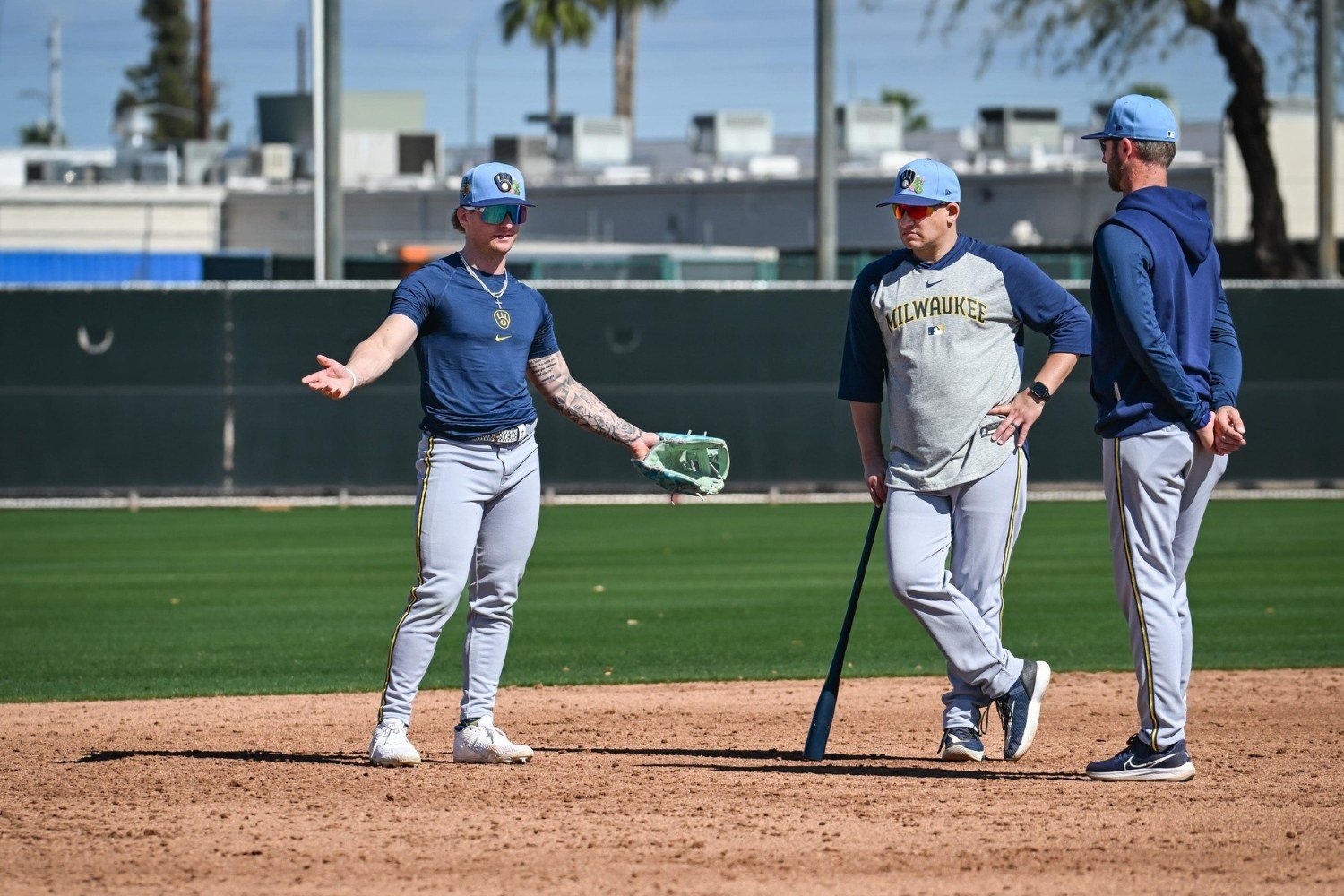 It's always good to be versatile, but most players readily admit that they have a favorite position—and a preference to play there regularly, rather than pinballing around from spot to spot throughout the season. That's one way in which Jett Williams is unusual. "I really don't know," he said with a laugh, when asked this week to name his favorite spot. "I like all of them, really. As long as I'm on the field, it doesn't really matter to me." Williams isn't one of those guys who was anchored to shortstop or center field even as a kid, and was forced to pick up other positions upon entering professional baseball. He's played multiple positions on every team since Little League, and feels that his lack of attachment to any one position makes him better at each of them. This spring, he's worked at shortstop, second base, third base, center field and left field, and said he's comfortable at all of them. Because he's least familiar with third base, that's been a particular area of focus in his daily work with Matt Erickson, but most of that extra work came early in camp. Williams said he generally works at whichever position he'll play that day, on game days, and on others, his work is spread pretty evenly. The common thread tying it together is Erickson. "I think with him, it's just picking his brain—figuring out what I can do better, figuring out what I can do to become an elite-level shortstop, second baseman, third, whatever it may be," Williams said. "It's just about good communication. I think that's the big thing: whenever you show up, just give him, whether it's 15, 20 minutes of your time, and just kind of go all-out and see how much better you can get from the start of spring to the end of it." If Williams is to overcome below-average arm strength and cut it as a big-league defender on the left side of the infield, Erickson will be due a good portion of the credit. However, when it comes to offense, the dynamic Williams is getting lots of help elsewhere. "I have my own hitting coach that I've been working with since I was eight years old," Williams said. "We talk every single day. He knows where I'm going wrong, when I'm going good, when I'm going bad, he can just tell when I'm in the box, which is nice. Growing up, I kind of fell in love with watching my swing. and obviously I know my swing even better than him, but he sees a little bit of different stuff—stuff that I don't probably think of." That coach is Aldrey Rincones, co-founder of 7AR Baseball Academy, a training facility in Fate, Texas—near Williams's hometown of Rockwall, just east of Dallas. Rincones was born in Venezuela, but immigrated to the United States as an adolescent and graduated from Rockwall High School. He and former big-league catcher Robinson Chirinos founded 7AR together in 2018, by which time Williams had been working with Rincones for half a decade. Few players can boast a more consistent coaching influence than that. Now, however, he also has another welcome voice in his ear: Cubs third baseman Alex Bregman. "Honestly, I have no idea," Williams said, when asked how that connection came to be. "I'd just gotten drafted [in 2022] and he DMed me, and then we kind of went from there. I went and worked out with him in this offseason." The two stayed loosely in touch for the next few years, but drew closer in 2025. "Last year during the season, he called me and was talking through swing stuff with me, and then I went on a two-week period where I was Player of the Week, two weeks in a row," Williams recalled. "He called me back like, 'I should be your hitting coach now.'" Williams won't be substituting the wisdom of his friend, mentor and new division rival for that of his coaches, either with the Brewers or back home. However, he believes he's already learned a lot from his time with the three-time All-Star. He found Bregman to be a great resource not only on swing mechanics, but in approach and visual cues in the batter's box, and as an exemplar for a successful offseason routine. The two spent considerable time together at Bregman's home, too, talking about subjects ranging beyond baseball. His new manager sees all of that work coming together, as Williams knocks on the door to the big leagues. "Kid's a ballplayer," Pat Murphy told reporters. "Give me the credit that I know a ballplayer when I run into one, you know what I mean?" Murphy was quick to note that Williams is only 22 years old, and acknowledged that he's likely to start the season at Triple-A Nashville. That doesn't mean he'll end it there, though. Given his versatility and dynamism, there's every reason to believe Williams will be a key piece of the team by the stretch run. The skipper has also noticed something else, which sets the diminutive Williams apart from the similarly short Caleb Durbin in a way that extends beyond his toolsier profile. "Jett expects [to succeed] more than Durbin did," Murphy said. Backed by the league's best coaching staff, a long-time partner and hitting guru, and a veteran star, Williams seems to be aiming toward something that was always likely to elude Durbin: full-fledged stardom of his own.
 -
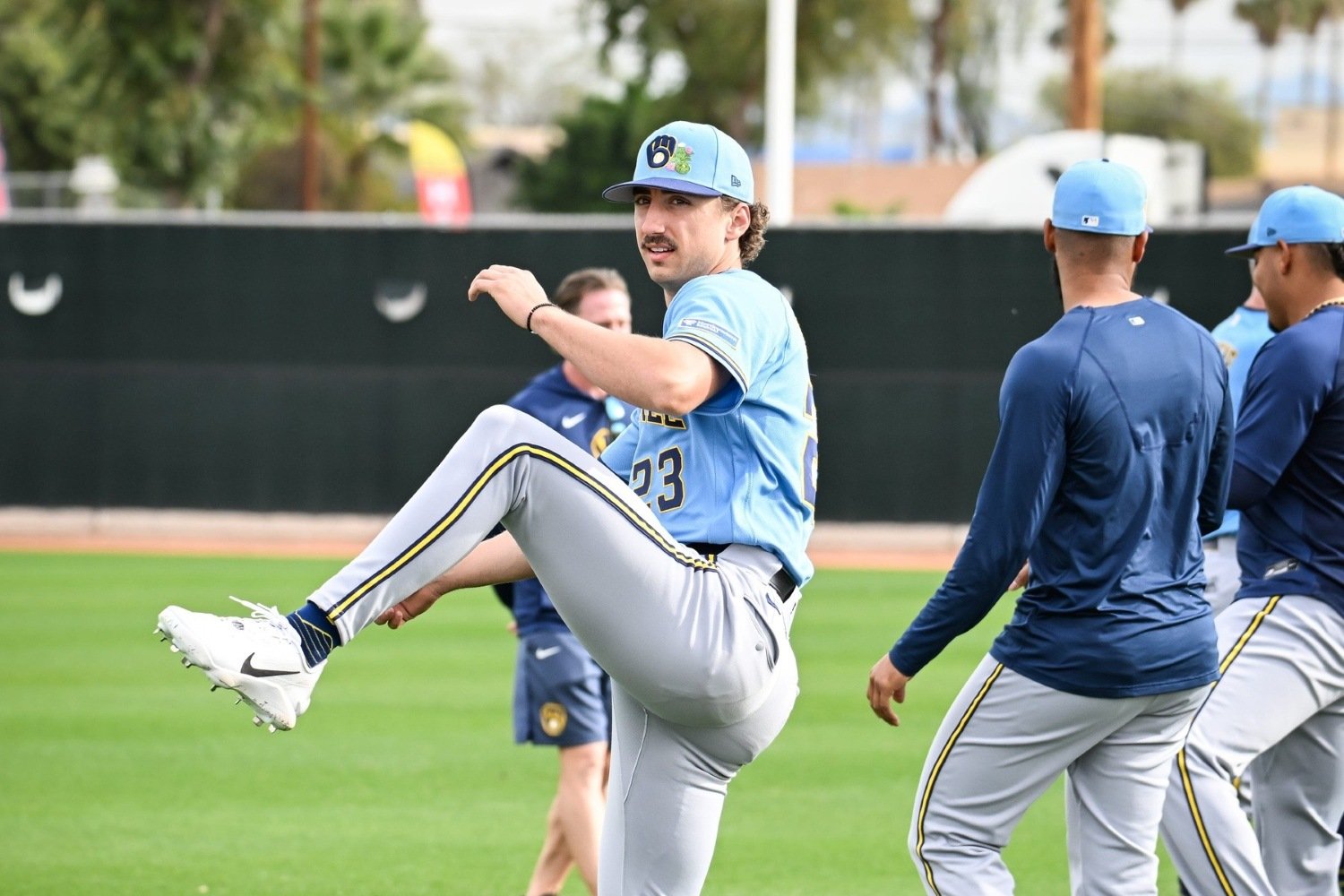 In the first inning of his first taste of Cactus League action, Brandon Sproat touched 99.8 miles per hour with his four-seamer and sat just over 98 MPH. He wasn't checking those velocity readings, though, and he declined to connect them to any kind of adrenaline rush afterward. "It's always fun to go out there and pitch," said the former Mets farmhand, acquired as part of the Freddy Peralta trade. "I mean, whether it's 10,000 fans or nobody. I mean, it's fun to to get back to it again, but yeah no, I don't peek at the velo." Whether he was feeling amped or not, the stuff he displayed in his 35-pitch appearance will have Brewers fans sufficiently excited. In addition to flirting with triple-digit heat—he'd never gotten up that high in spring training or the minors before, and did so only a handful of times in his short stint in the majors late last year—Sproat showed good feel for spin on his breaking balls, and introduced his newest weapon: a mid-90s cutter that gives him as many as seven pitches to work with. "Yeah, kind of," Sproat replied, when asked to confirm whether this was a new addition to his arsenal. "I started throwing it last year towards the end of the year. It was basically my short slider, but we kind of turned it into a cutter. It was good, but I wasn't fully convicted behind it. "Then over the offseason and coming into here this year, we've turned into a true cutter now. It's been fun to learn that pitch, and throw it. I thought I had good success with it today." Here's the movement plot of all of Sproat's pitches Friday. Here, though, some of his cutters are mistagged as four-seamers, and others as sliders. In reality, he's now working with the four-seamer, a sinker, a cutter, a sweeper, a curveball, a slider and a changeup. The sweeper and cutter are likely to obviate the slider, so he might end up a six-pitch guy again as the year rolls on, but Sproat continues to evolve—and has enjoyed enmeshing himself in an organization that encourages and facilitates that. Last season saw the first prolonged failure of Sproat's career, as he seemed to hit his head on a low ceiling in Triple A. His philosophical approach to that adversity helped him survive it. "The failures we go through, they're not always fun, but they're not necessarily failures," he said. "It's more lessons that we learn. So I was able to learn from that and kind of move on from it. After the All-Star break, things kind of turned around for the better. The fastball ticked up. It was just more of just having confidence behind it." There was another key change, too, though: the addition of a sinker. A year ago, Sproat was a four-seam specialist. By the end of last season, he'd brought in the two-seamer, to which he now adds the cutter. He noted that he moved to the first-base side of the rubber last season, to allow himself to target both sides of the plate with the sinker, and feels that that has benefited his whole arsenal because of the angles he can create and the way he can fill up the strike zone from there. With a strong second half, Sproat entered the offseason with momentum, and with a clear plan for how to capitalize thereupon. Then, late in the offseason, he was traded, which can be a nervous-making experience for a player in such a position. Did the Brewers try to install any immediate changes? "No, they're right on board with everything," Sproat said. "Everything that I had in mind to work on this offseason, it was the same thing that I've been working on here. They've been on board with it ever since I've walked in the door day one, so that has been a blessing." Although the White Sox found holes with three singles, stole a base and drew a walk en route to scoring a run during Sproat's short appearance Friday, the process made the results feel unimportant. Sproat looked, for all the world, like a mid-rotation starter with the ability to dominate when his stuff is locked in. His velocity dipped in the second frame, but he kept missing bats. He finished with three strikeouts and a pickoff. He won't immediately replace Peralta, but Sproat has the stuff and the aptitude to do so over the long term. He's been virtually attached at the hip to unlikely veteran leader (and lockermate) Aaron Ashby this spring, and it's becoming clear that the fit between player and team is pitch-perfect. "This team bets on themselves," Sproat said. "We—I don't wanna say we, I haven't really been part of the season yet—but just when watching them in the past, I see that they've bet on themselves. They find different ways to win, whether it's from pitching to hitting or even the little things like a PFP or stealing bases. It's the small things that turn into big things." Learning from failure and exploding through to the other side is one of those small things. Sproat looks like one big potential weapon for a Brewers team hoping to make another strong showing this October.
 -
Image courtesy of © Dave Kallmann / Milwaukee Journal Sentinel / USA TODAY NETWORK via Imagn Images In the first inning of his first taste of Cactus League action, Brandon Sproat touched 99.8 miles per hour with his four-seamer and sat just over 98 MPH. He wasn't checking those velocity readings, though, and he declined to connect them to any kind of adrenaline rush afterward. "It's always fun to go out there and pitch," said the former Mets farmhand, acquired as part of the Freddy Peralta trade. "I mean, whether it's 10,000 fans or nobody. I mean, it's fun to to get back to it again, but yeah no, I don't peek at the velo." Whether he was feeling amped or not, the stuff he displayed in his 35-pitch appearance will have Brewers fans sufficiently excited. In addition to flirting with triple-digit heat—he'd never gotten up that high in spring training or the minors before, and did so only a handful of times in his short stint in the majors late last year—Sproat showed good feel for spin on his breaking balls, and introduced his newest weapon: a mid-90s cutter that gives him as many as seven pitches to work with. "Yeah, kind of," Sproat replied, when asked to confirm whether this was a new addition to his arsenal. "I started throwing it last year towards the end of the year. It was basically my short slider, but we kind of turned it into a cutter. It was good, but I wasn't fully convicted behind it. "Then over the offseason and coming into here this year, we've turned into a true cutter now. It's been fun to learn that pitch, and throw it. I thought I had good success with it today." Here's the movement plot of all of Sproat's pitches Friday. Here, though, some of his cutters are mistagged as four-seamers, and others as sliders. In reality, he's now working with the four-seamer, a sinker, a cutter, a sweeper, a curveball, a slider and a changeup. The sweeper and cutter are likely to obviate the slider, so he might end up a six-pitch guy again as the year rolls on, but Sproat continues to evolve—and has enjoyed enmeshing himself in an organization that encourages and facilitates that. Last season saw the first prolonged failure of Sproat's career, as he seemed to hit his head on a low ceiling in Triple A. His philosophical approach to that adversity helped him survive it. "The failures we go through, they're not always fun, but they're not necessarily failures," he said. "It's more lessons that we learn. So I was able to learn from that and kind of move on from it. After the All-Star break, things kind of turned around for the better. The fastball ticked up. It was just more of just having confidence behind it." There was another key change, too, though: the addition of a sinker. A year ago, Sproat was a four-seam specialist. By the end of last season, he'd brought in the two-seamer, to which he now adds the cutter. He noted that he moved to the first-base side of the rubber last season, to allow himself to target both sides of the plate with the sinker, and feels that that has benefited his whole arsenal because of the angles he can create and the way he can fill up the strike zone from there. With a strong second half, Sproat entered the offseason with momentum, and with a clear plan for how to capitalize thereupon. Then, late in the offseason, he was traded, which can be a nervous-making experience for a player in such a position. Did the Brewers try to install any immediate changes? "No, they're right on board with everything," Sproat said. "Everything that I had in mind to work on this offseason, it was the same thing that I've been working on here. They've been on board with it ever since I've walked in the door day one, so that has been a blessing." Although the White Sox found holes with three singles, stole a base and drew a walk en route to scoring a run during Sproat's short appearance Friday, the process made the results feel unimportant. Sproat looked, for all the world, like a mid-rotation starter with the ability to dominate when his stuff is locked in. His velocity dipped in the second frame, but he kept missing bats. He finished with three strikeouts and a pickoff. He won't immediately replace Peralta, but Sproat has the stuff and the aptitude to do so over the long term. He's been virtually attached at the hip to unlikely veteran leader (and lockermate) Aaron Ashby this spring, and it's becoming clear that the fit between player and team is pitch-perfect. "This team bets on themselves," Sproat said. "We—I don't wanna say we, I haven't really been part of the season yet—but just when watching them in the past, I see that they've bet on themselves. They find different ways to win, whether it's from pitching to hitting or even the little things like a PFP or stealing bases. It's the small things that turn into big things." Learning from failure and exploding through to the other side is one of those small things. Sproat looks like one big potential weapon for a Brewers team hoping to make another strong showing this October. View full article
-
 The entire position-player corps departed the Brewers clubhouse in Maryvale early on Friday morning, for a meeting that lasted a full hour. It was a meeting about run production, but the team's trio of hitting coaches barely spoke. The subject wasn't hitting, manager Pat Murphy clarified. It was offense. "Offense, in my mind, is a mindset," the two-time National League Manager of the Year told reporters in his daily media session. The meeting set key expectations for the year ahead, in everything from mentality in the batter's box and hustle out of it to emotional regulation when things don't go the batter's way. Murphy led the convocation, but said several hitters weighed in and helped new players get a sense of how the team succeeds on offense. In turn, several of the new faces in the room—including Reese McGuire, David Hamilton and Luis Rengifo—offered an opposing team's viewpoint on how the Brewers operate. One of the small ways that a lineup can produce more than its component parts would lead you to expect: controlling the pace of the batter-pitcher encounter. "That's a great concept that, I mean, now you're delving into the parts of the game that I love, you know," Murphy said. "We only have so much control of the game in general, right? You can say pitchers have control. It's more apparent that they do, but how does the hitter gain control? And one of the things you're talking about, the pace, you know, and keeping it on your own pace. Now, granted, [the pitcher] has the ball. He's gonna throw it what he wants to, but the pitch clock has helped the hitters, in my mind. You know, okay, now I got this long to get it done, so I know I'm getting a pitch here. But what do I do the first few seconds to keep myself in rhythm, on pace, in control as much as I can?" That was a specialty for the Crew in 2025, when they sometimes seemed to force opponents to work at a speed that increased the likelihood of mistakes—be those grooved pitches from a rushed pitcher or errors by overwhelmed defenders. Murphy called the objective "creating chaos," and McGuire and others mentioned that feeling in the aforementioned meeting. Only Cardinals batters had a shorter average time between pitches with the bases empty than did the Brewers last season. Only the White Sox and Nationals (each of whom spent lots of their seasons playing either blowout games or meaningless contests against other teams going nowhere) had a higher percentage of their pitches categorized by Statcast as having come Fast, in terms of time elapsed since the previous pitch. Milwaukee batters pressed the issue, and it worked like a charm. There's no shortage of technical hitting instruction taking place. Two hours after the meeting broke up, the Brewers were out in the cage on the field at American Family Fields of Phoenix, with exuberantly profane new hitting coach Dan Vogelbach shouting encouragement when they achieved "the right path" and falling ominously silent when they failed to get off the swing they'd just talked about. For this team to recapture the magic it's often had over the last two years, though, it will need to do more well offensively than just prepare and hone their swings. If that wasn't already clear to them when Friday began, it is now.
 -
Image courtesy of © Dave Kallmann / USA TODAY NETWORK via Imagn Images The entire position-player corps departed the Brewers clubhouse in Maryvale early on Friday morning, for a meeting that lasted a full hour. It was a meeting about run production, but the team's trio of hitting coaches barely spoke. The subject wasn't hitting, manager Pat Murphy clarified. It was offense. "Offense, in my mind, is a mindset," the two-time National League Manager of the Year told reporters in his daily media session. The meeting set key expectations for the year ahead, in everything from mentality in the batter's box and hustle out of it to emotional regulation when things don't go the batter's way. Murphy led the convocation, but said several hitters weighed in and helped new players get a sense of how the team succeeds on offense. In turn, several of the new faces in the room—including Reese McGuire, David Hamilton and Luis Rengifo—offered an opposing team's viewpoint on how the Brewers operate. One of the small ways that a lineup can produce more than its component parts would lead you to expect: controlling the pace of the batter-pitcher encounter. "That's a great concept that, I mean, now you're delving into the parts of the game that I love, you know," Murphy said. "We only have so much control of the game in general, right? You can say pitchers have control. It's more apparent that they do, but how does the hitter gain control? And one of the things you're talking about, the pace, you know, and keeping it on your own pace. Now, granted, [the pitcher] has the ball. He's gonna throw it what he wants to, but the pitch clock has helped the hitters, in my mind. You know, okay, now I got this long to get it done, so I know I'm getting a pitch here. But what do I do the first few seconds to keep myself in rhythm, on pace, in control as much as I can?" That was a specialty for the Crew in 2025, when they sometimes seemed to force opponents to work at a speed that increased the likelihood of mistakes—be those grooved pitches from a rushed pitcher or errors by overwhelmed defenders. Murphy called the objective "creating chaos," and McGuire and others mentioned that feeling in the aforementioned meeting. Only Cardinals batters had a shorter average time between pitches with the bases empty than did the Brewers last season. Only the White Sox and Nationals (each of whom spent lots of their seasons playing either blowout games or meaningless contests against other teams going nowhere) had a higher percentage of their pitches categorized by Statcast as having come Fast, in terms of time elapsed since the previous pitch. Milwaukee batters pressed the issue, and it worked like a charm. There's no shortage of technical hitting instruction taking place. Two hours after the meeting broke up, the Brewers were out in the cage on the field at American Family Fields of Phoenix, with exuberantly profane new hitting coach Dan Vogelbach shouting encouragement when they achieved "the right path" and falling ominously silent when they failed to get off the swing they'd just talked about. For this team to recapture the magic it's often had over the last two years, though, it will need to do more well offensively than just prepare and hone their swings. If that wasn't already clear to them when Friday began, it is now. View full article
-
Image courtesy of © Joe Nicholson-Imagn Images He'll be overshadowed all season, by the likes of Trevor Megill and Abner Uribe. He won't always even fit onto the active 26-man roster; being eligible to be optioned to the minor leagues is a mixed blessing. After a 2025 season in which he finally established himself in the majors, though, Grant Anderson is feeling comfortable and ready for 2026. He became a father this winter, and earlier this week, he became a peddler of a fine South Texan delicacy. "He tried to get me to eat raccoon [Monday]," said manager Pat Murphy in a daily meeting with reporters in Maryvale, and he was serious. Anderson is from Beaumont, Texas, just east of Houston, and he still lives there during the offseason. He's relatively soft-spoken and isn't taking the big-league life for granted, but he's become more at ease in the clubhouse. "It was a good offseason," the 28-year-old right-hander said. "I think I got a good amount of time off to rest the arm, so I felt pretty prepared coming into camp." He needed a chance to recharge, after appearing in 70 games in 2025: 66 in the regular season with the big-league team, another two during a stint at Triple-A Nashville, and two in the playoffs. He'd pitched just 49 times in the majors before last year, but he won over the Brewers and became a key piece of a deep bullpen. "He was really super dependable at times. I mean, we used him in all situations," Murphy said. "That's the thing about our staff. You don't have guys that are going six and seven, everybody's got to pitch, so 13 guys of the staff, pitchers No. 11, 12, and 13 are gonna pitch in a variety of situations. He consistently kept answering the bell, so yeah, I think he's earned a lot in our minds. We'll see how he throws this spring." If that final sentence seems to threaten a negation of the rest of the paragraph, your antennae are working. Anderson was great last season. He's won the team's trust. Because they have so much depth, though—and because Anderson can still be optioned to the minors—he won't be automatically handed a roster spot when the team breaks camp next month. Last year, he had to fight hard to win that trust at all, because Murphy was acutely aware of his history as a punching bag for left-handed batters. Murphy is a staunch believer that (while it's important to play matchups) every reliever in a modern bullpen has to be able to get out batters of each handedness, and Anderson entered 2025 having been shelled to the tune of a 1.200 OPS by lefties in the majors. Last year, he held them below .700. How? Firstly, he raised his arm angle. Though famously a sidearmer, Anderson said that he came to feel he could execute his arsenal better by slightly raising his slot. In particular, that made it easier for him (with his unusual hand position, as well as the arm slot) to throw a running two-seamer, as opposed to a plunging sinker. "Yeah, that was intentional. Sometimes, the lower the arm gets, the pitch shapes can kind of change slightly. and I didn't really like the huge, you know, straight-down sinker," Anderson said. "I felt like it was maybe okay to throw it to righties, but if you ever wanted to throw it to lefties, it was just not a good pitch, not that I would throw it a ton to lefties anyways, but it was just—it [also] made the sweeper better, bringing the arm back up. That was one of the things we talked about when I got here, was making the breaking ball better, so that was part of it. The grip was the biggest part, but also kind of raising the arm back up, too." The result was, indeed, a change in movement profile, albeit a subtle one. Anderson saw slightly more run and slightly less heavy sink on the sinker. His four-seamer ran a bit less, but maintained its carry, and he and the team transformed his slider into a true sweeper, as we documented last spring. The seemingly slight change in slot was also part of a plan to allow Anderson to work more athletically down the mound, whence came his uptick in velocity. Taken together, the changes meant he was no less deceptive, but much more versatile. The heavy lifting of this particular pitching development project, therefore, is done. Anderson said his arsenal will remain relatively stable this year, and expects to cleave to the same mechanics he worked out last year. The adjustments, now, are more granular. "I think that, you know, obviously the arsenal stayed the same," he said. "It's just a matter of, you know, usage in certain counts and maybe a slight adjustment to last year, what we might have done ahead in the count or behind in the count, just to kind of prepare for the adjustment hitters might make." Changing angles opened up all of those changes to his arsenal, and indeed, most of the benefits redounded against left-handed batters. Here's an animated proxy for what righty batters saw against Anderson in 2024 and in 2025. The higher slot allowed Anderson to become one of the pitchers who throws the highest percentage of their four-seamers above the belt, and to lean on that four-seamer even against righties. Anderson said he was comfortable with the four-seamer even from the lower slot, but tended not to use it to righties until the small tweak made it possible to attack the top of the zone with the pitch. (This is one area, he acknowledged, where he and the team might do things slightly differently in 2026.) More importantly, in those matchups, the sinker was able to be confined to the inner edge, because the four-seamer worked any time he needed to go for the outer half. Against lefties, the changes are more obviously beneficial. As Anderson mentioned, changing the slot made him more comfortable throwing the sinker to lefties, which made him much less predictable. It also made disguising his changeup and sweeper easier. This was the key to the look for Anderson against lefty batters. That's a specialty of Chris Hook and Jim Henderson, whom Murphy has dubbed the "H & H Carwash" this spring, an homage to a beloved landmark from his time in the minors that also captures the systematic way the duo shines up new arms as they arrive in Milwaukee. However, as Murphy hastened to note, that doesn't always mean giving a pitcher something entirely new. "Sometimes it's something they already have, but they haven't emphasized," Murphy said. "You know, say, we're gonna throw a little more two-seamer. And here's why. They do a great job; they really do. But again, left-handers, [Anderson]'s got enough in there to make it really uncomfortable for them, too, in a different type of way. It's not the angle that’s gonna get you—or it's not the same-side angle, it's gonna be that there’s a different way the ball comes to you." That's exactly what's happened with Anderson. He's unlikely to step into any closing or high-leverage setup role, but he looks like a medium-term answer in the middle innings, capable of getting out both lefties and righties. He's as likely to make another 60 appearances this year as not, given good health, thanks to the Crew's carwash—and to his own open-minded approach to making small adjustments with big payoffs. View full article
-
How Grant Anderson Raised His Game in 2025, by Raising His Arm
Matthew Trueblood posted an article in Brewers
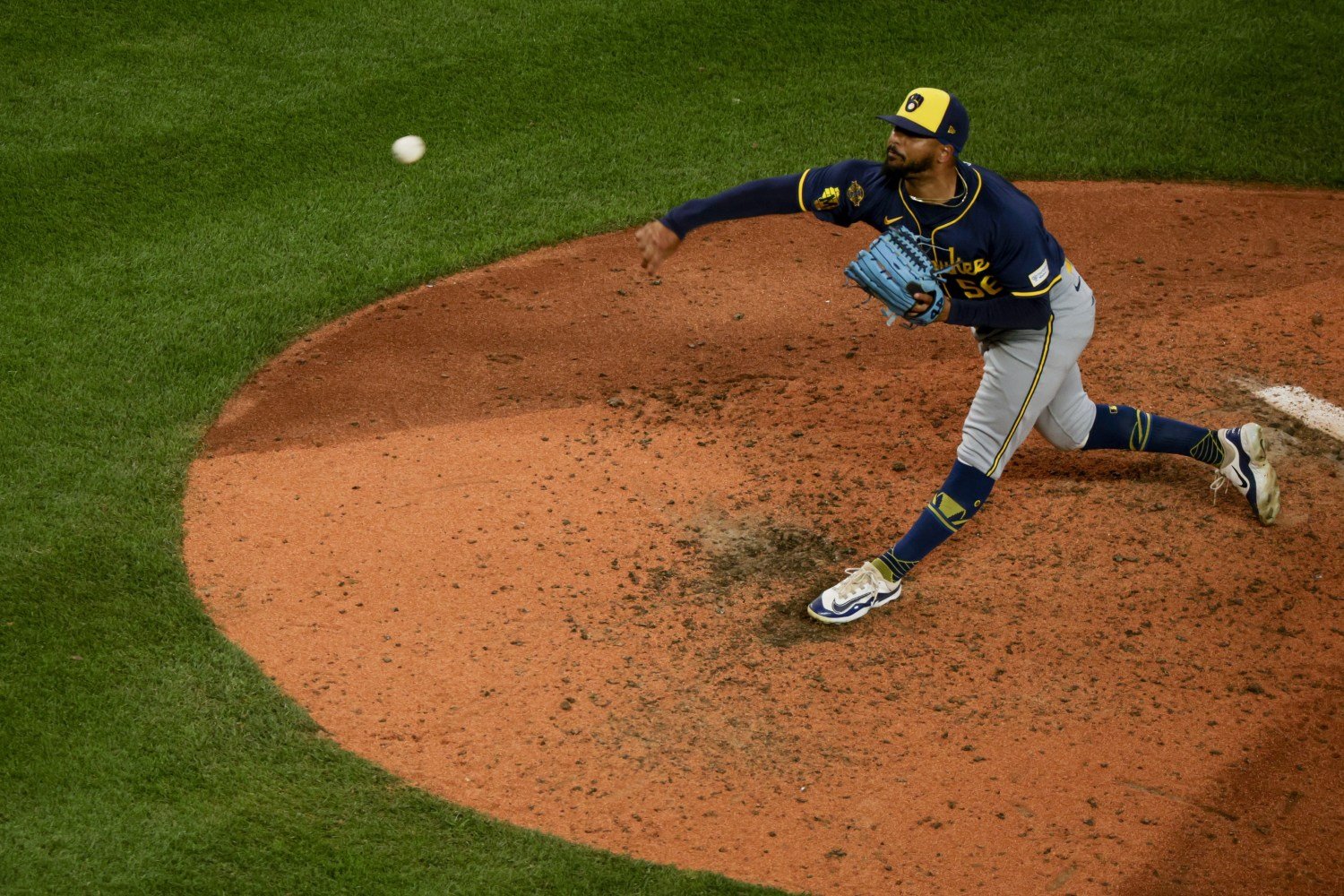 He'll be overshadowed all season, by the likes of Trevor Megill and Abner Uribe. He won't always even fit onto the active 26-man roster; being eligible to be optioned to the minor leagues is a mixed blessing. After a 2025 season in which he finally established himself in the majors, though, Grant Anderson is feeling comfortable and ready for 2026. He became a father this winter, and earlier this week, he became a peddler of a fine South Texan delicacy. "He tried to get me to eat raccoon [Monday]," said manager Pat Murphy in a daily meeting with reporters in Maryvale, and he was serious. Anderson is from Beaumont, Texas, just east of Houston, and he still lives there during the offseason. He's relatively soft-spoken and isn't taking the big-league life for granted, but he's become more at ease in the clubhouse. "It was a good offseason," the 28-year-old right-hander said. "I think I got a good amount of time off to rest the arm, so I felt pretty prepared coming into camp." He needed a chance to recharge, after appearing in 70 games in 2025: 66 in the regular season with the big-league team, another two during a stint at Triple-A Nashville, and two in the playoffs. He'd pitched just 49 times in the majors before last year, but he won over the Brewers and became a key piece of a deep bullpen. "He was really super dependable at times. I mean, we used him in all situations," Murphy said. "That's the thing about our staff. You don't have guys that are going six and seven, everybody's got to pitch, so 13 guys of the staff, pitchers No. 11, 12, and 13 are gonna pitch in a variety of situations. He consistently kept answering the bell, so yeah, I think he's earned a lot in our minds. We'll see how he throws this spring." If that final sentence seems to threaten a negation of the rest of the paragraph, your antennae are working. Anderson was great last season. He's won the team's trust. Because they have so much depth, though—and because Anderson can still be optioned to the minors—he won't be automatically handed a roster spot when the team breaks camp next month. Last year, he had to fight hard to win that trust at all, because Murphy was acutely aware of his history as a punching bag for left-handed batters. Murphy is a staunch believer that (while it's important to play matchups) every reliever in a modern bullpen has to be able to get out batters of each handedness, and Anderson entered 2025 having been shelled to the tune of a 1.200 OPS by lefties in the majors. Last year, he held them below .700. How? Firstly, he raised his arm angle. Though famously a sidearmer, Anderson said that he came to feel he could execute his arsenal better by slightly raising his slot. In particular, that made it easier for him (with his unusual hand position, as well as the arm slot) to throw a running two-seamer, as opposed to a plunging sinker. "Yeah, that was intentional. Sometimes, the lower the arm gets, the pitch shapes can kind of change slightly. and I didn't really like the huge, you know, straight-down sinker," Anderson said. "I felt like it was maybe okay to throw it to righties, but if you ever wanted to throw it to lefties, it was just not a good pitch, not that I would throw it a ton to lefties anyways, but it was just—it [also] made the sweeper better, bringing the arm back up. That was one of the things we talked about when I got here, was making the breaking ball better, so that was part of it. The grip was the biggest part, but also kind of raising the arm back up, too." The result was, indeed, a change in movement profile, albeit a subtle one. Anderson saw slightly more run and slightly less heavy sink on the sinker. His four-seamer ran a bit less, but maintained its carry, and he and the team transformed his slider into a true sweeper, as we documented last spring. The seemingly slight change in slot was also part of a plan to allow Anderson to work more athletically down the mound, whence came his uptick in velocity. Taken together, the changes meant he was no less deceptive, but much more versatile. The heavy lifting of this particular pitching development project, therefore, is done. Anderson said his arsenal will remain relatively stable this year, and expects to cleave to the same mechanics he worked out last year. The adjustments, now, are more granular. "I think that, you know, obviously the arsenal stayed the same," he said. "It's just a matter of, you know, usage in certain counts and maybe a slight adjustment to last year, what we might have done ahead in the count or behind in the count, just to kind of prepare for the adjustment hitters might make." Changing angles opened up all of those changes to his arsenal, and indeed, most of the benefits redounded against left-handed batters. Here's an animated proxy for what righty batters saw against Anderson in 2024 and in 2025. The higher slot allowed Anderson to become one of the pitchers who throws the highest percentage of their four-seamers above the belt, and to lean on that four-seamer even against righties. Anderson said he was comfortable with the four-seamer even from the lower slot, but tended not to use it to righties until the small tweak made it possible to attack the top of the zone with the pitch. (This is one area, he acknowledged, where he and the team might do things slightly differently in 2026.) More importantly, in those matchups, the sinker was able to be confined to the inner edge, because the four-seamer worked any time he needed to go for the outer half. Against lefties, the changes are more obviously beneficial. As Anderson mentioned, changing the slot made him more comfortable throwing the sinker to lefties, which made him much less predictable. It also made disguising his changeup and sweeper easier. This was the key to the look for Anderson against lefty batters. That's a specialty of Chris Hook and Jim Henderson, whom Murphy has dubbed the "H & H Carwash" this spring, an homage to a beloved landmark from his time in the minors that also captures the systematic way the duo shines up new arms as they arrive in Milwaukee. However, as Murphy hastened to note, that doesn't always mean giving a pitcher something entirely new. "Sometimes it's something they already have, but they haven't emphasized," Murphy said. "You know, say, we're gonna throw a little more two-seamer. And here's why. They do a great job; they really do. But again, left-handers, [Anderson]'s got enough in there to make it really uncomfortable for them, too, in a different type of way. It's not the angle that’s gonna get you—or it's not the same-side angle, it's gonna be that there’s a different way the ball comes to you." That's exactly what's happened with Anderson. He's unlikely to step into any closing or high-leverage setup role, but he looks like a medium-term answer in the middle innings, capable of getting out both lefties and righties. He's as likely to make another 60 appearances this year as not, given good health, thanks to the Crew's carwash—and to his own open-minded approach to making small adjustments with big payoffs.
.png.46b63fb18c5dbd09483d2d3da05c9135.png)

