


Matthew Trueblood
-
Posts
1,964 -
Joined
-
Last visited
-
Days Won
10
Content Type
Profiles
Forums
Blogs
Events
News
2026 Milwaukee Brewers Top Prospects Ranking
Milwaukee Brewers Videos
2022 Milwaukee Brewers Draft Picks
Milwaukee Brewers Free Agent & Trade Rumors, Notes, & Tidbits
Guides & Resources
2023 Milwaukee Brewers Draft Picks
2024 Milwaukee Brewers Draft Picks
The Milwaukee Brewers Players Project
2025 Milwaukee Brewers Draft Pick Tracker
2026 Milwaukee Brewers Draft Tracker: Picks & Bonuses
Store
Downloads
Gallery
Everything posted by Matthew Trueblood
-
The Milwaukee Brewers won a Memorial Day pitchers' duel and tightened their hold on first place in the NL Central. In the process, their southpaw starter demonstrated his path to stardom--which looks a whole lot like that of the hurler with whom he was matched up. Image courtesy of © Mark Hoffman/Milwaukee Journal Sentinel / USA TODAY NETWORK Of the 186 pitchers who have faced at least 60 batters as a starter this year, only two have thrown a higher percentage of their pitches on the inner third of the plate (or off the plate inside) than the Brewers' Robert Gasser, who owns a dazzling stat line (1.96 ERA, no home runs, 13 strikeouts and just one walk in 23 innings pitched) over his first four career outings. Gasser has dominated opponents (even if he hasn't yet missed many bats) by pounding them inside, and it's no coincidence that he and the other six pitchers who top the leaderboard in working inside are all lefties. A lefty starter has to be able to live inside. Gasser does. So, too, does Gasser's opposite number Monday afternoon, the Cubs' Justin Steele. Chicago's ace wrestled Gasser to a draw, even though the Crew went on to win in fairly convincing fashion, and while it was the first time he put together a full start that looked so good this year, Steele was only continuing the brilliance he demonstrated throughout much of 2022 and 2023. In 60 starts since the start of 2022, Steele has pitched 325 innings and posted a 3.24 ERA. He finished fifth in Cy Young Award voting last season and made the All-Star team, all with a cutter-slider mix that comes up far short of overpowering opposing batters. Gasser throws a tick harder than Steele, but only when absolutely reaching back to empty the tank can he even scrape 95 miles per hour. His pitch mix is different from Steele's: it's deeper but a bit more conventional. Like Steele, he also adds some deception to the formula, in his case by using a low and inscrutable release point that makes his fastball look a bit flatter and livelier than it actually is. Most importantly, like Steele (who is right behind him on the list referred to above), Gasser attacks hitters inside, and he fills up the strike zone. Nobody does it quite like these two, and that's why they each have more success than you'd guess by looking solely at their raw stuff. Stuffing the zone is still exceptionally valuable, even in the era of dangerous power hitters stuffing every lineup card. Gasser has come to the majors and gone right after the best hitters in the world, with a fearlessness and a deftness few other pitchers can muster. Getting to compare and contrast him with Steele for an afternoon was a revelatory treat. Like Steele, Gasser just has an unusual comfort when it comes to working across the plate and locating everything he throws to the glove side. Steele, of course, has that cutting fastball that naturally steers its way there, but Gasser's four-seamer and sinker have much more run than that. He also utilizes a changeup, with plenty of run of its own. He's special because, despite that movement profile, he can hit his spots to the glove side, against both lefties and righties. Here's a chart drawn from Baseball Savant, showing the pitch types and locations he utilizes against right-handed batters. Here's the same chart for him against lefties. Eventually, he might run into a rough patch, if and when he goes through a stretch of batting his mechanics and being unable to locate the ball as finely on the glove side. So far, he hasn't shown the facility he'll eventually need when attacking the arm side of the plate, and as hitters adjust, they might force him to use more of the zone. For now, though, he's dominating opposing batters, by going right after them with confidence and unique precision. It's not entirely unreasonable (though perhaps a bit optimistic) to hope that Gasser will soon be in the down-ballot vote-getter category when it comes to the Cy Young. He's different from Steele, but the confidence of his approach and the flawlessness of his execution make them comparable. Unlike Steele, his health track record is pretty good, and he piled up a lot of innings last season in the minor leagues. Even on a team with aspirations that stretch into October, Gasser could be a credible number-two starter--perhaps the only thing the Brewers were theoretically missing, until now. View full article
-
Monday Was a Great Glimpse of How Robert Gasser Can Be a Star
Matthew Trueblood posted an article in Brewers
 Of the 186 pitchers who have faced at least 60 batters as a starter this year, only two have thrown a higher percentage of their pitches on the inner third of the plate (or off the plate inside) than the Brewers' Robert Gasser, who owns a dazzling stat line (1.96 ERA, no home runs, 13 strikeouts and just one walk in 23 innings pitched) over his first four career outings. Gasser has dominated opponents (even if he hasn't yet missed many bats) by pounding them inside, and it's no coincidence that he and the other six pitchers who top the leaderboard in working inside are all lefties. A lefty starter has to be able to live inside. Gasser does. So, too, does Gasser's opposite number Monday afternoon, the Cubs' Justin Steele. Chicago's ace wrestled Gasser to a draw, even though the Crew went on to win in fairly convincing fashion, and while it was the first time he put together a full start that looked so good this year, Steele was only continuing the brilliance he demonstrated throughout much of 2022 and 2023. In 60 starts since the start of 2022, Steele has pitched 325 innings and posted a 3.24 ERA. He finished fifth in Cy Young Award voting last season and made the All-Star team, all with a cutter-slider mix that comes up far short of overpowering opposing batters. Gasser throws a tick harder than Steele, but only when absolutely reaching back to empty the tank can he even scrape 95 miles per hour. His pitch mix is different from Steele's: it's deeper but a bit more conventional. Like Steele, he also adds some deception to the formula, in his case by using a low and inscrutable release point that makes his fastball look a bit flatter and livelier than it actually is. Most importantly, like Steele (who is right behind him on the list referred to above), Gasser attacks hitters inside, and he fills up the strike zone. Nobody does it quite like these two, and that's why they each have more success than you'd guess by looking solely at their raw stuff. Stuffing the zone is still exceptionally valuable, even in the era of dangerous power hitters stuffing every lineup card. Gasser has come to the majors and gone right after the best hitters in the world, with a fearlessness and a deftness few other pitchers can muster. Getting to compare and contrast him with Steele for an afternoon was a revelatory treat. Like Steele, Gasser just has an unusual comfort when it comes to working across the plate and locating everything he throws to the glove side. Steele, of course, has that cutting fastball that naturally steers its way there, but Gasser's four-seamer and sinker have much more run than that. He also utilizes a changeup, with plenty of run of its own. He's special because, despite that movement profile, he can hit his spots to the glove side, against both lefties and righties. Here's a chart drawn from Baseball Savant, showing the pitch types and locations he utilizes against right-handed batters. Here's the same chart for him against lefties. Eventually, he might run into a rough patch, if and when he goes through a stretch of batting his mechanics and being unable to locate the ball as finely on the glove side. So far, he hasn't shown the facility he'll eventually need when attacking the arm side of the plate, and as hitters adjust, they might force him to use more of the zone. For now, though, he's dominating opposing batters, by going right after them with confidence and unique precision. It's not entirely unreasonable (though perhaps a bit optimistic) to hope that Gasser will soon be in the down-ballot vote-getter category when it comes to the Cy Young. He's different from Steele, but the confidence of his approach and the flawlessness of his execution make them comparable. Unlike Steele, his health track record is pretty good, and he piled up a lot of innings last season in the minor leagues. Even on a team with aspirations that stretch into October, Gasser could be a credible number-two starter--perhaps the only thing the Brewers were theoretically missing, until now.
 -
In the top of the seventh inning of their Memorial Day tilt with the Chicago Cubs, the Milwaukee Brewers were in a little bit of trouble. They turned to their newest, funkiest relief ace, and he turned to the neat little trick this team uses better than anyone else in baseball. Image courtesy of © Benny Sieu-USA TODAY Sports Only three other teams in baseball throw sweepers to opposite-handed batters with the same frequency as the Brewers. By both conventional wisdom and every available macro-level adjustment, the sweeper (which relies primarily on horizontal movement, taking it toward an opposite-handed batter and away from a same-handed one) is a pitch vulnerable to bad platoon matchups, so most teams and pitchers who use that pitch try to come up with an alternative on which to lean when the hitter has the platoon advantage. In fact, only 10 teams have thrown at least 200 sweepers to opposite-handed batters this year. The Brewers are coming up on 400. That's not the only regard in which they're unusual when it comes to the sweeper, though. The Brewers don't just use that pitch more than most clubs against opposite-handed hitters; they also use it differently. For many pitchers, if the sweeper is going to work while breaking toward a hitter, it needs to have two-plane movement and dive at their back foot, like an old-fashioned Randy Johnson offering. The Brewers take a different tack altogether. Even for the other nine teams who use the sweeper (for instance) with lefties facing a righty batter, the pitch is either a chase pitch low and in, or one meant to go from ball to strike and freeze them over the heart of the plate, like a traditional curveball. Since a lot of pitchers' sweepers are newish, modified versions of previous breaking balls, it's something the hurlers can intuit and feel out well. The Brewers are either more intentional about their approach, or just plain better at it. In either case, what they do is what's hinted at by the chart above: they try to dot backdoor sweepers, low and away. It works, too. They have 16 called strikes on sweepers in the lower and outer third of the zone to opposite-handed batters this year, the most in MLB. They don't often come in unimportant situations, either. On Monday, Bryan Hudson threw one to Dansby Swanson, locking up the Cubs' highly-paid shortstop and killing a menacing rally with perfect execution of a fiendish gameplan. That was the first time Hudson jumped aboard, but this train has been in motion all year. Hoby Milner and Colin Rea talk openly about their love of pinpointing the backdoor sweeper, and Robert Gasser has come up and shown an immediate facility with that tricky version of the pitch. (More on Gasser another time, soon, in this and a related but distinct vein.) None of the above have exceptional velocity, so they have to be able to hit specific and sometimes difficult spots like these. Many pitchers never find the confidence to try such pitches in big situations, let alone the feel to do successfully. As ever, though, the pitchers under the charge of Chris Hook are the exception to the rule. Milner is the foremost artisan of the craft on the staff. The pitch seems to taunt the hitter on its way to them, clearly too far away to be reachable or hittable--and then it nestles right in at the corner for the strike. Milner to Bell.mp4 Again, it's not normal to deftly command this pitch. As a general rule, pitchers control pitches better when throwing them to the side of the plate toward which they naturally move, anyway. That's why, for instance, few pitchers try to emulate the extraordinary success enjoyed by Corey Kluber, whose best years included a great many "front-hip" sinkers--a sinker thrown to the glove side of the plate with pinpoint accuracy, sneaking back onto the corner by moving to his arm side. Many just can't do it. This Crew can. Milner also froze Christopher Morel on a backdoor sweeper for a strikeout in the ninth inning Monday. There's a bonus value to that pitch against any struggling hitter, which is that it breaks them a little bit. Any successful backdoor breaking ball becomes a highly frustrating pitch for a batter, and if that batter was already frustrated to some extent, the effect is magnified. Creating very steep horizontal release angles has been a common point of emphasis for many recent Brewers pitching reclamation projects, like Hudson, Milner, and Bryse Wilson. That might not be a coincidence. Doing so means starting so far wide of the center of the rubber that you're well wide, even, of the arm-side edge of home plate. Perhaps that makes it much easier for the hurler to attack the arm side with stuff that moves toward their glove side--without making it any easier or more comfortable for the hitter trying to pick up that pattern. You won't find the Brewers atop the league leaderboards in whiffs, even on their sweepers and other breaking balls, partially because many of them don't throw very hard. They have to get called strikes in bunches to get outs in bunches, and that means some creative gameplanning and sterling execution. So far, that's exactly what we've seen from them, and their expertise with the backdoor sweeper is one perfect example. View full article
-
- 1
-

-
- bryan hudson
- colin rea
- (and 2 more)
-
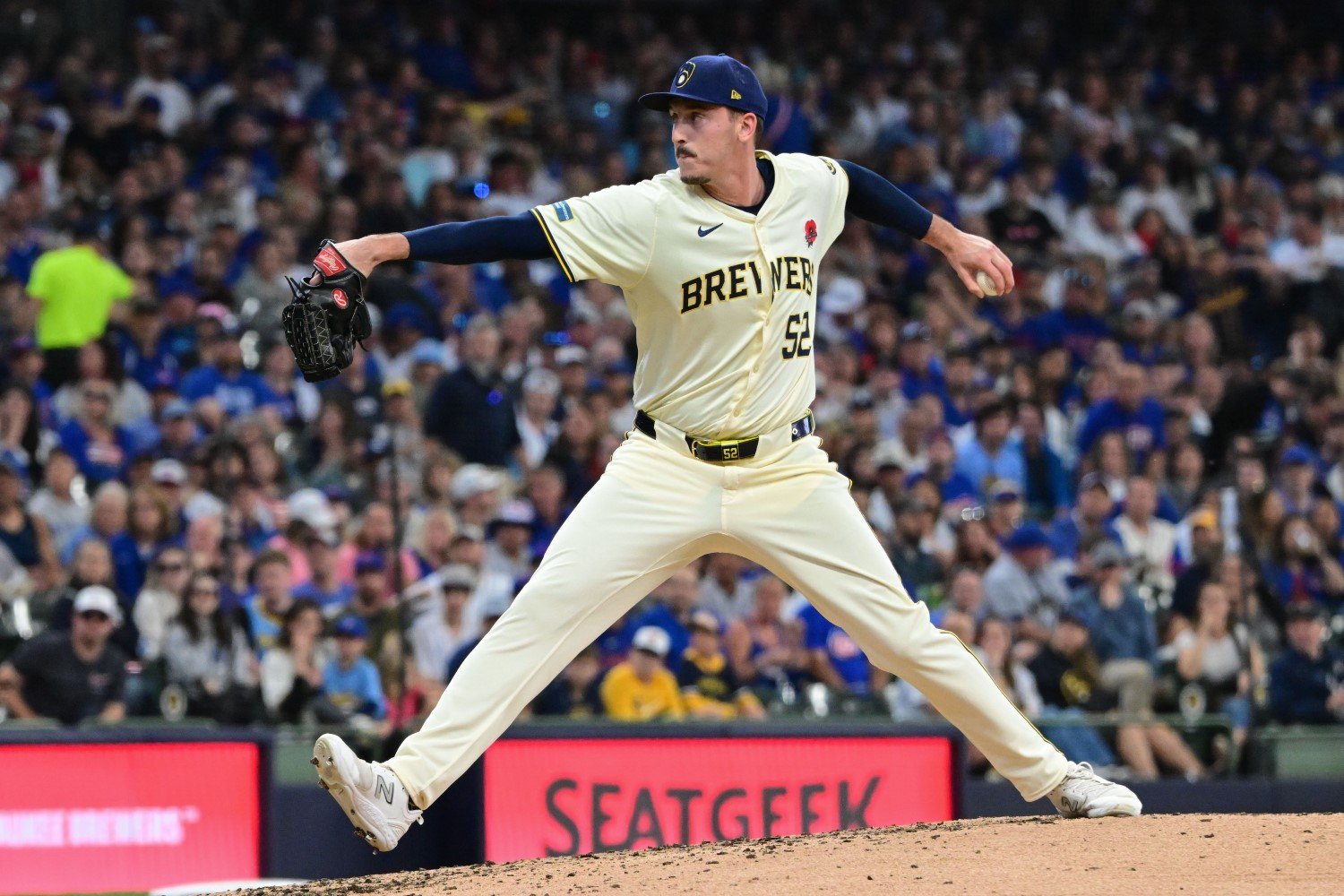 Only three other teams in baseball throw sweepers to opposite-handed batters with the same frequency as the Brewers. By both conventional wisdom and every available macro-level adjustment, the sweeper (which relies primarily on horizontal movement, taking it toward an opposite-handed batter and away from a same-handed one) is a pitch vulnerable to bad platoon matchups, so most teams and pitchers who use that pitch try to come up with an alternative on which to lean when the hitter has the platoon advantage. In fact, only 10 teams have thrown at least 200 sweepers to opposite-handed batters this year. The Brewers are coming up on 400. That's not the only regard in which they're unusual when it comes to the sweeper, though. The Brewers don't just use that pitch more than most clubs against opposite-handed hitters; they also use it differently. For many pitchers, if the sweeper is going to work while breaking toward a hitter, it needs to have two-plane movement and dive at their back foot, like an old-fashioned Randy Johnson offering. The Brewers take a different tack altogether. Even for the other nine teams who use the sweeper (for instance) with lefties facing a righty batter, the pitch is either a chase pitch low and in, or one meant to go from ball to strike and freeze them over the heart of the plate, like a traditional curveball. Since a lot of pitchers' sweepers are newish, modified versions of previous breaking balls, it's something the hurlers can intuit and feel out well. The Brewers are either more intentional about their approach, or just plain better at it. In either case, what they do is what's hinted at by the chart above: they try to dot backdoor sweepers, low and away. It works, too. They have 16 called strikes on sweepers in the lower and outer third of the zone to opposite-handed batters this year, the most in MLB. They don't often come in unimportant situations, either. On Monday, Bryan Hudson threw one to Dansby Swanson, locking up the Cubs' highly-paid shortstop and killing a menacing rally with perfect execution of a fiendish gameplan. That was the first time Hudson jumped aboard, but this train has been in motion all year. Hoby Milner and Colin Rea talk openly about their love of pinpointing the backdoor sweeper, and Robert Gasser has come up and shown an immediate facility with that tricky version of the pitch. (More on Gasser another time, soon, in this and a related but distinct vein.) None of the above have exceptional velocity, so they have to be able to hit specific and sometimes difficult spots like these. Many pitchers never find the confidence to try such pitches in big situations, let alone the feel to do successfully. As ever, though, the pitchers under the charge of Chris Hook are the exception to the rule. Milner is the foremost artisan of the craft on the staff. The pitch seems to taunt the hitter on its way to them, clearly too far away to be reachable or hittable--and then it nestles right in at the corner for the strike. Milner to Bell.mp4 Again, it's not normal to deftly command this pitch. As a general rule, pitchers control pitches better when throwing them to the side of the plate toward which they naturally move, anyway. That's why, for instance, few pitchers try to emulate the extraordinary success enjoyed by Corey Kluber, whose best years included a great many "front-hip" sinkers--a sinker thrown to the glove side of the plate with pinpoint accuracy, sneaking back onto the corner by moving to his arm side. Many just can't do it. This Crew can. Milner also froze Christopher Morel on a backdoor sweeper for a strikeout in the ninth inning Monday. There's a bonus value to that pitch against any struggling hitter, which is that it breaks them a little bit. Any successful backdoor breaking ball becomes a highly frustrating pitch for a batter, and if that batter was already frustrated to some extent, the effect is magnified. Creating very steep horizontal release angles has been a common point of emphasis for many recent Brewers pitching reclamation projects, like Hudson, Milner, and Bryse Wilson. That might not be a coincidence. Doing so means starting so far wide of the center of the rubber that you're well wide, even, of the arm-side edge of home plate. Perhaps that makes it much easier for the hurler to attack the arm side with stuff that moves toward their glove side--without making it any easier or more comfortable for the hitter trying to pick up that pattern. You won't find the Brewers atop the league leaderboards in whiffs, even on their sweepers and other breaking balls, partially because many of them don't throw very hard. They have to get called strikes in bunches to get outs in bunches, and that means some creative gameplanning and sterling execution. So far, that's exactly what we've seen from them, and their expertise with the backdoor sweeper is one perfect example.
-
- 2
-
-
- bryan hudson
- colin rea
- (and 2 more)
-
Jared Koenig is an Insanely Valuable Luxury for the Brewers Bullpen
Matthew Trueblood posted an article in Brewers
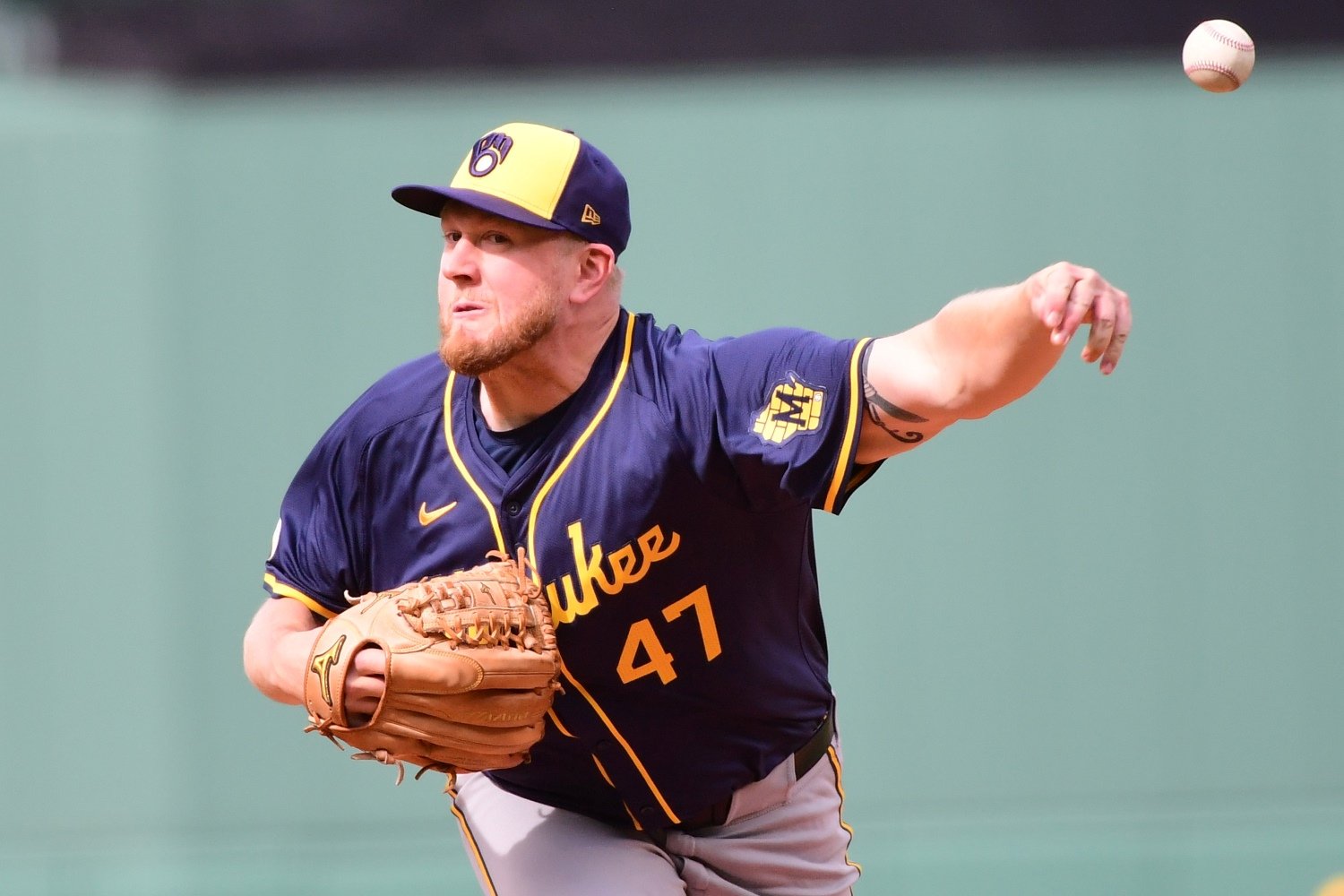 That Jared Koenig even made it back to MLB this year with the Brewers is a great story. That he's now established himself with solid performances, such that (while he remains one of the optionable arms who can occasionally be shuttled to Nashville to keep the bullpen fresh) he's a familiar and valued part of the team's relief corps is even more fun. This weekend, however, we got a reminder of just how valuable a find he was for the team's front office and pitching development group. With a trio of dangerous lefties often batting in the top half of the Red Sox lineup, Pat Murphy decided to deploy Koenig as the opener on back-to-back days, leading into long bulk outings by Bryse Wilson and Colin Rea. That choice wasn't even a dilemma for the Brewers skipper, because Koenig is icing on the bullpen cake. With Hoby Milner and Bryan Hudson out there, too, the Brewrrs could start the game by turning to the southpaw Koenig knowing they still had two great options for later in the game, when the same hitters could come up in a big spot. A bullpen with three trusted lefties who can get both right- and left-handed batters out (but who are especially tough on the latter) is a manager's dream, but calling it that makes it sound too attainable--too real. Hudson, Koenig and Milner are each on pace for over 60 innings pitched, and the worst ERA+ (ERA adjusted for league and park factors, where 100 is average and higher is better) in the group is Koenig's 168. Never, in baseball history, has one pen contained three lefties with at least 60 innings pitched and an ERA+ over 130. Here are the only times that a team has even had three guys top 50 innings and a 120 ERA+. Rk Team Season Count Player List 1 TOR 2008 4 Jesse Carlson, Scott Downs, B.J. Ryan, Brian Tallet 2 BAL 1996 3 Randy Myers, Jesse Orosco, Arthur Rhodes 3 BAL 1997 3 Randy Myers, Jesse Orosco, Arthur Rhodes 4 PIT 1998 3 Jason Christiansen, Ricardo Rincón, Jeff Tabaka 5 NYM 2006 3 Pedro Feliciano, Darren Oliver, Billy Wagner 6 NYY 2015 3 Andrew Miller, Chasen Shreve, Justin Wilson 7 SFG 2021 3 José Álvarez, Jarlín García, Jake McGee Provided by Stathead.com: Found with Stathead. See Full Results. Generated 5/26/2024. Having Koenig around amplifies the value of both Milner and Hudson, because for as long as all three are pitching effectively, Murphy can use them all more aggressively. He's been able to slide Hudson into a fairly traditional setup role, with Milner as the fireman and lefty specialist, but he's also been able to break away from those roles and use each pitcher more creatively. Koenig's starts this weekend are a great example. Because each of the others exists, Murphy can use any of them whenever he feels they'll increase the chances of a win, without risking burning them out. If one pitches on a given day, they can be down the next day, if needed. The others can cover for them. Hudson, who has emerged as a co-relief ace for the team, has only made two appearances on zero days' rest this year--both times for a single batter, and both times in the first half of April. Koenig has made it possible for Murphy to use Hudson more cautiously, which has helped Hudson remain both healthy and devastatingly effective to this point. Match these three with Trevor Megill, Elvis Peguero, and Joel Payamps from the right side, and the Brewers have the deepest primary relief corps in the league, for (arguably) the seventh straight season. No one should get more credit for Koenig's success than Koenig; he worked incredibly hard and stuck with the game through a lot of rejection to reach this point. However, the Milwaukee front office also deserves a huge helping of praise, for consistently finding players like these six and turning them into superb relievers. None of them are homegrown, but since all were acquired either as throw-ins, amid other teams' roster crunches, or on minor-league deals, it really doesn't matter. They each cost less than a mid-round draft pick often does. Now, they're forming a bullpen cohort strong enough to help the team open up a more comfortable lead in the NL Central, and it includes a trio of lefties who could be as good as any such collection in baseball history.
- 1 comment
-
- 4
-
-
- jared koenig
- hoby milner
- (and 1 more)
-
The Milwaukee Brewers have already claimed the series victory in Boston this weekend, with an unexpected pitcher as the catalyst in their winning formula. It's a good microcosm of the season as a whole. Image courtesy of © Bob DeChiara-USA TODAY Sports That Jared Koenig even made it back to MLB this year with the Brewers is a great story. That he's now established himself with solid performances, such that (while he remains one of the optionable arms who can occasionally be shuttled to Nashville to keep the bullpen fresh) he's a familiar and valued part of the team's relief corps is even more fun. This weekend, however, we got a reminder of just how valuable a find he was for the team's front office and pitching development group. With a trio of dangerous lefties often batting in the top half of the Red Sox lineup, Pat Murphy decided to deploy Koenig as the opener on back-to-back days, leading into long bulk outings by Bryse Wilson and Colin Rea. That choice wasn't even a dilemma for the Brewers skipper, because Koenig is icing on the bullpen cake. With Hoby Milner and Bryan Hudson out there, too, the Brewrrs could start the game by turning to the southpaw Koenig knowing they still had two great options for later in the game, when the same hitters could come up in a big spot. A bullpen with three trusted lefties who can get both right- and left-handed batters out (but who are especially tough on the latter) is a manager's dream, but calling it that makes it sound too attainable--too real. Hudson, Koenig and Milner are each on pace for over 60 innings pitched, and the worst ERA+ (ERA adjusted for league and park factors, where 100 is average and higher is better) in the group is Koenig's 168. Never, in baseball history, has one pen contained three lefties with at least 60 innings pitched and an ERA+ over 130. Here are the only times that a team has even had three guys top 50 innings and a 120 ERA+. Rk Team Season Count Player List 1 TOR 2008 4 Jesse Carlson, Scott Downs, B.J. Ryan, Brian Tallet 2 BAL 1996 3 Randy Myers, Jesse Orosco, Arthur Rhodes 3 BAL 1997 3 Randy Myers, Jesse Orosco, Arthur Rhodes 4 PIT 1998 3 Jason Christiansen, Ricardo Rincón, Jeff Tabaka 5 NYM 2006 3 Pedro Feliciano, Darren Oliver, Billy Wagner 6 NYY 2015 3 Andrew Miller, Chasen Shreve, Justin Wilson 7 SFG 2021 3 José Álvarez, Jarlín García, Jake McGee Provided by Stathead.com: Found with Stathead. See Full Results. Generated 5/26/2024. Having Koenig around amplifies the value of both Milner and Hudson, because for as long as all three are pitching effectively, Murphy can use them all more aggressively. He's been able to slide Hudson into a fairly traditional setup role, with Milner as the fireman and lefty specialist, but he's also been able to break away from those roles and use each pitcher more creatively. Koenig's starts this weekend are a great example. Because each of the others exists, Murphy can use any of them whenever he feels they'll increase the chances of a win, without risking burning them out. If one pitches on a given day, they can be down the next day, if needed. The others can cover for them. Hudson, who has emerged as a co-relief ace for the team, has only made two appearances on zero days' rest this year--both times for a single batter, and both times in the first half of April. Koenig has made it possible for Murphy to use Hudson more cautiously, which has helped Hudson remain both healthy and devastatingly effective to this point. Match these three with Trevor Megill, Elvis Peguero, and Joel Payamps from the right side, and the Brewers have the deepest primary relief corps in the league, for (arguably) the seventh straight season. No one should get more credit for Koenig's success than Koenig; he worked incredibly hard and stuck with the game through a lot of rejection to reach this point. However, the Milwaukee front office also deserves a huge helping of praise, for consistently finding players like these six and turning them into superb relievers. None of them are homegrown, but since all were acquired either as throw-ins, amid other teams' roster crunches, or on minor-league deals, it really doesn't matter. They each cost less than a mid-round draft pick often does. Now, they're forming a bullpen cohort strong enough to help the team open up a more comfortable lead in the NL Central, and it includes a trio of lefties who could be as good as any such collection in baseball history. View full article
-
An Update on William Contreras's Pitch Framing in 2024
Matthew Trueblood posted an article in Brewers
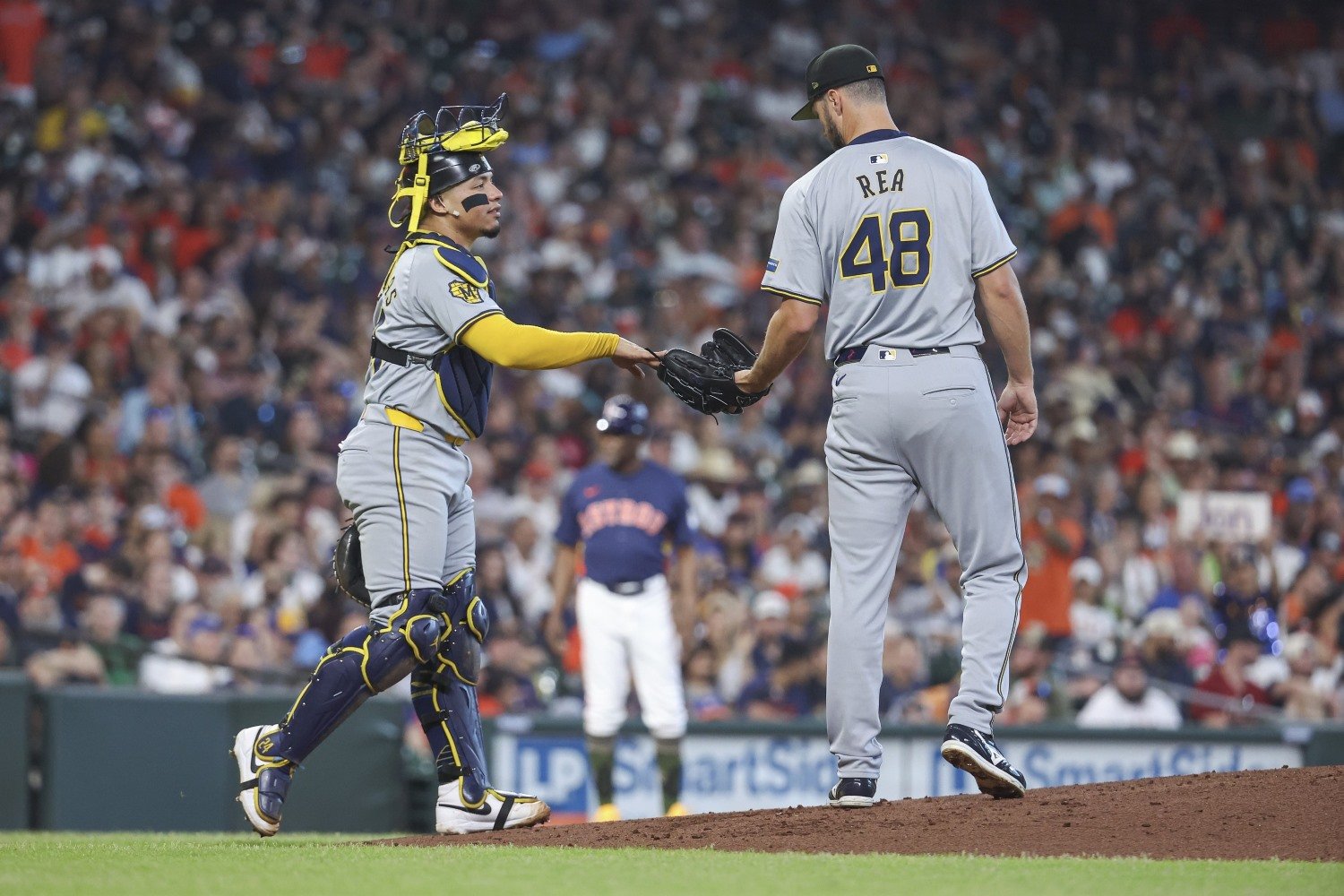 We could try to ascribe William Contreras's struggles with pitch framing in 2024 to the remarkably heavy workload he's born so far this season, but alas, we checked in early in the season, and he was already showing this skill erosion. He's never broken out of that pattern. Last year, Contreras came from Atlanta, worked under the expert tutelage of the Brewers' catching instructors, and became an excellent framer. Unfortunately, the improvement doesn't seem to have stuck. To break this down and ensure that we're looking at what really matters, let's start by eliminating some of the unhelpful data. I looked up Contreras's (and other catchers') framing data on four-seam fastballs, sinkers, curveballs and slurves only. Why? Because framing should not really be part of the goal when a catcher calls a slider, a sweeper, a changeup, a splitter, or (surprisingly, to me) a cutter. Those pitches (the cutter excepted) are meant to generate chases when they're outside the zone. They're not geared toward getting called strikes; they're thrown in pursuit of whiffs or weak contact. League-level data affirms this, too, and in reviewing that data, I was convinced to lump the cutter in with them, because that pitch induces swings both inside and outside the strike zone and is thrown with a similar distribution of called-strike probabilities to the rest of this suite of chase pitches. So, let's talk solely about how Contreras frames the framing-forward pitch types. So far this year, 66 catchers qualify for TruMedia's leaderboard in catching metrics, having caught at least 648 plate appearances or at least four PAs per team game. Among them, Contreras ranks 57th in framing runs above average. Last year, he was 4.1 runs better than average at framing those pitch types. In less than two months of 2024 action, he's been 2.8 runs worse than the average backstop on them. He's leaking value everywhere. One problem has been an inability to set a good outside edge against right-handed batters. In some cases, it's as simple as the way he sets up. Here, he's too far outside, giving the umpire lots of space to see the ball moving away and not looking believable, based on body position. William Loses One - Set Up Too Outside.mp4 He's also wrestling that ball a little bit, after getting so good at smoothly extending through the incoming pitch last season. Against left-handed hitters, he's been better, overall, with more unreliable weak spots. Without question, though, he's also lost some calls against them, and the principal problem is that he's letting the ball beat him to its spot. Framing is anticipation and smooth movement. Contreras doesn't have that this year, the way he did in 2023. William Loses One - Letting Pitches to 3B Edge Beat Him to Spot.mp4 He's swatting at the ball there, which we rarely saw in 2023, especially when a pitcher hit their spot the way Jared Koenig did here. Be it a function of fatigue, Charlie Greene's fairy dust wearing off, or more focus on his offensive game at the expense of some of the defensive skills he learned, Contreras just isn't winning in this area of the game in 2024. If I had to pick a most likely issue, I would lean toward fatigue, because there are some pitches where his setup looks confused, rushed, or distracted, and given the intensity and diligence with which we know he approaches his work, I chalk that up to being too tired to sustain his usual focus. William Loses One - Weird Swipe of Dirt.mp4 Maybe that swipe of the dirt near the feet of José Altuve is meant to deceive him about where Contreras was setting up. That's part of the game of cat and mouse a catcher plays with opposing hitters, to be sure. In this case, though, all it succeeded in doing was leaving Contreras off-balance and unable to receive the ball cleanly. The Brewers need good pitch framing, and they're not getting it--not from Contreras, and not from Gary Sánchez. They've survived just fine so far, but it's been very difficult sledding at times. In both 2011 and 2018, the Crew had a superstar win the MVP award, partially because they won the NL Central in each of those seasons. Contreras won't win the 2024 trophy unless the team claims that crown again, and if they're to do that, they need him to fix his faltering framing.
 -
The Milwaukee Brewers have a legitimate MVP candidate in the early going of this season. If their dynamic young catcher wants to become the third Brewer to win that award in the last 14 years, though, he needs to return to his 2023 defensive form. Image courtesy of © Troy Taormina-USA TODAY Sports We could try to ascribe William Contreras's struggles with pitch framing in 2024 to the remarkably heavy workload he's born so far this season, but alas, we checked in early in the season, and he was already showing this skill erosion. He's never broken out of that pattern. Last year, Contreras came from Atlanta, worked under the expert tutelage of the Brewers' catching instructors, and became an excellent framer. Unfortunately, the improvement doesn't seem to have stuck. To break this down and ensure that we're looking at what really matters, let's start by eliminating some of the unhelpful data. I looked up Contreras's (and other catchers') framing data on four-seam fastballs, sinkers, curveballs and slurves only. Why? Because framing should not really be part of the goal when a catcher calls a slider, a sweeper, a changeup, a splitter, or (surprisingly, to me) a cutter. Those pitches (the cutter excepted) are meant to generate chases when they're outside the zone. They're not geared toward getting called strikes; they're thrown in pursuit of whiffs or weak contact. League-level data affirms this, too, and in reviewing that data, I was convinced to lump the cutter in with them, because that pitch induces swings both inside and outside the strike zone and is thrown with a similar distribution of called-strike probabilities to the rest of this suite of chase pitches. So, let's talk solely about how Contreras frames the framing-forward pitch types. So far this year, 66 catchers qualify for TruMedia's leaderboard in catching metrics, having caught at least 648 plate appearances or at least four PAs per team game. Among them, Contreras ranks 57th in framing runs above average. Last year, he was 4.1 runs better than average at framing those pitch types. In less than two months of 2024 action, he's been 2.8 runs worse than the average backstop on them. He's leaking value everywhere. One problem has been an inability to set a good outside edge against right-handed batters. In some cases, it's as simple as the way he sets up. Here, he's too far outside, giving the umpire lots of space to see the ball moving away and not looking believable, based on body position. William Loses One - Set Up Too Outside.mp4 He's also wrestling that ball a little bit, after getting so good at smoothly extending through the incoming pitch last season. Against left-handed hitters, he's been better, overall, with more unreliable weak spots. Without question, though, he's also lost some calls against them, and the principal problem is that he's letting the ball beat him to its spot. Framing is anticipation and smooth movement. Contreras doesn't have that this year, the way he did in 2023. William Loses One - Letting Pitches to 3B Edge Beat Him to Spot.mp4 He's swatting at the ball there, which we rarely saw in 2023, especially when a pitcher hit their spot the way Jared Koenig did here. Be it a function of fatigue, Charlie Greene's fairy dust wearing off, or more focus on his offensive game at the expense of some of the defensive skills he learned, Contreras just isn't winning in this area of the game in 2024. If I had to pick a most likely issue, I would lean toward fatigue, because there are some pitches where his setup looks confused, rushed, or distracted, and given the intensity and diligence with which we know he approaches his work, I chalk that up to being too tired to sustain his usual focus. William Loses One - Weird Swipe of Dirt.mp4 Maybe that swipe of the dirt near the feet of José Altuve is meant to deceive him about where Contreras was setting up. That's part of the game of cat and mouse a catcher plays with opposing hitters, to be sure. In this case, though, all it succeeded in doing was leaving Contreras off-balance and unable to receive the ball cleanly. The Brewers need good pitch framing, and they're not getting it--not from Contreras, and not from Gary Sánchez. They've survived just fine so far, but it's been very difficult sledding at times. In both 2011 and 2018, the Crew had a superstar win the MVP award, partially because they won the NL Central in each of those seasons. Contreras won't win the 2024 trophy unless the team claims that crown again, and if they're to do that, they need him to fix his faltering framing. View full article
-
Numbers define baseball players. They determine their salaries, and often, they reflect their value pretty accurately. When it comes to the tenacity with which Willy Adames pursues outs as the Brewers' shortstop, though, numbers can't quite tell the story. We need to make sure we tell it, with words and pictures. Image courtesy of © Sam Navarro-USA TODAY Sports Not long ago, in response to an email from one of the readers of his superb newsletter Pebble Hunting, baseball writer Sam Miller broke down some of the ways in which Carlos Correa stands out from other shortstops when it comes to getting his hands on the ball. As the reader noticed and Sam attempted to confirm, Correa is the rare shortstop who will cross from his position on the left side of the field to act as the relay man when a ball is hit into the right-field corner. In his efforts to find another guy who does that with any regularity, in face, Sam came up empty. In my opinion, Miller (who, it seems only right to disclose, hired me at Baseball Prospectus nearly a decade ago and was my editor for a couple of years there) is the greatest living baseball writer. There's no better value in sports media than his newsletter. The piece on Correa was excellent, too, but when reading it, I had the rare thrill of digesting a Sam piece and not despairing of my own ability ever to add anything further on the subject. If you're reading this, you're probably a Brewers fan, which means you probably know why. When it comes to going outs-hunting, from foul line to foul line, Willy Adames is Correa, plus an extra cup of coffee or two. In basketball, it's easy to manipulate the relative impact of each player on the court on the outcome of the game, or at least of a given possession. Teams can make choices about which player should guard whom, and against which stars to use double-teams. Players themselves can choose whether to shoot or pass, and how to move without the ball to either create isolation opportunities for teammates or get open for their own shot. In football, you can move your best corner to stay on the opponent's best receiver, or not; run chip blocks at an elite pass-rusher, or not; and distribute the ball within the offense based on the relative quality and matchup utility of players. Baseball is different. For the most part, players have to take opportunities as they come. If you want a batter to hit more than another, it's easy: you just slot them higher in the lineup. You can't control in which situations starting players come to bat, though, and surprisingly often, the game comes down to whether your No. 7 hitter can drive home a runner from second base with two outs. If you want a player to touch the ball more on defense than others, you can put them in center field or at shortstop, but by and large, their actual opportunities to affect the other team's production on batted balls is beyond your control. Short of having a rover in whom the team has such exceptional trust that they're placed wherever the ball is most likely to go most often based on the pitcher on the mound at the time, you're at the mercy of the chaos that happens every time a round bat tries to square up a round ball at 100 miles per hour. For the latter set of reasons, defensive metrics have always been pretty much about what happens when the ball comes and finds you. Throughout baseball history, errors have been the easiest measuring stick for fielders, but beyond the folly of such a subjective judgment, errors are limited by the fact that a fielder has to reach the ball pretty easily in order to be charged with one. Even once range-based defensive stats came into vogue, beginning in the early 21st century, they were only attempting to answer the question: "How well does this player cover the ground their team assigned them to cover by putting them at the position they chose?" There probably isn't a better way to measure defense on a holistic basis, but every now and then, a really smart and aggressive middle infielder makes those stats look hopelessly blinkered. Jackie Robinson was such a player. Javier Báez, with his tagging genius and baseball IQ paired up with supernal physical gifts, is one modern exemplar. Another, and the best one of the moment, is the man whom the Brewers acquired just over three years ago. Wherever there might be an out available, look for Willy Adames. Whenever the ball finds a gap or a corner against the Brewers defense, look for him going out to take the throw from the outfielder--regardless of which gap or corner it is. Not long after Adames arrived, he started showing his ability to be a playmaker on balls that didn't feel like plays waiting to be made. Here's a perfect example, from late May 2021. Adames Throws As Second Cut Man.mp4 Adames was the second cutoff man on this play, and the angle of Jackie Bradley Jr.'s throw tells you what he was thinking, firing it in: try to cut down the runner at third base. Adames, with a combination of instinct and extraordinarily quick, sagacious baseball-time calculation, decided to take down the run at home anyway--and his throw was a seed. That's a terrific play, but it's also a little bit normal. The Brewers ran that play the way you'd expect: Kolten Wong went out as the first cutoff man, with Adames backing him up. On two similar plays in 2022, they did the same thing. With a runner in motion on a 3-2 pitch in the ninth inning against the Pirates that July, the tying run nearly came around to score from first on a single. Andrew McCutchen's throw back to the infield was a "get it in" throw, not a "get an out" throw. Adames changed that in a hurry. Adames Nails Em at Home.mp4 Then, in August, another ball split the gap in right-center, but when José Siri tried to stretch it into a triple, Adames nailed him. Another Adames Throw as Second Cut Man.mp4 After that, the team figured something out: it made more sense to have Adames just go out and be the primary cut man any time the ball made its way to the gaps, even if it was to the right side of second base. Here's one example from early this season. Adames Cutting Another from RCF.mp4 Adames isn't the second option here. He runs out beyond Brice Turang, who stays at home, nearer second base. Turang's arm isn't bad, for a second baseman, but because Adames's is so strong (and is matched by such a sharp nose for the big play), he's the priority place to put the ball whenever trouble is brewing. Here's another occasion on which Adames went out to take a throw from right-center, in Chicago this month. Adames Cutting One from LCF.mp4 Blake Perkins's bobble cost them the chance to get an out on this one, but Adames was the man going way out into center field to collect the throw and attempt the relay. Unlike Correa, he rarely goes to the right-field line on those relays, largely because Miller Park (with the inward jut of the sidewall) often begets tricky bounces out into right field on balls hit down the line, so it makes more sense for Turang to head out there, anyway. Here's one play where Turang had to collect the ball on a double down the line, from a place not even rightly called "down the line", anymore. Turang Collects.mp4 That just means Adames is more available in the middle of the field, though, and he's extremely aggressive about going down his own foul line to make plays. Last year, as the Brewers endeavored to seal up a playoff spot in Miami, he did just that. Initially, the runner was called safe, but on replay, the Brewers got a big out. Adames Down the Line.mp4 Adames never views a play as over, or hopeless. At times, this leads to errors, throwing behind runners or trying to prevent a triple and overthrowing, but sometimes, it nets the team outs that other, even slightly less aggressive shortstops wouldn't get. The play in Houston this month was a good embodiment of that. Adames Never Gives Up on a Play.mp4 His exchange had to be perfect to get Kyle Tucker on this play. The throw also had to be on a dime. No problem; Adames was ready long before the ball reached him, and never doubted he'd get his man. So often, players get slightly flustered in multiple-baserunner, run-possible situations, even after they possess the ball. Not Adames. Like Báez, he always knows not only where the ball needs to go, but how it needs to get there, in order to minimize the risk of a mistake or the needless loss of 90 feet somewhere. Adames Runs Em Down.mp4 Finally, there's one of the most delightful things about Adames's peculiar style of defensive aggressiveness: he always wants the lead runner. He'll risk sure outs to cut down a runner at third or home instead, and plenty often enough to justify that approach, he succeeds. In the earliest days of the automatic runner rule in extra innings, runners frequently tested shortstops by taking off for third on balls to the left side, figuring the defense might be desperate enough for an out to let them advance, or that they might rush and make an error in trying to take the lead man. It didn't work on Adames, at all. On the contrary, his eyes seem to light up every time a ball comes his way in extra innings, especially with that runner thinking about trying it. Again, the accuracy of his throw is paramount, and he's a deadeye. Adames Throws to 3rd in 10th.mp4 I mentioned that, in American football and in basketball, it's easy to direct the action toward one's best players, and that it's much more difficult to do so in baseball. Somewhere in the middle of that spectrum lies international football, or soccer, and it's there that the best comparison for Adames's style might rest. He's reminiscent of a great central midfielder, like the Croatian Luka Modrić. He understands his responsibilities and has to let the game flow around him, but he's special because of his ability to roam widely and involve himself organically--to make more plays within the run of things than others do, without forcing things. The Brewers have to overachieve to thrive. They have to win more games than their raw, individual talent would imply. Adames facilitates that. He creates extra outs and prevents advancements, in ways that don't show up even on the ledgers of most modern defensive metrics. He also (and this matters, just as much as the wins and losses) makes baseball a more beautiful game. He's the heartbeat of the Brewers' strong defense, and if they win another NL Central crown this year, they'll owe a great deal to their opportunistic, brilliant veteran shortstop. View full article
-
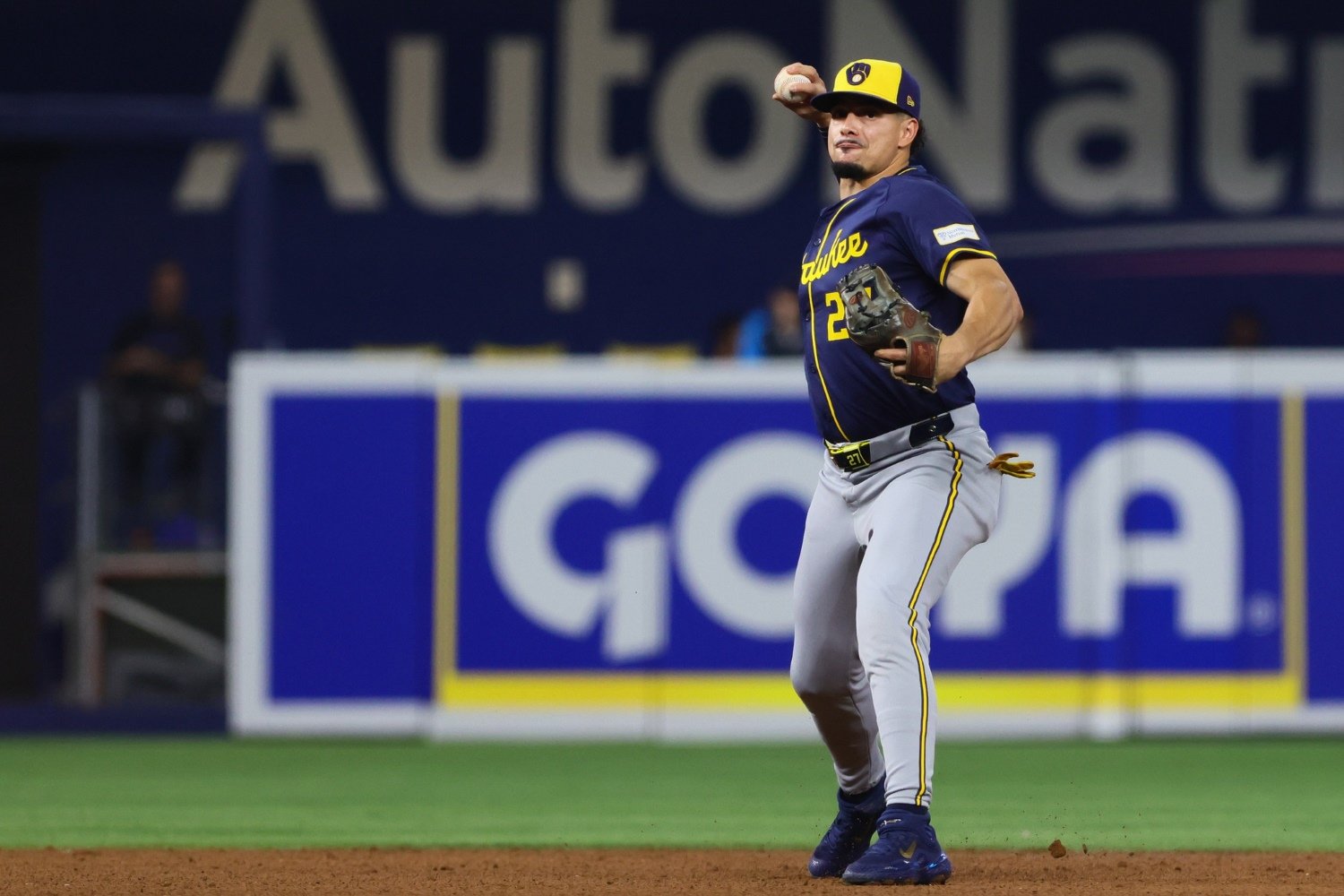 Not long ago, in response to an email from one of the readers of his superb newsletter Pebble Hunting, baseball writer Sam Miller broke down some of the ways in which Carlos Correa stands out from other shortstops when it comes to getting his hands on the ball. As the reader noticed and Sam attempted to confirm, Correa is the rare shortstop who will cross from his position on the left side of the field to act as the relay man when a ball is hit into the right-field corner. In his efforts to find another guy who does that with any regularity, in face, Sam came up empty. In my opinion, Miller (who, it seems only right to disclose, hired me at Baseball Prospectus nearly a decade ago and was my editor for a couple of years there) is the greatest living baseball writer. There's no better value in sports media than his newsletter. The piece on Correa was excellent, too, but when reading it, I had the rare thrill of digesting a Sam piece and not despairing of my own ability ever to add anything further on the subject. If you're reading this, you're probably a Brewers fan, which means you probably know why. When it comes to going outs-hunting, from foul line to foul line, Willy Adames is Correa, plus an extra cup of coffee or two. In basketball, it's easy to manipulate the relative impact of each player on the court on the outcome of the game, or at least of a given possession. Teams can make choices about which player should guard whom, and against which stars to use double-teams. Players themselves can choose whether to shoot or pass, and how to move without the ball to either create isolation opportunities for teammates or get open for their own shot. In football, you can move your best corner to stay on the opponent's best receiver, or not; run chip blocks at an elite pass-rusher, or not; and distribute the ball within the offense based on the relative quality and matchup utility of players. Baseball is different. For the most part, players have to take opportunities as they come. If you want a batter to hit more than another, it's easy: you just slot them higher in the lineup. You can't control in which situations starting players come to bat, though, and surprisingly often, the game comes down to whether your No. 7 hitter can drive home a runner from second base with two outs. If you want a player to touch the ball more on defense than others, you can put them in center field or at shortstop, but by and large, their actual opportunities to affect the other team's production on batted balls is beyond your control. Short of having a rover in whom the team has such exceptional trust that they're placed wherever the ball is most likely to go most often based on the pitcher on the mound at the time, you're at the mercy of the chaos that happens every time a round bat tries to square up a round ball at 100 miles per hour. For the latter set of reasons, defensive metrics have always been pretty much about what happens when the ball comes and finds you. Throughout baseball history, errors have been the easiest measuring stick for fielders, but beyond the folly of such a subjective judgment, errors are limited by the fact that a fielder has to reach the ball pretty easily in order to be charged with one. Even once range-based defensive stats came into vogue, beginning in the early 21st century, they were only attempting to answer the question: "How well does this player cover the ground their team assigned them to cover by putting them at the position they chose?" There probably isn't a better way to measure defense on a holistic basis, but every now and then, a really smart and aggressive middle infielder makes those stats look hopelessly blinkered. Jackie Robinson was such a player. Javier Báez, with his tagging genius and baseball IQ paired up with supernal physical gifts, is one modern exemplar. Another, and the best one of the moment, is the man whom the Brewers acquired just over three years ago. Wherever there might be an out available, look for Willy Adames. Whenever the ball finds a gap or a corner against the Brewers defense, look for him going out to take the throw from the outfielder--regardless of which gap or corner it is. Not long after Adames arrived, he started showing his ability to be a playmaker on balls that didn't feel like plays waiting to be made. Here's a perfect example, from late May 2021. Adames Throws As Second Cut Man.mp4 Adames was the second cutoff man on this play, and the angle of Jackie Bradley Jr.'s throw tells you what he was thinking, firing it in: try to cut down the runner at third base. Adames, with a combination of instinct and extraordinarily quick, sagacious baseball-time calculation, decided to take down the run at home anyway--and his throw was a seed. That's a terrific play, but it's also a little bit normal. The Brewers ran that play the way you'd expect: Kolten Wong went out as the first cutoff man, with Adames backing him up. On two similar plays in 2022, they did the same thing. With a runner in motion on a 3-2 pitch in the ninth inning against the Pirates that July, the tying run nearly came around to score from first on a single. Andrew McCutchen's throw back to the infield was a "get it in" throw, not a "get an out" throw. Adames changed that in a hurry. Adames Nails Em at Home.mp4 Then, in August, another ball split the gap in right-center, but when José Siri tried to stretch it into a triple, Adames nailed him. Another Adames Throw as Second Cut Man.mp4 After that, the team figured something out: it made more sense to have Adames just go out and be the primary cut man any time the ball made its way to the gaps, even if it was to the right side of second base. Here's one example from early this season. Adames Cutting Another from RCF.mp4 Adames isn't the second option here. He runs out beyond Brice Turang, who stays at home, nearer second base. Turang's arm isn't bad, for a second baseman, but because Adames's is so strong (and is matched by such a sharp nose for the big play), he's the priority place to put the ball whenever trouble is brewing. Here's another occasion on which Adames went out to take a throw from right-center, in Chicago this month. Adames Cutting One from LCF.mp4 Blake Perkins's bobble cost them the chance to get an out on this one, but Adames was the man going way out into center field to collect the throw and attempt the relay. Unlike Correa, he rarely goes to the right-field line on those relays, largely because Miller Park (with the inward jut of the sidewall) often begets tricky bounces out into right field on balls hit down the line, so it makes more sense for Turang to head out there, anyway. Here's one play where Turang had to collect the ball on a double down the line, from a place not even rightly called "down the line", anymore. Turang Collects.mp4 That just means Adames is more available in the middle of the field, though, and he's extremely aggressive about going down his own foul line to make plays. Last year, as the Brewers endeavored to seal up a playoff spot in Miami, he did just that. Initially, the runner was called safe, but on replay, the Brewers got a big out. Adames Down the Line.mp4 Adames never views a play as over, or hopeless. At times, this leads to errors, throwing behind runners or trying to prevent a triple and overthrowing, but sometimes, it nets the team outs that other, even slightly less aggressive shortstops wouldn't get. The play in Houston this month was a good embodiment of that. Adames Never Gives Up on a Play.mp4 His exchange had to be perfect to get Kyle Tucker on this play. The throw also had to be on a dime. No problem; Adames was ready long before the ball reached him, and never doubted he'd get his man. So often, players get slightly flustered in multiple-baserunner, run-possible situations, even after they possess the ball. Not Adames. Like Báez, he always knows not only where the ball needs to go, but how it needs to get there, in order to minimize the risk of a mistake or the needless loss of 90 feet somewhere. Adames Runs Em Down.mp4 Finally, there's one of the most delightful things about Adames's peculiar style of defensive aggressiveness: he always wants the lead runner. He'll risk sure outs to cut down a runner at third or home instead, and plenty often enough to justify that approach, he succeeds. In the earliest days of the automatic runner rule in extra innings, runners frequently tested shortstops by taking off for third on balls to the left side, figuring the defense might be desperate enough for an out to let them advance, or that they might rush and make an error in trying to take the lead man. It didn't work on Adames, at all. On the contrary, his eyes seem to light up every time a ball comes his way in extra innings, especially with that runner thinking about trying it. Again, the accuracy of his throw is paramount, and he's a deadeye. Adames Throws to 3rd in 10th.mp4 I mentioned that, in American football and in basketball, it's easy to direct the action toward one's best players, and that it's much more difficult to do so in baseball. Somewhere in the middle of that spectrum lies international football, or soccer, and it's there that the best comparison for Adames's style might rest. He's reminiscent of a great central midfielder, like the Croatian Luka Modrić. He understands his responsibilities and has to let the game flow around him, but he's special because of his ability to roam widely and involve himself organically--to make more plays within the run of things than others do, without forcing things. The Brewers have to overachieve to thrive. They have to win more games than their raw, individual talent would imply. Adames facilitates that. He creates extra outs and prevents advancements, in ways that don't show up even on the ledgers of most modern defensive metrics. He also (and this matters, just as much as the wins and losses) makes baseball a more beautiful game. He's the heartbeat of the Brewers' strong defense, and if they win another NL Central crown this year, they'll owe a great deal to their opportunistic, brilliant veteran shortstop.
 -
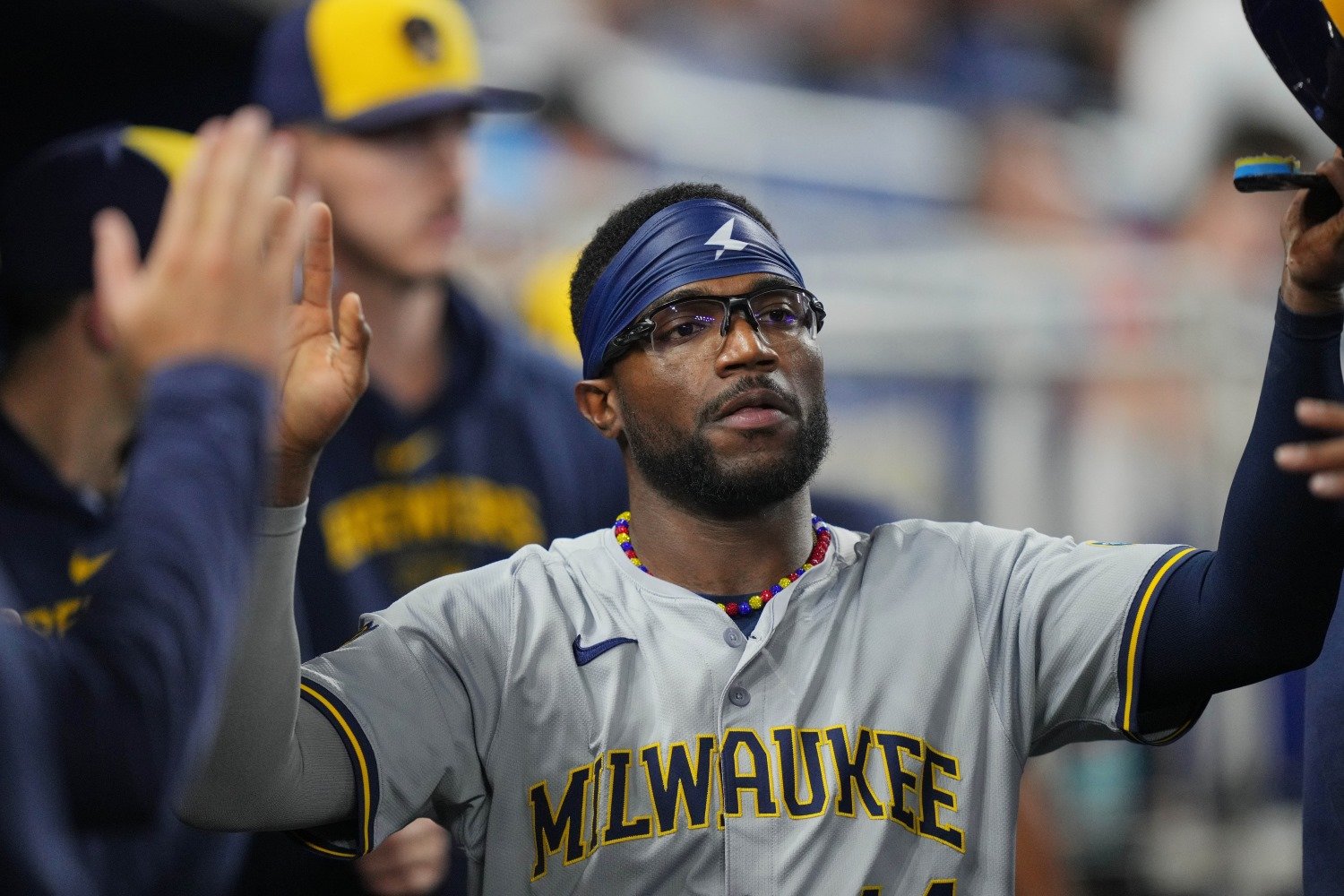 Between shuttling down to Nashville and being relegated to the bench in Milwaukee, Andruw Monasterio must feel like he's just starting to feel the grain of the bat in his hands. Though he's been healthy all year, he's only taken 74 total plate appearances, counting both MLB and Triple-A time. To put that in context, eight Brewers have at least twice that many so far, and both William Contreras and Willy Adames are close to having three times as many. Monasterio could be doing more to assert himself and force the issue, of course. He's been underwhelming even when he's gotten opportunities, and he remains mired in a power outage so complete that he has to be excellent at just about everything else in order to be viable--an outage that dates back to last July. He's hitting .220/.351/.305 across his two levels of competition. On the other hand (literally), Monasterio reached base four times (including a sorely needed home run) over the last two games, both against left-handed Miami Marlins starters. The Fish send another lefty out there Wednesday, so perhaps we'll see a third straight start for Monasterio. Even given the emergence of Joey Ortiz, there's room in the lineup for the stocky, surehanded Venezuelan when there's a lefty on the bump for the opponents. The Brewers just haven't seen any. Only nine times this year--Wednesday will make 10--have the Crew faced a lefty starter. The Cubs and Guardians have each seen lefties nine times, too, and both will face their 10th Wednesday. No one else is that low, though. Even after facing lefties three straight times, Milwaukee will have seen them less often than any other team in baseball. The Phillies have faced 20 southpaws. The Marlins have faced 18. This is one of the challenges of being a player on the short side of a platoon, especially if your skills are subtle and limited, like Monasterio's. He now faces the challenge of succeeding in an important role, over a short period, after having gotten only extremely sparing looks to this point in the season. It's like a zoomed-out version of the pinch-hit penalty: one has to stay ready, without the rhythm and the routine that make hitting easier. Brice Turang is a major obstacle to more frequent at-bats for Monasterio, too. He's gone from superb (.312/.375/.441) in April to more of an empty average guy (.307/.349/.403) in May, but given his glove and his speed, that will keep him in the lineup against all right-handed starters. Against lefties, Monasterio still figures to get some reps, but Turang might start occasional games even in those matchups, as Pat Murphy seeks lineup balance. It'll continue to be hard for Monasterio to do his best possible work while he's in this role, but because of the overall talent levels of Monasterio and the various alternative options the team has, they can't prioritize getting the best out of him. The goal is to win games, and that means setting aside what's best for Monasterio, unless he gives them a chance to win games more often than when the team faces lefties. At the same time, it's important to keep bench players involved, invested, and ready for action. A team like Atlanta might be able to play their regulars every day without feeling any pain, because their lineup is so deep and studded with stars. The Brewers are good, but not on that level, and they need their whole 13-man positional corps to chip in if they hope to cobble together 90 or more wins. Monasterio could well be their best bet against lefties throughout the year, and in order to ensure that he's primed for success, the team might need to find him a few more chances in less favorable matchups. In the meantime, it's to his credit that he's seized his chance this week in Miami, showing no ill effects from whatever rust accumulated during his long stretches of sparse use.
 -
Even after seeing two straight southpaws, the Milwaukee Brewers enter Wednesday's game tied for the fewest contests this year in which opponents used a left-handed starter. The trend is changing, though, and that's giving at least one complementary piece his chance to contribute. Image courtesy of © Jim Rassol-USA TODAY Sports Between shuttling down to Nashville and being relegated to the bench in Milwaukee, Andruw Monasterio must feel like he's just starting to feel the grain of the bat in his hands. Though he's been healthy all year, he's only taken 74 total plate appearances, counting both MLB and Triple-A time. To put that in context, eight Brewers have at least twice that many so far, and both William Contreras and Willy Adames are close to having three times as many. Monasterio could be doing more to assert himself and force the issue, of course. He's been underwhelming even when he's gotten opportunities, and he remains mired in a power outage so complete that he has to be excellent at just about everything else in order to be viable--an outage that dates back to last July. He's hitting .220/.351/.305 across his two levels of competition. On the other hand (literally), Monasterio reached base four times (including a sorely needed home run) over the last two games, both against left-handed Miami Marlins starters. The Fish send another lefty out there Wednesday, so perhaps we'll see a third straight start for Monasterio. Even given the emergence of Joey Ortiz, there's room in the lineup for the stocky, surehanded Venezuelan when there's a lefty on the bump for the opponents. The Brewers just haven't seen any. Only nine times this year--Wednesday will make 10--have the Crew faced a lefty starter. The Cubs and Guardians have each seen lefties nine times, too, and both will face their 10th Wednesday. No one else is that low, though. Even after facing lefties three straight times, Milwaukee will have seen them less often than any other team in baseball. The Phillies have faced 20 southpaws. The Marlins have faced 18. This is one of the challenges of being a player on the short side of a platoon, especially if your skills are subtle and limited, like Monasterio's. He now faces the challenge of succeeding in an important role, over a short period, after having gotten only extremely sparing looks to this point in the season. It's like a zoomed-out version of the pinch-hit penalty: one has to stay ready, without the rhythm and the routine that make hitting easier. Brice Turang is a major obstacle to more frequent at-bats for Monasterio, too. He's gone from superb (.312/.375/.441) in April to more of an empty average guy (.307/.349/.403) in May, but given his glove and his speed, that will keep him in the lineup against all right-handed starters. Against lefties, Monasterio still figures to get some reps, but Turang might start occasional games even in those matchups, as Pat Murphy seeks lineup balance. It'll continue to be hard for Monasterio to do his best possible work while he's in this role, but because of the overall talent levels of Monasterio and the various alternative options the team has, they can't prioritize getting the best out of him. The goal is to win games, and that means setting aside what's best for Monasterio, unless he gives them a chance to win games more often than when the team faces lefties. At the same time, it's important to keep bench players involved, invested, and ready for action. A team like Atlanta might be able to play their regulars every day without feeling any pain, because their lineup is so deep and studded with stars. The Brewers are good, but not on that level, and they need their whole 13-man positional corps to chip in if they hope to cobble together 90 or more wins. Monasterio could well be their best bet against lefties throughout the year, and in order to ensure that he's primed for success, the team might need to find him a few more chances in less favorable matchups. In the meantime, it's to his credit that he's seized his chance this week in Miami, showing no ill effects from whatever rust accumulated during his long stretches of sparse use. View full article
-
As the Milwaukee Brewers sent a veteran starter to the injured list Tuesday, they recalled a younger one who will be eager to prove himself on a second go-round in the big leagues. Image courtesy of © Sam Navarro-USA TODAY Sports Only three pitchers have taken every turn in the Brewers starting rotation through the first six-plus weeks of the 2024 season: Freddy Peralta, Colin Rea, and Joe Ross. Now, we can cross Ross off that list, as he heads to the injured list with a low back strain. Ross left his start early Monday night in Miami, with an ailment manager Pat Murphy said he had been nursing for a few days. This hardly qualifies as a surprise. Ross has never thrown even 110 innings in MLB in a season, and the only time he's thrown 150 or more innings across all levels was way back in 2015, at age 22. Ross gets hurt; it's part of why he was available so cheaply this winter. The Brewers replaced him Tuesday by calling up righthander Tobias Myers, hoping he can be a fairly stable replacement for Ross over the coming weeks. Myers is getting his second audition for a big-league job, though this time, he might end up working out of the bullpen, or in a modified role different from the full-fledged starting gig he worked when he was first promoted. Myers only made one appearance with the Triple-A Nashville Sounds after being sent down earlier this month--a two-inning relief appearance last week. He was due to start Tuesday night for the Sounds, before Ross's injury necessitated his immediate return to the majors. In that one outing, Myers's stuff looked ever-so-slightly different than it did while he was starting for the Sounds and Brewers prior to his demotion. Here's Myers's pitch movement chart prior to going back to Nashville, working as a starter: In that lone game after returning to Triple-A, though, Myers didn't use his sinker or his changeup, and there were subtle changes to the average movement of his other offerings. Both his slider and his curveball had a more vertical shape in that appearance, and his fastball didn't run as much to the arm side. The samples are tiny and may not be indicative of anything, but those changes would be beneficial to Myers's overall profile--as would leaning away from the sinker and changeup, which don't suit his arm slot or his motor preference well. At the same time, of course, slimming down his arsenal makes Myers slightly less viable as a starter. He's more likely to be valuable as a reliever if he sustains these changes--even as a multi-inning reliever--but he's less likely to be the starting pitcher the team hoped he could be when they first recalled him last month. Since Ross just started (however briefly) last night and the Brewers have a day off Thursday, the team could wait a while to sort out the starting rotation. Myers could start as soon as Wednesday, but there's been no immediate indication that that's the plan. Instead, by calling him up now (rather than bringing up a reliever to provide a fresh arm out of the pen), the club is at least hinting at viewing Myers as just such an arm--a reinforcement for the bullpen, in the event of a blowup from Robert Gasser Tuesday night. If Myers did start Wednesday, pushing Peralta back to Friday, he could settle into that spot in the rotation for the foreseeable future, or he and the rehabbing DL Hall could take up a piggyback arrangement over the coming few weeks. Friday also kicks off a stretch of 13 games without a day off, so Hall could come back as part of a short-lived six-man rotation, with Myers still in the mix. For now, there's tremendous uncertainty, from the top of the Milwaukee pitching staff to the bottom. Ross can't return for at least 15 days, and given his age and track record, it seems just as likely to be a month before we see him again, despite Murphy downplaying the severity of the injury in discussions with reporters Tuesday afternoon. Over the last three years, when pitchers miss time with a low back strain, it's usually a good bit longer than two weeks before they return. Myers is back, but the Brewers only seem to be scrambling more frantically for healthy arms with each passing week. That pattern has to abate soon. In the meantime, it'll be interesting to see how they use the remaining healthy arms available to them. View full article
-
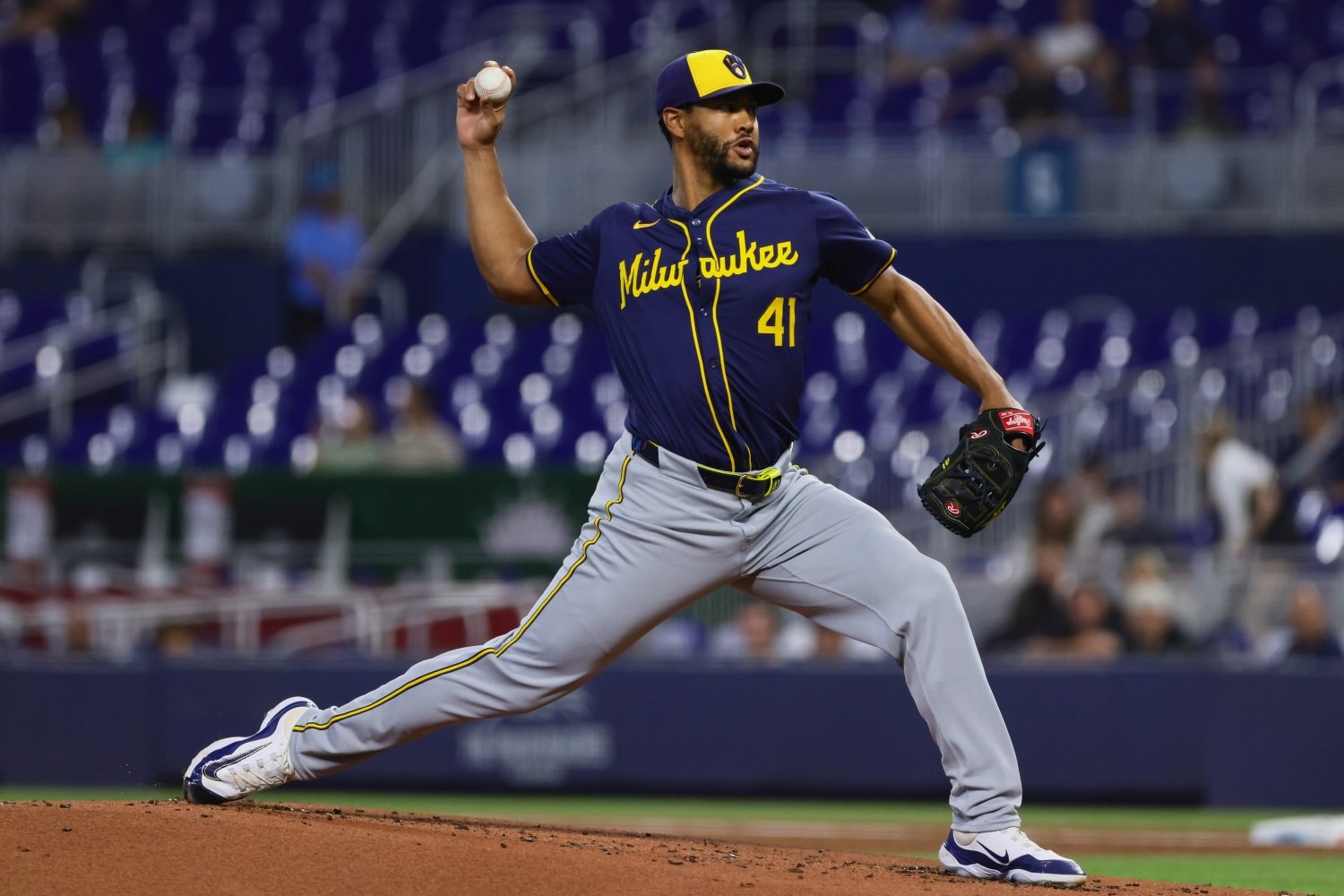 Only three pitchers have taken every turn in the Brewers starting rotation through the first six-plus weeks of the 2024 season: Freddy Peralta, Colin Rea, and Joe Ross. Now, we can cross Ross off that list, as he heads to the injured list with a low back strain. Ross left his start early Monday night in Miami, with an ailment manager Pat Murphy said he had been nursing for a few days. This hardly qualifies as a surprise. Ross has never thrown even 110 innings in MLB in a season, and the only time he's thrown 150 or more innings across all levels was way back in 2015, at age 22. Ross gets hurt; it's part of why he was available so cheaply this winter. The Brewers replaced him Tuesday by calling up righthander Tobias Myers, hoping he can be a fairly stable replacement for Ross over the coming weeks. Myers is getting his second audition for a big-league job, though this time, he might end up working out of the bullpen, or in a modified role different from the full-fledged starting gig he worked when he was first promoted. Myers only made one appearance with the Triple-A Nashville Sounds after being sent down earlier this month--a two-inning relief appearance last week. He was due to start Tuesday night for the Sounds, before Ross's injury necessitated his immediate return to the majors. In that one outing, Myers's stuff looked ever-so-slightly different than it did while he was starting for the Sounds and Brewers prior to his demotion. Here's Myers's pitch movement chart prior to going back to Nashville, working as a starter: In that lone game after returning to Triple-A, though, Myers didn't use his sinker or his changeup, and there were subtle changes to the average movement of his other offerings. Both his slider and his curveball had a more vertical shape in that appearance, and his fastball didn't run as much to the arm side. The samples are tiny and may not be indicative of anything, but those changes would be beneficial to Myers's overall profile--as would leaning away from the sinker and changeup, which don't suit his arm slot or his motor preference well. At the same time, of course, slimming down his arsenal makes Myers slightly less viable as a starter. He's more likely to be valuable as a reliever if he sustains these changes--even as a multi-inning reliever--but he's less likely to be the starting pitcher the team hoped he could be when they first recalled him last month. Since Ross just started (however briefly) last night and the Brewers have a day off Thursday, the team could wait a while to sort out the starting rotation. Myers could start as soon as Wednesday, but there's been no immediate indication that that's the plan. Instead, by calling him up now (rather than bringing up a reliever to provide a fresh arm out of the pen), the club is at least hinting at viewing Myers as just such an arm--a reinforcement for the bullpen, in the event of a blowup from Robert Gasser Tuesday night. If Myers did start Wednesday, pushing Peralta back to Friday, he could settle into that spot in the rotation for the foreseeable future, or he and the rehabbing DL Hall could take up a piggyback arrangement over the coming few weeks. Friday also kicks off a stretch of 13 games without a day off, so Hall could come back as part of a short-lived six-man rotation, with Myers still in the mix. For now, there's tremendous uncertainty, from the top of the Milwaukee pitching staff to the bottom. Ross can't return for at least 15 days, and given his age and track record, it seems just as likely to be a month before we see him again, despite Murphy downplaying the severity of the injury in discussions with reporters Tuesday afternoon. Over the last three years, when pitchers miss time with a low back strain, it's usually a good bit longer than two weeks before they return. Myers is back, but the Brewers only seem to be scrambling more frantically for healthy arms with each passing week. That pattern has to abate soon. In the meantime, it'll be interesting to see how they use the remaining healthy arms available to them.
 -
We typically talk about a pitch as a good one for a given pitcher only if it gets ground balls, induces whiffs, or forces weak contact from opponents. Sometimes, though, a pitch that doesn't grade well in any outcome-focused way is still essential to the arsenal of a good pitcher. Two excellent pitches have turned Bryan Hudson into an unexpected relief ace this year. With elite extension on a fastball that touches 94 miles per hour, a sweeper with terrific two-plane movement, and a delivery that has the ball coming at a hitter from an almost unprecedented release point, he's racked up 31 strikeouts over his first 98 batters faced in a Brewers uniform. Scarcely three batters reach base for every four innings he pitches. His ERA is better than nice, at 0.68. Hudson's fastball and sweeper are really good offerings. The heater isn't as hard as the average one, but from the left side (and accounting for that remarkable extension), it's plenty hard enough. Hitters struggle to square it up, thanks especially to a flat vertical approach angle and his good command of it. The sweeper has gotten whiffs on over 40 percent of opposing batters' swings, and ground balls on 57.1 percent of the batted balls they have managed against it. We live, now, in the pitch modeling era, which means grades are assigned to specific pitches within a hurler's repertoire, based on measurements of their movement, speed, location, usage, and release point, using machine learning and other advanced tools to weigh those variables and determine what has historically worked against big-league hitters. There's Stuff+, from Eno Sarris of The Athletic. There's Pitching Bot, a similar system with a different numerical scale. Both of those are available at FanGraphs. My favorite of the bunch, though, is StuffPro (and PitchPro) at Baseball Prospectus. Taking many of the same inputs as the others, this system expresses the value of individual pitches on a run vale scale, where 0 is average and a negative number is better (since the pitcher is, in effect, preventing runs by throwing that pitch). Here's how Hudson's pitches rate, by StuffPro (which focuses on the release and movement characteristics of the pitch) and PitchPro (which also includes location and is, therefore, more holistic in terms of evaluating the pitch). Pitch PitchPro StuffPro Fastball -0.7 0.2 Sweeper -1.2 -0.5 Cutter 0.5 0 Few fastballs (especially those without elite velocity) score well in StuffPro, but Hudson locates his four-seamer so well that he gets significant actual value on a pitch that would grade out below-average without that variable in the mix. The sweeper, as you can see, is significantly valuable, especially (but not solely) because he commands it. Then, there's the cutter. That one's not pretty. Hudson's raw stuff on the cutter is average, given his unusual release point (especially for that pitch) and how hard he throws it, but the pitch too often ends up in the meaty part of the zone, where it can get hit. In theory, it's a bad pitch. In reality, though, that cutter is essential to what Hudson has been able to do this season. The numbers above are the run values per 100 pitches thrown, and when you do the math based on hos many of each Hudson has thrown, the PitchPro figures give you 2.29 runs saved. By contrast, according to Baseball Reference, Hudson has been worth 10 runs above average this year on the mound. That's probably too aggressive, so let's say he's been worth just 5. That still leaves about half his value unexplained by any of his pitches' inherent qualities. What explains that? Whether you bat righty or lefty, you have to respect Hudson's cutter. He's not going to beat you with it very often--the pitch doesn't get whiffs, doesn't get ground balls, does get hit pretty hard--but he's going to throw it, and if you try to focus only on his fastball and sweeper, then he will stump you when the cutter comes. Most relievers rely on two pitches. Some go to a third against opposite-handed batters, so they can keep hitters off the other two, which might be engineered primarily for same-handed guys. Hudson, however, has three different offerings he'll throw consistently to all types of hitters. That means minimal disruption in his rhythm, his targets, or his mechanics when a righty comes up after a lefty, or vice-versa. It also means that hitters can't comfortably sit on anything. Plainly, a 0.68 ERA doesn't reflect Hudson's real talent level, and it's not sustainable. He might not get much worse than that even when regression comes, though. The main reason for that is his singular delivery and his two-pitch primary arsenal, but (to a greater extent than most relievers, especially) he keeps hitters honest. His cutter isn't good, but it's still valuable and useful. With all three pitches working and the ability to throw each for a strike, he's one of the toughest at-bats in baseball. View full article
-
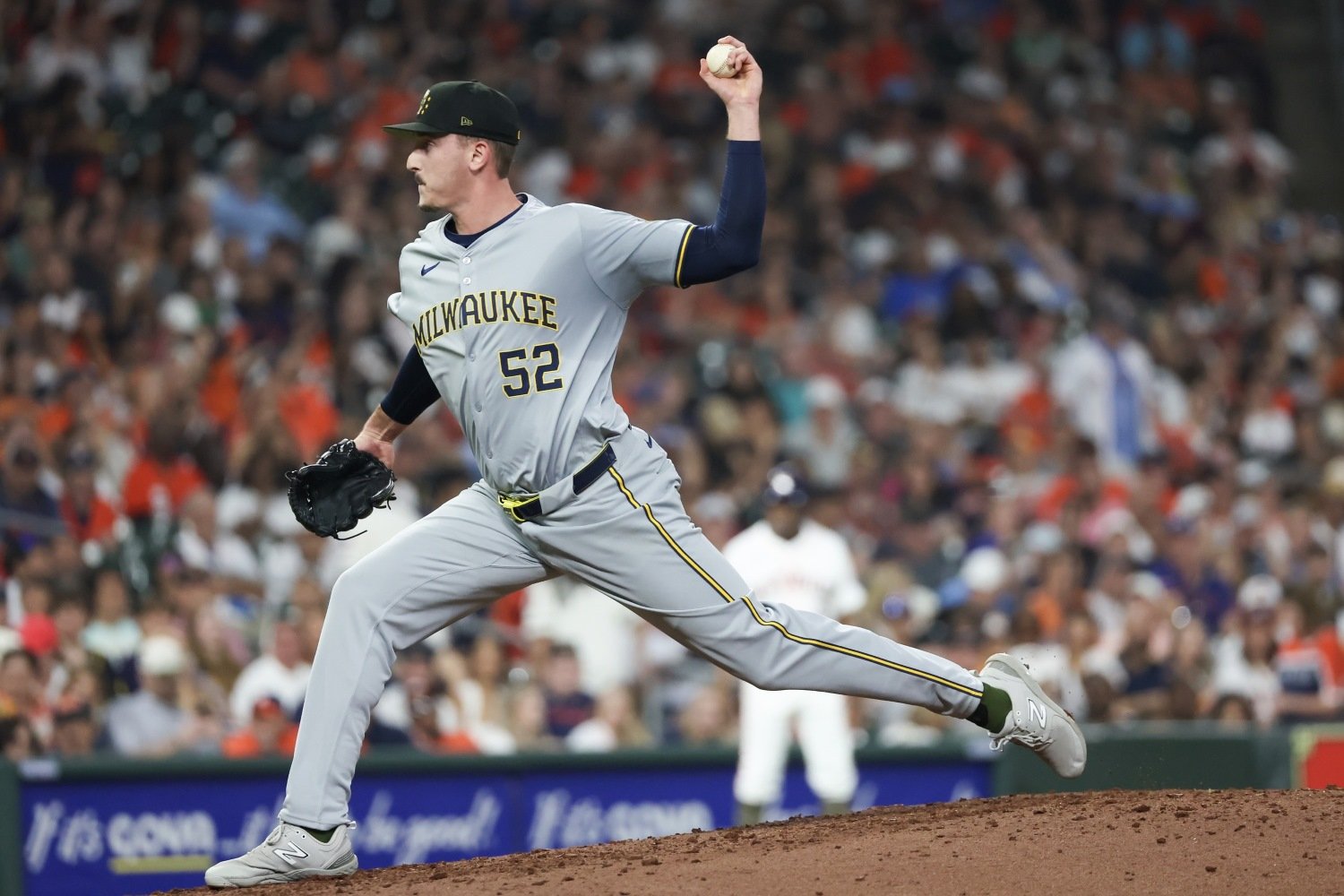 Two excellent pitches have turned Bryan Hudson into an unexpected relief ace this year. With elite extension on a fastball that touches 94 miles per hour, a sweeper with terrific two-plane movement, and a delivery that has the ball coming at a hitter from an almost unprecedented release point, he's racked up 31 strikeouts over his first 98 batters faced in a Brewers uniform. Scarcely three batters reach base for every four innings he pitches. His ERA is better than nice, at 0.68. Hudson's fastball and sweeper are really good offerings. The heater isn't as hard as the average one, but from the left side (and accounting for that remarkable extension), it's plenty hard enough. Hitters struggle to square it up, thanks especially to a flat vertical approach angle and his good command of it. The sweeper has gotten whiffs on over 40 percent of opposing batters' swings, and ground balls on 57.1 percent of the batted balls they have managed against it. We live, now, in the pitch modeling era, which means grades are assigned to specific pitches within a hurler's repertoire, based on measurements of their movement, speed, location, usage, and release point, using machine learning and other advanced tools to weigh those variables and determine what has historically worked against big-league hitters. There's Stuff+, from Eno Sarris of The Athletic. There's Pitching Bot, a similar system with a different numerical scale. Both of those are available at FanGraphs. My favorite of the bunch, though, is StuffPro (and PitchPro) at Baseball Prospectus. Taking many of the same inputs as the others, this system expresses the value of individual pitches on a run vale scale, where 0 is average and a negative number is better (since the pitcher is, in effect, preventing runs by throwing that pitch). Here's how Hudson's pitches rate, by StuffPro (which focuses on the release and movement characteristics of the pitch) and PitchPro (which also includes location and is, therefore, more holistic in terms of evaluating the pitch). Pitch PitchPro StuffPro Fastball -0.7 0.2 Sweeper -1.2 -0.5 Cutter 0.5 0 Few fastballs (especially those without elite velocity) score well in StuffPro, but Hudson locates his four-seamer so well that he gets significant actual value on a pitch that would grade out below-average without that variable in the mix. The sweeper, as you can see, is significantly valuable, especially (but not solely) because he commands it. Then, there's the cutter. That one's not pretty. Hudson's raw stuff on the cutter is average, given his unusual release point (especially for that pitch) and how hard he throws it, but the pitch too often ends up in the meaty part of the zone, where it can get hit. In theory, it's a bad pitch. In reality, though, that cutter is essential to what Hudson has been able to do this season. The numbers above are the run values per 100 pitches thrown, and when you do the math based on hos many of each Hudson has thrown, the PitchPro figures give you 2.29 runs saved. By contrast, according to Baseball Reference, Hudson has been worth 10 runs above average this year on the mound. That's probably too aggressive, so let's say he's been worth just 5. That still leaves about half his value unexplained by any of his pitches' inherent qualities. What explains that? Whether you bat righty or lefty, you have to respect Hudson's cutter. He's not going to beat you with it very often--the pitch doesn't get whiffs, doesn't get ground balls, does get hit pretty hard--but he's going to throw it, and if you try to focus only on his fastball and sweeper, then he will stump you when the cutter comes. Most relievers rely on two pitches. Some go to a third against opposite-handed batters, so they can keep hitters off the other two, which might be engineered primarily for same-handed guys. Hudson, however, has three different offerings he'll throw consistently to all types of hitters. That means minimal disruption in his rhythm, his targets, or his mechanics when a righty comes up after a lefty, or vice-versa. It also means that hitters can't comfortably sit on anything. Plainly, a 0.68 ERA doesn't reflect Hudson's real talent level, and it's not sustainable. He might not get much worse than that even when regression comes, though. The main reason for that is his singular delivery and his two-pitch primary arsenal, but (to a greater extent than most relievers, especially) he keeps hitters honest. His cutter isn't good, but it's still valuable and useful. With all three pitches working and the ability to throw each for a strike, he's one of the toughest at-bats in baseball.
 -
 It's not as though outright failure was forcing an adjustment. When Joey Ortiz got to the ballpark on Apr. 24, he had a slash line of .279/.392/.349 to his name. In his first 51 plate appearances as a Milwaukee Brewer, he was walking 15.7 percent of the time and only striking out 15.7 percent of the time. In that sense, things were good. Ortiz and the coaching staff maintained a growth mindset, though, and the area of potential growth was glaringly obvious: Ortiz wasn't generating any serious quality of contact. He wasn't hitting the ball hard, and when he did, he wasn't getting any air under it. Even in a spring when the ball seems a bit deadened and offense has been down, an ISO of .070 is very low--almost disqualifying, in terms of ever hitting in the top half of a competitive lineup. Since then, everything has changed. Ortiz has traded a little bit of contact for more power, but it's worked like a charm. He's batting .275/.377/.647 since April 24. How? Let's break it down, using the suite of stats I introduced in a piece about Rhys Hoskins earlier this season. Span Low/Med/High Hit % Sweet Spot Exit Vel. Well-Hit Launch Angle wSSEV Swing Speed Through 4/23 42.9/31.4/25.7 79.6 1.6 66.7 73.6 Since 4/24 27.5/37.5/35.0 96.2 12.5 83.9 75.3 (For newcomers, to keep it brief: Low Hit balls have a launch angle under 2 degrees. Medium Hit balls are between 2 and 25. High Hit balls are at 25 degrees or higher. Sweet spot exit velocity (SSEV) is the average exit velocity on balls with a launch angle between 10 and 35 degrees, and well-hit launch angle (WHLA) is the average angle on any ball with an exit velocity of 95 MPH or more. Weighted SSEV (wSSEV) accounts both for the authority with which balls in that launch angle band are hit, and the frequency with which a hitter produces such batted balls. Compared to average exit velocity or Barrel rate, wSSEV is a better indicator and predictor of total production.) Ortiz was dead last (275th of 275) in wSSEV through Apr. 23. His mark since then is still below-average (166th of 227), but the difference is huge. With good bat-to-ball skills and plate discipline, he's more than viable if he can sustain this caliber of contact on balls with a little bit of air underneath them. He got there by making an adjustment geared toward more bat speed, and now that Statcast publicly offers bat-tracking data, we can show just how stark a difference it made when he embraced that change. As you can see, the change wasn't gradual or steady. It was huge and sudden. Ortiz re-engineered his swing, and (literally) BOOM: he took off. This change shows up even on video. He hasn't dramatically altered his setup or the shape of his swing, but the rhythm of his movements has changed. Here's a swing that yielded typical contact (at the time) for Ortiz, from early in the season. NFhEVk5fWGw0TUFRPT1fVkFaUUFBWUVWUUFBV3djRkJRQUFBMUFDQUFNTkJ3UUFBMUVBVlFKUVZGZFhCUUpR.mp4 Note the rhythmic but slightly slow load phase, and the way Ortiz's weight drifts forward before his swing really gets up to speed. Now, compare that swing to this one, on a similar pitch during the Brewers' recent visit to Kansas City. V3kxUTlfVjBZQUhRPT1fVjFWWVhRVUZWUVFBRGdOUlVRQUFDVkpVQUFCUUJWRUFVRmNCVmxKV1ZRTUVCRk5U.mp4 Again, the essential characteristics of the swing are the same, but everything is more on time, and Ortiz's weight stays back a bit longer, letting the bat gain more speed through the contact point. This has been his habit for the last three weeks or so, now, but it took a while to get there. This is a minor adjustment, rather than a mechanical overhaul. It's as much about his growing confidence--about learning what to look for, and where, and when, and believing in the scouting reports and your ability to execute them--as it is about the actual movements. Hitting is timing. That said, even an effort just to be moving sooner and swing with more conviction can now translate into tangible improvements, which we can quantify all the way down to the level of raw movements. Ortiz will have more adjustment periods. He's not a finished product and newly established offensive superstar. He is, however, showing why the Brewers were right to believe in him enough to make him a centerpiece of the Corbin Burnes trade. He's figured out how to unleash his best swing more often against big-league pitching, and he's emerging as a player who can hit in the middle third of the Brewers batting order even as they pursue a deep run into October. It's fun to be able to capture that as granularly as we now can.
 -
A few weeks into the 2024 season, Joey Ortiz had pretty surface-level numbers, but some troubling sub-surface indices. Over the last few, though, he's exploded, taking over the third-base job for what could be the next half-decade or more. Image courtesy of © Benny Sieu-USA TODAY Sports It's not as though outright failure was forcing an adjustment. When Joey Ortiz got to the ballpark on Apr. 24, he had a slash line of .279/.392/.349 to his name. In his first 51 plate appearances as a Milwaukee Brewer, he was walking 15.7 percent of the time and only striking out 15.7 percent of the time. In that sense, things were good. Ortiz and the coaching staff maintained a growth mindset, though, and the area of potential growth was glaringly obvious: Ortiz wasn't generating any serious quality of contact. He wasn't hitting the ball hard, and when he did, he wasn't getting any air under it. Even in a spring when the ball seems a bit deadened and offense has been down, an ISO of .070 is very low--almost disqualifying, in terms of ever hitting in the top half of a competitive lineup. Since then, everything has changed. Ortiz has traded a little bit of contact for more power, but it's worked like a charm. He's batting .275/.377/.647 since April 24. How? Let's break it down, using the suite of stats I introduced in a piece about Rhys Hoskins earlier this season. Span Low/Med/High Hit % Sweet Spot Exit Vel. Well-Hit Launch Angle wSSEV Swing Speed Through 4/23 42.9/31.4/25.7 79.6 1.6 66.7 73.6 Since 4/24 27.5/37.5/35.0 96.2 12.5 83.9 75.3 (For newcomers, to keep it brief: Low Hit balls have a launch angle under 2 degrees. Medium Hit balls are between 2 and 25. High Hit balls are at 25 degrees or higher. Sweet spot exit velocity (SSEV) is the average exit velocity on balls with a launch angle between 10 and 35 degrees, and well-hit launch angle (WHLA) is the average angle on any ball with an exit velocity of 95 MPH or more. Weighted SSEV (wSSEV) accounts both for the authority with which balls in that launch angle band are hit, and the frequency with which a hitter produces such batted balls. Compared to average exit velocity or Barrel rate, wSSEV is a better indicator and predictor of total production.) Ortiz was dead last (275th of 275) in wSSEV through Apr. 23. His mark since then is still below-average (166th of 227), but the difference is huge. With good bat-to-ball skills and plate discipline, he's more than viable if he can sustain this caliber of contact on balls with a little bit of air underneath them. He got there by making an adjustment geared toward more bat speed, and now that Statcast publicly offers bat-tracking data, we can show just how stark a difference it made when he embraced that change. As you can see, the change wasn't gradual or steady. It was huge and sudden. Ortiz re-engineered his swing, and (literally) BOOM: he took off. This change shows up even on video. He hasn't dramatically altered his setup or the shape of his swing, but the rhythm of his movements has changed. Here's a swing that yielded typical contact (at the time) for Ortiz, from early in the season. NFhEVk5fWGw0TUFRPT1fVkFaUUFBWUVWUUFBV3djRkJRQUFBMUFDQUFNTkJ3UUFBMUVBVlFKUVZGZFhCUUpR.mp4 Note the rhythmic but slightly slow load phase, and the way Ortiz's weight drifts forward before his swing really gets up to speed. Now, compare that swing to this one, on a similar pitch during the Brewers' recent visit to Kansas City. V3kxUTlfVjBZQUhRPT1fVjFWWVhRVUZWUVFBRGdOUlVRQUFDVkpVQUFCUUJWRUFVRmNCVmxKV1ZRTUVCRk5U.mp4 Again, the essential characteristics of the swing are the same, but everything is more on time, and Ortiz's weight stays back a bit longer, letting the bat gain more speed through the contact point. This has been his habit for the last three weeks or so, now, but it took a while to get there. This is a minor adjustment, rather than a mechanical overhaul. It's as much about his growing confidence--about learning what to look for, and where, and when, and believing in the scouting reports and your ability to execute them--as it is about the actual movements. Hitting is timing. That said, even an effort just to be moving sooner and swing with more conviction can now translate into tangible improvements, which we can quantify all the way down to the level of raw movements. Ortiz will have more adjustment periods. He's not a finished product and newly established offensive superstar. He is, however, showing why the Brewers were right to believe in him enough to make him a centerpiece of the Corbin Burnes trade. He's figured out how to unleash his best swing more often against big-league pitching, and he's emerging as a player who can hit in the middle third of the Brewers batting order even as they pursue a deep run into October. It's fun to be able to capture that as granularly as we now can. View full article
-
Wrote about the roster move today and the sense that the roles that were up in the air a long time for this team have started to settle down, if anyone wants some commercial break reading:
-
 On Wednesday, the Brewers optioned struggling infielder Oliver Dunn to the minor leagues, in favor of outfielder Chris Roller. After scooping up Roller amid the Guardians' roster crunch last August, the Brewers will now call on him for the first time. Roller is a right-handed batter and exclusively an outfielder, which makes calling him up and demoting Dunn a telling swap. For one thing, Joey Ortiz now looks to be the everyday third baseman. He was slotted in at second Wednesday against the Pirates, with a lefty starter on the mound, but Brice Turang has earned the right to play even against most southpaws, and Ortiz has asserted himself sufficiently that it was time for the Crew to ensure his place in the lineup even with Turang and Willy Adames ensconced in the middle infield. Though a small move in itself (and hopefully not one that indicates any kind of permanent end to the Dunn experiment), this is a momentous occasion. Ortiz, the jewel of the Corbin Burnes trade and a player the team hopes will be a fixture for several years, got an unofficial but very real promotion Wednesday. Equally interesting, perhaps, is that (after calling up Owen Miller, rather than Tyler Black, when they had to shelve Rhys Hoskins with a hamstring strain) the Brewers selected the right-hitting Roller to add to the outfield mix as they sent down Dunn. That leaves the following players who either bat left-handed or are switch-hitters on the active roster: Sal Frelick Blake Perkins (switch) Turang Jake Bauers Christian Yelich Yelich (apart from occasional rest days to engender the best possible health for him throughout the season) will be in the lineup every day. Frelick has been pretty much an everyday guy, as well, though Perkins has pushed him a bit and has the ability to bat right-handed against tough lefties. In Miller and Andruw Monasterio, the team now has two players who can be platoon partners for Turang, when they think it prudent, and Miller will also spell Bauers against (at least some) lefties while Hoskins convalesces. One possible reading of this sequence of moves, were Jackson Chourio and/or Frelick hitting a bit better, would be that we're now finally going to see Frelick play some third base. That's more plausible now than it was yesterday, but it still seems like it will be rare. Ortiz is the one who forced Dunn out, and Roller feels more like an answer to Yelich's difficulties in the field (he could DH more often, with Roller playing left) and Chourio's at the plate than like a replacement for Frelick's outfield reps. If this roster construction holds when Garrett Mitchell returns to the active roster, and if it's either Miller or Monasterio who goes down to Nashville at that point, Frelick could start to play more often at third base, but that's not a sure thing yet, and much could change before that time comes. In short, then, we're settling toward a state of affairs in which William Contreras, Adames and Ortiz are the true everyday players in the lineup. Yelich, Turang, and Frelick will be close to that constant, but (for various reasons) might get a few more proactive days off. Chourio, Bauers, and Perkins are now in more of a "three days in four, or four in five" space, and the rest of the squad (Miller, Monasterio, Roller, and Gary Sánchez) will fill in as needed, rarely starting more than twice in a week. The same clarity is at hand, at long last, for the pitching staff. A run of better health and some stabilizing (though not brilliant) performances have given the team a clear starting rotation (Freddy Peralta, Colin Rea, Robert Gasser, Joe Ross, and Bryse Wilson), and an equally obvious hierarchy at the back end of the bullpen (Trevor Megill, Elvis Peguero, Joel Payamps, Bryan Hudson, and Hoby Milner). Then there are three slots for low- and medium-leverage relievers: One reserved for optionable arms with high middle-relief upside (current occupant: Jared Koenig) One that goes to the latest waiver claim or out-of-options guy who finally got the call, but who will be gone within a month, and who will only be trusted with more than low-leverage work when very short starts or multiple unavailable relievers put Pat Murphy in a corner (current occupant: Mitch White) Thyago Vieira's spot, which just belongs to Thyago Vieira; he's out of options, so they will have to lose him if he ever becomes truly untenable, but his blend of raw stuff, enthusiasm for the gig, and ability to soak up multiple utterly unimportant innings is valuable, even if he himself is not. There will continue to be changes to the Brewers roster in the coming days and weeks, as players return from injuries and other injuries crop up. After about six weeks of fact-finding and testing, though, the team has found a bit more certainty about which players they want filling certain roles, and they're committing more to those players than they had before. Already in first place in the NL Central, the Crew now has a clearer identity and more confidence in the optimal deployment of the players who make up that identity. They're not at full strength, but they're more ready to assert their dominance and surge forward through the summer than they were a month ago--even if their record is actually less impressive now than it was then.
- 3 comments
-
- 2
-
-

-
- oliver dunn
- joey ortiz
- (and 5 more)
-
Injuries have forced the Milwaukee Brewers into a couple of recent roster moves, but they've also made some proactive ones that reveal their plans for the next month or so. Image courtesy of © Mark Hoffman / Milwaukee Journal Sentinel / USA TODAY NETWORK On Wednesday, the Brewers optioned struggling infielder Oliver Dunn to the minor leagues, in favor of outfielder Chris Roller. After scooping up Roller amid the Guardians' roster crunch last August, the Brewers will now call on him for the first time. Roller is a right-handed batter and exclusively an outfielder, which makes calling him up and demoting Dunn a telling swap. For one thing, Joey Ortiz now looks to be the everyday third baseman. He was slotted in at second Wednesday against the Pirates, with a lefty starter on the mound, but Brice Turang has earned the right to play even against most southpaws, and Ortiz has asserted himself sufficiently that it was time for the Crew to ensure his place in the lineup even with Turang and Willy Adames ensconced in the middle infield. Though a small move in itself (and hopefully not one that indicates any kind of permanent end to the Dunn experiment), this is a momentous occasion. Ortiz, the jewel of the Corbin Burnes trade and a player the team hopes will be a fixture for several years, got an unofficial but very real promotion Wednesday. Equally interesting, perhaps, is that (after calling up Owen Miller, rather than Tyler Black, when they had to shelve Rhys Hoskins with a hamstring strain) the Brewers selected the right-hitting Roller to add to the outfield mix as they sent down Dunn. That leaves the following players who either bat left-handed or are switch-hitters on the active roster: Sal Frelick Blake Perkins (switch) Turang Jake Bauers Christian Yelich Yelich (apart from occasional rest days to engender the best possible health for him throughout the season) will be in the lineup every day. Frelick has been pretty much an everyday guy, as well, though Perkins has pushed him a bit and has the ability to bat right-handed against tough lefties. In Miller and Andruw Monasterio, the team now has two players who can be platoon partners for Turang, when they think it prudent, and Miller will also spell Bauers against (at least some) lefties while Hoskins convalesces. One possible reading of this sequence of moves, were Jackson Chourio and/or Frelick hitting a bit better, would be that we're now finally going to see Frelick play some third base. That's more plausible now than it was yesterday, but it still seems like it will be rare. Ortiz is the one who forced Dunn out, and Roller feels more like an answer to Yelich's difficulties in the field (he could DH more often, with Roller playing left) and Chourio's at the plate than like a replacement for Frelick's outfield reps. If this roster construction holds when Garrett Mitchell returns to the active roster, and if it's either Miller or Monasterio who goes down to Nashville at that point, Frelick could start to play more often at third base, but that's not a sure thing yet, and much could change before that time comes. In short, then, we're settling toward a state of affairs in which William Contreras, Adames and Ortiz are the true everyday players in the lineup. Yelich, Turang, and Frelick will be close to that constant, but (for various reasons) might get a few more proactive days off. Chourio, Bauers, and Perkins are now in more of a "three days in four, or four in five" space, and the rest of the squad (Miller, Monasterio, Roller, and Gary Sánchez) will fill in as needed, rarely starting more than twice in a week. The same clarity is at hand, at long last, for the pitching staff. A run of better health and some stabilizing (though not brilliant) performances have given the team a clear starting rotation (Freddy Peralta, Colin Rea, Robert Gasser, Joe Ross, and Bryse Wilson), and an equally obvious hierarchy at the back end of the bullpen (Trevor Megill, Elvis Peguero, Joel Payamps, Bryan Hudson, and Hoby Milner). Then there are three slots for low- and medium-leverage relievers: One reserved for optionable arms with high middle-relief upside (current occupant: Jared Koenig) One that goes to the latest waiver claim or out-of-options guy who finally got the call, but who will be gone within a month, and who will only be trusted with more than low-leverage work when very short starts or multiple unavailable relievers put Pat Murphy in a corner (current occupant: Mitch White) Thyago Vieira's spot, which just belongs to Thyago Vieira; he's out of options, so they will have to lose him if he ever becomes truly untenable, but his blend of raw stuff, enthusiasm for the gig, and ability to soak up multiple utterly unimportant innings is valuable, even if he himself is not. There will continue to be changes to the Brewers roster in the coming days and weeks, as players return from injuries and other injuries crop up. After about six weeks of fact-finding and testing, though, the team has found a bit more certainty about which players they want filling certain roles, and they're committing more to those players than they had before. Already in first place in the NL Central, the Crew now has a clearer identity and more confidence in the optimal deployment of the players who make up that identity. They're not at full strength, but they're more ready to assert their dominance and surge forward through the summer than they were a month ago--even if their record is actually less impressive now than it was then. View full article
-
It might be time to stop talking about the Brewers' backstop as one of the best offensive catchers in the game, and start discussing him as an elite hitter, period. Image courtesy of © Peter Aiken-USA TODAY Sports About a quarter of the way through the 2024 season, it's not looking good for most of my bold predictions for the Brewers. That's ok; it's in the nature of bold predictions. It still feels a little bit good, though, to report that one of the prognostications about which I felt the strongest seems to be coming true. William Contreras is having a breakout, superstar kind of season at the plate. Now, new numbers available on Baseball Savant give us a bit of insight into how good he really is. Thanks to the comprehensive motion-tracking technology that now captures all aspects of every MLB game, teams now know exactly how fast every swing is, and how squarely the bat meets the ball, and at what point along the bat. They can capture the length of a player's swing, by measuring the total distance (in three-dimensional space) traveled by the tip of the bat. The league's official public repository for this kind of data has now rolled out some curated sets of that data for all to see, and the top of the leaderboard is eye-opening for Brewers fans. Unsurprisingly (If you watch him closely), William Contreras doesn't stand out in terms of raw bat speed. His average swing speed of 74.1 miles per hour ranks a very respectable 50th of the 221 batters who qualify for the leaderboard posted at Baseball Savant, but he doesn't even lead the Brewers in that category. Willy Adames holds that honor, and Adames also paces the Brewers in the percentage of his swings that rise above the 75-MPH speed threshold, where production ticks up sharply. Contreras, at 46.1 percent, is close behind him again, but ranks 48th. Contreras slows his swing down at times, according to the situation, the pitch type he anticipates, and the way he senses that his skills match up against those of the opposing pitcher. That hurts him in these rankings, but it doesn't actually cut into his production. Compare Contreras's bat speed distribution on swings on which he makes contact with those of two of the game's other elite hitters, Juan Soto and Shohei Ohtani. Contreras doesn't have quite the same consistency to his swing that those two have, but he shows the same capacity to crank it up to elite levels that they do, and his mode for swing speed--the speed he achieves most often, for those of you who've let go of sixth-grade math terms--is virtually identical to those of Ohtani and Soto. That's not what makes Contreras elite, though. Rather, it's his ability to get a really good piece of the bat on a good-sized piece of the ball, while maintaining that swing speed. When a hitter can meet the ball on the sweet spot of the bat, at a relatively square angle such that the ball has to absorb most of the force of the swing, the resulting exit velocity is higher. Squared-up swings have at least 80 percent of the potential exit velocity created by the matchup of pitch speed and swing speed. Contreras has squared up the ball on 34.4 percent of his swings, 18th of the aforementioned 221 batters. Here, again, he doesn't even lead the Brewers; Brice Turang is a few spots ahead of him, at 34.7 percent. As you'd guess, though, Turang doesn't have nearly the swing speed Contreras does, which means that his squared-up balls aren't as valuable as Contreras's. If (instead of using all swings) we use only swings that result in contact as the denominator in finding the rate at which a hitter squares up the ball, Contreras rises to fifth in the league, though he still can't quite make it to the top of his own team's leaderboard. The very best hitter in baseball at squaring the ball up, when he makes contact at all? It's Blake Perkins--but again, that's with the caveat that he just doesn't swing as fast as even an average hitter, let alone an exceptional one. Now we're seeing how Contreras stands apart from the rest of the league. There are players who swing harder, or who generate more bat speed more often, but only Soto, Ohtani, and Contreras are so good at both creating that speed and finding the meat of the ball and bat with that violent a swing. Finally, Baseball Savant provides a stat that blends these two crucial abilities--squaring the ball up and doing it on fast swings. Whether you use the total number of swings or only ones that generate contact as the denominator, the league leader in this statistic (dubbed Blasts on the site) is none other than Contreras. To make clear just how valuable this skill is, let's plot it against overall run value created by hitters. How does a player without Luis Arráez's preternatural feel for contact or good speed hit .346/.429/.526, as Contreras is doing so far this season? Consistently putting a big piece of the bat on a big piece of the ball, even while swinging pretty hard, is the best formula. It's still likely that Contreras comes back to Earth a little bit--after all, his batting average on balls in play for the season is .415 right now. As we've discussed before, if he wants to take the final leap and become the best hitter in baseball, he probably needs to generate a few more line drives and fly balls and a few fewer grounders. With a good sense of the strike zone and one of the fastest, most accurate barrels in baseball, though, he's already close to as good as a hitter can get. View full article
-
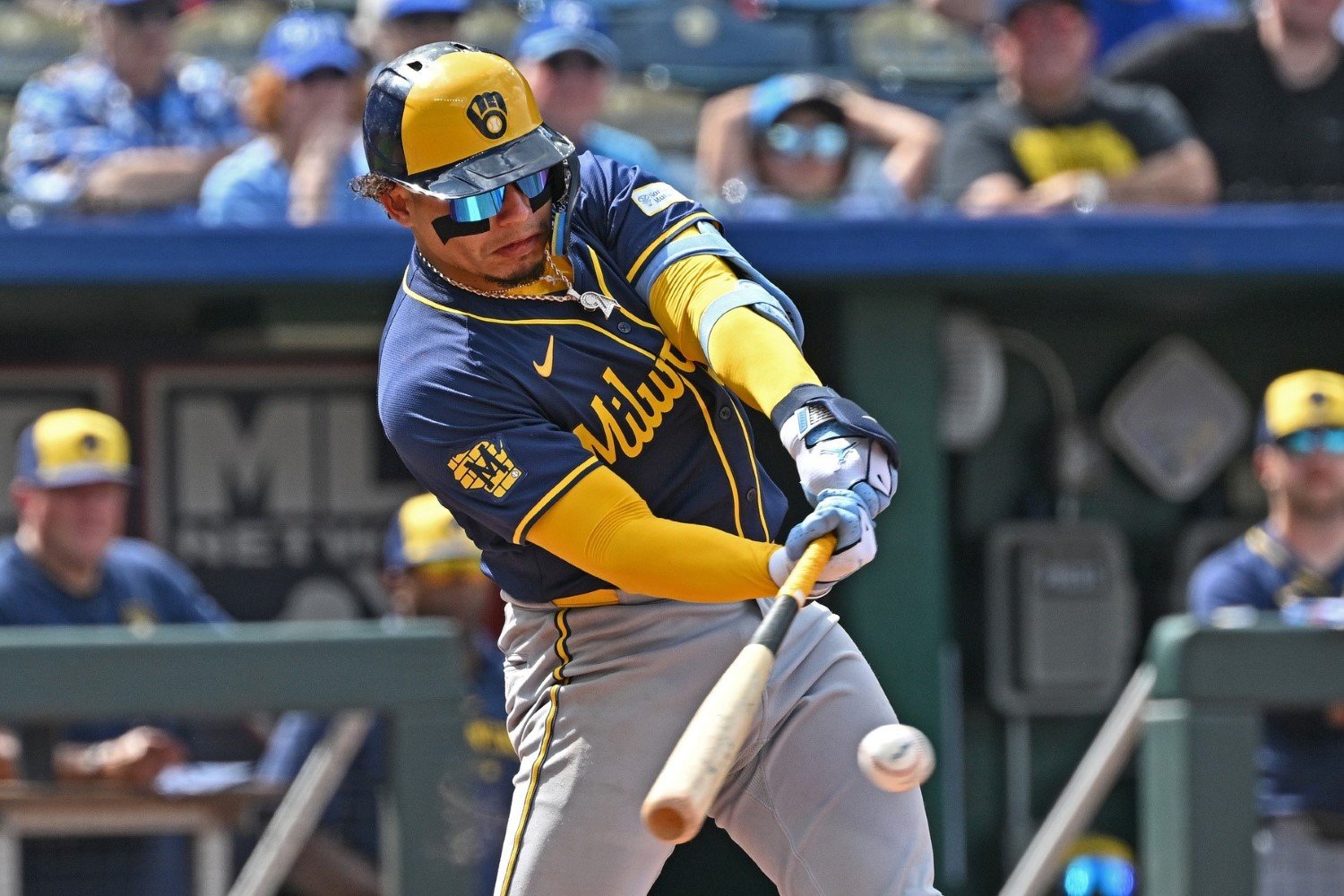 About a quarter of the way through the 2024 season, it's not looking good for most of my bold predictions for the Brewers. That's ok; it's in the nature of bold predictions. It still feels a little bit good, though, to report that one of the prognostications about which I felt the strongest seems to be coming true. William Contreras is having a breakout, superstar kind of season at the plate. Now, new numbers available on Baseball Savant give us a bit of insight into how good he really is. Thanks to the comprehensive motion-tracking technology that now captures all aspects of every MLB game, teams now know exactly how fast every swing is, and how squarely the bat meets the ball, and at what point along the bat. They can capture the length of a player's swing, by measuring the total distance (in three-dimensional space) traveled by the tip of the bat. The league's official public repository for this kind of data has now rolled out some curated sets of that data for all to see, and the top of the leaderboard is eye-opening for Brewers fans. Unsurprisingly (If you watch him closely), William Contreras doesn't stand out in terms of raw bat speed. His average swing speed of 74.1 miles per hour ranks a very respectable 50th of the 221 batters who qualify for the leaderboard posted at Baseball Savant, but he doesn't even lead the Brewers in that category. Willy Adames holds that honor, and Adames also paces the Brewers in the percentage of his swings that rise above the 75-MPH speed threshold, where production ticks up sharply. Contreras, at 46.1 percent, is close behind him again, but ranks 48th. Contreras slows his swing down at times, according to the situation, the pitch type he anticipates, and the way he senses that his skills match up against those of the opposing pitcher. That hurts him in these rankings, but it doesn't actually cut into his production. Compare Contreras's bat speed distribution on swings on which he makes contact with those of two of the game's other elite hitters, Juan Soto and Shohei Ohtani. Contreras doesn't have quite the same consistency to his swing that those two have, but he shows the same capacity to crank it up to elite levels that they do, and his mode for swing speed--the speed he achieves most often, for those of you who've let go of sixth-grade math terms--is virtually identical to those of Ohtani and Soto. That's not what makes Contreras elite, though. Rather, it's his ability to get a really good piece of the bat on a good-sized piece of the ball, while maintaining that swing speed. When a hitter can meet the ball on the sweet spot of the bat, at a relatively square angle such that the ball has to absorb most of the force of the swing, the resulting exit velocity is higher. Squared-up swings have at least 80 percent of the potential exit velocity created by the matchup of pitch speed and swing speed. Contreras has squared up the ball on 34.4 percent of his swings, 18th of the aforementioned 221 batters. Here, again, he doesn't even lead the Brewers; Brice Turang is a few spots ahead of him, at 34.7 percent. As you'd guess, though, Turang doesn't have nearly the swing speed Contreras does, which means that his squared-up balls aren't as valuable as Contreras's. If (instead of using all swings) we use only swings that result in contact as the denominator in finding the rate at which a hitter squares up the ball, Contreras rises to fifth in the league, though he still can't quite make it to the top of his own team's leaderboard. The very best hitter in baseball at squaring the ball up, when he makes contact at all? It's Blake Perkins--but again, that's with the caveat that he just doesn't swing as fast as even an average hitter, let alone an exceptional one. Now we're seeing how Contreras stands apart from the rest of the league. There are players who swing harder, or who generate more bat speed more often, but only Soto, Ohtani, and Contreras are so good at both creating that speed and finding the meat of the ball and bat with that violent a swing. Finally, Baseball Savant provides a stat that blends these two crucial abilities--squaring the ball up and doing it on fast swings. Whether you use the total number of swings or only ones that generate contact as the denominator, the league leader in this statistic (dubbed Blasts on the site) is none other than Contreras. To make clear just how valuable this skill is, let's plot it against overall run value created by hitters. How does a player without Luis Arráez's preternatural feel for contact or good speed hit .346/.429/.526, as Contreras is doing so far this season? Consistently putting a big piece of the bat on a big piece of the ball, even while swinging pretty hard, is the best formula. It's still likely that Contreras comes back to Earth a little bit--after all, his batting average on balls in play for the season is .415 right now. As we've discussed before, if he wants to take the final leap and become the best hitter in baseball, he probably needs to generate a few more line drives and fly balls and a few fewer grounders. With a good sense of the strike zone and one of the fastest, most accurate barrels in baseball, though, he's already close to as good as a hitter can get.
 -
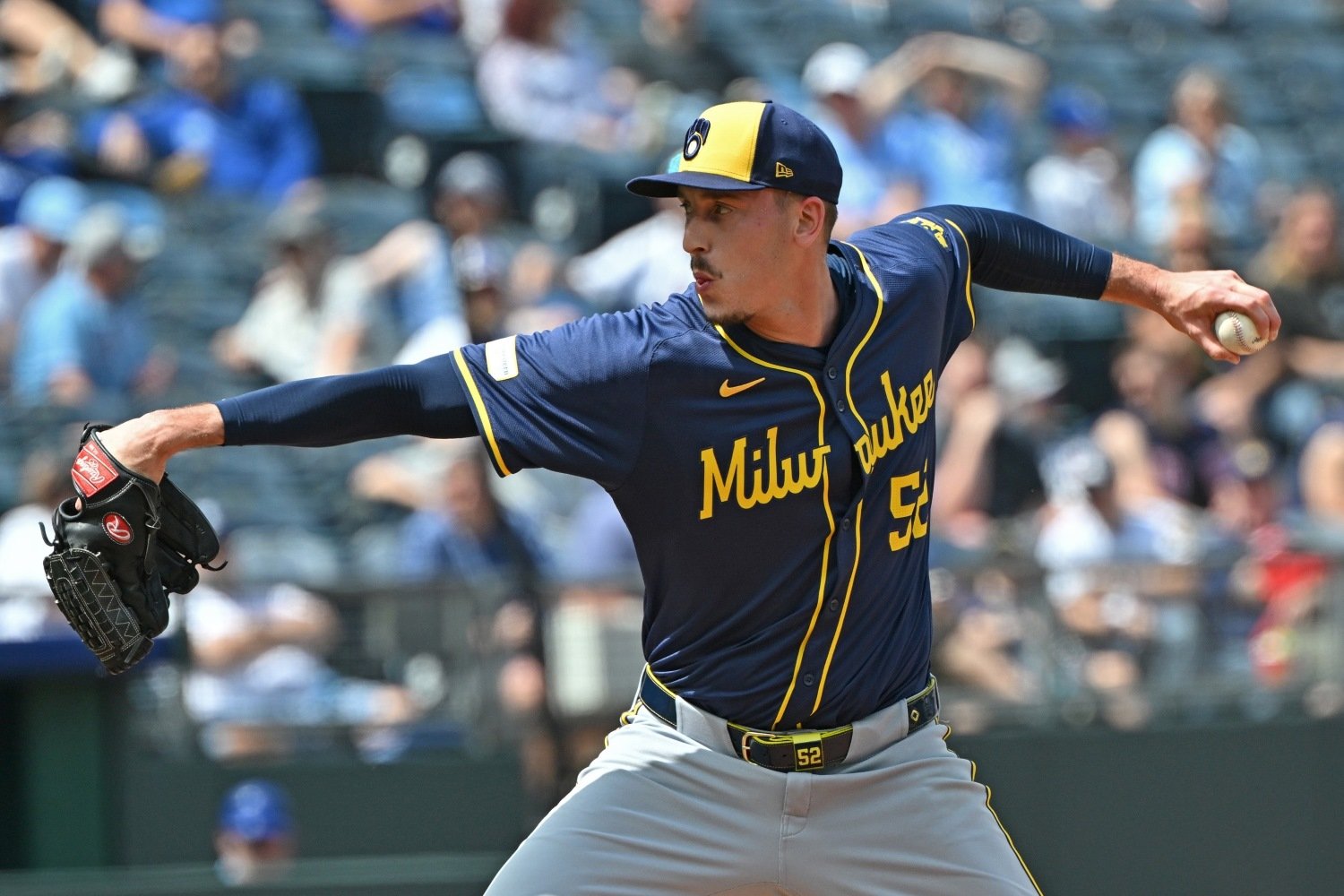 Coming into 2024, we knew the Brewers would have to overcome some depletion of their pitching depth. Trading Corbin Burnes and losing Brandon Woodruff to injury inevitably led to some scrambling, and the team didn't spring for the high-quality replacements that another, richer organization might have pursued. Staying competitive was bound to be more difficult after those losses, and injuries this spring have only made things harder. That shows up even in the surface-level numbers for the team. They're almost precisely average in terms of runs allowed per game, but in any of the last few seasons, it would have been viewed as a major disappointment for them to fall into that range. Worse, the peripheral numbers suggest that there's room for things to get worse. The Crew have the fourth-lowest strikeout rate in the big leagues, and have allowed home runs (6th-highest) and walks (8th-highest) at higher rates than the league average. An array of skillful, athletic young players behind the moundsmen and a focus on maximizing harmless contact usually allow the Brewers to outperform their collective strikeout, walk, and homer numbers, but these are still disquieting numbers. Improved though it is, the Milwaukee offense is incapable of slugging enough to outpace a below-average pitching staff; they need to see an improvement in run prevention, and further degradation seems more likely at the moment. One way to think about this, and to assess things at an even more granular level than the secondary outcomes do, is to study and evaluate the quality of each pitch the team throws, based on its release point, velocity, angles of release and approach to the plate, location, and movement. A handful of modern models now allow us to do just that, rating pitches based on the essential characteristics that should define them. Good versions of these do account, not only for raw velocity and movement, but for strange arm angles and looks a pitcher might give to a hitter, and for command, and for interactions between the various weapons in a pitcher's arsenal. I don't subscribe as strongly to these evaluations as some others do, but when done well, they provide a new kind of insight into the craft of pitching. The best of the publicly available numbers, in my opinion, is the model recently released by Baseball Prospectus, using the categories StuffPro (evaluating the physical characteristics of a pitch, alone) and PitchPro (which incorporates location, count, and other factors to provide a more holistic assessment). These numbers are expressed as runs better (negative) or worse (positive) than average, per 100 pitches thrown. Most of the time, these data are tabulated and studied at an individual level, but let's zoom out and take a look at the Brewers' StuffPro and PitchPro on each of the seven pitch types they throw most, along with their rankings among the 30 MLB teams for each. Brewers StuffPro and PitchPro by Pitch Type, 2024 Pitch Type MIL StuffPro Rank MIL PitchPro Rank Four-Seamer 0.2 17 0.2 21 Sinker 0.1 11 0 13 Cutter 0.4 22 0.3 26 Slider -0.2 25 -0.2 26 Sweeper -0.7 19 -0.5 22 Curveball -0.4 10 -0.4 10 Changeup 0.2 26 0.7 30 (Remember, negative run values are good here. Fewer runs is better for pitchers.) This chart is discouraging--especially because the team's PitchPro, with its extra inputs that should account for the things the Brewers would say make up for lackluster raw stuff, is worse than its StuffPro. If your team is below-average in terms of vital characteristics on every pitch but the sinker and the curveball, it's hard to make the case (as just about all of us would, without these numbers staring us in the face) that you're ahead of the curve when it comes to pitching development. These data certainly affirm certain things the Brewers do, like using fewer offspeed pitches than any other team in the league and leaning on sinkers instead. That's how they've performed better than you would expect them to, given the poor walk, strikeout, and home-run numbers cited above, and given the collective grades on their stuff. They're utilizing the right offerings within each individual pitcher's repertoire, and their increased urgency about getting the platoon advantage makes sense when you understand the disadvantage they face in terms of sheer stuff. Nor does the team lack for guys with good StuffPro and PitchPro, sometimes even on multiple offerings. Hoby Milner (sinker, curve), Trevor Megill (fastball, curve), and Bryan Hudson (fastball, sweeper) each have two separate weapons that rate well on PitchPro. Freddy Peralta has three pitches (fastball, sweeper, curve) that are better than average via StuffPro. On the whole, though, the team isn't as dazzling or dominant as they've been for the past half-decade. That's not really news. Again, the great rotation around which the team was built for that half-decade is now all but torn down, and the relief ace who made their bullpen so formidable the last couple years is on the 60-day injured list right now. Still, it's important to keep it in mind. The Brewers might need to explore some external upgrades, or revisit some of the engineering choices they've made in the pitching lab--not because that lab has been anything less than successful or essential to their winning ways over the past few years, but because pitching evolves very quickly. At the moment, the Brewers don't seem to be on the cutting edge, where they need to live in order to thrive.
 -
Peruse leaderboards based on newfangled pitch modeling metrics, and finding Brewers pitchers requires a disturbing amount of scrolling. For a team whose identity has been tied to good pitching for about a decade, it's troubling not to see good ratings. Is it a red flag, though, or just a sign of their subtle genius? Image courtesy of © Peter Aiken-USA TODAY Sports Coming into 2024, we knew the Brewers would have to overcome some depletion of their pitching depth. Trading Corbin Burnes and losing Brandon Woodruff to injury inevitably led to some scrambling, and the team didn't spring for the high-quality replacements that another, richer organization might have pursued. Staying competitive was bound to be more difficult after those losses, and injuries this spring have only made things harder. That shows up even in the surface-level numbers for the team. They're almost precisely average in terms of runs allowed per game, but in any of the last few seasons, it would have been viewed as a major disappointment for them to fall into that range. Worse, the peripheral numbers suggest that there's room for things to get worse. The Crew have the fourth-lowest strikeout rate in the big leagues, and have allowed home runs (6th-highest) and walks (8th-highest) at higher rates than the league average. An array of skillful, athletic young players behind the moundsmen and a focus on maximizing harmless contact usually allow the Brewers to outperform their collective strikeout, walk, and homer numbers, but these are still disquieting numbers. Improved though it is, the Milwaukee offense is incapable of slugging enough to outpace a below-average pitching staff; they need to see an improvement in run prevention, and further degradation seems more likely at the moment. One way to think about this, and to assess things at an even more granular level than the secondary outcomes do, is to study and evaluate the quality of each pitch the team throws, based on its release point, velocity, angles of release and approach to the plate, location, and movement. A handful of modern models now allow us to do just that, rating pitches based on the essential characteristics that should define them. Good versions of these do account, not only for raw velocity and movement, but for strange arm angles and looks a pitcher might give to a hitter, and for command, and for interactions between the various weapons in a pitcher's arsenal. I don't subscribe as strongly to these evaluations as some others do, but when done well, they provide a new kind of insight into the craft of pitching. The best of the publicly available numbers, in my opinion, is the model recently released by Baseball Prospectus, using the categories StuffPro (evaluating the physical characteristics of a pitch, alone) and PitchPro (which incorporates location, count, and other factors to provide a more holistic assessment). These numbers are expressed as runs better (negative) or worse (positive) than average, per 100 pitches thrown. Most of the time, these data are tabulated and studied at an individual level, but let's zoom out and take a look at the Brewers' StuffPro and PitchPro on each of the seven pitch types they throw most, along with their rankings among the 30 MLB teams for each. Brewers StuffPro and PitchPro by Pitch Type, 2024 Pitch Type MIL StuffPro Rank MIL PitchPro Rank Four-Seamer 0.2 17 0.2 21 Sinker 0.1 11 0 13 Cutter 0.4 22 0.3 26 Slider -0.2 25 -0.2 26 Sweeper -0.7 19 -0.5 22 Curveball -0.4 10 -0.4 10 Changeup 0.2 26 0.7 30 (Remember, negative run values are good here. Fewer runs is better for pitchers.) This chart is discouraging--especially because the team's PitchPro, with its extra inputs that should account for the things the Brewers would say make up for lackluster raw stuff, is worse than its StuffPro. If your team is below-average in terms of vital characteristics on every pitch but the sinker and the curveball, it's hard to make the case (as just about all of us would, without these numbers staring us in the face) that you're ahead of the curve when it comes to pitching development. These data certainly affirm certain things the Brewers do, like using fewer offspeed pitches than any other team in the league and leaning on sinkers instead. That's how they've performed better than you would expect them to, given the poor walk, strikeout, and home-run numbers cited above, and given the collective grades on their stuff. They're utilizing the right offerings within each individual pitcher's repertoire, and their increased urgency about getting the platoon advantage makes sense when you understand the disadvantage they face in terms of sheer stuff. Nor does the team lack for guys with good StuffPro and PitchPro, sometimes even on multiple offerings. Hoby Milner (sinker, curve), Trevor Megill (fastball, curve), and Bryan Hudson (fastball, sweeper) each have two separate weapons that rate well on PitchPro. Freddy Peralta has three pitches (fastball, sweeper, curve) that are better than average via StuffPro. On the whole, though, the team isn't as dazzling or dominant as they've been for the past half-decade. That's not really news. Again, the great rotation around which the team was built for that half-decade is now all but torn down, and the relief ace who made their bullpen so formidable the last couple years is on the 60-day injured list right now. Still, it's important to keep it in mind. The Brewers might need to explore some external upgrades, or revisit some of the engineering choices they've made in the pitching lab--not because that lab has been anything less than successful or essential to their winning ways over the past few years, but because pitching evolves very quickly. At the moment, the Brewers don't seem to be on the cutting edge, where they need to live in order to thrive. View full article


