


Matthew Trueblood
-
Posts
1,964 -
Joined
-
Last visited
-
Days Won
10
Content Type
Profiles
Forums
Blogs
Events
News
2026 Milwaukee Brewers Top Prospects Ranking
Milwaukee Brewers Videos
2022 Milwaukee Brewers Draft Picks
Milwaukee Brewers Free Agent & Trade Rumors, Notes, & Tidbits
Guides & Resources
2023 Milwaukee Brewers Draft Picks
2024 Milwaukee Brewers Draft Picks
The Milwaukee Brewers Players Project
2025 Milwaukee Brewers Draft Pick Tracker
2026 Milwaukee Brewers Draft Tracker: Picks & Bonuses
Store
Downloads
Gallery
Everything posted by Matthew Trueblood
-
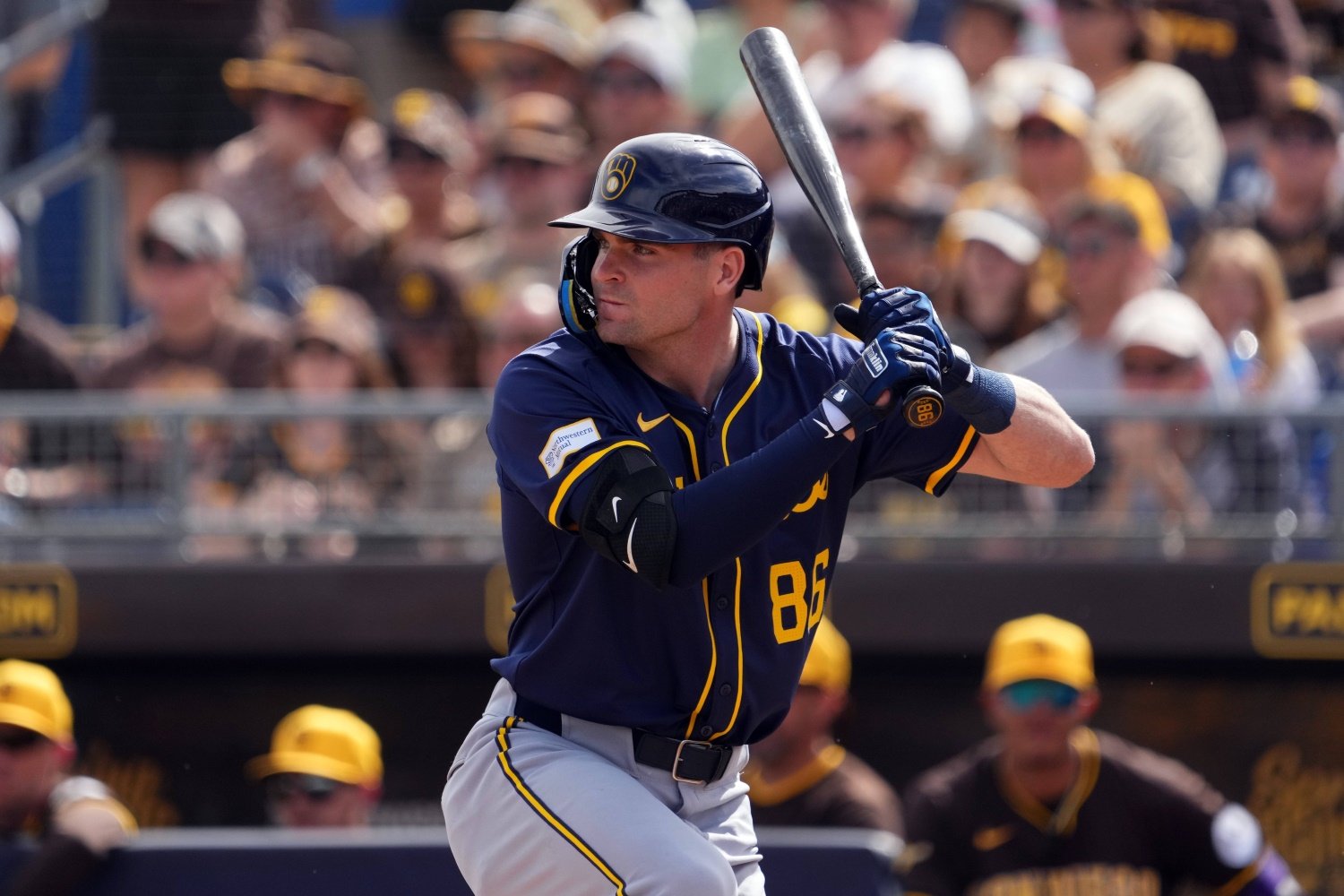 That quip, like much of what Murphy says, was more badinage than genuine, serrated barb. He thinks Tyler Black can help the Brewers a great deal, and that he'll be a competent corner infielder with the glove. But does he trust Black yet? "No. Not yet," Murphy said Saturday, after a Friday contest in which Black chased down two difficult foul pop-ups but let a ground ball toward the second base position draw him out of position and committed an error. "The kid [as a person] doesn’t have to show me more. I really like the player, but he’s gotta hone in and refine himself at both [corner infield] spots. I think he’s gonna be great at them. "He’s definitely a big-leaguer. He’s gonna make his debut this year. I’m excited about it. This kid can hit, man. He can be a really good offensive player." I've asked around about Black over the last few months, and a few themes recur. Firstly, other teams had the same inclination that the Brewers seem to have had when they first selected Black, in 2021: that his big-spaces athleticism really might belong in the outfield. Scouts from three other organizations either turned Black in as an outfielder before the draft or recommended moving him there in pro looks, and indeed, the Brewers had him in the outfield nearly as often as on the dirt in 2021 and 2022. However, other reports did note the same things (a compact frame, quick twitch, and good makeup) that led the Brewers to confine him to the infield last year (97 games at third base, 16 at first). Scouts round up on players like Black, who combine such explosive physical skills with an intense work ethic, and Murphy clearly has the same impulse. The play that stood out most on Friday was the one on which Black was shaded toward the hole between first and second, and went at least a half-dozen steps to his right to field a grounder--only to throw errantly when trying to hit a covering Bryse Wilson at the base. For a player with more than 16 games of professional experience at first, it's obvious that that ball isn't one for you to handle. You take your chances on your second baseman getting there, and you get yourself to the base. Black was so inexperienced, though, that he almost made a brilliant play. The way he charged after pop-ups down near the entrance to the Brewers dugout, and later back beyond the end of it, is related. Black has playmaking instincts. He wants the ball, and because of that, he's the kind of player who can stretch the bounds of his position (and even the playing field) and earn the team an extra out here or there. It seems a small thing, but it can sometimes be game-breaking. At his best, Anthony Rizzo (himself an overqualified athlete for first base, although not a plausible candidate for most other spots on the diamond, as Black is) did this, with several catches at the very edges of the playing field (or beyond it). Keith Hernandez could sometimes cover the whole right side of the infield, as Black tried to do Friday, and was aggressive in the extreme cutting down the lead runner on bunts. Few teams can afford to put a player with this level of athleticism and baseball skill at a spot like first base, but given the Brewers' wealth of outfield options and a creeping threat of logjam at third base, they almost have to try him there for a bit. As he gains experience, he might transform from a liability at the position (he's also been a hair slow on balls hit hard but fairly close to him, on at least two occasions this week) to a major asset--the kind of player who reshapes the field and opens up defensive possibilities within a play. Black isn't a candidate to open the season with the parent club. He's not on the 40-man roster, and while he hasn't disappointed or failed anyone in the organization during camp, he also hasn't asserted himself the way he would have needed to do in order to make that leap right away. It'll be interesting to see how often he mans each corner in Nashville in April, though. Murphy has clearly wanted looks at him at first, and while Rhys Hoskins has that position nailed down for 2024, it's easy to imagine Black being a bench bat and floating four-corners super sub late in this season, then the starting first baseman in 2025. That depends mostly on his bat, but his legs and his glove will make him stand out at the position, if and when he gains command of the rudiments.
 -
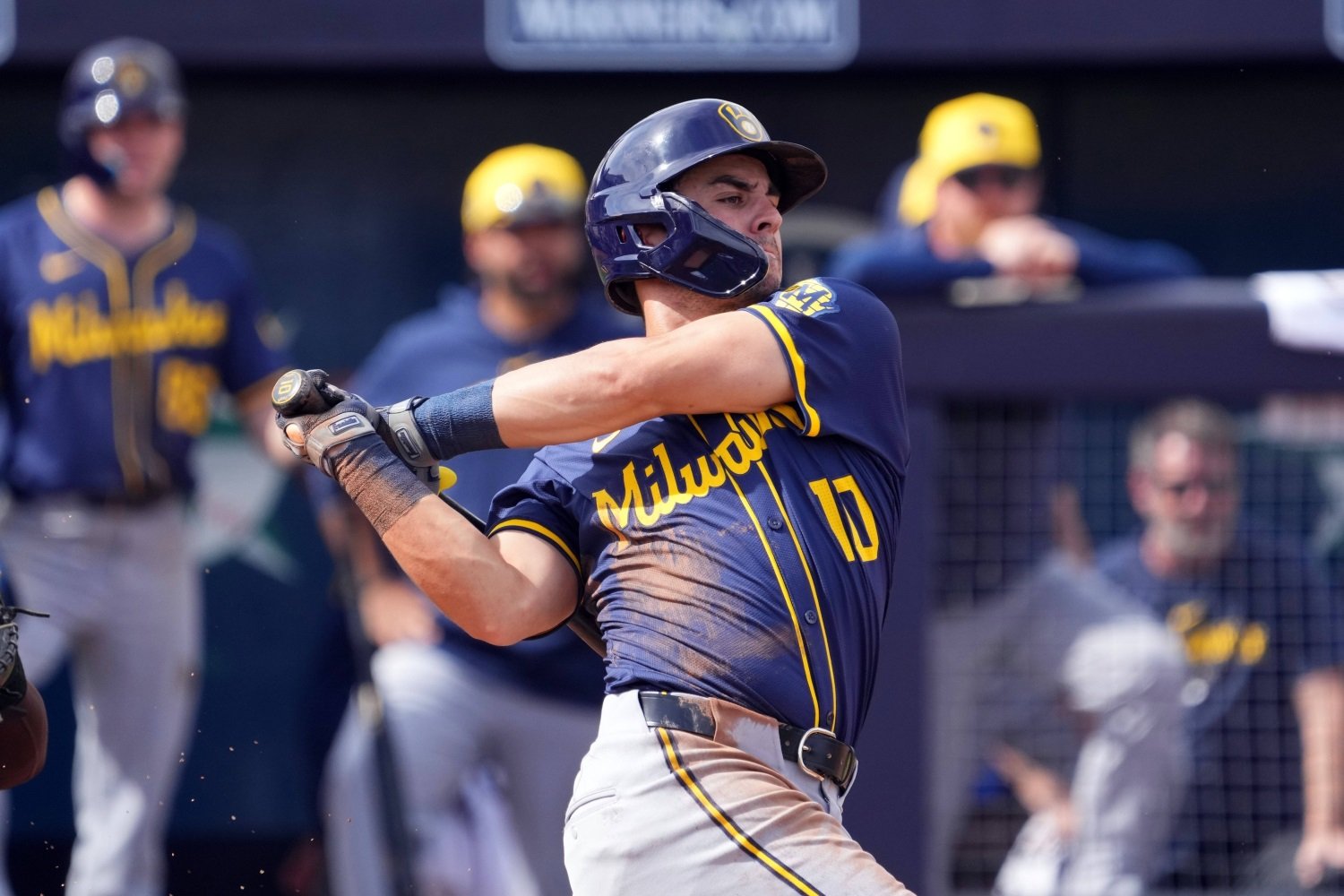
It was pointed out to Milwaukee Brewers manager Pat Murphy that his young first baseman had made a few impressive plays in early Cactus League play. "Yeah," Murphy said with a sardonic smile. "Made some [crummy] ones, too." Image courtesy of © Joe Camporeale-USA TODAY Sports That quip, like much of what Murphy says, was more badinage than genuine, serrated barb. He thinks Tyler Black can help the Brewers a great deal, and that he'll be a competent corner infielder with the glove. But does he trust Black yet? "No. Not yet," Murphy said Saturday, after a Friday contest in which Black chased down two difficult foul pop-ups but let a ground ball toward the second base position draw him out of position and committed an error. "The kid [as a person] doesn’t have to show me more. I really like the player, but he’s gotta hone in and refine himself at both [corner infield] spots. I think he’s gonna be great at them. "He’s definitely a big-leaguer. He’s gonna make his debut this year. I’m excited about it. This kid can hit, man. He can be a really good offensive player." I've asked around about Black over the last few months, and a few themes recur. Firstly, other teams had the same inclination that the Brewers seem to have had when they first selected Black, in 2021: that his big-spaces athleticism really might belong in the outfield. Scouts from three other organizations either turned Black in as an outfielder before the draft or recommended moving him there in pro looks, and indeed, the Brewers had him in the outfield nearly as often as on the dirt in 2021 and 2022. However, other reports did note the same things (a compact frame, quick twitch, and good makeup) that led the Brewers to confine him to the infield last year (97 games at third base, 16 at first). Scouts round up on players like Black, who combine such explosive physical skills with an intense work ethic, and Murphy clearly has the same impulse. The play that stood out most on Friday was the one on which Black was shaded toward the hole between first and second, and went at least a half-dozen steps to his right to field a grounder--only to throw errantly when trying to hit a covering Bryse Wilson at the base. For a player with more than 16 games of professional experience at first, it's obvious that that ball isn't one for you to handle. You take your chances on your second baseman getting there, and you get yourself to the base. Black was so inexperienced, though, that he almost made a brilliant play. The way he charged after pop-ups down near the entrance to the Brewers dugout, and later back beyond the end of it, is related. Black has playmaking instincts. He wants the ball, and because of that, he's the kind of player who can stretch the bounds of his position (and even the playing field) and earn the team an extra out here or there. It seems a small thing, but it can sometimes be game-breaking. At his best, Anthony Rizzo (himself an overqualified athlete for first base, although not a plausible candidate for most other spots on the diamond, as Black is) did this, with several catches at the very edges of the playing field (or beyond it). Keith Hernandez could sometimes cover the whole right side of the infield, as Black tried to do Friday, and was aggressive in the extreme cutting down the lead runner on bunts. Few teams can afford to put a player with this level of athleticism and baseball skill at a spot like first base, but given the Brewers' wealth of outfield options and a creeping threat of logjam at third base, they almost have to try him there for a bit. As he gains experience, he might transform from a liability at the position (he's also been a hair slow on balls hit hard but fairly close to him, on at least two occasions this week) to a major asset--the kind of player who reshapes the field and opens up defensive possibilities within a play. Black isn't a candidate to open the season with the parent club. He's not on the 40-man roster, and while he hasn't disappointed or failed anyone in the organization during camp, he also hasn't asserted himself the way he would have needed to do in order to make that leap right away. It'll be interesting to see how often he mans each corner in Nashville in April, though. Murphy has clearly wanted looks at him at first, and while Rhys Hoskins has that position nailed down for 2024, it's easy to imagine Black being a bench bat and floating four-corners super sub late in this season, then the starting first baseman in 2025. That depends mostly on his bat, but his legs and his glove will make him stand out at the position, if and when he gains command of the rudiments. View full article
-
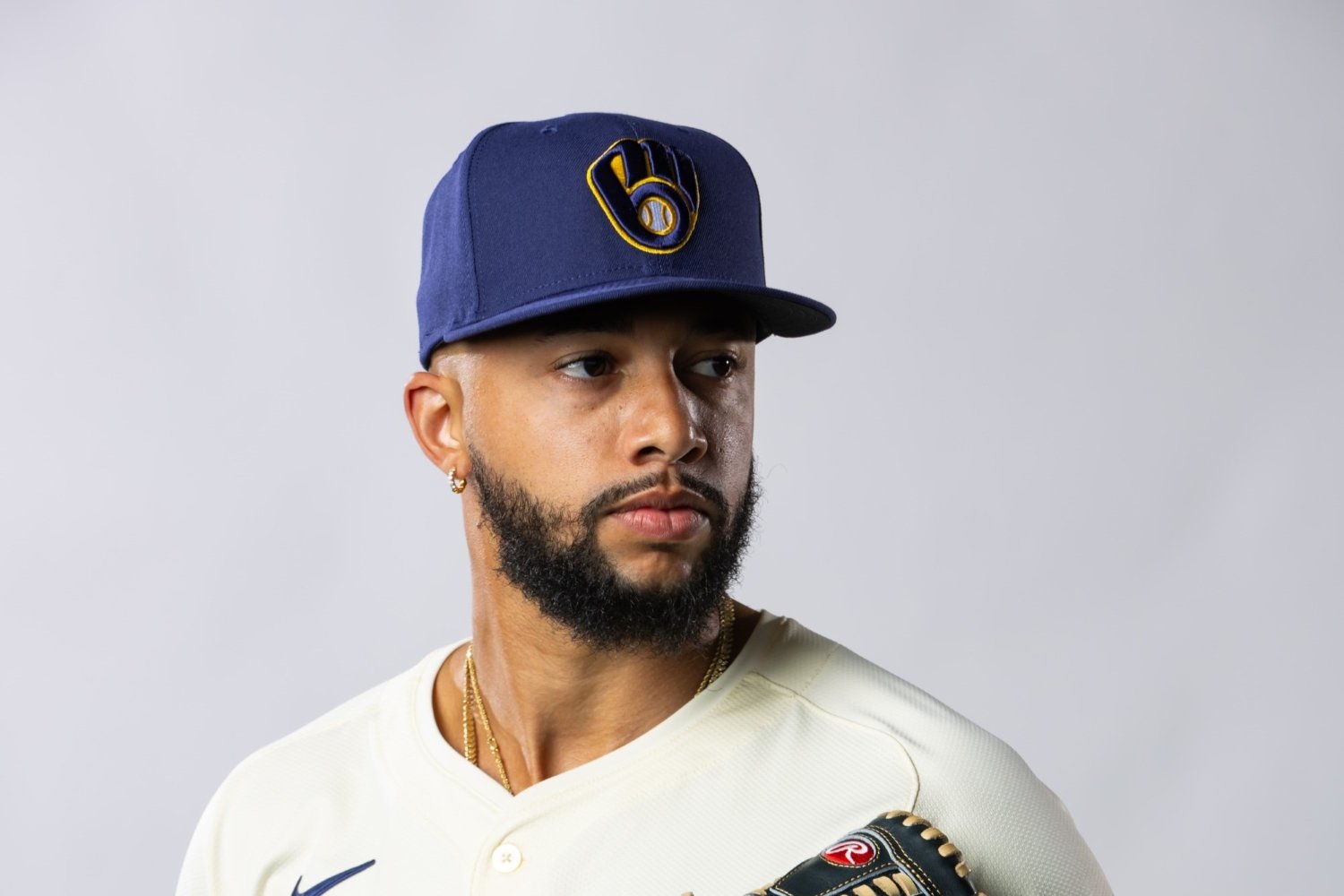 Last year, Devin Williams changed the shape of his cutter. It's always been a purely supplemental pitch for him, but it's not without some value--especially for a pitcher who specializes in a pitch (that devastating screwball, which he calls a changeup and the world labels "The Airbender") that works best when hitters chase it outside the zone. The thing was, prior to 2023, his cutter (and his slider, two offerings that often merged into one another) was more like a half-hearted breaking ball than a variant of his fastball. As the former, it didn't get him whiffs, it didn't get him ground balls, and it didn't do much to set up the screwball. Thus, Williams firmed it up, once and for all, and he got the pitch on plane with his four-seamer. It became an offering that could buzz in on the hands of left-handed batters, forcing them into weak contact on the ground and making them more likely to flail if he followed it up with the airbender. "That was me refining the shape that I wanted—to get that shape more consistently," Williams said Friday, inside the Brewers' clubhouse at their spring training complex in Maryvale. "I’m feeling really comfortable with it now. I kind of even have two versions of that pitch now." It's funny to hear him put it that way, because when you first glimpse the movement profiles prior to 2023 and in 2023, it looks like the opposite happened. It looks like he went from two flavors of cutter to one. In reality, though, he threw the cutter so rarely and so ineffectually before 2023 that he essentially had no cutter. It was a pitch that got into the stew with his slider, and neither came out as anything with very much savor to it at all. In 2023, what you see is a true cutter, with ample ride to make lefties think four-seamer, swing for the four-seamer, and get eaten alive by a pitch four or five inches further up their bat handle than the four-seamer. Williams confirmed that it was the pitch he's gaining more feel for and more confidence in with which he sawed off Christian Yelich in a sim game earlier this week. "Yeah, that was a cutter," Williams said, with a trace of satisfaction in having overpowered his fellow superstar. It's pretty safe to say that we'll see more of that pitch in 2024--at least early on. Curiously, though, as each of the past four seasons have progressed, Williams has become more dependent on his screwball. Within seasons, perhaps because of the difficulty of working on things between outings as a reliever and the need to lean on what he trusts most, Williams has become more Airbender-dependent. "I don't really think that has anything to do with it," Williams said, pushing back on the suggestion that a lack of side work would be part of the cause. "It’s just who I’m facing, and if I think that’s the right pitch in that situation. Pitch to pitch, hitter to hitter." Besides, Williams isn't looking for more regular work. On the contrary, after 2023 saw Craig Counsell use him more tactically and more sparingly than ever (leading to one of the highest average Leverage Indexes for any reliever in a season in baseball history), Williams wants to do the same thing this year. "I prefer to be in when it matters. I don’t really like to get in in games where the outcome’s basically been decided," Williams said. One of the biggest hurdles to consistent and long-lasting success for relievers is the fact that they rarely have the privilege of knowing whether or not they'll pitch on a given day, even as much as halfway through the game. Working a bit more, albeit on a more regimented schedule, would be one way to solve that problem, but Williams prefers to be reserved for (and then weaponized in) the huge moments. "There’s definitely times where you need [to get into a game for some work], if it gets to a week, eight, nine days, you should get back in there, because that’s just a long time to not be on the mound," Williams said. But: "I liked how Counsell would manage that, because I was available more often. Say I had just thrown in a game to get in there. And then I throw again the next day in a save situation. Now, that’s two in a row. And really, only one of those mattered. Versus, had I not thrown that game, then I was available for that save opportunity, or a tie game, whatever it might be, And then that’s only day two. I could potentially go three in a row. I’ve done that a few times over the past couple years. I think that keeps me fresh for games that I can actually have a bigger impact on." There are obvious drawbacks to that approach. Pitching on consecutive days makes you worse, both within that game and over the following day or two. Doing so consistently increases injury risk. Thus, a manager whose closer wants to be used only in big moments has to have a pretty high threshold for what constitutes a big moment. Otherwise, the closer will burn out or break. Williams himself has had that issue once already in his career. He also only got 176 outs (58 2/3 innings) last season. In a perfect world, your best pitcher (on a batter-for-batter basis) gets more of your outs than that. Williams's new manager, Pat Murphy, grazed that subject in talking about the value of guys like Bryse Wilson, who might soak up a lot of innings in relief for the Brewers this year. Williams's limitations in terms of availability put pressure on his teammates. If it works as well as it did in 2023, though, it will be hard to argue with the approach. Williams has honed a truer three-pitch mix, and like many of his cohort, he's manipulating one of those offerings to make it work in multiple ways, depending on situation and matchup. He remains committed to a narrower but nastier role than those filled by any previous generation of closers. It's up to the rest of the pitching staff to ensure that they get him the ball with the right frequency, but once he gets it, he's as poised to dominate as ever. Research assistance provided by TruMedia.
 -
The Milwaukee Brewers' closer made his 2024 Cactus League debut Saturday, working a scoreless (though adventuresome) inning in what turned into a messy loss. Beforehand, he talked about last season, and the one ahead. It's pretty safe to say that we'll see more of that pitch in 2024--at least early on. Curiously, though, as each of the past four seasons have progressed, Williams has become more dependent on his screwball. Within seasons, perhaps because of the difficulty of working on things between outings as a reliever and the need to lean on what he trusts most, Williams has become more Airbender-dependent. "I don't really think that has anything to do with it," Williams said, pushing back on the suggestion that a lack of side work would be part of the cause. "It’s just who I’m facing, and if I think that’s the right pitch in that situation. Pitch to pitch, hitter to hitter." Besides, Williams isn't looking for more regular work. On the contrary, after 2023 saw Craig Counsell use him more tactically and more sparingly than ever (leading to one of the highest average Leverage Indexes for any reliever in a season in baseball history), Williams wants to do the same thing this year. "I prefer to be in when it matters. I don’t really like to get in in games where the outcome’s basically been decided," Williams said. One of the biggest hurdles to consistent and long-lasting success for relievers is the fact that they rarely have the privilege of knowing whether or not they'll pitch on a given day, even as much as halfway through the game. Working a bit more, albeit on a more regimented schedule, would be one way to solve that problem, but Williams prefers to be reserved for (and then weaponized in) the huge moments. "There’s definitely times where you need [to get into a game for some work], if it gets to a week, eight, nine days, you should get back in there, because that’s just a long time to not be on the mound," Williams said. But: "I liked how Counsell would manage that, because I was available more often. Say I had just thrown in a game to get in there. And then I throw again the next day in a save situation. Now, that’s two in a row. And really, only one of those mattered. Versus, had I not thrown that game, then I was available for that save opportunity, or a tie game, whatever it might be, And then that’s only day two. I could potentially go three in a row. I’ve done that a few times over the past couple years. I think that keeps me fresh for games that I can actually have a bigger impact on." There are obvious drawbacks to that approach. Pitching on consecutive days makes you worse, both within that game and over the following day or two. Doing so consistently increases injury risk. Thus, a manager whose closer wants to be used only in big moments has to have a pretty high threshold for what constitutes a big moment. Otherwise, the closer will burn out or break. Williams himself has had that issue once already in his career. He also only got 176 outs (58 2/3 innings) last season. In a perfect world, your best pitcher (on a batter-for-batter basis) gets more of your outs than that. Williams's new manager, Pat Murphy, grazed that subject in talking about the value of guys like Bryse Wilson, who might soak up a lot of innings in relief for the Brewers this year. Williams's limitations in terms of availability put pressure on his teammates. If it works as well as it did in 2023, though, it will be hard to argue with the approach. Williams has honed a truer three-pitch mix, and like many of his cohort, he's manipulating one of those offerings to make it work in multiple ways, depending on situation and matchup. He remains committed to a narrower but nastier role than those filled by any previous generation of closers. It's up to the rest of the pitching staff to ensure that they get him the ball with the right frequency, but once he gets it, he's as poised to dominate as ever. Research assistance provided by TruMedia. View full article
-
Some of Pat Murphy's words about his No. 2 starter made the rounds online Friday, but they don't necessarily capture the message the skipper really wanted to send. Image courtesy of © Joe Camporeale-USA TODAY Sports We humans don't always make good estimates of the probability of things. The more uncertain we are about something, the truer that tends to be. When asked Friday about Wade Miley being behind his fellow starters in ramping up for the regular season, Murphy was circumspect, clearly afflicted with uncertainty. He briefly alighted on "50-50" when asked about the chances that the grizzled southpaw would be ready in late March, but the next words out of his mouth were probably more telling. "I don't really know. I don't want to put a percentage on it," Murphy said. "I'd say that we'll let you know more in about 10 days." The tone and tenor of that exchange led to some concern from fans online, and it does seem like Miley could start the season on the injured list. In Saturday's discussion with reporters, Murphy clarified the matter further. "He came in experiencing some soreness in his shoulder. He's played catch, played through it, hasn't had any problems since. We just want to go slow." Miley has yet to pitch to hitters in a live environment, but could cross that threshold soon. No one should have had any expectation that Miley, now in his late 30s and having had significant injury issues over the last few years, was going to throw more than 150 innings in 2024. Even that figure would probably be a welcome surprise for the Brewers. Cast in that light, the news about his slow start to the spring almost doesn't rise to the level of 'news'. Miley is no less likely to make a significant contribution to the team's starting rotation today than he was when he signed a contract to return to the club in early December. What Gary Sánchez Can and Can't Do Meanwhile, another free agent addition from this winter (a much more recent one, in fact) is also behind his colleagues in preparing for the season, but is getting close to turning a corner himself. Catcher Gary Sánchez is, for the moment, just that. He's been catching sim games and live batting practice, and can even make hard throws down to second base with his still-healing right hand and wrist. However, thanks to lingering soreness, Sánchez is still not yet hitting against live pitching with a hard ball. He's progressed from flips to hitting against pitches thrown from out in front of him, but he's only used softer, foam balls for that exercise to this point. "Sunday, he hits baseballs," Murphy said. This is a good, concrete reminder of the physicality and the forceful collisions involved in the sport. Sánchez isn't yet able to withstand the force of a hard ball, thrown hard, when his bat connects with it. That's an aspect of hitting we often take for granted, but it's why (to take one broad-spectrum example) baseball people have always talked so much about the strong wrists of great hitters. Sánchez surely isn't taking it for granted this spring, though. Obviously, he won't be able to begin the season as a DH and wait for the catching to catch up. The opposite circumstance is a tough needle to thread, and could land him on the injured list to open the season, but he's making progress. At this stage, that's all that's needed, and the variety of ways the Brewers can help him get modified reps while he builds up to hitting in game-like environs surely helps. The Eric Haase Dilemma Ever since the Sánchez signing, catcher Eric Haase has been in limbo. After the team signed him for $1 million back in December, he seemed relatively safe in his backup role to William Contreras, but the Sánchez deal shoved him right to the edge of obsolescence, in the context of this roster. Carrying three catchers is a viable but remote possibility--the former because Contreras and Sánchez can both DH more often if there's an extra catcher on the bench when one of them does so, the latter because the team has so many other options to fill out their positional roster and the space runs short in a hurry. "He's been great. This kid's an awesome kid, man," Murphy said of the 32-year-old Haase. "I hope he's with us. He's an important piece. Mature, handles the pitching staff. I value him. But he is in a difficult spot." None of those statements were inauthentic, but that's Murphy's way of acknowledging that cruel roster realities might win out over his preferences or predilections. Haase himself left no doubt: he wants to be here. "It was definitely a big factor," Haase said about the team's catching coaching infrastructure, and of the organization as a whole. "Coming to a place that has a winning culture, that wants to win, that has a good history of winning; that’s very important to me. It’s no secret: we all might only have a little bit of time left. The goal here is to win and it’s to win now." Haase effused about the track record for the team in improving catchers' receiving, and about the pitching staff, which he said is often the most important variable in a catcher's perceived success or failure. He was glad when the Brewers wanted him; it shortened his free agency. "When they showed interest early in the offseason, that was very exciting for me, and kind of narrowed things down quickly," he said. Unfortunately for Haase, things might widen back out a bit in the not-so-distant future. View full article
-
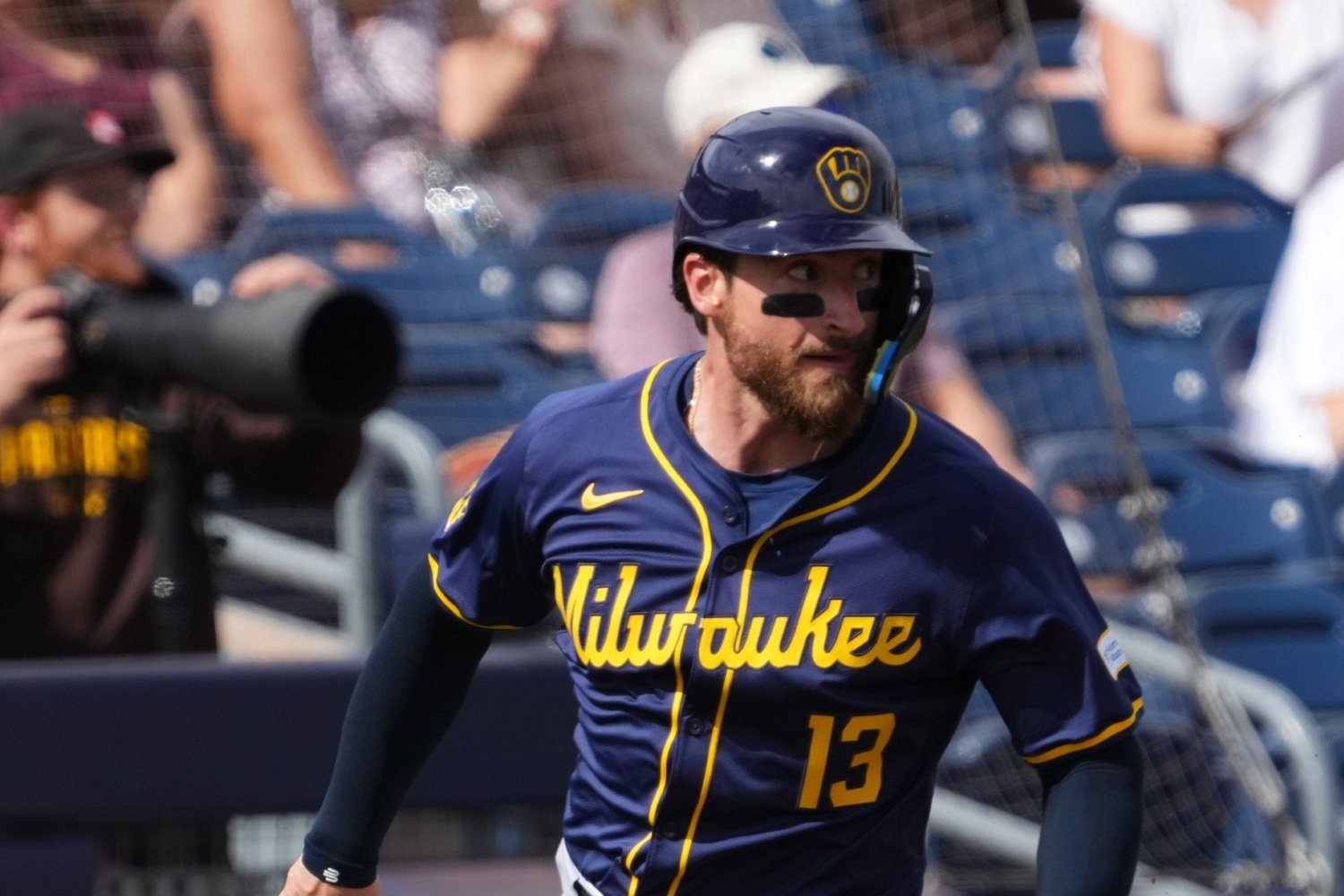 We humans don't always make good estimates of the probability of things. The more uncertain we are about something, the truer that tends to be. When asked Friday about Wade Miley being behind his fellow starters in ramping up for the regular season, Murphy was circumspect, clearly afflicted with uncertainty. He briefly alighted on "50-50" when asked about the chances that the grizzled southpaw would be ready in late March, but the next words out of his mouth were probably more telling. "I don't really know. I don't want to put a percentage on it," Murphy said. "I'd say that we'll let you know more in about 10 days." The tone and tenor of that exchange led to some concern from fans online, and it does seem like Miley could start the season on the injured list. In Saturday's discussion with reporters, Murphy clarified the matter further. "He came in experiencing some soreness in his shoulder. He's played catch, played through it, hasn't had any problems since. We just want to go slow." Miley has yet to pitch to hitters in a live environment, but could cross that threshold soon. No one should have had any expectation that Miley, now in his late 30s and having had significant injury issues over the last few years, was going to throw more than 150 innings in 2024. Even that figure would probably be a welcome surprise for the Brewers. Cast in that light, the news about his slow start to the spring almost doesn't rise to the level of 'news'. Miley is no less likely to make a significant contribution to the team's starting rotation today than he was when he signed a contract to return to the club in early December. What Gary Sánchez Can and Can't Do Meanwhile, another free agent addition from this winter (a much more recent one, in fact) is also behind his colleagues in preparing for the season, but is getting close to turning a corner himself. Catcher Gary Sánchez is, for the moment, just that. He's been catching sim games and live batting practice, and can even make hard throws down to second base with his still-healing right hand and wrist. However, thanks to lingering soreness, Sánchez is still not yet hitting against live pitching with a hard ball. He's progressed from flips to hitting against pitches thrown from out in front of him, but he's only used softer, foam balls for that exercise to this point. "Sunday, he hits baseballs," Murphy said. This is a good, concrete reminder of the physicality and the forceful collisions involved in the sport. Sánchez isn't yet able to withstand the force of a hard ball, thrown hard, when his bat connects with it. That's an aspect of hitting we often take for granted, but it's why (to take one broad-spectrum example) baseball people have always talked so much about the strong wrists of great hitters. Sánchez surely isn't taking it for granted this spring, though. Obviously, he won't be able to begin the season as a DH and wait for the catching to catch up. The opposite circumstance is a tough needle to thread, and could land him on the injured list to open the season, but he's making progress. At this stage, that's all that's needed, and the variety of ways the Brewers can help him get modified reps while he builds up to hitting in game-like environs surely helps. The Eric Haase Dilemma Ever since the Sánchez signing, catcher Eric Haase has been in limbo. After the team signed him for $1 million back in December, he seemed relatively safe in his backup role to William Contreras, but the Sánchez deal shoved him right to the edge of obsolescence, in the context of this roster. Carrying three catchers is a viable but remote possibility--the former because Contreras and Sánchez can both DH more often if there's an extra catcher on the bench when one of them does so, the latter because the team has so many other options to fill out their positional roster and the space runs short in a hurry. "He's been great. This kid's an awesome kid, man," Murphy said of the 32-year-old Haase. "I hope he's with us. He's an important piece. Mature, handles the pitching staff. I value him. But he is in a difficult spot." None of those statements were inauthentic, but that's Murphy's way of acknowledging that cruel roster realities might win out over his preferences or predilections. Haase himself left no doubt: he wants to be here. "It was definitely a big factor," Haase said about the team's catching coaching infrastructure, and of the organization as a whole. "Coming to a place that has a winning culture, that wants to win, that has a good history of winning; that’s very important to me. It’s no secret: we all might only have a little bit of time left. The goal here is to win and it’s to win now." Haase effused about the track record for the team in improving catchers' receiving, and about the pitching staff, which he said is often the most important variable in a catcher's perceived success or failure. He was glad when the Brewers wanted him; it shortened his free agency. "When they showed interest early in the offseason, that was very exciting for me, and kind of narrowed things down quickly," he said. Unfortunately for Haase, things might widen back out a bit in the not-so-distant future.
 -
Last year was an encouraging but not fully satisfying rookie season for the Milwaukee Brewers' 2021 first-round pick. With a new defensive position in the front of his mind and a clear idea of how to progress at the plate, he's set his sights on real stardom in 2024. Image courtesy of © Michael McLoone-USA TODAY Sports The first thing that jumps out when you talk to Sal Frelick is that he's not talking about his conversion to the infield as a passing flight of fancy. To him, this move (while not total or definitive) is very real, and it's happening. In the Brewers clubhouse in Maryvale Friday, he talked about the differences in the way he needs to prepare and approach defense between his established positions and the one he adopted over the offseason. "There are just little things you have to think about differently with different hitters. For the most part, in the outfield, I’m just shaded a few steps to my left or right," Frelick said. "But here, it’s sometimes like, I’ve gotta take away bunt, gotta basically play shortstop when a lefty’s up, gotta hug the line, so it’s a little different with the positioning, but the pre-step and setup is the same for the most part." Did you catch it? He not only called the infield "here," but isn't thinking of the infield as an amorphous project. He's not an infielder. He's a third baseman. All the unusual positioning he's talking about there relates to third base. "I’ve been doing both all spring," Frelick said of the work fans don't see, on backfields and with teammates. "I make sure I get my work in with the infielders here [in Maryvale, even when the team is playing elsewhere in the Cactus League], and I’m not working with the outfielders, but during BP I’ll make sure I go out to the outfield and shag, just to make sure I’m getting those live reads. Last game was the first game I did both in the same game—started in the outfield, came to the infield, which I think we’ll try to do a little bit more of here, just because you never know the situation." Indeed, you never do. Admittedly, too, Frelick needs many more reps in the infield than he does in the outfield, as he proved with a dazzling, diving catch in right field Tuesday in Tempe. A much more experienced outfielder, Frelick can play great defense there with relatively little practice. It's on the dirt that he needs to progress beyond the rudiments. Still, it's telling that Frelick isn't working with the outfielders in any of their dedicated drills. He's fully committed to this. Whether it will turn into a consistent thing or not remains to be seen, but he's certainly trying to make it a viable option. Manager Pat Murphy hasn't made any definitive statements about the position switch, except to confirm that it's no gimmick. The most important word in Murphy's vocabulary is "trust". He thinks about players and possibilities in terms of what and whom he trusts, and there's no player he's proclaimed his trust in more often this week than Frelick. "I don’t know if the analytics are good or bad on this guy, to be honest with you," Murphy said Wednesday. "I know one thing: he’s a ballplayer. Is it pretty all the time? No. But I trust him." In that light, it's easy to see how the skipper might entrust Frelick with a big role in the offense, and a flexible but equally important one in the team's run prevention. We can safely assume, based on last season, that the sophomore will at least meet the latter expectation, If nothing else, he can be a sterling defensive outfielder. Whether he emerges as more than a useful role player, then, depends mostly on his bat. Frelick has a plan to improve on that side of the ledger. His numbers were fine in his rookie campaign, but there was a troublesome dearth of power. Most of that problem lied in his inability to hit non-fastballs--only, unlike most players who struggle against soft stuff, Frelick didn't whiff much at those offerings. On the contrary, only four of the 362 hitters with at least 200 plate appearances last year missed less often on swings against non-heaters than Frelick. Why did spin and changes of pace rob him of power, but not cost him strikeouts? "The one thing I’ve had trouble with a lot in my career is that I have really good hand-eye [coordination], so when I do swing at bad pitches, I usually still put them in play," Frelick said. "I think that’s what happened with a lot of the offspeed pitches. Where a lot of guys might swing and miss at them, when I get fooled, I still put them in play. So I really have to be better at just swinging at strikes and balls in the zone. I think most of the balls I swung at outside of the zone last year were offspeed pitches, which just resulted in these light, dinky rollovers." That checks out. Frelick wasn't any more successful in Triple-A than in MLB last year, but he did hit the ball harder, and much of that was because he better honed his strike zone. In the minors, he focused on swinging at hittable pitches. After his promotion, he expanded and got out of sorts. He was chasing more, and although he wasn't suddenly striking out at a high rate, he wasn't locked in on stuff against which he could be productive. Frelick's not totally right about the nature of his problem, and he's probably being a bit overly optimistic about solving it. Note the swings above the zone (probably at fastballs, not junk), and consider, too, that although his average exit velocity was nearly two miles per hour higher in the minors than in MLB, his 90th-percentile figures were nearly identical. That suggests an obdurate power shortfall. Still, listen to him talk about hitting, and it's easy to see why Murphy trusts him so much. Frelick is a multilevel thinker in the box. I asked, for instance, whether he would adjust by hunting heat earlier in counts, to counteract this issue. "It’s not exactly what type of pitch," he said. "I mean, I’m obviously gonna be geared up for the fastball early in counts, but if they hang those offspeed pitches up for strikes, I’m definitely gonna be ready to hit them. Those first few pitches, pitchers don’t want to get behind. Those are the best times to compete and try to do some damage." Frelick, who has batted first and second during his limited Cactus League action so far, has been very aggressive in those games, though. He's hit the first pitch of the game into play twice already, for instance. Is that about breaking ball avoidance? "It’s a combination of things. A lot of these starters we’ve been seeing—like [Thursday], Nate Eovaldi, just a guy you don’t want to get down to," Frelick said. "I know he’s gonna challenge you early with his heater. Sometimes, too, when I get aggressive early—especially in my first at-bat—-later in the game, good chance I’ll get ball 1, ball 2, just because they know I’m staying aggressive early. And then vice-versa: Sometimes my first at-bat, I’ll go up there auto-taking, really try to work a good count, so that later in the game, I know I’m going to get those first-pitch strikes." If a player with Frelick's speed and contact skills is able to consistently outguess opposing pitchers, let alone set them up in one at-bat for a change in tack and a crucial edge in a later moment, then the Brewers have a budding star on their hands. That goes double if he's a competent third baseman, and given his attention to detail in both regards, that feels increasingly plausible. View full article
-
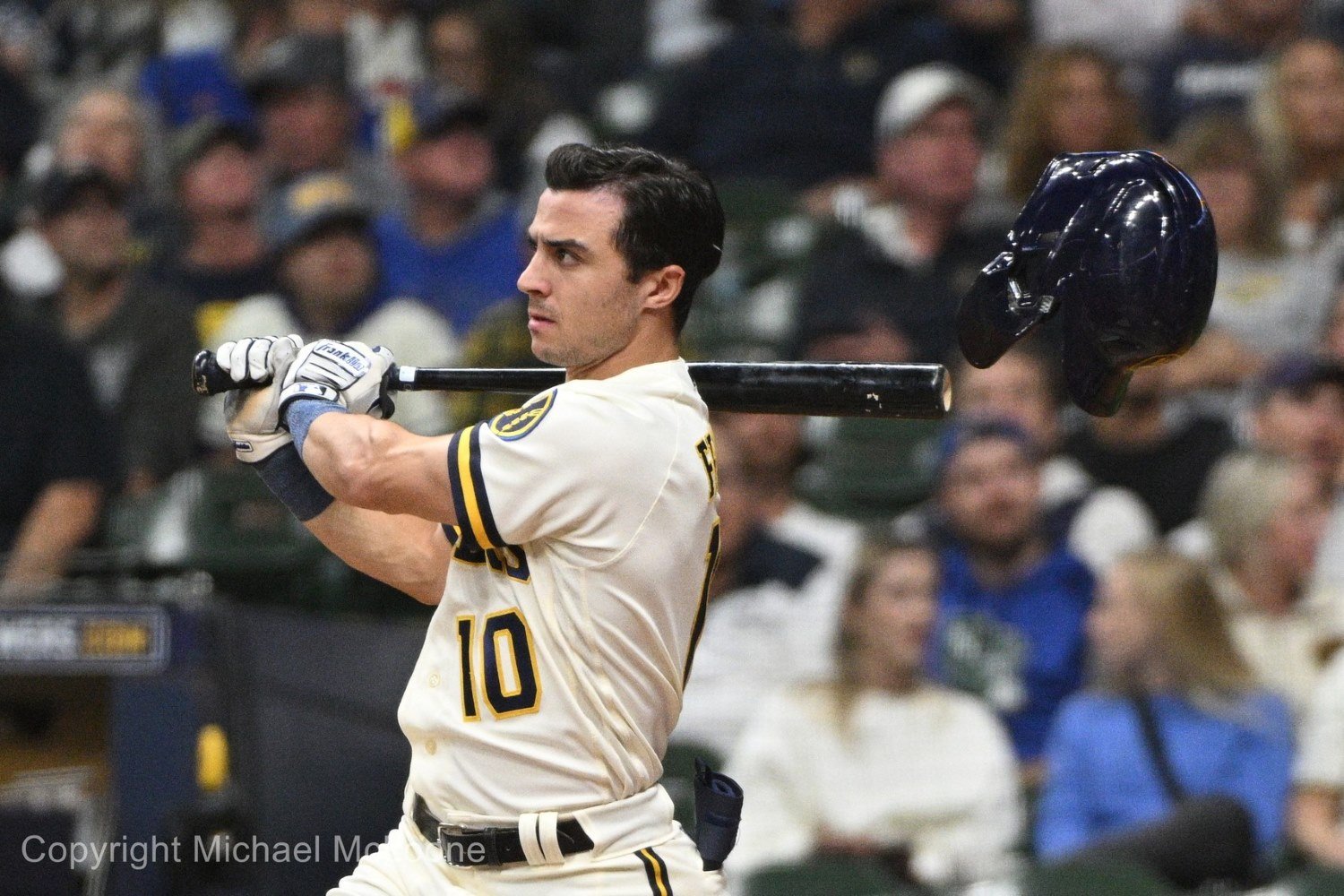 The first thing that jumps out when you talk to Sal Frelick is that he's not talking about his conversion to the infield as a passing flight of fancy. To him, this move (while not total or definitive) is very real, and it's happening. In the Brewers clubhouse in Maryvale Friday, he talked about the differences in the way he needs to prepare and approach defense between his established positions and the one he adopted over the offseason. "There are just little things you have to think about differently with different hitters. For the most part, in the outfield, I’m just shaded a few steps to my left or right," Frelick said. "But here, it’s sometimes like, I’ve gotta take away bunt, gotta basically play shortstop when a lefty’s up, gotta hug the line, so it’s a little different with the positioning, but the pre-step and setup is the same for the most part." Did you catch it? He not only called the infield "here," but isn't thinking of the infield as an amorphous project. He's not an infielder. He's a third baseman. All the unusual positioning he's talking about there relates to third base. "I’ve been doing both all spring," Frelick said of the work fans don't see, on backfields and with teammates. "I make sure I get my work in with the infielders here [in Maryvale, even when the team is playing elsewhere in the Cactus League], and I’m not working with the outfielders, but during BP I’ll make sure I go out to the outfield and shag, just to make sure I’m getting those live reads. Last game was the first game I did both in the same game—started in the outfield, came to the infield, which I think we’ll try to do a little bit more of here, just because you never know the situation." Indeed, you never do. Admittedly, too, Frelick needs many more reps in the infield than he does in the outfield, as he proved with a dazzling, diving catch in right field Tuesday in Tempe. A much more experienced outfielder, Frelick can play great defense there with relatively little practice. It's on the dirt that he needs to progress beyond the rudiments. Still, it's telling that Frelick isn't working with the outfielders in any of their dedicated drills. He's fully committed to this. Whether it will turn into a consistent thing or not remains to be seen, but he's certainly trying to make it a viable option. Manager Pat Murphy hasn't made any definitive statements about the position switch, except to confirm that it's no gimmick. The most important word in Murphy's vocabulary is "trust". He thinks about players and possibilities in terms of what and whom he trusts, and there's no player he's proclaimed his trust in more often this week than Frelick. "I don’t know if the analytics are good or bad on this guy, to be honest with you," Murphy said Wednesday. "I know one thing: he’s a ballplayer. Is it pretty all the time? No. But I trust him." In that light, it's easy to see how the skipper might entrust Frelick with a big role in the offense, and a flexible but equally important one in the team's run prevention. We can safely assume, based on last season, that the sophomore will at least meet the latter expectation, If nothing else, he can be a sterling defensive outfielder. Whether he emerges as more than a useful role player, then, depends mostly on his bat. Frelick has a plan to improve on that side of the ledger. His numbers were fine in his rookie campaign, but there was a troublesome dearth of power. Most of that problem lied in his inability to hit non-fastballs--only, unlike most players who struggle against soft stuff, Frelick didn't whiff much at those offerings. On the contrary, only four of the 362 hitters with at least 200 plate appearances last year missed less often on swings against non-heaters than Frelick. Why did spin and changes of pace rob him of power, but not cost him strikeouts? "The one thing I’ve had trouble with a lot in my career is that I have really good hand-eye [coordination], so when I do swing at bad pitches, I usually still put them in play," Frelick said. "I think that’s what happened with a lot of the offspeed pitches. Where a lot of guys might swing and miss at them, when I get fooled, I still put them in play. So I really have to be better at just swinging at strikes and balls in the zone. I think most of the balls I swung at outside of the zone last year were offspeed pitches, which just resulted in these light, dinky rollovers." That checks out. Frelick wasn't any more successful in Triple-A than in MLB last year, but he did hit the ball harder, and much of that was because he better honed his strike zone. In the minors, he focused on swinging at hittable pitches. After his promotion, he expanded and got out of sorts. He was chasing more, and although he wasn't suddenly striking out at a high rate, he wasn't locked in on stuff against which he could be productive. Frelick's not totally right about the nature of his problem, and he's probably being a bit overly optimistic about solving it. Note the swings above the zone (probably at fastballs, not junk), and consider, too, that although his average exit velocity was nearly two miles per hour higher in the minors than in MLB, his 90th-percentile figures were nearly identical. That suggests an obdurate power shortfall. Still, listen to him talk about hitting, and it's easy to see why Murphy trusts him so much. Frelick is a multilevel thinker in the box. I asked, for instance, whether he would adjust by hunting heat earlier in counts, to counteract this issue. "It’s not exactly what type of pitch," he said. "I mean, I’m obviously gonna be geared up for the fastball early in counts, but if they hang those offspeed pitches up for strikes, I’m definitely gonna be ready to hit them. Those first few pitches, pitchers don’t want to get behind. Those are the best times to compete and try to do some damage." Frelick, who has batted first and second during his limited Cactus League action so far, has been very aggressive in those games, though. He's hit the first pitch of the game into play twice already, for instance. Is that about breaking ball avoidance? "It’s a combination of things. A lot of these starters we’ve been seeing—like [Thursday], Nate Eovaldi, just a guy you don’t want to get down to," Frelick said. "I know he’s gonna challenge you early with his heater. Sometimes, too, when I get aggressive early—especially in my first at-bat—-later in the game, good chance I’ll get ball 1, ball 2, just because they know I’m staying aggressive early. And then vice-versa: Sometimes my first at-bat, I’ll go up there auto-taking, really try to work a good count, so that later in the game, I know I’m going to get those first-pitch strikes." If a player with Frelick's speed and contact skills is able to consistently outguess opposing pitchers, let alone set them up in one at-bat for a change in tack and a crucial edge in a later moment, then the Brewers have a budding star on their hands. That goes double if he's a competent third baseman, and given his attention to detail in both regards, that feels increasingly plausible.
 -
The Milwaukee Brewers won the NL Central in 2023 thanks, in part, to their excellent bullpen. It helped tremendously when they found another relief ace around midseason, but he says the alterations that unlocked his excellent stuff were improvements, not a full-fledged transformation. Image courtesy of © Jeff Hanisch-USA TODAY Sports By the end of the 2022 season, Trevor Megill was sitting at around 98.5 miles per hour on an average fastball, and he was touching 100 often enough to be very intimidating on the mound. Far from stopping there, though, he doubled down on adding velocity. From Aug. 1 onward, more of his fastballs were harder than 99.8 miles per hour than were softer than that. He touched 101 five times, across four appearances. According to Megill, he and the Brewers made some mechanical adjustments that made it a bit easier to throw hard and still find the strike zone. "Being a little shorter," Megill described it Friday in Maryvale. "I feel like that's the direction people head later in their careers: try and get more compact through the years. That was the focus [in the 2022-23] offseason, and throughout the [2023] season it just progressively got better. It was a conscious effort, for sure." Megill said he did not change where he sets up on the rubber, so when you spot the difference in his release point from the first half of last season to the second, know that it's a product of the difference in his arm path, not in his starting point. "I started falling off [the mound] a little bit extra," Megill said. "Everybody's a power pitcher these days, and it's hard to be a power pitcher when you're trying to field ground balls every single time. So, it was about letting my body go where it needs to go." Where it went was toward the strike zone much more consistently, with greater power from that more compact yet less reserved delivery. Megill's zone rate was higher in the second half, and he compelled opponents to swing much more--up from 40 percent in the first half to 50.7 percent. Even when he wasn't in the zone, though, batters chased more in that second half, as he totally took off. That's thanks to being around the zone more, to be sure, but it's also because Megill's curveball is uniquely deceptive. From his overhand delivery, the curve comes out of his hand actually going downward, rather than having the hump that most pitchers' have, which the hitter can sometimes spot. It's a key reason why he got dazzling whiff rates on that pitch in 2023. "When I start on the right line, they don't have hump," Megill said. "If I don't hit a fastball in a certain spot early in an at-bat, the curveball will stick out, but it's my job to make that a little more concealed. The curveballs I do land in the zone have a smidge of pop, but it's not what it used to be." In the second half last year, hitters started chasing Megill's curves outside the zone almost twice as much as they had in the first half--over 45 percent, up from 25. Much of that was about better achieving that deception with the more compact delivery and superior fastball command, but Megill also did a good job of setting hitters up for the hook. "You have organizations that are fastball-dominant and trying to jump you within the first three pitches. Other organizations take [pitches] a lot more. They're gonna try to get rid of the lower half of the zone for me. You've gotta adjust to the lineups and understand where the organization you're playing is at. Some I have to land it [in the strike zone] more, where others I can get away with throwing it 58 feet." Knowing the team approach of the players in the opposing dugout is helpful, but Megill said it's also about mentally preparing and knowing the scouting reports of individual hitters when they get to the batter's box. "There are plenty of guys in the league where it stands out that a curveball that can tunnel off your fastball is good enough. It doesn't have to be in the zone," Megill said. "You have to know those guys. Being in the bullpen is a game of who's more prepared to see who. You see three batters a night, but it's your job to think about it for four hours before the game." Megill made some physical and mechanical refinements, and he's now winning those mental battles, too. He's the more prepared person in the fight more often, and even if he weren't, the sheer stuff would be almost impossible to hit. After one spring outing, he said he still felt like he had the improvements he made last year locked in. That's bad news for the rest of the league, but great news for Milwaukee's relief corps. Research assistance provided by TruMedia. View full article
-
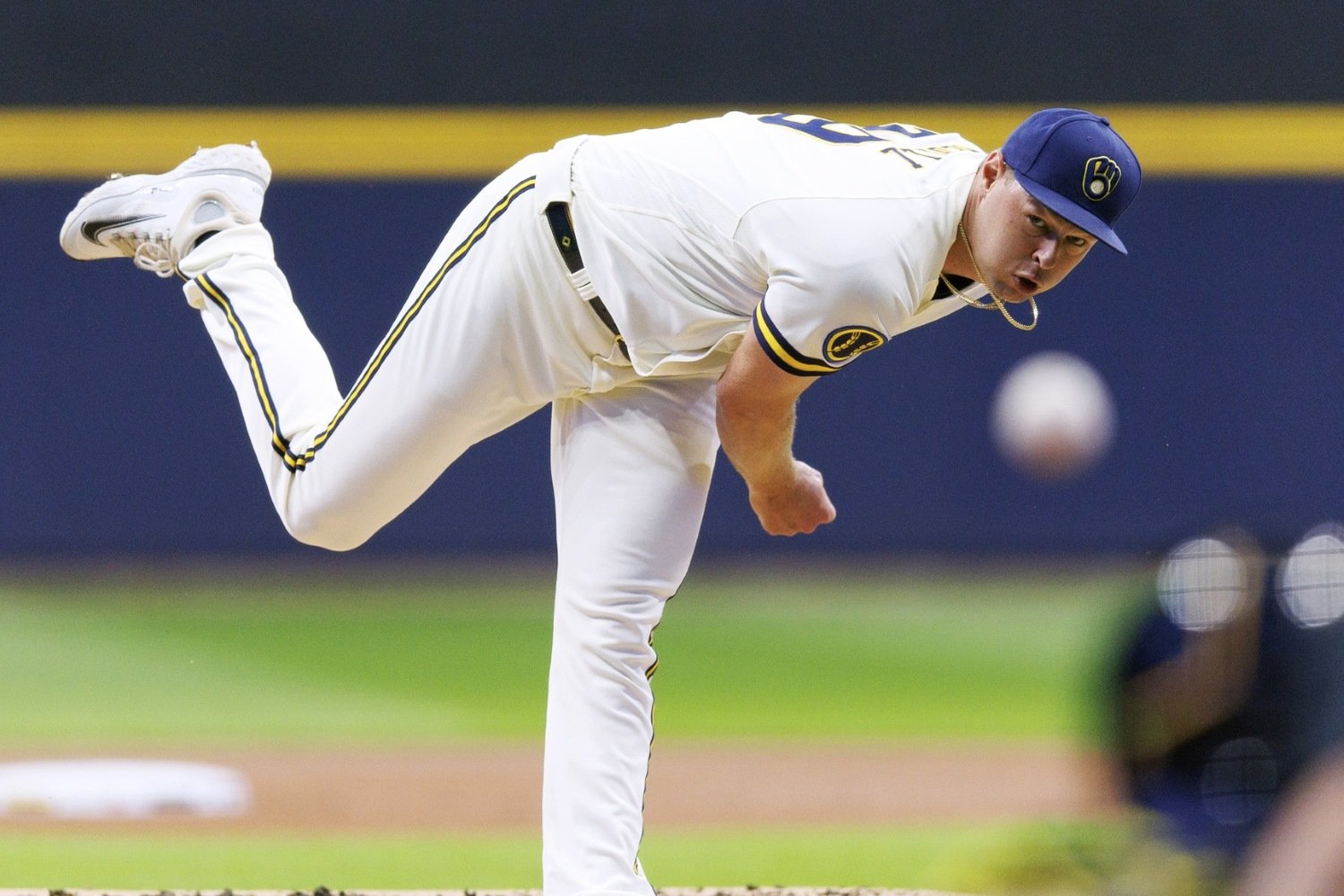 By the end of the 2022 season, Trevor Megill was sitting at around 98.5 miles per hour on an average fastball, and he was touching 100 often enough to be very intimidating on the mound. Far from stopping there, though, he doubled down on adding velocity. From Aug. 1 onward, more of his fastballs were harder than 99.8 miles per hour than were softer than that. He touched 101 five times, across four appearances. According to Megill, he and the Brewers made some mechanical adjustments that made it a bit easier to throw hard and still find the strike zone. "Being a little shorter," Megill described it Friday in Maryvale. "I feel like that's the direction people head later in their careers: try and get more compact through the years. That was the focus [in the 2022-23] offseason, and throughout the [2023] season it just progressively got better. It was a conscious effort, for sure." Megill said he did not change where he sets up on the rubber, so when you spot the difference in his release point from the first half of last season to the second, know that it's a product of the difference in his arm path, not in his starting point. "I started falling off [the mound] a little bit extra," Megill said. "Everybody's a power pitcher these days, and it's hard to be a power pitcher when you're trying to field ground balls every single time. So, it was about letting my body go where it needs to go." Where it went was toward the strike zone much more consistently, with greater power from that more compact yet less reserved delivery. Megill's zone rate was higher in the second half, and he compelled opponents to swing much more--up from 40 percent in the first half to 50.7 percent. Even when he wasn't in the zone, though, batters chased more in that second half, as he totally took off. That's thanks to being around the zone more, to be sure, but it's also because Megill's curveball is uniquely deceptive. From his overhand delivery, the curve comes out of his hand actually going downward, rather than having the hump that most pitchers' have, which the hitter can sometimes spot. It's a key reason why he got dazzling whiff rates on that pitch in 2023. "When I start on the right line, they don't have hump," Megill said. "If I don't hit a fastball in a certain spot early in an at-bat, the curveball will stick out, but it's my job to make that a little more concealed. The curveballs I do land in the zone have a smidge of pop, but it's not what it used to be." In the second half last year, hitters started chasing Megill's curves outside the zone almost twice as much as they had in the first half--over 45 percent, up from 25. Much of that was about better achieving that deception with the more compact delivery and superior fastball command, but Megill also did a good job of setting hitters up for the hook. "You have organizations that are fastball-dominant and trying to jump you within the first three pitches. Other organizations take [pitches] a lot more. They're gonna try to get rid of the lower half of the zone for me. You've gotta adjust to the lineups and understand where the organization you're playing is at. Some I have to land it [in the strike zone] more, where others I can get away with throwing it 58 feet." Knowing the team approach of the players in the opposing dugout is helpful, but Megill said it's also about mentally preparing and knowing the scouting reports of individual hitters when they get to the batter's box. "There are plenty of guys in the league where it stands out that a curveball that can tunnel off your fastball is good enough. It doesn't have to be in the zone," Megill said. "You have to know those guys. Being in the bullpen is a game of who's more prepared to see who. You see three batters a night, but it's your job to think about it for four hours before the game." Megill made some physical and mechanical refinements, and he's now winning those mental battles, too. He's the more prepared person in the fight more often, and even if he weren't, the sheer stuff would be almost impossible to hit. After one spring outing, he said he still felt like he had the improvements he made last year locked in. That's bad news for the rest of the league, but great news for Milwaukee's relief corps. Research assistance provided by TruMedia.
 -
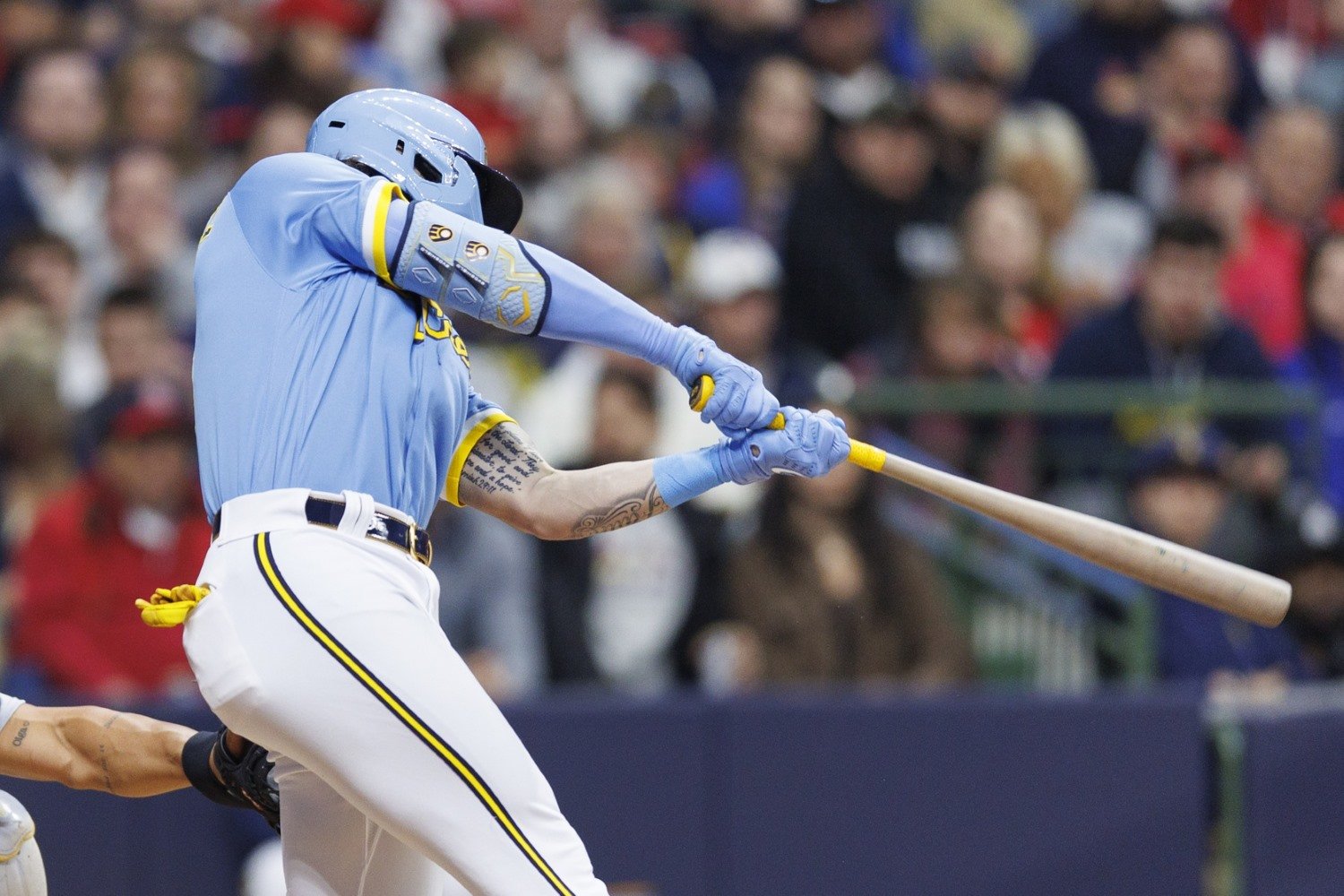 For some managers and some situations, the value of the pinch-hit option declines with each passing year. Sabermetric studies have confirmed the existence of an important and inescapable pinch-hitter penalty, whereby a batter isn't as good coming off the bench late in a game (even if he's taken BP in a tunnel under the stadium or done sensational video preparation) as he otherwise is. Just as importantly, with a four-man bench, every tactical maneuver comes with a built-in tax. You're risking running out players later, and you might be bringing in someone you'd hoped could get an entire day off their feet, to manage the grind of 162 games. This year, however, the Brewers have a bit of a mix-and-match roster outlook, and it could force Pat Murphy into some dilemmas as to when to pull that trigger and when not to. At second and third base, the gallimaufry includes Brice Turang (left-handed hitter), Andruw Monasterio (right), Oliver Dunn (left), Owen Miller (right), Tyler Black (left), Joey Ortiz (right), and Sal Frelick (left). In the outfield, there's Frelick, Joey Wiemer (right), Garrett Mitchell (left), Blake Perkins (switch), and Chris Roller (right), all for whichever spot isn't claimed by Christian Yelich and Jackson Chourio. Once a player's name is in the lineup card, should Murphy pinch-hit for them if the opponents make a late switch to a same-handed pitcher, or should he put his trust in the player already in the flow of the game? "Certain guys, if they’re coming away from an injury, or say I know but don’t want to tell you guys that he’s got something—his hamstring’s bugging him, his hand’s bugging him, whatever it might be—I don’t want the other team to know he’s down. But I may know he’s down," Murphy said. Otherwise, however, he envisions being fairly aggressive with pinch-hit options. "My philosophy about it is, when there’s an off day and I’m giving a guy a blow, he knows seventh, eighth, or ninth, he’s eligible to pinch-hit." That could come into play with all the players above, plus Jake Bauers and their three catchers. Because they do (tentatively) expect to carry all of William Contreras, Gary Sánchez, and Eric Haase, there might be times when one catcher (Contreras or Sánchez) is acting as the designated hitter, but even on such days, Murphy will have the option to pinch-hit someone like left-handed hitter Jake Bauers for either Sánchez or Haase against a tough righty hurler. Mitchell, in particular, could find himself doing a lot of pinch-hitting and coming in often as a substitute, based on the current configuration of the roster. He's ready for those opportunities. "I’ve had some opportunities of doing that already, over the past couple years, whether it was in spring training or during the season," Mitchell said. "I am usually prepared. Prepared doesn’t necessarily mean success, or good results, but I’m prepared." Therein lies the rub. Ever-improving hitting tunnels and advanced video work have made the job of pinch-hitting theoretically easier than it was for much of the game's history. That's theory. In practice, the pinch-hitter penalty remains robust, so it seems possible that it's more wired into our nervous systems than it is a question of getting loose and ready. There might be a naturally occurring drug in the cocktail of the increased pressure late in games and the disadvantage of not having seen the opposing pitching staff a time or two already when the moment comes. Murphy still believes in seeking out good matchups, but he lets numbers guide him, too, so don't expect a rash of unjustifiable pinch-hitters. It will have to be a targeted strike, when the moment is just right. Obviously, every win is sacred, but that's why Murphy knows better than to defy what the information is telling him. "Every team’s an analytics team," Murphy said. "You’re way behind if you don’t have an R&D department that’s providing players with information, through the coaching staff. I think we’re past the point of, ‘This is an analytics team, this is not.’ Everyone is doing it. We don’t preach it, but that doesn’t mean we’re not. "You have to have precise information. It’s not our guess. My gut gets influenced by the information I have." If the gap between expected production by two players (if Monasterio starts against a lefty, for instance, but then a tough righthander comes in and Dunn is available) is wide enough to cover the pinch-hit penalty, Murphy will go to his bench. Days off can't be treated as sacred, if the team wants to maximize their chances of winning every day.
 -
The Milwaukee Brewers were 14th in MLB in plate appearances as a pinch-hitter in 2023, and ninth in the league in performance in those situations. With another mix-and-match roster, expect more of the former in 2024. The players are ready to keep the performance up to that same standard. Image courtesy of © Jeff Hanisch-USA TODAY Sports For some managers and some situations, the value of the pinch-hit option declines with each passing year. Sabermetric studies have confirmed the existence of an important and inescapable pinch-hitter penalty, whereby a batter isn't as good coming off the bench late in a game (even if he's taken BP in a tunnel under the stadium or done sensational video preparation) as he otherwise is. Just as importantly, with a four-man bench, every tactical maneuver comes with a built-in tax. You're risking running out players later, and you might be bringing in someone you'd hoped could get an entire day off their feet, to manage the grind of 162 games. This year, however, the Brewers have a bit of a mix-and-match roster outlook, and it could force Pat Murphy into some dilemmas as to when to pull that trigger and when not to. At second and third base, the gallimaufry includes Brice Turang (left-handed hitter), Andruw Monasterio (right), Oliver Dunn (left), Owen Miller (right), Tyler Black (left), Joey Ortiz (right), and Sal Frelick (left). In the outfield, there's Frelick, Joey Wiemer (right), Garrett Mitchell (left), Blake Perkins (switch), and Chris Roller (right), all for whichever spot isn't claimed by Christian Yelich and Jackson Chourio. Once a player's name is in the lineup card, should Murphy pinch-hit for them if the opponents make a late switch to a same-handed pitcher, or should he put his trust in the player already in the flow of the game? "Certain guys, if they’re coming away from an injury, or say I know but don’t want to tell you guys that he’s got something—his hamstring’s bugging him, his hand’s bugging him, whatever it might be—I don’t want the other team to know he’s down. But I may know he’s down," Murphy said. Otherwise, however, he envisions being fairly aggressive with pinch-hit options. "My philosophy about it is, when there’s an off day and I’m giving a guy a blow, he knows seventh, eighth, or ninth, he’s eligible to pinch-hit." That could come into play with all the players above, plus Jake Bauers and their three catchers. Because they do (tentatively) expect to carry all of William Contreras, Gary Sánchez, and Eric Haase, there might be times when one catcher (Contreras or Sánchez) is acting as the designated hitter, but even on such days, Murphy will have the option to pinch-hit someone like left-handed hitter Jake Bauers for either Sánchez or Haase against a tough righty hurler. Mitchell, in particular, could find himself doing a lot of pinch-hitting and coming in often as a substitute, based on the current configuration of the roster. He's ready for those opportunities. "I’ve had some opportunities of doing that already, over the past couple years, whether it was in spring training or during the season," Mitchell said. "I am usually prepared. Prepared doesn’t necessarily mean success, or good results, but I’m prepared." Therein lies the rub. Ever-improving hitting tunnels and advanced video work have made the job of pinch-hitting theoretically easier than it was for much of the game's history. That's theory. In practice, the pinch-hitter penalty remains robust, so it seems possible that it's more wired into our nervous systems than it is a question of getting loose and ready. There might be a naturally occurring drug in the cocktail of the increased pressure late in games and the disadvantage of not having seen the opposing pitching staff a time or two already when the moment comes. Murphy still believes in seeking out good matchups, but he lets numbers guide him, too, so don't expect a rash of unjustifiable pinch-hitters. It will have to be a targeted strike, when the moment is just right. Obviously, every win is sacred, but that's why Murphy knows better than to defy what the information is telling him. "Every team’s an analytics team," Murphy said. "You’re way behind if you don’t have an R&D department that’s providing players with information, through the coaching staff. I think we’re past the point of, ‘This is an analytics team, this is not.’ Everyone is doing it. We don’t preach it, but that doesn’t mean we’re not. "You have to have precise information. It’s not our guess. My gut gets influenced by the information I have." If the gap between expected production by two players (if Monasterio starts against a lefty, for instance, but then a tough righthander comes in and Dunn is available) is wide enough to cover the pinch-hit penalty, Murphy will go to his bench. Days off can't be treated as sacred, if the team wants to maximize their chances of winning every day. View full article
-
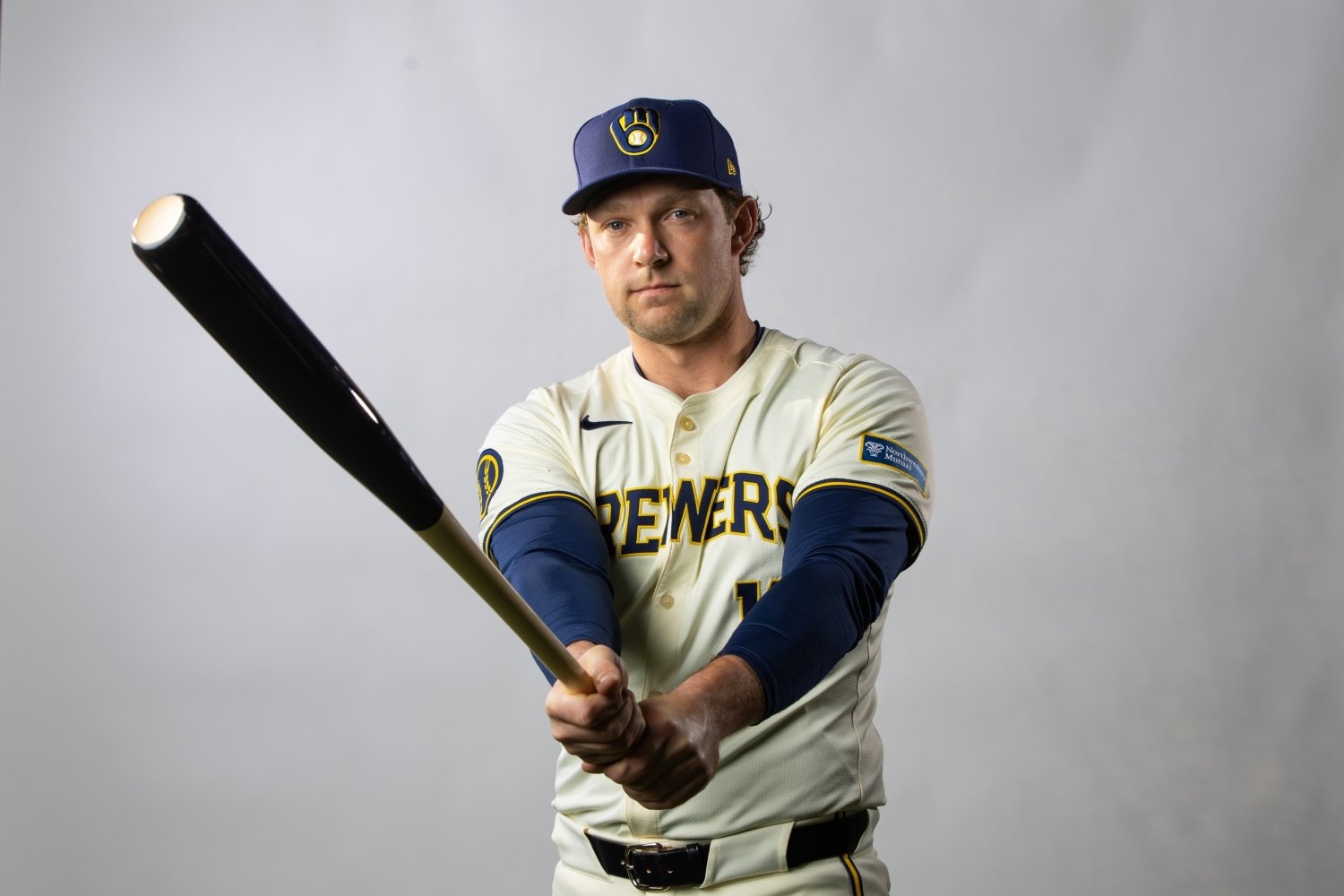 After a disappointing season of regression and injury trouble for Rowdy Tellez in 2023, the Brewers moved on in November. They first seemed to have taken a low-risk, low-reward, low-cost approach to replacing Tellez, but in January, that changed in a big way. The Starter: Rhys Hoskins 2023 Stats: Did Not Play - Injured; 2022 Stats: 156 G, 672 PA, .246/.332/.462, 30 HR, 10.7% BB, 25.1% K, 2.3 fWAR, 2.9 bWAR, 2.3 WARP 2024 Projections: ZiPS: 146 G, 630 PA, .233/.336/.442, 26 HR, 1.5 fWAR; PECOTA: 128 G, 530 PA, .233/.322/.433, 22 HR, 1.5 WARP Scouting Report: Hoskins might just be the quintessential modern slugger. His swing is geared to lift the ball, ideally to his pull field. He'll never collect many hits on balls in play, but that's ok. When he connects the way he's always trying to, the ball will often fly over the fence. He has enough of a hit tool to make that happen fairly regularly, too. While his strikeout rate is higher than the league average, it's because he's so willing to trade a little contact for a lot of damage, not because there are many real holes in his swing. Home runs pile up in vain if that's all a hitter does, but Hoskins's approach adds a different dimension of value, as well. He waits patiently for the pitch he can torch, and that means plenty of walks. From his entry into the league in 2017 through his last healthy campaign in 2022, he ranked 13th in walk rate (of 161 qualifying hitters), keeping his on-base percentage above average despite the strikeouts and the BABIP-unfriendly swing plane. In the field, Hoskins has never been a whiz, exactly. He's better on balls hit to his right, toward the hole between himself and the second baseman, but lets some get down the line when they oughtn't. Though it rarely comes into play, he also has a lousy arm, and is slow at starting the double play. Getting someone else in there when the Crew are trying to protect late leads would be wise. Other Options: The Brewers briefly appeared set to enter the season with Jake Bauers as their starting first baseman. He was acquired at one of the offseason's roster-machination deadlines in November, and after he slugged 23 home runs in 108 games between Triple-A and MLB last year, that seemed thinly plausible. Still, Bauers is miles better as a fallback plan than as a first option. Ditto for minor-league veteran Wes Clarke. By contrast, first base might be the fallback plan for Tyler Black, the prospect whose offensive breakout in 2023 has him knocking loudly on the door of the big leagues. Black is, perhaps, the inverse of Hoskins, with good bat-to-ball skills but uncertain power upside. The hope is that he can play a competent third base, but with many questions swirling around that aspect of his game and all the outfield spots spoken for, he has to stay in our mental picture of the position. Hoskins could always move to DH, if needed. The Big Question: When you sign a player of Hoskins's hitting probity, you're not supposed to have to worry much about the spot thereafter. Alas, his flimflam left ACL and his mendacious right meniscus make him less trustworthy than most such sluggers. You have to ask, in his case, how well 31-year-old knees that have each been operated on within the last 18 months will bear up as he revisits the challenge of a long baseball season. You have to ask whether, for a hitter so dependent on power, the leg drive will be there. If these questions weren't there for him, of course, he'd have been far beyond the Brewers' price range. It's frustrating to have to keep them in mind, but it's nice to have a cleanup hitter with sufficient upside to lend the questions such high stakes. How are you feeling about the Brewers' signing of Hoskins? Which other players excite you at the cold corner, in 2024 and beyond?
-
- 1
-

-
- rhys hoskins
- jake bauers
- (and 1 more)
-
As we continue our positional preview series in the run-up to Opening Day, it's time to turn to the position at which the Brewers made the most aggressive and immediate upgrade this winter. The Starter: Rhys Hoskins 2023 Stats: Did Not Play - Injured; 2022 Stats: 156 G, 672 PA, .246/.332/.462, 30 HR, 10.7% BB, 25.1% K, 2.3 fWAR, 2.9 bWAR, 2.3 WARP 2024 Projections: ZiPS: 146 G, 630 PA, .233/.336/.442, 26 HR, 1.5 fWAR; PECOTA: 128 G, 530 PA, .233/.322/.433, 22 HR, 1.5 WARP Scouting Report: Hoskins might just be the quintessential modern slugger. His swing is geared to lift the ball, ideally to his pull field. He'll never collect many hits on balls in play, but that's ok. When he connects the way he's always trying to, the ball will often fly over the fence. He has enough of a hit tool to make that happen fairly regularly, too. While his strikeout rate is higher than the league average, it's because he's so willing to trade a little contact for a lot of damage, not because there are many real holes in his swing. Home runs pile up in vain if that's all a hitter does, but Hoskins's approach adds a different dimension of value, as well. He waits patiently for the pitch he can torch, and that means plenty of walks. From his entry into the league in 2017 through his last healthy campaign in 2022, he ranked 13th in walk rate (of 161 qualifying hitters), keeping his on-base percentage above average despite the strikeouts and the BABIP-unfriendly swing plane. In the field, Hoskins has never been a whiz, exactly. He's better on balls hit to his right, toward the hole between himself and the second baseman, but lets some get down the line when they oughtn't. Though it rarely comes into play, he also has a lousy arm, and is slow at starting the double play. Getting someone else in there when the Crew are trying to protect late leads would be wise. Other Options: The Brewers briefly appeared set to enter the season with Jake Bauers as their starting first baseman. He was acquired at one of the offseason's roster-machination deadlines in November, and after he slugged 23 home runs in 108 games between Triple-A and MLB last year, that seemed thinly plausible. Still, Bauers is miles better as a fallback plan than as a first option. Ditto for minor-league veteran Wes Clarke. By contrast, first base might be the fallback plan for Tyler Black, the prospect whose offensive breakout in 2023 has him knocking loudly on the door of the big leagues. Black is, perhaps, the inverse of Hoskins, with good bat-to-ball skills but uncertain power upside. The hope is that he can play a competent third base, but with many questions swirling around that aspect of his game and all the outfield spots spoken for, he has to stay in our mental picture of the position. Hoskins could always move to DH, if needed. The Big Question: When you sign a player of Hoskins's hitting probity, you're not supposed to have to worry much about the spot thereafter. Alas, his flimflam left ACL and his mendacious right meniscus make him less trustworthy than most such sluggers. You have to ask, in his case, how well 31-year-old knees that have each been operated on within the last 18 months will bear up as he revisits the challenge of a long baseball season. You have to ask whether, for a hitter so dependent on power, the leg drive will be there. If these questions weren't there for him, of course, he'd have been far beyond the Brewers' price range. It's frustrating to have to keep them in mind, but it's nice to have a cleanup hitter with sufficient upside to lend the questions such high stakes. How are you feeling about the Brewers' signing of Hoskins? Which other players excite you at the cold corner, in 2024 and beyond? View full article
-
 Last year, the Brewers were 24th in home runs and 28th in isolated power. They also ranked 24th in team DRC+, according to Baseball Prospectus. Yet, they were 17th in runs per game, marking just one way that the whole was greater than the sum of the parts for them in a division-winning campaign. They drew walks at the third-highest rate in the league, fueling an unconventional offensive engine for MLB in the 2020s. Isolated power explained roughly 74 percent of the variance between teams in runs per game in 2023, and as you can see, the Brewers were one of the larger outliers in that regard. It's no secret that power has become more indispensable over the last several years, but to illustrate the magnitude of that change, ISO only explained about 57 percent of variance in runs per game in 2015. In 2000, it was 46 percent. Power has become synonymous with offense. Not so in Milwaukee, under the integrated, team-focused stewardship of Pat Murphy, Rickie Weeks, Connor Dawson, and Ozzie Timmons. Power wasn't how the Brewers tried to score runs last year, and it won't be how they go about it this year, either. Andruw Monasterio and Brice Turang had total power outages down the stretch in 2023. Each of them came to camp this spring considerably bigger and stronger. Does Murphy anticipate them trading a bit of contact to find more pop? "I hope not," the skipper said Wednesday. "I don’t believe in that. I believe home runs are thrown, to a great extent. When you’re trying to do damage, is really when it’s damaging to the club. I look at plenty of players when they’re coming up, ‘Hey, you’ve gotta hit homers, man, you’ve gotta hit homers.’ As soon as you start thinking that…" Finishing the sentence isn't necessary. The point is made. Murphy doesn't want his hitters to go looking for power; he believes they just need to hit their pitch when it comes. Part of his persistent efforts to share the stories of everyone in the clubhouse this spring and knit the roster together more tightly is his conviction that the game needs to be played with a team mindset. "It’s a harder way to score. Yeah. Because you’ve gotta pass the baton," Murphy said, but not by way of bemoaning it. "When the 3-2 pitch is eight inches outside, you gotta turn it over to the next guy. Trust the guy behind you: it’s the key to hitting. It’s the key to our offense. Trust the guy behind you. It’s hard to do, when you’re trying to earn your keep and you get a 3-2 breaking ball in the dirt, but you were hoping it would be out over the plate, well you think, ‘Maybe I can still make contact.’ You have to be willing to pass the baton." As the walk rate from 2023 reflects, the Brewers have been good at that under the leadership of Dawson and Timmons, anyway. Murphy, of course, has been part of those conversations all along, and he expects to carry forward that mentality as the manager. Trusting teammates means more than just taking the borderline pitch in a deep count. It also means using the opposite field, where appropriate, sacrificing some opportunity to split a gap or clear the fence for an increased likelihood of getting on base. It can mean stopping oneself from getting thrown out ill-advisedly on the bases, too. Murphy has expressed a desire to be aggressive and make plays with speed, but he also wants to see his team avoid making bad outs. Believing that the next guy will get you over or in to score can help with that. Yes, it also means bunting. Murphy is not going to resuscitate the dying sacrifice bunt, but that doesn't mean it won't be part of the team's repertoire of offensive moves. "Sal Frelick can bunt--and should, because he hits so many balls to the left side, so [bunting] forces those guys into a bad spot," Murphy said. Before the infield shift was banned, the bunt was a more obvious means of pulling a defense out of its preferred shape. Now, it might not seem as necessary, and the hits to be gained directly by the bunt are not as easy to get, but the effect of forcing a team to set itself differently remains in play. "Bunting is misunderstood in the game. It's not always for the percentages," said Murphy. "It's sometimes for the momentum. Think about the qualities of beating a No. 1, beating a star, beating a dude. Scherzer. How do you beat Scherzer? Sometimes there's little things that you can do that just drive them mad, that you didn't have to execute a perfect swing on a great pitch. It ends up disrupting them a little bit. So it's worth practicing, if you can break down a No. 1 just a hair." That's a good encapsulation of Murphy's offensive philosophy. He attends to details. He believes in a team approach, and in passing the baton. He doesn't want to merely bludgeon middling pitchers; the plan is to find ways to beat everyone the team faces. It's possible to distill things even further, though. Murphy did that Tuesday. "Get to first, go left, hurry back."
 -
In today's game, most teams value power above all other offensive skills. Under Pat Murphy, the Milwaukee Brewers will continue to be an exception to that rule. Image courtesy of © Joe Camporeale-USA TODAY Sports Last year, the Brewers were 24th in home runs and 28th in isolated power. They also ranked 24th in team DRC+, according to Baseball Prospectus. Yet, they were 17th in runs per game, marking just one way that the whole was greater than the sum of the parts for them in a division-winning campaign. They drew walks at the third-highest rate in the league, fueling an unconventional offensive engine for MLB in the 2020s. Isolated power explained roughly 74 percent of the variance between teams in runs per game in 2023, and as you can see, the Brewers were one of the larger outliers in that regard. It's no secret that power has become more indispensable over the last several years, but to illustrate the magnitude of that change, ISO only explained about 57 percent of variance in runs per game in 2015. In 2000, it was 46 percent. Power has become synonymous with offense. Not so in Milwaukee, under the integrated, team-focused stewardship of Pat Murphy, Rickie Weeks, Connor Dawson, and Ozzie Timmons. Power wasn't how the Brewers tried to score runs last year, and it won't be how they go about it this year, either. Andruw Monasterio and Brice Turang had total power outages down the stretch in 2023. Each of them came to camp this spring considerably bigger and stronger. Does Murphy anticipate them trading a bit of contact to find more pop? "I hope not," the skipper said Wednesday. "I don’t believe in that. I believe home runs are thrown, to a great extent. When you’re trying to do damage, is really when it’s damaging to the club. I look at plenty of players when they’re coming up, ‘Hey, you’ve gotta hit homers, man, you’ve gotta hit homers.’ As soon as you start thinking that…" Finishing the sentence isn't necessary. The point is made. Murphy doesn't want his hitters to go looking for power; he believes they just need to hit their pitch when it comes. Part of his persistent efforts to share the stories of everyone in the clubhouse this spring and knit the roster together more tightly is his conviction that the game needs to be played with a team mindset. "It’s a harder way to score. Yeah. Because you’ve gotta pass the baton," Murphy said, but not by way of bemoaning it. "When the 3-2 pitch is eight inches outside, you gotta turn it over to the next guy. Trust the guy behind you: it’s the key to hitting. It’s the key to our offense. Trust the guy behind you. It’s hard to do, when you’re trying to earn your keep and you get a 3-2 breaking ball in the dirt, but you were hoping it would be out over the plate, well you think, ‘Maybe I can still make contact.’ You have to be willing to pass the baton." As the walk rate from 2023 reflects, the Brewers have been good at that under the leadership of Dawson and Timmons, anyway. Murphy, of course, has been part of those conversations all along, and he expects to carry forward that mentality as the manager. Trusting teammates means more than just taking the borderline pitch in a deep count. It also means using the opposite field, where appropriate, sacrificing some opportunity to split a gap or clear the fence for an increased likelihood of getting on base. It can mean stopping oneself from getting thrown out ill-advisedly on the bases, too. Murphy has expressed a desire to be aggressive and make plays with speed, but he also wants to see his team avoid making bad outs. Believing that the next guy will get you over or in to score can help with that. Yes, it also means bunting. Murphy is not going to resuscitate the dying sacrifice bunt, but that doesn't mean it won't be part of the team's repertoire of offensive moves. "Sal Frelick can bunt--and should, because he hits so many balls to the left side, so [bunting] forces those guys into a bad spot," Murphy said. Before the infield shift was banned, the bunt was a more obvious means of pulling a defense out of its preferred shape. Now, it might not seem as necessary, and the hits to be gained directly by the bunt are not as easy to get, but the effect of forcing a team to set itself differently remains in play. "Bunting is misunderstood in the game. It's not always for the percentages," said Murphy. "It's sometimes for the momentum. Think about the qualities of beating a No. 1, beating a star, beating a dude. Scherzer. How do you beat Scherzer? Sometimes there's little things that you can do that just drive them mad, that you didn't have to execute a perfect swing on a great pitch. It ends up disrupting them a little bit. So it's worth practicing, if you can break down a No. 1 just a hair." That's a good encapsulation of Murphy's offensive philosophy. He attends to details. He believes in a team approach, and in passing the baton. He doesn't want to merely bludgeon middling pitchers; the plan is to find ways to beat everyone the team faces. It's possible to distill things even further, though. Murphy did that Tuesday. "Get to first, go left, hurry back." View full article
-
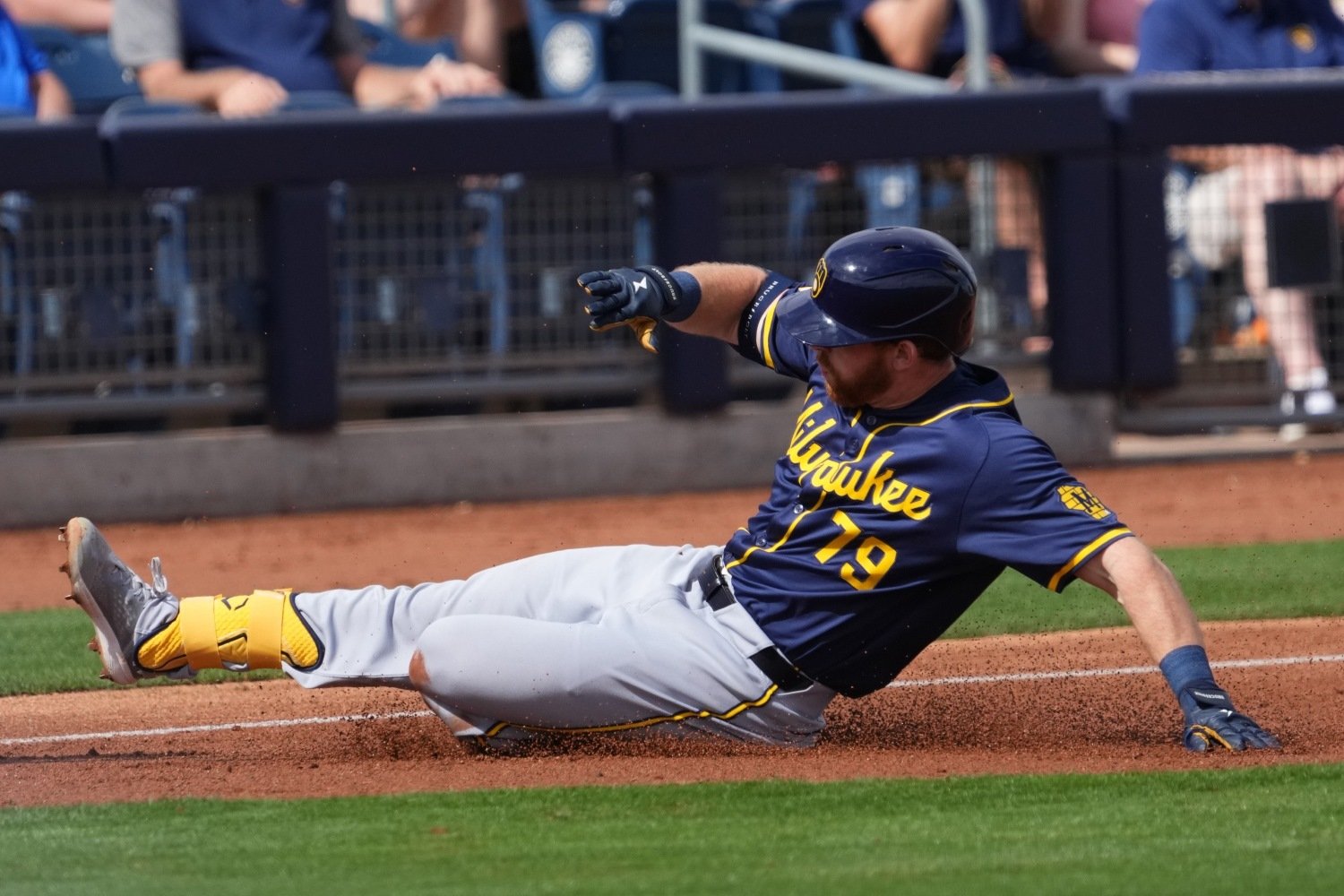 The topic at hand is infielder and Milwaukee newcomer Oliver Dunn, trying to make the team after coming over via trade from the Phillies organization in November. Dunn is 26 years old, which the 65-year-old Murphy hadn't even known prior to this confabulation. The question: do players like Dunn face a tougher scramble, as the minor leagues contract and teams face a newly tightened limit on players they can keep on their rosters, even in the minor leagues? He thinks the Brewers are the kind of team where such lost souls can find refuge and opportunity. "We might have to—where some of the major-market teams with lots more resources might be able to acquire more international signees and things like that," said Murphy, speaking just hours before his team would take on the Chicago Cubs. "But why is a guy done at 26? Why is 27 the age where you can’t be a prospect anymore, when you’re just learning how to play our game? There’s a lot of guys that came on late in their lives, that established themselves later and are now a really, really good baseball player." Murphy doesn't seem to be thinking that way, and would probably stop himself cold if he were, but he could be talking about himself, too. Effectively a managerial rookie at an age beyond those at which Sparky Anderson, Earl Weaver, and Davey Johnson (one of Murphy's million and one familiars within the baseball world) each retired, he's a shining exemplar of the fact that not everyone becomes ready for their shot--or gets it, even when they're ready--on the same biological timeline. "Justin Turner wasn’t always Justin Turner," Murphy said. "There’s a lot of guys that acquire the knack of playing the game at a high level by a couple of small adjustments when they’re 26 or 27. I think [Turner, and Dunn] is a prime example, and I think there could be more like that." Dunn, the lefty hitter with some versatility who enjoyed an offensive breakout in Double A after being scooped in the minor-league phase of the Rule 5 Draft from the Yankees the previous winter, has impressed Murphy to no end in camp. "I love the guy. His dial is up pretty high right now," Murphy said. It's the highest form of compliment, from a skipper who wants his less experienced players to force the veterans out of their comfort zone and get both groups to learn from each other. "Competing. I love his intensity, I love his focus, I love his preparation. I love his swing. He got two tough balls yesterday and he was credited with errors, but I think a lot of guys would have struggled with those balls. I’ve liked everything about this kid. He rises to the occasion. He ain’t afraid. He’s prepared." Dunn is just one such player in camp this spring, though. Much of the same--about career path, and about dedication to his craft--can be said of Janson Junk, to whom Murphy has also taken a shine. "In Junk's case, it's a way of life for him," Murphy said. "This guy's just super prepared, super physical every day with himself and gets after it." Those observations inform Murphy's belief that peripatetic talents like Dunn and Junk can still find a foothold, even in an increasingly competitive and unforgiving environment. Still, he acknowledges that more players will have to navigate the waters of minor-league free agency and try to hang on in independent leagues, and he does believe something is lost in the process. "We lose a lot of guys, a lot of potential coaches and things like that, because we’ve cut the minors down so much." After more than a decade in professional baseball (with the majority of that time spent riding buses in the minor leagues, after being a seventh-round pick in 2011), Eric Haase understands why those cuts are being made, but also knows he might not be in MLB if they'd been in effect when he entered the game. "It got a little wild for a while. There was seven minor-league teams, two complex leagues," Haase recalled. "I think that’s kind of where the cutback came from. When I was coming up, the draft was a little bit longer, but the free-agent signing pool for the Latin guys wasn’t nearly as prevalent as it is today, so there’s definitely just more people available for these teams." Haase was drafted long before NIL earning potential changed things (however incrementally) for collegiate athletes, and as a catcher signing out of high school, he knew he was in for a long apprenticeship in the minors. In his view, the modern game is unfair to some of its young stars, shortening that apprenticeship at every opportunity but refusing to allow for the resulting growing pains. "Unfortunately, I think we get mad at some of the younger guys now, that they’re in the big leagues making mistakes, but we were all in Low-A or High-A making these mistakes," Haase said. "It’s tougher to hold the younger guys to the same standards, because some of them might only have one or two full years in the minor leagues. It’s kind of an all-inclusive problem. The game is getting younger. Fans like the more exciting stuff, and having the big prospects." There has always been a tension between allowing players to live out their dream as professional baseballers, and the risk of exploiting their hunger to fulfill that dream, by paying them sub-living wages and stringing them along past the point when any hope remained for real progress. When minor-league players unionized, they put themselves in position to halt some of that exploitation and ensure fairer treatment, but the owners were never going to let that happen without claiming their share of turf in exchange. That has taken the form of contracting the minors, first in terms of total teams playing games and then in terms of players organizations can carry even outside of specific roster assignments. Haase, whose big-league dreams almost never materialized and still live day to day, doesn't regret anything about his decision to go pro as a teenager, though, and he sees tremendous value in the path he waked to this point, even if it will be harder to travel it for players just now reaching the decision he faced almost 13 years ago. "Oh, I don’t regret it one bit, at all. Just life experience, off the field," Haase said. "You sign that contract, you’re a grown man now. You’re taking care of yourself. You’re doing everything off the field completely on your own, finding housing, all that stuff. In college, you still have a little bit of that extended bubble. You have people who are in place to take care of you and to make sure everything is going good. You have a lot of other guys that are trying to the exact same thing [that you’re doing] in pro ball, so it’s, show up to the field and figure it out." Haase's own roster spot is in some jeopardy, after the signing of Gary Sánchez as an alternative option at backup catcher. There's no easy path to an immediate role for Dunn, who faces a crowded infield mix that includes Brice Turang, Andruw Monasterio, Joey Ortiz, Vinny Capra, and perhaps Sal Frelick. Junk is one in a farrago of options for the final place on the Brewers' pitching staff, but nothing is promised to him. In the Golden Age of player development, though, and with a manager who understands the value of mixing tenacious work toward improvement with stoic patience, there might be bright futures left for each of them--and for more, similar players, too. This piece rescued from inaccuracy by @Mass Haas.
- 4 comments
-
- 2
-
-
- eric haase
- oliver dunn
- (and 2 more)
-
Pat Murphy likes this subject. The Milwaukee Brewers' manager sits forward in his chair, a smile on his face and some fire in his voice. His habit of half-susurration during daily media availability falls away. "That might be a Brewer thing, too," he begins. Image courtesy of © Joe Camporeale-USA TODAY Sports The topic at hand is infielder and Milwaukee newcomer Oliver Dunn, trying to make the team after coming over via trade from the Phillies organization in November. Dunn is 26 years old, which the 65-year-old Murphy hadn't even known prior to this confabulation. The question: do players like Dunn face a tougher scramble, as the minor leagues contract and teams face a newly tightened limit on players they can keep on their rosters, even in the minor leagues? He thinks the Brewers are the kind of team where such lost souls can find refuge and opportunity. "We might have to—where some of the major-market teams with lots more resources might be able to acquire more international signees and things like that," said Murphy, speaking just hours before his team would take on the Chicago Cubs. "But why is a guy done at 26? Why is 27 the age where you can’t be a prospect anymore, when you’re just learning how to play our game? There’s a lot of guys that came on late in their lives, that established themselves later and are now a really, really good baseball player." Murphy doesn't seem to be thinking that way, and would probably stop himself cold if he were, but he could be talking about himself, too. Effectively a managerial rookie at an age beyond those at which Sparky Anderson, Earl Weaver, and Davey Johnson (one of Murphy's million and one familiars within the baseball world) each retired, he's a shining exemplar of the fact that not everyone becomes ready for their shot--or gets it, even when they're ready--on the same biological timeline. "Justin Turner wasn’t always Justin Turner," Murphy said. "There’s a lot of guys that acquire the knack of playing the game at a high level by a couple of small adjustments when they’re 26 or 27. I think [Turner, and Dunn] is a prime example, and I think there could be more like that." Dunn, the lefty hitter with some versatility who enjoyed an offensive breakout in Double A after being scooped in the minor-league phase of the Rule 5 Draft from the Yankees the previous winter, has impressed Murphy to no end in camp. "I love the guy. His dial is up pretty high right now," Murphy said. It's the highest form of compliment, from a skipper who wants his less experienced players to force the veterans out of their comfort zone and get both groups to learn from each other. "Competing. I love his intensity, I love his focus, I love his preparation. I love his swing. He got two tough balls yesterday and he was credited with errors, but I think a lot of guys would have struggled with those balls. I’ve liked everything about this kid. He rises to the occasion. He ain’t afraid. He’s prepared." Dunn is just one such player in camp this spring, though. Much of the same--about career path, and about dedication to his craft--can be said of Janson Junk, to whom Murphy has also taken a shine. "In Junk's case, it's a way of life for him," Murphy said. "This guy's just super prepared, super physical every day with himself and gets after it." Those observations inform Murphy's belief that peripatetic talents like Dunn and Junk can still find a foothold, even in an increasingly competitive and unforgiving environment. Still, he acknowledges that more players will have to navigate the waters of minor-league free agency and try to hang on in independent leagues, and he does believe something is lost in the process. "We lose a lot of guys, a lot of potential coaches and things like that, because we’ve cut the minors down so much." After more than a decade in professional baseball (with the majority of that time spent riding buses in the minor leagues, after being a seventh-round pick in 2011), Eric Haase understands why those cuts are being made, but also knows he might not be in MLB if they'd been in effect when he entered the game. "It got a little wild for a while. There was seven minor-league teams, two complex leagues," Haase recalled. "I think that’s kind of where the cutback came from. When I was coming up, the draft was a little bit longer, but the free-agent signing pool for the Latin guys wasn’t nearly as prevalent as it is today, so there’s definitely just more people available for these teams." Haase was drafted long before NIL earning potential changed things (however incrementally) for collegiate athletes, and as a catcher signing out of high school, he knew he was in for a long apprenticeship in the minors. In his view, the modern game is unfair to some of its young stars, shortening that apprenticeship at every opportunity but refusing to allow for the resulting growing pains. "Unfortunately, I think we get mad at some of the younger guys now, that they’re in the big leagues making mistakes, but we were all in Low-A or High-A making these mistakes," Haase said. "It’s tougher to hold the younger guys to the same standards, because some of them might only have one or two full years in the minor leagues. It’s kind of an all-inclusive problem. The game is getting younger. Fans like the more exciting stuff, and having the big prospects." There has always been a tension between allowing players to live out their dream as professional baseballers, and the risk of exploiting their hunger to fulfill that dream, by paying them sub-living wages and stringing them along past the point when any hope remained for real progress. When minor-league players unionized, they put themselves in position to halt some of that exploitation and ensure fairer treatment, but the owners were never going to let that happen without claiming their share of turf in exchange. That has taken the form of contracting the minors, first in terms of total teams playing games and then in terms of players organizations can carry even outside of specific roster assignments. Haase, whose big-league dreams almost never materialized and still live day to day, doesn't regret anything about his decision to go pro as a teenager, though, and he sees tremendous value in the path he waked to this point, even if it will be harder to travel it for players just now reaching the decision he faced almost 13 years ago. "Oh, I don’t regret it one bit, at all. Just life experience, off the field," Haase said. "You sign that contract, you’re a grown man now. You’re taking care of yourself. You’re doing everything off the field completely on your own, finding housing, all that stuff. In college, you still have a little bit of that extended bubble. You have people who are in place to take care of you and to make sure everything is going good. You have a lot of other guys that are trying to the exact same thing [that you’re doing] in pro ball, so it’s, show up to the field and figure it out." Haase's own roster spot is in some jeopardy, after the signing of Gary Sánchez as an alternative option at backup catcher. There's no easy path to an immediate role for Dunn, who faces a crowded infield mix that includes Brice Turang, Andruw Monasterio, Joey Ortiz, Vinny Capra, and perhaps Sal Frelick. Junk is one in a farrago of options for the final place on the Brewers' pitching staff, but nothing is promised to him. In the Golden Age of player development, though, and with a manager who understands the value of mixing tenacious work toward improvement with stoic patience, there might be bright futures left for each of them--and for more, similar players, too. This piece rescued from inaccuracy by @Mass Haas. View full article
-
In Tuesday's Cactus League contest against the Angels, Milwaukee Brewers first baseman Tyler Black was called for obstruction on a pickoff throw to first base--one of the early reminders of a new point of emphasis for umpires in 2024. It was the talk of the clubhouse Wednesday morning. Image courtesy of © Mark J. Rebilas-USA TODAY Sports Early Wednesday morning, manager Pat Murphy approached a table around which sat several Brewers infielders, to talk more about how to make plays around the bases under what will amount to new rules this coming season. While it has never technically been legal for a fielder to block the path of a runner toward their base unless they possessed the baseball, the custom has long been for first basemen to plant a foot squarely in the middle of the lane to the base for a retreating runner, and for middle infielders to drop a knee in front of the base as an arriving would-be basestealer tries to slide in. This year, those will be automatic safeties for the runner, as the league (including Joe Torre, the special assistant to the commissioner; Torre was present in Tempe Tuesday) urges umpires to award those bases and discourage any setup by a fielder that invites or forces a collision. While the call came as a bit of a surprise to Black, the Brewers seem largely pleased with the change, as long as it's implemented judiciously. "I think there’s gonna be a learning curve there, for everybody involved," Murphy said in his Wednesday media session. "MLB makes changes, and if we’re objective, they get it right. They just do. There are a lot of people trying to do this, and they’re trying to get it right, and I think they deserve more credit. "Now, the interpretation of it and how everybody calls it—how it affects the game, and the justification of calling it, and do you call it just because technically they did it, or do you call it because it had an impact on the play? And is that too much for anyone to digest? Just like when they put in the home plate rule in the beginning, there was a learning curve there." While everyone wants the game to remain intense and hard-fought, safety is a priority on which everyone seemed able to agree. "You want to keep guys safe," said Brice Turang, whose speed and position mean he's often right in the middle of the plays that will be most affected. "You don’t want guys getting hurt, dropping knees down and stuff. I get the rule change. Stealing a base and diving into second headfirst and a guy’s knee is down, and you have nowhere to go except for into him—you want to be healthy, you want to be safe. I get that you want to get the out, but at the end of the day, dropping a knee down in front of the base can be dangerous." At the same time, everyone wants transparency about where exceptions or carve-outs might exist within the rule--not so that they can abuse them, but to avoid letting an out or a base go unclaimed due to hesitation that wasn't necessary. Turang said the team still didn't have that kind of clarity from the league as of Wednesday morning, but the clubhouse closed early for a position-players meeting focused on baserunning, in which the subject was discussed at greater length. "Sometimes, you don’t purposely drop a knee," Turang explained, pivoting from baserunner to defender in his perspective. "That’s just kind of where the ball takes you, or it’s a little low, and you’re trying to pick it. You’re trying to read the throw, you’re going off the throw, there’s a lot of stuff going on. You just do what you naturally react to do." Undoubtedly, there will be odd plays on which the unusual direction or urgency of the play takes over and a collision happens, even if everyone goes in with the best possible intentions and even after this rule change. Hence Murphy's demonstration and table talk Wednesday morning. Garrett Mitchell knows all too well how quickly the stakes get high in this area. The play on which he sustained a season-wrecking injury last April was precisely the kind of strange, high-leverage, slightly confusing play on which the game might still break the bonds of the new rules and make things difficult. He was advancing to third base on a ground ball to the right side, in the top of the 10th inning of a tie game in Seattle, and the hurried movement to set up for and receive the throw by Mariners third baseman Eugenio Suárez might now be considered a violation of the rules. Certainly, the irresistible momentum of the play forced Mitchell into the hard, wide slide he attempted, which resulted in a severe shoulder injury that would cost him most of the campaign. "I think, yeah, there’s a chance that it probably would have changed the way that play would have gone," Mitchell said Wednesday. "But more than anything, they’re making things a little bit easier for us to have a direct path to the base and not have it be blocked off, so that’ll be nice going forward." As was true of the catcher collision rule instituted after Buster Posey's catastrophic knee injury on a play at home plate in 2011, this one is a matter of balancing probabilities against payoffs. Most plays at any given base will be more exciting if ungoverned by any rules about how players use their bodies to create space or force an opponent out of position. When things go wrong, though, the result has a chance to be career-altering for a player and a drag on the game, nationally. The league has decided not to risk those huge negative returns, even if it means making a large number of plays slightly less thrilling. The same balancing act applies to the players' choices about equipment, but interestingly, they take the opposite tack when facing such dilemmas. Pitchers, for instance, have resisted various versions of protective headwear, electing the small but terrible risk of a line drive that could prove career- or life-threatening. Mitchell noted that his oven mitt-style sliding glove might have contributed to the injury, too. Because those gloves are designed to prevent impact injuries like jammed fingers on contact with the bag, they can make it harder to grip the base with one's hand on wide slides--leading to more strain further up the kinetic chain. "I still wear it, of course, so I don’t wanna completely change the way I go about playing the game because of something that was a freak accident," Mitchell said. "I’ll still wear them, because like I said, I do want to be able to protect my fingers—or even my wrist, from getting jammed up on the base. But it sucked." Maybe that makes the most sense, and is the right way for the game and its players to guard each other. The players err on the side of being daring, and the league errs on the side of protecting them from the negative repercussions of that risk-taking. For some old-school fans, it might feel strange to see lanes opened to runners and the physicality of the game diminished, but as Murphy said, that kind of change is sometimes necessary for just that reason. View full article
-
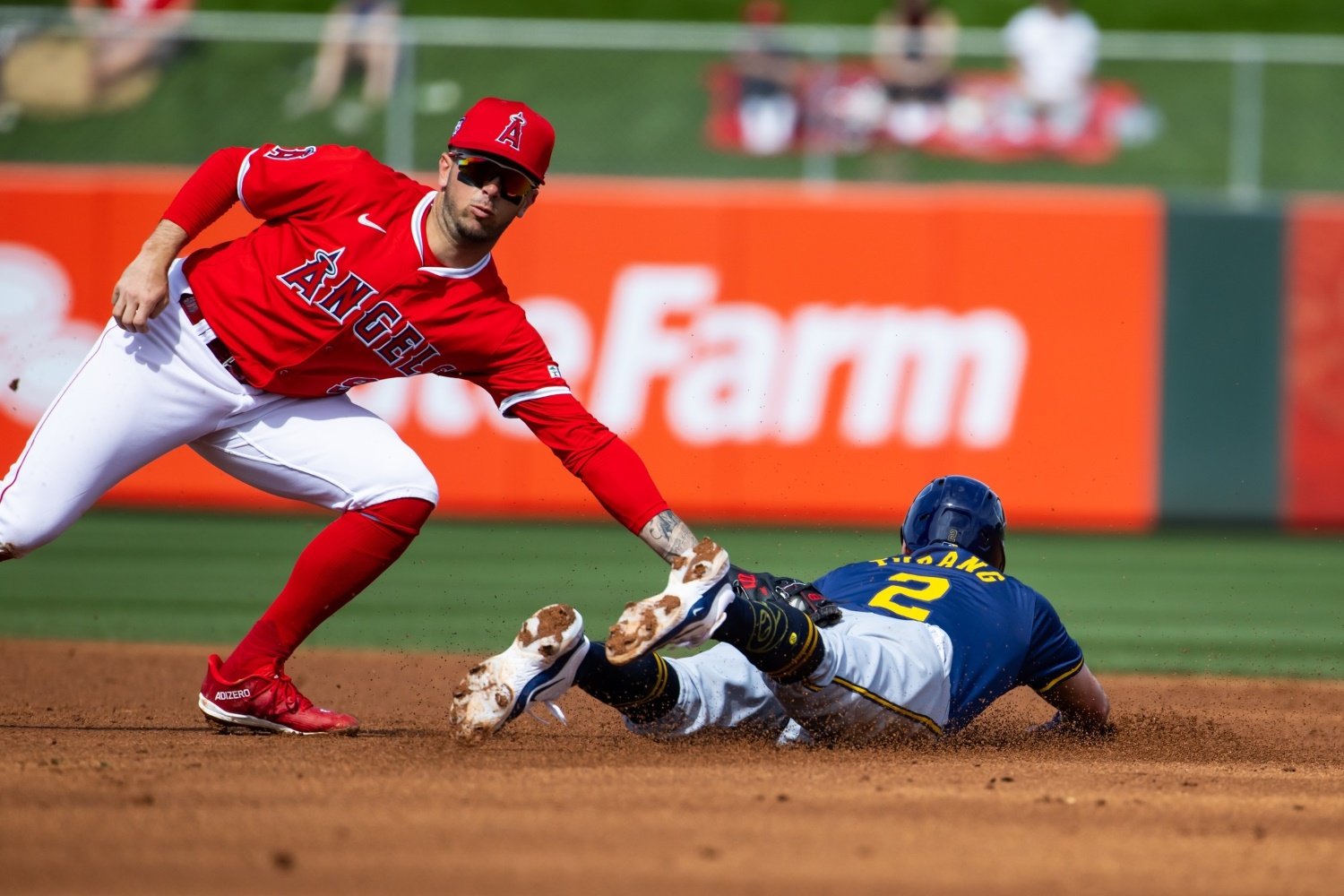 Early Wednesday morning, manager Pat Murphy approached a table around which sat several Brewers infielders, to talk more about how to make plays around the bases under what will amount to new rules this coming season. While it has never technically been legal for a fielder to block the path of a runner toward their base unless they possessed the baseball, the custom has long been for first basemen to plant a foot squarely in the middle of the lane to the base for a retreating runner, and for middle infielders to drop a knee in front of the base as an arriving would-be basestealer tries to slide in. This year, those will be automatic safeties for the runner, as the league (including Joe Torre, the special assistant to the commissioner; Torre was present in Tempe Tuesday) urges umpires to award those bases and discourage any setup by a fielder that invites or forces a collision. While the call came as a bit of a surprise to Black, the Brewers seem largely pleased with the change, as long as it's implemented judiciously. "I think there’s gonna be a learning curve there, for everybody involved," Murphy said in his Wednesday media session. "MLB makes changes, and if we’re objective, they get it right. They just do. There are a lot of people trying to do this, and they’re trying to get it right, and I think they deserve more credit. "Now, the interpretation of it and how everybody calls it—how it affects the game, and the justification of calling it, and do you call it just because technically they did it, or do you call it because it had an impact on the play? And is that too much for anyone to digest? Just like when they put in the home plate rule in the beginning, there was a learning curve there." While everyone wants the game to remain intense and hard-fought, safety is a priority on which everyone seemed able to agree. "You want to keep guys safe," said Brice Turang, whose speed and position mean he's often right in the middle of the plays that will be most affected. "You don’t want guys getting hurt, dropping knees down and stuff. I get the rule change. Stealing a base and diving into second headfirst and a guy’s knee is down, and you have nowhere to go except for into him—you want to be healthy, you want to be safe. I get that you want to get the out, but at the end of the day, dropping a knee down in front of the base can be dangerous." At the same time, everyone wants transparency about where exceptions or carve-outs might exist within the rule--not so that they can abuse them, but to avoid letting an out or a base go unclaimed due to hesitation that wasn't necessary. Turang said the team still didn't have that kind of clarity from the league as of Wednesday morning, but the clubhouse closed early for a position-players meeting focused on baserunning, in which the subject was discussed at greater length. "Sometimes, you don’t purposely drop a knee," Turang explained, pivoting from baserunner to defender in his perspective. "That’s just kind of where the ball takes you, or it’s a little low, and you’re trying to pick it. You’re trying to read the throw, you’re going off the throw, there’s a lot of stuff going on. You just do what you naturally react to do." Undoubtedly, there will be odd plays on which the unusual direction or urgency of the play takes over and a collision happens, even if everyone goes in with the best possible intentions and even after this rule change. Hence Murphy's demonstration and table talk Wednesday morning. Garrett Mitchell knows all too well how quickly the stakes get high in this area. The play on which he sustained a season-wrecking injury last April was precisely the kind of strange, high-leverage, slightly confusing play on which the game might still break the bonds of the new rules and make things difficult. He was advancing to third base on a ground ball to the right side, in the top of the 10th inning of a tie game in Seattle, and the hurried movement to set up for and receive the throw by Mariners third baseman Eugenio Suárez might now be considered a violation of the rules. Certainly, the irresistible momentum of the play forced Mitchell into the hard, wide slide he attempted, which resulted in a severe shoulder injury that would cost him most of the campaign. "I think, yeah, there’s a chance that it probably would have changed the way that play would have gone," Mitchell said Wednesday. "But more than anything, they’re making things a little bit easier for us to have a direct path to the base and not have it be blocked off, so that’ll be nice going forward." As was true of the catcher collision rule instituted after Buster Posey's catastrophic knee injury on a play at home plate in 2011, this one is a matter of balancing probabilities against payoffs. Most plays at any given base will be more exciting if ungoverned by any rules about how players use their bodies to create space or force an opponent out of position. When things go wrong, though, the result has a chance to be career-altering for a player and a drag on the game, nationally. The league has decided not to risk those huge negative returns, even if it means making a large number of plays slightly less thrilling. The same balancing act applies to the players' choices about equipment, but interestingly, they take the opposite tack when facing such dilemmas. Pitchers, for instance, have resisted various versions of protective headwear, electing the small but terrible risk of a line drive that could prove career- or life-threatening. Mitchell noted that his oven mitt-style sliding glove might have contributed to the injury, too. Because those gloves are designed to prevent impact injuries like jammed fingers on contact with the bag, they can make it harder to grip the base with one's hand on wide slides--leading to more strain further up the kinetic chain. "I still wear it, of course, so I don’t wanna completely change the way I go about playing the game because of something that was a freak accident," Mitchell said. "I’ll still wear them, because like I said, I do want to be able to protect my fingers—or even my wrist, from getting jammed up on the base. But it sucked." Maybe that makes the most sense, and is the right way for the game and its players to guard each other. The players err on the side of being daring, and the league errs on the side of protecting them from the negative repercussions of that risk-taking. For some old-school fans, it might feel strange to see lanes opened to runners and the physicality of the game diminished, but as Murphy said, that kind of change is sometimes necessary for just that reason.
- 1 comment
-
- 1
-
-
- pat murphy
- brice turang
- (and 3 more)
-
Here are some assorted notes from Wednesday morning in Maryvale, where the Milwaukee Brewers are getting set to host the Chicago Cubs in Cactus League play. There's no specific target number for spring plate appearances for either player, according to Murphy, who noted that how much exposure a player needs to live pitching from an opponent varies widely anyway. The picture is a little cloudier for Sánchez, whose injured right hand and wrist have allowed him to catch live BPs and sim games and who is throwing well, but who just took batting practice against pitched balls for the first time Wednesday. Absent any setback, Sánchez should still be in the mix for Opening Day, but any little thing could delay him enough to force him to begin the season on the injured list. Murphy did note that Sánchez has been progressing well, able to do a little more each day. View full article
- 4 replies
-
- 1
-
-
- brice turang
- gary sanchez
- (and 3 more)
-
 Manager Pat Murphy was in a good mood Wednesday. Seeing an old friend doesn't hurt, but he was quick to disclaim the idea that the first game in which the Brewers will play against former manager Craig Counsell carries any special significance. "The fact that Couns is coming over, that fills me up inside," Murphy told reporters Wednesday. "That’s great joy. But for a minute, you know? I’ve got a job to do. And the fact that it’s the Cubs… right now, it’s really not the Cubs. It’s a version of the Cubs. So that doesn’t mean anything." Indeed, Chicago's spring training travel lineup includes light-hitting third baseman Nick Madrigal as the cleanup hitter. Nothing done under such circumstances can be taken overly seriously. Brice Turang's Accidental Change in Lumber Fans probably noticed the oversized knob of the Brewers' sophomore middle infielder in the team's first televised Cactus League game Tuesday. It's noticeable, right away, but Turang said it was the furthest thing from a conscious, calculated change of equipment. "It’s a funny story, actually," Turang said. "I was getting my bats shipped back home, and the company lost them—they couldn’t find them, nothing. And I only had one of these bats at home, so I started using it, and I ended up liking it. So ever since then, I’ve been using it." All of the bats sticking out of Turang's locker inside the team's clubhouse at American Family Fields of Phoenix have the same style handle, so don't expect him to abandon his unexpected find soon. On the other hand, don't expect a hitter with an overhauled approach at the plate, either. "I’m just trying to hit low line drives, back up the middle," Turang said. "Get on top of baseballs. Last year, you learn from it, you make an adjustment, and you try to get better this year—to understand how last year went, and what to do to fix that, and stay in [the feel of what works]." As we've discussed multiple times here recently, Turang could benefit from a subtle change in approach, but as he noted, he did find something that worked for a stretch in the middle of last season. His new challenge will be to hold onto that success more consistently in 2024. Christian Yelich, Rhys Hoskins Nearing Cactus League Debuts; Gary Sánchez Further Behind Murphy said Wednesday that each of his two biggest bats are likely to debut this weekend. Since each spent Tuesday hitting in sim game action against the likes of DL Hall and Devin Williams, it's safe to say that they're not only healthy and ramping up on schedule, but that they've already seen a couple of the nastiest hurlers they'll encounter all season. There's no specific target number for spring plate appearances for either player, according to Murphy, who noted that how much exposure a player needs to live pitching from an opponent varies widely anyway. The picture is a little cloudier for Sánchez, whose injured right hand and wrist have allowed him to catch live BPs and sim games and who is throwing well, but who just took batting practice against pitched balls for the first time Wednesday. Absent any setback, Sánchez should still be in the mix for Opening Day, but any little thing could delay him enough to force him to begin the season on the injured list. Murphy did note that Sánchez has been progressing well, able to do a little more each day.
- 4 comments
-
- 3
-
-
- brice turang
- gary sanchez
- (and 3 more)
-
The Milwaukee Brewers' starting pitcher in Monday's Cactus League contest against the Reds was not truly a starter. He's definitely a multi-inning arm, though, and he's going to be critical for the team in the coming season. Image courtesy of © Charles LeClaire-USA TODAY Sports Brewers manager Pat Murphy knows he's facing a bit of an innings problem this year, without the services of Corbin Burnes or Brandon Woodruff. Bryse Wilson will be one important piece of the puzzle he tries to put together to bridge the resulting gaps. "Yeah, yeah. Yes," Murphy said Monday, before sending Wilson to the mound for his first outing of the spring. "We'd love Bryse to stretch out, and see what he can do there. Obviously, we're in a situation with our front-end pitchers where we don't have a lot of length there." Murphy was referring to Freddy Peralta, who has never exceeded the 165 2/3 innings he pitched last season, but also to veteran arms with spotty records of either durability or capacity to work deep into games, like Wade Miley, Jakob Junis, and Colin Rea, and to younger arms who are unlikely to step in and deliver traditional workhorse innings totals, like Robert Gasser, DL Hall, and Aaron Ashby. He could as easily have meant Devin Williams, though, after the team's relief ace pitched only 61 times and had just under 59 innings of total work for the season. Williams is not a high-volume closer, any more than Peralta or Miley are high-volume top-tier starters. Could Wilson himself figure into the rotation picture, either right away or later in the season? "I think he's all in on helping the Brewers win," Murphy said. "So it could be either one [starting or relieving]." Although Wilson had a great first season with the Crew in 2023, lefties still hit him to the tune of .236/.325/.459, with 14 extra-base hits in 124 plate appearances. Whether he eventually makes any kind of return to his roots as a starter or just needs to get more than three outs at a time out of the pen, Wilson knows he needs to better neutralize those batters--and he has a new weapon with which to do so. "Incorporating a changeup a little bit this spring," Wilson said Tuesday in Maryvale. "I threw it three times [Monday], got a swing and miss with it, and the last ground ball of the inning was a changeup as well, off the end of the bat. So it's been good so far, I've liked the results I've gotten in lives and a little bit in the game." Wilson had a changeup (though never an especially effective one) in his previous stops in Atlanta and Pittsburgh, but shelved the pitch entirely in 2023. He's bringing it back, with (he hopes) a bit better "seam-shift incorporation" from a circle change grip, perhaps giving the pitch greater movement and deception, because that movement won't fit as neatly with the spin the hitter sees out of his hand. The running action of a circle change could be especially valuable if Wilson is able to set it up with the cutter up and in to lefties, which he said he's increasingly comfortable doing. "It depends a lot on what I'm trying to with it," Wilson said, in answer to whether he conceptualizes the cutter as a fastball or a breaking ball. "If I'm throwing it up and in to a lefty, I'm gonna throw it more like a fastball, cut it loose. If I'm going down and glove side, either low and away to a righty or it would be back foot to a lefty, then I'll manipulate it a little more." The cutter, of course, was the revolutionary adjustment for Wilson upon joining the Brewers in 2023. It's a pitch he still mostly used as a breaking ball last year, but he's right that when he got in on lefties with it, it could overpower them up high or fool them like a slider down low. Wilson credits Brewers pitching coach Chris Hook with giving him that weapon, with which he had only lightly experimented previously. "That was all Hooky's idea," Wilson recalled. "I had an 84, 85 mile per hour slider, and then my slower curveball, or slider, whatever you want to call it. He said, 'Let's try to throw that harder, give it a bit of a different shape,' and that's what we did." As I wrote late last season, that new pitch--and a fairly heavy reliance on it--made Wilson the most rare kind of successful modern pitcher: a merchant of the lazy fly ball. "I can give them three looks: cut, ride, and sink," Wilson explained. "It just kind of keeps the hitters off their toes. They don't know what's coming until they start their swing, So it allows for a lot of weak contact. The cutter does have some lift to it, so you would expect--especially if I throw it up in the zone--to get some fly balls with it." As unorthodox as that way of doing things is, it worked far too well to abandon. With ever-improving feel for his money pitch and a fledgling offering to slow down lefty batters, Wilson is looking forward to an even better 2024. Research assistance provided by TruMedia. View full article
-
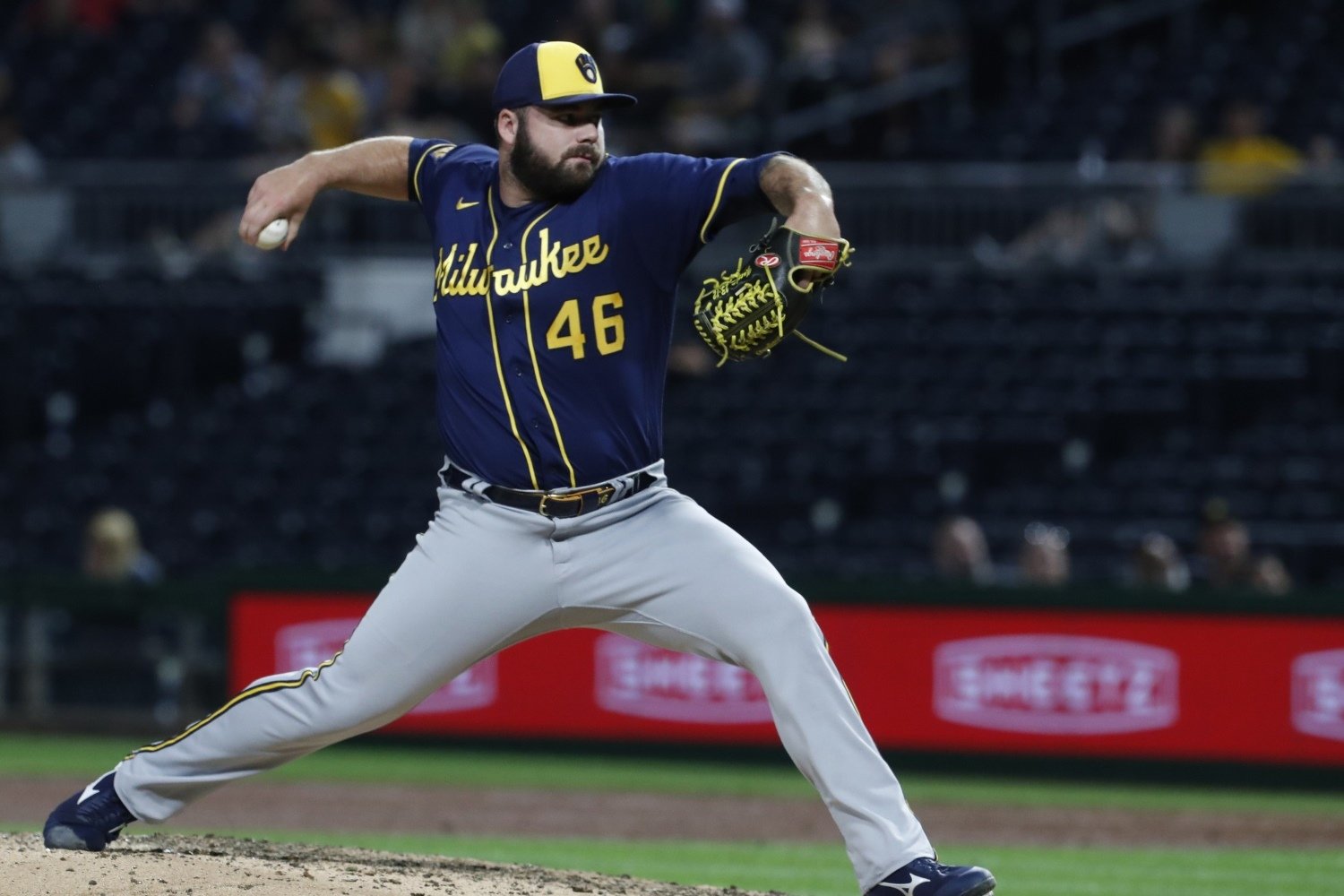 Brewers manager Pat Murphy knows he's facing a bit of an innings problem this year, without the services of Corbin Burnes or Brandon Woodruff. Bryse Wilson will be one important piece of the puzzle he tries to put together to bridge the resulting gaps. "Yeah, yeah. Yes," Murphy said Monday, before sending Wilson to the mound for his first outing of the spring. "We'd love Bryse to stretch out, and see what he can do there. Obviously, we're in a situation with our front-end pitchers where we don't have a lot of length there." Murphy was referring to Freddy Peralta, who has never exceeded the 165 2/3 innings he pitched last season, but also to veteran arms with spotty records of either durability or capacity to work deep into games, like Wade Miley, Jakob Junis, and Colin Rea, and to younger arms who are unlikely to step in and deliver traditional workhorse innings totals, like Robert Gasser, DL Hall, and Aaron Ashby. He could as easily have meant Devin Williams, though, after the team's relief ace pitched only 61 times and had just under 59 innings of total work for the season. Williams is not a high-volume closer, any more than Peralta or Miley are high-volume top-tier starters. Could Wilson himself figure into the rotation picture, either right away or later in the season? "I think he's all in on helping the Brewers win," Murphy said. "So it could be either one [starting or relieving]." Although Wilson had a great first season with the Crew in 2023, lefties still hit him to the tune of .236/.325/.459, with 14 extra-base hits in 124 plate appearances. Whether he eventually makes any kind of return to his roots as a starter or just needs to get more than three outs at a time out of the pen, Wilson knows he needs to better neutralize those batters--and he has a new weapon with which to do so. "Incorporating a changeup a little bit this spring," Wilson said Tuesday in Maryvale. "I threw it three times [Monday], got a swing and miss with it, and the last ground ball of the inning was a changeup as well, off the end of the bat. So it's been good so far, I've liked the results I've gotten in lives and a little bit in the game." Wilson had a changeup (though never an especially effective one) in his previous stops in Atlanta and Pittsburgh, but shelved the pitch entirely in 2023. He's bringing it back, with (he hopes) a bit better "seam-shift incorporation" from a circle change grip, perhaps giving the pitch greater movement and deception, because that movement won't fit as neatly with the spin the hitter sees out of his hand. The running action of a circle change could be especially valuable if Wilson is able to set it up with the cutter up and in to lefties, which he said he's increasingly comfortable doing. "It depends a lot on what I'm trying to with it," Wilson said, in answer to whether he conceptualizes the cutter as a fastball or a breaking ball. "If I'm throwing it up and in to a lefty, I'm gonna throw it more like a fastball, cut it loose. If I'm going down and glove side, either low and away to a righty or it would be back foot to a lefty, then I'll manipulate it a little more." The cutter, of course, was the revolutionary adjustment for Wilson upon joining the Brewers in 2023. It's a pitch he still mostly used as a breaking ball last year, but he's right that when he got in on lefties with it, it could overpower them up high or fool them like a slider down low. Wilson credits Brewers pitching coach Chris Hook with giving him that weapon, with which he had only lightly experimented previously. "That was all Hooky's idea," Wilson recalled. "I had an 84, 85 mile per hour slider, and then my slower curveball, or slider, whatever you want to call it. He said, 'Let's try to throw that harder, give it a bit of a different shape,' and that's what we did." As I wrote late last season, that new pitch--and a fairly heavy reliance on it--made Wilson the most rare kind of successful modern pitcher: a merchant of the lazy fly ball. "I can give them three looks: cut, ride, and sink," Wilson explained. "It just kind of keeps the hitters off their toes. They don't know what's coming until they start their swing, So it allows for a lot of weak contact. The cutter does have some lift to it, so you would expect--especially if I throw it up in the zone--to get some fly balls with it." As unorthodox as that way of doing things is, it worked far too well to abandon. With ever-improving feel for his money pitch and a fledgling offering to slow down lefty batters, Wilson is looking forward to an even better 2024. Research assistance provided by TruMedia.
 -
Some of the most important action for the Brewers Monday in Maryvale was on the back fields, where two important arms for the future of the organization threw simulated games. On Tuesday, they each reflected on their brief outings. Image courtesy of © Mark J. Rebilas-USA TODAY Sports For Aaron Ashby, the goal is to get back into a competitive setting and ramp up quickly, to allow himself to compete for a place at the back end of the Brewers' starting rotation. Monday's outing provided an important mile marker in that journey. "It was good to get out there for two innings and just pitch," Ashby said Tuesday, in the Brewers' clubhouse at American Family Fields of Phoenix. "Everything's coming back how we expected it to, and all the strikes were there, so it felt good." Ashby did throw over the winter, including getting up and down to simulate a multi-inning outing, but backed off earlier in camp as part of the team's preparation for the season. "I had done it in a bullpen before we got here, so I had built up that pitch count, and then we come in here, de-load, and build back up with more intensity," he said. Manager Pat Murphy noted the difficult balance guys have to strike when they're in a position like Ashby's (or that of Janson Junk, who will start for the Brewers in Cactus League action Tuesday in Tempe), needing to prove themselves fast but hold up over the months ahead. "They train so hard, they get to spring, and then they get to the season, and either they don't have it left, or..." Murphy turned his hands to the sky. Enough said. It's a fine line to walk, in an era of careful management of workloads but increasing rates of injury league-wide. "I think we're close. A lot of the shapes are there," Ashby said, as he gets back up to speed. "So it's just about making everything more consistent." Ashby's specific approach is an interesting one, reliant in part on his unusual release point and in part on his sheer stuff. He uses sinkers and sliders most of the time, despite being a lefty hurler who knows he will face many right-handed batters. While much of the league has leaned into an approach whereby sinkers are thrown more up in the zone, Ashby envisions sticking to the low, then lower approach he employed at his best in 2022. "The main goal [of the sinker] is to induce early contact that's on the ground," said the southpaw. "That might happen up in the zone every once in a while, but to change eye levels, if we need to do that we'll go just straight four-seam." That resistance to an evolving league consensus extends to his preference for the harder, more horizontal breaking ball, rather than the curve when facing opposite-handed batters. Monday's game found him working on setting hitters up with the sinker and a ball-to-strike backdoor slider, then striving to put them away with the strike-to-ball, backfoot version. "I've always thrown sliders to right-handers," Ashby said. "It's just something I've always been comfortable with. It does have to be located correctly, but the visual of it has never bothered me." Jacob Misiorowski is Keeping Things Simple Pitching opposite Ashby in Monday's exercises, Misiorowski makes an especially neat contrast to his teammate. Ashby is the two-seam lefty, outgoing and quick-talking, more comfortable in the clubhouse than his roster status would lead you to expect. Misiorowski, the younger, bigger, flamethrowing righthander, is friendly and open but laconic. His approach to the work Monday was similarly understated. "No," said Misiorowski, when asked if he was working on anything new to attack advanced left-handed batters. "Same old, same old. Throw the fastball, throw the slider. Nothing changing." Misiorowski, too, went through a short de-load early in camp, but feels ramped up to "pretty close" to full speed. He's not yet throwing 102 miles per hour, as he occasionally did last summer, but expects to find "one or two more ticks" before the end of camp. He also felt good about the progress of his curveball and changeup, but it's clear in his actions and in his words that he's thinking the way a hurler with his raw stuff should: fastball, slider. Fastball, slider. Everything about Misiorowski seems well-suited to the bullpen. He doesn't yet have the surface-level mean streak a relief ace might traditionally have, but there's an almost sheepish confidence there that works just as well. if the Brewers end up having a need for him at the big-league level in 2024, he says he's ready to step into that role. With the two pitches that dominate his arsenal and overwhelm opposing hitters, that seems like a sound assessment. View full article
