



Jake McKibbin
-
Posts
2,395 -
Joined
-
Last visited
-
Days Won
6
Content Type
Profiles
Forums
Blogs
Events
News
2026 Milwaukee Brewers Top Prospects Ranking
Milwaukee Brewers Videos
2022 Milwaukee Brewers Draft Picks
Milwaukee Brewers Free Agent & Trade Rumors, Notes, & Tidbits
Guides & Resources
2023 Milwaukee Brewers Draft Picks
2024 Milwaukee Brewers Draft Picks
The Milwaukee Brewers Players Project
2025 Milwaukee Brewers Draft Pick Tracker
2026 Milwaukee Brewers Draft Tracker: Picks & Bonuses
Store
Downloads
Gallery
Everything posted by Jake McKibbin
-
He’s been absolutely electric since the beginning of June. Yet, Jackson Chourio may be capable of even more. With just one small adjustment still to come, can he become a truly complete hitter before the playoffs? Image courtesy of © Jeff Hanisch-USA TODAY Sports Jackson Chourio has shown an adaptability beyond his years throughout each step of his professional journey. In one year, he took himself from being an 18-year-old at Low A and High A with a 25.5% strikeout rate, to a player striking out just 17% of the time as a 19-year-old in Double A. Two of his last three months at the level saw a strikeout rate below 11%. That’s just one example of how quickly he learns, and we’ve seen exactly that in the majors this season. To watch Chourio at the start of the year compared to now is chalk and cheese in terms of confidence, pitch recognition and quality of contact, all against the best pitching in the world, at just 20 years old. He’s been one of the best hitters in baseball since the All-Star break, and replaced the production the Brewers were getting from Christian Yelich. That being said, there is one area that he hasn’t quite mastered, although it wouldn’t be a surprise to see him rectify it in the next six weeks. Since Jun. 1, pitchers have had quite a clear plan of attack for Chourio, spamming the outer third of the plate. When they miss, he’s been relatively adept at punishing them, and he has been quite patient at laying off those outer-third pitches early in the count. He’s aware of the weakness and taking steps to mitigate it, but that can only do so much. Above are the locations of all of Chourio’s exit velocities of 104+ mph. He doesn’t have a truly elite 90th-percentile exit velocity, but he’s been producing a lot more of this type of contact since Jun. 1. Yet, not a single one all year has come on the outer third of the plate. Interestingly, he's also swung a lot more in the upper third of the zone than the lower third, but that’s a smaller issue. The good news is that he’s already started adjusting--not so much in terms of damage, but in how he’s elevating the ball. The latter has improved in each month. Chourio had a 59.2% ground ball rate on outer third pitches through the end of June, but as we’ve already seen, he adapts incredibly quickly. In August, the ground-ball rate has dropped to 46.2%, and it’s largely because he’s beginning to get a hold of those outer-third sliders. He’s picking them up a lot earlier out of the hand and has been able to keep his weight back on them longer, making better contact as a result. Anyone who watched Chourio in the minors knows he has prodigious power to the opposite field, but a lot of that comes on inside-outing fastballs to that area. If he can translate that to the slider on the outer third, then there may not be a weakness to his game. The reason I think this may be very doable is that he perhaps has the best quality of contact in the majors--to the point that it’s almost detrimental. The reason I say that is that Chourio, when he makes contact, almost invariably puts the ball in play. Since Jun. 1, he has the second-lowest foul-ball rate of any player in MLB, whether he’s swinging inside or outside the strike zone. He could still do with chasing less often, and that will come with the pitch recognition advances happening naturally from facing big-league pitchers, but his ability to put the ball in play when he swings is incredible, and a big reason why his walk rate might never jump off the page. It’s also a reason why he may compete for a batting title quite regularly, unless pitchers attempt to manage their way around him in the lineup more often. Either way, his contact skills are so good that if he can pick the pitch up quickly, he’ll have minimal issues squaring the ball up. It seems like that may be happening before our eyes. Until then, the more he can force pitchers onto the inner half of the zone, the more damage we’ll see down the home stretch. What do you think of Jackson Chourio’s recent performances? Have you noticed the heavy targeting of the outer third of the strike zone? Let us know your thoughts in the comments below. View full article
-
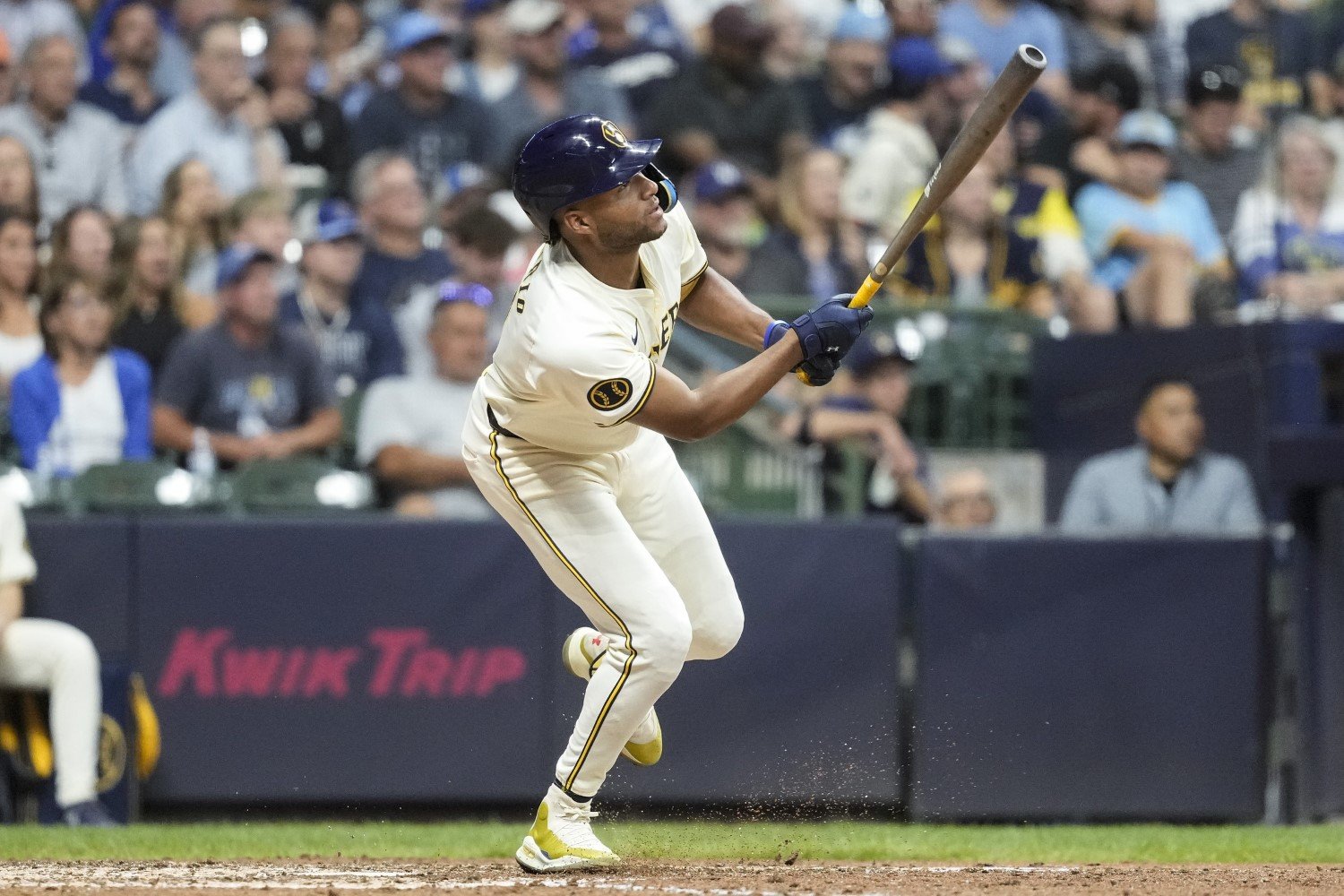 Jackson Chourio has shown an adaptability beyond his years throughout each step of his professional journey. In one year, he took himself from being an 18-year-old at Low A and High A with a 25.5% strikeout rate, to a player striking out just 17% of the time as a 19-year-old in Double A. Two of his last three months at the level saw a strikeout rate below 11%. That’s just one example of how quickly he learns, and we’ve seen exactly that in the majors this season. To watch Chourio at the start of the year compared to now is chalk and cheese in terms of confidence, pitch recognition and quality of contact, all against the best pitching in the world, at just 20 years old. He’s been one of the best hitters in baseball since the All-Star break, and replaced the production the Brewers were getting from Christian Yelich. That being said, there is one area that he hasn’t quite mastered, although it wouldn’t be a surprise to see him rectify it in the next six weeks. Since Jun. 1, pitchers have had quite a clear plan of attack for Chourio, spamming the outer third of the plate. When they miss, he’s been relatively adept at punishing them, and he has been quite patient at laying off those outer-third pitches early in the count. He’s aware of the weakness and taking steps to mitigate it, but that can only do so much. Above are the locations of all of Chourio’s exit velocities of 104+ mph. He doesn’t have a truly elite 90th-percentile exit velocity, but he’s been producing a lot more of this type of contact since Jun. 1. Yet, not a single one all year has come on the outer third of the plate. Interestingly, he's also swung a lot more in the upper third of the zone than the lower third, but that’s a smaller issue. The good news is that he’s already started adjusting--not so much in terms of damage, but in how he’s elevating the ball. The latter has improved in each month. Chourio had a 59.2% ground ball rate on outer third pitches through the end of June, but as we’ve already seen, he adapts incredibly quickly. In August, the ground-ball rate has dropped to 46.2%, and it’s largely because he’s beginning to get a hold of those outer-third sliders. He’s picking them up a lot earlier out of the hand and has been able to keep his weight back on them longer, making better contact as a result. Anyone who watched Chourio in the minors knows he has prodigious power to the opposite field, but a lot of that comes on inside-outing fastballs to that area. If he can translate that to the slider on the outer third, then there may not be a weakness to his game. The reason I think this may be very doable is that he perhaps has the best quality of contact in the majors--to the point that it’s almost detrimental. The reason I say that is that Chourio, when he makes contact, almost invariably puts the ball in play. Since Jun. 1, he has the second-lowest foul-ball rate of any player in MLB, whether he’s swinging inside or outside the strike zone. He could still do with chasing less often, and that will come with the pitch recognition advances happening naturally from facing big-league pitchers, but his ability to put the ball in play when he swings is incredible, and a big reason why his walk rate might never jump off the page. It’s also a reason why he may compete for a batting title quite regularly, unless pitchers attempt to manage their way around him in the lineup more often. Either way, his contact skills are so good that if he can pick the pitch up quickly, he’ll have minimal issues squaring the ball up. It seems like that may be happening before our eyes. Until then, the more he can force pitchers onto the inner half of the zone, the more damage we’ll see down the home stretch. What do you think of Jackson Chourio’s recent performances? Have you noticed the heavy targeting of the outer third of the strike zone? Let us know your thoughts in the comments below.
 -
Tue. 8/13 - Wichrowski Toes the Biloxi Rubber
Jake McKibbin replied to Jim Goulart's topic in Brewers Minor League Talk
He expects to come back today or Thursday from the injury all being well -
This is incredibly contrasting to the name "blighty". I'd almost be disappointed if I didn't completely agree
-
Jacob Misiorowski and Craig Yoho were both promoted to Triple-A recently, and with both currently in bullpen roles, it may be a fight between them for that extra pitching roster spot in September. Who should get the call? Image courtesy of © Curt Hogg / USA TODAY NETWORK, Biloxi Shuckers Craig Yoho was a $10,000 signing in the 2023 Draft who was completely unheralded before this season. Jacob Misiorowski has been about as high on helium as they come. Misiorowski dominates behind a remarkable fastball, while Yoho uses good command and boomerang-like movement to get a similar level of swing-and-miss. They are almost polar opposites in terms of their profiles, but they’re both genuine difference-makers. Adding either to the bullpen would be a bonus in September, but with limited 40-man roster spots available and only one expanded roster spot for a pitcher, there’s a very real possibility only one of them gets the call. How Have They Each Performed Early On At Triple-A Nashville? Let’s start with Misiorowski. He had an average perceived velocity of 100 mph on the fastball in his most recent appearance, an incredible number. His gigantic extension from that 6-foot-6 frame (combined with wicked arm speed) means the fastball is deadly, or at least it should be. It has shown a slightly inconsistent shape in terms of the ride he’s generating, and has just a 5.6% swinging strike rate. He has limited hard contact, with an average exit velocity of just 67 mph, but where Triple-A hitters make poor contact, a big-league hitter will often do damage, so that’s a prospective concern. The ABS system has challenged his control a bit and narrowed the strike zone. The word is out there about how to approach him. Hitters are swinging just 37% of the time on his heater, in part due to the uncomfortable nature of the at-bat and its velocity, but also in an attempt to wait him out. The good news is that he adapted in his last appearance, pouring it into the zone for called strikes and using the curveball, which has been electric, to put them away. His breaking pitch has a 33.3% swinging strike rate, and has been devastating when he’s commanded it. There have been a number of uncompetitive offerings which have inflated his pitch counts, but it should improve as he adjusts to the level. Meanwhile, Craig Yoho has continued to make hitters look completely and utterly overmatched with basically every pitch in his arsenal. He’s thrown ten sliders, seven for strikes, with three swings and no one even making contact yet. The sinker has been used to right-handed batters a lot, and he pummels the strike zone with it. Vicious arm-side movement has him backdooring the pitch for called strikes and presents an alternative, velocity-wise, to the changeup. Speaking of, that changeup has been about as filthy as they come. I could give you the statistical numbers, or just show you some of the swings he’s been generating: The sheer two plane movement could make it instantly one of the nastiest pitches in baseball, and you can see why he has a 0.67 FIP on the year across the upper levels of the minors. In terms of how he generates the swing-and-miss without that high-end velocity and combined with a 66% ground ball rate this season, he’s essentially an ideal reliever--a “swing-and-miss merchant” who avoids the long ball. He has three pitches that move in dizzying ways, in a variety of directions and speeds that confounds hitters. No one in the minors has yet found an answer. For both pitchers, their Triple-A sample is small, but there are definitely things we can glean from them. Misiorowski has lost some of the fastball IVB he had with the ball in Double-A, but he’s avoiding hard contact on it and getting some elite swing-and-miss on his breaker. Yoho is, well, the same Craig Yoho we’ve seen at every other level of the minor leagues. We shouldn't make too many early judgments based on this small dataset. However, it should play a part in the decision made at the end of it all. What Type Of Reliever Do The Brewers Need? This is a large part of the decision. Coming out of the bullpen, Misiorowski has been working as a multi-inning reliever, whereas Yoho has been kept as a single-inning arm. When you look at how the Brewers roster is currently constructed, and when you take into account Pat Murphy’s quotes about DL Hall after Sunday’s game: They have a six-man rotation right now, to deal with a 14-day stretch without an off day, but Hall is likely to move into a multi-inning role himself (alongside Bryse Wilson and Joe Ross) at some point. That’s three multi-inning men, and whether the Brewers want to add a fourth to that mix would be questionable, barring injury or poor form from any of the three. That’s without taking into account how Bryan Hudson has been deployed this year as a multi-inning arm. With a five-man rotation, you would have nine arms available out of the bullpen in September. With the injured list expected to be considerably shorter by that point with the returns of Hudson and Trevor Megill, that would leave four multi-inning relief options and five single-inning arms, including Megill, Devin Williams, and Joel Payamps. It seems much, much easier for the Brewers to find space for a single-inning relief role than yet another multi-inning, stretched-out arm. That would appear to give Yoho the leg up in some respects. Misiorowski could be dialed down to that role, as well, and definitely has the stuff to thrive in it, but it’s not how the Brewers seem to be deploying them as it currently stands. What About Long-Term Plans? As referenced earlier, the Brewers have said about the pitch count for Jacob Misiorowski. He was shut down last year after a promotion to Double-A, with arm fatigue (never a great sign). They’ve been careful again with his ramp-up this season. They are comfortable with him getting those innings at either Triple-A or in the Show, but if they’re serious about being cautious on the workload, then having Yoho around may allow them to retain that caution while still adding an elite bullpen arm for the playoff push. The other thing is that, eventually, the Brewers still seem keen on Misiorowski as a starter. He’s not quite gotten a hold of his command of his fastball or his third pitch to the point that you’d feel comfortable with him starting in the majors next year. He still has development and growth to go before he’s ready for that stage, and (unfortunate as it is that it’s a consideration) starting his service-time clock when you know he likely won’t be ready to start games until at least halfway through next season would be wasting a year of control. That’s something that can be justified if he was the sole big, internal upgrade possibility for September, but Yoho’s presence does negate that somewhat. While Misiorowski has some development ahead of him, Yoho is ready to get big-league outs in high-leverage spots right now and over the next few years. He has far less to learn from the minor leagues, and as such, he should be the preferred option for the promotion. One more point of observation is the adjustment factor at each stage of promotion. Yoho has been promoted from High-A Wisconsin to Triple-A, and his numbers in terms of swing-and-miss, strike rate, and so on haven't changed at all at each step: Contrast that to Misiorowski, who at every step has required an adjustment period due to a mandate for better command. Yoho seems like a safer candidate. The Brewers, if they bring them up in September, will have one month before the playoffs where they have to perform down the stretch and into October. It's a not a time where they can afford to let someone adjust to the level over a longer period, and so far in their minor-league careers, Yoho has demonstrated himself to be significantly better in this regard. So What Direction Should They Go? The Brewers still may attempt to include both on their September roster, but with an already packed bullpen that should be getting natural reinforcements from injury returnees, there is no obligation for them to do so. The smart path long-term may be to keep Misiorowski in Nashville, adjusting to that caliber of hitter and working out how he can fill up that zone, but it’s a difficult decision; he may be an elite arm coming from the bullpen in the playoffs. It’s hard to argue that Misiorowski wouldn’t be an upgrade on a Hoby Milner or Elvis Peguero, but with an in-form Payamps alongside a rejuvenated Hudson, Megill, Williams, Enoli Paredes and Jared Koenig, who have all been excellent this year, that choice becomes a little bit more difficult. At this point, Yoho makes the most sense for the Brewers, both in the short term and in the long term, given how ready he looks for the major-league level and how little development he has left combined with the need for a shorter-stint reliever and Misiorowski's path to the big leagues as a starter. What do you think of the Brewers' potential dilemma for the expanded rosters? Can you see them preferring one of Yoho or Misiorowski? Let us know your thoughts in the comments below! View full article
-
.png.4b92cb2488eab635df5df20918f7602a.png) Craig Yoho was a $10,000 signing in the 2023 Draft who was completely unheralded before this season. Jacob Misiorowski has been about as high on helium as they come. Misiorowski dominates behind a remarkable fastball, while Yoho uses good command and boomerang-like movement to get a similar level of swing-and-miss. They are almost polar opposites in terms of their profiles, but they’re both genuine difference-makers. Adding either to the bullpen would be a bonus in September, but with limited 40-man roster spots available and only one expanded roster spot for a pitcher, there’s a very real possibility only one of them gets the call. How Have They Each Performed Early On At Triple-A Nashville? Let’s start with Misiorowski. He had an average perceived velocity of 100 mph on the fastball in his most recent appearance, an incredible number. His gigantic extension from that 6-foot-6 frame (combined with wicked arm speed) means the fastball is deadly, or at least it should be. It has shown a slightly inconsistent shape in terms of the ride he’s generating, and has just a 5.6% swinging strike rate. He has limited hard contact, with an average exit velocity of just 67 mph, but where Triple-A hitters make poor contact, a big-league hitter will often do damage, so that’s a prospective concern. The ABS system has challenged his control a bit and narrowed the strike zone. The word is out there about how to approach him. Hitters are swinging just 37% of the time on his heater, in part due to the uncomfortable nature of the at-bat and its velocity, but also in an attempt to wait him out. The good news is that he adapted in his last appearance, pouring it into the zone for called strikes and using the curveball, which has been electric, to put them away. His breaking pitch has a 33.3% swinging strike rate, and has been devastating when he’s commanded it. There have been a number of uncompetitive offerings which have inflated his pitch counts, but it should improve as he adjusts to the level. Meanwhile, Craig Yoho has continued to make hitters look completely and utterly overmatched with basically every pitch in his arsenal. He’s thrown ten sliders, seven for strikes, with three swings and no one even making contact yet. The sinker has been used to right-handed batters a lot, and he pummels the strike zone with it. Vicious arm-side movement has him backdooring the pitch for called strikes and presents an alternative, velocity-wise, to the changeup. Speaking of, that changeup has been about as filthy as they come. I could give you the statistical numbers, or just show you some of the swings he’s been generating: The sheer two plane movement could make it instantly one of the nastiest pitches in baseball, and you can see why he has a 0.67 FIP on the year across the upper levels of the minors. In terms of how he generates the swing-and-miss without that high-end velocity and combined with a 66% ground ball rate this season, he’s essentially an ideal reliever--a “swing-and-miss merchant” who avoids the long ball. He has three pitches that move in dizzying ways, in a variety of directions and speeds that confounds hitters. No one in the minors has yet found an answer. For both pitchers, their Triple-A sample is small, but there are definitely things we can glean from them. Misiorowski has lost some of the fastball IVB he had with the ball in Double-A, but he’s avoiding hard contact on it and getting some elite swing-and-miss on his breaker. Yoho is, well, the same Craig Yoho we’ve seen at every other level of the minor leagues. We shouldn't make too many early judgments based on this small dataset. However, it should play a part in the decision made at the end of it all. What Type Of Reliever Do The Brewers Need? This is a large part of the decision. Coming out of the bullpen, Misiorowski has been working as a multi-inning reliever, whereas Yoho has been kept as a single-inning arm. When you look at how the Brewers roster is currently constructed, and when you take into account Pat Murphy’s quotes about DL Hall after Sunday’s game: They have a six-man rotation right now, to deal with a 14-day stretch without an off day, but Hall is likely to move into a multi-inning role himself (alongside Bryse Wilson and Joe Ross) at some point. That’s three multi-inning men, and whether the Brewers want to add a fourth to that mix would be questionable, barring injury or poor form from any of the three. That’s without taking into account how Bryan Hudson has been deployed this year as a multi-inning arm. With a five-man rotation, you would have nine arms available out of the bullpen in September. With the injured list expected to be considerably shorter by that point with the returns of Hudson and Trevor Megill, that would leave four multi-inning relief options and five single-inning arms, including Megill, Devin Williams, and Joel Payamps. It seems much, much easier for the Brewers to find space for a single-inning relief role than yet another multi-inning, stretched-out arm. That would appear to give Yoho the leg up in some respects. Misiorowski could be dialed down to that role, as well, and definitely has the stuff to thrive in it, but it’s not how the Brewers seem to be deploying them as it currently stands. What About Long-Term Plans? As referenced earlier, the Brewers have said about the pitch count for Jacob Misiorowski. He was shut down last year after a promotion to Double-A, with arm fatigue (never a great sign). They’ve been careful again with his ramp-up this season. They are comfortable with him getting those innings at either Triple-A or in the Show, but if they’re serious about being cautious on the workload, then having Yoho around may allow them to retain that caution while still adding an elite bullpen arm for the playoff push. The other thing is that, eventually, the Brewers still seem keen on Misiorowski as a starter. He’s not quite gotten a hold of his command of his fastball or his third pitch to the point that you’d feel comfortable with him starting in the majors next year. He still has development and growth to go before he’s ready for that stage, and (unfortunate as it is that it’s a consideration) starting his service-time clock when you know he likely won’t be ready to start games until at least halfway through next season would be wasting a year of control. That’s something that can be justified if he was the sole big, internal upgrade possibility for September, but Yoho’s presence does negate that somewhat. While Misiorowski has some development ahead of him, Yoho is ready to get big-league outs in high-leverage spots right now and over the next few years. He has far less to learn from the minor leagues, and as such, he should be the preferred option for the promotion. One more point of observation is the adjustment factor at each stage of promotion. Yoho has been promoted from High-A Wisconsin to Triple-A, and his numbers in terms of swing-and-miss, strike rate, and so on haven't changed at all at each step: Contrast that to Misiorowski, who at every step has required an adjustment period due to a mandate for better command. Yoho seems like a safer candidate. The Brewers, if they bring them up in September, will have one month before the playoffs where they have to perform down the stretch and into October. It's a not a time where they can afford to let someone adjust to the level over a longer period, and so far in their minor-league careers, Yoho has demonstrated himself to be significantly better in this regard. So What Direction Should They Go? The Brewers still may attempt to include both on their September roster, but with an already packed bullpen that should be getting natural reinforcements from injury returnees, there is no obligation for them to do so. The smart path long-term may be to keep Misiorowski in Nashville, adjusting to that caliber of hitter and working out how he can fill up that zone, but it’s a difficult decision; he may be an elite arm coming from the bullpen in the playoffs. It’s hard to argue that Misiorowski wouldn’t be an upgrade on a Hoby Milner or Elvis Peguero, but with an in-form Payamps alongside a rejuvenated Hudson, Megill, Williams, Enoli Paredes and Jared Koenig, who have all been excellent this year, that choice becomes a little bit more difficult. At this point, Yoho makes the most sense for the Brewers, both in the short term and in the long term, given how ready he looks for the major-league level and how little development he has left combined with the need for a shorter-stint reliever and Misiorowski's path to the big leagues as a starter. What do you think of the Brewers' potential dilemma for the expanded rosters? Can you see them preferring one of Yoho or Misiorowski? Let us know your thoughts in the comments below!
Craig Yoho was a $10,000 signing in the 2023 Draft who was completely unheralded before this season. Jacob Misiorowski has been about as high on helium as they come. Misiorowski dominates behind a remarkable fastball, while Yoho uses good command and boomerang-like movement to get a similar level of swing-and-miss. They are almost polar opposites in terms of their profiles, but they’re both genuine difference-makers. Adding either to the bullpen would be a bonus in September, but with limited 40-man roster spots available and only one expanded roster spot for a pitcher, there’s a very real possibility only one of them gets the call. How Have They Each Performed Early On At Triple-A Nashville? Let’s start with Misiorowski. He had an average perceived velocity of 100 mph on the fastball in his most recent appearance, an incredible number. His gigantic extension from that 6-foot-6 frame (combined with wicked arm speed) means the fastball is deadly, or at least it should be. It has shown a slightly inconsistent shape in terms of the ride he’s generating, and has just a 5.6% swinging strike rate. He has limited hard contact, with an average exit velocity of just 67 mph, but where Triple-A hitters make poor contact, a big-league hitter will often do damage, so that’s a prospective concern. The ABS system has challenged his control a bit and narrowed the strike zone. The word is out there about how to approach him. Hitters are swinging just 37% of the time on his heater, in part due to the uncomfortable nature of the at-bat and its velocity, but also in an attempt to wait him out. The good news is that he adapted in his last appearance, pouring it into the zone for called strikes and using the curveball, which has been electric, to put them away. His breaking pitch has a 33.3% swinging strike rate, and has been devastating when he’s commanded it. There have been a number of uncompetitive offerings which have inflated his pitch counts, but it should improve as he adjusts to the level. Meanwhile, Craig Yoho has continued to make hitters look completely and utterly overmatched with basically every pitch in his arsenal. He’s thrown ten sliders, seven for strikes, with three swings and no one even making contact yet. The sinker has been used to right-handed batters a lot, and he pummels the strike zone with it. Vicious arm-side movement has him backdooring the pitch for called strikes and presents an alternative, velocity-wise, to the changeup. Speaking of, that changeup has been about as filthy as they come. I could give you the statistical numbers, or just show you some of the swings he’s been generating: The sheer two plane movement could make it instantly one of the nastiest pitches in baseball, and you can see why he has a 0.67 FIP on the year across the upper levels of the minors. In terms of how he generates the swing-and-miss without that high-end velocity and combined with a 66% ground ball rate this season, he’s essentially an ideal reliever--a “swing-and-miss merchant” who avoids the long ball. He has three pitches that move in dizzying ways, in a variety of directions and speeds that confounds hitters. No one in the minors has yet found an answer. For both pitchers, their Triple-A sample is small, but there are definitely things we can glean from them. Misiorowski has lost some of the fastball IVB he had with the ball in Double-A, but he’s avoiding hard contact on it and getting some elite swing-and-miss on his breaker. Yoho is, well, the same Craig Yoho we’ve seen at every other level of the minor leagues. We shouldn't make too many early judgments based on this small dataset. However, it should play a part in the decision made at the end of it all. What Type Of Reliever Do The Brewers Need? This is a large part of the decision. Coming out of the bullpen, Misiorowski has been working as a multi-inning reliever, whereas Yoho has been kept as a single-inning arm. When you look at how the Brewers roster is currently constructed, and when you take into account Pat Murphy’s quotes about DL Hall after Sunday’s game: They have a six-man rotation right now, to deal with a 14-day stretch without an off day, but Hall is likely to move into a multi-inning role himself (alongside Bryse Wilson and Joe Ross) at some point. That’s three multi-inning men, and whether the Brewers want to add a fourth to that mix would be questionable, barring injury or poor form from any of the three. That’s without taking into account how Bryan Hudson has been deployed this year as a multi-inning arm. With a five-man rotation, you would have nine arms available out of the bullpen in September. With the injured list expected to be considerably shorter by that point with the returns of Hudson and Trevor Megill, that would leave four multi-inning relief options and five single-inning arms, including Megill, Devin Williams, and Joel Payamps. It seems much, much easier for the Brewers to find space for a single-inning relief role than yet another multi-inning, stretched-out arm. That would appear to give Yoho the leg up in some respects. Misiorowski could be dialed down to that role, as well, and definitely has the stuff to thrive in it, but it’s not how the Brewers seem to be deploying them as it currently stands. What About Long-Term Plans? As referenced earlier, the Brewers have said about the pitch count for Jacob Misiorowski. He was shut down last year after a promotion to Double-A, with arm fatigue (never a great sign). They’ve been careful again with his ramp-up this season. They are comfortable with him getting those innings at either Triple-A or in the Show, but if they’re serious about being cautious on the workload, then having Yoho around may allow them to retain that caution while still adding an elite bullpen arm for the playoff push. The other thing is that, eventually, the Brewers still seem keen on Misiorowski as a starter. He’s not quite gotten a hold of his command of his fastball or his third pitch to the point that you’d feel comfortable with him starting in the majors next year. He still has development and growth to go before he’s ready for that stage, and (unfortunate as it is that it’s a consideration) starting his service-time clock when you know he likely won’t be ready to start games until at least halfway through next season would be wasting a year of control. That’s something that can be justified if he was the sole big, internal upgrade possibility for September, but Yoho’s presence does negate that somewhat. While Misiorowski has some development ahead of him, Yoho is ready to get big-league outs in high-leverage spots right now and over the next few years. He has far less to learn from the minor leagues, and as such, he should be the preferred option for the promotion. One more point of observation is the adjustment factor at each stage of promotion. Yoho has been promoted from High-A Wisconsin to Triple-A, and his numbers in terms of swing-and-miss, strike rate, and so on haven't changed at all at each step: Contrast that to Misiorowski, who at every step has required an adjustment period due to a mandate for better command. Yoho seems like a safer candidate. The Brewers, if they bring them up in September, will have one month before the playoffs where they have to perform down the stretch and into October. It's a not a time where they can afford to let someone adjust to the level over a longer period, and so far in their minor-league careers, Yoho has demonstrated himself to be significantly better in this regard. So What Direction Should They Go? The Brewers still may attempt to include both on their September roster, but with an already packed bullpen that should be getting natural reinforcements from injury returnees, there is no obligation for them to do so. The smart path long-term may be to keep Misiorowski in Nashville, adjusting to that caliber of hitter and working out how he can fill up that zone, but it’s a difficult decision; he may be an elite arm coming from the bullpen in the playoffs. It’s hard to argue that Misiorowski wouldn’t be an upgrade on a Hoby Milner or Elvis Peguero, but with an in-form Payamps alongside a rejuvenated Hudson, Megill, Williams, Enoli Paredes and Jared Koenig, who have all been excellent this year, that choice becomes a little bit more difficult. At this point, Yoho makes the most sense for the Brewers, both in the short term and in the long term, given how ready he looks for the major-league level and how little development he has left combined with the need for a shorter-stint reliever and Misiorowski's path to the big leagues as a starter. What do you think of the Brewers' potential dilemma for the expanded rosters? Can you see them preferring one of Yoho or Misiorowski? Let us know your thoughts in the comments below! -
The way you should look at it is that between two elite defenders (and yes both are elite) the better arm and transfer should take shortstop. Ortiz has brilliant range but also has such a rapid transfer and a better throwing arm and you need that far more on the left side of the infield. Turang's arm isn't strong and that'll likely be what holds him back from the position as anything more than a stopgap. There's no reason to waste the better arm at second base where it's far less useful due to the proximity to first base
-
Yeah immense talent for sure. The one thing that could spark a big outbreak is if he can elevate more consistently as that raw power is monstrous for a 17 year old and early reports are the defense is definitely capable of staying on the left hand side of the infield. That's all based off stuff I've read/heard so don't shoot the messenger but yeah a real high helium prospect.
-
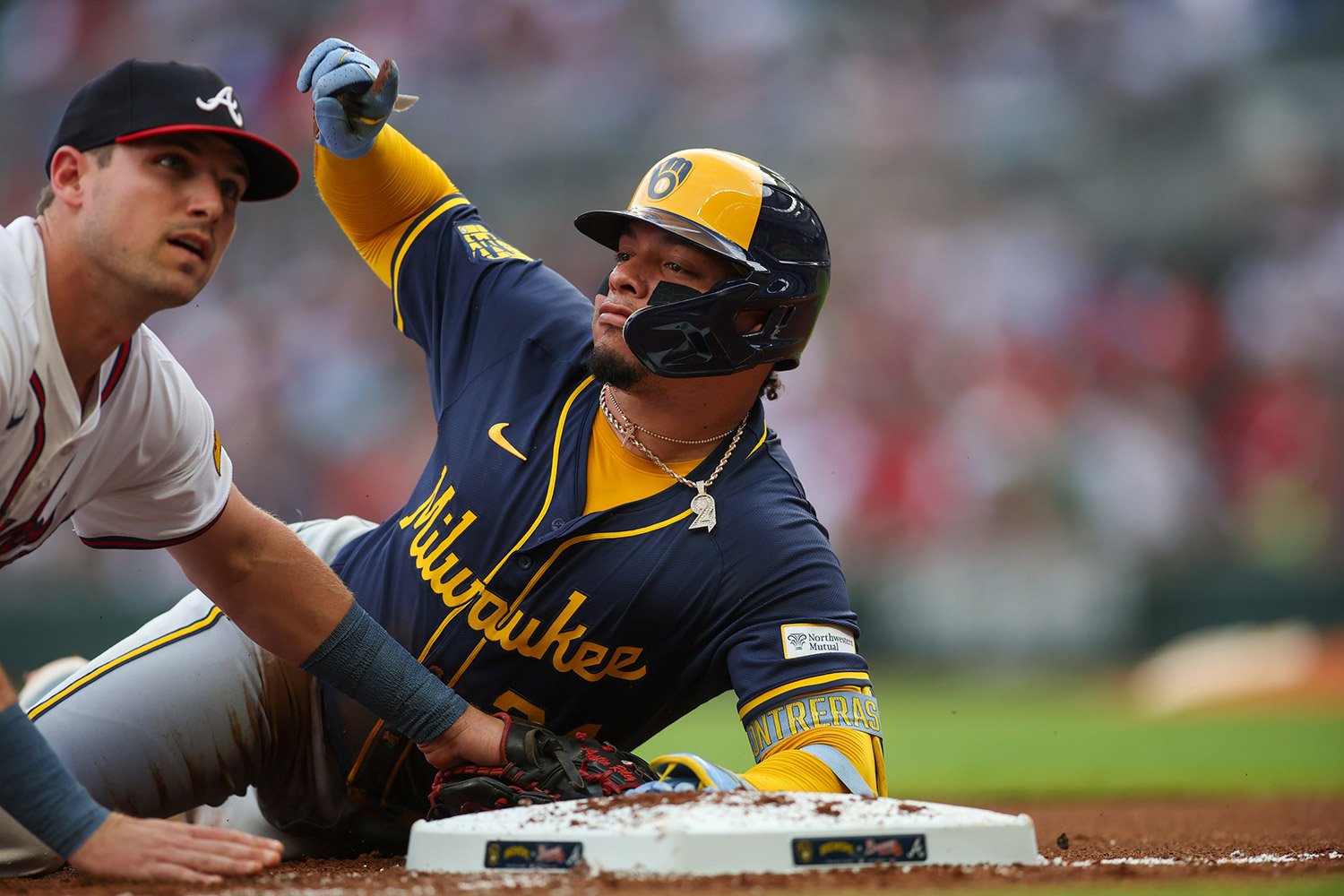 We can almost break William Contreras' season down into three segments, with total and utter dominance in the first six weeks, followed by a heavy slump over the next two months. Still, he’s been under the radar effectively since the All-Star break, and it may be coming at just the right time. With Christian Yelich out for the foreseeable future, the Milwaukee Brewers were in dire need of some offensive production from their more experienced contributors. William Contreras has done just that. There’s a genuine possibility that Contreras has been struggling with injuries during the middle part of the season, with whispers about a damaged finger coinciding with an incredible stretch of 64 straight games to start the season, most of which involved catching behind the plate, taking its toll on him. He was wearing a splint on his finger during the All-Star game festivities, and combined with the workload; it wasn’t entirely surprising to see him slump; however, it was a surprise to see the significance of that slump. He was swinging more often, going to the opposite field with less regularity, and not being selective enough with the pitches he was targeting. As a result, he hit a lot of weak ground balls and lost almost all the power production he showed in the first six weeks. Still, fascinatingly, he may be performing better “under the hood” now than in that initial hot stretch. William Contreras has always been able to hit the ball hard. And often. The drawback for him is similar to that of Christian Yelich in that he quite regularly uses that prime exit velocity to dig deep holes in the infield dirt and hit a ton of ground balls. Now, average launch angle isn’t an entirely reliable statistic because it could equate a pop-up and a negative launch angle as perfect on average. Contreras’ sweet spot rate is lower now than in that early part of the season. However, note the spread of positive average launch angles, and you can see he’s lifting the ball considerably better across the strike zone and in particular in the middle third: Combined with the increased exit velocities we’ve seen from Contreras since the All-Star break, it’s tough not to notice how much better he’s looked. With just a few innings at the All-Star game, he effectively got off his feet for four out of the five days the Brewers had off and has been getting rested considerably more since the break with the Brewers using Gary Sanchez and Eric Haase more regularly to take him out of the lineup. The mental break, more than the physical one, seems big as much of the improvement comes down to swing decisions, especially in two-strike counts. Everybody in the league knows Contreras is a ground ball machine, and that’s especially true if you locate in the bottom third of the strike zone. If and when he puts it in the air, he’ll access serious damage, but as you can see, below that bottom of the zone is a fantastic way to mitigate any of that power: A ground ball rate of over 60% is far, far too easy for pitchers to get out of jail with, and during his rough stretch, Contreras was swinging prodigiously in the bottom third and giving up cheap outs. Not so since the All-Star break: As you can see, there’s almost no red at all in that bottom third over the last month, and it’s a big reason why he’s not giving up those cheap outs anymore. In terms of results, in hitter’s counts, he’s slugging .818 since the All-Star break compared to a measly .439 in the two months prior. Some of that is down to poor batted-ball fortunes, but targeting the right pitches to swing has definitely been a factor in his recent success. Having a healthy, rested, and productive William Contreras will be vital for the remainder of the Brewers season, as much as he wants to be a part of each and every game. Quality rather than quantity has to be the aim for the all-star, especially with the Brewers tightening their grip on a playoff berth in recent days. It would seem that there’s a direct correlation between his productivity and the time off, and it’s shining through at the moment. What do you think of Contreras over the last month? Do you think he can sustain it through September and possibly October? Let us know your thoughts in the comments below!
 -
William Contreras slumped hard at the plate for almost two months, but he’s quietly excelled since the All-Star break. With pitch selectivity as a crutch, here’s how Contreras has become a threat in the batter’s box again. Image courtesy of © Brett Davis-USA TODAY Sports We can almost break William Contreras' season down into three segments, with total and utter dominance in the first six weeks, followed by a heavy slump over the next two months. Still, he’s been under the radar effectively since the All-Star break, and it may be coming at just the right time. With Christian Yelich out for the foreseeable future, the Milwaukee Brewers were in dire need of some offensive production from their more experienced contributors. William Contreras has done just that. There’s a genuine possibility that Contreras has been struggling with injuries during the middle part of the season, with whispers about a damaged finger coinciding with an incredible stretch of 64 straight games to start the season, most of which involved catching behind the plate, taking its toll on him. He was wearing a splint on his finger during the All-Star game festivities, and combined with the workload; it wasn’t entirely surprising to see him slump; however, it was a surprise to see the significance of that slump. He was swinging more often, going to the opposite field with less regularity, and not being selective enough with the pitches he was targeting. As a result, he hit a lot of weak ground balls and lost almost all the power production he showed in the first six weeks. Still, fascinatingly, he may be performing better “under the hood” now than in that initial hot stretch. William Contreras has always been able to hit the ball hard. And often. The drawback for him is similar to that of Christian Yelich in that he quite regularly uses that prime exit velocity to dig deep holes in the infield dirt and hit a ton of ground balls. Now, average launch angle isn’t an entirely reliable statistic because it could equate a pop-up and a negative launch angle as perfect on average. Contreras’ sweet spot rate is lower now than in that early part of the season. However, note the spread of positive average launch angles, and you can see he’s lifting the ball considerably better across the strike zone and in particular in the middle third: Combined with the increased exit velocities we’ve seen from Contreras since the All-Star break, it’s tough not to notice how much better he’s looked. With just a few innings at the All-Star game, he effectively got off his feet for four out of the five days the Brewers had off and has been getting rested considerably more since the break with the Brewers using Gary Sanchez and Eric Haase more regularly to take him out of the lineup. The mental break, more than the physical one, seems big as much of the improvement comes down to swing decisions, especially in two-strike counts. Everybody in the league knows Contreras is a ground ball machine, and that’s especially true if you locate in the bottom third of the strike zone. If and when he puts it in the air, he’ll access serious damage, but as you can see, below that bottom of the zone is a fantastic way to mitigate any of that power: A ground ball rate of over 60% is far, far too easy for pitchers to get out of jail with, and during his rough stretch, Contreras was swinging prodigiously in the bottom third and giving up cheap outs. Not so since the All-Star break: As you can see, there’s almost no red at all in that bottom third over the last month, and it’s a big reason why he’s not giving up those cheap outs anymore. In terms of results, in hitter’s counts, he’s slugging .818 since the All-Star break compared to a measly .439 in the two months prior. Some of that is down to poor batted-ball fortunes, but targeting the right pitches to swing has definitely been a factor in his recent success. Having a healthy, rested, and productive William Contreras will be vital for the remainder of the Brewers season, as much as he wants to be a part of each and every game. Quality rather than quantity has to be the aim for the all-star, especially with the Brewers tightening their grip on a playoff berth in recent days. It would seem that there’s a direct correlation between his productivity and the time off, and it’s shining through at the moment. What do you think of Contreras over the last month? Do you think he can sustain it through September and possibly October? Let us know your thoughts in the comments below! View full article
-
Mike Boeve has had two ridiculously powerful stretches of baseball interspersed with one where he had a few breaks and eventually went on the IL. I have zero evidence to prove this, but I am wondering if the injury was bothering him for a while before he went on the IL. This is an insane level of performance since coming off it
- 7 replies
-
- 1
-

-
- eric bitonti
- brian navarreto
- (and 3 more)
-
So if I read this correctly Jack, and I don't see how I could be accused of hyperbole with this, what you're saying is that we can expect a similar output against the lacklustre fastball/slider combo of Chris Sale having also faced him down last week?
- 5 replies
-
- 1
-

-
- brice turang
- william contreras
- (and 1 more)
-
Brewers (Rea) vs Braves (Elder): 8/6/24, 6:20pm
Jake McKibbin replied to Brock Beauchamp's topic in Archived Game Threads
Elder has been up and down this year, either dominant or absolutely horrific. One poor start in his last 5 but a little BABIP luck and hopefully a good opportunity to score some runs -
I'd argue as above Turang could be a little more selective in these counts, but for most of the rest of the lineup I completely agree. For Turang I'd like to see him sit more on a specific pitch, especially an in zone FB but we'll see. Certainly would like him to lay off a changeup in those counts Very small sample size but I do think they looked a little more aggressive against the Nats at the weekend but didn't quite get the batted ball luck to go with it
-
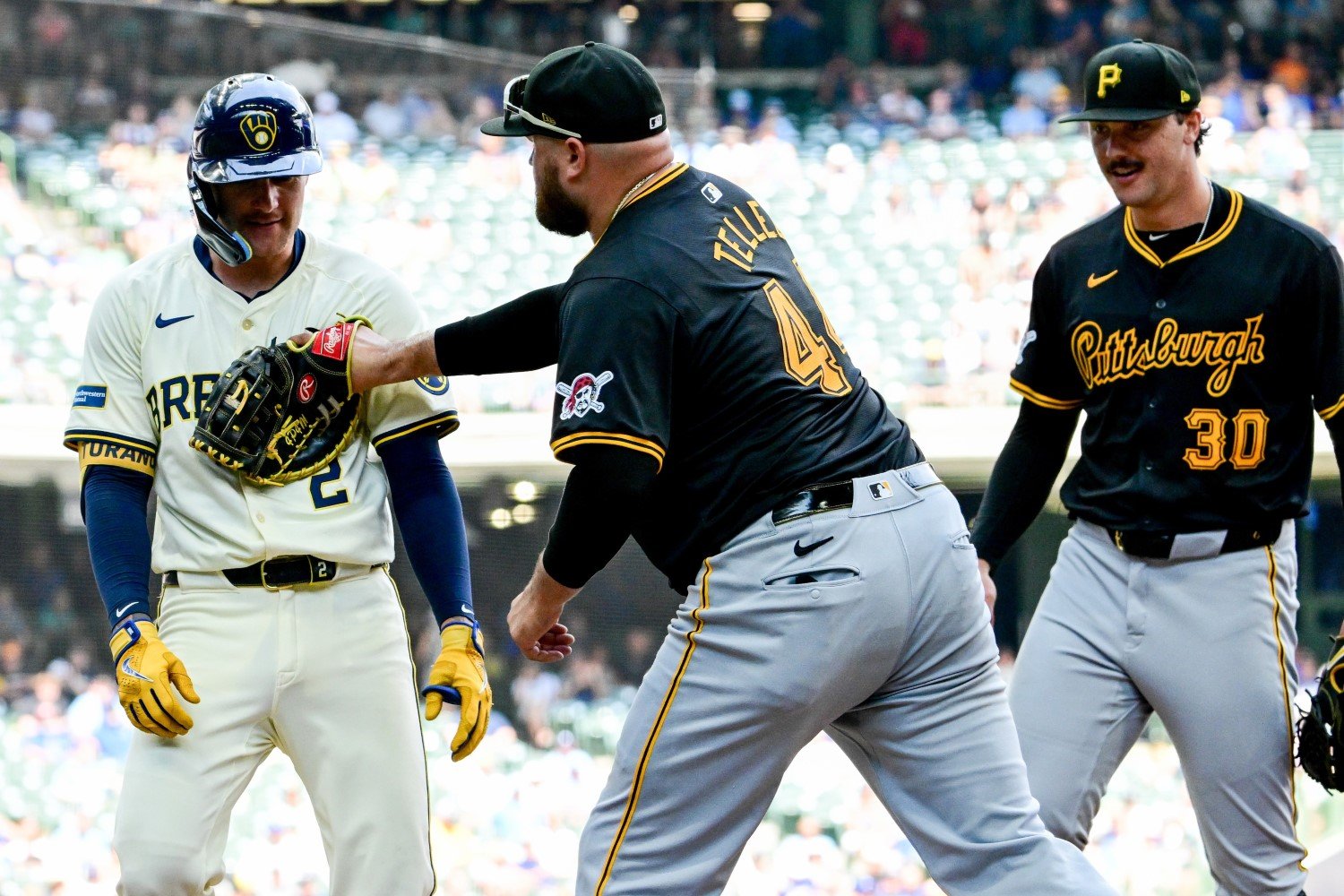 His surface numbers have become really concerning over the last two months, and while part of this is an abnormally low BABIP for someone of Brice Turang's speed, there is some serious concern at this point. He’s not hitting the ball quite as solidly as he did earlier on, with a lower average exit velocity on non-bunt attempts, but it’s not to the extent you’d expect to see from a .600 OPS player. He's maintained reasonable whiff rates and isn't striking out at a calamitous clip. So, what's causing the slump? Well, he is striking out almost 50% more, with that rate rising from 13.8% in the first eight or so weeks to a 19.8% mark from May 26 onward. He's also chasing outside the zone 33% more often than he was in that first eight weeks. Is this a change in his approach at the plate, or is it a byproduct of pitchers challenging him in different ways? (Note: All of the below statistics have excluded bunt attempts.) What Are Pitchers Doing Differently? Well as you can see above, the pitch mix he’s facing hasn’t been all that dissimilar. There have been a few fewer sinkers and a few more cutters, but on the whole, what he’s facing from day to day is the same as ever. However, there’s something distinct to remember about Turang earlier in the season. He wasn’t doing a lot of damage early in the count. Instead, his strength came in his ability to foul off pitches until he got something he wanted to drive, whether that be a fastball he slipped to the opposite side of the field or a slider in the zone. He had a lot of success with this approach. Due to the lack of damage earlier in the at-bat and a heavy foul ball rate while working the pitch count, it may be more relevant to see how pitchers attacked him when they got ahead: Grouping the pitch types together (sliders, sweepers, curveballs as breaking; changeups and splitters as “soft”) gives a fairly clear indication that pitchers have found a weakness in Turang’s game. While he did so well earlier in the season going to the opposite field on fastballs (especially on four-seamers, which he hit to left field over 60% of the time) and staying up the middle or pulling breaking pitches, the one constant has been a struggle with off-speed pitches. They were the only pitch category he had a sub-.200 batting average against in the early part of the season, and those struggles came with just a 14% hard-hit rate, so it’s no surprise to see pitchers target him more often in that way and find success. I think Turang may have an issue picking up changeups and splitters out of the hand until it’s far too late, treating them like the fastballs he’s trying to take opposite field and being caught way out in front. I say that because you would expect that, with his approach, he’d be pulling breaking balls more often than “soft” pitching options, but that hasn’t been the case--especially in the last two-plus months. Turang has been rolling over changeups and splitters at a discouraging rate, averaging just 76.6 MPH (after excluding bunts) in terms of exit velocity on changeups since May 26. He’s pulling them over 62% of the time. Pulling the ball is fine for a lot of hitters, but the problem for Turang is that he’s pairing a high ground-ball rate with nowhere near enough exit velocity to get through the gaps, because he’s not actually trying to pull the ball. It’s just weakly rolled-over stuff born of misdiagnosing soft stuff as fastballs, and it’s causing him some serious issues, highlighted well by the double play groundout on Kyle Finnegan’s splitter to finish Sunday’s game against the Nationals. Has His Approach Changed? In some ways, yes, but it takes a little bit of digging. Earlier in the year, Turang was elite in terms of how he hit the fastball. He had almost a 90% contact rate on heaters through May 25, and was one of the best in the league against 97+-mph fastballs. He was patient, waiting for his pitch and then looking to get on base by taking it the opposite way when pitchers left the four-seam fastball up in the zone. Since that date, however, his contact rate has dropped to 85%--still a good rate, but it's not just about the quantity of contact. It's also about the quality. The reason for this is his aggressiveness when he gets ahead in the count. Whereas in the first eight weeks he chased fastballs just 9.5% of the time in hitter’s counts (1-0, 2-0, 2-1, 3-0,3-1), since that date, he’s chased outside the zone at an alarming 26.5% rate, which has resulted in some really poor contact and very cheap outs. Instead of staying patient and using the count leverage to demand a better ball to hit, he’s letting pitchers back into the count with their fastball too easily, or making substandard contact when he does swing. The above is taking into account his chase rates against all pitches when in hitter’s counts, but the vast majority of these are fastballs above the strike zone. His discipline hasn’t been what it was earlier in the season, despite the still-strong walk rate, and it seems to be he’s lost a little sight of who he is as a hitter. He can cause havoc just by getting on the basepaths, and he can rope balls into the gaps and leg out extra-base hits, so he will have some power production in that sense. That, though, is not his role in this lineup. After some home runs and big moments in May and June, it’s quite possible Turang has lost the cold focus that underpinned his early success, when he was one of the best in the league at finding his way on base. His struggles of late have impacted his offensive production, not just in terms of getting on base, but also in his ability to affect the game with his speed on base. The changeup problems are of definite concern, and if he can’t pick it out of the hand, there’s only so far he can go in terms of his ceiling. He’s made adjustments fairly well throughout most of his minor-league career, and I’d be surprised if he doesn’t find a way to adapt to its usage in those two-strike counts. Either way, a little more patience will go a long way toward helping him provide the offensive production the Brewers desperately need coming down the home stretch, in their intense August schedule. He just has to find a cue to let him know when the change is coming. What do you think of Brice Turang's recent struggles? Is it an easy fix? Do you see something else in his plate appearances? Let us know your thoughts in the comments below!
 -
From a bona fide All-Star in the first eight weeks to a .607 OPS since May 26, it appears Brice Turang has regressed significantly back toward his 2023 performance. Many expected some of that, but it wasn’t supposed to be this steep. What has gone wrong? And more importantly, can it be fixed? Image courtesy of © Benny Sieu-USA TODAY Sports His surface numbers have become really concerning over the last two months, and while part of this is an abnormally low BABIP for someone of Brice Turang's speed, there is some serious concern at this point. He’s not hitting the ball quite as solidly as he did earlier on, with a lower average exit velocity on non-bunt attempts, but it’s not to the extent you’d expect to see from a .600 OPS player. He's maintained reasonable whiff rates and isn't striking out at a calamitous clip. So, what's causing the slump? Well, he is striking out almost 50% more, with that rate rising from 13.8% in the first eight or so weeks to a 19.8% mark from May 26 onward. He's also chasing outside the zone 33% more often than he was in that first eight weeks. Is this a change in his approach at the plate, or is it a byproduct of pitchers challenging him in different ways? (Note: All of the below statistics have excluded bunt attempts.) What Are Pitchers Doing Differently? Well as you can see above, the pitch mix he’s facing hasn’t been all that dissimilar. There have been a few fewer sinkers and a few more cutters, but on the whole, what he’s facing from day to day is the same as ever. However, there’s something distinct to remember about Turang earlier in the season. He wasn’t doing a lot of damage early in the count. Instead, his strength came in his ability to foul off pitches until he got something he wanted to drive, whether that be a fastball he slipped to the opposite side of the field or a slider in the zone. He had a lot of success with this approach. Due to the lack of damage earlier in the at-bat and a heavy foul ball rate while working the pitch count, it may be more relevant to see how pitchers attacked him when they got ahead: Grouping the pitch types together (sliders, sweepers, curveballs as breaking; changeups and splitters as “soft”) gives a fairly clear indication that pitchers have found a weakness in Turang’s game. While he did so well earlier in the season going to the opposite field on fastballs (especially on four-seamers, which he hit to left field over 60% of the time) and staying up the middle or pulling breaking pitches, the one constant has been a struggle with off-speed pitches. They were the only pitch category he had a sub-.200 batting average against in the early part of the season, and those struggles came with just a 14% hard-hit rate, so it’s no surprise to see pitchers target him more often in that way and find success. I think Turang may have an issue picking up changeups and splitters out of the hand until it’s far too late, treating them like the fastballs he’s trying to take opposite field and being caught way out in front. I say that because you would expect that, with his approach, he’d be pulling breaking balls more often than “soft” pitching options, but that hasn’t been the case--especially in the last two-plus months. Turang has been rolling over changeups and splitters at a discouraging rate, averaging just 76.6 MPH (after excluding bunts) in terms of exit velocity on changeups since May 26. He’s pulling them over 62% of the time. Pulling the ball is fine for a lot of hitters, but the problem for Turang is that he’s pairing a high ground-ball rate with nowhere near enough exit velocity to get through the gaps, because he’s not actually trying to pull the ball. It’s just weakly rolled-over stuff born of misdiagnosing soft stuff as fastballs, and it’s causing him some serious issues, highlighted well by the double play groundout on Kyle Finnegan’s splitter to finish Sunday’s game against the Nationals. Has His Approach Changed? In some ways, yes, but it takes a little bit of digging. Earlier in the year, Turang was elite in terms of how he hit the fastball. He had almost a 90% contact rate on heaters through May 25, and was one of the best in the league against 97+-mph fastballs. He was patient, waiting for his pitch and then looking to get on base by taking it the opposite way when pitchers left the four-seam fastball up in the zone. Since that date, however, his contact rate has dropped to 85%--still a good rate, but it's not just about the quantity of contact. It's also about the quality. The reason for this is his aggressiveness when he gets ahead in the count. Whereas in the first eight weeks he chased fastballs just 9.5% of the time in hitter’s counts (1-0, 2-0, 2-1, 3-0,3-1), since that date, he’s chased outside the zone at an alarming 26.5% rate, which has resulted in some really poor contact and very cheap outs. Instead of staying patient and using the count leverage to demand a better ball to hit, he’s letting pitchers back into the count with their fastball too easily, or making substandard contact when he does swing. The above is taking into account his chase rates against all pitches when in hitter’s counts, but the vast majority of these are fastballs above the strike zone. His discipline hasn’t been what it was earlier in the season, despite the still-strong walk rate, and it seems to be he’s lost a little sight of who he is as a hitter. He can cause havoc just by getting on the basepaths, and he can rope balls into the gaps and leg out extra-base hits, so he will have some power production in that sense. That, though, is not his role in this lineup. After some home runs and big moments in May and June, it’s quite possible Turang has lost the cold focus that underpinned his early success, when he was one of the best in the league at finding his way on base. His struggles of late have impacted his offensive production, not just in terms of getting on base, but also in his ability to affect the game with his speed on base. The changeup problems are of definite concern, and if he can’t pick it out of the hand, there’s only so far he can go in terms of his ceiling. He’s made adjustments fairly well throughout most of his minor-league career, and I’d be surprised if he doesn’t find a way to adapt to its usage in those two-strike counts. Either way, a little more patience will go a long way toward helping him provide the offensive production the Brewers desperately need coming down the home stretch, in their intense August schedule. He just has to find a cue to let him know when the change is coming. What do you think of Brice Turang's recent struggles? Is it an easy fix? Do you see something else in his plate appearances? Let us know your thoughts in the comments below! View full article
-
Jacob MisiorowskiJeferson QueroTyler BlackRobert GasserBrock WilkenCooper PrattLogan HendersonMike BoeveYophery RodriguezBraylon PayneBlake BurkeLuke AdamsJesus MadeJosh KnothBryce MeccageLuis LaraEric BitontiEric Brown JrBishop LetsonColeman Crow
-
2024 Draft Signings Thread
Jake McKibbin replied to Jake McKibbin's topic in MLB Draft & International Signings
Even if the Brewers offered him overslot on draft day and he said no, I'm fairly certain with their program and an offer like that that they were confident he'd sign on. I have to say I'm actually quite amazed that he hasn't, and I think 99% of people in his shoes on that day would have done so. He'll have his reasons for sure, and the Brewers should have done more work on why he was rejecting the offer but I have to say I'm still kind of astounded it wasn't enough -
2024 Draft Signings Thread
Jake McKibbin replied to Jake McKibbin's topic in MLB Draft & International Signings
-
2024 Draft Signings Thread
Jake McKibbin replied to Jake McKibbin's topic in MLB Draft & International Signings
Remember the Brewers have signed who they want to by now, it just hasn't been publicised yet -
2024 Draft Signings Thread
Jake McKibbin replied to Jake McKibbin's topic in MLB Draft & International Signings
I had a look at malamazians swing earlier, so so smooth But yeah adding even Wech to that if they don't get nunnallee would be okay, but still there's a feeling this draft wasn't quite the coup without him or Levonas -
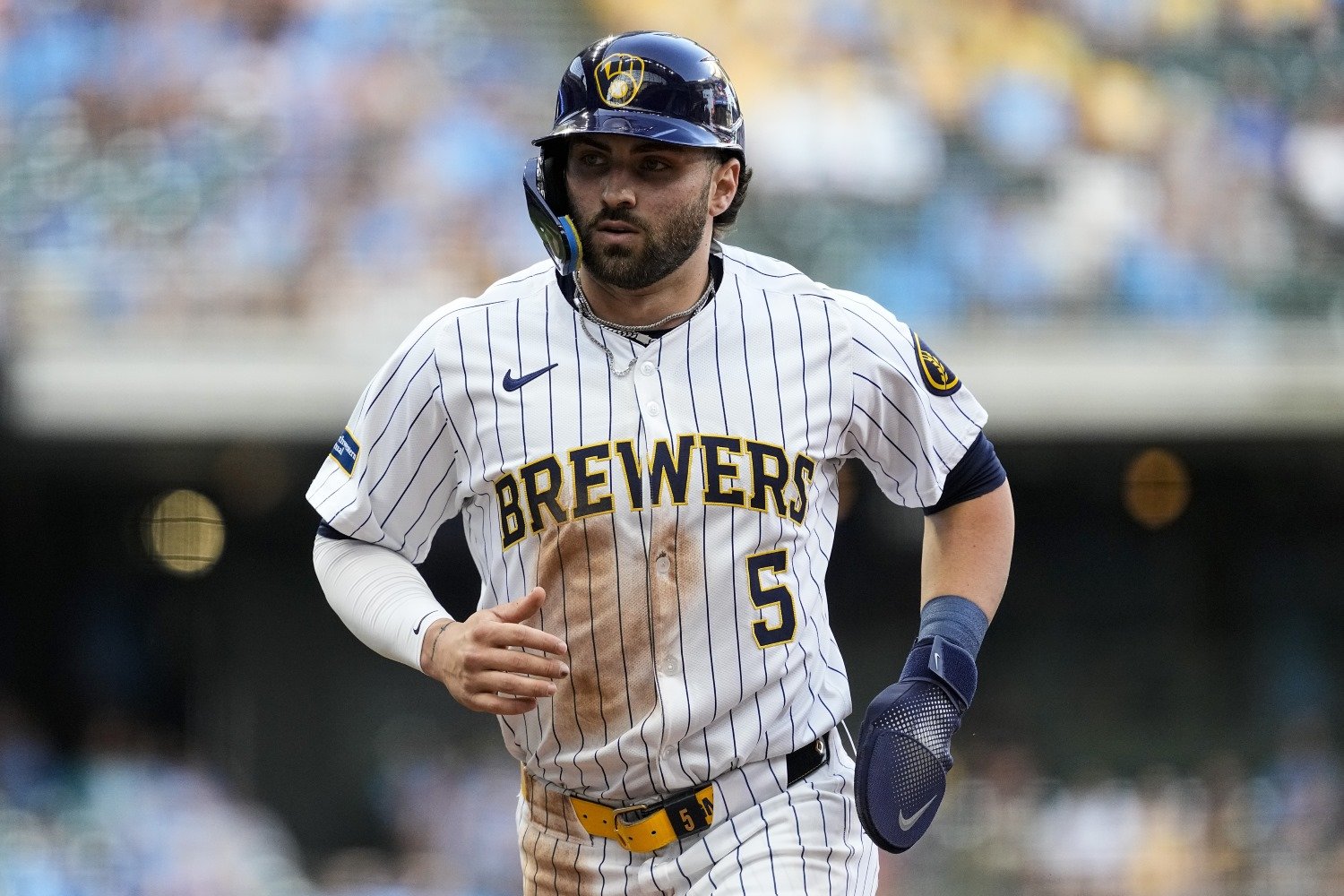 With many discussions going on behind the scenes, Matt Arnold decided to stick with the players they had offensively, while bolstering their pitching ranks with acquisitions of Frankie Montas, Aaron Civale and Nick Mears in the month of July. Mears is a Stuff+ darling with strong recent results, while the Brewers will be hoping they can refine Montas and Civale’s arsenals to find their promise of yesteryear. Combined with some high-level players returning from the IL, the Brewers' roster is stronger than it was prior to July, despite some fresh injuries. However, the continued lack of an ace is concerning for a team with strong playoff ambitions. Some roles are getting further clarified, and may present the Brewers with an opportunity to grow stronger as a unit rather than with individual strength. The Brewers Value A Healthy Garrett Mitchell The Brewers were mostly looking to trade from positions of strength at the deadline, due to 40-man roster restrictions and a desire to keep their prospect pool strong. They needed to free up spaces for any new acquisitions, and as such, the strength in depth of both their outfielders and relievers seemed to be a good place to free up that space. One name specifically quoted by Robert Murray was Garrett Mitchell, who has had a checkered injury history with the Brewers and continues to outperform expected metrics and put up strong results. So far this season, Mitchell has a .790 OPS, and has demonstrated an improved chase rate (11%) that has led to a 12.3% walk rate. He's been lofting the ball more regularly against right-handers. After a short adjustment period, since Jul. 14, Mitchell has hit 36.8% of his batted balls in the launch-angle sweet spot, tagged 47.4% of his batted balls at 95 miles per hour or better, and averaged 90 mph in exit velocity against righties, when you exclude bunt attempts. There were major concerns around his profile coming into the season, but he’s beginning to alleviate some of these, with that chase rate being a real boost. He has as much upside as almost anyone in the Brewers organization if it all clicks, and his balance of bat, speed and defense has been very valuable at the bottom of the lineup. The question as always is around the sustainability of his production, given the difficulty he has in staying healthy. Mitchell still has more swing-and-miss in the strike zone than you would prefer, much like Jake Bauers. However, his performances of late may have convinced the Brewers that they shouldn’t sell low on him just yet. There’s a big decision regarding the outfield logjam to be sorted in the offseason, even after Joey Wiemer was traded, but for now (and with Yelich's back injury uncertainty), they decided to stand pat and keep Mitchell for the strong side of the platoon, at least. They should probably avoid putting him in against lefties, where he’s struggled more often to elevate the ball, but as a strong-side platoon member, he’s proving his worth. Put together that speed, the defense and (so far) above-average performance at the plate, and the Brewers decided that was enough to keep him for the final two months. He may still be tradable come the Winter Meetings, but if he can stay healthy and retain this level of production, that value will increase astronomically from where it is now. Jake Bauers Is Their Left-Handed Power Bat, Not Tyler Black I know many people thought Tyler Black would be up in the majors by now--likely at first base, in place of Jake Bauers. However, while Black hasn’t set the world alight in Triple A this year, Bauers has actually been quite solid. A lot of this may come down to the Brewers' offensive needs. They don't hit the ball over the fence quite as often as they'd like. Bauers has shown some real pop in his bat. He's good both at generating exit velocity and at lifting the ball in the process, while rounding out his profile with the improved chase rate that’s led to his .367 OBP since Jun. 1. It’s also important to note that Bauers and Black have a similar floor in some ways, given they both tend to post strong on-base percentages, but their differences come in what happens outside of that. Black has significantly better contact rates, but hasn’t got close to Bauers's power, while Bauers doesn’t possess Black’s ability to make contact with the ball. Some may point to Black’s 10 home runs this year as evidence of his power, coming predominantly from pulling balls down the line, but the step up from Triple-A to the majors is bigger than it’s ever been. Expecting anything like that home run production from Black in MLB by the end of September would be folly. He's already struggling to hit the ball hard with regularity. That may come through more at some point, but for now, he's not ready to be an impact player on the major league roster. For now the Brewers are sticking with Bauers as almost their sole slugging lefty with Yelich out. The State Of The Back End Starters, And A Six-Man Rotation With the acquisition of Frankie Montas and the return of DL Hall and Joe Ross from injury, the Brewers have a number of arms available to pick up the end of their rotation. The question of whether they should go to a six-man rotation or even the volume of long relief options in their bullpen becomes more pressing now. Montas is the only one of the group who hasn’t been a reliever in recent times, and it seems fairly safe to say the Brewers see him as a backend starter. The front office and Pat Murphy have also been adamant all year about liking Joe Ross as a starter. However, there are flaws in his limited arsenal that get exposed the second and third times through the order. Then there’s Hall, who found extreme success out of the bullpen in 2023 for the Orioles, able to add a couple of ticks on the fastball that made him elite but that also makes him so tantalizing as a starter. First up is Joe Ross, and our own Jack Stern summed it up pretty well: Ross has a very good sinker/slider combo that can potentially add further velocity with a move to the pen. Both pitches can get outs in either high-leverage or longer relief roles, but there's a real possibility he can be excellent at it. The first time through the order, he’s allowed an OPS of just .600, whereas when he gets to the second time through that number jumps to an .813 OPS. He just doesn’t have the variety in his arsenal to be a legitimate starter in the majors, but that’s not to say he can’t be incredibly useful if you give him up to nine hitters. You’ll see the absurd swing-and-miss on his slider (49% whiff rate first time through) and the low damage on his sinker (.491 OPS first time through) play up, and he could be a really useful addition for a couple of innings, given the shorter starts by most of the Brewers rotation. For me, it would be a mistake to keep Ross on as a sixth member of the rotation. You’re losing out on both productivity and value, as well as shortening an already taxed bullpen. Assuming Montas is penciled in as the fitth starter, let’s turn our attention to Hall, who had perhaps his most promising start of the year. The heater is going to be the reason he succeeds or struggles in the big leagues, and while I’m not fully convinced just yet by the quality of contact it's giving up, it can’t be argued that (shape-wise) it’s a lot better. Averaging another inch of induced vertical break (14”) alongside an effective velocity of 95.1 mph in July, that’s almost two miles per hour higher than his mark in May, it's bringing about better results: When Hall is getting that level of swing-and-miss on his heater, it may be time to get excited for his return. The question is: Do the Brewers want him starting? Having had some extraordinarily strange barriers popping up while attempting to ramp up his pitch count, Hall's last five outings have had him throwing 62, 61, 57, 49, and 57 pitches, which doesn’t necessarily make you think he’ll be a starting pitching option in the next two weeks or so. The velocity is holding well into his starts and the results are promising, but he may also profile better in that long relief role. With injuries in the bullpen of late and the struggles to even retain a healthy rotation at this point, the Brewers may want Hall to continue building up his pitch count in Nashville while being ready to step in at a moment’s notice. He looks like he’s a more effective starter than Ross. If they did go to a six-man rotation, it should be Hall who gets the last place, but there’s a real possibility the Brewers either maintain the two long relievers they currently have and keep Hall in the minors or bring him up as that third option for middle innings. You certainly can’t deny that the Brewers, who place 20th in innings from their starters, need this sort of bulk reliever more than most playoff teams. Expanding to six starters with Hall could, of course, increase the quality of outings you're getting specifically from Freddy Peralta, thanks to more rest. Then, with the likes of Bryan Hudson and Trevor Megill returning in August, they could have one of the best and most varied bullpens in baseball, with those two alongside Nick Mears, Hoby Milner and Joel Payamps (who's also recently found some form). The Brewers roster is set for the next few months. There's no external aid incoming. With the first challenge being to lock down their division lead and then look beyond, I firmly believe this is a roster with enough niche pieces that they can excel--if deployed correctly in the coming months. What do you think of the decisions regarding Mitchell, Bauers and the back end of the rotation? Do you disagree with what the Brewers are doing? let us know your thoughts in the comments below!
- 1 comment
-
- 1
-
-
- tyler black
- jake bauers
- (and 4 more)
-
The Brewers didn’t have a flashy deadline by any means, but it may still have shaped their roster construction to finish the year. Image courtesy of © Jeff Hanisch-USA TODAY Sports With many discussions going on behind the scenes, Matt Arnold decided to stick with the players they had offensively, while bolstering their pitching ranks with acquisitions of Frankie Montas, Aaron Civale and Nick Mears in the month of July. Mears is a Stuff+ darling with strong recent results, while the Brewers will be hoping they can refine Montas and Civale’s arsenals to find their promise of yesteryear. Combined with some high-level players returning from the IL, the Brewers' roster is stronger than it was prior to July, despite some fresh injuries. However, the continued lack of an ace is concerning for a team with strong playoff ambitions. Some roles are getting further clarified, and may present the Brewers with an opportunity to grow stronger as a unit rather than with individual strength. The Brewers Value A Healthy Garrett Mitchell The Brewers were mostly looking to trade from positions of strength at the deadline, due to 40-man roster restrictions and a desire to keep their prospect pool strong. They needed to free up spaces for any new acquisitions, and as such, the strength in depth of both their outfielders and relievers seemed to be a good place to free up that space. One name specifically quoted by Robert Murray was Garrett Mitchell, who has had a checkered injury history with the Brewers and continues to outperform expected metrics and put up strong results. So far this season, Mitchell has a .790 OPS, and has demonstrated an improved chase rate (11%) that has led to a 12.3% walk rate. He's been lofting the ball more regularly against right-handers. After a short adjustment period, since Jul. 14, Mitchell has hit 36.8% of his batted balls in the launch-angle sweet spot, tagged 47.4% of his batted balls at 95 miles per hour or better, and averaged 90 mph in exit velocity against righties, when you exclude bunt attempts. There were major concerns around his profile coming into the season, but he’s beginning to alleviate some of these, with that chase rate being a real boost. He has as much upside as almost anyone in the Brewers organization if it all clicks, and his balance of bat, speed and defense has been very valuable at the bottom of the lineup. The question as always is around the sustainability of his production, given the difficulty he has in staying healthy. Mitchell still has more swing-and-miss in the strike zone than you would prefer, much like Jake Bauers. However, his performances of late may have convinced the Brewers that they shouldn’t sell low on him just yet. There’s a big decision regarding the outfield logjam to be sorted in the offseason, even after Joey Wiemer was traded, but for now (and with Yelich's back injury uncertainty), they decided to stand pat and keep Mitchell for the strong side of the platoon, at least. They should probably avoid putting him in against lefties, where he’s struggled more often to elevate the ball, but as a strong-side platoon member, he’s proving his worth. Put together that speed, the defense and (so far) above-average performance at the plate, and the Brewers decided that was enough to keep him for the final two months. He may still be tradable come the Winter Meetings, but if he can stay healthy and retain this level of production, that value will increase astronomically from where it is now. Jake Bauers Is Their Left-Handed Power Bat, Not Tyler Black I know many people thought Tyler Black would be up in the majors by now--likely at first base, in place of Jake Bauers. However, while Black hasn’t set the world alight in Triple A this year, Bauers has actually been quite solid. A lot of this may come down to the Brewers' offensive needs. They don't hit the ball over the fence quite as often as they'd like. Bauers has shown some real pop in his bat. He's good both at generating exit velocity and at lifting the ball in the process, while rounding out his profile with the improved chase rate that’s led to his .367 OBP since Jun. 1. It’s also important to note that Bauers and Black have a similar floor in some ways, given they both tend to post strong on-base percentages, but their differences come in what happens outside of that. Black has significantly better contact rates, but hasn’t got close to Bauers's power, while Bauers doesn’t possess Black’s ability to make contact with the ball. Some may point to Black’s 10 home runs this year as evidence of his power, coming predominantly from pulling balls down the line, but the step up from Triple-A to the majors is bigger than it’s ever been. Expecting anything like that home run production from Black in MLB by the end of September would be folly. He's already struggling to hit the ball hard with regularity. That may come through more at some point, but for now, he's not ready to be an impact player on the major league roster. For now the Brewers are sticking with Bauers as almost their sole slugging lefty with Yelich out. The State Of The Back End Starters, And A Six-Man Rotation With the acquisition of Frankie Montas and the return of DL Hall and Joe Ross from injury, the Brewers have a number of arms available to pick up the end of their rotation. The question of whether they should go to a six-man rotation or even the volume of long relief options in their bullpen becomes more pressing now. Montas is the only one of the group who hasn’t been a reliever in recent times, and it seems fairly safe to say the Brewers see him as a backend starter. The front office and Pat Murphy have also been adamant all year about liking Joe Ross as a starter. However, there are flaws in his limited arsenal that get exposed the second and third times through the order. Then there’s Hall, who found extreme success out of the bullpen in 2023 for the Orioles, able to add a couple of ticks on the fastball that made him elite but that also makes him so tantalizing as a starter. First up is Joe Ross, and our own Jack Stern summed it up pretty well: Ross has a very good sinker/slider combo that can potentially add further velocity with a move to the pen. Both pitches can get outs in either high-leverage or longer relief roles, but there's a real possibility he can be excellent at it. The first time through the order, he’s allowed an OPS of just .600, whereas when he gets to the second time through that number jumps to an .813 OPS. He just doesn’t have the variety in his arsenal to be a legitimate starter in the majors, but that’s not to say he can’t be incredibly useful if you give him up to nine hitters. You’ll see the absurd swing-and-miss on his slider (49% whiff rate first time through) and the low damage on his sinker (.491 OPS first time through) play up, and he could be a really useful addition for a couple of innings, given the shorter starts by most of the Brewers rotation. For me, it would be a mistake to keep Ross on as a sixth member of the rotation. You’re losing out on both productivity and value, as well as shortening an already taxed bullpen. Assuming Montas is penciled in as the fitth starter, let’s turn our attention to Hall, who had perhaps his most promising start of the year. The heater is going to be the reason he succeeds or struggles in the big leagues, and while I’m not fully convinced just yet by the quality of contact it's giving up, it can’t be argued that (shape-wise) it’s a lot better. Averaging another inch of induced vertical break (14”) alongside an effective velocity of 95.1 mph in July, that’s almost two miles per hour higher than his mark in May, it's bringing about better results: When Hall is getting that level of swing-and-miss on his heater, it may be time to get excited for his return. The question is: Do the Brewers want him starting? Having had some extraordinarily strange barriers popping up while attempting to ramp up his pitch count, Hall's last five outings have had him throwing 62, 61, 57, 49, and 57 pitches, which doesn’t necessarily make you think he’ll be a starting pitching option in the next two weeks or so. The velocity is holding well into his starts and the results are promising, but he may also profile better in that long relief role. With injuries in the bullpen of late and the struggles to even retain a healthy rotation at this point, the Brewers may want Hall to continue building up his pitch count in Nashville while being ready to step in at a moment’s notice. He looks like he’s a more effective starter than Ross. If they did go to a six-man rotation, it should be Hall who gets the last place, but there’s a real possibility the Brewers either maintain the two long relievers they currently have and keep Hall in the minors or bring him up as that third option for middle innings. You certainly can’t deny that the Brewers, who place 20th in innings from their starters, need this sort of bulk reliever more than most playoff teams. Expanding to six starters with Hall could, of course, increase the quality of outings you're getting specifically from Freddy Peralta, thanks to more rest. Then, with the likes of Bryan Hudson and Trevor Megill returning in August, they could have one of the best and most varied bullpens in baseball, with those two alongside Nick Mears, Hoby Milner and Joel Payamps (who's also recently found some form). The Brewers roster is set for the next few months. There's no external aid incoming. With the first challenge being to lock down their division lead and then look beyond, I firmly believe this is a roster with enough niche pieces that they can excel--if deployed correctly in the coming months. What do you think of the decisions regarding Mitchell, Bauers and the back end of the rotation? Do you disagree with what the Brewers are doing? let us know your thoughts in the comments below! View full article
- 1 reply
-
- 1
-
-
- tyler black
- jake bauers
- (and 4 more)
-
2024 Draft Signings Thread
Jake McKibbin replied to Jake McKibbin's topic in MLB Draft & International Signings
Apparently so though nothing confirmed yet Smith is certainly interesting as the results/stuff don't jump off the page but that second year post TJ seems to be what people are looking at, and that apparently a lot of scouts think they can get significantly more out of his arm/frame? -
2024 Draft Signings Thread
Jake McKibbin replied to Jake McKibbin's topic in MLB Draft & International Signings
.png.4b92cb2488eab635df5df20918f7602a.png)

