



Jason Wang
-
Posts
955 -
Joined
-
Last visited
-
Days Won
1
Content Type
Profiles
Forums
Blogs
Events
News
2026 Milwaukee Brewers Top Prospects Ranking
Milwaukee Brewers Videos
2022 Milwaukee Brewers Draft Picks
Milwaukee Brewers Free Agent & Trade Rumors, Notes, & Tidbits
Guides & Resources
2023 Milwaukee Brewers Draft Picks
2024 Milwaukee Brewers Draft Picks
The Milwaukee Brewers Players Project
2025 Milwaukee Brewers Draft Pick Tracker
2026 Milwaukee Brewers Draft Tracker: Picks & Bonuses
Store
Downloads
Gallery
Everything posted by Jason Wang
-

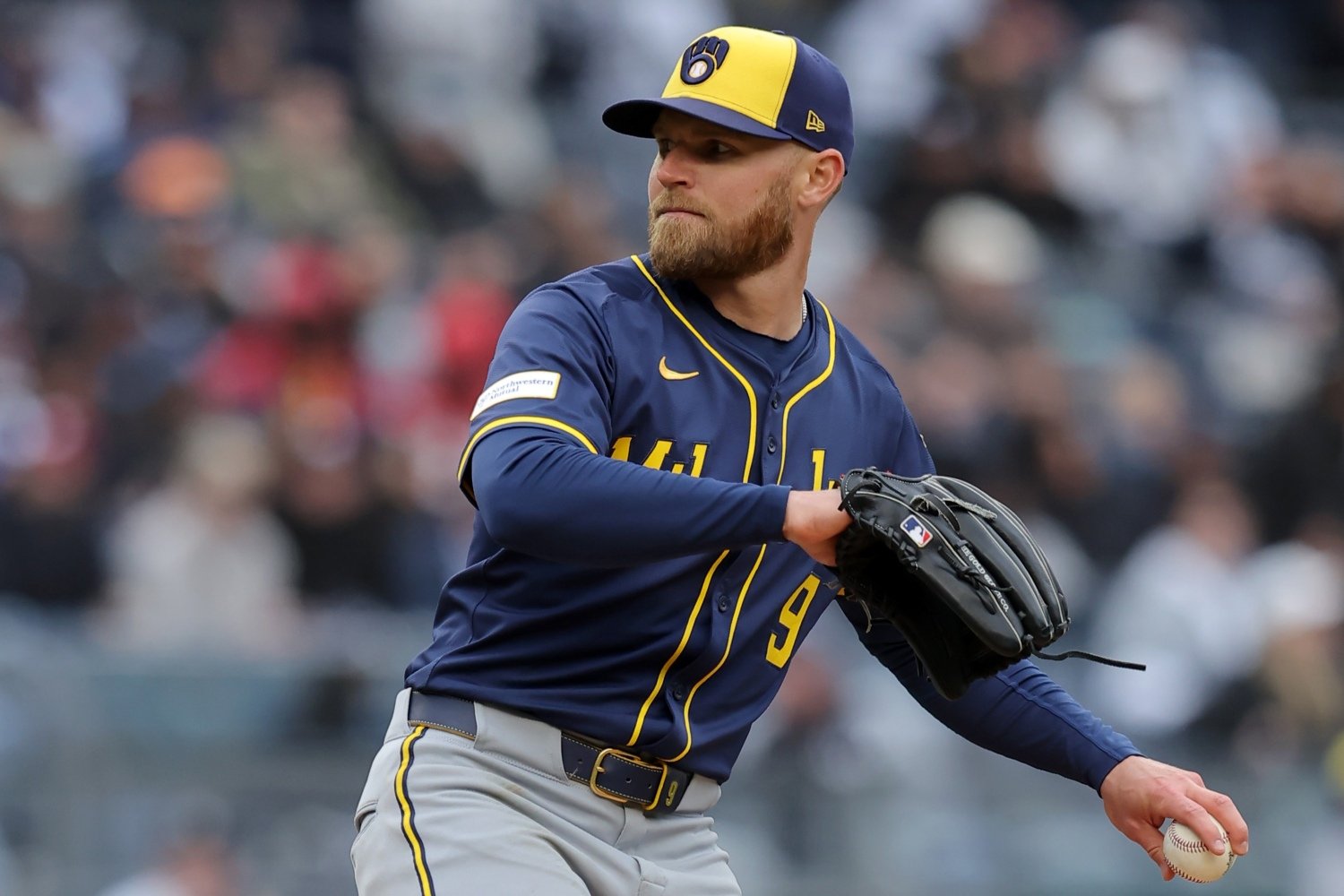 On March 29th, the Yankees brutalized the Brewers with their new, sacrilegious bowling pin-shaped bats. Nestor Cortes, Connor Thomas, and Chad Patrick all found themselves bruised and bloody from the seemingly unstoppable offense mustered by the Bronx Bombers. Fortunately for Milwaukee, one man stepped up to stop the bleeding and shut out the Evil Empire while he toed the slab. He did it again in yet another rout of the boys in blue on March 30th, pitching a scoreless inning to put an end to the unjust massacre. It's a blessing that he's on the team, but if the Brewers hadn’t kept their ears to the ground, they may have missed out on the greatest baseball talent of the modern era. A couple of years ago, Shohei Ohtani signed a somewhat large deal with the Los Angeles Dodgers under the idea that his value as a two-way player warranted a contract of that magnitude. Milwaukee was, intelligently enough, not in on this deal, and after the first year saw Ohtani pitch exactly zero innings, it seems that Mark Attanasio and company were on the right side of history once again. While everyone’s eyes were on Ohtani heading into 2024, the Brewers turned to their own two-way star. His first and middle names are Jakob Christopher, but you can just call him Jake Bauers. You may already know him as an outstanding first baseman who currently holds a 1.250 OPS—a better figure than the best seasons of Aaron Judge and Shohei Ohtani. He’s on pace for 54 home runs, 54 doubles and 162 RBIs, figures that would place him among the league’s best hitters. However, you may not know about his work on the mound. It has been a storyline that has been actively obfuscated, by the same cabal that has also gradually made the hot dogs across America simultaneously more expensive and less girthy. He was drafted by the Padres back in 2013, and after spending time with six different organizations, he finally arrived at one with the vision and ambition to utilize his maximum potential. Milwaukee deployed him out of the bullpen as soon as he joined the team in 2024, and he posted an ERA+ of 101, better than average and not a bad start for his pitching debut. His first three outings of the year were scoreless, and in an effort to keep his pitch count low, he let opposing hitters beat themselves, posting zero strikeouts. How did he do this, you ask? That’s a great question, and probably why you’re one of the top employees at your place of work. Bauers uses a wide variety of pitches from the left side. Unfortunately, Statcast is not yet as advanced as Bauers, and lumps all of his pitches from 2024 into two buckets: fastball and eephus. With a deep understanding of the prevalence of pitching injuries, he limits his own power and velocity, choosing instead to maximize longevity. After all, Cy Young averaged 334 innings pitched a year and they named an award after him. Even in his diminished form, his Stuff+ grades out to an indeterminately large value. It's yet to be defined (at least publicly), but you can take a look at what he’s working with for yourself. Just look at this heater at the top of the zone, beating a former MVP in Giancarlo Stanton. Few arms have ever possessed the ability to paint corners with this authority. Not even Aaron Judge could outcompete him in a fair one-on-one. So far, he is the only Milwaukee pitcher to have a perfect ERA with more than one inning pitched. Remember, this is an organization known for developing outstanding arms and getting the absolute most out of their pitching talent, effectively making him the best of the best. Combined with his current offensive pace, there’s no ceiling on what he’ll be able to do for this team. Many thought the next great Brewers arm would be Jacob Misiorowski, Craig Yoho, or Dallas Keuchel, after he signed with the team last year. If you had actually done your own research (instead of ingesting the “lamestream” media's fairytales), you’d know the truth and bow down to Bauers. When it's all said and done, Robin Yount, Paul Molitor, and Kolten Wong will finally have another member to welcome onto the Brewers' Mount Rushmore.
 -
It's hilarious that all of us thought the Dodgers would win the NL West but at ONE of us believe in the Blue Jays to win the AL East.
-
Should We Be Worried About Freddy Peralta?
Jason Wang replied to Jason Wang's topic in Brewer Fanatic Front Page News
i love ur optimism mr. funderburk! -
He hasn’t had the best time in spring training, but is it a cause for concern—or simply how the preseason goes? Image courtesy of © Mike De Sisti / Milwaukee Journal Sentinel / USA TODAY NETWORK via Imagn Images He hasn’t had the best time in spring training, but is it a cause for concern—or simply how the preseason goes? Freddy Peralta was one of the first Opening Day starters to be named, getting the nod all the way back on February 13th. It will be his second year at the top of Milwaukee’s rotation, a spot typically granted to the most effective starting pitcher. However, if you caught his most recent spring training outing against the Diamondbacks, you’ll know that he has looked like anything but a true ace. In what will be his final spring training outing, Peralta pitched 3 ⅓ innings with five strikeouts—not bad, until you realize he also gave up eight hits, four walks, and ten (10) (TEN!) earned runs. He was on the receiving end of a lot of hard contact, conceding two home runs and four earned runs in the first inning alone. In a way, it was an appropriate bookend for his spring training experience. In his first start of the spring, he also gave up two home runs and three earned runs in two innings of work against the Giants. After two solid scoreless starts against the White Sox and Athletics, things seemed like they would return to normal and he entered his final start with a 2.61 ERA over 8 ⅓ innings. That has now ballooned to an 8.56 ERA over 13 ⅔ innings. The real question is whether all of this means anything. Pitchers are known to be apathetic about spring training numbers, with many often claiming that they “don’t want to waste good pitching.” In 2023, Zack Greinke intentionally (according to him, at least) gave up nine earned runs in 2 ⅓ innings after lamenting that he hadn’t seen enough baserunners to practice the new pickoff protocol that had been introduced that year. Of course, he posted a 5.06 ERA over 142 ⅓ innings in what ended up being his final year in the league, but hey, maybe that was intentional, too. So what’s the deal with Peralta? Is he just a slow starter? Well, I wanted to start by looking at his past spring training numbers from each year since he debuted in 2018: Year Innings ERA 2024 15 7.20 2023 14 3.21 2022 14 ⅓ 6.28 2021 13 ⅔ 3.95 2020 12 4.50 2019 10 ⅔ 5.06 2018 3 0.00 Based on this, my takeaway is that it just varies. Some years he’s decent, and others he isn't. His ERA hasn’t gotten quite as high as it has this spring, but he was at a 7.20 last year and he turned out okay—even if he didn’t resemble your ideal ace. In fact, this sort of behavior should be expected. If you’ve been watching Peralta for a while, you'll know that he tends to oscillate between being as dominant as any other starter in the league and struggling to make it through four innings. Funnily enough, he’s often consistent enough with his inconsistency to make it undetectable when looking at data by season or even by month, but trust me, it’s there. Here are some examples from 2024 of his back-and-forth performances. To help capture the difference in performance, I’ll be making use of Baseball Reference’s game score statistic as a high-level proxy for the quality of each outing. On Apr. 19, 2024, he made a start against the Cardinals where he pitched six scoreless innings with seven strikeouts. Game score: 69 His next start on Apr. 25, against the Pirates, saw him give up five earned runs in 4 ⅔ innings. Game score: 34 On Jun. 14, he made a start against the Reds wherein he gave up 10 hits and six earned runs across 5 ⅓ innings. Game score: 29 In his next start (on Jun. 19 against the Angels), he struck out eight and walked two in six scoreless innings. Game score: 72 On Jul. 12, he made a start against the Nationals in which he gave up 10 hits and four earned runs in five innings. Game score: 37 In the very next start against the Twins on Jul. 20, he struck out eight and gave up just two hits in six innings. Game score: 74 If you were to plot all his game scores on a line, it could serve as the draft to a roller coaster turbulent enough to replace the now-retired Kingda Ka. Otherwise, you can use it as reassurance that Peralta will almost always be valued incorrectly over small sample sizes, because of how mercurial he often is on the mound. (When you see this, keep in mind that 50 is a roughly average appearance, and that anything above 70 or below 35 is considered fairly extreme.) Based on his reaction to the whole thing, he and the squad aren’t too worried. In fact, they were more worried about Joey Ortiz’s mad dash to the bathroom than anything else. Overall, it was a weird game with the Brewers facing off against Corbin Burnes, the team’s former perennial ace (who had a pretty rough outing himself). It didn't seem like anyone remembered how to play a classy game of baseball. At the end of the day, the purpose of spring training is to get some good practice in before the season starts. Every minute detail of every player's performance is quantified and tracked obsessively for 162 games. Once Opening Day rolls around, you’ll probably forget this all ever happened. View full article
-
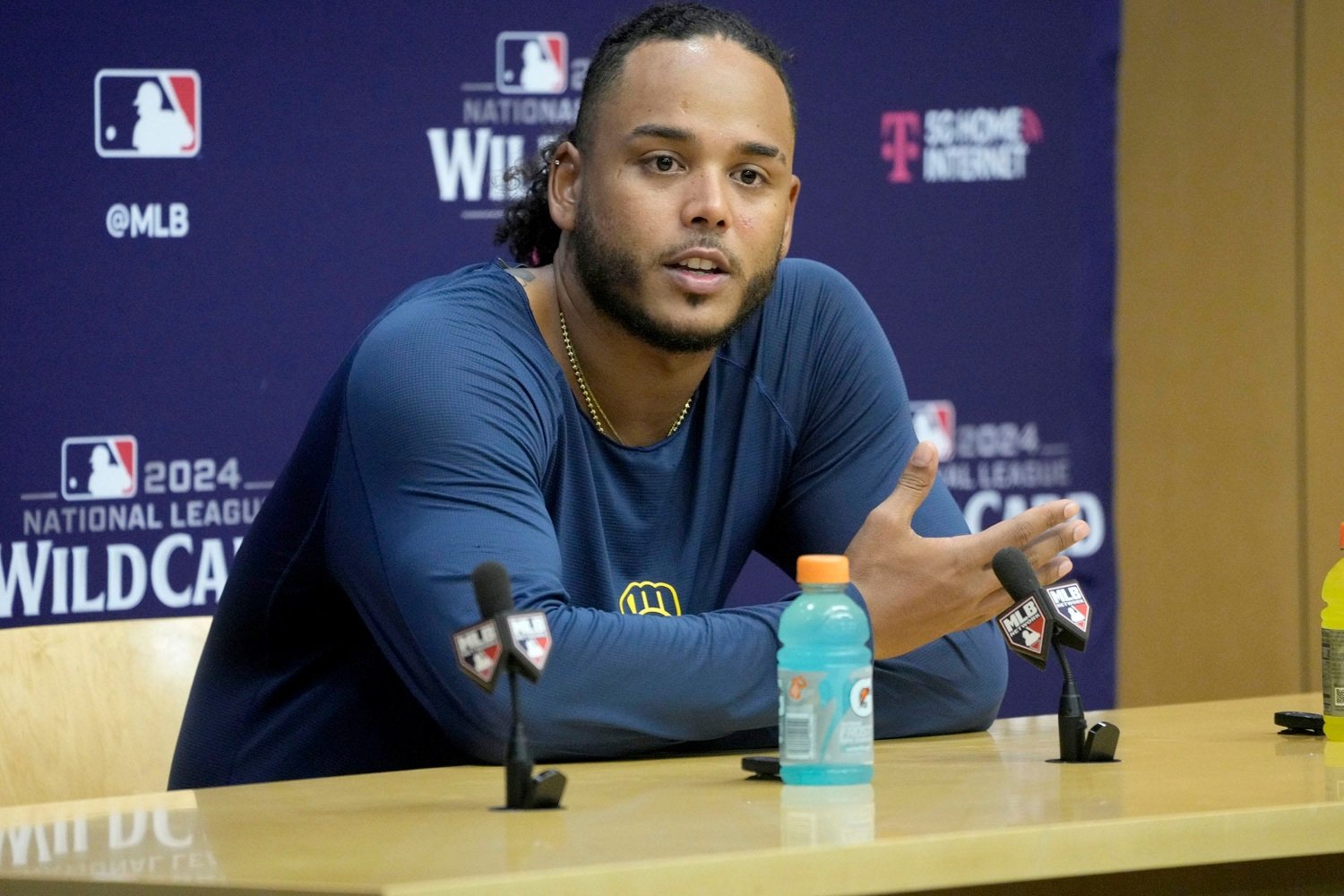 Freddy Peralta was one of the first Opening Day starters to be named, getting the nod all the way back on February 13th. It will be his second year at the top of Milwaukee’s rotation, a spot typically granted to the most effective starting pitcher. However, if you caught his most recent spring training outing against the Diamondbacks, you’ll know that he has looked like anything but a true ace. In what will be his final spring training outing, Peralta pitched 3 ⅓ innings with five strikeouts—not bad, until you realize he also gave up eight hits, four walks, and ten (10) (TEN!) earned runs. He was on the receiving end of a lot of hard contact, conceding two home runs and four earned runs in the first inning alone. In a way, it was an appropriate bookend for his spring training experience. In his first start of the spring, he also gave up two home runs and three earned runs in two innings of work against the Giants. After two solid scoreless starts against the White Sox and Athletics, things seemed like they would return to normal and he entered his final start with a 2.61 ERA over 8 ⅓ innings. That has now ballooned to an 8.56 ERA over 13 ⅔ innings. The real question is whether all of this means anything. Pitchers are known to be apathetic about spring training numbers, with many often claiming that they “don’t want to waste good pitching.” In 2023, Zack Greinke intentionally (according to him, at least) gave up nine earned runs in 2 ⅓ innings after lamenting that he hadn’t seen enough baserunners to practice the new pickoff protocol that had been introduced that year. Of course, he posted a 5.06 ERA over 142 ⅓ innings in what ended up being his final year in the league, but hey, maybe that was intentional, too. So what’s the deal with Peralta? Is he just a slow starter? Well, I wanted to start by looking at his past spring training numbers from each year since he debuted in 2018: Year Innings ERA 2024 15 7.20 2023 14 3.21 2022 14 ⅓ 6.28 2021 13 ⅔ 3.95 2020 12 4.50 2019 10 ⅔ 5.06 2018 3 0.00 Based on this, my takeaway is that it just varies. Some years he’s decent, and others he isn't. His ERA hasn’t gotten quite as high as it has this spring, but he was at a 7.20 last year and he turned out okay—even if he didn’t resemble your ideal ace. In fact, this sort of behavior should be expected. If you’ve been watching Peralta for a while, you'll know that he tends to oscillate between being as dominant as any other starter in the league and struggling to make it through four innings. Funnily enough, he’s often consistent enough with his inconsistency to make it undetectable when looking at data by season or even by month, but trust me, it’s there. Here are some examples from 2024 of his back-and-forth performances. To help capture the difference in performance, I’ll be making use of Baseball Reference’s game score statistic as a high-level proxy for the quality of each outing. On Apr. 19, 2024, he made a start against the Cardinals where he pitched six scoreless innings with seven strikeouts. Game score: 69 His next start on Apr. 25, against the Pirates, saw him give up five earned runs in 4 ⅔ innings. Game score: 34 On Jun. 14, he made a start against the Reds wherein he gave up 10 hits and six earned runs across 5 ⅓ innings. Game score: 29 In his next start (on Jun. 19 against the Angels), he struck out eight and walked two in six scoreless innings. Game score: 72 On Jul. 12, he made a start against the Nationals in which he gave up 10 hits and four earned runs in five innings. Game score: 37 In the very next start against the Twins on Jul. 20, he struck out eight and gave up just two hits in six innings. Game score: 74 If you were to plot all his game scores on a line, it could serve as the draft to a roller coaster turbulent enough to replace the now-retired Kingda Ka. Otherwise, you can use it as reassurance that Peralta will almost always be valued incorrectly over small sample sizes, because of how mercurial he often is on the mound. (When you see this, keep in mind that 50 is a roughly average appearance, and that anything above 70 or below 35 is considered fairly extreme.) Based on his reaction to the whole thing, he and the squad aren’t too worried. In fact, they were more worried about Joey Ortiz’s mad dash to the bathroom than anything else. Overall, it was a weird game with the Brewers facing off against Corbin Burnes, the team’s former perennial ace (who had a pretty rough outing himself). It didn't seem like anyone remembered how to play a classy game of baseball. At the end of the day, the purpose of spring training is to get some good practice in before the season starts. Every minute detail of every player's performance is quantified and tracked obsessively for 162 games. Once Opening Day rolls around, you’ll probably forget this all ever happened.
 -
The Brewers are blessed with some of the best backstop talent in MLB, but how can they utilize their surplus most efficiently? Image courtesy of © Rick Scuteri-Imagn Images The Brewers are blessed with some of the best backstop talent in MLB, but how can they utilize their surplus most efficiently? For several years, now, the Milwaukee Brewers have been the envy of the league when it comes to acquiring and developing catchers. This year, they have very good depth behind their MVP candidate and starter. In fact, not only do they have a solid set of guys at the big-league level, but there’s a top prospect knocking loudly on the door. Leading the charge is William Contreras. After two full years as the Brewers’ starting catcher, it’s clear that he’s one of the best at what he does. He has won a Silver Slugger Award and was a down-ballot MVP candidate in both seasons. Most recently, he posted a 129 OPS+ with 23 home runs and 37 doubles. He's been known to swing a mean bat since he debuted with the team from suburban Cobb County, Ga., but the biggest step forward has been in his defense. With his old club, he accumulated -11 Defensive Runs Saved, primarily dragged down by poor framing numbers. Since arriving in Milwaukee, he has accumulated 11 Defensive Runs Saved, a shift driven by improving that aforementioned weakness. While his framing regressed from 2023 to 2024, his overall DRS increased slightly, thanks to his apparent knack for helping his pitchers perform better through game-calling and situation management. Contreras is known to be a workhorse, putting together 679 plate appearances and playing in 155 games in 2024, but he isn't always sitting behind the plate. Because of his effectiveness as a hitter, he has been able to get a decent amount of work as a designated hitter. While Gary Sánchez was the go-to backup last year, it seems that Eric Haase will replace him for 2025. Haase only had 69 plate appearances with the Brewers last year, but was effective over that span, posting a 122 OPS+. He also had an .870 OPS over 170 plate appearances with Triple-A Nashville. With the big strides he has made since joining Milwaukee’s system, he’s projected to get significantly more work in 2025. It hasn’t been the most productive spring training for him thus far, but there’s still time to warm up and get adjusted ahead of the regular season. Also gunning for the backup spot is Jorge Alfaro, who was released in March 2024 by the Cubs and who spent the whole of that season in Mexico, mostly DHing and not playing much. He signed a minor-league contract with the Brewers in January and has been great in spring training, slashing .304/.429/.565 over 28 plate appearances. We haven’t seen Alfaro play affiliated ball since his brief major-league stint in 2023, and that lasted just 18 games, so it seems likely he’ll spend more time in the minor leagues if he’s kept around. That said, there's still a clear opportunity for him to get called up and be a big-league contributor. While these three names are currently listed on the Brewers’ depth chart, another player who has a good shot to make a splash for the Brewers is Jeferson Quero, one of the club's top prospects and a nationally touted one. He missed all of last season after suffering an unfortunate injury that caused a torn labrum in his first game, but his pedigree remains mostly unchanged. Scouts remain excited about his defensive skillset, as well as his ability to stop the running game. In addition to being great behind the plate, his swing isn’t too shabby either although it’s not quite on par. His offensive production could be a development focus next season as the team ramps him back up to catching slowly to fully recover his shoulder, giving him more reps at DH instead. Pat Murphy raves about Quero. Projections are far from perfect, but they can serve as a baseline. If FanGraphs is to be believed, Milwaukee is looking to be in pretty good shape. They are currently projected to get 4.6 fWAR out of their catching position, fifth in MLB. That would trail only the Mariners, Giants, Orioles, and Blue Jays. With an elite leader of the pack and three solid backup options, fans shouldn’t have much to worry about heading into this year. View full article
-
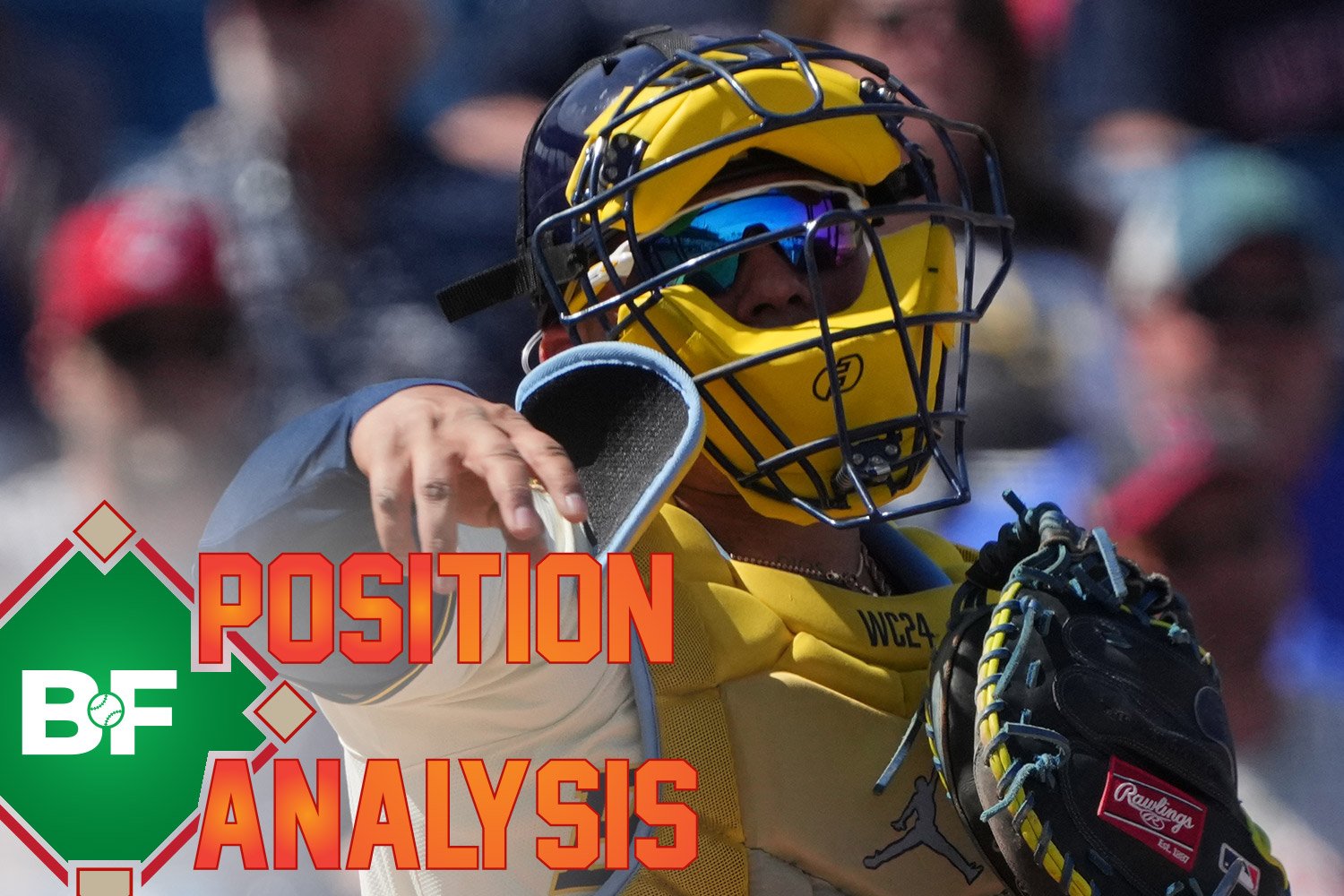 For several years, now, the Milwaukee Brewers have been the envy of the league when it comes to acquiring and developing catchers. This year, they have very good depth behind their MVP candidate and starter. In fact, not only do they have a solid set of guys at the big-league level, but there’s a top prospect knocking loudly on the door. Leading the charge is William Contreras. After two full years as the Brewers’ starting catcher, it’s clear that he’s one of the best at what he does. He has won a Silver Slugger Award and was a down-ballot MVP candidate in both seasons. Most recently, he posted a 129 OPS+ with 23 home runs and 37 doubles. He's been known to swing a mean bat since he debuted with the team from suburban Cobb County, Ga., but the biggest step forward has been in his defense. With his old club, he accumulated -11 Defensive Runs Saved, primarily dragged down by poor framing numbers. Since arriving in Milwaukee, he has accumulated 11 Defensive Runs Saved, a shift driven by improving that aforementioned weakness. While his framing regressed from 2023 to 2024, his overall DRS increased slightly, thanks to his apparent knack for helping his pitchers perform better through game-calling and situation management. Contreras is known to be a workhorse, putting together 679 plate appearances and playing in 155 games in 2024, but he isn't always sitting behind the plate. Because of his effectiveness as a hitter, he has been able to get a decent amount of work as a designated hitter. While Gary Sánchez was the go-to backup last year, it seems that Eric Haase will replace him for 2025. Haase only had 69 plate appearances with the Brewers last year, but was effective over that span, posting a 122 OPS+. He also had an .870 OPS over 170 plate appearances with Triple-A Nashville. With the big strides he has made since joining Milwaukee’s system, he’s projected to get significantly more work in 2025. It hasn’t been the most productive spring training for him thus far, but there’s still time to warm up and get adjusted ahead of the regular season. Also gunning for the backup spot is Jorge Alfaro, who was released in March 2024 by the Cubs and who spent the whole of that season in Mexico, mostly DHing and not playing much. He signed a minor-league contract with the Brewers in January and has been great in spring training, slashing .304/.429/.565 over 28 plate appearances. We haven’t seen Alfaro play affiliated ball since his brief major-league stint in 2023, and that lasted just 18 games, so it seems likely he’ll spend more time in the minor leagues if he’s kept around. That said, there's still a clear opportunity for him to get called up and be a big-league contributor. While these three names are currently listed on the Brewers’ depth chart, another player who has a good shot to make a splash for the Brewers is Jeferson Quero, one of the club's top prospects and a nationally touted one. He missed all of last season after suffering an unfortunate injury that caused a torn labrum in his first game, but his pedigree remains mostly unchanged. Scouts remain excited about his defensive skillset, as well as his ability to stop the running game. In addition to being great behind the plate, his swing isn’t too shabby either although it’s not quite on par. His offensive production could be a development focus next season as the team ramps him back up to catching slowly to fully recover his shoulder, giving him more reps at DH instead. Pat Murphy raves about Quero. Projections are far from perfect, but they can serve as a baseline. If FanGraphs is to be believed, Milwaukee is looking to be in pretty good shape. They are currently projected to get 4.6 fWAR out of their catching position, fifth in MLB. That would trail only the Mariners, Giants, Orioles, and Blue Jays. With an elite leader of the pack and three solid backup options, fans shouldn’t have much to worry about heading into this year.
 -
heres a pic I took of the pizza I had that day

-
The Brewers might have solved their lack of power by simply asking one guy to hit the ball harder. Image courtesy of © Charles LeClaire-Imagn Images The Brewers might have solved their lack of power by simply asking one guy to hit the ball harder. I remember what I was doing when I heard that the Brewers signed Rhys Hoskins to a two-year, $34 million deal. I was ordering a slice of pizza while on my way to play catch with a buddy at a local park. I had been bearish on the prospect of the Brewers spending big money (at least to them) on a slugger, but they proved me wrong, and I was so shocked I almost forgot to ask for extra pineapple on my pizza. By now, the hype behind the signing has long since died down. Hoskins had the worst season of his career in nearly every category and managed an OPS+ of just 98, far below the expectations he had come in with. To his credit, he had just spent all of 2023 recovering from a torn ACL, and perhaps he needed more time to get back to playing baseball at a high level. Regardless of the cause, many were disappointed and felt that the team’s depth at first base was still a glaring weakness. If you want a deeper dive into what made his year so rough, check out Jack Stern’s analysis. But there is a light at the end of the tunnel. The most recent baseball we’ve seen from Rhys Hoskins has been in spring training, and boy, does it look and sound different. Over the 25 plate appearances he has had so far, he’s slashing .350/.480/1.100 for a wRC+ of 269. Five of his seven hits have been home runs, and these aren’t short porch shots to right field at Fenway Park. These are blasts, rockets, moonshots, missiles, whatever you call them. Even the sound of these shots is pleasing to the ears and satisfying to the senses. Yes, it’s spring training which means that it’s a small sample size where the level of competition isn’t quite the same as the regular season. It would be foolish to extrapolate an entire season’s worth of production based on this data but it should, at the very least, be an encouraging sign that he’s back to the Hoskins of old. Furthermore, the two home runs above were against Justin Steele and Tyler Anderson, not exactly your average Single-A prospects just trying to get some work in before returning to the minor league grind. With an optimized Hoskins, the lost power from letting Willy Adames walk in free agency might not sting as much. There isn’t much room for him to hit more home runs than he did last year (26) as that’s typically about where he’s been throughout his career. However, he only put together 14 doubles, significantly lower than the ~30 he’s usually good for. All of this is quite a big “if.” There’s still time for his numbers to regress and even if they don’t, an 162-game season is a totally different environment than a short set of exhibition games. For reference, he also had a respectable .810 OPS during last year’s spring training with four homers and a double. Nonetheless, it’s seeming more and more like some rest and time in the lab was exactly what he needed to be the first baseman the team was promised a year ago. View full article
-
Rhys Hoskins Is Becoming The Slugger He Was Always Meant To Be
Jason Wang posted an article in Brewers
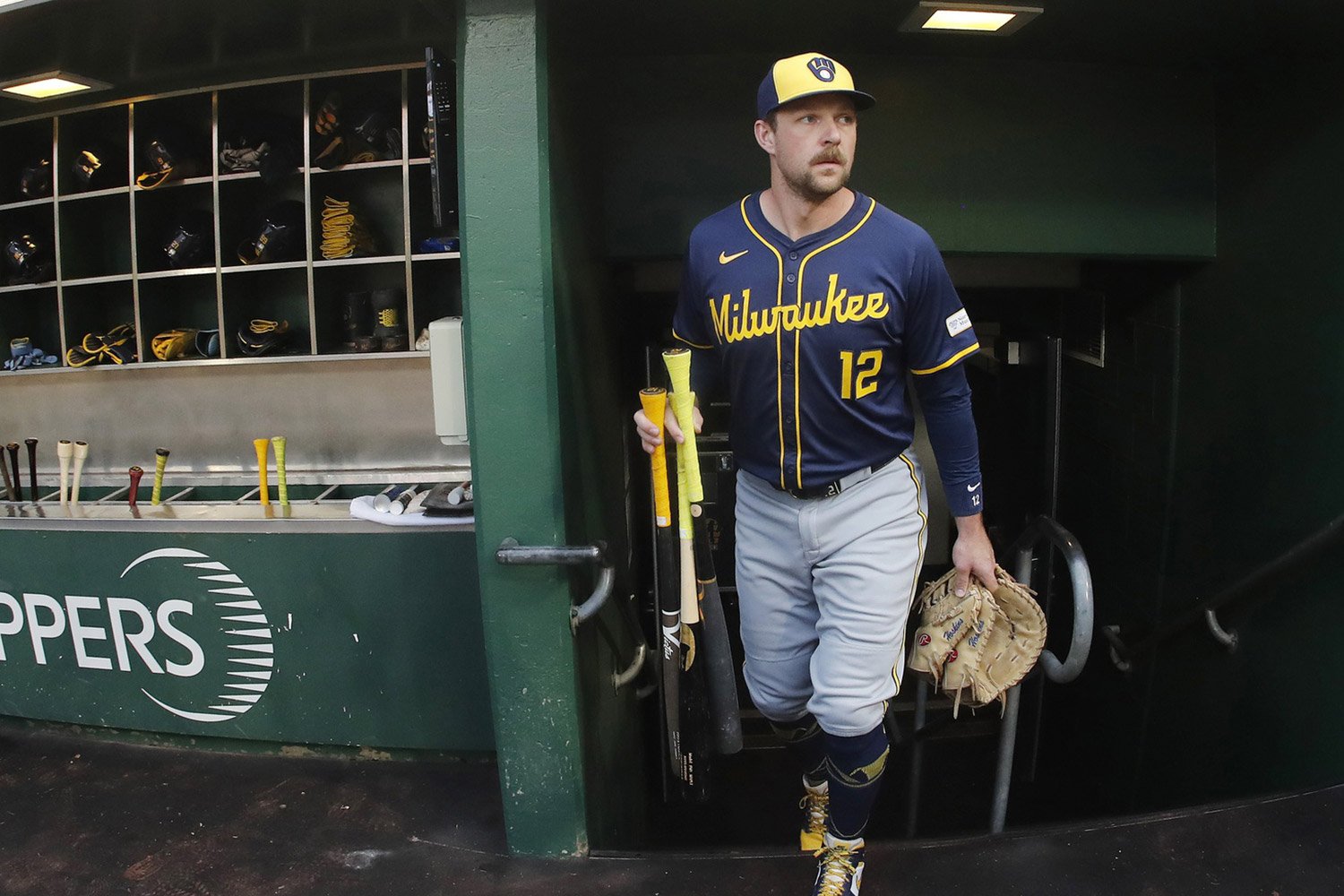 I remember what I was doing when I heard that the Brewers signed Rhys Hoskins to a two-year, $34 million deal. I was ordering a slice of pizza while on my way to play catch with a buddy at a local park. I had been bearish on the prospect of the Brewers spending big money (at least to them) on a slugger, but they proved me wrong, and I was so shocked I almost forgot to ask for extra pineapple on my pizza. By now, the hype behind the signing has long since died down. Hoskins had the worst season of his career in nearly every category and managed an OPS+ of just 98, far below the expectations he had come in with. To his credit, he had just spent all of 2023 recovering from a torn ACL, and perhaps he needed more time to get back to playing baseball at a high level. Regardless of the cause, many were disappointed and felt that the team’s depth at first base was still a glaring weakness. If you want a deeper dive into what made his year so rough, check out Jack Stern’s analysis. But there is a light at the end of the tunnel. The most recent baseball we’ve seen from Rhys Hoskins has been in spring training, and boy, does it look and sound different. Over the 25 plate appearances he has had so far, he’s slashing .350/.480/1.100 for a wRC+ of 269. Five of his seven hits have been home runs, and these aren’t short porch shots to right field at Fenway Park. These are blasts, rockets, moonshots, missiles, whatever you call them. Even the sound of these shots is pleasing to the ears and satisfying to the senses. Yes, it’s spring training which means that it’s a small sample size where the level of competition isn’t quite the same as the regular season. It would be foolish to extrapolate an entire season’s worth of production based on this data but it should, at the very least, be an encouraging sign that he’s back to the Hoskins of old. Furthermore, the two home runs above were against Justin Steele and Tyler Anderson, not exactly your average Single-A prospects just trying to get some work in before returning to the minor league grind. With an optimized Hoskins, the lost power from letting Willy Adames walk in free agency might not sting as much. There isn’t much room for him to hit more home runs than he did last year (26) as that’s typically about where he’s been throughout his career. However, he only put together 14 doubles, significantly lower than the ~30 he’s usually good for. All of this is quite a big “if.” There’s still time for his numbers to regress and even if they don’t, an 162-game season is a totally different environment than a short set of exhibition games. For reference, he also had a respectable .810 OPS during last year’s spring training with four homers and a double. Nonetheless, it’s seeming more and more like some rest and time in the lab was exactly what he needed to be the first baseman the team was promised a year ago.
 -
Spring training has already given us a glimpse into their plan to cause a ruckus on the basepaths this season. Image courtesy of © Rick Scuteri-Imagn Images Spring training has already given us a glimpse into their plan to cause a ruckus on the basepaths this season. When you think of a “scrappy” baseball player, what do you imagine? Probably a guy no taller than 5-foot-9, who goes after every batted ball on defense and runs like the wind on offense. It’s a term that actually describes the Brewers pretty well. They’ve become known for exceeding expectations year in and year out, without having to break the bank, and much of that is due to the “scrappiness” of their roster. With two consecutive team Gold Glove Awards, their defense is already best-in-class. Now, it seems that baserunning has come under the microscope. Milwaukee currently leads all of spring training in stolen bases, with 27. They also took the top spot last year, with a final total of 45. This enthusiasm to snag an extra 90 feet is interesting, given that these are exhibition games and running the bases can sometimes lead to more serious injury, but it’s clear that the organization is placing considerable value on getting as many reps as possible before the start of the regular season. Even more intriguing is the team’s tendency to attempt a steal of third base with two outs, going against the grain of not making the final out at third base. It's easy to see why most teams don't make those tries. Most of the time, most players will score from second base on a single to the outfield, anyway. The tradeoff is that it can be an easier steal, given the unorthodox nature of the action, and it opens the door to scoring off of an infield hit, a fielding error, or even a wild pitch. On the surface, it may seem like risky business, but it’s clear that these are calculated risks, rather than decisions made with reckless abandon. When asked about whether stealing bases is a point of focus for the team this spring, Pat Murphy said: More than anything, it seems like the team is getting used to learning the subtle nuances of stealing. Especially given how young the team is on average, learning these small but impactful aspects of the game is what separates the wheat from the chaff in the big leagues. And with the speed on the roster, why shouldn’t they? Brice Turang placed third in stolen bases in 2024, snagging 50 bags, and he seems to be setting the standard for the other speedsters on the team with four other Brewers stealing 20 or more bases last year. In 2025, the lineup is poised to steal even more. Sal Frelick and Caleb Durbin are starting to come into their own, and even Christian Yelich, who is returning from injury, is planning to partake. It'll be a slow and steady ramp-up for him, and he isn't planning on taking any wild slides or head-first dives, especially in spring training. He did steal 28 bags in 2023 and was on pace to break his personal single-season record of 30 before going down with a back injury last year. When asked about whether this increase in aggression will translate over into the regular season, Murphy had this to say: Of course, spring training doesn’t always translate to the regular season. In fact, it doesn’t really translate at all. The sample sizes are much smaller; the focus of each game is primarily to see live pitching; and teams aren’t trying to win, as much as they are trying to just work on things. Taking big leads and stealing in a controlled environment where the downside risk is negligible might not be a perfect indicator of what’s to come in 2025. Furthermore, speed by itself isn’t enough to be successful in the sport of baseball, especially since you need to get on base to be able to really use it. However, it’s no secret that Milwaukee possesses a rare combination of on-base ability with speed in the lineup, and they’ve been known to use it. They stole a combined 217 bases in 2024, just six fewer than the MLB-leading Nationals and a massive increase over the 129 they stole in 2023. Aggression on the basepaths is up across the board, and much of this is a consequence of the new rules introduced by MLB for the 2023 season. The pitch timer (complete with limits on pickoff throws by pitchers) and the enlarged bases made the whole process less risky and more beneficial. For the Brewers, getting a runner from first base into scoring position via small ball could be a substitute for the lack of power in the lineup. With the squad’s current abilities and mindset, expect big things from them heading into next year. View full article
-
Why the Brewers Don't Wait Until the Regular Season to Start Stealing Bases
Jason Wang posted an article in Brewers
.png.58cc0af920f0c8b81d7350b17435a68a.png) When you think of a “scrappy” baseball player, what do you imagine? Probably a guy no taller than 5-foot-9, who goes after every batted ball on defense and runs like the wind on offense. It’s a term that actually describes the Brewers pretty well. They’ve become known for exceeding expectations year in and year out, without having to break the bank, and much of that is due to the “scrappiness” of their roster. With two consecutive team Gold Glove Awards, their defense is already best-in-class. Now, it seems that baserunning has come under the microscope. Milwaukee currently leads all of spring training in stolen bases, with 27. They also took the top spot last year, with a final total of 45. This enthusiasm to snag an extra 90 feet is interesting, given that these are exhibition games and running the bases can sometimes lead to more serious injury, but it’s clear that the organization is placing considerable value on getting as many reps as possible before the start of the regular season. Even more intriguing is the team’s tendency to attempt a steal of third base with two outs, going against the grain of not making the final out at third base. It's easy to see why most teams don't make those tries. Most of the time, most players will score from second base on a single to the outfield, anyway. The tradeoff is that it can be an easier steal, given the unorthodox nature of the action, and it opens the door to scoring off of an infield hit, a fielding error, or even a wild pitch. On the surface, it may seem like risky business, but it’s clear that these are calculated risks, rather than decisions made with reckless abandon. When asked about whether stealing bases is a point of focus for the team this spring, Pat Murphy said: More than anything, it seems like the team is getting used to learning the subtle nuances of stealing. Especially given how young the team is on average, learning these small but impactful aspects of the game is what separates the wheat from the chaff in the big leagues. And with the speed on the roster, why shouldn’t they? Brice Turang placed third in stolen bases in 2024, snagging 50 bags, and he seems to be setting the standard for the other speedsters on the team with four other Brewers stealing 20 or more bases last year. In 2025, the lineup is poised to steal even more. Sal Frelick and Caleb Durbin are starting to come into their own, and even Christian Yelich, who is returning from injury, is planning to partake. It'll be a slow and steady ramp-up for him, and he isn't planning on taking any wild slides or head-first dives, especially in spring training. He did steal 28 bags in 2023 and was on pace to break his personal single-season record of 30 before going down with a back injury last year. When asked about whether this increase in aggression will translate over into the regular season, Murphy had this to say: Of course, spring training doesn’t always translate to the regular season. In fact, it doesn’t really translate at all. The sample sizes are much smaller; the focus of each game is primarily to see live pitching; and teams aren’t trying to win, as much as they are trying to just work on things. Taking big leads and stealing in a controlled environment where the downside risk is negligible might not be a perfect indicator of what’s to come in 2025. Furthermore, speed by itself isn’t enough to be successful in the sport of baseball, especially since you need to get on base to be able to really use it. However, it’s no secret that Milwaukee possesses a rare combination of on-base ability with speed in the lineup, and they’ve been known to use it. They stole a combined 217 bases in 2024, just six fewer than the MLB-leading Nationals and a massive increase over the 129 they stole in 2023. Aggression on the basepaths is up across the board, and much of this is a consequence of the new rules introduced by MLB for the 2023 season. The pitch timer (complete with limits on pickoff throws by pitchers) and the enlarged bases made the whole process less risky and more beneficial. For the Brewers, getting a runner from first base into scoring position via small ball could be a substitute for the lack of power in the lineup. With the squad’s current abilities and mindset, expect big things from them heading into next year.
When you think of a “scrappy” baseball player, what do you imagine? Probably a guy no taller than 5-foot-9, who goes after every batted ball on defense and runs like the wind on offense. It’s a term that actually describes the Brewers pretty well. They’ve become known for exceeding expectations year in and year out, without having to break the bank, and much of that is due to the “scrappiness” of their roster. With two consecutive team Gold Glove Awards, their defense is already best-in-class. Now, it seems that baserunning has come under the microscope. Milwaukee currently leads all of spring training in stolen bases, with 27. They also took the top spot last year, with a final total of 45. This enthusiasm to snag an extra 90 feet is interesting, given that these are exhibition games and running the bases can sometimes lead to more serious injury, but it’s clear that the organization is placing considerable value on getting as many reps as possible before the start of the regular season. Even more intriguing is the team’s tendency to attempt a steal of third base with two outs, going against the grain of not making the final out at third base. It's easy to see why most teams don't make those tries. Most of the time, most players will score from second base on a single to the outfield, anyway. The tradeoff is that it can be an easier steal, given the unorthodox nature of the action, and it opens the door to scoring off of an infield hit, a fielding error, or even a wild pitch. On the surface, it may seem like risky business, but it’s clear that these are calculated risks, rather than decisions made with reckless abandon. When asked about whether stealing bases is a point of focus for the team this spring, Pat Murphy said: More than anything, it seems like the team is getting used to learning the subtle nuances of stealing. Especially given how young the team is on average, learning these small but impactful aspects of the game is what separates the wheat from the chaff in the big leagues. And with the speed on the roster, why shouldn’t they? Brice Turang placed third in stolen bases in 2024, snagging 50 bags, and he seems to be setting the standard for the other speedsters on the team with four other Brewers stealing 20 or more bases last year. In 2025, the lineup is poised to steal even more. Sal Frelick and Caleb Durbin are starting to come into their own, and even Christian Yelich, who is returning from injury, is planning to partake. It'll be a slow and steady ramp-up for him, and he isn't planning on taking any wild slides or head-first dives, especially in spring training. He did steal 28 bags in 2023 and was on pace to break his personal single-season record of 30 before going down with a back injury last year. When asked about whether this increase in aggression will translate over into the regular season, Murphy had this to say: Of course, spring training doesn’t always translate to the regular season. In fact, it doesn’t really translate at all. The sample sizes are much smaller; the focus of each game is primarily to see live pitching; and teams aren’t trying to win, as much as they are trying to just work on things. Taking big leads and stealing in a controlled environment where the downside risk is negligible might not be a perfect indicator of what’s to come in 2025. Furthermore, speed by itself isn’t enough to be successful in the sport of baseball, especially since you need to get on base to be able to really use it. However, it’s no secret that Milwaukee possesses a rare combination of on-base ability with speed in the lineup, and they’ve been known to use it. They stole a combined 217 bases in 2024, just six fewer than the MLB-leading Nationals and a massive increase over the 129 they stole in 2023. Aggression on the basepaths is up across the board, and much of this is a consequence of the new rules introduced by MLB for the 2023 season. The pitch timer (complete with limits on pickoff throws by pitchers) and the enlarged bases made the whole process less risky and more beneficial. For the Brewers, getting a runner from first base into scoring position via small ball could be a substitute for the lack of power in the lineup. With the squad’s current abilities and mindset, expect big things from them heading into next year. -
The season hasn’t even started yet, but Milwaukee’s pile of deferred dreams and shaky shoulders continues to grow. Image courtesy of © Dave Kallmann / Milwaukee Journal Sentinel / USA TODAY NETWORK via Imagn Images The season hasn’t even started yet, but Milwaukee’s pile of deferred dreams and shaky shoulders continues to grow. Pitching injuries have become more frequent across the league, but sometimes it feels like the Brewers get the worst of it. At one point, the team’s injured list contained enough talent to make up a pretty serviceable rotation. I, for one, thought that 2025 would bring a new year with a clean bill of health, but reality is rarely that kind. When asked about why it was so important for the team to pick up Jose Quintana, Pat Murphy recently said: To clarify, the six injured arms he's thinking of are (I think): Aaron Ashby (oblique strain, out for two weeks) DL Hall (lat strain, placed on the 60-day IL) Brandon Woodruff (recovering from shoulder surgery) Robert Gasser (recovering from Tommy John surgery) Thomas Pannone (forearm injury) JB Bukauskas (recovering from lat surgery, expected to miss the season) While it’s true that not all of these will necessarily result in completely lost seasons, it’s clear that Murphy and the front office are playing it on the safe side. Last year, they did a great job of pivoting, acquiring Frankie Montas and Aaron Civale at the trade deadline while even getting some satisfactory starting work from Bryse Wilson. Furthermore, Quintana has a lot to offer outside of mere risk mitigation, so it'll be intriguing to see what he can accomplish in his age-36 season. But are things really as bad as they seem? It’s easy to have tunnel vision as a sports fan and catastrophize things, and it wouldn’t be out of line to say that Milwaukee has had bad health luck recently, especially in a sport as superstitious as baseball. However, the Brewers aren’t the only ones dealing with this issue. As stated earlier, the increased prevalence of pitcher injuries has become a league-wide issue, so much so that the players’ association and MLB have gone back and forth deciding who to blame. The Dodgers are a great example of another club that felt the adverse effects last year. Shohei Ohtani, Yoshinobu Yamamoto, and Clayton Kershaw are just a few names that missed significant time in 2024 and in cases like Dustin May, the causes of these injuries were even more freakish than Jakob Junis getting hit by a fly ball during batting practice. This year, it seems like other teams are facing similar troubles. A quick peek around the news will show you that the Red Sox, Yankees, and Dodgers yet again have had recent incidents that will affect their pitching staffs at least for the start of the season. The glass-half-empty people will say that this is just another sign from a higher power that the Brewers are never meant to make a deep playoff run or win a World Series. Instead, the organization will be forever doomed to above-average regular season results followed by disappointing playoff performances. The glass-half-full people will say that it’s a miracle that in the face of all these setbacks, the team has always found a way to win. There's a very good chance the team will lose even more arms during the season. However, there's an equally good chance that no matter who they lose, they'll find a way to fill in the gaps and continue to be one of the most intelligently-run organizations in MLB today. View full article
- 2 replies
-
- 1
-

-
- aaron ashby
- robert gasser
- (and 4 more)
-
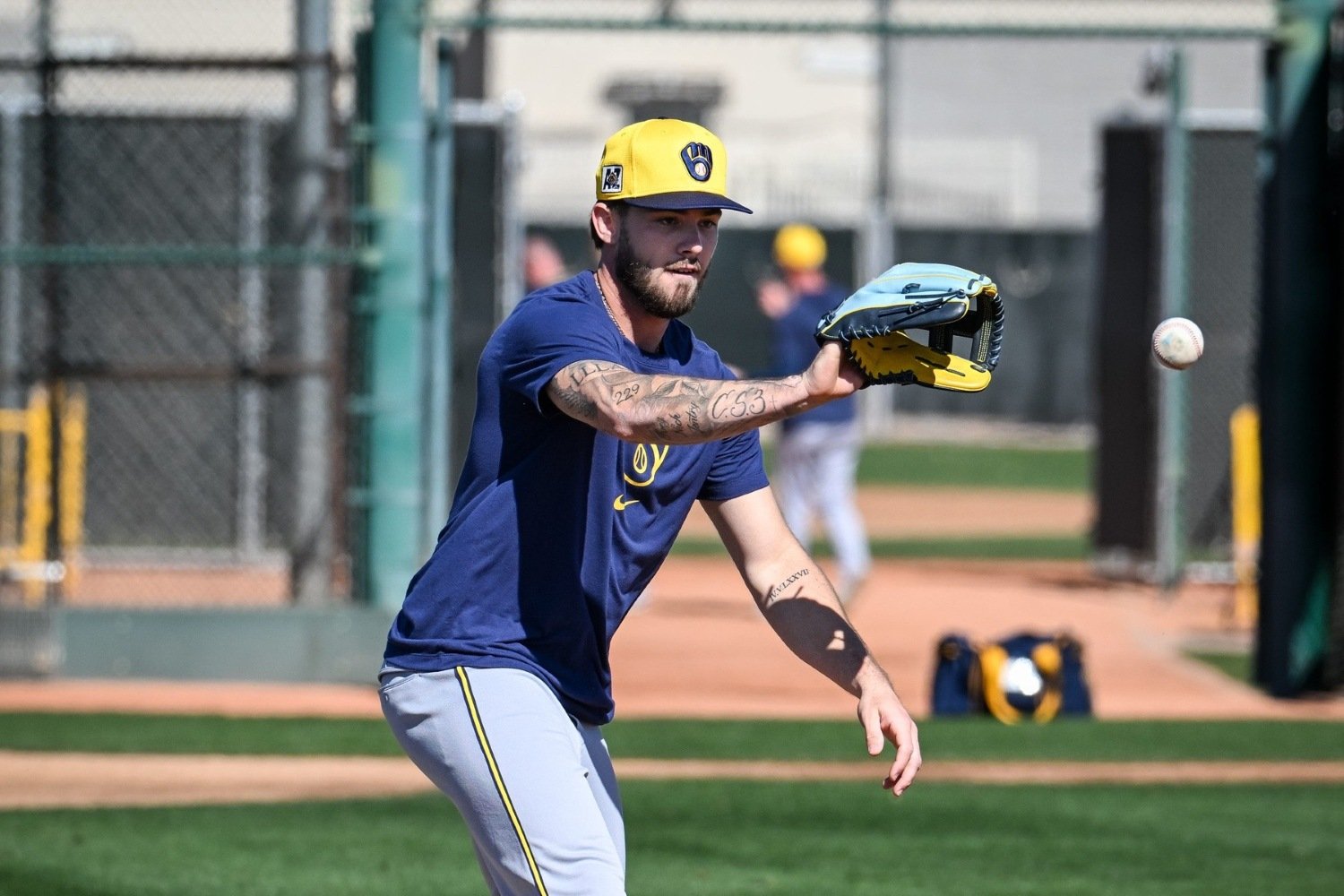 Pitching injuries have become more frequent across the league, but sometimes it feels like the Brewers get the worst of it. At one point, the team’s injured list contained enough talent to make up a pretty serviceable rotation. I, for one, thought that 2025 would bring a new year with a clean bill of health, but reality is rarely that kind. When asked about why it was so important for the team to pick up Jose Quintana, Pat Murphy recently said: To clarify, the six injured arms he's thinking of are (I think): Aaron Ashby (oblique strain, out for two weeks) DL Hall (lat strain, placed on the 60-day IL) Brandon Woodruff (recovering from shoulder surgery) Robert Gasser (recovering from Tommy John surgery) Thomas Pannone (forearm injury) JB Bukauskas (recovering from lat surgery, expected to miss the season) While it’s true that not all of these will necessarily result in completely lost seasons, it’s clear that Murphy and the front office are playing it on the safe side. Last year, they did a great job of pivoting, acquiring Frankie Montas and Aaron Civale at the trade deadline while even getting some satisfactory starting work from Bryse Wilson. Furthermore, Quintana has a lot to offer outside of mere risk mitigation, so it'll be intriguing to see what he can accomplish in his age-36 season. But are things really as bad as they seem? It’s easy to have tunnel vision as a sports fan and catastrophize things, and it wouldn’t be out of line to say that Milwaukee has had bad health luck recently, especially in a sport as superstitious as baseball. However, the Brewers aren’t the only ones dealing with this issue. As stated earlier, the increased prevalence of pitcher injuries has become a league-wide issue, so much so that the players’ association and MLB have gone back and forth deciding who to blame. The Dodgers are a great example of another club that felt the adverse effects last year. Shohei Ohtani, Yoshinobu Yamamoto, and Clayton Kershaw are just a few names that missed significant time in 2024 and in cases like Dustin May, the causes of these injuries were even more freakish than Jakob Junis getting hit by a fly ball during batting practice. This year, it seems like other teams are facing similar troubles. A quick peek around the news will show you that the Red Sox, Yankees, and Dodgers yet again have had recent incidents that will affect their pitching staffs at least for the start of the season. The glass-half-empty people will say that this is just another sign from a higher power that the Brewers are never meant to make a deep playoff run or win a World Series. Instead, the organization will be forever doomed to above-average regular season results followed by disappointing playoff performances. The glass-half-full people will say that it’s a miracle that in the face of all these setbacks, the team has always found a way to win. There's a very good chance the team will lose even more arms during the season. However, there's an equally good chance that no matter who they lose, they'll find a way to fill in the gaps and continue to be one of the most intelligently-run organizations in MLB today.
 -
He has been a successful, occasionally excellent big-league starter for the past 13 years. Can the Brewers make him even better? Image courtesy of © Benny Sieu-Imagn Images He has been a successful, occasionally excellent big-league starter for the past 13 years. Can the Brewers make him even better? Milwaukee’s approach to signing pitchers reminds me of house-flipping. They typically look to acquire someone whose stock is at an all-time low, but who still has some life left in his arm and some intrinsic stuff to work with. Aaron Civale, Frankie Montas, and Bryse Wilson are a few recent examples of this sort of practice that had decent results. Rarely does the team go out and pick up a free-agent pitcher who has just come off of a year with a 3.75 ERA over 170 ⅓ innings but it seems like Jose Quintana will be the first in a while. In fact, outside of a 2021 marred by injury, he has been a consistent starter since he debuted in 2012. If he’s as good as his numbers say, how were the frugal Brewers able to get their hands on him without breaking the bank? Quintana has a few things going against him. First, he’s 36 years old, which (in baseball terms) translates to pretty darn old. He’s not quite 58-year-old Satchel Paige on the 1965 Kansas City Athletics, but baseball is quickly becoming a young man’s game. For context, only two free-agent starters older than 34 were able to lock down multi-year deals: Matthew Boyd (two-year deal with the Cubs) and Nathan Eovaldi (three-year deal with the Rangers). Second, his underlying numbers from 2024 don’t support his ERA as much as one would like. His FIP was 4.56, largely driven by a strikeout rate of just 18.8% and a walk rate of 8.8%. With an average fastball velocity just barely above 90 mph and secondary pitches with below-average movement, this shouldn’t be surprising. Presumably, his velocity and movement will only get worse with age. Quintana is likely aware of this, though, and made a big adjustment to his arsenal after inking a two-year deal with the Mets in 2023. Historically, he had used the four-seam fastball as his primary weapon, with mixed results. It was the most effective with the Cardinals in 2022, but his first year in Queens saw him struggle to rediscover what made it great. Part of this was likely due to the stress fracture that limited him to just 75 ⅔ innings that year. He decided to pivot to a highly effective sinker that has taken the top spot in his toolkit ever since. For older pitchers with fading velocity, sinkers can be extremely effective. Compared to cutters and four-seam fastballs, the whiff rates are typically lower to begin with, so there’s no need to be as dominant. There are some notable exceptions, like Josh Hader (throws a riding sinker) and Paul Skenes (throws a splinker), but generally, as long as you can induce soft contact, it can play. In Quintana’s case, his sinker is a major contributor to his 48.8% ground ball rate, but because he’s also got good command, he can make it even better by getting called strikes on the edges. This combination is what gave him the seventh-best sinker run value in MLB last year. But wait, if his command with the sinker is so good, then why is his walk rate still worse than the league average? To me, the clear culprit is his changeup. Despite a stellar .203 opposing batting average, .260 opposing slugging percentage, and a 36.7% whiff rate, his changeup had a run value of 0 last year. This leads me to believe that many of these off-speed offerings were wasted pitches that resulted in balls. It also doesn’t help that there’s only about a 5-mph difference between his changeup and fastball on average, making both pitches comparatively less effective. Given all of this information, it seems that a major key to success will be ensuring his fastball arsenal and proficiency with the sinker will align with Milwaukee’s elite infield defense. Brice Turang, Joey Ortiz, and whoever ends up getting most of the reps at third base should form an excellent trio that converts ground balls into outs at one of the best rates in baseball. This specific aspect of his profile is likely what made him especially enticing for Milwaukee, as they’ve shown a similar pattern in identifying defensive synergies with other newly acquired pitchers. As for his changeup, we’ll have to wait and see whether he decides to keep it around or toys with a different pitch. He hasn’t thrown a slider in years, but it could give him more optionality to his glove side. Alternatively, if he wants to keep another arm-side option around, he could follow in the footsteps of Shota Imanaga and develop a rare lefty splitter. All 29 other teams had the opportunity to sign Quintana, and they all passed, leaving the Brewers in position to sign him for just $4.25 million. Sure, his numbers under the hood may be concerning and he’s far closer to the end of his career than he is to his prime, but there’s still a lot to like about what he can potentially bring to an already intriguing Brewers rotation. View full article
-
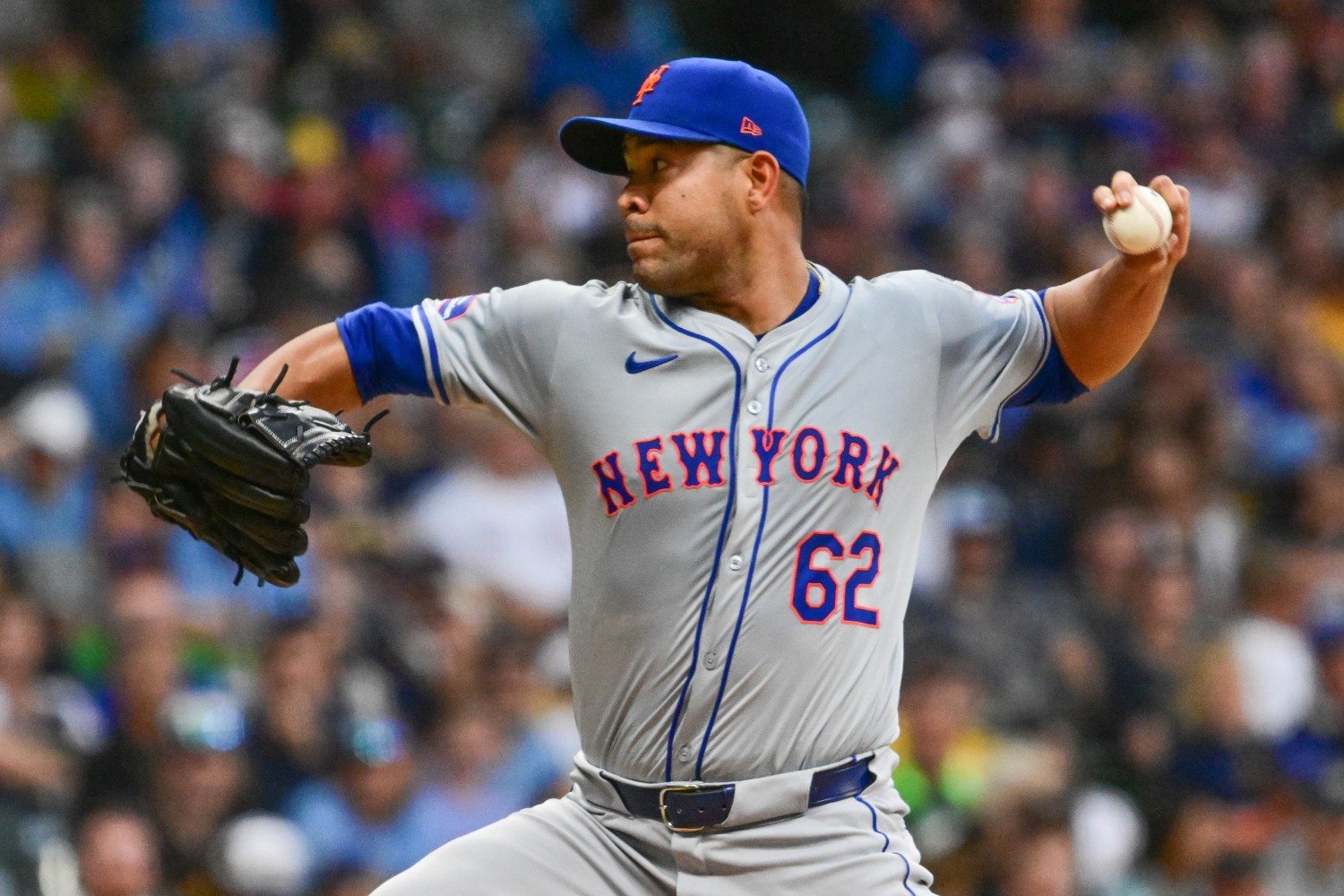 Milwaukee’s approach to signing pitchers reminds me of house-flipping. They typically look to acquire someone whose stock is at an all-time low, but who still has some life left in his arm and some intrinsic stuff to work with. Aaron Civale, Frankie Montas, and Bryse Wilson are a few recent examples of this sort of practice that had decent results. Rarely does the team go out and pick up a free-agent pitcher who has just come off of a year with a 3.75 ERA over 170 ⅓ innings but it seems like Jose Quintana will be the first in a while. In fact, outside of a 2021 marred by injury, he has been a consistent starter since he debuted in 2012. If he’s as good as his numbers say, how were the frugal Brewers able to get their hands on him without breaking the bank? Quintana has a few things going against him. First, he’s 36 years old, which (in baseball terms) translates to pretty darn old. He’s not quite 58-year-old Satchel Paige on the 1965 Kansas City Athletics, but baseball is quickly becoming a young man’s game. For context, only two free-agent starters older than 34 were able to lock down multi-year deals: Matthew Boyd (two-year deal with the Cubs) and Nathan Eovaldi (three-year deal with the Rangers). Second, his underlying numbers from 2024 don’t support his ERA as much as one would like. His FIP was 4.56, largely driven by a strikeout rate of just 18.8% and a walk rate of 8.8%. With an average fastball velocity just barely above 90 mph and secondary pitches with below-average movement, this shouldn’t be surprising. Presumably, his velocity and movement will only get worse with age. Quintana is likely aware of this, though, and made a big adjustment to his arsenal after inking a two-year deal with the Mets in 2023. Historically, he had used the four-seam fastball as his primary weapon, with mixed results. It was the most effective with the Cardinals in 2022, but his first year in Queens saw him struggle to rediscover what made it great. Part of this was likely due to the stress fracture that limited him to just 75 ⅔ innings that year. He decided to pivot to a highly effective sinker that has taken the top spot in his toolkit ever since. For older pitchers with fading velocity, sinkers can be extremely effective. Compared to cutters and four-seam fastballs, the whiff rates are typically lower to begin with, so there’s no need to be as dominant. There are some notable exceptions, like Josh Hader (throws a riding sinker) and Paul Skenes (throws a splinker), but generally, as long as you can induce soft contact, it can play. In Quintana’s case, his sinker is a major contributor to his 48.8% ground ball rate, but because he’s also got good command, he can make it even better by getting called strikes on the edges. This combination is what gave him the seventh-best sinker run value in MLB last year. But wait, if his command with the sinker is so good, then why is his walk rate still worse than the league average? To me, the clear culprit is his changeup. Despite a stellar .203 opposing batting average, .260 opposing slugging percentage, and a 36.7% whiff rate, his changeup had a run value of 0 last year. This leads me to believe that many of these off-speed offerings were wasted pitches that resulted in balls. It also doesn’t help that there’s only about a 5-mph difference between his changeup and fastball on average, making both pitches comparatively less effective. Given all of this information, it seems that a major key to success will be ensuring his fastball arsenal and proficiency with the sinker will align with Milwaukee’s elite infield defense. Brice Turang, Joey Ortiz, and whoever ends up getting most of the reps at third base should form an excellent trio that converts ground balls into outs at one of the best rates in baseball. This specific aspect of his profile is likely what made him especially enticing for Milwaukee, as they’ve shown a similar pattern in identifying defensive synergies with other newly acquired pitchers. As for his changeup, we’ll have to wait and see whether he decides to keep it around or toys with a different pitch. He hasn’t thrown a slider in years, but it could give him more optionality to his glove side. Alternatively, if he wants to keep another arm-side option around, he could follow in the footsteps of Shota Imanaga and develop a rare lefty splitter. All 29 other teams had the opportunity to sign Quintana, and they all passed, leaving the Brewers in position to sign him for just $4.25 million. Sure, his numbers under the hood may be concerning and he’s far closer to the end of his career than he is to his prime, but there’s still a lot to like about what he can potentially bring to an already intriguing Brewers rotation.
 -
After an offseason of uncertainty regarding how to enjoy the beauty of Milwaukee baseball on television this year, it seems things have finally gotten cleared up. Image courtesy of © Jeff Hanisch-Imagn Images After an offseason of uncertainty regarding how to enjoy the beauty of Milwaukee baseball on television this year, it seems things have finally gotten cleared up. At the end of 2024, the Brewers finally reached a new agreement with Main Street Sports Group (formerly Diamond Sports Group) that would allow the latter to distribute and produce telecasts for the 2025 season. This means that much of the existing system will remain the same, albeit under a new name: the FanDuel Sports Network. This deal reversed the original announcement that the Brewers would follow in the footsteps of the Twins and Guardians, who have moved away from the regional sports network model and toward broadcasting their games on a league-operated platform. Thus, FanDuel Sports Network Wisconsin (formerly Bally Sports Wisconsin) will maintain their existing rights to all of Milwaukee’s regular-season games not selected for exclusive national showcases (e.g., Sunday Night Baseball), as well as previously existing coverage for teams like the Milwaukee Bucks. If you’re an in-market viewer, you can subscribe directly through the FanDuel Sports Network or Amazon Prime Video. If you’d prefer access through an existing pay TV provider, you can check out your options here. Notable providers include DIRECTV, Fubo, Spectrum, and TDS Telecom. If you’re an out-of-market viewer, your best option is to purchase an MLB.tv subscription—for all teams or just the Milwaukee Brewers if you want to save a few dollars. Because the most recent agreement with FanDuel Sports Network is a one-year “prove-it” deal, things are subject to change heading into 2026. If paying for television is unthinkable to you then the Brewers have something for you too! This year, Milwaukee is partnering with Good Karma Brands to provide free broadcasts of ten regular season games and four spring training games. In Milwaukee, these games will be broadcast on WITI FOX-6 for the following games: Monday, 5/31 vs. KCR Tuesday, 4/15 vs. DET Tuesday, 5/20 vs. BAL Tuesday, 6/17 vs. CHC Tuesday, 6/24 vs. PIT Tuesday, 7/8 vs. LAD Tuesday, 7/29 vs. CHC Tuesday, 8/5 vs. ATL Tuesday, 8/19 vs. CHC Tuesday, 8/9 vs. TEX How To Watch Brewers Baseball If You’re In-Market (Wisconsin, Eastern Minnesota, Upper Peninsula of Michigan, Northwest Illinois, Iowa) FanDuel Sports Network Wisconsin (FKA Bally Sports Wisconsin) $122.99 for the season (through 9/19) $189.99 per year $19.99 per month How To Watch Brewers Baseball If You’re Out-Of-Market MLB.tv $149.99 for regular-season all-team access $29.99 per month $129.99 for regular-season single-team access Where You Can Find Nationally Televised Games and When They Broadcast Friday Night Baseball (Apple TV+, Streaming Only) FOX Saturday Baseball (Fox, Broadcast or Cable Streaming Only) Sunday Night Baseball (ESPN, Cable & Streaming Options) Sunday Leadoff (Roku Channel, Streaming Only, May-Aug.) View full article
-
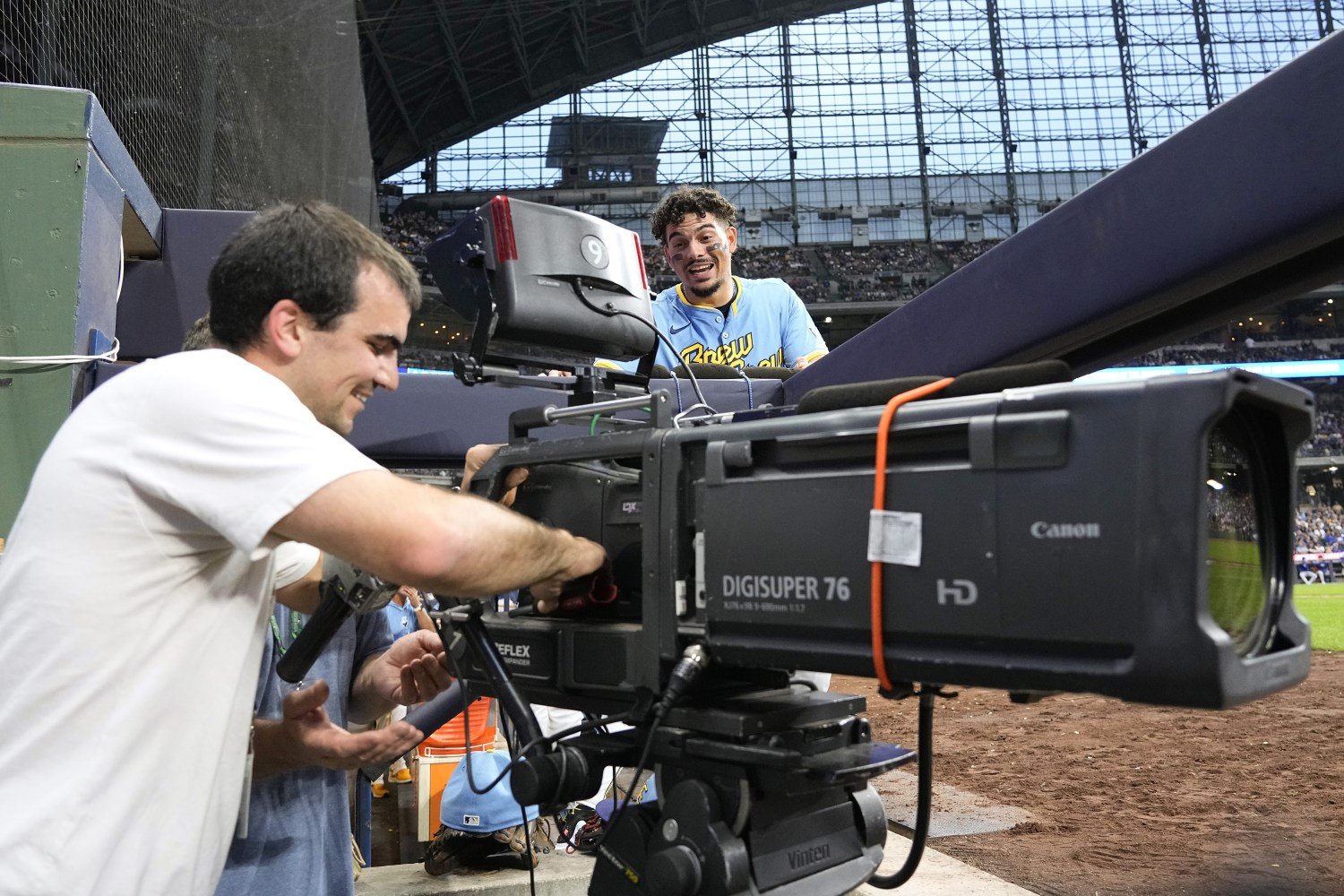 At the end of 2024, the Brewers finally reached a new agreement with Main Street Sports Group (formerly Diamond Sports Group) that would allow the latter to distribute and produce telecasts for the 2025 season. This means that much of the existing system will remain the same, albeit under a new name: the FanDuel Sports Network. This deal reversed the original announcement that the Brewers would follow in the footsteps of the Twins and Guardians, who have moved away from the regional sports network model and toward broadcasting their games on a league-operated platform. Thus, FanDuel Sports Network Wisconsin (formerly Bally Sports Wisconsin) will maintain their existing rights to all of Milwaukee’s regular-season games not selected for exclusive national showcases (e.g., Sunday Night Baseball), as well as previously existing coverage for teams like the Milwaukee Bucks. If you’re an in-market viewer, you can subscribe directly through the FanDuel Sports Network or Amazon Prime Video. If you’d prefer access through an existing pay TV provider, you can check out your options here. Notable providers include DIRECTV, Fubo, Spectrum, and TDS Telecom. If you’re an out-of-market viewer, your best option is to purchase an MLB.tv subscription—for all teams or just the Milwaukee Brewers if you want to save a few dollars. Because the most recent agreement with FanDuel Sports Network is a one-year “prove-it” deal, things are subject to change heading into 2026. If paying for television is unthinkable to you then the Brewers have something for you too! This year, Milwaukee is partnering with Good Karma Brands to provide free broadcasts of ten regular season games and four spring training games. In Milwaukee, these games will be broadcast on WITI FOX-6 for the following games: Monday, 5/31 vs. KCR Tuesday, 4/15 vs. DET Tuesday, 5/20 vs. BAL Tuesday, 6/17 vs. CHC Tuesday, 6/24 vs. PIT Tuesday, 7/8 vs. LAD Tuesday, 7/29 vs. CHC Tuesday, 8/5 vs. ATL Tuesday, 8/19 vs. CHC Tuesday, 8/9 vs. TEX How To Watch Brewers Baseball If You’re In-Market (Wisconsin, Eastern Minnesota, Upper Peninsula of Michigan, Northwest Illinois, Iowa) FanDuel Sports Network Wisconsin (FKA Bally Sports Wisconsin) $122.99 for the season (through 9/19) $189.99 per year $19.99 per month How To Watch Brewers Baseball If You’re Out-Of-Market MLB.tv $149.99 for regular-season all-team access $29.99 per month $129.99 for regular-season single-team access Where You Can Find Nationally Televised Games and When They Broadcast Friday Night Baseball (Apple TV+, Streaming Only) FOX Saturday Baseball (Fox, Broadcast or Cable Streaming Only) Sunday Night Baseball (ESPN, Cable & Streaming Options) Sunday Leadoff (Roku Channel, Streaming Only, May-Aug.)
 -
Is Milwaukee getting Nasty Nestor 🥵 or are they getting Nasty Nestor 🤢? Image courtesy of © Dave Kallmann / Milwaukee Journal Sentinel / USA TODAY NETWORK via Imagn Images / © Dave Kallmann / Milwaukee Journal Sentinel / USA TODAY NETWORK via Imagn Images Is Milwaukee getting Nasty Nestor 🥵 or are they getting Nasty Nestor 🤢? What Went Wrong in 2024? All things considered, 2024 wasn’t too bad for Nestor Cortes. 2023 was a year marred by a left rotator cuff strain that limited him to just 63 ⅓ innings over 12 starts. He pitched well throughout last season, even getting the Opening Day nod (since Gerrit Cole was sidelined with injury) and accumulating a 3.77 ERA over 174 ⅓ innings. He ran into more injuries during the postseason, this time a left elbow flexor strain, but recovered quickly enough to be a part of one of the most memorable playoff moments of all time... which unfortunately came at his expense. If you were to take a brief peek at his Savant page, you might be wholly unimpressed with what you see. He was league-average or below in every Statcast measurement other than walk rate, and was in the bottom quartile for hard-hit rate, something that’s generally not a very good sign of success. He didn’t throw very hard, didn’t miss a lot of bats, didn’t get a lot of balls on the ground, and didn’t have a particularly effective breaking ball or offspeed offering. Of the six different pitches he threw last season, only two had a total run value above zero: his four-seam fastball and cutter. What Can Go Right in 2025? What makes Cortes an interesting acquisition for the Brewers specifically is waiting to see what the organization can do with his unorthodox skillset. Despite the apparent lack of “stuff,” he’s a cunning player with a lot of non-obvious value. There’s a reason that even with underwhelming Statcast percentiles, his xERA was still just 3.62 last year. While most pitch-to-contact arms aim to induce soft contact through ground balls, he goes the other way, baiting batters to get under his pitches rather than on top. This creates loud and often hard contact but a steep enough launch angle to limit the actual damage of the batted ball. This can be shown through his 2024 fly ball rate of 32.1%, nearly nine percent higher than the MLB average. Another way to look at this is by using Statcast’s batted ball categories which seek to characterize batted balls based on launch angle. Cortes boasts an “Under %”, meaning batted balls with >40 degree launch angles, of 34.7%, nearly 12% higher than the MLB average. This batted ball by known slugger Jhonkensy “Big Christmas” Noel was 102.3 mph off the bat but required barely any movement from Aaron Judge to land safely as an out: Similarly, this ball left Jo Adell’s bat at 102.1 mph but traveled just 199 feet because of the steep 64 degree launch angle: Unfortunately, this strategy is risky. If opposing hitters do manage to square up balls, they typically end up going for extra bases or in the seats. Much of the damage is done against his four-seam fastball and sweeper, against which batters are slugging .443 and .511, respectively. Here's where the Brewers and their notorious pitching development comes in. They’ll likely make some tweaks to his pitch mix and one big change that could come around is the refinement of a non-fastball pitch. In 2024, 73.6% of the pitches he threw were some form of fastball (four-seam, cutter, sinker). This has been the case over the past few years and is likely due to a perceived lack of effectiveness in the rest of his arsenal. I say perceived, because Stuff+ measurements actually rate his breaking balls pretty highly, particularly his slider. The Yankees may not have bothered to wean him off his fastball addiction, but Milwaukee will want to maximize his craftiness by fleshing out his other offerings which will keep opposing hitters on their toes, in turn likely improving the results on his fastball. How Will This Impact The 2025 Brewers? It should go without saying that having a great starter in the rotation has obvious value. This is even more important in the context of Milwaukee given much of the uncertainty surrounding their pitching staff. Will we see an injury-diminished version of Brandon Woodruff? Will Tobias Myers see a sophomore slump? Did Aaron Civale really fix whatever was hindering him while in Tampa? Can DL Hall live up to his potential? Nestor Cortes is one of these question marks as well, but to me, he has a higher floor than some of the other names in the rotation. With few investments made this offseason to meaningfully improve the offensive output of the lineup, it seems that the front office will, once again, lean on the team’s run prevention abilities to get their wins. With plenty of other options to choose from, there must have been a reason Milwaukee chose to select Nestor Cortes as the return for their prized closer. We’ll just have to wait and see what that reason was. View full article
-
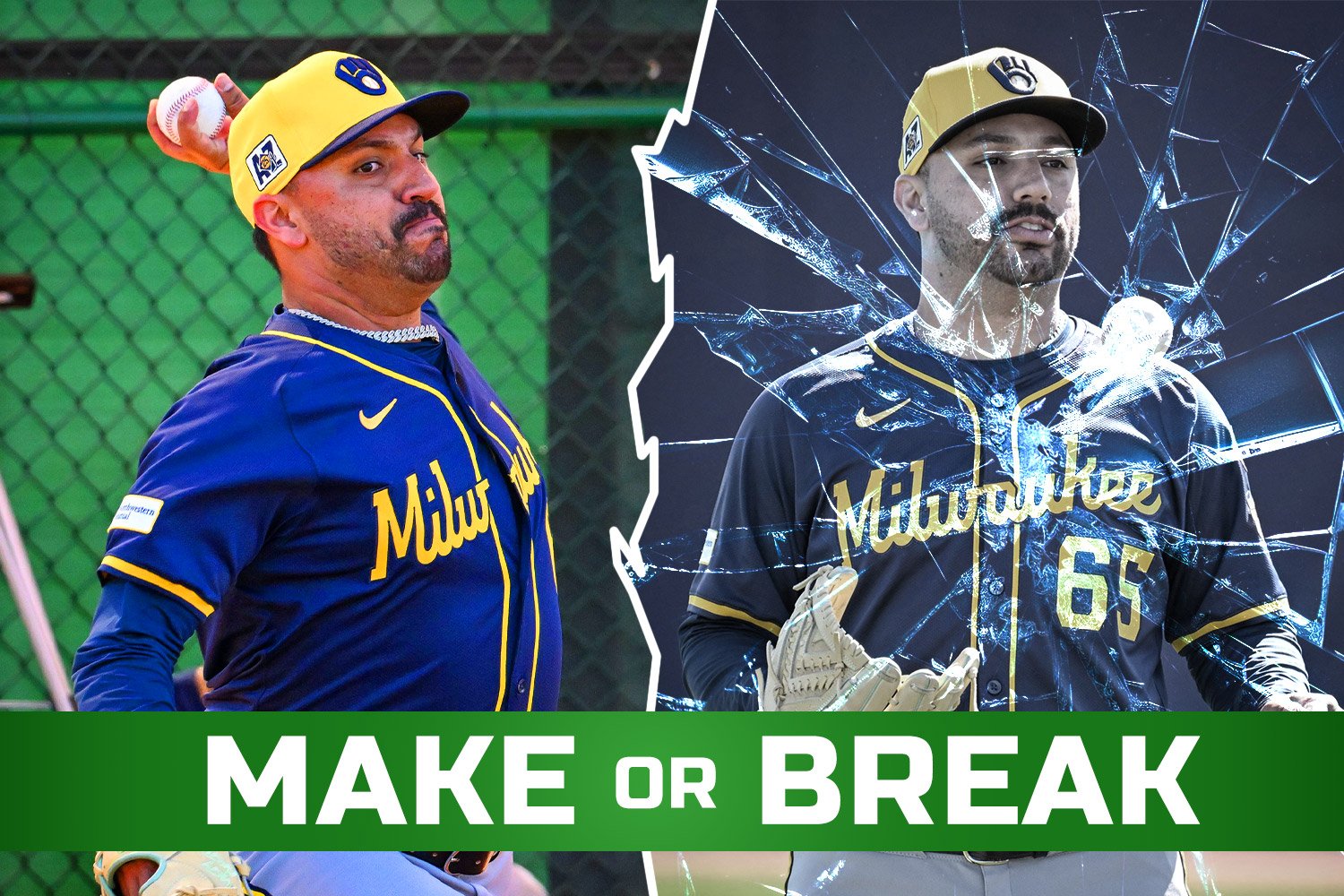 What Went Wrong in 2024? All things considered, 2024 wasn’t too bad for Nestor Cortes. 2023 was a year marred by a left rotator cuff strain that limited him to just 63 ⅓ innings over 12 starts. He pitched well throughout last season, even getting the Opening Day nod (since Gerrit Cole was sidelined with injury) and accumulating a 3.77 ERA over 174 ⅓ innings. He ran into more injuries during the postseason, this time a left elbow flexor strain, but recovered quickly enough to be a part of one of the most memorable playoff moments of all time... which unfortunately came at his expense. If you were to take a brief peek at his Savant page, you might be wholly unimpressed with what you see. He was league-average or below in every Statcast measurement other than walk rate, and was in the bottom quartile for hard-hit rate, something that’s generally not a very good sign of success. He didn’t throw very hard, didn’t miss a lot of bats, didn’t get a lot of balls on the ground, and didn’t have a particularly effective breaking ball or offspeed offering. Of the six different pitches he threw last season, only two had a total run value above zero: his four-seam fastball and cutter. What Can Go Right in 2025? What makes Cortes an interesting acquisition for the Brewers specifically is waiting to see what the organization can do with his unorthodox skillset. Despite the apparent lack of “stuff,” he’s a cunning player with a lot of non-obvious value. There’s a reason that even with underwhelming Statcast percentiles, his xERA was still just 3.62 last year. While most pitch-to-contact arms aim to induce soft contact through ground balls, he goes the other way, baiting batters to get under his pitches rather than on top. This creates loud and often hard contact but a steep enough launch angle to limit the actual damage of the batted ball. This can be shown through his 2024 fly ball rate of 32.1%, nearly nine percent higher than the MLB average. Another way to look at this is by using Statcast’s batted ball categories which seek to characterize batted balls based on launch angle. Cortes boasts an “Under %”, meaning batted balls with >40 degree launch angles, of 34.7%, nearly 12% higher than the MLB average. This batted ball by known slugger Jhonkensy “Big Christmas” Noel was 102.3 mph off the bat but required barely any movement from Aaron Judge to land safely as an out: Similarly, this ball left Jo Adell’s bat at 102.1 mph but traveled just 199 feet because of the steep 64 degree launch angle: Unfortunately, this strategy is risky. If opposing hitters do manage to square up balls, they typically end up going for extra bases or in the seats. Much of the damage is done against his four-seam fastball and sweeper, against which batters are slugging .443 and .511, respectively. Here's where the Brewers and their notorious pitching development comes in. They’ll likely make some tweaks to his pitch mix and one big change that could come around is the refinement of a non-fastball pitch. In 2024, 73.6% of the pitches he threw were some form of fastball (four-seam, cutter, sinker). This has been the case over the past few years and is likely due to a perceived lack of effectiveness in the rest of his arsenal. I say perceived, because Stuff+ measurements actually rate his breaking balls pretty highly, particularly his slider. The Yankees may not have bothered to wean him off his fastball addiction, but Milwaukee will want to maximize his craftiness by fleshing out his other offerings which will keep opposing hitters on their toes, in turn likely improving the results on his fastball. How Will This Impact The 2025 Brewers? It should go without saying that having a great starter in the rotation has obvious value. This is even more important in the context of Milwaukee given much of the uncertainty surrounding their pitching staff. Will we see an injury-diminished version of Brandon Woodruff? Will Tobias Myers see a sophomore slump? Did Aaron Civale really fix whatever was hindering him while in Tampa? Can DL Hall live up to his potential? Nestor Cortes is one of these question marks as well, but to me, he has a higher floor than some of the other names in the rotation. With few investments made this offseason to meaningfully improve the offensive output of the lineup, it seems that the front office will, once again, lean on the team’s run prevention abilities to get their wins. With plenty of other options to choose from, there must have been a reason Milwaukee chose to select Nestor Cortes as the return for their prized closer. We’ll just have to wait and see what that reason was.
 -
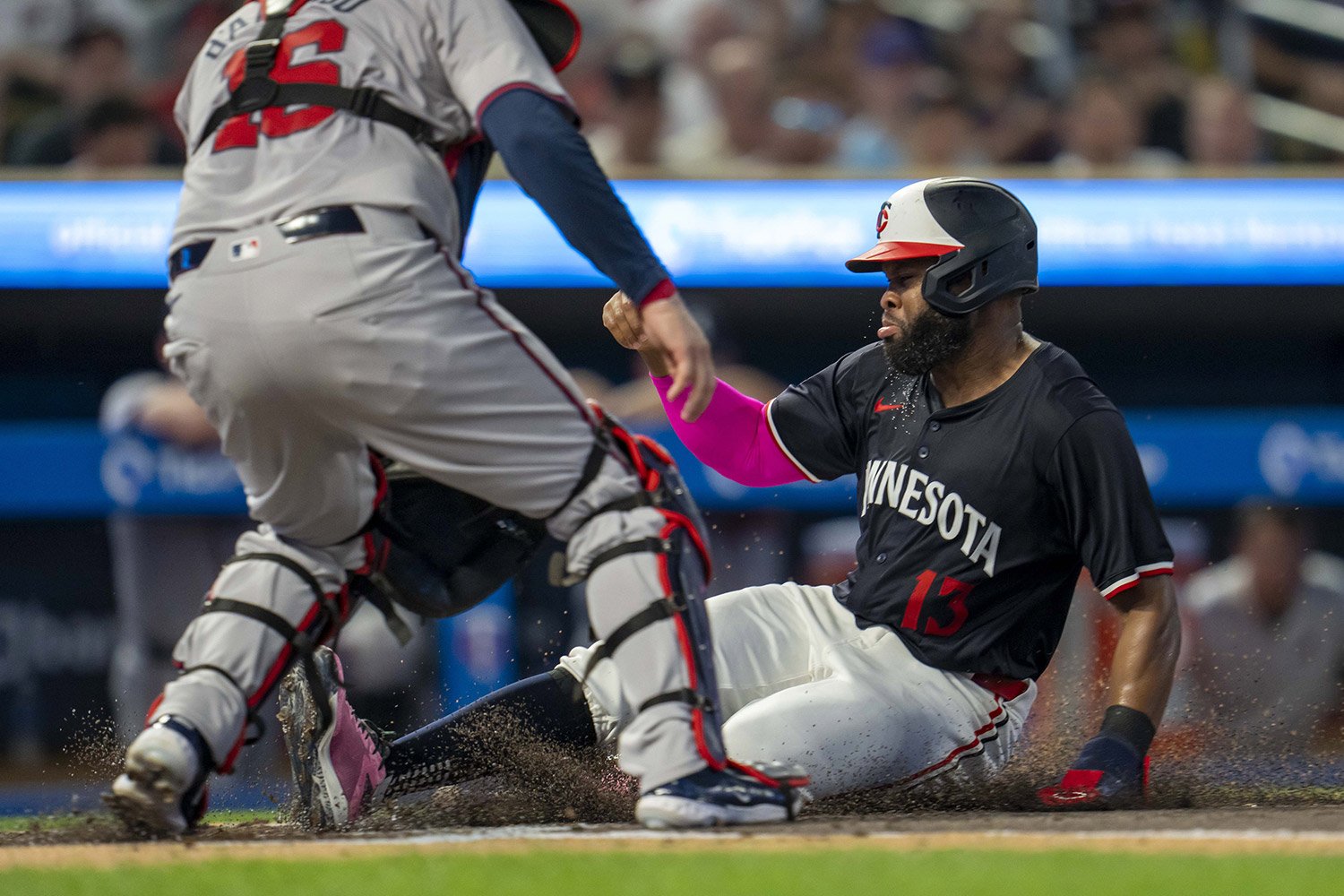 Manuel Margot has been in the big leagues for a while. He spent his best years with the Padres and Rays, but most recently, he had quite a poor year with the Twins, slashing .238/.289/.337 over 343 plate appearances. He also had a peculiar tendency to be regularly called on to pinch hit despite not being particularly adept at the role. On the bright side, he made league history, becoming the first player ever to go 0-29 (and later 0-30) in a season as a pinch hitter. His $12 million mutual option was understandably declined by the Twins, allowing him to sign a free-agent deal with the Brewers, so what does he add to the team, if anything? Offensively, Margot has never been much to write home about. Over his roughly 3,000 big league plate appearances, he has only managed a career OPS+ of 90. On the bright side, at least he’s consistently below average, with 2022 as the only season in his career where he managed offensive production above league average (104 OPS+). Before 2023, it was his fielding prowess from which he made a living. From 2016 - 2022, he accumulated 44 Defensive Runs Saved across the three outfield positions but spent the lion’s share of his innings in center. Unfortunately, he went from toting a reliable glove to a subpar defender starting in 2023. He has always had a weak arm, but in years past, he relied on translating his speed into excellent range, allowing him to cover more ground than most. Unfortunately, all that would change after he tore the patellar tendon in his right knee in the middle of 2022, causing him to miss half the season. This began a gradual decline in his speed, dragging him from an 88th percentile sprint speed in 2021 to a 53rd percentile in 2024. Without improvements to his arm or bat, his main upside as a player is now gone. However, it’s not all bad. He has proven the ability to be a serviceable outfielder so long as he isn’t expected to cover large swaths of land. Considering his weak arm, he should be okay in left field. He also struggled primarily against righties in Minnesota but had decent numbers against left-handed pitching, posting a .713 OPS over 171 plate appearances. His bat-to-ball skills are still respectable, and his xBA of .261 could suggest he was a little unlucky with his actual BA of .238 last season. Ultimately, this is a move to add veteran depth that can be called upon in the event of injury. Christian Yelich has said that he should be ready for Opening Day, but given his persistent back issues, there’s no guarantee that he’ll be able to stick around as consistently as fans might hope. Throw in Garrett Mitchell's penchant for finding new and inventive ways to break his body, and getting backup outfielders seems like a no-brainer. Acquiring Margot allows Milwaukee to get some cheap depth to act as insurance. Similar to their earlier pickup of Jorge Alfaro, this seems like a low-risk, low-reward pickup. This late in the offseason, it would have been foolish to assume that the Brewers would have done otherwise.
 -
The Brewers signed the outfielder to a minor league deal, but will he see any major league action? Image courtesy of © Jesse Johnson-Imagn Images The Brewers signed the outfielder to a minor league deal, but will he see any major league action? Manuel Margot has been in the big leagues for a while. He spent his best years with the Padres and Rays, but most recently, he had quite a poor year with the Twins, slashing .238/.289/.337 over 343 plate appearances. He also had a peculiar tendency to be regularly called on to pinch hit despite not being particularly adept at the role. On the bright side, he made league history, becoming the first player ever to go 0-29 (and later 0-30) in a season as a pinch hitter. His $12 million mutual option was understandably declined by the Twins, allowing him to sign a free-agent deal with the Brewers, so what does he add to the team, if anything? Offensively, Margot has never been much to write home about. Over his roughly 3,000 big league plate appearances, he has only managed a career OPS+ of 90. On the bright side, at least he’s consistently below average, with 2022 as the only season in his career where he managed offensive production above league average (104 OPS+). Before 2023, it was his fielding prowess from which he made a living. From 2016 - 2022, he accumulated 44 Defensive Runs Saved across the three outfield positions but spent the lion’s share of his innings in center. Unfortunately, he went from toting a reliable glove to a subpar defender starting in 2023. He has always had a weak arm, but in years past, he relied on translating his speed into excellent range, allowing him to cover more ground than most. Unfortunately, all that would change after he tore the patellar tendon in his right knee in the middle of 2022, causing him to miss half the season. This began a gradual decline in his speed, dragging him from an 88th percentile sprint speed in 2021 to a 53rd percentile in 2024. Without improvements to his arm or bat, his main upside as a player is now gone. However, it’s not all bad. He has proven the ability to be a serviceable outfielder so long as he isn’t expected to cover large swaths of land. Considering his weak arm, he should be okay in left field. He also struggled primarily against righties in Minnesota but had decent numbers against left-handed pitching, posting a .713 OPS over 171 plate appearances. His bat-to-ball skills are still respectable, and his xBA of .261 could suggest he was a little unlucky with his actual BA of .238 last season. Ultimately, this is a move to add veteran depth that can be called upon in the event of injury. Christian Yelich has said that he should be ready for Opening Day, but given his persistent back issues, there’s no guarantee that he’ll be able to stick around as consistently as fans might hope. Throw in Garrett Mitchell's penchant for finding new and inventive ways to break his body, and getting backup outfielders seems like a no-brainer. Acquiring Margot allows Milwaukee to get some cheap depth to act as insurance. Similar to their earlier pickup of Jorge Alfaro, this seems like a low-risk, low-reward pickup. This late in the offseason, it would have been foolish to assume that the Brewers would have done otherwise. View full article
-
Two years after his debut, it’s time for the Brewers' annual spring training hot topic to decide who he wants to be: potential All-Star, or eventual liability. Image courtesy of © Michael McLoone-Imagn Images / © Benny Sieu-Imagn Images Two years after his debut, it’s time for the Brewers' annual spring training hot topic to decide who he wants to be: potential All-Star, or eventual liability. What Went Wrong in 2024? After 747 major-league plate appearances, I think we have enough data to describe Sal Frelick fairly accurately—with numbers to back it up. Defensively, he’s stellar. He won a Gold Glove for his efforts in the outfield last season, accumulating a combined 15 Defensive Runs Saved across all three outfield positions. He spent most of his time in right field, where he found the most success, but he was also an above-average center fielder. With very good speed, he has an exceptional ability to cover long distances and chase down even the farthest-hit fly balls. Sometimes, he even goes a bit over the wall for them. NU53R2VfVjBZQUhRPT1fVkFNSEFnWlFCd1FBWGdCUVV3QUFWVk1FQUZoVFUxRUFWbGNIVVFkVFVGVlZCZ1pV.mp4 Offensively, it’s a different story. As a rookie, he was known more for his glove than his bat, but he still managed a 90 OPS+. With a starting spot in the lineup over a full season, his offensive numbers got a little worse, falling to an 83 OPS+. The most glaring weakness in his hitting is his lack of pop. He placed in the 1st percentile of qualified hitters for average exit velocity (83.4 mph), barrel rate (0.8%), and hard-hit rate (19.5%). This culminated in just two home runs last year, and an ISO of just .076—less than half the league-average ISO of .161. To make matters even worse, his low average launch angle of 9.7 degrees further limits his ability to go for extra bases. But it goes even deeper than that. Thanks to bat-tracking data that was introduced to Statcast, we can get a closer look as to whether a player is truly getting all that he can out of his swing. The two figures that are now measured on Baseball Savant are swing speed and squared-up rate. The former is pretty straightforward, but the latter measures something far more helpful. Statcast defines squared-up rate as: Sal Frelick has 3rd-percentile bat speed, but a 92nd-percentile squared-up rate, meaning he’s actually getting all that he can out of his current swing. With a relatively small 5-foot-8, 185-pound frame, he might just not have the natural oomph of his bigger compatriots. What Can Go Right in 2025? The great thing about baseball is that there isn’t just one way to play the game. Sure, big guys like Aaron Judge and Giancarlo Stanton can get balls out of the park at 110 mph no problem, but smaller guys like Jose Altuve and Donovan Solano have found ways to stick around by playing to their strengths. Frelick’s strength is his bat-to-ball skills. His whiff rate of just 12.9% and his strikeout rate of 14.9% place him among the game’s best contact kings. Interestingly, his chase rate of 25.8% isn’t as exceptional, but it’s definitely better than average. To me, the ideal player for Frelick to strive toward would be Steven Kwan. Both Frelick and Kwan are outstanding outfielders who have smaller frames, with limited natural power. Here is how their key offensive numbers stack up: Average EV LA Sweet-Spot Rate Chase Rate Whiff Rate K Rate BB Rate Steven Kwan 86.3 mph 38.5% 19.2% 8.2% 9.4% 9.8% Sal Frelick 83.4 mph 30.0% 25.8% 12.9% 14.9% 7.4% Kwan has been much better at lifting the ball just the right amount, boasting a launch angle sweet-spot rate in the top quartile of MLB. Additionally, he has a higher walk rate that gives him an additional boost to his on-base percentage, which was .368 in 2024. If Frelick can dial in his skillset to have many of the same qualities, not only could he improve his batting average and overall production at the plate, he could utilize his speed on the basepaths and not just the outfield. How Will This Impact the 2025 Brewers? Last year, the Brewers' offense was actually quite good, posting a team OPS of .729 which landed them 10th in MLB. Unfortunately, they’ve lost Willy Adames, who had the second-highest OPS+ of qualified hitters on the team. Without any major lineup additions to compensate, they’ll have to lean on some of their younger hitters to take a big step forward. With the Cubs looming as a major divisional threat, 2025 might offer the toughest road to a division win for the Brewers in several years. If Frelick can adjust his offensive approach and put up an OPS+ of 100-110 while maintaining his outstanding work in the outfield, it wouldn’t be unreasonable to see him accumulate 3-4 rWAR. In a situation where that could end up being the difference between a playoff spot and watching October from the quasi-comfort of their offseason homes, this improvement might not only be a make-or-break for young Salvatore, it could make or break Milwaukee’s whole season. View full article



.png.58cc0af920f0c8b81d7350b17435a68a.png)
