Jason Wang
-
Posts
955 -
Joined
-
Last visited
-
Days Won
1
Content Type
Profiles
Forums
Blogs
Events
News
2026 Milwaukee Brewers Top Prospects Ranking
Milwaukee Brewers Videos
2022 Milwaukee Brewers Draft Picks
Milwaukee Brewers Free Agent & Trade Rumors, Notes, & Tidbits
Guides & Resources
2023 Milwaukee Brewers Draft Picks
2024 Milwaukee Brewers Draft Picks
The Milwaukee Brewers Players Project
2025 Milwaukee Brewers Draft Pick Tracker
2026 Milwaukee Brewers Draft Tracker: Picks & Bonuses
Store
Downloads
Gallery
Everything posted by Jason Wang
-
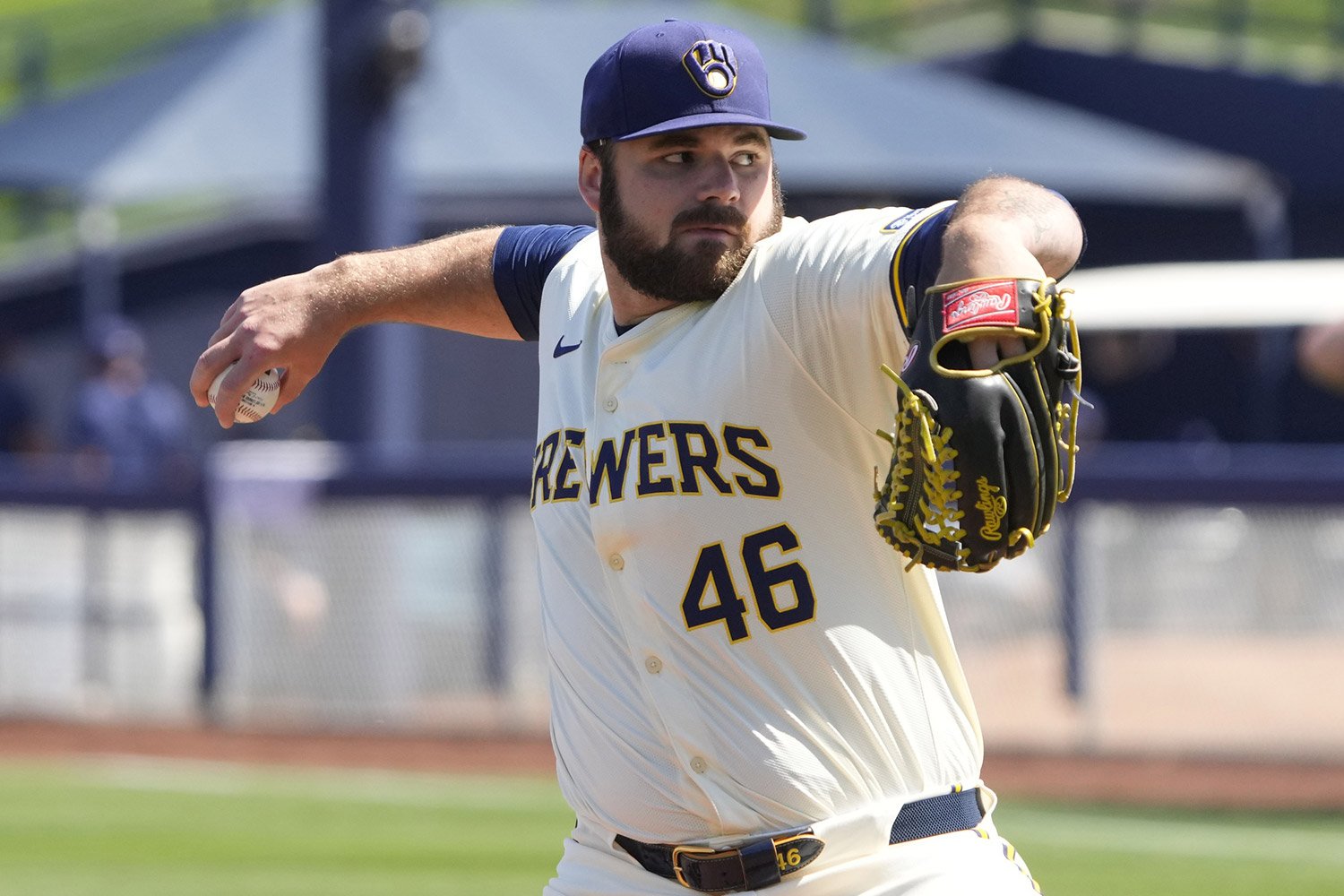 Jake Bauers Bauers was acquired from the Yankees in exchange for Jace Avina and Brian Sánchez and was initially slated to be the team’s starting first baseman, much to the dismay of quite a few Brewer Fanatic readers. Fortunately for these readers, the Brewers later signed Rhys Hoskins, and Bauers fell to the second spot in the depth chart. He isn’t expected to see much playing time at all, with FanGraphs projecting him to have just 175 plate appearances this season. This makes sense, given the generally superior option in Hoskins. Despite being at the top of the depth chart for the DH role, his competition with William Contreras, Christian Yelich, and newly signed Gary Sanchez makes it unlikely that he'll stay the first option for long. Furthermore, he struggled quite a bit as a hitter in 2023, slashing .202/.279/.413 in New York for an OPS+ of 87 over 272 plate appearances. He had great barrel and hard-hit rates, but with a 34.9% strikeout rate, it wasn’t enough to lift his offensive output to a league-average level. Combined with subpar defense and playing a position with heavy-hitting expectations, he accumulated -0.9 rWAR to bring his career rWAR to -1.5. He still has a few years of team control left and won’t be eligible for free agency until 2027, but with no options left, it seems like he’ll ultimately end up on waivers or in a trade package for something else. Eric Haase Similar to Bauers, Haase’s role on the team seems a little confusing from the outside. The Brewers already have William Contreras and now Gary Sanchez, who are far better options behind the dish. After being outrighted to Triple A by the Guardians, he elected free agency and signed a one-year deal with Milwaukee, likely a break-glass-in-case-of-emergency option after Victor Caratini’s departure to Houston. Similar to Bauers, Haase was below replacement level in 2023, slashing .201/.247/.281 for a measly OPS+ of 45 and an rWAR of -0.9. He didn’t do anything particularly well on offense or defense aside from playing in the outfield for 140 innings. In addition to having offensive production roughly 50% worse than league average, he posted -5 blocks above average and was below average in framing for every part of the strike zone except one. He’ll be a free agent in 2027 and was exceptionally cheap to acquire. In a worst-case scenario, he’s a fun spring training experiment for the infamous Brewers catching lab that eventually returns to the waivers or is traded to another team. Joel Payamps Payamps is among the many underrated relievers sitting around in the Brewers bullpen. Posting a 2.55 ERA and 1.05 WHIP over 70 ⅔ innings last season, he also accumulated the most strikeouts of his career by far at 77. He notched a strikeout per nine figure of 9.8, a significant improvement over his career average of 6.7 entering 2023. He made significant improvements to his entire arsenal, but his four-seam fastball saw the most drastic statistical increase. His fastball went from a .362 wOBA in 2022 to just a .179 wOBA in 2023, driving its total run value up to 12. While this could be due to many reasons, one possibility could be a greater focus on keeping the fastball elevated. Here are heat maps of pitch frequency and wOBA for all of his four-seamers in 2022. He gave up the most damage on the lower parts of the zone and the fastballs that ended up on the middle-left portion (from the pitcher's perspective). So, how did he fix this in 2023? He just threw the fastball higher and went to the other side, jamming right-handed batters and avoiding left-handed ones. These strides were big, and with Devin Williams’s recent injury, Payamps may even step into an even higher leverage role for the beginning of 2024. Despite being out of options, it seems he’ll reach free agency in 2027 safe and sound, hopefully choosing to spend his best years with the Brewers. Bryse Wilson Bryse Wilson had a great comeback story last year. After five brutal years in Atlanta and Pittsburgh as a starter, he had a cumulative ERA of 5.54 over 56 starts. After being traded to Milwaukee for cash considerations, things turned around massively. He posted a 2.58 ERA out of the bullpen. He was given the title of long reliever, often coming in for multi-inning relief appearances and accumulating six wins and three saves. His success was partially driven by a reduced workload and increased cutter usage. Throughout his career, he’s struggled late into starts, with opposing batters posting a .976 OPS on the third time through the order. He also started using a cutter sparingly in 2022 and saw some success with it, achieving a batting average against of just .077. In 2023, it became his second-most used pitch (although he threw just three fewer cutters than sinkers) and got more good results, this time getting a batting-average-against of .165 over 401 pitches. The sinker/cutter combination synergized well with his high fastball, and although his strikeout rate was still below average, his flyball rate was 31%, 6% higher than his career average before that point. Wilson’s role on the team is incredibly valuable. There are signs that he may have benefited more from luck than intrinsically good pitching, namely the difference in his FIP of 4.13 and his ERA of 2.58, but we’ll need more data in a Brewers uniform before we can make a firm conclusion. It seems like his place is as a reliever rather than starter, but he can stretch into two or three innings if needed. He’ll be a free agent in 2027, but until then, he’ll be an integral part of the Brewers bullpen. Colin Rea Before this season, Rea never had a stable job on an MLB team. His most active season was making 18 starts with the Padres in 2016 and pitching to a 4.98 ERA. After two stints in the Japanese NPB, he signed a minor league contract with the Brewers and was quickly called up, holding down his place at the back end of the rotation for most of the season. A no-frills kind of guy (typical of an Iowa native, if we’re being honest), his ERA and WHIP for the 2023 season were 4.55 and 1.19, pretty solid numbers for a fifth arm. With Corbin Burnes long gone and Woodruff on the injured list for most of the season, Rea will have to step up and take on an outsized role on a rotation that seemingly pales compared to the 2023 Brewers squad. On one hand, that might add pressure and impede his ability to perform at the highest level. On the other hand, the lack of available major-league quality starters to compete with gives him a slightly bigger margin for error. He signed a one-year contract to stay with the team and has a club option for 2025, so it seems like the front office has faith in his ability to be a consistent contributor.
- 2 comments
-
- 1
-

-
- jake bauers
- eric haase
- (and 3 more)
-
 from now on i'm just going to spell out the entire thing as "runs batted in" just to be safe.
 -
Is it "rib-bees"?
-
Milwaukee Brewers Spring Breakout Roster: Who Will Become a Star?
Jason Wang posted an article in Brewers
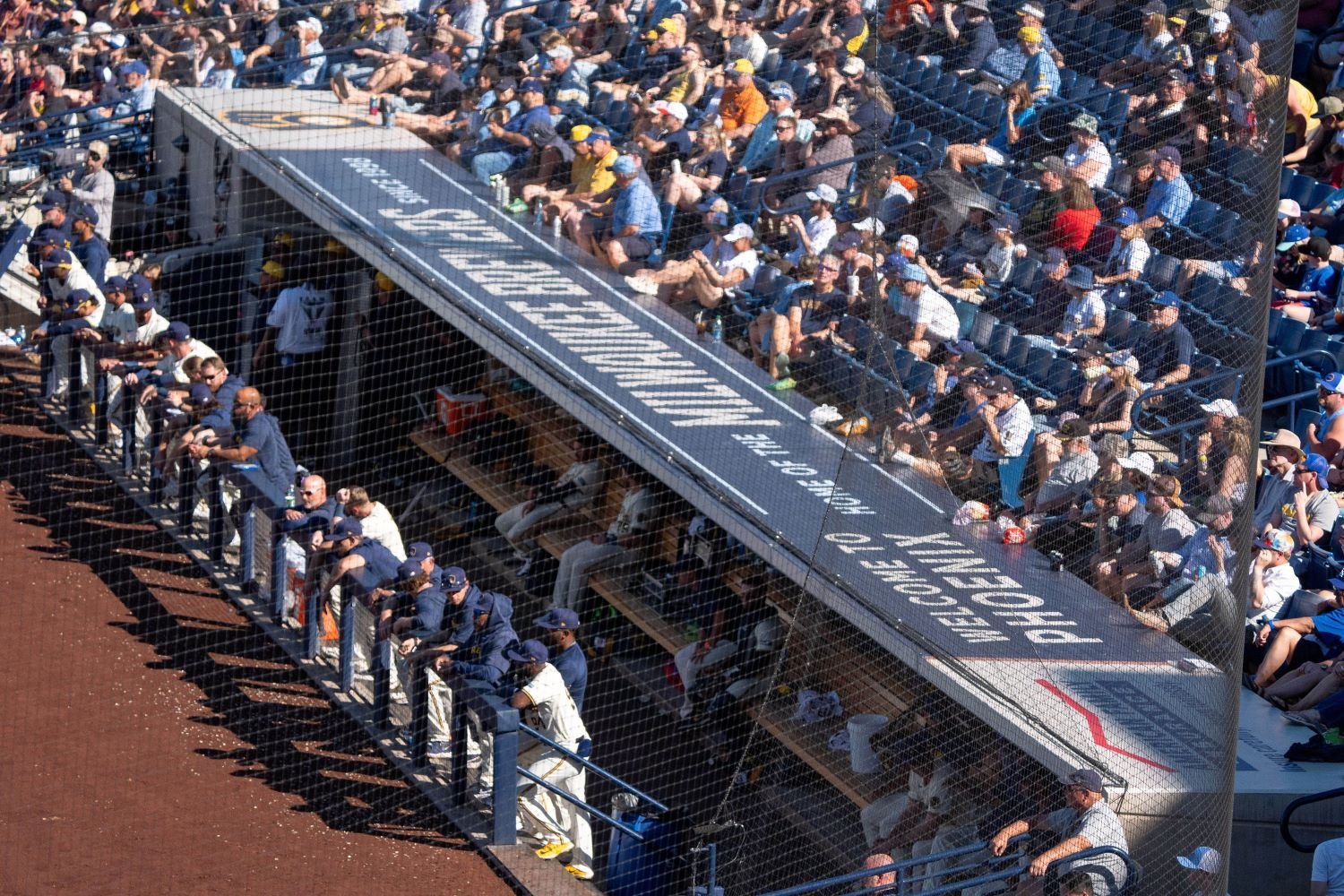 In case you haven’t heard, Spring Breakout is a new minor league showcase that aims to spotlight the game’s most exciting up-and-coming talent. Over the course of four days, each major-league team will field a roster of its top prospects to play against each other, on the same day and at the same field as a game between the big-league versions of the same two clubs. As a team with one of the best farm systems in baseball, Milwaukee’s roster for the weekend is fearsome, to say the least. They’ll be trotting out all of their top-10 ranked prospects, except for likely big-leaguer Joey Ortiz, and will have 24 of their top 30 prospects represented, according to MLB Pipeline--tied with the Royals for the most. Outside of the obvious names to watch (like Jackson Chourio, Jacob Misiorowski, Jeferson Quero, and Tyler Black), there are a few other prospects who have been tearing it up in the Cactus League. Wes Clarke has been a demon in his 17 spring training plate appearances thus far, slugging 1.000 and hitting a whopping four home runs. He’s been able to continue the momentum he had in the Arizona Fall League, where he slashed .297/.435/.568 over 92 plate appearances. Brock Wilken has also been on a tear as of late, posting an 1.818 OPS over 11 plate appearances with four RBI and two doubles. If he continues to perform at a high level, there’s a chance for him to be a legitimate contributor in the hot corner, with the future of the position still somewhat in flux. Although he is part of the aforementioned group of prominent players to watch, it is worth noting that Quero has displayed impressive defensive abilities behind the dish, limiting the run game in a big way. On the pitching side, no one other than Bryse Wilson has logged more than four innings so it’s hard to tell what’s what, but Robert Gasser is still an interesting name to follow heading into the season given his expected role in the back of the rotation. He’s pitched just three innings in spring training thus far, though. Here is the complete list of names currently slated to play against the Kansas City Royals on Sunday, March 17 at 3:05 PM CT: PITCHERS Jacob Misiorowski, RHP Robert Gasser, LHP Carlos Rodriguez, RHP Josh Knoth, RHP Logan Henderson, RHP Bradley Blalock, RHP Bishop Letson, RHP Patricio Aquino, RHP Shane Smith, RHP Justin Yeager, RHP CATCHER Jeferson Quero, C INFIELDERS Tyler Black, 3B Brock Wilken, 3B Cooper Pratt, SS Eric Brown Jr., SS Eric Bitonti, 3B Mike Boeve, 3B Luke Adams, 3B Daniel Guilarte, SS Juan Baez, SS Wes Clarke, 1B OUTFIELDERS Jackson Chourio, OF Luis Lara, OF Yophery Rodriguez, OF Dylan O'Rae, OF Who are you most excited to see? This showcase could merely display the blazing talent of Chourio, or it could raise the celebrity of someone like Yophery Rodriguez or Luis Lara. At any rate, the game should be a joy to watch.
- 5 comments
-
- 1
-
-
- jackson chourio
- jacob misiorowski
- (and 5 more)
-
The roster for the inaugural Spring Breakout is full of the best talent in the Milwaukee Brewers’ farm system. Who are some guys to keep your eyes on? Image courtesy of © Allan Henry-USA TODAY Sports The roster for the inaugural Spring Breakout is full of the best talent in the Milwaukee Brewers’ farm system. Who are some guys to keep your eyes on? In case you haven’t heard, Spring Breakout is a new minor league showcase that aims to spotlight the game’s most exciting up-and-coming talent. Over the course of four days, each major-league team will field a roster of its top prospects to play against each other, on the same day and at the same field as a game between the big-league versions of the same two clubs. As a team with one of the best farm systems in baseball, Milwaukee’s roster for the weekend is fearsome, to say the least. They’ll be trotting out all of their top-10 ranked prospects, except for likely big-leaguer Joey Ortiz, and will have 24 of their top 30 prospects represented, according to MLB Pipeline--tied with the Royals for the most. Outside of the obvious names to watch (like Jackson Chourio, Jacob Misiorowski, Jeferson Quero, and Tyler Black), there are a few other prospects who have been tearing it up in the Cactus League. Wes Clarke has been a demon in his 17 spring training plate appearances thus far, slugging 1.000 and hitting a whopping four home runs. He’s been able to continue the momentum he had in the Arizona Fall League, where he slashed .297/.435/.568 over 92 plate appearances. Brock Wilken has also been on a tear as of late, posting an 1.818 OPS over 11 plate appearances with four RBI and two doubles. If he continues to perform at a high level, there’s a chance for him to be a legitimate contributor in the hot corner, with the future of the position still somewhat in flux. Although he is part of the aforementioned group of prominent players to watch, it is worth noting that Quero has displayed impressive defensive abilities behind the dish, limiting the run game in a big way. On the pitching side, no one other than Bryse Wilson has logged more than four innings so it’s hard to tell what’s what, but Robert Gasser is still an interesting name to follow heading into the season given his expected role in the back of the rotation. He’s pitched just three innings in spring training thus far, though. Here is the complete list of names currently slated to play against the Kansas City Royals on Sunday, March 17 at 3:05 PM CT: PITCHERS Jacob Misiorowski, RHP Robert Gasser, LHP Carlos Rodriguez, RHP Josh Knoth, RHP Logan Henderson, RHP Bradley Blalock, RHP Bishop Letson, RHP Patricio Aquino, RHP Shane Smith, RHP Justin Yeager, RHP CATCHER Jeferson Quero, C INFIELDERS Tyler Black, 3B Brock Wilken, 3B Cooper Pratt, SS Eric Brown Jr., SS Eric Bitonti, 3B Mike Boeve, 3B Luke Adams, 3B Daniel Guilarte, SS Juan Baez, SS Wes Clarke, 1B OUTFIELDERS Jackson Chourio, OF Luis Lara, OF Yophery Rodriguez, OF Dylan O'Rae, OF Who are you most excited to see? This showcase could merely display the blazing talent of Chourio, or it could raise the celebrity of someone like Yophery Rodriguez or Luis Lara. At any rate, the game should be a joy to watch. View full article
-
Camp Storylines: Is Jackson Chourio a Legit Big-Leaguer Now?
Jason Wang posted an article in Brewers
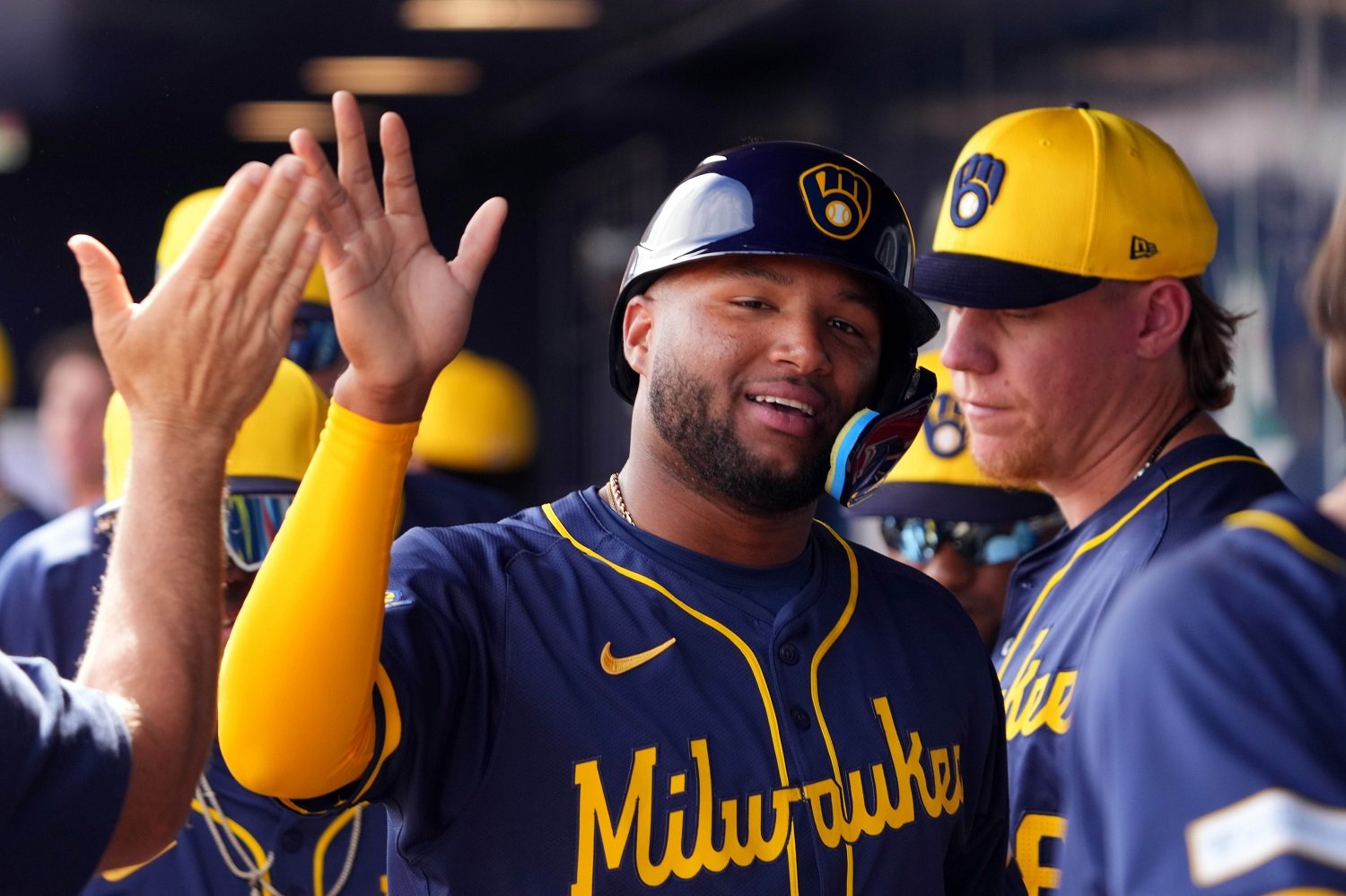 It makes sense that a player with a record-breaking contract extension has high expectations. Meant to be the future face of the franchise, Jackson Chourio is an exceptionally well-rounded talent with incredible speed and fielding. He played an outstanding center field in Double A last year and stole 43 bases, earning his 70-grade run tool and a minor-league Gold Glove for his troubles. Expanding on these tools, MLB.com had this to say: Offensively, he had a strong slash line of .280/.336/.467 over 559 plate appearances but that only tells part of the story. He also had a strikeout rate of 18.4% with a walk rate of 7.3%, notably walking at a much higher 10.8% when facing lefty pitching. While we don’t have a ton of great data on things like slugging percentage by zone or exit velocity for Double A, we do have spray charts and boy do they thicken the plot. While many players tend to land most of their batted balls and home runs to one side of the ballpark, Chourio is truly capable of hitting to all parts of the field, making it difficult for opposing defenders to position against him. Here’s a spray chart for all of his hits with the Shuckers in 2023. While one might expect a power righty to pull most of home runs to left field, Chourio defies expectations and has roughly the same amount of home runs on both sides. Many of his singles actually went up the middle to right field. If he does make the opening day roster and sticks around, we’ll get to see how he adjusts the major league pitching, quite the step up from Double A. We got a taste of how much he’s already improved this offseason by seeing him post a .984 OPS over 75 plate appearances in the Venezuelan Winter League, a big improvement over the .644 OPS he posted in the same league last year. He has also played in just one spring training game thus far, going 2-for-4 with two RBI against the Padres. For the season ahead, ZiPS has him projected to slash .263/.306/.408 for a slightly below-average wRC+ of 92, but has incredible long-term numbers according to Dan Szymborski. This is an important note, as it can be easy to forget that he’ll be a fresh-faced 20-year old on opening day and his contract is an investment into the future. Chourio has a long way to go, but he’s a top prospect for a reason. It won’t be long before he earns the title of “legit” big-leaguer. How do you think Chourio will perform in his rookie year? What do you think are his main areas of improvement? Let us know in the comments?
 -
Spring training is a great time to get a sneak peek at Brewers players heading into a fresh season, but no player has more eyes on him than Jackson Chourio. How should fans expect him to hold up at the major league level in 2024? Image courtesy of © Joe Camporeale-USA TODAY Sports Spring training is a great time to get a sneak peek at Brewers players heading into a fresh season, but no player has more eyes on him than Jackson Chourio. How should fans expect him to hold up at the major league level in 2024? It makes sense that a player with a record-breaking contract extension has high expectations. Meant to be the future face of the franchise, Jackson Chourio is an exceptionally well-rounded talent with incredible speed and fielding. He played an outstanding center field in Double A last year and stole 43 bases, earning his 70-grade run tool and a minor-league Gold Glove for his troubles. Expanding on these tools, MLB.com had this to say: Offensively, he had a strong slash line of .280/.336/.467 over 559 plate appearances but that only tells part of the story. He also had a strikeout rate of 18.4% with a walk rate of 7.3%, notably walking at a much higher 10.8% when facing lefty pitching. While we don’t have a ton of great data on things like slugging percentage by zone or exit velocity for Double A, we do have spray charts and boy do they thicken the plot. While many players tend to land most of their batted balls and home runs to one side of the ballpark, Chourio is truly capable of hitting to all parts of the field, making it difficult for opposing defenders to position against him. Here’s a spray chart for all of his hits with the Shuckers in 2023. While one might expect a power righty to pull most of home runs to left field, Chourio defies expectations and has roughly the same amount of home runs on both sides. Many of his singles actually went up the middle to right field. If he does make the opening day roster and sticks around, we’ll get to see how he adjusts the major league pitching, quite the step up from Double A. We got a taste of how much he’s already improved this offseason by seeing him post a .984 OPS over 75 plate appearances in the Venezuelan Winter League, a big improvement over the .644 OPS he posted in the same league last year. He has also played in just one spring training game thus far, going 2-for-4 with two RBI against the Padres. For the season ahead, ZiPS has him projected to slash .263/.306/.408 for a slightly below-average wRC+ of 92, but has incredible long-term numbers according to Dan Szymborski. This is an important note, as it can be easy to forget that he’ll be a fresh-faced 20-year old on opening day and his contract is an investment into the future. Chourio has a long way to go, but he’s a top prospect for a reason. It won’t be long before he earns the title of “legit” big-leaguer. How do you think Chourio will perform in his rookie year? What do you think are his main areas of improvement? Let us know in the comments? View full article
-
I very conveniently get a free subscription through my Seattle Mariners season ticket package which ironically means I watch way more Brewers games than Mariners games due to blackout restrictions.
-
 It’s no secret that regional sports networks have been struggling over the past few years. After Diamond Sports Group (the operator of the Bally Sports networks) filed for Chapter 11 bankruptcy in March 2023, it seemed like things had taken a turn for the worse. In January of this year, it was announced that Amazon had made a $115-million investment in the company, acquiring access to the streaming rights currently owned by Diamond. This portfolio included a total of 40 teams, 11 of which are MLB. However, only five of these teams have their digital rights owned by Diamond Sports Group. One of those teams is our very own Milwaukee Brewers. Right now, however, we've heard no indications that there will be major changes to fans' streaming options for the Crew. For those who are living in the area and considered to be “in-market” spectators with cable, you’ll watch the broadcast through Bally Sports Wisconsin. For those outside of the area and considered to be “out-of-market,” an all-teams MLB.TV subscription is still your best bet. As for Amazon, it’s still unclear as to how exactly they plan to utilize their newly acquired digital streaming rights. The current theory is that, similar to the existing in-market Bally Sports+ package, fans will be able to subscribe to an additional service to stream games from the five teams whose rights are still owned by Diamond Sports Group (Tigers, Royals, Marlins, Rays, Brewers). It’s yet to be seen whether an additional cost will be incurred, but given how things are these days, don’t be surprised if a nearly $2-trillion company tries to nickel and dime you. If you belong to the not-insignificant number of fans who only keep cable to see the Brewers, though, this could end up a money saver, depending on how things shake out. Moving forward, it seems almost certain that RSNs will fade away, like cassette tapes and videos longer than two minutes. On the bright side, it’s possible that the expiration and non-renewal of exclusive cable rights will finally bring about the fall of the dreaded blackouts, be that in the form of an Amazon-based streaming platform or something managed by the league itself. With consumers continuing to move toward consolidated streaming platforms and away from cable, fans in Iowa may finally be able to enjoy the exploits of native son Colin Rea without donning the VPN invisibility cloak.
 -
Is Bally Sports Wisconsin still the home of Brewers baseball this year, or is Amazon Prime the new kid on the block? Image courtesy of © Eric Hartline-USA TODAY Sports Is Bally Sports Wisconsin still the home of Brewers baseball this year, or is Amazon Prime the new kid on the block? It’s no secret that regional sports networks have been struggling over the past few years. After Diamond Sports Group (the operator of the Bally Sports networks) filed for Chapter 11 bankruptcy in March 2023, it seemed like things had taken a turn for the worse. In January of this year, it was announced that Amazon had made a $115-million investment in the company, acquiring access to the streaming rights currently owned by Diamond. This portfolio included a total of 40 teams, 11 of which are MLB. However, only five of these teams have their digital rights owned by Diamond Sports Group. One of those teams is our very own Milwaukee Brewers. Right now, however, we've heard no indications that there will be major changes to fans' streaming options for the Crew. For those who are living in the area and considered to be “in-market” spectators with cable, you’ll watch the broadcast through Bally Sports Wisconsin. For those outside of the area and considered to be “out-of-market,” an all-teams MLB.TV subscription is still your best bet. As for Amazon, it’s still unclear as to how exactly they plan to utilize their newly acquired digital streaming rights. The current theory is that, similar to the existing in-market Bally Sports+ package, fans will be able to subscribe to an additional service to stream games from the five teams whose rights are still owned by Diamond Sports Group (Tigers, Royals, Marlins, Rays, Brewers). It’s yet to be seen whether an additional cost will be incurred, but given how things are these days, don’t be surprised if a nearly $2-trillion company tries to nickel and dime you. If you belong to the not-insignificant number of fans who only keep cable to see the Brewers, though, this could end up a money saver, depending on how things shake out. Moving forward, it seems almost certain that RSNs will fade away, like cassette tapes and videos longer than two minutes. On the bright side, it’s possible that the expiration and non-renewal of exclusive cable rights will finally bring about the fall of the dreaded blackouts, be that in the form of an Amazon-based streaming platform or something managed by the league itself. With consumers continuing to move toward consolidated streaming platforms and away from cable, fans in Iowa may finally be able to enjoy the exploits of native son Colin Rea without donning the VPN invisibility cloak. View full article
-
How Garrett Mitchell Can Be an X-Factor for the 2024 Milwaukee Brewers
Jason Wang posted an article in Brewers
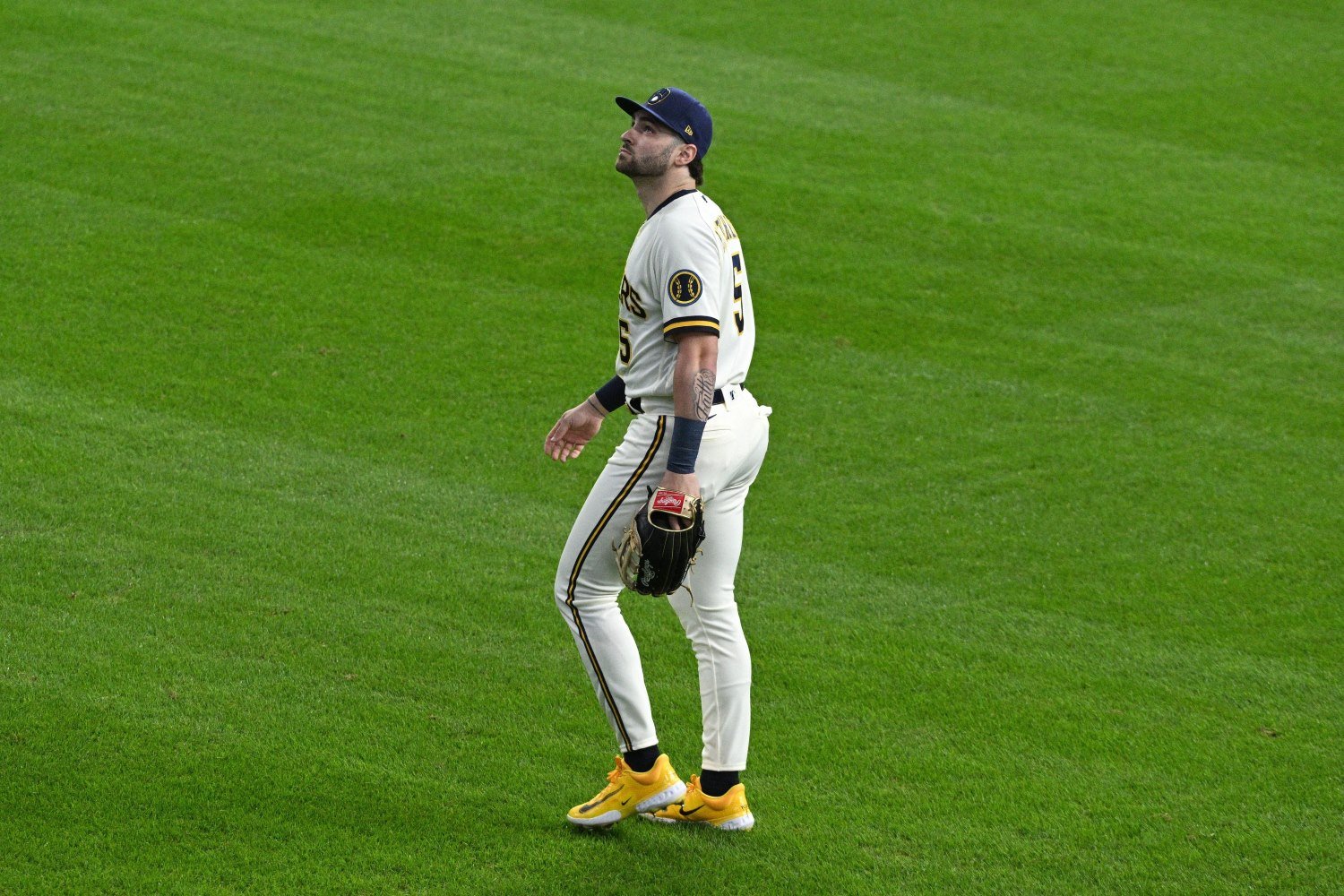 Garrett Mitchell was poised to have a great year. He made the Opening Day roster, had his first-ever two-home run game against the Mets, then walked them off the next day. Unfortunately, he damaged the labrum in his left shoulder while sliding into third base in Seattle in mid-April, and required surgery. He returned for a total of 11 plate appearances toward the end of the season but wasn’t able to do anything particularly memorable. Now, the Brewers' depth chart lists him as the fourth-string center fielder, behind Jackson Chourio, Sal Frelick, and Blake Perkins. In a best-case scenario for Mitchell, Chourio is kept in the minors to begin the season; Frelick is fully converted to a utility infielder; and Perkins struggles early and gives up his spot. More realistically, Mitchell will have to find somewhere else to stand in the outfield. He has spent all of his relatively brief major-league career in center field, but was also able to get in some innings as a corner outfielder in the minors. The Brewers already have a left fielder by the name of Christian Yelich, and despite the hopes of many fans to move him to first base, he’s probably going to stay right where he is. But what about the other corner? Mitchell was primarily a right fielder at UCLA and didn’t become a full-time presence in center until his first season with the Biloxi Shuckers in 2021. In 2022, he spent 17 games in right field before being called up. Furthermore, the depth chart in right field is far less crowded. Currently listed are Frelick, Perkins, and Chris Roller. Mitchell is already ahead of Roller on the organization's priority list, and Frelick moving to the infield part-time leaves a more open door for the full-time spot. Mitchell’s skillset might also be better suited for right. In addition to having top-of-the-line sprint speed, one of the few statistics he was qualified for was arm strength. In 2023, he threw at an average velocity of 89.2 mph, placing him in the top quartile of players. In 2022, he averaged an outstanding 93.5 mph, better than 96% of his major-league peers. With right field being the furthest from third base and home, arm strength is of the utmost importance. We all remember those legendary throws from Ichiro Suzuki and Roberto Clemente, right? Aside from his defensive flexibility, Mitchell is a very capable hitter, or at least a high-ceiling one. Again, it’s a small major-league sample size, but over his 141 career plate appearances, he’s slashed .278/.343/.452 and posted a cumulative OPS+ of 120. In his final season in Triple A, he hit for a .901 OPS over 85 plate appearances. When healthy, he has the potential to step up in big moments and could still be a plus bat in an offense that needs all the help it can get. If nothing else, slot him in at DH and give poor old William Contreras a few more much-needed days off. At the end of the day, Mitchell is a slightly above-average player with five more years of team control left on his contract. There are a ton of questions about the Brewers roster and how they plan to set their lineup (they still have three catchers on the depth chart, and reportedly plan to keep it that way), and if Mitchell isn’t one of the names the team decides to keep, he’ll at the very least be a valuable trade piece to a team that needs a solid guy to hold things down in center field. What do you hope to see from Mitchell in 2024? How would you go about getting him the playing time to prove whether or not he can rake consistently in MLB? Start the discussion below.
 -
After missing the vast majority of the 2023 season, he’s now left to fight for his spot in an already crowded outfield picture. How can the team's 2020 first-round pick benefit the Milwaukee Brewers most in 2024? Image courtesy of © Michael McLoone-USA TODAY Sports After missing the vast majority of the 2023 season, he’s now left to fight for his spot in an already crowded outfield picture. How can the team's 2020 first-round pick benefit the Milwaukee Brewers most in 2024? Garrett Mitchell was poised to have a great year. He made the Opening Day roster, had his first-ever two-home run game against the Mets, then walked them off the next day. Unfortunately, he damaged the labrum in his left shoulder while sliding into third base in Seattle in mid-April, and required surgery. He returned for a total of 11 plate appearances toward the end of the season but wasn’t able to do anything particularly memorable. Now, the Brewers' depth chart lists him as the fourth-string center fielder, behind Jackson Chourio, Sal Frelick, and Blake Perkins. In a best-case scenario for Mitchell, Chourio is kept in the minors to begin the season; Frelick is fully converted to a utility infielder; and Perkins struggles early and gives up his spot. More realistically, Mitchell will have to find somewhere else to stand in the outfield. He has spent all of his relatively brief major-league career in center field, but was also able to get in some innings as a corner outfielder in the minors. The Brewers already have a left fielder by the name of Christian Yelich, and despite the hopes of many fans to move him to first base, he’s probably going to stay right where he is. But what about the other corner? Mitchell was primarily a right fielder at UCLA and didn’t become a full-time presence in center until his first season with the Biloxi Shuckers in 2021. In 2022, he spent 17 games in right field before being called up. Furthermore, the depth chart in right field is far less crowded. Currently listed are Frelick, Perkins, and Chris Roller. Mitchell is already ahead of Roller on the organization's priority list, and Frelick moving to the infield part-time leaves a more open door for the full-time spot. Mitchell’s skillset might also be better suited for right. In addition to having top-of-the-line sprint speed, one of the few statistics he was qualified for was arm strength. In 2023, he threw at an average velocity of 89.2 mph, placing him in the top quartile of players. In 2022, he averaged an outstanding 93.5 mph, better than 96% of his major-league peers. With right field being the furthest from third base and home, arm strength is of the utmost importance. We all remember those legendary throws from Ichiro Suzuki and Roberto Clemente, right? Aside from his defensive flexibility, Mitchell is a very capable hitter, or at least a high-ceiling one. Again, it’s a small major-league sample size, but over his 141 career plate appearances, he’s slashed .278/.343/.452 and posted a cumulative OPS+ of 120. In his final season in Triple A, he hit for a .901 OPS over 85 plate appearances. When healthy, he has the potential to step up in big moments and could still be a plus bat in an offense that needs all the help it can get. If nothing else, slot him in at DH and give poor old William Contreras a few more much-needed days off. At the end of the day, Mitchell is a slightly above-average player with five more years of team control left on his contract. There are a ton of questions about the Brewers roster and how they plan to set their lineup (they still have three catchers on the depth chart, and reportedly plan to keep it that way), and if Mitchell isn’t one of the names the team decides to keep, he’ll at the very least be a valuable trade piece to a team that needs a solid guy to hold things down in center field. What do you hope to see from Mitchell in 2024? How would you go about getting him the playing time to prove whether or not he can rake consistently in MLB? Start the discussion below. View full article
-
Wonder what the trade value for Matt Bush would've been anyway if he hadn't been DFA. Not sure how much demand there is for a 38-year old pitcher with brutal numbers, albeit over a small sample size. He pitched alright in the Rangers minor league system but he's not getting any younger.
-
Bryse Wilson was one of the most underrated relievers in baseball last year. Will we see him repeat his success, or has he flown too close to the sun? Image courtesy of © Benny Sieu-USA TODAY Sports Bryse Wilson was one of the most underrated relievers in baseball last year. Will we see him repeat his success, or has he flown too close to the sun? Bryse Wilson wasn’t supposed to be anything close to an elite bullpen arm. Originally being groomed as a starter, he pitched to a gruesome 5.52 ERA and 1.42 WHIP over 115 ⅔ innings with the Pirates in 2022. After he was designated for assignment and traded to the Brewers in exchange for cash considerations, the expectations around him were pretty low. There were those who doubted he would even make the team. Few, if any, could’ve foreseen what he would end up doing in 2023. The Brewers moved him to the bullpen and he served as a long reliever, pitching as many as four innings in a game (against the Padres on August 27) and frequently getting to two or three. He cut his ERA and WHIP down to 2.58 and 1.07, respectively--excellent numbers and big improvements over what he had been doing in Pittsburgh. So, what changed? Other than the obvious shift in responsibility from starter to reliever, Wilson drastically increased the usage of his cutter. He went from throwing 72 cutters in 2022 to throwing 401 of them in 2023, and it ended up being his best pitch. He also made some upgrades to his four-seam fastball, which went from a run value of -10 in 2022 to 5 in 2023. To make room for these arsenal adjustments, he essentially phased out his changeup and totally got rid of his slider. Interestingly, his cumulative chase, whiff, and strikeout rates all remained in the bottom quartile of qualified pitchers, so he didn't suddenly start blowing guys away at the plate. In fact, his cutter had a measly strikeout rate of just 13.6%, despite accumulating a run value of 8 and being his best pitch. Instead, he was able to generate soft contact on his cutter consistently enough for it to be effective without insane velocity or spin. Here is the result of every Wilson cutter batters put into play last year: While I’m no Driveline/Tread Athletics employee, I wanted to speculate about some of the intrinsic properties that made the pitch the way that it was. First, I took a look at the placement of his cutter within the strike zone. Here’s the heat map for all of the cutters he threw in 2023: With this placement, he jams lefties and goes away from righties' barrels. It’s still in the zone, so he wasn’t giving up a ton of walks on the pitch ,but it was very rarely middle-middle. What Wilson lacks in velocity, he makes up for in command, allowing this approach to work. To justify this hypothesis and also to get out of spending time with my family, I separated the heat map between cutters that resulted in outs (left) vs those that resulted in hits (right). What these pictures illustrate is that when he hit his preferred spots, things usually went his way. Times in which he left the cutter a little too close to the heart of the zone often ended up biting him in the butt. The story is much the same with his four-seam fastball, with his strikeout rates holding steady year-over-year but his quality of contact improving drastically. But back to the original question: can we expect this to happen again next year? Alas, the answer seems to be “not likely.” Statcast had his 2023 xERA marked at 3.98, and FanGraphs is projecting his ERA to jump up to a whopping 4.45 in 2024. Both of these make sense, given that his FIP was a gnarly 4.13, indicating a lucky streak to his performance. While he doesn't give up many walks or home runs, his strikeout rate is simply too low to push his FIP any lower. Nor can we be sure the home-run prevention will stick around in 2024. Furthermore, Wilson's pitch-to-contact style undoubtedly benefited from one of the best defenses in baseball. If that aspect of the team sees regression this year--as great team defenses nearly always do--it could further ding him. Brewers fans should know better than anyone not to underestimate the Willy Wonka-like magic that happens within the team’s pitching development program, but I wouldn’t bet the house on Wilson repeating his spectacular 2023 just yet. Do you think Wilson will be back in the bullpen, come Opening Day? Can he have another season as valuable as last year? Let us know below. View full article
-
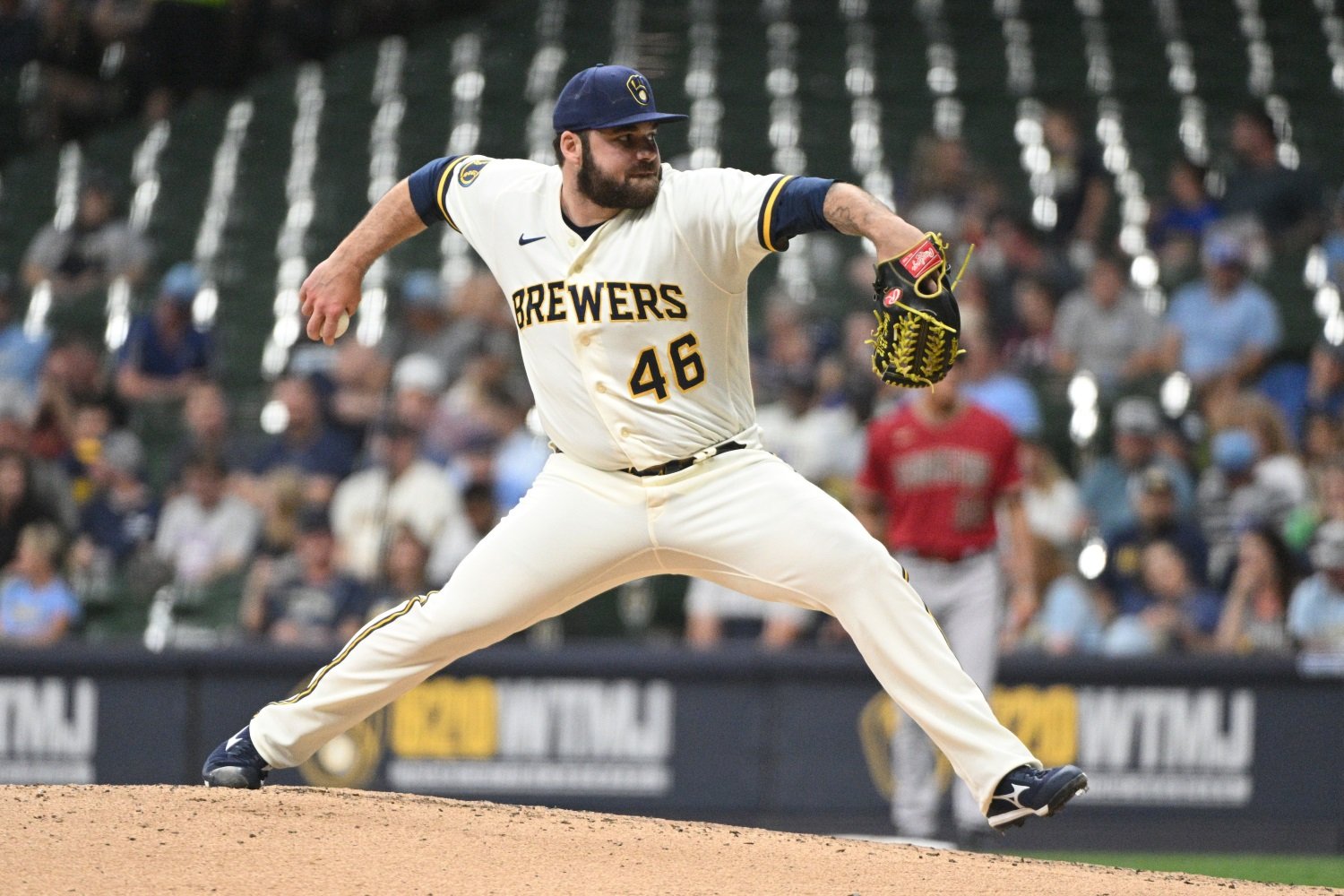 Bryse Wilson wasn’t supposed to be anything close to an elite bullpen arm. Originally being groomed as a starter, he pitched to a gruesome 5.52 ERA and 1.42 WHIP over 115 ⅔ innings with the Pirates in 2022. After he was designated for assignment and traded to the Brewers in exchange for cash considerations, the expectations around him were pretty low. There were those who doubted he would even make the team. Few, if any, could’ve foreseen what he would end up doing in 2023. The Brewers moved him to the bullpen and he served as a long reliever, pitching as many as four innings in a game (against the Padres on August 27) and frequently getting to two or three. He cut his ERA and WHIP down to 2.58 and 1.07, respectively--excellent numbers and big improvements over what he had been doing in Pittsburgh. So, what changed? Other than the obvious shift in responsibility from starter to reliever, Wilson drastically increased the usage of his cutter. He went from throwing 72 cutters in 2022 to throwing 401 of them in 2023, and it ended up being his best pitch. He also made some upgrades to his four-seam fastball, which went from a run value of -10 in 2022 to 5 in 2023. To make room for these arsenal adjustments, he essentially phased out his changeup and totally got rid of his slider. Interestingly, his cumulative chase, whiff, and strikeout rates all remained in the bottom quartile of qualified pitchers, so he didn't suddenly start blowing guys away at the plate. In fact, his cutter had a measly strikeout rate of just 13.6%, despite accumulating a run value of 8 and being his best pitch. Instead, he was able to generate soft contact on his cutter consistently enough for it to be effective without insane velocity or spin. Here is the result of every Wilson cutter batters put into play last year: While I’m no Driveline/Tread Athletics employee, I wanted to speculate about some of the intrinsic properties that made the pitch the way that it was. First, I took a look at the placement of his cutter within the strike zone. Here’s the heat map for all of the cutters he threw in 2023: With this placement, he jams lefties and goes away from righties' barrels. It’s still in the zone, so he wasn’t giving up a ton of walks on the pitch ,but it was very rarely middle-middle. What Wilson lacks in velocity, he makes up for in command, allowing this approach to work. To justify this hypothesis and also to get out of spending time with my family, I separated the heat map between cutters that resulted in outs (left) vs those that resulted in hits (right). What these pictures illustrate is that when he hit his preferred spots, things usually went his way. Times in which he left the cutter a little too close to the heart of the zone often ended up biting him in the butt. The story is much the same with his four-seam fastball, with his strikeout rates holding steady year-over-year but his quality of contact improving drastically. But back to the original question: can we expect this to happen again next year? Alas, the answer seems to be “not likely.” Statcast had his 2023 xERA marked at 3.98, and FanGraphs is projecting his ERA to jump up to a whopping 4.45 in 2024. Both of these make sense, given that his FIP was a gnarly 4.13, indicating a lucky streak to his performance. While he doesn't give up many walks or home runs, his strikeout rate is simply too low to push his FIP any lower. Nor can we be sure the home-run prevention will stick around in 2024. Furthermore, Wilson's pitch-to-contact style undoubtedly benefited from one of the best defenses in baseball. If that aspect of the team sees regression this year--as great team defenses nearly always do--it could further ding him. Brewers fans should know better than anyone not to underestimate the Willy Wonka-like magic that happens within the team’s pitching development program, but I wouldn’t bet the house on Wilson repeating his spectacular 2023 just yet. Do you think Wilson will be back in the bullpen, come Opening Day? Can he have another season as valuable as last year? Let us know below.
 -
This franchise has now gotten rid of Kolten Wong (5'7) and Clayton Andrews (5'6). I don't know why, it just doesn't seem like the team wants to be a serious contender. Everyone knows short kings make the best ballplayers. Furthermore, this Gary Sanchez fella is a whopping 6'2, a statistical anomaly by all means. Just another boneheaded move by the front office!
-
With Corbin Burnes being sent off to the Orioles, Willy Adames is now the most valuable trade piece on the team. Could a return to the Sunshine State be best for both parties? Image courtesy of © Kamil Krzaczynski-USA TODAY Sports With Corbin Burnes being sent off to the Orioles, Willy Adames is now the most valuable trade piece on the team. Could a return to the Sunshine State be best for both parties? To many fans, trading Willy Adames follows a similar logic to wanting to trade Corbin Burnes. With the team unlikely to increase their spending, retaining Adames in free agency while investing in other talent probably won’t be possible. Furthermore, it may be difficult to justify a longer deal after his offensive slowdown last year. He slashed .217/.310/.407 over 638 plate appearances, equivalent to a 95 OPS+. Nonetheless, his glove was immaculate, and he still has elite barrel and walk rates, so he’ll be able to provide value to many teams, including the Marlins. They have a pretty questionable shortstop situation, currently slated to start Jon Berti with Vidal Bruján waiting in the wings. Berti was an effective utility piece in 2023, but his ability to play shortstop daily is unproven. Bruján spent most of the year in AAA and posted a decent .839 OPS but has struggled when called up to the major leagues, accumulating -1.6 rWAR over 272 plate appearances in the past three years. They have a few shortstop prospects in the pipeline, namely Jacob Amaya and Yiddi Cappe, but they're a few years away from the show. If they want to return to the postseason sooner rather than later, they’ll need someone more proven, especially in a very competitive NL East division. If it’s clear that the Marlins would appreciate additional help at shortstop, the question then becomes, what can they offer the Brewers? With the prospect package received in exchange for Burnes, it’s clear that Milwaukee is okay with deferring success for a few years. In its current form, the team is undoubtedly less competitive but has a brighter future than before. One imminent concern might be at first base. The Rhys Hoskins deal is only for two years and includes a mutual option and an opt-out after the first year, which doesn’t seem like a concrete, long-term solution. Tyler Black is expected to spend most of his time at third base, and the team’s only other top first base prospect is Wes Clarke, last seen in AA. On the other hand, Marlins prospect Jacob Berry is ranked #4 by MLB.com and has an ETA of 2025, meaning he could be ready soon after Hoskins's potential departure. He’s well-rounded and doesn’t break the radar in any area, but he received a 55-grade hit tool from scouts. His AA slash line of .248/.301/.443 and overall performance in the minors hasn’t lived up to the hype, but at 22 years old, he still has a few more years to figure things out. It could also be useful to have another starting pitcher around these parts. After all, the Brewers lost their two best starters in one offseason. Robert Gasser will probably make his major league debut in 2024. Jacob Misiorowski and Carlos Rodriguez aren’t too far off, but it’d be great to get some more major-league-ready manpower. Lefty Trevor Rogers has seen mixed results as a starter but had an outstanding peak in 2021, posting a 2.64 ERA over 133 innings and placing second for NL Rookie of the Year. Since then, he has struggled quite a bit and was sidelined for most of 2023 with a bicep strain, but the juice is still there. With the prowess of the Brewers' pitching staff, it might take a change of scenery for him to reach those same heights again, and he might not have a place in a talented Marlins rotation. Ely Sussman wrote a great piece touching on why Adames would be a great fit with the fish. It’s an excellent read if you want to know more about why the Marlins would need his services or are curious to see the trade package that he proposed. Do you still think the Brewers will trade Adames before Opening Day? If he is traded to the Marlins, what return would leave you satisfied? View full article
-
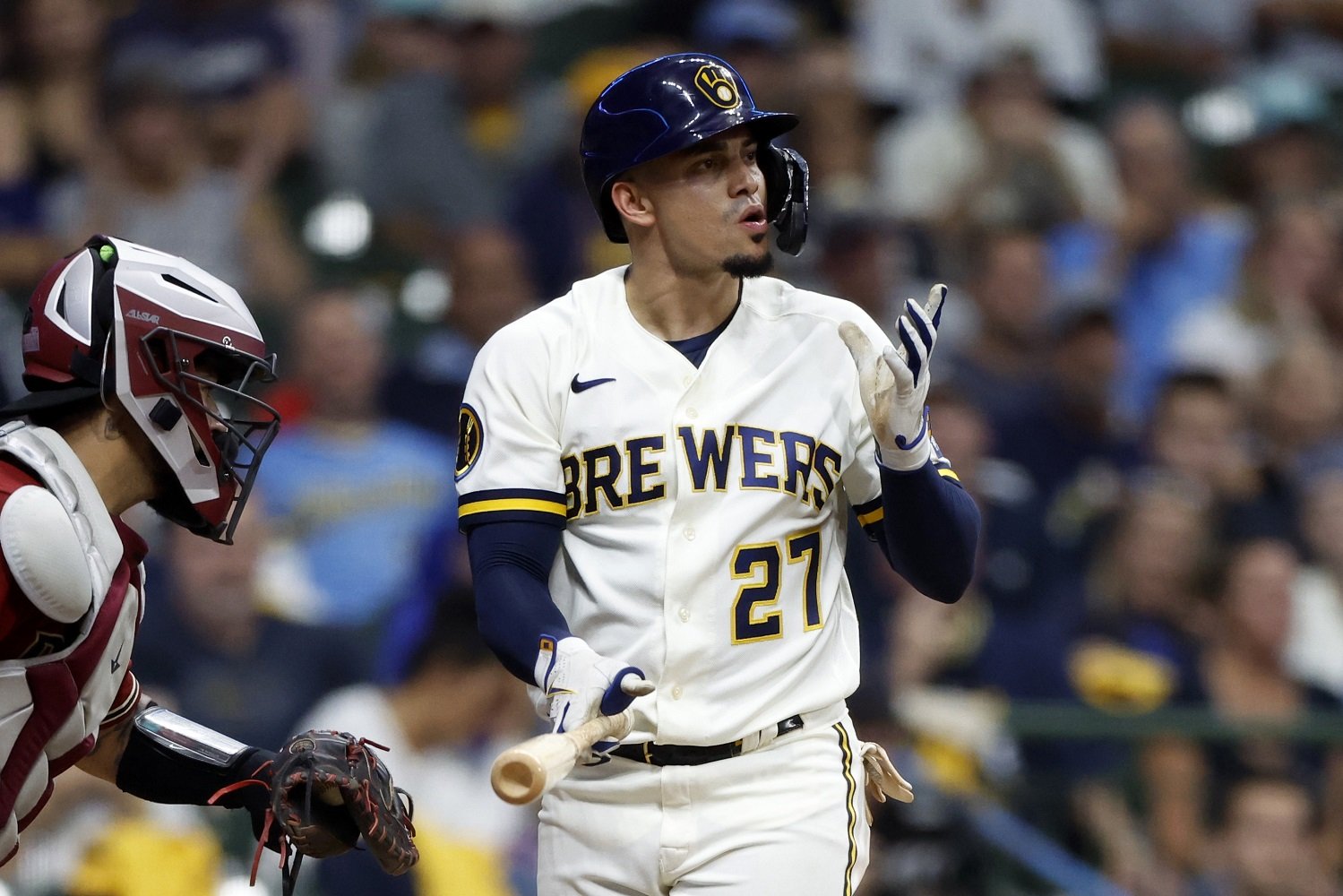 To many fans, trading Willy Adames follows a similar logic to wanting to trade Corbin Burnes. With the team unlikely to increase their spending, retaining Adames in free agency while investing in other talent probably won’t be possible. Furthermore, it may be difficult to justify a longer deal after his offensive slowdown last year. He slashed .217/.310/.407 over 638 plate appearances, equivalent to a 95 OPS+. Nonetheless, his glove was immaculate, and he still has elite barrel and walk rates, so he’ll be able to provide value to many teams, including the Marlins. They have a pretty questionable shortstop situation, currently slated to start Jon Berti with Vidal Bruján waiting in the wings. Berti was an effective utility piece in 2023, but his ability to play shortstop daily is unproven. Bruján spent most of the year in AAA and posted a decent .839 OPS but has struggled when called up to the major leagues, accumulating -1.6 rWAR over 272 plate appearances in the past three years. They have a few shortstop prospects in the pipeline, namely Jacob Amaya and Yiddi Cappe, but they're a few years away from the show. If they want to return to the postseason sooner rather than later, they’ll need someone more proven, especially in a very competitive NL East division. If it’s clear that the Marlins would appreciate additional help at shortstop, the question then becomes, what can they offer the Brewers? With the prospect package received in exchange for Burnes, it’s clear that Milwaukee is okay with deferring success for a few years. In its current form, the team is undoubtedly less competitive but has a brighter future than before. One imminent concern might be at first base. The Rhys Hoskins deal is only for two years and includes a mutual option and an opt-out after the first year, which doesn’t seem like a concrete, long-term solution. Tyler Black is expected to spend most of his time at third base, and the team’s only other top first base prospect is Wes Clarke, last seen in AA. On the other hand, Marlins prospect Jacob Berry is ranked #4 by MLB.com and has an ETA of 2025, meaning he could be ready soon after Hoskins's potential departure. He’s well-rounded and doesn’t break the radar in any area, but he received a 55-grade hit tool from scouts. His AA slash line of .248/.301/.443 and overall performance in the minors hasn’t lived up to the hype, but at 22 years old, he still has a few more years to figure things out. It could also be useful to have another starting pitcher around these parts. After all, the Brewers lost their two best starters in one offseason. Robert Gasser will probably make his major league debut in 2024. Jacob Misiorowski and Carlos Rodriguez aren’t too far off, but it’d be great to get some more major-league-ready manpower. Lefty Trevor Rogers has seen mixed results as a starter but had an outstanding peak in 2021, posting a 2.64 ERA over 133 innings and placing second for NL Rookie of the Year. Since then, he has struggled quite a bit and was sidelined for most of 2023 with a bicep strain, but the juice is still there. With the prowess of the Brewers' pitching staff, it might take a change of scenery for him to reach those same heights again, and he might not have a place in a talented Marlins rotation. Ely Sussman wrote a great piece touching on why Adames would be a great fit with the fish. It’s an excellent read if you want to know more about why the Marlins would need his services or are curious to see the trade package that he proposed. Do you still think the Brewers will trade Adames before Opening Day? If he is traded to the Marlins, what return would leave you satisfied?
 -
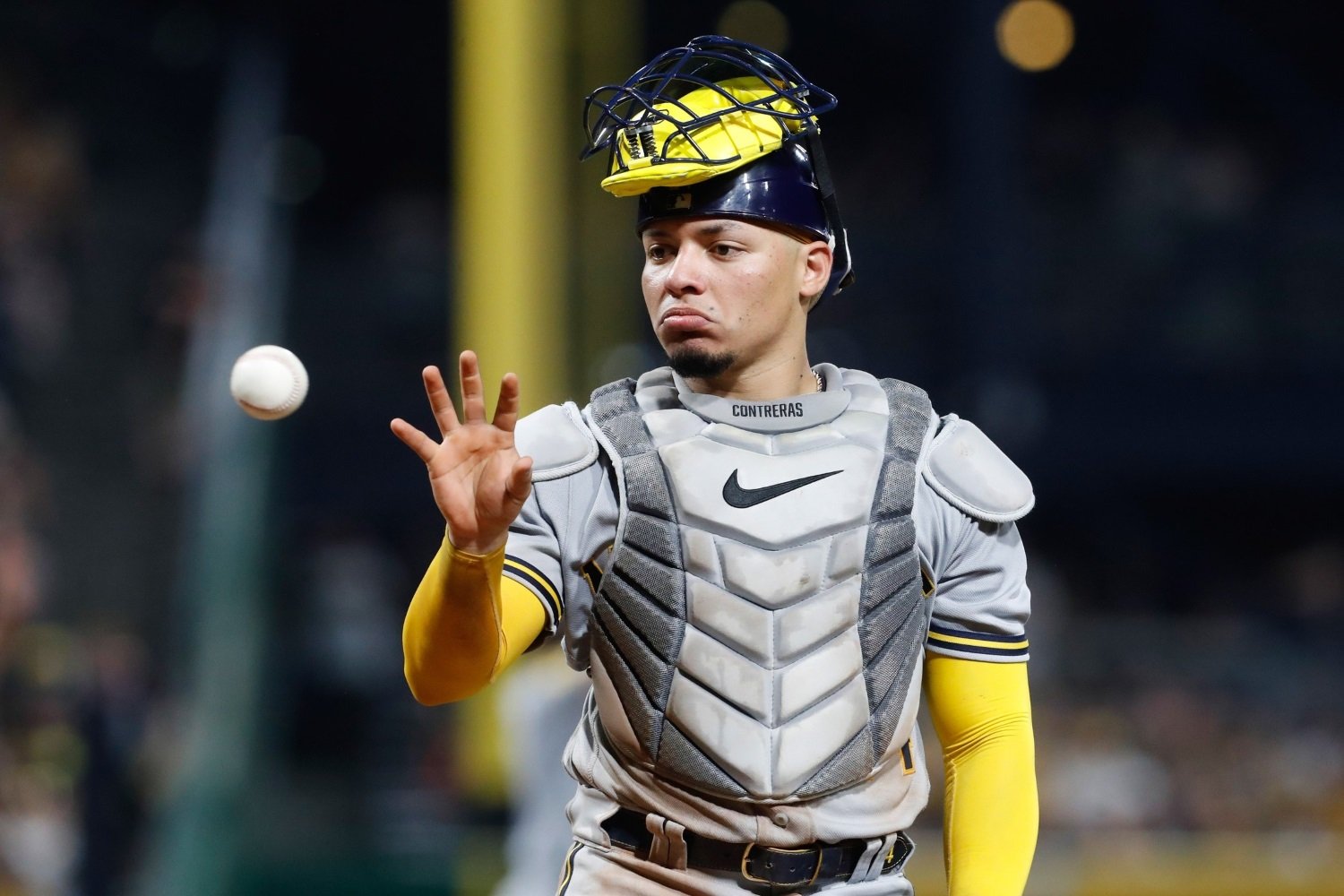 In 2022, William Contreras made his first career All-Star appearance, but wasn’t quite a complete player. Despite having one of the best bats at his position and posting an OPS of .860, his catching metrics were lackluster at best. He struggled with practically every aspect, landing in the bottom quartile for framing, runners caught stealing, and blocking. After arriving in Milwaukee in a whirlwind three-team trade, many expected his offensive prowess to contribute positively to the team’s lineup, but there were concerns about his skills behind the plate. With a whole year of data now in the books, there are definitely some promising signs that he's becoming one of the most well-rounded catchers in baseball. In his final year with the Braves, Contreras had -3 framing runs, worse than 80% of qualified catchers. In 2023, he jumped up to a whopping seven framing runs, the fifth-most in baseball. To see what changed, we can start by looking at the difference in the amount of strikes looking above average between the two years. In 2022, we can see that he struggled with framing nearly everywhere, outside of a few hot spots in the upper part of the strike zone. He was notoriously bad at the bottom of the zone, potentially limiting his ability to frame any painted breaking balls or sinkers. His heat map in 2023 shows the results of the outstanding work done by the Brewers catching lab. He improved immensely, almost flip-flopping his areas of strength within the strike zone. Along with the talented arms on the Brewers pitching staff, he lowered the knees of opposing batters and stole most of his runs in that area. This worked well with the existing arsenals of his pitching pals, with many Milwaukee pitchers depending on crafty breaking balls over blow-your-doors-off velocity. This is a graphic of all of his 2023 called strikes that were outside of the zone, categorized by pitch type. While the different types of fastballs dot all four sides, you can see the other 124 non-fastball pitches gather at the bottom. Here are a few video examples of how smooth this guy can be while absolutely robbing hitters in the lower half of the zone. In total, Contreras stole an extra 323 strikes for his team, which seems like it should be some sort of white-collar crime, but it isn’t. For now, it’s just an impressive illustration of how good his glove was last season. If he keeps this up, Brewers fans should pray for the delay of the robo-umps for as long as possible. His blocking skills also improved immensely, jumping from -3 blocks above average in 2022 to 8 blocks above average in 2023. If you’re interested in learning more about what made this possible, Esteban Rivera of FanGraphs had some excellent insight into some tangible changes Contreras made to correct these issues. One of the key adjustments he made was using his glove to catch right-handed breaking balls and offspeed pitches instead of using his chest, and Rivera includes some great video examples. Contreras did it all last year. He won a Silver Slugger for his offensive efforts, beating out elite competition that included Willson Contreras and Will Smith, and if it weren’t for the stupendous skills of Patrick Bailey and Gabriel Moreno, he likely would’ve been at least a finalist for the Gold Glove, as well. With several more years of team control left on his contract and no signs of slowing down, the crazy deal that brought him to the great state of Wisconsin may pay off even more than expected. Do you expect Contreras to hold onto his framing gains in 2024? What kind of long-term contract would you be willing to offer him right now? Sound off on the Brewers' best player. Research assistance provided by TruMedia.
 -
Before coming over from the Braves, he was seen as an offense-focused catcher with some concerning defensive liabilities. That all changed last season. Image courtesy of © Charles LeClaire-USA TODAY Sports Before coming over from the Braves, he was seen as an offense-focused catcher with some concerning defensive liabilities. That all changed last season. In 2022, William Contreras made his first career All-Star appearance, but wasn’t quite a complete player. Despite having one of the best bats at his position and posting an OPS of .860, his catching metrics were lackluster at best. He struggled with practically every aspect, landing in the bottom quartile for framing, runners caught stealing, and blocking. After arriving in Milwaukee in a whirlwind three-team trade, many expected his offensive prowess to contribute positively to the team’s lineup, but there were concerns about his skills behind the plate. With a whole year of data now in the books, there are definitely some promising signs that he's becoming one of the most well-rounded catchers in baseball. In his final year with the Braves, Contreras had -3 framing runs, worse than 80% of qualified catchers. In 2023, he jumped up to a whopping seven framing runs, the fifth-most in baseball. To see what changed, we can start by looking at the difference in the amount of strikes looking above average between the two years. In 2022, we can see that he struggled with framing nearly everywhere, outside of a few hot spots in the upper part of the strike zone. He was notoriously bad at the bottom of the zone, potentially limiting his ability to frame any painted breaking balls or sinkers. His heat map in 2023 shows the results of the outstanding work done by the Brewers catching lab. He improved immensely, almost flip-flopping his areas of strength within the strike zone. Along with the talented arms on the Brewers pitching staff, he lowered the knees of opposing batters and stole most of his runs in that area. This worked well with the existing arsenals of his pitching pals, with many Milwaukee pitchers depending on crafty breaking balls over blow-your-doors-off velocity. This is a graphic of all of his 2023 called strikes that were outside of the zone, categorized by pitch type. While the different types of fastballs dot all four sides, you can see the other 124 non-fastball pitches gather at the bottom. Here are a few video examples of how smooth this guy can be while absolutely robbing hitters in the lower half of the zone. In total, Contreras stole an extra 323 strikes for his team, which seems like it should be some sort of white-collar crime, but it isn’t. For now, it’s just an impressive illustration of how good his glove was last season. If he keeps this up, Brewers fans should pray for the delay of the robo-umps for as long as possible. His blocking skills also improved immensely, jumping from -3 blocks above average in 2022 to 8 blocks above average in 2023. If you’re interested in learning more about what made this possible, Esteban Rivera of FanGraphs had some excellent insight into some tangible changes Contreras made to correct these issues. One of the key adjustments he made was using his glove to catch right-handed breaking balls and offspeed pitches instead of using his chest, and Rivera includes some great video examples. Contreras did it all last year. He won a Silver Slugger for his offensive efforts, beating out elite competition that included Willson Contreras and Will Smith, and if it weren’t for the stupendous skills of Patrick Bailey and Gabriel Moreno, he likely would’ve been at least a finalist for the Gold Glove, as well. With several more years of team control left on his contract and no signs of slowing down, the crazy deal that brought him to the great state of Wisconsin may pay off even more than expected. Do you expect Contreras to hold onto his framing gains in 2024? What kind of long-term contract would you be willing to offer him right now? Sound off on the Brewers' best player. Research assistance provided by TruMedia. View full article
-
This year will be so key for Peralta specifically. Replacing Woodruff's spot in the rotation is no easy task and he's still chasing that magical 2021 year. I think the step back in effectiveness on his breaking stuff is holding him back, as his slider and curveball were instrumental to his success in 2021, the latter having a wOBA of just .178, whereas it jumped up to .295 in 2023. The thing with his slider is that when it's working, it's unhittable. Like, what the hell is this? Ashby is a curious case, we'll see how he is after missing all of 2023 but his xERA of 3.75 vs his actual ERA of 4.44 in 2022 might indicate that he's better than his stats show. Also his insane ground-ball rate is hopefully going to synergize perfectly with the Brewers infield defense. Hader, Williams, Uribe. Lord do the Brewers know how to foster outstanding high-leverage relievers, at least in the past few years. If Uribe continues down this path, could open the door to trading Williams to get a big bat, someone like a Cole Tucker or Luis Guillorme.
-
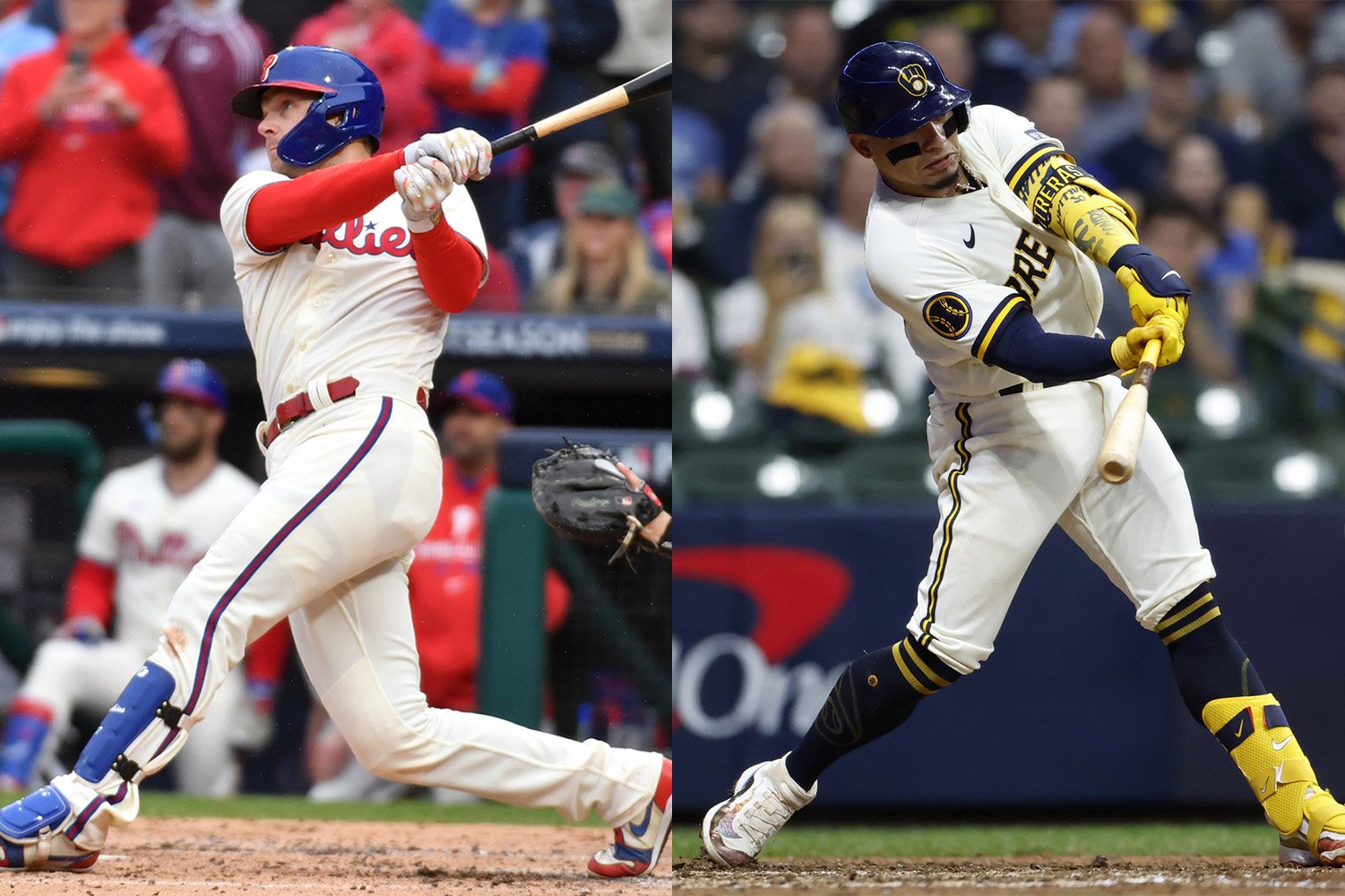 After making their first major addition of the offseason and signing Rhys Hoskins to a two-year, $34 million deal, I was curious to see how an impact bat could change things quantitatively. Last year, the Brewers' offense left much to be desired and was among the weakest in MLB. In 2023, the Brewers slashed a cumulative .240/.319/.385 for an OPS of .704, placing them 23rd among all teams. To see how things would change heading into 2024, I pulled the FanGraphs projections for every player on the depth chart (yes, even Chris Roller, who has a grand total of seven projected plate appearances). I calculated the team’s weighted average slash line. The results were pretty interesting. Player PA HR AVG OBP SLG OPS wOBA wRC+ WAR Willy Adames 651 27 0.237 0.319 0.436 0.755 0.325 103 3.1 Christian Yelich 651 20 0.262 0.363 0.431 0.794 0.345 116 2.7 Rhys Hoskins 630 31 0.240 0.332 0.467 0.799 0.343 115 1.9 William Contreras 602 23 0.273 0.351 0.465 0.816 0.351 120 4.2 Sal Frelick 567 11 0.265 0.342 0.394 0.736 0.324 102 2.0 Jackson Chourio 560 18 0.253 0.304 0.416 0.720 0.310 93 1.5 Brice Turang 546 11 0.246 0.320 0.371 0.691 0.304 88 1.4 Andruw Monasterio 329 5 0.244 0.329 0.353 0.682 0.304 89 0.7 Garrett Mitchell 322 8 0.236 0.311 0.382 0.693 0.304 88 0.7 Jake Bauers 210 8 0.215 0.307 0.390 0.697 0.305 90 0.0 Owen Miller 210 4 0.250 0.306 0.377 0.683 0.298 85 0.1 Eric Haase 141 5 0.218 0.276 0.380 0.656 0.283 75 0.1 Blake Perkins 63 1 0.217 0.311 0.354 0.665 0.295 83 0.1 Oliver Dunn 42 1 0.210 0.307 0.359 0.666 0.294 82 0.1 Jahmai Jones 28 1 0.216 0.314 0.344 0.658 0.294 82 0.0 Vinny Capra 28 0 0.242 0.328 0.351 0.679 0.303 88 0.0 Chris Roller 7 0 0.207 0.305 0.335 0.287 0.287 77 0.0 Team Weighted Average 0.248 0.328 0.414 0.741 0.322 101 The team’s slash line improves to .248/.328/.414, with a notable increase in slugging percentage over the previous year. The estimated weighted average OPS of .741 would have placed them at 14th in offense in 2023, right between the Orioles/Padres/Cardinals (all tied for 13th) and the Mariners. Overall, the team is projected to have a league-average wRC+, but with the strength of the pitching staff, it might still be enough to claim the NL Central once more. This increase is primarily from projected improvements from Willy Adames, who had a relatively disappointing .717 OPS in 2023 and increased production at first base from Hoskins. Last year, the Brewers had the third-worst offensive production out of their first basemen, who cumulatively posted a .681 OPS. Hoskins isn’t expected to return to his full form immediately after a year-long, injury-induced layoff. Still, his 115 wRC+ is undoubtedly better than whatever the team had last year before trading for Carlos Santana. There’s also a big projected improvement from Brice Turang, who posted a .585 OPS and 60 wRC+ over 448 plate appearances in 2023. If he can get up to a .691 OPS as projected, it’ll make his excellent glove stand out even more without the offensive tradeoff. In fact, for all players who will be seen as consistent starters, there isn’t much of a gaping hole within the projections. ZiPS sees Andruw Monasterio splitting time with Tyler Black and Owen Miller at the hot corner, which, along with his weak hitting splits against right-handed pitching, explains the decrease in projected playtime. Black is not yet listed on the depth chart, so I didn't include him in these calculations, but if you're curious, he's projected to slash .239/.342/.395 over 322 plate appearances. Garrett Mitchell will also see decreased playtime due to Jackson Chourio joining the outfield mix. Speaking of Chourio, he’s projected to get a slow start to his career with a slightly below-average wRC+, but at just 19 years old, don’t fret. He’ll probably start posting and hitting solid numbers by the time he can legally drink his first Wisconsin Old Fashioned. Projections should always be taken with a grain of salt, but it seems like Milwaukee is in good shape heading into 2024. The Rhys Hoskins signing addressed a major gap in the lineup, and with a bumper crop of prospects ready to bring their talents to the next level, they might be legitimate contenders for the next several years. What do you think of the projections? Which players do you think are most likely to deviate from their estimates?
- 2 comments
-
- 1
-
-
- rhys hoskins
- william contreras
- (and 5 more)
-
Baseball is a game of numbers, so what do those numbers say about how the lineup might perform next season? Image courtesy of © Eric Hartline-USA TODAY Sports Baseball is a game of numbers, so what do those numbers say about how the lineup might perform next season? After making their first major addition of the offseason and signing Rhys Hoskins to a two-year, $34 million deal, I was curious to see how an impact bat could change things quantitatively. Last year, the Brewers' offense left much to be desired and was among the weakest in MLB. In 2023, the Brewers slashed a cumulative .240/.319/.385 for an OPS of .704, placing them 23rd among all teams. To see how things would change heading into 2024, I pulled the FanGraphs projections for every player on the depth chart (yes, even Chris Roller, who has a grand total of seven projected plate appearances). I calculated the team’s weighted average slash line. The results were pretty interesting. Player PA HR AVG OBP SLG OPS wOBA wRC+ WAR Willy Adames 651 27 0.237 0.319 0.436 0.755 0.325 103 3.1 Christian Yelich 651 20 0.262 0.363 0.431 0.794 0.345 116 2.7 Rhys Hoskins 630 31 0.240 0.332 0.467 0.799 0.343 115 1.9 William Contreras 602 23 0.273 0.351 0.465 0.816 0.351 120 4.2 Sal Frelick 567 11 0.265 0.342 0.394 0.736 0.324 102 2.0 Jackson Chourio 560 18 0.253 0.304 0.416 0.720 0.310 93 1.5 Brice Turang 546 11 0.246 0.320 0.371 0.691 0.304 88 1.4 Andruw Monasterio 329 5 0.244 0.329 0.353 0.682 0.304 89 0.7 Garrett Mitchell 322 8 0.236 0.311 0.382 0.693 0.304 88 0.7 Jake Bauers 210 8 0.215 0.307 0.390 0.697 0.305 90 0.0 Owen Miller 210 4 0.250 0.306 0.377 0.683 0.298 85 0.1 Eric Haase 141 5 0.218 0.276 0.380 0.656 0.283 75 0.1 Blake Perkins 63 1 0.217 0.311 0.354 0.665 0.295 83 0.1 Oliver Dunn 42 1 0.210 0.307 0.359 0.666 0.294 82 0.1 Jahmai Jones 28 1 0.216 0.314 0.344 0.658 0.294 82 0.0 Vinny Capra 28 0 0.242 0.328 0.351 0.679 0.303 88 0.0 Chris Roller 7 0 0.207 0.305 0.335 0.287 0.287 77 0.0 Team Weighted Average 0.248 0.328 0.414 0.741 0.322 101 The team’s slash line improves to .248/.328/.414, with a notable increase in slugging percentage over the previous year. The estimated weighted average OPS of .741 would have placed them at 14th in offense in 2023, right between the Orioles/Padres/Cardinals (all tied for 13th) and the Mariners. Overall, the team is projected to have a league-average wRC+, but with the strength of the pitching staff, it might still be enough to claim the NL Central once more. This increase is primarily from projected improvements from Willy Adames, who had a relatively disappointing .717 OPS in 2023 and increased production at first base from Hoskins. Last year, the Brewers had the third-worst offensive production out of their first basemen, who cumulatively posted a .681 OPS. Hoskins isn’t expected to return to his full form immediately after a year-long, injury-induced layoff. Still, his 115 wRC+ is undoubtedly better than whatever the team had last year before trading for Carlos Santana. There’s also a big projected improvement from Brice Turang, who posted a .585 OPS and 60 wRC+ over 448 plate appearances in 2023. If he can get up to a .691 OPS as projected, it’ll make his excellent glove stand out even more without the offensive tradeoff. In fact, for all players who will be seen as consistent starters, there isn’t much of a gaping hole within the projections. ZiPS sees Andruw Monasterio splitting time with Tyler Black and Owen Miller at the hot corner, which, along with his weak hitting splits against right-handed pitching, explains the decrease in projected playtime. Black is not yet listed on the depth chart, so I didn't include him in these calculations, but if you're curious, he's projected to slash .239/.342/.395 over 322 plate appearances. Garrett Mitchell will also see decreased playtime due to Jackson Chourio joining the outfield mix. Speaking of Chourio, he’s projected to get a slow start to his career with a slightly below-average wRC+, but at just 19 years old, don’t fret. He’ll probably start posting and hitting solid numbers by the time he can legally drink his first Wisconsin Old Fashioned. Projections should always be taken with a grain of salt, but it seems like Milwaukee is in good shape heading into 2024. The Rhys Hoskins signing addressed a major gap in the lineup, and with a bumper crop of prospects ready to bring their talents to the next level, they might be legitimate contenders for the next several years. What do you think of the projections? Which players do you think are most likely to deviate from their estimates? View full article
- 2 replies
-
- 1
-

-
- rhys hoskins
- william contreras
- (and 5 more)
-
but brock, how else are we going to keep the rich, rich?