Jake McKibbin
-
Posts
2,450 -
Joined
-
Last visited
-
Days Won
6
Content Type
Profiles
Forums
Blogs
Events
News
2026 Milwaukee Brewers Top Prospects Ranking
Milwaukee Brewers Videos
2022 Milwaukee Brewers Draft Picks
Milwaukee Brewers Free Agent & Trade Rumors, Notes, & Tidbits
Guides & Resources
2023 Milwaukee Brewers Draft Picks
2024 Milwaukee Brewers Draft Picks
The Milwaukee Brewers Players Project
2025 Milwaukee Brewers Draft Pick Tracker
2026 Milwaukee Brewers Draft Tracker: Picks & Bonuses
Store
Downloads
Gallery
Everything posted by Jake McKibbin
-
If anyone wants a quick recap of some big moments in the last month, I found this
-
MLB All Money Team - Highest paid players at every position
Jake McKibbin replied to TURBO's topic in Milwaukee Brewers Talk
It'll definitely look bad, but I'd also surmise that inflation will mean the big contracts are bigger at that point too Still the brewers at the time got a below market deal for an almost two time MVP and while it may look bad now, at the time it looked like an amazing deal -
MLB All Money Team - Highest paid players at every position
Jake McKibbin replied to TURBO's topic in Milwaukee Brewers Talk
Anthony rendon with 38 million... Yikes! Yelich tbf isn't anywhere near as bad as some of these, 26 million isn't that huge in today's market, but also surprised that JT is worth so much less, he's such a catcher upgrade -
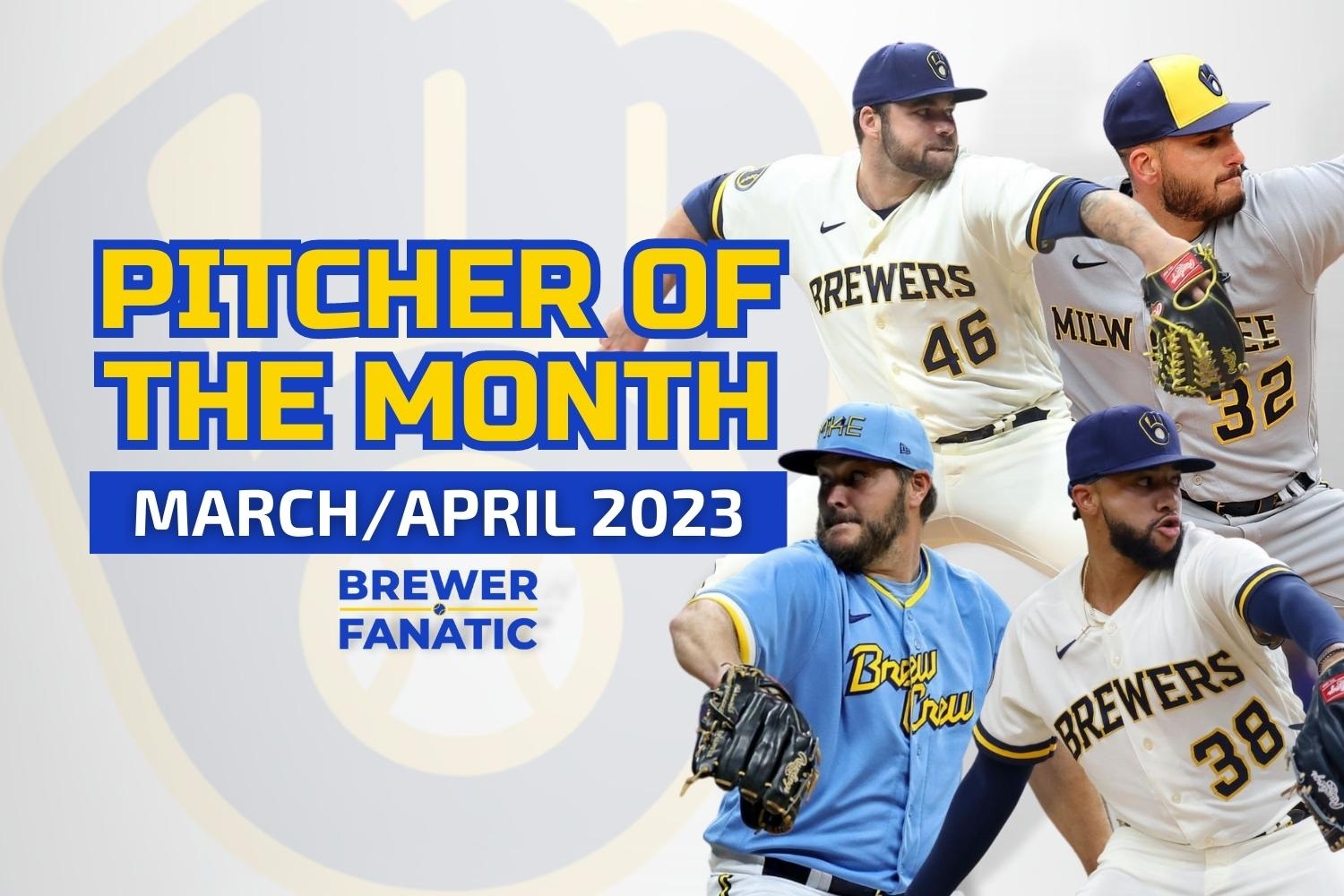 The Milwaukee Brewers pitching staff have been ravaged with injuries, with Aaron Ashby’s shoulder likely keeping him out for the season; Brandon Woodruff suffering a Grade Two sub-scapular strain; Adrian Houser missing every game in April; and even Corbin Burnes concerning us with a potential pectoral strain. That being said, they have the eighth-best starter ERA in baseball at 3.74, which is some feat considering the above injuries and the underwhelming performance of Burnes so far. Pitcher of the Month I’m not sure anyone would have picked Wade Miley to be the dominant force he’s been. He has been one of the best pitchers in baseball thus far. He’s pitched 29 innings, with a 1.86 ERA and a WHIP of 1.00–without striking out very many hitters at all. He’s in the 70th percentile for average exit velocity and hard-hit rate, consistently nibbling around the zone to limit both hard contact and walks. It’s a true masterclass of veteran pitching, without a single pitch averaging over 90 miles per hour. How has he done this? For starters, his four-seam fastball has been deadly, inducing an average 28-degree launch angle and a lot of short fly balls and pop-ups. This is less to do with high spin rates and rising movement, and more to do with deception and how he uses it off his cutter, which drops significantly more, with the four-seamer recording a batting average against of .160 and a slugging percentage of .240. (I will point out that the expected stats against each of the cutter and four seamer don’t look quite so rosy.) His offspeed offerings have been impressive–particularly the slider, with an xBA of .145 and an xSLG of .240, but also the changeup, which has been very cleverly used to keep the hitters off his fastball. The slider has a whiff rate of 37.5%, and has been key in both getting ahead and putting away hitters, despite being just 78 MPH and having roughly average horizontal and vertical movement. The key to this is location, and you’ll see just how well he locates and also tunnels his pitches below, as well as how effective he is at pummeling the strike zone. Picturing the movement on each of the changeup, slider, cutter and four seam fastball, all of these pitches will look to be starting around the middle of the strike zone, belt high, with the four seamer rising a little; the cutter breaking in to the right-hander; the changeup down and away; and the slider down and in. It makes it a nightmare for hitters to distinguish which pitch is coming next, and is a major reason for his 50th percentile chase rate despite being in the third percentile for velocity. It’s unlikely, with his underlying metrics, that Miley can continue to produce such fantastic starts, but he’s taken advantage of the fielding corps in both the infield and outfield behind him by minimizing line drives, with just a 14.3% line-drive rate, and creating far more fly balls and ground balls. He has also benefited from William Contreras's improved framing, allowing him to get ahead of hitters with more regularity. The numbers say he’s produced more value on the edges of the zone in one month of 2023 than he did in all of 2022. Honorable Mentions Freddy Peralta Fastball Freddy has been superlative to start the season, with just the one rough start against the Padres, and an unfortunate Red Sox outing hurting his ERA. His fastball has been up at velocities never before seen from him as a starter, with his extension and high spin rates making it incredibly difficult to hit even in the heart of the strike zone. He has been more hittable so far this season than previous years, but is using his pitch mix very effectively, with his changeup producing a -7 degree launch angle on average, and the slider generating a 40% whiff rate. However he is leaving his fastball quite regularly over the heart of the plate and could do with elevating it with more regularity into the upper half of the strike zone to generate more swing-and-miss against it. Corbin Burnes Burnes hasn’t been anywhere near his best in the first month of the season. Still, he started to induce whiffs on his cutter again in his last start against the Angels, and that’s a very good sign heading into May. Everything he does lives off the cutter’s effectiveness, but it’s to his credit that without being at his best, or anywhere close, he produced a 3.45 ERA, a .228 batting average against and a 1.08 WHIP. No one can be atop their game in every start, but we know at some point, Cy Burnes is going to get locked in. Brandon Woodruff Woodruff was absolutely lights-out to start the season, in the 95th percentile for Barrels allowed, 93rd percentile for chase rate and in the 90th percentile for expected slugging and wOBA. He was dominant. Then the injury bug bit, and a sub-scapular strain is likely to keep him out until at least the end of June as they start to rebuild his throwing schedule sometime in the next two weeks. It’s a very unfortunate injury for the Brewers and Woodruff, which may damage his prospects in free agency after 2024, and despite Colin Rea producing several strong starts in his absence, there’s no replacing a Brandon Woodruff. What do you think, Brewer Fanatics? Was there anyone you would argue should be on this list? And who can you see dominating in the month of May?
-
It's May, which means that it's time to crown our Hitter and Pitcher of the Month for the Brewers here at Brewer Fanatic. Improbably, and despite several strong showings from more notable names, it's the wily returning veteran who claims our first honor of the year. Image courtesy of © Benny Sieu-USA TODAY Sports It's May, which means that it's time to crown our Hitter and Pitcher of the Month for the Brewers here at Brewer Fanatic. Improbably, and despite several strong showings from more notable names, it's the wily returning veteran who claims our first honor of the year. The Milwaukee Brewers pitching staff have been ravaged with injuries, with Aaron Ashby’s shoulder likely keeping him out for the season; Brandon Woodruff suffering a Grade Two sub-scapular strain; Adrian Houser missing every game in April; and even Corbin Burnes concerning us with a potential pectoral strain. That being said, they have the eighth-best starter ERA in baseball at 3.74, which is some feat considering the above injuries and the underwhelming performance of Burnes so far. Pitcher of the Month I’m not sure anyone would have picked Wade Miley to be the dominant force he’s been. He has been one of the best pitchers in baseball thus far. He’s pitched 29 innings, with a 1.86 ERA and a WHIP of 1.00–without striking out very many hitters at all. He’s in the 70th percentile for average exit velocity and hard-hit rate, consistently nibbling around the zone to limit both hard contact and walks. It’s a true masterclass of veteran pitching, without a single pitch averaging over 90 miles per hour. How has he done this? For starters, his four-seam fastball has been deadly, inducing an average 28-degree launch angle and a lot of short fly balls and pop-ups. This is less to do with high spin rates and rising movement, and more to do with deception and how he uses it off his cutter, which drops significantly more, with the four-seamer recording a batting average against of .160 and a slugging percentage of .240. (I will point out that the expected stats against each of the cutter and four seamer don’t look quite so rosy.) His offspeed offerings have been impressive–particularly the slider, with an xBA of .145 and an xSLG of .240, but also the changeup, which has been very cleverly used to keep the hitters off his fastball. The slider has a whiff rate of 37.5%, and has been key in both getting ahead and putting away hitters, despite being just 78 MPH and having roughly average horizontal and vertical movement. The key to this is location, and you’ll see just how well he locates and also tunnels his pitches below, as well as how effective he is at pummeling the strike zone. Picturing the movement on each of the changeup, slider, cutter and four seam fastball, all of these pitches will look to be starting around the middle of the strike zone, belt high, with the four seamer rising a little; the cutter breaking in to the right-hander; the changeup down and away; and the slider down and in. It makes it a nightmare for hitters to distinguish which pitch is coming next, and is a major reason for his 50th percentile chase rate despite being in the third percentile for velocity. It’s unlikely, with his underlying metrics, that Miley can continue to produce such fantastic starts, but he’s taken advantage of the fielding corps in both the infield and outfield behind him by minimizing line drives, with just a 14.3% line-drive rate, and creating far more fly balls and ground balls. He has also benefited from William Contreras's improved framing, allowing him to get ahead of hitters with more regularity. The numbers say he’s produced more value on the edges of the zone in one month of 2023 than he did in all of 2022. Honorable Mentions Freddy Peralta Fastball Freddy has been superlative to start the season, with just the one rough start against the Padres, and an unfortunate Red Sox outing hurting his ERA. His fastball has been up at velocities never before seen from him as a starter, with his extension and high spin rates making it incredibly difficult to hit even in the heart of the strike zone. He has been more hittable so far this season than previous years, but is using his pitch mix very effectively, with his changeup producing a -7 degree launch angle on average, and the slider generating a 40% whiff rate. However he is leaving his fastball quite regularly over the heart of the plate and could do with elevating it with more regularity into the upper half of the strike zone to generate more swing-and-miss against it. Corbin Burnes Burnes hasn’t been anywhere near his best in the first month of the season. Still, he started to induce whiffs on his cutter again in his last start against the Angels, and that’s a very good sign heading into May. Everything he does lives off the cutter’s effectiveness, but it’s to his credit that without being at his best, or anywhere close, he produced a 3.45 ERA, a .228 batting average against and a 1.08 WHIP. No one can be atop their game in every start, but we know at some point, Cy Burnes is going to get locked in. Brandon Woodruff Woodruff was absolutely lights-out to start the season, in the 95th percentile for Barrels allowed, 93rd percentile for chase rate and in the 90th percentile for expected slugging and wOBA. He was dominant. Then the injury bug bit, and a sub-scapular strain is likely to keep him out until at least the end of June as they start to rebuild his throwing schedule sometime in the next two weeks. It’s a very unfortunate injury for the Brewers and Woodruff, which may damage his prospects in free agency after 2024, and despite Colin Rea producing several strong starts in his absence, there’s no replacing a Brandon Woodruff. What do you think, Brewer Fanatics? Was there anyone you would argue should be on this list? And who can you see dominating in the month of May? View full article
-
Week in Review: Hey, Where'd Our Bats Go?
Jake McKibbin replied to Jason Wang's topic in Brewer Fanatic Front Page News
Lefty on Wednesday, what are the chances of Taylor being activated for that game? -
Brewers acquire Trevor Megill for PTNL and cash
Jake McKibbin replied to markedman5's topic in Milwaukee Brewers Talk
This is a bit strange, especially as the AA arms will likely be needing a promotion soon like Uribe, and you wonder how all this fits -
Angels (Suarez) vs Brewers (Rea): 4/30/23, 1:10 PM CST
Jake McKibbin replied to sveumrules's topic in Archived Game Threads
That's a real quality first inning from Rea, dotting his pitches and striking out ohtani and trout -
Trouts quality of contact this series has been monstrous. He's hit balls hard almost every time... Is this what prime yelich was like? Where you just hoped he'd find a fielder?
-
Voit has looked decent to me so far this season, certainly made plays last night that keston and rowdy wouldn't, but also barreled up some balls well, just not hitting the gaps. He could be a trade option for Phillies potentially but even so I like his production so far and is currently outperforming winker
-
2023 Trade Deadline Sellers
Jake McKibbin replied to sveumrules's topic in Transaction Rumors & Proposals
Giolito's last outing was sharp, and you wonder if White Sox might dangle Cease as well for a big return Chapman seems to be going well, and undoubtedly some playoff team will take a look at him Not quite sure about big name hitters on the block from these teams -
Good news... Wiemer and Contreras have been mashing lefties Bad news... rest of the line-up
-
The starter ERA's on both sides of each of these match-ups is insane.. why has starting pitching looked so damn good so far this season?
-
Tyler Black's arm looks very far from reliable. A couple of hops before a routine play from third, and miles off target. First base did well to block it
-
To be fair to Detroit, some of their hitters numbers have been far lower than their expected stats. That being said, last night's loss, and in particular Lauer's pitching performance, hurt. He looked sharp in first two innings, but we're not quite getting those key hits we did earlier in the season, or getting men on base at the same clip. Couple of good news stats Owen Miller has a ridiculously low whiff rate of 12.7% Lorenzen has been barreled up to the tune o f 15.4% of his BBE's.
-
I can't see Perkins being kept up long term, especially if he keeps being asked to bunt his PA's away (not a great sign). Taylor will need some ramp up time but hopefully he can be an above average contributor again. So much promise in Mitchell, kind of reinforces that Wiemer is staying around and learning at MLB level. Still hasn't found his sweet spot yet but his AB's are getting better, I'm sure we'll see a hot stretch at some point
-
I think there is an element of predictability. His first inning was unlucky with infield hit, but he is definitely struggling to miss bats more than usual with his cutter
-
The Brewers keep winning games, and the numbers behind their sparkling record are as encouraging as the victories themselves. Here are nine notable areas in which the data says their success could continue. Image courtesy of © Michael McLoone-USA TODAY Sports The Brewers keep winning games, and the numbers behind their sparkling record are as encouraging as the victories themselves. Here are nine notable areas in which the data says their success could continue. Willy Adames The most popular criticism of Adames coming into the season was how little he walked, with his approach favoring happy-go-lucky over cautious calculation. However, so far this season, he’s in the 84th percentile with a walk rate of 14 percent. Adames talked on Tuesday about how he wanted to improve in this area, setting himself a target of 70 walks this season (his previous high was 57). He hasn’t quite found his timing with the bat as of yet, so his quality of contact is down, but we know when Willy gets hot, he can carry this offense. Christian Yelich’s Underlying Metrics So far, Yelich has posted a mere .247/.326/.388 slash line, resulting in a .714 OPS. However, he’s currently in the 96th percentile for hard hit balls, with 57% of his balls in play over 95 mph. His expected batting average, based on his contact rate and the speed and trajectory of his batted balls, is .274, and he has hit into some bad luck so far this season with some roped line drives. We all want to see Yelich pull the ball in the air more, but given his inconsistent patches so far, there is a feel that he’s tinkering with his swing, and as such, that he can manage a more consistent performance in the latter half of the season. William Contreras Catching Barrels and Strikes Contreras has missed just 10 pitches in the strike zone so far this season, on top of which, in eight of the nine areas in the zone he has an average exit velocity around or above 90 mph. The only area he’s really struggled is the slider down and away, with six of his 12 strikeouts low and away, but he has shown himself to be a far more adept bat-to-ball hitter than we expected. He’s also in the 77th percentile for framing metrics, a huge improvement on last season, and something of which the Brewers’ coaching crew can be proud. It’s important to note that Contreras' work ethic and dedication likely played a big part in this turnaround too, as well as his athleticism. Hoby Milner Milner is in the lowest percentiles of both fastball velocity and fastball spin rates, yet somehow he is in the 92th percentile for average exit velocity allowed, inducing on average hits of 84.3 mph. He’s given up just six hits so far this season, and none of his individual pitches have been hit hard so far, using each of his sinker, curveball and changeup to great effect. And yet…. Joel Payamps Payamps has gone one better than Milner, with opponents managing only an 81.5 mph average exit velocity. That’s in the 98th percentile among all MLB hurlers. He struggles to generate many whiffs and strikeouts, but he avoids barrels at a strong rate, and with the current Brewers infield, Payamps and Milner are absolutely deadly. Our Supreme Closer Devin Williams may be the leader of the cardiac crew, but his stats underneath it all are the sound vitals that make the occasional palpitations livable. No one has generated more whiffs per swing than Williams, with his change-up having a 50% whiff rate, and the fastball a 47% figure. He has allowed just a .063 expected batting average on his heater, due in large part to his extension off the mound, and his above-average movement both vertically and horizontally on the pitch. We’ve seen a lot of hitters so far this season sitting on his changeup, resulting in a lower chase rate than Williams is used to, but he’s taking advantage of this and peppering the zone with his fastball. He has the lowest xBA, the second-lowest xSlg and the best strikeout rate in the major leagues. He also seems to have ice in his veins, but I can’t find any stats to back that up. Wade Miley If you asked anyone what the best you could hope for from Miley coming into the season it’s probably along the lines of “limit hard contact and hope for the best”. Well, Miley has come through and more, with a 71st-percentile hard-hit rate allowed, while also being stingy with walks (85th percentile). On top of that, he’s nipping in and around the shadow area of the zone so much that he’s forced one of the better chase rates in the Brewers pitching corps, with his slider generating a 42.9% whiff rate. Team Defense Per Fielding Bible, the team’s defense so far has saved 25 runs, eight ahead of the second-placed Diamondbacks. The outfield alone has 10 Defensive Runs Saved, and has contributed much to the improved consistency of the Brewers’ performance this season. The Garrett Mitchell absence could be felt heavily, but Joey Wiemer is a strong defender in his own right. Sal Frelick Frelick hasn’t had the ideal start to the season, struggling to avoid weak contact in his current slump, although he did break out slightly with a three-hit game before his thumb injury yesterday. However, he has just a 12.4% whiff rate, and swings at pitches outside the zone just 14% of the time so far, so even in his slump, he’s a really tough at-bat for opposing pitchers. No doubt, we’ll see the consistent hard contact return at some point this season to add to his sublime contact skills. View full article
-
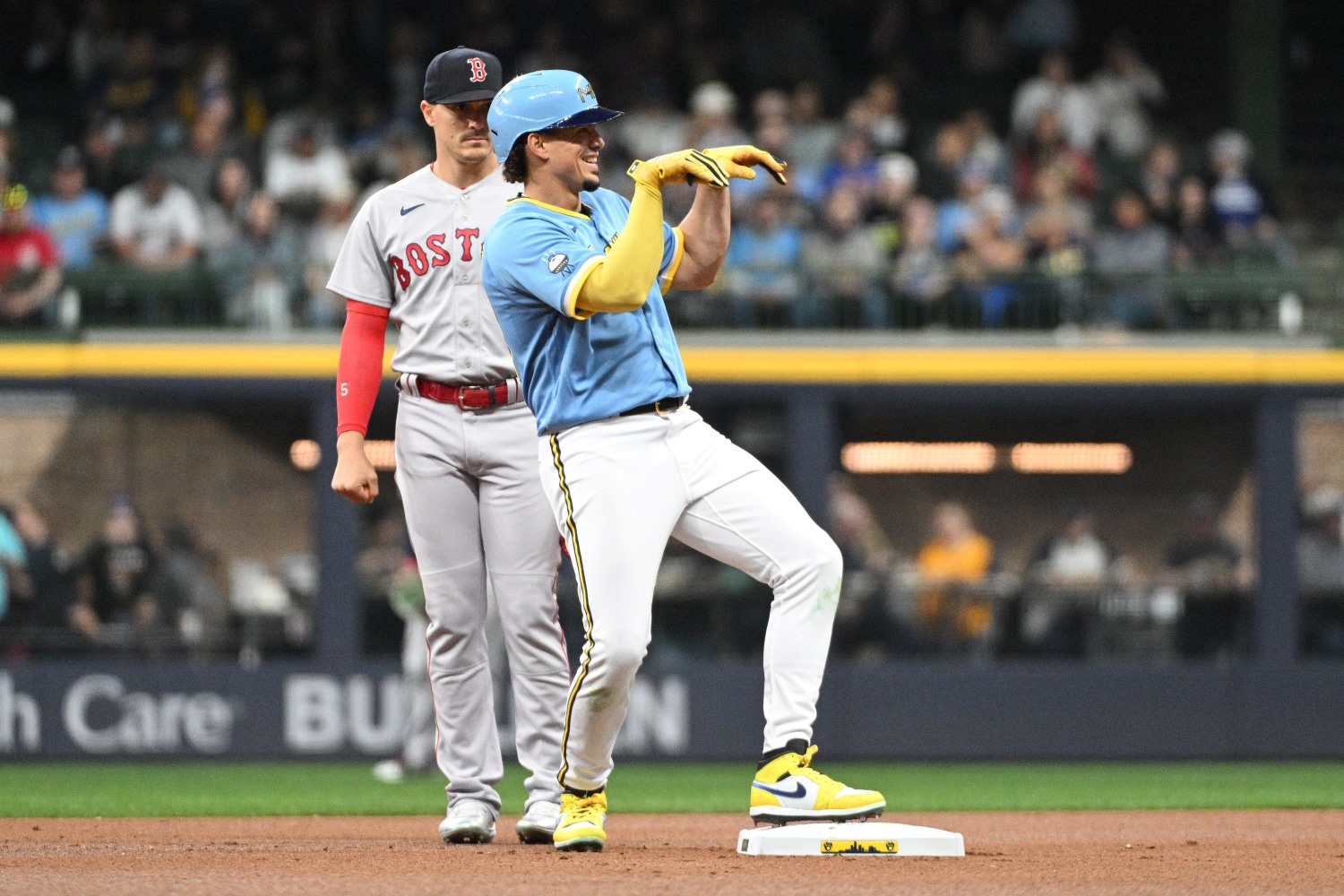 Willy Adames The most popular criticism of Adames coming into the season was how little he walked, with his approach favoring happy-go-lucky over cautious calculation. However, so far this season, he’s in the 84th percentile with a walk rate of 14 percent. Adames talked on Tuesday about how he wanted to improve in this area, setting himself a target of 70 walks this season (his previous high was 57). He hasn’t quite found his timing with the bat as of yet, so his quality of contact is down, but we know when Willy gets hot, he can carry this offense. Christian Yelich’s Underlying Metrics So far, Yelich has posted a mere .247/.326/.388 slash line, resulting in a .714 OPS. However, he’s currently in the 96th percentile for hard hit balls, with 57% of his balls in play over 95 mph. His expected batting average, based on his contact rate and the speed and trajectory of his batted balls, is .274, and he has hit into some bad luck so far this season with some roped line drives. We all want to see Yelich pull the ball in the air more, but given his inconsistent patches so far, there is a feel that he’s tinkering with his swing, and as such, that he can manage a more consistent performance in the latter half of the season. William Contreras Catching Barrels and Strikes Contreras has missed just 10 pitches in the strike zone so far this season, on top of which, in eight of the nine areas in the zone he has an average exit velocity around or above 90 mph. The only area he’s really struggled is the slider down and away, with six of his 12 strikeouts low and away, but he has shown himself to be a far more adept bat-to-ball hitter than we expected. He’s also in the 77th percentile for framing metrics, a huge improvement on last season, and something of which the Brewers’ coaching crew can be proud. It’s important to note that Contreras' work ethic and dedication likely played a big part in this turnaround too, as well as his athleticism. Hoby Milner Milner is in the lowest percentiles of both fastball velocity and fastball spin rates, yet somehow he is in the 92th percentile for average exit velocity allowed, inducing on average hits of 84.3 mph. He’s given up just six hits so far this season, and none of his individual pitches have been hit hard so far, using each of his sinker, curveball and changeup to great effect. And yet…. Joel Payamps Payamps has gone one better than Milner, with opponents managing only an 81.5 mph average exit velocity. That’s in the 98th percentile among all MLB hurlers. He struggles to generate many whiffs and strikeouts, but he avoids barrels at a strong rate, and with the current Brewers infield, Payamps and Milner are absolutely deadly. Our Supreme Closer Devin Williams may be the leader of the cardiac crew, but his stats underneath it all are the sound vitals that make the occasional palpitations livable. No one has generated more whiffs per swing than Williams, with his change-up having a 50% whiff rate, and the fastball a 47% figure. He has allowed just a .063 expected batting average on his heater, due in large part to his extension off the mound, and his above-average movement both vertically and horizontally on the pitch. We’ve seen a lot of hitters so far this season sitting on his changeup, resulting in a lower chase rate than Williams is used to, but he’s taking advantage of this and peppering the zone with his fastball. He has the lowest xBA, the second-lowest xSlg and the best strikeout rate in the major leagues. He also seems to have ice in his veins, but I can’t find any stats to back that up. Wade Miley If you asked anyone what the best you could hope for from Miley coming into the season it’s probably along the lines of “limit hard contact and hope for the best”. Well, Miley has come through and more, with a 71st-percentile hard-hit rate allowed, while also being stingy with walks (85th percentile). On top of that, he’s nipping in and around the shadow area of the zone so much that he’s forced one of the better chase rates in the Brewers pitching corps, with his slider generating a 42.9% whiff rate. Team Defense Per Fielding Bible, the team’s defense so far has saved 25 runs, eight ahead of the second-placed Diamondbacks. The outfield alone has 10 Defensive Runs Saved, and has contributed much to the improved consistency of the Brewers’ performance this season. The Garrett Mitchell absence could be felt heavily, but Joey Wiemer is a strong defender in his own right. Sal Frelick Frelick hasn’t had the ideal start to the season, struggling to avoid weak contact in his current slump, although he did break out slightly with a three-hit game before his thumb injury yesterday. However, he has just a 12.4% whiff rate, and swings at pitches outside the zone just 14% of the time so far, so even in his slump, he’s a really tough at-bat for opposing pitchers. No doubt, we’ll see the consistent hard contact return at some point this season to add to his sublime contact skills.
-
Unfortunately it's as I thought, it's such a shame but he's likely hurt his rotator cuff on the slide, which causes the subluxation and damaged labrum on the throw. He needed the AB's to sharpen his approach and this must be gutting for gim
-
If it's happened as I suspect, injuries to rotator cuff can be sharp then ease off quickly enough, or feel like you can play through them. It turns out the injury is to the left arm, which would have less torque going through it at least. But I would maybe have expected they take him out at that point given his injury history and how niggly shoulders can be, and it may have huge consequences for his career I think Mitchell seems to do a good job of not chasing pitches too often, it's the swing and miss which seems incredibly high. you'd think with his speed any sort of contact has potential for a base hit. Even if he could create a really shortened two strike approach and swing for the fences early in counts
- 2 replies
-
- 1
-

-
- garrett mitchell
- brian anderson
- (and 1 more)
-
Garrett Mitchell’s speed bought the Brewers a crucial run at the top of the 10th inning Tuesday night in Seattle, but it may have come at a serious cost. On Wednesday, the team placed Mitchell on the injured list with a subluxation of his left shoulder. Image courtesy of © Rick Scuteri-USA TODAY Sports Garrett Mitchell’s speed bought the Brewers a crucial run at the top of the 10th inning Tuesday night in Seattle, but it may have come at a serious cost. On Wednesday, the team placed Mitchell on the injured list with a subluxation of his left shoulder. The Injury A shoulder subluxation is essentially a partial dislocation of the shoulder joint, occurring as a result of either loose ligaments in the shoulder joint, or weakness of the rotator cuff muscles. It usually occurs in movements where the hand and arm are at full stretch above the head. The instability in the shoulder joint can result in this being a recurring injury rather than a one-off, and create a persistent pain or weakness in the shoulder. That being said, this would be classified as a traumatic injury, which suggests a better long-term prognosis. Hopefully, the strength and conditioning elements of the Brewers system can assist in minimizing this further. The actual detachment is less of an issue with this injury than the damage it can do to the rotator cuff and the labrum. What May Have Happened Garrett Mitchell continuing to play on and throw with the injury may have made the situation significantly worse regarding the damage to his rotator cuff. It’s quite possible that he weakened his rotator cuff in the slide, with this weakness translating to the subluxation when he tried to throw to home. A partial tear exacerbated by the high-intensity throw to home could be season-ending, and the resulting surgery has historically created problems with a reduction in power due to scarring. The Recovery The recovery varies depending on the severity of the injury, but recent history doesn’t look promising. The worst-case scenario is also the most common cause unfortunately, which is anterior labral detachment, which wouldn’t bode well for Mitchell and could require an arthroscopic surgical repair. With a full detachment, surgery would be necessary, but there is a possibility that it can heal naturally if the labrum is merely strained. Complete recovery can take five to six months for the layman, and there is a huge risk in returning to activities before the shoulder is stable. Based on prior examples, it’s very possible that Mitchell is out for around three months based on this prognosis. If he’s avoided any damage to the labrum, then he would see a far shorter time off and merely need to put the shoulder back in place, and re-strengthen the muscles around the joint. Similar MLB Injuries Fernando Tatis, Jr. Tatis had a shoulder subluxation during the first week of the 2021 season, on an extended follow-through while swinging the bat. Yet, he played through the injury all season before having surgery on the torn labrum at the end. In his own words, he was playing with “one arm” all season, yet he still posted a .975 OPS. It remains to be seen, as he hasn’t played in the major leagues since, but his recent performances in the minors suggest his power hasn’t disappeared. The subluxation was in his non-throwing arm. Brian Anderson In 2021, Anderson was a rising star (an All-Star in 2019), but he suffered two subluxations in the same season. The first put him on the 60-day injured list, and he came off as soon as the 60 days were up, on July 24th. Six weeks later, he had re-aggravated the injury, causing another subluxation, after which he elected to go the surgical route. It’s safe to say his throwing arm has recovered since, with a 102-mph throw from the outfield yesterday, but he has battled recurring shoulder niggles ever since. Jesse Winker In 2018, Winker had a right shoulder subluxation, which ended his season on July 25. He has struggled with shoulder stuff ever since, but he did experience a slight power decrease in 2019, which returned in 2020 and 2021. Perk Up It’s too early to know definitively when Mitchell will be back. In the meantime, Blake Perkins has gotten the call from Triple A to join the outfield mix. Whether or not Perkins remains the guy for the gig could depend on a number of factors. It feels likely that Sal Frelick pushes his way into the mix soon. At every turn, this team’s depth is being tested, but so far, they’ve passed all of those tests. Mitchell’s absence is just the next in the queue. View full article
- 2 replies
-
- 1
-
-
- garrett mitchell
- brian anderson
- (and 1 more)
-
Garrett Mitchell, Shoulder Subluxations, and the Brewers' Options
Jake McKibbin posted an article in Brewers
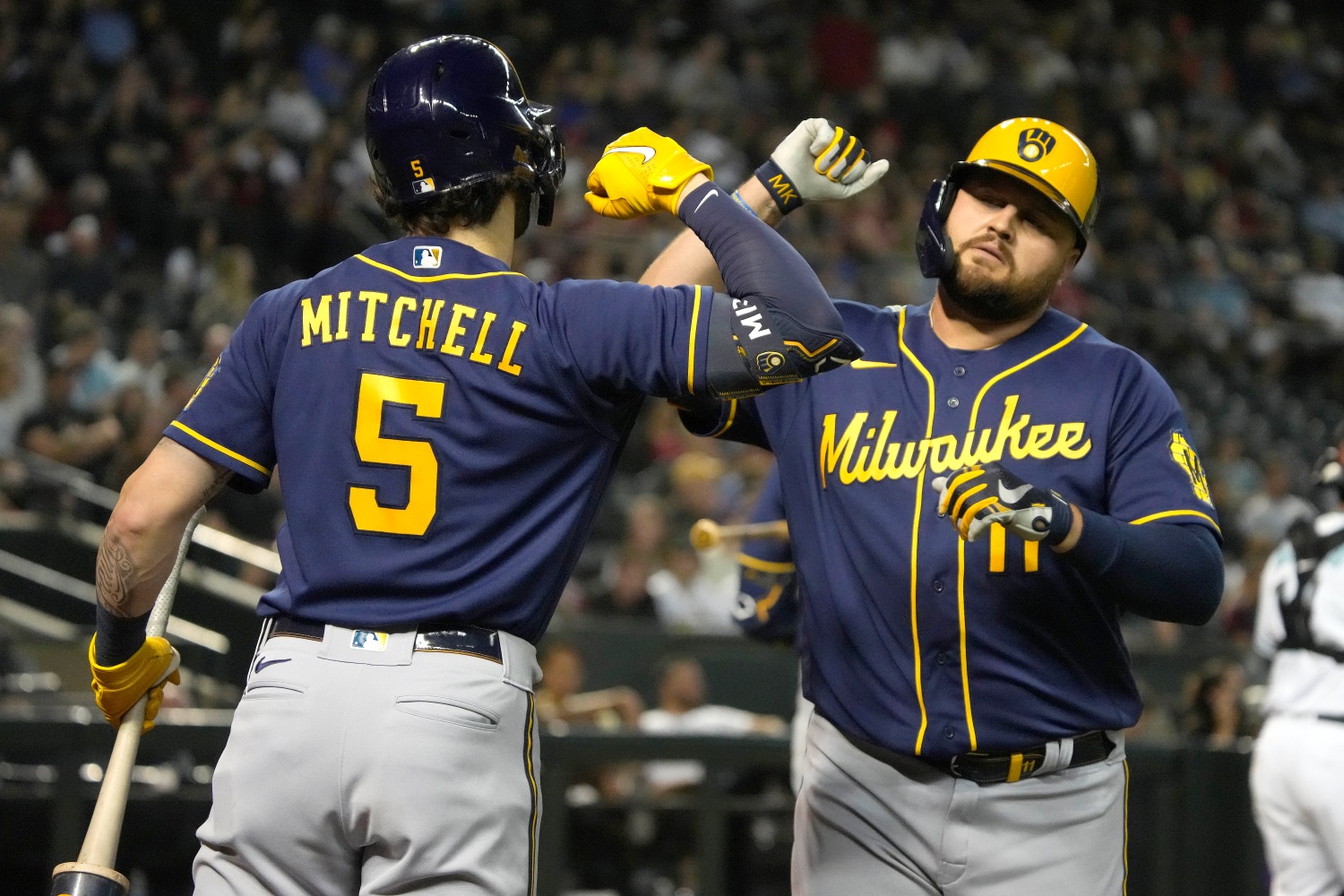 The Injury A shoulder subluxation is essentially a partial dislocation of the shoulder joint, occurring as a result of either loose ligaments in the shoulder joint, or weakness of the rotator cuff muscles. It usually occurs in movements where the hand and arm are at full stretch above the head. The instability in the shoulder joint can result in this being a recurring injury rather than a one-off, and create a persistent pain or weakness in the shoulder. That being said, this would be classified as a traumatic injury, which suggests a better long-term prognosis. Hopefully, the strength and conditioning elements of the Brewers system can assist in minimizing this further. The actual detachment is less of an issue with this injury than the damage it can do to the rotator cuff and the labrum. What May Have Happened Garrett Mitchell continuing to play on and throw with the injury may have made the situation significantly worse regarding the damage to his rotator cuff. It’s quite possible that he weakened his rotator cuff in the slide, with this weakness translating to the subluxation when he tried to throw to home. A partial tear exacerbated by the high-intensity throw to home could be season-ending, and the resulting surgery has historically created problems with a reduction in power due to scarring. The Recovery The recovery varies depending on the severity of the injury, but recent history doesn’t look promising. The worst-case scenario is also the most common cause unfortunately, which is anterior labral detachment, which wouldn’t bode well for Mitchell and could require an arthroscopic surgical repair. With a full detachment, surgery would be necessary, but there is a possibility that it can heal naturally if the labrum is merely strained. Complete recovery can take five to six months for the layman, and there is a huge risk in returning to activities before the shoulder is stable. Based on prior examples, it’s very possible that Mitchell is out for around three months based on this prognosis. If he’s avoided any damage to the labrum, then he would see a far shorter time off and merely need to put the shoulder back in place, and re-strengthen the muscles around the joint. Similar MLB Injuries Fernando Tatis, Jr. Tatis had a shoulder subluxation during the first week of the 2021 season, on an extended follow-through while swinging the bat. Yet, he played through the injury all season before having surgery on the torn labrum at the end. In his own words, he was playing with “one arm” all season, yet he still posted a .975 OPS. It remains to be seen, as he hasn’t played in the major leagues since, but his recent performances in the minors suggest his power hasn’t disappeared. The subluxation was in his non-throwing arm. Brian Anderson In 2021, Anderson was a rising star (an All-Star in 2019), but he suffered two subluxations in the same season. The first put him on the 60-day injured list, and he came off as soon as the 60 days were up, on July 24th. Six weeks later, he had re-aggravated the injury, causing another subluxation, after which he elected to go the surgical route. It’s safe to say his throwing arm has recovered since, with a 102-mph throw from the outfield yesterday, but he has battled recurring shoulder niggles ever since. Jesse Winker In 2018, Winker had a right shoulder subluxation, which ended his season on July 25. He has struggled with shoulder stuff ever since, but he did experience a slight power decrease in 2019, which returned in 2020 and 2021. Perk Up It’s too early to know definitively when Mitchell will be back. In the meantime, Blake Perkins has gotten the call from Triple A to join the outfield mix. Whether or not Perkins remains the guy for the gig could depend on a number of factors. It feels likely that Sal Frelick pushes his way into the mix soon. At every turn, this team’s depth is being tested, but so far, they’ve passed all of those tests. Mitchell’s absence is just the next in the queue.
-
Has there been any reports or news on what the Brewers have been working with Misiorowski on? Since the draft, they've been keeping him mostly behind closed doors so curious if there's any discernible changes or developments since his college days
-