



Jason Wang
-
Posts
955 -
Joined
-
Last visited
-
Days Won
1
Content Type
Profiles
Forums
Blogs
Events
News
2026 Milwaukee Brewers Top Prospects Ranking
Milwaukee Brewers Videos
2022 Milwaukee Brewers Draft Picks
Milwaukee Brewers Free Agent & Trade Rumors, Notes, & Tidbits
Guides & Resources
2023 Milwaukee Brewers Draft Picks
2024 Milwaukee Brewers Draft Picks
The Milwaukee Brewers Players Project
2025 Milwaukee Brewers Draft Pick Tracker
2026 Milwaukee Brewers Draft Tracker: Picks & Bonuses
Store
Downloads
Gallery
Everything posted by Jason Wang
-

Exploring Trade Partners For Devin Williams: San Diego Padres
Jason Wang posted an article in Brewers
 Why They Need Him The Padres are fighting ferociously to escape the Dodgers' shadow, and that fight isn't getting any easier. After narrowly missing the playoffs in 2023, outstanding years from new faces helped carry them to 93 wins and a Wild Card berth in 2024. They were arguably the team to come the closest to dethroning Los Angeles in the postseason, taking the Division Series to a full five games although the lineup was completely shut down for the final 21 innings of the matchup. Nonetheless, San Diego was just one win away from overcoming the eventual World Series champions and their most heated rivals. Although they lacked the star power that the Dodgers had, their roster was incredibly well-rounded, not particularly lacking in any one area. The team’s OPS of .745 was sixth in MLB and they managed to lead all teams in batting average, at .263. Pitching-wise, they had a combined ERA of 3.86, 12th in MLB. Michael King and Dylan Cease led the rotation, while the bullpen was held down by Jeremiah Estrada, Adrián Morejón, and their primary closer Robert Suarez. To further bolster an already capable group of relievers, they even acquired Tanner Scott from the Marlins and Jason Adam from the Rays at the trade deadline to serve as their setup men. Looking ahead to 2025, San Diego’s front office has some important conversations to have. Star infielder Ha-Seong Kim is a free agent, and will probably seek greener pastures. On the bright side, Jurickson Profar is a good candidate to return, on the heels of an All-Star season in which he was also beloved in the clubhouse. Furthermore, the loss of Kim may not be the end of the world. After his shoulder surgery in late August sidelined him for the remainder of the regular season and entirety of the postseason, the team did fine with Xander Bogaerts at shortstop, Jake Cronenworth at second base, and Luis Arráez at first. If they choose to abstain from pursuing a replacement for Kim through trade or free agency, a natural step would be to recreate last year’s success by bringing aboard another standout closer, in Devin Williams. In this case, Suarez would likely shift his responsibility to pitching the eighth inning, but they can also share if they’d prefer the harmonious route. With an already great lineup; a rotation with the aforementioned King and Cease joined by veteran Yu Darvish; and a bullpen with the Airbender, the Padres might just have enough to put the other 29 teams on notice—even the defending champions. What They Have to Offer Because of their aggressive trade decisions over the past few years, the Padres have bade adieu to many of their most prized younglings. Of the teams we’ve discussed as potential trade partners so far, the Padres might have the weakest farm system. In fact, unless the Angels plan on competing or the Astros plan on reuniting Josh Hader with his old partner in crime, San Diego has the weakest inventory of any team potentially interested in Williams. But within every bag of trail mix are a few M&Ms, and the Padres’ farm system is no different. Ethan Salas and Leodalis De Vries are both 18-year-olds in MLB’s Top 100 prospect rankings, but they’re probably staying where they are. In fact, five of the team’s top 10 prospects were in rookie ball, which may be a little too far out for the Brewers’ liking. Bradgley Rodriguez has both a unique first name and a chance to be great, pitching to a 2.64 ERA over 61 ⅓ innings across three levels of the minors from Single-A through Double-A. With a 70-grade fastball (the same grade as Jacob Misiorowski) that sits in the upper 90s and a plus changeup, scouts credited this one-two punch for his quick ascent through the minors. If they want to pursue a starter instead, Braden Nett posted a 3.88 ERA over 19 starts, spending the vast majority of his time with High-A Fort Wayne. He’s noted as having decent carry on his fastball with a high-spin slider and a developing changeup that has yet to separate effectively from his heater. He’s a work in progress with considerable upside, a player profile that Milwaukee loves to take on. Realistic position player options are limited, but first base prospect Romeo Sanabria also shot up through three levels of the minors in 2024, slashing .288/.396/.427 with 30 doubles and 11 home runs over 546 plate appearances. He doesn’t seem to have the pop of a typical first baseman, is limited by his fielding ability and lack of speed, and saw his numbers decline quickly by the time he hit Double-A, but with great on-base skills, there’s a potential for him to be an effective bat somewhere down the line. Because of the relatively low value of the Padres’ prospects, it would make sense for several of them to be bundled together. However, with the team’s core aging quickly and their window of contention closing quicker, the time to compete is now for the Friars—and who better to push them over the top than Devin Williams?
 -
The Red Sox have been to the playoffs just once since their last World Series win in 2018. Could Devin Williams help them return to their winning ways? Image courtesy of © Michael McLoone-Imagn Images The Red Sox have been to the playoffs just once since their last World Series win in 2018. Could Devin Williams help them return to their winning ways? Why They Need Him For the first half of the 2024 season, Boston’s pitching staff was a point of strength. Their team ERA of 3.63 was the fifth-best in MLB. While Tanner Houck and Kutter Crawford led the rotation, Kenley Jansen’s 2.16 ERA and 19 saves were reminiscent of his tenure in Los Angeles. However, after the Midsummer Classic, Boston’s pitching completely fell off the pace and put up a second-half ERA of 4.63. Every pitcher in the rotation except Houck saw their numbers quickly regress, while the team was desperately trying to claw their way into October, culminating in the team’s third consecutive playoff miss. With an 81-81 record in one of the more competitive divisions in baseball, one might assume that the Red Sox will need a whole lot more than a rental closer to be competitive. That may be true if they want to win the World Series, but the team isn’t that far from having meaningful championship equity. It may not be apparent to those who don't follow the team closely, but their position players are exceptional. In addition to posting a combined OPS of .735 in 2024 (8th in MLB), the team accumulated 49 Defensive Runs Saved (6th in MLB). More established talents like Jarren Duran and Rafael Devers have helped rookies like Wilyer Abreu and Ceddanne Rafaeala shine. Speaking of Duran, in his first full season, he led the league in plate appearances (735), doubles (48), and triples (14) while posting 23 DRS (2nd in MLB) and 8.7 rWAR (5th in MLB). So the missing pieces lie in the pitching staff. As mentioned earlier, there are some names that showed the ability to be great but the lack of sustainability ultimately caused the downfall of the team. The rotation will be helped by Lucas Giolito (who just exercised his $19 million-player option) returning from a season lost to Tommy John surgery, as well as the aforementioned Houck and Crawford having more time to develop over the offseason. On the bullpen side, Jansen is now a free agent and actually began his offseason early after being placed on the injured list, leaving the team before their final series against the Rays. Thus, it would be astonishing if he were to somehow find himself back on the team with a new deal in 2025, so the team will need a new closer. Greg Weissert had a good year and actually finished 16 games, but he picked up just one save. He could be in contention for the job, but with poor strikeout and whiff rates, he doesn’t profile like your ideal closer. If Boston wants a knockout piece to complement a league-leading lineup, there simply isn’t a better trade target than Devin Williams. What They Have to Offer The Red Sox have a solid amount of young talent down on their farm. With a whopping six names on the MLB Top 100 list, there are plenty of options to choose from if Milwaukee decides to do business. That being said, trading a top-of-the-line prospect for a rental closer is not how they prefer to operate, so I wouldn’t expect Roman Anthony, Marcelo Mayer, Kyle Teel, or any other marquee name packaged in a potential deal—unless the Brewers pony up some more players. Personally, I would target Jhostynxon Garcia as my main prize, simply because he has a top-five all-time name, but with his stellar minor-league results (.892 OPS, 459 PA), his stock is probably at an all-time high. Furthermore, the Brewers are stacked in the outfield, so it’s not a position of priority for the front office. More realistically, the Red Sox would be most willing to part with a prospect who’s a little further out from making the show. Elmer Rodriguez-Cruz (#17 Boston prospect) is a righty starter who pitched to a 2.91 ERA over 89 ⅔ innings spread across Single-A Salem and High-A Greenville. He’s noted as having good arm-side run and carry on his fastball while sporting a slider in the upper 80s with good depth. Jedixson Paez (#23) had similar numbers this season, although he spent more time in High-A and finished with a 3.17 ERA, helped by his strong command and a decent secondary arsenal consisting of a curveball and changeup. With the existing logjam in Boston’s major-league lineup (exacerbated by the rich talent at the top of the prospect funnel), there’s an opportunity to offload some top position player assets that the Red Sox won’t be able to utilize. Infielder Chase Meidroth (#11) slashed .293/.437/.401 over a full season in Triple-A Worcester at just 22 years old. He would ordinarily be too expensive for this type of deal, but because of the talent in front of him, there could be an outside chance he gets sent off this offseason. Mikey Romero (#16) is a middle infielder who spent most of his season with High-A Greenville, finishing with an .817 OPS over 276 plate appearances. With the free agency of Willy Adames raising questions about the future of the shortstop position in Milwaukee, Romero could be a contingency plan with pretty decent upside. With their most heated rivals making the World Series last season, there’s more fan pressure than ever for Boston’s front office to make some impactful moves this offseason. Compounded with the incumbent talent on the field, the Red Sox are closer to being contenders than you think, and Devin Williams could be the final piece of the puzzle... if the price is right. View full article
-
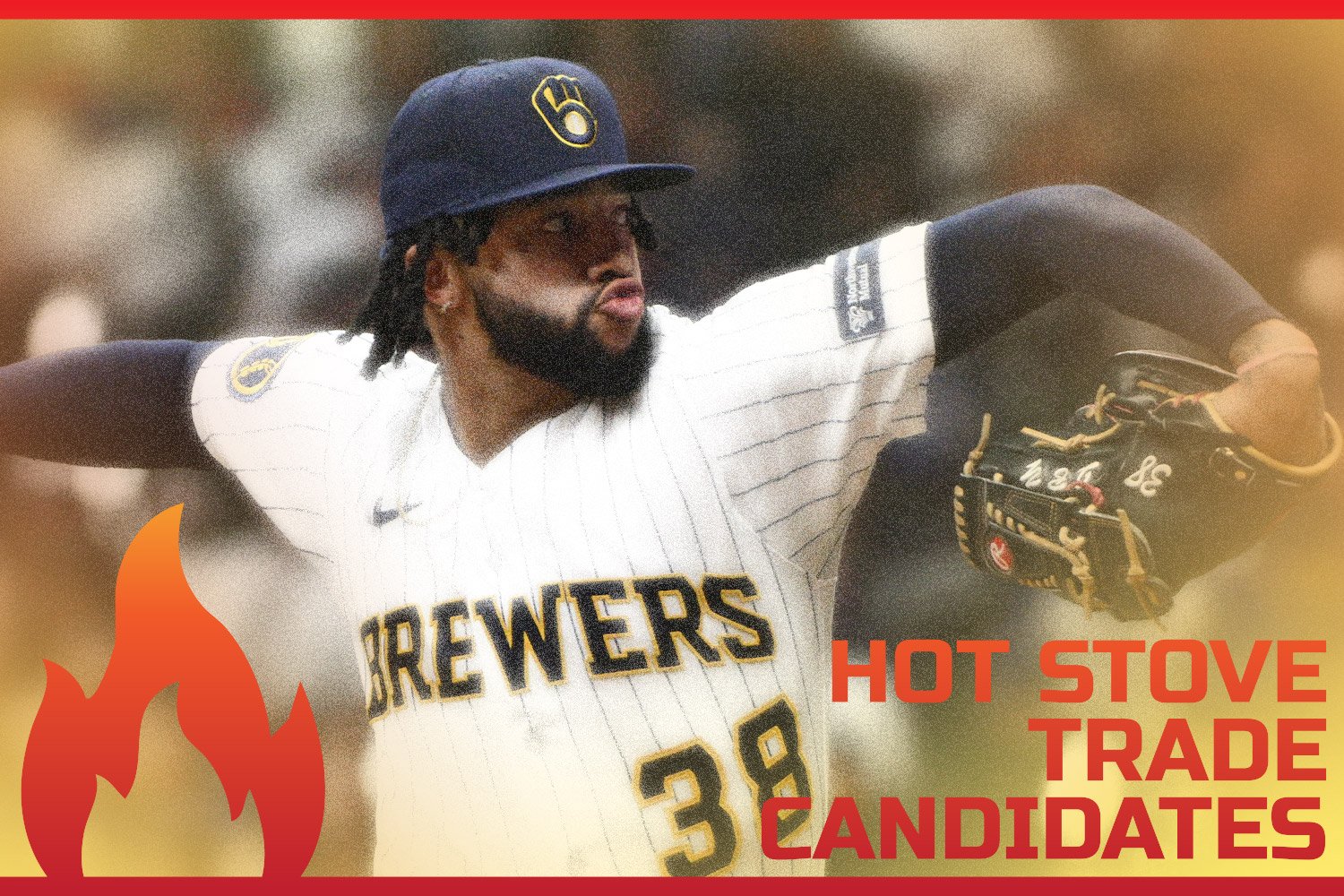 Why They Need Him For the first half of the 2024 season, Boston’s pitching staff was a point of strength. Their team ERA of 3.63 was the fifth-best in MLB. While Tanner Houck and Kutter Crawford led the rotation, Kenley Jansen’s 2.16 ERA and 19 saves were reminiscent of his tenure in Los Angeles. However, after the Midsummer Classic, Boston’s pitching completely fell off the pace and put up a second-half ERA of 4.63. Every pitcher in the rotation except Houck saw their numbers quickly regress, while the team was desperately trying to claw their way into October, culminating in the team’s third consecutive playoff miss. With an 81-81 record in one of the more competitive divisions in baseball, one might assume that the Red Sox will need a whole lot more than a rental closer to be competitive. That may be true if they want to win the World Series, but the team isn’t that far from having meaningful championship equity. It may not be apparent to those who don't follow the team closely, but their position players are exceptional. In addition to posting a combined OPS of .735 in 2024 (8th in MLB), the team accumulated 49 Defensive Runs Saved (6th in MLB). More established talents like Jarren Duran and Rafael Devers have helped rookies like Wilyer Abreu and Ceddanne Rafaeala shine. Speaking of Duran, in his first full season, he led the league in plate appearances (735), doubles (48), and triples (14) while posting 23 DRS (2nd in MLB) and 8.7 rWAR (5th in MLB). So the missing pieces lie in the pitching staff. As mentioned earlier, there are some names that showed the ability to be great but the lack of sustainability ultimately caused the downfall of the team. The rotation will be helped by Lucas Giolito (who just exercised his $19 million-player option) returning from a season lost to Tommy John surgery, as well as the aforementioned Houck and Crawford having more time to develop over the offseason. On the bullpen side, Jansen is now a free agent and actually began his offseason early after being placed on the injured list, leaving the team before their final series against the Rays. Thus, it would be astonishing if he were to somehow find himself back on the team with a new deal in 2025, so the team will need a new closer. Greg Weissert had a good year and actually finished 16 games, but he picked up just one save. He could be in contention for the job, but with poor strikeout and whiff rates, he doesn’t profile like your ideal closer. If Boston wants a knockout piece to complement a league-leading lineup, there simply isn’t a better trade target than Devin Williams. What They Have to Offer The Red Sox have a solid amount of young talent down on their farm. With a whopping six names on the MLB Top 100 list, there are plenty of options to choose from if Milwaukee decides to do business. That being said, trading a top-of-the-line prospect for a rental closer is not how they prefer to operate, so I wouldn’t expect Roman Anthony, Marcelo Mayer, Kyle Teel, or any other marquee name packaged in a potential deal—unless the Brewers pony up some more players. Personally, I would target Jhostynxon Garcia as my main prize, simply because he has a top-five all-time name, but with his stellar minor-league results (.892 OPS, 459 PA), his stock is probably at an all-time high. Furthermore, the Brewers are stacked in the outfield, so it’s not a position of priority for the front office. More realistically, the Red Sox would be most willing to part with a prospect who’s a little further out from making the show. Elmer Rodriguez-Cruz (#17 Boston prospect) is a righty starter who pitched to a 2.91 ERA over 89 ⅔ innings spread across Single-A Salem and High-A Greenville. He’s noted as having good arm-side run and carry on his fastball while sporting a slider in the upper 80s with good depth. Jedixson Paez (#23) had similar numbers this season, although he spent more time in High-A and finished with a 3.17 ERA, helped by his strong command and a decent secondary arsenal consisting of a curveball and changeup. With the existing logjam in Boston’s major-league lineup (exacerbated by the rich talent at the top of the prospect funnel), there’s an opportunity to offload some top position player assets that the Red Sox won’t be able to utilize. Infielder Chase Meidroth (#11) slashed .293/.437/.401 over a full season in Triple-A Worcester at just 22 years old. He would ordinarily be too expensive for this type of deal, but because of the talent in front of him, there could be an outside chance he gets sent off this offseason. Mikey Romero (#16) is a middle infielder who spent most of his season with High-A Greenville, finishing with an .817 OPS over 276 plate appearances. With the free agency of Willy Adames raising questions about the future of the shortstop position in Milwaukee, Romero could be a contingency plan with pretty decent upside. With their most heated rivals making the World Series last season, there’s more fan pressure than ever for Boston’s front office to make some impactful moves this offseason. Compounded with the incumbent talent on the field, the Red Sox are closer to being contenders than you think, and Devin Williams could be the final piece of the puzzle... if the price is right.
 -
he would be one of one like an nft
-
Now that their World Series hangover is (hopefully) over, a new closer could bring the Rangers back to the postseason. Image courtesy of © David Kohl-Imagn Images Now that their World Series hangover is (hopefully) over, a new closer could bring the Rangers back to the postseason. Why They Need Him The 2023 season was a great one for Texas. They won it all for the first time in franchise history, driven by a bombastic lineup and their expensive middle infield. They headed into 2024 with a full head of steam, and many figured they would continue their newfound success. Jacob DeGrom was slated to return from the IL by the middle of the season, along with a couple of other high-octane hurlers; rookies Evan Carter and Wyatt Langford were two of the most exciting young talents in the sport; and Adolis García looked ready to cement himself as one of the most imposing outfield hitters around. Unfortunately, every player this side of Corey Seager regressed meaningfully. The lineup fell from a .790 OPS (3rd in MLB) in 2023 to a .686 OPS (23rd in MLB) this year. The pitching staff wasn’t safe, either, as the team’s rotation similarly went from a 3.96 ERA (7th in MLB) to a 4.35 ERA (21st in MLB). With a record of 27-30 by the end of May, they could never find their footing in the division again and fell out of serious postseason contention rather quickly. In fact, their Pythagorean win/loss record (based on run differential) was 75-87, three wins worse than their eventual record of 78-84, indicating that the final result was actually a bit on the lucky side. But the team isn’t done competing. With a top-10 payroll and the core of the team built around the duo of Seager and Marcus Semien, they only have a few more years in their window to remain competitive. Furthermore, they’re losing quite a few players to free agency—mostly pitchers. Max Scherzer, Nathan Eovaldi, and Andrew Heaney will all be testing the market, in addition to their two most recent closers, Kirby Yates and Jose Leclerc. Leclerc had been great in 2022 and 2023, posting a 2.96 ERA over 115 ⅔ innings. He wasn’t the main closer in either of those years, but really earned his spot during the team’s World Series run, in which he finished 12 games and earned four saves. Unable to shoulder the burden of pitching higher-leverage innings during the start of last season, his ERA ballooned to 5.18 by the end of May, coinciding with the team’s broader struggles and he ceded his role to Yates. A journeyman, Yates has spent his 10-year career with six different major-league teams. His best season was undoubtedly in 2019, when he pitched to a 1.19 ERA and earned an MLB-leading 41 saves, placing him top-10 in Cy Young Award voting. He was immediately thereafter sidelined by elbow injury and a second Tommy John surgery before finally rediscovering his old form with the Rangers in 2024, posting a 1.17 ERA with 33 saves. Yates was incredible last year, but he’ll be 38 years old by the time 2025 starts and there’s no guarantee that he can stick around at this level for much longer. They could choose to re-sign him for another year and hope that he can repeat his closer success, or they could pursue a younger, more consistent talent in the form of Devin Williams. In a division as competitive as the AL West, it could be the difference between enjoying October baseball from the field or from the cold comfort of their homes. What They Have to Offer Things are not pretty for the future of the franchise, which is all the more reason for the front office to invest in the present. Following the graduation of Langford and Carter, the only MLB Top 100 prospect is infielder Sebastian Walcott (#38), who just cracked Double-A Frisco to end the minor-league season. There are also quite a few top pitching prospects (outside of Kumar Rocker, who is likely off-limits and not really a prospect anymore), like Alejandro Rosario (2.40 ERA over eight starts in High-A Hickory) and Emiliano Teodo (1.98 ERA over 19 starts in Double-A Frisco) who could interest Milwaukee. On the other hand, given their lack of starting pitching depth at the major-league level, these two starters could be called up by Texas sooner rather than later. Further down their top 30 prospects list, you can find two lefty starters in Mitch Bratt (#18 prospect) and Kohl Drake (#21). Bratt tossed a combined 110 ⅓ innings across High-A and Double-A, finishing with a 3.75 ERA for the year. At just 20 years old, he’s advancing quickly, which will likely come with a big bump in his stock value in 2025. Similarly, Drake split time between three levels of the minors from Single-A to Double-A and was successful every step of the way, finishing with a 2.29 ERA over 106 innings. Both players have an ETA of 2025, which could fit the Brewers’ existing MO of targeting major-league-ready talent with plenty of team control. Position player-wise, there isn’t a ton to write home about in pure prospect terms. Infielder Echedry Vargas has strong upside, but is a ways away from the big leagues at just 19 years old in Single-A. Most of their position players are outfielders, a place where Milwaukee has exceptional depth, but someone like Alejandro Osuna (.902 OPS, 265 PA in Double-A) could be worth a closer look. This is where the rubber meets the road. The young arms are interesting, but this system doesn't contain an easy match for Williams's value in a trade. The big-league roster does, though. Would the Rangers give up either Josh Jung or Josh H. Smith to get their much-needed relief ace? Smith and Jung each play third base, primarily. Smith has been moved around more, but as Jung has battled several injuries, he's been able to settle in there. Each has four years of team control remaining, which would be a lot to give up for one year of even a Williams-caliber closer. On the other hand, can the Rangers really make full use of both players? If negotiations between these teams get very far, you can bet Matt Arnold will at least push to get one of the Joshes to round out the infield even as he shifts resources around his roster. The Rangers’ front office has its work cut out. They are undoubtedly prioritizing the reconstruction of their rotation, but if they want to get the best out of the remaining years of their superstars, they’ll need someone to close the show as well. Whether that person can be Williams depends on how badly they want that, and what they're willing to pay. View full article
-
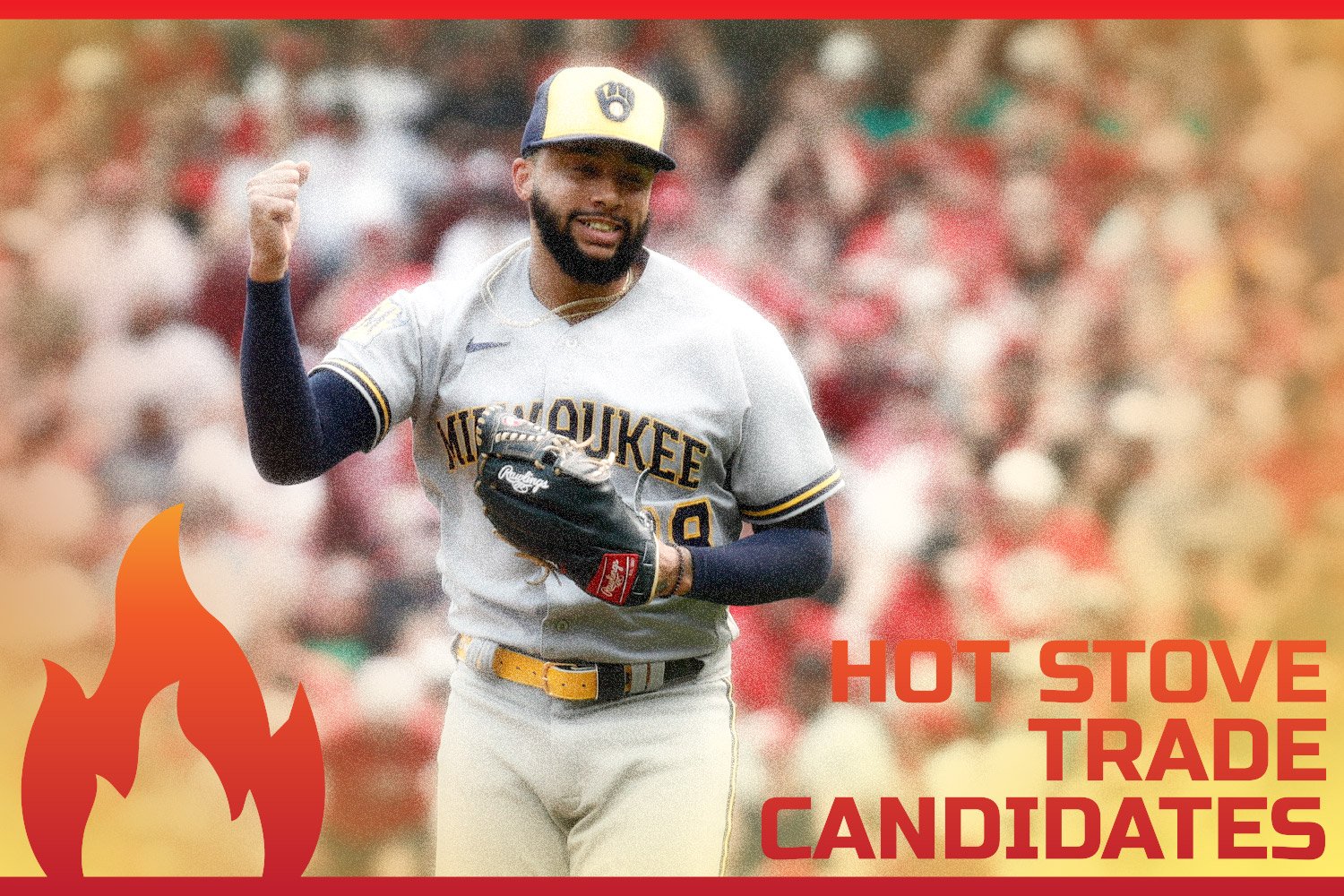 Why They Need Him The 2023 season was a great one for Texas. They won it all for the first time in franchise history, driven by a bombastic lineup and their expensive middle infield. They headed into 2024 with a full head of steam, and many figured they would continue their newfound success. Jacob DeGrom was slated to return from the IL by the middle of the season, along with a couple of other high-octane hurlers; rookies Evan Carter and Wyatt Langford were two of the most exciting young talents in the sport; and Adolis García looked ready to cement himself as one of the most imposing outfield hitters around. Unfortunately, every player this side of Corey Seager regressed meaningfully. The lineup fell from a .790 OPS (3rd in MLB) in 2023 to a .686 OPS (23rd in MLB) this year. The pitching staff wasn’t safe, either, as the team’s rotation similarly went from a 3.96 ERA (7th in MLB) to a 4.35 ERA (21st in MLB). With a record of 27-30 by the end of May, they could never find their footing in the division again and fell out of serious postseason contention rather quickly. In fact, their Pythagorean win/loss record (based on run differential) was 75-87, three wins worse than their eventual record of 78-84, indicating that the final result was actually a bit on the lucky side. But the team isn’t done competing. With a top-10 payroll and the core of the team built around the duo of Seager and Marcus Semien, they only have a few more years in their window to remain competitive. Furthermore, they’re losing quite a few players to free agency—mostly pitchers. Max Scherzer, Nathan Eovaldi, and Andrew Heaney will all be testing the market, in addition to their two most recent closers, Kirby Yates and Jose Leclerc. Leclerc had been great in 2022 and 2023, posting a 2.96 ERA over 115 ⅔ innings. He wasn’t the main closer in either of those years, but really earned his spot during the team’s World Series run, in which he finished 12 games and earned four saves. Unable to shoulder the burden of pitching higher-leverage innings during the start of last season, his ERA ballooned to 5.18 by the end of May, coinciding with the team’s broader struggles and he ceded his role to Yates. A journeyman, Yates has spent his 10-year career with six different major-league teams. His best season was undoubtedly in 2019, when he pitched to a 1.19 ERA and earned an MLB-leading 41 saves, placing him top-10 in Cy Young Award voting. He was immediately thereafter sidelined by elbow injury and a second Tommy John surgery before finally rediscovering his old form with the Rangers in 2024, posting a 1.17 ERA with 33 saves. Yates was incredible last year, but he’ll be 38 years old by the time 2025 starts and there’s no guarantee that he can stick around at this level for much longer. They could choose to re-sign him for another year and hope that he can repeat his closer success, or they could pursue a younger, more consistent talent in the form of Devin Williams. In a division as competitive as the AL West, it could be the difference between enjoying October baseball from the field or from the cold comfort of their homes. What They Have to Offer Things are not pretty for the future of the franchise, which is all the more reason for the front office to invest in the present. Following the graduation of Langford and Carter, the only MLB Top 100 prospect is infielder Sebastian Walcott (#38), who just cracked Double-A Frisco to end the minor-league season. There are also quite a few top pitching prospects (outside of Kumar Rocker, who is likely off-limits and not really a prospect anymore), like Alejandro Rosario (2.40 ERA over eight starts in High-A Hickory) and Emiliano Teodo (1.98 ERA over 19 starts in Double-A Frisco) who could interest Milwaukee. On the other hand, given their lack of starting pitching depth at the major-league level, these two starters could be called up by Texas sooner rather than later. Further down their top 30 prospects list, you can find two lefty starters in Mitch Bratt (#18 prospect) and Kohl Drake (#21). Bratt tossed a combined 110 ⅓ innings across High-A and Double-A, finishing with a 3.75 ERA for the year. At just 20 years old, he’s advancing quickly, which will likely come with a big bump in his stock value in 2025. Similarly, Drake split time between three levels of the minors from Single-A to Double-A and was successful every step of the way, finishing with a 2.29 ERA over 106 innings. Both players have an ETA of 2025, which could fit the Brewers’ existing MO of targeting major-league-ready talent with plenty of team control. Position player-wise, there isn’t a ton to write home about in pure prospect terms. Infielder Echedry Vargas has strong upside, but is a ways away from the big leagues at just 19 years old in Single-A. Most of their position players are outfielders, a place where Milwaukee has exceptional depth, but someone like Alejandro Osuna (.902 OPS, 265 PA in Double-A) could be worth a closer look. This is where the rubber meets the road. The young arms are interesting, but this system doesn't contain an easy match for Williams's value in a trade. The big-league roster does, though. Would the Rangers give up either Josh Jung or Josh H. Smith to get their much-needed relief ace? Smith and Jung each play third base, primarily. Smith has been moved around more, but as Jung has battled several injuries, he's been able to settle in there. Each has four years of team control remaining, which would be a lot to give up for one year of even a Williams-caliber closer. On the other hand, can the Rangers really make full use of both players? If negotiations between these teams get very far, you can bet Matt Arnold will at least push to get one of the Joshes to round out the infield even as he shifts resources around his roster. The Rangers’ front office has its work cut out. They are undoubtedly prioritizing the reconstruction of their rotation, but if they want to get the best out of the remaining years of their superstars, they’ll need someone to close the show as well. Whether that person can be Williams depends on how badly they want that, and what they're willing to pay.
 -
This year’s hottest pitching free agent has been earmarked for a big-market team, but could Milwaukee be a dark horse candidate to sign him? Image courtesy of © Sam Navarro-Imagn Images This year’s hottest pitching free agent has been earmarked for a big-market team, but could Milwaukee be a dark horse candidate to sign him? For the second year in a row, the most sought-after pitching talent of the offseason is coming from Japan. One year after Yoshinobu Yamamoto signed the most lucrative pitcher contract in MLB history, a younger but equally exciting Japanese talent has captured the attention of baseball fans. Roki Sasaki’s talents justify the hype that follows him. His numbers in NPB have been unreal, posting a cumulative 2.10 ERA, 0.89 WHIP, 11.5 K/9, and 5.74 K/BB over 394 ⅓ career innings at just 23 years old. He tossed 17 consecutive perfect innings along the way, an unthinkable feat in today’s game. To make him even more appealing, he’ll follow in Shohei Ohtani's footsteps by choosing the path of a typical international amateur free agent prospect rather than an established superstar. Because he’s being posted before turning 25, the team that signs him will pay him a modest signing bonus from the team’s international bonus pool, followed by league minimum before he hits arbitration and follows the traditional free agent service time restrictions. In other words, for the price of an average MLB contract, one lucky team will get a 6’2” power pitcher with a triple-digit fastball, physics-defying splitter, wicked slider, and full team control. This naturally led many to believe he would end up at a big market team, preferably one with a competitive roster and World Series aspirations. To many, he’ll inevitably find himself beside his Samurai Japan teammates Yamamoto and Ohtani on the Dodgers. Still, new information has suggested that he might prefer playing for a sleepier, cozier town like Milwaukee. First of all, the most common reason to sign with a big market team is that they tend to have bigger pockets, but with all of the financial restrictions on their contract, every team will be limited to the same price. Second, sources stated that Sasaki has strongly disliked the pressure of major media markets, namely the Japanese tabloids that have treated him unfairly for the past two years of his stardom. Third, he has emphasized the importance of joining a competitive roster and being part of a strong developmental program. Thus, any small market team with a knack for getting the best out of their arm talent seems to be a strong fit for his preferences. Sound familiar? Milwaukee is far from a podunk village, but the Brewers might as well be located in Yuba compared to Los Angeles and New York. The press is rarely as critical of players and tends to provide a fair analysis of things, satisfying his first condition. Second, and perhaps most importantly, few organizations have excelled at pitching development to the extent the Brewers have. Time and time again, the team has taken undervalued assets and turned things around. Tobias Myers, Aaron Civale, Jared Koenig, and Bryan Hudson are just a few examples from this season alone. Since 2019, the Brewers’ starters have a combined ERA of 3.87, which is fourth in MLB, and they’ve done so without a single major free-agent pitcher signing, something only the Rays have done better. Few teams marry great pitching development with a laidback media environment, and perhaps none have a better combination than the Brewers. The front office hasn’t been as active in signing Japanese players as some other teams around the league. Still, with these unique conditions and the seemingly unlimited upside of Sasaki, he could be the first player to buck the trend. View full article
-
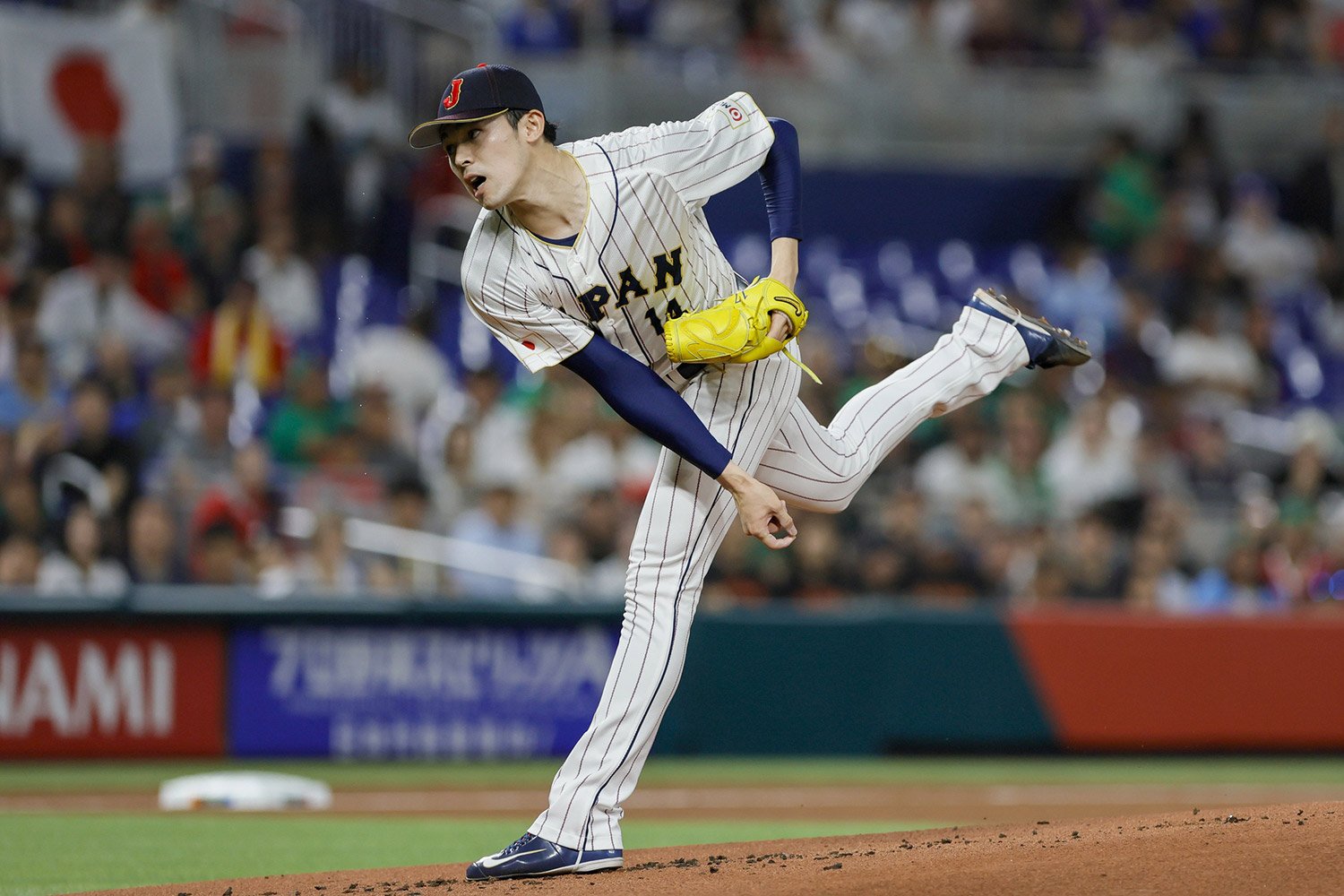 For the second year in a row, the most sought-after pitching talent of the offseason is coming from Japan. One year after Yoshinobu Yamamoto signed the most lucrative pitcher contract in MLB history, a younger but equally exciting Japanese talent has captured the attention of baseball fans. Roki Sasaki’s talents justify the hype that follows him. His numbers in NPB have been unreal, posting a cumulative 2.10 ERA, 0.89 WHIP, 11.5 K/9, and 5.74 K/BB over 394 ⅓ career innings at just 23 years old. He tossed 17 consecutive perfect innings along the way, an unthinkable feat in today’s game. To make him even more appealing, he’ll follow in Shohei Ohtani's footsteps by choosing the path of a typical international amateur free agent prospect rather than an established superstar. Because he’s being posted before turning 25, the team that signs him will pay him a modest signing bonus from the team’s international bonus pool, followed by league minimum before he hits arbitration and follows the traditional free agent service time restrictions. In other words, for the price of an average MLB contract, one lucky team will get a 6’2” power pitcher with a triple-digit fastball, physics-defying splitter, wicked slider, and full team control. This naturally led many to believe he would end up at a big market team, preferably one with a competitive roster and World Series aspirations. To many, he’ll inevitably find himself beside his Samurai Japan teammates Yamamoto and Ohtani on the Dodgers. Still, new information has suggested that he might prefer playing for a sleepier, cozier town like Milwaukee. First of all, the most common reason to sign with a big market team is that they tend to have bigger pockets, but with all of the financial restrictions on their contract, every team will be limited to the same price. Second, sources stated that Sasaki has strongly disliked the pressure of major media markets, namely the Japanese tabloids that have treated him unfairly for the past two years of his stardom. Third, he has emphasized the importance of joining a competitive roster and being part of a strong developmental program. Thus, any small market team with a knack for getting the best out of their arm talent seems to be a strong fit for his preferences. Sound familiar? Milwaukee is far from a podunk village, but the Brewers might as well be located in Yuba compared to Los Angeles and New York. The press is rarely as critical of players and tends to provide a fair analysis of things, satisfying his first condition. Second, and perhaps most importantly, few organizations have excelled at pitching development to the extent the Brewers have. Time and time again, the team has taken undervalued assets and turned things around. Tobias Myers, Aaron Civale, Jared Koenig, and Bryan Hudson are just a few examples from this season alone. Since 2019, the Brewers’ starters have a combined ERA of 3.87, which is fourth in MLB, and they’ve done so without a single major free-agent pitcher signing, something only the Rays have done better. Few teams marry great pitching development with a laidback media environment, and perhaps none have a better combination than the Brewers. The front office hasn’t been as active in signing Japanese players as some other teams around the league. Still, with these unique conditions and the seemingly unlimited upside of Sasaki, he could be the first player to buck the trend.
 -
i am a big stick believer
-
Exploring Trade Partners For Devin Williams: New York Yankees
Jason Wang posted an article in Brewers
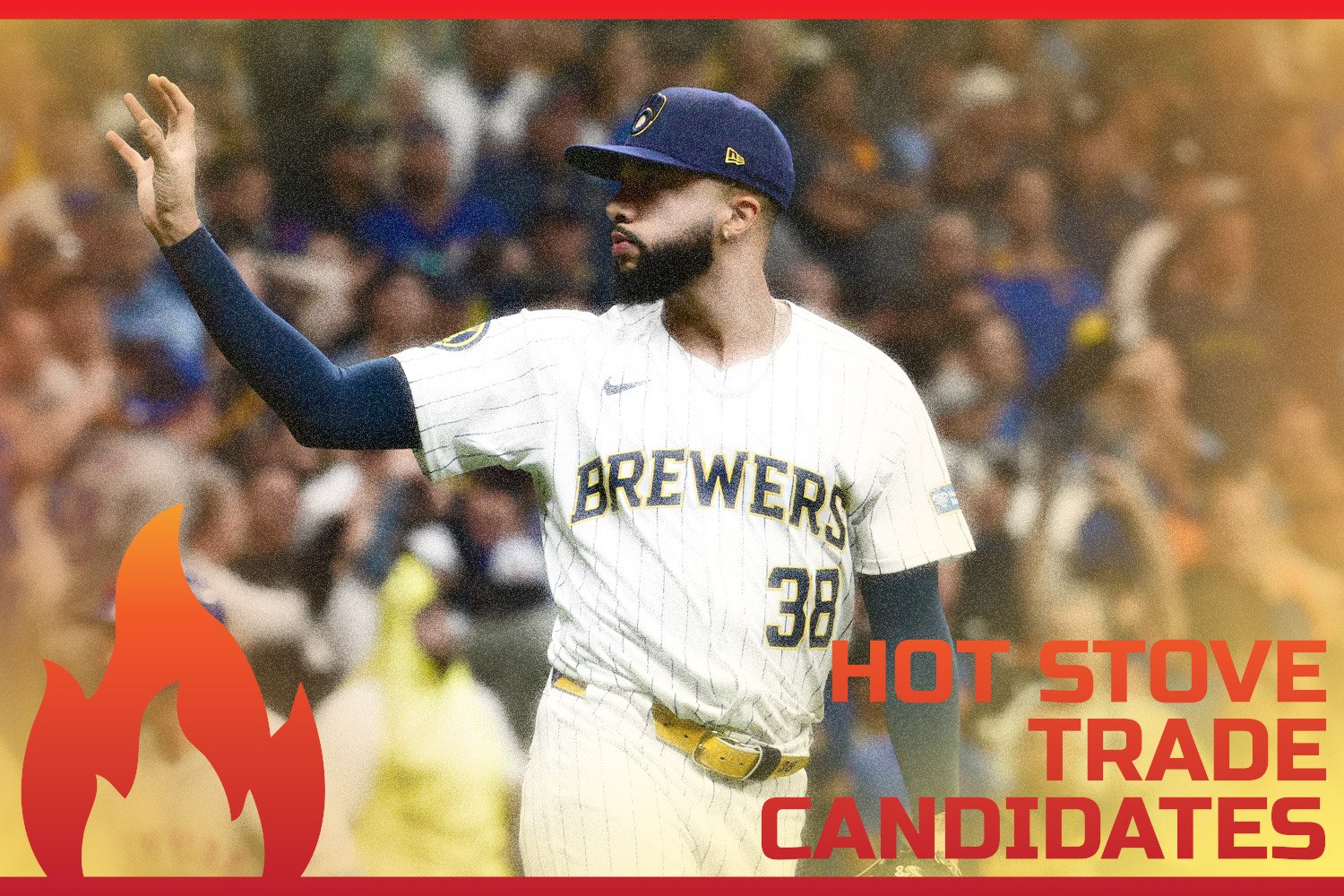 Why They Need Him The 2024 season was understandably bittersweet for many Yankees fans. On one hand, the one-two punch of Aaron Judge and Juan Soto in the lineup was the most imposing offensive duo in the league. They also made it to the World Series for the first time since winning it all in 2009, but what seemed like an immensely promising season ended in calamity. While the 4-1 series record made it seem much more one-sided in favor of the Dodgers, both the first and last game of the series were within New York’s grasp before small mistakes became big losses, dashing their hopes of kickstarting a new dynasty. Many believe that the front office should prioritize re-signing Juan Soto in free agency, which is a fair opinion, but putting your eggs in one basket is never good. Even if they succeed in bringing Soto back, the Yankees would benefit from beefing up their pitching staff, specifically in the form of an elite closer. At first glance, it doesn’t seem like New York has much of a reliever problem. The bullpen combined for a 3.58 ERA and was sixth in MLB, but that doesn’t tell the full story of their closer role in 2024. Clay Holmes was outstanding for the first two months of the season, posting a 1.48 ERA over 24 ⅓ innings by June 1st. Then, things started to come apart at the seams for Holmes, especially in July, when he would blow four saves. By the end of the season, he had been demoted and ended the year with 13 blown saves, tying the franchise record for the most in a single season. Clay Holmes is now a free agent. Luke Weaver, who was selected to fill the closer role for the final portion of the season as well as the entirety of the postseason, had his team option for 2025 picked up. This may seem like the issue has been solved, but there isn’t a whole lot of evidence to suggest that Weaver is the closer of the future, especially if the club hopes to maintain their World Series aspirations. Weaver is a career 4.85 ERA pitcher, and despite a successful 2024, it wouldn’t be too surprising if he found himself regressing while placed under higher expectations. Furthermore, the Yankees already saw positive results from working with a changeup-heavy reliever in Tommy Kahnle (who is also now a free agent), so there’s clearly room in that pitching staff for the kind of arsenal Williams possesses. The only difference is that Williams arguably possesses the best version of that arsenal. What They Have to Offer The Yankees farm system isn’t the strongest, but that’s not to say there isn’t value to be found. In fact, MLB Pipeline ranks New York’s prospects just one spot lower (18th) than Milwaukee’s. They have fallen a few spots, with some of their more notable prospects struggling and losing some favor among scouts, but a few other names have risen to take their spots. First and foremost, there is a better chance of Bernie Brewer making 400+ plate appearances at shortstop in 2025 than there is of Jasson Domínguez somehow being involved in this trade. He’s great, and that’s exactly why New York isn’t going to trade him willy-nilly, especially not for a rental reliever. Spencer Jones is the team’s #2-ranked prospect, but he will undoubtedly fall more than a few spots when those rankings are updated. He posted a .789 OPS over 544 plate appearances in Double-A Somerset this season, which isn’t too heinous except that he also struck out 200 times, more than any other Yankees minor-leaguer in history. Formerly one of the most hyped-up prospects in New York’s system, he hasn’t adapted to higher levels of competition the way the team has hoped, and this may be their last chance to get something for him while his stock still has some semblance of its original value. This could be a chance for the Yankees to rid themselves of some dirty laundry while allowing the Brewers to get the best of a distressed asset. Similarly, Roderick Arias was a 2022 international signing believed to be worth even more than his $4 million signing bonus. However, he hasn't made the same splash many had anticipated in the three years since he first donned the figurative pinstripes. In his most recent full season in Single-A Tampa, he posted a run-of-the-mill .728 OPS over 552 plate appearances and has still struggled immensely facing non-fastballs in the zone. With years ahead of him before he’s big-league ready, he seems like another diamond-in-the-rough candidate who won’t provide any direct value for New York while they’re in this narrow window of World Series contention but could add even more middle infield talent to Milwaukee’s farm. Another name that could be packaged is #12-ranked Cade Smith (not to be confused with Cade Smith of Cleveland fame), a righty starter who posted a 3.47 ERA over 85 ⅔ innings in Single-A Tampa and made the jump to High-A Hudson Valley for his last two outings of the season. #17-ranked Zach Messinger is also a right-handed starter who is slightly further along his baseball journey, throwing 150 innings in Double-A Somerset to the tune of a 3.06 ERA. Because their Top 30 prospects are mostly filled with pitchers, the position player talent is understandably thinner, but 1B/C Rafael Flores had a great year, posting a combined .875 OPS across Double-A and High-A with 31 doubles and 21 home runs. The Yankees are close to earning their 28th World Series title. If they manage to marry a top-tier lineup with unhittable pitching, their annual championship aspirations could finally come to pass. It’s hard to know if Williams is the final piece of the puzzle, but with some potentially transformative prospect talent on the line for Milwaukee, this could be a win-win scenario for both teams.
 -
The Airbender could be a big upgrade to the Big Apple bullpen as long as he doesn’t mind the city-slicker life. Image courtesy of © Benny Sieu-Imagn Images The Airbender could be a big upgrade to the Big Apple bullpen as long as he doesn’t mind the city-slicker life. Why They Need Him The 2024 season was understandably bittersweet for many Yankees fans. On one hand, the one-two punch of Aaron Judge and Juan Soto in the lineup was the most imposing offensive duo in the league. They also made it to the World Series for the first time since winning it all in 2009, but what seemed like an immensely promising season ended in calamity. While the 4-1 series record made it seem much more one-sided in favor of the Dodgers, both the first and last game of the series were within New York’s grasp before small mistakes became big losses, dashing their hopes of kickstarting a new dynasty. Many believe that the front office should prioritize re-signing Juan Soto in free agency, which is a fair opinion, but putting your eggs in one basket is never good. Even if they succeed in bringing Soto back, the Yankees would benefit from beefing up their pitching staff, specifically in the form of an elite closer. At first glance, it doesn’t seem like New York has much of a reliever problem. The bullpen combined for a 3.58 ERA and was sixth in MLB, but that doesn’t tell the full story of their closer role in 2024. Clay Holmes was outstanding for the first two months of the season, posting a 1.48 ERA over 24 ⅓ innings by June 1st. Then, things started to come apart at the seams for Holmes, especially in July, when he would blow four saves. By the end of the season, he had been demoted and ended the year with 13 blown saves, tying the franchise record for the most in a single season. Clay Holmes is now a free agent. Luke Weaver, who was selected to fill the closer role for the final portion of the season as well as the entirety of the postseason, had his team option for 2025 picked up. This may seem like the issue has been solved, but there isn’t a whole lot of evidence to suggest that Weaver is the closer of the future, especially if the club hopes to maintain their World Series aspirations. Weaver is a career 4.85 ERA pitcher, and despite a successful 2024, it wouldn’t be too surprising if he found himself regressing while placed under higher expectations. Furthermore, the Yankees already saw positive results from working with a changeup-heavy reliever in Tommy Kahnle (who is also now a free agent), so there’s clearly room in that pitching staff for the kind of arsenal Williams possesses. The only difference is that Williams arguably possesses the best version of that arsenal. What They Have to Offer The Yankees farm system isn’t the strongest, but that’s not to say there isn’t value to be found. In fact, MLB Pipeline ranks New York’s prospects just one spot lower (18th) than Milwaukee’s. They have fallen a few spots, with some of their more notable prospects struggling and losing some favor among scouts, but a few other names have risen to take their spots. First and foremost, there is a better chance of Bernie Brewer making 400+ plate appearances at shortstop in 2025 than there is of Jasson Domínguez somehow being involved in this trade. He’s great, and that’s exactly why New York isn’t going to trade him willy-nilly, especially not for a rental reliever. Spencer Jones is the team’s #2-ranked prospect, but he will undoubtedly fall more than a few spots when those rankings are updated. He posted a .789 OPS over 544 plate appearances in Double-A Somerset this season, which isn’t too heinous except that he also struck out 200 times, more than any other Yankees minor-leaguer in history. Formerly one of the most hyped-up prospects in New York’s system, he hasn’t adapted to higher levels of competition the way the team has hoped, and this may be their last chance to get something for him while his stock still has some semblance of its original value. This could be a chance for the Yankees to rid themselves of some dirty laundry while allowing the Brewers to get the best of a distressed asset. Similarly, Roderick Arias was a 2022 international signing believed to be worth even more than his $4 million signing bonus. However, he hasn't made the same splash many had anticipated in the three years since he first donned the figurative pinstripes. In his most recent full season in Single-A Tampa, he posted a run-of-the-mill .728 OPS over 552 plate appearances and has still struggled immensely facing non-fastballs in the zone. With years ahead of him before he’s big-league ready, he seems like another diamond-in-the-rough candidate who won’t provide any direct value for New York while they’re in this narrow window of World Series contention but could add even more middle infield talent to Milwaukee’s farm. Another name that could be packaged is #12-ranked Cade Smith (not to be confused with Cade Smith of Cleveland fame), a righty starter who posted a 3.47 ERA over 85 ⅔ innings in Single-A Tampa and made the jump to High-A Hudson Valley for his last two outings of the season. #17-ranked Zach Messinger is also a right-handed starter who is slightly further along his baseball journey, throwing 150 innings in Double-A Somerset to the tune of a 3.06 ERA. Because their Top 30 prospects are mostly filled with pitchers, the position player talent is understandably thinner, but 1B/C Rafael Flores had a great year, posting a combined .875 OPS across Double-A and High-A with 31 doubles and 21 home runs. The Yankees are close to earning their 28th World Series title. If they manage to marry a top-tier lineup with unhittable pitching, their annual championship aspirations could finally come to pass. It’s hard to know if Williams is the final piece of the puzzle, but with some potentially transformative prospect talent on the line for Milwaukee, this could be a win-win scenario for both teams. View full article
-
Exploring Trade Partners For Devin Williams: Kansas City Royals
Jason Wang posted an article in Brewers
 Why They Need Him By all accounts, the Royals exceeded expectations in 2024. After being one of the worst teams in baseball and mustering just 56 wins in 2023, they cobbled together 86 wins. They managed to squeeze into the postseason, overcoming the 91-win Orioles in the Wild Card round before ultimately falling to the Yankees in four games. With the second-largest increase in total attendance year-over-year and a bonafide superstar in the form of Bobby Witt Jr., the club is setting itself up to become perennial playoff contenders for at least the next few years. The biggest change was a major improvement to their pitching staff. In 2023, the team’s combined ERA was 5.17, 28th in MLB. After beefing up the rotation with Seth Lugo, Michael Wacha, and a full season of Cole Ragans, their combined ERA surged to 3.74, eighth in MLB. Now that Wacha has signed a three-year extension and younger pitchers Brady Singer and Alec Marsh have started to take meaningful steps forward, their starters are some of the best in baseball. The bullpen is a totally different story. The Royals had a bullpen ERA of 4.13, 21st in MLB. Notable World Series ring collector Will Smith was signed to a one-year deal to be their primary closer but was terrible, losing the job after posting a 10.61 ERA in his first month as a Royal. He was replaced by James McArthur, who experienced similar consistency issues and finished the season with a 4.92 ERA. The instability at the back of the bullpen would have spelled the end of their season if not for Lucas Erceg, a trade deadline acquisition from the Athletics. Their other relievers are similarly unremarkable, with the exception of John Schreiber, a serviceable bullpen arm with a 3.66 ERA over 51 ⅔ innings. With a dominant closer like Williams, this team could have one of the best pitching staffs in baseball. After all, they aren’t losing any core pieces to free agency, and with a lineup that’s only getting better, patching up the critical weaknesses in the bullpen seems like the highest priority item on their next path to October. What They Have to Offer As is typical of many baseball trades, one team forgoes potential future success for present value. There isn’t a player on the active roster that both the Brewers and the Royals would be willing to part with, so it makes sense to look to the farm system instead for a preliminary return package for Williams. The Royals have two MLB Top 100 prospects: 1B Jac Caglianone (#17) and C Blake Mitchell (#51). Both are enticing names but are far from making the big leagues, with their anticipated debuts set for 2026 and 2027, respectively. Additionally, trading a top 100 prospect with full team control for one year of a reliever may not be prudent for the Royals. A closer look at the Royals' top prospects shows a wealth of pitching talent. The Brewers have a respectable arm barn of their own but are notably lacking lefties. Of their 12 pitchers in the top 30, Robert Gasser is the only left-handed hurler. David Shields is an intriguing option if the Brewers want to pursue a younger prospect with a high upside and a lower guarantee. Scouts describe him as having a plus-fastball and slider with excellent athleticism and strong command for a 2024 draft pick. He likely won't be parted with, but Frank Mozzicato (3.45 ERA, 22 starts in High-A) and Noah Cameron (2.32 ERA, nine starts in Triple-A) are other lefty options with strong characteristics that are closer to debuting and likely more expendable. Position player-wise, the Brewers' major-league squad and farm system are well-rounded. Still, there could be some opportunity for depth on the left side of the infield, especially with Willy Adames potentially leaving in free agency. Milwaukee does have Cooper Pratt, and Jesus Made coming down the pike, but in the interim, Nick Loftin posted good enough numbers in Triple-A Omaha to get some major-league playing time last year and could fill the gap. Other high-performing hitters that could add more general depth are outfielder Drew Waters and first baseman Brett Squires. There’s a lot to like about the Royals as a trade partner. They’re close enough to a deep playoff run to be willing to pay a higher price for someone like Williams. Other teams still quite a few pieces away from being contenders will prioritize longer-term options, whereas one year of Williams could make a big difference for Kansas City. He likely won’t come cheap, but it’s up to the Brewers to ensure he doesn’t walk for any less than he’s worth.
 -
It’s about time to start shopping the team’s star closer to greener pastures. First stop: Kansas City. Image courtesy of © Charles LeClaire-Imagn Images It’s about time to start shopping the team’s star closer to greener pastures. First stop: Kansas City. Why They Need Him By all accounts, the Royals exceeded expectations in 2024. After being one of the worst teams in baseball and mustering just 56 wins in 2023, they cobbled together 86 wins. They managed to squeeze into the postseason, overcoming the 91-win Orioles in the Wild Card round before ultimately falling to the Yankees in four games. With the second-largest increase in total attendance year-over-year and a bonafide superstar in the form of Bobby Witt Jr., the club is setting itself up to become perennial playoff contenders for at least the next few years. The biggest change was a major improvement to their pitching staff. In 2023, the team’s combined ERA was 5.17, 28th in MLB. After beefing up the rotation with Seth Lugo, Michael Wacha, and a full season of Cole Ragans, their combined ERA surged to 3.74, eighth in MLB. Now that Wacha has signed a three-year extension and younger pitchers Brady Singer and Alec Marsh have started to take meaningful steps forward, their starters are some of the best in baseball. The bullpen is a totally different story. The Royals had a bullpen ERA of 4.13, 21st in MLB. Notable World Series ring collector Will Smith was signed to a one-year deal to be their primary closer but was terrible, losing the job after posting a 10.61 ERA in his first month as a Royal. He was replaced by James McArthur, who experienced similar consistency issues and finished the season with a 4.92 ERA. The instability at the back of the bullpen would have spelled the end of their season if not for Lucas Erceg, a trade deadline acquisition from the Athletics. Their other relievers are similarly unremarkable, with the exception of John Schreiber, a serviceable bullpen arm with a 3.66 ERA over 51 ⅔ innings. With a dominant closer like Williams, this team could have one of the best pitching staffs in baseball. After all, they aren’t losing any core pieces to free agency, and with a lineup that’s only getting better, patching up the critical weaknesses in the bullpen seems like the highest priority item on their next path to October. What They Have to Offer As is typical of many baseball trades, one team forgoes potential future success for present value. There isn’t a player on the active roster that both the Brewers and the Royals would be willing to part with, so it makes sense to look to the farm system instead for a preliminary return package for Williams. The Royals have two MLB Top 100 prospects: 1B Jac Caglianone (#17) and C Blake Mitchell (#51). Both are enticing names but are far from making the big leagues, with their anticipated debuts set for 2026 and 2027, respectively. Additionally, trading a top 100 prospect with full team control for one year of a reliever may not be prudent for the Royals. A closer look at the Royals' top prospects shows a wealth of pitching talent. The Brewers have a respectable arm barn of their own but are notably lacking lefties. Of their 12 pitchers in the top 30, Robert Gasser is the only left-handed hurler. David Shields is an intriguing option if the Brewers want to pursue a younger prospect with a high upside and a lower guarantee. Scouts describe him as having a plus-fastball and slider with excellent athleticism and strong command for a 2024 draft pick. He likely won't be parted with, but Frank Mozzicato (3.45 ERA, 22 starts in High-A) and Noah Cameron (2.32 ERA, nine starts in Triple-A) are other lefty options with strong characteristics that are closer to debuting and likely more expendable. Position player-wise, the Brewers' major-league squad and farm system are well-rounded. Still, there could be some opportunity for depth on the left side of the infield, especially with Willy Adames potentially leaving in free agency. Milwaukee does have Cooper Pratt, and Jesus Made coming down the pike, but in the interim, Nick Loftin posted good enough numbers in Triple-A Omaha to get some major-league playing time last year and could fill the gap. Other high-performing hitters that could add more general depth are outfielder Drew Waters and first baseman Brett Squires. There’s a lot to like about the Royals as a trade partner. They’re close enough to a deep playoff run to be willing to pay a higher price for someone like Williams. Other teams still quite a few pieces away from being contenders will prioritize longer-term options, whereas one year of Williams could make a big difference for Kansas City. He likely won’t come cheap, but it’s up to the Brewers to ensure he doesn’t walk for any less than he’s worth. View full article
-
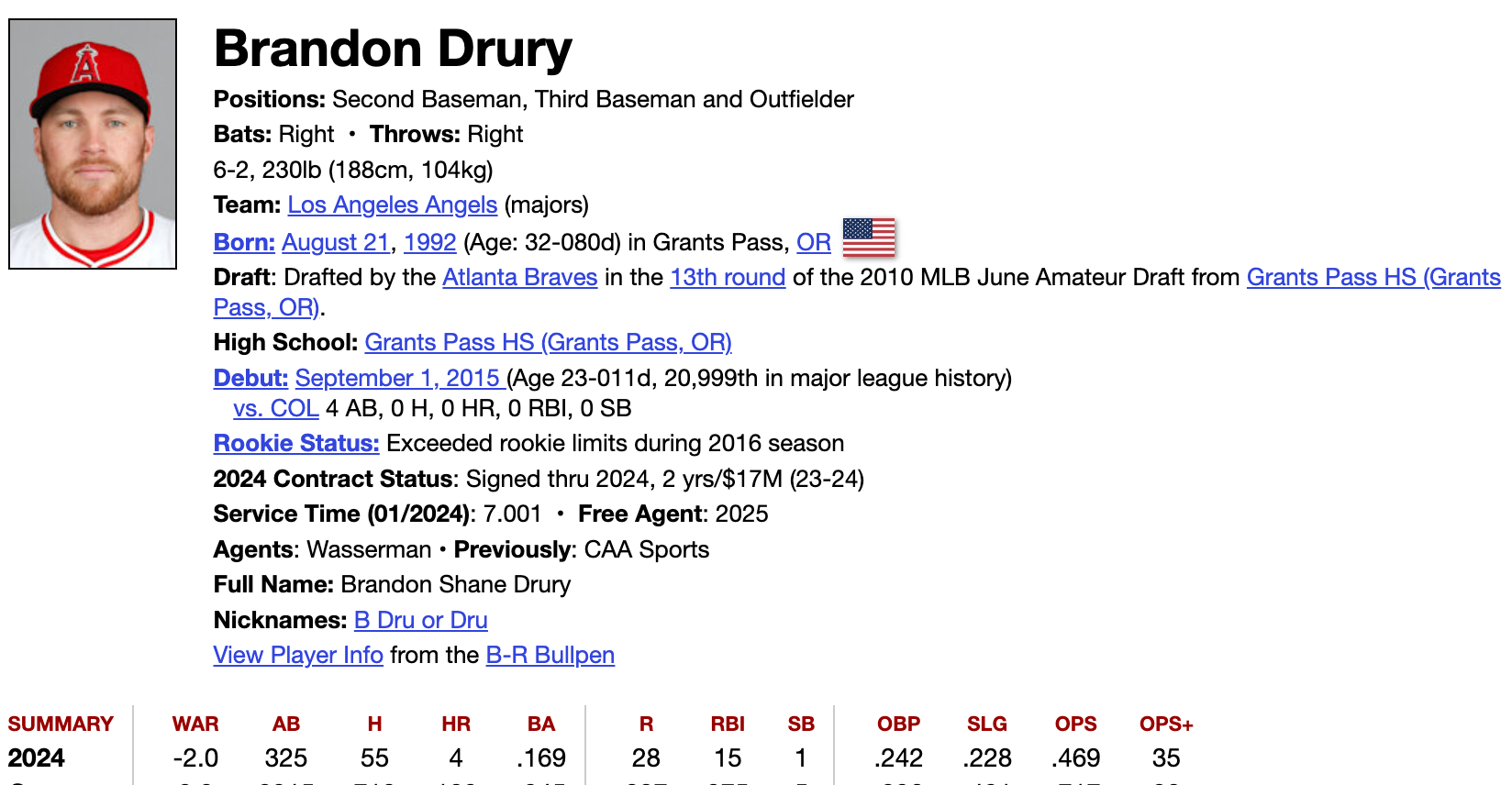
what if we got brandon drury instead he seems pretty good(ignore the -2.0 WAR and the other really bad numbers I think they are all typos)
-
You might have known the team’s defense was good, but did you know it was this good? Image courtesy of © Katie Stratman-Imagn Images You might have known the team’s defense was good, but did you know it was this good? In addition to being hot stove time, it’s officially award season. Most awards, such as the Cy Young and MVP, will be announced in the coming weeks, but the Gold Glove Award winners have already been named. In addition to the two individual Brewers who received recognition with their trophies, the Brewers also won the National League Team Gold Glove for the second year in a row. Based on the numbers, this result is unsurprising. The Brewers had a combined total of 64 Defensive Runs, most of which came from second base (23), center field (18), and right field (25). They also had well-rounded contributions across the board, with just shortstop and left field lagging behind the league average. The only real competition in the National League was the Dodgers, who had two more DRS than Milwaukee. It can be assumed that the Brewers ultimately took the top spot since they had more positions of excellence. At the same time, the Dodgers were more average, having fewer positions below league average but peaking at 14 DRS from right field. The next closest NL team was the Cubs with 37 DRS, a far cry from the top of the standings. Another figure illustrating the importance of these fielding contributions for the Brewers is the big difference between their ERA and FIP. With a team ERA of 3.65 and a team FIP of 4.20, the Brewers had the largest negative difference between the two numbers of any team in 2024. While this may not have been the result of solid defense, it contributed to the final result and allowed the pitching staff to excel beyond their intrinsic numbers. On an individual level, Brice Turang was also named the National League’s Platinum Glove award winner. He led all infielders in DRS at 22 all NL players with 2.8 dWAR. It caps off what has been a great sophomore campaign for the middle infielder. Because he isn’t eligible for arbitration until 2026, he’ll continue to be a total bargain for the organization. Other players who had strong DRS figures this year were Joey Ortiz at third base (8), Blake Perkins (8) in center field, Sal Frelick in right field (16), and Jackson Chourio in multiple outfield positions (12). Another interesting nugget was Garrett Mitchell’s total of six DRS in center field, impressive considering he played just over 300 innings at the position, one-third of the time spent by other top defenders. With an excess of defensive talent, is this an area of depth from which the Brewers can leverage trade assets? Perhaps, but depending on how much emphasis the front office places on maintaining their defensive prowess, they may keep their best pieces around for the long haul. View full article
-
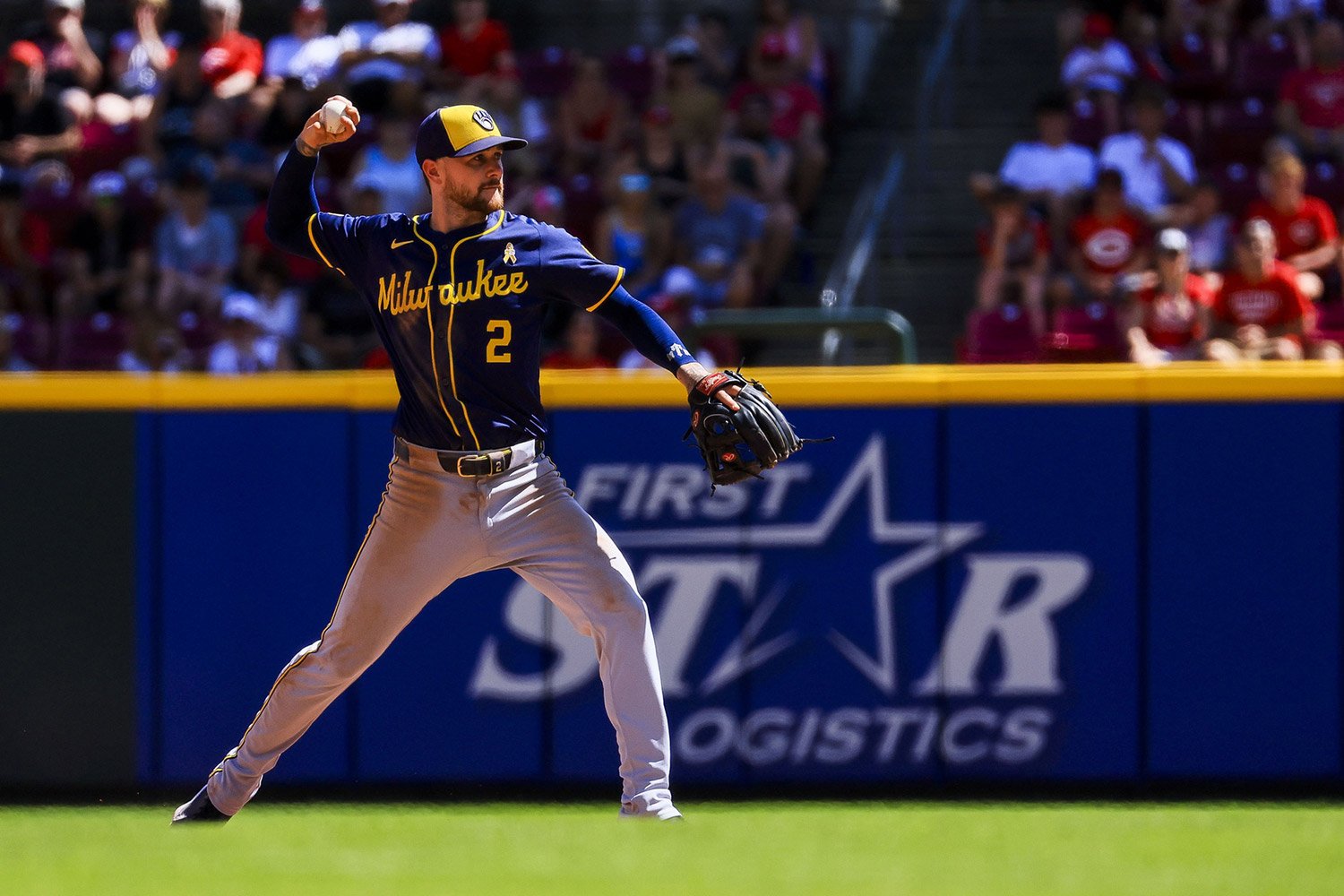 In addition to being hot stove time, it’s officially award season. Most awards, such as the Cy Young and MVP, will be announced in the coming weeks, but the Gold Glove Award winners have already been named. In addition to the two individual Brewers who received recognition with their trophies, the Brewers also won the National League Team Gold Glove for the second year in a row. Based on the numbers, this result is unsurprising. The Brewers had a combined total of 64 Defensive Runs, most of which came from second base (23), center field (18), and right field (25). They also had well-rounded contributions across the board, with just shortstop and left field lagging behind the league average. The only real competition in the National League was the Dodgers, who had two more DRS than Milwaukee. It can be assumed that the Brewers ultimately took the top spot since they had more positions of excellence. At the same time, the Dodgers were more average, having fewer positions below league average but peaking at 14 DRS from right field. The next closest NL team was the Cubs with 37 DRS, a far cry from the top of the standings. Another figure illustrating the importance of these fielding contributions for the Brewers is the big difference between their ERA and FIP. With a team ERA of 3.65 and a team FIP of 4.20, the Brewers had the largest negative difference between the two numbers of any team in 2024. While this may not have been the result of solid defense, it contributed to the final result and allowed the pitching staff to excel beyond their intrinsic numbers. On an individual level, Brice Turang was also named the National League’s Platinum Glove award winner. He led all infielders in DRS at 22 all NL players with 2.8 dWAR. It caps off what has been a great sophomore campaign for the middle infielder. Because he isn’t eligible for arbitration until 2026, he’ll continue to be a total bargain for the organization. Other players who had strong DRS figures this year were Joey Ortiz at third base (8), Blake Perkins (8) in center field, Sal Frelick in right field (16), and Jackson Chourio in multiple outfield positions (12). Another interesting nugget was Garrett Mitchell’s total of six DRS in center field, impressive considering he played just over 300 innings at the position, one-third of the time spent by other top defenders. With an excess of defensive talent, is this an area of depth from which the Brewers can leverage trade assets? Perhaps, but depending on how much emphasis the front office places on maintaining their defensive prowess, they may keep their best pieces around for the long haul.
 -
With the offseason now in full swing, Milwaukee hasn’t wasted any time in clearing out several roster spots. Image courtesy of © Michael McLoone-Imagn Images With the offseason now in full swing, Milwaukee hasn’t wasted any time in clearing out several roster spots. The allure of any winter is seeing what new faces will wear Brewer blue on the next Opening Day. To do so, room has to be made for these new faces, often done through trades and declining and club or mutual options. The biggest recent move made was to place Colin Rea on waivers. He had a $5.5 million team option for 2025 with a $1 million buyout, an affordable contract for a starter who has thrown nearly 300 innings over the past two seasons for the club. This decision may have been driven by the 8.31 ERA he had in the final month of the season, a performance that was poor enough to omit him from the postseason roster entirely. Despite his imperfections, Rea filled a crucial role for the team with the litany of starting pitcher injuries that devastated the Brewers’ rotation. Unfortunately, it seems that the return of big arms like Brandon Woodruff and a potential acquisition of another starter has pushed him out of the picture. The team’s decision to pass on Wade Miley’s mutual option was a similar yet less surprising move. Mutual options are rarely exercised because if a player has played poorly and is incentivized to exercise their end of the deal, teams are rarely as enthusiastic. On the other hand, if players have exceeded their mutual option value, front offices are more than willing to keep them around, but the player would likely want to seek more value in the open market. Miley fit the first case, pitching just seven innings in 2024 before being sidelined by injury. He would have cost the team an exorbitant $12 million against a $1.5 million buyout, a price tag far too hefty for a pitcher with a K/9 of 5.7 and FIP of 4.80 over his tenure with the team. Gary Sánchez also had his $11 million mutual option turned down in exchange for a $4 million buyout. He had some great moments with the Brewers, but with an OPS+ of 93 over 280 plate appearances and the offensive surge of Eric Haase, there wasn’t much of a reason to keep him around. He was also unremarkable defensively and spent most of the season as a designated hitter, which makes his case even less compelling. Finally, Milwaukee traded Owen Miller to the Rockies for cash considerations. He had been an interesting plug-and-play utility guy over the past two years but couldn’t hit well at the major league level. His bat was serviceable during his two seasons with the Nashville Sounds, slashing .278/.350/.411 over 497 plate appearances, but he could never carry that success forward. With Rhys Hoskins picking up his player option and the other parts of the infield showing great upside, Miller’s hopes of finding long-term playing time with the Brewers were slim to none. So what’s next? The biggest roster gap seems to be the rotation, especially with two of their starters all but gone and Frankie Montas’s $20 million mutual option likely to get declined. Brandon Woodruff will be back next year, and Freddy Peralta’s $8 million club option was exercised, but the team would still need one or two arms at the back of the rotation, especially if Woodruff needs time to ramp back up. Acquisition-wise, much of this depends on whether the front office will make a concerted effort to retain Willy Adames in his free agency. If they decide to make a big offer to keep him around, payroll for the rest of the team will have to adjust accordingly. If not, they have more budget bandwidth to spend on whatever they’d like, probably a new shortstop or third baseman if Joey Ortiz returns to his old position. It’s still extremely early, so don’t expect any signing activity to occur in a few weeks. Speculation and rumors will fill the winter air like the smell of eggnog and baked cookies, but it would be surprising if any major deals are actually finalized before December. For now, sit back and enjoy the big market teams fighting over the future of Juan Soto and other marquee names Milwaukee will say they can't afford. View full article
-
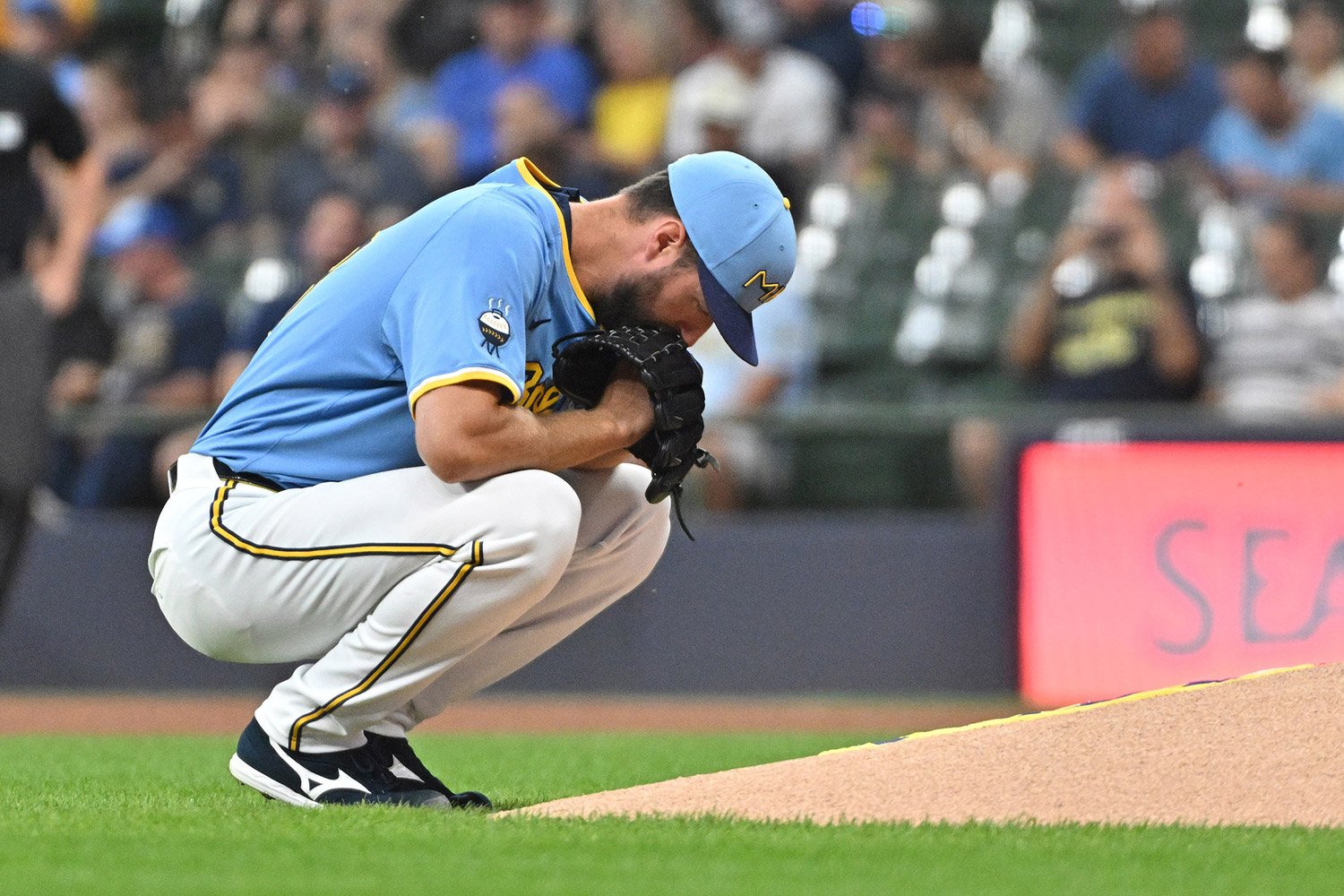 The allure of any winter is seeing what new faces will wear Brewer blue on the next Opening Day. To do so, room has to be made for these new faces, often done through trades and declining and club or mutual options. The biggest recent move made was to place Colin Rea on waivers. He had a $5.5 million team option for 2025 with a $1 million buyout, an affordable contract for a starter who has thrown nearly 300 innings over the past two seasons for the club. This decision may have been driven by the 8.31 ERA he had in the final month of the season, a performance that was poor enough to omit him from the postseason roster entirely. Despite his imperfections, Rea filled a crucial role for the team with the litany of starting pitcher injuries that devastated the Brewers’ rotation. Unfortunately, it seems that the return of big arms like Brandon Woodruff and a potential acquisition of another starter has pushed him out of the picture. The team’s decision to pass on Wade Miley’s mutual option was a similar yet less surprising move. Mutual options are rarely exercised because if a player has played poorly and is incentivized to exercise their end of the deal, teams are rarely as enthusiastic. On the other hand, if players have exceeded their mutual option value, front offices are more than willing to keep them around, but the player would likely want to seek more value in the open market. Miley fit the first case, pitching just seven innings in 2024 before being sidelined by injury. He would have cost the team an exorbitant $12 million against a $1.5 million buyout, a price tag far too hefty for a pitcher with a K/9 of 5.7 and FIP of 4.80 over his tenure with the team. Gary Sánchez also had his $11 million mutual option turned down in exchange for a $4 million buyout. He had some great moments with the Brewers, but with an OPS+ of 93 over 280 plate appearances and the offensive surge of Eric Haase, there wasn’t much of a reason to keep him around. He was also unremarkable defensively and spent most of the season as a designated hitter, which makes his case even less compelling. Finally, Milwaukee traded Owen Miller to the Rockies for cash considerations. He had been an interesting plug-and-play utility guy over the past two years but couldn’t hit well at the major league level. His bat was serviceable during his two seasons with the Nashville Sounds, slashing .278/.350/.411 over 497 plate appearances, but he could never carry that success forward. With Rhys Hoskins picking up his player option and the other parts of the infield showing great upside, Miller’s hopes of finding long-term playing time with the Brewers were slim to none. So what’s next? The biggest roster gap seems to be the rotation, especially with two of their starters all but gone and Frankie Montas’s $20 million mutual option likely to get declined. Brandon Woodruff will be back next year, and Freddy Peralta’s $8 million club option was exercised, but the team would still need one or two arms at the back of the rotation, especially if Woodruff needs time to ramp back up. Acquisition-wise, much of this depends on whether the front office will make a concerted effort to retain Willy Adames in his free agency. If they decide to make a big offer to keep him around, payroll for the rest of the team will have to adjust accordingly. If not, they have more budget bandwidth to spend on whatever they’d like, probably a new shortstop or third baseman if Joey Ortiz returns to his old position. It’s still extremely early, so don’t expect any signing activity to occur in a few weeks. Speculation and rumors will fill the winter air like the smell of eggnog and baked cookies, but it would be surprising if any major deals are actually finalized before December. For now, sit back and enjoy the big market teams fighting over the future of Juan Soto and other marquee names Milwaukee will say they can't afford.
- 4 comments
-
- 1
-

-
- wade miley
- owen miller
- (and 2 more)
-
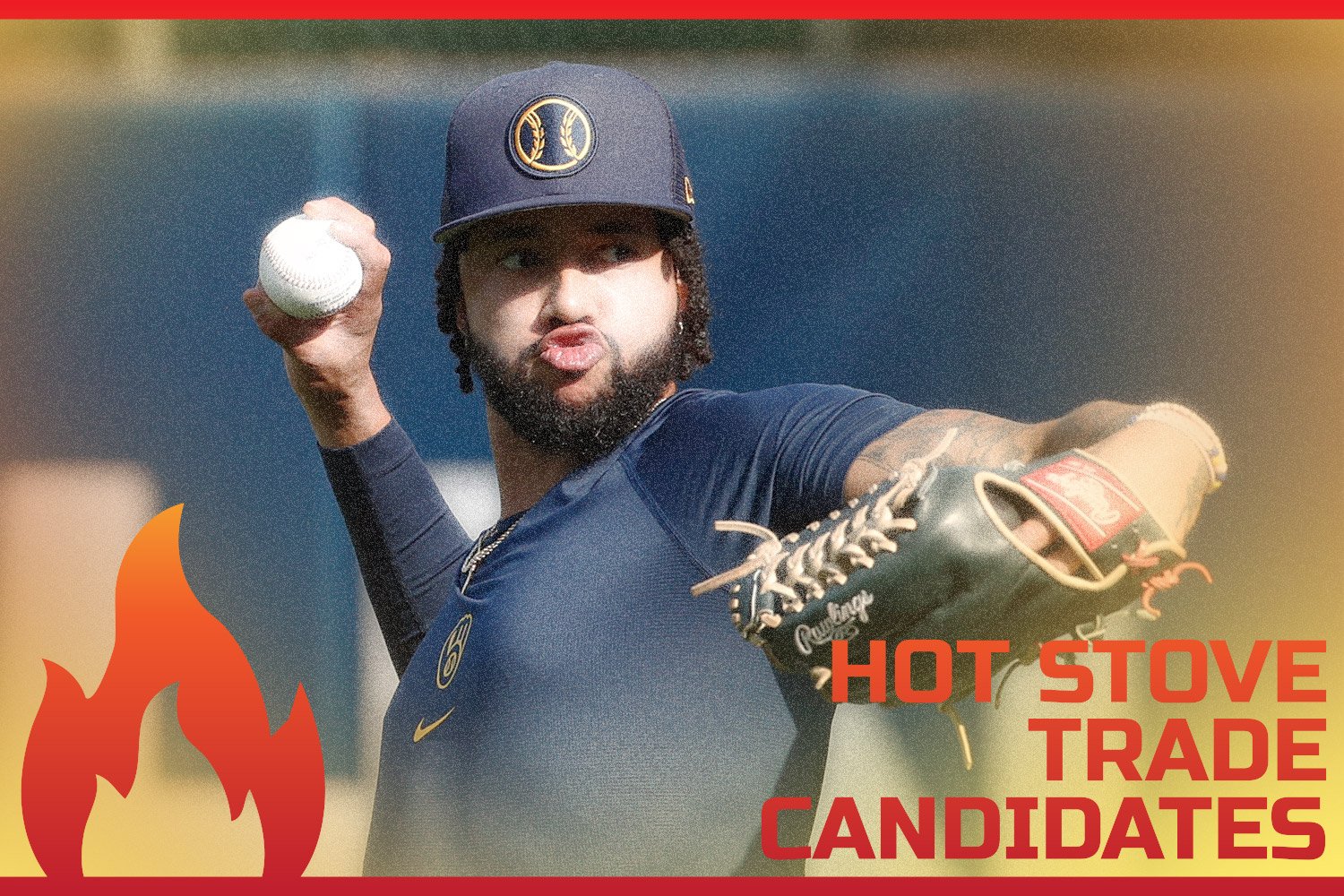
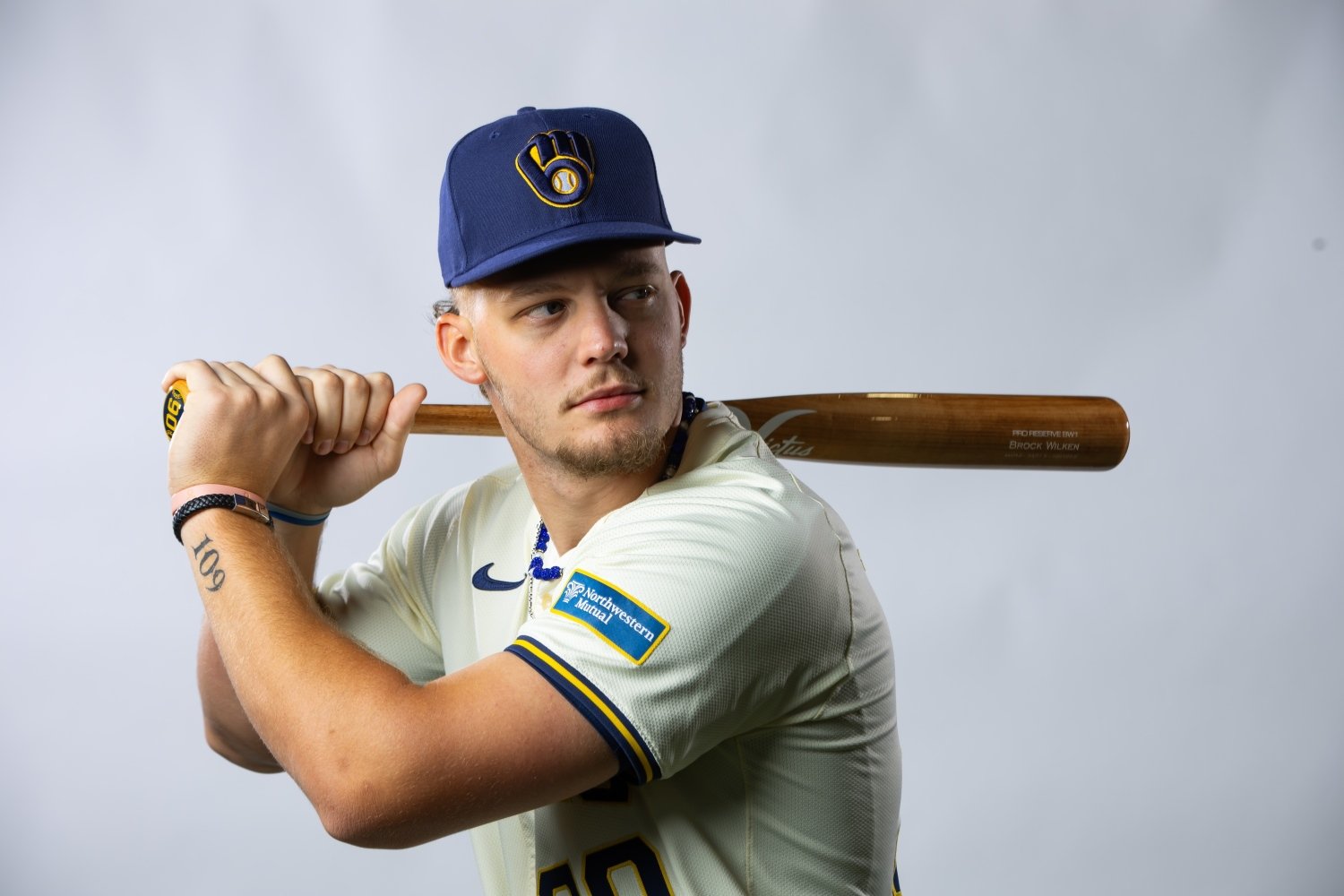 Game Results Monday, 10/21 | None Tuesday, 10/22 | Glendale 8, Peoria 1 Wednesday, 10/23 | Peoria 11, Scottsdale 10 Thursday, 10/24 | Peoria 5, Surprise 8 Friday, 10/25 | Mesa 14, Peoria 10 Saturday, 10/26 | Salt River 6, Peoria 7 3B Brock Wilken Week: 4 G, 18 PA, 2 H, 2 R, 3 RBI, 3 BB, 6 K Wilken still hasn’t found his footing in Arizona. After his third week of play, he’s slashing .130/.236/.261 over 55 plate appearances, while striking out 17 times. It’s hard to determine how much stock to put into his rate stats given such a small sample size, but this subpar offensive offense may be part of a larger trend that saw him post just a .477 OPS in the final two months with Double-A Biloxi. For now, he’s whiffing far too much in the zone. He has a low chase rate of just 10.0%, but is really struggling against breaking balls, swinging and missing 40% of the time on them. His only six hits for the Javelinas so far are against fastballs, a big weakness opposing pitchers seem to be exploiting. OF Luis Lara Week: 4 G, 18 PA, 2 H, 1 2B, 4 R, 1 RBI, 6 BB, 2 K, 3 SB Lara was a tough out this past week, notching an on-base percentage of .444 despite having just two hits. In fact, the only game in which he didn’t get on base was Thursday’s battle against the Saguaros. He also collected his second double of the season and leveraged his on-base abilities to score four runs, second to only Andrew Pintar for the week. His plus speed was also on full display, as he took the second spot on the team for total stolen bases behind Colt Emerson (6). INF Juan Baez Week: 3 G, 14 PA, 2 H, 1 HR, 2 R, 4 RBI, 5 BB, 4 K, 1 SB Báez slowed down a bit at the plate, but still had an on-base percentage of .500 across his three outings. Despite having just two hits, he still leads the Javelinas in batting average (.424), on-base percentage (.537), and walks (8). Baez didn’t see any playing time in the first or last game of the week, which may have limited his ability to cobble together more counting stats, but more rest could also be the right course of action to maintain his current performance. His first three weeks have been a refreshing change of pace from his lukewarm season in Single-A Carolina—one that saw him achieve just a .693 OPS across 356 plate appearances. RHP Coleman Crow Week: 1 G, 2.1 IP, 6 H, 4 ER, 0 BB, 3 K Crow likely didn’t have the week that he wanted. He started his lone outing against the Desert Dogs by giving up three consecutive hits. In his second inning of work, he gave up two more singles and a triple to Tyler Callihan before netting two more outs and departing the mound. Crow threw 43 pitches, 33 of which were strikes. Opponents' six hits were all against pitches that were placed right in the heart of the zone, pointing to a need to expand the zone just a little more, given his fairly tepid stuff. RHP Ryan Birchard Week: Did not pitch RHP Will Childers Week: 1 G, 1 ⅓ IP, 2 H, 2 ER, 1 BB, 1 K Childers pitched in Friday’s loss to the Solar Sox. After being ahead of his first batter 0-2, he gave up a home run before getting the next batter out in two pitches. His command seemed a little shaky, with quite a few pitches left in hitter-friendly parts of the strike zone. Even the two flyouts could’ve spelled trouble if they had been hit just a little harder. LHP Mark Manfredi Week: 1 G, 0 IP, 0 H, 1 ER, 4 BB, 0 K Manfredi had an, uh, interesting statline, ending up with the rare zero hits in zero innings pitched. He entered Thursday’s game against the Saguaros in the bottom of the sixth inning, in a bit of jam. The bases were loaded, the Saguaros were up by one run, and the Javelinas needed just one out to escape. He walked his first batter, threw a wild pitch to allow another run to score, walked his second batter to reload the bases, balked in a run, walked another batter to reload the bases, then walked in another run. Of his 23 total pitches, just seven were strikes. The Saguaros managed to score four runs with Manfredi on the mound and put the game out of reach for Peoria. It has been a consistent issue so far this season. Over 20 batters faced with the Javelinas, he has walked six and struck out just three. Opposing hitters have a .650 on-base percentage, so there are definitely some kinks to iron out moving forward. RHP Nick Merkel Week: 1 G, 2 ⅓ IP, 3 H, 2 ER, 1 BB, 2 K Merkel made one appearance in Wednesday’s win against the Scorpions, being the first arm out of the bullpen after starter Patrick Monteverde needed 66 pitches to pitch just under three innings. Merkel pitched well through his first handful of batters faced, avoiding any real damage and never seeing any major trouble. In the bottom of the fifth inning, he gave up a two-run homer and completed the inning before leaving the game. Merkel’s time as a Javelina has reflected his performance in the week. His strikeout rate of 26.9% is good, his walk rate of 7.7% is solid, and his opposing slugging percentage of .708 is unsustainable. Across 26 batters faced, he has already given up three home runs, but that's probably fluky to some extent. His xFIP of 3.72 is a far cry from his ERA of 6.35 and FIP of 8.65, but there’s definitely some upside in his game.
 -
Though the Brewers have some of the best pitching talent in the sport, their delegation of pitching prospects have had a rough start after three weeks of play in the Arizona Fall League. Image courtesy of © Mark J. Rebilas-USA TODAY Sports Though the Brewers have some of the best pitching talent in the sport, their delegation of pitching prospects have had a rough start after three weeks of play in the Arizona Fall League. Game Results Monday, 10/21 | None Tuesday, 10/22 | Glendale 8, Peoria 1 Wednesday, 10/23 | Peoria 11, Scottsdale 10 Thursday, 10/24 | Peoria 5, Surprise 8 Friday, 10/25 | Mesa 14, Peoria 10 Saturday, 10/26 | Salt River 6, Peoria 7 3B Brock Wilken Week: 4 G, 18 PA, 2 H, 2 R, 3 RBI, 3 BB, 6 K Wilken still hasn’t found his footing in Arizona. After his third week of play, he’s slashing .130/.236/.261 over 55 plate appearances, while striking out 17 times. It’s hard to determine how much stock to put into his rate stats given such a small sample size, but this subpar offensive offense may be part of a larger trend that saw him post just a .477 OPS in the final two months with Double-A Biloxi. For now, he’s whiffing far too much in the zone. He has a low chase rate of just 10.0%, but is really struggling against breaking balls, swinging and missing 40% of the time on them. His only six hits for the Javelinas so far are against fastballs, a big weakness opposing pitchers seem to be exploiting. OF Luis Lara Week: 4 G, 18 PA, 2 H, 1 2B, 4 R, 1 RBI, 6 BB, 2 K, 3 SB Lara was a tough out this past week, notching an on-base percentage of .444 despite having just two hits. In fact, the only game in which he didn’t get on base was Thursday’s battle against the Saguaros. He also collected his second double of the season and leveraged his on-base abilities to score four runs, second to only Andrew Pintar for the week. His plus speed was also on full display, as he took the second spot on the team for total stolen bases behind Colt Emerson (6). INF Juan Baez Week: 3 G, 14 PA, 2 H, 1 HR, 2 R, 4 RBI, 5 BB, 4 K, 1 SB Báez slowed down a bit at the plate, but still had an on-base percentage of .500 across his three outings. Despite having just two hits, he still leads the Javelinas in batting average (.424), on-base percentage (.537), and walks (8). Baez didn’t see any playing time in the first or last game of the week, which may have limited his ability to cobble together more counting stats, but more rest could also be the right course of action to maintain his current performance. His first three weeks have been a refreshing change of pace from his lukewarm season in Single-A Carolina—one that saw him achieve just a .693 OPS across 356 plate appearances. RHP Coleman Crow Week: 1 G, 2.1 IP, 6 H, 4 ER, 0 BB, 3 K Crow likely didn’t have the week that he wanted. He started his lone outing against the Desert Dogs by giving up three consecutive hits. In his second inning of work, he gave up two more singles and a triple to Tyler Callihan before netting two more outs and departing the mound. Crow threw 43 pitches, 33 of which were strikes. Opponents' six hits were all against pitches that were placed right in the heart of the zone, pointing to a need to expand the zone just a little more, given his fairly tepid stuff. RHP Ryan Birchard Week: Did not pitch RHP Will Childers Week: 1 G, 1 ⅓ IP, 2 H, 2 ER, 1 BB, 1 K Childers pitched in Friday’s loss to the Solar Sox. After being ahead of his first batter 0-2, he gave up a home run before getting the next batter out in two pitches. His command seemed a little shaky, with quite a few pitches left in hitter-friendly parts of the strike zone. Even the two flyouts could’ve spelled trouble if they had been hit just a little harder. LHP Mark Manfredi Week: 1 G, 0 IP, 0 H, 1 ER, 4 BB, 0 K Manfredi had an, uh, interesting statline, ending up with the rare zero hits in zero innings pitched. He entered Thursday’s game against the Saguaros in the bottom of the sixth inning, in a bit of jam. The bases were loaded, the Saguaros were up by one run, and the Javelinas needed just one out to escape. He walked his first batter, threw a wild pitch to allow another run to score, walked his second batter to reload the bases, balked in a run, walked another batter to reload the bases, then walked in another run. Of his 23 total pitches, just seven were strikes. The Saguaros managed to score four runs with Manfredi on the mound and put the game out of reach for Peoria. It has been a consistent issue so far this season. Over 20 batters faced with the Javelinas, he has walked six and struck out just three. Opposing hitters have a .650 on-base percentage, so there are definitely some kinks to iron out moving forward. RHP Nick Merkel Week: 1 G, 2 ⅓ IP, 3 H, 2 ER, 1 BB, 2 K Merkel made one appearance in Wednesday’s win against the Scorpions, being the first arm out of the bullpen after starter Patrick Monteverde needed 66 pitches to pitch just under three innings. Merkel pitched well through his first handful of batters faced, avoiding any real damage and never seeing any major trouble. In the bottom of the fifth inning, he gave up a two-run homer and completed the inning before leaving the game. Merkel’s time as a Javelina has reflected his performance in the week. His strikeout rate of 26.9% is good, his walk rate of 7.7% is solid, and his opposing slugging percentage of .708 is unsustainable. Across 26 batters faced, he has already given up three home runs, but that's probably fluky to some extent. His xFIP of 3.72 is a far cry from his ERA of 6.35 and FIP of 8.65, but there’s definitely some upside in his game. View full article
-
 Brewer Fanatic ’s minor-league writers voted for the awards and for an all-star team of Milwaukee's prospects. This isn’t a list of "Top Prospect" list but instead, a showcase of which pitchers in the team's system had strong showings in 2024. Each writer chose five starting pitchers, a right-handed reliever, a left-handed reliever, and two more bullpen arms to round out the bunch. Before we get to the All Star pitchers, here are our 2024 Brewer Fanatic Award winners (and links to the articles to see who else received votes). Short-Season Hitter of the Year: Jesus Made Short-Season Pitcher of the Year: Dariel Jacquez Minor League Hitter of the Year: Mike Boeve Minor League Starting Pitcher of the Year: KC Hunt Minor League Relief Pitcher of the Year: Craig Yoho Brewers Minor League All-Star Hitters Disagree with the votes? Let us know in the comments below! Starting Pitchers RHP K.C. Hunt (24) - Carolina Mudcats/Wisconsin Timber Rattlers/Biloxi Shuckers Acquired: Minor-league free agent signed in July 2023 2024 Stats: 25 G, 14 GS, 8-3, 102 IP, 2.03 ERA, 0.93 WHIP, 12.3 K/9, 2.2 BB/9, K.C., short for Kyle Clemente, was named after Roberto Clemente but couldn’t be further from his namesake. He was drafted by the Pirates in 2022 but didn’t sign, went undrafted in 2023, then signed a minor-league deal with Milwaukee and had his first full professional season in 2024. No one expected him to rocket his way through the first three levels of the minor leagues without much of a sweat, finishing the year in Double-A Biloxi with a 2.20 ERA over six starts. He was so good, he was named Milwaukee’s Minor League Co-Pitcher of the Year along with Craig Yoho. More importantly, he earned the even more esteemed title of Brewer Fanatic Starting Pitcher of the Year. He had a 34.7% strikeout rate and a 37.5% whiff rate, video game numbers for any starter let alone a 24-year old professional rookie. He held opposing hitters to a .189 batting average and .520 OPS, neutralizing any offense that stood in front of him. Expect Hunt to continue his path of greatness in Triple-A Nashville next year and potentially see some action in the big leagues. At just 24, he’s still got plenty of time to make a big impact for the Brewers even if he doesn’t make his debut in 2025. RHP Chad Patrick (26) - Nashville Sounds Acquired: Traded from Oakland in November 2023 in exchange for Abraham Toro 2024 Stats: 26 G, 24 GS, 14-1, 136 ⅓ IP, 2.90 ERA, 1.09 WHIP, 9.6 K/9, 2.6 BB/9 I miss Abraham Toro just as much as anyone else. The 21 plate appearances he had with the Brewers had me glued to my seat the entire time and as one of the Brewers of all time, it was sad to see him traded away. However, I knew that for a player of his caliber, the team would get back someone pretty nifty. Chad Patrick has indeed been pretty nifty. After pitching to a 4.91 ERA in his first four starts of the season, he locked in and never looked back. He led the Sounds in wins, innings pitched and strikeouts (145) while leading all Triple-A starters in WHIP and OBP allowed (.279). Hitters struggled against his five-pitch arsenal consisting of a four-seam fastball, sinker cutter, slider, and changeup. He had a cumulative whiff rate of 29.2% and an incredible 41.8% whiff rate on his slider. RHP Logan Henderson (22) - Wisconsin Timber Rattlers/Biloxi Shuckers/Nashville Sounds Acquired: Brewers 4th round draft pick in 2021 out of McLennan CC (TX) 2024 Stats: 19 G, 19 GS, 7-6, 81 ⅓ IP, 3.32 ERA, 0.91 WHIP, 11.5 K/9, 1.7 BB/9 After spending the first two years of his professional career in Single-A Carolina, Henderson shot up through three levels of the minor leagues in 2024. After a very brief two-game stint in High-A Wisconsin, he made nine starts for Double-A Biloxi and then six starts for Triple-A Nashville. He struggled a little with the Sounds, managing just a 4.56 ERA but his 9.9 K/9 was in line with the exceptional strikeout rate he had maintained with the Shuckers. He was the fourth-youngest member of the Sounds this year and has plenty of time to continue developing as a starting pitcher. He’s made big strides each year since being drafted and will likely continue the trend in 2025. RHP Shane Smith (24) - Biloxi Shuckers/Nashville Sounds Acquired: Undrafted free agent signed in July 2021 out of Wake Forest University 2024 Stats: 32 G, 16 GS, 6-3, 94 ⅓ IP, 3.05 ERA, 1.05 WHIP, 10.8 K/9, 2.8 BB/9 Smith had a relatively brief career with Wake Forest before signing a minor-league contract with the Brewers in 2022. Because he made just two starts in college, he spent all of 2023 coming out of the bullpen for Single-A Carolina and High-A Wisconsin. 2024 was his first full year as a starter and he rose to the occasion with Double-A Biloxi, even managing to make a handful of relief appearances in Triple-A Nashville. Overall, he held opposing batters to a .579 OPS while striking out 29.6% of opposing batters. He has done a great job of handling the transition from bullpen arm to starting pitcher and could be an integral part of the Sounds’ rotation next year. RHP Jacob Misiorowski (22) - Biloxi Shuckers/Nashville Sounds Acquired: Brewers 2nd round draft pick in 2022 out of Crowder College (MO) 2024 Stats: 33 G, 21 GS, 3-5, 97 ⅓ IP, 3.33 ERA, 1.20 WHIP, 11.7 K/9, 5.5 BB/9 As the top-ranked pitching prospect and third-ranked prospect overall in the Brewers system, all eyes are on Misiorowski as he grows closer to approaching the big leagues with each passing day. He spent the majority of his season with the Shuckers but made two starts and 12 relief appearances with the Sounds, pitching to a 2.55 ERA over 17 2/3 innings. You’re likely already familiar with his player profile: 6’7” frame with gross stuff, a 70-grade fastball that tops out at 100 mph, and off-the-charts strikeout numbers. While his K/9 is yet to dip below 11 for any professional season, his walk rate continues to be a major issue. Despite his opposing batting average of just .167, his walk rate of 14.4% has kept his WHIP high. If he can improve his command, the sky’s the limit for the young but incredibly tall man. Bullpen Right-Handed Relief Pitcher: Craig Yoho (24) - Wisconsin Timber Rattlers/Biloxi Shuckers/Nashville Sounds Acquired: Brewers 8th round draft pick in 2023 out of Indiana University (Go Hoosiers!) 2024 Stats: 48 G, 4-2, 57 ⅔ IP, 0.94 ERA, 0.94 WHIP, 15.8 K/9, 3.6 BB/9, 10 S Yoho’s rise to the top has been quite the spectacle. In his first full season of professional baseball, his numbers were simply unfathomable, especially when considering the equal time he spent across three levels of the minor leagues. He never saw significant regression, was consistently outstanding, and was a marvel to witness. He led all of the minor leagues with a 42% strikeout rate (is that even allowed?) and kept opposing batters to a .190 slugging percentage all year. Is this guy the Brewers’ closer of the future? I’m not sure since we only have a sample size of a year but holy cow, was it a great year. Left-Handed Relief Pitcher: Brian Fitzpatrick (24) - Wisconsin Timber Rattlers Acquired: Brewers 10th round pick in 2022 out of Rutgers University 2024 Stats: 20 G, 7 GS, 5-2, 70 ⅓ IP, 2.69 ERA, 1.12 WHIP, 9.7 K/9, 2.9 BB/9, 1 S Like Yoho, Fitzpatrick was picked later in the draft than most superstar talent but still managed to stand out with a great 2024. He didn’t do quite as much moving as Yoho and probably got away with just leasing one apartment, but his tenure with the Timber Rattlers was productive. He started the season as a sort of long reliever before making a few lengthy starts of his own, finishing the year with a six-inning shutout performance against the Peoria Chiefs. He ended the year with a strikeout rate of 26.2% while walking just 7.9% of batters faced. Relief Pitcher: Kevin Herget (33) - Nashville Sounds Acquired: Minor-league free agent in February 2024 2024 Stats: 38 G, 5-1, 47 ⅔ IP, 2.27 ERA, 0.94 WHIP, 2.1 BB/9, 11.1 K/9, 4 S Drafted by the Cardinals when I was finishing up eighth grade all the way back in 2013, Herget has had quite a long minor league career. After being designated for assignment by the Reds at the end of 2023, he signed up to play his 11th season in the minors in the Brewers system. He pitched admirably as a Sound and even saw some time with the major-league club, tossing 11 1/3 innings to a 1.59 ERA. He struck out 32.4% of his minor-league opposition while walking just 6.0% of them. While his 2.27 ERA was already impressive, his 2.07 FIP was somehow even more impressive. Relief Pitcher: Sam Gardner (27) - Biloxi Shuckers Acquired: Undrafted free agent signed in May 2023 out of the Frontier League 2024 Stats: 22 G, 2-2, 34 ⅔ IP, 2.34 ERA, 0.87 WHIP, 3.1 BB/9, 12.5 K/9 Yet another unlikely story, Gardner spent two somewhat lackluster seasons with the Gateway Grizzlies in the Frontier League before being signed to a minor league deal with the Brewers. He pitched well in 2023, posting a 2.22 ERA over 44 2/3 innings in High-A Wisconsin, earning a promotion to Double-A Biloxi in 2024 where he kept up the good work. While he was a starting pitcher in college and for the first portion of his independent league career, he was gradually moved to the bullpen and the lower workload has done wonders for him, notably causing a spike in his strikeout rate. Since moving to a full-time reliever, his K/9 is yet to fall below 11 and he punched out 37.2% of batters faced. Like Herget, his ERA was already great but his FIP of 1.82 was even better. The path forward will be a tough one for Gardner as he’s already 27 years old but don’t rule out an eventual big league debut just yet. Congratulations to our 2024 Brewer Fanatic Minor League All Stars!
 -
Anyone can throw a baseball, including your uncle at every 4th of July barbecue, but these Brewers prospects threw the baseball exceptionally well during this year's minor league season. Anyone can throw a baseball, including your uncle at every 4th of July barbecue, but these Brewers prospects threw the baseball exceptionally well during this year's minor league season. Brewer Fanatic ’s minor-league writers voted for the awards and for an all-star team of Milwaukee's prospects. This isn’t a list of "Top Prospect" list but instead, a showcase of which pitchers in the team's system had strong showings in 2024. Each writer chose five starting pitchers, a right-handed reliever, a left-handed reliever, and two more bullpen arms to round out the bunch. Before we get to the All Star pitchers, here are our 2024 Brewer Fanatic Award winners (and links to the articles to see who else received votes). Short-Season Hitter of the Year: Jesus Made Short-Season Pitcher of the Year: Dariel Jacquez Minor League Hitter of the Year: Mike Boeve Minor League Starting Pitcher of the Year: KC Hunt Minor League Relief Pitcher of the Year: Craig Yoho Brewers Minor League All-Star Hitters Disagree with the votes? Let us know in the comments below! Starting Pitchers RHP K.C. Hunt (24) - Carolina Mudcats/Wisconsin Timber Rattlers/Biloxi Shuckers Acquired: Minor-league free agent signed in July 2023 2024 Stats: 25 G, 14 GS, 8-3, 102 IP, 2.03 ERA, 0.93 WHIP, 12.3 K/9, 2.2 BB/9, K.C., short for Kyle Clemente, was named after Roberto Clemente but couldn’t be further from his namesake. He was drafted by the Pirates in 2022 but didn’t sign, went undrafted in 2023, then signed a minor-league deal with Milwaukee and had his first full professional season in 2024. No one expected him to rocket his way through the first three levels of the minor leagues without much of a sweat, finishing the year in Double-A Biloxi with a 2.20 ERA over six starts. He was so good, he was named Milwaukee’s Minor League Co-Pitcher of the Year along with Craig Yoho. More importantly, he earned the even more esteemed title of Brewer Fanatic Starting Pitcher of the Year. He had a 34.7% strikeout rate and a 37.5% whiff rate, video game numbers for any starter let alone a 24-year old professional rookie. He held opposing hitters to a .189 batting average and .520 OPS, neutralizing any offense that stood in front of him. Expect Hunt to continue his path of greatness in Triple-A Nashville next year and potentially see some action in the big leagues. At just 24, he’s still got plenty of time to make a big impact for the Brewers even if he doesn’t make his debut in 2025. RHP Chad Patrick (26) - Nashville Sounds Acquired: Traded from Oakland in November 2023 in exchange for Abraham Toro 2024 Stats: 26 G, 24 GS, 14-1, 136 ⅓ IP, 2.90 ERA, 1.09 WHIP, 9.6 K/9, 2.6 BB/9 I miss Abraham Toro just as much as anyone else. The 21 plate appearances he had with the Brewers had me glued to my seat the entire time and as one of the Brewers of all time, it was sad to see him traded away. However, I knew that for a player of his caliber, the team would get back someone pretty nifty. Chad Patrick has indeed been pretty nifty. After pitching to a 4.91 ERA in his first four starts of the season, he locked in and never looked back. He led the Sounds in wins, innings pitched and strikeouts (145) while leading all Triple-A starters in WHIP and OBP allowed (.279). Hitters struggled against his five-pitch arsenal consisting of a four-seam fastball, sinker cutter, slider, and changeup. He had a cumulative whiff rate of 29.2% and an incredible 41.8% whiff rate on his slider. RHP Logan Henderson (22) - Wisconsin Timber Rattlers/Biloxi Shuckers/Nashville Sounds Acquired: Brewers 4th round draft pick in 2021 out of McLennan CC (TX) 2024 Stats: 19 G, 19 GS, 7-6, 81 ⅓ IP, 3.32 ERA, 0.91 WHIP, 11.5 K/9, 1.7 BB/9 After spending the first two years of his professional career in Single-A Carolina, Henderson shot up through three levels of the minor leagues in 2024. After a very brief two-game stint in High-A Wisconsin, he made nine starts for Double-A Biloxi and then six starts for Triple-A Nashville. He struggled a little with the Sounds, managing just a 4.56 ERA but his 9.9 K/9 was in line with the exceptional strikeout rate he had maintained with the Shuckers. He was the fourth-youngest member of the Sounds this year and has plenty of time to continue developing as a starting pitcher. He’s made big strides each year since being drafted and will likely continue the trend in 2025. RHP Shane Smith (24) - Biloxi Shuckers/Nashville Sounds Acquired: Undrafted free agent signed in July 2021 out of Wake Forest University 2024 Stats: 32 G, 16 GS, 6-3, 94 ⅓ IP, 3.05 ERA, 1.05 WHIP, 10.8 K/9, 2.8 BB/9 Smith had a relatively brief career with Wake Forest before signing a minor-league contract with the Brewers in 2022. Because he made just two starts in college, he spent all of 2023 coming out of the bullpen for Single-A Carolina and High-A Wisconsin. 2024 was his first full year as a starter and he rose to the occasion with Double-A Biloxi, even managing to make a handful of relief appearances in Triple-A Nashville. Overall, he held opposing batters to a .579 OPS while striking out 29.6% of opposing batters. He has done a great job of handling the transition from bullpen arm to starting pitcher and could be an integral part of the Sounds’ rotation next year. RHP Jacob Misiorowski (22) - Biloxi Shuckers/Nashville Sounds Acquired: Brewers 2nd round draft pick in 2022 out of Crowder College (MO) 2024 Stats: 33 G, 21 GS, 3-5, 97 ⅓ IP, 3.33 ERA, 1.20 WHIP, 11.7 K/9, 5.5 BB/9 As the top-ranked pitching prospect and third-ranked prospect overall in the Brewers system, all eyes are on Misiorowski as he grows closer to approaching the big leagues with each passing day. He spent the majority of his season with the Shuckers but made two starts and 12 relief appearances with the Sounds, pitching to a 2.55 ERA over 17 2/3 innings. You’re likely already familiar with his player profile: 6’7” frame with gross stuff, a 70-grade fastball that tops out at 100 mph, and off-the-charts strikeout numbers. While his K/9 is yet to dip below 11 for any professional season, his walk rate continues to be a major issue. Despite his opposing batting average of just .167, his walk rate of 14.4% has kept his WHIP high. If he can improve his command, the sky’s the limit for the young but incredibly tall man. Bullpen Right-Handed Relief Pitcher: Craig Yoho (24) - Wisconsin Timber Rattlers/Biloxi Shuckers/Nashville Sounds Acquired: Brewers 8th round draft pick in 2023 out of Indiana University (Go Hoosiers!) 2024 Stats: 48 G, 4-2, 57 ⅔ IP, 0.94 ERA, 0.94 WHIP, 15.8 K/9, 3.6 BB/9, 10 S Yoho’s rise to the top has been quite the spectacle. In his first full season of professional baseball, his numbers were simply unfathomable, especially when considering the equal time he spent across three levels of the minor leagues. He never saw significant regression, was consistently outstanding, and was a marvel to witness. He led all of the minor leagues with a 42% strikeout rate (is that even allowed?) and kept opposing batters to a .190 slugging percentage all year. Is this guy the Brewers’ closer of the future? I’m not sure since we only have a sample size of a year but holy cow, was it a great year. Left-Handed Relief Pitcher: Brian Fitzpatrick (24) - Wisconsin Timber Rattlers Acquired: Brewers 10th round pick in 2022 out of Rutgers University 2024 Stats: 20 G, 7 GS, 5-2, 70 ⅓ IP, 2.69 ERA, 1.12 WHIP, 9.7 K/9, 2.9 BB/9, 1 S Like Yoho, Fitzpatrick was picked later in the draft than most superstar talent but still managed to stand out with a great 2024. He didn’t do quite as much moving as Yoho and probably got away with just leasing one apartment, but his tenure with the Timber Rattlers was productive. He started the season as a sort of long reliever before making a few lengthy starts of his own, finishing the year with a six-inning shutout performance against the Peoria Chiefs. He ended the year with a strikeout rate of 26.2% while walking just 7.9% of batters faced. Relief Pitcher: Kevin Herget (33) - Nashville Sounds Acquired: Minor-league free agent in February 2024 2024 Stats: 38 G, 5-1, 47 ⅔ IP, 2.27 ERA, 0.94 WHIP, 2.1 BB/9, 11.1 K/9, 4 S Drafted by the Cardinals when I was finishing up eighth grade all the way back in 2013, Herget has had quite a long minor league career. After being designated for assignment by the Reds at the end of 2023, he signed up to play his 11th season in the minors in the Brewers system. He pitched admirably as a Sound and even saw some time with the major-league club, tossing 11 1/3 innings to a 1.59 ERA. He struck out 32.4% of his minor-league opposition while walking just 6.0% of them. While his 2.27 ERA was already impressive, his 2.07 FIP was somehow even more impressive. Relief Pitcher: Sam Gardner (27) - Biloxi Shuckers Acquired: Undrafted free agent signed in May 2023 out of the Frontier League 2024 Stats: 22 G, 2-2, 34 ⅔ IP, 2.34 ERA, 0.87 WHIP, 3.1 BB/9, 12.5 K/9 Yet another unlikely story, Gardner spent two somewhat lackluster seasons with the Gateway Grizzlies in the Frontier League before being signed to a minor league deal with the Brewers. He pitched well in 2023, posting a 2.22 ERA over 44 2/3 innings in High-A Wisconsin, earning a promotion to Double-A Biloxi in 2024 where he kept up the good work. While he was a starting pitcher in college and for the first portion of his independent league career, he was gradually moved to the bullpen and the lower workload has done wonders for him, notably causing a spike in his strikeout rate. Since moving to a full-time reliever, his K/9 is yet to fall below 11 and he punched out 37.2% of batters faced. Like Herget, his ERA was already great but his FIP of 1.82 was even better. The path forward will be a tough one for Gardner as he’s already 27 years old but don’t rule out an eventual big league debut just yet. Congratulations to our 2024 Brewer Fanatic Minor League All Stars! View full article
- 4 replies
-
- 1
-
-
- kc hunt
- craig yoho
- (and 5 more)
-
Who shined the brightest in a farm system full of future stars? Who shined the brightest in a farm system full of future stars? Brewer Fanatic’s minor-league writers voted for the awards and for an all-star team of Brewers prospects. This isn’t a "Top Prospect" ranking or list by any means, but instead a way to highlight which players in the Brewers system had the best seasons at each position. Each writer chose a catcher, first baseman, second baseman, third baseman, shortstop, three outfielders, a DH and a utility player. Tomorrow, we’ll finalize the All-Star team with the pitchers. Before we get to the All Stars, here are our 2024 Brewer Fanatic Award winners (and links to the articles to see who else received votes). Short-Season Hitter of the Year: Jesus Made Short-Season Pitcher of the Year: Dariel Jacquez Minor League Hitter of the Year: Mike Boeve Minor League Starting Pitcher of the Year: KC Hunt Minor League Relief Pitcher of the Year: Craig Yoho Catcher: Francisco Mejía (28) - Nashville Sounds Acquired: Minor-league free agent signing on April 5, 2024 2024 Stats: 376 PA, .274/.348/.428, 14 2B, 2 3B, 11 HR, 55 RBI, 1 SB After spending some time in the majors with the Guardians, Padres, and Rays organizations, the Brewers became his fourth team after he signed a minor league deal early in the season. He was a fairly impactful bat, posting a .776 OPS over nearly 400 plate appearances. His K/BB of 1.71 was among the best of Sounds players with >350 plate appearances, placing him behind just Isaac Collins and Tyler Black, both of whom saw time in the big leagues this year. He excelled against breaking balls, slugging .568 against them and was similarly effective against four-seam fastballs. He struggled immensely with sinkers and off-speed pitches, mustering just a combined .534 OPS against them. First Base: Ernesto Martinez (25) - Biloxi Shuckers Acquired: International free agent signing out of Cuba on May 27, 2017 2024 Stats: 457 PA, .284/.365/.466, 30 2B, 2 3B, 13 HR, 62 RBI, 20 SB Martinez has been in the Brewers minor league systems since he signed with the organization all the way back in 2017. He spent all of 2024 with Double-A Biloxi and may have had his best full season yet. He saw the most action of any year in his professional career thus far and made big strides throughout the season, slashing a very impressive .349/.443/.558 with 1.22 K/BB after July 1st. He also reached the 20 stolen base mark for the second time in his career. A big reason for this second-half bump may have been his struggles against left-handed pitching. Prior to July 1st, he managed just a .500 OPS against southpaws. From July 1st onwards, 170 of his 201 total plate appearances were against right-handed pitching. However, it should be noted that in the 31 plate appearances against lefties, he did post a .880 OPS. Second Base: Jadher Areinamo (20) - Wisconsin Timber Rattlers Acquired: International free agent signing out of Venezuela on January 15, 2021 2024 Stats: 467 PA, .301/.349/.442, 30 2B, 10 HR, 68 RBI, 32 SB Areinamo had a strong showing and justified his position as the 24th-ranked prospect in the Brewers system. A utility infielder that split time between three positions, his year with High-A Wisconsin was a productive one and probably justifies a move to the next level in 2025. He led the team in doubles and RBI while stealing the third-most bases on the team. The stolen base figure is particularly interesting when acknowledging that scouts gave him just a 30-grade run tool, although they did highlight his lack of speed is made up for by smart decision-making. Similar to Ernesto Martinez, he was much better against right-handed pitching than he was against lefties, particularly when it came to hitting for power. He slugged .515 against righties and just .270 against lefties but kept the strikeout rate around 11% against both left- and right-handed pitchers. Third Base: Luke Adams (20) - Wisconsin Timber Rattlers Acquired: 12th round draft pick in 2022 out of Hinsdale Central High School (IL) 2024 Stats: 418 PA, .227/.443/.397, 15 2B, 1 3B, 11 HR, 56 RBI, 28 SB Adams has exceeded expectations as a late round draft pick out of high school. He has been excellent in all levels of the minor leagues so far and took over as the 9th-ranked prospect in Milwaukee’s system. He led the Timber Rattlers in on-base percentage (>60 PA) with an absurd walk rate of 18.7% which helped him become a stolen base threat, nearly matching his 2023 single-season record of 30 stolen bases. At just 20 years old, there’s plenty of upside and with a possible hot corner opening at the big league level, Luke Adams could be getting called up sooner rather than later. Shortstop: Cooper Pratt (20) - Carolina Mudcats/Wisconsin Timber Rattlers Acquired: 6th round draft pick in 2023 out of Magnolia Heights HS (MS) 2024 Stats: 406 PA, .277/.362/.406, 15 2B, 3 3B, 8 HR, 45 RBI, 27 SB As the 2nd-ranked prospect with the Brewers and the 62nd-ranked prospect overall, Cooper Pratt has some lofty expectations. He lived up to these expectations and was good enough with Low-A Carolina to prompt a promotion to High-A Wisconsin in his first full year of professional baseball. In addition to having a well-rounded prospect profile, he dominated lefty pitching this year, posting a 1.039 OPS against southpaw pitchers with a very respectable .636 slugging percentage. He had some difficulties when jumping up to High-A, notably having an on-base percentage of just .258, but he managed to hit five home runs in the span of just 95 plate appearances, giving fans a taste of his power potential at the plate. Outfielder: Isaac Collins (27) - Nashville Sounds Acquired: Minor-league Rule 5 Draft pick from Rockies in December 2022 2024 Stats: 500 PA, .273/.386/.475, 28 2B, 7 3B, 14 HR, 76 RBI, 24 SB In his second year as a Milwaukee farmhand, Collins continued the momentum he started last year, posting a .861 OPS while playing every day with the Sounds and even earning a cup of coffee with the major league team. In addition to leading the team in hits with 114, he had an exceptional 14.2% walk rate and a 1.35 K/BB while still hitting for great power. He also led the team in doubles, triples, and RBI. His bread and butter was battering four-seam fastballs and cutters but had difficulties hitting sinkers for any sort of power, slugging .231 against them. If the conditions are just right, Collins could find a longer-term position at the big-league level, but it may be tough with all of the talent ahead of him on the outfield depth chart. Outfielder: Brewer Hicklen (27) - Nashville Sounds Acquired: Minor-league free agent signing in November 2023 2024 Stats: 499 PA, .246/.363/.470, 17 2B, 5 3B, 22 HR, 72 RBI, 44 SB Not only does he have the best name out of all of his fellow prospects, Hicklen is also pretty good at baseball. He led the Sounds in homers, runs (78), and stolen bases. A genuine power-speed threat, he was good enough to get major league plate appearances for the first time since 2022. He was great at hitting breaking balls, posting a .975 OPS against them but was less effective against offspeed and sinkers. His extremely brief time with the Brewers was forgettable, striking out in four of his five at-bats but it’s hard to draw any useful insights from such a small sample size. Outfielder: Carlos Rodriguez (23) - Biloxi Shuckers/Nashville Sounds Acquired: International free agent signing from Venezuela in July 2017 2024 Stats: 500 PA, .284/.368/.374, 15 2B, 6 3B, 4 HR, 52 RBI, 17 SB Sometimes confused with Carlos F. Rodriguez who is a top-ranked pitching prospect for Milwaukee, Carlos D. Rodriguez deserves some shine as well. He spent most of his season with Double-A Biloxi but played well enough to earn a promotion to Triple-A Nashville where he had 128 plate appearances. He didn’t quite have enough time to find his footing at the highest level of the minor leagues but as a 23 years old, he’s got a few years left before that becomes a major concern. He was great against fastballs of all types but couldn’t hit breaking balls or off-speed pitches to save his life, posting a combined .413 OPS against non-fastball pitches. It’ll have to be an area of focus in his future if he wants to make it to the major leagues. Designated Hitter: Mike Boeve (22) - Wisconsin Timber Rattlers/Biloxi Shuckers Acquired: Brewers 2nd round draft pick in 2023 from the University of Nebraska 2024 Stats: 342 PA, .338/.415/.471, 15 2B, 3 3B, 6 HR, 36 RBI, 2 SB The 12th-ranked prospect bullied opposing pitchers for just 13 games in High-A before being sent to the Shuckers where he continued his torrid rampage at the plate. He struck out just 15.8% of the time while having a 11.7% walk rate. He had similar numbers against both lefties and righties and was overall a pretty tough out. Unfortunately for Boeve, and fortunately for his opponents, he was sent to the injured list with an undisclosed injury in August, ending his season a month short. It was the second time he had been on the IL, the first time causing him to miss all of July. Don’t fret, we’ll likely see more of Boeve’s menacing bat in 2025, probably with the Shuckers and perhaps with the Sounds and beyond. Utility Player: Tyler Black (24) - Nashville Sounds Acquired: Brewers Competitive Balance pick in 2021 from Wright State 2024 Stats: 462 PA, .258/.375/.429, 14 2B, 5 3B, 14 HR, 67 RBI, 20 SB Black entered the season as the 5th-ranked prospect in the system and managed to make his major league debut, accumulating 57 plate appearances with the Brewers before returning to the Sounds to finish his year. A glimmering gem of consistency, he had even numbers against lefties and righties, had a respectable K/BB of 1.43, and pummeled breaking balls and off-speed pitches. He was often beat with sinkers and cutters but that's something he has all offseason to work on. There you have it, our 2024 Brewer Fanatic Brewers Minor League All Star Hitters. Do you agree? Who might you switch around or change out? Discuss below. View full article
- 7 replies
-
- 1
-
-
- ernesto martinez jr
- jadher areinamo
- (and 5 more)
-
 Brewer Fanatic’s minor-league writers voted for the awards and for an all-star team of Brewers prospects. This isn’t a "Top Prospect" ranking or list by any means, but instead a way to highlight which players in the Brewers system had the best seasons at each position. Each writer chose a catcher, first baseman, second baseman, third baseman, shortstop, three outfielders, a DH and a utility player. Tomorrow, we’ll finalize the All-Star team with the pitchers. Before we get to the All Stars, here are our 2024 Brewer Fanatic Award winners (and links to the articles to see who else received votes). Short-Season Hitter of the Year: Jesus Made Short-Season Pitcher of the Year: Dariel Jacquez Minor League Hitter of the Year: Mike Boeve Minor League Starting Pitcher of the Year: KC Hunt Minor League Relief Pitcher of the Year: Craig Yoho Catcher: Francisco Mejía (28) - Nashville Sounds Acquired: Minor-league free agent signing on April 5, 2024 2024 Stats: 376 PA, .274/.348/.428, 14 2B, 2 3B, 11 HR, 55 RBI, 1 SB After spending some time in the majors with the Guardians, Padres, and Rays organizations, the Brewers became his fourth team after he signed a minor league deal early in the season. He was a fairly impactful bat, posting a .776 OPS over nearly 400 plate appearances. His K/BB of 1.71 was among the best of Sounds players with >350 plate appearances, placing him behind just Isaac Collins and Tyler Black, both of whom saw time in the big leagues this year. He excelled against breaking balls, slugging .568 against them and was similarly effective against four-seam fastballs. He struggled immensely with sinkers and off-speed pitches, mustering just a combined .534 OPS against them. First Base: Ernesto Martinez (25) - Biloxi Shuckers Acquired: International free agent signing out of Cuba on May 27, 2017 2024 Stats: 457 PA, .284/.365/.466, 30 2B, 2 3B, 13 HR, 62 RBI, 20 SB Martinez has been in the Brewers minor league systems since he signed with the organization all the way back in 2017. He spent all of 2024 with Double-A Biloxi and may have had his best full season yet. He saw the most action of any year in his professional career thus far and made big strides throughout the season, slashing a very impressive .349/.443/.558 with 1.22 K/BB after July 1st. He also reached the 20 stolen base mark for the second time in his career. A big reason for this second-half bump may have been his struggles against left-handed pitching. Prior to July 1st, he managed just a .500 OPS against southpaws. From July 1st onwards, 170 of his 201 total plate appearances were against right-handed pitching. However, it should be noted that in the 31 plate appearances against lefties, he did post a .880 OPS. Second Base: Jadher Areinamo (20) - Wisconsin Timber Rattlers Acquired: International free agent signing out of Venezuela on January 15, 2021 2024 Stats: 467 PA, .301/.349/.442, 30 2B, 10 HR, 68 RBI, 32 SB Areinamo had a strong showing and justified his position as the 24th-ranked prospect in the Brewers system. A utility infielder that split time between three positions, his year with High-A Wisconsin was a productive one and probably justifies a move to the next level in 2025. He led the team in doubles and RBI while stealing the third-most bases on the team. The stolen base figure is particularly interesting when acknowledging that scouts gave him just a 30-grade run tool, although they did highlight his lack of speed is made up for by smart decision-making. Similar to Ernesto Martinez, he was much better against right-handed pitching than he was against lefties, particularly when it came to hitting for power. He slugged .515 against righties and just .270 against lefties but kept the strikeout rate around 11% against both left- and right-handed pitchers. Third Base: Luke Adams (20) - Wisconsin Timber Rattlers Acquired: 12th round draft pick in 2022 out of Hinsdale Central High School (IL) 2024 Stats: 418 PA, .227/.443/.397, 15 2B, 1 3B, 11 HR, 56 RBI, 28 SB Adams has exceeded expectations as a late round draft pick out of high school. He has been excellent in all levels of the minor leagues so far and took over as the 9th-ranked prospect in Milwaukee’s system. He led the Timber Rattlers in on-base percentage (>60 PA) with an absurd walk rate of 18.7% which helped him become a stolen base threat, nearly matching his 2023 single-season record of 30 stolen bases. At just 20 years old, there’s plenty of upside and with a possible hot corner opening at the big league level, Luke Adams could be getting called up sooner rather than later. Shortstop: Cooper Pratt (20) - Carolina Mudcats/Wisconsin Timber Rattlers Acquired: 6th round draft pick in 2023 out of Magnolia Heights HS (MS) 2024 Stats: 406 PA, .277/.362/.406, 15 2B, 3 3B, 8 HR, 45 RBI, 27 SB As the 2nd-ranked prospect with the Brewers and the 62nd-ranked prospect overall, Cooper Pratt has some lofty expectations. He lived up to these expectations and was good enough with Low-A Carolina to prompt a promotion to High-A Wisconsin in his first full year of professional baseball. In addition to having a well-rounded prospect profile, he dominated lefty pitching this year, posting a 1.039 OPS against southpaw pitchers with a very respectable .636 slugging percentage. He had some difficulties when jumping up to High-A, notably having an on-base percentage of just .258, but he managed to hit five home runs in the span of just 95 plate appearances, giving fans a taste of his power potential at the plate. Outfielder: Isaac Collins (27) - Nashville Sounds Acquired: Minor-league Rule 5 Draft pick from Rockies in December 2022 2024 Stats: 500 PA, .273/.386/.475, 28 2B, 7 3B, 14 HR, 76 RBI, 24 SB In his second year as a Milwaukee farmhand, Collins continued the momentum he started last year, posting a .861 OPS while playing every day with the Sounds and even earning a cup of coffee with the major league team. In addition to leading the team in hits with 114, he had an exceptional 14.2% walk rate and a 1.35 K/BB while still hitting for great power. He also led the team in doubles, triples, and RBI. His bread and butter was battering four-seam fastballs and cutters but had difficulties hitting sinkers for any sort of power, slugging .231 against them. If the conditions are just right, Collins could find a longer-term position at the big-league level, but it may be tough with all of the talent ahead of him on the outfield depth chart. Outfielder: Brewer Hicklen (27) - Nashville Sounds Acquired: Minor-league free agent signing in November 2023 2024 Stats: 499 PA, .246/.363/.470, 17 2B, 5 3B, 22 HR, 72 RBI, 44 SB Not only does he have the best name out of all of his fellow prospects, Hicklen is also pretty good at baseball. He led the Sounds in homers, runs (78), and stolen bases. A genuine power-speed threat, he was good enough to get major league plate appearances for the first time since 2022. He was great at hitting breaking balls, posting a .975 OPS against them but was less effective against offspeed and sinkers. His extremely brief time with the Brewers was forgettable, striking out in four of his five at-bats but it’s hard to draw any useful insights from such a small sample size. Outfielder: Carlos Rodriguez (23) - Biloxi Shuckers/Nashville Sounds Acquired: International free agent signing from Venezuela in July 2017 2024 Stats: 500 PA, .284/.368/.374, 15 2B, 6 3B, 4 HR, 52 RBI, 17 SB Sometimes confused with Carlos F. Rodriguez who is a top-ranked pitching prospect for Milwaukee, Carlos D. Rodriguez deserves some shine as well. He spent most of his season with Double-A Biloxi but played well enough to earn a promotion to Triple-A Nashville where he had 128 plate appearances. He didn’t quite have enough time to find his footing at the highest level of the minor leagues but as a 23 years old, he’s got a few years left before that becomes a major concern. He was great against fastballs of all types but couldn’t hit breaking balls or off-speed pitches to save his life, posting a combined .413 OPS against non-fastball pitches. It’ll have to be an area of focus in his future if he wants to make it to the major leagues. Designated Hitter: Mike Boeve (22) - Wisconsin Timber Rattlers/Biloxi Shuckers Acquired: Brewers 2nd round draft pick in 2023 from the University of Nebraska 2024 Stats: 342 PA, .338/.415/.471, 15 2B, 3 3B, 6 HR, 36 RBI, 2 SB The 12th-ranked prospect bullied opposing pitchers for just 13 games in High-A before being sent to the Shuckers where he continued his torrid rampage at the plate. He struck out just 15.8% of the time while having a 11.7% walk rate. He had similar numbers against both lefties and righties and was overall a pretty tough out. Unfortunately for Boeve, and fortunately for his opponents, he was sent to the injured list with an undisclosed injury in August, ending his season a month short. It was the second time he had been on the IL, the first time causing him to miss all of July. Don’t fret, we’ll likely see more of Boeve’s menacing bat in 2025, probably with the Shuckers and perhaps with the Sounds and beyond. Utility Player: Tyler Black (24) - Nashville Sounds Acquired: Brewers Competitive Balance pick in 2021 from Wright State 2024 Stats: 462 PA, .258/.375/.429, 14 2B, 5 3B, 14 HR, 67 RBI, 20 SB Black entered the season as the 5th-ranked prospect in the system and managed to make his major league debut, accumulating 57 plate appearances with the Brewers before returning to the Sounds to finish his year. A glimmering gem of consistency, he had even numbers against lefties and righties, had a respectable K/BB of 1.43, and pummeled breaking balls and off-speed pitches. He was often beat with sinkers and cutters but that's something he has all offseason to work on. There you have it, our 2024 Brewer Fanatic Brewers Minor League All Star Hitters. Do you agree? Who might you switch around or change out? Discuss below.


