Jack Stern
-
Posts
764 -
Joined
-
Last visited
-
Days Won
2
Content Type
Profiles
Forums
Blogs
Events
News
2026 Milwaukee Brewers Top Prospects Ranking
Milwaukee Brewers Videos
2022 Milwaukee Brewers Draft Picks
Milwaukee Brewers Free Agent & Trade Rumors, Notes, & Tidbits
Guides & Resources
2023 Milwaukee Brewers Draft Picks
2024 Milwaukee Brewers Draft Picks
The Milwaukee Brewers Players Project
2025 Milwaukee Brewers Draft Pick Tracker
2026 Milwaukee Brewers Draft Tracker: Picks & Bonuses
Store
Downloads
Gallery
Everything posted by Jack Stern
-

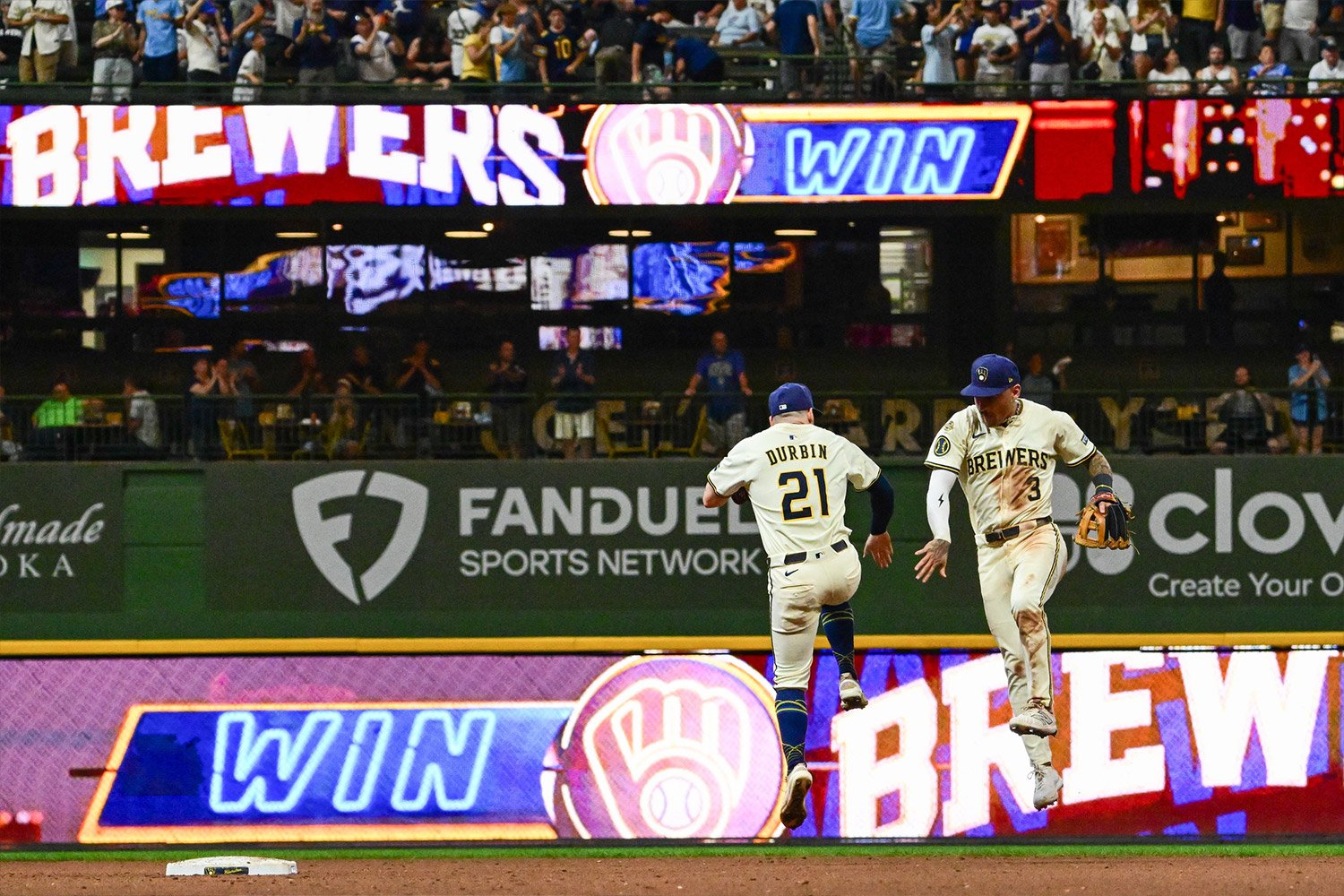 The Brewers look like an unstoppable machine right now. Winners of 11 straight – their second such streak this year, making them the 13th team all-time to do it multiple times in a season – Milwaukee owns the best record in baseball by 5 1/2 games and leads the NL Central by 7 1/2 games. They keep winning by doing so many things well. They pitch. They play defense. They reach base and then take extra bases on balls in play. The Brewers have allowed the second-fewest runs in baseball and rank fifth in fielding run value, third in on-base percentage, and first in baserunning runs above average. All of those attributes were on display as the Brewers clobbered the Pittsburgh Pirates in a 14-0 blowout on Tuesday night. So, too, was more pop than they had shown at arguably any point in the year – the offense combined to hit a season-high five home runs. If there's been a knock to make against an otherwise well-oiled unit, it's a lack of home run power. The Brewers are 20th in isolated power and 18th in home runs. That has changed this month, as the Crew have hit a league-leading 23 home runs in August. While not the leading reason for their string of offensive outbursts, putting more balls over the fence has played a role. The contributions have come throughout the lineup. Brice Turang and Sal Frelick have doubled their combined power output from a year ago. Andrew Vaughn and Christian Yelich are supplying thump in the middle of the order. With restored bat speed, William Contreras is scalding the ball again and has gone deep four times this month. While Turang acknowledged that he has made some adjustments to transfer his raw power into games, the Brewers maintain that, on the whole, the long ball is not a significant piece of their identity. "I don't think we're going to fool anybody with a bunch of slug, but usually homers are thrown," Pat Murphy said. "That's the way it is, you know? You don't create slug on balls on the edge or something like that. Homers are thrown, and it's taking advantage of it when [they are] thrown." "Homers are bonuses," Frelick said. "When we stick to our approach and put good at-bats together, that's when those home run pitches show up. So I think [the recent home runs are] a product of that." To their credit, the Brewers are doing more damage against home run pitches this month. Their slugging percentage and hard-hit rate on pitches labeled by Statcast as over the heart of the plate are higher in August than in any previous month this year. Month SLG HardHit% April .466 50.8% May .477 46.0% June .520 50.0% July .520 51.4% August .803 57.1% Even if the power surge is not by design, it's a development worth monitoring. While the Brewers' strengths in other areas mean they need not be an elite home run team to win, the reality remains that decent slugging ability is typically a prerequisite for making noise in October. In recent postseasons, teams that hit the most home runs in a game have boasted winning percentages approaching .800; only six of the last 25 World Series winners finished in the bottom half of the league in regular-season home runs, and none since the 2015 Royals. Winning requires scoring more runs than the opponent, and home runs are the most efficient means of scoring. They're also the only outcome that cannot be affected by defense or batted ball luck in a small sample. Given the profiles of most of their hitters, the Brewers should not be trying to hit home runs. Their existing approach is the most productive for the players they have. They do, however, need the ability to drive a mistake pitch when the opportunity presents itself. If they can do that on top of the many existing strengths that separate them from other teams, look out.
- 1 comment
-
- 4
-

-
- brice turang
- sal frelick
- (and 3 more)
-
Image courtesy of © Benny Sieu-Imagn Images A relentless offense has been the story of late in Milwaukee, as the Brewers clawed their way back from a 5-0 deficit to complete a sweep against the New York Mets on Sunday and extend their winning streak to nine games. But before Isaac Collins capped another dramatic win with his walk-off home run, it was DL Hall who put them in a position to finish the comeback. After Quinn Priester labored through 4 ⅓ innings, Hall delivered 11 outs of scoreless long relief. Not only did that quiet a Mets lineup that had scored in each of the first five frames, but it also provided much-needed rest for the Brewers' high-leverage relievers amid a stretch of 30 games in 31 days. "Just thinking about the bullpen, trying to help those guys out and give our leverage guys as many days off as I can," he said postgame. "Obviously, we had a few guys down today, so I just wanted to help the team, provide some length, and save some arms." The southpaw has been more productive in his second season with the Brewers, after a rough campaign a year ago. With the addition of a cutter and a two-seamer to his arsenal, Hall has completed his transformation from a power pitcher with an 80-grade fastball to a kitchen-sink guy who mixes seven pitches to help his unremarkable stuff play up. His four-seam usage has plummeted from over 50% early in his career to about 30% this season, giving way to a more balanced pitch mix. Some pretty clear red flags show that Hall remains a work in progress. He is not getting and staying ahead in counts or getting many swings and misses, resulting in a 1.53 strikeout-to-walk ratio that ranks in the 5th percentile of pitchers to throw at least 30 innings this year. He's unlikely to maintain his 2.83 ERA without shoring up his location, but the good news is that he's on the right track in deploying his arsenal. Because Hall is better shielding his four-seamer by mixing speeds and shapes, its whiff rate has jumped from 12.6% last season to a more palatable 20.9% this year. Mets hitters whiffed on four of eight swings against it on Sunday. Mixing and matching has also helped him avoid barrels; while hitters have rarely looked overpowered by his stuff, they've often looked caught in between, leading to weak contact. He has held opponents to a meager 29.5% hard-hit rate, according to Statcast. So far, Hall's season has been a reminder that a player's results can be unsustainable without being strictly good luck. His microscopic .170 BABIP means he's due for some major regression at some point—batted balls never go for hits at such a low rate, in the long run—but he has also created some of that good fortune for himself. He's been forced to reinvent himself without significant big-league experience. The next step is tightening his command to pair with his more mature approach. View full article
-
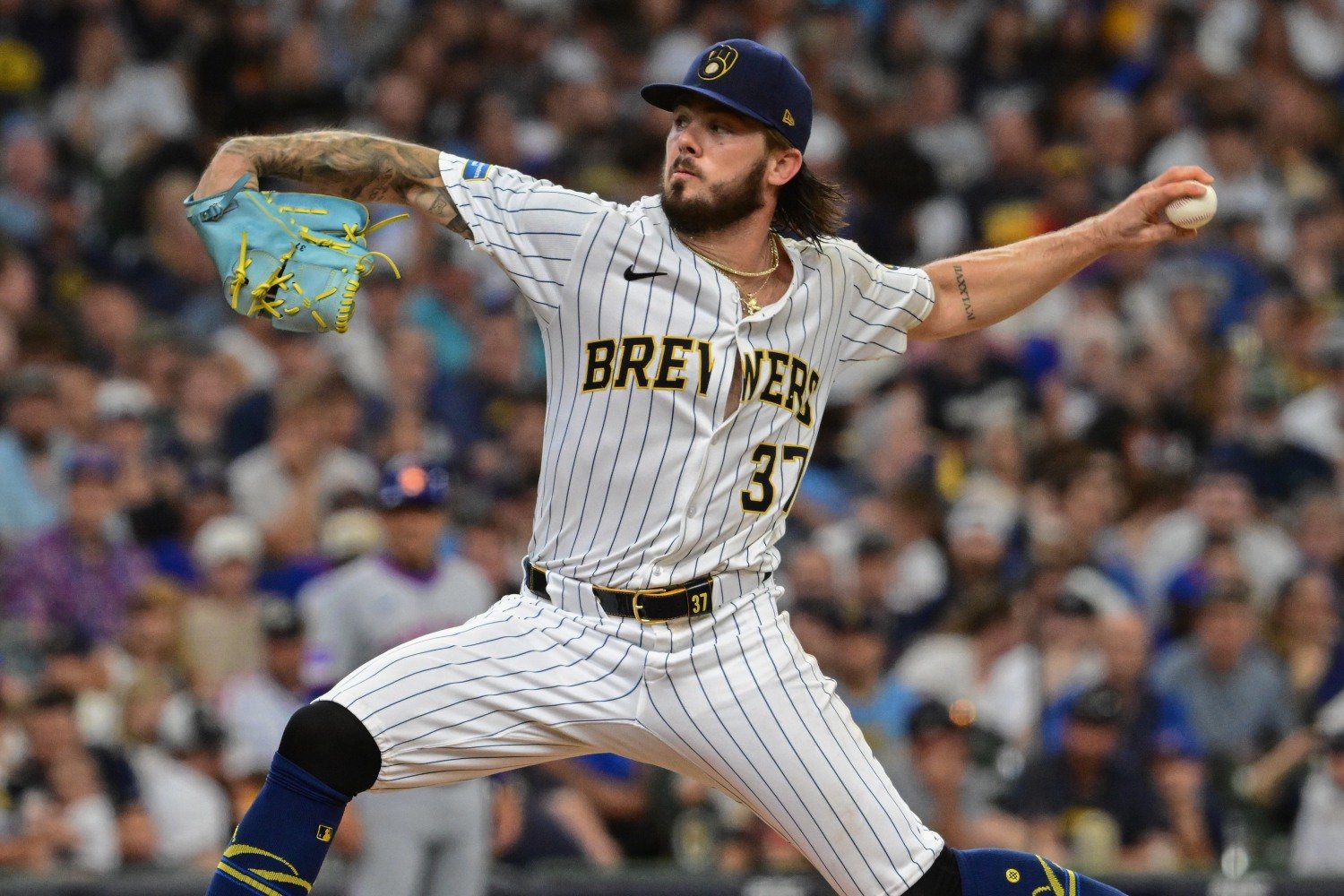 A relentless offense has been the story of late in Milwaukee, as the Brewers clawed their way back from a 5-0 deficit to complete a sweep against the New York Mets on Sunday and extend their winning streak to nine games. But before Isaac Collins capped another dramatic win with his walk-off home run, it was DL Hall who put them in a position to finish the comeback. After Quinn Priester labored through 4 ⅓ innings, Hall delivered 11 outs of scoreless long relief. Not only did that quiet a Mets lineup that had scored in each of the first five frames, but it also provided much-needed rest for the Brewers' high-leverage relievers amid a stretch of 30 games in 31 days. "Just thinking about the bullpen, trying to help those guys out and give our leverage guys as many days off as I can," he said postgame. "Obviously, we had a few guys down today, so I just wanted to help the team, provide some length, and save some arms." The southpaw has been more productive in his second season with the Brewers, after a rough campaign a year ago. With the addition of a cutter and a two-seamer to his arsenal, Hall has completed his transformation from a power pitcher with an 80-grade fastball to a kitchen-sink guy who mixes seven pitches to help his unremarkable stuff play up. His four-seam usage has plummeted from over 50% early in his career to about 30% this season, giving way to a more balanced pitch mix. Some pretty clear red flags show that Hall remains a work in progress. He is not getting and staying ahead in counts or getting many swings and misses, resulting in a 1.53 strikeout-to-walk ratio that ranks in the 5th percentile of pitchers to throw at least 30 innings this year. He's unlikely to maintain his 2.83 ERA without shoring up his location, but the good news is that he's on the right track in deploying his arsenal. Because Hall is better shielding his four-seamer by mixing speeds and shapes, its whiff rate has jumped from 12.6% last season to a more palatable 20.9% this year. Mets hitters whiffed on four of eight swings against it on Sunday. Mixing and matching has also helped him avoid barrels; while hitters have rarely looked overpowered by his stuff, they've often looked caught in between, leading to weak contact. He has held opponents to a meager 29.5% hard-hit rate, according to Statcast. So far, Hall's season has been a reminder that a player's results can be unsustainable without being strictly good luck. His microscopic .170 BABIP means he's due for some major regression at some point—batted balls never go for hits at such a low rate, in the long run—but he has also created some of that good fortune for himself. He's been forced to reinvent himself without significant big-league experience. The next step is tightening his command to pair with his more mature approach.
 -
Image courtesy of © Rick Scuteri-Imagn Images Shelby Miller looked game-ready in what will likely be his lone rehab appearance on Tuesday night in Nashville. The Brewers’ trade deadline acquisition struck out the side in order on 17 pitches, averaging 95.5 mph with his fastball and inducing four swings and misses. Optioning Easton McGee on Thursday morning was almost certainly a precursor to Miller joining the Milwaukee bullpen for Friday night’s series opener against the New York Mets. More than anything, Miller’s presence should ease the strain on his new teammates. Pat Murphy has ridden his best relievers hard this year – sometimes controversially so, but often out of necessity. Abner Uribe, Jared Koenig, and Grant Anderson have each exceeded 50 appearances this year, and Nick Mears is not far behind at 48. Miller, whose stint on the injured list lasted about a month, has only pitched in 37 regular-season games. As a veteran rental, Murphy should have free rein to push the envelope with his workload down the stretch. The usage of Koenig and Mears should change the most. Both have worked valuable innings in crucial situations, but have attacked the strike zone far less for several weeks, which is often a symptom of fatigue. Month Koenig Zone% Mears Zone% April 54.4% 56.8% May 61.6% 57.2% June 60.6% 61.7% July 51.4% 48.7% August 48.4% 44.8% Most of Koenig’s underlying metrics say he’s been just as good as last season despite a higher ERA, but that’s because left-handed hitters have had an even harder time barreling him up this year. Right-handers, meanwhile, have made much better contact, not to the severe extent the results indicate, but enough to know there are better suitors for those matchups. Split wOBA xwOBA DRA- vs. LHB .239 .188 70 vs. RHB .372 .336 96 While it looks in the box scores like Mears has been equally effective against both sides, left-handers have had far better swings against him. Split wOBA xwOBA DRA- Whiff% vs. LHB .248 .351 115 17.2% vs. RHB .245 .297 85 30.6% Part of the issue is that Mears’s fastball has become a worse pitch this year and has lost its ability to blow opponents away. He’s been able to mitigate the issue against right-handers by throwing his devastating slider nearly as often as his heater. Against lefties, his window for low glove-side sliders shrinks, and he lacks another offspeed pitch breaking away from the hitter, forcing him to keep leaning heavily on his fastball. Season Velocity Perceived Velocity Stuff+ wOBA xwOBA Whiff% Exit Velocity RHB Usage LHB Usage 2023 96.7 97.9 108 .319 .321 20.0% 89.8 58.5% 62.4% 2024 95.2 95.8 96 .338 .406 12.9% 94.0 51.2% 62.5% Miller, meanwhile, is platoon-proof mainly due to his wipeout splitter and the sweeper he mixes in against same-handed opponents. Since the start of 2023, lefties (.204 wOBA) have fared worse against him than righties (.296). Not only should his arrival mean less work for Koenig and Mears overall, but it should also push them into the specialist roles they are best suited for down the stretch. The veteran likely will not be the only reinforcement available in the coming weeks. Rob Zastryzny just embarked on a new rehab assignment, Robert Gasser is on pace to be built up by the end of the month, and the Brewers could nudge one of their MLB-caliber starters in Nashville to the bullpen if a need arises. That should create a dream scenario for Murphy – the luxury of managing to win tonight without placing disproportionate strain on any one arm. View full article
-
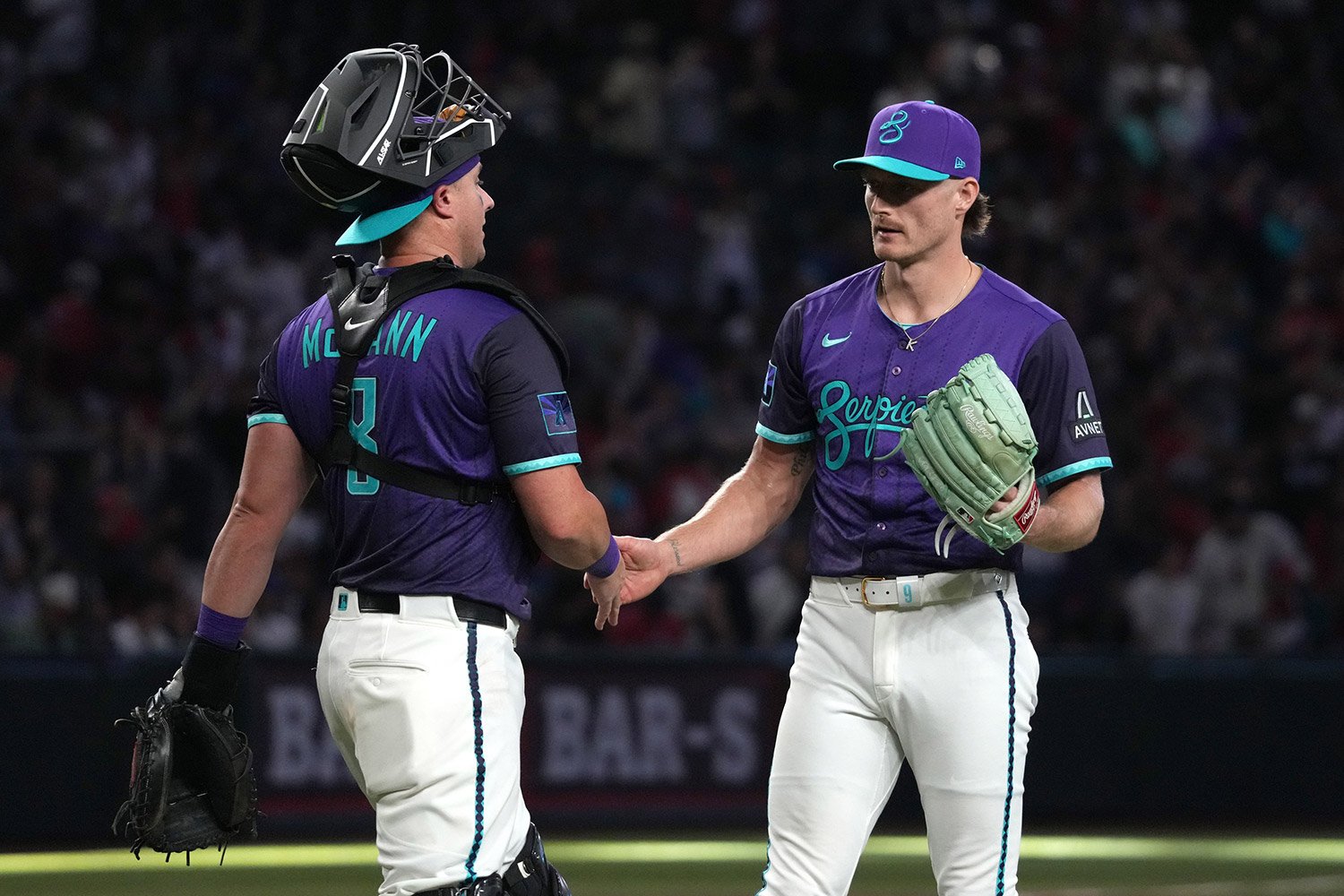 Shelby Miller looked game-ready in what will likely be his lone rehab appearance on Tuesday night in Nashville. The Brewers’ trade deadline acquisition struck out the side in order on 17 pitches, averaging 95.5 mph with his fastball and inducing four swings and misses. Optioning Easton McGee on Thursday morning was almost certainly a precursor to Miller joining the Milwaukee bullpen for Friday night’s series opener against the New York Mets. More than anything, Miller’s presence should ease the strain on his new teammates. Pat Murphy has ridden his best relievers hard this year – sometimes controversially so, but often out of necessity. Abner Uribe, Jared Koenig, and Grant Anderson have each exceeded 50 appearances this year, and Nick Mears is not far behind at 48. Miller, whose stint on the injured list lasted about a month, has only pitched in 37 regular-season games. As a veteran rental, Murphy should have free rein to push the envelope with his workload down the stretch. The usage of Koenig and Mears should change the most. Both have worked valuable innings in crucial situations, but have attacked the strike zone far less for several weeks, which is often a symptom of fatigue. Month Koenig Zone% Mears Zone% April 54.4% 56.8% May 61.6% 57.2% June 60.6% 61.7% July 51.4% 48.7% August 48.4% 44.8% Most of Koenig’s underlying metrics say he’s been just as good as last season despite a higher ERA, but that’s because left-handed hitters have had an even harder time barreling him up this year. Right-handers, meanwhile, have made much better contact, not to the severe extent the results indicate, but enough to know there are better suitors for those matchups. Split wOBA xwOBA DRA- vs. LHB .239 .188 70 vs. RHB .372 .336 96 While it looks in the box scores like Mears has been equally effective against both sides, left-handers have had far better swings against him. Split wOBA xwOBA DRA- Whiff% vs. LHB .248 .351 115 17.2% vs. RHB .245 .297 85 30.6% Part of the issue is that Mears’s fastball has become a worse pitch this year and has lost its ability to blow opponents away. He’s been able to mitigate the issue against right-handers by throwing his devastating slider nearly as often as his heater. Against lefties, his window for low glove-side sliders shrinks, and he lacks another offspeed pitch breaking away from the hitter, forcing him to keep leaning heavily on his fastball. Season Velocity Perceived Velocity Stuff+ wOBA xwOBA Whiff% Exit Velocity RHB Usage LHB Usage 2023 96.7 97.9 108 .319 .321 20.0% 89.8 58.5% 62.4% 2024 95.2 95.8 96 .338 .406 12.9% 94.0 51.2% 62.5% Miller, meanwhile, is platoon-proof mainly due to his wipeout splitter and the sweeper he mixes in against same-handed opponents. Since the start of 2023, lefties (.204 wOBA) have fared worse against him than righties (.296). Not only should his arrival mean less work for Koenig and Mears overall, but it should also push them into the specialist roles they are best suited for down the stretch. The veteran likely will not be the only reinforcement available in the coming weeks. Rob Zastryzny just embarked on a new rehab assignment, Robert Gasser is on pace to be built up by the end of the month, and the Brewers could nudge one of their MLB-caliber starters in Nashville to the bullpen if a need arises. That should create a dream scenario for Murphy – the luxury of managing to win tonight without placing disproportionate strain on any one arm.
- 11 comments
-
- 1
-
-
- shelby miller
- nick mears
- (and 3 more)
-
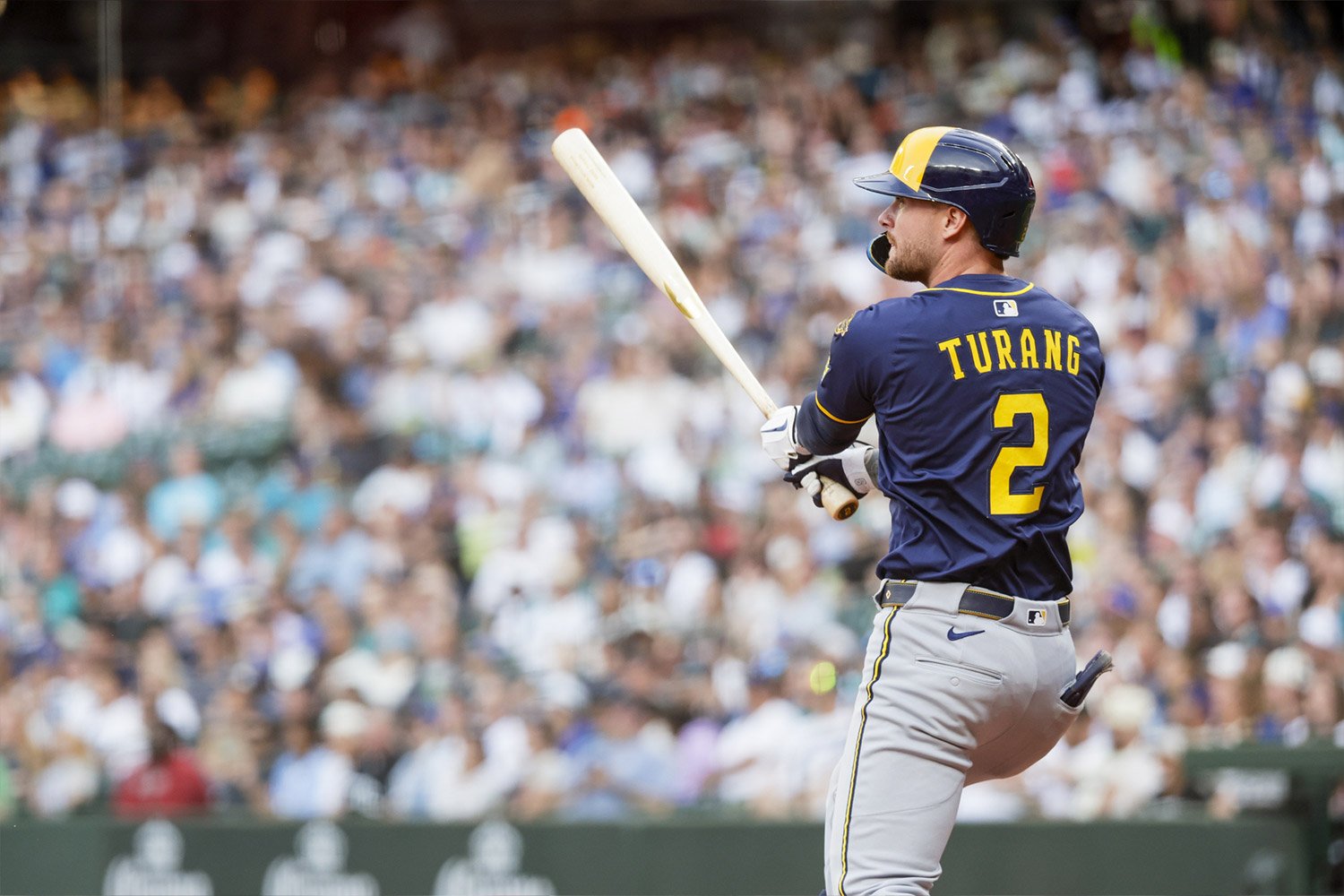 There's been a surprising spectacle during home batting practices this year at American Family Field: Brice Turang regularly launching home runs off the Loge Level bleachers in right field. Most hitters drive the ball more in batting practice than they do in games, but Turang's pregame swings are more attention-grabbing. Listed at 5-foot-10 and 190 pounds and owning a career .338 slugging percentage, the Brewers' second baseman unleashes perhaps the most impressive left-handed power on the roster behind Christian Yelich. It's the exact opposite of Turang's established in-game profile of a slap hitter who frequently punches line drives and ground balls up the middle or to the opposite field. According to Statcast, his 5% pull air rate this season is the third-lowest among qualified hitters. And yet, when he steps into the box for batting practice, Turang regularly turns into a bona fide slugger with legitimate pull-side power. Float the possibility of hitting more home runs, and Turang will quickly downplay it. His goal, he maintains, is usually to hit a low line drive back up the middle. But between changes to his stance and swing and his batting practice approach, he has looked for a while like someone with at least one eye on attaining more power. After his rookie season, Turang added 20 pounds of muscle but adopted a simplified, contact-oriented approach, which raised his floor as a hitter enough to pair nicely with his elite defense. This year, he has made all of the adjustments typical of a hitter looking to drive the ball more authoritatively. For starters, his batting stance is taller, narrower, and more open. He has also raised his hands and reintroduced the leg kick he shelved last year. Finally, he's swinging harder than ever. From 2024 to 2025, Turang has added 4 mph of bat speed on average, by far the highest increase among qualified hitters. All those changes have him hitting the ball much harder; his hard-hit rate has increased from 29.7% to an above-average 45.3%, which is also the greatest jump in baseball. This version of Turang is more capable of damage. Beyond his batting practice swings, he's shown glimpses of what can happen on the rare occasions he pulls the ball in the air. Turang's average home run distance of 417 feet ranks fourth among hitters with at least five homers this year. How much power do the Brewers think Turang has lying dormant beneath his in-game production? "I think there's a lot," hitting coach Connor Dawson said. Transferring it into games is among their long-term goals for Turang's development. As he continues to spray singles and doubles in the gaps in competitive settings, he and the hitting staff are working in the background on pulling more balls in the air to maximize his raw power. "I think that's kind of the progression for him," Dawson said. "He's a hitter first, and he needs to be able to use the entire field and spray line drives around. But I think it's definitely something that's on the verge, is finding some more air pull, and I think it's something that's in there, too." Pulling the ball in the air requires a hitter to make contact with a pitch farther out in front of the plate. That's easier said than done for Turang, who is accustomed to letting the ball get deep and hitting it farther back. Waiting back as part of an all-fields approach allows him to adjust mid-pitch to different speeds and locations and still be on time, all while working within the confines of his natural movement patterns. "This is how his body moves and how he establishes, 'How can I read it all and still get to a number of different pitches and be on time?'" Pat Murphy said last month. Turang can employ a contact point farther in front of the plate against batting-practice pitches that are mostly coming in at similar speeds. Artificially forcing it in competition leaves him unable to wait back on offspeed pitches. "He can do it in batting practice, but how come he can't translate it into a game?" Murphy asked rhetorically. "Timing. Because the mechanism he uses to get down and get a swing off doesn't allow him to get there on 94 [mph]. So, how do we get him there on 94? 'Brice, just get your foot down earlier.' That's not it." An unproductive July illustrated how hitting the ball farther in front hurts Turang if he is not getting there the proper way. His contact point relative to his body nudged forward about three inches, and he pulled 30.8% of his batted balls, yet his .560 OPS was his worst of any month this season. Turang has continued to ambush fastballs, but with the earlier contact point, he's been pulling off slower pitches for rollover groundouts and swings and misses. Month Pitch Type wOBA xwOBA Whiff% Pull% Launch Angle March-June Fastballs .375 .374 17.1% 12.7% 11 March-June Breaking .244 .303 18.9% 36.2% 8 March-June Offspeed .293 .277 31.7% 24.0% 2 July Fastballs .396 .363 17.9% 11.1% 13 July Breaking .101 .241 35.4% 56.5% -4 July Offspeed .000 .090 33.3% 50.0% -12 Intentionally or not, Turang has gotten away from doing what he does best in games. Developing new skills cannot come at the expense of existing strengths. "This is the tricky part of development," Dawson said. "Especially for us, we're trying to win and develop, and you have to lean on your strengths while you're in-game. And right now, his strengths are spraying the ball around on a line." Dawson sees Turang's bat speed gains as progress toward more repeatable air pull. Instead of catching the ball in front by cheating to it, swinging faster gets his barrel there more organically without having to change his thought process. "There is this little progression there of some things are starting to click," he said. "I do think as he continues to increase bat speed, it will be much, much easier, because he'll have to stray less away from his approach because he's just swinging the bat faster." There are still growing pains, though, which Turang has experienced throughout the season. His bat speed hasn't just increased overall, but has steadily climbed each month. "I think the hardest part for a guy like that who makes a jump in bat speed is when they had less bat speed, they had this approach that made them successful, and generally it was deeper [contact point], opposite field, more middle, lower line drives," Dawson said. "And as guys gain bat speed, especially at a pretty rapid pace, it's not so easy to go, 'Okay, now I gotta push it out in front,' you know? So it's all got to blend together, and that doesn't happen at the snap of a finger." Turang has already made incredible strides since his underwhelming debut season. With the tools for a unique and dynamic blend of defense, speed, and some raw power, his ceiling now looks even higher. It will just take some more time to unlock that pop. "It's definitely something I think you've seen in BP," Dawson said, "but it's also something that's going to be a little bit slower progression. It's not linear." "There'll be a lot more homers in there," Murphy said. "I think that's coming from Brice over time, but he has to figure that out."
- 10 comments
-
- 7
-
-

-
- brice turang
- connor dawson
- (and 1 more)
-
Image courtesy of © Joe Nicholson-Imagn Images There's been a surprising spectacle during home batting practices this year at American Family Field: Brice Turang regularly launching home runs off the Loge Level bleachers in right field. Most hitters drive the ball more in batting practice than they do in games, but Turang's pregame swings are more attention-grabbing. Listed at 5-foot-10 and 190 pounds and owning a career .338 slugging percentage, the Brewers' second baseman unleashes perhaps the most impressive left-handed power on the roster behind Christian Yelich. It's the exact opposite of Turang's established in-game profile of a slap hitter who frequently punches line drives and ground balls up the middle or to the opposite field. According to Statcast, his 5% pull air rate this season is the third-lowest among qualified hitters. And yet, when he steps into the box for batting practice, Turang regularly turns into a bona fide slugger with legitimate pull-side power. Float the possibility of hitting more home runs, and Turang will quickly downplay it. His goal, he maintains, is usually to hit a low line drive back up the middle. But between changes to his stance and swing and his batting practice approach, he has looked for a while like someone with at least one eye on attaining more power. After his rookie season, Turang added 20 pounds of muscle but adopted a simplified, contact-oriented approach, which raised his floor as a hitter enough to pair nicely with his elite defense. This year, he has made all of the adjustments typical of a hitter looking to drive the ball more authoritatively. For starters, his batting stance is taller, narrower, and more open. He has also raised his hands and reintroduced the leg kick he shelved last year. Finally, he's swinging harder than ever. From 2024 to 2025, Turang has added 4 mph of bat speed on average, by far the highest increase among qualified hitters. All those changes have him hitting the ball much harder; his hard-hit rate has increased from 29.7% to an above-average 45.3%, which is also the greatest jump in baseball. This version of Turang is more capable of damage. Beyond his batting practice swings, he's shown glimpses of what can happen on the rare occasions he pulls the ball in the air. Turang's average home run distance of 417 feet ranks fourth among hitters with at least five homers this year. How much power do the Brewers think Turang has lying dormant beneath his in-game production? "I think there's a lot," hitting coach Connor Dawson said. Transferring it into games is among their long-term goals for Turang's development. As he continues to spray singles and doubles in the gaps in competitive settings, he and the hitting staff are working in the background on pulling more balls in the air to maximize his raw power. "I think that's kind of the progression for him," Dawson said. "He's a hitter first, and he needs to be able to use the entire field and spray line drives around. But I think it's definitely something that's on the verge, is finding some more air pull, and I think it's something that's in there, too." Pulling the ball in the air requires a hitter to make contact with a pitch farther out in front of the plate. That's easier said than done for Turang, who is accustomed to letting the ball get deep and hitting it farther back. Waiting back as part of an all-fields approach allows him to adjust mid-pitch to different speeds and locations and still be on time, all while working within the confines of his natural movement patterns. "This is how his body moves and how he establishes, 'How can I read it all and still get to a number of different pitches and be on time?'" Pat Murphy said last month. Turang can employ a contact point farther in front of the plate against batting-practice pitches that are mostly coming in at similar speeds. Artificially forcing it in competition leaves him unable to wait back on offspeed pitches. "He can do it in batting practice, but how come he can't translate it into a game?" Murphy asked rhetorically. "Timing. Because the mechanism he uses to get down and get a swing off doesn't allow him to get there on 94 [mph]. So, how do we get him there on 94? 'Brice, just get your foot down earlier.' That's not it." An unproductive July illustrated how hitting the ball farther in front hurts Turang if he is not getting there the proper way. His contact point relative to his body nudged forward about three inches, and he pulled 30.8% of his batted balls, yet his .560 OPS was his worst of any month this season. Turang has continued to ambush fastballs, but with the earlier contact point, he's been pulling off slower pitches for rollover groundouts and swings and misses. Month Pitch Type wOBA xwOBA Whiff% Pull% Launch Angle March-June Fastballs .375 .374 17.1% 12.7% 11 March-June Breaking .244 .303 18.9% 36.2% 8 March-June Offspeed .293 .277 31.7% 24.0% 2 July Fastballs .396 .363 17.9% 11.1% 13 July Breaking .101 .241 35.4% 56.5% -4 July Offspeed .000 .090 33.3% 50.0% -12 Intentionally or not, Turang has gotten away from doing what he does best in games. Developing new skills cannot come at the expense of existing strengths. "This is the tricky part of development," Dawson said. "Especially for us, we're trying to win and develop, and you have to lean on your strengths while you're in-game. And right now, his strengths are spraying the ball around on a line." Dawson sees Turang's bat speed gains as progress toward more repeatable air pull. Instead of catching the ball in front by cheating to it, swinging faster gets his barrel there more organically without having to change his thought process. "There is this little progression there of some things are starting to click," he said. "I do think as he continues to increase bat speed, it will be much, much easier, because he'll have to stray less away from his approach because he's just swinging the bat faster." There are still growing pains, though, which Turang has experienced throughout the season. His bat speed hasn't just increased overall, but has steadily climbed each month. "I think the hardest part for a guy like that who makes a jump in bat speed is when they had less bat speed, they had this approach that made them successful, and generally it was deeper [contact point], opposite field, more middle, lower line drives," Dawson said. "And as guys gain bat speed, especially at a pretty rapid pace, it's not so easy to go, 'Okay, now I gotta push it out in front,' you know? So it's all got to blend together, and that doesn't happen at the snap of a finger." Turang has already made incredible strides since his underwhelming debut season. With the tools for a unique and dynamic blend of defense, speed, and some raw power, his ceiling now looks even higher. It will just take some more time to unlock that pop. "It's definitely something I think you've seen in BP," Dawson said, "but it's also something that's going to be a little bit slower progression. It's not linear." "There'll be a lot more homers in there," Murphy said. "I think that's coming from Brice over time, but he has to figure that out." View full article
- 10 replies
-
- 2
-
-
- brice turang
- connor dawson
- (and 1 more)
-
 The 2025 MLB trade deadline has come and gone. Amid a flurry of activity throughout the league, the Brewers, owners of baseball’s best record at 64-44, emerged from deadline week with veteran backup catcher Danny Jansen, reliever Shelby Miller, an injured Jordon Montgomery, and speedy 28-year-old outfielder Brandon Lockridge. They parted with starter Nestor Cortes, infield prospects Jadher Areinamo and Jorge Quintana, cash, and potentially a player to be named. The Brewers are slightly better now than they were at the start of the week, with no hits to their long-term outlook. By those measures, they had a respectable deadline. It’s also worth remembering that in-season swaps made weeks before the deadline still count and have been among their most successful moves. Willy Adames, Rowdy Tellez, and Aaron Civale all became integral contributors to past rosters, as have Quinn Priester and Andrew Vaughn this year. A modestly active deadline was unsurprising and even justifiable. The Brewers can credit their stinginess for helping them remain contenders every year. Maintaining prospect depth and avoiding serious long-term financial commitments has made it easier to replace struggling, injured, or departing players. It also affords them the flexibility to retool the roster in-season when things aren’t working, a trick they pulled off successfully this year at third base and throughout the pitching staff. When they do splurge, it’s for controllable talent like Priester. The asking prices at this year’s deadline were mostly incompatible with Matt Arnold’s established approach. That’s what makes the Miller dea—taking on some of Montgomery’s salary to avoid paying with prospects—a creative and laudable solution to the roadblocks the club faced in supplementing their colledtion of high-leverage relievers. Still, it feels as though the Brewers could have done more. While Jansen fortifies the catching depth behind William Contreras and has some untapped power, the light-hitting Lockridge’s baserunning and defense feel redundant on a scrappy roster that could have used reinforcements in other areas. Hitting home runs is the best way to hedge against playoff randomness, but the Brewers do not hit nearly enough of them. They still rank 27th in isolated power and 23rd in homers. Even in a hot July, they remained below average in the power department. In a potential playoff series, the viability of their singles-and-steals offense remains heavily at the whims of batted-ball luck and defensive faux pas by opponents. The infield depth has been tenuous all year. Joey Ortiz has the third-worst wRC+ among qualified hitters, and an injury in the infield would press Andruw Monasterio or an unproven Anthony Seigler into a starting role. Oliver Dunn and Tyler Black are the next men up in Nashville. Milwaukee made no serious upgrades in those areas, though. Instead, they’ve doubled down on their incumbent players, the brand of baseball they play, and their approach to building a roster, believing their established formula will get them to October and win postseason games. Perhaps it will. As badly as he has struggled, the front office remains high on Ortiz’s skill set and his glove at shortstop, even as defensive metrics have given him mixed reviews. There wasn’t much of a shortstop market, either, with only Carlos Correa moving to Houston, the lone team for which he would waive his no-trade clause—and Correa made a permanent move to third base, as part of that trade. Speaking of the hot corner, average offense and excellent defense have Caleb Durbin on pace for 4.2 bWAR over a 162-game span. Seigler’s at-bats in a small sample have been much better than his .185/.233/.185 slash line suggests; he’s made respectable contact while rarely whiffing or chasing, which translates to an above-average .349 xwOBA and 104 DRC+. In the power department, a red-hot Vaughn has slugged 5 home runs in 16 games since his promotion from Triple-A Nashville, anchoring the middle of the order with some thump. He won’t remain that dominant, but perhaps the Brewers have bought into sustainable improvement from him and Contreras as in-house solutions to their slugging woes. Given the returns on the pitching market, it seemed the Brewers could capitalize on their stable of MLB-caliber starters. Instead, knowing from recent experience how quickly that depth can dry up, they dealt only Cortes (for an underwhelming return) and kept their remaining starters. It was a reasonable strategy, but whether it was the best one for this year’s team and trade market is debatable. The Brewers seem to think it was, and they’re about to learn if they were correct.
- 12 comments
-
- 4
-
-
- nestor cortes
- brandon lockridge
- (and 5 more)
-
Image courtesy of © Dave Kallmann / Milwaukee Journal Sentinel / USA TODAY NETWORK via Imagn Images The 2025 MLB trade deadline has come and gone. Amid a flurry of activity throughout the league, the Brewers, owners of baseball’s best record at 64-44, emerged from deadline week with veteran backup catcher Danny Jansen, reliever Shelby Miller, an injured Jordon Montgomery, and speedy 28-year-old outfielder Brandon Lockridge. They parted with starter Nestor Cortes, infield prospects Jadher Areinamo and Jorge Quintana, cash, and potentially a player to be named. The Brewers are slightly better now than they were at the start of the week, with no hits to their long-term outlook. By those measures, they had a respectable deadline. It’s also worth remembering that in-season swaps made weeks before the deadline still count and have been among their most successful moves. Willy Adames, Rowdy Tellez, and Aaron Civale all became integral contributors to past rosters, as have Quinn Priester and Andrew Vaughn this year. A modestly active deadline was unsurprising and even justifiable. The Brewers can credit their stinginess for helping them remain contenders every year. Maintaining prospect depth and avoiding serious long-term financial commitments has made it easier to replace struggling, injured, or departing players. It also affords them the flexibility to retool the roster in-season when things aren’t working, a trick they pulled off successfully this year at third base and throughout the pitching staff. When they do splurge, it’s for controllable talent like Priester. The asking prices at this year’s deadline were mostly incompatible with Matt Arnold’s established approach. That’s what makes the Miller dea—taking on some of Montgomery’s salary to avoid paying with prospects—a creative and laudable solution to the roadblocks the club faced in supplementing their colledtion of high-leverage relievers. Still, it feels as though the Brewers could have done more. While Jansen fortifies the catching depth behind William Contreras and has some untapped power, the light-hitting Lockridge’s baserunning and defense feel redundant on a scrappy roster that could have used reinforcements in other areas. Hitting home runs is the best way to hedge against playoff randomness, but the Brewers do not hit nearly enough of them. They still rank 27th in isolated power and 23rd in homers. Even in a hot July, they remained below average in the power department. In a potential playoff series, the viability of their singles-and-steals offense remains heavily at the whims of batted-ball luck and defensive faux pas by opponents. The infield depth has been tenuous all year. Joey Ortiz has the third-worst wRC+ among qualified hitters, and an injury in the infield would press Andruw Monasterio or an unproven Anthony Seigler into a starting role. Oliver Dunn and Tyler Black are the next men up in Nashville. Milwaukee made no serious upgrades in those areas, though. Instead, they’ve doubled down on their incumbent players, the brand of baseball they play, and their approach to building a roster, believing their established formula will get them to October and win postseason games. Perhaps it will. As badly as he has struggled, the front office remains high on Ortiz’s skill set and his glove at shortstop, even as defensive metrics have given him mixed reviews. There wasn’t much of a shortstop market, either, with only Carlos Correa moving to Houston, the lone team for which he would waive his no-trade clause—and Correa made a permanent move to third base, as part of that trade. Speaking of the hot corner, average offense and excellent defense have Caleb Durbin on pace for 4.2 bWAR over a 162-game span. Seigler’s at-bats in a small sample have been much better than his .185/.233/.185 slash line suggests; he’s made respectable contact while rarely whiffing or chasing, which translates to an above-average .349 xwOBA and 104 DRC+. In the power department, a red-hot Vaughn has slugged 5 home runs in 16 games since his promotion from Triple-A Nashville, anchoring the middle of the order with some thump. He won’t remain that dominant, but perhaps the Brewers have bought into sustainable improvement from him and Contreras as in-house solutions to their slugging woes. Given the returns on the pitching market, it seemed the Brewers could capitalize on their stable of MLB-caliber starters. Instead, knowing from recent experience how quickly that depth can dry up, they dealt only Cortes (for an underwhelming return) and kept their remaining starters. It was a reasonable strategy, but whether it was the best one for this year’s team and trade market is debatable. The Brewers seem to think it was, and they’re about to learn if they were correct. View full article
-
Image courtesy of © Matt Kartozian-Imagn Images News of another Brewers trade came trickling in after the deadline buzzer, as Milwaukee has acquired reliever Shelby Miller and injured starter Jordan Montgomery from the Arizona Diamondbacks in exchange for a player to be named later or cash considerations. The Brewers wanted to add bullpen help at the deadline but faced steep prices for relievers. That would be a tough pill to swallow for a front office that is typically stingy in holding onto its prospects, so they took a chunk of an injured pitcher's salary to acquire a late-inning arm. The 34-year-old Miller has pitched to a 1.98 ERA and 3.12 FIP with a 28% strikeout rate. He's served as Arizona's closer for much of the season, picking up a career-high 10 saves. A right forearm strain has sidelined him for most of July, but he has recently resumed throwing and is expected to return soon. That injury has limited him to 37 appearances this year, so he should be fresher than Abner Uribe, Nick Mears, Jared Koenig, and Grant Anderson for the stretch run. This will technically be Miller's third stint with the Brewers, as he signed separate minor-league deals with the organization in 2019 and 2020. He pitched for their Triple-A affiliate that first year but opted out during the COVID-19 pandemic the following season. Montgomery signed a one-year deal with the Diamondbacks during the 2024 season and exercised his $22.5 million player option for 2025 after a career-worst season. He has missed the entire campaign after undergoing Tommy John surgery during the season's first full week. He won't pitch for the Brewers and is part of the deal purely for salary reasons, with Steve Gilbert reporting that Milwaukee will cover $2 million of his remaining pay. The move is a creative attempt by Matt Arnold and company to work around the demands throughout the rest of the reliever market while still adding some bullpen help. To clear 40-man roster spots for Miller and Brandon Lockridge, acquired from the San Diego Padres for Nestor Cortes, the Brewers designated relievers Bryan Hudson and Elvis Peguero for assignment. Once mainstays in the big-league bullpen, both pitchers looked like DFA candidates after inconsistent performance with Triple-A Nashville this year. View full article
-
 News of another Brewers trade came trickling in after the deadline buzzer, as Milwaukee has acquired reliever Shelby Miller and injured starter Jordan Montgomery from the Arizona Diamondbacks in exchange for a player to be named later or cash considerations. The Brewers wanted to add bullpen help at the deadline but faced steep prices for relievers. That would be a tough pill to swallow for a front office that is typically stingy in holding onto its prospects, so they took a chunk of an injured pitcher's salary to acquire a late-inning arm. The 34-year-old Miller has pitched to a 1.98 ERA and 3.12 FIP with a 28% strikeout rate. He's served as Arizona's closer for much of the season, picking up a career-high 10 saves. A right forearm strain has sidelined him for most of July, but he has recently resumed throwing and is expected to return soon. That injury has limited him to 37 appearances this year, so he should be fresher than Abner Uribe, Nick Mears, Jared Koenig, and Grant Anderson for the stretch run. This will technically be Miller's third stint with the Brewers, as he signed separate minor-league deals with the organization in 2019 and 2020. He pitched for their Triple-A affiliate that first year but opted out during the COVID-19 pandemic the following season. Montgomery signed a one-year deal with the Diamondbacks during the 2024 season and exercised his $22.5 million player option for 2025 after a career-worst season. He has missed the entire campaign after undergoing Tommy John surgery during the season's first full week. He won't pitch for the Brewers and is part of the deal purely for salary reasons, with Steve Gilbert reporting that Milwaukee will cover $2 million of his remaining pay. The move is a creative attempt by Matt Arnold and company to work around the demands throughout the rest of the reliever market while still adding some bullpen help. To clear 40-man roster spots for Miller and Brandon Lockridge, acquired from the San Diego Padres for Nestor Cortes, the Brewers designated relievers Bryan Hudson and Elvis Peguero for assignment. Once mainstays in the big-league bullpen, both pitchers looked like DFA candidates after inconsistent performance with Triple-A Nashville this year.
- 6 comments
-
- 2
-
-
- shelby miller
- jordan montgomery
- (and 4 more)
-
Image courtesy of © Wm. Glasheen/USA TODAY NETWORK-Wisconsin / USA TODAY NETWORK via Imagn Images In the waning minutes before the trade deadline, the Brewers have made a deal. Ken Rosenthal first reported that Milwaukee is sending left-hander Nestor Cortes to the San Diego Padres, with Adam McCalvy adding that 28-year-old outfielder Brandon Lockridge is coming back in return. Jeff Sanders later reported that the Brewers are also sending 2024 international signing Jorge Quintana to San Diego. With Cortes ready to return to a full rotation after missing nearly four months with a left flexor strain, trading him or Jose Quintana looked like the cleanest way to alleviate a logjam. The club seemingly decided on a light but very Brewers-like return for the former as the best route. His departure allows them to continue on with a starting five of Freddy Peralta, Quintana, Brandon Woodruff, Jacob Misiorowski, and Quinn Priester. The 28-year-old Lockridge was a fifth-round pick by the New York Yankees in 2018, and his profile fits in well with many existing Brewers hitters. He's best known for his speed, baserunning, and defense and doesn't chase much at the plate. While he's hit the ball hard in the upper minors this year, it has not translated to game power due to a 6.2% pull air rate that ranks in the 6th percentile. He's slashed just .210/.248/.280 (50 wRC+) in 107 big-league plate appearances but has been a consistently above-average hitter in Triple-A thanks to his plate discipline. Lockridge provides added outfield depth as the club awaits word on the severity of Jackson Chourio's hamstring injury. He was on San Diego's 40-man roster, meaning the Brewers must make a corresponding move to clear a spot for him. View full article
-
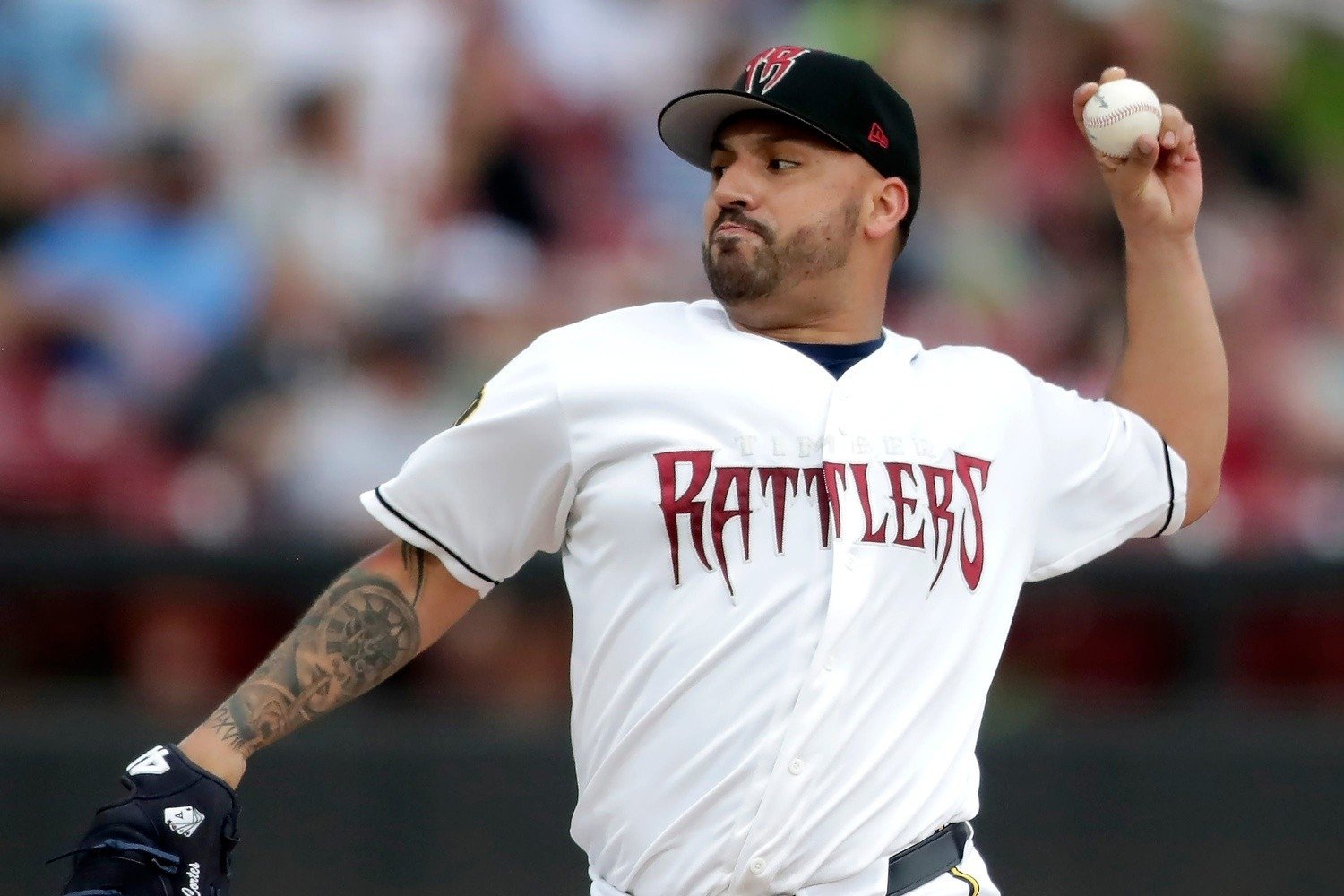 In the waning minutes before the trade deadline, the Brewers have made a deal. Ken Rosenthal first reported that Milwaukee is sending left-hander Nestor Cortes to the San Diego Padres, with Adam McCalvy adding that 28-year-old outfielder Brandon Lockridge is coming back in return. Jeff Sanders later reported that the Brewers are also sending 2024 international signing Jorge Quintana to San Diego. With Cortes ready to return to a full rotation after missing nearly four months with a left flexor strain, trading him or Jose Quintana looked like the cleanest way to alleviate a logjam. The club seemingly decided on a light but very Brewers-like return for the former as the best route. His departure allows them to continue on with a starting five of Freddy Peralta, Quintana, Brandon Woodruff, Jacob Misiorowski, and Quinn Priester. The 28-year-old Lockridge was a fifth-round pick by the New York Yankees in 2018, and his profile fits in well with many existing Brewers hitters. He's best known for his speed, baserunning, and defense and doesn't chase much at the plate. While he's hit the ball hard in the upper minors this year, it has not translated to game power due to a 6.2% pull air rate that ranks in the 6th percentile. He's slashed just .210/.248/.280 (50 wRC+) in 107 big-league plate appearances but has been a consistently above-average hitter in Triple-A thanks to his plate discipline. Lockridge provides added outfield depth as the club awaits word on the severity of Jackson Chourio's hamstring injury. He was on San Diego's 40-man roster, meaning the Brewers must make a corresponding move to clear a spot for him.
 -
New Brewers Catcher Danny Jansen Supplies a Skill Their Offense Lacks
Jack Stern posted an article in Brewers
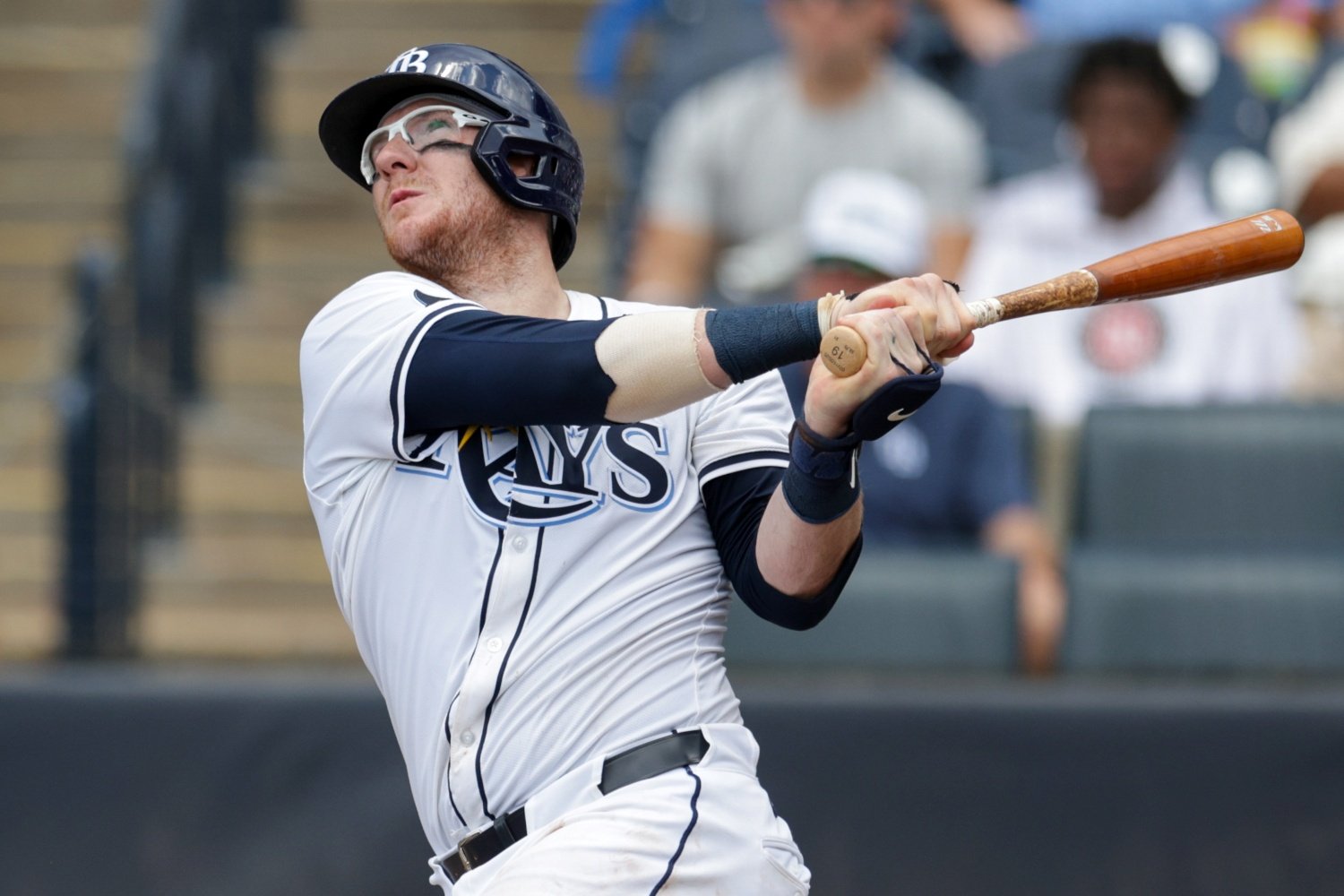 The Brewers made their first strike of trade deadline week on Monday night, acquiring veteran catcher Danny Jansen and cash from the Tampa Bay Rays in exchange for infield prospect Jadher Areinamo. The Appleton West High School product will replace Eric Haase, whom the Brewers designated for assignment in a corresponding move, as William Contreras's backup. Haase is perhaps the better game-caller of the two and posted a capable 104 wRC+ in limited action across two seasons with the club, but several red flags behind that production meant his output was almost certain to decline. He flashed some power, but he chased 32.3% of pitches outside the zone and whiffed on 35.6% of swings, walking just 4.8% of the time against an alarming 40.4% strikeout rate. "It's a hard day for the Brewers, in some ways, because Eric Haase has for two years been an incredible team member," Pat Murphy said after the Brewers officially announced the trade. "When he plays, he helps us win. Anytime we subtract a guy that's been a leader in that clubhouse, too, it's a really rough day for me." Jansen, meanwhile, has struck out at a career-worst 26.3% rate, but his contact rates are comparable to past seasons in which he has punched out less. That strikeout rate could trend toward his career average of 20.7% down the stretch. The 30-year-old’s .218/.309/.389 slash line and 99 wRC+ are in line with his career numbers, and constitute an upgrade behind Contreras, who has caught a league-leading 765 1/3 innings despite suffering from a fractured left middle finger. "I think on one hand, it's a tough conversation with Eric Haase, but we felt like it was something that we wanted to try to insulate, in particular, with the health of William," Matt Arnold said. "Just making sure we were covered there with our depth." While Murphy pushed back on Monday night against the possibility of Contreras catching less down the stretch, and Arnold reiterated that the Brewers believe he's still healthy and productive enough to remain the starting catcher, they seemingly feel more comfortable resting him for Jansen than they did for Haase. "No concerns with near-term issues with his health at all," Arnold said. "I think it does give us an opportunity to potentially shade him a little bit." With his patience and sound swing decisions at the plate (12.7% walk rate and 19.7% chase rate) and his 121 wRC+ against left-handed pitching since the start of 2022, Jansen should fit in nicely while raising the catching tandem's floor. That's already enough to make the team better. He could prove even more impactful, though, by boosting the lineup in the power department. Milwaukee's offense ranks 22nd in slugging percentage (.386), 27th in ISO (.135) and hard-hit rate (38.3%), and last in barrels per plate appearance (4.1%). In addition to that lack of loud contact, only 15.3% of the Brewers' batted balls have been pulled in the air, the second-lowest rate in baseball. Instead, they generally shoot lower line drives and ground balls to all fields. Enter Jansen, a longtime extreme air-pull hitter whose 33.5% pull air rate ranks fourth among qualified hitters this year. Jansen does not crush the ball; his 40.6% hard-hit rate and 8.4% barrel rate are both below the league average. However, he hits it just hard enough (and in the right direction) to produce semi-regular pop. A peek at his spray chart this year reveals that he crushed very few of his home runs but lifted them well enough down the line to leave the yard. "He's been a dangerous bat in the box, for sure," Arnold said. "We think there's still more to tap into there, as well, but a really dangerous at-bat we think can complement our lineup well." The veteran backstop is a mixed bag defensively. He remains one of the game's best blockers, but his pitch framing ability has nosedived. After accruing 6 Statcast framing runs from 2018 through 2023, he has combined for -12 runs the last two seasons, including a career-worst -8 this year. The Brewers have been among baseball's best at developing that skill, though, with Contreras and Haase among their recent success stories. Like Haase, Jansen's pre-pitch movements have been overly noisy in his first season catching almost exclusively in a one-knee stance. Perhaps they'll coach him into the more upright and stable position that turned Haase into a competent receiver. akQ5MDFfWGw0TUFRPT1fQWdsWlVBSUJWUWNBRHdjQlVRQUhCVlZSQUFBR1UxRUFCbE1IQ1FjQUJRUlVVZ1pY.mp4 At the very least, Jansen projects as a solid backup who can ease Contreras's workload. He also features the ingredients for a potential second-half power binge, which could help shore up one of the Brewers' few weaknesses and propel him into a more regular role in the lineup.
- 11 comments
-
- 3
-
-
- danny jansen
- william contreras
- (and 2 more)
-
Image courtesy of © Nathan Ray Seebeck-Imagn Images The Brewers made their first strike of trade deadline week on Monday night, acquiring veteran catcher Danny Jansen and cash from the Tampa Bay Rays in exchange for infield prospect Jadher Areinamo. The Appleton West High School product will replace Eric Haase, whom the Brewers designated for assignment in a corresponding move, as William Contreras's backup. Haase is perhaps the better game-caller of the two and posted a capable 104 wRC+ in limited action across two seasons with the club, but several red flags behind that production meant his output was almost certain to decline. He flashed some power, but he chased 32.3% of pitches outside the zone and whiffed on 35.6% of swings, walking just 4.8% of the time against an alarming 40.4% strikeout rate. "It's a hard day for the Brewers, in some ways, because Eric Haase has for two years been an incredible team member," Pat Murphy said after the Brewers officially announced the trade. "When he plays, he helps us win. Anytime we subtract a guy that's been a leader in that clubhouse, too, it's a really rough day for me." Jansen, meanwhile, has struck out at a career-worst 26.3% rate, but his contact rates are comparable to past seasons in which he has punched out less. That strikeout rate could trend toward his career average of 20.7% down the stretch. The 30-year-old’s .218/.309/.389 slash line and 99 wRC+ are in line with his career numbers, and constitute an upgrade behind Contreras, who has caught a league-leading 765 1/3 innings despite suffering from a fractured left middle finger. "I think on one hand, it's a tough conversation with Eric Haase, but we felt like it was something that we wanted to try to insulate, in particular, with the health of William," Matt Arnold said. "Just making sure we were covered there with our depth." While Murphy pushed back on Monday night against the possibility of Contreras catching less down the stretch, and Arnold reiterated that the Brewers believe he's still healthy and productive enough to remain the starting catcher, they seemingly feel more comfortable resting him for Jansen than they did for Haase. "No concerns with near-term issues with his health at all," Arnold said. "I think it does give us an opportunity to potentially shade him a little bit." With his patience and sound swing decisions at the plate (12.7% walk rate and 19.7% chase rate) and his 121 wRC+ against left-handed pitching since the start of 2022, Jansen should fit in nicely while raising the catching tandem's floor. That's already enough to make the team better. He could prove even more impactful, though, by boosting the lineup in the power department. Milwaukee's offense ranks 22nd in slugging percentage (.386), 27th in ISO (.135) and hard-hit rate (38.3%), and last in barrels per plate appearance (4.1%). In addition to that lack of loud contact, only 15.3% of the Brewers' batted balls have been pulled in the air, the second-lowest rate in baseball. Instead, they generally shoot lower line drives and ground balls to all fields. Enter Jansen, a longtime extreme air-pull hitter whose 33.5% pull air rate ranks fourth among qualified hitters this year. Jansen does not crush the ball; his 40.6% hard-hit rate and 8.4% barrel rate are both below the league average. However, he hits it just hard enough (and in the right direction) to produce semi-regular pop. A peek at his spray chart this year reveals that he crushed very few of his home runs but lifted them well enough down the line to leave the yard. "He's been a dangerous bat in the box, for sure," Arnold said. "We think there's still more to tap into there, as well, but a really dangerous at-bat we think can complement our lineup well." The veteran backstop is a mixed bag defensively. He remains one of the game's best blockers, but his pitch framing ability has nosedived. After accruing 6 Statcast framing runs from 2018 through 2023, he has combined for -12 runs the last two seasons, including a career-worst -8 this year. The Brewers have been among baseball's best at developing that skill, though, with Contreras and Haase among their recent success stories. Like Haase, Jansen's pre-pitch movements have been overly noisy in his first season catching almost exclusively in a one-knee stance. Perhaps they'll coach him into the more upright and stable position that turned Haase into a competent receiver. akQ5MDFfWGw0TUFRPT1fQWdsWlVBSUJWUWNBRHdjQlVRQUhCVlZSQUFBR1UxRUFCbE1IQ1FjQUJRUlVVZ1pY.mp4 At the very least, Jansen projects as a solid backup who can ease Contreras's workload. He also features the ingredients for a potential second-half power binge, which could help shore up one of the Brewers' few weaknesses and propel him into a more regular role in the lineup. View full article
-
Image courtesy of © Patrick Gorski-Imagn Images After stretching out to 93 pitches in his latest rehab start, Nestor Cortes is ready to make his return to the Brewers. The veteran left-hander, acquired as the short-term piece in the Devin Williams trade with the New York Yankees in December, hit the injured list with a left flexor strain in April after just two starts. It was Cortes's second flexor strain in six months, as he also missed time last postseason during the Yankees' run to the World Series. The hope is that those elbow troubles are in the rear-view mirror. Cortes said on Saturday that his elbow is now responding better between outings than it did in spring training and after his first two regular-season outings. "The goal is to be able to prepare and get better between each outing, and I felt like I wasn't able to do that before I went on the injured list," he said. "My recovery wasn't well. I couldn't work in between starts on stuff that I needed to work on, and that's what made me decide what I decided. But I feel like now, throwing today and potentially a bullpen tomorrow or the next day, I feel like I can go out there and work on stuff I need to work on." Where Cortes fits in the rotation picture is still unclear. The Brewers have a fully stocked starting staff, and each of their five current starters has an 86 ERA- (an ERA at least 14% better than the league average, adjusted for park factors) or better. "It's a good problem to have, when you have pitching," Pat Murphy said on Friday after relaying that the Brewers were still discussing where and when Cortes would pitch next. Cortes said another rehab start could be on the table, even if he's healthy enough to return now. A six-man rotation is not a viable solution. Because teams can carry no more than 13 pitchers on the 26-man active roster, adding an extra starter would leave Murphy (who leans heavily on his relief corps) short-handed in the bullpen. "It's harder to do now, because it really limits your options on games in the fourth, fifth inning," he said last week in Seattle. "When things are teetering, it really limits your options when you're one down [in the bullpen]." With Cortes back in the conversation, a highly qualified starter will have to cede their rotation spot. Murphy said it will not be Jacob Misiorowski, whom the Brewers have no intention of optioning to Triple-A as they manage his workload. Quinn Priester also has an option year left, but has blossomed into a mid-rotation mainstay. Furthermore, the club was hesitant to burn that option even when he was struggling. That leaves Cortes himself or José Quintana—whose stuff and peripherals this season have been easily the worst of the group—as the odd man out. (Cortes was horrendous in one of his two starts before hitting the shelf, but posted a 3.33 ERA, 3.68 FIP, and 3.84 SIERA from 2021 through 2024.) Pitcher G ERA xERA FIP SIERA K-BB% Stuff+ Brandon Woodruff 4 2.01 2.23 3.36 2.61 31.0% 97 Jacob Misiorowski 6 2.45 2.47 3.36 2.98 25.0% 123 Freddy Peralta 22 2.81 3.51 3.67 3.71 17.8% 104 Quinn Priester 19 3.28 3.56 3.84 3.80 12.4% 97 José Quintana 15 3.50 4.77 4.77 4.98 6.3% 86 Nestor Cortes 2 9.00 7.74 11.84 6.02 2.6% 102 In fairness to Quintana, his style of pitching is designed to overperform some of those ERA estimators, particularly with help from an elite Brewers defense. This is his fourth straight season with a sub-4.00 ERA, even as the metrics have suggested in each of the last three that he deserved otherwise. Still, no other pitcher in the rotation mix (including Cortes) must live on the edges of the strike zone as strictly as Quintana to succeed. While three of his five runs allowed on Saturday were unearned, he labored through five innings in the latest semi-regular reminder of how tenuous things get when he tries to paint the corners without pinpoint command. The Brewers could bump him to the bullpen and option DL Hall or Tobias Myers, but that would not solve the 40-man puzzle, and Quintana does not profile as one who can slide into high-leverage innings if needed. The Brewers will likely drag out the decision until the end of the month. Thursday is also the afternoon of the trade deadline, so they have time to deal one of their veteran southpaws before they are forced to activate or waive Cortes. If both remain healthy the rest of the year, Cortes profiles as the better pitcher, but Quintana has been more durable and is making just over half of his salary in 2025. That may make him more enticing to most teams seeking rotation help and secure a better return. Cortes, meanwhile, could be fresher down the stretch if he has put those elbow issues behind him. "The grind is the same, but the workload hasn't been the same," Cortes said. "Probably a little better body-wise than what I would be in July in other years." If Quintana fetches a better return and the Brewers prefer Cortes's outlook, trading the former and activating the latter could be a straightforward solution. Perhaps they would rather maintain the status quo and find a taker for Cortes. Barring an injury that opens a spot, something involving one or both of them will give by Thursday afternoon. View full article
-
José Quintana, Nestor Cortes, and the Brewers' Looming Rotation Dilemma
Jack Stern posted an article in Brewers
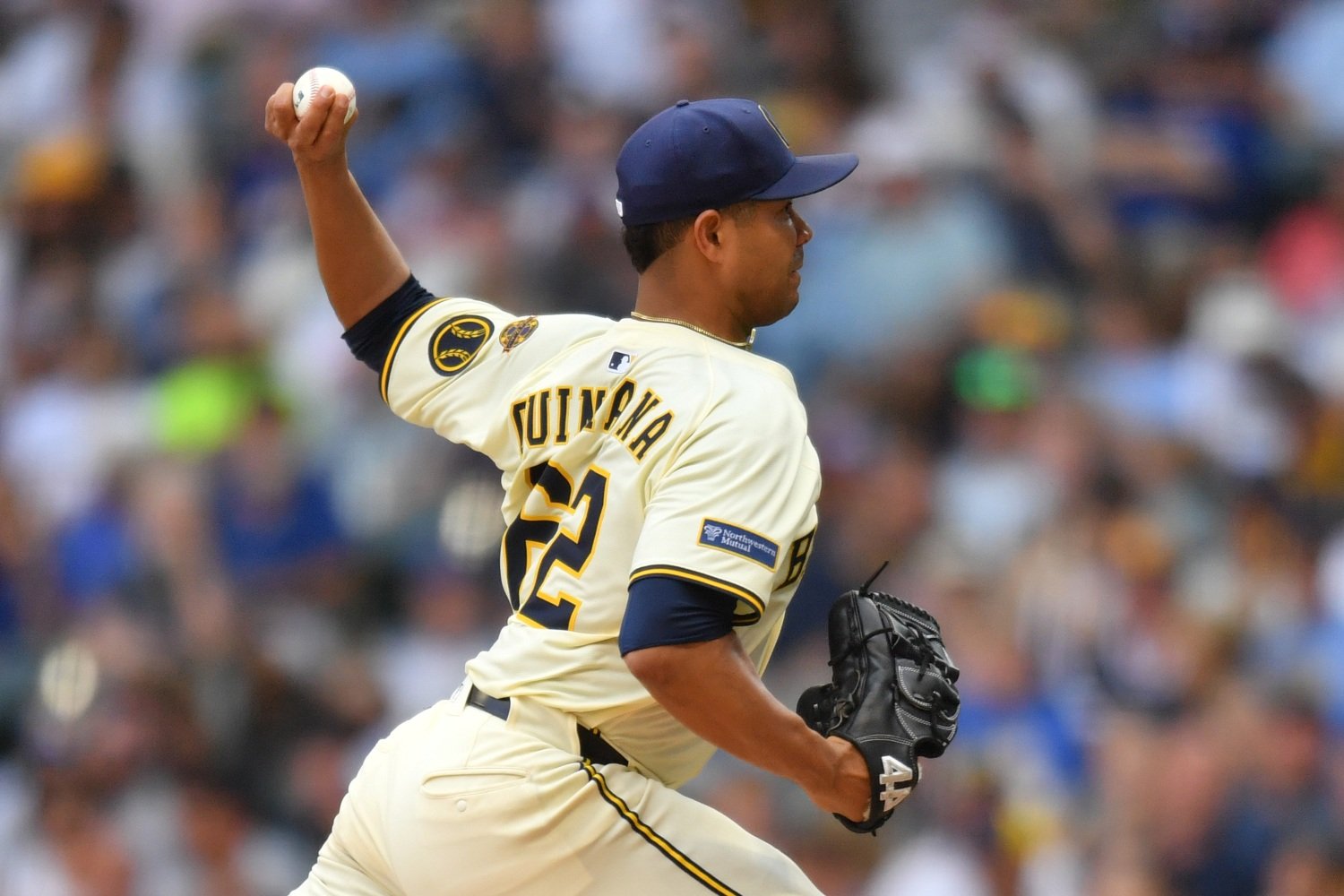 After stretching out to 93 pitches in his latest rehab start, Nestor Cortes is ready to make his return to the Brewers. The veteran left-hander, acquired as the short-term piece in the Devin Williams trade with the New York Yankees in December, hit the injured list with a left flexor strain in April after just two starts. It was Cortes's second flexor strain in six months, as he also missed time last postseason during the Yankees' run to the World Series. The hope is that those elbow troubles are in the rear-view mirror. Cortes said on Saturday that his elbow is now responding better between outings than it did in spring training and after his first two regular-season outings. "The goal is to be able to prepare and get better between each outing, and I felt like I wasn't able to do that before I went on the injured list," he said. "My recovery wasn't well. I couldn't work in between starts on stuff that I needed to work on, and that's what made me decide what I decided. But I feel like now, throwing today and potentially a bullpen tomorrow or the next day, I feel like I can go out there and work on stuff I need to work on." Where Cortes fits in the rotation picture is still unclear. The Brewers have a fully stocked starting staff, and each of their five current starters has an 86 ERA- (an ERA at least 14% better than the league average, adjusted for park factors) or better. "It's a good problem to have, when you have pitching," Pat Murphy said on Friday after relaying that the Brewers were still discussing where and when Cortes would pitch next. Cortes said another rehab start could be on the table, even if he's healthy enough to return now. A six-man rotation is not a viable solution. Because teams can carry no more than 13 pitchers on the 26-man active roster, adding an extra starter would leave Murphy (who leans heavily on his relief corps) short-handed in the bullpen. "It's harder to do now, because it really limits your options on games in the fourth, fifth inning," he said last week in Seattle. "When things are teetering, it really limits your options when you're one down [in the bullpen]." With Cortes back in the conversation, a highly qualified starter will have to cede their rotation spot. Murphy said it will not be Jacob Misiorowski, whom the Brewers have no intention of optioning to Triple-A as they manage his workload. Quinn Priester also has an option year left, but has blossomed into a mid-rotation mainstay. Furthermore, the club was hesitant to burn that option even when he was struggling. That leaves Cortes himself or José Quintana—whose stuff and peripherals this season have been easily the worst of the group—as the odd man out. (Cortes was horrendous in one of his two starts before hitting the shelf, but posted a 3.33 ERA, 3.68 FIP, and 3.84 SIERA from 2021 through 2024.) Pitcher G ERA xERA FIP SIERA K-BB% Stuff+ Brandon Woodruff 4 2.01 2.23 3.36 2.61 31.0% 97 Jacob Misiorowski 6 2.45 2.47 3.36 2.98 25.0% 123 Freddy Peralta 22 2.81 3.51 3.67 3.71 17.8% 104 Quinn Priester 19 3.28 3.56 3.84 3.80 12.4% 97 José Quintana 15 3.50 4.77 4.77 4.98 6.3% 86 Nestor Cortes 2 9.00 7.74 11.84 6.02 2.6% 102 In fairness to Quintana, his style of pitching is designed to overperform some of those ERA estimators, particularly with help from an elite Brewers defense. This is his fourth straight season with a sub-4.00 ERA, even as the metrics have suggested in each of the last three that he deserved otherwise. Still, no other pitcher in the rotation mix (including Cortes) must live on the edges of the strike zone as strictly as Quintana to succeed. While three of his five runs allowed on Saturday were unearned, he labored through five innings in the latest semi-regular reminder of how tenuous things get when he tries to paint the corners without pinpoint command. The Brewers could bump him to the bullpen and option DL Hall or Tobias Myers, but that would not solve the 40-man puzzle, and Quintana does not profile as one who can slide into high-leverage innings if needed. The Brewers will likely drag out the decision until the end of the month. Thursday is also the afternoon of the trade deadline, so they have time to deal one of their veteran southpaws before they are forced to activate or waive Cortes. If both remain healthy the rest of the year, Cortes profiles as the better pitcher, but Quintana has been more durable and is making just over half of his salary in 2025. That may make him more enticing to most teams seeking rotation help and secure a better return. Cortes, meanwhile, could be fresher down the stretch if he has put those elbow issues behind him. "The grind is the same, but the workload hasn't been the same," Cortes said. "Probably a little better body-wise than what I would be in July in other years." If Quintana fetches a better return and the Brewers prefer Cortes's outlook, trading the former and activating the latter could be a straightforward solution. Perhaps they would rather maintain the status quo and find a taker for Cortes. Barring an injury that opens a spot, something involving one or both of them will give by Thursday afternoon.
- 11 comments
-
- 1
-
-
- jose quintana
- nestor cortes
- (and 3 more)
-
Image courtesy of © Benny Sieu-Imagn Images Taking extra bases has once again been integral to the identity of a Brewers offense that lacks power throughout the lineup. Being opportunistic and aggressive on the bases is partially why Milwaukee has a capable 101 wRC+ despite a .385 slugging percentage that ranks 22nd in baseball; they force defenses out of shape and speed up the clock of plays once the ball is hit. According to FanGraphs, the Brewers lead baseball in baserunning runs for the second year in a row. That's because they remain unmatched at taking extra bases on balls in play, leading the sport with 10 runs via extra bases taken. In one way, though, they've been demonstrably worse. When Anthony Seigler and Brice Turang were each caught trying to steal second base on Monday night in Seattle, it increased Milwaukee's league-leading caught stealing total to 38. The Brewers have gone from the cream of the crop in base-stealing execution to the middle of the pack. After accruing a league-leading 13 runs via stolen bases last season, they're down to 1 run this year, which ranks 13th. Their stolen base success rate has plummeted from 84% to a below-average 75%, falling shy of the commonly cited 80% benchmark that makes steal attempts no-brainers. There are a few leading culprits on an individual level. Turang's abrupt decline on the bases jumps out the most, and newcomers like Caleb Durbin have been less successful than their past counterparts. Still, several additional Brewers have taken steps back in the stolen base department. Player SB% (2024) SB% (2025) Change Jake Bauers 92.9% 100.0% +7.1% Jackson Chourio 75.9% 70.8% -5.0% William Contreras 81.8% 71.4% -10.4% Sal Frelick 85.7% 81.0% -4.8% Joey Ortiz 64.7% 75.0% 10.3% Brice Turang 89.3% 72.0% -17.3% Christian Yelich 91.3% 73.7% -17.6% "I think that one of the reasons it's down is because everybody knows that's what we're going to do, and they're defending it because they're the best in the world at what they do," Pat Murphy said. "So they're going to defend it. We're still going to press the issue when we can. But yeah, it's concerning that our percentage is down." Baseball is a game of inches and milliseconds, particularly baserunning. It doesn't take much for stolen base success to swing noticeably in either direction from one year to the next. Rather than any singular issue, the regression appears to stem from a combination of factors. In some instances, the Brewers have deprived themselves of bases they otherwise had stolen with poor slides, such as Caleb Durbin oversliding second base against the Pirates last month. durbin_overslide.mp4 Here's Joey Ortiz committing the opposite offense, hitting the ground too early and slowing his momentum with his slide. Originally called safe, he was ruled out upon review. ortiz_slide.mp4 "I can name six or seven where the guy didn't explode through his slide, we slid off the bag, or the guy looked in thinking something else and slowed up," Murphy said. "I mean, literally six or seven. And if you change those six or seven, our percentage doesn't look as bad." To Murphy's point about exploding through a slide, compare Sal Frelick's slide on a successful steal in April 2024… Frelick_sb.mp4 …to a slower-looking slide from April of this season in which he seems to crash into the base. Frelick_cs.mp4 Indecisiveness on steal attempts has been a running theme. A well-timed and explosive break is the key to stealing a base, and Murphy sees more hesitancy in those jumps this season. "They know that the word's out, and they know people are going to make big adjustments to hold our running game intact, and they're kind of caught in between [on] how to handle that." [READ MORE: Matthew Trueblood wrote about Turang's degradation in getting leads and jumps on steal attempts, earlier this momth.] As an example, here's William Contreras getting a late jump off Jake Irvin on the Brewers' last homestand for an easy caught stealing. Contreras_cs.mp4 In a fitting analogy, Murphy compared swiping bases to another kind of stealing. "It's like you're a jewel thief," he said. "You can't worry about getting caught. You've got to be willing to steal the base and willing to face the consequences of getting caught." Right now, his team is worrying about that, and it shows up in the numbers. Taking all stolen base opportunities—pitches with a runner on base and an open base in front of them—the Brewers are gaining just 3.1 feet toward the next base between the pitcher's first move and their release of the pitch, which ranks—stunningly—dead last in the majors. If you isolate actual steal attempts, when that metric measures jumps rather than just secondary leads, they move up to the average range—but that's from an initial lead distance that ranks 22nd in baseball. This team just isn't getting the extra few inches (or even feet) available at the front ends of steal attempts, either. Perhaps the Brewers are feeling the absence of former first base coach Quintin Berry, whom players lauded for his ability to read pitchers and relay those cues to help runners time their jumps. (Actually stealing or not, the team got better primary and secondary leads last year than they're getting this year.) It could be a mental block that has materialized from a few unsuccessful attempts. Whatever the cause, it's clear that they are not firing on all cylinders in one of their strengths. That won't stop Murphy and his coaching staff from asking his players to run, though. "You've got to be good at it," Murphy said. "You can't play on this team if you're not good at it, unless you really slug. I don't know if you've been watching, but we don't have many guys that really slug." View full article
-
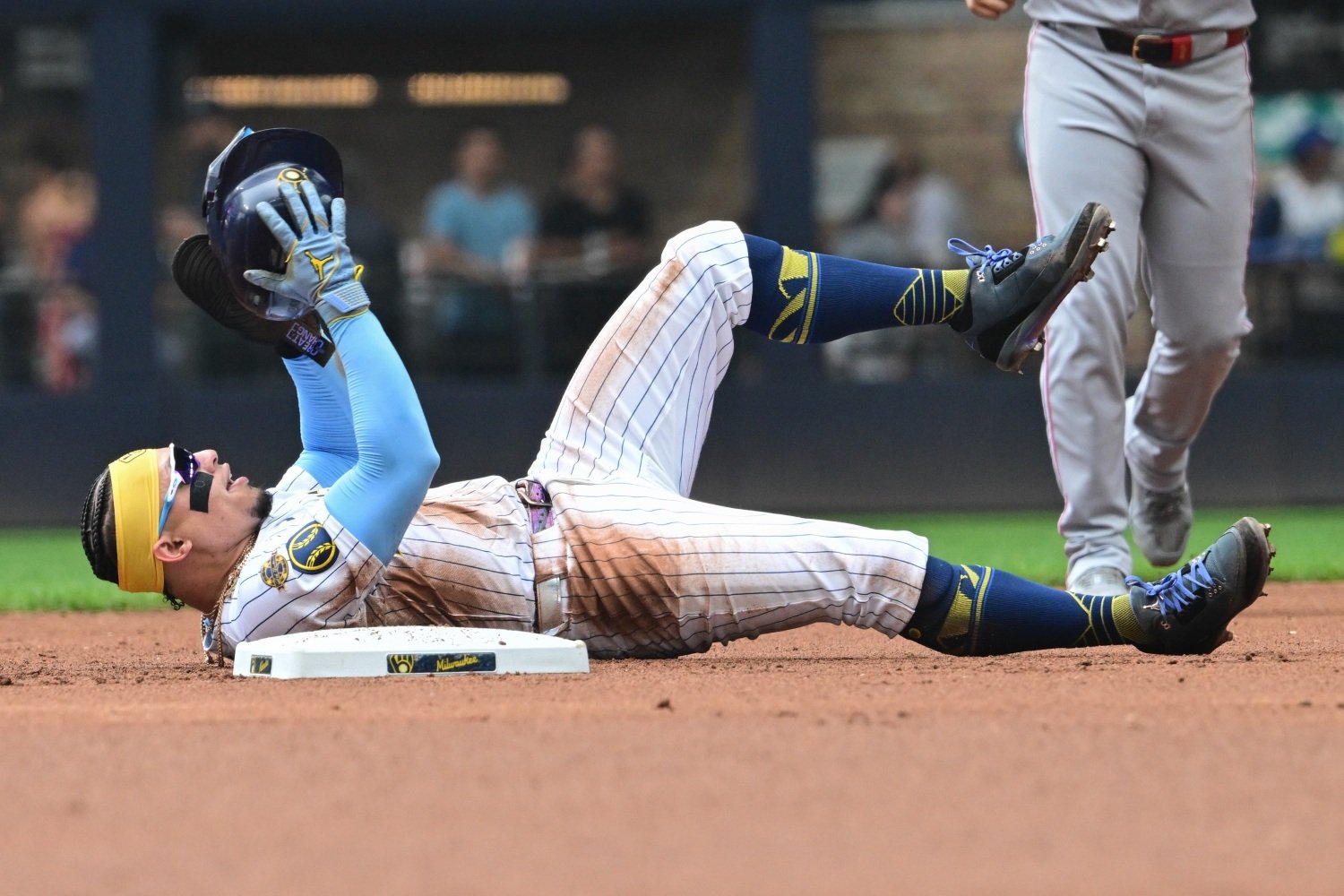 Taking extra bases has once again been integral to the identity of a Brewers offense that lacks power throughout the lineup. Being opportunistic and aggressive on the bases is partially why Milwaukee has a capable 101 wRC+ despite a .385 slugging percentage that ranks 22nd in baseball; they force defenses out of shape and speed up the clock of plays once the ball is hit. According to FanGraphs, the Brewers lead baseball in baserunning runs for the second year in a row. That's because they remain unmatched at taking extra bases on balls in play, leading the sport with 10 runs via extra bases taken. In one way, though, they've been demonstrably worse. When Anthony Seigler and Brice Turang were each caught trying to steal second base on Monday night in Seattle, it increased Milwaukee's league-leading caught stealing total to 38. The Brewers have gone from the cream of the crop in base-stealing execution to the middle of the pack. After accruing a league-leading 13 runs via stolen bases last season, they're down to 1 run this year, which ranks 13th. Their stolen base success rate has plummeted from 84% to a below-average 75%, falling shy of the commonly cited 80% benchmark that makes steal attempts no-brainers. There are a few leading culprits on an individual level. Turang's abrupt decline on the bases jumps out the most, and newcomers like Caleb Durbin have been less successful than their past counterparts. Still, several additional Brewers have taken steps back in the stolen base department. Player SB% (2024) SB% (2025) Change Jake Bauers 92.9% 100.0% +7.1% Jackson Chourio 75.9% 70.8% -5.0% William Contreras 81.8% 71.4% -10.4% Sal Frelick 85.7% 81.0% -4.8% Joey Ortiz 64.7% 75.0% 10.3% Brice Turang 89.3% 72.0% -17.3% Christian Yelich 91.3% 73.7% -17.6% "I think that one of the reasons it's down is because everybody knows that's what we're going to do, and they're defending it because they're the best in the world at what they do," Pat Murphy said. "So they're going to defend it. We're still going to press the issue when we can. But yeah, it's concerning that our percentage is down." Baseball is a game of inches and milliseconds, particularly baserunning. It doesn't take much for stolen base success to swing noticeably in either direction from one year to the next. Rather than any singular issue, the regression appears to stem from a combination of factors. In some instances, the Brewers have deprived themselves of bases they otherwise had stolen with poor slides, such as Caleb Durbin oversliding second base against the Pirates last month. durbin_overslide.mp4 Here's Joey Ortiz committing the opposite offense, hitting the ground too early and slowing his momentum with his slide. Originally called safe, he was ruled out upon review. ortiz_slide.mp4 "I can name six or seven where the guy didn't explode through his slide, we slid off the bag, or the guy looked in thinking something else and slowed up," Murphy said. "I mean, literally six or seven. And if you change those six or seven, our percentage doesn't look as bad." To Murphy's point about exploding through a slide, compare Sal Frelick's slide on a successful steal in April 2024… Frelick_sb.mp4 …to a slower-looking slide from April of this season in which he seems to crash into the base. Frelick_cs.mp4 Indecisiveness on steal attempts has been a running theme. A well-timed and explosive break is the key to stealing a base, and Murphy sees more hesitancy in those jumps this season. "They know that the word's out, and they know people are going to make big adjustments to hold our running game intact, and they're kind of caught in between [on] how to handle that." [READ MORE: Matthew Trueblood wrote about Turang's degradation in getting leads and jumps on steal attempts, earlier this momth.] As an example, here's William Contreras getting a late jump off Jake Irvin on the Brewers' last homestand for an easy caught stealing. Contreras_cs.mp4 In a fitting analogy, Murphy compared swiping bases to another kind of stealing. "It's like you're a jewel thief," he said. "You can't worry about getting caught. You've got to be willing to steal the base and willing to face the consequences of getting caught." Right now, his team is worrying about that, and it shows up in the numbers. Taking all stolen base opportunities—pitches with a runner on base and an open base in front of them—the Brewers are gaining just 3.1 feet toward the next base between the pitcher's first move and their release of the pitch, which ranks—stunningly—dead last in the majors. If you isolate actual steal attempts, when that metric measures jumps rather than just secondary leads, they move up to the average range—but that's from an initial lead distance that ranks 22nd in baseball. This team just isn't getting the extra few inches (or even feet) available at the front ends of steal attempts, either. Perhaps the Brewers are feeling the absence of former first base coach Quintin Berry, whom players lauded for his ability to read pitchers and relay those cues to help runners time their jumps. (Actually stealing or not, the team got better primary and secondary leads last year than they're getting this year.) It could be a mental block that has materialized from a few unsuccessful attempts. Whatever the cause, it's clear that they are not firing on all cylinders in one of their strengths. That won't stop Murphy and his coaching staff from asking his players to run, though. "You've got to be good at it," Murphy said. "You can't play on this team if you're not good at it, unless you really slug. I don't know if you've been watching, but we don't have many guys that really slug."
- 4 comments
-
- 1
-
-
- brice turang
- caleb durbin
- (and 1 more)
-
Image courtesy of © Joe Nicholson-Imagn Images Peruse the list of regularly-thrown four-seam fastballs that induce the most whiffs and the least productive contact, and you'll see a litany of hard-throwing pitchers with some of the most electric raw stuff in baseball. You'll also find Grant Anderson's name—ahead of them all. Among four-seamers thrown at least 200 times this year, the Brewers right-hander ranks first in whiff rate and xwOBA, despite below-average velocity for a reliever. It's not especially close, either. Pitcher xwOBA Whiff% Velocity (MPH) Grant Anderson .208 45.2% 93.3 Jacob Misiorowski .229 32.1% 99.4 Hunter Brown .230 32.2% 97.4 Randy Rodriguez .234 28.0% 96.9 Brock Stewart .242 35.5% 96.0 Anderson's four-seamer has always excelled at generating swings and misses, due to his sidearm release slot. That makes it appear as though he's throwing the ball upward when he locates it at the top of the strike zone, giving it more perceived rise than its 11 inches of induced vertical break would suggest. Its -3.5° vertical approach angle ranks second among four-seamers thrown at least 200 times, meaning it enters the zone at an exceptionally flat angle. "Metrically, my four-seam is not anything special," Anderson said, "but the arm angle which it's coming from is pretty much completely opposite from where they're seeing most four-seams at. So it just adds another level of deception, I guess, to the pitch." The drawback with rising four-seamers is that when opponents make contact with them, they are often hit and in the air, due to their shape. Anderson experienced that to an extreme in his first two big-league seasons. He threw his four-seamer almost exclusively to left-handed hitters, who crushed it to the tune of a .543 wOBA and .497 xwOBA despite whiffing on 35.5% of swings against it. Ten of their 16 hits against it in that span were home runs. "He's got the upshoot, and if you catch it right, I feel like that's where the homers came from," assistant pitching coach Jim Henderson said in late April, when Anderson was using his four-seamer conservatively and leaning primarily on his sweeper and sinker to right-handers. "If the lefties kind of catch it right, they backspin it well." It was easier for lefties to catch the four-seamer because they could sell out for it at the top of the zone. With the new sweeper in tow, Henderson believed the four-seamer would play better because hitters now had to protect against increased horizontal movement at the bottom. "Now it's just that it's disguised a bit better, and it still produces whiffs," he said. "I think it was just damage prone, which doesn't mean it was a bad pitch, because it's still got the whiffs." That's precisely how things have played out. Because opponents are thinking about a sinker and sweeper combination with 31 inches of horizontal separation on average, the loud contact on elevated four-seamers has evaporated, and a plus whiff rate has jumped to video-game-like proportions. "It kind of makes you have to choose whether you're gonna look sinker or sweeper," Anderson said of his new breaking ball's impact, "and then it opens up the door for the four-seam, because the eyes are kind of looking more down, east to west. So then, when they see hard, and you can throw it up, I think it changes the eye level pretty well. It's just a good amount of separation between the two pitches." The four-seamer is no longer just his leading weapon against lefties, either. Anderson has thrown it progressively more against righties, who have yet to record a hit against it while whiffing on a whopping 57.5% of swings. There's no grand strategy behind that change, Anderson said, just an awareness that the four-seamer is his best option when he needs to miss bats. "I've come in a couple times in extra innings. Guy on second base, you want to try to do your best to strand them there, so you're gonna use your two best swing-and-miss pitches. And for me, that's four-seam and sweeper. And then you're obviously big on not letting your teammates' runners score when you come in, so if I can get swing-and-miss, that obviously lowers the chance of that guy scoring." It's not a conventionally dominant fastball; instead of blowing it past hitters at a high velocity, Anderson uses deceptive angles that leave them swinging underneath it. It's been increasingly instrumental in his breakout season as a swiss army knife in the Milwaukee bullpen. View full article
-
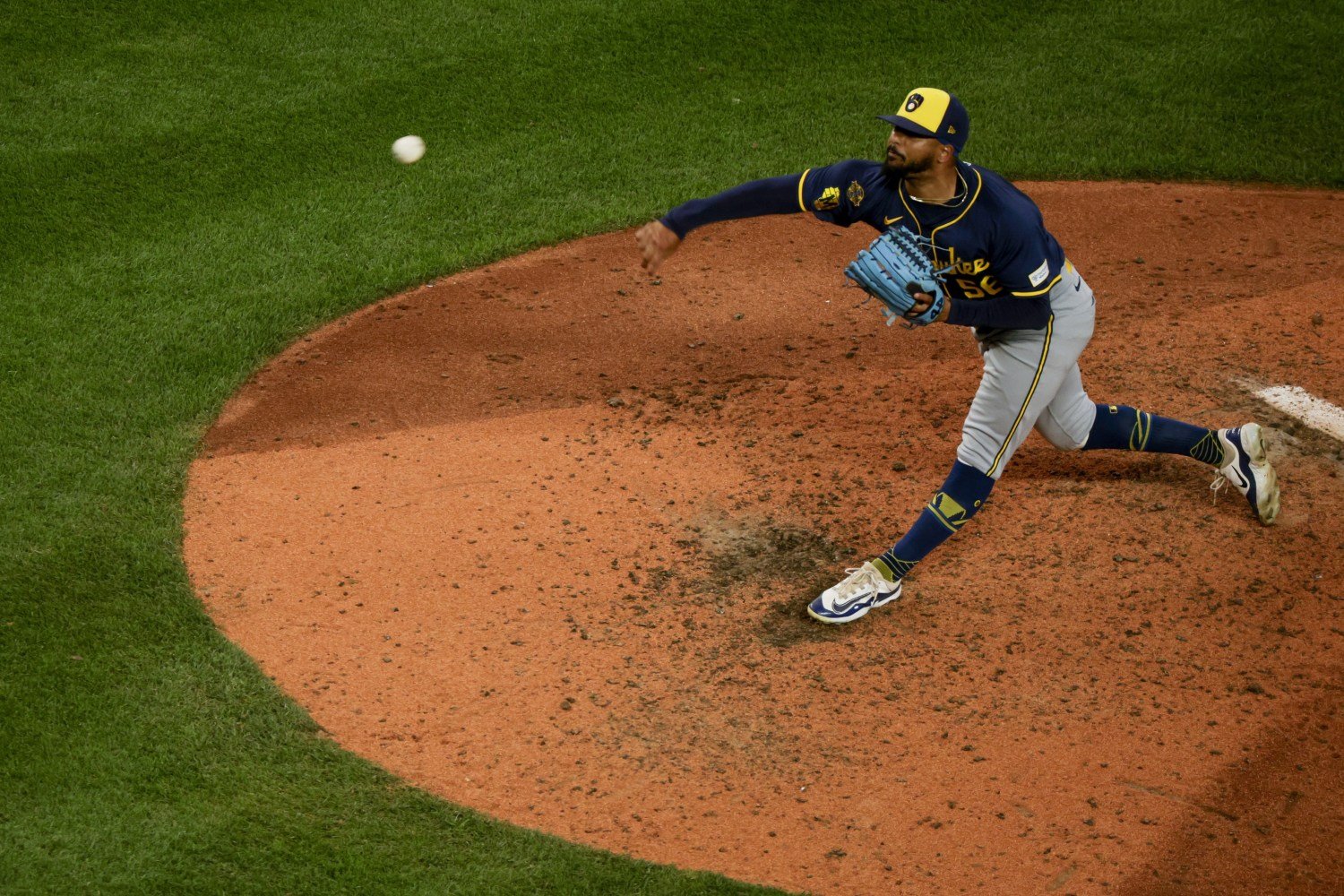 Peruse the list of regularly-thrown four-seam fastballs that induce the most whiffs and the least productive contact, and you'll see a litany of hard-throwing pitchers with some of the most electric raw stuff in baseball. You'll also find Grant Anderson's name—ahead of them all. Among four-seamers thrown at least 200 times this year, the Brewers right-hander ranks first in whiff rate and xwOBA, despite below-average velocity for a reliever. It's not especially close, either. Pitcher xwOBA Whiff% Velocity (MPH) Grant Anderson .208 45.2% 93.3 Jacob Misiorowski .229 32.1% 99.4 Hunter Brown .230 32.2% 97.4 Randy Rodriguez .234 28.0% 96.9 Brock Stewart .242 35.5% 96.0 Anderson's four-seamer has always excelled at generating swings and misses, due to his sidearm release slot. That makes it appear as though he's throwing the ball upward when he locates it at the top of the strike zone, giving it more perceived rise than its 11 inches of induced vertical break would suggest. Its -3.5° vertical approach angle ranks second among four-seamers thrown at least 200 times, meaning it enters the zone at an exceptionally flat angle. "Metrically, my four-seam is not anything special," Anderson said, "but the arm angle which it's coming from is pretty much completely opposite from where they're seeing most four-seams at. So it just adds another level of deception, I guess, to the pitch." The drawback with rising four-seamers is that when opponents make contact with them, they are often hit and in the air, due to their shape. Anderson experienced that to an extreme in his first two big-league seasons. He threw his four-seamer almost exclusively to left-handed hitters, who crushed it to the tune of a .543 wOBA and .497 xwOBA despite whiffing on 35.5% of swings against it. Ten of their 16 hits against it in that span were home runs. "He's got the upshoot, and if you catch it right, I feel like that's where the homers came from," assistant pitching coach Jim Henderson said in late April, when Anderson was using his four-seamer conservatively and leaning primarily on his sweeper and sinker to right-handers. "If the lefties kind of catch it right, they backspin it well." It was easier for lefties to catch the four-seamer because they could sell out for it at the top of the zone. With the new sweeper in tow, Henderson believed the four-seamer would play better because hitters now had to protect against increased horizontal movement at the bottom. "Now it's just that it's disguised a bit better, and it still produces whiffs," he said. "I think it was just damage prone, which doesn't mean it was a bad pitch, because it's still got the whiffs." That's precisely how things have played out. Because opponents are thinking about a sinker and sweeper combination with 31 inches of horizontal separation on average, the loud contact on elevated four-seamers has evaporated, and a plus whiff rate has jumped to video-game-like proportions. "It kind of makes you have to choose whether you're gonna look sinker or sweeper," Anderson said of his new breaking ball's impact, "and then it opens up the door for the four-seam, because the eyes are kind of looking more down, east to west. So then, when they see hard, and you can throw it up, I think it changes the eye level pretty well. It's just a good amount of separation between the two pitches." The four-seamer is no longer just his leading weapon against lefties, either. Anderson has thrown it progressively more against righties, who have yet to record a hit against it while whiffing on a whopping 57.5% of swings. There's no grand strategy behind that change, Anderson said, just an awareness that the four-seamer is his best option when he needs to miss bats. "I've come in a couple times in extra innings. Guy on second base, you want to try to do your best to strand them there, so you're gonna use your two best swing-and-miss pitches. And for me, that's four-seam and sweeper. And then you're obviously big on not letting your teammates' runners score when you come in, so if I can get swing-and-miss, that obviously lowers the chance of that guy scoring." It's not a conventionally dominant fastball; instead of blowing it past hitters at a high velocity, Anderson uses deceptive angles that leave them swinging underneath it. It's been increasingly instrumental in his breakout season as a swiss army knife in the Milwaukee bullpen.
 -
Image courtesy of © Joe Nicholson-Imagn Images In Jacob Misiorowski’s first start after the All-Star break—one that was pushed back a few days after the Brewers reshuffled their starting rotation—Pat Murphy took the ball from the rookie in the fourth inning after he had thrown just 64 pitches, even as he had struck out seven and not allowed a run. That was by design. “You can't give him that big of a rest and then let him go out there and make his normal start,” Murphy explained. “You [have] to build up to it a little bit. So we thought somewhere between 55 and 65 pitches and no more than four ups was a good way to get him back into it.” It was a matter of when, not if, the Brewers would limit Misiorowski to a shortened outing. It won’t be the last time it happens, either. His 97 1/3 regular-season innings last year were a career high as a professional, and he’s at 92 ⅔ frames this year with two months (plus a potential playoff run) remaining. The front office and clubhouse staff bear the responsibility of properly stretching the 23-year-old’s workload year-over-year, without pushing too far. The Brewers have not placed a public cap on Misiorowski’s innings, and their thinking is presumably guided more by the stress level of each pitch and outing than by a hard and fast number. Still, they faced the task of balancing his opportunities to help the 2025 team while maintaining his long-term health. Playing things as they did coming out of the break, whenever possible, will strike the best balance. A truncated outing made after a few extra days of rest is less disruptive to Misiorowski’s routine than skipping a start, moving him to the bullpen, or using him as a short-range opener ahead of a bulk pitcher. It also allows them to keep one of their best arms in the big leagues, and prevents a future need to shut him down in September or October. “It is what it is,” said Misiorowski, who got the news from Chris Hook that Tuesday night would be a shortened outing. “Obviously, I want to go six or seven [innings], but they’re looking deeper season-wise … There’s no real conversation. They’re like, ‘This is what’s going to happen,’ and you live with it.” As Misiorowski continues carving up big-league hitters amid the Brewers’ push for the top seed in the National League, eschewing workload limitations can be tantalizing. But if sticking to them means he will continue making starts all season, into October, and for years to come, it will pay off. View full article
-
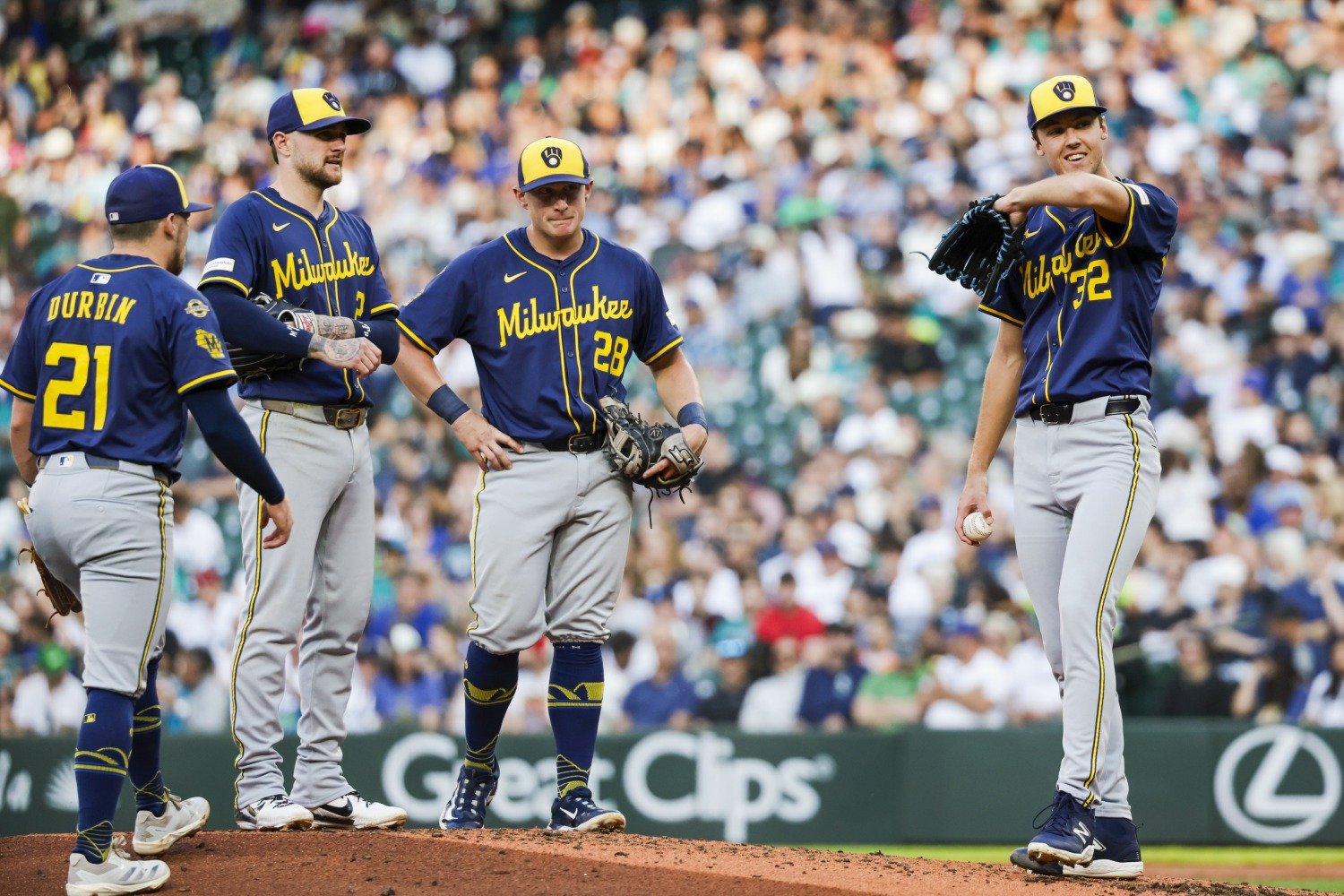 In Jacob Misiorowski’s first start after the All-Star break—one that was pushed back a few days after the Brewers reshuffled their starting rotation—Pat Murphy took the ball from the rookie in the fourth inning after he had thrown just 64 pitches, even as he had struck out seven and not allowed a run. That was by design. “You can't give him that big of a rest and then let him go out there and make his normal start,” Murphy explained. “You [have] to build up to it a little bit. So we thought somewhere between 55 and 65 pitches and no more than four ups was a good way to get him back into it.” It was a matter of when, not if, the Brewers would limit Misiorowski to a shortened outing. It won’t be the last time it happens, either. His 97 1/3 regular-season innings last year were a career high as a professional, and he’s at 92 ⅔ frames this year with two months (plus a potential playoff run) remaining. The front office and clubhouse staff bear the responsibility of properly stretching the 23-year-old’s workload year-over-year, without pushing too far. The Brewers have not placed a public cap on Misiorowski’s innings, and their thinking is presumably guided more by the stress level of each pitch and outing than by a hard and fast number. Still, they faced the task of balancing his opportunities to help the 2025 team while maintaining his long-term health. Playing things as they did coming out of the break, whenever possible, will strike the best balance. A truncated outing made after a few extra days of rest is less disruptive to Misiorowski’s routine than skipping a start, moving him to the bullpen, or using him as a short-range opener ahead of a bulk pitcher. It also allows them to keep one of their best arms in the big leagues, and prevents a future need to shut him down in September or October. “It is what it is,” said Misiorowski, who got the news from Chris Hook that Tuesday night would be a shortened outing. “Obviously, I want to go six or seven [innings], but they’re looking deeper season-wise … There’s no real conversation. They’re like, ‘This is what’s going to happen,’ and you live with it.” As Misiorowski continues carving up big-league hitters amid the Brewers’ push for the top seed in the National League, eschewing workload limitations can be tantalizing. But if sticking to them means he will continue making starts all season, into October, and for years to come, it will pay off.
 -
Image courtesy of © Benny Sieu-Imagn Images Veterans Freddy Peralta and Trevor Megill will be joined by one of their youngest teammates in Atlanta next week, as the Brewers and MLB announced on Friday night that Jacob Misiorowski has been named to the NL All-Star roster, replacing Chicago Cubs starter Matthew Boyd. Pat Murphy said Misiorowski will pitch in the Midsummer Classic. Misiorowski has taken the league by storm five starts into his big-league career, pitching to a 2.81 ERA and 33.7% strikeout rate while outdueling household names in Paul Skenes and Clayton Kershaw. He's showcased electric stuff in that brief sample, including his triple-digit fastball, and has been at the center of the Brewers' recent evolution into a high-octane pitching staff. "He's kind of our version of Forrest Gump," Murphy joked while making the postgame announcement. The 23-year-old said the manager gave him the news shortly before first pitch against the Washington Nationals, forcing him to keep it to himself until the wide reveal a few hours later. "I got called into Murph's office, sitting in there, and he said, 'Hey, close the door. Come on. Get in here.' Basically broke it to me, and I had to sit there the whole game and not tell anyone." The right-hander, who addressed the team after the game, was emotional and surprised by the recognition. "I'm speechless," he said. "I mean, it's awesome. It's very unexpected, and it's an honor." It's an unprecedented decision, as the league itself is promoting that Misiorowski's five big-league appearances are easily the fewest by a first-time All-Star. For that reason, the move figures to inspire debate over how rosters should be assembled. On one hand, if MLB wants the All-Star Game to showcase the league's best talent, it's hard to argue against Misiorowski's inclusion. Since his debut on June 12, his 123 Stuff+ leads all starting pitchers. His fastball is an outlier for its combination of velocity and movement from his low release height and 7.5-foot extension. So is his curveball for its average spin-induced drop of 9 inches at 87.4 mph. On the other hand, there are plenty of deserving candidates with longer track records who have not received due recognition. Philadelphia Phillies starter Cristopher Sanchez, for example, has pitched to a 2.59 ERA and 2.75 FIP in 107 2/3 innings this year but is not on the NL roster. "At first I thought, 'This is not going to be fair,'" Murphy said. "Like, this kid, it's not the same way the other guys have to go out and pitch, whoever it might be." That's to take nothing away from Misiorowski, whose talent warrants national cognizance. He'll get that attention next week. "This is the entertainment business," Murphy said. "This is what MLB wants. This is what people want to see, and the kid can't say no to that." The All-Star Game currently exists in a strange space, its purpose ambiguous since 2017, with home-field advantage in the World Series no longer tied to its outcome. At some point, MLB must define its vision more clearly. Is the game meant to honor the best performers of the current season, showcase the most popular and marketable of established players, honor legends at the twilight of their careers, or amplify young talent just breaking onto the big-league scene? Is it all of the above? Can all of those goals coexist? Setting that larger debate aside, Misiorowski's selection is an opportunity for one of baseball's most talented arms to shine on one of the game's brightest stages. "I was really fired up for him," said Quinn Priester, whose locker is stationed along the same corner as Misiorowski's in the Milwaukee home clubhouse. "It's electric to watch. I'm excited for those guys. We get to see it from a dugout view, like I've been able to, and he's going to represent us really well." "It's been a long time coming," Misiorowski said. "I just want to honor the guys around me and be a Brewer." View full article
-
 Veterans Freddy Peralta and Trevor Megill will be joined by one of their youngest teammates in Atlanta next week, as the Brewers and MLB announced on Friday night that Jacob Misiorowski has been named to the NL All-Star roster, replacing Chicago Cubs starter Matthew Boyd. Pat Murphy said Misiorowski will pitch in the Midsummer Classic. Misiorowski has taken the league by storm five starts into his big-league career, pitching to a 2.81 ERA and 33.7% strikeout rate while outdueling household names in Paul Skenes and Clayton Kershaw. He's showcased electric stuff in that brief sample, including his triple-digit fastball, and has been at the center of the Brewers' recent evolution into a high-octane pitching staff. "He's kind of our version of Forrest Gump," Murphy joked while making the postgame announcement. The 23-year-old said the manager gave him the news shortly before first pitch against the Washington Nationals, forcing him to keep it to himself until the wide reveal a few hours later. "I got called into Murph's office, sitting in there, and he said, 'Hey, close the door. Come on. Get in here.' Basically broke it to me, and I had to sit there the whole game and not tell anyone." The right-hander, who addressed the team after the game, was emotional and surprised by the recognition. "I'm speechless," he said. "I mean, it's awesome. It's very unexpected, and it's an honor." It's an unprecedented decision, as the league itself is promoting that Misiorowski's five big-league appearances are easily the fewest by a first-time All-Star. For that reason, the move figures to inspire debate over how rosters should be assembled. On one hand, if MLB wants the All-Star Game to showcase the league's best talent, it's hard to argue against Misiorowski's inclusion. Since his debut on June 12, his 123 Stuff+ leads all starting pitchers. His fastball is an outlier for its combination of velocity and movement from his low release height and 7.5-foot extension. So is his curveball for its average spin-induced drop of 9 inches at 87.4 mph. On the other hand, there are plenty of deserving candidates with longer track records who have not received due recognition. Philadelphia Phillies starter Cristopher Sanchez, for example, has pitched to a 2.59 ERA and 2.75 FIP in 107 2/3 innings this year but is not on the NL roster. "At first I thought, 'This is not going to be fair,'" Murphy said. "Like, this kid, it's not the same way the other guys have to go out and pitch, whoever it might be." That's to take nothing away from Misiorowski, whose talent warrants national cognizance. He'll get that attention next week. "This is the entertainment business," Murphy said. "This is what MLB wants. This is what people want to see, and the kid can't say no to that." The All-Star Game currently exists in a strange space, its purpose ambiguous since 2017, with home-field advantage in the World Series no longer tied to its outcome. At some point, MLB must define its vision more clearly. Is the game meant to honor the best performers of the current season, showcase the most popular and marketable of established players, honor legends at the twilight of their careers, or amplify young talent just breaking onto the big-league scene? Is it all of the above? Can all of those goals coexist? Setting that larger debate aside, Misiorowski's selection is an opportunity for one of baseball's most talented arms to shine on one of the game's brightest stages. "I was really fired up for him," said Quinn Priester, whose locker is stationed along the same corner as Misiorowski's in the Milwaukee home clubhouse. "It's electric to watch. I'm excited for those guys. We get to see it from a dugout view, like I've been able to, and he's going to represent us really well." "It's been a long time coming," Misiorowski said. "I just want to honor the guys around me and be a Brewer."