


Matthew Trueblood
-
Posts
1,964 -
Joined
-
Last visited
-
Days Won
10
Content Type
Profiles
Forums
Blogs
Events
News
2026 Milwaukee Brewers Top Prospects Ranking
Milwaukee Brewers Videos
2022 Milwaukee Brewers Draft Picks
Milwaukee Brewers Free Agent & Trade Rumors, Notes, & Tidbits
Guides & Resources
2023 Milwaukee Brewers Draft Picks
2024 Milwaukee Brewers Draft Picks
The Milwaukee Brewers Players Project
2025 Milwaukee Brewers Draft Pick Tracker
2026 Milwaukee Brewers Draft Tracker: Picks & Bonuses
Store
Downloads
Gallery
Everything posted by Matthew Trueblood
-
.png.26f1908761ca63f6a4853ae89d7ac151.png) Welcome to the 2025 Offseason Handbook! This year, we’re offering the format online only through our Caretakers program. The Offseason Handbook is a comprehensive look at what challenges the Brewers face in the coming winter to field a competitive team in 2025. To become a Caretaker, visit this page. On top of receiving exclusive access to the Offseason Handbook, Caretakers also receive in-depth analysis from national writers you cannot find anywhere else. You will also receive exclusive access to events and an ad-free browsing option. In celebration of the Offseason Handbook’s release, we’re offering 20% off all Caretaker programs for the next week. Use the code HANDBOOK at checkout to receive 20% off your purchase! While you won't hear them put it this way, the Brewers are almost certainly entering this offseason hoping to replace WIlly Adames's power through the simple maturation and steady improvements of Jackson Chourio and Joey Ortiz. Those two each had strong rookie seasons, and in particular, each flashed much more power than they were able to get to on a consistent basis over a full season against the best pitchers on Earth. Adames takes 32 home runs with him to greener pastures this winter, but between Chourio, Ortiz, and Rhys Hoskins, the team probably hopes they'll get half of those lost dingers back from a mixture of development and regression. The team also has to write someone into the lineup every day to physically replace Adames, though, and that person can't be an automatic out or a non-threat at the plate. They need someone who can keep their lineup long, while holding together one of the best defenses in baseball. The potential for even better production from Chourio, Ortiz, and Christian Yelich—whose back surgery might finally resolve the lingering issues he's dealt with for years—takes some pressure off the process of that replacement, but it's never easy to find a player who can both play high-level defense on the infield and acquit themselves in the batter's box. Easy? No. Possible? For this front office, all things are, and this offseason seems to offer some especially intriguing possibilities. It's a good time to leverage a trade that might need to be made anyway to pad the middle of the lineup. It's a good time to sneak in and snatch away a player whose team has little chance of recognizing how good they just might be. It's a good time to fish in remote waters, embracing a small amount of risk to seize the potential reward. It's even a good time to take a bit of an unconventional swing, knowing there's a safety net below if a grand attempt doesn't yield the hoped-for results. The Brewers just need to pick their favorite opportunity and time their leap.
Welcome to the 2025 Offseason Handbook! This year, we’re offering the format online only through our Caretakers program. The Offseason Handbook is a comprehensive look at what challenges the Brewers face in the coming winter to field a competitive team in 2025. To become a Caretaker, visit this page. On top of receiving exclusive access to the Offseason Handbook, Caretakers also receive in-depth analysis from national writers you cannot find anywhere else. You will also receive exclusive access to events and an ad-free browsing option. In celebration of the Offseason Handbook’s release, we’re offering 20% off all Caretaker programs for the next week. Use the code HANDBOOK at checkout to receive 20% off your purchase! While you won't hear them put it this way, the Brewers are almost certainly entering this offseason hoping to replace WIlly Adames's power through the simple maturation and steady improvements of Jackson Chourio and Joey Ortiz. Those two each had strong rookie seasons, and in particular, each flashed much more power than they were able to get to on a consistent basis over a full season against the best pitchers on Earth. Adames takes 32 home runs with him to greener pastures this winter, but between Chourio, Ortiz, and Rhys Hoskins, the team probably hopes they'll get half of those lost dingers back from a mixture of development and regression. The team also has to write someone into the lineup every day to physically replace Adames, though, and that person can't be an automatic out or a non-threat at the plate. They need someone who can keep their lineup long, while holding together one of the best defenses in baseball. The potential for even better production from Chourio, Ortiz, and Christian Yelich—whose back surgery might finally resolve the lingering issues he's dealt with for years—takes some pressure off the process of that replacement, but it's never easy to find a player who can both play high-level defense on the infield and acquit themselves in the batter's box. Easy? No. Possible? For this front office, all things are, and this offseason seems to offer some especially intriguing possibilities. It's a good time to leverage a trade that might need to be made anyway to pad the middle of the lineup. It's a good time to sneak in and snatch away a player whose team has little chance of recognizing how good they just might be. It's a good time to fish in remote waters, embracing a small amount of risk to seize the potential reward. It's even a good time to take a bit of an unconventional swing, knowing there's a safety net below if a grand attempt doesn't yield the hoped-for results. The Brewers just need to pick their favorite opportunity and time their leap.- 3 comments
-
- 3
-

-
- lenyn sosa
- zach dezenzo
- (and 3 more)
-
After the small-market Royals moved to secure the starting rotation trio that catalyzed their improbable playoff run, they might need to move one of their lesser starters in exchange for help in the outfield and atop their lineup. And hey, hang on... Image courtesy of © Charles LeClaire-Imagn Images No, the Brewers (who were a much better team than the Royals in 2024 and have a much, much stronger farm system than Kansas City does) do not face the same urgency or the same constraints in their decision-making as their American League counterparts. Still, there's an almost irresistible fit between the two sides. Milwaukee has a surplus of outfielders, with Christian Yelich, Sal Frelick, Jackson Chourio, Garrett Mitchell, and Blake Perkins in the majors and (if, as expected, he moves to the grass full-time in 2025) Tyler Black, Ernesto Martinez, and Luis Lara making their way toward the big leagues in the upper minors. They have, by contrast, an increasingly glaring need for a starting pitcher, and while they might find one in a trade involving Devin Williams sometime this winter, their experience with DL Hall in 2024 surely taught them not to count that particular species of chicken while it's still a somewhat fragile-looking egg. For their part, the Royals are showing more willingness to spend money than the Brewers, perhaps emboldened less by confidence in their own balance sheets than by ownership's desire to win public approval for a new ballpark project in downtown Kansas City. However, their coffers are not materially deeper than Milwaukee's, and the big deal to which they agreed with MIchael Wacha to keep him from exercising his opt-out clause and becoming a free agent has soaked up some of their budget. Meanwhile, they have one of the five or six worst farm systems in baseball—and that's me giving them the benefit of the doubt. A trade of prospects to fill the hole atop their lineup that nearly cost them their playoff berth last year (and impelled them to rush out onto the waiver wire to pluck up Tommy Pham, Robbie Grossman and Yuli Gurriel in late August) is not going to work, if they want to build toward any semblance of real, sustained competitiveness during Bobby Witt Jr.'s prime. That sets up a bit of a staring contest, and a bit of a scouting showdown. Who can find the confidence to lock in on one of the other side's potential targets? Who can spot the key, fixable flaw that might let a so-far frustrating player blossom into what they need—and who has the guts to give up a player who could otherwise help them next year in order to obtain one who fits their needs a bit more neatly? From the Brewers' outfield bin, I think they and the Royals would actually have a pretty easy time agreeing on a pref list specific to the context of a trade negotiation. Yelich and Chourio plainly are not going anywhere. Mitchell, with his blend of upside and risk, is the wrong kind of gamble for a team that expects Witt, Vinnie Pasquantino, and Salvador Perez to anchor their lineup. They'll want to acquire one of Frelick, Perkins, or Black, and because what they need most is good defense and good on-base skills, it probably goes in that very order, in terms of the absolute value of those players to the team. For the Brewers, though, Black is a year further from free agency than the other two, and if there's going to be a window to maximize the trade value of Perkins, it's right now. Frelick is a comforting, consistent presence for the Crew. Thus, Milwaukee's list of players they'd most readily trade would go Perkins, Black, Frelick. To decide which list wins, you have to decode the other set of options—which is a theoretically simpler one, with just two players from whom to choose, but actually a very nuanced choice. The two hurlers Kansas City would make available in this kind of deal are Brady Singer and Alec Marsh. Those two made a total of 57 starts for the Royals last year, spending most of the season as the back end of a rotation made famous by Wacha, Cole Ragans and Seth Lugo. The other pitcher who could be thrown into that mix is Daniel Lynch IV, but he's somewhat akin to Mitchell, in terms of his service time, accomplishment, and questionable projectability. It's unlikely that either side would want him to get involved here. We'll stick to examining Singer and Marsh. With each pitcher, there are some important performance questions to answer, but we should quickly set forth their divergent value propositions in terms of salary and team control, first. Singer, a former first-round pick, has already surpassed four years of service time in the big leagues and is making his third trip through arbitration this winter. (He was a Super Two guy two years ago.) He could make over $8.5 million this season, so he's hardly a financial bargain, and because he'll almost immediately reach five years of service time after Opening Day, he won't be optionable. He will turn 29 next summer, but he's certainly an established, high-floor veteran starter. He cuts a profile not totally dissimilar to that of Aaron Civale (although the differences, which we'll break down later, are important), and in a profile sketch, he would fill the rotation slot vacated by the team's choice to decline Colin Rea's option and cut Bryse Wilson. The big hangup is that he'll make even more than the two of them would have made next season, combined, so to bring him in, the team has to believe he'd pitch exceptionally well for them. Marsh is more of a wild card. He's not as young as he seems, set to turn 27 next May, but after being drafted out of college in 2019 and having his first full pro season canceled by COVID, he traced a longish arc to the majors. Like Perkins and Frelick, he still has five years of team control remaining, but (more like Black, here) he hasn't fully proved himself as a big-leaguer. When Kansas City traded for Michael Lorenzen in July, they sent Marsh to Triple-A to await an injury; they proactively replaced him. He will still be able to be sent down for one more season in 2025, though, so the fact that he's still walking that tightrope isn't automatically disqualifying. Given the team's budget and its perpetual roster crunch, Marsh might suit the Brewers better from a purely logistical perspective. The key question, though, is the one we must now tackle: Which pitcher is better? Breaking Down Brady In 32 starts for the 2024 Royals, Singer delivered 180 innings and a 3.71 ERA. On that information alone, almost every team in the league would pounce on him with a leap of joy. For plenty of rotations, that's a No. 2 starter, these days. To get even average run prevention over such volume from a fourth option perfectly illustrates how the Royals ended up playing into October. Not so fast, though—alas, literally. Singer lost a tick on his fastball from 2022 to 2023, and another from 2023 to 2024. Not long ago, he sat at 93-94 MPH with his heater and could scrape 97. Now, he's 91-93 and only got up to 94.8 MPH as an absolute max in 2024. His peripheral numbers also suggest that some of his ERA's sheen was luck, as his FIP was almost a full run higher. Finally, we have to grapple with his inconsistency. Though he takes the ball and pitches as unfailingly as anyone, the quality of his outings varies widely. In 2023, his ERA was a hideous 5.52. That's all just at the surface, though. Let's break the ice and dive into the good stuff. Singer made a major change in the way he attacks hitters last year, and we can't really evaluate him without reckoning with it. Here's where he threw his pitches to both righties and lefties in 2022 and 2023. That's a lot of stuff in the middle of the zone to opposite-handed batters, which would seem to augur bad things. You can see him trying to work righties low and away on a consistent basis, but there, too, we see plenty of creep into the middle of the strike zone. Now, here are the same plots for 2024. Whoa! The changes to righties are small—just a bit better at keeping the ball down, but then, was he not changing eye levels as well?—but the transformation to lefties is eye-opening. He clearly made a commitment to pounding them low and away, the same way he has with righties all along. It's refreshing to see a pitcher with a plan. Except here's the thing: in 2022-23, Singer allowed a .740 OPS to right-handed batters, and a .754 to lefties. He wasn't quite split-neutral, but very close. He did have a good amount of success in 2022 against righties, but they mashed him in 2023. All that stuff in the heart of the zone didn't, seemingly, make him easily hittable for lefties. Then, in 2024, that small adjustment to righties begot a huge change, as he held them to an anemic .563 OPS—but much of that was washed out by the way lefties caved his head in, to the tune of an .855 OPS. They just hammered him, even though he seemed to do a bit better at working them away and down. What gives? Well, firstly, we need to acknowledge a big old pitch mix change. For years, the Royals made vague noises about getting Singer to do something different with his very simple sinker-slider arsenal, but they finally got through to him amid the mess of 2023. He went from a sinker/slider guy who threw a few halfhearted changeups to a sinker/slider/four-seamer/sweeper/changeup guy who was trying to be a whole new man. Singer started trying to reassert a four-seamer in 2023, which is why his blob of sinkers there seems to spread into what is very much the four-seamer's territory in 2024. He deepened his arsenal, as every pitching analyst on Earth ever asked him to do, and look, it brought down his ERA by 1.8 runs! But, if you're at all used to reading plots like these, you can also see a little bit of artifice at work here. Singer doesn't seem to have a knack for bold new pitch designs: new shapes, new cues, new world. His four-seamer and his sweeper hang off his sinker and his slider, respectively, like humps on Quasimodo—exactly that way, really, because they're not the same and they're certainly not pretty, but they don't seem able to create real separation. In relatively light duty, the sweeper does still get some whiffs, and the four-seamer certainly gets more of them than does the sinker. He's using each new offering the way you'd want, too. Against lefties, he's given about one-third of his previous sinker usage over to his four-seamer, and he's using the sweeper as a variant on the changeup, trying to find called strikes and catch hitters guessing something else. The problem was hinted at in the plots of his movement above. His four-seamer doesn't have much hop on it, so it's hopelessly dependent on being well-located to be effective, especially against lefties. He has a low release point and great extension, so when he can hit the top rail of the strike zone with the four-seamer, it comes in with a good, flat vertical approach angle and is tough to hit. Too often, though, he's missing, and especially missing down. Singer's induced vertical break on the four-seamer is in the 12th percentile of the league. Meamwhile. only three other players have a wider range of vertical movement on the pitch, on average, which means too many balls that come right down into the center of the zone. Here's where his fastballs were located to lefties in 2024. And here's how they performed against the pitch, by location: When he does miss in the heart of the zone, it's the meatiest meatball a lefty batter will see all week. The pitch isn't fast or lively enough to beat hitters there. For the four-seamer to take on positive value and help him get lefties out consistently, he'll need to start dotting the upper, inner third with the pitch. Plenty of pitchers simply can't throw the high, gloveside heater with any consistency, and for those people, the results of trying to force it tend to be disastrous. One pivotal choice Singer must make is whether to move over on the rubber and tinker with his mechanics, which are distinctive and help him create that extension but might be compromising both his deception and his ability to locate to certain quadrants with all the weapons he would like. Against righties, of course, a few small changes worked like a charm. He used his slider to set up his sweeper, inviting the hitter to see those two very similar offerings as the same one. He used the four-seamer (which he had no problem commanding to that high, gloveside spot when there wasn't a lefty batter standing in the box near it) to tease hitters along the outer edge, then threw them the sinker or slider in equal share right after it, leaving them stumped about which way the ball was about to veer. He's really tapped into something with that sequence of pitches, as evidenced by the success he had against righties all year. Singer's four-seamer, to the extent that it has deception for the hitter, gets it by cutting a bit more than they anticipate. He leverages that well against righties, but will have to clear the mental hurdle of doing the same thing to lefties. Because of his unique arm action and the fact that his misses are mostly vertical, he can afford to hammer lefties inside with more confidence than he's shown. These are all things the Brewers might view as "unlocks" for Singer, who does check a number of their boxes, overall. Two years ago, when he seemed a bit stubborn about making changes to his mix and approach, he would not have been a fit for the team. Now, he looks like a potentially good one, and they might really think they can take him to another level with some mechanical work to get velocity back and/or a cutter, as suggested by his arm slot and natural fastball shape. We Are Marsh-all? After all that on Singer, the downlow on Marsh might seem almost simplistic, but it's nuanced in its own ways. To start at the beginning: his problem is a dead zone fastball. In other words, based on his arm slot, his heater just moves exactly the way the hitters' eyes are trained to expect it to move. That's sometimes curable and changeable, but it requires some mechanical tweaks that don't work for everyone. In all likelihood, the better answer for Marsh is to start throwing his sinker more and his four-seamer less. Right now, he spends way too much time in the horizontal middle of the zone with that sinker, but that's partially because he's aligned himself to generate the best possible angles for the four-seamer. He doesn't command either pitch as well as you'd like, in terms of specific location to avoid the risk of being hit hard, and that's why he was—to the tune of a .434 opponent slugging average and 19 home runs allowed in just 129 innings of 4.53 ERA ball. That's all the bad news, but stick around for the good: Marsh throws six pitches, with the two flavors of heater, a little-used changeup, and three breaking balls: a slider, a sweeper, and a curveball. None but the sweeper is a true bat-missing, special pitch, but he can throw all of them for strikes. Marsh can also keep hitters from truly teeing off on his heat, when he's right, because he excels at spin mirroring and the use of seam effects to alter movement. Here's a chart showing the distribution of spin axes on his pitches as they come out of his hand. Remember, a hitter can't really read the difference between two spin axes that are 180 degrees from one another, because the ball spins too fast to discern which way it's spinning. Hitters only see the telltale dot on the ball, or a certain blur pattern associated with a particular spin axis family. All of Marsh's offerings can look pretty similar out of the hand: Because of the orientation of the seams, though, those pitches move very disparately. So, even if a hitter guesses right on which pitch is coming, his eyes will have to contend with a bit of extra wiggle on certain offerings. Marsh definitely has the better raw stuff. His three breaking balls all have above-average upside, and he can rush his fastball up there as hot as 98 miles per hour—though he lives more comfortably at 94-96. He lives more dangerously, but if Marsh figured out how to truly weaponize his arsenal, he could reach a higher ceiling than Singer, sliding lightly in behind Freddy Peralta and alongside Tobias Myers in the 2025 rotation. What It Comes Down To His youth, low salary and optionability make Marsh, objectively, the more valuable trade chip. If the Royals gave him up, they would certainly expect to get the player highest on their pref list. Could the Brewers find enough upside in Marsh to justify breaking Frelick loose from the rest of the core of the team and swapping him out, even if it be for a player of similar total value at a position of greater short- and medium-term need? Singer, by contrast, could probably be had for Perkins or Black, and the two sides might even agree to some ancillary benefits added in to sweeten that deal for the Brewers. A little cash coming along would make it much easier to justify taking on Singer, given that even though he nominally has two years of team control remaining, he'll need to pitch very well in 2025 in order for Milwaukee to want him at what would be a very inflated arbitration price in 2026. There are other pitchers available whom the Brewers wouldn't have to study so closely and work with so much after acquiring them, That's precisely why these two feel like typical Milwaukee targets, though. Knowing full well that they have a great infrastructure for pitching development and instruction, the Brewers like to bring in guys who leave something to be desired for other teams, and to provide that value themselves, from within. It's like having the confidence in your own cooking to buy raw ingredients, rather than pay the extra money to go out to eat—even if the meal is very important. Kansas City and Milwaukee have gotten together on some highly notable trades in the past, with gratifying results on both sides. This feels like a moment when another such move might be possible. View full article
-
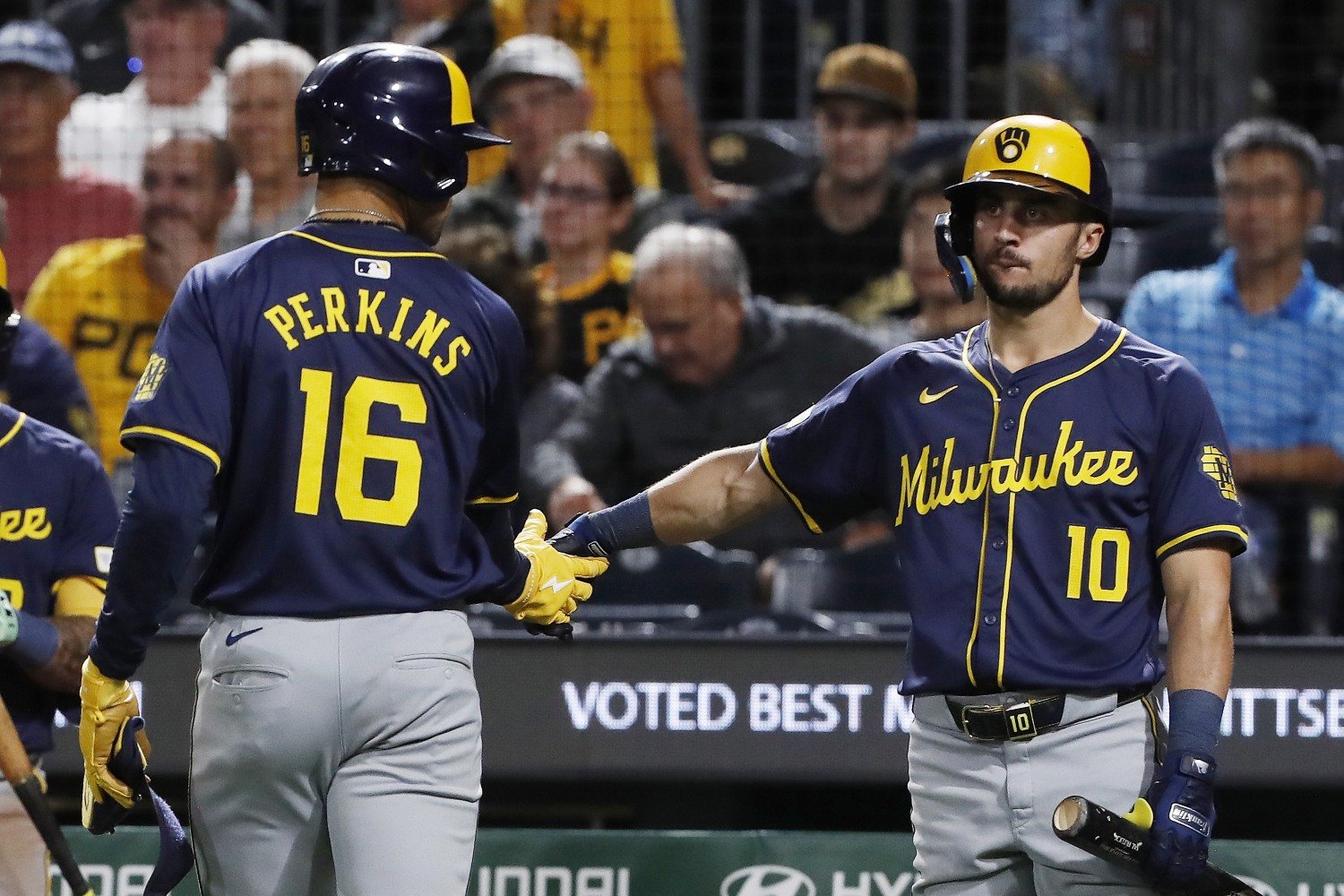 No, the Brewers (who were a much better team than the Royals in 2024 and have a much, much stronger farm system than Kansas City does) do not face the same urgency or the same constraints in their decision-making as their American League counterparts. Still, there's an almost irresistible fit between the two sides. Milwaukee has a surplus of outfielders, with Christian Yelich, Sal Frelick, Jackson Chourio, Garrett Mitchell, and Blake Perkins in the majors and (if, as expected, he moves to the grass full-time in 2025) Tyler Black, Ernesto Martinez, and Luis Lara making their way toward the big leagues in the upper minors. They have, by contrast, an increasingly glaring need for a starting pitcher, and while they might find one in a trade involving Devin Williams sometime this winter, their experience with DL Hall in 2024 surely taught them not to count that particular species of chicken while it's still a somewhat fragile-looking egg. For their part, the Royals are showing more willingness to spend money than the Brewers, perhaps emboldened less by confidence in their own balance sheets than by ownership's desire to win public approval for a new ballpark project in downtown Kansas City. However, their coffers are not materially deeper than Milwaukee's, and the big deal to which they agreed with MIchael Wacha to keep him from exercising his opt-out clause and becoming a free agent has soaked up some of their budget. Meanwhile, they have one of the five or six worst farm systems in baseball—and that's me giving them the benefit of the doubt. A trade of prospects to fill the hole atop their lineup that nearly cost them their playoff berth last year (and impelled them to rush out onto the waiver wire to pluck up Tommy Pham, Robbie Grossman and Yuli Gurriel in late August) is not going to work, if they want to build toward any semblance of real, sustained competitiveness during Bobby Witt Jr.'s prime. That sets up a bit of a staring contest, and a bit of a scouting showdown. Who can find the confidence to lock in on one of the other side's potential targets? Who can spot the key, fixable flaw that might let a so-far frustrating player blossom into what they need—and who has the guts to give up a player who could otherwise help them next year in order to obtain one who fits their needs a bit more neatly? From the Brewers' outfield bin, I think they and the Royals would actually have a pretty easy time agreeing on a pref list specific to the context of a trade negotiation. Yelich and Chourio plainly are not going anywhere. Mitchell, with his blend of upside and risk, is the wrong kind of gamble for a team that expects Witt, Vinnie Pasquantino, and Salvador Perez to anchor their lineup. They'll want to acquire one of Frelick, Perkins, or Black, and because what they need most is good defense and good on-base skills, it probably goes in that very order, in terms of the absolute value of those players to the team. For the Brewers, though, Black is a year further from free agency than the other two, and if there's going to be a window to maximize the trade value of Perkins, it's right now. Frelick is a comforting, consistent presence for the Crew. Thus, Milwaukee's list of players they'd most readily trade would go Perkins, Black, Frelick. To decide which list wins, you have to decode the other set of options—which is a theoretically simpler one, with just two players from whom to choose, but actually a very nuanced choice. The two hurlers Kansas City would make available in this kind of deal are Brady Singer and Alec Marsh. Those two made a total of 57 starts for the Royals last year, spending most of the season as the back end of a rotation made famous by Wacha, Cole Ragans and Seth Lugo. The other pitcher who could be thrown into that mix is Daniel Lynch IV, but he's somewhat akin to Mitchell, in terms of his service time, accomplishment, and questionable projectability. It's unlikely that either side would want him to get involved here. We'll stick to examining Singer and Marsh. With each pitcher, there are some important performance questions to answer, but we should quickly set forth their divergent value propositions in terms of salary and team control, first. Singer, a former first-round pick, has already surpassed four years of service time in the big leagues and is making his third trip through arbitration this winter. (He was a Super Two guy two years ago.) He could make over $8.5 million this season, so he's hardly a financial bargain, and because he'll almost immediately reach five years of service time after Opening Day, he won't be optionable. He will turn 29 next summer, but he's certainly an established, high-floor veteran starter. He cuts a profile not totally dissimilar to that of Aaron Civale (although the differences, which we'll break down later, are important), and in a profile sketch, he would fill the rotation slot vacated by the team's choice to decline Colin Rea's option and cut Bryse Wilson. The big hangup is that he'll make even more than the two of them would have made next season, combined, so to bring him in, the team has to believe he'd pitch exceptionally well for them. Marsh is more of a wild card. He's not as young as he seems, set to turn 27 next May, but after being drafted out of college in 2019 and having his first full pro season canceled by COVID, he traced a longish arc to the majors. Like Perkins and Frelick, he still has five years of team control remaining, but (more like Black, here) he hasn't fully proved himself as a big-leaguer. When Kansas City traded for Michael Lorenzen in July, they sent Marsh to Triple-A to await an injury; they proactively replaced him. He will still be able to be sent down for one more season in 2025, though, so the fact that he's still walking that tightrope isn't automatically disqualifying. Given the team's budget and its perpetual roster crunch, Marsh might suit the Brewers better from a purely logistical perspective. The key question, though, is the one we must now tackle: Which pitcher is better? Breaking Down Brady In 32 starts for the 2024 Royals, Singer delivered 180 innings and a 3.71 ERA. On that information alone, almost every team in the league would pounce on him with a leap of joy. For plenty of rotations, that's a No. 2 starter, these days. To get even average run prevention over such volume from a fourth option perfectly illustrates how the Royals ended up playing into October. Not so fast, though—alas, literally. Singer lost a tick on his fastball from 2022 to 2023, and another from 2023 to 2024. Not long ago, he sat at 93-94 MPH with his heater and could scrape 97. Now, he's 91-93 and only got up to 94.8 MPH as an absolute max in 2024. His peripheral numbers also suggest that some of his ERA's sheen was luck, as his FIP was almost a full run higher. Finally, we have to grapple with his inconsistency. Though he takes the ball and pitches as unfailingly as anyone, the quality of his outings varies widely. In 2023, his ERA was a hideous 5.52. That's all just at the surface, though. Let's break the ice and dive into the good stuff. Singer made a major change in the way he attacks hitters last year, and we can't really evaluate him without reckoning with it. Here's where he threw his pitches to both righties and lefties in 2022 and 2023. That's a lot of stuff in the middle of the zone to opposite-handed batters, which would seem to augur bad things. You can see him trying to work righties low and away on a consistent basis, but there, too, we see plenty of creep into the middle of the strike zone. Now, here are the same plots for 2024. Whoa! The changes to righties are small—just a bit better at keeping the ball down, but then, was he not changing eye levels as well?—but the transformation to lefties is eye-opening. He clearly made a commitment to pounding them low and away, the same way he has with righties all along. It's refreshing to see a pitcher with a plan. Except here's the thing: in 2022-23, Singer allowed a .740 OPS to right-handed batters, and a .754 to lefties. He wasn't quite split-neutral, but very close. He did have a good amount of success in 2022 against righties, but they mashed him in 2023. All that stuff in the heart of the zone didn't, seemingly, make him easily hittable for lefties. Then, in 2024, that small adjustment to righties begot a huge change, as he held them to an anemic .563 OPS—but much of that was washed out by the way lefties caved his head in, to the tune of an .855 OPS. They just hammered him, even though he seemed to do a bit better at working them away and down. What gives? Well, firstly, we need to acknowledge a big old pitch mix change. For years, the Royals made vague noises about getting Singer to do something different with his very simple sinker-slider arsenal, but they finally got through to him amid the mess of 2023. He went from a sinker/slider guy who threw a few halfhearted changeups to a sinker/slider/four-seamer/sweeper/changeup guy who was trying to be a whole new man. Singer started trying to reassert a four-seamer in 2023, which is why his blob of sinkers there seems to spread into what is very much the four-seamer's territory in 2024. He deepened his arsenal, as every pitching analyst on Earth ever asked him to do, and look, it brought down his ERA by 1.8 runs! But, if you're at all used to reading plots like these, you can also see a little bit of artifice at work here. Singer doesn't seem to have a knack for bold new pitch designs: new shapes, new cues, new world. His four-seamer and his sweeper hang off his sinker and his slider, respectively, like humps on Quasimodo—exactly that way, really, because they're not the same and they're certainly not pretty, but they don't seem able to create real separation. In relatively light duty, the sweeper does still get some whiffs, and the four-seamer certainly gets more of them than does the sinker. He's using each new offering the way you'd want, too. Against lefties, he's given about one-third of his previous sinker usage over to his four-seamer, and he's using the sweeper as a variant on the changeup, trying to find called strikes and catch hitters guessing something else. The problem was hinted at in the plots of his movement above. His four-seamer doesn't have much hop on it, so it's hopelessly dependent on being well-located to be effective, especially against lefties. He has a low release point and great extension, so when he can hit the top rail of the strike zone with the four-seamer, it comes in with a good, flat vertical approach angle and is tough to hit. Too often, though, he's missing, and especially missing down. Singer's induced vertical break on the four-seamer is in the 12th percentile of the league. Meamwhile. only three other players have a wider range of vertical movement on the pitch, on average, which means too many balls that come right down into the center of the zone. Here's where his fastballs were located to lefties in 2024. And here's how they performed against the pitch, by location: When he does miss in the heart of the zone, it's the meatiest meatball a lefty batter will see all week. The pitch isn't fast or lively enough to beat hitters there. For the four-seamer to take on positive value and help him get lefties out consistently, he'll need to start dotting the upper, inner third with the pitch. Plenty of pitchers simply can't throw the high, gloveside heater with any consistency, and for those people, the results of trying to force it tend to be disastrous. One pivotal choice Singer must make is whether to move over on the rubber and tinker with his mechanics, which are distinctive and help him create that extension but might be compromising both his deception and his ability to locate to certain quadrants with all the weapons he would like. Against righties, of course, a few small changes worked like a charm. He used his slider to set up his sweeper, inviting the hitter to see those two very similar offerings as the same one. He used the four-seamer (which he had no problem commanding to that high, gloveside spot when there wasn't a lefty batter standing in the box near it) to tease hitters along the outer edge, then threw them the sinker or slider in equal share right after it, leaving them stumped about which way the ball was about to veer. He's really tapped into something with that sequence of pitches, as evidenced by the success he had against righties all year. Singer's four-seamer, to the extent that it has deception for the hitter, gets it by cutting a bit more than they anticipate. He leverages that well against righties, but will have to clear the mental hurdle of doing the same thing to lefties. Because of his unique arm action and the fact that his misses are mostly vertical, he can afford to hammer lefties inside with more confidence than he's shown. These are all things the Brewers might view as "unlocks" for Singer, who does check a number of their boxes, overall. Two years ago, when he seemed a bit stubborn about making changes to his mix and approach, he would not have been a fit for the team. Now, he looks like a potentially good one, and they might really think they can take him to another level with some mechanical work to get velocity back and/or a cutter, as suggested by his arm slot and natural fastball shape. We Are Marsh-all? After all that on Singer, the downlow on Marsh might seem almost simplistic, but it's nuanced in its own ways. To start at the beginning: his problem is a dead zone fastball. In other words, based on his arm slot, his heater just moves exactly the way the hitters' eyes are trained to expect it to move. That's sometimes curable and changeable, but it requires some mechanical tweaks that don't work for everyone. In all likelihood, the better answer for Marsh is to start throwing his sinker more and his four-seamer less. Right now, he spends way too much time in the horizontal middle of the zone with that sinker, but that's partially because he's aligned himself to generate the best possible angles for the four-seamer. He doesn't command either pitch as well as you'd like, in terms of specific location to avoid the risk of being hit hard, and that's why he was—to the tune of a .434 opponent slugging average and 19 home runs allowed in just 129 innings of 4.53 ERA ball. That's all the bad news, but stick around for the good: Marsh throws six pitches, with the two flavors of heater, a little-used changeup, and three breaking balls: a slider, a sweeper, and a curveball. None but the sweeper is a true bat-missing, special pitch, but he can throw all of them for strikes. Marsh can also keep hitters from truly teeing off on his heat, when he's right, because he excels at spin mirroring and the use of seam effects to alter movement. Here's a chart showing the distribution of spin axes on his pitches as they come out of his hand. Remember, a hitter can't really read the difference between two spin axes that are 180 degrees from one another, because the ball spins too fast to discern which way it's spinning. Hitters only see the telltale dot on the ball, or a certain blur pattern associated with a particular spin axis family. All of Marsh's offerings can look pretty similar out of the hand: Because of the orientation of the seams, though, those pitches move very disparately. So, even if a hitter guesses right on which pitch is coming, his eyes will have to contend with a bit of extra wiggle on certain offerings. Marsh definitely has the better raw stuff. His three breaking balls all have above-average upside, and he can rush his fastball up there as hot as 98 miles per hour—though he lives more comfortably at 94-96. He lives more dangerously, but if Marsh figured out how to truly weaponize his arsenal, he could reach a higher ceiling than Singer, sliding lightly in behind Freddy Peralta and alongside Tobias Myers in the 2025 rotation. What It Comes Down To His youth, low salary and optionability make Marsh, objectively, the more valuable trade chip. If the Royals gave him up, they would certainly expect to get the player highest on their pref list. Could the Brewers find enough upside in Marsh to justify breaking Frelick loose from the rest of the core of the team and swapping him out, even if it be for a player of similar total value at a position of greater short- and medium-term need? Singer, by contrast, could probably be had for Perkins or Black, and the two sides might even agree to some ancillary benefits added in to sweeten that deal for the Brewers. A little cash coming along would make it much easier to justify taking on Singer, given that even though he nominally has two years of team control remaining, he'll need to pitch very well in 2025 in order for Milwaukee to want him at what would be a very inflated arbitration price in 2026. There are other pitchers available whom the Brewers wouldn't have to study so closely and work with so much after acquiring them, That's precisely why these two feel like typical Milwaukee targets, though. Knowing full well that they have a great infrastructure for pitching development and instruction, the Brewers like to bring in guys who leave something to be desired for other teams, and to provide that value themselves, from within. It's like having the confidence in your own cooking to buy raw ingredients, rather than pay the extra money to go out to eat—even if the meal is very important. Kansas City and Milwaukee have gotten together on some highly notable trades in the past, with gratifying results on both sides. This feels like a moment when another such move might be possible.
 -
Yeah, I have a close eye on Smith, too. Definitely a good target. I wonder if Texas would more readily give up Jung, at this point, given the injury issues he's had..
-
Welcome to the Brewer Fanatic 2024-25 Brewers Offseason Handbook! In this first installment in a series of special articles, we'll tackle questions about how much flexibility the two-time defending NL Central champions have as they enter the hot stove season—including both available money and available roster spots. Image courtesy of © Benny Sieu-Imagn Images Welcome to the 2025 Offseason Handbook! This year, we’re offering the format online only through our Caretakers program. The Offseason Handbook is a comprehensive look at what challenges the Brewers face in the coming winter to field a competitive team in 2025. To become a Caretaker, visit this page. On top of receiving exclusive access to the Offseason Handbook, Caretakers also receive in-depth analysis from national writers you cannot find anywhere else. You will also receive exclusive access to events and an ad-free browsing option. In celebration of the Offseason Handbook’s release, we’re offering 20% off all Caretaker programs for the next week. Use the code HANDBOOK at checkout to receive 20% off your purchase! By now, the constraints with which the small-market Brewers must always contend are achingly familiar to fans. Ownership could always elect to pour more money into the team and accept smaller profits (or even short-term losses) to change the balance between revenue and competitive prospects, but that works much better in times of secure long-term profitability. Now that Milwaukee (along with many, many other teams, most of them in the league's smaller markets) faces serious questions about the amount of money they'll make from local TV rights in the short-term future, these are not such times. Though it feels like we just emerged from the mire and madness of a failed CBA negotiation and winter-long lockout, another one could loom just around the corner. For a mixture of those two reasons, it's likely that the Brewers will spend somewhere south of $130 million in payroll for 2025. They spent $135 million in 2023 and $133 million in 2024, and that didn't impede them, so it's far from a death knell if they trim things down to $125 million or so. Still, that will be the defining constraint for the team this winter. If that wasn't already clear, they made it so over the weekend, by waiving Colin Rea (in the hopes of clearing the $1 million obligation they would have to him upon declining his $5.5 million option for 2025) and declining their club option on Devin Williams. We knew this would be the way of things, of course. Rhys Hoskins opted in for $18 million in 2025, an unsurprising decision after an uninspiring 2024 season. When stacked alongside the team's existing commitments to Christian Yelich and Freddy Peralta and their escalating obligations to Jackson Chourio, William Contreras and others, that creates a hefty pile of money owed. It's not prohibitive, but the team has to navigate the ramifications of acquisitions they made over previous winters, all aimed at doing exactly what they've done: winning 185 regular-season games and claiming back-to-back division championships. So, who's owed what? Which salaries might the team move, and how much space can they create for meaningful additions? Just as importantly, because it's the other key constraint on every team's efforts to build a champion, what decisions will the front office have to make to manage the 40-man roster? Let's get granular with it. View full article
-
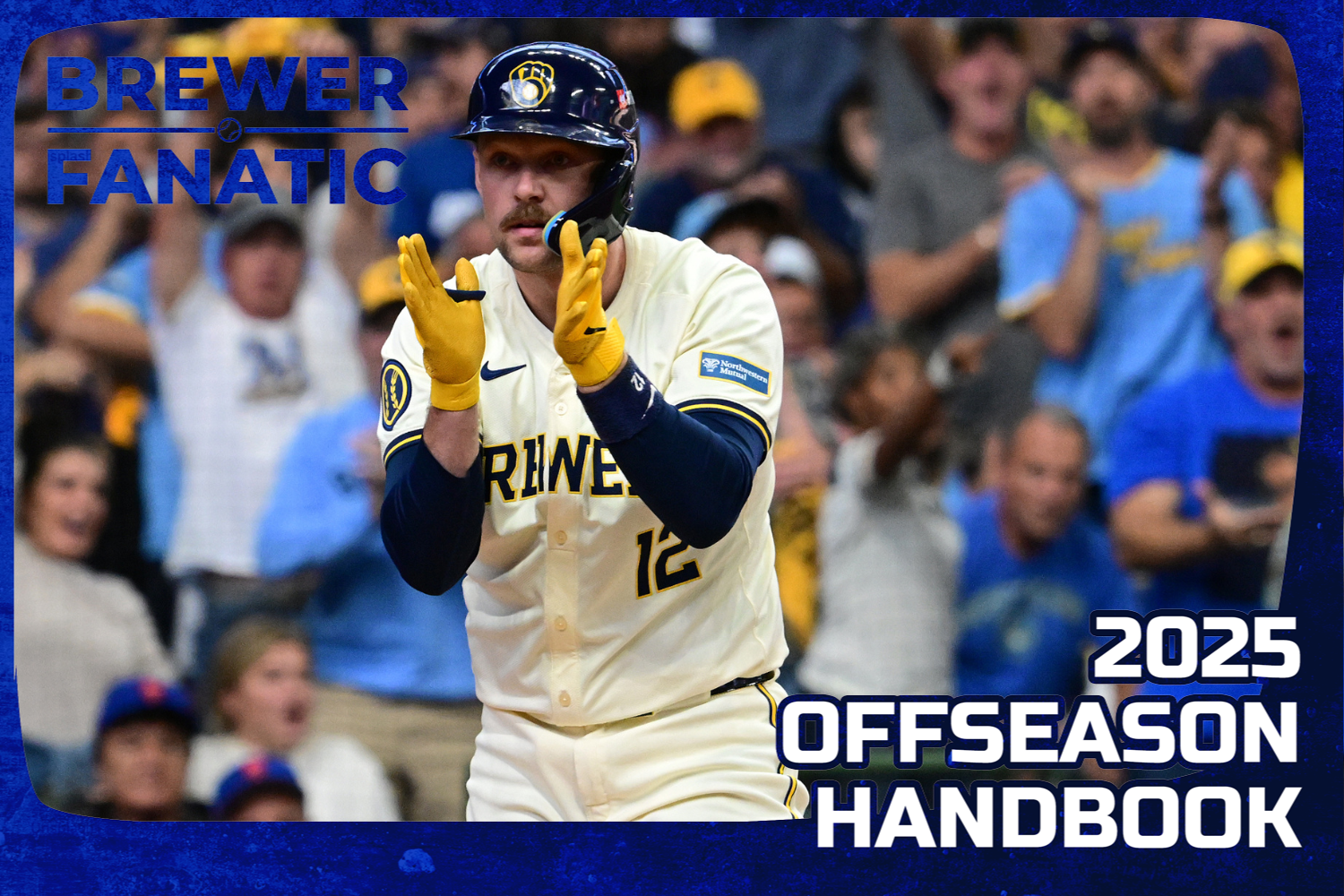 Welcome to the 2025 Offseason Handbook! This year, we’re offering the format online only through our Caretakers program. The Offseason Handbook is a comprehensive look at what challenges the Brewers face in the coming winter to field a competitive team in 2025. To become a Caretaker, visit this page. On top of receiving exclusive access to the Offseason Handbook, Caretakers also receive in-depth analysis from national writers you cannot find anywhere else. You will also receive exclusive access to events and an ad-free browsing option. In celebration of the Offseason Handbook’s release, we’re offering 20% off all Caretaker programs for the next week. Use the code HANDBOOK at checkout to receive 20% off your purchase! By now, the constraints with which the small-market Brewers must always contend are achingly familiar to fans. Ownership could always elect to pour more money into the team and accept smaller profits (or even short-term losses) to change the balance between revenue and competitive prospects, but that works much better in times of secure long-term profitability. Now that Milwaukee (along with many, many other teams, most of them in the league's smaller markets) faces serious questions about the amount of money they'll make from local TV rights in the short-term future, these are not such times. Though it feels like we just emerged from the mire and madness of a failed CBA negotiation and winter-long lockout, another one could loom just around the corner. For a mixture of those two reasons, it's likely that the Brewers will spend somewhere south of $130 million in payroll for 2025. They spent $135 million in 2023 and $133 million in 2024, and that didn't impede them, so it's far from a death knell if they trim things down to $125 million or so. Still, that will be the defining constraint for the team this winter. If that wasn't already clear, they made it so over the weekend, by waiving Colin Rea (in the hopes of clearing the $1 million obligation they would have to him upon declining his $5.5 million option for 2025) and declining their club option on Devin Williams. We knew this would be the way of things, of course. Rhys Hoskins opted in for $18 million in 2025, an unsurprising decision after an uninspiring 2024 season. When stacked alongside the team's existing commitments to Christian Yelich and Freddy Peralta and their escalating obligations to Jackson Chourio, William Contreras and others, that creates a hefty pile of money owed. It's not prohibitive, but the team has to navigate the ramifications of acquisitions they made over previous winters, all aimed at doing exactly what they've done: winning 185 regular-season games and claiming back-to-back division championships. So, who's owed what? Which salaries might the team move, and how much space can they create for meaningful additions? Just as importantly, because it's the other key constraint on every team's efforts to build a champion, what decisions will the front office have to make to manage the 40-man roster? Let's get granular with it.
- 2 comments
-
- 1
-
-
- rhys hoskins
- devin williams
- (and 4 more)
-
.png.bfe5bcb7a360ef4dcbb23af544023325.png) A great World Series has to run six or seven games, and thus, sadly, the much-hyped 2024 Fall Classic fell short. A good one needn't be played at an exceptionally high level of tautness or neatness, though. Chaos is good. Chaos is the element thrown at the last moment into the mixture of great ingredients—talent, stakes, and setting—that make up good baseball in general, elevating it by testing the players contesting a series and forcing them to meet unexpected moments and challenges. Chaos creates vividity, and that's how you should truly judge a World Series: by its vividity, piquancy, and historical redolence. Those are the aspects of great baseball drama, and they were all present in the 2024 postseason, including the Series between the Dodgers and Yankees. There has to be rising action, and good rising action includes foreshadowing. We had that. There have to be visible, understandable protagonists, but there also have to be surprise heroes and goats. We had that. Finally, there have to be twists, but not twists so violent that the final outcome feels unearned. We got that, too. The Dodgers were the better baseball team, and they won this Series without even having to go back to Los Angeles for a second miniature set at home. It didn't have to be that way, though, and the path the team carved to their ultimate victory was as messy, as dramatic, and as fragile as good baseball always ought to be, even as they earned every drop of it.
A great World Series has to run six or seven games, and thus, sadly, the much-hyped 2024 Fall Classic fell short. A good one needn't be played at an exceptionally high level of tautness or neatness, though. Chaos is good. Chaos is the element thrown at the last moment into the mixture of great ingredients—talent, stakes, and setting—that make up good baseball in general, elevating it by testing the players contesting a series and forcing them to meet unexpected moments and challenges. Chaos creates vividity, and that's how you should truly judge a World Series: by its vividity, piquancy, and historical redolence. Those are the aspects of great baseball drama, and they were all present in the 2024 postseason, including the Series between the Dodgers and Yankees. There has to be rising action, and good rising action includes foreshadowing. We had that. There have to be visible, understandable protagonists, but there also have to be surprise heroes and goats. We had that. Finally, there have to be twists, but not twists so violent that the final outcome feels unearned. We got that, too. The Dodgers were the better baseball team, and they won this Series without even having to go back to Los Angeles for a second miniature set at home. It didn't have to be that way, though, and the path the team carved to their ultimate victory was as messy, as dramatic, and as fragile as good baseball always ought to be, even as they earned every drop of it. -
For as long as there have been World Series, there have been occasional complaints that they're sloppy. We should expect that. The crispest baseball of the season can't come at the end of a 200-game schedule, in varying climates and amid a media circus. But extraordinarily compelling baseball still can. Image courtesy of © Vincent Carchietta-Imagn Images A great World Series has to run six or seven games, and thus, sadly, the much-hyped 2024 Fall Classic fell short. A good one needn't be played at an exceptionally high level of tautness or neatness, though. Chaos is good. Chaos is the element thrown at the last moment into the mixture of great ingredients—talent, stakes, and setting—that make up good baseball in general, elevating it by testing the players contesting a series and forcing them to meet unexpected moments and challenges. Chaos creates vividity, and that's how you should truly judge a World Series: by its vividity, piquancy, and historical redolence. Those are the aspects of great baseball drama, and they were all present in the 2024 postseason, including the Series between the Dodgers and Yankees. There has to be rising action, and good rising action includes foreshadowing. We had that. There have to be visible, understandable protagonists, but there also have to be surprise heroes and goats. We had that. Finally, there have to be twists, but not twists so violent that the final outcome feels unearned. We got that, too. The Dodgers were the better baseball team, and they won this Series without even having to go back to Los Angeles for a second miniature set at home. It didn't have to be that way, though, and the path the team carved to their ultimate victory was as messy, as dramatic, and as fragile as good baseball always ought to be, even as they earned every drop of it. View full article
-
Brewers Lose Coach Quintin Berry to Craig Counsell and the Cubs
Matthew Trueblood posted an article in Brewers
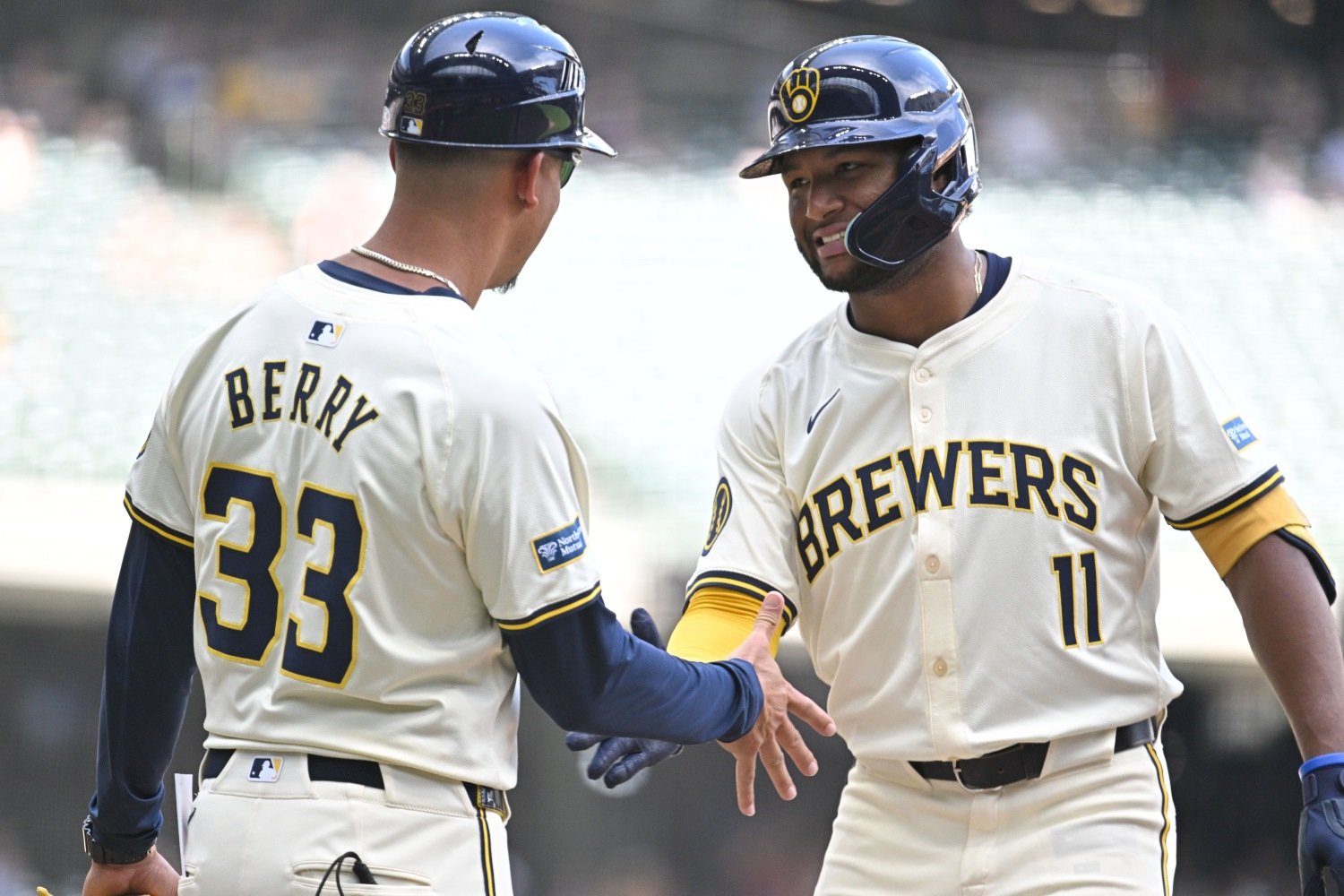 All season, the 2024 Milwaukee Brewers' identity lied in their superb defense and baserunning. They did other things well, and will do other things well in 2025, but terrific defense (including great positioning) and aggressiveness from fast players on the bases were key to everything the team did. Now, they'll have to try to match themselves without the member of the coaching staff who most directly shaped those aspects of their brilliance. Quintin Berry was an elite baserunner during his limited big-league career, including serving as the late-season pinch-running specialist for several playoff-hopeful teams. He stole 34 bases in 36 tries against big-league catchers, including going 5-for-5 in his two trips to the postseason. After retiring in Nov. 2018, he immediately joined the Brewers as a coach, and now, he'll reunite with Craig Counsell to reprise that role in Chicago. Berry's absence will be deeply felt in Milwaukee. As the first-base coach for the last four years, he was the voice in the ear of many highly successful running teams, and he showed an expert eye for positioning outfielders. That job is collaborative and begins in the front office, but Berry did an excellent job of implementing existing plans within games and making crucial adjustments. Famously, it was he who directed a last-second change to where Blake Perkins was setting up before a single on which Perkins threw out the tying run at the plate and secured a win, back in June. The Cubs have a burgeoning facsimile of the Brewers' well-rounded core, with good baserunners and strong outfield defenders whose games might be taken to another level under his tutelage. Pete Crow-Armstrong is already one of the better base thieves and center field gloves in MLB, and Berry could help him ascend farther toward both apexes. At the same time, the Brewers went to an even more visible, collaborative, group-focused model of coaching in their first campaign under Pat Murphy, and they likely feel some confidence about the systems they have in place—while remaining cognizant of the fact that Berry's influence helped shape and hone those systems. Young speed demon Brice Turang and the dazzling outfield corps of Jackson Chourio, Blake Perkins, and Sal Frelick will all miss Berry, but they've absorbed plenty of insights from him over the years, and might well be able to carry on their brilliant work under a different instructor now. This is a loss of some weight for the Brewers, but would appear to be an even bigger gain for the Cubs. They have plenty of rough edges to sand off in the outfield and on the bases. If Berry can coach up Seiya Suzuki sufficiently to get the aging veteran back into everyday duty in right field (rather than being confined to DH work, as he was for most of the second half), he'll make a huge difference for his new employer right off the bat: the Cubs could then pursue a high-end hitter with greater flexibility than they have now. More changes are coming to both coaching staffs, but with Thursday's unsurprising news comes a fresh reminder: Counsell and his new team are the primary short-term threats to the Brewers' supremacy over the NL Central, and there will be awkwardness and tension at times while these two teams remain thus poised.
 -
The erstwhile first-base coach for the Crew will move across the diamond and across the Wisconsin-Illinois border, and the Brewers will try to replace a highly valued member of the staff. Image courtesy of © Michael McLoone-Imagn Images All season, the 2024 Milwaukee Brewers' identity lied in their superb defense and baserunning. They did other things well, and will do other things well in 2025, but terrific defense (including great positioning) and aggressiveness from fast players on the bases were key to everything the team did. Now, they'll have to try to match themselves without the member of the coaching staff who most directly shaped those aspects of their brilliance. Quintin Berry was an elite baserunner during his limited big-league career, including serving as the late-season pinch-running specialist for several playoff-hopeful teams. He stole 34 bases in 36 tries against big-league catchers, including going 5-for-5 in his two trips to the postseason. After retiring in Nov. 2018, he immediately joined the Brewers as a coach, and now, he'll reunite with Craig Counsell to reprise that role in Chicago. Berry's absence will be deeply felt in Milwaukee. As the first-base coach for the last four years, he was the voice in the ear of many highly successful running teams, and he showed an expert eye for positioning outfielders. That job is collaborative and begins in the front office, but Berry did an excellent job of implementing existing plans within games and making crucial adjustments. Famously, it was he who directed a last-second change to where Blake Perkins was setting up before a single on which Perkins threw out the tying run at the plate and secured a win, back in June. The Cubs have a burgeoning facsimile of the Brewers' well-rounded core, with good baserunners and strong outfield defenders whose games might be taken to another level under his tutelage. Pete Crow-Armstrong is already one of the better base thieves and center field gloves in MLB, and Berry could help him ascend farther toward both apexes. At the same time, the Brewers went to an even more visible, collaborative, group-focused model of coaching in their first campaign under Pat Murphy, and they likely feel some confidence about the systems they have in place—while remaining cognizant of the fact that Berry's influence helped shape and hone those systems. Young speed demon Brice Turang and the dazzling outfield corps of Jackson Chourio, Blake Perkins, and Sal Frelick will all miss Berry, but they've absorbed plenty of insights from him over the years, and might well be able to carry on their brilliant work under a different instructor now. This is a loss of some weight for the Brewers, but would appear to be an even bigger gain for the Cubs. They have plenty of rough edges to sand off in the outfield and on the bases. If Berry can coach up Seiya Suzuki sufficiently to get the aging veteran back into everyday duty in right field (rather than being confined to DH work, as he was for most of the second half), he'll make a huge difference for his new employer right off the bat: the Cubs could then pursue a high-end hitter with greater flexibility than they have now. More changes are coming to both coaching staffs, but with Thursday's unsurprising news comes a fresh reminder: Counsell and his new team are the primary short-term threats to the Brewers' supremacy over the NL Central, and there will be awkwardness and tension at times while these two teams remain thus poised. View full article
-
3 Starting Pitchers Brewers Could Pick Up on Low-Dollar Deals
Matthew Trueblood posted an article in Brewers
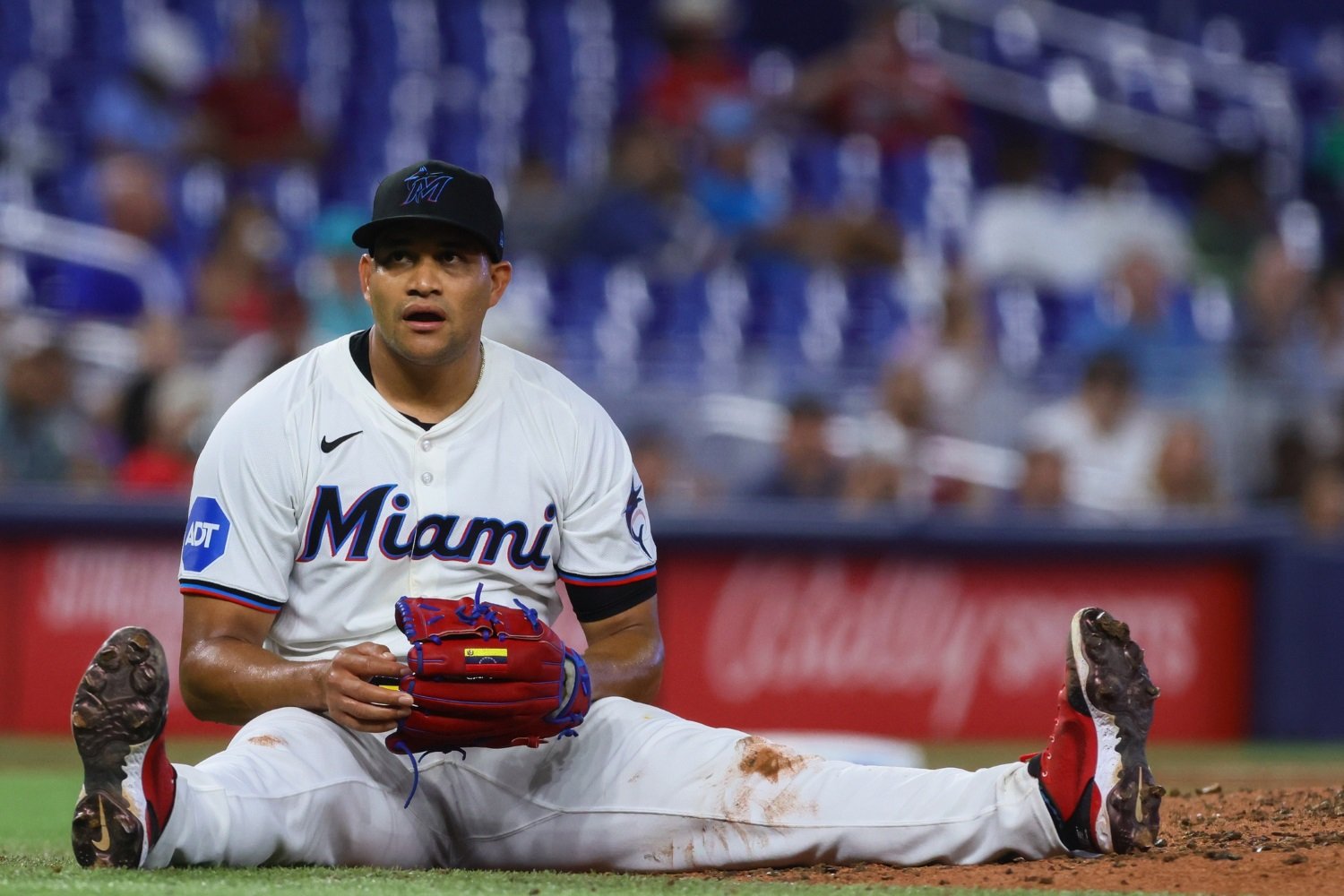 We know for sure that the Brewers will have Freddy Peralta at the front of their rotation in 2025. It's also very likely that they'll have Colin Rea, whom they can retain on an affordable team option. Tobias Myers is a lock, as long as he's healthy. Beyond that, though, things get murky in a hurry. Everyone dearly hopes that Brandon Woodruff will be back in the middle of the rotation after he missed all of 2024 with a shoulder capsule injury, but how much like his old self he can be is very much an open question. Aaron Civale is under team control, but MLB Trade Rumors projects him to earn roughly $8 million via arbitration in 2025, so the team will have to make a fairly difficult decision about him ahead of the mid-November deadline to tender contracts to arbitration-eligible players. DL Hall and Aaron Ashby are intriguing young southpaws, but both might end up being better cast as relievers. One way or another, the Brewers will want to add veteran depth this winter, just as they did by bringing in Joe Ross and Jakob Junis last offseason. Junis cost $7 million on a one-year deal, and a contract of that size might be off the table this time around. Civale fills that kind of role and payroll space, so if he's non-tendered, the equation changes, but it's more likely than not that the Brewers will hold onto him. Today, we'll look at a few candidates to be this winter's answer to Ross, whom the Crew signed for $1.75 million last winter and whose 74 innings of work for them were his first big-league action since 2021. Yonny Chirinos, RHP In six starts with the Marlins this season, Chirinos had a 6.30 ERA. He spent most of the season in Triple A, and will turn 31 in December. On the surface, it's not an appealing profile. He could be available on a minor-league deal, and will certainly not command more than Ross did last winter. Yet, he's a very good fit for the Brewers' philosophies of pitching and roster construction. He's the same age Ross was last year and has similar upside. He could play the same swingman role Ross ended up filling for the team in 2024; he has experience both as a starter and as a reliever. Chirinos has a four-pitch mix: sinker, slider, four-seamer, and splitter. However, he hasn't consistently used those offerings in any particular way, even if we focus closely on this season. In the big leagues, he leaned heavily on the slider. During his time in the minors, it was a more orthodox approach. The Brewers love a pitcher who utilizes multiple fastballs, and they love an adaptable slider. Chirinos offers both, with the ability to tweak the shape of his slider from a tighter, harder offering out to something like a true sweeper. When you study those movement plots, though, you can see a lack of real command and conviction. Chirinos's splitter doesn't maintain sufficient separation from his fastball, which lacks the rising action of most four-seamers. Of his two heaters, he heavily favors the sinker, which pairs well with the slider but less so with the splitter—at least the way he currently throws each of them, and from where. Like his pitch mix and the individual weapons' movement patterns, Chirinos's release point has been inconsistent. He even attempted a conscious shift toward the first-base side of the rubber during the season last year. In the image on the left, from his time in the majors, the cluster on the right is a batch of pitches thrown in late July, just before he went down to the minors for the final time in the season. (These plots are, loosely, from the perspective of the batter and catcher, so further right means closer to first base.) As you can also see, though, neither the lower release point nor that position on the rubber went with Chirinos when he pitched in August and September for Triple-A Jacksonville. That attempted release point change yielded lousy results and a demotion from the big leagues, so Chirinos naturally chose not to keep experimenting. He might have been onto something, though. At the very least, keeping the release point a bit lower and his delivery more compact would be a good idea. The Brewers excel at helping pitchers find the best release point, arm angle, and pitch mix for them, and Chirinos is someone who could benefit disproportionately from that kind of help. He'd be a strong addition at a minimal cost. Cole Irvin, LHP Even though the Orioles were a bit thin and pitching-needy as they tried to close out the season and ensure a playoff spot in September, they waived Irvin and let him land with another desperate contender, the Minnesota Twins. That reflects the extreme lack of success Irvin was having. He'd been demoted from the rotation to the bullpen, and it wasn't working much better for him there. Minnesota was so underwhelmed by their experience with him that they released him at the end of the season, even though he had two more seasons of team control left. Irvin doesn't throw very hard or have any one pitch that consistently puts away opposing batters. However, the only thing the Brewers like better than a two-fastball profile is a three-fastball profile, and Irvin has it. His cutter is more like a slider than a fastball, but even so, he has that variation to force hitters not to sit on either his sinker, his four-seamer or his slider. In total, he has six pitches, and the Brewers like pitchers who utilize their mix the way he does. Chris Hook could help Irvin transform a bit, not necessarily into a whole new creature, but back into the successful version of himself who pitched well for the Orioles in 2021 and 2022. Anthony DeSclafani, RHP Whereas Irvin and Chirinos primarily come with performance concerns, DeSclafani's great limiter is his health. Surgery on the flexor tendon in his forearm ended his 2024 season before it began, and he's thrown fewer than 120 innings in the big leagues since the start of 2022. When he has been on the mound, he hasn't been overwhelmingly effective, but he does have good stuff, even as he approaches his 35th birthday. The fit here is tougher, because DeSclafani comes with the very questions the Brewers would surely love to avoid. They have to navigate so much uncertainty about Woodruff, Robert Gasser, and others whose health track records are spotty that bringing in another player who poses an injury risk might not be helpful. On the other hand, if there is a veteran hurler who could turn in 20 starts with a sub-4.00 ERA at almost no cost, it might be DeSclafani, with his age and injury red flags. Milwaukee should at least consider some higher-profile arms, and they might choose a different depth charge than any of those identified here. Each of them has some features that should appeal to the club, though, and each should be available at a low enough cost to let the Brewers build a great roster by investing mostly in other, more urgent needs.
 -
As the offseason draws near, the Brewers are in an interesting position with their starting rotation. They need more depth, to be sure, but they might not want to spend big to acquire it. No problem; here are some alternatives. Image courtesy of © Sam Navarro-Imagn Images We know for sure that the Brewers will have Freddy Peralta at the front of their rotation in 2025. It's also very likely that they'll have Colin Rea, whom they can retain on an affordable team option. Tobias Myers is a lock, as long as he's healthy. Beyond that, though, things get murky in a hurry. Everyone dearly hopes that Brandon Woodruff will be back in the middle of the rotation after he missed all of 2024 with a shoulder capsule injury, but how much like his old self he can be is very much an open question. Aaron Civale is under team control, but MLB Trade Rumors projects him to earn roughly $8 million via arbitration in 2025, so the team will have to make a fairly difficult decision about him ahead of the mid-November deadline to tender contracts to arbitration-eligible players. DL Hall and Aaron Ashby are intriguing young southpaws, but both might end up being better cast as relievers. One way or another, the Brewers will want to add veteran depth this winter, just as they did by bringing in Joe Ross and Jakob Junis last offseason. Junis cost $7 million on a one-year deal, and a contract of that size might be off the table this time around. Civale fills that kind of role and payroll space, so if he's non-tendered, the equation changes, but it's more likely than not that the Brewers will hold onto him. Today, we'll look at a few candidates to be this winter's answer to Ross, whom the Crew signed for $1.75 million last winter and whose 74 innings of work for them were his first big-league action since 2021. Yonny Chirinos, RHP In six starts with the Marlins this season, Chirinos had a 6.30 ERA. He spent most of the season in Triple A, and will turn 31 in December. On the surface, it's not an appealing profile. He could be available on a minor-league deal, and will certainly not command more than Ross did last winter. Yet, he's a very good fit for the Brewers' philosophies of pitching and roster construction. He's the same age Ross was last year and has similar upside. He could play the same swingman role Ross ended up filling for the team in 2024; he has experience both as a starter and as a reliever. Chirinos has a four-pitch mix: sinker, slider, four-seamer, and splitter. However, he hasn't consistently used those offerings in any particular way, even if we focus closely on this season. In the big leagues, he leaned heavily on the slider. During his time in the minors, it was a more orthodox approach. The Brewers love a pitcher who utilizes multiple fastballs, and they love an adaptable slider. Chirinos offers both, with the ability to tweak the shape of his slider from a tighter, harder offering out to something like a true sweeper. When you study those movement plots, though, you can see a lack of real command and conviction. Chirinos's splitter doesn't maintain sufficient separation from his fastball, which lacks the rising action of most four-seamers. Of his two heaters, he heavily favors the sinker, which pairs well with the slider but less so with the splitter—at least the way he currently throws each of them, and from where. Like his pitch mix and the individual weapons' movement patterns, Chirinos's release point has been inconsistent. He even attempted a conscious shift toward the first-base side of the rubber during the season last year. In the image on the left, from his time in the majors, the cluster on the right is a batch of pitches thrown in late July, just before he went down to the minors for the final time in the season. (These plots are, loosely, from the perspective of the batter and catcher, so further right means closer to first base.) As you can also see, though, neither the lower release point nor that position on the rubber went with Chirinos when he pitched in August and September for Triple-A Jacksonville. That attempted release point change yielded lousy results and a demotion from the big leagues, so Chirinos naturally chose not to keep experimenting. He might have been onto something, though. At the very least, keeping the release point a bit lower and his delivery more compact would be a good idea. The Brewers excel at helping pitchers find the best release point, arm angle, and pitch mix for them, and Chirinos is someone who could benefit disproportionately from that kind of help. He'd be a strong addition at a minimal cost. Cole Irvin, LHP Even though the Orioles were a bit thin and pitching-needy as they tried to close out the season and ensure a playoff spot in September, they waived Irvin and let him land with another desperate contender, the Minnesota Twins. That reflects the extreme lack of success Irvin was having. He'd been demoted from the rotation to the bullpen, and it wasn't working much better for him there. Minnesota was so underwhelmed by their experience with him that they released him at the end of the season, even though he had two more seasons of team control left. Irvin doesn't throw very hard or have any one pitch that consistently puts away opposing batters. However, the only thing the Brewers like better than a two-fastball profile is a three-fastball profile, and Irvin has it. His cutter is more like a slider than a fastball, but even so, he has that variation to force hitters not to sit on either his sinker, his four-seamer or his slider. In total, he has six pitches, and the Brewers like pitchers who utilize their mix the way he does. Chris Hook could help Irvin transform a bit, not necessarily into a whole new creature, but back into the successful version of himself who pitched well for the Orioles in 2021 and 2022. Anthony DeSclafani, RHP Whereas Irvin and Chirinos primarily come with performance concerns, DeSclafani's great limiter is his health. Surgery on the flexor tendon in his forearm ended his 2024 season before it began, and he's thrown fewer than 120 innings in the big leagues since the start of 2022. When he has been on the mound, he hasn't been overwhelmingly effective, but he does have good stuff, even as he approaches his 35th birthday. The fit here is tougher, because DeSclafani comes with the very questions the Brewers would surely love to avoid. They have to navigate so much uncertainty about Woodruff, Robert Gasser, and others whose health track records are spotty that bringing in another player who poses an injury risk might not be helpful. On the other hand, if there is a veteran hurler who could turn in 20 starts with a sub-4.00 ERA at almost no cost, it might be DeSclafani, with his age and injury red flags. Milwaukee should at least consider some higher-profile arms, and they might choose a different depth charge than any of those identified here. Each of them has some features that should appeal to the club, though, and each should be available at a low enough cost to let the Brewers build a great roster by investing mostly in other, more urgent needs. View full article
-
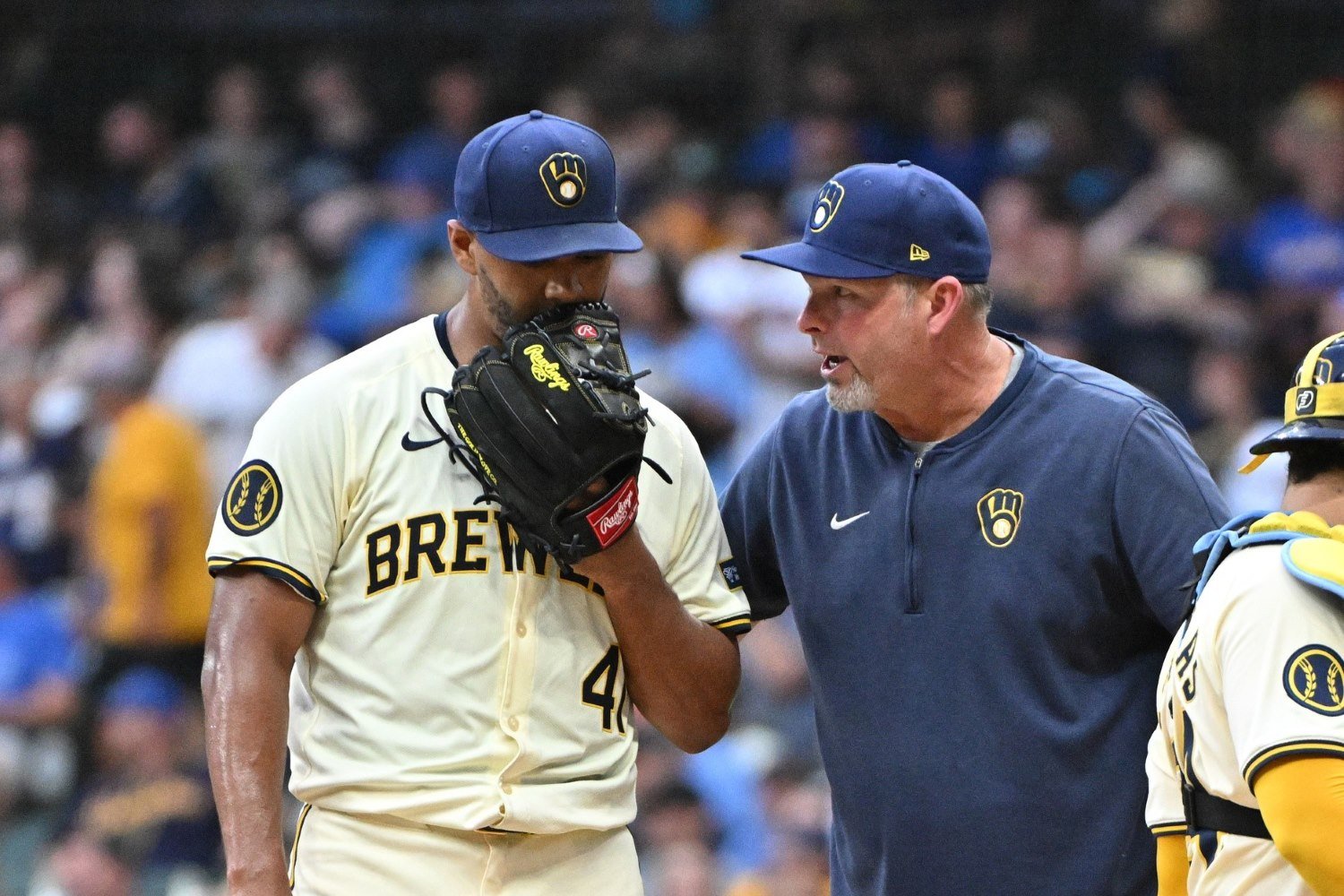 It was never very much in doubt, because Chris Hook probably wasn't in as much demand outside the Brewers organization as he should have been. Unlike some other Brewers coaches, he wasn't likely to become a target for ex-Brewers manager Craig Counsell and the Cubs, who have retained their own pitching coach, Tommy Hottovy. Much of the rest of the league, meanwhile, has ideas about whether and how much to use offspeed stuff, how many different ways a pitcher should get their fastball to move, and mechanical cues that diverge sharply from those held by Hook and the Brewers. These two parties deeply appreciate each other, though, and are on the same page. Hook is far from the only figure driving the many recent success stories of Brewers pitching adjustments and development, but he's an effective head for that department and a great communicator across both the big-league staff and the behind-the-scenes support structure. Under Hook, Milwaukee has a coherent and consistent pitching identity, and they retain the flexibility to help pitchers with very different skill sets and shortcomings. Even if the real risk of a departure was small, this lingered all season as a story in the background. Hook's contract was set to expire Thursday, and while he might not be the most in step with the analytical orthodoxy of the moment, he would have had suitors as a free agent. With uncertainty about local TV revenue spreading across the sport and making teams uneasy about the huge expenditures required to add more talent, places where much less money can be spent to get more from the same amount of talent are more important than ever. For the Brewers, Hook is that kind of investment. As good a job as the Crew did with Tobias Myers even in the minor leagues, Hook had his hands on that developmental project from the beginning, and he helped Myers make key adjustments throughout his rookie season, too. He's been essential to the emergence of Colin Rsa and a perfect messenger for the bundle of sm,all changes the team wanted pitchers like Trevor Megill and Bryan Hudson to make, unlocking new levels for each. Now, the team can move forward knowing they have the linchpin of their run-prevention genius in place for years to come. It doesn't obviate the need to keep acquiring interesting, talented hurlers, but having Hook around both magnifies the value of that work and raises the organization's confidence that whatever moves they make with their staff will turn out somewhere on the high side of the range of potential outcomes.
 -
Every organization strives to be about more than a particular individual's strength or weakness. Having one person who effectively spreads a team's gospel is hugely valuable, though, and the Brewers have now ensured that one such person will remain with them for a while. Image courtesy of © Michael McLoone-Imagn Images It was never very much in doubt, because Chris Hook probably wasn't in as much demand outside the Brewers organization as he should have been. Unlike some other Brewers coaches, he wasn't likely to become a target for ex-Brewers manager Craig Counsell and the Cubs, who have retained their own pitching coach, Tommy Hottovy. Much of the rest of the league, meanwhile, has ideas about whether and how much to use offspeed stuff, how many different ways a pitcher should get their fastball to move, and mechanical cues that diverge sharply from those held by Hook and the Brewers. These two parties deeply appreciate each other, though, and are on the same page. Hook is far from the only figure driving the many recent success stories of Brewers pitching adjustments and development, but he's an effective head for that department and a great communicator across both the big-league staff and the behind-the-scenes support structure. Under Hook, Milwaukee has a coherent and consistent pitching identity, and they retain the flexibility to help pitchers with very different skill sets and shortcomings. Even if the real risk of a departure was small, this lingered all season as a story in the background. Hook's contract was set to expire Thursday, and while he might not be the most in step with the analytical orthodoxy of the moment, he would have had suitors as a free agent. With uncertainty about local TV revenue spreading across the sport and making teams uneasy about the huge expenditures required to add more talent, places where much less money can be spent to get more from the same amount of talent are more important than ever. For the Brewers, Hook is that kind of investment. As good a job as the Crew did with Tobias Myers even in the minor leagues, Hook had his hands on that developmental project from the beginning, and he helped Myers make key adjustments throughout his rookie season, too. He's been essential to the emergence of Colin Rsa and a perfect messenger for the bundle of sm,all changes the team wanted pitchers like Trevor Megill and Bryan Hudson to make, unlocking new levels for each. Now, the team can move forward knowing they have the linchpin of their run-prevention genius in place for years to come. It doesn't obviate the need to keep acquiring interesting, talented hurlers, but having Hook around both magnifies the value of that work and raises the organization's confidence that whatever moves they make with their staff will turn out somewhere on the high side of the range of potential outcomes. View full article
-
Though none of them ultimately claimed the award, the Brewers had several strong finishers in voting for the prestigious annual Fielding Bible Awards—further affirmation of the stellar team defense the team played all year. Image courtesy of © Jeff Hanisch-Imagn Images Though much newer and less widely recognized than Gold Gloves, the Fielding Bible Awards are the only defensive honors serious baseball fans should care about each year. Rather than hurriedly scribbled onto three-person ballots by disinterested and often underqualified coaches and managers, as the Gold Gloves are, the Fielding Bible Awards are voted on by a cast of the top experts and evaluators of defense in the public sphere. Only one award is given for each position, covering all of MLB, so there are fewer winners than with the Gold Gloves, but finishing second for a Fielding Bible Award is often a much more reliable indicator of the value a player provided in run prevention than winning a Gold Glove. No Brewers defender won a Fielding Bible Award in 2024. However, on Monday, Sports Info Solutions—the company that commissions and compiles the votes and announces the awards—published the full voting results, and in studying them, there's plenty of good news about the Crew. There are 16 voters and 10 spots on each ballot, so a unanimous winner at a given position would receive 160 vote points. A first-place vote is worth 10; a 10th-place vote is worth 1. At second base, Cleveland's Andrés Giménez claimed an impressive 156 points, but Brice Turang finished right behind him, at 141. Turang arguably had a slightly better season than Giménez with the leather, but the Guardians' second baseman has a stronger arm and did a bit better turning the double play. There's no shame in finishing second to him, and indeed, this is a reminder that Turang was an elite defender in 2024. At third base, Joey Ortiz's easy adaptation to third base was one of the great stories of the season, and it paid off with a third-place finish at the hot corner. San Francisco's Matt Chapman won the award, as he does pretty much every year, and came up just one vote shy of unanimity. The only other player in MLB to rank above Ortiz at third, though, was potential Brewers trade target Ryan McMahon. Willy Adames, deservedly, got shut out of voting at shortstop, so after he heads for greener pastures this winter, Milwaukee could slide Ortiz to short (where he has all the tools to hold his own) and trade for McMahon, reestablishing perhaps the best infield defense in the game. Blake Perkins deserved more credit than he got in center field, but his limited playing time and a crowded field of competitors pushed him out of the top 10. However, Sal Frelick finished second for the right field Fielding Bible Award, trailing only Boston's Wilyer Abreu in voting. The Brewers were also lightly represented on the voting results page by William Contreras, who got a good chunk of down-ballot votes at catcher as he continues to dedicate himself to the nuances of that position; and by Jackson Chourio, whose edges are still rough but who flashed tremendous athleticism in his time in left field this year. In all likelihood, playing great defense again will be vital to the Brewers' pursuit of what would be a third straight NL Central crown in 2025. Though they might or might not claim a bevy of Gold Gloves, and though they didn't win any of the more serious awards for that type of excellence, these numbers remind us that the team was great in that regard—and that all the pillars of that greatness will be back (and will still be young, fast, skilled and agile) next season. View full article
-
 Though much newer and less widely recognized than Gold Gloves, the Fielding Bible Awards are the only defensive honors serious baseball fans should care about each year. Rather than hurriedly scribbled onto three-person ballots by disinterested and often underqualified coaches and managers, as the Gold Gloves are, the Fielding Bible Awards are voted on by a cast of the top experts and evaluators of defense in the public sphere. Only one award is given for each position, covering all of MLB, so there are fewer winners than with the Gold Gloves, but finishing second for a Fielding Bible Award is often a much more reliable indicator of the value a player provided in run prevention than winning a Gold Glove. No Brewers defender won a Fielding Bible Award in 2024. However, on Monday, Sports Info Solutions—the company that commissions and compiles the votes and announces the awards—published the full voting results, and in studying them, there's plenty of good news about the Crew. There are 16 voters and 10 spots on each ballot, so a unanimous winner at a given position would receive 160 vote points. A first-place vote is worth 10; a 10th-place vote is worth 1. At second base, Cleveland's Andrés Giménez claimed an impressive 156 points, but Brice Turang finished right behind him, at 141. Turang arguably had a slightly better season than Giménez with the leather, but the Guardians' second baseman has a stronger arm and did a bit better turning the double play. There's no shame in finishing second to him, and indeed, this is a reminder that Turang was an elite defender in 2024. At third base, Joey Ortiz's easy adaptation to third base was one of the great stories of the season, and it paid off with a third-place finish at the hot corner. San Francisco's Matt Chapman won the award, as he does pretty much every year, and came up just one vote shy of unanimity. The only other player in MLB to rank above Ortiz at third, though, was potential Brewers trade target Ryan McMahon. Willy Adames, deservedly, got shut out of voting at shortstop, so after he heads for greener pastures this winter, Milwaukee could slide Ortiz to short (where he has all the tools to hold his own) and trade for McMahon, reestablishing perhaps the best infield defense in the game. Blake Perkins deserved more credit than he got in center field, but his limited playing time and a crowded field of competitors pushed him out of the top 10. However, Sal Frelick finished second for the right field Fielding Bible Award, trailing only Boston's Wilyer Abreu in voting. The Brewers were also lightly represented on the voting results page by William Contreras, who got a good chunk of down-ballot votes at catcher as he continues to dedicate himself to the nuances of that position; and by Jackson Chourio, whose edges are still rough but who flashed tremendous athleticism in his time in left field this year. In all likelihood, playing great defense again will be vital to the Brewers' pursuit of what would be a third straight NL Central crown in 2025. Though they might or might not claim a bevy of Gold Gloves, and though they didn't win any of the more serious awards for that type of excellence, these numbers remind us that the team was great in that regard—and that all the pillars of that greatness will be back (and will still be young, fast, skilled and agile) next season.
-
- 2
-
-
- joey ortiz
- brice turang
- (and 4 more)
-
 The World Series could end as soon as Tuesday night, though it's more likely to stretch to the weekend. Either way, within five days of MLB crowning its champion for 2024, the Brewers have to make some key decisions. One of those calls will be their call on the team option they hold on closer Devin Williams for 2025, worth $10.5 million. It's an extremely easy call, so don't let yourself overthink it. According to MLB Trade Rumors, Williams projects to make just $7.7 million via the arbitration process this winter. That's substantially less than what the Brewers could lock him in for, even after accounting for the $250,000 buyout they'll owe Williams if they don't exercise the option. The injury that wiped out the first half of Williams's 2024 season severely curtailed his earning power heading into his final season of team control, even though he pitched very well after returning to the active roster in late July. There's certainly a margin of error around projected arbitration salaries, so declining the option might not save the team even $2 million. The argument for exercising the option, then, centers on the possibility of being penny-wise but pound-foolish: Should the team really anger a longtime cog and bullpen linchpin in the name of saving less than a backup catcher costs? No matter what, though, the answer is yes. If the Brewers end up keeping Williams for 2025, they'll still be letting him walk thereafter, as a free agent. The relationship between player and team has little chance of lasting more than another 12 months, so souring it slightly (if indeed that's what this would do) is of minor consequence. Just as importantly, if the team does trade Williams this winter or next summer—as every seasoned Brewers fan already expects—his salary will be one key factor in setting his trade value. Most of the league, Milwaukee included, is in the midst of a transitional phase in their revenue model, during which local broadcast income will plunge and they will need to think about how best to allocate resources. The only teams not dealing with those problems are the coastal behemoths, and the Mets, Yankees, Dodgers, and Phillies all have a different reason to care about an extra few million in salary attached to an acquired player: luxury taxes, which will roughly double that increase. This will also be a competitive marketplace this winter. With St. Louis flamethrower Ryan Helsley also on the block and Tanner Scott and Carlos Estévez available in free agency, the Brewers have to think about how they can offer the most compelling player in that space to teams interested in acquiring a closer. That starts with making sure he costs as little as possible. If there were fewer alternatives, price might matter less, but that's not the reality of this situation. It's not even clear that Williams would or should be upset by the move. Unlike taking players to arbitration hearings, exercising or declining options are obviously financial choices that don't usually feel personal or cause rancor. It's rare that a team declines an option on a player and retains control of them, but again, it's not as though Williams will still be a member of the Brewers three years from now, unless the relationship is unexpectedly excellent and he elects to sign a below-market deal. The most likely outcome is that the Brewers decline the option, Williams largely doesn't care, and the team moves forward into the winter, looking to trade him if the price is right. The upside of exercising the option to improve his mood by about $2 million is just not there.
 -
In a winter that will pose some difficult decisions for the defending NL Central champions, this is an easy one. Image courtesy of © Stan Szeto-Imagn Images The World Series could end as soon as Tuesday night, though it's more likely to stretch to the weekend. Either way, within five days of MLB crowning its champion for 2024, the Brewers have to make some key decisions. One of those calls will be their call on the team option they hold on closer Devin Williams for 2025, worth $10.5 million. It's an extremely easy call, so don't let yourself overthink it. According to MLB Trade Rumors, Williams projects to make just $7.7 million via the arbitration process this winter. That's substantially less than what the Brewers could lock him in for, even after accounting for the $250,000 buyout they'll owe Williams if they don't exercise the option. The injury that wiped out the first half of Williams's 2024 season severely curtailed his earning power heading into his final season of team control, even though he pitched very well after returning to the active roster in late July. There's certainly a margin of error around projected arbitration salaries, so declining the option might not save the team even $2 million. The argument for exercising the option, then, centers on the possibility of being penny-wise but pound-foolish: Should the team really anger a longtime cog and bullpen linchpin in the name of saving less than a backup catcher costs? No matter what, though, the answer is yes. If the Brewers end up keeping Williams for 2025, they'll still be letting him walk thereafter, as a free agent. The relationship between player and team has little chance of lasting more than another 12 months, so souring it slightly (if indeed that's what this would do) is of minor consequence. Just as importantly, if the team does trade Williams this winter or next summer—as every seasoned Brewers fan already expects—his salary will be one key factor in setting his trade value. Most of the league, Milwaukee included, is in the midst of a transitional phase in their revenue model, during which local broadcast income will plunge and they will need to think about how best to allocate resources. The only teams not dealing with those problems are the coastal behemoths, and the Mets, Yankees, Dodgers, and Phillies all have a different reason to care about an extra few million in salary attached to an acquired player: luxury taxes, which will roughly double that increase. This will also be a competitive marketplace this winter. With St. Louis flamethrower Ryan Helsley also on the block and Tanner Scott and Carlos Estévez available in free agency, the Brewers have to think about how they can offer the most compelling player in that space to teams interested in acquiring a closer. That starts with making sure he costs as little as possible. If there were fewer alternatives, price might matter less, but that's not the reality of this situation. It's not even clear that Williams would or should be upset by the move. Unlike taking players to arbitration hearings, exercising or declining options are obviously financial choices that don't usually feel personal or cause rancor. It's rare that a team declines an option on a player and retains control of them, but again, it's not as though Williams will still be a member of the Brewers three years from now, unless the relationship is unexpectedly excellent and he elects to sign a below-market deal. The most likely outcome is that the Brewers decline the option, Williams largely doesn't care, and the team moves forward into the winter, looking to trade him if the price is right. The upside of exercising the option to improve his mood by about $2 million is just not there. View full article
-
.png.e911556b554a34d721c433f7b36a438e.png) All year, Aaron Judge was one of the best hitters in baseball on low pitches. No tall hitter gets very far if they don't learn to guard the bottom rail of their strike zone, because to pitchers accustomed to facing guys six inches shorter, it's pretty easy to target that segment. Judge long ago learned to cover that area, but because his swing is all about staying compact and getting up through the ball he still doesn't like to swing there. During the regular season, Judge swung at just 32.8% of pitches in the lower third of the zone and below, one of the lowest rates in baseball. He only chased a bit over 17% of the low pitches he saw outside the zone, eighth-best of the 282 batters who saw at least 500 low pitches on the year. He doesn't have a persistent problem with low stuff, even tight, low breaking stuff. That set of pitches isn't kryptonite; it's limestone. You can find it everywhere, and no hitter for whom that was a weakness could possibly be Superman, as Judge has been for the last three years. Nor, in these playoffs, has he totally broken and started fishing wildly on those offerings. It's tempting to feel like he has, based both on his overall failure to produce throughout the postseason and on the narratives pushed by certain commentators broadcasting the World Series, but in fact, he's chasing at just a 25.9% rate this month on those low offerings outside the zone. It's never good to chase more, but it's natural to get slightly anxious. The more important problem is not pitch recognition or plate discipline, but the fact that Judge's timing is out of whack. He whiffed on 27% of lower-third pitches inside the zone during the regular season, but that number is 48.3% in the postseason. That is the crisis number, and it's hard to solve the problems that spring from it. Though John Smoltz labored in an effort to prove Judge "in-between" during Game 2 analytical interludes, the facts defy him. Judge has not seen a spike in in-zone whiffs or a degradation in batted-ball quality on hard stuff, even at above-average velocities, during the postseason. He's just hunting fastballs too aggressively, given that he's not getting them. In the regular season, four-seamers and sinkers made up 43.5% of the pitches he saw. This month, it's been 37.3%. The share of pitches he's seen that are breaking balls is up from a regular-season share of 32% to over 38%. The Yankees' captain wants to be his teammates' hero, and he's begging every pitch to be a fastball. He's gearing up and starting early, wanting the fastball. He keeps getting wrinkles, and he looks terrible on them right now. If he succeeds in Games 3 and beyond, it will be by relaxing into his at-bat more, willing to be late on the fastball and secure in the knowledge that his swing is fast enough to do damage even if he truly is late. More often, since it's October and he's clearly sped-up, trying to be slow will put him right on time, and he'll be able to handle the slider again. That ability is still in there. The problem with all of this analysis, though, is the yawning gap between the ease of identifying the issues and the ease of solving them. Again, this is all about feelings. It's about compensating for whatever extra sense of fatigue he's feeling, amid the absolutely scorching internal fire of wanting to finish off this championship run. It's about managing the moment, not the mechanics. It's about dealing with the rising brain pain of these struggles, and finding enough calm within it to get back in touch with his talent. Where Judge bats for the Yankees will be a hot-button topic, unless and until he breaks out of this. Aaron Boone has taken criticism already for not sliding him down at the expense of Giancarlo Stanton, wild though that might sound, but it's fair to note that Boone has lived a charmed life just to get this far into the postseason. He hasn't managed especially well; he's gotten especially lucky.
All year, Aaron Judge was one of the best hitters in baseball on low pitches. No tall hitter gets very far if they don't learn to guard the bottom rail of their strike zone, because to pitchers accustomed to facing guys six inches shorter, it's pretty easy to target that segment. Judge long ago learned to cover that area, but because his swing is all about staying compact and getting up through the ball he still doesn't like to swing there. During the regular season, Judge swung at just 32.8% of pitches in the lower third of the zone and below, one of the lowest rates in baseball. He only chased a bit over 17% of the low pitches he saw outside the zone, eighth-best of the 282 batters who saw at least 500 low pitches on the year. He doesn't have a persistent problem with low stuff, even tight, low breaking stuff. That set of pitches isn't kryptonite; it's limestone. You can find it everywhere, and no hitter for whom that was a weakness could possibly be Superman, as Judge has been for the last three years. Nor, in these playoffs, has he totally broken and started fishing wildly on those offerings. It's tempting to feel like he has, based both on his overall failure to produce throughout the postseason and on the narratives pushed by certain commentators broadcasting the World Series, but in fact, he's chasing at just a 25.9% rate this month on those low offerings outside the zone. It's never good to chase more, but it's natural to get slightly anxious. The more important problem is not pitch recognition or plate discipline, but the fact that Judge's timing is out of whack. He whiffed on 27% of lower-third pitches inside the zone during the regular season, but that number is 48.3% in the postseason. That is the crisis number, and it's hard to solve the problems that spring from it. Though John Smoltz labored in an effort to prove Judge "in-between" during Game 2 analytical interludes, the facts defy him. Judge has not seen a spike in in-zone whiffs or a degradation in batted-ball quality on hard stuff, even at above-average velocities, during the postseason. He's just hunting fastballs too aggressively, given that he's not getting them. In the regular season, four-seamers and sinkers made up 43.5% of the pitches he saw. This month, it's been 37.3%. The share of pitches he's seen that are breaking balls is up from a regular-season share of 32% to over 38%. The Yankees' captain wants to be his teammates' hero, and he's begging every pitch to be a fastball. He's gearing up and starting early, wanting the fastball. He keeps getting wrinkles, and he looks terrible on them right now. If he succeeds in Games 3 and beyond, it will be by relaxing into his at-bat more, willing to be late on the fastball and secure in the knowledge that his swing is fast enough to do damage even if he truly is late. More often, since it's October and he's clearly sped-up, trying to be slow will put him right on time, and he'll be able to handle the slider again. That ability is still in there. The problem with all of this analysis, though, is the yawning gap between the ease of identifying the issues and the ease of solving them. Again, this is all about feelings. It's about compensating for whatever extra sense of fatigue he's feeling, amid the absolutely scorching internal fire of wanting to finish off this championship run. It's about managing the moment, not the mechanics. It's about dealing with the rising brain pain of these struggles, and finding enough calm within it to get back in touch with his talent. Where Judge bats for the Yankees will be a hot-button topic, unless and until he breaks out of this. Aaron Boone has taken criticism already for not sliding him down at the expense of Giancarlo Stanton, wild though that might sound, but it's fair to note that Boone has lived a charmed life just to get this far into the postseason. He hasn't managed especially well; he's gotten especially lucky. -
The latest twist in this World Series, already as loaded with drama as such an entity can be so early in the proceedings, is that the wounded superstar intends to play through a daunting injury. And that's not even the biggest headline, at the moment. Image courtesy of © Jayne Kamin-Oncea-Imagn Images All year, Aaron Judge was one of the best hitters in baseball on low pitches. No tall hitter gets very far if they don't learn to guard the bottom rail of their strike zone, because to pitchers accustomed to facing guys six inches shorter, it's pretty easy to target that segment. Judge long ago learned to cover that area, but because his swing is all about staying compact and getting up through the ball he still doesn't like to swing there. During the regular season, Judge swung at just 32.8% of pitches in the lower third of the zone and below, one of the lowest rates in baseball. He only chased a bit over 17% of the low pitches he saw outside the zone, eighth-best of the 282 batters who saw at least 500 low pitches on the year. He doesn't have a persistent problem with low stuff, even tight, low breaking stuff. That set of pitches isn't kryptonite; it's limestone. You can find it everywhere, and no hitter for whom that was a weakness could possibly be Superman, as Judge has been for the last three years. Nor, in these playoffs, has he totally broken and started fishing wildly on those offerings. It's tempting to feel like he has, based both on his overall failure to produce throughout the postseason and on the narratives pushed by certain commentators broadcasting the World Series, but in fact, he's chasing at just a 25.9% rate this month on those low offerings outside the zone. It's never good to chase more, but it's natural to get slightly anxious. The more important problem is not pitch recognition or plate discipline, but the fact that Judge's timing is out of whack. He whiffed on 27% of lower-third pitches inside the zone during the regular season, but that number is 48.3% in the postseason. That is the crisis number, and it's hard to solve the problems that spring from it. Though John Smoltz labored in an effort to prove Judge "in-between" during Game 2 analytical interludes, the facts defy him. Judge has not seen a spike in in-zone whiffs or a degradation in batted-ball quality on hard stuff, even at above-average velocities, during the postseason. He's just hunting fastballs too aggressively, given that he's not getting them. In the regular season, four-seamers and sinkers made up 43.5% of the pitches he saw. This month, it's been 37.3%. The share of pitches he's seen that are breaking balls is up from a regular-season share of 32% to over 38%. The Yankees' captain wants to be his teammates' hero, and he's begging every pitch to be a fastball. He's gearing up and starting early, wanting the fastball. He keeps getting wrinkles, and he looks terrible on them right now. If he succeeds in Games 3 and beyond, it will be by relaxing into his at-bat more, willing to be late on the fastball and secure in the knowledge that his swing is fast enough to do damage even if he truly is late. More often, since it's October and he's clearly sped-up, trying to be slow will put him right on time, and he'll be able to handle the slider again. That ability is still in there. The problem with all of this analysis, though, is the yawning gap between the ease of identifying the issues and the ease of solving them. Again, this is all about feelings. It's about compensating for whatever extra sense of fatigue he's feeling, amid the absolutely scorching internal fire of wanting to finish off this championship run. It's about managing the moment, not the mechanics. It's about dealing with the rising brain pain of these struggles, and finding enough calm within it to get back in touch with his talent. Where Judge bats for the Yankees will be a hot-button topic, unless and until he breaks out of this. Aaron Boone has taken criticism already for not sliding him down at the expense of Giancarlo Stanton, wild though that might sound, but it's fair to note that Boone has lived a charmed life just to get this far into the postseason. He hasn't managed especially well; he's gotten especially lucky. View full article
-
.png.76317fee9cf5f87a79e71c2f98d3e59b.png) You can't unring a bell, because there's no way to reverse sound waves. Waves are waves and they make sounds, and there's no backward and forward to them, except in cases where we expect a highly organized set of sounds. You can tell if I say this sentence backward to you, but you won't hear a difference if a bell rings backward. Most importantly, too, you can put all the atoms that make up the air right back where they were, but it won't change the fact that the vibrations passed through them. That's how baseball works, too. Carlos Rodón didn't pitch all that badly, for most of his outing. He retired eight of the first 10 batters he faced, and the last two, and he was lifted early as much because the World Series is a high-stakes environment requiring special measures as because damage seemed imminent again. The problem: in between his strong start and those solid couple of batters to finish, he allowed a double, two home runs, and another double. The Dodgers, who are just lethal this way, rang the bell loud and hard. Basketball doesn't really have an analog for this, but the other major team sports all do. Within any game, there will be strongest and weakest stretches for you, and that's fine; it's unavoidable. The quality of your opponent determines your margin for error, though, and if your worst stretch is a little too sloppy and your opponent is really good, the rest of it might not matter. Football games can slip irretrievably away because of one bad turnover that the opponent turns into points. Even more akin to baseball is soccer, where the scoring baseline is low enough that a lapse of just a few minutes can render 85 minutes of hard fight and sound plans meaningless. Yoshinobu Yamamoto never had that prolonged slip. He gave up a solo home run to Juan Soto, just as Rodón did to Tommy Edman, but he never had another bad stretch on which the Yankees could capitalize. Blake Treinen nearly did, but New York's inferior lineup depth denied them the ability to seize their opportunity the way Los Angeles had. There's a better metaphor for the unrung bell that we have to talk about, though, because if this Series makes it back to Dodger Stadium from here, one big reason will be a play that didn't involve Rodón or Yamamoto or Treinen.
You can't unring a bell, because there's no way to reverse sound waves. Waves are waves and they make sounds, and there's no backward and forward to them, except in cases where we expect a highly organized set of sounds. You can tell if I say this sentence backward to you, but you won't hear a difference if a bell rings backward. Most importantly, too, you can put all the atoms that make up the air right back where they were, but it won't change the fact that the vibrations passed through them. That's how baseball works, too. Carlos Rodón didn't pitch all that badly, for most of his outing. He retired eight of the first 10 batters he faced, and the last two, and he was lifted early as much because the World Series is a high-stakes environment requiring special measures as because damage seemed imminent again. The problem: in between his strong start and those solid couple of batters to finish, he allowed a double, two home runs, and another double. The Dodgers, who are just lethal this way, rang the bell loud and hard. Basketball doesn't really have an analog for this, but the other major team sports all do. Within any game, there will be strongest and weakest stretches for you, and that's fine; it's unavoidable. The quality of your opponent determines your margin for error, though, and if your worst stretch is a little too sloppy and your opponent is really good, the rest of it might not matter. Football games can slip irretrievably away because of one bad turnover that the opponent turns into points. Even more akin to baseball is soccer, where the scoring baseline is low enough that a lapse of just a few minutes can render 85 minutes of hard fight and sound plans meaningless. Yoshinobu Yamamoto never had that prolonged slip. He gave up a solo home run to Juan Soto, just as Rodón did to Tommy Edman, but he never had another bad stretch on which the Yankees could capitalize. Blake Treinen nearly did, but New York's inferior lineup depth denied them the ability to seize their opportunity the way Los Angeles had. There's a better metaphor for the unrung bell that we have to talk about, though, because if this Series makes it back to Dodger Stadium from here, one big reason will be a play that didn't involve Rodón or Yamamoto or Treinen. -
The Dodgers have a commanding lead in the World Series—except, they now face the prospect of a cross-country trip into the toughest place for visitors to play postseason baseball, their pitching is wearing thin, and the best player in baseball might be gone from the top of their lineup. Image courtesy of © Jayne Kamin-Oncea-USA TODAY Sports You can't unring a bell, because there's no way to reverse sound waves. Waves are waves and they make sounds, and there's no backward and forward to them, except in cases where we expect a highly organized set of sounds. You can tell if I say this sentence backward to you, but you won't hear a difference if a bell rings backward. Most importantly, too, you can put all the atoms that make up the air right back where they were, but it won't change the fact that the vibrations passed through them. That's how baseball works, too. Carlos Rodón didn't pitch all that badly, for most of his outing. He retired eight of the first 10 batters he faced, and the last two, and he was lifted early as much because the World Series is a high-stakes environment requiring special measures as because damage seemed imminent again. The problem: in between his strong start and those solid couple of batters to finish, he allowed a double, two home runs, and another double. The Dodgers, who are just lethal this way, rang the bell loud and hard. Basketball doesn't really have an analog for this, but the other major team sports all do. Within any game, there will be strongest and weakest stretches for you, and that's fine; it's unavoidable. The quality of your opponent determines your margin for error, though, and if your worst stretch is a little too sloppy and your opponent is really good, the rest of it might not matter. Football games can slip irretrievably away because of one bad turnover that the opponent turns into points. Even more akin to baseball is soccer, where the scoring baseline is low enough that a lapse of just a few minutes can render 85 minutes of hard fight and sound plans meaningless. Yoshinobu Yamamoto never had that prolonged slip. He gave up a solo home run to Juan Soto, just as Rodón did to Tommy Edman, but he never had another bad stretch on which the Yankees could capitalize. Blake Treinen nearly did, but New York's inferior lineup depth denied them the ability to seize their opportunity the way Los Angeles had. There's a better metaphor for the unrung bell that we have to talk about, though, because if this Series makes it back to Dodger Stadium from here, one big reason will be a play that didn't involve Rodón or Yamamoto or Treinen. View full article
-
Friday night, we all got to watch something that hadn't happened since 1988. We also got to watch something that hadn't happened since 1960. And honestly, it amounts to something that hasn't happened, period. Image courtesy of © Sage Osentoski-Imagn Images When Game 1 of the 2024 World Series began, there had been 20 home runs in the history of the Fall Classic that took a team from behind to ahead, in the sixth inning or later. There have been more go-ahead home runs than that, of course, but it's easy to forget just how many of them came with the score already tied. Often, in those moments, you already knew something was up. Those dingers hit like sudden, breathtaking forward sprints, from a standing start: they brought the blood up to your cheeks, and they got that tingle of adrenaline racing out to your fingertips. But was there drama, there? Was the rising action sufficient to give the moment the perfect mixture of expectation and desperation—of fear, and hope, and then (depending on your perspective) the violent confounding or confirmation of either? No, I like my go-ahead homers to be single-stroke come-from-behind jobs. To make them happen, there has to have been some preamble. After all, there's a runner on base. Besides, while a tie game can be tense and taut, the ragged, feral energy of a close but non-tied game is something different, brighter, sharper, more dangerous, and more fun. In those moments, a home run hits less like a sudden sprint and more like a masterfully blocked twist in a dramatic story. Twists that good are earned and difficult and therefore rare, which is why we'd only seen 20 of them when Friday's game started. Now we've seen 22. View full article
-
The Earned Drama and the Hero Shot: World Series Game 1
Matthew Trueblood posted an article in Caretakers
.png.9a6ef755298b5b2b5380498841faf1c3.png) When Game 1 of the 2024 World Series began, there had been 20 home runs in the history of the Fall Classic that took a team from behind to ahead, in the sixth inning or later. There have been more go-ahead home runs than that, of course, but it's easy to forget just how many of them came with the score already tied. Often, in those moments, you already knew something was up. Those dingers hit like sudden, breathtaking forward sprints, from a standing start: they brought the blood up to your cheeks, and they got that tingle of adrenaline racing out to your fingertips. But was there drama, there? Was the rising action sufficient to give the moment the perfect mixture of expectation and desperation—of fear, and hope, and then (depending on your perspective) the violent confounding or confirmation of either? No, I like my go-ahead homers to be single-stroke come-from-behind jobs. To make them happen, there has to have been some preamble. After all, there's a runner on base. Besides, while a tie game can be tense and taut, the ragged, feral energy of a close but non-tied game is something different, brighter, sharper, more dangerous, and more fun. In those moments, a home run hits less like a sudden sprint and more like a masterfully blocked twist in a dramatic story. Twists that good are earned and difficult and therefore rare, which is why we'd only seen 20 of them when Friday's game started. Now we've seen 22.
When Game 1 of the 2024 World Series began, there had been 20 home runs in the history of the Fall Classic that took a team from behind to ahead, in the sixth inning or later. There have been more go-ahead home runs than that, of course, but it's easy to forget just how many of them came with the score already tied. Often, in those moments, you already knew something was up. Those dingers hit like sudden, breathtaking forward sprints, from a standing start: they brought the blood up to your cheeks, and they got that tingle of adrenaline racing out to your fingertips. But was there drama, there? Was the rising action sufficient to give the moment the perfect mixture of expectation and desperation—of fear, and hope, and then (depending on your perspective) the violent confounding or confirmation of either? No, I like my go-ahead homers to be single-stroke come-from-behind jobs. To make them happen, there has to have been some preamble. After all, there's a runner on base. Besides, while a tie game can be tense and taut, the ragged, feral energy of a close but non-tied game is something different, brighter, sharper, more dangerous, and more fun. In those moments, a home run hits less like a sudden sprint and more like a masterfully blocked twist in a dramatic story. Twists that good are earned and difficult and therefore rare, which is why we'd only seen 20 of them when Friday's game started. Now we've seen 22. -
Yankees vs. Dodgers: Previewing the 2024 World Series
Matthew Trueblood posted an article in Caretakers
.png.02c2630a7aa97a35ab0cabab3caedfe1.png) Why does it affront so many fans when big-market teams succeed? That question is rhetorical, but not sneering, because once you think about it a bit, the reason is both obvious and reasonable: it makes us all feel small. Every baseball fan holds equal worth, and no team's worth and value depends solely on the size of their fan base, let alone some special merit that stretches past numbers. That's the truth, and it's fair and it's just, but the sharp-edged threat and snarl of it is this: there are more Yankees fans than there are Twins fans. There are more Dodgers fans than there are Twins fans. They aren't smarter, or more passionate, or more special, and neither the league nor its broadcast partners nor mainstream media intends to treat those fans as more valuable than Twins, Brewers, Cubs, or any other kinds of fans. But there are way, way more of them, and that raises the stakes of the whole affair when something like this World Series matchup happens. The league has a greater opportunity, and has a fiduciary duty—as much to Twins and Brewers and Cubs fans as to Yankees and Dodgers fans—to seize it. Their broadcast partners have a larger audience and the ability to justify more resources allocated toward serving it. The commentary media has a chance, especially in our polarized and friction-fueled social media world, to stir up some pride and some bile. They're all going to act accordingly, and it's hard to blame them—er, actually, it's very easy, fun, and wildly popular to blame them. But it's probably also wrong. Coverage of a series like Yankees-Dodgers tends to savor of triumphalism, which our Midwestern eyes tend to code as coastal elitism. In truth, though, it's just writers and marketers and TV producers working with what they have. We might fairly argue for a system that works harder to evenly distribute revenue throughout the league, but even if such a system went into effect today, it wou;dn't erase the last 125 years. Over that century and change, Yankee and Dodger triumphs pepper the landscape, and Yankees and Dodgers legends people the pages. Why is this Series exciting? Because these two teams are meeting in this context for the 12th time, more than anyone else has done it. When the Twins made the World Series, there were plenty of paeans to the value of Minnesotan baseball and its specific virtues. It's just been so long since the team made it that we tend to misremember those blandishments as smaller than the compliments paid to these teams. Certainly, when the Cubs were in the Series in 2016, a huge deal was made of it. Now, it's the Yankees' and Dodgers' turn. Have I convinced you to care about this fight between two evil corporate supervillains? If so, I hope you'll read on, especially if you're not yet a Caretaker. You can become one for just $6 on our monthly plan, which will get you my coverage throughout the Series and our Offseason Handbook right after it. After that, you can decide whether to stick around and continue enjoying the benefits of our premium content, along with extra perks. If not, hey, sign up anyway! Maybe I can sell you on it before the games run out.
Why does it affront so many fans when big-market teams succeed? That question is rhetorical, but not sneering, because once you think about it a bit, the reason is both obvious and reasonable: it makes us all feel small. Every baseball fan holds equal worth, and no team's worth and value depends solely on the size of their fan base, let alone some special merit that stretches past numbers. That's the truth, and it's fair and it's just, but the sharp-edged threat and snarl of it is this: there are more Yankees fans than there are Twins fans. There are more Dodgers fans than there are Twins fans. They aren't smarter, or more passionate, or more special, and neither the league nor its broadcast partners nor mainstream media intends to treat those fans as more valuable than Twins, Brewers, Cubs, or any other kinds of fans. But there are way, way more of them, and that raises the stakes of the whole affair when something like this World Series matchup happens. The league has a greater opportunity, and has a fiduciary duty—as much to Twins and Brewers and Cubs fans as to Yankees and Dodgers fans—to seize it. Their broadcast partners have a larger audience and the ability to justify more resources allocated toward serving it. The commentary media has a chance, especially in our polarized and friction-fueled social media world, to stir up some pride and some bile. They're all going to act accordingly, and it's hard to blame them—er, actually, it's very easy, fun, and wildly popular to blame them. But it's probably also wrong. Coverage of a series like Yankees-Dodgers tends to savor of triumphalism, which our Midwestern eyes tend to code as coastal elitism. In truth, though, it's just writers and marketers and TV producers working with what they have. We might fairly argue for a system that works harder to evenly distribute revenue throughout the league, but even if such a system went into effect today, it wou;dn't erase the last 125 years. Over that century and change, Yankee and Dodger triumphs pepper the landscape, and Yankees and Dodgers legends people the pages. Why is this Series exciting? Because these two teams are meeting in this context for the 12th time, more than anyone else has done it. When the Twins made the World Series, there were plenty of paeans to the value of Minnesotan baseball and its specific virtues. It's just been so long since the team made it that we tend to misremember those blandishments as smaller than the compliments paid to these teams. Certainly, when the Cubs were in the Series in 2016, a huge deal was made of it. Now, it's the Yankees' and Dodgers' turn. Have I convinced you to care about this fight between two evil corporate supervillains? If so, I hope you'll read on, especially if you're not yet a Caretaker. You can become one for just $6 on our monthly plan, which will get you my coverage throughout the Series and our Offseason Handbook right after it. After that, you can decide whether to stick around and continue enjoying the benefits of our premium content, along with extra perks. If not, hey, sign up anyway! Maybe I can sell you on it before the games run out.
.png.26f1908761ca63f6a4853ae89d7ac151.png)
.png.bfe5bcb7a360ef4dcbb23af544023325.png)
.png.e911556b554a34d721c433f7b36a438e.png)
.png.76317fee9cf5f87a79e71c2f98d3e59b.png)
.png.9a6ef755298b5b2b5380498841faf1c3.png)
.png.02c2630a7aa97a35ab0cabab3caedfe1.png)