


Matthew Trueblood
-
Posts
1,964 -
Joined
-
Last visited
-
Days Won
10
Content Type
Profiles
Forums
Blogs
Events
News
2026 Milwaukee Brewers Top Prospects Ranking
Milwaukee Brewers Videos
2022 Milwaukee Brewers Draft Picks
Milwaukee Brewers Free Agent & Trade Rumors, Notes, & Tidbits
Guides & Resources
2023 Milwaukee Brewers Draft Picks
2024 Milwaukee Brewers Draft Picks
The Milwaukee Brewers Players Project
2025 Milwaukee Brewers Draft Pick Tracker
2026 Milwaukee Brewers Draft Tracker: Picks & Bonuses
Store
Downloads
Gallery
Everything posted by Matthew Trueblood
-
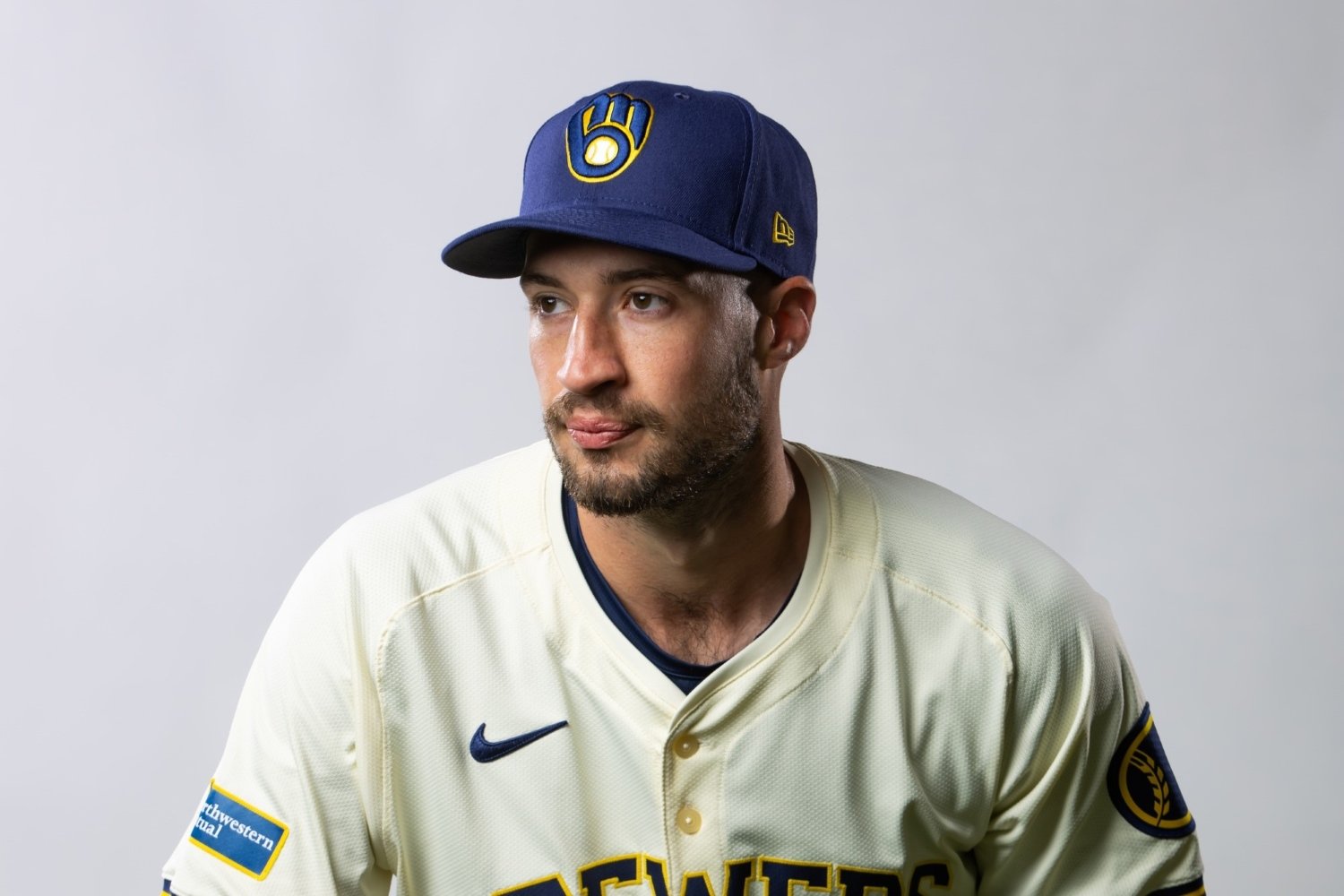 For Aaron Ashby, the goal is to get back into a competitive setting and ramp up quickly, to allow himself to compete for a place at the back end of the Brewers' starting rotation. Monday's outing provided an important mile marker in that journey. "It was good to get out there for two innings and just pitch," Ashby said Tuesday, in the Brewers' clubhouse at American Family Fields of Phoenix. "Everything's coming back how we expected it to, and all the strikes were there, so it felt good." Ashby did throw over the winter, including getting up and down to simulate a multi-inning outing, but backed off earlier in camp as part of the team's preparation for the season. "I had done it in a bullpen before we got here, so I had built up that pitch count, and then we come in here, de-load, and build back up with more intensity," he said. Manager Pat Murphy noted the difficult balance guys have to strike when they're in a position like Ashby's (or that of Janson Junk, who will start for the Brewers in Cactus League action Tuesday in Tempe), needing to prove themselves fast but hold up over the months ahead. "They train so hard, they get to spring, and then they get to the season, and either they don't have it left, or..." Murphy turned his hands to the sky. Enough said. It's a fine line to walk, in an era of careful management of workloads but increasing rates of injury league-wide. "I think we're close. A lot of the shapes are there," Ashby said, as he gets back up to speed. "So it's just about making everything more consistent." Ashby's specific approach is an interesting one, reliant in part on his unusual release point and in part on his sheer stuff. He uses sinkers and sliders most of the time, despite being a lefty hurler who knows he will face many right-handed batters. While much of the league has leaned into an approach whereby sinkers are thrown more up in the zone, Ashby envisions sticking to the low, then lower approach he employed at his best in 2022. "The main goal [of the sinker] is to induce early contact that's on the ground," said the southpaw. "That might happen up in the zone every once in a while, but to change eye levels, if we need to do that we'll go just straight four-seam." That resistance to an evolving league consensus extends to his preference for the harder, more horizontal breaking ball, rather than the curve when facing opposite-handed batters. Monday's game found him working on setting hitters up with the sinker and a ball-to-strike backdoor slider, then striving to put them away with the strike-to-ball, backfoot version. "I've always thrown sliders to right-handers," Ashby said. "It's just something I've always been comfortable with. It does have to be located correctly, but the visual of it has never bothered me." Jacob Misiorowski is Keeping Things Simple Pitching opposite Ashby in Monday's exercises, Misiorowski makes an especially neat contrast to his teammate. Ashby is the two-seam lefty, outgoing and quick-talking, more comfortable in the clubhouse than his roster status would lead you to expect. Misiorowski, the younger, bigger, flamethrowing righthander, is friendly and open but laconic. His approach to the work Monday was similarly understated. "No," said Misiorowski, when asked if he was working on anything new to attack advanced left-handed batters. "Same old, same old. Throw the fastball, throw the slider. Nothing changing." Misiorowski, too, went through a short de-load early in camp, but feels ramped up to "pretty close" to full speed. He's not yet throwing 102 miles per hour, as he occasionally did last summer, but expects to find "one or two more ticks" before the end of camp. He also felt good about the progress of his curveball and changeup, but it's clear in his actions and in his words that he's thinking the way a hurler with his raw stuff should: fastball, slider. Fastball, slider. Everything about Misiorowski seems well-suited to the bullpen. He doesn't yet have the surface-level mean streak a relief ace might traditionally have, but there's an almost sheepish confidence there that works just as well. if the Brewers end up having a need for him at the big-league level in 2024, he says he's ready to step into that role. With the two pitches that dominate his arsenal and overwhelm opposing hitters, that seems like a sound assessment.
 -
The Milwaukee Brewers have a new-look coaching staff for 2024, helmed by a man who has been part of the staff for almost a decade. A lot of the names and all of the objectives are familiar, but the man in charge has some new ideas about how to achieve those shared goals. Image courtesy of © Joe Camporeale-USA TODAY Sports Pat Murphy has climbed a 35-year ladder to this summit. He coached college baseball for two decades, spent another fistful of years managing in the minor leagues with the Padres, and then assumed the role of bench coach to Craig Counsell in 2016. Counsell actually played for Murphy at Notre Dame; Charlie Greene nearly did so. There's kismet all over Murphy's promotion, and Murphy's approach to his new job shows the creativity that got him here and a self-effacing bent toward collaboration. Ask Murphy about almost any aspect of the team, and he mentions two different coaches who are playing a role in it. Greene, promoted to a big-league coaching staff for the first time, is nominally the bullpen coach, but that's an old-fashioned, rigid name for what will clearly be a novel and flexible role. "We're not that divided, that one guy can't affect that," Murphy said, when asked whether Greene can still be a boon to the team's catchers from his new position. "He knows all these guys, he knows their personalities, he knows their backgrounds. He's such a valuable resource, and he knows the game. So he'll help in all areas. And [newly promoted assistant pitching coach] Jim Henderson is still gonna be heavily involved in the bullpen, so we're just adding a great resource." Murphy doesn't live by buzzwords, so don't expect him to repeat 'collaboration' six times a day or anything, but he's clearly built and organized a staff he expects to work together in overlapping, interlocking, non-territorial ways. For as long as there have been designated coaches for MLB teams, there have been professional jealousies and mistrustful relationships between some should-be colleagues, but Murphy's approach seems focused on pulverizing those instincts. His vision for the role of associate manager Rickie Weeks (a job title that defies convention, in itself) illustrates the point. "He's been wonderful. i say this over and over, but he impacts people. He's got a great presence," Murphy said Monday, when asked about that very subject. "He's kind of going to be in charge of our whole offensive production. Instead of putting all the onus on the hitting guys, we're going to have a team of people, kind of like what they do on football staffs. We're going to have an offensive team and Rickie's going to head that production--deliver the message, if you will." Weeks, then, clearly will play a huge role in the team's hitting gameplans, the same way many hitting coaches do. Rather than stepping on the toes of hitting coaches Connor Dawson and Ozzie Timmons, though, he's meant to empower them and work alongside them. Though Murphy doesn't want to call him one, it seems like Weeks will be a bit of an offensive coordinator for the team--or a run production coordinator, if you like, to neatly counterbalance the title of run prevention coordinator Walker McKinven. "Well, Walker's the receiving guru. He's taught himself, and he's had teachers like Charlie, Nestor [Corredor], and catching guys around the league who've tutored Walker on what they look for, and he's dove into it," Murphy said of McKinven, who will continue to work closely with catchers this year in collaboration with both Greene and Corredor. "This guy's an underrated part of our staff. It's amazing the amount he does for this team. Walker's a genius of getting those receiving numbers up." McKinven was a pitcher in his playing days, so he almost automatically stands astride the frequent divide between position players and pitchers. He's one of several people in the clubhouse whom Murphy envisions knitting the roster together. "Jason Lane presented today. He was unbelievable," Murphy said of Monday morning's team clubhouse meeting. "I wanted to let our guys know who our staff is. A lot of these staff members just get pushed aside; nobody knows them. 'Oh, that's that guy.' There are some great stories in the room, so let's start with that." Stories matter a great deal to Murphy, an inveterate storyteller and relational thinker. So, too, does ensuring that every member of his deep and intermeshed coaching staff is known to the rest of the room, not just by name or sight but by story and personality. These are the promises most teams make in most spring trainings. There's no guarantee that it will work for Murphy's Crew. In a unique and very frank way, though, the 65-year-old rookie skipper has laid out the priorities and structure of a new-age coaching group, and if they fail, it won't be for lack of having tried something new and trusting. View full article
- 7 replies
-
- 1
-

-
- pat murphy
- jason lane
- (and 4 more)
-
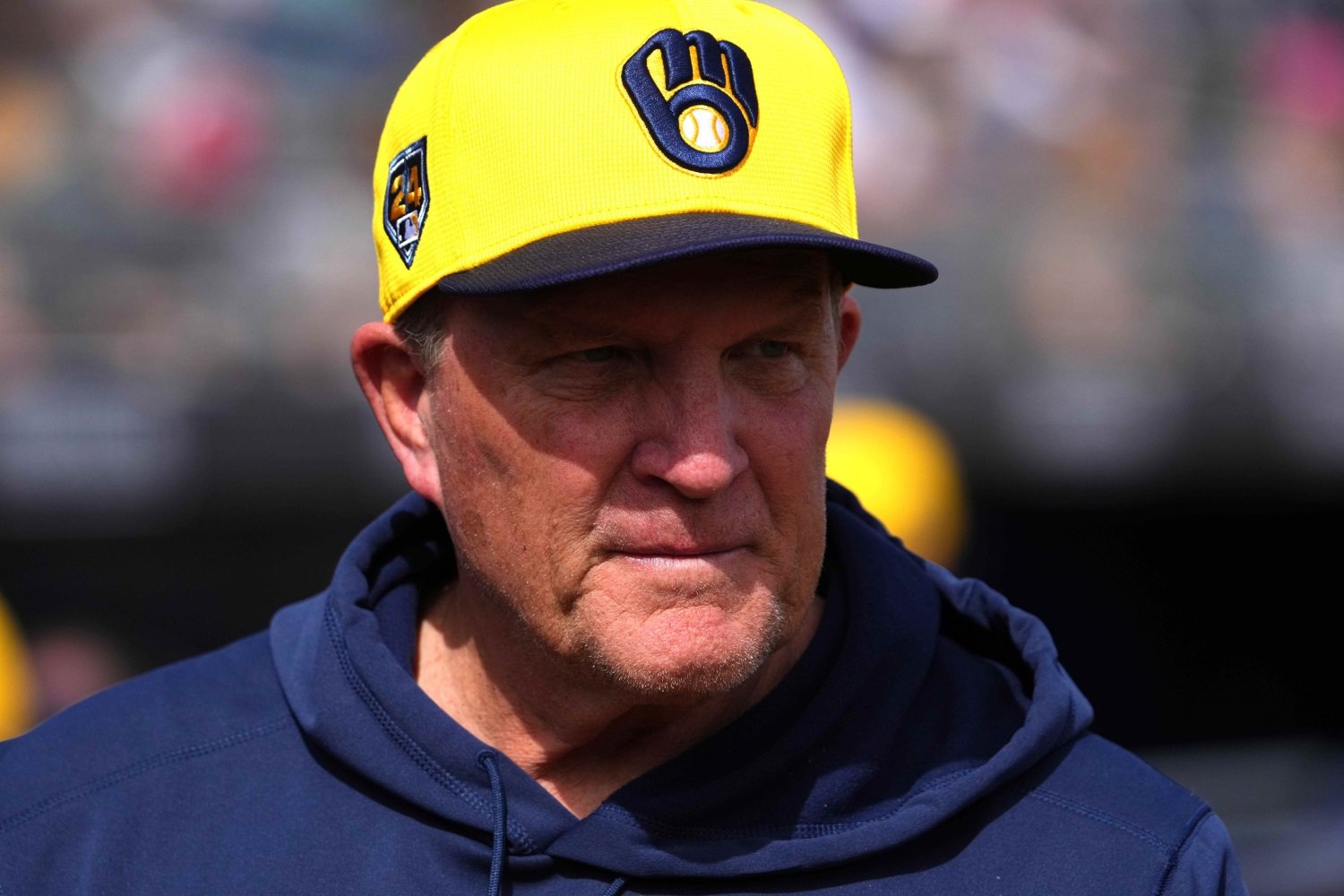 Pat Murphy has climbed a 35-year ladder to this summit. He coached college baseball for two decades, spent another fistful of years managing in the minor leagues with the Padres, and then assumed the role of bench coach to Craig Counsell in 2016. Counsell actually played for Murphy at Notre Dame; Charlie Greene nearly did so. There's kismet all over Murphy's promotion, and Murphy's approach to his new job shows the creativity that got him here and a self-effacing bent toward collaboration. Ask Murphy about almost any aspect of the team, and he mentions two different coaches who are playing a role in it. Greene, promoted to a big-league coaching staff for the first time, is nominally the bullpen coach, but that's an old-fashioned, rigid name for what will clearly be a novel and flexible role. "We're not that divided, that one guy can't affect that," Murphy said, when asked whether Greene can still be a boon to the team's catchers from his new position. "He knows all these guys, he knows their personalities, he knows their backgrounds. He's such a valuable resource, and he knows the game. So he'll help in all areas. And [newly promoted assistant pitching coach] Jim Henderson is still gonna be heavily involved in the bullpen, so we're just adding a great resource." Murphy doesn't live by buzzwords, so don't expect him to repeat 'collaboration' six times a day or anything, but he's clearly built and organized a staff he expects to work together in overlapping, interlocking, non-territorial ways. For as long as there have been designated coaches for MLB teams, there have been professional jealousies and mistrustful relationships between some should-be colleagues, but Murphy's approach seems focused on pulverizing those instincts. His vision for the role of associate manager Rickie Weeks (a job title that defies convention, in itself) illustrates the point. "He's been wonderful. i say this over and over, but he impacts people. He's got a great presence," Murphy said Monday, when asked about that very subject. "He's kind of going to be in charge of our whole offensive production. Instead of putting all the onus on the hitting guys, we're going to have a team of people, kind of like what they do on football staffs. We're going to have an offensive team and Rickie's going to head that production--deliver the message, if you will." Weeks, then, clearly will play a huge role in the team's hitting gameplans, the same way many hitting coaches do. Rather than stepping on the toes of hitting coaches Connor Dawson and Ozzie Timmons, though, he's meant to empower them and work alongside them. Though Murphy doesn't want to call him one, it seems like Weeks will be a bit of an offensive coordinator for the team--or a run production coordinator, if you like, to neatly counterbalance the title of run prevention coordinator Walker McKinven. "Well, Walker's the receiving guru. He's taught himself, and he's had teachers like Charlie, Nestor [Corredor], and catching guys around the league who've tutored Walker on what they look for, and he's dove into it," Murphy said of McKinven, who will continue to work closely with catchers this year in collaboration with both Greene and Corredor. "This guy's an underrated part of our staff. It's amazing the amount he does for this team. Walker's a genius of getting those receiving numbers up." McKinven was a pitcher in his playing days, so he almost automatically stands astride the frequent divide between position players and pitchers. He's one of several people in the clubhouse whom Murphy envisions knitting the roster together. "Jason Lane presented today. He was unbelievable," Murphy said of Monday morning's team clubhouse meeting. "I wanted to let our guys know who our staff is. A lot of these staff members just get pushed aside; nobody knows them. 'Oh, that's that guy.' There are some great stories in the room, so let's start with that." Stories matter a great deal to Murphy, an inveterate storyteller and relational thinker. So, too, does ensuring that every member of his deep and intermeshed coaching staff is known to the rest of the room, not just by name or sight but by story and personality. These are the promises most teams make in most spring trainings. There's no guarantee that it will work for Murphy's Crew. In a unique and very frank way, though, the 65-year-old rookie skipper has laid out the priorities and structure of a new-age coaching group, and if they fail, it won't be for lack of having tried something new and trusting.
- 7 comments
-
- 4
-
-

-
- pat murphy
- jason lane
- (and 4 more)
-
The Milwaukee Brewers took on the Cincinnati Reds at American Family Fields of Phoenix Monday afternoon, in their third game of Cactus League play. Here are a few notes from the day's action in Maryvale. Full Panic, Every Day Though he wasn't called upon to perform or otherwise put himself out there in Monday morning's team meeting, Abner Uribe is going to be in the spotlight whenever Murphy can manage it--whether the hurler is comfortable with the attention or not. "Abner's gonna be on every assignment in there," Murphy said. "He's involved in it. So, hes panicked. We've gotta prepare him for that role, right? Full panic every day." That's the only way, in spring training, for the new skipper to reliably prepare his least experienced relief ace for the regular season, and the pressure and intensity of each contest. When Uribe entered in the top of the third inning of a scoreless game Monday, the cool Arizona day and small, languid Maryvale crowd didn't exactly force an adrenaline spike. Uribe packed his own panic, instead, giving up two runs on three hits (though only one was hit especially hard) in an inning of work. He didn't record a strikeout. Four-plus weeks out from Opening Day, though, Uribe has plenty of time to learn the art of controlled panic. Murphy clearly has an action plan to ensure that that happens on schedule. Elvis Peguero and the Gloveside Sinker Unlike Uribe, the journeyman Peguero gave the Brewers a scoreless frame Monday, striking out two and allowing just one baserunner (via walk). A couple of sinkers that got down and in on left-handed Reds hitter Will Benson were of special interest. Typically, pitchers in the modern game are coached to pitch according to the natural movement patterns of their offerings. Cutters and sliders are usually thrown to the glove side of the plate (away from a same-handed batter, in on an opposite-handed one), whereas sinkers and changeups usually work to the arm side. Peguero's success with a couple of gloveside sinkers was intriguing, because it jibes with what happened when he pitched there with that offering last season. Over half the inside sinkers Peguero threw against lefty batters last season missed the zone for a ball. When he hit his spot with the pitch, though, he got tremendous results: no hits, very little hard contact, and a good number of called strikes. Given Peguero's repertoire (exclusively sinkers and sliders, in roughly equal mixture), he's an unlikely arm for the job of getting out left-handed batters. If he can start locating that sinker on the inner edge against them, though, he could force them to cover the whole plate and set up his breaking ball for better results. It's an important ingredient in the stew, if Peguero wants to play a big role in the Crew's excellent bullpen in 2024. A Sal Frelick at Third Base Update There's no reason not to update you on the looks we're getting at Frelick's play at the hot corner on a daily basis, at least when he's slotted in there. The updates might get repetitive in a hurry, though, because he looks... fine. He looks normal and solid at the hot corner. The ball only found him once Monday, but he deftly picked a ball to his left and quickly fed second baseman Andruw Monasterio to start a 5-4-3 double play. Frelick's pre-pitch actions are a little less athletic and a little less seasoned than those of an old hand at the spot, and he looked slightly awkward on a relay play later in the game, but it wasn't his fault and there was no base or opportunity to record an out lost in the process. More tests loom, but Frelick moves well enough and looks comfortable enough to play the infield often in big-league games, even when they count. That count be a transformative development for the Brewers. View full article
- 6 replies
-
- 4
-
-
- elvis peguero
- abner uribe
- (and 4 more)
-
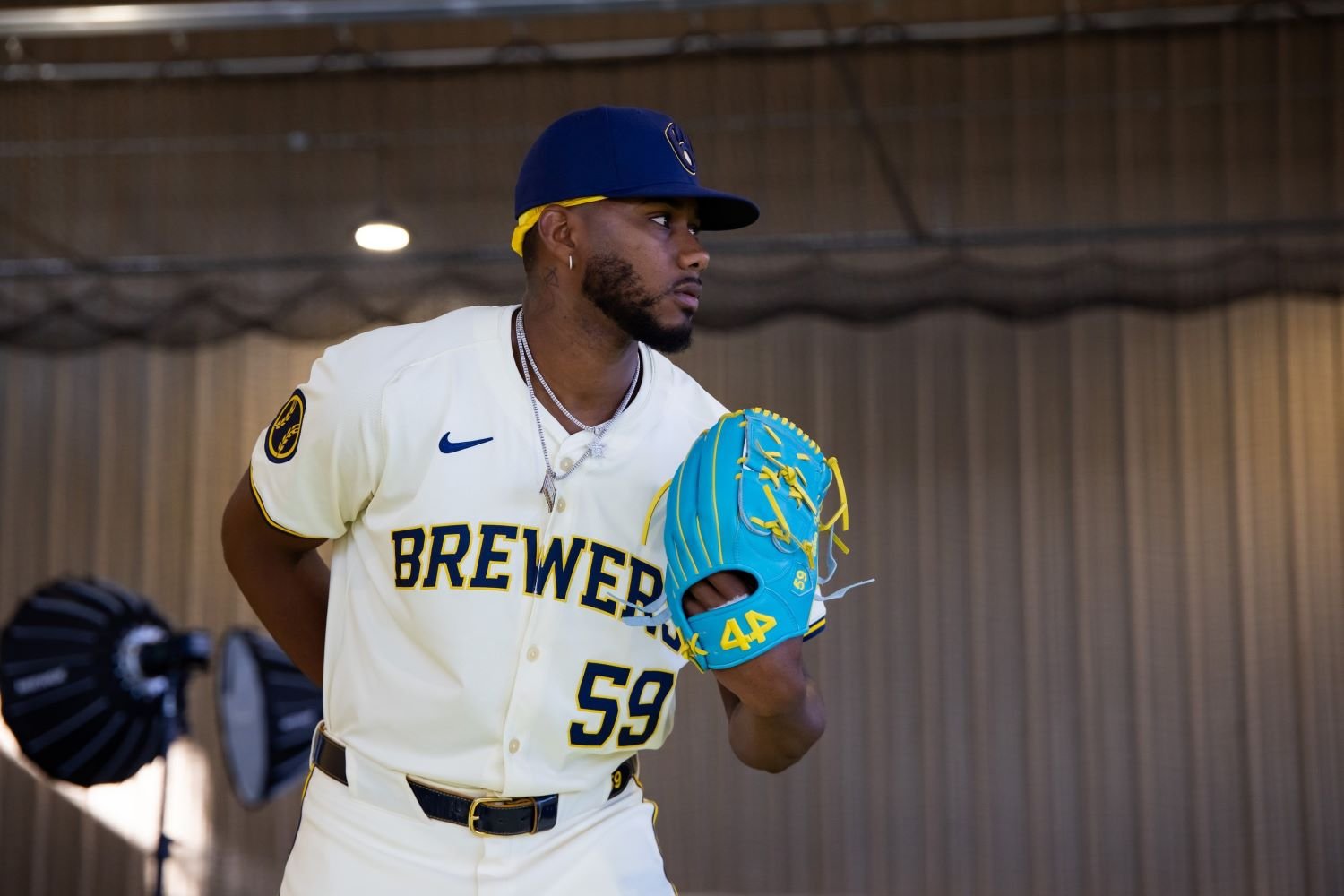 The biggest headlines of the day might have been made before the official game was even played, as top arms Aaron Ashby and Jacob Misiorowski threw simulated games on the back fields. Ashby struggled to get chases against the backfoot curveball that remains a crucial part of his arsenal against right-handed batters, but did show some feel for a strike-to-ball version of his slider. Most importantly, his stuff looked lively and induced contact mostly on the ground. "Strikes," manager Pat Murphy said, when asked what he wanted to see from Ashby. "Hopefully the stuff will continue to get better, and be around the zone." When Ashby did pitch, Murphy set up just to the third-base side of home plate, behind the chain-link backstop: he was much more concerned with seeing his young lefty compete and pitch with intention than in zeroing in on mechanical cues. Those boxes will be checked another day. Monday was just a step along the path back to the team's starting rotation. As expected, Misiorowski showed an explosive fastball, but command eluded him in his brief outing. He's still finding his way to mechanical consistency on the mound, and a few deliveries ended with him falling off the mound in fairly unbalanced fashion, but he continued to work on his secondary offerings and impressed spectators with the power of his arm. Full Panic, Every Day Though he wasn't called upon to perform or otherwise put himself out there in Monday morning's team meeting, Abner Uribe is going to be in the spotlight whenever Murphy can manage it--whether the hurler is comfortable with the attention or not. "Abner's gonna be on every assignment in there," Murphy said. "He's involved in it. So, hes panicked. We've gotta prepare him for that role, right? Full panic every day." That's the only way, in spring training, for the new skipper to reliably prepare his least experienced relief ace for the regular season, and the pressure and intensity of each contest. When Uribe entered in the top of the third inning of a scoreless game Monday, the cool Arizona day and small, languid Maryvale crowd didn't exactly force an adrenaline spike. Uribe packed his own panic, instead, giving up two runs on three hits (though only one was hit especially hard) in an inning of work. He didn't record a strikeout. Four-plus weeks out from Opening Day, though, Uribe has plenty of time to learn the art of controlled panic. Murphy clearly has an action plan to ensure that that happens on schedule. Elvis Peguero and the Gloveside Sinker Unlike Uribe, the journeyman Peguero gave the Brewers a scoreless frame Monday, striking out two and allowing just one baserunner (via walk). A couple of sinkers that got down and in on left-handed Reds hitter Will Benson were of special interest. Typically, pitchers in the modern game are coached to pitch according to the natural movement patterns of their offerings. Cutters and sliders are usually thrown to the glove side of the plate (away from a same-handed batter, in on an opposite-handed one), whereas sinkers and changeups usually work to the arm side. Peguero's success with a couple of gloveside sinkers was intriguing, because it jibes with what happened when he pitched there with that offering last season. Over half the inside sinkers Peguero threw against lefty batters last season missed the zone for a ball. When he hit his spot with the pitch, though, he got tremendous results: no hits, very little hard contact, and a good number of called strikes. Given Peguero's repertoire (exclusively sinkers and sliders, in roughly equal mixture), he's an unlikely arm for the job of getting out left-handed batters. If he can start locating that sinker on the inner edge against them, though, he could force them to cover the whole plate and set up his breaking ball for better results. It's an important ingredient in the stew, if Peguero wants to play a big role in the Crew's excellent bullpen in 2024. A Sal Frelick at Third Base Update There's no reason not to update you on the looks we're getting at Frelick's play at the hot corner on a daily basis, at least when he's slotted in there. The updates might get repetitive in a hurry, though, because he looks... fine. He looks normal and solid at the hot corner. The ball only found him once Monday, but he deftly picked a ball to his left and quickly fed second baseman Andruw Monasterio to start a 5-4-3 double play. Frelick's pre-pitch actions are a little less athletic and a little less seasoned than those of an old hand at the spot, and he looked slightly awkward on a relay play later in the game, but it wasn't his fault and there was no base or opportunity to record an out lost in the process. More tests loom, but Frelick moves well enough and looks comfortable enough to play the infield often in big-league games, even when they count. That count be a transformative development for the Brewers.
- 6 comments
-
- 7
-
-
- elvis peguero
- abner uribe
- (and 4 more)
-
I know this clashes somewhat with what our beloved newcomer @Jack Stern wrote for this morning, but I actually think there's been a change--maybe more than one change--in the direction the organization has focused itself on taking this winter. There's definitely an element of "build for the long term even as you win now," but I think the way they've balanced those two considerations has shifted at least once this winter. Something I'm keeping my ear to the ground about while I'm here. I also think that one part of their organizational approach is a belief that they can make a move they like and then unwind it or change tack if needed. A lot of teams try to define a direction and then let that strategy become a prison. This one believes in seizing the moment and making necessary alterations later.
- 5 replies
-
- 2
-
-
-
- jakob junis
- hoby milner
- (and 1 more)
-
Throughout this week (and again in mid-March), Brewer Fanatic will be spending some time embedded with the Milwaukee Brewers at spring training in Maryvale, Ariz.. Here are a couple of early notes from the desert. Image courtesy of © Gary A. Vasquez-USA TODAY Sports Last season, Hoby Milner found a whole new gear for the Brewers. After a successful 2022, he became a left-handed relief ace in 2023, mixing the high ground ball rates he'd delivered in his first year with the Crew with a superior strikeout rate. One key to that transformation was the tactical deployment of both his four-seam fastball and his sinker. He'd come to the Crew with the four-seamer, largely swapped it out for the sinker in his first campaign with them, and then implemented both as he established himself in full with the club. For some pitchers, throwing two different fastballs can be a hindrance to the command of one or the other (or of some other offering), but Milner said it was fairly easy for him. "It's just a different grip," Milner said Monday morning in the Brewers' clubhouse. "I don't do anything else differently, it's not a totally different feel, so once we realized we wanted to get both those ground balls and the strikeouts, it wasn't too hard to do that." Milner also significantly lowered his release point, which made it tougher than ever for opposing hitters to pick up the ball and attack him, but he said that wasn't part of a major overhaul, either. "I actually wasn't even aware [of the superior extension he got through release]," Milner said. "I would guess it was just the result of a minor mechanical adjustment, but it wasn't anything conscious, anything big I did differently. It just kind of worked out." Going into 2024, then, the Brewers hope Milner continues not to do anything especially differently. That he belongs to the class of pitchers who can throw both fastballs without their interfering with one another should make that easier, as does his unique but finely-tuned delivery. Learning the Science of It Jakob Junis occasionally threw the sinker during his time with the Kansas City Royals, but never found consistency with the pitch. The team wasn't up to the challenge of getting him to produce the desired movement on a regular basis. "I would throw it sometimes in Kansas City," Junis recalled. "And sometimes it would do what I wanted, but sometimes it would cut, or just kind of get away on me." His career got a shot in the arm when he joined the San Francisco Giants, where then-pitching coordinator Brian Bannister had a more systematic approach waiting. "They were able to explain to me and show me the science of it," Junis said. "So I just got a lot more comfortable throwing it right away, and stuck with it." Another adjustment came much later, near the end of 2023, but it might be equally important as the swingman looks to solidify his place in the Milwaukee starting rotation for the balance of 2024. In August and September, he increased his changeup usage, and the pitch also got a bit firmer, without losing movement differential from his fastball. "I think it was just about being really confident in it," he said. "I didn't make a grip change or anything, I just found a feel for it that worked and that led to a lot more conviction on it. I ran into a lot of lefty-heavy lineups there, too, which helps. You throw it more, you gain comfort." With the Giants, Junis didn't always have to worry about facing many lefties, or facing very many batters, period. He did face at least 20 batters in 15 of his 23 appearances (17 of them starts) in 2022, but in 2023, it was just four starts out of 40 appearances, and he never faced more than 18 batters in an outing. He was sometimes acting as a quasi-starter, behind an opener in San Francisco's creative pitching plan, but he never worked deep into a game, by any definition. That figures to change this year, so the changeup is an especially important variable in forecasting his season with the Brewers. A good feel for a pitch like that doesn't always linger through the long winter, but Junis said the Brewers' pitching development group has him feeling confident for 2024. "It's definitely similar," he said, comparing the Crew's infrastructure to the one in San Francisco, where he got such clarity about his own arsenal and had an exceptional 21.0 K-BB% (26.2% strikeouts, 5.2% walks) last year. "I feel really comfortable with what we're trying to do." View full article
- 5 replies
-
- 2
-
-
- jakob junis
- hoby milner
- (and 1 more)
-
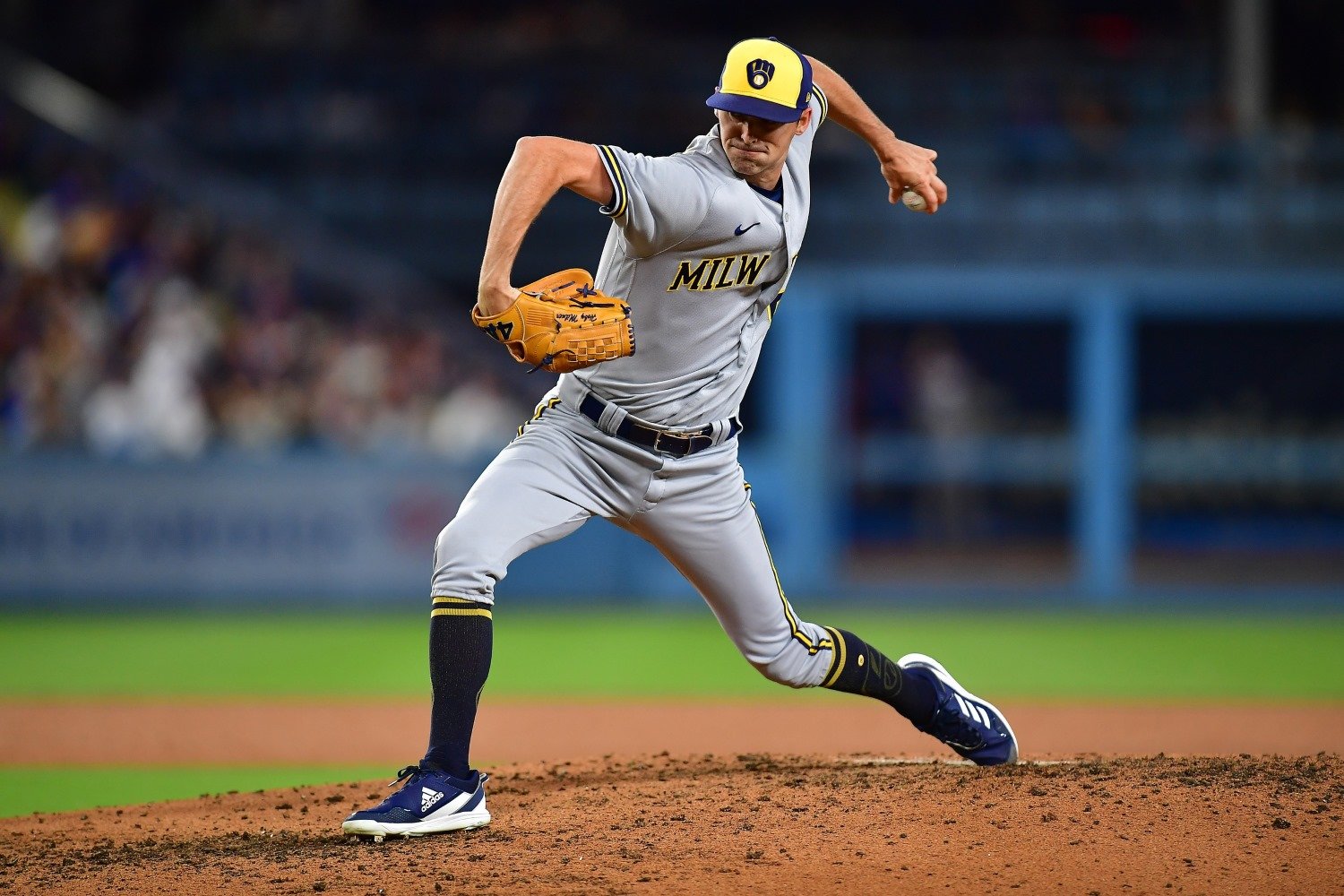 Last season, Hoby Milner found a whole new gear for the Brewers. After a successful 2022, he became a left-handed relief ace in 2023, mixing the high ground ball rates he'd delivered in his first year with the Crew with a superior strikeout rate. One key to that transformation was the tactical deployment of both his four-seam fastball and his sinker. He'd come to the Crew with the four-seamer, largely swapped it out for the sinker in his first campaign with them, and then implemented both as he established himself in full with the club. For some pitchers, throwing two different fastballs can be a hindrance to the command of one or the other (or of some other offering), but Milner said it was fairly easy for him. "It's just a different grip," Milner said Monday morning in the Brewers' clubhouse. "I don't do anything else differently, it's not a totally different feel, so once we realized we wanted to get both those ground balls and the strikeouts, it wasn't too hard to do that." Milner also significantly lowered his release point, which made it tougher than ever for opposing hitters to pick up the ball and attack him, but he said that wasn't part of a major overhaul, either. "I actually wasn't even aware [of the superior extension he got through release]," Milner said. "I would guess it was just the result of a minor mechanical adjustment, but it wasn't anything conscious, anything big I did differently. It just kind of worked out." Going into 2024, then, the Brewers hope Milner continues not to do anything especially differently. That he belongs to the class of pitchers who can throw both fastballs without their interfering with one another should make that easier, as does his unique but finely-tuned delivery. Learning the Science of It Jakob Junis occasionally threw the sinker during his time with the Kansas City Royals, but never found consistency with the pitch. The team wasn't up to the challenge of getting him to produce the desired movement on a regular basis. "I would throw it sometimes in Kansas City," Junis recalled. "And sometimes it would do what I wanted, but sometimes it would cut, or just kind of get away on me." His career got a shot in the arm when he joined the San Francisco Giants, where then-pitching coordinator Brian Bannister had a more systematic approach waiting. "They were able to explain to me and show me the science of it," Junis said. "So I just got a lot more comfortable throwing it right away, and stuck with it." Another adjustment came much later, near the end of 2023, but it might be equally important as the swingman looks to solidify his place in the Milwaukee starting rotation for the balance of 2024. In August and September, he increased his changeup usage, and the pitch also got a bit firmer, without losing movement differential from his fastball. "I think it was just about being really confident in it," he said. "I didn't make a grip change or anything, I just found a feel for it that worked and that led to a lot more conviction on it. I ran into a lot of lefty-heavy lineups there, too, which helps. You throw it more, you gain comfort." With the Giants, Junis didn't always have to worry about facing many lefties, or facing very many batters, period. He did face at least 20 batters in 15 of his 23 appearances (17 of them starts) in 2022, but in 2023, it was just four starts out of 40 appearances, and he never faced more than 18 batters in an outing. He was sometimes acting as a quasi-starter, behind an opener in San Francisco's creative pitching plan, but he never worked deep into a game, by any definition. That figures to change this year, so the changeup is an especially important variable in forecasting his season with the Brewers. A good feel for a pitch like that doesn't always linger through the long winter, but Junis said the Brewers' pitching development group has him feeling confident for 2024. "It's definitely similar," he said, comparing the Crew's infrastructure to the one in San Francisco, where he got such clarity about his own arsenal and had an exceptional 21.0 K-BB% (26.2% strikeouts, 5.2% walks) last year. "I feel really comfortable with what we're trying to do."
- 5 comments
-
- 4
-
-
-
- jakob junis
- hoby milner
- (and 1 more)
-
On Monday, Milwaukee Brewers fans got some of the most welcome news of the winter, as the team re-signed their erstwhile ace to a two-year deal while he rehabs from shoulder surgery. On Wednesday, details of the contract emerged. Image courtesy of © Michael McLoone-USA TODAY Sports According to the AP, Brandon Woodruff will get at least $17.5 million on the two-year deal to which he and the Brewers agreed Monday, and which was finalized Wednesday. The contract is structured extremely creatively, though, with Woodruff getting just $2.5 million in 2024 and $5 million in a (presumably healthier) 2025, before a $10-million buyout on a $20-million mutual option for 2026 rounds out the deal and gives it most of its financial heft. There are a couple of striking features here. Firstly, it doesn't represent much of an investment in Woodruff, in the short term. I would have expected him to get at least this much over the life of a two-year deal, even without pushing out the bulk of the payments to a third season that might not find him back with the Crew. Tyler Mahle, a lesser hurler coming off an admittedly less daunting injury (Tommy John surgery) that figures to sideline him for most or all of 2024, signed a two-year deal with the Rangers for $22 million earlier this offseason. Woodruff told reporters he had multiple offers, and that his return to the Brewers represented something of a last-minute change of direction. It's not hard to imagine that he might have taken less money than he was offered elsewhere to return to Milwaukee, and it seems like kismet that player and team were able to finagle this reunion. Given that this deal came together almost perfectly simultaneously with the Brewers finalizing their deal with Gary Sánchez for $3 million (down from $7 million when the two sides first struck an agreement, albeit with incentives that could get him back to his original guaranteed salary), we have to wonder whether the team was only able to work things out with Woodruff because of that reduction. Kudos to Matt Arnold, if that be the case, for nimbly making such a feel-good move under exigent circumstances. Sánchez is an excellent fit for the Brewers' roster, and Woodruff is an equally valuable one for their clubhouse. The $10 million feels like a big balloon payment after the low salaries for the two seasons actually covered by the deal, given that a mutual option is almost certain not to be picked up by both sides in a case like this, but it also gives both sides some motivation to find common ground on a new deal if and when Woodruff demonstrates an ability to come back from his career-threatening shoulder capsule surgery. If nothing else, this structure is almost tantamount to a deferral deal, akin to the ones that got so many fans up in arms on much richer contracts earlier this winter. The Brewers are operating on a tight budget this winter, but they've still found niches within which to make several intriguing moves, and filling whatever extra space opened up due to Sánchez's physical concerns with Woodruff is a wonderful way to make lemonade out of lemons. We also can't ignore the upside this deal creates for 2025. If Woodruff bounces back from this injury to reestablish himself as anything close to his former self, his salary for that season is not just a bargain, but a steal. That, again, is what's shocking about the overall deal. He could easily earn more than its total value in the one guaranteed season the deal covers. In fact, he could easily earn 50 percent more than that, given the market for starting pitchers. If the league had much hope that he would be in a position to do that, he'd obviously have gotten much more than this. The fact that he was close to taking a deal with a different team indicates that, even if he took less to stay with the Crew, it wasn't much less, so we have to assume that the medical reports on him aren't great. This contract is a very low-cost bet on a very big potential reward, though, and given Woodruff's value to the organization as a fan favorite and as a person, it's a no-brainer. While Jackson Chourio's contract remains the best move the team has made this winter, this deal nestles neatly in behind it in the rankings. View full article
-
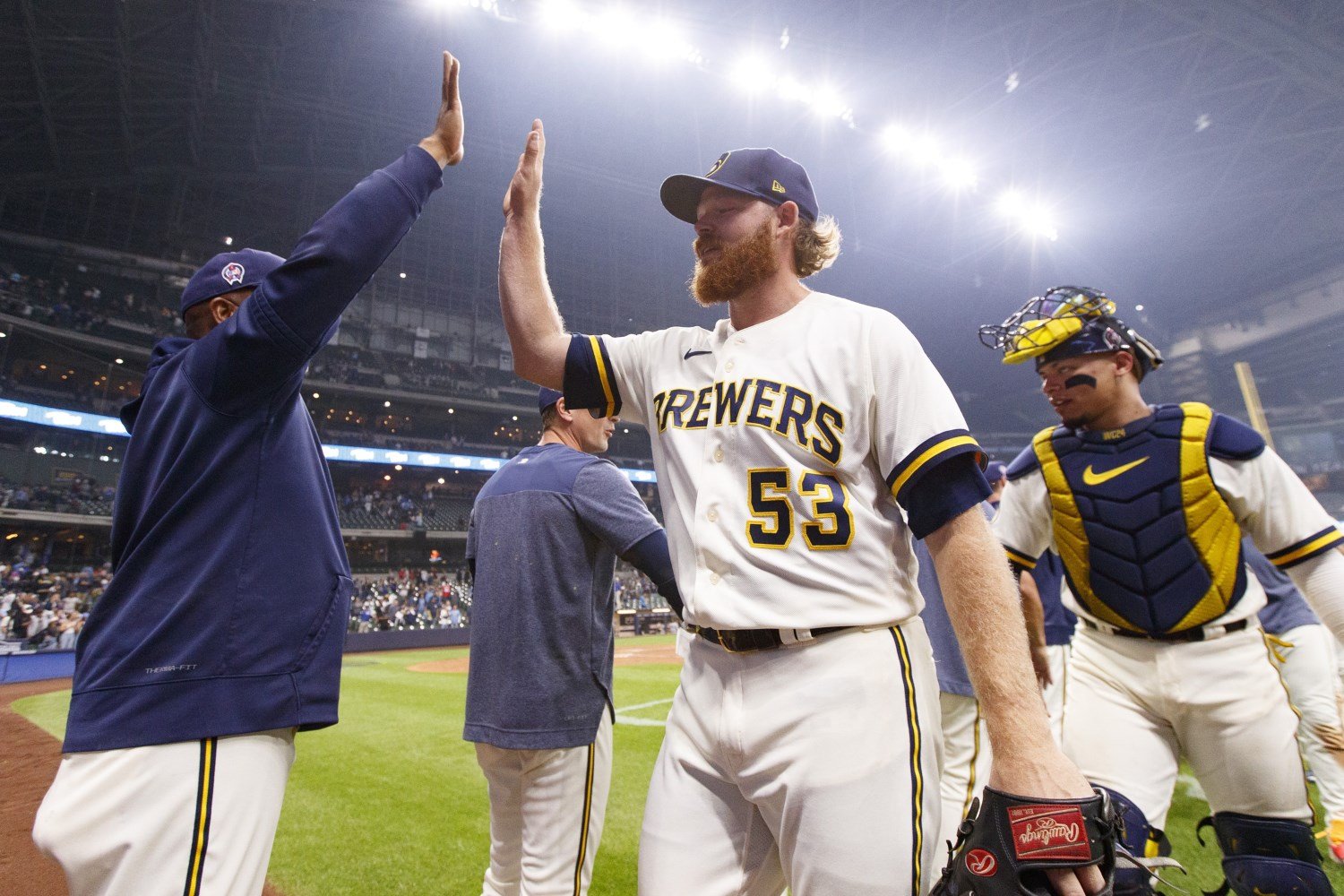 According to the AP, Brandon Woodruff will get at least $17.5 million on the two-year deal to which he and the Brewers agreed Monday, and which was finalized Wednesday. The contract is structured extremely creatively, though, with Woodruff getting just $2.5 million in 2024 and $5 million in a (presumably healthier) 2025, before a $10-million buyout on a $20-million mutual option for 2026 rounds out the deal and gives it most of its financial heft. There are a couple of striking features here. Firstly, it doesn't represent much of an investment in Woodruff, in the short term. I would have expected him to get at least this much over the life of a two-year deal, even without pushing out the bulk of the payments to a third season that might not find him back with the Crew. Tyler Mahle, a lesser hurler coming off an admittedly less daunting injury (Tommy John surgery) that figures to sideline him for most or all of 2024, signed a two-year deal with the Rangers for $22 million earlier this offseason. Woodruff told reporters he had multiple offers, and that his return to the Brewers represented something of a last-minute change of direction. It's not hard to imagine that he might have taken less money than he was offered elsewhere to return to Milwaukee, and it seems like kismet that player and team were able to finagle this reunion. Given that this deal came together almost perfectly simultaneously with the Brewers finalizing their deal with Gary Sánchez for $3 million (down from $7 million when the two sides first struck an agreement, albeit with incentives that could get him back to his original guaranteed salary), we have to wonder whether the team was only able to work things out with Woodruff because of that reduction. Kudos to Matt Arnold, if that be the case, for nimbly making such a feel-good move under exigent circumstances. Sánchez is an excellent fit for the Brewers' roster, and Woodruff is an equally valuable one for their clubhouse. The $10 million feels like a big balloon payment after the low salaries for the two seasons actually covered by the deal, given that a mutual option is almost certain not to be picked up by both sides in a case like this, but it also gives both sides some motivation to find common ground on a new deal if and when Woodruff demonstrates an ability to come back from his career-threatening shoulder capsule surgery. If nothing else, this structure is almost tantamount to a deferral deal, akin to the ones that got so many fans up in arms on much richer contracts earlier this winter. The Brewers are operating on a tight budget this winter, but they've still found niches within which to make several intriguing moves, and filling whatever extra space opened up due to Sánchez's physical concerns with Woodruff is a wonderful way to make lemonade out of lemons. We also can't ignore the upside this deal creates for 2025. If Woodruff bounces back from this injury to reestablish himself as anything close to his former self, his salary for that season is not just a bargain, but a steal. That, again, is what's shocking about the overall deal. He could easily earn more than its total value in the one guaranteed season the deal covers. In fact, he could easily earn 50 percent more than that, given the market for starting pitchers. If the league had much hope that he would be in a position to do that, he'd obviously have gotten much more than this. The fact that he was close to taking a deal with a different team indicates that, even if he took less to stay with the Crew, it wasn't much less, so we have to assume that the medical reports on him aren't great. This contract is a very low-cost bet on a very big potential reward, though, and given Woodruff's value to the organization as a fan favorite and as a person, it's a no-brainer. While Jackson Chourio's contract remains the best move the team has made this winter, this deal nestles neatly in behind it in the rankings.
 -
When we talk about plate discipline, we tend to do so in almost exclusively mental terms. This spring, though, a key Milwaukee Brewers contributor came to camp with an overhauled swing. That should invite us to think about the skill in physical terms, too. That's a simple swing. He's cut away the grandiloquent hand-talking, and the stride is down to a simple toe tap and slide. If Wiemer is likely to see time mostly against left-handed pitchers in 2024, then this kind of adjustment should make him much more effective against them. The clock of a big-league career can run much, much longer than the one that starts when a pitcher lifts his stride leg. At other times, though, it can seem to run just as fast. Things sped up on Wiemer in 2023. The changes he's made entering spring training are the kind that can stop the countdown clock, at least for a bit--because they let him win the race against that much, much shorter one. View full article
-
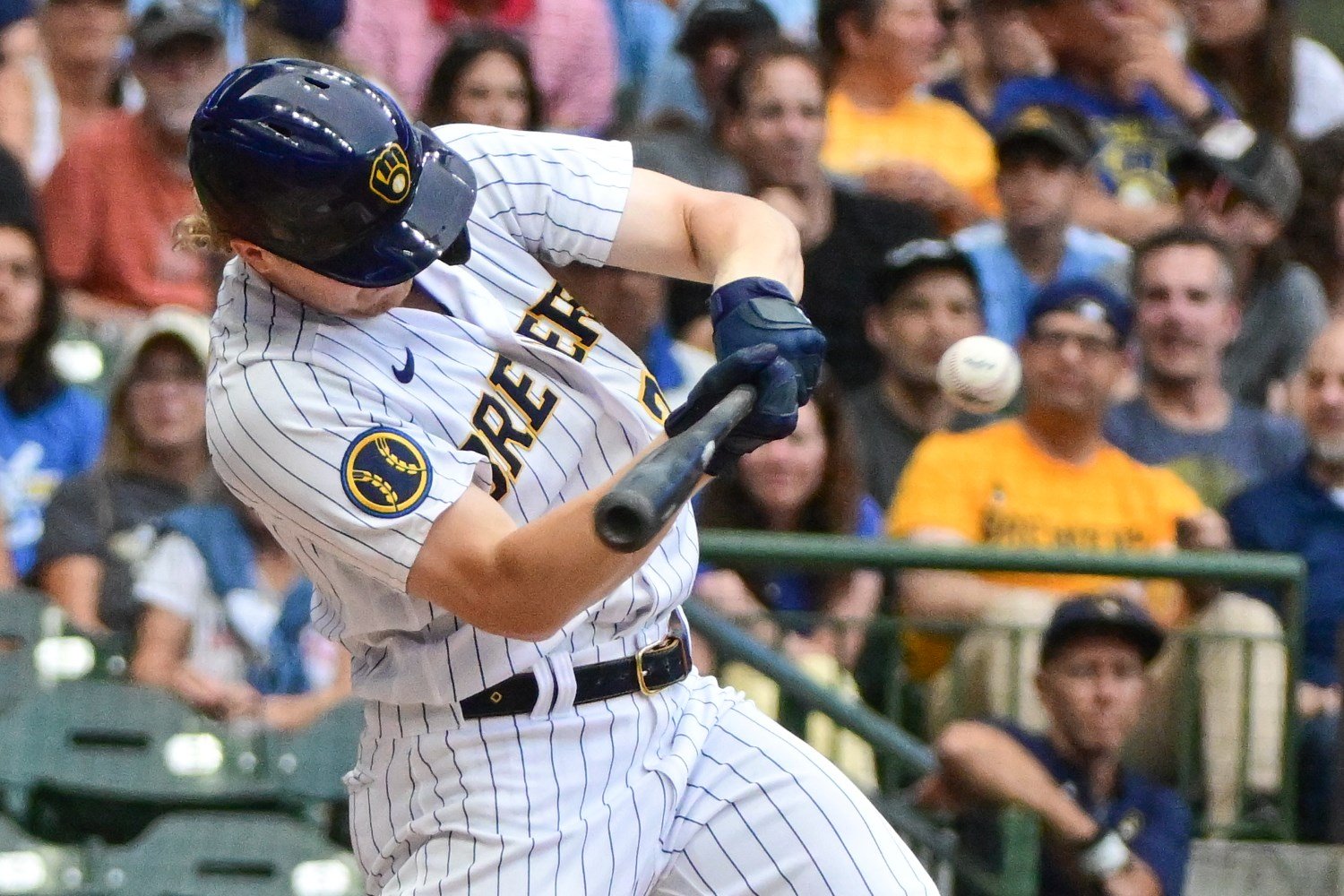 In one way of viewing things, the challenge of hitting is a math problem. You're working against a clock, and that clock is only going to run a second or two, from the start of an opposing pitcher's windup to the pop of the catcher's mitt (if things get that far). You have to get a swing started on time, and deliver that bat barrel to the baseball sometime before the shortest clock in sports runs out. Of course, the problem is less in getting that swing done on time than in knowing when to cut it loose, and when to withhold it. That's why pitching machines don't strike out pro hitters. A hitter has to see the ball right out of the hand, even as they get some kind of movement going, but they also have to be under sufficient control to stop if the pitch isn't what they thought it was, or if it's going to be so far outside their hitting zone that they can't do anything with it. Last season, Brewers rookie outfielder Joey Wiemer didn't leave himself enough time to make good decisions. He undertook a complicated swing, with a multi-phase load and several moving parts. It included a leg kick and a toe tap, as part of (basically) a three-part stride. He also brought his hands way down low, after starting with them up high, and all those big moves carried his body in a couple of different directions. In order to get through all that and beat that clock, Wiemer wasn't deciding whether or not to swing when he recognized a pitch and knew what he wanted to do with it, but when he saw it at all. Here's him chasing a slider in the dirt, from a left-handed pitcher, no less. cThrS2dfWGw0TUFRPT1fVkFsVFZBWlJCRk1BQ0ZGVVVBQUFDRk1DQUFNRkIxWUFDd1JRQjFKUUJnc0RBMUFB.mp4 I know, I know, he almost holds up. Maybe he even does hold up. He doesn't get the call because his body goes so far forward, though, and it's hard to fault the umpire. Besides, here he is doing it again: TGxuT1ZfWGw0TUFRPT1fVlZRQVVWRURVRlFBQ2xCWFVnQUFCUVJTQUZnRlVnVUFWQVJUQkFkVEJBRlJBRllE.mp4 This was a patterned problem for Wiemer, because again, swinging as soon as you see the ball takes a major portion of what is supposed to be the platoon advantage for a hitter (seeing the ball sooner) and turns it into a disadvantage. Wiemer swung more against left-handed pitchers last year. He chased non-strikes more, and he whiffed more when he did swing. Yet, Wiemer's swing still works best--that is to say, his power and his bat speed--against left-handed hurlers. When he sees the ball and starts that swing and he's right about what pitch is coming, he hammers lefties. Against righties, it's not nearly as pretty. Wiemer still has tremendous potential at the plate. He hit .256/.336/.465 in the minor leagues in 2022, and eventually, he's capable of replicating that batting line in the big leagues. He just needed to quiet down that swing--to give himself a longer clock, and more time to discern whether a pitch is worth swinging at or not. Lo, and behold: That's a simple swing. He's cut away the grandiloquent hand-talking, and the stride is down to a simple toe tap and slide. If Wiemer is likely to see time mostly against left-handed pitchers in 2024, then this kind of adjustment should make him much more effective against them. The clock of a big-league career can run much, much longer than the one that starts when a pitcher lifts his stride leg. At other times, though, it can seem to run just as fast. Things sped up on Wiemer in 2023. The changes he's made entering spring training are the kind that can stop the countdown clock, at least for a bit--because they let him win the race against that much, much shorter one.
 -
Sal Frelick Moving to Infield Would Let Brewers Sign Another Big Bat
Matthew Trueblood posted an article in Brewers
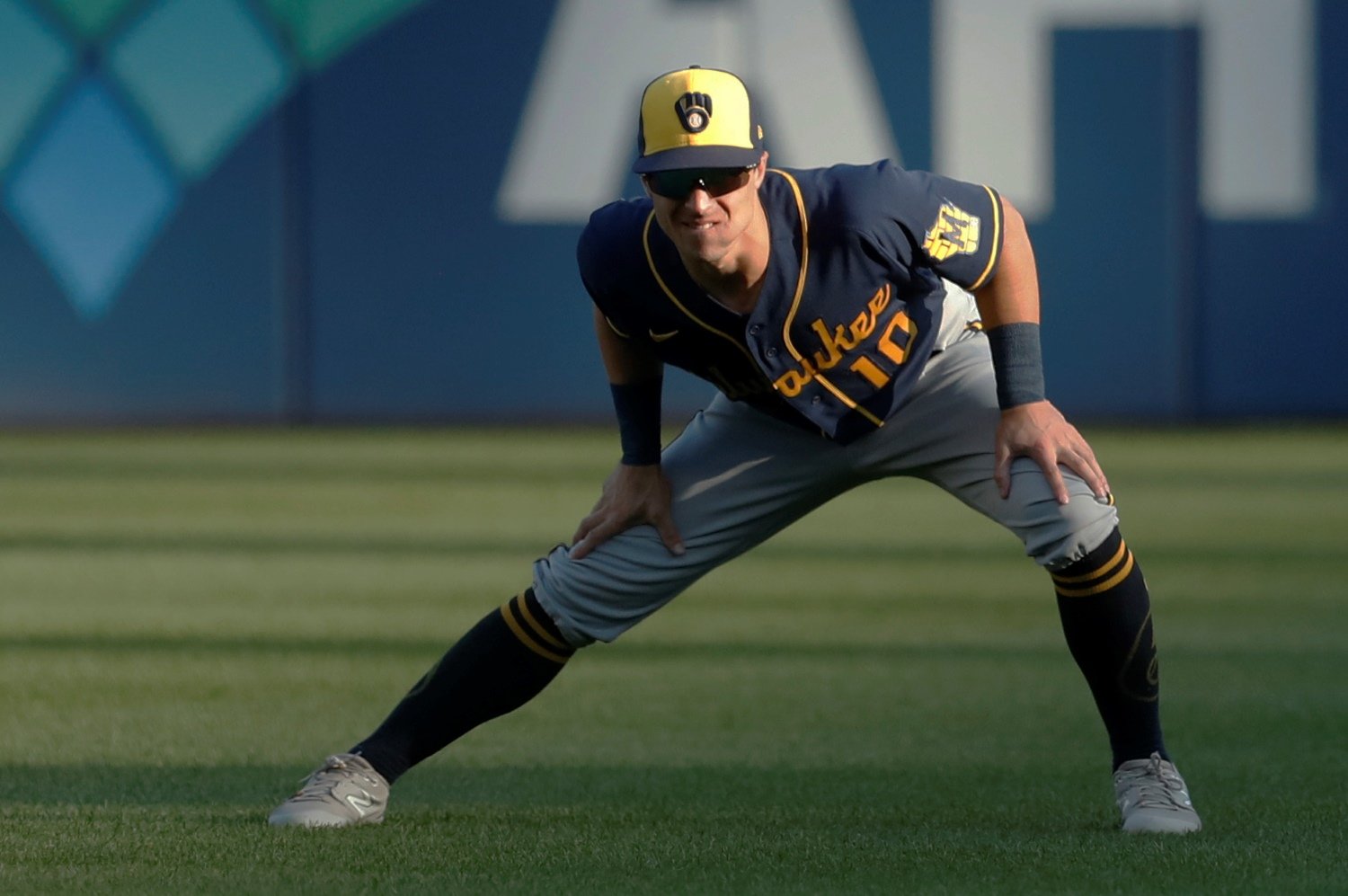 It sounds like, for the moment, Sal Frelick is only taking reps at second and third base so as to be ready in case of emergency. The story in The Athletic that reported Frelick's offseason project included praise for his progress from Dustin Pedroia (himself an undersized player who ended up right on the fringe of Hall of Fame status after a career spent at second base), and it noted the first-round pick's track record as a middle infielder in high school and collegiate summer leagues, but it stopped well short of suggesting that Frelick will take over for Brice Turang or join the free-for-all of a battle for the starting third base role in camp. Let's take this beginning closer to its natural ending, though. Frelick taking grounders indicates at least some hope, on the part of the player and the organization, that he'll eventually be able to regularly man one of the infield spots. We've seen this work relatively often, relatively recently. Mookie Betts is the most famous name to do so recently, but in times not so long past, other players have made similar moves. The Cardinals converted both Allen Craig and Matt Carpenter from corner outfielders to competent second basemen--and than, in Carpenter's case, a third baseman. If Frelick manages the same transition, it will do more than clarify a position at which the Brewers currently have massive uncertainty. It will also create an opening for the team to add one of the available hitters who can still make a difference in the middle of a contender's batting order. Rhys Hoskins gave the Brewers stability and power at first base, but while the DH spot looks spoken-for in a formulation where Frelick plays the outfield--with the team's five likely outfielders (Frelick, Christian Yelich, Jackson Chourio, Joey Wiemer, and Garrett Mitchell) and catchers William Contreras and Gary Sánchez rotating through--it's much more fluid if Frelick is in the second or third base mix, instead. Pinning down the Brewers' likely payroll and remaining spending power has been a difficult exercise, all winter. The Hoskins signing and the Corbin Burnes trade, alone, seem to push against one another as one tries to construct a clear narrative or framework for their approach to 2024. Assuming the team has anything real left to expend, though, there are a few hitters out there who could occupy the DH spot on a regular basis and fill in at first base or in the outfield under exigent circumstances, while significantly raising the team's offensive ceiling. Most notable among these are Brandon Belt and J.D. Martinez. Belt, who will turn 36 in April, is a patience-and-power star whose left-handed bat would further balance and deepen the team's batting order. He's no longer much of a first baseman, defensively, but he can play that spot if and when Hoskins gets hurt, and in the meantime, he projects to lay waste to right-handed pitchers, as he has done throughout his career. With Sánchez or Contreras spelling him against lefties, he'd be a catalyst for the lineup. Martinez, who is about eight months older than Belt, had big strikeout problems last year with the Dodgers, just as Belt did with the Blue Jays. Like Belt, though, he would give a team still slightly short on fly-ball, pull-power bats one of the best of his generation. He's not as versatile even as Belt, and should only be thrown out into the outfield in true emergencies, but his stick would turn the Crew's offense into the most formidable in the National League Central. Those two are relatively expensive options, though Belt figures to be more affordable than Martinez. The lower-cost options include C.J. Cron, who feels like he should have been a Brewer twice by now but actually has yet to be one, and Joey Votto, who has professed a certain affection for Milwaukee in the past and would become an instant fan favorite, if he's willing to shift into the kind of complementary role Jason Giambi filled in the final year or two of his career. Ex-Brewers farmhand Garrett Cooper is another intriguing option, but perhaps one less likely to be open to the kind of part-time role he would merit with this team. The moonshot--the dream--is Cody Bellinger. Although wildly unlikely to be available on terms Mark Attanasio and Matt Arnold would find palatable, Bellinger would give the team flexibility on both offense and defense and deny the rival Cubs the chance to bring him back. A Bellinger deal lasting five or more years is out of the question for the Crew, but if he were willing to ink a slightly richer version of Hoskins's deal--something like three years and $65 million in total guaranteed money, with a pair of opt-outs that would further juice his side of it--then things could get interesting. It's fun to imagine Frelick blossoming on the dirt, à la Carpenter or even Betts. It's even more exciting, though, if that kind of move could open things up and allow the Brewers to score more runs, making possible not only a repeat division title, but a deeper run into October in 2024. What do you make of Frelick's flirtation with a position change? How would such a development change your thinking about building the best possible roster for the Brewers this season? Join the conversation in the comments.
- 3 comments
-
- 1
-
-
- brandon belt
- jd martinez
- (and 3 more)
-
The biggest news to emerge from the first few days of Milwaukee Brewers spring training is that Sal Frelick has begun putting in work on the infield dirt. That could have huge implications for the team. Image courtesy of © Charles LeClaire-USA TODAY Sports It sounds like, for the moment, Sal Frelick is only taking reps at second and third base so as to be ready in case of emergency. The story in The Athletic that reported Frelick's offseason project included praise for his progress from Dustin Pedroia (himself an undersized player who ended up right on the fringe of Hall of Fame status after a career spent at second base), and it noted the first-round pick's track record as a middle infielder in high school and collegiate summer leagues, but it stopped well short of suggesting that Frelick will take over for Brice Turang or join the free-for-all of a battle for the starting third base role in camp. Let's take this beginning closer to its natural ending, though. Frelick taking grounders indicates at least some hope, on the part of the player and the organization, that he'll eventually be able to regularly man one of the infield spots. We've seen this work relatively often, relatively recently. Mookie Betts is the most famous name to do so recently, but in times not so long past, other players have made similar moves. The Cardinals converted both Allen Craig and Matt Carpenter from corner outfielders to competent second basemen--and than, in Carpenter's case, a third baseman. If Frelick manages the same transition, it will do more than clarify a position at which the Brewers currently have massive uncertainty. It will also create an opening for the team to add one of the available hitters who can still make a difference in the middle of a contender's batting order. Rhys Hoskins gave the Brewers stability and power at first base, but while the DH spot looks spoken-for in a formulation where Frelick plays the outfield--with the team's five likely outfielders (Frelick, Christian Yelich, Jackson Chourio, Joey Wiemer, and Garrett Mitchell) and catchers William Contreras and Gary Sánchez rotating through--it's much more fluid if Frelick is in the second or third base mix, instead. Pinning down the Brewers' likely payroll and remaining spending power has been a difficult exercise, all winter. The Hoskins signing and the Corbin Burnes trade, alone, seem to push against one another as one tries to construct a clear narrative or framework for their approach to 2024. Assuming the team has anything real left to expend, though, there are a few hitters out there who could occupy the DH spot on a regular basis and fill in at first base or in the outfield under exigent circumstances, while significantly raising the team's offensive ceiling. Most notable among these are Brandon Belt and J.D. Martinez. Belt, who will turn 36 in April, is a patience-and-power star whose left-handed bat would further balance and deepen the team's batting order. He's no longer much of a first baseman, defensively, but he can play that spot if and when Hoskins gets hurt, and in the meantime, he projects to lay waste to right-handed pitchers, as he has done throughout his career. With Sánchez or Contreras spelling him against lefties, he'd be a catalyst for the lineup. Martinez, who is about eight months older than Belt, had big strikeout problems last year with the Dodgers, just as Belt did with the Blue Jays. Like Belt, though, he would give a team still slightly short on fly-ball, pull-power bats one of the best of his generation. He's not as versatile even as Belt, and should only be thrown out into the outfield in true emergencies, but his stick would turn the Crew's offense into the most formidable in the National League Central. Those two are relatively expensive options, though Belt figures to be more affordable than Martinez. The lower-cost options include C.J. Cron, who feels like he should have been a Brewer twice by now but actually has yet to be one, and Joey Votto, who has professed a certain affection for Milwaukee in the past and would become an instant fan favorite, if he's willing to shift into the kind of complementary role Jason Giambi filled in the final year or two of his career. Ex-Brewers farmhand Garrett Cooper is another intriguing option, but perhaps one less likely to be open to the kind of part-time role he would merit with this team. The moonshot--the dream--is Cody Bellinger. Although wildly unlikely to be available on terms Mark Attanasio and Matt Arnold would find palatable, Bellinger would give the team flexibility on both offense and defense and deny the rival Cubs the chance to bring him back. A Bellinger deal lasting five or more years is out of the question for the Crew, but if he were willing to ink a slightly richer version of Hoskins's deal--something like three years and $65 million in total guaranteed money, with a pair of opt-outs that would further juice his side of it--then things could get interesting. It's fun to imagine Frelick blossoming on the dirt, à la Carpenter or even Betts. It's even more exciting, though, if that kind of move could open things up and allow the Brewers to score more runs, making possible not only a repeat division title, but a deeper run into October in 2024. What do you make of Frelick's flirtation with a position change? How would such a development change your thinking about building the best possible roster for the Brewers this season? Join the conversation in the comments. View full article
-
 Even without Corbin Burnes and Brandon Woodruff, the Brewers have managed to build a relatively veteran, relatively solid front half for their starting staff entering 2024. Behind newly lonely ace Freddy Peralta stand three well-traveled hurlers without elite stuff, but with good recent results in the big leagues and plenty of poise. Few fans have treated the rotation spots of both Jakob Junis and Colin Rea as solidly spoken-for, but that's how I perceive the situation as camp opens. Junis, by all accounts, signed on with the understanding that he would be a starter, and there's room for him in the group. Rea, who (like Miley) reupped after an encouraging 2023, seems deserving of the same kind of clear shot, at least to begin the campaign. That only leaves one spot in a five-man rotation truly up for grabs, and the Brewers have four interesting, qualified, disparate candidates to consider for it. Robert Gasser Though the only player in this mix not already on the 40-man roster, Gasser also feels like the one with the fairest claim to a shot at this. He's thrown a full season's worth of innings at the Triple-A level, and he's worked relentlessly to fine-tune a strange combination of release point and stuff profile into something that will work against big-league hitters, multiple times through the order. As I've attested, though, it might make equally good sense for Gasser to begin in long relief, learning the difference between Triple A and the majors firsthand, through hard experience. Eventually, he could move back to the rotation, but it needn't be right away in early 2024. DL Hall Gasser is a lefty, and it limits him as a starter, because he also throws in the low 90s. Hall is a lefty whose velocity only contributes to the unhittable nature of his stuff. Throwing strikes has been a colossal challenge, though, and if he can't come to camp and quickly show improved control, it might be time to just shift him into relief and never look back. If there's a version of Hall that is the heir apparent to Devin Williams as the Crew's relief ace, unlocking him now makes sense. First, they'll try him as a starter once more, after whatever changes the pitching infrastructure group wants to make. By Opening Day, we should have more than an inkling about where things stand. Hall's walk rate this spring will be about as important a single statistical category as the Cactus League can give you. Aaron Ashby Let's finish the lefties off. While Ashby is undoubtedly a candidate for the rotation, it's going to be hard for Pat Murphy to come out of camp feeling confident that Ashby can give him the innings to be a traditional starter. The injury that cost him all of 2023 at the big-league level is not of the kind that usually benefits from a transition to the pen, but the Brewers can't afford to make their decisions based purely on Ashby. They're pursuing a second straight NL Central championship, and while Ashby's upside is as high as any of these options, Murphy's first concern has to be certitude for the fifth spot in the rotation. Joe Ross Early this winter, Matt Arnold and company made a few acquisitions that just felt like adding carpeting. They didn't move the needle for the team, but they were there to provide a softer landing if the team ended up really emptying things out and doing a one- or two-year rebuild. That's not quite how the offseason has actually played out, so Ross feels almost redundant--and certainly unexciting. On the other hand, he's the kind of veteran arm from whom the Brewers have gotten surprisingly good things the last few years. Letting him start 15 games for the Crew is no more daunting than letting Rea do so would have seemed a year ago, and that worked out fine. The Most Likely Resolution Since Gasser can still be stashed safely in Triple A, the smart money says he'll be there--barring an injury in camp. Ross and Ashby will be on the roster, but either or both could work out of relief. At this moment, having seen no game action yet this spring, Hall feels like the favorite to win the job. Since he was half the return for Burnes, and given the grades national prospect crews have put on his fastball, Hall feels like the one the organization can most easily turn into a fifth starter who helps them in the short term and guides them one step closer to a thrilling future.
 -
Today, we continue our fledgling series about the spring training position battles that might unfold for the 2024 Milwaukee Brewers. This edition will focus on the final spot in the starting rotation. Image courtesy of © Mitch Stringer-USA TODAY Sports Even without Corbin Burnes and Brandon Woodruff, the Brewers have managed to build a relatively veteran, relatively solid front half for their starting staff entering 2024. Behind newly lonely ace Freddy Peralta stand three well-traveled hurlers without elite stuff, but with good recent results in the big leagues and plenty of poise. Few fans have treated the rotation spots of both Jakob Junis and Colin Rea as solidly spoken-for, but that's how I perceive the situation as camp opens. Junis, by all accounts, signed on with the understanding that he would be a starter, and there's room for him in the group. Rea, who (like Miley) reupped after an encouraging 2023, seems deserving of the same kind of clear shot, at least to begin the campaign. That only leaves one spot in a five-man rotation truly up for grabs, and the Brewers have four interesting, qualified, disparate candidates to consider for it. Robert Gasser Though the only player in this mix not already on the 40-man roster, Gasser also feels like the one with the fairest claim to a shot at this. He's thrown a full season's worth of innings at the Triple-A level, and he's worked relentlessly to fine-tune a strange combination of release point and stuff profile into something that will work against big-league hitters, multiple times through the order. As I've attested, though, it might make equally good sense for Gasser to begin in long relief, learning the difference between Triple A and the majors firsthand, through hard experience. Eventually, he could move back to the rotation, but it needn't be right away in early 2024. DL Hall Gasser is a lefty, and it limits him as a starter, because he also throws in the low 90s. Hall is a lefty whose velocity only contributes to the unhittable nature of his stuff. Throwing strikes has been a colossal challenge, though, and if he can't come to camp and quickly show improved control, it might be time to just shift him into relief and never look back. If there's a version of Hall that is the heir apparent to Devin Williams as the Crew's relief ace, unlocking him now makes sense. First, they'll try him as a starter once more, after whatever changes the pitching infrastructure group wants to make. By Opening Day, we should have more than an inkling about where things stand. Hall's walk rate this spring will be about as important a single statistical category as the Cactus League can give you. Aaron Ashby Let's finish the lefties off. While Ashby is undoubtedly a candidate for the rotation, it's going to be hard for Pat Murphy to come out of camp feeling confident that Ashby can give him the innings to be a traditional starter. The injury that cost him all of 2023 at the big-league level is not of the kind that usually benefits from a transition to the pen, but the Brewers can't afford to make their decisions based purely on Ashby. They're pursuing a second straight NL Central championship, and while Ashby's upside is as high as any of these options, Murphy's first concern has to be certitude for the fifth spot in the rotation. Joe Ross Early this winter, Matt Arnold and company made a few acquisitions that just felt like adding carpeting. They didn't move the needle for the team, but they were there to provide a softer landing if the team ended up really emptying things out and doing a one- or two-year rebuild. That's not quite how the offseason has actually played out, so Ross feels almost redundant--and certainly unexciting. On the other hand, he's the kind of veteran arm from whom the Brewers have gotten surprisingly good things the last few years. Letting him start 15 games for the Crew is no more daunting than letting Rea do so would have seemed a year ago, and that worked out fine. The Most Likely Resolution Since Gasser can still be stashed safely in Triple A, the smart money says he'll be there--barring an injury in camp. Ross and Ashby will be on the roster, but either or both could work out of relief. At this moment, having seen no game action yet this spring, Hall feels like the favorite to win the job. Since he was half the return for Burnes, and given the grades national prospect crews have put on his fastball, Hall feels like the one the organization can most easily turn into a fifth starter who helps them in the short term and guides them one step closer to a thrilling future. View full article
-
Since the Corbin Burnes trade brought back a middle infielder who looks like a fixture for the future, speculation about Willy Adames's future with the Milwaukee Brewers has been rampant. The question is, what would make trading Adames worth it? Image courtesy of © Jonathan Dyer-USA TODAY Sports The most natural destination for Willy Adames in a trade would be the Los Angeles Dodgers, who are trying to put the finishing touches on the best roster in baseball. Whenever Adames and the Dodgers are linked in trade discussions, the name that pops up is Gavin Lux. It feels almost lazy, since Lux is a Wisconsin native, but there's also a real fit there. Lux has three years of team control remaining, and despite losing all of last season to injury, he's a promising left-handed hitter with some big-league bona fides. After bringing in Joey Ortiz for Corbin Burnes, though, the Brewers don't necessarily need that profile of player--at least not to the extent that they did a month ago. In addition to Ortiz, they have Tyler Black (whom they hope will be able to stick at third base, and who, like Lux, bats left-handed) on the doorstep, and if you pencil those two in for long-term roles, it leaves just one of the three throwing infield positions to be filled by some combination of Brice Turang, Andruw Monasterio, Oliver Dunn, and Vinny Capra. That quartet doesn't contain any player certain enough to be a first-division regular that the Brewers should totally foreclose the possibility of adding another infielder, but with Ortiz on board, they're a good enough mélange to take the urgency out of the search for an infielder. Besides, the Crew would need to pay Lux fairly handsomely in arbitration in 2025 and 2026 if he had a good season in 2024, and he'd be a free agent thereafter. He doesn't really open their window wider, the way you'd like an Adames trade to do. What if, to get a deal done that satisfies that standard, Matt Arnold and Andrew Friedman got a third team involved? The Miami Marlins are in the market for shortstop help, but they're not taking on the salary owed to Adames, and they don't want a one-year solution to the position. They do, on the other hand, have controllable starting pitchers they're willing to move in the right deal--a deal that would bring them a hitter who could fit into the same timeline on which they're trying to build around the likes of Jazz Chisholm Jr., Luis Arráez, Jake Burger, and more. In fact, there are active rumors that the Fish could send Edward Cabrera to the Pirates, in a trade that would net them a position player with a blend of team control and established production capacity. Cabrera, who will turn 26 in April, has five years of team control remaining, but will be arbitration-eligible as a Super Two player next winter. Miami has not been able to get the electric stuff Cabrera has under control well enough to make him more than a back-end starter, and the match between his earning power and his performance so far in the majors will be distasteful to a team in transition. If the Brewers send Adames to the Dodgers, maybe the Dodgers could package Lux and a low-level prospect and send them to Miami, instead of to Milwaukee. In turn, the Marlins could send Cabrera to the Crew, rounding out what would be one of the deepest, highest-upside starting rotations in MLB. Re-signing Wade Miley, adding Jakob Junis and Joe Ross, and trading for DL Hall already has the Brewers seemingly set, but their current rotation is a little shy on upside. Cabrera would change that in a hurry. His fastball sits around 96 miles per hour, and his changeup is devastating. He only managed a 4.24 ERA last year, because he walked 15.2 percent of opposing batters, but there is some low-hanging fruit in front of him--the kinds of adjustments that could easily turn him into a co-ace alongside Freddy Peralta under the tutelage of Chris Hook. Firstly, Cabrera needs to better utilize his arsenal. He has a four-seamer and a sinker; that almost-famous changeup; and two breaking balls, a curve and a slider. Last year, he threw all five a fair amount, but the way he mixed them against right-handed batters didn't make much sense. He threw that changeup against them too often, given that he doesn't have very good glove-side command of his four-seamer to set it up, and that his sinker has very little movement differential (and not even much velocity differential; he throws the change at more than 90 MPH) from that pitch. Here's all his offerings against righties last year, plotted according to their movement. What Cabrera should be doing is ditching the change against righties, and using the four-seamer to set up the curve, the sinker to set up the slider. One reason he couldn't, for much of the season, was that he just couldn't throw enough strikes, but that might be one problem he's already begun to solve. Check out this video of Cabrera from early in 2023. TVpXOVFfWGw0TUFRPT1fQkFsWkFRSURYMUFBQVZKUVZ3QUFWd0ZSQUZsVFZWWUFBQVFEVlFCUUNRUlFDRkZm.mp4 Mechanically, there are plenty of things the Brewers would do differently with Cabrera. The direction of his stride and the way he lands on his front leg contribute to his difficulty with control and command. For now, though, just look at where he was set up on the rubber for that offering. He's basically right in the middle. Now, take a look at this pitch, from late September against the Brewers. QnZHN1lfWGw0TUFRPT1fQXdCWlVsSUJCRkFBWFZBQ1hnQUFBQTVUQUZoUVZGUUFCQVFHVXdFTlZ3RldCMWRS.mp4 Shew. So, first of all, that changeup explodes away from lefties, right? It's a filthy pitch. But pause and notice from where he starts that offering. He's as far toward the first-base side as he can legally get. Cabrera made his move in three phases. Early in the year, he was right in the center of the rubber. In the middle of the season, he moved over slightly. Then, in August and September, he went to the extreme first-base side. That was a momentous change, because while we tend to think of pitching science as all physics and biomechanics, there's a good bit of geometry to it, too. Sometimes, your angles are just plain wrong, and you have to find a way to make them friendlier. Cabrera filled up the zone (especially inside on lefties and away from righties) much better after making his moves. In the three subdivisions of the season I've created here, Cabrera threw 40.1, 42.8, and 45.6 percent of his pitches in the zone, respectively. Opponents swung more (both inside and outside the zone) and took more called strikes as Cabrera slid over. Batters had a weighted on-base average (wOBA, scaled to OBP such that a number around .325 is average, and higher is more hitter-friendly) of .337 through mid-May; then .313 from mid-May through the end of July; then .286 after Aug. 1. The move further helped Cabrera against lefties, but hurt him against righties. That's largely because of the pitch mix problems we already talked about, though. With the Brewers, he would make better use of his new angles against same-handed batters by making greater use of the stuff he throws to the side of the plate toward which he moved. He's one pitcher who probably doesn't need his sinker at all, and Hook would almost certainly scrap it for him. It's possible the Brewers would have to throw in some small consideration, be it cash or a far-off, low-probability prospect, in order to get Cabrera for Adames. If they can do it, though, they ought to. The payoff could be huge, and with Adames just a year from free agency, anyway, the opportunity cost isn't. Would you trade Adames for Cabrera, straight-up? Should the Brewers try to swing such a deal, even if it means tossing in a second piece of some kind? Does keeping Cabrera out of the Pirates' hands enter the equation for you? Discuss! Research assistance provided by TruMedia. View full article
-
How Brewers Could Land a Top Arm in Three-Way Willy Adames Deal
Matthew Trueblood posted an article in Brewers
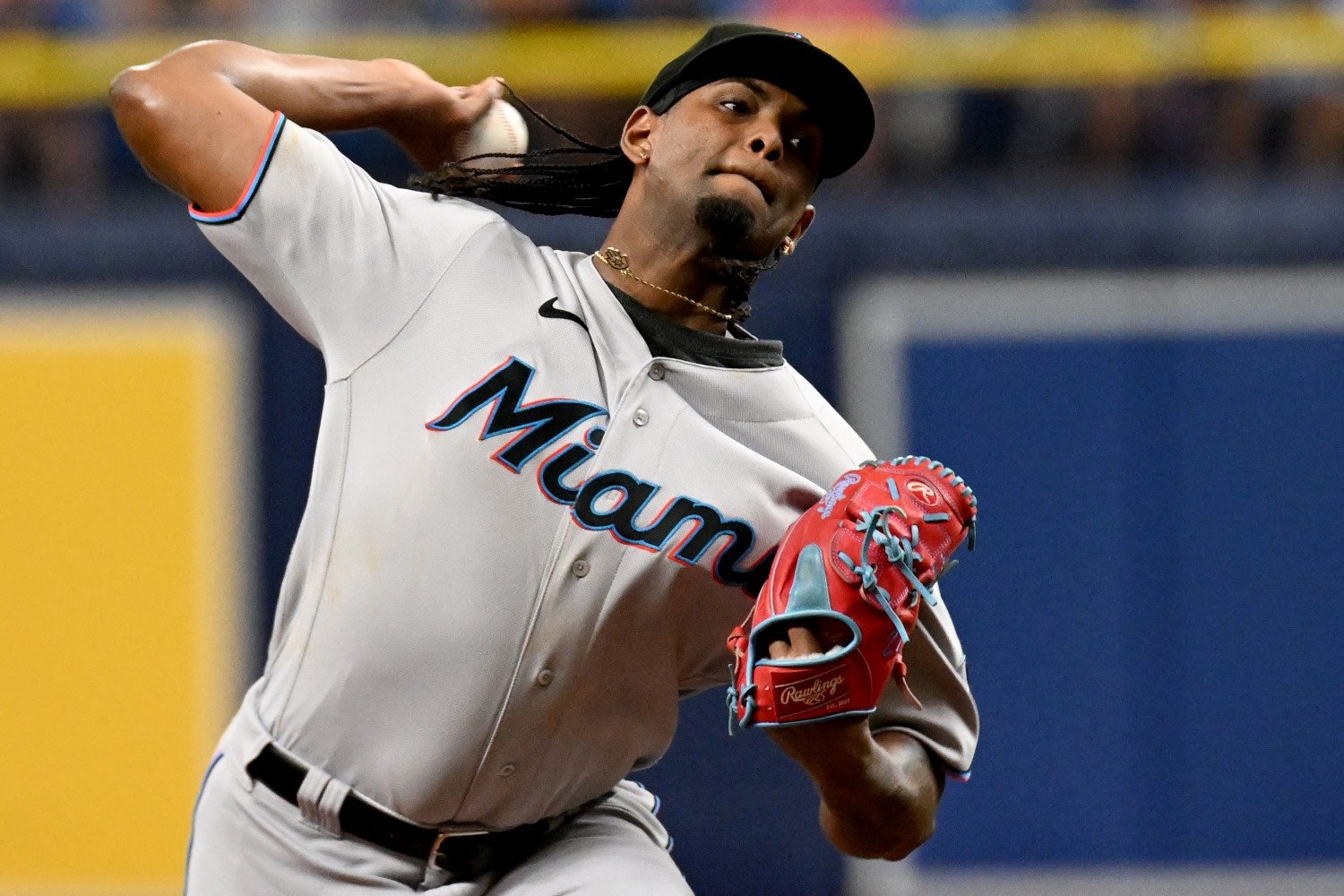 The most natural destination for Willy Adames in a trade would be the Los Angeles Dodgers, who are trying to put the finishing touches on the best roster in baseball. Whenever Adames and the Dodgers are linked in trade discussions, the name that pops up is Gavin Lux. It feels almost lazy, since Lux is a Wisconsin native, but there's also a real fit there. Lux has three years of team control remaining, and despite losing all of last season to injury, he's a promising left-handed hitter with some big-league bona fides. After bringing in Joey Ortiz for Corbin Burnes, though, the Brewers don't necessarily need that profile of player--at least not to the extent that they did a month ago. In addition to Ortiz, they have Tyler Black (whom they hope will be able to stick at third base, and who, like Lux, bats left-handed) on the doorstep, and if you pencil those two in for long-term roles, it leaves just one of the three throwing infield positions to be filled by some combination of Brice Turang, Andruw Monasterio, Oliver Dunn, and Vinny Capra. That quartet doesn't contain any player certain enough to be a first-division regular that the Brewers should totally foreclose the possibility of adding another infielder, but with Ortiz on board, they're a good enough mélange to take the urgency out of the search for an infielder. Besides, the Crew would need to pay Lux fairly handsomely in arbitration in 2025 and 2026 if he had a good season in 2024, and he'd be a free agent thereafter. He doesn't really open their window wider, the way you'd like an Adames trade to do. What if, to get a deal done that satisfies that standard, Matt Arnold and Andrew Friedman got a third team involved? The Miami Marlins are in the market for shortstop help, but they're not taking on the salary owed to Adames, and they don't want a one-year solution to the position. They do, on the other hand, have controllable starting pitchers they're willing to move in the right deal--a deal that would bring them a hitter who could fit into the same timeline on which they're trying to build around the likes of Jazz Chisholm Jr., Luis Arráez, Jake Burger, and more. In fact, there are active rumors that the Fish could send Edward Cabrera to the Pirates, in a trade that would net them a position player with a blend of team control and established production capacity. Cabrera, who will turn 26 in April, has five years of team control remaining, but will be arbitration-eligible as a Super Two player next winter. Miami has not been able to get the electric stuff Cabrera has under control well enough to make him more than a back-end starter, and the match between his earning power and his performance so far in the majors will be distasteful to a team in transition. If the Brewers send Adames to the Dodgers, maybe the Dodgers could package Lux and a low-level prospect and send them to Miami, instead of to Milwaukee. In turn, the Marlins could send Cabrera to the Crew, rounding out what would be one of the deepest, highest-upside starting rotations in MLB. Re-signing Wade Miley, adding Jakob Junis and Joe Ross, and trading for DL Hall already has the Brewers seemingly set, but their current rotation is a little shy on upside. Cabrera would change that in a hurry. His fastball sits around 96 miles per hour, and his changeup is devastating. He only managed a 4.24 ERA last year, because he walked 15.2 percent of opposing batters, but there is some low-hanging fruit in front of him--the kinds of adjustments that could easily turn him into a co-ace alongside Freddy Peralta under the tutelage of Chris Hook. Firstly, Cabrera needs to better utilize his arsenal. He has a four-seamer and a sinker; that almost-famous changeup; and two breaking balls, a curve and a slider. Last year, he threw all five a fair amount, but the way he mixed them against right-handed batters didn't make much sense. He threw that changeup against them too often, given that he doesn't have very good glove-side command of his four-seamer to set it up, and that his sinker has very little movement differential (and not even much velocity differential; he throws the change at more than 90 MPH) from that pitch. Here's all his offerings against righties last year, plotted according to their movement. What Cabrera should be doing is ditching the change against righties, and using the four-seamer to set up the curve, the sinker to set up the slider. One reason he couldn't, for much of the season, was that he just couldn't throw enough strikes, but that might be one problem he's already begun to solve. Check out this video of Cabrera from early in 2023. TVpXOVFfWGw0TUFRPT1fQkFsWkFRSURYMUFBQVZKUVZ3QUFWd0ZSQUZsVFZWWUFBQVFEVlFCUUNRUlFDRkZm.mp4 Mechanically, there are plenty of things the Brewers would do differently with Cabrera. The direction of his stride and the way he lands on his front leg contribute to his difficulty with control and command. For now, though, just look at where he was set up on the rubber for that offering. He's basically right in the middle. Now, take a look at this pitch, from late September against the Brewers. QnZHN1lfWGw0TUFRPT1fQXdCWlVsSUJCRkFBWFZBQ1hnQUFBQTVUQUZoUVZGUUFCQVFHVXdFTlZ3RldCMWRS.mp4 Shew. So, first of all, that changeup explodes away from lefties, right? It's a filthy pitch. But pause and notice from where he starts that offering. He's as far toward the first-base side as he can legally get. Cabrera made his move in three phases. Early in the year, he was right in the center of the rubber. In the middle of the season, he moved over slightly. Then, in August and September, he went to the extreme first-base side. That was a momentous change, because while we tend to think of pitching science as all physics and biomechanics, there's a good bit of geometry to it, too. Sometimes, your angles are just plain wrong, and you have to find a way to make them friendlier. Cabrera filled up the zone (especially inside on lefties and away from righties) much better after making his moves. In the three subdivisions of the season I've created here, Cabrera threw 40.1, 42.8, and 45.6 percent of his pitches in the zone, respectively. Opponents swung more (both inside and outside the zone) and took more called strikes as Cabrera slid over. Batters had a weighted on-base average (wOBA, scaled to OBP such that a number around .325 is average, and higher is more hitter-friendly) of .337 through mid-May; then .313 from mid-May through the end of July; then .286 after Aug. 1. The move further helped Cabrera against lefties, but hurt him against righties. That's largely because of the pitch mix problems we already talked about, though. With the Brewers, he would make better use of his new angles against same-handed batters by making greater use of the stuff he throws to the side of the plate toward which he moved. He's one pitcher who probably doesn't need his sinker at all, and Hook would almost certainly scrap it for him. It's possible the Brewers would have to throw in some small consideration, be it cash or a far-off, low-probability prospect, in order to get Cabrera for Adames. If they can do it, though, they ought to. The payoff could be huge, and with Adames just a year from free agency, anyway, the opportunity cost isn't. Would you trade Adames for Cabrera, straight-up? Should the Brewers try to swing such a deal, even if it means tossing in a second piece of some kind? Does keeping Cabrera out of the Pirates' hands enter the equation for you? Discuss! Research assistance provided by TruMedia.
 -
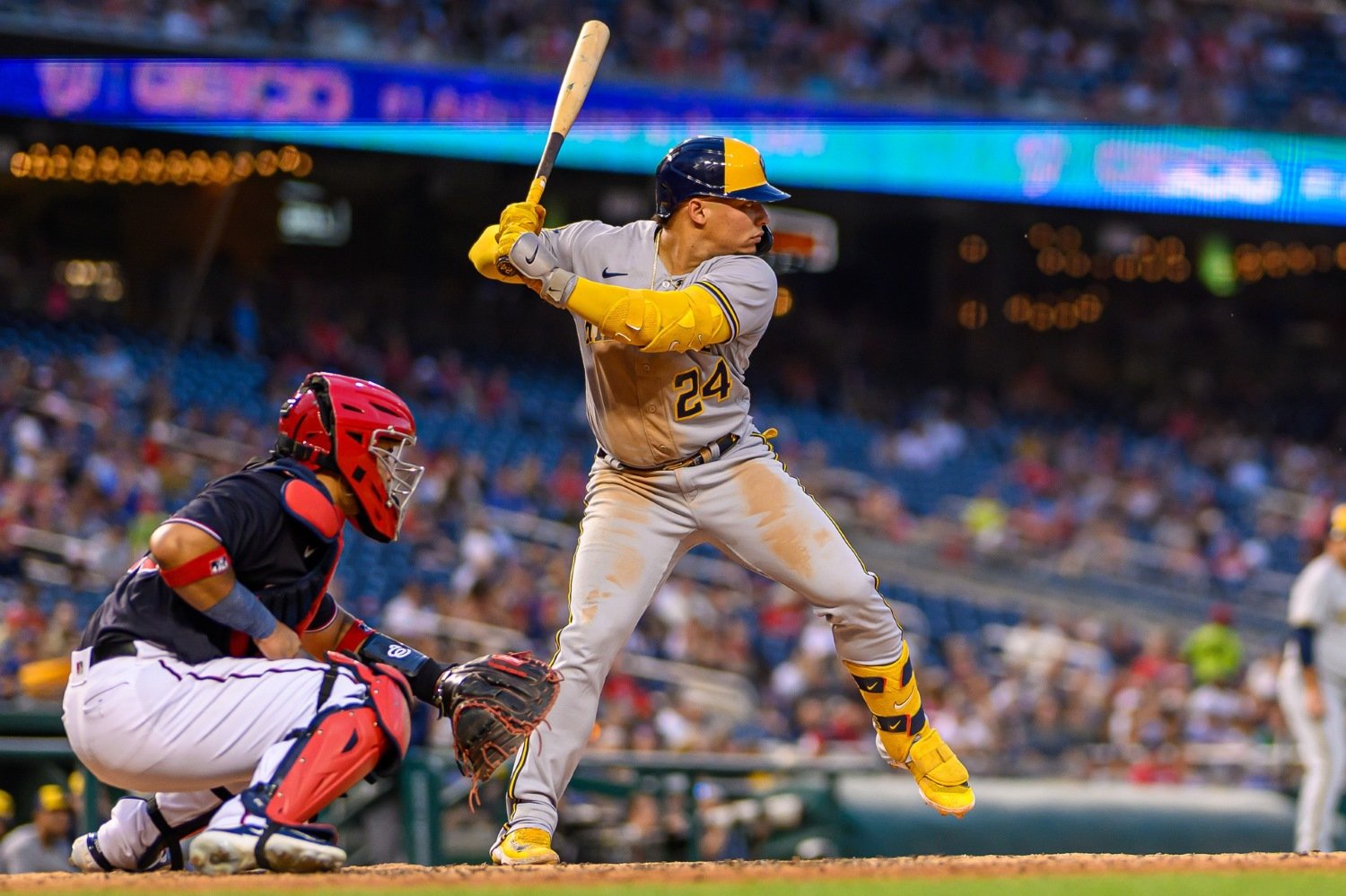 Much was made of William Contreras's night-to-day transformation from fringy backstop to pitch-framing ace in 2023, but that was a relatively small surprise. Over nearly a decade, the Brewers have earned a reputation as (perhaps) the best team in baseball at training the subtle and supremely valuable skill of catcher defense, and their coaches worked tirelessly with Contreras to make that magic happen for him in his first year with a new team. At the plate, though, Contreras more quietly underwent a similarly significant set of changes. They didn't turn him from a very good offensive catcher into a superstar, but they might have laid the groundwork for just that kind of leap forward in 2024. Let's take a closer look. As Brewers fans already know, Contreras did adjust and evolve at the plate. It just felt more like a change in style than a radical increase in overall effectiveness. After posting a .278/.354/.506 line for Atlanta in limited time in 2022, he batted .289/.367/.457 in a robust 611 plate appearances for the Brewers last year. He cut his strikeout rate down from 27 percent to 20 percent, and he drew more walks, but he didn't hit for nearly as much power as he had for the team who seems as far ahead of the curve as anyone in baseball when it comes to power generation. Below the surface, there are indicators that that could change in 2024. Contreras reorganized his strike zone and improved his selectivity last year, and that could be how he consolidates his skills into a true superstar breakout. Specifically, the secret lies in his approach to pitches out away from him. On pitches over the middle third of the plate and further in (including those above and below the zone and off the plate inside), little changed for Contreras in 2023. He had virtually identical swing rates (50 percent) and chase rates outside the zone (28 percent) in 2022 and 2023 on those pitches. He actually hit those balls harder, on average, in 2023, and had a higher 90th-percentile exit velocity, too. He'd elevated them a bit more with Atlanta, so his OPS from the middle third in dropped from 1.029 in 2022 to .906 in 2023, but that latter number is still a good one. Much more importantly, though, Contreras got more selective on the outer third, and on pitches off the plate altogether. His swing rate on those pitches dropped from 39 to 34 percent, and his chase rate on non-strikes from 29 percent to 21 percent. Contreras seemed to see the ball away better in 2023. He stayed through the ball and used the whole field much better. In 2022, he often rolled over on those pitches, a byproduct of his aggressiveness and effort to lift the ball to the pull field. In 2023, he got much better at shooting the ball the opposite way. That's why, despite more ground balls and a lower average exit velocity, he had the same BABIP on pitches away from him as he'd had in his final year with Atlanta. Contreras's OPS on pitches on the outer third and beyond rose from .625 to .663 in 2023, but that's only a small portion of the story. He's a hitter who does much better when he attacks pitches from the middle of the plate in, so the most important variable isn't sheer production on pitches away, but the frequency with which he's able to avoid letting the plate appearance be settled on such offerings. Thanks to being more patient when pitchers went there last year, Contreras brought the share of his plate appearances resolved on the middle or inner thirds up from 55.3 percent to 63.2 percent in 2023. Given the disparity in his performance based on pitch location, that's huge. The next step, of course, is to get the bat head out a bit better and catch the lower half of the ball with it on those meaty pitches. If he can show the superior plate discipline and contact skills he developed in 2023 and bring back some of the power he demonstrated in 2022, he can morph into the true, slugging middle-of-the-order megastar the Brewers need, and mitigate the risk the team incurs by having Christian Yelich (with his own ground-ball tendencies) locked in as one of the best hitters in their lineup. Ordinarily, that's much easier said than done, but given what we already saw Contreras do in terms of honing his approach last year, maybe it's not so crazy in this case. What's a reasonable hope for Contreras's output in 2024? Do you foresee a rapid consolidation of his skills? Sound off in the comments.
 -
The Milwaukee Brewers made a savvy trade in December 2022, but it went from good to great thanks to their player development work. Can their star catcher take yet another step forward in 2024? Image courtesy of © Reggie Hildred-USA TODAY Sports Much was made of William Contreras's night-to-day transformation from fringy backstop to pitch-framing ace in 2023, but that was a relatively small surprise. Over nearly a decade, the Brewers have earned a reputation as (perhaps) the best team in baseball at training the subtle and supremely valuable skill of catcher defense, and their coaches worked tirelessly with Contreras to make that magic happen for him in his first year with a new team. At the plate, though, Contreras more quietly underwent a similarly significant set of changes. They didn't turn him from a very good offensive catcher into a superstar, but they might have laid the groundwork for just that kind of leap forward in 2024. Let's take a closer look. As Brewers fans already know, Contreras did adjust and evolve at the plate. It just felt more like a change in style than a radical increase in overall effectiveness. After posting a .278/.354/.506 line for Atlanta in limited time in 2022, he batted .289/.367/.457 in a robust 611 plate appearances for the Brewers last year. He cut his strikeout rate down from 27 percent to 20 percent, and he drew more walks, but he didn't hit for nearly as much power as he had for the team who seems as far ahead of the curve as anyone in baseball when it comes to power generation. Below the surface, there are indicators that that could change in 2024. Contreras reorganized his strike zone and improved his selectivity last year, and that could be how he consolidates his skills into a true superstar breakout. Specifically, the secret lies in his approach to pitches out away from him. On pitches over the middle third of the plate and further in (including those above and below the zone and off the plate inside), little changed for Contreras in 2023. He had virtually identical swing rates (50 percent) and chase rates outside the zone (28 percent) in 2022 and 2023 on those pitches. He actually hit those balls harder, on average, in 2023, and had a higher 90th-percentile exit velocity, too. He'd elevated them a bit more with Atlanta, so his OPS from the middle third in dropped from 1.029 in 2022 to .906 in 2023, but that latter number is still a good one. Much more importantly, though, Contreras got more selective on the outer third, and on pitches off the plate altogether. His swing rate on those pitches dropped from 39 to 34 percent, and his chase rate on non-strikes from 29 percent to 21 percent. Contreras seemed to see the ball away better in 2023. He stayed through the ball and used the whole field much better. In 2022, he often rolled over on those pitches, a byproduct of his aggressiveness and effort to lift the ball to the pull field. In 2023, he got much better at shooting the ball the opposite way. That's why, despite more ground balls and a lower average exit velocity, he had the same BABIP on pitches away from him as he'd had in his final year with Atlanta. Contreras's OPS on pitches on the outer third and beyond rose from .625 to .663 in 2023, but that's only a small portion of the story. He's a hitter who does much better when he attacks pitches from the middle of the plate in, so the most important variable isn't sheer production on pitches away, but the frequency with which he's able to avoid letting the plate appearance be settled on such offerings. Thanks to being more patient when pitchers went there last year, Contreras brought the share of his plate appearances resolved on the middle or inner thirds up from 55.3 percent to 63.2 percent in 2023. Given the disparity in his performance based on pitch location, that's huge. The next step, of course, is to get the bat head out a bit better and catch the lower half of the ball with it on those meaty pitches. If he can show the superior plate discipline and contact skills he developed in 2023 and bring back some of the power he demonstrated in 2022, he can morph into the true, slugging middle-of-the-order megastar the Brewers need, and mitigate the risk the team incurs by having Christian Yelich (with his own ground-ball tendencies) locked in as one of the best hitters in their lineup. Ordinarily, that's much easier said than done, but given what we already saw Contreras do in terms of honing his approach last year, maybe it's not so crazy in this case. What's a reasonable hope for Contreras's output in 2024? Do you foresee a rapid consolidation of his skills? Sound off in the comments. View full article
-
After a fairly busy winter, the Milwaukee Brewers have a more functional lineup going into 2024 than they had for most of 2023. There’s still a weird fit to figure out near the top of that batting order, though. Image courtesy of © Benny Sieu-USA TODAY Sports Look around the internet a bit, and you’ll find some projections of the Brewers lineup that have Christian Yelich batting first, and others that have him batting third. Most sources agree that William Contreras will resume his frequent 2023 duties as the No. 2 hitter, and that Rhys Hoskins has come in to be the cleanup man, but Yelich and Sal Frelick keep being shuffled around. That’s because neither is exactly optimal as a third hitter. Willy Adames might be the closest thing the Brewers have to the ideal of that hitter type, but after Adames’s uneven 2023, it’s hard to pencil him into that slot, so it’s Yelich and Frelick who have populated it in most early formulations. Each has obvious shortcomings, when it comes to a No. 3 hitter. Neither is a slugger in the conventional modern way. As has been well-documented, Frelick struggles with the simplest and most indispensable duty of a middle-of-the-order hitter: he just doesn’t hit the ball hard. Yelich does, but as Brewers fans know too well, it’s too often on the ground. Frelick’s best role is clearly at the very top of the lineup, or near the bottom. For Yelich, batting third should be more of a conversation, so let’s have it. The biggest problem with having a ground ball hitter bat third is that they generally don’t hit for any power. For a few years, that was even true of Yelich, who otherwise impressively defies convention in this way. We all know about the transformation he undertook in 2018 and 2019, hitting the ball in the air often enough to tap into his extraordinary power potential and becoming one of the best players in the sport. After that fateful foul ball off his knee, though, he wallowed for three years in mediocrity, and specifically, he spent 2021 and 2022 buried in powerlessness. He slugged just .379 across those two seasons. Last season, though, Yelich bounced back. Even as he was moved to the leadoff spot to maximize the value of his on-base skills and mitigate the impact of his deficient pop, he got some of that pop back. With a .447 slugging average and .169 ISO, Yelich still looked more like his pre-MVP self than the peak version, but it was a huge stride back in the right direction. The ban on infield shifts probably helped. Yelich's BABIP leavened, which doesn't much affect his ISO but nudges his SLG upward by raising his batting average. It was more than just extra ground balls getting through, though. Yelich hit a few more balls straight down and got his best batted balls off the ground a bit more than he had over the previous few seasons, though not back to the level he reached when he nearly won two straight MVP awards. Even relative to his 2015-17 self, Yelich hit fewer balls weakly and fewer in that maddening middle range (80-100 MPH ground balls, which turn into outs just about every time and into double plays when a guy bats third and comes up often with runners on base and less than two outs) last year. Let's also note the relative dearth of lazy fly balls. He was certainly driving the ball in the air less often than he did at his best, but he wasn't making many truly easy outs. There's a segment of the charts above that might lend especially good insight: hard-hit balls (north of 95 miles per hour) at launch angles between -5 and 10 degrees. These points are all colored according to expected weighted on-base average (xwOBA). As you can see, Yelich hit many fewer of the lowest-value balls in this subset (the ones at the lowest launch angles, below 0) in 2023 than in the past, even compared to his best years. He seems to have found the sweet spot, at least for one year, where he can hit the ball hard without sacrificing contact rate in order to try to lift it. It's still unlikely that Yelich recaptures the kind of power you want from a No. 3 hitter. If he can sustain the small changes he made to his batted-ball profile in 2023, though, he shouldn't kill the team with double-play grounders. It's a fragile balance we're seeking here, and it's still an issue that Yelich and Contreras (in whichever order you prefer, the two best hitters on the team) are both ground-ball guys. It's not reasonable or necessary to expect Yelich to change his stripes now, though. He's going to generate sufficient punch to be a middle-of-the-order guy, even if his profile leans unusually heavily on OBP. With any luck, the Crew will be playing lots of first-to-third baseball at the top of the order in 2024, and it will be up to Hoskins to play the traditional cleanup role from there. Are you optimistic about Yelich's 2024, based on the adjustments he made in 2023? How would you align the team, based on the current position-player roster? Join the conversation. View full article
-
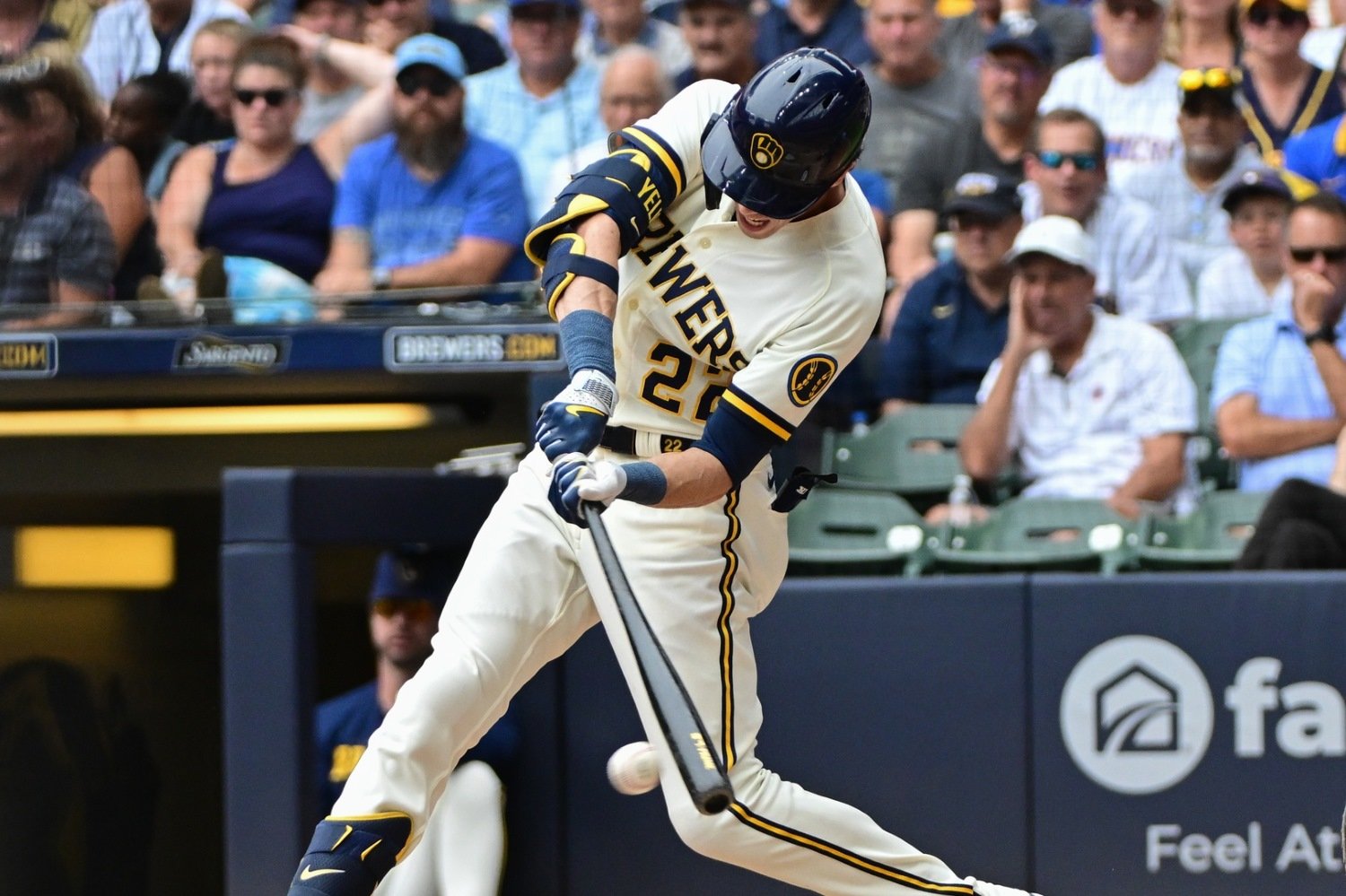 Look around the internet a bit, and you’ll find some projections of the Brewers lineup that have Christian Yelich batting first, and others that have him batting third. Most sources agree that William Contreras will resume his frequent 2023 duties as the No. 2 hitter, and that Rhys Hoskins has come in to be the cleanup man, but Yelich and Sal Frelick keep being shuffled around. That’s because neither is exactly optimal as a third hitter. Willy Adames might be the closest thing the Brewers have to the ideal of that hitter type, but after Adames’s uneven 2023, it’s hard to pencil him into that slot, so it’s Yelich and Frelick who have populated it in most early formulations. Each has obvious shortcomings, when it comes to a No. 3 hitter. Neither is a slugger in the conventional modern way. As has been well-documented, Frelick struggles with the simplest and most indispensable duty of a middle-of-the-order hitter: he just doesn’t hit the ball hard. Yelich does, but as Brewers fans know too well, it’s too often on the ground. Frelick’s best role is clearly at the very top of the lineup, or near the bottom. For Yelich, batting third should be more of a conversation, so let’s have it. The biggest problem with having a ground ball hitter bat third is that they generally don’t hit for any power. For a few years, that was even true of Yelich, who otherwise impressively defies convention in this way. We all know about the transformation he undertook in 2018 and 2019, hitting the ball in the air often enough to tap into his extraordinary power potential and becoming one of the best players in the sport. After that fateful foul ball off his knee, though, he wallowed for three years in mediocrity, and specifically, he spent 2021 and 2022 buried in powerlessness. He slugged just .379 across those two seasons. Last season, though, Yelich bounced back. Even as he was moved to the leadoff spot to maximize the value of his on-base skills and mitigate the impact of his deficient pop, he got some of that pop back. With a .447 slugging average and .169 ISO, Yelich still looked more like his pre-MVP self than the peak version, but it was a huge stride back in the right direction. The ban on infield shifts probably helped. Yelich's BABIP leavened, which doesn't much affect his ISO but nudges his SLG upward by raising his batting average. It was more than just extra ground balls getting through, though. Yelich hit a few more balls straight down and got his best batted balls off the ground a bit more than he had over the previous few seasons, though not back to the level he reached when he nearly won two straight MVP awards. Even relative to his 2015-17 self, Yelich hit fewer balls weakly and fewer in that maddening middle range (80-100 MPH ground balls, which turn into outs just about every time and into double plays when a guy bats third and comes up often with runners on base and less than two outs) last year. Let's also note the relative dearth of lazy fly balls. He was certainly driving the ball in the air less often than he did at his best, but he wasn't making many truly easy outs. There's a segment of the charts above that might lend especially good insight: hard-hit balls (north of 95 miles per hour) at launch angles between -5 and 10 degrees. These points are all colored according to expected weighted on-base average (xwOBA). As you can see, Yelich hit many fewer of the lowest-value balls in this subset (the ones at the lowest launch angles, below 0) in 2023 than in the past, even compared to his best years. He seems to have found the sweet spot, at least for one year, where he can hit the ball hard without sacrificing contact rate in order to try to lift it. It's still unlikely that Yelich recaptures the kind of power you want from a No. 3 hitter. If he can sustain the small changes he made to his batted-ball profile in 2023, though, he shouldn't kill the team with double-play grounders. It's a fragile balance we're seeking here, and it's still an issue that Yelich and Contreras (in whichever order you prefer, the two best hitters on the team) are both ground-ball guys. It's not reasonable or necessary to expect Yelich to change his stripes now, though. He's going to generate sufficient punch to be a middle-of-the-order guy, even if his profile leans unusually heavily on OBP. With any luck, the Crew will be playing lots of first-to-third baseball at the top of the order in 2024, and it will be up to Hoskins to play the traditional cleanup role from there. Are you optimistic about Yelich's 2024, based on the adjustments he made in 2023? How would you align the team, based on the current position-player roster? Join the conversation.
 -
Crew Throwback: Claudio Vargas Was Brewers Starters in a Nutshell
Matthew Trueblood posted an article in History
 Go back to 1970, when the Seattle Pilots moved to Milwaukee and rebranded themselves as the Brewers, and their starting pitchers are just about the least dominant in the game. The only two franchises with a lower strikeout rate from their starters than the Crew has in the last five-plus decades are the Royals and Orioles. To many young Brewers fans, this might seem surprising--indeed, almost unimaginable--but they're traditionally been roughly the most pitch-to-contact team in the game. Things began to change with Ben Sheets, and that change seemed to gain a firmer foothold with the arrival of Yovani Gallardo. Over the last half-decade, with Corbin Burnes, Brandon Woodruff, and Freddy Peralta, the Brewers have had perhaps the most dominant starting pitchers in baseball. That word--"dominant"--never seemed to belong in the same sentence with Brewers starters before that, but now, it does. Right around the time of Sheets and Gallardo, though, the Crew also had guys like Claudio Vargas. In 2007, Vargas made 23 starts for a team that came up just shy in the race for the NL Central. His ERA was ugly (5.09), but he went 11-6 that year. It was his only stint as a Milwaukee starter, but he would return for a very successful run as a reliever in 2009--and then a much less successful, career-ending one in 2010. In May of 2007, though, Vargas started against the Washington Nationals. He started that contest by getting a flyout, then a groundout, then another flyout. In the second frame, he started with a flyout and another groundout, before Brian Schneider lined a single. Vargas would go on to pitch six innings of one-run ball that day. Here's why it's significant: in his career, spanning 114 starts, that's the deepest into a game Vargas ever carried a perfect game. He got twice as close to a no-hitter, as many as 10 outs before giving up his first hit in an outing. Since 1974, 708 pitchers have made at least 100 starts. Vargas is the only one who never once got through two clean innings to open things, and the only one to never get past 3 1/3 innings before surrendering a knock. That's extraordinary, but it's also typical, and not in a bad way, per se. No, Vargas wasn't an electric arm, and no, his one season as a starter with the Crew wasn't a star turn. He was a nice back-end option for a team trying to fight its way through the season, though, and more to the point, he was characteristic. Like Brewers starters throughout the franchise's history--like Jerry Augustine and Don August, like Jim Slaton and Jeff D'Amico--Vargas wasn't nasty. He didn't overwhelm or overpower hitters, though his stuff was more interesting when he came back as a reliever in 2009. He was reliant on the defense behind him, to such an extent that he never so much as turned over a lineup once before allowing a baserunner. He was valuable, though, because he was versatile, available, and viable, when other options were not. After he'd lost his rotation spot in 2007, in a Sept. 18 game in Houston, Vargas had to come on after just one inning of work from Sheets. The Crew's ace left with hamstring tightness and wouldn't pitch again that season. The Astros already had a one-run lead when Vargas took the bump, but he worked four scoreless frames, while the lineup exploded for six runs. He wasn't dominant, even that day, but Vargas could be good, and he had a knack for preventing opponents from stringing together their hits and running him out of the game. The 2007 season came to a bitter end, in no small part because of Sheets's injuries. Vargas wasn't good enough to stop the gap for the fortnight left in that campaign; just for a few emergency innings. Still, he did yeoman's work, and as the Brewers look ahead to a season without two of the three dominant pitchers who had defined them for the last several years, Vargas is an exemplar of the way the team has often succeeded by finding starters who were just good enough. If you have any sharp memories of Vargas, good or ill, feel free to share them here. It's also a good place to discuss the philosophy that underlaid the Brewers' approach to pitching staffs for the first three decades of their history, and how it still begot some great seasons.
 -
As we creep up on the start of spring training and ponder the dawn of a new era of Brewers starting pitchers, let's pause to remember a two-time Crew hurler who typified the first few eras. Image courtesy of Brock Beauchamp Go back to 1970, when the Seattle Pilots moved to Milwaukee and rebranded themselves as the Brewers, and their starting pitchers are just about the least dominant in the game. The only two franchises with a lower strikeout rate from their starters than the Crew has in the last five-plus decades are the Royals and Orioles. To many young Brewers fans, this might seem surprising--indeed, almost unimaginable--but they're traditionally been roughly the most pitch-to-contact team in the game. Things began to change with Ben Sheets, and that change seemed to gain a firmer foothold with the arrival of Yovani Gallardo. Over the last half-decade, with Corbin Burnes, Brandon Woodruff, and Freddy Peralta, the Brewers have had perhaps the most dominant starting pitchers in baseball. That word--"dominant"--never seemed to belong in the same sentence with Brewers starters before that, but now, it does. Right around the time of Sheets and Gallardo, though, the Crew also had guys like Claudio Vargas. In 2007, Vargas made 23 starts for a team that came up just shy in the race for the NL Central. His ERA was ugly (5.09), but he went 11-6 that year. It was his only stint as a Milwaukee starter, but he would return for a very successful run as a reliever in 2009--and then a much less successful, career-ending one in 2010. In May of 2007, though, Vargas started against the Washington Nationals. He started that contest by getting a flyout, then a groundout, then another flyout. In the second frame, he started with a flyout and another groundout, before Brian Schneider lined a single. Vargas would go on to pitch six innings of one-run ball that day. Here's why it's significant: in his career, spanning 114 starts, that's the deepest into a game Vargas ever carried a perfect game. He got twice as close to a no-hitter, as many as 10 outs before giving up his first hit in an outing. Since 1974, 708 pitchers have made at least 100 starts. Vargas is the only one who never once got through two clean innings to open things, and the only one to never get past 3 1/3 innings before surrendering a knock. That's extraordinary, but it's also typical, and not in a bad way, per se. No, Vargas wasn't an electric arm, and no, his one season as a starter with the Crew wasn't a star turn. He was a nice back-end option for a team trying to fight its way through the season, though, and more to the point, he was characteristic. Like Brewers starters throughout the franchise's history--like Jerry Augustine and Don August, like Jim Slaton and Jeff D'Amico--Vargas wasn't nasty. He didn't overwhelm or overpower hitters, though his stuff was more interesting when he came back as a reliever in 2009. He was reliant on the defense behind him, to such an extent that he never so much as turned over a lineup once before allowing a baserunner. He was valuable, though, because he was versatile, available, and viable, when other options were not. After he'd lost his rotation spot in 2007, in a Sept. 18 game in Houston, Vargas had to come on after just one inning of work from Sheets. The Crew's ace left with hamstring tightness and wouldn't pitch again that season. The Astros already had a one-run lead when Vargas took the bump, but he worked four scoreless frames, while the lineup exploded for six runs. He wasn't dominant, even that day, but Vargas could be good, and he had a knack for preventing opponents from stringing together their hits and running him out of the game. The 2007 season came to a bitter end, in no small part because of Sheets's injuries. Vargas wasn't good enough to stop the gap for the fortnight left in that campaign; just for a few emergency innings. Still, he did yeoman's work, and as the Brewers look ahead to a season without two of the three dominant pitchers who had defined them for the last several years, Vargas is an exemplar of the way the team has often succeeded by finding starters who were just good enough. If you have any sharp memories of Vargas, good or ill, feel free to share them here. It's also a good place to discuss the philosophy that underlaid the Brewers' approach to pitching staffs for the first three decades of their history, and how it still begot some great seasons. View full article
-
In a winter plagued by inactivity throughout MLB, the Brewers have stayed quite busy. Let's try to pin down what the Opening Day roster is most likely to look like, assuming no further changes. Image courtesy of © Michael McLoone-USA TODAY Sports When last I undertook this project, Tyrone Taylor and Adrian Houser had not yet been traded, let alone Corbin Burnes. Thus, we can use that piece as a reference point, to see just how far the Brewers have come since. Lineup and Batting Order Christian Yelich - LF (L) William Contreras - C (R) Willy Adames - SS (R) Rhys Hoskins - 1B (R) Sal Frelick - RF (L) Gary Sánchez - DH (R) Jackson Chourio - CF (R) Tyler Black - 3B (L) Joey Ortiz - 2B (R) This is a right-leaning version of the lineup, and there will certainly be other names in play, especially at DH and when a tough righthander is on the mound for their opponents. There's a good amount of power in it, though, and three of their top four hitters are consistently great at getting on base. The variance possible for the bottom three players in this order would be massive, but that can be a good thing. There's dynamism in this kind of large-scale risk. Bench Eric Haase, C Andruw Monasterio, IF Garrett Mitchell, OF Jake Bauers, 1B/LF If you believe Sánchez will play a considerable amount as the designated hitter, you end up penciling Haase into a roster spot as the true backup backstop. It's certainly possible that Sánchez will be the backup catcher and the primary DH against lefties, which would obviate Haase pretty thoroughly. At that point, the bench would open up for the likes of Brice Turang or Joey Wiemer, who ended up as the last two guys vying for the final roster spot in 2023, too. Because Bauers is out of minor-league options, he's less likely to be part of the club come late March, barring an abominable spring. That makes it harder to find room for a couple of the younger alternatives. Starting Rotation Freddy Peralta (R) Wade Miley (L) Jakob Junis (R) Colin Rea (R) DL Hall (L) What a transformation this unit has undergone since our last projection. It has a radically different feel, and while there's still a path to solid production from the starting staff, it no longer feels like the upside is one of the best such groups in the National League. A youth movement is afoot, which is nice, because Miley, Rea, and Junis are all liable to spend time on the injured list. If those starts are replaced principally by Robert Gasser, Carlos F. Rodriguez, and/or Jacob Misiorowski, the team might benefit tremendously in both the short and the long term. Bullpen Devin Williams (R) Trevor Megill (R) Joel Payamps (R) Abner Uribe (R) Hoby Milner (L) Aaron Ashby (L) Bryse Wilson (R) Joe Ross (R) At a certain point, Gasser is within his rights to feel downright bitter if he's left in Triple A again. The Brewers might have to take that chance. In all honesty, though, the bottom three names on this list are written in light pencil. Ashby's health history warns us not to assume he'll be healthy come Opening Day, even though he enters spring training that way. If he does end up able to take the mound, though, he's as likely to force his way into the rotation (either bloating it to six arms or displacing Hall to the pen, where many scouts believe he'll eventually land anyway) as to be part of the reliever fraternity. Wilson was durable and terrific last year, but in a way that is very hard to sustain from one season to the next. Though he's going to get every chance to make the team, he might come to Arizona without the magical ability to avoid the fat parts of bats that made him so good in 2023. That happens with relievers, and if it happens to Wilson, he might be on waivers come the end of March. Ross's durability is always in doubt, but he does help lock out optionable arms like Gasser, Bryan Hudson, and Elvis Peguero, for as long as he's able to pitch but not needed as a starter. All over, this just feels like a roster that is about to be shaken by another significant trade or two. As currently constructed, the Brewers are likely to be a competitive but not quite truly winning team. It's an uncomfortable limbo. The good news is, it's not likely to last. The bad news might be the good news. Where does this projection go awry? Who would you have that I excluded, and how would you arrange this collection of talent? Let us know. View full article


