


Matthew Trueblood
-
Posts
1,964 -
Joined
-
Last visited
-
Days Won
10
Content Type
Profiles
Forums
Blogs
Events
News
2026 Milwaukee Brewers Top Prospects Ranking
Milwaukee Brewers Videos
2022 Milwaukee Brewers Draft Picks
Milwaukee Brewers Free Agent & Trade Rumors, Notes, & Tidbits
Guides & Resources
2023 Milwaukee Brewers Draft Picks
2024 Milwaukee Brewers Draft Picks
The Milwaukee Brewers Players Project
2025 Milwaukee Brewers Draft Pick Tracker
2026 Milwaukee Brewers Draft Tracker: Picks & Bonuses
Store
Downloads
Gallery
Everything posted by Matthew Trueblood
-
Projecting the Brewers' 2024 Opening Day Roster, v 2.0
Matthew Trueblood posted an article in Brewers
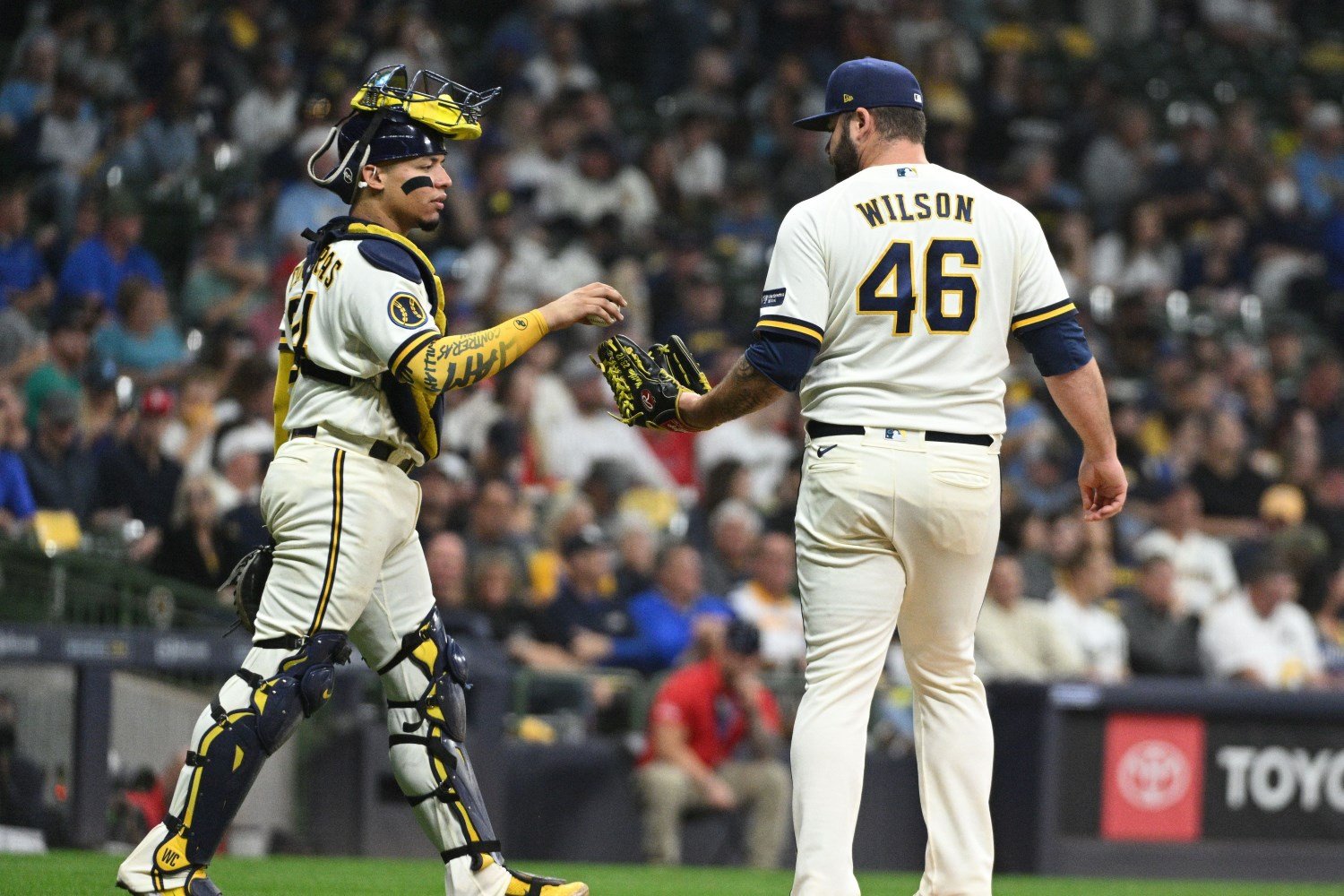 When last I undertook this project, Tyrone Taylor and Adrian Houser had not yet been traded, let alone Corbin Burnes. Thus, we can use that piece as a reference point, to see just how far the Brewers have come since. Lineup and Batting Order Christian Yelich - LF (L) William Contreras - C (R) Willy Adames - SS (R) Rhys Hoskins - 1B (R) Sal Frelick - RF (L) Gary Sánchez - DH (R) Jackson Chourio - CF (R) Tyler Black - 3B (L) Joey Ortiz - 2B (R) This is a right-leaning version of the lineup, and there will certainly be other names in play, especially at DH and when a tough righthander is on the mound for their opponents. There's a good amount of power in it, though, and three of their top four hitters are consistently great at getting on base. The variance possible for the bottom three players in this order would be massive, but that can be a good thing. There's dynamism in this kind of large-scale risk. Bench Eric Haase, C Andruw Monasterio, IF Garrett Mitchell, OF Jake Bauers, 1B/LF If you believe Sánchez will play a considerable amount as the designated hitter, you end up penciling Haase into a roster spot as the true backup backstop. It's certainly possible that Sánchez will be the backup catcher and the primary DH against lefties, which would obviate Haase pretty thoroughly. At that point, the bench would open up for the likes of Brice Turang or Joey Wiemer, who ended up as the last two guys vying for the final roster spot in 2023, too. Because Bauers is out of minor-league options, he's less likely to be part of the club come late March, barring an abominable spring. That makes it harder to find room for a couple of the younger alternatives. Starting Rotation Freddy Peralta (R) Wade Miley (L) Jakob Junis (R) Colin Rea (R) DL Hall (L) What a transformation this unit has undergone since our last projection. It has a radically different feel, and while there's still a path to solid production from the starting staff, it no longer feels like the upside is one of the best such groups in the National League. A youth movement is afoot, which is nice, because Miley, Rea, and Junis are all liable to spend time on the injured list. If those starts are replaced principally by Robert Gasser, Carlos F. Rodriguez, and/or Jacob Misiorowski, the team might benefit tremendously in both the short and the long term. Bullpen Devin Williams (R) Trevor Megill (R) Joel Payamps (R) Abner Uribe (R) Hoby Milner (L) Aaron Ashby (L) Bryse Wilson (R) Joe Ross (R) At a certain point, Gasser is within his rights to feel downright bitter if he's left in Triple A again. The Brewers might have to take that chance. In all honesty, though, the bottom three names on this list are written in light pencil. Ashby's health history warns us not to assume he'll be healthy come Opening Day, even though he enters spring training that way. If he does end up able to take the mound, though, he's as likely to force his way into the rotation (either bloating it to six arms or displacing Hall to the pen, where many scouts believe he'll eventually land anyway) as to be part of the reliever fraternity. Wilson was durable and terrific last year, but in a way that is very hard to sustain from one season to the next. Though he's going to get every chance to make the team, he might come to Arizona without the magical ability to avoid the fat parts of bats that made him so good in 2023. That happens with relievers, and if it happens to Wilson, he might be on waivers come the end of March. Ross's durability is always in doubt, but he does help lock out optionable arms like Gasser, Bryan Hudson, and Elvis Peguero, for as long as he's able to pitch but not needed as a starter. All over, this just feels like a roster that is about to be shaken by another significant trade or two. As currently constructed, the Brewers are likely to be a competitive but not quite truly winning team. It's an uncomfortable limbo. The good news is, it's not likely to last. The bad news might be the good news. Where does this projection go awry? Who would you have that I excluded, and how would you arrange this collection of talent? Let us know.
- 22 comments
-
- 1
-

-
- gary sanchez
- jakob junis
- (and 2 more)
-
The Brewers continued a surprising series of late-offseason moves Wednesday evening, inking a veteran backup catcher to replace... um, one of their two other veteran backup catchers? Though long maligned for his defensive skills behind the plate (especially his blocking of errant pitches) going all the way back to his time as a Yankees phenom, Sánchez has occasionally graded out well as a pitch framer and does a credible (though not exactly rave-drawing) job handling a pitching staff. His real calling card, though, is power. For his career, he's swatted 173 home runs, fueling a 110 career wRC+. It's easy to envision a scenario in which he gets more playing time as the right-handed designated hitter and occasional first baseman than as an actual backstop. In that capacity, he could be plenty valuable. His greatest contributions, in a vacuum, would come as a catcher with all that slugging ability, but a DH masher against lefties who can also fill in behind the plate is a tactical weapon for new skipper Pat Murphy. On a couple of levels, though, this raises some big questions. By now, it's clear that there has been at least one (and perhaps as many as three) internal veers in direction for the Crew this winter. If there hadn't been, we wouldn't be seeing them spend $7 million for a backup catcher, two months after watching their incumbent walk away for $1 million less per year and then trading two role players to the Mets to clear about $7 million more in salary. We know, thanks to the interviews Corbin Burnes has given with the streaming talk show Foul Territory since the trade that sent him to the Baltimore Orioles, that that deal came as a surprise (and seemingly an unwelcome one) to Scott Boras and Rhys Hoskins, who agreed to a deal with the Brewers just a few days before Burnes was dealt. Could this be an olive branch? Does it demonstrate a sufficient commitment to winning in 2024 to mollify Hoskins, or any other members of the team who felt jilted by the sudden change in apparent tack? That's possible, but it feels more like this is another move in a series of them that will start to feel like an avalanche--a downhill roll in which the team gathers freely available talent but also moves on abruptly from some players to whom the fan base was pretty attached. This is unlikely to signal a Contreras trade, but it sure creates an interesting semi-congestion at the catcher spot on the depth chart. It could presage a Willy Adames deal, with Sánchez's all-or-nothing right-handed stick taking over that role from Adames as new acquisition Joey Ortiz steps into the shortstop job. Any way you slice it, spending $14 million on Jakob Junis and Sánchez in the few days following trading a franchise cornerstone like Burnes is strange. Something bigger is afoot. Either the Brewers are making a late move to be very competitive in 2024 and beyond (perhaps by unexpectedly signing a top-flight starter to a long-term deal?), or this is another lateral move in a complicated maneuver designed to keep them relevant in 2024 while focusing most of their energy on 2025-27. Sometime in the next few days, we're going to get answers to these questions, and see some of this wide swath of possibility eliminated. In the meantime, this one is a puzzler. What comes next for the Brewers? What do you think of Sánchez, and what will his role be? Let's break it down together. View full article
-
Brewers Sign Catcher (and Designated Hitter?) Gary Sánchez
Matthew Trueblood posted an article in Brewers
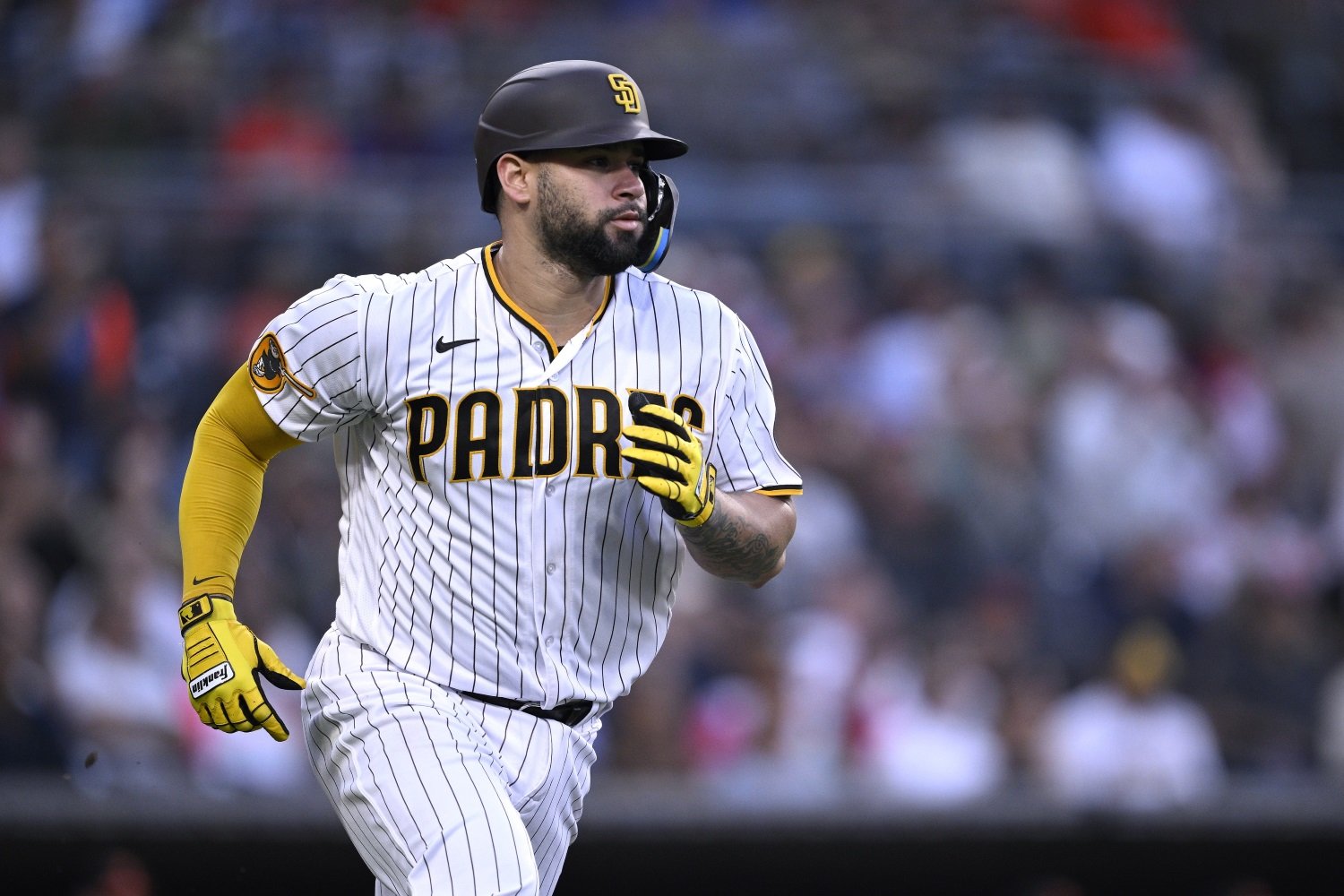 Ok, in reality, there's the outline of a good fit here. Jon Heyman had the news of the Brewers landing Gary Sánchez, though the terms of that deal aren't yet known. It's surprising primarily in that, after losing Victor Caratini to Houston via free agency earlier this winter, the Brewers had already brought in Eric Haase (on a big-league deal) and Austin Nola (on a minor-league one) as depth at the position, behind presumed starter and long-term answer William Contreras. One of the team's top prospects, Jeferson Quero, is also a catcher, and could be ready to contribute in the big leagues by the end of this season. Sánchez does have some traits to recommend him, though. UPDATE: We have terms on the deal. It's a one-year, $7-million guarantee, with a mutual option for 2025. In short, Sánchez certainly isn't going to be in competition with Haase for a job. If anything, Haase will be scrambling to stay on the roster. Though long maligned for his defensive skills behind the plate (especially his blocking of errant pitches) going all the way back to his time as a Yankees phenom, Sánchez has occasionally graded out well as a pitch framer and does a credible (though not exactly rave-drawing) job handling a pitching staff. His real calling card, though, is power. For his career, he's swatted 173 home runs, fueling a 110 career wRC+. It's easy to envision a scenario in which he gets more playing time as the right-handed designated hitter and occasional first baseman than as an actual backstop. In that capacity, he could be plenty valuable. His greatest contributions, in a vacuum, would come as a catcher with all that slugging ability, but a DH masher against lefties who can also fill in behind the plate is a tactical weapon for new skipper Pat Murphy. On a couple of levels, though, this raises some big questions. By now, it's clear that there has been at least one (and perhaps as many as three) internal veers in direction for the Crew this winter. If there hadn't been, we wouldn't be seeing them spend $7 million for a backup catcher, two months after watching their incumbent walk away for $1 million less per year and then trading two role players to the Mets to clear about $7 million more in salary. We know, thanks to the interviews Corbin Burnes has given with the streaming talk show Foul Territory since the trade that sent him to the Baltimore Orioles, that that deal came as a surprise (and seemingly an unwelcome one) to Scott Boras and Rhys Hoskins, who agreed to a deal with the Brewers just a few days before Burnes was dealt. Could this be an olive branch? Does it demonstrate a sufficient commitment to winning in 2024 to mollify Hoskins, or any other members of the team who felt jilted by the sudden change in apparent tack? That's possible, but it feels more like this is another move in a series of them that will start to feel like an avalanche--a downhill roll in which the team gathers freely available talent but also moves on abruptly from some players to whom the fan base was pretty attached. This is unlikely to signal a Contreras trade, but it sure creates an interesting semi-congestion at the catcher spot on the depth chart. It could presage a Willy Adames deal, with Sánchez's all-or-nothing right-handed stick taking over that role from Adames as new acquisition Joey Ortiz steps into the shortstop job. Any way you slice it, spending $14 million on Jakob Junis and Sánchez in the few days following trading a franchise cornerstone like Burnes is strange. Something bigger is afoot. Either the Brewers are making a late move to be very competitive in 2024 and beyond (perhaps by unexpectedly signing a top-flight starter to a long-term deal?), or this is another lateral move in a complicated maneuver designed to keep them relevant in 2024 while focusing most of their energy on 2025-27. Sometime in the next few days, we're going to get answers to these questions, and see some of this wide swath of possibility eliminated. In the meantime, this one is a puzzler. What comes next for the Brewers? What do you think of Sánchez, and what will his role be? Let's break it down together.
 -
Baseball Prospectus rolled out their PECOTA projections for 2024 this week, including projected standings that place the Brewers in the middle of the NL Central muddle. Image courtesy of © Jerome Miron-USA TODAY Sports PECOTA only foresees 78.8 wins for the Crew in their first season without manager Craig Counsell and erstwhile co-aces Brandon Woodruff and Corbin Burnes. It pegs them as an above-average pitching staff, but still doesn't think the team has done enough to address an offense that was subpar throughout 2023. Fans can point, of course, to the Rhys Hoskins signing last month, which does add needed power to the middle of the Milwaukee batting order. If we assume that Christian Yelich and William Contreras will bat somewhere in the top three, making Hoskins a regular in the cleanup spot (with Willy Adames just behind him, barring another trade) does seem to bolster the group. No one should underestimate the upside of this team, should they get the kind of explosive rookie campaign for which they're hoping from Jackson Chourio. However, the bottom half of the lineup is pretty weak at the moment, and PECOTA is even lower on them than others. Light-hitting utility options Andruw Monasterio (93 DRC+, where 100 is average and higher is better), Brice Turang (81), and Owen Miller (87) were known weak points from an offensive perspective, but the system also doesn't like newcomers Eric Haase (80), Jake Bauers (94), Oliver Dunn (98), or Joey Ortiz (88) very much. Other than Christian Yelich, every single outfielder in the Brewers' deep mix (including Chourio) is projected on the wrong side of a 90 DRC+. In all likelihood, the system is wrong about at least one of those outfielders. It's not projecting anything outlandish from Yelich, William Contreras, Adames, or Hoskins, either. The trick for the Brewers will be choosing which players from the mélange around those four cornerstones to give the most playing time to, and how best to shield each from bad matchups. If Pat Murphy does that well, the team will score 35 or 40 more runs than they're projected for, and they'll be on the right side of .500. If not, things could get ugly, as these data reflect. The problem (to the limited extent to which there is one) on the pitching side of the ledger is much different. No fewer than 12 Brewers pitchers project to be better than average, with a DRA- under 100 (where lower is better). Even a couple of hurlers who are positioned for significant innings but don't quite clear that bar sit comfortably between the thresholds of average and replacement-level, including Robert Gasser and Colin Rea. If the system is right about DL Hall (90 DRA-), Aaron Ashby (93), and brand-new starting option Jakob Junis (97), and if they exceed the 251 innings they're projected to contribute, the team could have a better pitching staff than expected, too. Some of the wide variability sketched above can be seen visually, in the distributions of simulated win totals the site uses to illustrate their forecasts' margins for error. Here's the NL Central: That lumpiness--that second peak to the right of the .500 marker, for instance--shows that the system sees some of the big potential swings we all perceive as possible for this team. Still, as that malignant-looking hump on the lefthand slope of the distribution hints, there's also some huge downside here. That's why the average projection is low. Before the Burnes trade, the draft standings had the Crew in a flat-footed tie with the Cubs, at 80 wins. They were still trailing the Cardinals, in that case, but it would have felt like a closer thing. Dealing Burnes, even if it be for two players the team hopes will chip in right away, was a blow, and exponentiated the damage of Brandon Woodruff's injury in the fall. There's a world in which Ortiz really does struggle the way the system expects, and in which Hall is consigned to relief work, and in which Chourio goes through growing pains and Sal Frelick never finds his power and Tyler Black turns out to be unable to acquit himself as a third baseman. In that world, the Brewers have a very bad season. The system is not outfitted to give the team the benefit of that doubt. It doesn't give Matt Arnold extra credit for having a history of finding value, or do the same for the organization because they've enjoyed a streak of outplaying their projections and their expected records over the last several years. We can all decide for ourselves how to adjust our expectations based on those intangible factors, but it's good to have this concrete set of data points to ground all our opinions in facts. What do you expect the Brewers to do in 2024? Do these projections make sense to you? Do any of them especially surprise you? Let's discuss. View full article
-
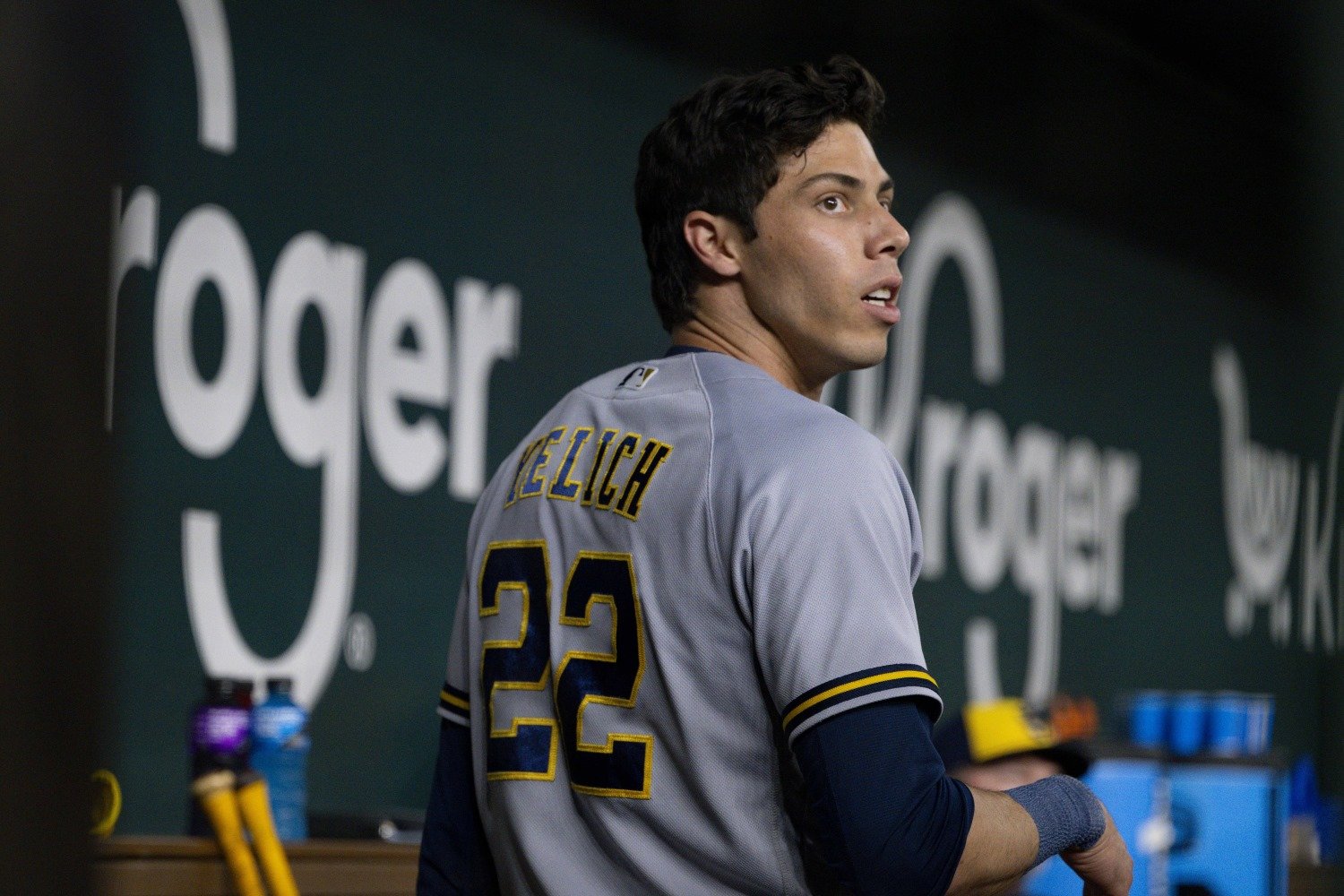 PECOTA only foresees 78.8 wins for the Crew in their first season without manager Craig Counsell and erstwhile co-aces Brandon Woodruff and Corbin Burnes. It pegs them as an above-average pitching staff, but still doesn't think the team has done enough to address an offense that was subpar throughout 2023. Fans can point, of course, to the Rhys Hoskins signing last month, which does add needed power to the middle of the Milwaukee batting order. If we assume that Christian Yelich and William Contreras will bat somewhere in the top three, making Hoskins a regular in the cleanup spot (with Willy Adames just behind him, barring another trade) does seem to bolster the group. No one should underestimate the upside of this team, should they get the kind of explosive rookie campaign for which they're hoping from Jackson Chourio. However, the bottom half of the lineup is pretty weak at the moment, and PECOTA is even lower on them than others. Light-hitting utility options Andruw Monasterio (93 DRC+, where 100 is average and higher is better), Brice Turang (81), and Owen Miller (87) were known weak points from an offensive perspective, but the system also doesn't like newcomers Eric Haase (80), Jake Bauers (94), Oliver Dunn (98), or Joey Ortiz (88) very much. Other than Christian Yelich, every single outfielder in the Brewers' deep mix (including Chourio) is projected on the wrong side of a 90 DRC+. In all likelihood, the system is wrong about at least one of those outfielders. It's not projecting anything outlandish from Yelich, William Contreras, Adames, or Hoskins, either. The trick for the Brewers will be choosing which players from the mélange around those four cornerstones to give the most playing time to, and how best to shield each from bad matchups. If Pat Murphy does that well, the team will score 35 or 40 more runs than they're projected for, and they'll be on the right side of .500. If not, things could get ugly, as these data reflect. The problem (to the limited extent to which there is one) on the pitching side of the ledger is much different. No fewer than 12 Brewers pitchers project to be better than average, with a DRA- under 100 (where lower is better). Even a couple of hurlers who are positioned for significant innings but don't quite clear that bar sit comfortably between the thresholds of average and replacement-level, including Robert Gasser and Colin Rea. If the system is right about DL Hall (90 DRA-), Aaron Ashby (93), and brand-new starting option Jakob Junis (97), and if they exceed the 251 innings they're projected to contribute, the team could have a better pitching staff than expected, too. Some of the wide variability sketched above can be seen visually, in the distributions of simulated win totals the site uses to illustrate their forecasts' margins for error. Here's the NL Central: That lumpiness--that second peak to the right of the .500 marker, for instance--shows that the system sees some of the big potential swings we all perceive as possible for this team. Still, as that malignant-looking hump on the lefthand slope of the distribution hints, there's also some huge downside here. That's why the average projection is low. Before the Burnes trade, the draft standings had the Crew in a flat-footed tie with the Cubs, at 80 wins. They were still trailing the Cardinals, in that case, but it would have felt like a closer thing. Dealing Burnes, even if it be for two players the team hopes will chip in right away, was a blow, and exponentiated the damage of Brandon Woodruff's injury in the fall. There's a world in which Ortiz really does struggle the way the system expects, and in which Hall is consigned to relief work, and in which Chourio goes through growing pains and Sal Frelick never finds his power and Tyler Black turns out to be unable to acquit himself as a third baseman. In that world, the Brewers have a very bad season. The system is not outfitted to give the team the benefit of that doubt. It doesn't give Matt Arnold extra credit for having a history of finding value, or do the same for the organization because they've enjoyed a streak of outplaying their projections and their expected records over the last several years. We can all decide for ourselves how to adjust our expectations based on those intangible factors, but it's good to have this concrete set of data points to ground all our opinions in facts. What do you expect the Brewers to do in 2024? Do these projections make sense to you? Do any of them especially surprise you? Let's discuss.
 -
It's hardly fair to consider him a replacement for the ace they just traded away, but the Brewers agreed to a deal late Monday night with a journeyman righthander who bolsters their rotation depth. Presumably, he slots in as the Brewers' fifth starter for the time being, with the understanding (by all parties) that the development of Robert Gasser, Jacob Misiorowski, and/or DL Hall could push him into a long relief role. That's where Junis spent the lion's share of 2023 for San Francisco, and it might be the job to which he's better suited. As befits a slider-sinker righty, he gave up an .807 OPS to left-handed batters last year, with an underwhelming 13.5% K-BB%. Against righties, he was much better, with a .749 OPS (and that inflated by a very high BABIP) and a 24.1% K-BB%. A bit of protection from bad matchups is in order, and could help him hang on as a credible back-end starter or multi-inning arm. While he is a starter, expect to see Pat Murphy pulling Junis after two trips through the rotation pretty routinely. All of this assumes that the team doesn't have any grand ideas to fix or improve him, of course, and that's never quite a safe assumption. Though Junis is much older and more experienced than was (to pick one recent example) Bryse Wilson at this time last year, he is another in a long line of arms the team has acquired after they failed to live up to the potential they would sometimes flash. If the Brewers think they can merge the approaches Junis used during his time in Kansas City (when he had a four-seamer and used his sinker and slider in a more supplemental capacity) with the one he adopted in San Francisco, they might be able to unlock some things. For now, though, Junis is a low-risk, low-reward way to backfill some of the innings the team lost by trading away Corbin Burnes. He won't make anyone forget about the burly ace, but he ought to provide some stability to a pitching staff that was briefly very much in need of it. Do you like this pickup? Does it seem to foreclose higher-upside additions, or merely reinforce the team's message about wanting to remain competitive while looking ahead to an uncertain future? View full article
-
Jakob Junis Joins Brewers Rotation Mix on One-Year Deal (UPDATED)
Matthew Trueblood posted an article in Brewers
 According to Kiley McDaniel of ESPN, Jakob Junis and the Brewers have agreed to a one-year deal, pending a physical. Presumably, he slots in as the Brewers' fifth starter for the time being, with the understanding (by all parties) that the development of Robert Gasser, Jacob Misiorowski, and/or DL Hall could push him into a long relief role. That's where Junis spent the lion's share of 2023 for San Francisco, and it might be the job to which he's better suited. As befits a slider-sinker righty, he gave up an .807 OPS to left-handed batters last year, with an underwhelming 13.5% K-BB%. Against righties, he was much better, with a .749 OPS (and that inflated by a very high BABIP) and a 24.1% K-BB%. A bit of protection from bad matchups is in order, and could help him hang on as a credible back-end starter or multi-inning arm. While he is a starter, expect to see Pat Murphy pulling Junis after two trips through the rotation pretty routinely. All of this assumes that the team doesn't have any grand ideas to fix or improve him, of course, and that's never quite a safe assumption. Though Junis is much older and more experienced than was (to pick one recent example) Bryse Wilson at this time last year, he is another in a long line of arms the team has acquired after they failed to live up to the potential they would sometimes flash. If the Brewers think they can merge the approaches Junis used during his time in Kansas City (when he had a four-seamer and used his sinker and slider in a more supplemental capacity) with the one he adopted in San Francisco, they might be able to unlock some things. For now, though, Junis is a low-risk, low-reward way to backfill some of the innings the team lost by trading away Corbin Burnes. He won't make anyone forget about the burly ace, but he ought to provide some stability to a pitching staff that was briefly very much in need of it. Do you like this pickup? Does it seem to foreclose higher-upside additions, or merely reinforce the team's message about wanting to remain competitive while looking ahead to an uncertain future?
 -
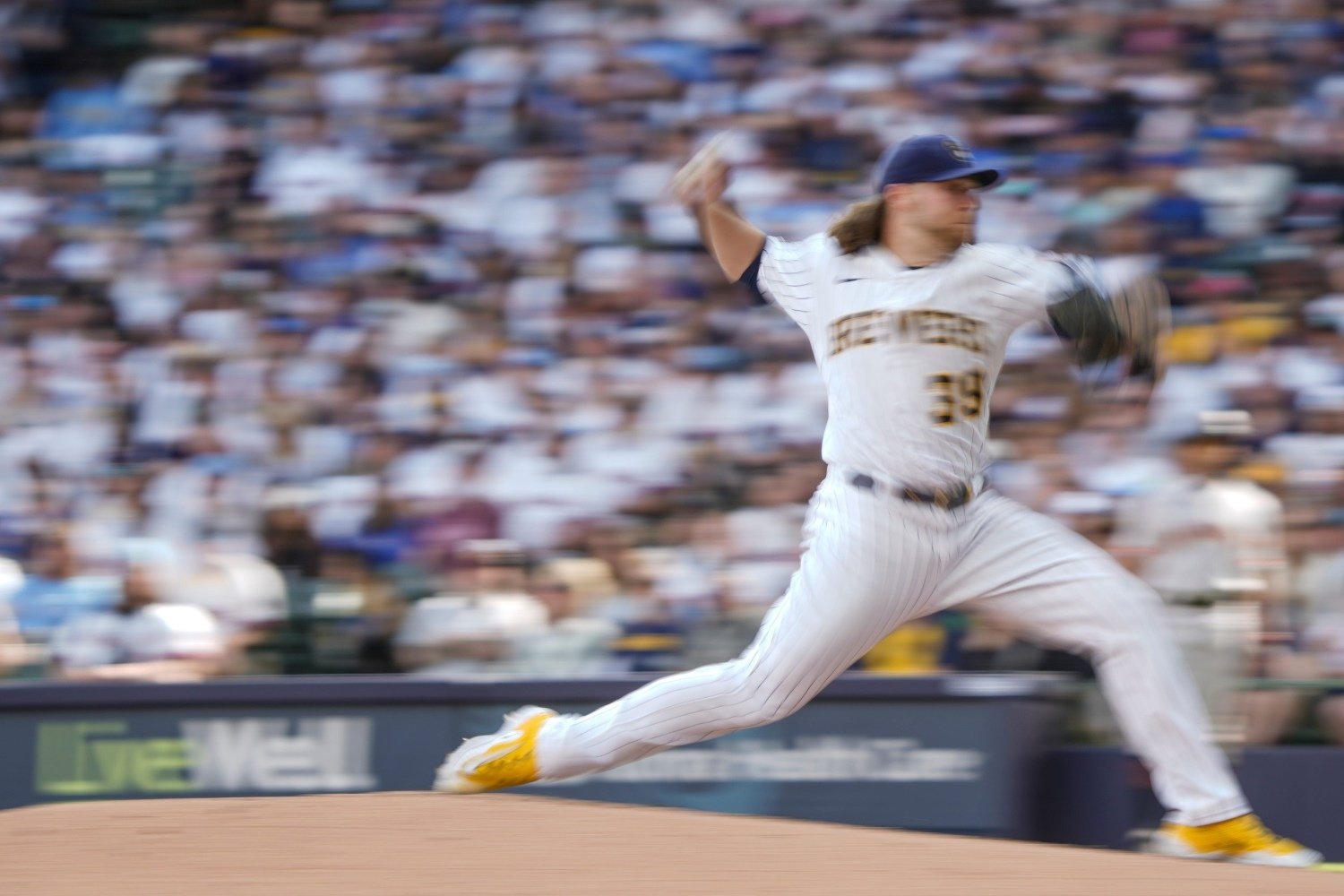 It wasn't with Corbin Burnes that the Brewers first found success reviving the career of a struggling starting pitcher by giving him a cutter. You can comb back into the archives and find plenty of examples, but an especially visible one came in 2018, when Burnes was just breaking into the league. Milwaukee helped flagging journeyman lefty Wade Miley find the feel for a cutter, and his career turned around. Obviously, he's still going, and still slinging cutters for the Brewers niw. Working with Miley and their smattering of other cutter success stories didn't immediately transform the Brewers into a cutter factory, though. In 2019, they still finished 25th in MLB in cutter usage as a team. That summer was the winter of Burnes's discontent, as he posted an ERA north of 8.00 and seemed on the verge of crashing out of the league, despite the liveliness of his fastball. Burnes embraced the cutter in the immediate aftermath of 2019, and in 2020, he began to lead a change in the Brewers' level of commitment to the pitch. They finished ninth in usage of that pitch that year, 10th in 2021, and sixth in 2022. Slowly, and thanks in no small part to the leadership by example of Burnes, the Crew became the preeminent artisans of the cutter. In 2023, no team threw as many cutters as the Crew. More tellingly, though, consider this: Burnes himself threw 896 cutters to left-handed batters, more than exactly half the teams in baseball threw when the batter had the platoon advantage. He threw 810 cutters to righties, more than 18 of the other 29 teams threw when the pitcher had that advantage. Hardly anyone can replicate what Burnes did during his emergence as one of the best pitchers in baseball. The cutter can be a tough pitch to throw hard, a tough pitch to command, and a tough one with which to miss bats. Burnes is special; everyone is aware of that. However, the Brewers have learned as much from Burnes as he's learned from them. This year, for instance, Miley, Bryse Wilson, and Colin Rea each threw at least 400 cutters, and it was a key part of each of their impressive seasons. The Brewers were one of the best teams in baseball at managing opponents' contact last year, and the cutter was a staple of that endeavor. Burnes uses the cutter as much and as well as half the league combined, but it's not Burnes who brought it to the Brewers, and the Brewers use it extensively, even beyond Burnes. When trying to build a successful, sustainable repertoire, a cutter can be helpful in multiple ways. Depending on what particular shape and style of cutter it is, it can be the right way for a pitcher battling command issues with the slider to start dominating with a more manageable cousin; a means of getting in on the hands of opposite-handed hitters, to neutralize power; or a means of stealing strikes and setting up a sinker or changeup. It's a chameleon of a pitch, and no one hurler owns it. Nonetheless, for the Brewers, trading Burnes meant more than parting with the ace of their rotation for the last few years. It meant surrendering their primacy in the deployment of this particular pitch, and with that, a bit of their identity as a pitching staff. They were the team who used the cutter most in 2023. They might well fall back into the middle of the pack in 2024, which means changing tack in an effort to sustain the extraordinary success they had last year. Part of this is symbolic, and in the grand scheme of things, that part doesn't matter very much. No team gets bonus points for leading the league in the deployment of a particular pitch. It's not because the Brewers threw cutters that they had such a good season pitching-wise. They threw those cutters because the guys throwing them were able to make them part of an effective broader arsenal. There's another part of this, though, that runs deeper and has more far-reaching consequences. Burnes was a major developmental victory for the team. The cutter was the key they used to unlock him. It's part of the paradigm they've constructed since his breakthrough, wherein they can avoid lavish spending on external pitching options by building good pitching staffs through player development and pitch design. Rea is another example, although a much lower-grade one. Wilson is an especially compelling one, since you could see him as a candidate for a cutter even when he was acquired, and he then implemented one. The visible validity of that approach is diminished by the departure of a guy like Burnes. Dealing him reminds us all how difficult turning him from a relatively non-premium draft pick and low-graded prospect into a superstar really was, and that assuming it to be a repeatable skill is facile. That kind of development is possible, even on a long-term basis and across several individuals, but letting Burnes go brings us to a moment of reckoning. Between that trade and the injury that severed ties between the organization and Brandon Woodruff, the pressure (and the urgency thereof) on the Brewers' development programs just got ratcheted way, way up. What pitching projects most interest you for this team, with spring training on the horizon? What aspects of Burnes's departure, beyond his production, interest you most? Let's further discuss the near future for the Crew's pitching staff.
 -
The Brewers didn't just trade their ace starter last week. They also traded away the exemplar of their deftness at pitching development, and especially at augmenting the weapon that turned him into a star. Image courtesy of © Ebony Cox - Milwaukee Journal Sentinel - USA Today Sports It wasn't with Corbin Burnes that the Brewers first found success reviving the career of a struggling starting pitcher by giving him a cutter. You can comb back into the archives and find plenty of examples, but an especially visible one came in 2018, when Burnes was just breaking into the league. Milwaukee helped flagging journeyman lefty Wade Miley find the feel for a cutter, and his career turned around. Obviously, he's still going, and still slinging cutters for the Brewers niw. Working with Miley and their smattering of other cutter success stories didn't immediately transform the Brewers into a cutter factory, though. In 2019, they still finished 25th in MLB in cutter usage as a team. That summer was the winter of Burnes's discontent, as he posted an ERA north of 8.00 and seemed on the verge of crashing out of the league, despite the liveliness of his fastball. Burnes embraced the cutter in the immediate aftermath of 2019, and in 2020, he began to lead a change in the Brewers' level of commitment to the pitch. They finished ninth in usage of that pitch that year, 10th in 2021, and sixth in 2022. Slowly, and thanks in no small part to the leadership by example of Burnes, the Crew became the preeminent artisans of the cutter. In 2023, no team threw as many cutters as the Crew. More tellingly, though, consider this: Burnes himself threw 896 cutters to left-handed batters, more than exactly half the teams in baseball threw when the batter had the platoon advantage. He threw 810 cutters to righties, more than 18 of the other 29 teams threw when the pitcher had that advantage. Hardly anyone can replicate what Burnes did during his emergence as one of the best pitchers in baseball. The cutter can be a tough pitch to throw hard, a tough pitch to command, and a tough one with which to miss bats. Burnes is special; everyone is aware of that. However, the Brewers have learned as much from Burnes as he's learned from them. This year, for instance, Miley, Bryse Wilson, and Colin Rea each threw at least 400 cutters, and it was a key part of each of their impressive seasons. The Brewers were one of the best teams in baseball at managing opponents' contact last year, and the cutter was a staple of that endeavor. Burnes uses the cutter as much and as well as half the league combined, but it's not Burnes who brought it to the Brewers, and the Brewers use it extensively, even beyond Burnes. When trying to build a successful, sustainable repertoire, a cutter can be helpful in multiple ways. Depending on what particular shape and style of cutter it is, it can be the right way for a pitcher battling command issues with the slider to start dominating with a more manageable cousin; a means of getting in on the hands of opposite-handed hitters, to neutralize power; or a means of stealing strikes and setting up a sinker or changeup. It's a chameleon of a pitch, and no one hurler owns it. Nonetheless, for the Brewers, trading Burnes meant more than parting with the ace of their rotation for the last few years. It meant surrendering their primacy in the deployment of this particular pitch, and with that, a bit of their identity as a pitching staff. They were the team who used the cutter most in 2023. They might well fall back into the middle of the pack in 2024, which means changing tack in an effort to sustain the extraordinary success they had last year. Part of this is symbolic, and in the grand scheme of things, that part doesn't matter very much. No team gets bonus points for leading the league in the deployment of a particular pitch. It's not because the Brewers threw cutters that they had such a good season pitching-wise. They threw those cutters because the guys throwing them were able to make them part of an effective broader arsenal. There's another part of this, though, that runs deeper and has more far-reaching consequences. Burnes was a major developmental victory for the team. The cutter was the key they used to unlock him. It's part of the paradigm they've constructed since his breakthrough, wherein they can avoid lavish spending on external pitching options by building good pitching staffs through player development and pitch design. Rea is another example, although a much lower-grade one. Wilson is an especially compelling one, since you could see him as a candidate for a cutter even when he was acquired, and he then implemented one. The visible validity of that approach is diminished by the departure of a guy like Burnes. Dealing him reminds us all how difficult turning him from a relatively non-premium draft pick and low-graded prospect into a superstar really was, and that assuming it to be a repeatable skill is facile. That kind of development is possible, even on a long-term basis and across several individuals, but letting Burnes go brings us to a moment of reckoning. Between that trade and the injury that severed ties between the organization and Brandon Woodruff, the pressure (and the urgency thereof) on the Brewers' development programs just got ratcheted way, way up. What pitching projects most interest you for this team, with spring training on the horizon? What aspects of Burnes's departure, beyond his production, interest you most? Let's further discuss the near future for the Crew's pitching staff. View full article
-
When Matt Arnold met with the media in the wake of Thursday night's blockbuster deal with the Baltimore Orioles, he avoided direct or definitive answers about the next steps for the Brewers. Still, he left some bread crumbs for fans and reporters to follow. That sounds like a guy who is pondering an Adames deal, if the right one comes along. The Dodgers still don't have as a good a shortstop as you expect a team that great to have. Atlanta, the Giants, and the Marlins are all theoretical fits on an Adames trade, in varying fashions and degrees. Dealing away the incumbent shortstop wouldn't need to mean taking a step back in 2024, just as Arnold insisted that dealing away Burnes doesn't mean that, because Ortiz is a no-doubt shortstop who brings some offensive skills in his own right, so the team would suffer rather little by letting Adames go--but that assumes that they find good value for him, and not in the form of prospects a year or two away, but rather someone who can help the big-league team right away. Maybe a controllable starter project like Bryce Elder or Edward Cabrera could fit that set of criteria, but it's tougher to imagine an Adames trade that makes the team better in the short term than one that makes them worse. While Arnold (and, over a longer span and in clearer terms, Mark Attanasio) has always sought to avoid any semblance of rebuilding, there's something worse for the Brewers than a 69-win setback of a season in 2024: a 79-win, relatively narrow miss, in which they burn up their remaining team control on Adames, end up having to trade Williams, and lose their grasp on the NL Central for multiple seasons involuntarily, rather than letting it go briefly in order to get a firmer grip the following year. Before this trade, I had the Crew as favorites in the gallimaufry of the 2024 NL Central, but it was a close thing. I think they've lost any edge they held, now, and probably stand shoulder-to-shoulder with the Cubs and Reds, a step behind the Cardinals. Something else needs to happen here. It can be a full commitment to a youth movement (distinct from a rebuild in that, given the extraordinary talent of Jackson Chourio, Sal Frelick, William Contreras, Tyler Black, Ortiz, Hall, Robert Gasser, Aaron Ashby, Abner Uribe, and more, they can endeavor to win even as they play the kids every day), or it can be a nimble flip-and-climb move in which they firm up some areas of the roster via trade or bargain shopping in the endgame of free agency. It just needs to be something. If they stop right here, they've left themselves in the very unhappy medium space of the division, and they've made the ascension from there harder. What do you most want to see next from the team, after this deal? Lay out your blueprint for the next six weeks, to get the team to Opening Day with a clearer sense of purpose. View full article
- 6 replies
-
- 1
-

-
- corbin burnes
- willy adames
- (and 2 more)
-
 There's no denying that trading Corbin Burnes for Orioles shortstop prospect Joey Ortiz, left-handed hurler DL Hall, and a valuable 2024 Draft pick makes the Brewers worse for the coming season. Ortiz and Hall are promising players, but each also has their warts, and neither has more than a couple of short stints in the big leagues to recommend them. Burnes was the workhorse and ace of Milwaukee's rotation for the last four years, and moving him leaves a huge hole in the starting corps, which the two young players do not adequately offset. That this happened just over a week after the Brewers signed Rhys Hoskins to a two-year deal (with an opt-out after 2024) made it more jarring than it otherwise would have felt, because until Hoskins came aboard, everyone understood there to be some chance that Milwaukee would cash in Burnes for a bushel of future value. Had it come before the Hoskins deal, it would have been less surprising, but it also would have felt more ominous. As it is, Arnold was quick to reassure everyone that this doesn't signify a conscious step back from contention for the coming season. That sounds like a guy who is pondering an Adames deal, if the right one comes along. The Dodgers still don't have as a good a shortstop as you expect a team that great to have. Atlanta, the Giants, and the Marlins are all theoretical fits on an Adames trade, in varying fashions and degrees. Dealing away the incumbent shortstop wouldn't need to mean taking a step back in 2024, just as Arnold insisted that dealing away Burnes doesn't mean that, because Ortiz is a no-doubt shortstop who brings some offensive skills in his own right, so the team would suffer rather little by letting Adames go--but that assumes that they find good value for him, and not in the form of prospects a year or two away, but rather someone who can help the big-league team right away. Maybe a controllable starter project like Bryce Elder or Edward Cabrera could fit that set of criteria, but it's tougher to imagine an Adames trade that makes the team better in the short term than one that makes them worse. While Arnold (and, over a longer span and in clearer terms, Mark Attanasio) has always sought to avoid any semblance of rebuilding, there's something worse for the Brewers than a 69-win setback of a season in 2024: a 79-win, relatively narrow miss, in which they burn up their remaining team control on Adames, end up having to trade Williams, and lose their grasp on the NL Central for multiple seasons involuntarily, rather than letting it go briefly in order to get a firmer grip the following year. Before this trade, I had the Crew as favorites in the gallimaufry of the 2024 NL Central, but it was a close thing. I think they've lost any edge they held, now, and probably stand shoulder-to-shoulder with the Cubs and Reds, a step behind the Cardinals. Something else needs to happen here. It can be a full commitment to a youth movement (distinct from a rebuild in that, given the extraordinary talent of Jackson Chourio, Sal Frelick, William Contreras, Tyler Black, Ortiz, Hall, Robert Gasser, Aaron Ashby, Abner Uribe, and more, they can endeavor to win even as they play the kids every day), or it can be a nimble flip-and-climb move in which they firm up some areas of the roster via trade or bargain shopping in the endgame of free agency. It just needs to be something. If they stop right here, they've left themselves in the very unhappy medium space of the division, and they've made the ascension from there harder. What do you most want to see next from the team, after this deal? Lay out your blueprint for the next six weeks, to get the team to Opening Day with a clearer sense of purpose.
- 6 comments
-
- 2
-
-
- corbin burnes
- willy adames
- (and 2 more)
-
I'll say one thing: If Craig were still here, he's a reliever, and he's the heir to the Airbender almost right away, Uribe be damned. I think now we get a test of whether the org thinks along the same lines as Counsell in that way, organically.
-
In a blockbuster deal a fortnight shy of spring training, the Brewers have traded ace Corbin Burnes. He goes to the Baltimore Orioles, in a trade that reshapes the way many fans will view the 2024 season and beyond. In return, the Brewers receive high-end infield prospect Joey Ortiz and pitcher DL Hall. They're also receiving the Orioles' Competitive Balance Round A pick, set a No. 34 overall, in this year's draft. It's a significant bundle of talent, as befits moving a player this important to the franchise. It also leaves a lot of questions about the short-term future of the roster to answer. Ortiz, 25, is an MLB-ready shortstop whose glove is his carrying tool, which comes with obvious and fascinating (if not altogether comfortable) implications about the future of Willy Adames in Milwaukee. He also has good bat-to-ball skills, and he posted a 90th-percentile exit velocity of 105.3 miles per hour in Triple A last year. That was 48th of 245 batters with at least 300 plate appearances, and it came even as he made contact on swings at the 20th-highest rate in that group. Suffice it to say, there's a lot to be excited about here, and the Brewers won't have to wait long to realize the benefits of adding Ortiz. Hall has only worked in relief during parts of two big-league seasons, but he's shown the ability to rack up strikeouts at an impressive rate. He's a lefty with a lot of prospect pedigree and immediate upside, be it in the rotation or (more likely) as a new high-leverage relief weapon. His fastball has the same unique sort of explosion, and his slider a semblance of the same electricity, as another big lefty and former Orioles farmhand the Brewers once acquired: Josh Hader. Hall has a really impressive changeup to set off that pitch pairing, though, which is why he might yet blossom into a front-of-the-rotation starter. The Brewers probably intend to try him in that role to begin 2024, at least. This deal doesn't so much invite us to speculate on Adames's future as demand it. Ortiz was nearly ready even early in 2023. He needs to be in the big leagues in 2024, and he needs to play regularly. He could do so at third base, where the Brewers have no ready-made solution, but his glove would seem almost wasted there. He's at least the equal of Adames with the glove even right now. Meanwhile, Hall seasons an already-strong pitching staff with the kind of crackling upside that seemed to flicker near the end of 2023, as fans and organization alike faced a future without Woodruff. It comes, however, at a heavy cost. Freddy Peralta is a perfectly credible ace for any starting rotation, but with Wade Miley as the next man on the depth chart and Joe Ross now firmly written into any rotation to open the season, it's a top-heavy unit. It sure feels like this is one move of a multiple-transaction maneuver, and that we'll struggle to make perfect sense of the Brewers' side of the deal until we see what comes next. Could the Crew unexpectedly jump into the fray for Jordan Montgomery or Blake Snell? Will they deal Adames for a pitcher with more than one season of team control? It's impossible to know what the other shoe will look like, but you can feel the change in air pressure behind this trade that means another one is coming down. There's nothing complicated about the acquisition of that extra draft pick, though. In a year when the Brewers aren't scheduled to make a high selection, this addition conspires with their own competitive-balance pick to position them to push some high-end talent around on the board--just as they did in 2023, spending overslot on players like Eric Bitonti and Cooper Pratt. These picks can only be traded once, so you can now write the Crew into that No. 34 slot in pen. They added three fairly high-value long-term assets to the organization in this deal, which was a hard line drawn months ago by Matt Arnold and company in any trade of Burnes. Although it's already February, the slow movement of the free-agent market to this point means there's some meat left on the offseason bone. This deal alone proves that, but it's important to keep it in mind, because there is more than one viable path forward for the Brewers, such that they can enter the season still well-positioned to compete in the NL Central even after spinning off their longtime ace. What are your feelings on the deal? Did the front office get enough? What do you want to see them do next? Let's keep the conversation bubbling. Research assistance provided by TruMedia. View full article
-
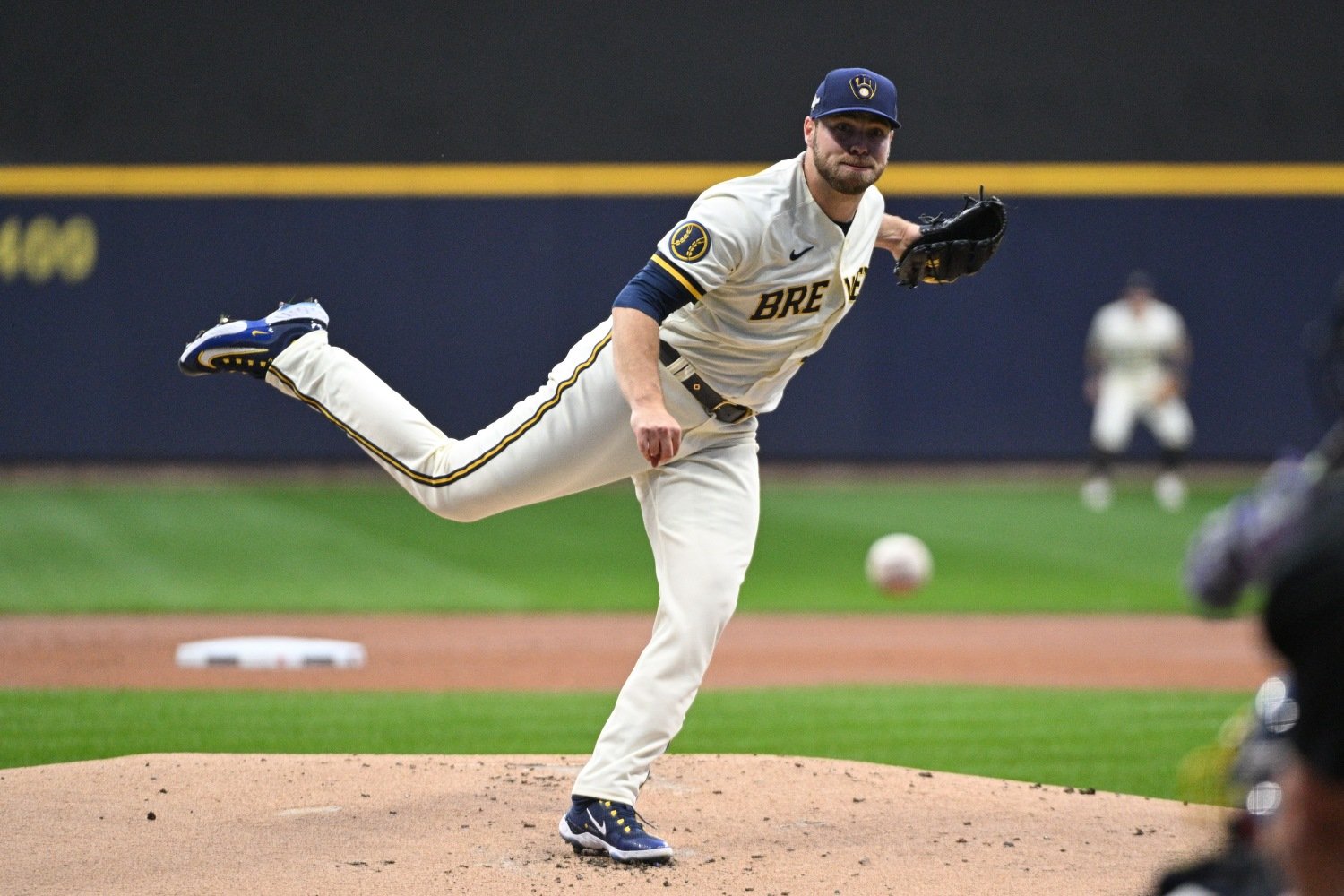 Ken Rosenthal of The Athletic was first to break the news. After six seasons with the Crew in which he made a case as one of the best pitchers in team history and won a Cy Young Award, Corbin Burnes is gone, a year before he was due to hit free agency. In return, the Brewers receive high-end infield prospect Joey Ortiz and pitcher DL Hall. They're also receiving the Orioles' Competitive Balance Round A pick, set a No. 34 overall, in this year's draft. It's a significant bundle of talent, as befits moving a player this important to the franchise. It also leaves a lot of questions about the short-term future of the roster to answer. Ortiz, 25, is an MLB-ready shortstop whose glove is his carrying tool, which comes with obvious and fascinating (if not altogether comfortable) implications about the future of Willy Adames in Milwaukee. He also has good bat-to-ball skills, and he posted a 90th-percentile exit velocity of 105.3 miles per hour in Triple A last year. That was 48th of 245 batters with at least 300 plate appearances, and it came even as he made contact on swings at the 20th-highest rate in that group. Suffice it to say, there's a lot to be excited about here, and the Brewers won't have to wait long to realize the benefits of adding Ortiz. Hall has only worked in relief during parts of two big-league seasons, but he's shown the ability to rack up strikeouts at an impressive rate. He's a lefty with a lot of prospect pedigree and immediate upside, be it in the rotation or (more likely) as a new high-leverage relief weapon. His fastball has the same unique sort of explosion, and his slider a semblance of the same electricity, as another big lefty and former Orioles farmhand the Brewers once acquired: Josh Hader. Hall has a really impressive changeup to set off that pitch pairing, though, which is why he might yet blossom into a front-of-the-rotation starter. The Brewers probably intend to try him in that role to begin 2024, at least. This deal doesn't so much invite us to speculate on Adames's future as demand it. Ortiz was nearly ready even early in 2023. He needs to be in the big leagues in 2024, and he needs to play regularly. He could do so at third base, where the Brewers have no ready-made solution, but his glove would seem almost wasted there. He's at least the equal of Adames with the glove even right now. Meanwhile, Hall seasons an already-strong pitching staff with the kind of crackling upside that seemed to flicker near the end of 2023, as fans and organization alike faced a future without Woodruff. It comes, however, at a heavy cost. Freddy Peralta is a perfectly credible ace for any starting rotation, but with Wade Miley as the next man on the depth chart and Joe Ross now firmly written into any rotation to open the season, it's a top-heavy unit. It sure feels like this is one move of a multiple-transaction maneuver, and that we'll struggle to make perfect sense of the Brewers' side of the deal until we see what comes next. Could the Crew unexpectedly jump into the fray for Jordan Montgomery or Blake Snell? Will they deal Adames for a pitcher with more than one season of team control? It's impossible to know what the other shoe will look like, but you can feel the change in air pressure behind this trade that means another one is coming down. There's nothing complicated about the acquisition of that extra draft pick, though. In a year when the Brewers aren't scheduled to make a high selection, this addition conspires with their own competitive-balance pick to position them to push some high-end talent around on the board--just as they did in 2023, spending overslot on players like Eric Bitonti and Cooper Pratt. These picks can only be traded once, so you can now write the Crew into that No. 34 slot in pen. They added three fairly high-value long-term assets to the organization in this deal, which was a hard line drawn months ago by Matt Arnold and company in any trade of Burnes. Although it's already February, the slow movement of the free-agent market to this point means there's some meat left on the offseason bone. This deal alone proves that, but it's important to keep it in mind, because there is more than one viable path forward for the Brewers, such that they can enter the season still well-positioned to compete in the NL Central even after spinning off their longtime ace. What are your feelings on the deal? Did the front office get enough? What do you want to see them do next? Let's keep the conversation bubbling. Research assistance provided by TruMedia.
- 17 comments
-
- 2
-
-
- corbin burnes
- joey ortiz
- (and 1 more)
-
Yeah. But they're not going to, so.. 🤷♂️ I wonder what would have to happen this spring for him and/or the team to come off this powerful commitment to Yelich as LF.
-
Barring injury, Opening Day will find Christian Yelich in left field for the Milwaukee Brewers. The rest of the outfield alignment, though, is much less certain. After they agreed to sign Jackson Chourio to an eight-year, $82-million deal that could keep him in Milwaukee for as much as a decade, the Brewers are going to have their rookie phenom in the lineup pretty much right away in 2024. If they believed he needed any more than a formality's worth of time in Triple A, they wouldn't have committed to him this way. With Sal Frelick, Joey Wiemer, and Garrett Mitchell already in the mix, though, it's worth asking: What's the best way for the team to array its youngsters? By the time the season begins (or even within a few weeks), this could resolve itself. Mitchell and Wiemer are seen, by and large, as trade candidates, ever since Chourio signed his deal. A move centered around either of them and aimed at upgrading the team's projected starting rotation would not come as a shock. Even with one of those two gone, though, it's not clear how the remaining talent ought to be deployed. In general, the assumption has been that Chourio will be the center fielder. That's where he's listed on Roster Resource, a FanGraphs feature. The official site of the Brewers also lists him atop the Depth Chart in center, with Frelick in right. Baseball America's scouting report on Chourio says he "has the speed, acceleration and lateral range to be an above-average defender in center field." Everyone agrees that Chourio has some rough edges to sand off, defensively, but there's a general feeling that he can iron them out and end up as an above-average defender up the middle. Because of Chourio's offensive profile, though, he'll eventually be a very good player even if he moves to a corner outfield spot. In fact, BA lists him as a right fielder, despite the praise above. He's thickly built, and the best version of him is a slugger who hits more than 30 home runs each year. There's room for an argument that he can best develop and serve the Brewers by moving to a corner sooner, rather than later, the same way Ronald Acuña Jr. has for the Atlanta Braves. To buttress that argument, let's look at a few numbers. Here's how players who started at least 70 games in center field did when they were at that position, and when they were anywhere else, for each of the last three seasons. Regular Center Fielders, At CF and Elsewhere, 2021-23 Season Split AVG OBP SLG K% BB% BABIP wOBA 2021, CF 0.25 0.323 0.41 22.3 8.7 0.301 0.317 2021, Other 0.244 0.31 0.417 24.6 7.8 0.296 0.312 2022, CF 0.249 0.314 0.408 22.5 7.7 0.298 0.315 2022, Other 0.25 0.347 0.462 24 11.6 0.294 0.349 2023, CF 0.25 0.317 0.426 24.8 8 0.307 0.324 2023, Other 0.254 0.343 0.429 22.6 11 0.3 0.338 In 2021, guys who often played center were slightly better at that spot than when assigned to play elsewhere. The sample of plate appearances for that set of players at other spots was smallest that year, though. In 2022 and 2023, the bag looks a bit more mixed, but the advantage is clear in the big picture: Guys hit better when they were playing further down the defensive spectrum. Yes, Aaron Judge somewhat biases this data, but nothing here is wholly a product of him, or of anyone else. Cody Bellinger split time between center and first base for the Cubs last year, but had an OPS .155 higher when playing center. The rest of the league more than offset that outlier. This is not a surprising finding. Previous studies have shown that hitters hit better when playing less demanding defensive positions. It can be hard to tease out the cause and effect there, since only guys who might be a bit stretched at center or short are often asked to play more offense-first positions, like the corner spots. The data above is fairly free of that, though, because it starts by selecting the guys who played pretty often in center and only focuses on the differences between their performance there and elsewhere. If you wanted to maximize Chourio's output at the plate, then, you'd be making the right choice by moving him to right field. Thinking long-term, maybe you want to hold right field open for a less athletic slugger, and maybe you want Chourio to get the maximum chance to make use of his speed, but even those considerations come with caveats. For instance, by signing him to this deal and moving him so rapidly to the majors, you're already risking rushing Chourio a little bit. Putting him in right takes away some pressure to refine his defense and lets him wrestle with the greater challenge of figuring out and assailing big-league hurlers. It's also a bit safer to play right field than to play center. Chourio is less likely to wear down or get hurt out there, especially since navigating the wall when going back on fly balls is already one of his documented areas of weakness and a center fielder has to do a bit more of that than does a corner man. Given only average (or, as many teams in a similar spot might have, worse than average) options to play out there with him, you might play Chourio in center, but the Brewers have somewhat better than average options. That brings us around to Frelick. He came up last July and showed all kinds of signs of being a credible, dedicated, intelligent big-league player. He showed speed, great contact ability, a discerning eye at the plate and great skill and daring in the field. What he did not show was any ability to leave a mark on the ball. He didn't make nearly enough hard contact in MLB in 2023. Of the 362 batters who had at least 200 plate appearances, Frelick ranked 345th in 90th-percentile exit velocity. He just isn't going to find power, no matter where he plays. Add up his time in Triple A and MLB, and he spent almost exactly equal time in center and right field last year. He was solidly above-average at both spots, with 2 Defensive Runs Saved (DRS) in center and 4 DRS in right, each in much less than a full share of playing time. Frelick does have what Chourio is still looking for, as he goes back on the ball smoothly and confidently and plays the wall well. He's a plus defensive center fielder, and remaining so is the only way he's going to be a valuable regular in MLB. While all outlets agree that Frelick is currently positioned to be the regular who rounds out the outfield along with Yelich and Chourio, that needn't be locked in. Mitchell and Wiemer, should both be kept around, would make a solid platoon, with much more power potential and roughly equal defensive upside to Frelick, and they could slot into right field as well or better than they do in center. (Wiemer, in particular, looked a lot better in right last year.) They certainly don't project to get on base as much as Frelick should, though. On balance, keeping and starting Frelick makes the most sense, and if they do so, the optimal alignment has Chourio in right and Frelick in center. Which way would you set the lineup for 2024--with Frelick in right and Chourio in center, or vice-versa? Is that decision primarily about winning this year or developing Chourio in the best possible way, at the big-league level? Can the team keep all the outfielders currently set for inclusion on the big-league roster, with the hope of moving Yelich to first base or DH in 2025 and beyond? Let's talk about the peculiar balancing act of trying to put talented but very divergent players in almost interchangeable spots. View full article
-
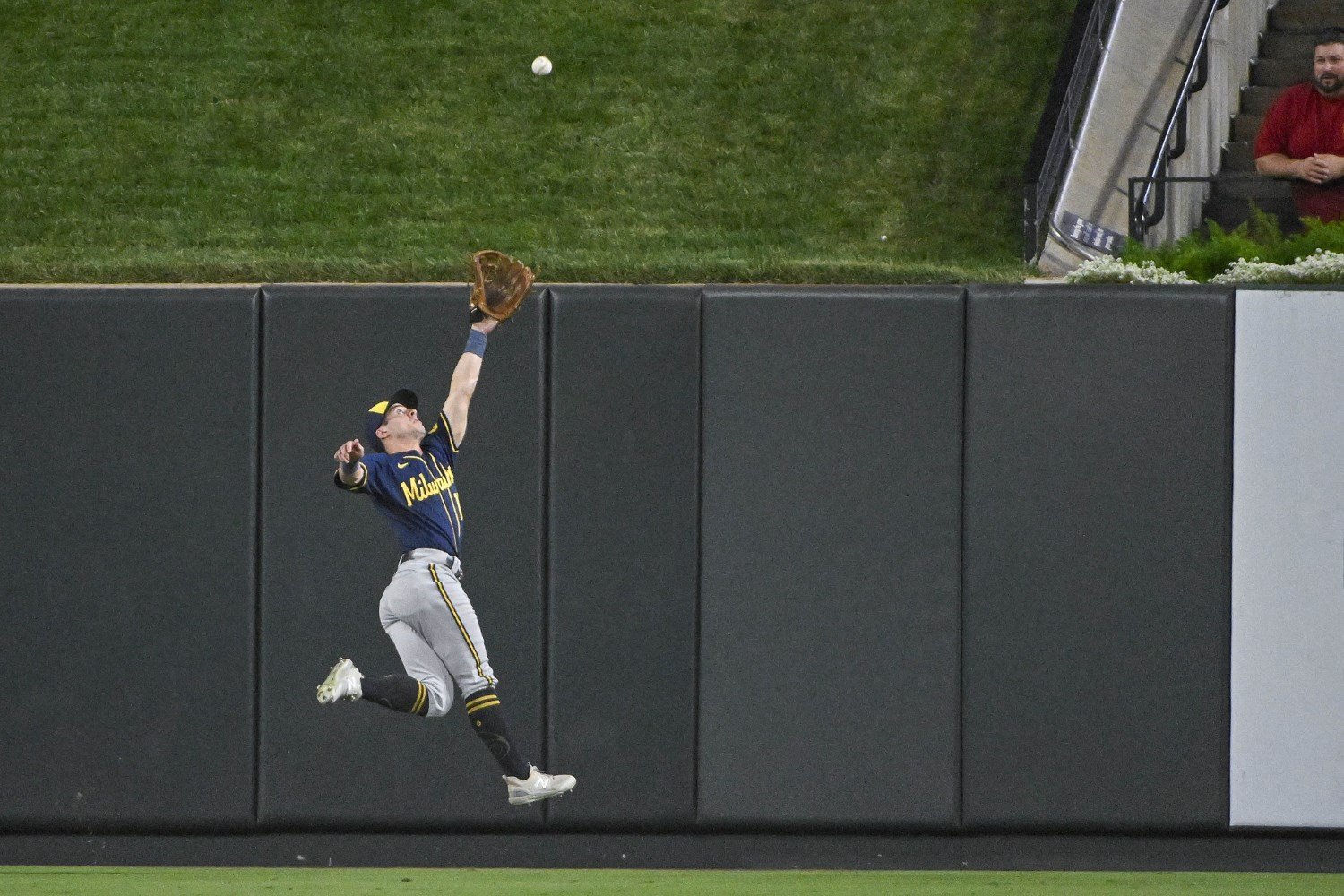 After they agreed to sign Jackson Chourio to an eight-year, $82-million deal that could keep him in Milwaukee for as much as a decade, the Brewers are going to have their rookie phenom in the lineup pretty much right away in 2024. If they believed he needed any more than a formality's worth of time in Triple A, they wouldn't have committed to him this way. With Sal Frelick, Joey Wiemer, and Garrett Mitchell already in the mix, though, it's worth asking: What's the best way for the team to array its youngsters? By the time the season begins (or even within a few weeks), this could resolve itself. Mitchell and Wiemer are seen, by and large, as trade candidates, ever since Chourio signed his deal. A move centered around either of them and aimed at upgrading the team's projected starting rotation would not come as a shock. Even with one of those two gone, though, it's not clear how the remaining talent ought to be deployed. In general, the assumption has been that Chourio will be the center fielder. That's where he's listed on Roster Resource, a FanGraphs feature. The official site of the Brewers also lists him atop the Depth Chart in center, with Frelick in right. Baseball America's scouting report on Chourio says he "has the speed, acceleration and lateral range to be an above-average defender in center field." Everyone agrees that Chourio has some rough edges to sand off, defensively, but there's a general feeling that he can iron them out and end up as an above-average defender up the middle. Because of Chourio's offensive profile, though, he'll eventually be a very good player even if he moves to a corner outfield spot. In fact, BA lists him as a right fielder, despite the praise above. He's thickly built, and the best version of him is a slugger who hits more than 30 home runs each year. There's room for an argument that he can best develop and serve the Brewers by moving to a corner sooner, rather than later, the same way Ronald Acuña Jr. has for the Atlanta Braves. To buttress that argument, let's look at a few numbers. Here's how players who started at least 70 games in center field did when they were at that position, and when they were anywhere else, for each of the last three seasons. Regular Center Fielders, At CF and Elsewhere, 2021-23 Season Split AVG OBP SLG K% BB% BABIP wOBA 2021, CF 0.25 0.323 0.41 22.3 8.7 0.301 0.317 2021, Other 0.244 0.31 0.417 24.6 7.8 0.296 0.312 2022, CF 0.249 0.314 0.408 22.5 7.7 0.298 0.315 2022, Other 0.25 0.347 0.462 24 11.6 0.294 0.349 2023, CF 0.25 0.317 0.426 24.8 8 0.307 0.324 2023, Other 0.254 0.343 0.429 22.6 11 0.3 0.338 In 2021, guys who often played center were slightly better at that spot than when assigned to play elsewhere. The sample of plate appearances for that set of players at other spots was smallest that year, though. In 2022 and 2023, the bag looks a bit more mixed, but the advantage is clear in the big picture: Guys hit better when they were playing further down the defensive spectrum. Yes, Aaron Judge somewhat biases this data, but nothing here is wholly a product of him, or of anyone else. Cody Bellinger split time between center and first base for the Cubs last year, but had an OPS .155 higher when playing center. The rest of the league more than offset that outlier. This is not a surprising finding. Previous studies have shown that hitters hit better when playing less demanding defensive positions. It can be hard to tease out the cause and effect there, since only guys who might be a bit stretched at center or short are often asked to play more offense-first positions, like the corner spots. The data above is fairly free of that, though, because it starts by selecting the guys who played pretty often in center and only focuses on the differences between their performance there and elsewhere. If you wanted to maximize Chourio's output at the plate, then, you'd be making the right choice by moving him to right field. Thinking long-term, maybe you want to hold right field open for a less athletic slugger, and maybe you want Chourio to get the maximum chance to make use of his speed, but even those considerations come with caveats. For instance, by signing him to this deal and moving him so rapidly to the majors, you're already risking rushing Chourio a little bit. Putting him in right takes away some pressure to refine his defense and lets him wrestle with the greater challenge of figuring out and assailing big-league hurlers. It's also a bit safer to play right field than to play center. Chourio is less likely to wear down or get hurt out there, especially since navigating the wall when going back on fly balls is already one of his documented areas of weakness and a center fielder has to do a bit more of that than does a corner man. Given only average (or, as many teams in a similar spot might have, worse than average) options to play out there with him, you might play Chourio in center, but the Brewers have somewhat better than average options. That brings us around to Frelick. He came up last July and showed all kinds of signs of being a credible, dedicated, intelligent big-league player. He showed speed, great contact ability, a discerning eye at the plate and great skill and daring in the field. What he did not show was any ability to leave a mark on the ball. He didn't make nearly enough hard contact in MLB in 2023. Of the 362 batters who had at least 200 plate appearances, Frelick ranked 345th in 90th-percentile exit velocity. He just isn't going to find power, no matter where he plays. Add up his time in Triple A and MLB, and he spent almost exactly equal time in center and right field last year. He was solidly above-average at both spots, with 2 Defensive Runs Saved (DRS) in center and 4 DRS in right, each in much less than a full share of playing time. Frelick does have what Chourio is still looking for, as he goes back on the ball smoothly and confidently and plays the wall well. He's a plus defensive center fielder, and remaining so is the only way he's going to be a valuable regular in MLB. While all outlets agree that Frelick is currently positioned to be the regular who rounds out the outfield along with Yelich and Chourio, that needn't be locked in. Mitchell and Wiemer, should both be kept around, would make a solid platoon, with much more power potential and roughly equal defensive upside to Frelick, and they could slot into right field as well or better than they do in center. (Wiemer, in particular, looked a lot better in right last year.) They certainly don't project to get on base as much as Frelick should, though. On balance, keeping and starting Frelick makes the most sense, and if they do so, the optimal alignment has Chourio in right and Frelick in center. Which way would you set the lineup for 2024--with Frelick in right and Chourio in center, or vice-versa? Is that decision primarily about winning this year or developing Chourio in the best possible way, at the big-league level? Can the team keep all the outfielders currently set for inclusion on the big-league roster, with the hope of moving Yelich to first base or DH in 2025 and beyond? Let's talk about the peculiar balancing act of trying to put talented but very divergent players in almost interchangeable spots.
 -
The Brewers have a talented southpaw on the cusp of the big leagues. Now, they just need to decide how best to use him. Image courtesy of © Charles LeClaire-USA TODAY Sports It's not just the fact that Robert Gasser led all Triple-A hurlers in strikeouts last season that makes him a fascinating pitcher going into the coming campaign. He's shown interesting stuff, including anywhere from five to seven different pitches and the ability to scatter his offerings across a spectrum wider than home plate without compromising his command. However, his low arm slot does minimize the vertical movement separation he can achieve, so sustaining his strikeout rate in the big leagues could require major adjustments. As a lefty with some traits that make him inherently vulnerable to righty batters, Gasser faces some hurdles in matriculating to an MLB starting rotation. In a much earlier age of baseball history, there would have been a simple, clear solution to that problem. In fact, former Baltimore Orioles manager and Hall of Famer Earl Weaver famously made use of what amounts to an apprenticeship program for his young pitchers. When they came up, rookie hurlers were stashed in long relief. Weaver only brought them forward to the rotation if and when they earned his trust. "Not only is this first year a learning process for the pitcher, it's a learning process for the manager," Weaver and ghostwriter Terry Pluto wrote in the seminal 1984 memoir-***-manager's handbook, Weaver on Strategy. "The manager doesn't know what the pitcher can do in the majors. He has an idea and makes judgments about his talent, but a manager must see the pitcher in game conditions." Weaver would, therefore, bring along young pitchers by having them work regularly but briefly, at first, and then promote those who proved themselves capable of the harder but more glamorous and remunerative work of starting. He could boast several success stories in doing so, including Dennis Martinez, Scott McGregor, and Mike Flanagan--the last of whom won a Cy Young Award for the team, after matriculating to the rotation. The Brewers have done some very stripped-down version of this in the recent past, of course, with Craig Counsell's Crew utilizing Brandon Woodruff and Corbin Burnes as relievers during their playoff push in 2018. Those were limited, need-based assignments, though. They weren't actual apprenticeships, or proactive moves designed to help those hurlers mature into more complete ones. There's a reason for that--or rather, tens of millions of them. The Weaver Way hasn't necessarily become any less viable a developmental strategy since the zenith of the dynasty he oversaw. It's no longer regularly used anywhere in MLB, though. Free agency (and modern baseball teams' approach to service time and team control) has rendered it obsolete. I don't think it needs to be that way, or even should be. The parallel is imperfect, but consider the Packers and their run of incredible quarterback play. It's too soon to know whether Jordan Love will be anywhere near as good (from a career perspective) as Brett Favre or Aaron Rodgers were, but his first season running the show in Green Bay was a roaring success. Love benefited (in ways hard to measure or make objectively clear, but equally hard to refute) from spending three years on the sidelines, watching Rodgers, getting reps in practice, and learning how NFL offenses work from outside the heat and peril of the spotlight. Stashing Love for so long, just as they stashed Rodgers for three years behind an aging Favre, was a luxury the Packers could only afford because of the greatness of the incumbent their young guns were each replacing. That's one reason why few NFL teams emulate that approach, but another is that the Packers essentially sacrificed their years of cheap team control over both Rodgers and Love, in order to develop them and time out their ascension to the starting role. The easiest way to win in the NFL is to have a star-caliber QB on a rookie deal, taking up much less of the salary cap than the same player on a deal influenced (if not quite determined) by the free-market cost of that talent. If you get it wrong (or even only half-right), then, that strategy is a costly and losing way to do business. If you get it right, though, it might be a surer way to end up with consistently strong play at the most important position on the field than any other out there. It's a more expensive way to win, but a better one, too. Baseball teams, who aren't even burdened by the same strictures that the salary cap inflicts on NFL franchises, could be doing the same thing with more of their players. They consistently choose not to. We ought to press for that to change, not only because developing players at the big-league level is effective (and because it's time to start discouraging cost-optimizing strategies elected at the expense of more expensive ones more aggressively), but because there's something rewarding about it beyond the sheer success or failure of it. One of the most important distinguishing characteristics that makes advanced animal species so is neoteny--the wide gap between a juvenile and adult version of a species. Growing, learning, and changing is what makes us human, and it's what makes the human condition so interesting. It's fun to see players get much, much better at the highest level of a pro sport, even if it means that they're not as good when we first encounter them as they could be. This is why we love tracking prospects so much. It's become a much less available source of satisfaction on the field in MLB, though, because of the trend away from calling players up when they prove good enough to be in the big leagues. Instead, most teams now wait until a player is good enough to be an average or better everyday player, and we are denied the pleasure of seeing them improve significantly from their rookie and sophomore seasons to their fifth or sixth. If the Brewers enjoy fairly good health in 2024, they might not need Gasser as a starter, save for a few spot appearances. With Burnes, Freddy Peralta, Wade Miley, Colin Rea, and Joe Ross, they have the skeleton of a strong rotation in place already, and they hope to have a fully healthy Aaron Ashby work as a starter this spring. Rather than stash Gasser in Nashville for another year, though, the Brewers could install him as the second lefty in their bullpen, with a much greater capacity to work multiple innings than Hoby Milner has. Gasser can probably best learn the lessons he still needs (and make the changes he still needs to make) by being asked to face big-league hitters, and working on a daily basis with Chris Hook. He's set to turn 25 at the end of May, so it's not as though he's outrageously young or an arm in need to delicate handling, and he already has a full season's worth of starts and innings at Triple A to his name. Although you won't hear coaches say it very often anymore, even people within the game realize that some players can best finish their development into good big-leaguers by hanging on the fringes of the roster and playing a small role for the first couple years of their careers. Because teams view that as a waste of players' cheapest, most flexible portion of team control, though, no one tries it with any regularity. The Brewers should break with the new tradition and prepare Gasser to be a valuable, versatile big-league apprentice in 2024. View full article
-
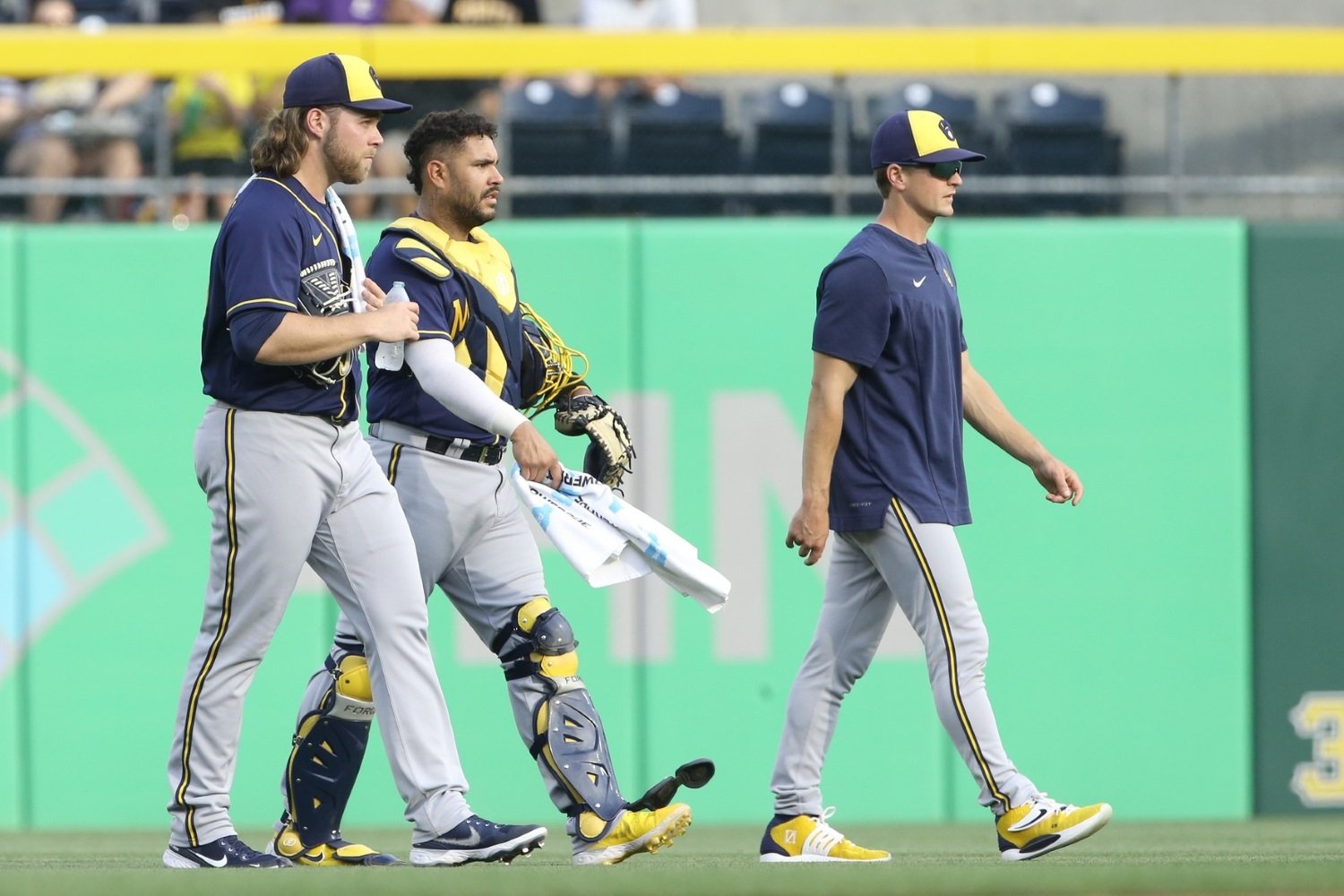 It's not just the fact that Robert Gasser led all Triple-A hurlers in strikeouts last season that makes him a fascinating pitcher going into the coming campaign. He's shown interesting stuff, including anywhere from five to seven different pitches and the ability to scatter his offerings across a spectrum wider than home plate without compromising his command. However, his low arm slot does minimize the vertical movement separation he can achieve, so sustaining his strikeout rate in the big leagues could require major adjustments. As a lefty with some traits that make him inherently vulnerable to righty batters, Gasser faces some hurdles in matriculating to an MLB starting rotation. In a much earlier age of baseball history, there would have been a simple, clear solution to that problem. In fact, former Baltimore Orioles manager and Hall of Famer Earl Weaver famously made use of what amounts to an apprenticeship program for his young pitchers. When they came up, rookie hurlers were stashed in long relief. Weaver only brought them forward to the rotation if and when they earned his trust. "Not only is this first year a learning process for the pitcher, it's a learning process for the manager," Weaver and ghostwriter Terry Pluto wrote in the seminal 1984 memoir-***-manager's handbook, Weaver on Strategy. "The manager doesn't know what the pitcher can do in the majors. He has an idea and makes judgments about his talent, but a manager must see the pitcher in game conditions." Weaver would, therefore, bring along young pitchers by having them work regularly but briefly, at first, and then promote those who proved themselves capable of the harder but more glamorous and remunerative work of starting. He could boast several success stories in doing so, including Dennis Martinez, Scott McGregor, and Mike Flanagan--the last of whom won a Cy Young Award for the team, after matriculating to the rotation. The Brewers have done some very stripped-down version of this in the recent past, of course, with Craig Counsell's Crew utilizing Brandon Woodruff and Corbin Burnes as relievers during their playoff push in 2018. Those were limited, need-based assignments, though. They weren't actual apprenticeships, or proactive moves designed to help those hurlers mature into more complete ones. There's a reason for that--or rather, tens of millions of them. The Weaver Way hasn't necessarily become any less viable a developmental strategy since the zenith of the dynasty he oversaw. It's no longer regularly used anywhere in MLB, though. Free agency (and modern baseball teams' approach to service time and team control) has rendered it obsolete. I don't think it needs to be that way, or even should be. The parallel is imperfect, but consider the Packers and their run of incredible quarterback play. It's too soon to know whether Jordan Love will be anywhere near as good (from a career perspective) as Brett Favre or Aaron Rodgers were, but his first season running the show in Green Bay was a roaring success. Love benefited (in ways hard to measure or make objectively clear, but equally hard to refute) from spending three years on the sidelines, watching Rodgers, getting reps in practice, and learning how NFL offenses work from outside the heat and peril of the spotlight. Stashing Love for so long, just as they stashed Rodgers for three years behind an aging Favre, was a luxury the Packers could only afford because of the greatness of the incumbent their young guns were each replacing. That's one reason why few NFL teams emulate that approach, but another is that the Packers essentially sacrificed their years of cheap team control over both Rodgers and Love, in order to develop them and time out their ascension to the starting role. The easiest way to win in the NFL is to have a star-caliber QB on a rookie deal, taking up much less of the salary cap than the same player on a deal influenced (if not quite determined) by the free-market cost of that talent. If you get it wrong (or even only half-right), then, that strategy is a costly and losing way to do business. If you get it right, though, it might be a surer way to end up with consistently strong play at the most important position on the field than any other out there. It's a more expensive way to win, but a better one, too. Baseball teams, who aren't even burdened by the same strictures that the salary cap inflicts on NFL franchises, could be doing the same thing with more of their players. They consistently choose not to. We ought to press for that to change, not only because developing players at the big-league level is effective (and because it's time to start discouraging cost-optimizing strategies elected at the expense of more expensive ones more aggressively), but because there's something rewarding about it beyond the sheer success or failure of it. One of the most important distinguishing characteristics that makes advanced animal species so is neoteny--the wide gap between a juvenile and adult version of a species. Growing, learning, and changing is what makes us human, and it's what makes the human condition so interesting. It's fun to see players get much, much better at the highest level of a pro sport, even if it means that they're not as good when we first encounter them as they could be. This is why we love tracking prospects so much. It's become a much less available source of satisfaction on the field in MLB, though, because of the trend away from calling players up when they prove good enough to be in the big leagues. Instead, most teams now wait until a player is good enough to be an average or better everyday player, and we are denied the pleasure of seeing them improve significantly from their rookie and sophomore seasons to their fifth or sixth. If the Brewers enjoy fairly good health in 2024, they might not need Gasser as a starter, save for a few spot appearances. With Burnes, Freddy Peralta, Wade Miley, Colin Rea, and Joe Ross, they have the skeleton of a strong rotation in place already, and they hope to have a fully healthy Aaron Ashby work as a starter this spring. Rather than stash Gasser in Nashville for another year, though, the Brewers could install him as the second lefty in their bullpen, with a much greater capacity to work multiple innings than Hoby Milner has. Gasser can probably best learn the lessons he still needs (and make the changes he still needs to make) by being asked to face big-league hitters, and working on a daily basis with Chris Hook. He's set to turn 25 at the end of May, so it's not as though he's outrageously young or an arm in need to delicate handling, and he already has a full season's worth of starts and innings at Triple A to his name. Although you won't hear coaches say it very often anymore, even people within the game realize that some players can best finish their development into good big-leaguers by hanging on the fringes of the roster and playing a small role for the first couple years of their careers. Because teams view that as a waste of players' cheapest, most flexible portion of team control, though, no one tries it with any regularity. The Brewers should break with the new tradition and prepare Gasser to be a valuable, versatile big-league apprentice in 2024.
 -
The biggest single transaction of the Brewers' offseason to date came earlier this week, when the team signed arguably the best right-handed bat left in free agency. It's a flexible deal, though, for more than one reason. Image courtesy of © Mike De Sisti / The Milwaukee Journal Sentinel / USA TODAY NETWORK Start here: Rhys Hoskins was never going to accept a straight one-year deal. At his age, and given the fact that he can have the qualifying offer attached to him the next time he hits free agency, he wasn't in a position to sign for a single season and then hit the market again, without some extra protection built into the deal. That's why he and agent Scott Boras went the same route fellow Boras client Michael Conforto recently did. Conforto signed with the Giants for two years and $36 million last winter, with an opt-out he could have triggered in November. Instead, Conforto exercised his player option to stay by the Bay, highlighting the fact that the Hoskins deal really isn't just a dressed-up one-year deal (as, for instance, Carlos Correa (another Boras guy!) signed with the Twins coming out of the lockout two winters ago). He might end up sticking around, for any of a few reasons. Both Hoskins and Conforto were born in March 1993, meaning that when Hoskins reaches his decision point next winter, he'll be a year older than Conforto was when he made his choice almost three months ago. He's also limited even more defensively than Conforto is, and Conforto is ineligible to receive another qualifying offer after turning one down in 2021, so the fact that he chose to stick with the Giants is interesting. He only batted .239/.334/.384 in his first season with San Francisco, but a lot of that apparent anemia is really just the impact of being a left-handed hitter who calls AT&T Park home. He still boasted a 100 wRC+, so he could have made a case that getting to a more hitter-friendly environment would revive his value. Instead, he stayed right where he is, knowing that he would now need a pretty huge year to get a significant payday next winter. While Conforto's season wasn't good enough to push him back into the market, per se, considering all the factors there is a good reminder that whether or not a player exercises their opt-out is much more than a question of how they play. For Hoskins, performance will be the main variable, but the other one lurking is the ongoing (and even expanding) trend of teams wrestling with uncertainty about the future of their local TV revenues. There are a handful of big names left on the market this winter, and a bevy of smaller but recognizable ones, and then (as the season plays out) we'll all gain much more information about the logistics, the financials, and the viability of various TV options beyond 2024. Count on Boras (on Hoskins's behalf) watching all that closely. If it looks (as I would guess right now, based on limited and imperfect information) like the market next winter is going to be deflated and restrained by growing pessimism about the long-term local TV plans for several teams, Boras and Hoskins might choose to stay with the Crew, even if Hoskins rebounds nicely from the injury that cost him his 2023 season and hits 30 homers with his typically strong on-base percentage. Building in opt-outs is a good way for both team and player to manage risk and make bets on the player's performance during the life of a contract, without eschewing the deal altogether. They're not just about the player, though. Boras's essential insight, in making a trend out of these clauses, was that the market is occasionally collusive, frequently irrational, and always unpredictable, and that it made sense to balance some measure of extra guaranteed money with an ability to duck back into free agency when he and one of his clients found it to be promising. The opt-out is as much about the world all around a given player and team as it is about those two parties, themselves. The good news there is that, should Hoskins have a good year but Diamond Sports Group have an especially bad one, the Brewers might end up getting to keep a fearsome slugger on a reasonable salary for a year longer than we might guess. There's no extra bad news from the team's side when thinking of things this way, either. If the player is more likely to opt out because of a bull market, well, we knew that the moment the contract was reported. If the player is less likely to do so because the prospects of a better deal are dim, it's likely that he's right in that area where the team will actually be happy to pay him $17 million and roll the dice on him nosing back upward in 2025. The worst-case scenario is that Hoskins is unable to get back his bat speed at all after the injury, but that's unlikely, and it's a risk the Brewers already embraced in order to secure his services at a non-premium annual rate. Thinking beyond his performance in terms of possible influences on his decision doesn't make the risk profile any less friendly to the team; it just makes it more friendly to the player. That's why these clauses have become popular, rather than being something proposed by the agent and resoundingly rejected by the team. Thinking big-picture is what makes Boras an innovator and leader among agents, and focusing on making the right evaluation and not worrying about it beyond that is what makes Matt Arnold a good executive. How comfortable are you with opt-outs, in general, and with Hoskins's, specifically? Do you want to see Arnold use this tool to lock up more players in the future? What do you make of the difference between hitters and pitchers when it comes to opt-outs and their implications? Can George Costanza duck in here and give us a summary of his knowledge of risk management? View full article
-
The Rhys Hoskins Opt-Out is More Than a Bet on His 2024 Performance
Matthew Trueblood posted an article in Brewers
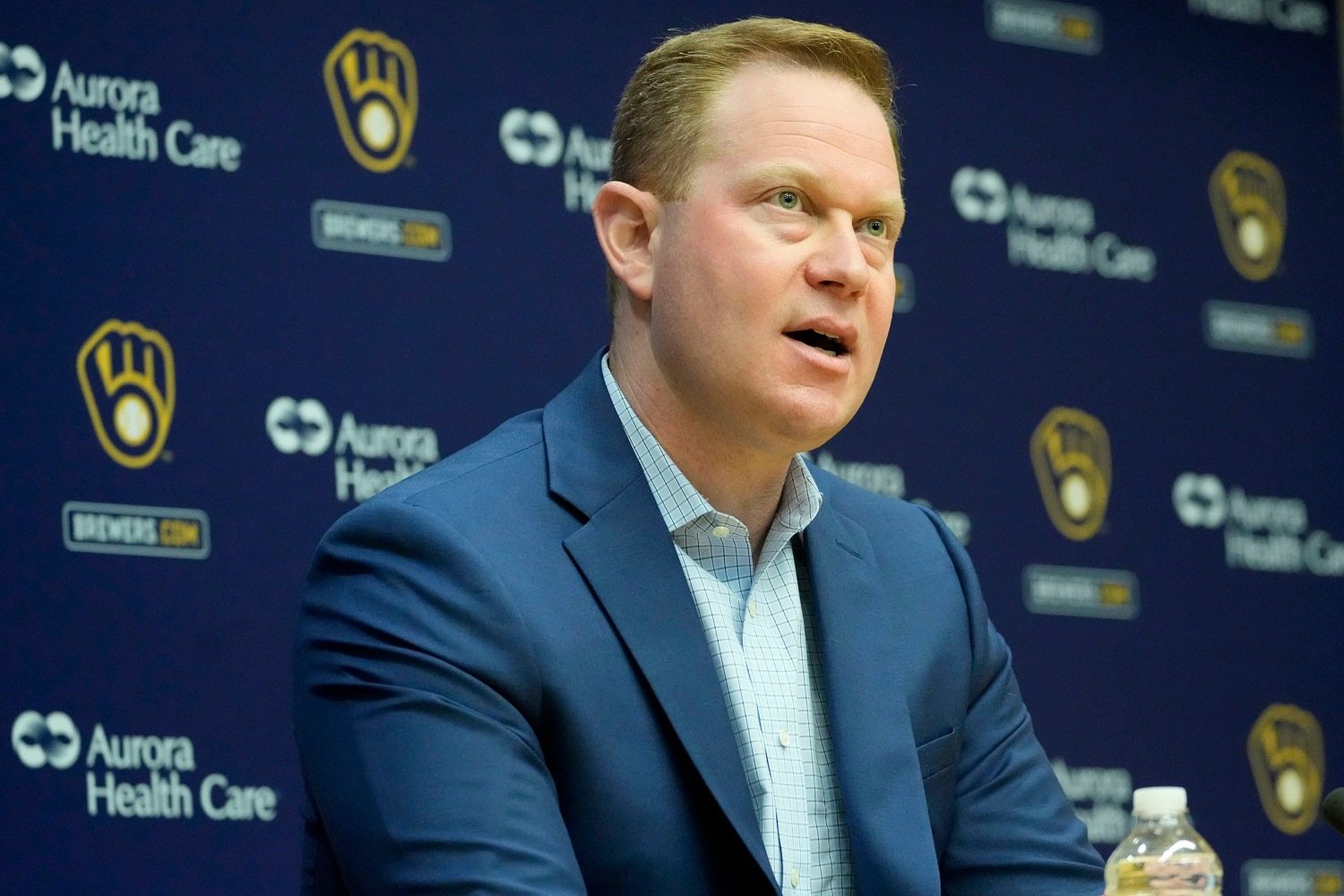 Start here: Rhys Hoskins was never going to accept a straight one-year deal. At his age, and given the fact that he can have the qualifying offer attached to him the next time he hits free agency, he wasn't in a position to sign for a single season and then hit the market again, without some extra protection built into the deal. That's why he and agent Scott Boras went the same route fellow Boras client Michael Conforto recently did. Conforto signed with the Giants for two years and $36 million last winter, with an opt-out he could have triggered in November. Instead, Conforto exercised his player option to stay by the Bay, highlighting the fact that the Hoskins deal really isn't just a dressed-up one-year deal (as, for instance, Carlos Correa (another Boras guy!) signed with the Twins coming out of the lockout two winters ago). He might end up sticking around, for any of a few reasons. Both Hoskins and Conforto were born in March 1993, meaning that when Hoskins reaches his decision point next winter, he'll be a year older than Conforto was when he made his choice almost three months ago. He's also limited even more defensively than Conforto is, and Conforto is ineligible to receive another qualifying offer after turning one down in 2021, so the fact that he chose to stick with the Giants is interesting. He only batted .239/.334/.384 in his first season with San Francisco, but a lot of that apparent anemia is really just the impact of being a left-handed hitter who calls AT&T Park home. He still boasted a 100 wRC+, so he could have made a case that getting to a more hitter-friendly environment would revive his value. Instead, he stayed right where he is, knowing that he would now need a pretty huge year to get a significant payday next winter. While Conforto's season wasn't good enough to push him back into the market, per se, considering all the factors there is a good reminder that whether or not a player exercises their opt-out is much more than a question of how they play. For Hoskins, performance will be the main variable, but the other one lurking is the ongoing (and even expanding) trend of teams wrestling with uncertainty about the future of their local TV revenues. There are a handful of big names left on the market this winter, and a bevy of smaller but recognizable ones, and then (as the season plays out) we'll all gain much more information about the logistics, the financials, and the viability of various TV options beyond 2024. Count on Boras (on Hoskins's behalf) watching all that closely. If it looks (as I would guess right now, based on limited and imperfect information) like the market next winter is going to be deflated and restrained by growing pessimism about the long-term local TV plans for several teams, Boras and Hoskins might choose to stay with the Crew, even if Hoskins rebounds nicely from the injury that cost him his 2023 season and hits 30 homers with his typically strong on-base percentage. Building in opt-outs is a good way for both team and player to manage risk and make bets on the player's performance during the life of a contract, without eschewing the deal altogether. They're not just about the player, though. Boras's essential insight, in making a trend out of these clauses, was that the market is occasionally collusive, frequently irrational, and always unpredictable, and that it made sense to balance some measure of extra guaranteed money with an ability to duck back into free agency when he and one of his clients found it to be promising. The opt-out is as much about the world all around a given player and team as it is about those two parties, themselves. The good news there is that, should Hoskins have a good year but Diamond Sports Group have an especially bad one, the Brewers might end up getting to keep a fearsome slugger on a reasonable salary for a year longer than we might guess. There's no extra bad news from the team's side when thinking of things this way, either. If the player is more likely to opt out because of a bull market, well, we knew that the moment the contract was reported. If the player is less likely to do so because the prospects of a better deal are dim, it's likely that he's right in that area where the team will actually be happy to pay him $17 million and roll the dice on him nosing back upward in 2025. The worst-case scenario is that Hoskins is unable to get back his bat speed at all after the injury, but that's unlikely, and it's a risk the Brewers already embraced in order to secure his services at a non-premium annual rate. Thinking beyond his performance in terms of possible influences on his decision doesn't make the risk profile any less friendly to the team; it just makes it more friendly to the player. That's why these clauses have become popular, rather than being something proposed by the agent and resoundingly rejected by the team. Thinking big-picture is what makes Boras an innovator and leader among agents, and focusing on making the right evaluation and not worrying about it beyond that is what makes Matt Arnold a good executive. How comfortable are you with opt-outs, in general, and with Hoskins's, specifically? Do you want to see Arnold use this tool to lock up more players in the future? What do you make of the difference between hitters and pitchers when it comes to opt-outs and their implications? Can George Costanza duck in here and give us a summary of his knowledge of risk management?
 -
I don't think it's been widely reported, but I can tell you for sure that it's true, so I guess it's closer to the second thing? Haha. Not to say that it ever came breathtakingly close to being consummated, but there was real progress on it earlier this winter with those three names as the principals. (There would be more going to the Brewers, but how much more was the sticking point, as it seems to be for many of you.)
- 7 replies
-
- 1
-
-
- corbin burnes
- jorge polanco
- (and 3 more)
-
 This is one of those wild scenarios that make for a fun Friday conversation. Sometimes such proposals are crazy, and this one might be, too, but it's a bit less so than it looks at first blush. Let's talk about how the Brewers could both bolster their lineup and swap out one rotation ace for another, while lengthening their competitive arc and hedging against growing pains from some key young players. It starts with a move that has been in the ether, floating around as a rumor all winter but never quite coming to fruition. Trade No. 1: Brewers Land Jorge Polanco and Prospect(s) for Corbin Burnes Specifically, I'm envisioning a deal that would bring at least Polanco and talented but low-volume pitching prospect Marco Raya to the Crew, in exchange for Burnes. That's a framework the two teams have discussed this winter, and while it's yet to materialize, this version of it could work for both sides, because it would be part of a multi-phase maneuver on both sides. That would allow each to come off their hardline stances a bit. We don't need to hammer out the details at the moment. Let's just assume Polanco and Raya headline a package for Burnes. That would fill out the Brewers' lineup gorgeously, slotting the switch-hitting, patient, balanced Polanco in as the second baseman and giving the top of their order more depth and roundness. It might look something like this. Christian Yelich - LF Rhys Hoskins - 1B Jorge Polanco - 2B William Contreras - C Willy Adames - SS Sal Frelick - RF Jackson Chourio - CF Jake Bauers - DH Andruw Monasterio - 3B There are a couple of notable names missing from that potential lineup, and we'll talk about why shortly. Still, it's an awfully stout top five, and the upside in Frelick and Chourio should be obvious to us all, by now. Like Hoskins, Polanco is good at elevating the ball, so among the other things he brings to the table, he can help cure the team of its double play woes. Polanco is under contract for $10.5 million in 2024, with a club option for 2025 at $12 million. He provides some cost savings relative to Burnes, then, in addition to being a good offensive and defensive fit for the club, and every team (not least the Brewers) loves a team option on a talented player. Raya is the fifth-ranked prospect in the Twins system, according to Baseball America, and profiles as a future starter. He has three above-average pitches and fair control. He does not, yet, have a demonstrated ability to work deep into games or pitch more than about once a week. Still, he's a premium pitching prospect, and would be a fine co-headliner with Polanco. He has a chance to pitch in the majors in 2024, and seems sure to be in position to do so in 2025, given good health. Now: Trade No. 2: Brewers Get Dylan Cease from White Sox in exchange for Garrett Mitchell, Tyler Black, and more. Personally, I don't love Cease. I think the price the White Sox have set on him is too high, and that if they stick to it, they'll end up having to take him into the regular season and hope his trade value bears up under the pressure of another year of work. However, it's hard to argue with his pure stuff, and harder still to debate that he's the American League's answer to Burnes. Cease takes the ball as often and racks up innings as reliably as just about any hurler in baseball, and his stuff (though not well-commanded) misses bats at an impressive rate. Unlike Burnes, Cease is under team control for another year, beyond 2024. He's due $8 million this season, so on net, this dual move would mean adding another few million to the team's payroll. Then again, they've already surprised some of the more dour among us (me) by signing Hoskins. Mark Attanasio might be holding the wallet open a bit wider than I had believed. If so, there could be an opportunity here. Mitchell (or Joey Wiemer, but it feels like Mitchell has higher trade value and like Wiemer is the one more likely to settle comfortably into a backup role) and Black are a steep price to pay for the extra year of control gained by going from Burnes to Cease, and the "more" above probably wouldn't be negligible. The White Sox would want someone with upside, though probably a prospect slightly further down the pecking order than Raya. Don't forget about Polanco, though. He offers consolation for the loss of Black and, along with Cease, affirmatively holds the window open another year in Milwaukee, while Chourio and Frelick establish themselves and Brock Wilken, Jeferson Quero, and Jacob Misiorowski matriculate. A rotation of: Dylan Cease Freddy Peralta Wade Miley Colin Rea Robert Gasser Joe Ross is, admittedly, not immediately better than one with Burnes in place of Cease. Its virtue lies in its greater sustainability. Cease's extra year of control buys the team time to see whether Misiorowski (or Raya, or Carlos Rodriguez, or anyone else in the system) might emerge as the next co-ace. The Brewers would lose, on balance, at least two good young players in this exchange, but they would gain an extra year of control at the top of their rotation and a more viable, well-rounded second baseman. They might increase their chances of extending Willy Adames, and failing that, they'd give themselves the best possible chance to win the division and advance in the playoffs in 2024. This would make the 2025 Brewers more expensive, but also much better, and it wouldn't come at the cost of any quality in 2024. What do you think? Too crazy? Not crazy enough? Just right? Help me find the Goldilocks Zone, as the Brewers try to do the same in the endgame of a bizarre offseason they've so far navigated well.
- 7 comments
-
- 2
-

-
-
- corbin burnes
- jorge polanco
- (and 3 more)
-
The Brewers aren't quite good enough to go into 2024 in an all-in posture, as-is. They have to get better, or get a little more medium-term team control. Why not try to do both? Image courtesy of © Bob DeChiara-USA TODAY Sports This is one of those wild scenarios that make for a fun Friday conversation. Sometimes such proposals are crazy, and this one might be, too, but it's a bit less so than it looks at first blush. Let's talk about how the Brewers could both bolster their lineup and swap out one rotation ace for another, while lengthening their competitive arc and hedging against growing pains from some key young players. It starts with a move that has been in the ether, floating around as a rumor all winter but never quite coming to fruition. Trade No. 1: Brewers Land Jorge Polanco and Prospect(s) for Corbin Burnes Specifically, I'm envisioning a deal that would bring at least Polanco and talented but low-volume pitching prospect Marco Raya to the Crew, in exchange for Burnes. That's a framework the two teams have discussed this winter, and while it's yet to materialize, this version of it could work for both sides, because it would be part of a multi-phase maneuver on both sides. That would allow each to come off their hardline stances a bit. We don't need to hammer out the details at the moment. Let's just assume Polanco and Raya headline a package for Burnes. That would fill out the Brewers' lineup gorgeously, slotting the switch-hitting, patient, balanced Polanco in as the second baseman and giving the top of their order more depth and roundness. It might look something like this. Christian Yelich - LF Rhys Hoskins - 1B Jorge Polanco - 2B William Contreras - C Willy Adames - SS Sal Frelick - RF Jackson Chourio - CF Jake Bauers - DH Andruw Monasterio - 3B There are a couple of notable names missing from that potential lineup, and we'll talk about why shortly. Still, it's an awfully stout top five, and the upside in Frelick and Chourio should be obvious to us all, by now. Like Hoskins, Polanco is good at elevating the ball, so among the other things he brings to the table, he can help cure the team of its double play woes. Polanco is under contract for $10.5 million in 2024, with a club option for 2025 at $12 million. He provides some cost savings relative to Burnes, then, in addition to being a good offensive and defensive fit for the club, and every team (not least the Brewers) loves a team option on a talented player. Raya is the fifth-ranked prospect in the Twins system, according to Baseball America, and profiles as a future starter. He has three above-average pitches and fair control. He does not, yet, have a demonstrated ability to work deep into games or pitch more than about once a week. Still, he's a premium pitching prospect, and would be a fine co-headliner with Polanco. He has a chance to pitch in the majors in 2024, and seems sure to be in position to do so in 2025, given good health. Now: Trade No. 2: Brewers Get Dylan Cease from White Sox in exchange for Garrett Mitchell, Tyler Black, and more. Personally, I don't love Cease. I think the price the White Sox have set on him is too high, and that if they stick to it, they'll end up having to take him into the regular season and hope his trade value bears up under the pressure of another year of work. However, it's hard to argue with his pure stuff, and harder still to debate that he's the American League's answer to Burnes. Cease takes the ball as often and racks up innings as reliably as just about any hurler in baseball, and his stuff (though not well-commanded) misses bats at an impressive rate. Unlike Burnes, Cease is under team control for another year, beyond 2024. He's due $8 million this season, so on net, this dual move would mean adding another few million to the team's payroll. Then again, they've already surprised some of the more dour among us (me) by signing Hoskins. Mark Attanasio might be holding the wallet open a bit wider than I had believed. If so, there could be an opportunity here. Mitchell (or Joey Wiemer, but it feels like Mitchell has higher trade value and like Wiemer is the one more likely to settle comfortably into a backup role) and Black are a steep price to pay for the extra year of control gained by going from Burnes to Cease, and the "more" above probably wouldn't be negligible. The White Sox would want someone with upside, though probably a prospect slightly further down the pecking order than Raya. Don't forget about Polanco, though. He offers consolation for the loss of Black and, along with Cease, affirmatively holds the window open another year in Milwaukee, while Chourio and Frelick establish themselves and Brock Wilken, Jeferson Quero, and Jacob Misiorowski matriculate. A rotation of: Dylan Cease Freddy Peralta Wade Miley Colin Rea Robert Gasser Joe Ross is, admittedly, not immediately better than one with Burnes in place of Cease. Its virtue lies in its greater sustainability. Cease's extra year of control buys the team time to see whether Misiorowski (or Raya, or Carlos Rodriguez, or anyone else in the system) might emerge as the next co-ace. The Brewers would lose, on balance, at least two good young players in this exchange, but they would gain an extra year of control at the top of their rotation and a more viable, well-rounded second baseman. They might increase their chances of extending Willy Adames, and failing that, they'd give themselves the best possible chance to win the division and advance in the playoffs in 2024. This would make the 2025 Brewers more expensive, but also much better, and it wouldn't come at the cost of any quality in 2024. What do you think? Too crazy? Not crazy enough? Just right? Help me find the Goldilocks Zone, as the Brewers try to do the same in the endgame of a bizarre offseason they've so far navigated well. View full article
-
The Brewers have signed a versatile infielder to a minor-league deal, according to reports Thursday morning. They continue to amass depth and give themselves options across a still-uncertain infield. It's been a long time since anyone viewed Arroyo as a potential star, and as this deal reflects, he's no longer valued highly enough even to garner a guaranteed roster spot. At his best, he hits for average and shows an occasional ability to split the gap, but he's never hit even 10 home runs (or, to be fair, come to bat more than 300 times) in a season in the big leagues. He has contact skills, which he's augmented the last few years by getting more aggressive at the plate, but for that very reason, he walks excruciatingly little. The Brewers are good at working with this kind of player. Arroyo is not much worse than Luis Urías or Owen Miller were when they arrived in the organization. The team will seek to tweak Arroyo's approach and get more walks without more strikeouts, as they've been able to do with other, similarly light-hitting infielders in recent years. He's not going to be any coach's priority in spring training, though. Rather, Arroyo will come to camp looking to win a spot, and with the Brewers just hoping to remain flexible. If they unexpectedly trade Willy Adames, he could join the roster as a backup at multiple infield spots and a platoon partner to Brice Turang. If not, he'll try to prove himself more worthy of the last spot on the bench than the likes of Miller, Oliver Dunn, or Vinny Capra. That's rather flimsy competition, so there's a real path to a job for Arroyo here, but for today, all we can say is that the Brewers now have a little more insurance in the event of injuries or a surprising trade. What do you think of Arroyo? Whom do you prefer for the final infield bench spot? Let's discuss. View full article


