


Matthew Trueblood
-
Posts
1,964 -
Joined
-
Last visited
-
Days Won
10
Content Type
Profiles
Forums
Blogs
Events
News
2026 Milwaukee Brewers Top Prospects Ranking
Milwaukee Brewers Videos
2022 Milwaukee Brewers Draft Picks
Milwaukee Brewers Free Agent & Trade Rumors, Notes, & Tidbits
Guides & Resources
2023 Milwaukee Brewers Draft Picks
2024 Milwaukee Brewers Draft Picks
The Milwaukee Brewers Players Project
2025 Milwaukee Brewers Draft Pick Tracker
2026 Milwaukee Brewers Draft Tracker: Picks & Bonuses
Store
Downloads
Gallery
Everything posted by Matthew Trueblood
-
Brewers Sign Utility Infielder Christian Arroyo to Minor-League Deal
Matthew Trueblood posted an article in Brewers
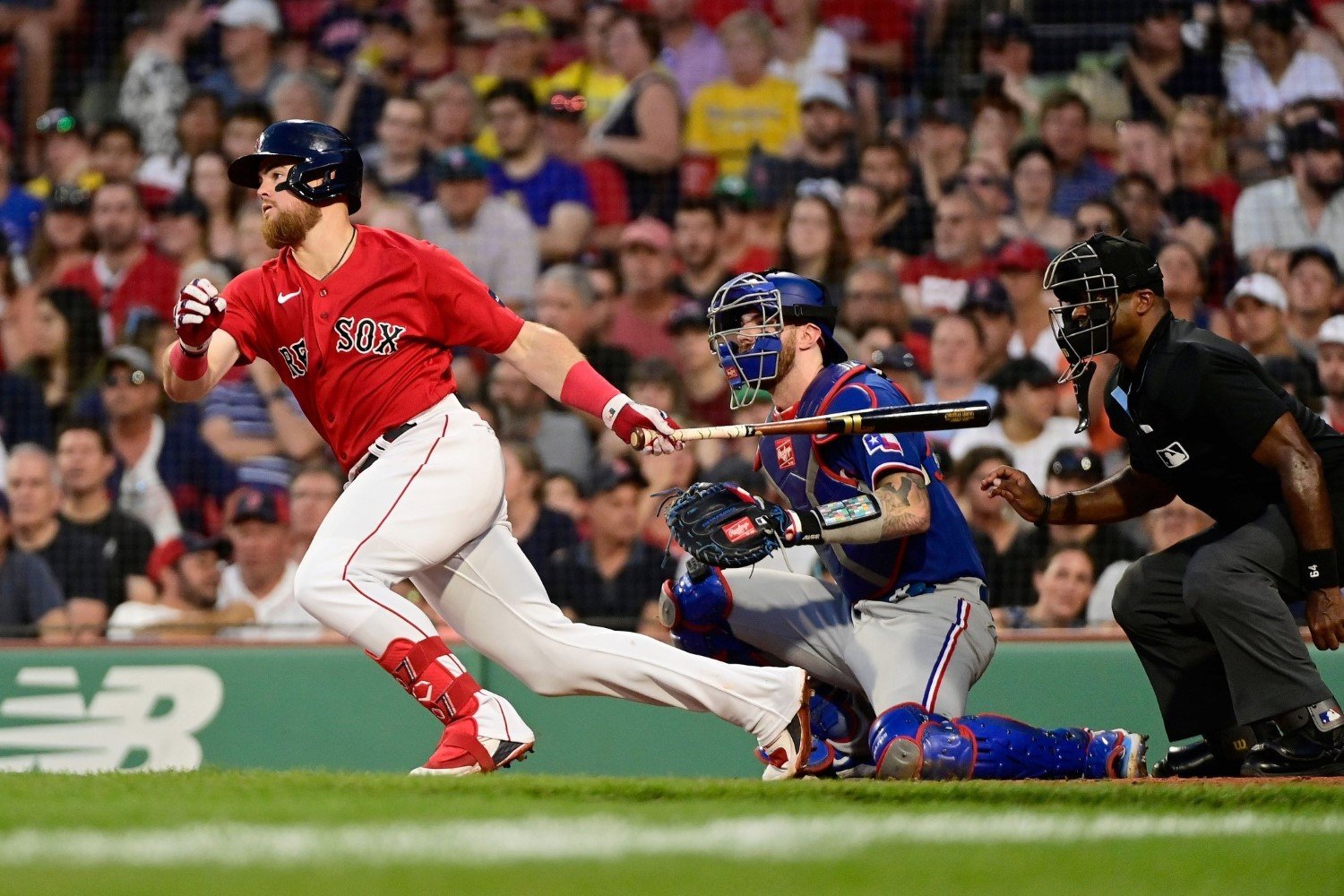 Christian Arroyo, 28, had some prospect sheen during his time in the minor leagues, and has been with the Rays and Red Sox for most of the last six seasons. He was originally a first-round pick by the Giants, and became the linchpin of the trade that sent Evan Longoria from Tampa Bay to San Francisco. ESPN's Buster Olney has the details on Arroyo's new deal with the Brewers. It's been a long time since anyone viewed Arroyo as a potential star, and as this deal reflects, he's no longer valued highly enough even to garner a guaranteed roster spot. At his best, he hits for average and shows an occasional ability to split the gap, but he's never hit even 10 home runs (or, to be fair, come to bat more than 300 times) in a season in the big leagues. He has contact skills, which he's augmented the last few years by getting more aggressive at the plate, but for that very reason, he walks excruciatingly little. The Brewers are good at working with this kind of player. Arroyo is not much worse than Luis Urías or Owen Miller were when they arrived in the organization. The team will seek to tweak Arroyo's approach and get more walks without more strikeouts, as they've been able to do with other, similarly light-hitting infielders in recent years. He's not going to be any coach's priority in spring training, though. Rather, Arroyo will come to camp looking to win a spot, and with the Brewers just hoping to remain flexible. If they unexpectedly trade Willy Adames, he could join the roster as a backup at multiple infield spots and a platoon partner to Brice Turang. If not, he'll try to prove himself more worthy of the last spot on the bench than the likes of Miller, Oliver Dunn, or Vinny Capra. That's rather flimsy competition, so there's a real path to a job for Arroyo here, but for today, all we can say is that the Brewers now have a little more insurance in the event of injuries or a surprising trade. What do you think of Arroyo? Whom do you prefer for the final infield bench spot? Let's discuss.
 -
After the Brewers made their first real splash of the winter Tuesday night, let's discuss why he's such a perfect fit for their needs. Image courtesy of © Eric Hartline-USA TODAY Sports It's easy to point to the power Rhys Hoskins has demonstrated, both in the regular season and in the playoffs, and say that he fits with the Brewers. He does. That right-handed thump is, in broad strokes, plenty of justification for the two-year, $34-million deal to which the team signed Hoskins Tuesday night. By digging just a little deeper, though, we can see that the perfection of the fit runs even deeper. He Kills Left-Handed Pitchers The extent to which the Brewers struggled against southpaws last season has been somewhat oversold. As a team, they hit .250/.326/.406, which was very close to exactly average work. In fact, Milwaukee hitters were better against lefties than against righties. While their ineptitude against them in previous seasons was real, it became an unsupported narrative in 2023. That doesn't mean that Hoskins's power against lefties won't have tremendous value, though. He batted .286/.387/.558 off lefthanders in 2022, and has consistently dominated them throughout his career. Importantly, he steps into a mix at first base and DH that previously included almost solely left-handed hitters (Jake Bauers, Garrett Mitchell, Oliver Dunn, and Tyler Black, most notably). Having the ability to spell him against tough righties and to ensure that none of those lefty swingers needs to face a lefty more often than necessary is a great boost for new skipper Pat Murphy. He Hammers Flat-VAA Fastballs Not long ago, I wrote about the Brewers' difficulties hitting fastballs with a flat vertical approach angle (VAA), a pitch characteristic getting more attention with each passing season and one that helps determine the effectiveness of four-seamers as much as velocity or spin rate do. Last year, the Crew couldn't handle heaters with a flat VAA, and it cost them, because that trend is becoming fairly pervasive. Hoskins can heal what ails them in this regard, too. He's slugged .536 against four-seamers with a VAA of -4.5 degrees or flatter, and has whiffed on just 25.7 percent of swings against them, since the start of 2021. The former mark is well above-average; the latter one is well below the league average. Hoskins hits high, riding fastballs hard, without missing on them often. It's important to diversify the skill sets within a lineup, and Hoskins helps the Brewers do that. He not only brings huge power, but does it with a swing path and a certain kind of zone coverage that none of his new teammates offered. He instantly becomes the best power hitter on the team, and while he does have his weaknesses at the plate, he also has unique strengths. Being able to handle that fastball with extra hop on it and not chase it far above the zone has value, especially to a team full of guys who couldn't do so. He's Part of an All-In Approach Look, the 2024 Brewers are no juggernaut. All winter, though, national baseball writers fed speculation that the team would essentially be disassembled, with Corbin Burnes, Willy Adames, or both sent packing via trade. There were financial constraints from ownership that kept the front office from making major outlays, instead keeping them to things like retaining Wade Miley and signing Joe Ross and Eric Haase. This move charts a new course. It might beget more moves, or not, but since Hoskins has the right to opt out of the second year of the deal if he prefers, this move itself sets the team up to go for it in 2024. Burnes is still here. So is Adames. Burnes is overwhelmingly likely to be gone after this season, and Adames is unlikely to sign an extension, so bringing him back is only a slightly more realistic long shot. Christian Yelich is already 32 years old. William Contreras hits arbitration eligibility next winter, at which time Devin Williams will only be one year from free agency. That doesn't mean that the Crew will need to plunge into a rebuild after 2024. The Jackson Chourio extension helps them do some long-term planning, and they still have Yelich and Contreras, as well as Freddy Peralta, around whom to build. The farm system is strong. A small step back in 2025 wouldn't be surprising, though, which is why this coming season is sacred. Matt Arnold and company treated it that way by bringing in Hoskins, whom they hope can get them back to the postseason and pointed toward a pennant. What do you want to see the Brewers do next? Do you think Hoskins's arrival spells the departure of any of the previously projected positional contributors? Let's talk about the Crew's newest bopper. View full article
-
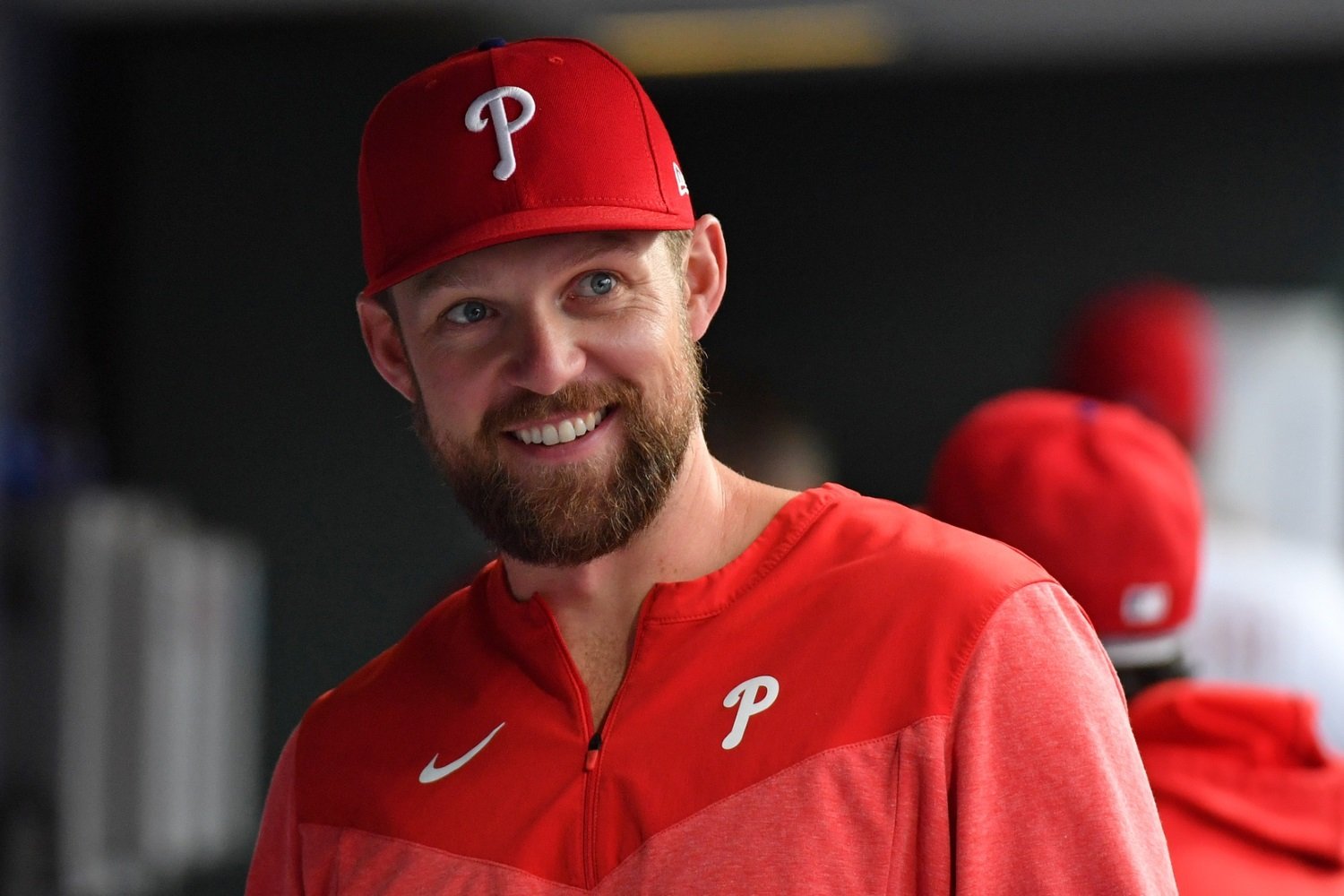 It's easy to point to the power Rhys Hoskins has demonstrated, both in the regular season and in the playoffs, and say that he fits with the Brewers. He does. That right-handed thump is, in broad strokes, plenty of justification for the two-year, $34-million deal to which the team signed Hoskins Tuesday night. By digging just a little deeper, though, we can see that the perfection of the fit runs even deeper. He Kills Left-Handed Pitchers The extent to which the Brewers struggled against southpaws last season has been somewhat oversold. As a team, they hit .250/.326/.406, which was very close to exactly average work. In fact, Milwaukee hitters were better against lefties than against righties. While their ineptitude against them in previous seasons was real, it became an unsupported narrative in 2023. That doesn't mean that Hoskins's power against lefties won't have tremendous value, though. He batted .286/.387/.558 off lefthanders in 2022, and has consistently dominated them throughout his career. Importantly, he steps into a mix at first base and DH that previously included almost solely left-handed hitters (Jake Bauers, Garrett Mitchell, Oliver Dunn, and Tyler Black, most notably). Having the ability to spell him against tough righties and to ensure that none of those lefty swingers needs to face a lefty more often than necessary is a great boost for new skipper Pat Murphy. He Hammers Flat-VAA Fastballs Not long ago, I wrote about the Brewers' difficulties hitting fastballs with a flat vertical approach angle (VAA), a pitch characteristic getting more attention with each passing season and one that helps determine the effectiveness of four-seamers as much as velocity or spin rate do. Last year, the Crew couldn't handle heaters with a flat VAA, and it cost them, because that trend is becoming fairly pervasive. Hoskins can heal what ails them in this regard, too. He's slugged .536 against four-seamers with a VAA of -4.5 degrees or flatter, and has whiffed on just 25.7 percent of swings against them, since the start of 2021. The former mark is well above-average; the latter one is well below the league average. Hoskins hits high, riding fastballs hard, without missing on them often. It's important to diversify the skill sets within a lineup, and Hoskins helps the Brewers do that. He not only brings huge power, but does it with a swing path and a certain kind of zone coverage that none of his new teammates offered. He instantly becomes the best power hitter on the team, and while he does have his weaknesses at the plate, he also has unique strengths. Being able to handle that fastball with extra hop on it and not chase it far above the zone has value, especially to a team full of guys who couldn't do so. He's Part of an All-In Approach Look, the 2024 Brewers are no juggernaut. All winter, though, national baseball writers fed speculation that the team would essentially be disassembled, with Corbin Burnes, Willy Adames, or both sent packing via trade. There were financial constraints from ownership that kept the front office from making major outlays, instead keeping them to things like retaining Wade Miley and signing Joe Ross and Eric Haase. This move charts a new course. It might beget more moves, or not, but since Hoskins has the right to opt out of the second year of the deal if he prefers, this move itself sets the team up to go for it in 2024. Burnes is still here. So is Adames. Burnes is overwhelmingly likely to be gone after this season, and Adames is unlikely to sign an extension, so bringing him back is only a slightly more realistic long shot. Christian Yelich is already 32 years old. William Contreras hits arbitration eligibility next winter, at which time Devin Williams will only be one year from free agency. That doesn't mean that the Crew will need to plunge into a rebuild after 2024. The Jackson Chourio extension helps them do some long-term planning, and they still have Yelich and Contreras, as well as Freddy Peralta, around whom to build. The farm system is strong. A small step back in 2025 wouldn't be surprising, though, which is why this coming season is sacred. Matt Arnold and company treated it that way by bringing in Hoskins, whom they hope can get them back to the postseason and pointed toward a pennant. What do you want to see the Brewers do next? Do you think Hoskins's arrival spells the departure of any of the previously projected positional contributors? Let's talk about the Crew's newest bopper.
 -
In the big move for which Brewers fans have been waiting all winter, Matt Arnold and company have struck. The Crew has their big bat, their real first baseman, and the right-handed power their lineup sorely needed. This is the kind of deal for which Tim Muma pleaded right here, Tuesday morning. It's a major boost for an offense that was short on power last season, and a terrific fit for a team who previously planned (absent a superior alternative) to start Jake Bauers at first base quite a bit. Hoskins, for his part, gets a player-friendly structure, with the right to hit free agency again next winter or extend his stay for a second season, according to his performance and how he and agent Scott Boras perceive the market. Whether he'll want to is hard to divine at the moment, for the same reasons that led to his being available at this price. Hoskins lost all of the 2023 season after suffering a major knee injury during spring training. Already a defensively middling first baseman, he figures to be limited to that position and/or DH duties, and he will turn 31 in March. The structure of this contract nods toward the fact that, unlike Boras client Cody Bellinger (who took a straight one-year deal last winter), Hoskins is at some risk of never getting his free-agent megadeal, even if he recovers relatively well from the injury and has a typical season for him this year. On Tuesday at Baseball Prospectus, Daniel Epstein wrote a good piece documenting and visualizing the dampening effect of age on free agents' earning power, especially once they reach age 31. Hoskins was never going to take a one-year deal without at least some measure of protection for him, but nor were the Brewers going to sign him to a long-term deal, in the shadow of that age milestone. This pact finds a happy medium. If he does return at full strength (as expected), Hoskins would be a game-changing force for the heart of the Milwaukee batting order. This was a team who put the ball on the ground as much as any in baseball last year, including and especially at the top of the lineup. That not only meant too few home runs, but led to a lot of rally-killing double plays. Hoskins is one of the game's great fly-ball sluggers, getting to his power by driving the ball to his pull field with elevation on a consistent basis. Pencil him into the third or fourth spot in the batting order, and mentally, shift Bauers to the DH spot. This lineup just got much more potent. The most interesting thing about the move, however, might be the mystery of what comes next. As Muma noted in his piece Tuesday morning, Hoskins barely fits into the best available estimates of the Brewers' 2024 payroll, gfven the limitations they face due to ownership's approach to the uncertain TV rights negotiations ahead. Will this addition be the last the team makes this offseason? Does it represent something of an all-in posture, whereby the club will keep Willy Adames, Corbin Burnes, and Devin Williams (but probably lose two of those three to free agency next winter, while also risking Hoskins opting out and wrestling with when to trade Williams)? Or might there be another shoe yet to drop? It's impossible to know for sure, but in the moment, it feels more like the former scenario. Hoskins completes a roster good enough to walk confidently into the yard where the fight for the NL Central will happen, and by the middle of the summer or the onset of fall, it could be a good enough one to upset people en route to the World Series. At the very least, this should banish from everyone's mind any remnants of the notion that the team would sell off Adames, Burnes, and Williams, or even any two of them, before Opening Day. The Brewers remain the team to beat in the Central, and this move shows that they know it. Are you excited about Hoskins? Where do you see the Brewers turning next? Jump into the comments and discuss. View full article
-
Brewers Sign Rhys Hoskins to Two-Year, $34-Million Deal, Add Thunder
Matthew Trueblood posted an article in Brewers
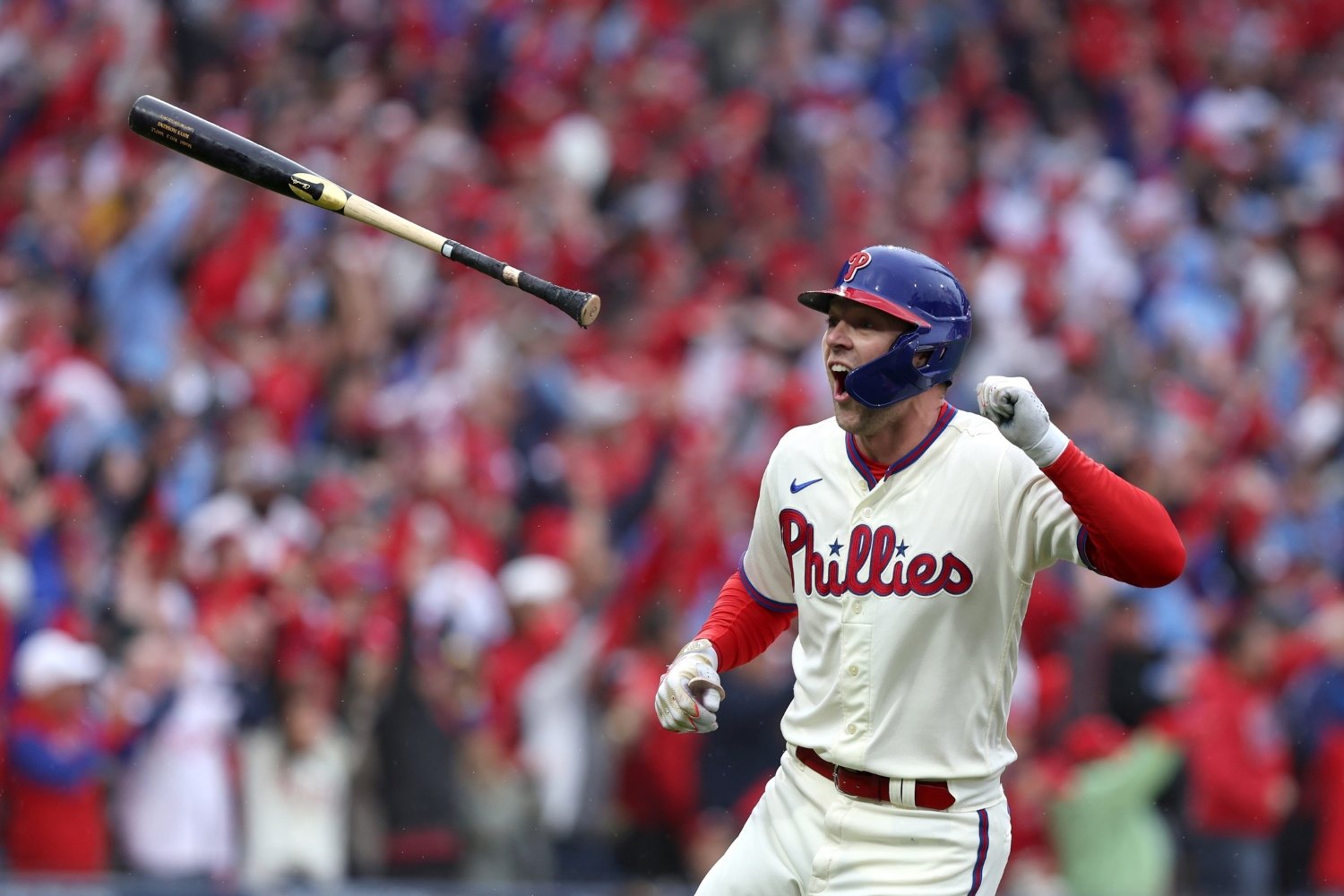 Former Phillies first baseman Rhys Hoskins has signed a two-year deal with the Brewers, worth $34 million. Jeff Passan dropped the late-night bomb. This is the kind of deal for which Tim Muma pleaded right here, Tuesday morning. It's a major boost for an offense that was short on power last season, and a terrific fit for a team who previously planned (absent a superior alternative) to start Jake Bauers at first base quite a bit. Hoskins, for his part, gets a player-friendly structure, with the right to hit free agency again next winter or extend his stay for a second season, according to his performance and how he and agent Scott Boras perceive the market. Whether he'll want to is hard to divine at the moment, for the same reasons that led to his being available at this price. Hoskins lost all of the 2023 season after suffering a major knee injury during spring training. Already a defensively middling first baseman, he figures to be limited to that position and/or DH duties, and he will turn 31 in March. The structure of this contract nods toward the fact that, unlike Boras client Cody Bellinger (who took a straight one-year deal last winter), Hoskins is at some risk of never getting his free-agent megadeal, even if he recovers relatively well from the injury and has a typical season for him this year. On Tuesday at Baseball Prospectus, Daniel Epstein wrote a good piece documenting and visualizing the dampening effect of age on free agents' earning power, especially once they reach age 31. Hoskins was never going to take a one-year deal without at least some measure of protection for him, but nor were the Brewers going to sign him to a long-term deal, in the shadow of that age milestone. This pact finds a happy medium. If he does return at full strength (as expected), Hoskins would be a game-changing force for the heart of the Milwaukee batting order. This was a team who put the ball on the ground as much as any in baseball last year, including and especially at the top of the lineup. That not only meant too few home runs, but led to a lot of rally-killing double plays. Hoskins is one of the game's great fly-ball sluggers, getting to his power by driving the ball to his pull field with elevation on a consistent basis. Pencil him into the third or fourth spot in the batting order, and mentally, shift Bauers to the DH spot. This lineup just got much more potent. The most interesting thing about the move, however, might be the mystery of what comes next. As Muma noted in his piece Tuesday morning, Hoskins barely fits into the best available estimates of the Brewers' 2024 payroll, gfven the limitations they face due to ownership's approach to the uncertain TV rights negotiations ahead. Will this addition be the last the team makes this offseason? Does it represent something of an all-in posture, whereby the club will keep Willy Adames, Corbin Burnes, and Devin Williams (but probably lose two of those three to free agency next winter, while also risking Hoskins opting out and wrestling with when to trade Williams)? Or might there be another shoe yet to drop? It's impossible to know for sure, but in the moment, it feels more like the former scenario. Hoskins completes a roster good enough to walk confidently into the yard where the fight for the NL Central will happen, and by the middle of the summer or the onset of fall, it could be a good enough one to upset people en route to the World Series. At the very least, this should banish from everyone's mind any remnants of the notion that the team would sell off Adames, Burnes, and Williams, or even any two of them, before Opening Day. The Brewers remain the team to beat in the Central, and this move shows that they know it. Are you excited about Hoskins? Where do you see the Brewers turning next? Jump into the comments and discuss.
 -
All I've seen of his defense is very limited video, but a couple reports I've read are very down on his arm at third. I think we can hold onto some hope for versatility there, but his path to playing time is probably at second, where the power stands out more than it would at third, anyway. I wonder if he ends up spending a lot of time on the roster but relatively little in the lineup, like an Owen Miller replacement who's a better fit for the roster than Miller is.
-
Less than four weeks from the spring training report date for pitchers and catchers, the Brewers have been so inactive this winter that huge uncertainty remains for their infield mix in 2024. That makes one of their few (and minor) offseason additions a fascinating one. Image courtesy of © Dave Nelson-USA TODAY Sports When the Brewers traded for Oliver Dunn in mid-November, it felt somewhat like a hedge against the possibility of a Willy Adames trade. Back then, when a more active offseason league-wide was expected and so many things seemed possible, Dunn looked like a clever use of a 40-man roster spot. He's had his development disrupted by the elimination of the 2020 season for all minor leagues and by a handful of injuries, but a big breakout in 2023 (including a successful stint in the Arizona Fall League) put him on the map. Already 26 years old and with a mere 19 plate appearances (in 2022, at that) at Triple A to his name, Dunn doesn't cut the figure of an elite prospect. He's more like an average contributor, with some upside beyond that in a well-managed platoon role. He enjoyed a significant power bump in 2023, after the Phillies took him from the Yankees in the minor-league phase of the Rule 5 Draft, and whenever both those organizations see something in a hitter, it's worth taking notice. Dunn has proved an exceptionally patient hitter in the minors, with more opposite-field power than most hitters of his ilk (late-blooming lefties with average-plus pop, coming from smallish frames) can boast. It's that ability to drive the ball the opposite way that first jumped out to me. Obviously, like any hitter (and especially any 5-foot-10 lefty), most of Dunn's power still comes when he gets around on the ball and drives it to his pull field, but he showed the capacity to let it travel and still reach the fences in the gap in left-center last year. That's an important skill for a hitter whose game fundamentally centers on plate discipline; you can't maximize pull-only power while showing the kind of discipline required to make Dunn's approach work. Adames certainly hasn't been traded yet, and it doesn't feel like such a move is in the cards this winter. As such, Brice Turang remains penciled into the second base job, and Dunn is not materially more promising at the plate than is Jake Bauers, acquired at almost exactly the same time two months ago. He would have to be so, in order to unseat Bauers from what figures to be the long side of a platoon role at first base, because Bauers is built more like a first baseman (even if he's only an inch or two taller, in reality) and has more experience at the position. What makes Dunn interesting, though, is that he does profile better at the plate than does Turang, and by a reasonably wide margin. For a hitter with such limited professional experience, Dunn stands out from the younger, more seasoned Turang, who only hit .218/.285/.300 in the big leagues last year. I recently wrote about some reasons for modest optimism around Turang, but that's only modest optimism, and the reasons for it are far from bulletproof. Dunn, by contrast, hit .271/.395/.506 last season. He did it at age 25, in a hitter-friendly home park, against Double-A pitching, so it's hard to set overmuch store by that, but the underlying batted-ball data support the notion that he can carry some of that over to the big leagues. So does the fact that (despite a relatively high whiff rate) he put the ball in play at an average rate on swings, because he showed such a strong tendency to hit it fair when he did make contact. The ability to square up a pitch and get it in play (as opposed to fouling it off) has been shown to be both important and somewhat sticky, and Dunn uses it to balance that patient, whiff-prone approach. Whether he'll be able to carry it over into the majors is an all-important and (alas) momentarily unanswerable question, but again, that capacity to hit the ball the other way with authority augurs well in this case. Dunn needs to be at second base, in order to have much value, but he wouldn't need to play every day. As part of a platoon with Andruw Monasterio at that spot, he could be a solid asset. The avenues by which that might happen aren't exciting, per se. They involve either Adames getting dealt, after all, or Turang having a nightmarish spring. Both scenarios are plausible, though, and given that, Dunn figures to come into camp as a player to watch. His skill set matches what the Brewers like to do offensively: wait pitchers out, use the whole field, and emphasize discipline and quality of contact, rather than going into a defensive posture with two strikes. If he's healthy and if he executes his approach well this spring, he could very well force his way into the mix for them. What do you want to see as the Brewers' infield array come Opening Day? Would a significant role for Dunn be good news, or bad? Weigh in below, as we await news to bring more clarity to the situation. View full article
-
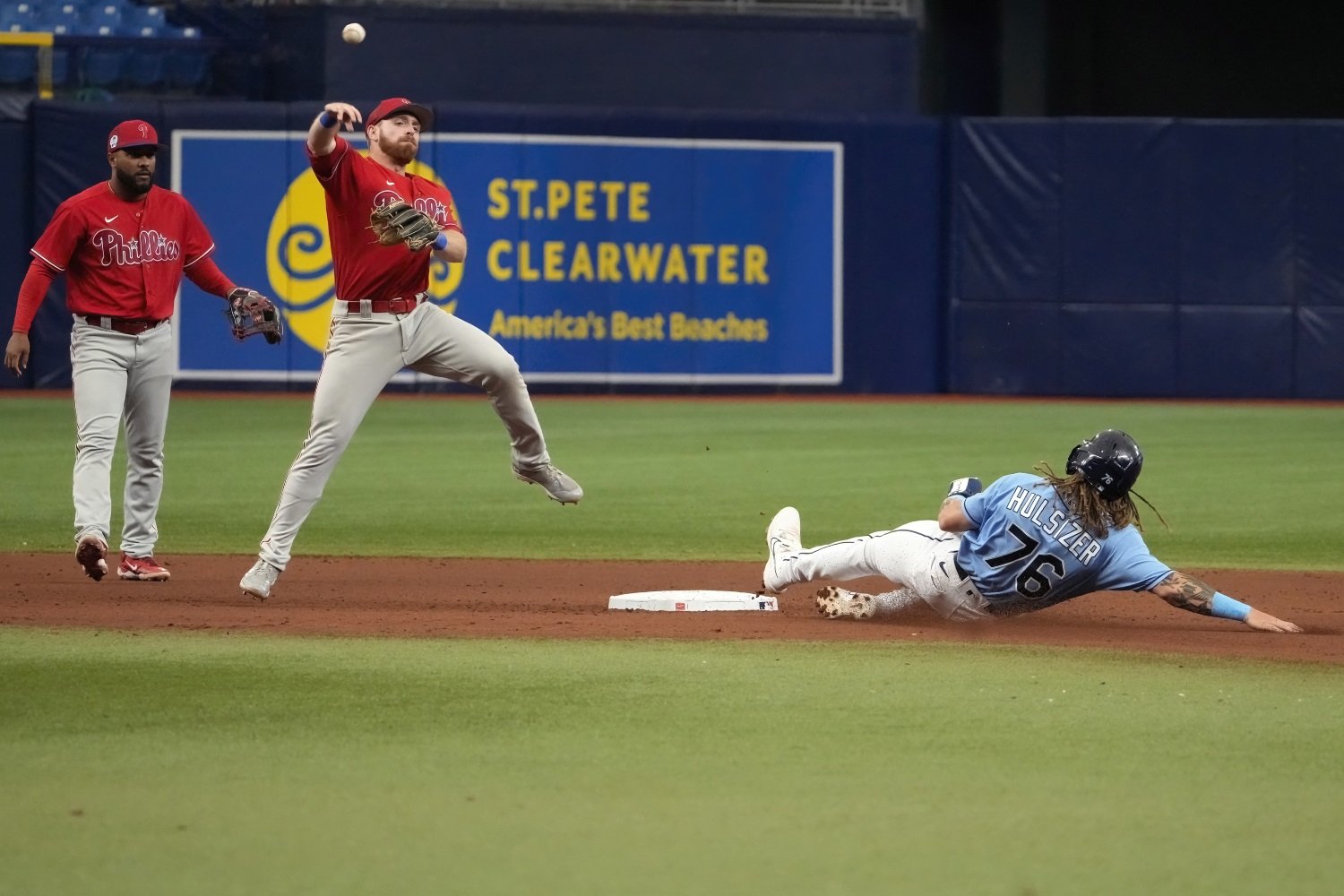 When the Brewers traded for Oliver Dunn in mid-November, it felt somewhat like a hedge against the possibility of a Willy Adames trade. Back then, when a more active offseason league-wide was expected and so many things seemed possible, Dunn looked like a clever use of a 40-man roster spot. He's had his development disrupted by the elimination of the 2020 season for all minor leagues and by a handful of injuries, but a big breakout in 2023 (including a successful stint in the Arizona Fall League) put him on the map. Already 26 years old and with a mere 19 plate appearances (in 2022, at that) at Triple A to his name, Dunn doesn't cut the figure of an elite prospect. He's more like an average contributor, with some upside beyond that in a well-managed platoon role. He enjoyed a significant power bump in 2023, after the Phillies took him from the Yankees in the minor-league phase of the Rule 5 Draft, and whenever both those organizations see something in a hitter, it's worth taking notice. Dunn has proved an exceptionally patient hitter in the minors, with more opposite-field power than most hitters of his ilk (late-blooming lefties with average-plus pop, coming from smallish frames) can boast. It's that ability to drive the ball the opposite way that first jumped out to me. Obviously, like any hitter (and especially any 5-foot-10 lefty), most of Dunn's power still comes when he gets around on the ball and drives it to his pull field, but he showed the capacity to let it travel and still reach the fences in the gap in left-center last year. That's an important skill for a hitter whose game fundamentally centers on plate discipline; you can't maximize pull-only power while showing the kind of discipline required to make Dunn's approach work. Adames certainly hasn't been traded yet, and it doesn't feel like such a move is in the cards this winter. As such, Brice Turang remains penciled into the second base job, and Dunn is not materially more promising at the plate than is Jake Bauers, acquired at almost exactly the same time two months ago. He would have to be so, in order to unseat Bauers from what figures to be the long side of a platoon role at first base, because Bauers is built more like a first baseman (even if he's only an inch or two taller, in reality) and has more experience at the position. What makes Dunn interesting, though, is that he does profile better at the plate than does Turang, and by a reasonably wide margin. For a hitter with such limited professional experience, Dunn stands out from the younger, more seasoned Turang, who only hit .218/.285/.300 in the big leagues last year. I recently wrote about some reasons for modest optimism around Turang, but that's only modest optimism, and the reasons for it are far from bulletproof. Dunn, by contrast, hit .271/.395/.506 last season. He did it at age 25, in a hitter-friendly home park, against Double-A pitching, so it's hard to set overmuch store by that, but the underlying batted-ball data support the notion that he can carry some of that over to the big leagues. So does the fact that (despite a relatively high whiff rate) he put the ball in play at an average rate on swings, because he showed such a strong tendency to hit it fair when he did make contact. The ability to square up a pitch and get it in play (as opposed to fouling it off) has been shown to be both important and somewhat sticky, and Dunn uses it to balance that patient, whiff-prone approach. Whether he'll be able to carry it over into the majors is an all-important and (alas) momentarily unanswerable question, but again, that capacity to hit the ball the other way with authority augurs well in this case. Dunn needs to be at second base, in order to have much value, but he wouldn't need to play every day. As part of a platoon with Andruw Monasterio at that spot, he could be a solid asset. The avenues by which that might happen aren't exciting, per se. They involve either Adames getting dealt, after all, or Turang having a nightmarish spring. Both scenarios are plausible, though, and given that, Dunn figures to come into camp as a player to watch. His skill set matches what the Brewers like to do offensively: wait pitchers out, use the whole field, and emphasize discipline and quality of contact, rather than going into a defensive posture with two strikes. If he's healthy and if he executes his approach well this spring, he could very well force his way into the mix for them. What do you want to see as the Brewers' infield array come Opening Day? Would a significant role for Dunn be good news, or bad? Weigh in below, as we await news to bring more clarity to the situation.
- 4 comments
-
- 1
-

-
- oliver dunn
- brice turang
- (and 2 more)
-
You've been talking to @clancyphile haven't you? 😏
-
How Eric Haase Can Find the Cure for Lost Bat Speed in Milwaukee
Matthew Trueblood posted an article in Brewers
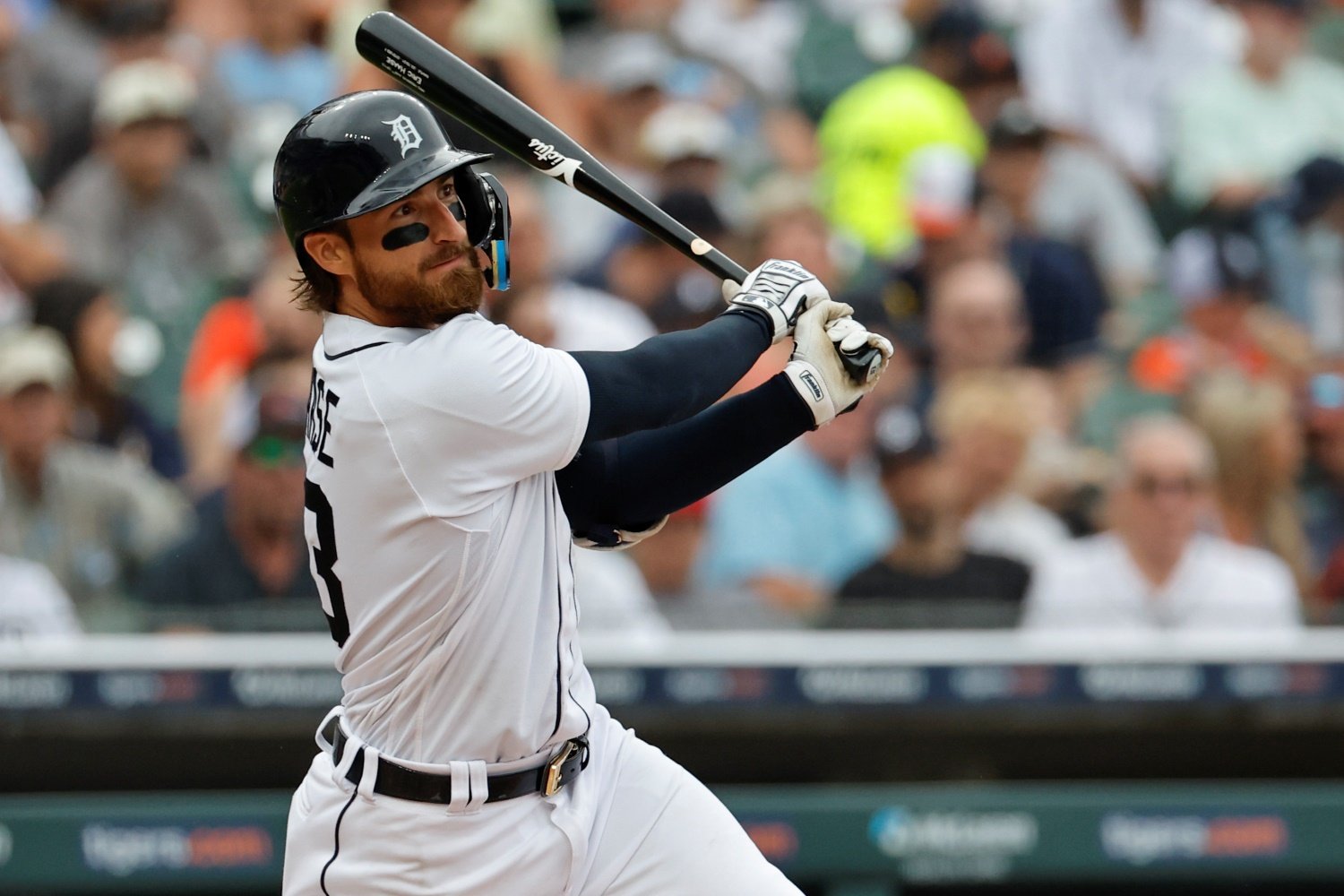 For most of his brief MLB career, Eric Haase has punished fastballs. It's how he survives as a hitter. It's how he clubbed 22 home runs in 2021 and another 14 in 2022, despite limiting playing time in each season and a high strikeout rate. One sure way to stick around as a fringy big-leaguer is to be willing to don catcher's gear and able to deliver some power in a backup role. An even better way to ensure teams want you around is to be a good pitch framer and/or game caller. As I documented yesterday, though, Haase has generally been pretty lousy at framing pitches during his time behind the plate, which puts extra pressure on his whiff-prone bat. When his offense cratered in 2023, his big-league viability just about went up in smoke, even as his framing incrementally improved. The Brewers are famously good at coaching up that skill, and probably hope they can bring him to the right side of average in 2024. That won't matter much if he can't hit, though, and last year, he couldn't hit. Specifically, the problem he ran into is one of the most familiar (and understandable) ones that a player can have: he lost a little bit of bat speed, and could no longer catch up to good fastballs. In his age-30 season, with the wear and tear that comes with being a professional catcher piling up on him, Haase started getting beaten by the heat. Here's a heat map showing Haase's Efficient Velocity (exit velo, weighted and adjusted for launch angle by the good folks at TruMedia) against pitches at 94 miles per hour or faster in 2022: Red is good; blue is bad. Like we said, when going well, Haase blasted mistakes. Now, here's the same heat map for 2023: Even if you prefer not to adjust to Efficient Velocity, Haase saw a cataclysmic drop-off. His raw exit velocity on pitches at 94+ was five miles per hour lower than it had been the previous year. On top of that, his whiff rate on such offerings climbed, from 26.6 percent in 2022 to 29.1 percent. There's no good news there. In this day and age, it's not even as though 94 miles per hour represents a plus fastball. It's average. If you can't hit 94 and above, you're doomed. Luckily for Haase, though, the Brewers are a fine destination for a player looking to survive some lost bat speed, as well as for one needing to polish their framing. See, a big part of Haase's problem throughout his career has been an overly aggressive approach at the plate. Last year, he swung at over 53 percent of the pitches he saw, and chased 35.7 percent of those even outside the strike zone. Those were both well over the league average; Haase swings a lot. The Brewers, er, don't. Now, no player's approach is entirely (or even primarily) a function of their coaching or their organization. Haase is wildly unlikely to go from swinging at 53 percent of the pitches he sees to just over 45 percent, as the Brewers averaged last year. He might come almost halfway down that sliding scale, though, and that would mean a few more walks, but it would also make the rest of his offensive game a bit easier. The main reason why Haase has always swung so much is that he's always been focused on getting started early. He's a pull hitter, and in Detroit, you can't just be kind of a pull hitter. You have to learn to crowd as many of your batted balls (especially those you hope will be extra-base hits) into the areas near the lines as possible. At Comerica Park, a 390-foot fly ball to center field is a can of corn. When Haase lost that little bit of bat speed in 2023 and couldn't get out around the ball as easily, he started cheating to try (in vain) to do so. All of that only exacerbated his issues. Firstly, then, we should note that the Brewers ran one of the lowest 10 Pull rates in baseball last season. That's a product of a team approach more focused on plate discipline and seeing a strike before attacking. Just as importantly, though, consider the way a park like Comerica takes center field away from a hitter, versus what Miller Park does for them. Here's the percentage of each team's batted balls to center field, at home, that were Barrels (by TruMedia's definition, meaning they had to be at least 95 miles per hour off the bat and between 10 and 35 degrees of launch angle), plotted against their slugging average on all batted balls to center at home. The Tigers, average at barreling the ball to center, were about 80 points below the mean in slugging average. The Brewers, about 3.5 percentage points below-average in their Barrel rate, were right on the average in slugging. Haase shouldn't need to get his swing started as early, playing in Milwaukee. He should, with the instruction of the Brewers' OBP-focused coaches, be able to trim his swing rate by hitting to the big part of the field more often, and when he does that, he usually has success. Don't expect Haase to usurp William Contreras. He might not even block Jeferson Quero, if the youngster has an impressive enough season at the highest levels of the minors. The fit of player and team should benefit Haase, though, and I don't think he's in much danger of ceding the backup backstop role to Austin Nola, at least in the short term. The Crew should be able to augment both his defense and his offense, thanks to the way they already do things and the skill set he brings to the table. Does any of that wash with you? Are you on board with Haase, or ripping pages off your Quero Qountdown Qalendar as feverishly as ever? Let's talk about it further in the comments.
 -
The bad news for the Brewers' newest big-league position player is that, at 30, he's losing the ability to catch up to big-league heat. The good news is that he's come to the right place. Image courtesy of © Rick Osentoski-USA TODAY Sports For most of his brief MLB career, Eric Haase has punished fastballs. It's how he survives as a hitter. It's how he clubbed 22 home runs in 2021 and another 14 in 2022, despite limiting playing time in each season and a high strikeout rate. One sure way to stick around as a fringy big-leaguer is to be willing to don catcher's gear and able to deliver some power in a backup role. An even better way to ensure teams want you around is to be a good pitch framer and/or game caller. As I documented yesterday, though, Haase has generally been pretty lousy at framing pitches during his time behind the plate, which puts extra pressure on his whiff-prone bat. When his offense cratered in 2023, his big-league viability just about went up in smoke, even as his framing incrementally improved. The Brewers are famously good at coaching up that skill, and probably hope they can bring him to the right side of average in 2024. That won't matter much if he can't hit, though, and last year, he couldn't hit. Specifically, the problem he ran into is one of the most familiar (and understandable) ones that a player can have: he lost a little bit of bat speed, and could no longer catch up to good fastballs. In his age-30 season, with the wear and tear that comes with being a professional catcher piling up on him, Haase started getting beaten by the heat. Here's a heat map showing Haase's Efficient Velocity (exit velo, weighted and adjusted for launch angle by the good folks at TruMedia) against pitches at 94 miles per hour or faster in 2022: Red is good; blue is bad. Like we said, when going well, Haase blasted mistakes. Now, here's the same heat map for 2023: Even if you prefer not to adjust to Efficient Velocity, Haase saw a cataclysmic drop-off. His raw exit velocity on pitches at 94+ was five miles per hour lower than it had been the previous year. On top of that, his whiff rate on such offerings climbed, from 26.6 percent in 2022 to 29.1 percent. There's no good news there. In this day and age, it's not even as though 94 miles per hour represents a plus fastball. It's average. If you can't hit 94 and above, you're doomed. Luckily for Haase, though, the Brewers are a fine destination for a player looking to survive some lost bat speed, as well as for one needing to polish their framing. See, a big part of Haase's problem throughout his career has been an overly aggressive approach at the plate. Last year, he swung at over 53 percent of the pitches he saw, and chased 35.7 percent of those even outside the strike zone. Those were both well over the league average; Haase swings a lot. The Brewers, er, don't. Now, no player's approach is entirely (or even primarily) a function of their coaching or their organization. Haase is wildly unlikely to go from swinging at 53 percent of the pitches he sees to just over 45 percent, as the Brewers averaged last year. He might come almost halfway down that sliding scale, though, and that would mean a few more walks, but it would also make the rest of his offensive game a bit easier. The main reason why Haase has always swung so much is that he's always been focused on getting started early. He's a pull hitter, and in Detroit, you can't just be kind of a pull hitter. You have to learn to crowd as many of your batted balls (especially those you hope will be extra-base hits) into the areas near the lines as possible. At Comerica Park, a 390-foot fly ball to center field is a can of corn. When Haase lost that little bit of bat speed in 2023 and couldn't get out around the ball as easily, he started cheating to try (in vain) to do so. All of that only exacerbated his issues. Firstly, then, we should note that the Brewers ran one of the lowest 10 Pull rates in baseball last season. That's a product of a team approach more focused on plate discipline and seeing a strike before attacking. Just as importantly, though, consider the way a park like Comerica takes center field away from a hitter, versus what Miller Park does for them. Here's the percentage of each team's batted balls to center field, at home, that were Barrels (by TruMedia's definition, meaning they had to be at least 95 miles per hour off the bat and between 10 and 35 degrees of launch angle), plotted against their slugging average on all batted balls to center at home. The Tigers, average at barreling the ball to center, were about 80 points below the mean in slugging average. The Brewers, about 3.5 percentage points below-average in their Barrel rate, were right on the average in slugging. Haase shouldn't need to get his swing started as early, playing in Milwaukee. He should, with the instruction of the Brewers' OBP-focused coaches, be able to trim his swing rate by hitting to the big part of the field more often, and when he does that, he usually has success. Don't expect Haase to usurp William Contreras. He might not even block Jeferson Quero, if the youngster has an impressive enough season at the highest levels of the minors. The fit of player and team should benefit Haase, though, and I don't think he's in much danger of ceding the backup backstop role to Austin Nola, at least in the short term. The Crew should be able to augment both his defense and his offense, thanks to the way they already do things and the skill set he brings to the table. Does any of that wash with you? Are you on board with Haase, or ripping pages off your Quero Qountdown Qalendar as feverishly as ever? Let's talk about it further in the comments. View full article
-
Hopefully, there are still a couple of notable additions ahead for the Brewers this winter. While we await one, though, there's also value in contemplating the ways they might get more out of one player they've already brought in. Image courtesy of © Junfu Han / USA TODAY NETWORK It was cheap and easy to acquire Eric Haase. The Brewers didn't have to compete very hard for him, because his skill set is not in much demand. Nominally, he's a catcher, but he's a poor pitch framer, and that's limited the playing time anyone has been willing to give him behind the dish. The rebuilding Tigers gave him a combined 150 games back there in 2021 and 2022, but only 57 of them in 2023. According to TruMedia's proprietary, count-sensitive Framing Runs Above Average metric, Haase was 9.8 runs below average as a framer in 2021, and 6.6 below average in 2022. Here's a heat map showing the areas where Haase was above- or below-average as a framer in 2022. In 2023, though, he was much-improved in that regard. He was only worth -0.8 runs as a framer. He still struggled to frame the high pitch, but he was much more consistent in shaping and extending the bottom edge of the zone. How did that happen? Well, for starters, Haase went from a fairly compact, blockish one-knee setup behind the plate in 2022 to a much lower, more variable one in 2023. Here's a video of him losing a strike in 2022 that he would be better able to earn for his pitcher after adjusting his setup. NE9rMnhfVjBZQUhRPT1fQlFOVFhWUUZYZ1FBQUZVQ0J3QUFCVkJXQUFOV1ZRTUFBVllGQkFwWENRTlFBVlpS.mp4 Technically, that's a one-knee-down stance, in keeping with the modern vogue. In reality, though, it doesn't give him much more flexibility or mobility than a squat. He's not able to shift his weight to anticipate the pitch or make subtle movements with his frame to catch the ball smoothly. Every stretch seems lurching, and the umpire is bound to notice it. Besides, even when Haase was in his traditional crouch, he wasn't very mobile back there. Whereas some catchers are able to set up with their rear end high and move with the incoming pitch like a shortstop tracking a line drive into the glove, Haase belonged to brotherhood of the anchor droppers. Look at this video, with runners on base, and note the way the counterweight in his setup stops him from beating the high fastball to its spot, let alone drawing it back into the heart of the zone. MVhrdmdfWGw0TUFRPT1fQUFWVVV3ZFJCVk1BREZjTFVBQUFCVlZYQUFCUkJWRUFWMVlEVVFJTUJ3RmNVVkZY.mp4 A big change to his setup did make Haase better last year. Even with runners on, last year, he was one-knee-down, and that undersells the difference. He switched to a deep fold, all the way down to the ground, to maximize his ability to steal strikes along that bottom edge that was such an encouraging orange in the heat map above. V3lualpfVjBZQUhRPT1fRGxNRFZ3WUJVd29BRDF0UUF3QUFVZzlXQUFBQ1VRY0FCUVlDVlFGWEJnWUdCZ1ZR.mp4 As you can see there, he doesn't just benefit by being able to bring down the bottom edge of the zone, either. He also gets wider and can shift his torso more subtly, thereby letting him draw the horizontal edges better and wider. Still, there are things to clean up here. Watch the way getting into this extremely deep position can sometimes leave him off-balance, especially because he gets there so late. bG5BWWRfVjBZQUhRPT1fVUFRRVhRQUJCVk1BQVZkWFhnQUFWUUJWQUFCUlVBTUFBMU5SVTFJSEF3SlhVMVFI.mp4 That ball is right at his chest protector. He's set the edge, and the pitcher hits his spot. Because Haase was so loud and bouncy in his movements, though, he wasn't able to catch the ball as quietley as the pitch deserved, and his extension through the ball was clumsy. He moved it up and down along the edge of the zone, but he wasn't able to bring it back over the plate. To imagine how the Crew's deservedly famous catching coaches will help Haase get over the hump and into outright positive territory as a framer, let's contrast him with William Contreras, on whom they've already worked that magic. It's easy to forget now, but Contreras went from -5.5 framing runs in 2022 to 12.9 in 2023. Here hs is positively taking food out of the mouths of Jesús Sánchez's children. anFabnZfVjBZQUhRPT1fVWxJQ0FRVUFWd29BV1ZwV1V3QUFCQUFBQUFCVFcxWUFVVnhRQndjRVYxQmRDQXRU.mp4 Contreras, here, is maybe halfway between the Haase we saw in 2022 and the one we saw in 2023. He's compact and upright, not giving up the top of the zone by being too low and not giving away when he reaches down for the ball, because he does so with his arm, not his whole upper body. I'm increasingly convinced, though, that the Brewers excel at training catchers primarily in the mental aspects of framing, and also in two key physical cues: Setting up closer to the batter than most catchers do, thereby catching balls moving out of the zone a bit sooner; and Arm action. It's not always apparent from center-field cameras, and you can easily miss it if you're not looking for it, but much of framing is timing the forward extension of the arm to meet the ball. If you catch the ball in the middle of a strong, fluid forward movement (just before your elbow would lock out, freezing your arm a bit), it's pretty easy to make the move from wherever you catch it to the center of the zone look natural and even irresistible. Umpires fall for that. That's what the team is going to try to do with Haase, too. He needs to creep up in the catcher's box, and he needs to smooth out the mechanics of coming through the ball as he catches it. If he does that, he has the other tools necessary to become a plus behind the plate. He won't unseat Contreras as the starter, but he can be part of what is perennially one of the league's best catching units in terms of shaping the strike zone. Do you believe Haase can work with Charlie Greene and the rest of the support staff to deliver value as a framer? Can he even stave off minor-league signee Austin Nola for the backup gig? Discuss that here, and come back tomorrow for a look at Haase's offense--which also needs some work. View full article
-
Eric Haase Will Be a Fun Spring Training Project for the Brewers
Matthew Trueblood posted an article in Brewers
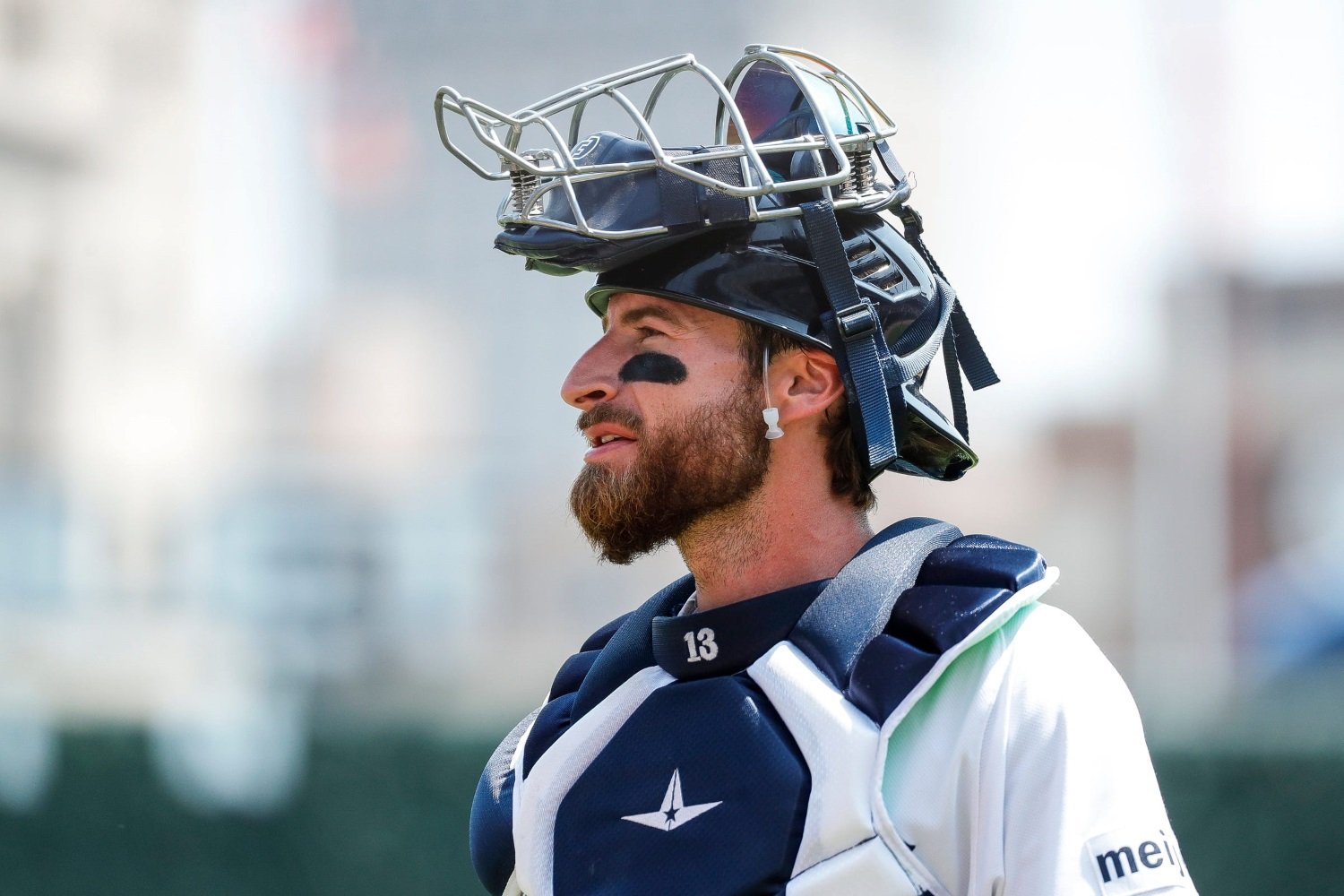 It was cheap and easy to acquire Eric Haase. The Brewers didn't have to compete very hard for him, because his skill set is not in much demand. Nominally, he's a catcher, but he's a poor pitch framer, and that's limited the playing time anyone has been willing to give him behind the dish. The rebuilding Tigers gave him a combined 150 games back there in 2021 and 2022, but only 57 of them in 2023. According to TruMedia's proprietary, count-sensitive Framing Runs Above Average metric, Haase was 9.8 runs below average as a framer in 2021, and 6.6 below average in 2022. Here's a heat map showing the areas where Haase was above- or below-average as a framer in 2022. In 2023, though, he was much-improved in that regard. He was only worth -0.8 runs as a framer. He still struggled to frame the high pitch, but he was much more consistent in shaping and extending the bottom edge of the zone. How did that happen? Well, for starters, Haase went from a fairly compact, blockish one-knee setup behind the plate in 2022 to a much lower, more variable one in 2023. Here's a video of him losing a strike in 2022 that he would be better able to earn for his pitcher after adjusting his setup. NE9rMnhfVjBZQUhRPT1fQlFOVFhWUUZYZ1FBQUZVQ0J3QUFCVkJXQUFOV1ZRTUFBVllGQkFwWENRTlFBVlpS.mp4 Technically, that's a one-knee-down stance, in keeping with the modern vogue. In reality, though, it doesn't give him much more flexibility or mobility than a squat. He's not able to shift his weight to anticipate the pitch or make subtle movements with his frame to catch the ball smoothly. Every stretch seems lurching, and the umpire is bound to notice it. Besides, even when Haase was in his traditional crouch, he wasn't very mobile back there. Whereas some catchers are able to set up with their rear end high and move with the incoming pitch like a shortstop tracking a line drive into the glove, Haase belonged to brotherhood of the anchor droppers. Look at this video, with runners on base, and note the way the counterweight in his setup stops him from beating the high fastball to its spot, let alone drawing it back into the heart of the zone. MVhrdmdfWGw0TUFRPT1fQUFWVVV3ZFJCVk1BREZjTFVBQUFCVlZYQUFCUkJWRUFWMVlEVVFJTUJ3RmNVVkZY.mp4 A big change to his setup did make Haase better last year. Even with runners on, last year, he was one-knee-down, and that undersells the difference. He switched to a deep fold, all the way down to the ground, to maximize his ability to steal strikes along that bottom edge that was such an encouraging orange in the heat map above. V3lualpfVjBZQUhRPT1fRGxNRFZ3WUJVd29BRDF0UUF3QUFVZzlXQUFBQ1VRY0FCUVlDVlFGWEJnWUdCZ1ZR.mp4 As you can see there, he doesn't just benefit by being able to bring down the bottom edge of the zone, either. He also gets wider and can shift his torso more subtly, thereby letting him draw the horizontal edges better and wider. Still, there are things to clean up here. Watch the way getting into this extremely deep position can sometimes leave him off-balance, especially because he gets there so late. bG5BWWRfVjBZQUhRPT1fVUFRRVhRQUJCVk1BQVZkWFhnQUFWUUJWQUFCUlVBTUFBMU5SVTFJSEF3SlhVMVFI.mp4 That ball is right at his chest protector. He's set the edge, and the pitcher hits his spot. Because Haase was so loud and bouncy in his movements, though, he wasn't able to catch the ball as quietley as the pitch deserved, and his extension through the ball was clumsy. He moved it up and down along the edge of the zone, but he wasn't able to bring it back over the plate. To imagine how the Crew's deservedly famous catching coaches will help Haase get over the hump and into outright positive territory as a framer, let's contrast him with William Contreras, on whom they've already worked that magic. It's easy to forget now, but Contreras went from -5.5 framing runs in 2022 to 12.9 in 2023. Here hs is positively taking food out of the mouths of Jesús Sánchez's children. anFabnZfVjBZQUhRPT1fVWxJQ0FRVUFWd29BV1ZwV1V3QUFCQUFBQUFCVFcxWUFVVnhRQndjRVYxQmRDQXRU.mp4 Contreras, here, is maybe halfway between the Haase we saw in 2022 and the one we saw in 2023. He's compact and upright, not giving up the top of the zone by being too low and not giving away when he reaches down for the ball, because he does so with his arm, not his whole upper body. I'm increasingly convinced, though, that the Brewers excel at training catchers primarily in the mental aspects of framing, and also in two key physical cues: Setting up closer to the batter than most catchers do, thereby catching balls moving out of the zone a bit sooner; and Arm action. It's not always apparent from center-field cameras, and you can easily miss it if you're not looking for it, but much of framing is timing the forward extension of the arm to meet the ball. If you catch the ball in the middle of a strong, fluid forward movement (just before your elbow would lock out, freezing your arm a bit), it's pretty easy to make the move from wherever you catch it to the center of the zone look natural and even irresistible. Umpires fall for that. That's what the team is going to try to do with Haase, too. He needs to creep up in the catcher's box, and he needs to smooth out the mechanics of coming through the ball as he catches it. If he does that, he has the other tools necessary to become a plus behind the plate. He won't unseat Contreras as the starter, but he can be part of what is perennially one of the league's best catching units in terms of shaping the strike zone. Do you believe Haase can work with Charlie Greene and the rest of the support staff to deliver value as a framer? Can he even stave off minor-league signee Austin Nola for the backup gig? Discuss that here, and come back tomorrow for a look at Haase's offense--which also needs some work.
 -
Brice Turang Needs to Become a Cut-the-Plate-in-Half Guy
Matthew Trueblood posted an article in Brewers
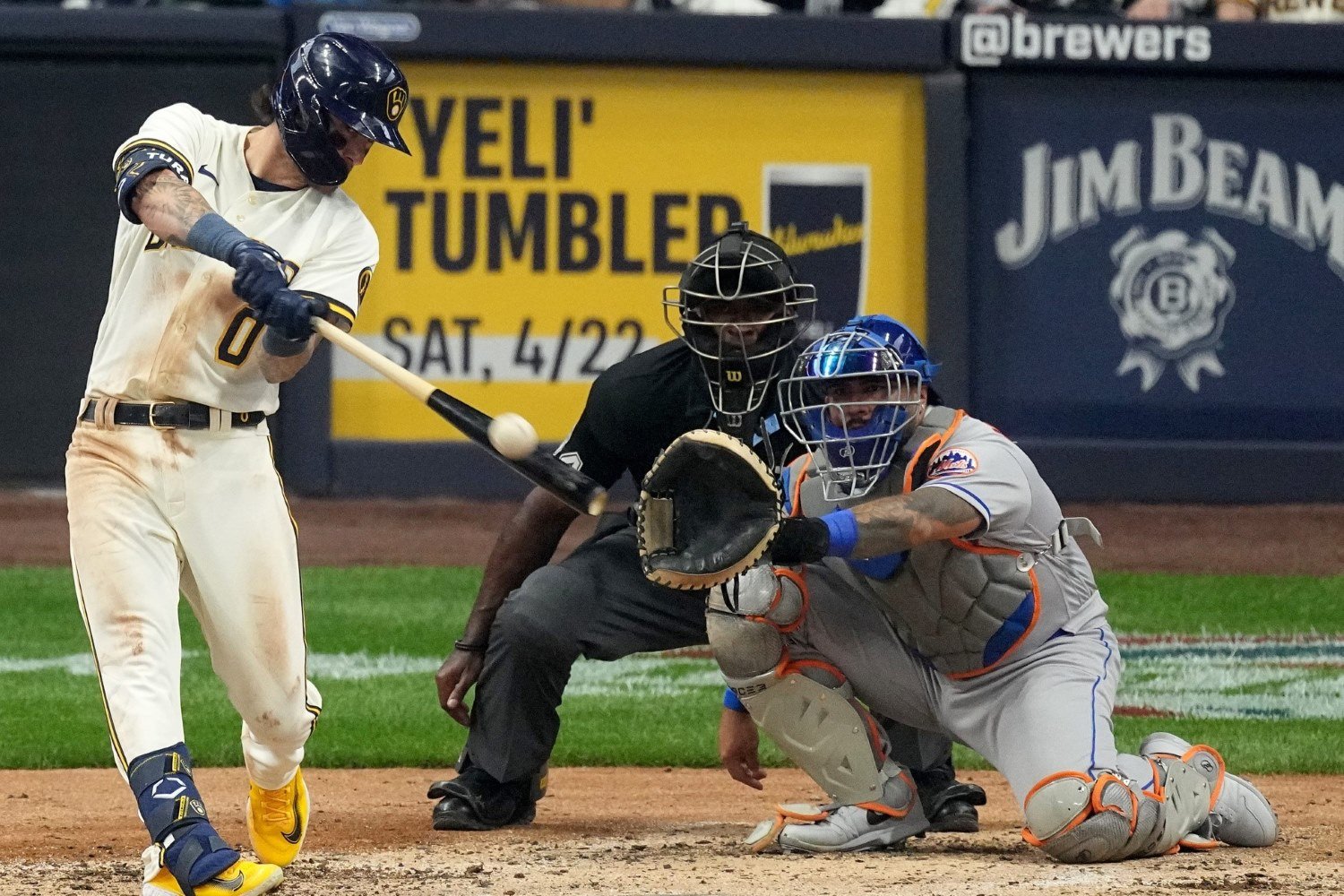 There were at least three seasons within Brice Turang's rookie campaign. He started so cold that, despite his dazzling glove work at the keystone, the Brewers sent him down to Triple A in early June, and he didn't make it back until the very end of the month. Once he did return, though, he caught lightning in a bottle for a bit. Then, right when the rest of the offense was running on all cylinders and the team charged smoothly into the postseason, Turang fell apart again, leaving the question of whether he's a viable second baseman for the 2024 Crew open. First, let's take a closer look at the numbers in those three distinct stretches of the season, because by doing so, we can see both the tantalizing and the terrifying narratives about him. Split PA AVG OBP SLG Thru Jun. 6 177 0.205 0.254 0.307 Jun. 29-Aug. 18 149 0.25 0.349 0.367 Aug. 19 On 122 0.2 0.252 0.209 Although even that middle line will stop Turang far short of superstardom, that's plenty of production from a speedy, slick-fielding middle infielder. If he could sustain that over a full season, the Brewers would be delighted to play him virtually every day and bat him near the bottom of the order, where he could get on base ahead of the guys at the top of the lineup card and press the issue with his legs. The problem is that the other two versions of him we saw during his rookie campaign are essentially unplayable, even for a great defender and baserunner. The key shortcoming in his game is obviously his power. That glorious home-opener grand slam notwithstanding, Turang never mustered the pop teams want from even defense-first lineup spots in this day and age. He's not totally without the ability to put a charge in the ball, but he never found a way to do it consistently as a rookie. Here are his slugging averages by pitch location, for each of the three stretches of the season we identified above. That's a lot of blue, and blue is bad on these charts. There's something to work with here, though. Look at the inner third of the plate on the first two charts, and especially the lower part. Where's the danger in Turang's swing? It comes when he can get around on the ball inside, and especially when he can get down through and around a ball below his belt. Now, here's the same set of heat maps, but with swing rate instead of slugging. This isn't a player who understands his own swing very well. Turang swung at far too many high pitches, given what he can actually do with them, even in his best stretch. On the other hand, though, even a hitter with a clear hole in his swing has to define and defend the zone, and Turang did that expertly in the middle panel. He didn't chase outside the zone, boosting his walk rate, and he made enough contact within it to cut his strikeout rate way down. Still, I want to see Turang make the next adjustment in 2024. He can be a better hitter than we saw him be in 2023, if he learns to cut the plate in half and give up a few strikes on the outside corner, in order to hit it better on the inner half. Lars Nootbaar (admittedly, a player with more power than Turang has showed so far) is an exemplar. A version of Turang who focuses his swings more on the pitches he can drive (imagine the heat map above with the orange range slightly lower, in the nitro zone Turang showed last year) will get on base at a nice clip, because he makes adequate contact and will draw some walks by forcing deep counts. He might never be more than an average big-league hitter, but given the rest of his skills, that's a goal worth chasing, and one he should pursue by further tweaking his approach. Do you want to see Turang enter 2024 as the regular second baseman? What would push you toward either liking or disliking that choice? Let's talk more about the team's turbid middle-infield situation.
 -
There's uncertainty surrounding several Brewers players going into 2024, but there might not be a more intriguing enigma than their young second baseman. Let's dig into his 2023 to see how he can take a step forward next year. Image courtesy of © Mark Hoffman / Milwaukee Journal Sentinel / USA TODAY NETWORK There were at least three seasons within Brice Turang's rookie campaign. He started so cold that, despite his dazzling glove work at the keystone, the Brewers sent him down to Triple A in early June, and he didn't make it back until the very end of the month. Once he did return, though, he caught lightning in a bottle for a bit. Then, right when the rest of the offense was running on all cylinders and the team charged smoothly into the postseason, Turang fell apart again, leaving the question of whether he's a viable second baseman for the 2024 Crew open. First, let's take a closer look at the numbers in those three distinct stretches of the season, because by doing so, we can see both the tantalizing and the terrifying narratives about him. Split PA AVG OBP SLG Thru Jun. 6 177 0.205 0.254 0.307 Jun. 29-Aug. 18 149 0.25 0.349 0.367 Aug. 19 On 122 0.2 0.252 0.209 Although even that middle line will stop Turang far short of superstardom, that's plenty of production from a speedy, slick-fielding middle infielder. If he could sustain that over a full season, the Brewers would be delighted to play him virtually every day and bat him near the bottom of the order, where he could get on base ahead of the guys at the top of the lineup card and press the issue with his legs. The problem is that the other two versions of him we saw during his rookie campaign are essentially unplayable, even for a great defender and baserunner. The key shortcoming in his game is obviously his power. That glorious home-opener grand slam notwithstanding, Turang never mustered the pop teams want from even defense-first lineup spots in this day and age. He's not totally without the ability to put a charge in the ball, but he never found a way to do it consistently as a rookie. Here are his slugging averages by pitch location, for each of the three stretches of the season we identified above. That's a lot of blue, and blue is bad on these charts. There's something to work with here, though. Look at the inner third of the plate on the first two charts, and especially the lower part. Where's the danger in Turang's swing? It comes when he can get around on the ball inside, and especially when he can get down through and around a ball below his belt. Now, here's the same set of heat maps, but with swing rate instead of slugging. This isn't a player who understands his own swing very well. Turang swung at far too many high pitches, given what he can actually do with them, even in his best stretch. On the other hand, though, even a hitter with a clear hole in his swing has to define and defend the zone, and Turang did that expertly in the middle panel. He didn't chase outside the zone, boosting his walk rate, and he made enough contact within it to cut his strikeout rate way down. Still, I want to see Turang make the next adjustment in 2024. He can be a better hitter than we saw him be in 2023, if he learns to cut the plate in half and give up a few strikes on the outside corner, in order to hit it better on the inner half. Lars Nootbaar (admittedly, a player with more power than Turang has showed so far) is an exemplar. A version of Turang who focuses his swings more on the pitches he can drive (imagine the heat map above with the orange range slightly lower, in the nitro zone Turang showed last year) will get on base at a nice clip, because he makes adequate contact and will draw some walks by forcing deep counts. He might never be more than an average big-league hitter, but given the rest of his skills, that's a goal worth chasing, and one he should pursue by further tweaking his approach. Do you want to see Turang enter 2024 as the regular second baseman? What would push you toward either liking or disliking that choice? Let's talk more about the team's turbid middle-infield situation. View full article
-
What Ken Rosenthal Should Have Said, and When He Should Have Said It
Matthew Trueblood posted an article in Brewers
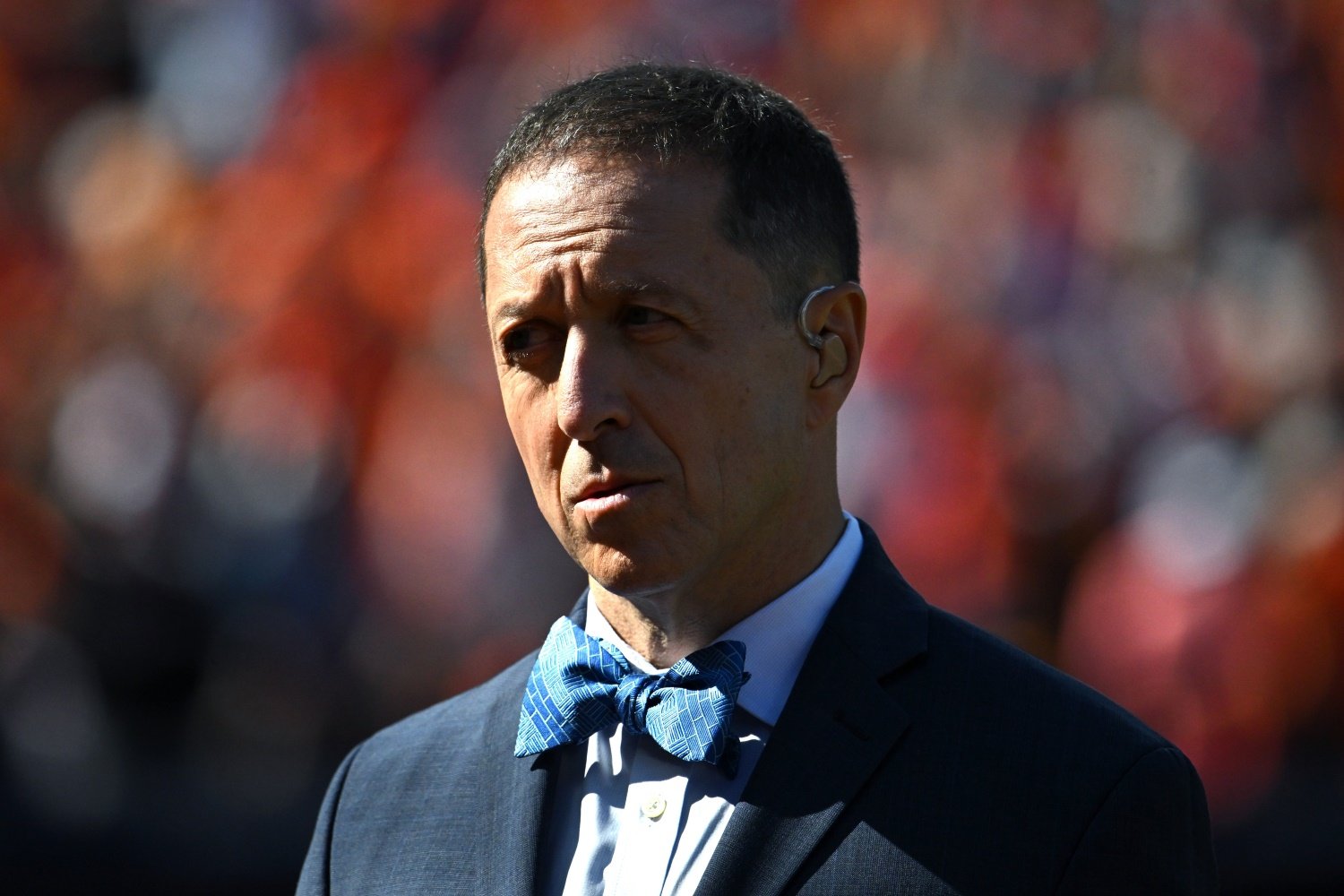 By Friday, even Rosenthal himself admitted that he had erred in the choices he made when building the article that ran earlier in the week. To summarize (lest you missed it), the piece argued that the heinous crimes that seem likely to lead to prison time and the obliteration of an MLB career for the Rays' Wander Franco were an especially egregious example of the risks teams assume by signing players to massive contracts at very young ages. He got massive blowback for that, both because of the nature of those crimes (Franco is accused of sexually abusing a teenage girl and bribing both the girl and her family for their silence) and because of the perspective from which he seemed to write. That backlash was justified. While Rosenthal's position in the industry and role at his place of employment requires him to write from a vicarious front office point of view at times, the human empathy filter always needs to be interleaved with any other layer of analysis we apply to anything. That's the remit of readers and of writers, and belonging to the latter fraternity doesn't absolve one of the responsibilities that fall on both groups. Rosenthal is only human, himself, and it's fine that he was unable to turn off the part of his brain that is trained to see big stories from the angle of an executive making some theoretical future decision. The great dual mistake was that he elected to let that thought out, and that his editorial team then allowed that thought-turned-column to see the light of day. Somewhere beneath the firestorm lies a perfectly fine point. In suggesting that people barely out of their teens are risky propositions for nine-figure investments, he was only updating a frequent refrain of none other than Branch Rickey. The notion comes off as paternalistic, self-serving, callous, or some combination of the three, almost no matter when you say it, but saying it about a player who was involved in something so unforgivable and aberrant felt especially so. We ought never to turn off our critical thinking centers, and it's fine for highly visible moments like the Franco situation to serve as occasions for the kinds of closer reflection we too often neglect between crises. Rosenthal needed to pause longer and think harder about the impact it would have on readers, on victims of sexual abuse and pedophilia, and on the baseball community, though, before externalizing those reflections. My favorite novel is The Witch Elm, by Tana French. Like any good literature, it's not about any one thing, but rather, it works in layers and levels. Fittingly, perhaps, it centers quite a bit on the seemingly innocent but often lethally dangerous failures of young people to see beyond their own experience or past the thin masks put up by the others near them. For my money, though, the most important theme it advances is even simpler: We don't really know each other. We barely know ourselves, and then, we only know the fragile versions of ourselves that our life experience has created. We're so ignorant, we often fail even to notice the fragility of the aspects of ourselves we consider essential. That's something close to what Rosenthal wanted to communicate, I think. He might not want to say this, but it's pretty clear (not just from this instance, but from past writings and comments he's made) that he's uneasy with the massive wealth (and the inextricable power that comes with that wealth) given so freely to players who have barely reached adulthood. I share that unease, on a level deeper than any tangible risks I could articulate. It's a reasonable position. It might even be a noble one, and stating it aloud is worthwhile, sometimes. Timing is everything, though. Talking about such risks is hard in the wake of a thing like what Franco did. Choosing to talk about it specifically through the lens of what Franco did was a glaring and easily avoidable error of judgment. Rosenthal faced a dilemma familiar to any columnist who has ever wanted to make a point. If you don't attach a specific case or example to an argument, it will often be either dismissed or wasted, because people will fail to connect with it or fully understand it. He wanted to make what he probably believes (in an earnest, human way; Rosenthal is not an unfeeling guy) to be a worthwhile point. However, examples and news pegs have to be well-chosen. This one wasn't. It is sometimes the maddening, deflating duty of a good columnist to risk that vagueness or ineffectuality, in order to preserve their humanity and serve their readers and their community better. You might have to write some variation on a column a handful of times over a handful of years, in order to slowly bring more people around to the idea that the point you're making matters and that the side you're taking is the side of the angels. That's not ideal, but it's better than accidentally making smaller something so huge and ugly that it should never be thus downplayed. We don't really know each other. I certainly don't know Rosenthal. When I read his article this week, and when he made his appearance Friday on a web show to make amends for it, I was reminded of that in forceful terms. I refuse to impute any real malice to his choices in this case, but it seems to me that he needed to keep the lesson closer to the center of his own mind when he sat down to write. The fundamental conclusion we should draw from the premise that we don't know each other is that we need to proceed with greater empathy. We're all moving in the dark, so we should take care not to step on each other. Sometimes, that means putting an article idea in a tickler file for later.
 -
Then you'll have to go ahead and lose that respect for him. Haha. I can tell you they broached the subject (though not insistently). He said no. And for the record, I don't think it makes a huge difference right now. I do get what you're seeing, though. Might be easier to plug a hole in left with a power hitter, long-term, than to do so at first.
-
The Brewers have only done the bare minimum to supplement an offense that was anemic in 2023. Could they add a hitter trying to win his third straight batting title to shore up first base for 2024? Image courtesy of © Charles LeClaire-USA TODAY Sports In a Twitter Space Tuesday night, venerable Marlins reporter Craig Mish mused that the Fish could end up trading Luis Arraez as soon as this winter. Arraez, who will turn 27 in April, is a .326 career hitter, and although he faded after a first-half flirtation with .400 in 2023, he still ended that campaign at .354, to win his second straight batting title. He'd also taken home the AL crown in 2022, edging out Aaron Judge to rob him of a Triple Crown, before being traded from the Twins to the Marlins in the Pablo Lopez deal last winter. There might not be any team in MLB to whom Arraez has more value than Miami, because he's a charismatic young venezolano and because his offensive profile is less diminished by pitcher-friendly loanDepot Park than that of just about anyone else in baseball. However, he's also just two years away from free agency, and MLB Trade Rumors projected him to make $10.8 million via arbitration in 2024. Given the way the arbitration system rewards traditional stats and Arraez's excellence in those areas, he could cost as much as $30 million over the two remaining years of club control. The Marlins are, perpetually but especially right now, essentially in a worse version of the Brewers' situation. Like the Brewers, they're unsure of their future local TV rights deal, and theirs figures to be one market in which the popping of the broadcast bubble results in a significant decrease in annual revenue from that source. Unlike the Crew, though, Miami perennially struggles to draw fans to the park, so without TV revenues, they have much less on which to fall back. Any MLB team can afford to pay a great player $11 million, but the Marlins have both real and self-imposed financial constraints, and (sooner or later) they've traded away just about every good player they've ever had. New head honcho of baseball operations Peter Bendix comes from the Rays, who also try to trade a player a year early, rather than a year late. Since he was just hired this fall, Arraez also isn't his prize acquisition. Nor does Arraez necessarily fit with the offensive philosophy Bendix brings over from Tampa Bay, where they place more of an emphasis on the ability to either hit the ball hard at an unusually high rate or pull the ball in the air a lot. Arraez's brilliance, of course, lies in making lots of contact, rather than in doing either of those things. Mish also mentioned in the aforementioned Spaces discussion that he thinks any returns the Marlins seek in trades this winter will be focused on long-term help, rather than immediate impact. That suggests that the Brewers could land Arraez without giving up someone they expect to make a big difference in 2024. It would still have to be a substantial move, costing a couple of valuable prospects, but it wouldn't need to take a bite out of the 2024 roster in the process of upgrading it. The big question is how much of an upgrade Arraez would be, given the construction of the Brewers' lineup. They badly need help at first base, and second base isn't entirely sewn up, either. However, in Christian Yelich and William Contreras, the team's two best hitters are already ground ball guys whose game power lags behind their raw pop. The only knock anyone has offered so far on Jackson Chourio is that he hits too many ground balls. He's likely to eventually make the adjustment and find his power, but in his first year or two, he could underperform in the power department, too. Can the Crew really afford another hit-over-power guy? Yes. Arraez is too good to let an imperfect alignment between needs and skills stand in the way. As I wrote yesterday, the Brewers struggle mightily against fastballs with a flat vertical approach angle (VAA). Arraez handles them about as well as anyone in baseball. It's easier to see, and thus to focus on, the dearth of slug from which the Brewers suffered last year, but they also had a slightly below-average .319 team OBP. With Arraez, Yelich, Contreras, and Sal Frelick in the middle of the lineup picture, they could improve on that by a solid 20 points in 2024. Even without adding tremendous power, they could realize a big offensive improvement, with a lineup that relentlessly gets on base and brings those runners around on a parade of hits. What do you think of Arraez as an alternative to some of the more conventional but lower-ceiling free agents whom the team could pursue to fill their vacancy at first base? Sound off below. View full article
-
Could the Brewers Trade for Marlins First Baseman Luis Arraez?
Matthew Trueblood posted an article in Brewers
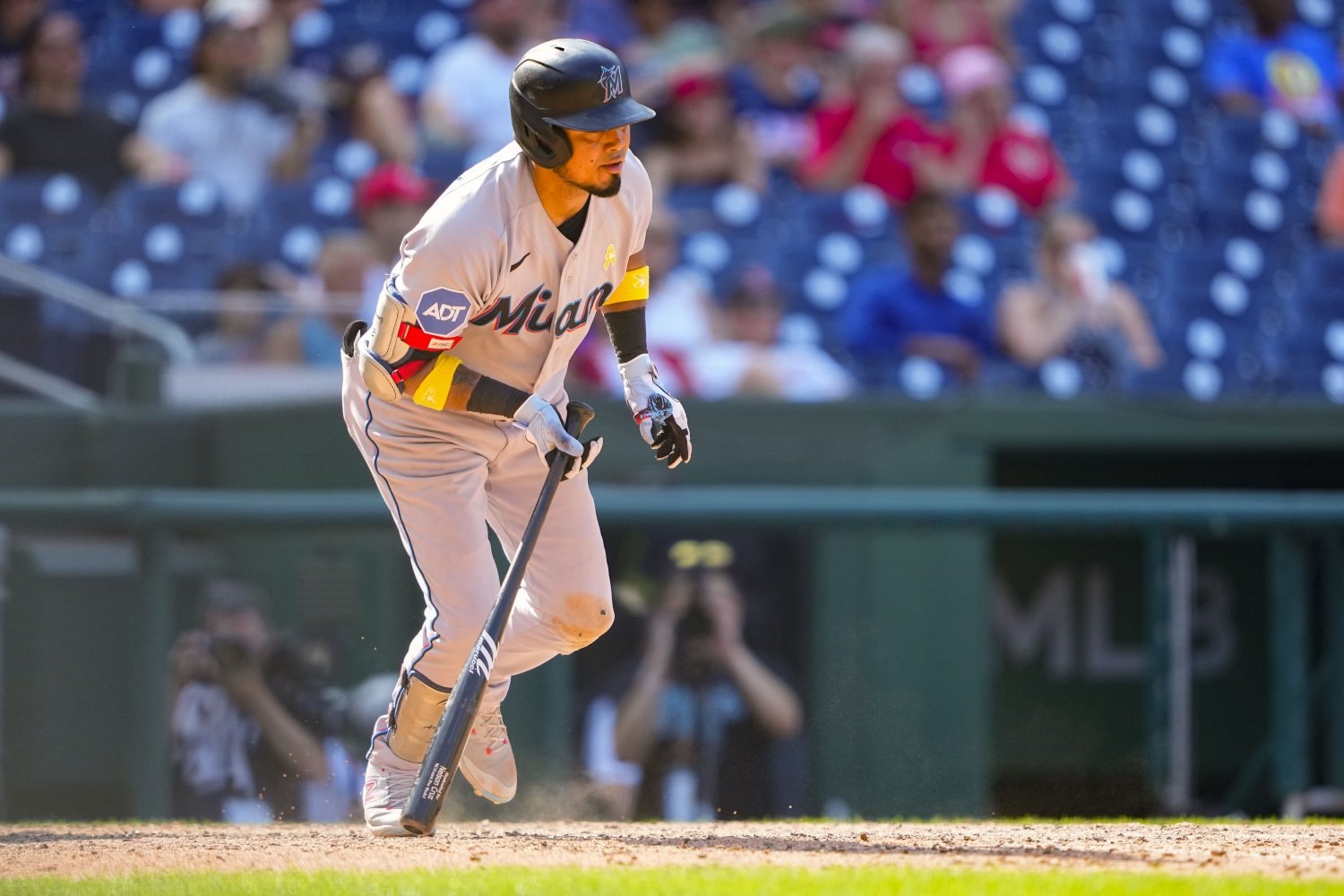 In a Twitter Space Tuesday night, venerable Marlins reporter Craig Mish mused that the Fish could end up trading Luis Arraez as soon as this winter. Arraez, who will turn 27 in April, is a .326 career hitter, and although he faded after a first-half flirtation with .400 in 2023, he still ended that campaign at .354, to win his second straight batting title. He'd also taken home the AL crown in 2022, edging out Aaron Judge to rob him of a Triple Crown, before being traded from the Twins to the Marlins in the Pablo Lopez deal last winter. There might not be any team in MLB to whom Arraez has more value than Miami, because he's a charismatic young venezolano and because his offensive profile is less diminished by pitcher-friendly loanDepot Park than that of just about anyone else in baseball. However, he's also just two years away from free agency, and MLB Trade Rumors projected him to make $10.8 million via arbitration in 2024. Given the way the arbitration system rewards traditional stats and Arraez's excellence in those areas, he could cost as much as $30 million over the two remaining years of club control. The Marlins are, perpetually but especially right now, essentially in a worse version of the Brewers' situation. Like the Brewers, they're unsure of their future local TV rights deal, and theirs figures to be one market in which the popping of the broadcast bubble results in a significant decrease in annual revenue from that source. Unlike the Crew, though, Miami perennially struggles to draw fans to the park, so without TV revenues, they have much less on which to fall back. Any MLB team can afford to pay a great player $11 million, but the Marlins have both real and self-imposed financial constraints, and (sooner or later) they've traded away just about every good player they've ever had. New head honcho of baseball operations Peter Bendix comes from the Rays, who also try to trade a player a year early, rather than a year late. Since he was just hired this fall, Arraez also isn't his prize acquisition. Nor does Arraez necessarily fit with the offensive philosophy Bendix brings over from Tampa Bay, where they place more of an emphasis on the ability to either hit the ball hard at an unusually high rate or pull the ball in the air a lot. Arraez's brilliance, of course, lies in making lots of contact, rather than in doing either of those things. Mish also mentioned in the aforementioned Spaces discussion that he thinks any returns the Marlins seek in trades this winter will be focused on long-term help, rather than immediate impact. That suggests that the Brewers could land Arraez without giving up someone they expect to make a big difference in 2024. It would still have to be a substantial move, costing a couple of valuable prospects, but it wouldn't need to take a bite out of the 2024 roster in the process of upgrading it. The big question is how much of an upgrade Arraez would be, given the construction of the Brewers' lineup. They badly need help at first base, and second base isn't entirely sewn up, either. However, in Christian Yelich and William Contreras, the team's two best hitters are already ground ball guys whose game power lags behind their raw pop. The only knock anyone has offered so far on Jackson Chourio is that he hits too many ground balls. He's likely to eventually make the adjustment and find his power, but in his first year or two, he could underperform in the power department, too. Can the Crew really afford another hit-over-power guy? Yes. Arraez is too good to let an imperfect alignment between needs and skills stand in the way. As I wrote yesterday, the Brewers struggle mightily against fastballs with a flat vertical approach angle (VAA). Arraez handles them about as well as anyone in baseball. It's easier to see, and thus to focus on, the dearth of slug from which the Brewers suffered last year, but they also had a slightly below-average .319 team OBP. With Arraez, Yelich, Contreras, and Sal Frelick in the middle of the lineup picture, they could improve on that by a solid 20 points in 2024. Even without adding tremendous power, they could realize a big offensive improvement, with a lineup that relentlessly gets on base and brings those runners around on a parade of hits. What do you think of Arraez as an alternative to some of the more conventional but lower-ceiling free agents whom the team could pursue to fill their vacancy at first base? Sound off below.
 -
Baseball is becoming, more and more, a game of flat fastballs. A vertical approach angle (VAA) close to zero makes fastballs harder to hit, so pitchers are pushing hard to shape their heaters that way. That's bad news for the local nine. Image courtesy of © Jerome Miron-USA TODAY Sports An average VAA on four-seam fastballs and sinkers in 2023 was around -5.2 degrees. In other words, if you drew a straight line parallel to the ground from the pitcher's release point to home plate, then another line describing the actual trajectory of those pitches as they neared home plate, the two lines would form a 5.2-degree angle from one another. Let's look, then, at all fastballs with a VAA of -4.5 or higher--the flattest heaters in the game. On average, teams had between 500 and 600 at-bats end on such pitches in 2023. The Brewers weren't quite the worst offense in baseball against those heaters, but it was close. Only the Royals and White Sox had worse overall results against flat fastballs. Only the Reds and Guardians had lower Barrel or Hard-Hit rates. Although they didn't rack up whiffs the way some other teams throughout the league did on flat-VAA heat, the Brewers couldn't generate any meaningful jolt against them. They hit the highest percentage of their batted balls against such pitches to center field of any team in the league. In effect, they became lazy fly ball machines when pitchers could attack the zone with a flat-VAA fastball. It's ironic that the offense has such a brutal problem with flat VAAs, because it's not as though the team is unaware of the value of the attribute. On the contrary, the Brewers make use of flat VAAs on their heaters as much as almost any team in baseball. Freddy Peralta, Hoby Milner, and Devin Williams all have flat VAAs. So do ex-Brewers Brandon Woodruff, Peter Strzelecki, and Gus Varland. Let's take a look at one instructive contrast. Christian Yelich actually handles flat-VAA fastballs quite well, with a .376 wOBA against them. William Contreras, by contrast, had a .271 mark, well down the leaderboard. Images and stats on fastball VAA courtesy of TruMedia. That's an interesting finding, because Contreras and Yelich are superficially similar in their strengths and weaknesses at the plate. Each can hit the ball very hard, fairly consistently, but each struggles to elevate the ball. Each uses the big part of the field, but sometimes too much so, such that they don't take full advantage of their power even when they get it in the air. They're both relatively patient at the plate, and they both make contact at a good rate. Yet, when it comes to handling the kinds of fastballs toward which the league is trending, Yelich is in good shape, whereas Contreras is getting dominated. A lot of that is adjusting one's sights and modulating approach. Yelich did much of his damage on the share of flat-VAA heaters that got down below the top third of the zone, where he could handle them. Fastballs with a flat VAA are better than ones with a steeper one, almost anywhere in the zone, but they're most effective at the top of the zone. That's also where most hitters (including these two) struggle to get on top of the ball. Yelich does a better job of letting the high fastball go for a ball, and of being ready when the ball is down just a bit, where his swing path can attack it. He's also better, right now, at going the other way with that pitch. We saw Contreras slice some impressive shots to right and right-center last year, but it was nearly always when he was in a certain mode, waiting back and looking to push the ball that way. Almost all of those well-hit opposite-field pokes were on low pitches, and many of them were on breaking balls. Yelich is better at following the old hitter's saw, "Hit it where it's pitched." That's why he's doing well against the league's trendy cheese, while Contreras (and too many Brewers teammates) are scuffling badly. As the team looks to round out the lineup, they should focus on finding hitters who handle this particular offering well, but they also need to adjust their hitting philosophy to close what is essentially a team-wide hole in a collective swing. What do you see in the team's efforts to hit the modern fastball? How can they ameliorate the problem? Let's talk some ball. View full article
-
 An average VAA on four-seam fastballs and sinkers in 2023 was around -5.2 degrees. In other words, if you drew a straight line parallel to the ground from the pitcher's release point to home plate, then another line describing the actual trajectory of those pitches as they neared home plate, the two lines would form a 5.2-degree angle from one another. Let's look, then, at all fastballs with a VAA of -4.5 or higher--the flattest heaters in the game. On average, teams had between 500 and 600 at-bats end on such pitches in 2023. The Brewers weren't quite the worst offense in baseball against those heaters, but it was close. Only the Royals and White Sox had worse overall results against flat fastballs. Only the Reds and Guardians had lower Barrel or Hard-Hit rates. Although they didn't rack up whiffs the way some other teams throughout the league did on flat-VAA heat, the Brewers couldn't generate any meaningful jolt against them. They hit the highest percentage of their batted balls against such pitches to center field of any team in the league. In effect, they became lazy fly ball machines when pitchers could attack the zone with a flat-VAA fastball. It's ironic that the offense has such a brutal problem with flat VAAs, because it's not as though the team is unaware of the value of the attribute. On the contrary, the Brewers make use of flat VAAs on their heaters as much as almost any team in baseball. Freddy Peralta, Hoby Milner, and Devin Williams all have flat VAAs. So do ex-Brewers Brandon Woodruff, Peter Strzelecki, and Gus Varland. Let's take a look at one instructive contrast. Christian Yelich actually handles flat-VAA fastballs quite well, with a .376 wOBA against them. William Contreras, by contrast, had a .271 mark, well down the leaderboard. Images and stats on fastball VAA courtesy of TruMedia. That's an interesting finding, because Contreras and Yelich are superficially similar in their strengths and weaknesses at the plate. Each can hit the ball very hard, fairly consistently, but each struggles to elevate the ball. Each uses the big part of the field, but sometimes too much so, such that they don't take full advantage of their power even when they get it in the air. They're both relatively patient at the plate, and they both make contact at a good rate. Yet, when it comes to handling the kinds of fastballs toward which the league is trending, Yelich is in good shape, whereas Contreras is getting dominated. A lot of that is adjusting one's sights and modulating approach. Yelich did much of his damage on the share of flat-VAA heaters that got down below the top third of the zone, where he could handle them. Fastballs with a flat VAA are better than ones with a steeper one, almost anywhere in the zone, but they're most effective at the top of the zone. That's also where most hitters (including these two) struggle to get on top of the ball. Yelich does a better job of letting the high fastball go for a ball, and of being ready when the ball is down just a bit, where his swing path can attack it. He's also better, right now, at going the other way with that pitch. We saw Contreras slice some impressive shots to right and right-center last year, but it was nearly always when he was in a certain mode, waiting back and looking to push the ball that way. Almost all of those well-hit opposite-field pokes were on low pitches, and many of them were on breaking balls. Yelich is better at following the old hitter's saw, "Hit it where it's pitched." That's why he's doing well against the league's trendy cheese, while Contreras (and too many Brewers teammates) are scuffling badly. As the team looks to round out the lineup, they should focus on finding hitters who handle this particular offering well, but they also need to adjust their hitting philosophy to close what is essentially a team-wide hole in a collective swing. What do you see in the team's efforts to hit the modern fastball? How can they ameliorate the problem? Let's talk some ball.
 -
I would think a Burnes trade would make a bigger-money addition at either 1B or DH MORE likely, not less. But I get what you mean. Also, I really like the idea of bringing Brantley home. His market has been ODDLY silent. I wonder if he's in a mode similar to Kershaw, where if the fit isn't perfect, he'll just retire.
-
The Brewers need a first baseman and/or a designated hitter with some legitimate power. They need one who can get on base. There's a veteran who excels in both areas, and who could be available for a seven-figure salary. Let's make a deal. Image courtesy of © Nick Turchiaro-USA TODAY Sports Maybe we should be careful here. There are plenty of reasons to feel a bit of trepidation about Brandon Belt as a target for the Brewers this winter. Firstly, they're likely to want to utilize William Contreras and Christian Yelich as the DH a fair few times this coming season, and Belt only played 29 games at first base in 2023. Otherwise, he was a DH himself. He's also set to turn 36 years old in the spring. Finally, he's coming off a season in which (despite good surface-level numbers) he showed some serious, potentially irreversible holes in his swing. That's the bad news. The good news is, because of the above, Belt is likely to be available for even less than the relatively modest $9.3 million he made as a member of the Blue Jays in 2023. The other good news is, Belt is a career .261/.357/.460 career hitter, and that he was even better than that in 2023. His raw production was fueled by a .370 batting average on balls in play, which might incite some folks to worry that he just got lucky, but his success ran deeper than that. For his entire career, Belt has been a fly-ball hitter, and even when he hits the ball on the ground, he does it at an unusually high launch angle for a grounder. That's always had some value, but in the first year of the ban on infield shifts, we saw low line drives and high-launch ground balls take an especially noteworthy leap in value. Belt, whether intentionally or by earned happenstance, saw his tendency toward that kind of batted ball exaggerated, especially on his hardest-hit balls. He hit fewer lazy fly balls and more of those high-value liners. Tightening his launch angles was a result of Belt focusing more on pulling the ball and less on elevating it, and it was also, partially, an outgrowth of his natural swing path. He's made a career out of driving the ball in the air to his pull field. Getting under the ball a little bit less often just helped him maximize the value of that approach under a changed rule set, and in a new home park. (Prior to 2023, of course, he had spent his entire career as a Giant, calling Oracle Park home, and he was severely discouraged from leaning into an approach centered on driving it in the air to right field.) Belt didn't quite time all of this right, though. He did escape San Francisco, and he did survive to see the end of the infield shift, but both things have happened just as his bat seems to be slowing down. His whiff rate on fastballs spiked to north of 33 percent in 2023, which was not only a career-worst mark, but seventh-highest out of 290 qualifying batters. He did have a higher average exit velocity on the balls he put in play against heaters, but he got beaten too often with that pitch. Belt did have the lowest whiff rate of his career on offspeed stuff, but that came with the lowest average exit velocity on those pitches of his career, too. The story the data is telling us is of a player past the middle of his 30s, searching halfway in vain for a way to work around the drag building up in his swing. To his credit, though, Belt is being about as smart about that difficult set of adjustments as possible. That's in keeping with his track record. Belt has always been a very patient hitter, especially once he gets deep into counts, but he's actually quite aggressive on the first pitch. If a pitcher doesn't throw him anything close early in the count, that's when he starts grinding away and works his walks. Here's a chart of all hitters who had at least 300 plate appearances in 2023, with overall swing rate on the X-axis and first-pitch swing rate on the Y-axis. Belt is the red dot. There are a handful of similarly extreme outliers in the league, but Belt stands out from the crowd in a noticeable way. He's aggressive on the first pitch, and then he gets patient. That's a nice thing, because by swinging early, he gives himself a chance to put the ball in play (usually hard, with some air under it, to the pull field, because that's what his swing naturally does) before the count gets deep and a whiff means a strikeout. It's also something the Brewers need to do more often, anyway. They swung less often on the first pitch than all but one other team in MLB in 2023, and it contributed to a higher strikeout rate than you would expect from a lineup that was better at making contact than at hitting for power. In some senses, Belt is an uncomfortable fit for the 2024 Brewers. It might be exactly the right kind of discomfort, though, because he would bring precisely the valuable dynamic the team most glaringly lacked in 2023. He's also a good option for a team on a budget. If Matt Arnold and his crew are not able to spend as much as Rhys Hoskins will cost, Belt could still be a more productive alternative than reupping with Carlos Santana. In another sense, too, he's a wonderful fit for the team. Belt has 131 career home runs. According to Statcast's (admittedly, deeply imperfect) estimates of home run probability across ballparks, he would have 178 at Miller Park. Only Cincinnati would give him more career dingers than Milwaukee would. That's how good a fit the ballpark is for his batted-ball profile. Do you like Belt for the Brewers? Would you rather have him or Santana? Let's discuss how he would fit with the team in the comments. View full article
-
 Maybe we should be careful here. There are plenty of reasons to feel a bit of trepidation about Brandon Belt as a target for the Brewers this winter. Firstly, they're likely to want to utilize William Contreras and Christian Yelich as the DH a fair few times this coming season, and Belt only played 29 games at first base in 2023. Otherwise, he was a DH himself. He's also set to turn 36 years old in the spring. Finally, he's coming off a season in which (despite good surface-level numbers) he showed some serious, potentially irreversible holes in his swing. That's the bad news. The good news is, because of the above, Belt is likely to be available for even less than the relatively modest $9.3 million he made as a member of the Blue Jays in 2023. The other good news is, Belt is a career .261/.357/.460 career hitter, and that he was even better than that in 2023. His raw production was fueled by a .370 batting average on balls in play, which might incite some folks to worry that he just got lucky, but his success ran deeper than that. For his entire career, Belt has been a fly-ball hitter, and even when he hits the ball on the ground, he does it at an unusually high launch angle for a grounder. That's always had some value, but in the first year of the ban on infield shifts, we saw low line drives and high-launch ground balls take an especially noteworthy leap in value. Belt, whether intentionally or by earned happenstance, saw his tendency toward that kind of batted ball exaggerated, especially on his hardest-hit balls. He hit fewer lazy fly balls and more of those high-value liners. Tightening his launch angles was a result of Belt focusing more on pulling the ball and less on elevating it, and it was also, partially, an outgrowth of his natural swing path. He's made a career out of driving the ball in the air to his pull field. Getting under the ball a little bit less often just helped him maximize the value of that approach under a changed rule set, and in a new home park. (Prior to 2023, of course, he had spent his entire career as a Giant, calling Oracle Park home, and he was severely discouraged from leaning into an approach centered on driving it in the air to right field.) Belt didn't quite time all of this right, though. He did escape San Francisco, and he did survive to see the end of the infield shift, but both things have happened just as his bat seems to be slowing down. His whiff rate on fastballs spiked to north of 33 percent in 2023, which was not only a career-worst mark, but seventh-highest out of 290 qualifying batters. He did have a higher average exit velocity on the balls he put in play against heaters, but he got beaten too often with that pitch. Belt did have the lowest whiff rate of his career on offspeed stuff, but that came with the lowest average exit velocity on those pitches of his career, too. The story the data is telling us is of a player past the middle of his 30s, searching halfway in vain for a way to work around the drag building up in his swing. To his credit, though, Belt is being about as smart about that difficult set of adjustments as possible. That's in keeping with his track record. Belt has always been a very patient hitter, especially once he gets deep into counts, but he's actually quite aggressive on the first pitch. If a pitcher doesn't throw him anything close early in the count, that's when he starts grinding away and works his walks. Here's a chart of all hitters who had at least 300 plate appearances in 2023, with overall swing rate on the X-axis and first-pitch swing rate on the Y-axis. Belt is the red dot. There are a handful of similarly extreme outliers in the league, but Belt stands out from the crowd in a noticeable way. He's aggressive on the first pitch, and then he gets patient. That's a nice thing, because by swinging early, he gives himself a chance to put the ball in play (usually hard, with some air under it, to the pull field, because that's what his swing naturally does) before the count gets deep and a whiff means a strikeout. It's also something the Brewers need to do more often, anyway. They swung less often on the first pitch than all but one other team in MLB in 2023, and it contributed to a higher strikeout rate than you would expect from a lineup that was better at making contact than at hitting for power. In some senses, Belt is an uncomfortable fit for the 2024 Brewers. It might be exactly the right kind of discomfort, though, because he would bring precisely the valuable dynamic the team most glaringly lacked in 2023. He's also a good option for a team on a budget. If Matt Arnold and his crew are not able to spend as much as Rhys Hoskins will cost, Belt could still be a more productive alternative than reupping with Carlos Santana. In another sense, too, he's a wonderful fit for the team. Belt has 131 career home runs. According to Statcast's (admittedly, deeply imperfect) estimates of home run probability across ballparks, he would have 178 at Miller Park. Only Cincinnati would give him more career dingers than Milwaukee would. That's how good a fit the ballpark is for his batted-ball profile. Do you like Belt for the Brewers? Would you rather have him or Santana? Let's discuss how he would fit with the team in the comments.
 -
I agree with that conclusion, but I wonder about the premise. I think dealing Taylor was about both the crowdedness of the outfield and the 40-man roster being full, rather than about the money.
- 19 replies
-
- 2
-
-
- corbin burnes
- matt arnold
- (and 2 more)

